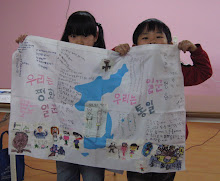
'저는 그들의 땅을 지키기 위하여 싸웠던 인디안들의 이야기를 기억합니다. 백인들이 그들의 신성한 숲에 도로를 만들기 위하여 나무들을 잘랐습니다. 매일밤 인디안들이 나가서 백인들이 만든 그 길을 해체하면 그 다음 날 백인들이 와서 도로를 다시 짓곤 했습니다. 한동안 그 것이 반복되었습니다. 그러던 어느날, 숲에서 가장 큰 나무가 백인들이 일할 동안 그들 머리 위로 떨어져 말과 마차들을 파괴하고 그들 중 몇몇을 죽였습니다. 그러자 백인들은 떠났고 결코 다시 오지 않았습니다….' (브루스 개그논)


For any updates on the struggle against the Jeju naval base, please go to savejejunow.org and facebook no naval base on Jeju. The facebook provides latest updates.
Showing posts with label Korean War Armistice Agreement. Show all posts

Friday, October 15, 2010

[국문] [PSPD Press Release] The NNSC criticizes the UNC's Cheonan ship investigation [참여 연대 보도자료] 군사정전위원회 중립국감독위원회 대표들, 유엔사의 천안함 조사 결과 관련 비판 제기

참여 연대 평화 군축 센터, 2010 년 10월 13일
Peace Disarmament Center, People's Solidarity for Participatory Democracy (PSPD), Oct. 13, 2010


[보도 자료] 군사정전위원회 중립국감독위원회 대표들
천안함 조사결과에 대한 합조단과 유엔사
비밀 정보 접근 제한을 비판

[Press Release] The representatives of the Neutral Nations Supervisory Commission (NNSC) criticize the Joint Investigation Committee's investigation result and UN Command’s limitation of access to the secrete information, regarding the Cheonan ship incident.


지난 7월 23일 한반도에 주둔하는 유엔군사령부 군사정전위원회를 대표하여 미국의 수잔 E. 라이스(Susan E. Rice) 유엔 대표부 대사가 유엔 안보리에 제출한 천안함 침몰 조사보고서에는 천안함이 북한의 소형 잠수정이 발사한 어뢰에 의해 침몰했고 이 행위가 정전협정 위반 행위에 해당한다고 결론을 내렸다. 이 보고서가 유엔에 제출된 사실에 대해서는 이번 한미연례안보협의회의에서 양국 국방장관이 언급한 바 있다.

이 보고서는 한국 정부가 유엔 안보리에 제출한 민군합동조사단 보고서와 별도로, 북한의 정전협정 위반 여부를 판단하기 위하여 유엔사 차원에서 행한 특별조사활동을 정리한 보고서이다. 유엔사의 조사활동은 5월 20일 민군합동조사단 결과 발표 직후 1주일간 진행되었다.

그런데 이 보고서에 첨부된 중립국감독위원회의 참관 보고서는 매우 주목할 만한 문제 제기를 포함하고 있다. 유엔사의 조사 활동을 참관한 중립국감독위원회 대표들은 보고서에서 “중립국감독위원회 참관인들이 정보 브리핑에 참여하는 것이 허락되지 않았다. 스웨덴 대표는 세탁된 버전(a scrubbed version)의 정보 브리핑을 제공받았다. 폴란드와 스위스 대표들도 취사선택된 정보에 한 해 별도의 브리핑을 받았다”고 지적하고 있다.

또한 중립국감독위원회의 보고서는 또 “충분한 수준의 투명성에 도달하기 위해서는 중립국감독위원회가 한반도에 파병한 국가들(교전국)과 같은 수준으로 비밀정보에 접근하도록 제도가 갖추어져야 한다”고 비판적으로 권고하고 있다.

중립국감독위원회의 보고서는 결론에서 “중립국감독위원회가 접근할 수 있었던 자료에 기초할 때”라는 단서를 달아, “천안함 침몰과 관련된 정전협정 위반이 있었다고 결론 내린다”며 “유엔사 특별조사팀의 권고를 지지한다”고 정리하고 있다. 주목할 것은 1)유엔사 특별조사팀이 북한소행이라고 결론내린 반면, 중립국감독위원회는 정전협정위반이 있었다고만 결론내리고 있다는 점, 2)중립국들이 지지한다는 유엔사의 권고에는 북한에 대한 규탄내용은 없고, 다만 북한과 중국이 군사정전위에 복귀하고 참관팀을 파견해야 한다는 권고만 있다는 점이다. 또한 중립국들은 “비밀자료에 대한 접근권 관련 개선이 필요하다”는 내용도 재차 보고서 결론에 포함시켰다.

참고로 이와는 별도로, 지난 5월 합조단 조사 활동에 참여했던 스웨덴 전문가들 역시 자신이 참여한 부분에 한해서만 동의한다는 단서를 달아 9월 13일 발표된 합조단의 최종보고서에 사인한 바 있다. 북한군이 천안함을 침몰시켰다는 보고서의 결론에 동의하지 않은 것이다.

▣ 별첨자료. 유엔군사령부가 유엔 안보리에 제출한 천안함 침몰 조사보고서
Letter dated 23 July 2010 from the Permanent Representative of the United States of America to the United Nations addressed to the President of the Security Council (S/2010/398)


Saturday, August 28, 2010

Photo Fwd: [From the VfP Convention, U. S.] A Banner for the Solidarity bet. the Veterans for Peace in Corea & U.S. [미 평군 회담] 한미 평화 재향 군인회 연대를 위한 배너

* Image source: Bruce Gagnon blog브루스 개그논 블로그:
Click the image for larger view 이미지를 클릭하시면 화면이 확대 됩니다.

________________________________________________

* The above photo is uploaded, too, in the
website of the Veterans for Peace, Corea (by Mr. Kim Hwan-Young, Secretary of the VfP, Corea): Click
위의 사진은 평화 재향 군인회 웹사이트에도 올려져 있읍니다 (김환영 평군 사무 국장님)
: 클릭
________________________________________________
* See also Bruce Gagnon blog, here.
여기 브루스 개그논 블로그를 또한 보시길.

________________________________________________

On Aug. 28, 2010, Bruce Gagnon has thankfully informed the above photo for the members of the Veterans for Peace, Corea, after the below workshop during the VfP national convention in Portland, Maine, United States, Aug. 25 to 29. The No Gun Ri movie is also screened during the convention. The members of the VfP, Corea could not join the convention for financial reason. The VfP members in the photo above are holding the banner of the VfP, Corea that the members of the VfP, Corea had presented to the members of the Veterans for Peace, Maine chapter, through Bruce Gagnon, as an expression of thanks to Tom Sturtevant who had brought the banner of the VfP, U.S., for the Corean members during the International Conference against the Asia Pacific Missile Defense and for the End of Arms Race, last April 16-18, 2009. The Maine state is where the Veterans for Peace movement first started 25 years ago. The small letters in the upper side of the banner says, ‘Army for Nation, Army for Democracy, [and] Army for Peaceful Unification.’ The bigger green letter at the bottom side of banner reads, Veterans for Peace, [Corea]. For more information on it, please see here.

2010년 8월 28일, 브루스 개그논은 8월 25일부터 29일에 걸쳐 진행되고 있는 메인주 포틀랜드 미 전역 평화 재향 군인회 회담 기간에 있었던 아래의 워크샵 이후 한국 평화 재향 군인회에 사진을 보냈읍니다. 노근리 영화가 회담 동안 또한 상영됩니다. 한국 평화 재향 군인회는 재정적 이유로 그 회담에 참여할 수 없었읍니다. 위의 사진의 회원들은 지난 2009년 4월 16일부터 18일까지 아시아 태평양 미사일 방어망 반대와 군사 경쟁 종식을 위한 국제 회담 기간동안 한국 평화 재향 군인회 회원들을 위해 미 평화 재향 군인회 깃발을 가져온 탐 스터트번트에 대한 감사의 표시로 한국 평화 재향 군인회 회원들이 브루스 개그논을 통하여 메인 지부 평화 재향 군인회 회원들에게 전한 한국 평화 재향 군인회의 배너를 들고 있읍니다. 메인주는 25년 전에 평화 재향 군인회 운동이 처음 시작된 곳입니다. 배너 윗쪽의 작은 글자들은 ‘민족 군대, 민주 군대, [그리고] 평화 통일을 위한 군대’ 입니다. 아래의 더 큰 녹색 글자는 [한국] 평화 재향 군인회 입니다. 더 많은 정보는 여기를 보시길.


* Image source 이미지 소스: Click here 여기 and 와 here 여기를 클릭

Bruce Gagnon and Veterans for Peace, Corea, holding the banner of the Veterans for Peace, United States, presented to the VfP, Corea by Tom Sturtevant,
Aug. 20, 2009
2009년 8월 20일 탐 스터트번트가 함국 평화 재향 군인회에 증정한 미 평화 재향 군인회의 깃발을 들고 있는 브루스 개그논과 한국 평화 재향 군인회 회원.

Citation from Bruce Gagnon's blog 브루스 개그논의 블로그 일부를 인용하면:

'Korean war veteran, and Maine VFP member, Tom Sturtevant has been the keeper of the banner since I brought it back from Korea.

'한국 전쟁 베테란이며 메인주 평화 재향 군인회 회원인 탐 스터트번트는 제가 그 배너를 한국에서 갖고 온 이후 배너를 계속 보관해왔었읍니다.

Most of the VFP members in the workshop yesterday had served in Korea during the war or since then. They all feel a strong sense of duty to help bring true peace and reunification to Korea. But as one of the guys said yesterday, "It's hard to convince people today that Korea is still an important issue after 60 years."


어제 워크샵의 대부분의 회원들은 [한국 전쟁중] 또는 그 이후에 한국에 있었읍니다. 그들은 모두 Korea에 진정한 평화와 통일을 가져오는데 도울 수 있길 강한 의무감을 느낍니다. 그러나 어제 한 사람이 말하듯, “[전쟁 이후] 60년이 지나도 한국이 아직도 중요한 이슈라고 오늘날 많은 사람들을 확신시키는 것이 어렵습니다.”

I tried to address this problem in my words during the workshop as I put Korea into the larger context of U.S. military strategy in the Asian-Pacific region. I talked about NATO expansion into the region and U.S. military moves to surround China.

저는 워크샵 기간동안 한국 아시아 태평양 지역 미국 군사 전략의 더 큰 콘텍스트 안에 한국을 위치함으로서 이 문제를 제 말로 역점을 두어 풀어가려고 노력했읍니다. 저는 그 지역으로의 나토 확장 및 중국을 봉쇄하기 위한 미국 군대의 움직임에 대해 말했읍니다.

The U.S. pretense about concern over North Korea is only a justification for the Pentagon to dramatically escalate its operations throughout the Asian-Pacific. U.S. bases are being expanded in Guam, Okinawa, Japan, and South Korea - including major deployments of "missile offense" systems.'

미국이 북한에 대해 염려하는 젠 체를 보이는 것은 단지 아시아 태평양에 걸쳐 극적으로 작전들을 점증시키려는 것입니다. 미국 기지들은 “미사일 공격” 시스템들 배치를 포함, 괌, 오키나와, 일본, 그리고 남한으로 확장되고 있읍니다.'


________________________________________________

Workshop on Korean War, in the VfP convention
평군 회담 한국 전쟁 관련 워크샵:

*Quote from the convention workshop site 회담워크샵 사이트에서 인용

'U.S. MILITARISM IN THE ASIA PACIFIC: A DISCUSSION ON UNENDING WAR WITH A FOCUS ON KOREA: PETER BRONSON, WOODY POWELL, TOM STURTEVANT, BRUCE GAGNON, GEORGE MCANAMAS, AND VIRGINIA RODINO [SOMERSET ROOM]

‘아시아 태평양에서의 미 군사 주의: 한국 전쟁에 촛점, 끝나지 않은 전쟁에 대한 토론: 피터 브론슨, 우디 파웰, 탐 스터트번트, 브루스 개그논, 조지 맥나마스와 버지니아 로디노 [서머셋 룸]

In observing the 60th anniversary of the outbreak of the Korean War, this workshop will reflect on the continuing tragedy and costs of this lingering war. The presenters believe that it is urgent now to replace the Korean War cease-fire agreement with a peace treaty. After showing a short video about the Korean War, members of VFP-Korea Peace campaign will lead a roundtable discussion about the hidden history of the war, obstacles to ending the war, and what we can do to end it. Participants are encouraged to bring any pictures, art work, or mementoes of the war to share in the workshop.'

한국 전쟁 발발 60 주년을 맞아, 이 워크샵은 계속되는 비극 및 이 끌어지는 전쟁의 비용을 돌아볼 것이다. 참여자들은 한국 전쟁 정전 협정을 평화 조약으로 바꾸는 것이 현재 절박하다고 생각한다. 한국 전쟁에 대한 짧은 비디오를 보인 후 평화 재향 군인회 한국 평화 캠페인 회원들은 전쟁의 숨은 역사, 전쟁 종식의 장애들, 그리고 우리가 무엇을 할 수 있는 지에 대한 대등한 토론을 끌어갈 것이다. 참가자들은 이 워크샵에서 공유하기 위해 전쟁에 관한 어떤 그림들, 예술품들, 기념품들을 가져올 것을 격려받는다.
________________________________________________

About No Gun Ri Movie in the VfP convention 평군 회담 중 노근리 영화 상영:

Dr. Chung Koo-Do, Director of the No Gun Ri Institute, advisor of documentary says:
(*From the description site of movies screened during the workshop)

노근리 연구소 소장이자 다큐멘타리 자문 위원 정구도 박사는 말하길:
(*워크샵 동안 상영되는 영화들 소개난에서)


'The No Gun Ri incident is a civilian massacre incident happened around late July, 1950 during the early Korean War. Many civilians were massacred and I am one of the bereaved family members of those victims. Due to the No Gun Ri incident, my elder brother and sister (at the age of five and two, respectively) were killed and my mother was seriously wounded and narrowly escaped the death.

'노근리 사건은 한국 전쟁 초기 1950년 7월 말경 일어났던 사건이다. 많은 시민들이 학살되었으며 나는 그 희생자 유가족들 중 한 사람이다. 노근리 사건으로 인해 나의 형과 여동생(각각 5살과 2살이었던)이 살해되었으며 나의 어머니는 심하게 상처를 입고 가까스로 죽음을 탈출했다.

For such a long time, I've considered the No Gun Ri incident as one of the most significant cases that teach the importance of human rights and peace. In that sense, I've always though it's very important to make the No Gun Ri documentary. While making the documentary, I had a chance to serve as an adviser.'

오랜 세월동안, 나는 노근리 사건을 인권과 평화의 중요성을 가르키는 가장 중요한 사건의 하나로 고려해 왔다. 나는 노근리 다큐멘터리를 만드는 것을 항상 매우 중요하게 생각했다. 다큐멘타리 제작시 나는 자문 위원으로서 일할 기회를 가졌다.'

________________________________________________________


* Related sites and blogs 관련 사이트 및 블로그들 :

Veterans for Peace_Corea 한국 평화 재향 군인회

Veterans for Peace, United States 미국 평화 재향 군인회

VFP National Convention - 25th Year Anniversary Celebration!
미 평화 재향 군인회 국가 회담- 25주년 창설 축하!

Aug. 25 to 29, 2010 2010년 8월 25일 ~29일

[Upon 6oth anniversary of the Korean War]
Veterans of the Korean War Call for a Real Peace Treaty
[국문 번역][60주년 기념] 한국 전쟁 [미] 재향 군인들, 진정한 평화 조약을 요구하다.
June 25, 2010 2010년 6월 25일


[Bruce Gagnon blog] VIDEO OF VFP CONFAB MARCH [on Aug. 29, 2010]
[브루스 개그논 블로그] 또 다른 비디오: [2010년 8월 29일] 평군 회담 행진

September 08, 2010 2010년 9월 8일


[Bruce Gagnon blog]Video: ANOTHER SPEAKER AT VFP RALLY: Lisa Savage, Code Pink[on Aug. 29, 2010]
[브루스 개그논 블로그]비디오: [2010년 8월 29일]평군 회담의 또 한 명의 연설자: 리사 새비지, 코드 핑크
Friday, September 03, 2010 2010년 9월 3일


Text Fwd: Antiwar rally by Veterans for Peace caps convention
[국문 번역] 반전 집회가 [미] 평화 재향 군인회의 회담을 마무리하다.
Aug. 30, 2010 2010년 8월 30일

Video Fwd: Two Videos from the Veterans for Peace Convention,
Maine, Aug. 28, 2010

2010년 8월 29일, 미국 메인주 평화 재향 군인회 회담 관련 2 개의 비디오


[Bruce Gagnon blog], Tuesday, August 24, 2010
[Video]VFP CONFAB COVERAGE CONTINUES
브루스 개그논 블로그: [비디오]평군 회담 기사 계속되다, 2010년 8월 24일


[Bruce Gagnon blog] Sunday, August 22, 2010
PROMOTING VFP CONFAB
브루스 개그논 블로그: 평군 회담 홍보, 2010년 8월 22일

Video Fwd: [Bruce Gagnon blog] Tom Sturtevant from Maine Veterans for Peace
비디오 포워드:[ 브루스 개그논 블로그] 탐 스터트번트: 메인주 평화 재향 군인회


[Three International Petitions] to End the Korean war and peace treaty
(or peace resolution)

한국 전쟁 종식과 평화 협정(또는 평화 결의안) 실현을 위한 [세 개의 국제 서명]


[국문 번역][Bruce Gagnon blog 브루스 개그논 블로그] Massacre at No Gun Ri 노근리의 학살
Oct. 14, 2010 2010년 10월 14일


No Gun Ri Incident 노근리 사건
_ English, 영문,
_ Korean, 국문

No Gun Ri related Chungjoo MBC programs (Sorry, only Korean!)
노근리 관련 청주 MBC 프로그램들은 여기서 보실 수 있읍니다.


No Gun Ri fiction movie 노근리 픽션 영화:
"작은 연못 (A Little Pond. 2009)"


[Japan Focus] The Truth and Reconciliation Commission of Korea:Uncovering the Hidden Korean War
Kim Dong choon
The Other War: Korean War Massacres
[재팬 포커스] 한국 진실과 화해 위원회: 숨겨진 한국 전쟁을 열며
김동천
또다른 전쟁: 한국 전쟁의 학살


Korean War Armistice Agreement, July 27, 1953 (English)
한국 전쟁 정전 협정, 1953년 7월 27(영문)

For Korean above, see Here or Here
국문은 여기
또는 여기를 클릭

Peace Agreement for the Korean Peninsula (English, proposed draft)
by the Solidarity for Peace And Reunification of Korea
평화와 통일을 여는 사람들 한반도 평화 협정 제안 (영문, 제안 초안)

Peace Agreement for the Korean Peninsula (Korean, proposed draft)
by the Solidarity for Peace And Reunification of Korea

평화와 통일을 여는 사람들 한반도 평화 협정 제안 (국문, 제안 초안)


여기를 또한 보시길.

Friday, July 23, 2010

Text Fwd: 60th anniversary of the Korean War

* Text Fwd from International Action Center on July 22, 2010

This year marks the 60th anniversary of the Korean War.

60 years later, the Korean War is not over, and Korea is still divided.

In 1945, two U.S. colonels in Washington D.C. divided the Korean peninsula along the 38th parallel. This arbitrary divide soon became a border and military frontline before and during the Korean War. An Armistice temporarily ceased fighting on the Korean peninsula and established the Demilitarized Zone (DMZ) along the 38th parallel. A peace treaty was never signed, and to this day, Korea remains in a state of war.

The National Campaign to End the Korean War is bringing the DMZ back to Washington D.C. Join us from July 25-27 for a series of events that show how we continue to be affected by the division and demand the U.S. government end the Korean War by signing a peace treaty.

--------------------------------------------------------------------------------------------------------

SUNDAY, JULY 25, 2-4pm

Capitol Reflecting Pool Plaza (between 1st St NW and 3rd St NW)
"100 Bojagi for Peace"
This interactive art installation in front of the Capitol will feature 100 bojagi (traditional Korean bundles carried by refugees during the war) with audio and written recollections by Korean Americans and Canadians during the Korean War. The bojagi represent millions of Korean families who are still separated by the division.

SUNDAY, JULY 25, 7-9pm

Justice Center, 617 Florida Ave NW
"Remembering the Forgotten War"
Join us for the new film "In the Matter of Cha Jung-hee" by Deann Borshay Liem on the adoption of thousands of Korean children resulting from the Korean War. Additional short films and live performance.

MONDAY, JULY 26, 10am
Press Conference

TUESDAY, JULY 27
Legislative visits to demand an end to the Korean War

To participate in these activities, please contact -
nodutdol@nodutdol.org or 646 409 8056

Wednesday, July 21, 2010

Poster Fwd: Come to D.C. July 25-27, 2010

* Click the image for the larger view

* from the National Campaign to End the Korean War

Come to D.C. July 25-27, 2010

Join us July 25-27 for our National Campaign Strategy Meeting in Washington, press conference and meetings with State Dept and Congress. Contact us to attend at info@endtheKoreanwar.org.

60 Years: Campaign says peace is the way to avoid naval clashes

10 Reasons Why the U.S. Must Sign a Peace Treaty with North Korea

Exciting Teaching Initiative on Korea War with ASCK

Action Toolkit and Resource Guide

___________________________________________________________

* Three International Petitions to End the Korean War! Peace Treaty (or Resolution) Now! : Please Click HERE
___________________________________________________________

Friday, May 21, 2010

Text Fwd: [famoksaiyanfriends] HASC Chair on the Sinking of the Republic of Korea Navy Ship

* Text sent from Martha Duenas

Ike Skelton, Chairman
http://armedservices.house.gov

For Immediate Release: May 20, 2010

Contact: Lara Battles or Jennifer Kohl
202-225-2539

Washington, D.C. – House Armed Services Committee Chairman Ike Skelton (D-Mo.) released the following statement on the report investigating the sinking of the Republic of Korea Navy Ship, the Cheonan:

“I am deeply troubled by the report issued today by a team of international investigators that points to the conclusion that North Korea was responsible for a torpedo attack against the Republic of Korea Navy Ship, the Cheonan, on March 26th. The loss of 46 Korean sailors on that ship was a tragedy and I strongly condemn any act of aggression by North Korea that led to their deaths.

“Today’s report suggests that North Korea has once again defied international law and undermined international peace and security, in direct violation of the Armistice Agreement. Such behavior is unacceptable.

“I am pleased that the Obama Administration is making efforts to fully support the Republic of Korea, both in securing justice for the 46 sailors killed in this attack and in its defense against further acts of aggression. And I encourage the Administration to continue working closely with the Republic of Korea and our other allies and partners to ensure peace and stability in the region.”

Wednesday, May 12, 2010

[Text Fwd] Defense Ministry considers resuming psychological warfare against N.Korea

Hankyoreh
Defense Ministry considers resuming psychological warfare against N.Korea N.Korea and S.Korea agreed to suspend propaganda activities along the MDL in 2004
Posted on : May.11,2010 12:29 KST

Soldiers remove equipment used to make propaganda statements against the North Korean government at the MDL in Paju, Gyeonggi Province as a part of the agreement during general-level military talks on June 4, 2004.  

The Ministry of National Defense announced Monday it is considering a plan to resume psychological warfare against North Korea. This would include announcements to North Korea along the Military Demarcation Line (MDL) as a measure in response to the sinking of the Patrol Combat Corvette (PCC) Cheonan. Such broadcasts have been suspended since June 2004. There has been concern that if South Korea resumes loudspeaker broadcasts to North Korea, it could result in a seriously detrimental effect on inter-Korean relations as a whole.

Defense Ministry spokesman Won Tae-jae said a working-level team was examining whether to restart psychological warfare against North Korea as part of research to cultivate various responses if the joint civilian-military investigation team looking into the sinking of the Cheonan finds that the ship was sunk by North Korea. He said the Defense Ministry plans to wait until the investigation results come out, and that nothing has yet been decided upon. Defense Minister Kim Tae-young reportedly directed the ministry last week to report how much time and money would be needed to restart the broadcasts.

The two Koreas agreed during general-level military talks on June 4, 2004 to end propaganda activities along the MDL and remove propaganda equipment. In fact, North Korea and South Korea ended propaganda activities on June 15, 2004, the fourth anniversary of the June 15 Joint Declaration, and by August 15 of that year removed all propaganda equipment, including loudspeakers, in a three-stage process. In the agreement made at the time, the two Koreas also agreed not to reinstall the propaganda equipment or restart propaganda activities. If South Korea were to unilaterally restart loudspeaker broadcasts, it would signify that South Korea was the first to break the agreement.

In response, Won said they were considering psychological warfare against North Korea predicated on North Korea being directly involved in the sinking of the Cheonan. He said if North Korea was involved in the sinking, this would be a violation of the Armistice Agreement itself, so South Korea would not have broken existing agreements first.

Experts expressed criticism that resuming loudspeaker broadcasts would be an impromptu response, made with conservative domestic opinion calling for a hardline response in mind that would collapse the foothold of military confidence building that was assembled amid much difficulty. PeaceNetwork representative Cheong Wook-sik said that if South Korea restarts broadcasts, North Korea would respond. He said foundational measures for building military trust is not to slander one another, and if mutual slanderous broadcasts catch fire along the MDL, reducing military tensions and confidence building will disappear.

Moreover, in consideration of North Korea’s multiple warnings that if private South Korean groups did not stop sending leaflets condemning North Korea, it would have a negative effect on inter-Korean relations, there is concern that if South Korean military authorities restart loudspeaker broadcasts aimed at North Korea, inter-Korean tensions and confrontation could reach a point where from which they will be unable to recover.

Please direct questions or comments to [englishhani@hani.co.kr]
_________________________________________________________________

* Related Korean article:

Hankyoreh

U.S. State Department says OPCON transfer unconnected to Cheonan sinking
: Attention is focusing on James Steinberg’s comment as representative of the opinion at the U.S. Department of State
Posted on : May.12,2010

Monday, May 3, 2010

Text Fw: The Struggle against US bases in Korea - for Denuclearization and Peace (2010.5.1)


* Solidarity for Peace and Reunification of Korea (SPARK)

The Struggle against US bases in Korea - for Denuclearization and Peace

Oh Hye-ran

Solidarity for Peace and Reunification of Korea (SPARK)

Korea-U.S. Alliance – Obstacle to Peace

In July 1953, only 2 months after they signed the “Korean War Armistice Agreement,” South Korea and the United States entered into an alliance through the “Korea-U.S. Mutual Defense Treaty”. A military alliance is an arrangement in which parties come together for the purpose of a potential war. The South Korea-U.S. alliance is premised on a temporary truce after the Korean War, and its continued existence means the state of war has not yet ended.

Article IV: 60 of the Korean War Armistice Agreement recommended that “a political conference” be held “within three (3) months after the Armistice Agreement is signed”, “to settle through negotiation the questions of the withdrawal of all foreign forces from Korea and the peaceful settlement of the Korean question”. The Korea-U.S. alliance contradicts Article IV: 60, which recommends the replacement of the Armistice Agreement with a permanent peace treaty.

US Bases in Korea and the “Strategic Flexibility” Doctrine

South Korea is covered with U.S. military bases. U.S. Forces in Korea (USFK) has 87 bases, which take up a total of 32,000 acres of land. In addition, there are 37 joint training facilities for the South Korea-U.S. Combined Forces, which occupy more than 49,000 acres of land, and 5 Korean Air Force bases designated “Collateral Operation Bases” for U.S. reinforcement.

Today, U.S. bases in Korea are being transformed into advanced operation bases for preemptive strike against North Korea. According to the strategic flexibility doctrine of the USFK, its troops can be flexibly and rapidly deployed at any time to any place in the world. For example, 3600 troops of the Second Division were sent to Iraq in 2004. Strategic flexibility has nothing to do with the main stated role of U.S. Forces in Korea, which is to serve as a deterrent force against a possible attack from the north. Rather, it is intended to turn U.S. bases in Korea into launch pads for U.S. military domination of the world. It violates the Korea-U.S. Mutual Defense Treaty, which stipulates the stationing of U.S. Forces in Korea with the mission of defending South Korea from a potential attack from the north.

Furthermore, U.S. bases cause numerous critical problems to local communities, such as forced evacuation of residents and farmers from their land and disastrous ecological damage. The strategic flexibility doctrine of the USFK must be discarded and unilateral U.S. base expansions must be stopped. All U.S. bases should be removed from Korea immediately for the sake of peace on the Korean peninsula, justice for the people, and preservation of our livelihoods off the land.

The Struggle against U.S. military bases in Korea

After their struggle against the expansion of Camp Humphrey in 2006, residents of Pyeongtaek continue to fight against the construction of a second landing strip at Osan Air Base. This additional runway currently under construction is for large scale transport planes to quickly dispatch troops and supplies from Korea to conflict regions all over the world.

Residents of Mugeon-ri are also taking to the streets to stop the expansion of a military training facility. The Mugeon-ri training facility is used not only by troops stationed in Korea but also by other U.S. forces abroad, such as the Stryker Brigade Combat Team in the United States, U.S. Forces Japan, and the U.S. Air force in Australia. The site for the planned expansion is home to white herons and ash trees, considered natural heritages in Korea.

Residents of Jejudo also continue to struggle against the planned construction of a naval base. The Jejudo naval base will be the base port of the Korean Navy Task Fleet, mainly equipped with Aegis destroyers. The United States plans to use Jeju Island as a port to deploy nuclear-powered aircraft carriers and Aegis destroyers, because Jeju Island is strategically located with direct access to the East China Sea. Gangjeong village, the site of the planned base construction, boasts the only coral reefs in Korea and is the habitat of red soft coral. It was designated by UNESCO as a natural heritage site in 2002.

It is important to stand in solidarity with the residents of local communities fighting against U.S. bases in Korea. The “Korea-U.S. Mutual Defense Treaty” which provides the legal basis for the Korea-U.S. alliance must be abolished. SPARK is part of the struggle in solidarity with the residents of the local communities of Pyongtaek, Mugeon-ri, and Jeju Island to resist U.S. bases and carry out our mission to abolish the “Korea-U.S. Mutual Defense Treaty” and the Korea-U.S. alliance. We ask you for your support and solidarity with the people in Pyeongtaek, Mugeon-ri, and Jeju Island.

A Peace Treaty to End the Korean War – Key to Denuclearization and Peace on the Korean Peninsula

The so-called nuclear crisis in Korea began in 1957, when the United States first deployed nuclear weapons in South Korea. The United States still extends its Nuclear Umbrella to South Korea, and preemptive strike against North Korea is central to the U.S. strategic doctrine, despite U.S. assertions that its nuclear weapons were withdrawn from South Korea in the 1990’s.

In 2002, the former Bush administration declared North Korea part of an “axis of evil”, then carried out a preemptive attack against Iraq, also part of Bush’s “evil axis”. This was the decisive moment when North Korea began to develop its nuclear weapons. The U.S. Nuclear Posture Review, released on April 6, 2010 by the Obama administration, still leaves the door open for the possibility of a preemptive attack against North Korea.

A 2007 report on North Korea by the Atlantic Council states the root cause that led North Korea to develop its Nuclear Weapons is military provocations by U.S. Forces in Korea. According to a 2005 survey, 85% of South Korean civilians regard North Korea’s Nuclear Weapons as a deterrent force against the United States and a means for self-defense. (Korean Institute for National Unification)

Nuclear disarmament by North Korea is possible if U.S. troops withdraw from the Korean Peninsula and the Korea-U.S. alliance is abolished. As a condition for abandoning its Nuclear Weapon Program, North Korea demanded the United States abandon its hostile policies, abolish its Nuclear Umbrella in South Korea, as well as the Korea-U.S. alliance.

The Korean Peninsula still remains at war 60 years after the “Korean War Armistice Agreement” was signed on July 27, 1953. A peace treaty to end the Korean War can be a definite turning point that leads to denuclearization of the Korean peninsula. Replacing the Armistice Agreement with a peace treaty and terminating the Korea-U.S. alliance are necessary for peace not only on the Korean Peninsula but also the broader Northeast Asian region and the world. Denuclearization of the Korean peninsula, facilitated by a peace treaty, along with the Mongolian Nuclear-Weapons-Free Zone, can become the foundation for a broader North East Asia Nuclear-Free Zone.

SPARK continues to organize a “one million signature campaign” for denuclearization and peace on the Korean Peninsula. We urge your active support and appreciate your participation in the struggle.

[Text Fw] The significance of a peace treaty for the denuclearization of the Korean Peninsula

* You can also see the SPARK NPT event photos HERE and HERE.
_________________________________________________________________
The significance of a peace treaty
for the denuclearization of the Korean Peninsula

Speech by Pyeon Yun-Sik, Co-Represntative of
Solidarity for Peace and the Reunification of Korea
May 1, 2010, New York, U.S.A.

Distinguished delegates and friends,

Why did N. Korea develop nuclear weapons?

Since the Armistice Agreement was signed on July 27, 1953, the Korean peninsula has been in a state of war for the last 60 years. Only two months after the Armistice Agreement came into force, S. Korea and the United States signed the Mutual Defense Treaty and entered into a relationship of alliance. An alliance is premised on "a provisional war community" and its deliberate intention to perpetuate a state of armistice, in other words a state of war.

Article Ⅳ 60 in the Armistice Agreement made explicit that within three months after the Armistice Agreement becomes effective, a political conference should be held to settle through negotiation the question of the withdrawal of all foreign forces from Korea and the peaceful settlement of the Korean question. Therefore, the establishment of the S. Korea-U.S. alliance is a violation against Article Ⅳ 60 that called for an immediate transition from the state of armistice into a state of peace on the Korean peninsula.

In 1957, the United States deployed nuclear weapons on the Korean peninsula and this can be considered as the origin of the so-called nuclear crisis on the Korean peninsula. Although the U.S. claims that it had pulled out its nuclear weapons from S. Korea since the 1990’s, the U.S. has provided its nuclear umbrella to S. Korea and integrated the strategy of preemptive nuclear strike against N. Korea into its national security policy. For example, the U.S. has five operation plans applicable to both war-time and peacetime, such as OPLAN 5027 and 5029. Central to those OPLANs is the possible scenario of a nuclear war through U.S.' preemptive strike against N. Korea, aimed at the overthrow of the N. Korean regime. Particularly, OPLAN 5029, designed for possible military deployment to N. Korea even during peacetime, is a very provocative and offensive plan and as such it is an intervention against N. Korea’s domestic affairs and a violation of international law.

In 2002, the Bush government designated N. Korea not only as one of seven countries that are potential targets for preemptive nuclear strike but also as a 'chronically military concern' alongside Iraq, and then later overthrew the Iraqi regime by means of an illegal military invasion. This led to a decisive moment for N. Korea, which faced no other option but to develop nuclear weapons for self-defense. "The Atlantic Council" in its report on N. Korea (April, 2007) stated that the reason for N. Korea's development of nuclear weapons is mainly due to U.S. military threats against N. Korea. Furthermore, 85% of S. Korean people consider N. Korea’s nuclear weapons as a means of deterrence and self-defense against U.S. war threats. (Unification Research Institute, 2005)

How to achieve the dismantlement of N. Korea's nuclear weapons?

There is a cause and effect relationship between the S. Korea-U.S alliance and N. Korea's nuclear development. Thus, the dismantlement of N. Korea's nuclear weapons is directly related to the abolishment of the S. Korea-U.S alliance. N. Korea has already stated its conditions for the abolishment of its nuclear weapons as "the withdrawal of hostile policies against N. Korea, the abolishment of the U.S. nuclear umbrella for S. Korea, and the abolishment of the S. Korea-U.S. alliance" (February 3-7, 2009).

N. Korea's position is clearly different from the positions of other nuclear-weapon states that talk about the reduction or dismantlement of nuclear weapons by means of various nuclear weapons reduction negotiations. The N. Korean proposal for the denuclearization of the Korean peninsula is very simple, and it suggests an easy and feasible way to achieve the dismantlement of the N. Korean nuclear weapons. Furthermore, from a military point of view, N. Korea is in an inferior position in terms of its conventional arms capacity. Thus, it is conceivable that when N. Korea eliminates its nuclear weapons, there would no longer be a security risk for S. Korea and the United State to abolish their alliance on the Korean peninsula.

Establishing a peace treaty with N. Korea is the key to the denuclearization of the Korean peninsula and North-East Asia.

Concluding a peace treaty on the Korean peninsula will make a defining moment leading to the dismantlement of N. Korea's nuclear weapons. Concluding a peace treaty will bring an end to the continued state of war on the Korean peninsula and lead to the substantial elimination of the hostility inherent in the S. Korea-U.S nuclear alliance and eventually to the abolishment of the hostile alliance.

The continued state of war on the Korean peninsula for the for the last 60 years is an appalling violence unprecedented in modern world history. The urgent task for a peace treaty to end such a war is crucial to making peace on the Korean peninsula and North-East Asia, and further to building a peaceful, nuclear-free, global village. Denuclearization of the Korean peninsula through concluding a peace treaty will be a cornerstone for the establishment of a nuclear-weapon-free zone in North-East Asia, and also have ripple effects in facilitating the establishment of nuclear weapons free zones around the globe. Thank you.

Tuesday, March 9, 2010

[126th Self-Reliance Unification Peace Action] ‘Stop the Key Resolve war exercise against the N. Korea and conclude the peace agreement in Korea

* Below are arbitrary translations of the parts of the two articles combined together. One is the report from the Solidarity for Peace And Reunification of Korea and the other is the article of the Tongil News on March 9.


*All the image sources/references are Solidarity for Peace And Reunification of Korea.

About 60 people joined the 126th Self-Reliance Unification Peace Action
in front of the United States embassy, Seoul, on March 9, 2009.


Joo Byung-Joon, Chairman of the Village People’s Committee
against the Expansion of the Mugeon-ri Military training Field, joining in peace performance
in which people puts on various peace signs on the strings.


People put up the peace signs of pepper (* Korean traditional sign of abundance/prosperity)
and pigeons such as ‘withdrawal of the United States Forces of Korea’ and ‘Conclusion of peace agreement’ etc.

The letters beside the photo of the United States soldier say, “Occupation of North Korea
then establishment of the pro-US regime [in North Korea].”

Choi Sa-Mook. Co-representative of Veterans for Peace delivered the request letter
that was read aloud in the rally, to the United States embassy.

Police has occupied the rally site prior to the rally. The police finally withdrew from the site
after about 10 minute conflicts with the rally participants who demanded their right to have the rally.

Men from the Defense security Command whom even the police doesn’t know?
Those men were secretly recording the rally participants with camera, which is illegal.


*All the image sources/references are Solidarity for Peace And Reunification of Korea.

There was the 126th Self-Reliance Unification Peace Action in front of the United States embassy under the issue of ‘Stop the Key Resolve war exercise against the North Korea and conclude the peace agreement in the Korean peninsula’ in Seoul, at 12pm on March 9, Tuesday, 2010.

The police claming even before the rally that “We can not guarantee the rally site because the contents on opposition against the Key Resolve is directly related to the United States,” Blockaded the rally site with the police units, saying, “Process the rally in the site more than 100M from the United States embassy.” The participants including the SPARK activists demanded, “The police behavior is illegal so guarantee the rally site.” After 10minutes of conflicts, the police accepted the rally participants’ request and withdrew the police units. Through the police behavior, the thing that the United States embassy has much burden on the currently being progressed Key resolve exercise, could be indirectly confirmed.

The organizations who participated in the rally pointed out that “ This war exercise is clearly invasive in the sense that, following the operational plan 5027 aiming the annihilation of the North Korean troops and removal of the North Korean regime, it is mobilized with the 18,000 United States force & 20,000 South Korean forces, and that its trainings are such as WMD removal operation, MD operation, mountain & urban area combat for being accustomed to the North Korean topography, and SK-US joint marine exercise assuming the urban combat in Pyeongyang that are premised on the collapse of the North Korean regime and occupational ruling.”

Kwon Oh-Chang, the executive representative, Solidarity for the Practice of the South-North Joint Declaration, claimed that, “The armistice agreement was concluded in July 1953 and within three months, by opening the political meeting, the withdrawal of the foreign troops and conclusion of the peace agreement in the Korean peninsula, were to be discussed… However the authorities of the South Korea and United States made powerless of the armistice agreement with their conclusion of Mutual Security Treaty in 1953.”

He, introducing “There is the nuclear security summit meeting in April and NPT in May,” claimed that “The United States should does either the simultaneous actions of the conclusion of the peace agreement and non-nuclearization, or ‘continuous progress of the hostile policy against the North Korea.’

You Young-Jae, SPARK, introducing that “The SK and US authorities are to finish the discussion on the ways of the procedures on the strategic flexibility of the United States Forces before the SK-US Security Consultative Meeting in Washington DC in coming October,” pointed out that “In the QDR report announced in January, the contents that the strategic flexibility would be stipulated and that, under the possible condition of foreign dispatch, base relocation, equipment moving, making flexible of the prior procedures would be progressed, are included.”

He also pointing out that, “ The United States can any more maintain the world domination with the fixed military,” claimed that, “ Therefore, to maintain the world domination, she intends to realize the strategic flexibility of the United States.”

Finally, he, pointing out that “The United States changed the status of Korea from the combat area to non-combat area. It means there is no all-out war possibility in the Korean peninsula,” claimed that “If the United States does not need the defense against the North Korea, the United States Forces of Korea, should not think of the permanent staying in South Korea, through the strategic flexibility but should go away from this land.”

Monday, January 11, 2010

Text Fwd: North Korea Proposes Talks Over Peace Treaty

* Original Korean statement by the North Korea can be seen here. Part of the statement says, “Any consensus without the essential and fundamental issue of war and peace, can not avoid the fate of the frustration and failure as it could not have done by now.” The statement is quite consistent with the North Korea’s New Year’s Day joint editorial as seen here. The noticeable point in the editorial was it, , emphasized ‘on the economy and specifically on “improving the life of the people,”’ rather than ‘Songun, North Korea’s “Military First” policy, and defense industries’ in contrast to the past. But it is more exact to say that the North Korea has claimed the Peace Treaty long time ago.


Korea Times
North Korea Proposes Talks Over Peace Treaty
Jan. 11, 2010
By Kim Sue-young
Staff Reporter

North Korea proposed talks on a peace treaty Monday, saying the issue could be discussed at a meeting of armistice signatories or in the six-party talks.

In a statement, a spokesman of the North's Foreign Ministry indicated that it could rejoin the six-party denuclearization talks to discuss the issue.

South and North Korea still remain technically at war since the 1950-53 Korean War ended in an armistice, not a peace treaty.

The secretive state has boycotted the multilateral forum since the international community imposed financial sanctions over its nuclear test on May 25 last year.

"We politely suggest that countries related to the truce accord have talks to switch the current armistice agreement into a peace treaty this year, which marks the 60th anniversary of the (outbreak) of the Korean War," said the statement carried by the North's official Korean Central News Agency (KCNA).

China, which fought on the North Korean side, also signed the truce agreement.

North Korea signed the cease-fire agreement with South Korea, the United States and other countries that participated in the Korean War (1950-53). The statement, however, did not clarify which countries it wants to have talks with.

Pyongyang claimed that the nuclear issue wouldn't have happened if a peaceful regime had been established on the Korean Peninsula.

It also said the proposed talks can take place within the context of the stalled six-way talks.

"In terms of its nature and meaning, the peace treaty issue can be discussed within the framework of the six-party talks like the ongoing Washington-Pyongyang talks," the statement said, referring to the bilateral meeting between U.S. Special Envoy Stephen Bosworth and North Korean officials late last year.

The communist state noted that the suspended six-way forum could be resumed soon if the international sanctions imposed by the U.N. Security Council last year are lifted.

"The conclusion of the peace treaty will help terminate the hostile relations between the DPRK and the U.S., and positively promote the denuclearization of the Korean Peninsula rapidly," the statement said.

"Removing the sanctions, which serve as a barrier of discrimination and distrust, may soon help lead to holding the six-party talks" that include the U.S., the two Koreas, China, Japan and Russia.

ksy@koreatimes.co.kr


* Related articles

End the Korean War:
10 Reasons Why the U.S. Must Sign a Peace Treaty with North Korea

Yonhap News
2010/01/11 17:18 KST
(2nd LD) N. Korea calls for early talks on peace treaty


Monday, December 21, 2009

Text Fwd: N. Korea sets 'firing zone' along western sea border

* Image source: Tongil News, Dec. 21, 2009
'The Maritime Demarcation Lines claimed [differently] by the South and North
[Source-Ministry of National Defense, ROK]'
(Translation added)


Yonhap News
N. Korea sets 'firing zone' along western sea border

SEOUL, Dec. 21 (Yonhap) -- North Korea said Monday that it was setting a "peacetime firing zone" along the inter-Korean border in the Yellow Sea, raising tension in the volatile region where a blaze of gunfire was recently exchanged.

Last week, North Korea accused the South Korean Navy of conducting underwater explosions close to its waters, calling it "provocation." South Korea's Joint Chief of Staffs dismissed the claim, saying the explosions were part of a routine drill conducted in South Korean waters.

"In order to counter the reckless military provocations of the warmongers of the South Korean military," a spokesman for the Navy Command of the North's Korean People's Army said, "our navy declares the waters on the extension of the Military Demarcation Line in the West Sea under the control of our army as a peacetime naval firing zone of coastal and island artillery units of the KPA (Korean People's Army)."

South Korea expressed regret over the North Korean warning, pledging a "stern response" should the communist state provoke on the maritime border.

"We express grave concern as the North's threat raises unnecessary tension between the Koreas," the South Korean Navy said in a statement, calling the North Korean argument "irrational."

The Military Demarcation Line refers to the line North Korea unilaterally drew just south of Northern Limit Line (NLL) in 1999 as the maritime inter-Korean border, declaring the NLL that has existed for decades unfair and void.

The NLL, part of which was drawn close to the North Korean coastline, was set by the U.S.-led United Nations Command at the end of the 1950-53 Korean War.

The Koreas exchanged brief gunfire in an area just south of the NLL in November, and naval skirmishes that erupted nearby in 1999 and 2002 led to casualties.

The latest warning raised military tension in the region that overlaps between the NLL and the line that North Korea claims should be the border.

"The frequent intrusions of the warmongers of the South Korean military into the territorial waters of the north side in the West Sea of Korea have recently developed into adventurous bombardments," the unidentified naval command spokesman said.

All fishing boats and warships should take security measures to protect themselves in the "peacetime naval firing zone," he said.

Also Monday, South Korea said it planned to resume cash support to enhance the health of North Korean infants and children, which it halted after the North's nuclear test earlier this year. Seoul's Unification Ministry said it will provide millions of dollars to U.N. agencies that operate health care programs for those who are nutritionally at risk in North Korea.

Last week, Seoul provided US$15 million in medication to the North to help prevent an epidemic of the H1N1 flu virus there.

hkim@yna.co.kr
samkim@yna.co.kr
(END)

* Related article:

Tongil News
North Korea, Announces the Water Are of the Western Sea Demarcation Line as the "peacetime firing zone": The NLL is overlapped with the South Zone Sea Area, Military Tension Is Heightened in the Western Sea
北, 서해분계선 수역 '평시 해상사격구역' 선포 NLL 이남 수역과 겹쳐 서해 군사적 긴장 높아져
Dec. 21, 2009(Monday)
Jeong Nyung-Jin 정명진 기자 (mjjung@tongilnews.com)

Wednesday, December 9, 2009

Text Fwd: U.S. reconfirms pledge to maintain current level of troops in Korea: Adm. Mullen

Yonhap News
2009/12/09 06:09 KST
U.S. reconfirms pledge to maintain current level of troops in Korea: Adm. Mullen
By Hwang Doo-hyong

WASHINGTON, Dec. 8 (Yonhap) -- The United States Tuesday reaffirmed its pledge to maintain the current level of its troops in South Korea, dispelling media speculation that some U.S. forces might redeploy to Afghanistan.

"We are very committed to 28,500 troops' presence in South Korea. That's strongly reaffirmed by President Obama, both publicly as well as his meetings with President Lee (Myung-bak)," said Adm. Michael Mullen, chairman of the Joint Chiefs of Staff, in a news conference here.

Mullen's remarks came amid controversy over the remarks by Obama to American soldiers in Seoul last month. "The story of your service goes beyond this peninsula," Obama said. "Others among you served in Afghanistan. Others among you will deploy yet again."

Mullen himself said in October that discussions are under way about rotating U.S. troops in South Korea.

South Korean officials have said the remarks by Obama and Mullen should not be taken as a possible troop reduction in Korea, but rather a routine rotation of troops without reducing the number. They added they have never discussed a troop reduction with the U.S.

Mullen, however, said the Obama administration will follow up on the strategic flexibility posture drawn up by the Bush administration for rapid deployment of U.S. troops abroad to conflict regions.

"The idea of strategic flexibility is one we are addressing with the South Korean leadership," he said. "We think it is very important, part of a strategic concept for security both for the region and globally."

Faced with tough resistance from Taliban insurgents in Afghanistan, Obama last week announced plans to send 30,000 more troops to the war-ravaged central Asian state early next year to bring the number of U.S. troops there to more than 100,000.

South Korea has said it will send a 140-strong Provincial Reconstruction Team to Afghanistan next year, accompanied by about 320 troops for their protection.

More than 30,000 multinational forces are already operating in Afghanistan in support of the U.S. effort against Al Qaida and Taliban insurgents. NATO says it will soon send another 7,000 troops.

South Korea withdrew more than 200 military medics and engineers from Afghanistan in 2007 after 23 South Korean Christian missionaries were held captive. Two of them were killed and the rest released after the Seoul government pledged to withdraw the troops by the end of that year.

South Korean Foreign Minister Yu Myung-hwan recently said that increased aid to Afghanistan by South Korea is linked to the stable deployment of 28,500 U.S. troops in the Korean Peninsula, a legacy of the 1950-53 Korean War.

Monday, November 23, 2009

Text Fwd: N. Korea says naval skirmish demonstrates need for peace treaty with U.S.


* source of Images : Panmunjeom Travel center
'Armistice Agreement, July 27, 1953'

Yonhap News
2009/11/23 11:56 KST
N. Korea says naval skirmish demonstrates need for peace treaty with U.S.
By Tony Chang

SEOUL, Nov. 23 (Yonhap) -- North Korea urged the United States on Monday to replace their armistice agreement with a peace treaty, citing a recent skirmish between the two Koreas' navies as "proof" that such a treaty is necessary for peace on the peninsula.

The two Koreas technically remain at war, as the 1950-53 Korean War -- in which the U.S.-led United Nations forces fought for the South -- ended without a formal peace treaty.

* Related articles

Yonhap News
2009/11/23 10:08 KST
N. Korean media blasts South's minister as Seoul remains silent on mountain tour
By Kim Hyun

Yonhap News
2009/11/23 08:43 KST
North Korea, China vow to further military alliance 'sealed in blood'
By Kim Hyun


* Related sites

End the Korean War
10 Reasons Why the U.S. Must Sign a Peace Treaty with North Korea

End the Korean War
The National Campaign to End the Korean War Releases Statement on President Obama’s Trip to the Korean Peninsula
Press Release: Campaign calls upon Obama to Cross the DMZ (Nov. 17, 2009)


Monday, November 16, 2009

Text Fwd: U.N. Command team visited S. Korean navy over skirmish with North: officials

* Yonhap News
2009/11/15 23:27 KST
U.N. Command team visited S. Korean navy over skirmish with North: officials

SEOUL, Nov. 16 (Yonhap) -- Several members of the United Nations Command made a fact-finding trip to a South Korean naval command regarding a recent naval skirmish with North Korea on the Yellow Sea border, military officials said Sunday.

The team from the U.N. Command's Military Armistice Commission, which supervises the implementation of the Korean War armistice, made the visit on Thursday, two days after the navies of the Koreas exchanged gunfire, they said, requesting anonymity.


Yonhap News
2009/11/15 20:38 KST
N. Korea briefly activated fire-control radar near Yellow Sea border: sources

SEOUL, Nov. 15 (Yonhap) -- North Korea briefly activated its fire-control radar system covering the disputed western sea border Sunday, forcing South Korea to scramble to move its patrol boats away from the North's shore-based missiles and artilleries, military sources said.

The situation returned to normal in an hour, but South Korean military remained on heightened alert, said two military sources contacted by Yonhap News Agency.

Saturday, November 14, 2009

Video Fwd: Who threatens Peace, North Korea or United States?

* Video 1
North Korean ambassador talks to Al Jazeera - 15 Apr 09


* Video 2
The long road to Korean reunification - 21 Sep 07


Friday, November 13, 2009

Text Fwd: Experts caution West Sea naval “clashes” could warrant international intervention

* Image source: same as below
'An anchor of Korea Central TV delivers a statement from the high command of North Korea
to ask the South Korean military to apologize for the clash that occurred
between North Korean and South Korean navies near the NLL, Nov. 10.'


Hankyoreh
Experts caution West Sea naval “clashes” could warrant international intervention:
They say the U.S. and China negatively view increasing tensions in the West Sea, and that it is time to reign in naval commanders.
Nov.13, 2009

An anchor of Korea Central TV delivers a statement from the high command of North Korea to ask the South Korean military to apologize for the clash that occurred between North Korean and South Korean navies near the NLL, Nov. 10.

Tuesday’s naval clash in the West Sea near Daecheong island did not escalate, but experts have warned that clashes in the waters near the Northern Limit Line (NLL) could at any time turn into an international conflict.

Experts explained that if a naval battle were to grow larger than expected, the U.S. military might feel compelled to intervene. Article 3 of the Mutual Defense Treaty signed by South Korea and the U.S. in 1953 reads, “Each party recognizes that an armed attack in the Pacific area upon either of the parties in territories now under their respective administrative control, or hereafter recognized by one of the parties as lawfully brought under the administrative control of the other, would be dangerous to its own peace and safety and declares that it would act to meet the common danger in accordance with its constitutional processes.” There is no specific reference to “automatic intervention,” but experts say that an “act to meet the common danger in accordance with its constitutional processes” means U.S. military intervention.

It was due to these concerns that the Kim Dae-jung government defined the first and second West Sea naval clashes of 1999 and 2002 as “accidental armed clashes” rather than “battles.” A former high-ranking official who attended the meeting of security-related ministers during the 2002 clash said Thursday that if the government calls the clash an intentional North Korean provocation or a “battle,” the U.S. military could intervene and it could become an international conflict. The former official added that because the U.S. also does not wish to intervene it has agreed with our judgment that it was an “accidental clash.”

Experts criticize that, viewed in this context, it is possible to see just how dangerous measures taken since the start of the Lee Myung-bak administration to strengthen the free hand of commanders on the ground have become. The feeling on the ground is to respond as aggressively as possible to achieve “victory,” so giving a free hand to commanders opens the way to escalation. In a worst-case scenario, one cannot exclude a possible situation that would involve an accidental clash and growing battle, followed by U.S. military intervention.

Experts also point out that armed clashes in the West Sea are also intimately tied to Chinese interests. According to them, if an armed clash in the West Sea grows, traffic to and from major Chinese ports such as Shanghai and Tianjin could be paralyzed. Chinese imports of raw materials from Europe and the U.S. and exports of completed goods largely depend on maritime traffic. As a result, the Chinese government also reportedly put out feelers during this latest West Sea clash. Lee Hee-ok, a professor of Sungkyunkwan University and expert on China, said although the automatic military intervention article of the Sino-North Korea Treaty of Friendship is now almost a dead letter, China cannot help but negatively view increasing tensions in the West Sea.

Please direct questions or comments to [englishhani@hani.co.kr]

Posted on : Nov.13,2009 11:27 KST
© 2006 The Hankyoreh Media Company.


* Related articles:

Korea Times
11-13-2009
N. Korea Warns of Military Action Over Naval Clash

Yonhap News
2009/11/13 17:24 KST
(3rd LD) N. Korea threatens 'merciless' action to defend sea border with S. Korea


* Related blogs

http://nobasestorieskorea.blogspot.com/2009/11/text-fwd-n-korea-calls-naval-skirmish.html
Thursday, November 12, 2009
Text Fwd: N. Korea calls naval skirmish 'provocation' by South Korean military

http://nobasestorieskorea.blogspot.com/2009/10/what-they-dont-tell-you.html
Sunday, October 25, 2009
[국문 번역] WHAT THEY DON'T TELL YOU

http://nobasestorieskorea.blogspot.com/2009/09/text-fwd-us-braces-for-possible-nuke.html
Wednesday, September 9, 2009
Text Fwd: 'US Braces for Possible Nuke War With NK'

http://nobasestorieskorea.blogspot.com/2009/07/koreans-declare-727-peace-ship-launch.html
Monday, July 27, 2009
Koreans Declare the “7.27 Peace Ship Launch in the Mouth of Han River” Movement into the New Conversion Movement

http://nobasestorieskorea.blogspot.com/2009/06/letter-fwd-letter-sent-to-presidents-of.html
Tuesday, June 23, 2009
Letter Fwd: Letter Sent to the Presidents of the Republic of Korea and the United States on the Occasion of the Korean-US Summit Conference
(2009.6.16)

http://nobasestorieskorea.blogspot.com/2009/05/text-fwd-peace-network-north-koreas.html
Wednesday, May 27, 2009

Text Fwd:[Peace Network] North Korea’s Stronger Repulsion against the PSI…The West Sea is Dangerous