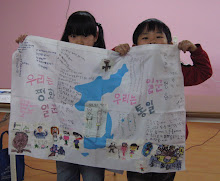
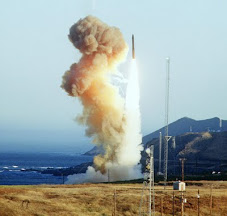
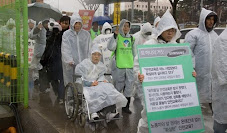
'저는 그들의 땅을 지키기 위하여 싸웠던 인디안들의 이야기를 기억합니다. 백인들이 그들의 신성한 숲에 도로를 만들기 위하여 나무들을 잘랐습니다. 매일밤 인디안들이 나가서 백인들이 만든 그 길을 해체하면 그 다음 날 백인들이 와서 도로를 다시 짓곤 했습니다. 한동안 그 것이 반복되었습니다. 그러던 어느날, 숲에서 가장 큰 나무가 백인들이 일할 동안 그들 머리 위로 떨어져 말과 마차들을 파괴하고 그들 중 몇몇을 죽였습니다. 그러자 백인들은 떠났고 결코 다시 오지 않았습니다….' (브루스 개그논)


For any updates on the struggle against the Jeju naval base, please go to savejejunow.org and facebook no naval base on Jeju. The facebook provides latest updates.
Showing posts with label DEIS. Show all posts

Friday, January 14, 2011

[Site Fwd: Minagahet Chamorro] Against the Buildup

Minagahet Chamorro
Against the Buildup
By Michael Lujan Bevacqua
Friday, January 14, 2011

In a post last year titled "The Buildup Bubble or I'm Looking Through You" I discussed an exchange I had with a student last semester where they challenged the idea that Guam had changed over the past year on the military buildup issue. Here is an excerpt from my post below:
The DEIS comment period created the impression of a significant amount of people being against the buildup or changing their opinion on the buildup, or being more engaged about it. Since the period ended, much of that feeling of things moving or shifting has changed or evaporated. The comment period did after all provide the perfect space, a window of time and a series of public events where a new image of the island could be forged.
Since that time however, I've heard regular complaints from all sectors of society, that the feel of things moving or changing, or as I've written on this blog, of the buildup "breaking down," was not real, was all just media manipulations and spectacles of dissent. That public opinion on the buildup has always been taihinasso positive, and overwhelmingly supportive. That although the surface of public opinion may have changed from November of last year to February of this year, this is the work of a small minority of people, who staged protests and other pointless actions but didn't really reach the island at large. These points are finally tied together by the notion that the majority of people on Guam always have and still continue to support the planned buildup.
Although this characterization is accurate, the shifting of public focus and discussion was something undertaken by a small but vocal group of individuals (and by this I don't mean We Are Guahan alone, but they were the biggest visible part of it), it’s actually a really stupid point. You can't argue that nothing really changed or happened based on the fact that only a small group of people were engaged on this issue, since that is the nature of all public debates. Furthermore, the fact that the majority of Guam's people didn't take to the streets to oppose the buildup isn't evidence that you can use to claim that nothing happened. The fact that the media coverage changed on the buildup, and the fact that politicians also changed as well are both key points in understanding what took place and what sort of effects the DEIS comment period had on "public opinion."
Now you can argue, as one UOG student did to me the other day, that both of these shifts aren't the "whole island," and that they don't necessarily affect what the rest of the island, or in the speak of people who don't know what they are talking about say it, "real people" think. The student brought this up to complain about how the actions of We Are Guahan didn’t represent what people on Guam really felt and they were clouding the issue and clouding public discourse by appearing to have more impact than they really did.
After teaching classes during the intersession I noticed how different my students were on the public issue then when I first started teaching at UOG in 2008 and 2009. That was one thing which made me want to revisit the previous post and this issue.


The FEIS was released the ROD was signed and so now more than a year after the whole DEIS process began, it is interesting to look back and take stock of what did change and what are evidence we can see around us of that change. The buildup remains an omnipresent issue, something everyone has somewhere in their mind, but it is not discussed in the same ways it was before. The euphoria in the media and from certain sectors of society has faded significantly and certain ways of talking about the buildup have become codified. The DEIS period helped to embed in the concept of the buildup, its status as a sort of master-signifier, something which stitched together so many disparate threads of discourse, alot of critical notions. By critical notions I mean ideas which were once errant and random, which were seen as not unrealistic, unpatriotic, silly or the kind of talk which might burst the illusionary bubbles of economic prosperity that some in the media, government and civil society were blowing. The DEIS period opened up the concept of the buildup, it laid bare its mechanics and as a result, when it was sown up, when the FEIS and ROD were released and signed and the concept was declared fit for duty. But the damage had been done, when the commenting process and the actually reading of the DEIS had basically chumunagat, or slit open the belly of the buildup, it could not be sown up again without consequences and so many of the critiques, the symbols of resistance to the buildup, the strands of discourse that incited anger, ambivalence, distrust over it were shoved in with the tilipas.

The concept of the buildup today is not the way it was conceived in 2009, 2008, 2007, 2006 or 2005. You could argue that the public was always ambivalent over the buildup, divided over how it would improve things but also upset and damage things, but almost all sides of the debate could agree that the public perception was mainly positive. The media coverage was overwhelmingly positive, flawed but still relevant opinion polls were the same. Government officials were positive, with a dash of somber-I-am-a-leader-look-at-how-I-furrow-my-brow-when-I-talk-about-how-concerned-I-am-about-the-buildup. As I've written about before, this support for the buildup was built on knowing practically nothing about what the buildup would entail. One of the reasons why I say that the polling on the buildup was flawed is because it missed the level of knowledge of people about the buildup. When the first polls were done they always gauged whether or not people supported the buildup, long before it was even clear what was meant by the term itself!

I was reminded of how pointless the polls for newspapers such as the PDN often are. They ask people to grade the performance of the government on a topic, and usually most people who vote have no actual knowledge about the government's performance on said topic. Instead they draw their opinions from random personal experiences, things they hear and the perceived tendencies in the discursive web. They may be inclined to follow the patterns they see or may want to assert an oppositional identity and work against the flow. But ultimately a poll such as that means little, has little substance because it cannot make that crucial connection between opinion or support for something and how much is known about it.

Today, I would argue, and when I say this, it is based solely on my analysis of media coverage and my interactions with people, I have done no polls to support this, that knowledge of the buildup has increased and that is one of the main reasons why the public has become more measured and the issue is no longer dealt with in such laudatory tones.

Support was high so long as the world of discourse that gave the building meaning and shape was dominated by things which had nothing to do with the buildup. So long as people conceived the buildup through sinthomes such as "more military = more money" or "more America = more better everything" or "militarization is the way Guam gets to be American" and that, like most colonial tropes, led to plenty of support, because people felt the build through feelings of wanting to be more American or feeling that. The buildup was interpreted primarily as one of many tests of Guam's readiness to serve America, to be part of America, to get to enjoy America. And in those terms, of course Guam, in all its colonial amnesia naturally enthusiastically shouted hunggan! Biba!

Once the buildup became something tangible, once it was actually determined what it was supposed to be, meaning that it wasn't just the golden ticket so many businesspeople promised it would be, but would actually have material effects, some of which were negative, things changed. Once it became attached to certain places, certain things. Once it was no longer that floating, no-strings-attached, extra-special stuff from the liberator which so many on Guam pine for, but became places such as Pagat, or became 71 acres of coral, or was felt and given meaning through the possibility of extra time in traffic. longer waits at GMH and increases in crime.

It was interesting how the personalization of the buildup, the way that people used to connect to the sheer nothingness of the buildup in positive ways, using its emptiness to imagine pretty much whatever they want, has become negative as well. In the beginning, the buildup was going to good for everybody, everyone, from the lowliest employee at a hotel to the owner of a major corporation all thought there would be something big for them as part of the buildup. They made the connection to whatever they personally might have wanted or felt, such as better wages, new businesses, new franchises, more federal money, more respect from the rest of America or more customers and infused it into the buildup. But now those positives are joined by a host of negatives, as people perceive the buildup as causing Guam to lose things, or things to not be fixed or improved, but actually get worse and fall apart even more. And this has its own personal dimensions. People loathe the buildup because of losing lands, losing access, more people, more traffic, loss of community, etc. Interestingly enough, both sides of equation can have little connection to reality. For example, the issue of Pagat and the possible loss of public access there has brought many people into the discussion who never would have joined it before. But their change of attitude or creation of a new critical opinion on the issue isn't necessarily accurate. Just because it is something which I agree with or am happy to exist, it doesn't mean it's true and so many of the people who are upset about Pagat don't really know what the situation is, but are simply responding to perceptions or the way things shift and push and pull in the world of discourse on Guam.

It is funny when I think back to my argument with that student. He wasn't really paying attention to what was going on, but simply sticking to an ideological argument. If he was paying attention he would have noticed clear differences. If I had mentioned to my students 4 years ago that I wanted to take the class to Pagat, most people would have asked what that is or why they had to go? As of today when I mention taking my students to Pagat most of them are happy to go and often cite incorrect information as to why they want to now go. They say that they want to go now since it will be closed anyday, sometimes they even ask if we still can go since they associate the signing of the ROD with the closing of Pagat. It was funny because, the student in question was in a class which I took to Pagat and so he could have seen with his own eyes the changes in his peers. What has taken place is not a turning of the tide, a complete shifting of it. To say that the island is now against the buildup seriously overstates people's opposition or their critiques. But there are far more critiques and negative interpretations of the buildup than ever before, and even more importantly, there is the feeling that people have turned their opinions on the buildup. Which is one of those paradoxical things in the study of ideology, which has a way of performing the things it is meant to represent. The belief that people are now against the buildup leads to far more people feeling they too are against the buildup.

I am grateful to have been around this past year and to see these changes, to write about them and to live on an island that exhibits them.


Wednesday, October 13, 2010

Text Fwd: [famoksaiyanfriends] [ Michael Bevacqua, Guam] Realizing Our Destiny [마이클 베박쿠아, 괌] 우리의 운명을 실현하기

* Image source: Michael Lujan Bevacqua's Minagahet Chamorro blog, Oct. 6, 2010

* Image source: Michael Lujan Bevacqua's Minagahet Chamorro blog, Oct. 2, 2010
__________________________________________________________
* Text sent from Martha Duenas on Oct. 13, 2010.

Marianas Variety
Realizing Our Destiny
Wednesday, 06 October 2010
By Michael Bevacqua

There is almost too much to say and contemplate about last week’s Realize Our Destiny Rally, organized by We Are Guahan and held at Adelup. In place of my still congealing thoughts, I have reproduced below two passages which were featured in the program for the rally.

The first is the Realize Our Destiny document, which was signed by numerous current and hopeful leaders at the event. The second is a statement on the importance of many of the critical comments which were submitted as part of the DEIS process, but which were not attended to as they were considered to be outside the scope of the military buildup.

As people of the land and sea, we look to our past in order to shape our destiny. We are guided by the wisdom and ways handed down from our ancestors, and carried on through our children. We have the power within us to thrive in the land we inherit and to ensure that our culture and beliefs are respected. We have an obligation as people of Guahan to enrich our future for generations to come.

We have reached a crucial point in our history, and we must come together to lift our voices and spirits, and shape the fate of our home and people.

We come together, as a united people, ready to protect our resources – our land, our air, our ocean, our culture, our families, our spirits and our beliefs. We will not allow them to be taken away.

Together, as children of the Marianas, we acknowledge the historical injustices that continue to plague our islands, and we promise to pave a path toward a more just history. We will tell our own stories of ourselves and ensure that our children know their past.

A history of empowerment requires a willingness to look deep into our past, reclaiming the values, ways and beliefs that have been lost in our rush toward a destiny not designed by ourselves.

The language and culture that have shaped our identity continue to be threatened. We have been told that we are lost, but we will not make this our destiny. Our ancestors fought against the oppression of our unique people and home, and we must continue their legacy.

They have taught us to continue the traditions that sustained them despite the famine, disease, and violence brought to our shores. Like our ancient women, who kept our culture alive, we pledge to do the same.

We commit to guiding our island toward a destiny that refuses to accept that our people, culture, and history have disappeared.

We unite, across the generations, to guarantee that our children will not inherit a world that reminds them they are inferior or non-existent.

We unite to realize that our destiny can and must be shaped by ourselves.

For years, the people of Guam were told that a huge military build-up was coming to their island, but they were not given any concrete details about what to expect. It wasn’t until the DEIS was released in November 2009 that the people of Guam were at last given a picture of what was in store for their island, and it took 11,000 pages of complicated language to explain.

Initially, Guam was paralyzed by the massive size of the DEIS, which matched the massive scope of the buildup itself, and how it would irrevocably alter Guam’s culture, economy and environment. What people had been told for years was a dream, became more like a sprawling and confusing nightmare.

But the people of Guam did not give in to that paralysis and instead began to act. Protests were held, petitions circulated, hundreds came out to testify publicly, reading groups started and new organizations were formed. By February 2010, the public had submitted more than 10,000 comments, which meant almost one comment for each page of the DEIS.

In those thousands of comments, the people wrote their fears, their tears, their minds, their souls. They ranged from the scientific, the angry, the remorseful, the poetic. Some spoke directly to the DEIS, criticizing it, making corrections, spotting errors, making light of its many possible inadequacies. Others challenged the process itself and the narrow limits that were placed upon what topics were considered to be related and relevant to the buildup, and what weren’t. Despite the power of their words and the legitimate concerns that were raised, the people of Guam were politely dismissed by the Department of Defense who did little to change their plans and adequately address the community.

The DEIS process, for all its apparent openness, was still an exercise in limiting the discussion, trapping it and narrowing it to keep the buildup train moving forward. Comments that were deeply critical of issues, which struck at the foundation from which all federal-territorial relations are built upon, were cast aside and considered to be irrelevant. Comments with a larger view of the buildup and Guam’s history criticized the military’s plans through issues such as colonialism, self-determination, land dispossession, racism, neo-liberalism, militarism, war reparations and a lack of fundamental human rights. To all of these comments, the response was a generic, “thank you for your comment.”

We encourage everyone to read the critical comments found in Volume 10 of the Final EIS (www.guambuildupeis.us) because both those issues and the passion and care with which they are written go right to the heart of how Guam, as a unique, colonized place, struggling for self-determination can realize its destiny.

Saturday, September 4, 2010

Text Fwd: [famoksaiyanfriends] from Minagahet Chamorro blog: :Minagahet Zine: Critical Comments

* Image source: same as in the link

* Texts fwd from Martha Duenas on Sept. 3, 2010

No Rest for the Awake: Minagahet Chamorro blog
by Michael Lujan Bevacqua
Sept. 2, 2010

EXCERPTS

'The DEIS (Draft Environmental Impact Statement) comment period was an incredible three months. The public engagement and critique was far beyond anyone could have expected. 9,000 – 10,000 comments were submitted to the Joint Guam Program Office, thousands and thousands more than they most likely anticipated. The public comment meetings were dominated by people who were either against the buildup or at least suspicious about how this sort of massive movement of people and rapid haphazard period of development could be beneficial for Guam long-term. Throughout the DEIS comment period, I was trying my best to keep up with what was going on, and wrote a series of blog posts about how we could see the buildup as a process “breaking down.” The idea of it “breaking down” wasn’t meant to convey that it wasn’t going to happen or that it had been valiantly stopped, but more to discuss how opinions of it, representations of it, and even political decisions about it were changing and moving. The buildup was always a massive, complicated, kaduku and impossible thing, but this aspect was something most people on Guam did not take seriously. Deeply embedded colonizing thoughts that whatever is good for the US is good for Guam, or that Uncle Sam is always looking out for Guam created a gigantic bubble, which made this ridiculously large project seem more like a dream than reality. The buildup was for years a golden ticket, something which would make dreams come true. Another way in which Guam reinvents its dependency upon the United States, through emotional nationalism and deluding optimism. People didn’t know a lot of details, but didn’t really have to, since those details would be taken care of by others who we can be certain are much better at their jobs than anyone on Guam and only have Guam’s interests at heart.

The DEIS comment period (thankfully) did a lot to change this. The DEIS document and those people who did the difficult work of translating it and interpreting it for the public, laid bare the scope and the damage the buildup entails. The news media, started to reach beyond the official DOD line that comes from JGPO and look at what the murmurs were in Japan and Washington D.C. and suddenly things seemed less certain, less inevitable. Not only was there a very real possibility that this buildup would not make Guam’s dreams come true, but in fact it could do far more damage than anyone had imagined, to the environment, society and the economy. Even the promises which were made that Guam would swim in more money than it could ever hope to spend, were clearly not enough to cover the costs of increasing Guam’s social capacity enough to handle the population increases or the damage that would be caused at Apra Harbor. Today, the perceptions of the buildup are far closer to where they should be than ever before. People see the buildup as both positive and negative, and by this I don’t mean they see it has something bubula’ ni positives, with unu pat dos na negatives. They see it as something which could improve some things, but could also damage others. And the positives in no clear way outweigh the negatives. This is the point which Guam should have been at 4 years ago, in the first days of this buildup, because then it could have adequately prepared for either handling or challenging this buildup.

FOR MORE READING, SEE'

Sunday, June 20, 2010

[국문 번역] Guam Report 괌 보고서

# The below was the writing by Michael Lujan Bevacqua (Guam) who wrote it upon his visit to South Korea when there was the ‘No Base Learning and Solidarity Program-Korea(June 14 to 20, 2010)’ as Guam delegate. His bio can be seen at the bottom of the writing. The writing in original English and Korean translation was loaded in Peace Making website.(click HERE and HERE)

# 위 글은 2010년 6월 14일 ~20일에 열린 [기지 반대 배움과 연대 한국 방문 프로그램] 에 한국을 방문한 괌대표 마이클 루한 베박쿠아 (Michael Lujan Bevacqua)가 발제한 내용이다. 그의 약력은 글의 말미에서 볼 수 있다. 이 글은 원문 영문본과 국문 번역본이 평화 만들기에 실렸읍니다.(여기여기를 누르시길)

______________________________________________________________________________

Translator 번역: Jung Ae-Sung 정애성


2010 South Korea "No Bases" Solidarity Trip

2010년 "기지 반대" 연대 여행

Guam Report 괌 보고서

By Michael Lujan Bevacqua
마이클 루한 베박쿠아


1. Guam was first notified in October of 2005 that as few as 7,000 US Marines and their dependents would be transferred to the island from Okinawa. Guam was not involved in the discussions or negotiations about this transfer.

1. 2007년 7,000 명의 해군들과 그들의 부대 인력들이 오키나와로부터 괌으로 이전할 것이 라는 최초의 고지가 있었다. 괌은 이 이전 문제를 둘러싼 논의나 협상에 참여한 적이 없었다.

2. For five years, the Department of Defense gave Guam little to no information about what exactly its plans were for its buildup of troops there. The military claimed that this was necessary since nothing was absolutely decided yet, and they would not share any information until it was absolutely certain. As a result, Guam for five years has known that something big is coming to the horizon, but is not sure how or what to prepare for.

2. 5년 간 국방부는 괌에서의 군축 증강 계획이 정확히 어떤 것인지에 대해 아무런 정보도 주지 않았다. 군은 아직 아무것도 완전히 결정되지 않았기 때문에 그것이 분명해질 때까지는 어떤 정보도 공유할 수 없다고 주장했다. 5년 동안 괌은 어떤 커다란 일이 수면 위로 떠오르고 있다는 것을 알았지만, 어떻게 혹은 무엇을 준비해야 할지 알 수 없었다.

3. In November of 2009, the military finally released its plans for Guam, called the Draft Environmental Impact Statement (DEIS) , this document is meant to outline all the plans and construction which will take place as part of the buildup and also what the possible negative impacts might happen. The document was also supposed to outline any possible alternative or means mitigations practices which could avoid of diminish the negative impact.

3. 2009년 11월 군 당국은 마침내 환경 영향 평가 초안(Draft Environmental Impact Statement, 이후 DEIS)으로 불리는 괌에 대한 계획안을 공포했는데, 이 문서는 군축 증강으로 수반되는 모든 계획과 건설, 그리고 그것이 초래할 부정적인 결과에 대한 대략적인 설명이었다. 그 문서는 또한 부정적 영향을 감소시킬 수 있는 대안적 완화 방안을 모색하려고 했다.

4. This document was 11,000 pages long, and the people of Guam were given 90 days in order to read it and respond to it.

4. 이 문서는 11,000 페이지에 달하는 것이었고, 괌 주민들은 그것을 읽고 응답하기 위해 90여 일을 소모했다.

5. At last, the people of Guam knew what exactly the military was planning. Their buildup consisted of three main actions.

5. 결국 괌 주민들은 군 당국의 계획이 정확히 무엇인지를 깨달았다. 군축 계획은 세 가지 주요 조처들로 구성된다.

a. The transfer of 8,000 Marines from Okinawa to Guam along with their 9,000 dependents. Billions of dollars worth of facilities would have to be built to house, train and entertain these transfers.

a. 8,000 명의 해군들과 그들의 부대 인력 9,000 명을 오키나와에서 괌으로 이전한다. 수십억 달러의 이전 경비가 소모될 것이다.

b. A massive dredging of Guam’s primary harbor, Apra, in order to allow for nuclear powered aircraft carriers to berth on Guam for several weeks of the year.

b. 핵의 파괴력을 지닌 비행기들을 연 간 수 주 동안 괌에 정박시키기 위해, 괌의 주요 항인 아프라(Apra)에 거대한 준설 작업을 시행한다.

c. An Army Missile Ballistic Force, consisting of around 600 Army personnel, who would shot missiles out of the sky as they passed over Guam.

c. 괌을 지나가면서 하늘에서 미사일을 떨어뜨릴 600명의 탄도 미사일 부대(An Army Missile Ballistic Force)를 구성한다.

6. The DEIS is a document which the military writes itself based on studies and research they do. Typically, the DEIS is a document which while mentioning some negatives ultimately supports the action. In the case of this DEIS, while overall providing support for the military buildup to Guam, it also revealed that the military anticipated that a wave of negative impacts would also hit Guam.

6. DEIS는 군 당국의 연구와 탐구에 근거한 보고서이다. 전형적으로 DEIS는 일부 부정적인 영향을 언급하지만 결과적으로 그 조처를 지지하는 문서이다. DEIS는 전반적으로 괌의 군축 증강 계획에 대한 지지를 표명하면서도, 군 당국이 괌에 부정적인 여파를 초래할 것을 내다보고 있음을 보여준다.

7. The military buildup to Guam would bring within 5 years, 80,000 more people onto the island, 30,000 of whom would be foreign contract workers.

7. 괌의 군축 증강으로 5년 내에 80,000여 명의 사람들이 괌으로 몰려들고, 그들 중 30,000명은 외국인 계약직 노동자일 것이다.

8. Although the military buildup would create in their estimation 20,000 new jobs, only less than 25% of those would go to Guam residents, the rest going to foreign contract workers or military dependents.

8. 그들은 군축 증강으로 20,000 개의 새로운 일자리가 생길 것으로 추산하지만, 괌 주민들에게 돌아가는 것은 그것들 중 25% 미만에 불과하고, 나머지는 외국인 계약직 노동자들이나 군의 부대인력에게 돌아갈 것이다.

9. The military admitted that the buildup may have long terms impacts on Chamorros and their place on Guam, by furthering making them a minority in their own land, and weakening their political and cultural power.

9. 군 당국은 군축 계획이 괌의 차모르족과 그들의 입지에 장기적인 영향을 끼치게 되고, 더 나아가 그들을 소수 민족으로 만들고 그들의 정치적, 문화적 힘을 약화하는 결과를 가져올 것이라고 시인했다.

10. The DEIS foresaw that Guam would need to increase the capacity of its health care system, educational system, utility and infrastructure system at an incredible rate in order to not have the buildup destroy the island. Initial GovGuam estimates for how much it would cost for Guam in order to hire and train the teachers, doctors, nurses needed for the buildup as well as improve roads and utilities was anywhere from 2 – 3 billion dollars.

10. DEIS는 군축 계획으로 괌이 파괴되지 않기 위해서는 괌의 건강보호제도, 교육제도, 엄청난 기간 시설과 설비력을 보강해야 한다고 내다보았다. 괌 정부는 군축 계획에 필요한 교사, 의사, 간호사를 고용 및 훈련하고, 도로와 설비들을 개선하는데 드는 비용은 무려 이삼십 억을 웃돌 것으로 추산한다.

11. As early as 2006, the military has promised not to seek any new lands for their buildup, as they already control close to 1/3 of Guam’s land base. However in the DEIS, the military now claimed that they needed 2300 new acres of land, from both private and public hands in order to create proper training facilities for the Marines being transferred.

11. 2006년 군 당국은 그들이 이미 괌의 영토 기지의 거의 1/3을 보유하고 있으므로 군축계획을 위한 새로운 영토를 요구하지 않기로 약속했다. 그러나 DEIS에 의하면, 군 당국은 지금 해군 이전을 위한 적절한 훈련 시설들을 갖추기 위해 개인의 땅이든 공유지이든 2300 에이커의 새 땅이 필요하다고 주장한다.


12. The dredging of Apra Harbor would lead to the destruction of several acres of coral and endanger the natural habitat of a number of already endangered local species of turtle, shark and coral.

12. 아프라 항의 준설 작업으로 수 에이커의 해초 지역이 파괴되고, 이미 멸종 위기에 처한 바다거북, 상어, 해초 등 많은 종들의 자연 서식지가 파멸하게 될 것이다.

13. The military admits, that while for certain sectors of society on Guam they may reap a great deal of financial benefits from the buildup, the island as a whole will undergo a boom and bust cycle, leaving the island’s economy in a more precarious position after the main construction phase is done, then it currently is in now. The cost of living would rise sharply, but the wages would not rise as well.

13. 군 당국은 어떤 측면에서는 괌 주민들이 군축 계획으로부터 상당한 재정적 이익을 보겠지만, 주요 건설 작업이 끝나면 섬 전체가 붐-침체 주기를 겪고 섬의 경제는 더욱 불확실한 상태에 빠지게 될 것이라고 인정한다. 생활비는 폭등하고 임금은 오르지 않을 것이다.

14. People on Guam, recognizing the dangers that this buildup now represented, came out in record numbers to speak out their minds on this buildup.

14. 이 군축 계획이 초래할 위험성을 인식하고 괌의 많은 주민들이 군축에 대한 그들의 의견을 표명하게 되었다.

15. The DEIS public comment period lasted from November 2009 – February 2010. During that period, public meetings were packed with people who showed that they were upset, confused and wanted this buildup either slowed down, stopped or renegotiated with Guam at the table.

15. DEIS는 2009년 11월부터 2010년 2월까지 여론을 조사했다. 그 시기의 공적 회의들은 괌 주민들이 분노하고 혼란스러워하면서, 이 군축 계획을 좀 더 늦추고 중지하거나, 또는 괌 주민들과 협상하기를 원한다는 것을 보여주었다.

16. The Department of Defense had been hoping that the people of Guam would not ask any questions or criticize this buildup, and were very shocked when they ended up receiving almost 10,000 comments from people about the military buildup.

16. 국방부는 괌 주민들이 이 계획에 질문하거나 비판하길 바라지 않았고, 최종적으로 군증축에 대해 괌 주민들로부터 10,000 개의 비판적 여론을 받았을 때 큰 충격을 받았다.

17. The buildup cause such an uproar that a new grassroots group, made up of primarily young people, was started called We Are Guahan. This group collected an email list of 5,000 who all had concerns about the buildup and organized different public events to inform the public about the negative impacts of the buildup, and gathered 10,000 signatures for a petition to be sent to President Obama asking that he meet with the people of Guam to hear their concerns about the buildup.

17. 군축 계획은 "우리는 구아한이다"(We Are Guahan)라는, 주로 젊은이들로 구성된 새로운 민중 집단이 생길만큼 큰 소란을 일으켰다. 이 집단은 군축에 대해 우려하는 5,000명의 이메일 명단을 수집하고, 군축으로 초래될 부정적인 영향에 대한 사회적 여론을 알리기 위해 공공의 다양한 행사들을 개최하는가 하면, 10,000 명의 사인을 모아 오바마 대통령에게 괌 주민들과 만나 군축에 대한 그들의 우려를 들어달라는 청원서를 보내기도 했다.

18. One of the sites threatened by the buildup was Pagat Cave, an area full of ancient artifacts which has become a favorite site for hikers and schools to visit. The military proposed leasing that area and restricting access to it in order to build a firing training range nearby, where machine guns and grenades would be used. This caused a huge protest in the community, as teachers, hikers, students, artists and politicians all joined together to protect this site and ensure that it wasn’t taken for military use. This work paid off when in May 2010, Pagat was chosen by the National Trust (a historical and environmental preservation organization) as one of its 11 most endangered historical sites in the world.

18. 군축 계획에 의해 위협받는 곳들 중 하나인 파갓 동굴(Pagat Cave)은 고대의 인공물로 가득한 지역으로 여행객들과 학생들이 즐겨 찾는 명소였다. 군 당국은 총과 수류탄을 사용하는 미사일 훈련지를 근방에 세우기 위해 그 곳을 임대해서 접근 제한 지역으로 만들겠다고 제안했다. 이것은 괌 공동체에 거대한 저항을 불러왔다. 교사들, 여행객들, 학생들, 예술가들, 정치가들이 이곳을 지키는데 힘을 모으고 그곳이 군사적 영유지가 되어서는 안된다고 주장했다. 2010년 파갓 동굴이 내셔널 트러스트(역사적, 환경적 보존 기구)에 의해 파멸 위기에 있는 세계 11개의 역사적 지역 중 하나로 선정된 것은 이러한 노력에 의한 보상이었다.

19. The negative outcry over the buildup even helped shift the opinions of regulatory agencies, locally and nationally. Whereas just a year before, these agencies which are in charge of natural resources and the environment might have approved of the DEIS and the buildup, now in response to the public protests, agencies which do have power over whether or not the buildup can happen, began to report very negatively about the buildup, threatening to stall or stop the entire project. The largest criticism came from the national Environmental Protection Agency, which read the DEIS and gave it the lowest grade possible, saying that it represented a very clear danger to Guam and that the military did not adequately provide alternative or mitigation practices to ensure that Guam and its people are protected.

19. 뿐만 아니라 군축 계획에 대한 부정적인 울부짖음은 지역적, 국가적으로 규제 활동들에 대한 여론을 실어나르는데 도움을 주었다. 일 년 전만 해도, 천연 자원과 환경을 책임지는 그러한 활동들은 DEIS와 군축 계획의 승인을 얻어야 했지만, 사회적 저항의 결과로 지금은 군축 계획의 시행 여부에 대해 힘을 행사하고, 군축에 대해 매우 부정적으로 보도하면서 전체 계획의 시행 여부에 위협을 주고 있다. 가장 큰 비판은 국가 환경 보호국으로부터 나왔다. 국가 환경 보호국은 DEIS 보고서에 최저의 등급을 매기면서 그것은 괌에 매우 명백한 위험을 초래하게 되고 군 당국은 괌과 괌 주민들을 보호할 수 있는 대안이나 완화 정책을 적절하게 제공하지 않았다고 진술한다.

20. Right now, the people of Guam are again waiting. They have made it clear to the US military that this buildup, as it is being planned now represents a very serious danger to Guam. In July 2010, the military will respond with its final version of the Environmental Impact State. We are waiting to hear what their response is, will they listen to what people have said and stop the buildup or agree to start over? Or will they just try to push ahead and force it on Guam?

20. 지금 이 순간, 괌 주민들은 여전히 기다리고 있다. 그들은 지금 계획 단계에 있는 이 군축이 괌에 매우 중대한 위험을 몰고 온다는 것을 미군에게 분명히 표명했다. 2010년 6월이면 군 당국이 최종적인 환경 영향 보고서로 응답할 것이다. 우리는 그들이 어떻게 응답할지, 그들이 주민들의 여론에 귀를 기울이고 군축을 중지할지 아니면 그것을 다시 시작할 것인지, 아니면 단지 그것을 밀고 나가 괌에서 시행하려고 할런지 기다리고 있다.

______________________________________________________________

# Michael Lujan Bevacqua (Guam) is an instructor of English Composition and Guam History at the University of Guam and a scholar-activist whose work is dedicated to chronicling Guam’s history of colonization and exploring its possibilities for decolonization. In 2006 he helped organize the conference Famoksaiyan: Decolonizing Chamorro Histories, Identities and Futures, which took place in San Diego, California and was the first of its kind, bringing together Chamorros and their allies to discuss a diverse range of strategies for decolonization. He manages more than a dozen different websites and blogs dedicated to the issues of Chamorros and their islands, including his personal blog No Rest for the Awake – Minagahet Chamorro, through which he attended the 2008 US Democratic National Convention as the official blogger from Guam. He is the editor of Minagahet Zine and a regularly contributor to the website Guamology. (mlbasquiat@hotmail.com)

마이클 루한 베박쿠아는 괌 대학의 영어 작문 및 괌 역사 강사로 괌의 식민지 역사를 연대 서술하고 탈식민지화를 탐구하는 데 헌신하는 학자-활동가입니다. 2006년 그는 캘리포니아 산디에고에서 열렸던 파목사이안: 차모로 역사, 독자성과 미래 (Famoksaiyan: Decolonizing Chamorro Histories, Identities and Futures) 회담을 조직하는데 공헌했으며 이는 차모로 인들과 그들의 동맹들로 하여금 탈식민지화를 위한 다양한 범위의 전략을 모으는데 공헌한 것의 선구격입니다. 그는 차모로인들과 그들의 섬들에 대한 이슈들에 헌신하는 12개 이상의 다른 웹사이트및 그의 개인 블로그, “각성을 위한 휴식 부재 – 미나가헷 차모로 No Rest for the Awake – Minagahet Chamorro” 블로그를 관리하는데 이를 통해 2008년 미국 민주주의 국가 회담에서 괌의 공식 블로거로 참석했읍니다. 그는 미나가헷 진 Minagahet Zine 의 편집자이며 ‘괌에 관한 것 Guamology’의 정기적 필진의 1인 입니다.

Friday, April 16, 2010

Text Fw: Living at the 'Tip of the Spear'

* Image source: Ed Adams

* Text informed by Martha Duenas on April 15 and Jean Downy on April 16, 2010

[famoksaiyanfriends]
Living at the 'Tip of the Spear'
By Koohan Paik

This article appeared in the May 3, 2010 edition of The Nation. April 15, 2010

ED ABRAMSI was born in Pasadena in 1961 but raised in South Korea and other Pacific Rim locales, finally settling in Hawaii. During my coming-of-age years, between 1971 and 1982, my family lived on a beautiful small island in the western Pacific: lush jungles, remote waterfalls and mysterious freshwater caves. I remember riding horses through abandoned coconut groves and balmy nighttime spearfishing in some of the most abundant reefs in the world.

That place was Guam, at the southern tip of the Northern Mariana Islands, a US colony. Many people think of Guam only as a giant military base, the nexus of US forward operations in the Pacific islands--"the tip of the spear," as the Pentagon calls it. That has certainly become its primary fate. The base occupies fully a third of the island and is off-limits to civilians, including the indigenous Chamorro people, who claim the oldest civilization in the Pacific. Even during my childhood, though I barely noticed it at the time, there was the constant background drone of B-52s roaring overhead to and from Vietnam, and submarines cruising the coasts. Such is the island's current trauma, after an agonized history that has included repeated invasions and four occupations of varying degrees of brutality over four centuries--by Spain, Japan and twice by the United States.


Despite these serial humiliations, the Chamorros--a unique mélange of Micronesian, Spanish and Asian bloodlines--have always maintained optimism, courage and a resilient sense of humor. So far, they have successfully navigated their delicate existence as traditional peoples on a Pacific island, while also trying to play supportive roles--as nonvoting "citizens" in a US colony, even patriotic active soldiers--for their current master. But now they're going to need all the resiliency they can muster to deal with the next blow the United States has in store.


I returned to Guam for a monthlong visit with old friends this past November. I was stunned to find the forests of my childhood being replaced by tarmac at an alarming rate; the remaining wild beaches and valleys being surveyed as potential live-fire shooting ranges; and an enormous, magnificently rich coral reef slated for dredging in order to build a port for the Navy's largest aircraft carrier. I witnessed the rage and hurt, exploding suddenly--and so unexpectedly--from the Chamorro people and other island residents, who have had no say in the planning of cataclysmic changes that will turn their homeland into an overcrowded waste dump for the creation of the hemisphere's pre-eminent military fortress.


My friends told me it's all part of what's called the Guam Buildup.


Though technically Americans, people born in Guam have few American rights if they choose to live in their homeland. They can't vote for president; they have only one, nonvoting representative in Congress, and Congress can overturn any law passed by Guam's legislature. The island remains one of only sixteen UN-designated "non-self-governing territories"--in other words, colonies. As such, its people have no legal route to appeal any decisions made in Washington. A burgeoning resistance movement is under way, which the military is well aware of. They have hopes that a visit by President Obama, twice postponed and now set for June, will help ease the growing agitation. Given the mood of the people, I doubt Obama can calm anything.


The upcoming changes are all aimed at fulfilling a Pentagon vision set forth in its 2010 Quadrennial Defense Review. The "Guam Buildup [will] transform Guam," says the report, "the westernmost sovereign [sic] territory of the United States, into a hub for security activities in the region," intended to "deter and defeat" regional aggressors. Guam will be ground zero for mega-militarization in the Pacific and beyond. John Pike of Globalsecurity.org, a Washington-based think tank, hypothesizes that the military's goal is to be able "to run the planet from Guam and Diego Garcia [an Indian Ocean atoll owned by Britain] by 2015," "even if the entire Eastern Hemisphere has drop-kicked" the United States from every other base on their territory.


The swell of US military activity in the Pacific is not confined to Guam. All across the hemisphere, island communities are inflamed over a quiet, swift rearrangement and expansion of US bases throughout the Pacific--on Okinawa (Japan); on Jeju (a joint US-South Korea effort); on Tinian (in the same archipelago as Guam, but part of the Commonwealth of the Northern Mariana Islands); on Kwajalein and the rest of Micronesia; and on the Hawaiian islands of Oahu, Big Island and Kauai. The US Pacific Command calls it an Integrated Global Presence and Basing Strategy. These imperial intentions have barely registered in the American media, despite gargantuan expenditures and plans. Nonetheless, this projection of American colonial assumptions and aggression is taking its toll throughout the Pacific Rim.


The centerpiece of the Guam Buildup is the transfer of about 8,600 marines from Okinawa. When you add their families and construction teams, including entire low-wage crews from the Philippines and Micronesia--there goes the "jobs bonanza" locals were promised--the expected influx will be 80,000 more people on Guam. The island, about half the size of Cape Cod, has a population of about 178,000. The people of Guam, whose largest ethnic group are Chamorro (37 percent of the population), followed by Filipino (25 percent) and then statesiders (10 percent), doubt their island has the carrying capacity to absorb a 50 percent population surge.


In November the Defense Department released a mandatory Draft Environmental Impact Statement (DEIS) assessing the buildup's effects. It elicited the most blistering responses ever to come from the Environmental Protection Agency, newly resuscitated after the Bush years. The EPA gave the DEIS its lowest possible ranking for proposing entirely ineffective mitigation actions. The agency further enumerated a litany of ecological catastrophes. Hundreds of acres of jungle and wetlands habitat will be covered with concrete and tract developments in order to house tens of thousands of newcomers. There will be massive raw-sewage spills and a shortage of drinking water. The Navy's plans include the destruction of seventy-one acres of an exquisitely healthy coral reef, home to at least 110 unique coral species, in order to build a berth for a nuclear-powered aircraft carrier, which transports eighty-five fighter jets and 5,600 people.


Meanwhile, the Army wants to turn a pristine limestone forest that stretches from the hills to the sea--site of a prehistoric village that is listed with the National Registry of Historic Places--into a shooting range. In addition, it wants to build ammunition storage bunkers in wetlands areas. The Air Force hopes to build a missile defense shield, as well as hangars, airstrips and helicopter pads, turning Guam into the planet's premier parking lot for billion-dollar fighter jets, helicopters and drones.


The DEIS provided no adequate alternative actions to any of these problems. Nor did it mention that dredging the reef will dislodge radioactive sediment that accumulated during the 1960s and '70s when ships traveling from atomic test sites in the Marshall Islands came to Guam to be washed down at Apra Harbor. The DEIS was written as if Guam's people, land and culture counted for nothing. The vice speaker of the Guam legislature, Benjamin Cruz, charged that the "problem you had with the original DEIS is that it was done virtually." Cruz pointed out that the report, prepared at a staggering cost of $87 million, was written by consultants who had never been to Guam and who had simply cobbled together the 11,000-page document based on Internet research and phone calls to Guam government agencies.


The EPA's excoriating response to the DEIS has prompted lawmakers to question not only the cost of the buildup but also the costs of mitigating the project's environmental, social and cultural impacts. The governor of Guam estimates that $3 billion will be needed to upgrade infrastructure before any military construction begins. Military construction is already priced at more than $10 billion, assuming that Japan fulfills its promise to kick in $6 billion to help remove US troops from Okinawa. If Japan begs off, the price tag for US taxpayers will soar to more than $13 billion. Surprisingly, Republican Senator Kay Bailey Hutchinson of Texas sharply criticized Pentagon officials at a Senate appropriations hearing in March about the unexpected exorbitant costs of current Asia-Pacific basing strategies. She suggested that the best solution might be permanent bases on the US mainland, "where you don't have training constraints and you don't have urban buildup, and it is a more stable environment for our families."


By contrast, Democratic Senator Jim Webb of Virginia, who has advocated for an increased military presence in the Marianas since the 1970s, is intent on seeing the buildup through. He supports two solutions: pouring billions into massive infrastructure development (highways, waste facilities, power plants, etc.) and moving all the live-fire training to the gemlike island of nearby Tinian. However, many Guam residents feel that infrastructure spending misses the true cultural and environmental dangers of the population spike; and on Tinian, local farmers, who would be forced off their land (à la Bikini Atoll, circa 1946), are aghast that live-fire training would mark the end of agrarian culture there.


The incident that set these plans for the Guam Buildup in motion was the 1995 gang-rape of a 12-year-old girl by US marines stationed at the Futenma Air Base in Okinawa, one of several shocking incidents involving assaults on local girls by marines. Outraged residents pressured the conservative government to reduce or eliminate the American military presence in Japan. Protests culminated in a 2006 realignment agreement between Japan and the Bush administration to close the air base and send half of its troops to a new air base on Henoko Bay, on Okinawa's east coast, with the other half going to Guam by 2014.


But fierce resistance in Okinawa has derailed the move. Japan's new prime minister, Yukio Hatoyama, who was swept into power in September on his promise to reduce the number of US troops, caught military planners off guard by refusing to allow base construction at Henoko. In October, Hatoyama incensed Defense Secretary Robert Gates by putting the Marines' move on hold until he determines an alternative to the Henoko site. The relocation of Futenma remains stalemated.


The people of Guam have never before opposed military plans for their island. In fact, the Chamorros and Filipinos from Guam are arguably the most patriotic people in the nation; more soldiers from the Marianas have fought and died in American wars since 1950, per capita, than those from any other region in the country. However, the sheer magnitude of destruction proposed by the Guam Buildup is unprecedented and has pushed these patriots to their limit. For the first time in the island's history, they are uncharacteristically speaking out against the military. At a recent public hearing, Chamorro veteran soldier Janet Aguon, who fought in two wars, said, "I'm truly sick and tired of the United States of America and the Department of Defense treating the people of Guam as if they were trash. So my message to President Obama, the DoD, the secretary of the Navy: take the military and put them in your own country and not on our tiny little island."


Military planners are worried. The Hawaii-based commander of Marine forces in the Pacific, Lt. Gen. Keith Stalder, told the Washington Post in March, "I see a rising level of concern about how we are going to manage this."


Meanwhile, demilitarization activists have begun networking. The goal: a Pacific for the people. Those from Guam are allying themselves not only with those from Tinian and other Mariana Islands but also with all their Pacific Rim cousins, particularly on Okinawa, in Hawaii and on Jeju Island. These three locations, with Guam, will be sites for the nation's most advanced missile technology--the ultimate geopolitical "Kick Me" sign. As an example of this pan-Pacific concordance, retired Col. Ann Wright recently joined Pacific Islanders outside the gates of Pacific Command Headquarters on Oahu to protest the Guam Buildup.


"We want Admiral Willard [head of the Pacific Command] to hear this: No means No!" said Wright. "When you force yourself on someone against their will, it's called rape--rape of the people, the culture and the land. We Americans must stop our government's military expansion in the Pacific."


Carmen Artero Kasperbauer, a Chamorro elder whose family's land is now part of an air base, told the military daily Stars and Stripes, "We hate being possessions to the federal government. That's why people are angry." But Kasperbauer, like most Chamorros, doesn't direct her anger at the troops. "I'm not talking about the uniformed military. We love the uniformed military. Our son...helped liberate the Kuwaitis. But he can't help liberate me."


Increasingly, Guam residents are discussing the urgency of political self-determination.


"We're being moved back and forth across a chessboard by two countries: one that once occupied us [Japan] and one that currently does," pointed out university instructor Desiree Ventura, author of the popular blog The Drowning Mermaid. Clearly, the need for sovereignty is more dire than ever, exposing the real question at hand: is President Obama ready to release Guam's people from their colonized status?


Koohan Paik Koohan Paik is an Hawaii filmmaker and co-author, with Jerry Mander, of The Superferry Chronicles: Hawaii's Uprising Against Militarism, Commercialism and the Desecration of the Earth (Koa).


Living at the 'Tip of the Spear'April 15, 2010The US military's plans would devastate Guam's environment. Its citizens are fighting back. Also By • Living at the 'Tip of the Spear'Global Warming & Climate ChangeKoohan Paik: The US military's plans would devastate Guam's environment. Its citizens are fighting back. • Hawaii Court Backs Protestors vs. SuperferryHawaiiJerry Mander & Koohan Paik: Even though the Hawaii State Supreme Court has ruled against this huge corporate-military boondoggle, the battle isn't over yet. • Surfers vs. the SuperferryHawaiiJerry Mander & Koohan Paik: How grassroots activists in Hawaii threw a wrench into plans for an environmentally hazardous superferry.