'저는 그들의 땅을 지키기 위하여 싸웠던 인디안들의 이야기를 기억합니다. 백인들이 그들의 신성한 숲에 도로를 만들기 위하여 나무들을 잘랐습니다. 매일밤 인디안들이 나가서 백인들이 만든 그 길을 해체하면 그 다음 날 백인들이 와서 도로를 다시 짓곤 했습니다. 한동안 그 것이 반복되었습니다. 그러던 어느날, 숲에서 가장 큰 나무가 백인들이 일할 동안 그들 머리 위로 떨어져 말과 마차들을 파괴하고 그들 중 몇몇을 죽였습니다. 그러자 백인들은 떠났고 결코 다시 오지 않았습니다….' (브루스 개그논)


For any updates on the struggle against the Jeju naval base, please go to savejejunow.org and facebook no naval base on Jeju. The facebook provides latest updates.
Showing posts with label Aegis destroyer. Show all posts

Saturday, May 7, 2011

Text Fwd:[Translation] WHAT DO THESE SHIPS DO? 이 배들은 무엇을 하는가?

The below is the Korean translations of the links. Click the links to see the articles in the original English language version.


5월 7일 배쓰 철강 공장(Bath Iron Works: BIW) 에서 또 하나의 [건조된] 이지스 구축함이 “세례식”을 받을 것입니다.
양교수님이 이지스 구축함들을 정박할 남한 제주도의 해군 기지 건설에 항의하며 단식 30일째 김옥에 있습니다.
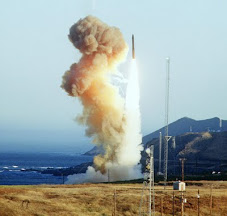
레이시온이 지은 “미사일 방어”의 요격 미사일이 이지스 구축함으로부터 발사되고 있습니다.
______________________________

http://space4peace.blogspot.com/2011/05/what-do-these-ships-do.html
2011년 5월 5일
이 배들은 무엇을 하는가?
브루스 개그논

저는 오는 6월 17일부터 19일까지 메사추세츠 근처에서 열릴 글로벌 넷워크의 19번째 연간 우주 조직 회담에 관련된 제일들의 제 속도에 박차를 가하고 있습니다. 우리는 행사에서 레이시온 회사의 우주 기술 작업에 초점을 맞출 것인데 그것들이메사추세츠에 기반하고 최근 가장 불안정하게 하는 무기 시스템들중 많은 것들을 바로 우리 눈앞에서 짓고 있기 때문입니다.

우연히, 오는 토요일 메인주 베쓰에서 여러분께서 위의 사진에서 보듯 스탠다드 3 (SM3) 미사일 방어” 요격기의 발사대인또다른 이지스 구축함의 건조, “세례식”이 있을 것입니다. 그러므로 이 두 행사가 요즈음 제 일을 묶고 있습니다.

메인주에서 이 이지스 전함들이 정말 무엇을 하는지 아는 사람은 별로 없습니다. 사람들은 케네디 강으로 차를 몰고 가 배쓰 철강공장 밑 선박장에 보통 정박해 있는 1~2 개의 이지스들을 볼 때야 그것들을 주목할 지 모릅니다. 사람들은 배쓰 철강 공장이국가에서 가장 큰 비정부 고용주이며 배쓰가 선박 건조의 긴 역사를 갖고 있다는 것을 압니다. 그러나 그것으로 끝납니다.대부분의 사람들은 그 배들이 미국(누구로부터?)을 방어한다고 생각하고 놔둡니다, 사실, 대부분의 메인주 사람들은 그 것 이상을알려고 원하지 않는데 왜냐하면 배쓰 철강 공장에서 일할 지 모르는 이웃들과 갈등에 있고 싶어하질 않기 때문입니다.

몇년전에 환경 운동에 유행처럼 “생물 지역” 이란 문구가 있었습니다. 그 생각은 좋은 환경 운동론자는 그것들과 일을 지키기위해 생물 보전에 대해 더 친숙해야 한다는 것입니다. 그러나 저는 그 말이 다른 운동들에도 적용되어야 한다 봅니다. 우리는모두 미군사 제국이 우리의 생태-지역에서 일하고 있는지 알고 그것이 우리의 국가와 세계에 좋은 일인가에 대한 대중 토론을북돋아야 합니다.

레이시온에 위해 만들어지는 이지스 구축함들과 요격기들 경우, 이 시스템들은 오늘날 미 국방부에 위해 배치되는 가장 도발적인무기들입니다. 제가 과거에 많이 묘사한 것처럼, 그것들은 러시아와 중국의 경계를 따라 찔러지며 그 양쪽의 국가들의 대항움직임을 강요하고 잇습니다. 이는 우리를 위험하고 비싼 새로운 무기 경쟁으로 이끕니다.

우리 주가 재정적 위기에 있음을 보임에 따라 여기 메인주에서 우리는 깊은 큰 구멍들이 있는 도로들 위에서 차를 몰며 우리의많은 다리들은 수선을 필요로 하며 교육 및 사회 프로그램들은 삭감됩니다. 진보적 활동가들은 경탄스럽게도 이 삭감들에 항의하나미국 군사 지출에 대한 치명적 연결을 하는 이들은 많지 않습니다-그리고 그들은 우리의 셍태 지역의 군사 생산 장소들에 대한거대한 돈의 지출을 특별히 무시합니다.

이 글을 쓰는 와중에 양윤모 교수는 남한 제주도의 감옥에서 30째 단식일을 보내고 있습니다. 그의 신성한 생태-지역 파괴에대한 비폭력적 저항으로 인한 수감은 메인주 철강 공장과 메사추세츠 레이시온에 직접적으로 연결되어 있습니다.

우리의 생태 지역들 각각을 연결하는 하나의 원이 있으니 그것은 안타깝게도 폭력과 파괴의 하나입니다. 이지스 구축함들은 오늘날리비아, 제주도, 그리고 메사추세츠와 메인주에서 새로운 10억 달러 전함들을 지불하기 위해 사회 진보 생명을 파괴하고 있으며우리 모두를 위해 미래를 불안전하게 만들 것입니다.

관련 링크: 우주의 무기와 핵을 반대하는 글로벌 넷워크 19번째 연간 우주 조직 회담, 메사추세츠, 안도버
http://www.space4peace.org/actions/gnconf_2011.htm
_________________________________________________
http://space4peace.blogspot.com/2011/04/protest-of-aegis-christening-planned-in.html


그 들 나라의 “미사일 방어” 시스템들로 장착된 이지스 구축함들 정박에 항의하는 일본 활동가들

미국 해군의 이지스 구축함들을 정박하는데 사용될 환경적으로 민감한 섬의 해군 기지건설에 항의하는 제주도의 한국인들


http://space4peace.blogspot.com/2011/04/protest-of-aegis-christening-planned-in.html
2011년 4월 26일
메인주에서 계획된 이지스 "세례식" 항의 시위
브루스 개그논


[미] 해군은 5월 7일 토요일, 메인주 배쓰 아이런 웍쓰에서 또다른 구축함을 “세례” 할 것이다. 평화 단체들은 오전 8시30분 부터 10시까지 그 행사에서 항의 시위를 벌일 계획이다. 시위 후에 사람들은 배쓰의 아담스 멜만 하우스(센터 스트리트212)의 정오 점심에 오도록 초청된다.

시위는 미소하는 나무들의 비무장 농장, 우주의 무기와 핵을 반대하는 글로벌 넷워크, 메인주 평화 재향 군인회, 그리고 메인주코드 핑크에 의해 후원된다.

“미사일 방어” 시스템들이라 불리는 것들로 장착될 이 구축함들은 핵 보복 군사력을 무력화하기 위해 러시아와 중국 경계들 주위에이지스 배치를 부르는 공격적 미 국방부 군사 전략의 열쇠들이다.

남한 제주도에서 현재 해군 기지 건설에 반대하여 진행되는 힘들게 싸워지는 투쟁들은 해군이 이 배들의 증가하는 함대를 위해 더많은 항구들을 필요로 함에 따라 이 이지스 구축함들에 연결되어 있다.

120만 달러가 지출되는 리비아에 대한 개개의 크루즈 미사일 공격들은 이 이지스 전함들에 의해 발사되었다.

연구들은 군사 생산에 십억 달러를 소비하는 것은 8,555개의 직장들을 창조한다 한다. 그러나 같은 10억 달러가 BIW 와같은 철도 시스템들을 짓는데 투자되면 19,795개의 직장들을 얻을 것이다.

대중은 오늘날 직장으로 아우성 치고 있다. 기업들은 더 싼 해외의 노동에 끌리기 때문에 거대한 세금 삭감에도 불구, 이곳미국에 투자하고 있지 않다. 그러므로 우리가 이 나라에서 더 많은 직장을 원하면 우리는 현재 끝없는 전쟁에 낭비되는 연방 세금달러들을 취하고 BIW 와 같은 시설들에 철도 시스템들, 풍력 터빈들, 그리고 태양력 시스템들을 짓는데 투자해야 한다.

더 많은 정보는 (207) 763-4062 or (207) 443-9502에 연락하시길.

Thursday, April 28, 2011

Text Fwd: PROTEST OF AEGIS "CHRISTENING" PLANNED IN MAINE

Japanese peace activists protesting porting of Aegis destroyers outfitted with "missile defense" systems in their country

South Koreans, on Jeju Island, protest the construction of a Navy base on their environmentally sensitive island that will be used to port U.S. Navy Aegis destroyers
________________________________
Organizing Notes
http://space4peace.blogspot.com/2011/04/protest-of-aegis-christening-planned-in.html
Tuesday, April 26, 2011
PROTEST OF AEGIS "CHRISTENING" PLANNED IN MAINE

The Navy will "christen" another Aegis destroyer on Saturday, May 7 at Bath Iron Works (BIW) in Maine. Peace groups plan to hold a protest at the event from 8:30 - 10:00 am. Following the protest people are invited to come to the Addams-Melman House (212 Centre St) in Bath for a pot luck lunch at noon.

The protest is being sponsored by the Smiling Trees Disarmament Farm, Global Network Against Weapons & Nuclear Power in Space, Maine Veterans for Peace and CodePink Maine.

These destroyers, with so-called "missile defense" systems on-board, are keys to the aggressive Pentagon military strategy that calls for Aegis deployments around Russian and Chinese borders in order to neutralize their nuclear retaliatory forces.

The hard fought struggle of villagers now going on at Jeju Island in South Korea against the construction of a Navy base is linked to these Aegis destroyers as the Navy needs more ports of call for the ever-expanding fleet of these ships.

The recent cruise missile attacks on Libya, costing $1.2 million each, were launched from Aegis warships.

Studies show that spending $1 billion on military production creates 8,555 jobs. But if that same $1 billion was invested in building rail systems at places like BIW we'd get 19,795 jobs.

The public is clamoring for jobs these days. Corporations, despite huge tax cuts, are not investing here in the U.S. because they are attracted to cheaper labor overseas. So if we want more jobs in this country we've got to take our federal tax dollars, that are presently being wasted on endless war, and invest them in building rail systems, wind turbines, and solar systems at facilities like BIW.

For more information please contact (207) 763-4062 or (207) 443-9502.

Sunday, April 17, 2011

Text Fwd: S.Korea-U.S. missile defense discussions underway


Illustration of KAMD System

Hankyoreh
http://english.hani.co.kr/arti/english_edition/e_national/473345.html
S.Korea-U.S. missile defense discussions underway
Concerns remain over which country will lead the defense programs

April 16, 2011

By Kwon Soon-hyuk

South Korean and U.S. officials have said that discussions are underway between the two countries regarding missile defense. Seoul has drawn a line, saying the discussions are merely to discuss an effective, Korean Air and Missile Defense (KAMD), but there are concerns that this may be a step towards participation in a US-led ballistic missile defense (BMD) program.

At a Senate Armed Services Committee hearing Wednesday, deputy assistant secretary of defense for nuclear and missile defense policy, Bradley Roberts, said, “The United States is holding bilateral discussions with South Korea on the issue of cooperating on missile defense.” Roberts added, “With South Korea, we have engaged in bilateral missile-defense cooperation discussions and have recently signed a Terms of Reference and an agreement that will enable our two nations to carry out a requirements analysis so that South Korea can make informed decisions about the utility of any future BMD program.”

In the same hearing, Missile Defense Agency Director Patrick O’Reilly said, “The United States is currently pursuing, researching or analyzing missile defense with over 20 nations, and South Korea is one of the countries with which the United States is cooperating.”

When these comments were reported in the foreign press, the Ministry of Defense, too, said Friday that the Korea Institute of Defense Analyses and the U.S. Defense Department had signed Terms of Reference agreement in September of last year to conduct joint research on the construction and operation of an effective Korean missile defense system. It said working-level officials held their first planning and analysis working group (PAWG) meeting on Wednesday and Thursday in Washington. Defense Ministry spokesman Kim Min-seok said they plan to meet three to four times a year, and that this did not mean Korea was participating in the US-led ballistic missile defense program. Such discussion did not even come up between officials, he said.

However, for a Korean missile defense system to function properly, its early warning system and control system, such as early warning satellites watching for North Korean missile launches, would have to depend on the United States. Accordingly, there is concern that no matter what form it takes, the program will ultimately be linked to the US ballistic missile defense system, and that South Korea will participate in the system as a junior partner.

The Korea Air and Missile Defense (KAMD) system is a missile defense system tailored to the Korean Peninsula to deal with North Korea’s short and medium range missile threat. Discussion of such a system began under the Roh Moo-hyun administration. The U.S. ballistic missile defense system (BMD) counters mostly threats to the U.S. homeland from long-range, high-altitude missiles, while the KAMD would defense against short-range, low-altitude missiles, with North Korea's 300-500km-range Scud B and C missiles in mind. The system would be built around missile defense command and control centers, Patriot 2 and 3 missiles and Aegis warships.


Please direct questions or comments to [englishhani@hani.co.kr]

Text Fwd: DEMANDING CONVERSION AT BIW


On May 7 another Aegis destroyer will be "christened" at Bath Iron Works and a protest will be held beginning at 10:00 am

Organizing Notes
http://space4peace.blogspot.com/2011/04/demanding-conversion-at-biw.html
Saturday, April 16, 2011
DEMANDING CONVERSION AT BIW


Today was the 6th weekly vigil at Bath Iron Works (BIW) here in Maine during the Lenten season. Organized by the Smiling Trees Disarmament Farm, these weekly vigils have been a mainstay outside the Navy ship yard for many years.


Since our house is so close it is one of the few protests we can actually walk to - a very nice thing for us.


I held a sign today that has a train painted on it by an artist friend and reads "Built in Bath" across the top. As the Saturday shift workers drove by at noon it was clear that many of them understood the message - and many of them agree - that something different could and should be produced at BIW. There is growing support amongst the workers to consider the idea of conversion. But in order to make it happen the workers inside these military production facilities are going to have to become more vocal.


These Aegis destroyers, with so-called "missile defense" systems on-board, are keys to the aggressive Pentagon military strategy that calls for deployments around Russia and China's borders in order to neutralize their nuclear retaliatory forces.


The hard fought struggle now going on at Jeju Island in South Korea against the construction of a Navy base is linked to these Aegis destroyers as the Navy needs more ports of call for the ever-expanding fleet of these ships.


The next "christening" of an Aegis at BIW will be on Saturday, May 7 so we will once again put out the call for peace activists to join us there for a protest of these war ships. Many of Maine's leading politicians, including our new Republican governor, will be on-hand for the event. We will gather at 10:00-11:30 am in order to be there as the thousands of people file into the ship yard to watch the ceremony. We'll hook up a portable sound system and hear speeches from representatives of many peace groups in the state. After it is over we'll hold a pot luck lunch at the Addams-Melman House in Bath.


We'll be talking alot that day about jobs. Studies show that spending $1 billion on military production creates 8,555 jobs. But if that same $1 billion was invested in building rail systems at places like BIW we'd get 19,795 jobs. That's a huge difference and you'd think that the media, unions, politicians, and the public would be all over this little known bit of good news.


People are clamoring for jobs these days. Corporations, despite huge tax cuts, are not investing here in the U.S. because they are attracted to cheaper labor overseas. So if we want more jobs in this country we've got to take our federal tax dollars, that are presently being pissed down the rat hole, and invest them in building rail systems, wind turbines, solar systems back here at home.


This won't happen though unless we demand it and we must do it repeatedly. We'll have another opportunity to do so at BIW on May 7.

Sunday, April 3, 2011

Text Fwd: REMEMBERING PLOWSHARES ACTION 20 YEARS LATER


Organizing Notes
http://space4peace.blogspot.com/2011/04/remembering-plowshares-action-20-years.html
Saturday, April 02, 2011
REMEMBERING PLOWSHARES ACTION 20 YEARS LATER

Before dawn on Easter March 31, 1991 Phil Berrigan, Daniel Sicken, Barry Roth, Tom Lewis, and Kathy Boylan boarded the USS Gettysburg, an Aegis destroyer that was docked at Bath Iron Works in Maine. They hammered and poured blood on the missile hatches. It became a huge story in Maine. The charges were dropped the day before they were set to go to trial.

On Friday, April 1 the surviving members (Daniel, Barry and Kathy) of the Aegis Plowshares held a 20th anniversary reunion vigil at BIW and then a pot luck supper at the Addams-Melman House in Bath. A severe snow storm that same day though hampered the turnout but still twenty hearty souls turned up for the vigil at the shipyard and the pot luck that followed. Then again this morning another vigil was held at the shipyard as the Saturday shift was getting out of work.

It was a wonderful reunion for the Aegis plowshares and their supporters.

The ships are outfitted with "missile defense" (MD) systems and are key components in the U.S first-strike attack system. Their job would be to knock out a given country's nuclear retaliatory forces after the initial U.S. attack.

One of these Aegis MD systems was used by the Pentagon to hit a falling U.S. military satellite in 2008 proving they also had the capability to serve as an anti-satellite weapon. Obama is now deploying these Aegis destroyers with their MD systems around Russia and China.

A very fine article about the reunion vigil appeared in our local newspaper yesterday. See it here

Tuesday, March 29, 2011

[MND News Catch up] South Korean third Aegis Destroyer/ Korea and U.S. perform the first joint logistics drill

* Check the links

Photo News, Ministry of National Defense, ROK

Third South Korean Aegis was built

Recent News, Ministry of National Defense, ROK (Uploaded on March 28, 2011)

New protection system for K-2 to be developed this year South Korea unveils

White Paper on Cheonan

Korea and U.S. perform the first joint logistics drill

Monday, March 21, 2011

Text Fwd: S. Korean warship on standby after Western attack on Libya

Yonhap News
S. Korean warship on standby after Western attack on Libya
March 20, 2011

SEOUL, March 20 (Yonhap) -- A South Korean destroyer was on standby on Sunday off the coast of Egypt to help in the evacuations of South Korean nationals from Libya, after Western countries launched military action against Libyan leader Moammar Gadhafi's forces, Seoul's foreign and defense ministries said.

The 4,500-ton Choi Young destroyer decided not to enter the Suez Canal to head back to the Gulf of Aden where it operates as part of a multinational anti-piracy campaign, ministry officials said.

The warship had transported 32 South Koreans from Tripoli to Malta in the Mediterranean Sea on March 3 before carrying out another evacuation mission for five Koreans from Libya to a Greek island on March 14.

The decision to place the ship on standby for another possible rescue operation comes as Seoul has begun to review various options to withdraw its remaining 118 nationals, including 70 in the capital Tripoli, from the turmoil-battered North African nation.

The U.S., Britain and France on Saturday launched missile attacks on positions on Libya's coast controlled by Gadhafi's forces, after the United Nations authorized military actions against the Libyan ruler.

"The government is currently assessing the situations in Libya through close consultations with the Korean embassy in Libya," said the official on condition of anonymity.

"Phased evacuation plans for the remaining South Koreans in Libya have already been in place. All of them will be pulled out of Libya if necessary," the official said, adding the primary targets of the multinational forces' attacks are military facilities.

He noted that a network of emergency contacts for all South Korean nationals in Libya has already been established and they were notified of assembly locations for evacuations.

The official said that the first phase of evacuations will take place over land routes, as it takes about four hours to drive from Tripoli to Libya's border.

"The dispatch of the Choi Young is just intended to help protect South Korean nationals in Libya. It is not directly related to the Western countries' military action against Gadhafi's forces," a defense official said.

Monday, January 10, 2011

Text Fwd: U.S. To Equip Third South Korean Warship With Interceptor Missiles

* Text informed by Rick Rozoff on Jan. 8, 2011

Global Security Newswire
January 7, 2011
South Korea Orders Third Aegis System


U.S. defense firm Lockheed Martin has received a new contract to outfit another South Korean warship with Aegis missile defense technology, the Philadelphia Business Journal reported yesterday (see GSN, Dec. 2, 2009).

The $40.6 million contract would pay for South Korea's third Aegis Weapon System. The destroyer is expected to be sea ready in February; it would be commissioned in summer 2012, followed by two years of testing.

"We fully expected this and have been working together with the U.S. Navy and the Republic of Korea to make this happen," Lockheed official Doug Wilhelm said.

Aegis-equipped warships can provide defenses against missile and aircraft attacks while enabling warships to simultaneously strike against land, surface water and submerged targets, according to Lockheed.

Aegis systems have been deployed on 95 vessels in the Australian, Japanese, Norwegian, Spanish, South Korean and U.S. navies, the Business Journal reported (Peter Key, Philadelphia Business Journal, Jan. 6).

Monday, September 27, 2010

Text Fwd: S. Korea, U.S. kick off anti-sub drills in Yellow Sea 남한과 미국, 황해에서 대항 잠수함 전쟁 연습 시작

* Image source: click HERE

* Image source & caption: click HERE

'USS John S. McCain (DDG 56):
At sea aboard USS Kitty Hawk (CV 63) Jan. 26, 2003 -- The guided missile destroyer USS John S. McCain (DDG 56) approaches the USS Kitty Hawk during a replenishment at sea (RAS). Kitty Hawk is the Navy’s only permanently forward-deployed aircraft carrier and operates out of Yokosuka, Japan.'

* Image source & caption: click HERE
'U.S. navy missile destroyer USS Fitzgerald (DDG-62) (image: navy.mil)'

_________________________________________________________

Yonhap News
By Kim Deok-hyun
S. Korea, U.S. kick off anti-sub drills in Yellow Sea

SEOUL, Sept. 27 (Yonhap) -- A flotilla of South Korean and U.S. warships started anti-submarine drills in the Yellow Sea on Monday in another show of force against North Korea, Seoul's military officials said.

The five-day exercises, which run through Friday, are the second in a series of joint drills staged or planned by Seoul and Washington in response to North Korea's sinking of a South Korean warship six months ago.

About 10 ships, including two U.S. guided-missile destroyers, the USS John S. McCain and USS Fitzgerald, and two submarines as well as some 1,700 troops have been mobilized for the maneuvers.

"The drills started around 7 a.m., and everything is going ahead in accordance with our maneuver plan," said an official at the South's Joint Chiefs of Staff (JCS).

The JCS official said the drills are being staged off the west coast town of Taean, far south of the Yellow Sea border where the Cheonan warship was sunk on March 26.

A South Korea-led international probe in May officially pinpointed North Korea as the perpetrator of the torpedo attack on the Cheonan that left 46 sailors dead.

The North has denied any role in the sinking and threatened military retaliations against the drills, calling them a rehearsal for war.

Pyongyang's state-run Committee for the Peaceful Reunification of Korea warned on Sunday that its army "will never pardon provocateurs and mercilessly wipe them out."

kdh@yna.co.kr

Wednesday, September 1, 2010

Photos Fwd: S. Korea commissions 2nd Aegis destroyer 남한 두번째 이지스 구축함 해군에 위임

* Image source: Yonhap News

* Image source: Yonhap News

'Aug. 31, GEOJE, South Korea -- This is the Yulgok Yi Yi, South Korea's second Aegis destroyer, which Daewoo Shipbuilding & Marine Engineering Co. (DSME) delivered to the Navy on Aug. 31 after years of test-run. (Photo courtesy of DSME) (Yonhap)'

The 1st South Korean Aegis Destroyer, Sejong, the Great launched on May 26, 2007. You can see the Korean video HERE and HERE. For more on the 2nd Aegis Destroyer that launched on November, 14, 2009 and will be operational for combat use from 2011, click HERE.

________________________________________________

Korean articles 국문 기사

한국 일보: 두 번째 '신의 방패' 율곡이이함 바다로: 대우조선해양, 해군에 인도

국문 위키피디아: DDG-992 율곡이이

더 많은 기사 목록: 다음 뉴스

통일 뉴스: 이시우: 위험한 무기 이지스함
<분석> 아군과 민간인에 재앙적 결과 초래 위험 상존


제주 해군기지는 미 해양패권을 위한 군사적 발판 될것
'평화의 섬 제주' 해군기지 건설 타당한가? 토론회

* 제주참여환경연대와 참여연대 평화군축센터, 평화와통일을여는사람들, 평화네트워크 등이 공동으로 주최,
2006/12/07

________________________________________________
국문 비디오: 남한 두번째 구축함 율곡 이이 해군 진수식, 2009년 11월 14일
King Sejong class 2th Aegis DDG launch (Korea Navy)(Video URL)


________________________________________________

* Related site

Global Network against Weapons and Nuclear Power in Space
Missile Defense and the Korean Peninsula - What is the Problem?
Written by Cheong, Wooksik, Peace Network on March 6, 2009
Translated by Agatha D. Haun


우주의 무기와 핵을 반대하는 글로벌 넷워크
MD와 한반도, 무엇이 문제인가?
정욱식(평화네트워크 대표), 2009 년 3월 6일
번역: 아가타 혼

위의 글의 국문은 여기 사이트의 밑을 내려가시면 볼 수 있읍니다.(클릭)

Thursday, June 3, 2010

Text Fwd: S. Korea, US to stage joint naval exercise next week

Korea Times

06-02-2010 19:21
S. Korea, US to stage joint naval exercise next week
By Jung Sung-ki
Staff reporter

South Korea and the United States will stage a large-scale naval exercise in the West Sea next week, about two months after North Korea attacked a South Korean frigate there, officials of the Ministry of National Defense said Wednesday.

Following the exercise to be held from May 8 to 11 in waters south of the Northern Limit Line (NLL), the navies of the two allies also plan to conduct a joint anti-submarine drill, they said.

"After a multinational investigation pointed to North Korean involvement in the ship sinking, both governments agreed to show their firm deterrent against threats from the North," a ministry official said.

The U.S. 7th Fleet will dispatch the nuclear-powered aircraft carrier USS George Washington, as well as nuclear-powered submarines, Aegis-equipped warships and amphibious assault landing ships, the official said on condition of anonymity.

Named after the first president of the United States, George Washington is the sixth ship in the Nimitz class. Commissioned in July 1992, she is best known for her huge size 233 meters in length and 78 meters in width.

The 100,000-ton aircraft carrier based in the Yokosuka naval base in Japan can accommodate about 6,250 crew members and carry some 90 fixed wing aircraft and helicopters.

The South Korean Navy plans to mobilize 4,500-ton KDX-II destroyers, 1,800-ton Type-214 attack submarines and F-15K fighter jets in the drill, said the official.

The exercise will include naval bombardment, dropping depth charges and checks of communications systems between the allied forces, he said.

Last month, a South Korea-led multinational investigation group released a report saying a North Korean midget submarine had torpedoed the 1,200-ton frigate Cheonan in the West Sea on March 26, killing 46 sailors.

The Seoul government pledged stern countermeasures in retaliation, including the ROK-U.S. naval exercise and the resumption of psychological warfare.

gallantjung@koratimes.co.kr


Friday, May 21, 2010

Text Fwd: U.S. House Panel Wants Report on BMD Ships Needed

* Text sent from Rick Rozoff

Defense News
U.S. House Panel Wants Report on BMD Ships Needed
By RICK MAZE
Published: 19 May 2010 12:11

As part of a continuing battle over the size of the U.S. Navy, the House Armed Services Committee wants to know whether the Navy needs more surface combatants to provide adequate missile defenses.

By voice vote and with little discussion, the committee approved an amendment sponsored by Rep. Todd Akin of Missouri, ranking Republican on its seapower subcommittee, that asks for a report by March 1, 2011 about the number of surface ships required for sea-based missile defense.

Current Navy plans for a 313-ship Navy includes 88 cruisers and destroyers, but Akin said that might not be enough considering the growing missile threat, particularly when fleets are operating within the range of land-based missiles. He specifically spoke about China, which has extensive anti-ship weapons. "It would be helpful to be able to defense our ships against this type of weapon," Akin said. "It doesn't seem like we are making the kind of progress we should."

The 2011 report ordered by the committee would look at whether upgrading existing and planned Aegis ships would meet the Navy's requirement for sea-based defenses or whether additional ships would be needed. To make that determination, lawmakers want the report to include an analysis of how many Aegis ships are needed in each combat theater, with a description of how a limited number of ships might be deployed.

The report also evaluate of how technological advancements would strengthen anti-ship defenses.

An order for a report is not final until Congress completes work on the annual defense bill but it is unlikely to be dropped, aides said. Exactly what the report should include might change as lawmakers continue work on the bill but a demand for a report rarely is dropped after a committee vote, aides said.

Friday, May 14, 2010

Text Fwd: Pro-MD group on Aegis (SM-3) expansion

Aegis Development Site
Moorestown, New Jersey

*
Text forwarded from Bruce Gagnon on May 13, 2010


Missile Defense Advocacy Alliance News
05/13/2010

Dear Members and Friends,


In the midst of the dense population in the greater Philadelphia metro area of 5.8 million people, exists up to 10 sets of S-Band radars that have been emitting wavelength radiation safely since 1975 to develop, produce, integrate and test our nation's Naval radars.

Today, the United States Navy has requested 84 ships in the fleet to be Ballistic Missile Defense (BMD) capable. To make these ships BMD capable each needs to have Aegis Fire Control and Battle Management, S-Band radar and its 4 phased array faces as well as a mixture of defensive missile interceptors deployed in the ships vertical launch containers in the fore and aft of the ship.

Aegis BMD ships are vital to the Navy's role in protecting international access, U.S. and allied forces and our national security. U.S. combat commanders from CENTCOM HQ in Bahrain to PACOM HQ in Honolulu, Hawaii have these ships in high demand as they are an integral part of the force structure.

The Aegis BMD ships and a future land-based platform named Aegis Ashore are the dominant systems in President Obama's Phased Adaptive Approach (PAA) for missile defense. Last month it was stated in congressional testimony that the PAA will provide 100 percent protection for all of Europe by 2018 and additional protection for the United States by 2020. Administration officials also stated in testimony that a ballistic missile threat from Iran may materialize as early as 2015; one would conclude that due to distance Europe would also be threatened by 2015 or earlier.

In theory the Aegis Ashore platform would place on land the same BMD capability that is on current U.S. Aegis ships. This would provide 24/7 persistence at close to a 500 mile range with the current the SM-3 Block 1A missiles and future SM-3 Block 1B and SM-3 Block 2A missiles, as well as positioning the strategic capability to protect land areas that the Aegis BMD ships could not reach from sea. Both Aegis systems and interceptors, along with the future SM-3 Block 1B missiles, cannot shoot down long-range missiles (ICBMs) nor will they be tested, certified or proven against them. 100 percent protection of Europe by 2018 would require multiple Aegis deployments throughout Europe and in the adjacent seas.

The Aegis Ashore system would be similar to a 03 level of the Aegis ship that would be contained in stacked levels approximately 60 feet high. The levels would include water coolers, power converters, processing computers, combat information center and radar processors with the S-Band radars and antennas on top. The communications, power source, cooling tower and the vertical launch containers, that would hold a mixture of interceptors, would be located outside of the main structure. The interceptors could be placed miles away if desired.

In order to meet the 2015 PAA time-line to place an Aegis Ashore in Europe, an Aegis Ashore test bed and prototype would have to be developed and built by 2012 at the Pacific Missile Range Facility (PMRF) in Kauai, Hawaii and to begin testing intercepts of this system by 2013. A duplicate production, testing and integration center must be also built in Moorestown, NJ for Aegis Ashore prior to the first test bed at PMRF in Hawaii to ensure quality control and delivery of the first system. This would be similar to the current ongoing Navy Aegis BMD production center with its S-Band radars produced, tested and integrated in Moorestown.

As of May, 2010 the Department of Defense, through the Missile Defense Agency, has not awarded or negotiated a contract to begin work on the Aegis Ashore system, nor have the requirements of the system been put forward and worked through. The funding for the initial Aegis Ashore test bed in Hawaii has been allocated by Congress from unused funds of the canceled third missile defense site in Poland and the Czech Republic, but these funds have not been authorized for use. Senator Carl Levin and Senator John McCain, through their leadership positions in the Senate Armed Services Committee, have questioned the authorization as it remains an issue in the yet to be approved 2011 Department of Defense budget.

These matters, along with the extremely tight schedules of development, engineering challenges, testing and certification of the SM-3 Block 1B and SM-3 Block 2A missiles add to the legitimate concern that the time-lines of the President's PAA may be missed and the United States, troops and allies will not be adequately protected against the Iranian threat by 2015 and promises to provide Europe 100 percent coverage by 2018 may not happen.

Promises made should be promises kept.


Click Here to visit MDAA's website

Click Here to visit MDAA's Blog

Click Here
to learn more about MDAA

Click Here to join MDAA

Wednesday, May 5, 2010

Text Fwd: CATCHING UP ON [THE RECENT SPACE NEWS]


* Image source: same as the below link
'The first test flight of the Falcon Hypersonic Technology Vehicle (HTV)-2 failed '

Bruce Gagnon blog
CATCHING UP
May 4, 2010

* Just back from New York City yesterday afternoon with much to catch up on. Feeling a bit groggy. Might be a second cup of tea morning. The sun is shining and the temperature outside more to my liking - cool. A beautiful Maine day. Our guest Rao has gone for a walk to the local library. Housemate Karen will take him for a ride out to the ocean today while I try to get my backlog of work done.

* Space News reports, "The U.S. Defense Department’s first test flight of a new hypersonic glider ended abruptly as communications with the vehicle ceased mid-flight, a setback in the Pentagon’s pursuit of a highly precise long-range strike weapon. The Defense Advanced Research Project Agency (DARPA)’s Falcon Hypersonic Technology Vehicle (HTV)-2 program is one of three designs in the running to serve as the basis for the Conventional Prompt Global Strike weapon the Pentagon wants to build in order to hit a target anywhere in the world within an hour with a non-nuclear munition. The first of three planned HTV-2 flight tests took place April 22."

"The administration of U.S. President Barack Obama has made clear its intention to maintain the nation’s strategic deterrent while reducing its dependence on nuclear weapons. As such, the New START nuclear arms reduction agreement signed with Russia on April 8 will not constrain any current or planned conventionally-armed ballistic missiles, according to an April 8 fact sheet posted on the U.S. State Department’s website."

The cost of this week's HTV test and a follow-on in 2011, together is $308 million. Your tax dollars in action enriching the aerospace industry and likely ensuring a new, expensive, arms race in space as Russia and China (who clearly understand they will be the targets) feel they must respond.

* I got an interesting email the other day about Obama's effort to privatize NASA and "civilian" space operations.

The article, by Steve Zeltzer, reports, "A full bore campaign is now being waged by the Obama administration to shutdown the U.S. unionized space program and turn it over to 'new age' speculators who want to build a new space program in a 'regulation free zone' in Florida. A key player in this plan is billionaire and former owner of Paypal, Elon Musk."

Musk, has set up SpaceX (Space Exploration Technologies Corporation) which appears to be on the way to running a taxi service for American astronauts. This is just another step toward eventual turning "ownership" of the planetary bodies over to corporations who envision making untold riches from mining the sky in years to come. You, the taxpayers, have paid the technology start-up costs and now the corporate elite will stand to make zillions in profits and pay little back in taxes.

You can see the full article here

* Yonhap News reports, "South Korea's first Aegis destroyer will undergo a comprehensive evaluation of its fighting capabilities near Hawaii in June, a Navy source said Monday.

"The source said Sejong the Great will conduct tests while taking part in the multinational Rim of the Pacific (RIMPAC) naval exercise. Lockheed Martin -- the developer of the Aegis system -- and U.S. Navy experts will act as observers and evaluate the weapons systems during the trial."

This is an indication that the South Korean Navy is now being fully integrated into the command structure of the U.S. Navy and that the Aegis destroyers that would be deployed at the proposed base on Jeju Island will in fact be a part of the larger U.S. military strategy of surrounding China's coastal region in order to create the ability to choke off their importation of oil via ship.

See the recent New York Times article on China's fear and response here.

* I head back to NYC on May 7 for a couple more international meetings including the Global Network annual meeting on May 9.

Tuesday, May 4, 2010

Text Fw: China Expands Navy to Protect Oil Supply Routes

*Imge source: same as the below link
'Bullit Marquez/Associated Press
The strategy reflects China’s growing sense of self-confidence and increasing willingness to assert its interests abroad. '

_______________________________________________________________________________

* Text Fw from
Bruce Gagnon on May 3, 2010

'In addition to China's expanding their Navy to keep their oil supply routes open, they are also putting part of their nuclear retaliatory forces on-board submarines in order to counter the U.S. deployment of "missile defense" systems in Taiwan, Japan, South Korea and on Aegis destroyers off their coast.'


April 23, 2010
New York Times
Chinese Military Seeks to Extend Its Naval Power
By EDWARD WONG

YALONG BAY, China — The Chinese military is seeking to project naval power well beyond the Chinese coast, from the oil ports of the Middle East to the shipping lanes of the Pacific, where the United States Navy has long reigned as the dominant force, military officials and analysts say.


China calls the new strategy “far sea defense,” and the speed with which it is building long-range capabilities has surprised foreign military officials.

The strategy is a sharp break from the traditional, narrower doctrine of preparing for war over the self-governing island of Taiwan or defending the Chinese coast. Now, Chinese admirals say they want warships to escort commercial vessels that are crucial to the country’s economy, from as far as the Persian Gulf to the Strait of Malacca, in Southeast Asia, and to help secure Chinese interests in the resource-rich South and East China Seas.

In late March, two Chinese warships docked in Abu Dhabi, the first time the modern Chinese Navy made a port visit in the Middle East.

The overall plan reflects China’s growing sense of self-confidence and increasing willingness to assert its interests abroad. China’s naval ambitions are being felt, too, in recent muscle flexing with the United States: in March, Chinese officials told senior American officials privately that China would brook no foreign interference in its territorial issues in the South China Sea, said a senior American official involved in China policy.

The naval expansion will not make China a serious rival to American naval hegemony in the near future, and there are few indications that China has aggressive intentions toward the United States or other countries.

But China, now the world’s leading exporter and a giant buyer of oil and other natural resources, is also no longer content to trust the security of sea lanes to the Americans, and its definition of its own core interests has expanded along with its economic clout.

In late March, Adm. Robert F. Willard, the leader of the United States Pacific Command, said in Congressional testimony that recent Chinese military developments were “pretty dramatic.” China has tested long-range ballistic missiles that could be used against aircraft carriers, he said. After years of denials, Chinese officials have confirmed that they intend to deploy an aircraft carrier group within a few years.

China is also developing a sophisticated submarine fleet that could try to prevent foreign naval vessels from entering its strategic waters if a conflict erupted in the region, said Admiral Willard and military analysts.

“Of particular concern is that elements of China’s military modernization appear designed to challenge our freedom of action in the region,” the admiral said.

Yalong Bay, on the southern coast of Hainan island in the South China Sea, is the site of five-star beach resorts just west of a new underground submarine base. The base allows submarines to reach deep water within 20 minutes and roam the South China Sea, which has some of the world’s busiest shipping lanes and areas rich in oil and natural gas that are the focus of territorial disputes between China and other Asian nations.

That has caused concern not only among American commanders, but also among officials in
Southeast Asian nations, which have been quietly acquiring more submarines, missiles and other weapons. “Regional officials have been surprised,” said Huang Jing, a scholar of the Chinese military at the National University of Singapore. “We were in a blinded situation. We thought the Chinese military was 20 years behind us, but we suddenly realized China is catching up.”

China is also pressing the United States to heed its claims in the region. In March, Chinese officials told two visiting senior Obama administration officials, Jeffrey A. Bader and James B. Steinberg, that China would not tolerate any interference in the South China Sea, now part of China’s “core interest” of sovereignty, said an American official involved in China policy. It was the first time the Chinese labeled the South China Sea a core interest, on par with Taiwan and Tibet, the official said.

Another element of the Chinese Navy’s new strategy is to extend its operational reach beyond the South China Sea and the Philippines to what is known as the “second island chain” — rocks and atolls out in the Pacific, the official said. That zone significantly overlaps the United States Navy’s area of supremacy.

Japan is anxious, too. Its defense minister, Toshimi Kitazawa, said in mid-April that two Chinese submarines and eight destroyers were spotted on April 10 heading between two Japanese islands en route to the Pacific, the first time such a large Chinese flotilla had been seen so close to Japan. When two Japanese destroyers began following the Chinese ships, a Chinese helicopter flew within 300 feet of one of the destroyers, the Japanese Defense Ministry said.

Since December 2008, China has maintained three ships in the Gulf of Aden to contribute to international antipiracy patrols, the first deployment of the Chinese Navy beyond the Pacific. The mission allows China to improve its navy’s long-range capabilities, analysts say.

A 2009 Pentagon report estimated Chinese naval forces at 260 vessels, including 75 “principal combatants” — major warships — and more than 60 submarines. The report noted the building of an aircraft carrier, and said China “continues to show interest” in acquiring carrier-borne jet fighters from Russia. The United States Navy has 286 battle-force ships and 3,700 naval aircraft, though ship for ship the American Navy is considered qualitatively superior to the Chinese Navy.

The Pentagon does not classify China as an enemy force. But partly in reaction to China’s growth, the United States has recently transferred submarines from the Atlantic to the Pacific so that most of its nuclear-powered attack submarines are now in the Pacific, said Bernard D. Cole, a former American naval officer and a professor at the National War College in Washington.

The United States has also begun rotating three to four submarines on deployments out of Guam, reviving a practice that had ended with the cold war, Mr. Cole said.

American vessels now frequently survey the submarine base at Hainan island, and that activity leads to occasional friction with Chinese ships. A survey mission last year by an American naval ship, the Impeccable, resulted in what Pentagon officials said was harassment by Chinese fishing vessels; the Chinese government said it had the right to block surveillance in those waters because they are an “exclusive economic zone” of China.

The United States and China have clashing definitions of such zones, defined by a United Nations convention as waters within 200 nautical miles of a coast. The United States says international law allows a coastal country to retain only special commercial rights in the zones, while China contends the country can control virtually any activity within them.

Military leaders here maintain that the Chinese Navy is purely a self-defense force. But the definition of self-defense has expanded to encompass broad maritime and economic interests, two Chinese admirals contended in March.

With our naval strategy changing now, we are going from coastal defense to far sea defense,” Rear Adm. Zhang Huachen, deputy commander of the East Sea Fleet, said in an interview with Xinhua, the state news agency.

“With the expansion of the country’s economic interests, the navy wants to better protect the country’s transportation routes and the safety of our major sea lanes,” he added. “In order to achieve this, the Chinese Navy needs to develop along the lines of bigger vessels and with more comprehensive capabilities.”

The navy gets more than one-third of the overall Chinese military budget, “reflecting the priority Beijing currently places on the navy as an instrument of national security,” Mr. Cole said. China’s official military budget for 2010 is $78 billion, but the Pentagon says China spends much more than that amount. Last year, the Pentagon estimated total Chinese military spending at $105 billion to $150 billion, still much less than what the United States spends on defense. For comparison, the Obama administration proposed $548.9 billion as the Pentagon’s base operating budget for next year.

The Chinese Navy’s most impressive growth has been in its submarine fleet, said Mr. Huang, the scholar in Singapore. It recently built at least two Jin-class submarines, the first regularly active ones in the fleet with ballistic missile capabilities, and two more are under construction. Two Shang-class nuclear-powered attack submarines reLinkcently entered service.


Countries in the region have responded with their own acquisitions, said Carlyle A. Thayer, a professor at the Australian Defense Force Academy. In December, Vietnam signed an arms deal with Russia that included six Kilo-class submarines, which would give Vietnam the most formidable submarine fleet in Southeast Asia. Last year, Malaysia took delivery of its first submarine, one of two ordered from France, and Singapore began operating one of two Archer-class submarines bought from Sweden.

Last fall, during a speech in Washington, Lee Kuan Yew, the former Singaporean leader, reflected widespread anxieties when he noted China’s naval rise and urged the United States to maintain its regional presence. “U.S. core interest requires that it remains the superior power on the Pacific,” he said. “To give up this position would diminish America’s role throughout the world.”


Thom Shanker contributed reporting from Washington.

Global Network Against Weapons & Nuclear Power in Space
PO Box 652
Brunswick, ME 04011
(207) 443-9502
globalnet@mindspring.com
http://www.space4peace.org/
http://space4peace.blogspot.com/ (blog)


Monday, April 5, 2010

Text Fw: Destroyer Dispatched to Stop Somali Hijackers

* Image source: MBC
The red square is the spot that the ship, 'Samho Dream' was kidnapped by the 'believed' pirates.
The South Korean Navy's Cheonghae Unit, comprised of the Yi Sun-shin, the KDX II destroyer, will be dispatched
from the port of
Salalah (yellow circle), Oman.

Korea Times
Destroyer Dispatched to Stop Somali Hijackers
By Jung Sung-ki
Staff Reporter

South Korea has dispatched a 4,300 ton destroyer engaged in anti-piracy patrols in waters off Somalia to intercept pirates who seized a South Korean oil tanker Sunday, the Joint Chiefs of Staff said Monday.

The 300,000-ton Samho Dream, carrying $170 million worth of crude oil, was hijacked on its way to the United States from Iraq, and its crew of five South Koreans and 19 Filipinos was taken hostage.

The Ministry of Foreign Affairs and Trade said the pirates have made no contact yet concerning the hijacking.

``We believe the ship has been seized by Somali pirates, based on the details of our last communication with the ship,'' a ministry officials told reporters.

The Seoul government is dealing with the situation, putting top priority on the lives and safety of the crewmembers, but it won't be engaged in any direct negotiation with the pirates for the safe release of the ship and its sailors, the official said.

The South Korean Navy's Cheonghae Unit is comprised of the Yi Sun-shin, a Chungmugong-class KDX-II destroyer.

The destroyer is equipped with an Mk 45 127mm gun, Harpoon ship-to-surface missiles, RAM Mk 31 ship-to-air guided missiles and a 30mm Goalkeeper system for engaging sea-skimming anti-ship missiles and torpedoes. The 150-meter-long, 17-meter-wide ship has a top speed of 29 knots.

Since its deployment in March last year, the unit has successfully escorted domestic and foreign cargo ships through the troubled waters and thwarted attempts by pirates to hijack ships.

The destroyer also has a Lynx anti-submarine helicopter and a group of 30 UDT/SEAL forces onboard.

Increasingly brazen pirate activity and hefty ransoms have driven up insurance costs and forced some ships to go around South Africa instead of through the Suez Canal.
gallantjung@koreatimes.co.kr

_________________________________________________________________
* Related article

Korea Times
Korean Oil Tanker Hijacked by Somali Pirates
04-05-2010 08:44
_________________________________________________________________
* Reference blog

http://nobasestorieskorea.blogspot.com/2010/02/text-fwd-yemen-and-militarization-of.html
Wednesday, February 10, 2010
[국 문 번역] Text Fwd: Yemen and The Militarization of Strategic Waterways
예멘과 전략적 물길들의 군사화

Tuesday, March 30, 2010

Choenan Navy Ship Sinking Mystery: Due to Key Resove War Drill?


'The illustration shows the layout and probable chain of events of Patrol Combat Corvette (PCC) Cheonan.
Most of the officers in the officers quarters located in the front of the PCC were rescued, while many sailors in the sailors quarters in the stern of the PCC are among those who are missing. From the left, 1. warehouse 2. powder magazine 3. bridge of the ship 4. combat intelligence center 5. fuel tank 6. gas turbine room 7. diesel engine room 8. powder magazine and sleeping quarters
(located between numbers 2 and 4, and between numbers 7 and 8)'


__________________________________________________________________

1. Sinking Mystery: Due to the US-SK Key Resolve War-Drill?

The Korea Report blog reported on March 29, 2010 in the article of of South Korean's Choenan Navy Ship Sinking Mystery. It says:

"While the search for the missing 46 Korean sailors continues (as families of the missing eagerly wait for the search results), the mystery over the sinking of South Korean naval ship Choenan [on March 26, 2010] is intensifying. No definitive cause of the sinking has been identified. The South Korean government initially downplayed any possible North Korea's involvement, but now suggests a possibility of North Korean mine, or a mine left over from the Korean War. This is unlikely as the location of the sinking took place south of a South Korean island that is near the disputed sea border with North Korea. And it is more unlikely that Korean War-era mine could have created a blast severe enough to break the large 1200-ton Choenan in half.

* CFC Commander General Walter Sharp said Sunday that just as Cheong Wa Dae announced, the U.S. military did not detect any unusual movements from the North Korean military, viewing the possibility that the incident was caused by a North Korean provocation as low.
(Hankyoreh, March 29, 2010)

Some observers are asking why Choenan, a large ship, was sailing in the part of the West Sea (Yellow Sea) where the water is shallow and currents are rapid. Usually, small and fast boats patrol this area. Could this have been a result of an accident during a military exercise in the area? The South Korean government has not been forthcoming with definitive information on the incident, further fueling doubts and uncertainties. Because this incident took place near the disputed sea border with North Korea, it highlights the dangers of unresolved issues of the Korean War, which is still technically not over (due to the lack of formal peace treaty ending it)."

__________________________________________________________________

2. Search and Rescue Operation with Aegis Destroyers and Cruisers
During the Key Resolve War Drill?

Meanwhile the Korea Times reported on March 29, 2010

Korea, US Mount Largest Joint Rescue Operations
By Park Si-soo, Jung Sung-ki
Staff Reporters

A U.S. Navy group of four ships ― three warships and one salvage vessel ― have joined South Korea's rescue and recovery operations for its sunken frigate, the Cheonan.

Their presence has made the latest operation the biggest of its kind.

A total of 22 salvage ships, destroyers and cruisers from the two allies are participating.

Helicopters conducted searches over the presumed scene of the sinking, marked by buoys.

Navy and civilian divers plunged into near-freezing water in a desperate effort to search for survivors, whose chances of survival are growing slim.

Kim Yong-kyu, spokesman for the U.S. Forces in Korea (USFK), provided information on the U.S. Navy's participation in operation.

The spokesman said its participation was made at the request of South Korean authorities.

The four U.S. ships belong to the U.S. 7th Fleet, based just south of Tokyo.

"They were participating in Key Resolve/Foal Eagle Exercise, a joint Korea-U.S. military drill which will continue until the end of April," the spokesman added.

Among the four is the 3,200-ton rescue-and-salvage ship USS Salvor that carries 16 skilled divers and equipment that makes it possible for divers to reach sunken ships under extreme conditions. Rapid currents and poor underwater visibility have blocked Korean navy divers from locating the split hull of the warship or finding any missing sailors.

The 8,300-ton destroyer USS Cultis Wilvur, 9,600-ton cruiser USS Shiloh and 9,200-ton destroyer USS Lassen also joined the operation, according to the USFK.

Scores of ROK Navy ships have already been dispatched to the scene.

"All available warships and support vessels from the 2nd Fleet in Pyeongtaek are participating in the search-and-rescue operations," Cmdr. Bae Myeong-woo said.

Participating ships include the 3,000-ton Gwangyang rescue vessel and two 730-ton minesweepers ― Yangyang and Ongjin.

The 86-meter-long Gwangyang is specialized for recovering sunken ships. It is equipped with deep-sea diving equipment to reach 91 meters deep, a crane and lifting bags.

The minesweepers are used in detecting sea mines or ship wreckage with the help of sonar equipment.

A Navy's Landing Ship, Tank (LST) transport vessel is also participating.

Later in the day, the 14,000-ton Dokdo Landing Platform Helicopter (LPH 6111), the largest helicopter transporter in Asia, arrived at the site.

The 199-meter-long large-deck landing ship, commissioned in 2007, not only serves as a light aircraft carrier but also is used in international peacekeeping and disaster relief.

pss@koreatimes.co.kr
gallantjung@koreatimes.co.kr

__________________________________________________________________
3. Psychological Warfare Near the Disputed Border of DMZ?

Meanwhile, the Stars and Stripes reported on March 29, 2010 under the title of "NKorea accuses South of psychological warfare"

SEOUL, South Korea (AP) -- North Korea warned the U.S. and South Korea on Monday of deadly consequences for engaging in "psychological warfare" by allowing journalists into the heavily fortified Demilitarized Zone dividing the two Koreas.

The stern statement was the first from North Korea's military since a South Korean naval ship sank in the tense waters near the Koreas' maritime border under unclear circumstances. It made no mention of the ship, submerged off the South Korean island of Baengnyeong as the mission to rescue 46 missing seamen continued.

__________________________________________________________________

4. Spy of the Families of Missing Soldiers?

The Korean article, Sisa Jeju reported on March 29, 2010. Below is the summary (arbitrary translation)

[Pyeongtaek=Newsis] As it was revealed that the police have committed the intelligence activities through infiltrating the policemen inside the 2nd Fleet Command Headquarter, Pyeongteak, Gyunggi province, where the families of the missing soldiers have stayed right after the incident of the sunken Choenan navy ship, it has created the ripples.

The families, after confirming that the strange men inside the facilities were police, were infuriated as saying that the police were nothing but the spy who reported the activities of families in real time.

The police personnel excused that the military has also known their presence inside the buildings.

What was the need of spy for the families of the missing soldiers? What are the truths that the police, military and government want to hide?

Friday, March 26, 2010

[국문 번역] Text Fwd: Outrage Growing Over Perchlorate Contamination Of Food 음식에 스며드는 과염소산염 오염으로 인해 커지는 분노

---------------------------------------------------------------------------------------------------------
* Source informed by Bruce Gagnon
* 자료 제공: 브루스 개그논


on March 24, 2010
2010년 3월 24일

“ [O]ne key pollution problem at the proposed Navy base on Jeju will be the fuel they put inside of the "missile defense" rockets on board the Aegis ships. All over America this rocket fuel has gotten into the ground water and contaminated it and now the fuel is showing up in milk and lettuce...it is likely that the ground water on Gangjeong would become contaminated and then the tangerines would also become contaminated as a result. The fuel is called perchlorate and we have many articles on the GN web site about it....... http://www.space4peace.org/pollution.htm “ (Bruce K. Gagnon on March 23, 2010)

제주의 제안된 해군 기지의 주요 오염 문제로는 [ 해군들이] 이지스 군함들에 승선할 “미사일 방어망” 로켓들안에 넣을 연료가 될 것입니다. 미 전역에 이 로켓 연료는 지하수들로 스며들어 그것들을 오염시키고 그 연료들은 이제 우유와 상추들에서 보여지고 있읍니다. 강정의 지하수는 오염되고 그러면 감귤 역시 그 결과로 오염될 것같습니다. 그 연료는 과염소산염으로 불리우며 우리 우주의 무기와 핵을 반대하는 웹사이트 (Global Network against Weapons and Nuclear Power in Space) 에 그것에 대한 많은 기사들이 있읍니다.... http://www.space4peace.org/pollution.htm ( 2010년 3월 23일, 브루스 K.개그논 말함)

---------------------------------------------------------------------------------------------------------

Original link 원문 링크: http://www.wisn.com/health/19040768/detail.html

Outrage Growing Over Perchlorate Contamination Of Food:
: Group Says Government Must To More To Protect Public
음식에 스며드는 과염소산염 오염으로 인해 커지는 분노
: 단체들은 정부가 대중을 보호하기 위해 더 많은 것을 해야 한다 말하다

March 23, 2010
2009년 3월 23일

MILWAUKEE -- An environmental group is accusing the government of not doing enough to protect people and the nation’s food from potentially dangerous levels of a rocket fuel ingredient.

밀워키—한 환경 단체가 정부가 사람들과 국가의 음식들을 잠재적으로 위험한 수위의 한 로켓 연료 요소부터 보호하기 위해 충분히 대응하지 않는 것에 대해 정부를 비판하고 있다.

It’s called perchlorate, and it’s a key component in rocket fuel.

그것은 과염소산으로 불리우며 로켓 연료의 핵심 요소이다.

"We don't think people realize how widespread of a contaminant it is," Environmental Working Group Dr. Anila Jacob said.

“우리는 사람들이 이 오염 물질균이 얼마나 넓게 퍼져 있는지 깨닫고 있다고 생각하지 않는다,” 고 환경 종사 단체의 아닐라 제이콥 박사는 말했다.

The group says that 20 million to 40 million Americans may be exposed to the chemical.

그 단체는 2천만~4천만의 미국인들이 그 화학 물질에 노출되어 있을 지 모른다고 말한다.

"We know that the CDC has found perchlorate in 100 percent of the people they've tested, so there's widespread exposure, through contaminated drinking water and also through contaminated food," Jacob said.

“우리는 질병 통제 예방 센터 (CDC) 가 그들이 조사한 100% [모든 사람들에게서] 과염소산이 나왔음을 발견했다. 그러므로 오염된 식수와 또한 오염된 음식을 통해 노출은 널리 퍼져 있다,” 라고 제이콥은 말했다.

The concern is that the fuel additive has seeped into the ground and water in dozens of states -- usually from old military bases or NASA sites. That's how the group said how perchlorate has ended up in the drinking water and the food supply.

우려가 되는 것은 옛 군사 기지들과 미 우주 항공국 이 있는 수십여개 주에서 연료 첨가물이 지하와 물로 스며들었다는 것이다. 그것이 그 단체가 어떻게 과염소산이 식수와 공급 음식에 스며들었는지 설명하는 이유이다.

For most people, perchlorate contamination poses almost no health risk at all.
But it can be a serious concern for certain groups. It can affect thyroid hormone levels, which in a fetus or newborn baby can inhibit brain development -- which is why advocacy groups said pregnant women and nursing moms need to be made aware.

대부분의 사람들에게 과염소산 오염은 건강에 대해 거의 영향을 전혀 끼치지 못한다. 그러나 그것은 어떤 그룹들에게는 심각한 우려가 될 수 있다. 그것은 태아나 신생 유아의 내부에서 갑상선 호르몬 수위들에 영향을 줘 뇌개발을 억제할 수 있다. – 그것이 왜 후원 단체들이 임신한 여성들과 유모들이 그것에 대해 깨달을 필요가 있다 말한 이유다.

They have called for better education and stricter food and water guidelines. Congress even held hearings into the matter but not much was happening.

그들은 좀 더 나은 교육과 엄격한 음식 및 물 가이드라인의 필요성을 외쳐왔다. 국회는 그 문제에 대한 청문회도 열었으나 많은 것들이 일어나진 않았다.

"We made very little progress, we may have even taken a step backward," Jacob said.
Five months ago, the EPA reached a decision -- to do nothing. It would not regulate perchlorate in drinking water at all.

“우리는 거의 진전을 이루지 못했으며 후퇴된 발걸음을 했을지 모른다,”라고 제이콥은 말했다.
5개월 전에 환경 보호청 (EPA) 은 아무 것도 하지 않기로 결정했다. 환경 보호청은 식수의 과염소산을 전혀 통제하지 않을 것이다.

The decision surprised many, and the resulting public outcry led the agency to re-think its position in early January, calling for more investigation.

그 결정은 많은 이들을 놀라게 했고 그로 인한 대중의 분노는 환경 보호청으로 하여금 이른 1월, 좀더 많은 조사를 요구하며 자신의 결정을 재고하게 했다.

The EWG says that's not good enough.

환경 종사 단체들은 그것이 충분하지 않다 말한다.

"We consider it to be a delay tactic -- every day that we delay in regulating this chemical, millions of people continue to be exposed," Jacob said.

“우리는 그것이 지연 전술이라 본다—우리가 이 화학물을 통제하는 것을 연기함에 따라 수백만의 사람들이 계속 노출될 것이다,” 라고 제이콥은 말했다.

Perchlorate has not shown up in Wisconsin’s groundwater.

과염소산은 위스콘신 주의 지하수에서 보여지지 않았다.

The EWG said it is concerned about food that comes from states such as California and Texas, where there is contamination.

환경 종사 단체들은 오염된 곳들이 있는 캘리포니아 텍사스등의 주들에서 오는 음식에 대해 걱정한다.

The group is also currently urging the FDA to increase its research into perchlorate contamination in the food supply, and search for news ways to reduce the risk.

그 단체는 또한 식약청(FDA) 으로 하여금 공급 음식의 과염소산 오염에 대한 조사를 강화할 것을 촉구하며 위험을 줄이기 위한 새로운 길들을 찾고 있다.

The FDA said, so far testing has turned up no need for any new guidelines or warnings about perchlorate levels in food. But the testing has been limited to small samples -- and the agency said much more needs to be done, to know how widespread the contamination may be.

식약청은 지금까지는 실험이 음식내 과염소산 수위에 새로운 가이드 라인이나 경고들을 기질 필요들을 던져주진 않았다고 말했다. 그러나 실험은 작은 샘플들로 제한되었었다—그리고 식약청은 그 오염이 얼마나 널히 퍼져 있는지 더 많은 것들이 행해질 필요가 있다 말했다.


(*Translation 번역 by No Base Stories Korea)