* Check the links
Photo News, Ministry of National Defense, ROK
Third South Korean Aegis was built
Recent News, Ministry of National Defense, ROK (Uploaded on March 28, 2011)
New protection system for K-2 to be developed this year South Korea unveils
White Paper on Cheonan
Korea and U.S. perform the first joint logistics drill
Showing posts with label Cheonan navy ship. Show all posts
Showing posts with label Cheonan navy ship. Show all posts
Tuesday, March 29, 2011

Sunday, March 27, 2011
Fwd: Residents in Cheolwon, prevent again the anti-North Korean leaflet distribution on March 26
______________________________
* Related blog
Saturday, March 26, 2011
Fwd: South Korean Residents near the DMZ oppose and prevent the right wing’s leaflet distribution against North Korea
_______________________________
* The below is the summary translation of the SPARK article(same source with the below images), uploaded on March 27.
*All the image source: Solidarity for Peace And Reunification of Korea 평화와 통일을 여는 사람들(클릭)
The Cheolwon residents are preventing right wing groups' truck filled with ballons and leaflets mobilizing their own cultivators and tractors on March 26, 2011.
* Related blog
Saturday, March 26, 2011
Fwd: South Korean Residents near the DMZ oppose and prevent the right wing’s leaflet distribution against North Korea
_______________________________
* The below is the summary translation of the SPARK article(same source with the below images), uploaded on March 27.
*All the image source: Solidarity for Peace And Reunification of Korea 평화와 통일을 여는 사람들(클릭)
The Cheolwon residents are preventing right wing groups' truck filled with ballons and leaflets mobilizing their own cultivators and tractors on March 26, 2011.


 A South Korean military's introduction notice to the local residents regarding Anti-NK leaflet distribution
___________________________________
On March 26, the residents in Cheolwon, mobilizing cultivators and tractors prevented the anti-North Korean groups’ anti-North Korean leaflet distribution plan which was in the height upon the 1st year anniversary of the Cheonan ship incident. The similar thing happened on March 18 as well when the groups attempted to make entry of 3buses and a truck loaded with gas and leaflets like on March 26. Such residents’ protests have happened in Paju on March 10, March 18 and 26 in Cheolwon and Paekryongdo on March 24.
Such current well reflect South Koreans’ changing consciousness, having gone through the Cheonan ship and Yeonpyeong-do incident last year. Whatever the reasons are, there seem widely spreading sentiments in South Korea that the South Korea should not provoke North Korea, which brings militaristic clash with her and that the inter-Korean militaristic tension and confrontation should be resolved with peace that should be realized soon.
Among many civilian letters, there was a letter by a resident in Cheolwon as the below:
“I am one of the third generation of a family who have been living near 90 years through four generations in Cheolwon. You may leave Cheolwon after make flying balloons that provoke North Korea in our town, being satisfied with your jobs done. The 50,000 soldiers in Cheolwon are living under the North Koreans’ fire range. Even though there may be many opinions, please do not take anything that may provoke North Korea. I do not know either politics, ideology or any political idea. My only wish is that my family live peacefully without any disastrous accidents. You may detour your methods if you think your deed may cause damage to the others. Most of Cheolwon residents came from the refugees during the Korean War. Taken off with our hometowns, we are poor people waiting for unification, living nevertheless in the nearest place from the North where we look for our robbed hometowns.”
Saturday, March 26, 2011
Text Fwd: Following Cheonan friction, S.Korea at a diplomatic crossroads
 The Hankyoreh Peace Institute, People’s Solidarity for Participatory Democracy, and the Three Press Groups‘ Verification Committee of the Results of the Cheonan Investigation host an event on the anniversary of the sinking of the Cheonan entitled, “Cheonan Truth and Democracy, and Peace on the Korean Peninsula,” at the National Assembly, Mar. 24. (Photo by Tak Ki-hyung)
 Hankyoreh
Following Cheonan friction, S.Korea at a diplomatic crossroads
:Seoul must decide whether to adhere to its hardline position or join the international shift towards dialogue
By Yi Yong-in, Staff Writer
March 25, 2011
The year 2010 began with a timid thaw following the frosty political situation on the Korean Peninsula resulting from North Korea’s 2009 missile launch and nuclear test. In late March of that year, Pyongyang and Washington made secret arrangements for a visit to the U.S. by North Korean First Deputy Foreign Minister Kim Kye-gwan. D-Day was to be mid-April. Just as the two countries were about to finalize the agreement, the Cheonan went down on Mar. 26.
With the sinking, the situation on the peninsula went into zero visibility conditions, where everything was unpredictable. Conflict deepened between Seoul and Beijing, and a clash of power arose between Washington and Beijing. In November, Yeonpyeong Island saw the first artillery attack since the end of the Korean War. The Cheonan sinking sat at the starting point of the heightening of peninsular tensions that led to an artillery exchange between North Korea and South Korea.
The Cheonan sinking brought a reprise of friction between Cold War-era camps to Northeast Asia. To begin with, South Korea, the United States, and Japan on one side and North Korea, China, and Russia on the other offered conflicting determinations as to the cause of the sinking. South Korea’s Joint Investigation Group (JIG) announced that the vessel had gone down due to a North Korean torpedo attack. After an initial silence, Washington began actively involving itself in the investigation in late April and assisted with the South Korean government’s announcement.
North Korea, in contrast, strenuously denied its involvement, and China aligned itself along with this. A government source familiar with the Cheonan investigation process recounted, “The Chinese military determined that it was not a North Korean attack based on its own intelligence, and this determination was passed on to the highest leadership level.” Russia, which dispatched its own investigation team to South Korea, concluded that the so-called “No. 1 torpedo” was “merely torpedo debris, and [the Cheonan’s sinking] is presumed to be due to a mine explosion.”
Also the subject of sharp clashing was the strategic political response to and use of the Cheonan incident. For the Barack Obama administration, which had been facing turbulence with the Yukio Hatoyama administration in Japan over the potential removal of a U.S. armed forces base on Okinawa, the Cheonan situation provided a way through the problem. Visiting Japan on May 22, U.S. Secretary of State Hillary Rodham Clinton recalled the Cheonan, saying that the threat to South Korea was also a threat to Japan. The next day, Hatoyama announced that he was effectively scrapping plans to relocate the USFJ base.
The United States also saw its military influence on South Korea wax further, achieveing a restoration of the “Southern axis” of South Korea, the United States, and Japan as a check against Beijing.
Beijing protested. In particular, it vehemently criticized the U.S.’s introduction of its nuclear-powered aircraft carrier USS George Washington in the West Sea during joint exercises with the South Korean military, and expressed strong suspicions that the U.S. was training to block the Taiwan Strait in the event of an emergency. Distrust and friction built up between Washington and Beijing, and between Seoul and Beijing.
In the process, North Korea and South Korea lost the power to guide the political situation. Seoul announced the “May 24 measures” in response to the Cheonan sinking, which halted all trade and exchange with North Korea except for the Kaesong Industrial Complex. It also engaged in a large-scale naval show of force with the U.S.
One year later, the peninsula finds itself at a crossroads. After carrying on an intense battle of wills for around one year, Washington and Beijing declared a “strategic partnership” at a Jan. 19 summit meeting. The U.S. cautiously began to look for ways to get dialogue going with Pyongyang via the resumption of food aid to North Korea.
With the countries surrounding the peninsula apparently having changed course toward negotiation, the Lee Myung-bak administration is now facing a fork in the road. Will it join in the larger trend, even if it means skirting the Cheonan issue at the risk of protests from domestic North Korea hard-liners, or will it carry on holding out against pressure from the international community to improve its relations with Pyongyang? Analysts say that this choice will determine whether the peninsula proceeds toward peace and stability or conflict and friction.
Please direct questions or comments to [englishhani@hani.co.kr]
____________________________________
See also

 Citizens present flowers at the group memorial for sailors in the week leading up to the one-year anniversary of the sinking of the Cheonan, Mar. 24. (Photo by Rhee Jong-chan)
Hankyoreh
Cheonan 1 year later: enduring doubts and unyielding posture
:As the Lee administration released a white paper, scientists continued to question the evidence presented by the JIG
By Kwon Hyuk-chul, Staff Writer
March 25, 2011
“The investigation findings stating that the Cheonan sank due to a CHT-02D torpedo fired by North Korea are a patently confirmed truth, and it is unfortunate that there are some people who are unable to believe this truth.” This has frequent statement from military authorities has continued recently as the one-year anniversary of the sinking of the Cheonan approaches.
READ MORE
Monday, March 21, 2011
Text Fwd: Shameful national security education videos
Hankyoreh Editorial
Shameful national security education videos
March 12, 2011
The Lee Myung-bak administration has been making and distributing national security education videos contending that those who questioned the findings of the investigation in the sinking of the Cheonan were responsible for North Korea’s attack on Yeonpyeong Island. In addition to the patently absurd argument, the fact that the video stars film actor Lee Jun-ki, who is currently performing his mandatory military service, is adding to the controversy.
The 18-minute “Government-standard National Security Video for Young People” was produced by the Defense Media Agency and circulated to kindergartens and elementary, middle, and high schools around the country beginning on Mar. 7. The video introduces Lee while citing “dividing the South Korean people” as one of the reasons for the North Korean artillery attack on Yeonpyeong Island. Wearing a black beret and introduced as “national security teacher for a day,” Lee opens by saying, “All South Koreans must properly understand the national security situation and respond with a single mind and a single will.”
A cartoon character with the voice of a young boy goes on to bring up the controversy surrounding the government's announcement of the Cheonan investigation findings. “People who do not even believe something brought to light through the participation of authorities from the different advanced nations caused divisions among the South Korean people,” the voice says. “If, instead of fighting in that way, our people had put their power together to prepare thoroughly, maybe we could have prevented the Yeonpyeong Island provocation.”
After this, Lee Jun-ki delivers the final remarks, with a skillful overlap between the controversial content and his image. This video betrays a one-sided understanding of the situation centering on the government’s position. The debate over the government’s Cheonan findings raged fiercely everywhere from the United Nations Security Council to the South Korean National Assembly. Nor can it be said that it has yet been resolved. Moreover, it is utterly baseless to make the leap of attributing North Korea’s attack on Yeonpyeong Island to the debate over the Cheonan’s sinking in South Korean society. Infusing this kind of information into young minds is not only not educational, but it contributes nothing to strengthening our national security posture either.
Also problematic is the fact that military authorities made free use of the image of an entertainer who has joined the military. One wonders about Lee Jun-ki’s own thoughts, under freer conditions, over the Cheonan debate that is pitting government and certain quarters of civil society against each other. He supported the candlelight vigil demonstrations in 2008, and he put up memorial posts on his mini-home page after the deaths of former presidents Kim Dae-jung and Roh Moo-hyun. Internet users have called him an “entertainer with a clue.”
If he was enlisted for a public relations video irrespective of his free will, this could be termed image exploitation that runs counter to human rights. No one has the right to take advantage of the weakness of a soldier unable to refuse orders and to force him to engage in PR activities that go against his image and convictions.
Please direct questions or comments to [englishhani@hani.co.kr]
Shameful national security education videos
March 12, 2011
The Lee Myung-bak administration has been making and distributing national security education videos contending that those who questioned the findings of the investigation in the sinking of the Cheonan were responsible for North Korea’s attack on Yeonpyeong Island. In addition to the patently absurd argument, the fact that the video stars film actor Lee Jun-ki, who is currently performing his mandatory military service, is adding to the controversy.
The 18-minute “Government-standard National Security Video for Young People” was produced by the Defense Media Agency and circulated to kindergartens and elementary, middle, and high schools around the country beginning on Mar. 7. The video introduces Lee while citing “dividing the South Korean people” as one of the reasons for the North Korean artillery attack on Yeonpyeong Island. Wearing a black beret and introduced as “national security teacher for a day,” Lee opens by saying, “All South Koreans must properly understand the national security situation and respond with a single mind and a single will.”
A cartoon character with the voice of a young boy goes on to bring up the controversy surrounding the government's announcement of the Cheonan investigation findings. “People who do not even believe something brought to light through the participation of authorities from the different advanced nations caused divisions among the South Korean people,” the voice says. “If, instead of fighting in that way, our people had put their power together to prepare thoroughly, maybe we could have prevented the Yeonpyeong Island provocation.”
After this, Lee Jun-ki delivers the final remarks, with a skillful overlap between the controversial content and his image. This video betrays a one-sided understanding of the situation centering on the government’s position. The debate over the government’s Cheonan findings raged fiercely everywhere from the United Nations Security Council to the South Korean National Assembly. Nor can it be said that it has yet been resolved. Moreover, it is utterly baseless to make the leap of attributing North Korea’s attack on Yeonpyeong Island to the debate over the Cheonan’s sinking in South Korean society. Infusing this kind of information into young minds is not only not educational, but it contributes nothing to strengthening our national security posture either.
Also problematic is the fact that military authorities made free use of the image of an entertainer who has joined the military. One wonders about Lee Jun-ki’s own thoughts, under freer conditions, over the Cheonan debate that is pitting government and certain quarters of civil society against each other. He supported the candlelight vigil demonstrations in 2008, and he put up memorial posts on his mini-home page after the deaths of former presidents Kim Dae-jung and Roh Moo-hyun. Internet users have called him an “entertainer with a clue.”
If he was enlisted for a public relations video irrespective of his free will, this could be termed image exploitation that runs counter to human rights. No one has the right to take advantage of the weakness of a soldier unable to refuse orders and to force him to engage in PR activities that go against his image and convictions.
Please direct questions or comments to [englishhani@hani.co.kr]
Sunday, February 27, 2011
Text Fwd: N. Korea threatens to shoot directly at S. Korean border facilities
 * South Korean propaganda aginst North Korea
Yonhap News
N. Korea threatens to shoot directly at S. Korean border facilities
Feb. 27, 2011
SEOUL, Feb. 27 (Yonhap) -- North Korea on Sunday threatened to fire aimed shots at South Korean facilities involved in "psychological warfare" in a self-defense action, unless the South suspends its propaganda campaign.
"The on-going psychological warfare by the puppet military in the frontline area is a treacherous deed and a wanton challenge to the demand of the times and desire of all the fellow countrymen to bring about a new phase of peaceful reunification and national prosperity through all-round dialogue and negotiations," a North Korean military official told the North's state-run Korean Central News Agency (KCNA).
"We officially notify that our army will stage a direct fire at the (Imjin) Pavilion and other sources of the anti-DPRK psychological warfare to destroy them on the principle of self-defense, if such actions last despite our repeated warning," the official added. "The group of traitors in South Korea must stop the anti-DPRK psychological warfare at once, squarely seeing the seriousness of the prevailing situation."
DPRK is an acronym of the North's official name, the Democratic People's Republic of Korea.
Also on Sunday, North Korean representatives at Panmunjom, the inter-Korean border village, reiterated their usual threat against the annual Key Resolve military drills between South Korea and the U.S. forces, which will begin Monday.
The North Korean officials said their armed forces would launch "an all-out war of unprecedented scale" and turn Seoul into "a sea of fire" if the South Korean and the U.S. "invaders" provoked Pyongyang with a threat of war.
Imjingak, a tourism pavilion located just south of Panmunjom, has made headlines, as hundreds of South Korean activists frequently sent anti-North Korea flyers and materials from there.
The North's warning of the direct strike came in light of a recent admission by the Ministry of National Defense in Seoul that the South Korean military has been sending propaganda leaflets in balloons to North Korea, mixing them with life supplies. The leaflets warned the North Korean regime about the consequences of dictatorship, according to a report by the ministry.
A South Korean government source said on Sunday that these leaflets contained details about recent anti-government movements in Libya, Tunisia and Egypt, countries where civilian activists have tried to take down long-time rulers.
"I understand thousands of leaflets talked about what has taken place in Egypt and Libya and argued that dictatorship and hereditary regimes (such as the one in Pyongyang) are bound to fail," the official said. "We plan to update the ongoing developments in the Middle East and send more leaflets sometime next month."
North Korea, which has carved a cult of personality for its leader, Kim Jong-il, and his regime, has balked at South Korean activists' sending of balloons carrying leaflets criticizing the communist state and at Seoul's refusal to stop them. South Korea in 2004 agreed to halt such activities amid warming relations.
But after a multinational investigation in May last year found Pyongyang responsible for the deadly sinking of a South Korean warship, Cheonan, in March, Seoul announced a plan to blast anti-North Korea messages through loudspeakers along the border. The North threatened to strike the speakers if they are turned on.
Before Christmas last year, South Korea lit up a giant Christmas tree on top of a border hill -- an action North Korea sees as part of psychological warfare -- for the first time since 2003, a month after North Korea fired artillery at the South Korean western island of Yeonpyeong.
The glowing tree had served as a symbol of prosperity in the South and provided a stark contrast to the destitute North, which had been concerned that the lights would weaken the communist regime's ideological stranglehold of its people.
North Korea, which has carved a cult of personality for its leader, Kim Jong-il, and his regime, has balked at South Korean activists' sending of balloons carrying leaflets criticizing the communist state and at Seoul's refusal to stop them. South Korea in 2004 agreed to halt such activities amid warming relations.
But after a multinational investigation in May last year found Pyongyang responsible for the deadly sinking of a South Korean warship, Cheonan, in March, Seoul announced a plan to blast anti-North Korea messages through loudspeakers along the border. The North threatened to strike the speakers if they are turned on.
Before Christmas last year, South Korea lit up a giant Christmas tree on top of a border hill -- an action North Korea sees as part of psychological warfare -- for the first time since 2003, a month after North Korea fired artillery at the South Korean western island of Yeonpyeong.
The glowing tree had served as a symbol of prosperity in the South and provided a stark contrast to the destitute North, which had been concerned that the lights would weaken the communist regime's ideological stranglehold of its people. (jeeho@yna.co.kr)
N. Korea threatens to shoot directly at S. Korean border facilities
Feb. 27, 2011
SEOUL, Feb. 27 (Yonhap) -- North Korea on Sunday threatened to fire aimed shots at South Korean facilities involved in "psychological warfare" in a self-defense action, unless the South suspends its propaganda campaign.
"The on-going psychological warfare by the puppet military in the frontline area is a treacherous deed and a wanton challenge to the demand of the times and desire of all the fellow countrymen to bring about a new phase of peaceful reunification and national prosperity through all-round dialogue and negotiations," a North Korean military official told the North's state-run Korean Central News Agency (KCNA).
"We officially notify that our army will stage a direct fire at the (Imjin) Pavilion and other sources of the anti-DPRK psychological warfare to destroy them on the principle of self-defense, if such actions last despite our repeated warning," the official added. "The group of traitors in South Korea must stop the anti-DPRK psychological warfare at once, squarely seeing the seriousness of the prevailing situation."
DPRK is an acronym of the North's official name, the Democratic People's Republic of Korea.
Also on Sunday, North Korean representatives at Panmunjom, the inter-Korean border village, reiterated their usual threat against the annual Key Resolve military drills between South Korea and the U.S. forces, which will begin Monday.
The North Korean officials said their armed forces would launch "an all-out war of unprecedented scale" and turn Seoul into "a sea of fire" if the South Korean and the U.S. "invaders" provoked Pyongyang with a threat of war.
Imjingak, a tourism pavilion located just south of Panmunjom, has made headlines, as hundreds of South Korean activists frequently sent anti-North Korea flyers and materials from there.
The North's warning of the direct strike came in light of a recent admission by the Ministry of National Defense in Seoul that the South Korean military has been sending propaganda leaflets in balloons to North Korea, mixing them with life supplies. The leaflets warned the North Korean regime about the consequences of dictatorship, according to a report by the ministry.
A South Korean government source said on Sunday that these leaflets contained details about recent anti-government movements in Libya, Tunisia and Egypt, countries where civilian activists have tried to take down long-time rulers.
"I understand thousands of leaflets talked about what has taken place in Egypt and Libya and argued that dictatorship and hereditary regimes (such as the one in Pyongyang) are bound to fail," the official said. "We plan to update the ongoing developments in the Middle East and send more leaflets sometime next month."
North Korea, which has carved a cult of personality for its leader, Kim Jong-il, and his regime, has balked at South Korean activists' sending of balloons carrying leaflets criticizing the communist state and at Seoul's refusal to stop them. South Korea in 2004 agreed to halt such activities amid warming relations.
But after a multinational investigation in May last year found Pyongyang responsible for the deadly sinking of a South Korean warship, Cheonan, in March, Seoul announced a plan to blast anti-North Korea messages through loudspeakers along the border. The North threatened to strike the speakers if they are turned on.
Before Christmas last year, South Korea lit up a giant Christmas tree on top of a border hill -- an action North Korea sees as part of psychological warfare -- for the first time since 2003, a month after North Korea fired artillery at the South Korean western island of Yeonpyeong.
The glowing tree had served as a symbol of prosperity in the South and provided a stark contrast to the destitute North, which had been concerned that the lights would weaken the communist regime's ideological stranglehold of its people.
North Korea, which has carved a cult of personality for its leader, Kim Jong-il, and his regime, has balked at South Korean activists' sending of balloons carrying leaflets criticizing the communist state and at Seoul's refusal to stop them. South Korea in 2004 agreed to halt such activities amid warming relations.
But after a multinational investigation in May last year found Pyongyang responsible for the deadly sinking of a South Korean warship, Cheonan, in March, Seoul announced a plan to blast anti-North Korea messages through loudspeakers along the border. The North threatened to strike the speakers if they are turned on.
Before Christmas last year, South Korea lit up a giant Christmas tree on top of a border hill -- an action North Korea sees as part of psychological warfare -- for the first time since 2003, a month after North Korea fired artillery at the South Korean western island of Yeonpyeong.
The glowing tree had served as a symbol of prosperity in the South and provided a stark contrast to the destitute North, which had been concerned that the lights would weaken the communist regime's ideological stranglehold of its people. (jeeho@yna.co.kr)
_______________________________
See also Korea Times
Thursday, February 17, 2011
Text Fwd: Spring comes but frozen situation remains on the Korean peninsula
Peace Network
Spring comes but frozen situation remains on the Korean peninsula
Feb. 15, 2011
Written by Wooksik Cheong(Representative of Peace Network),
Translated by Ikhwan Kim(Intern of Peace Network)
When it came to the military talks between North and South Korea, it was said that South Korea expected to have a positive outcome, but that did not occur. In the meeting held from 8 to 9 February, delegations from both North and South failed to reach an agreement on agendas that will be discussed in higher-level defense talks. Thus, the failure of the talks is likely to create more uncertainty about the situation of the Korean peninsula as well as the likelihood of holding the high-level defense talks in the future. If the two Koreas are unable to narrow differences over their military issues, the restoration of North – South relations will be impossible, and all these consequences are likely to have an adverse impact on the resumption of six-party talks.
The failure of the talks is primarily attributed to that North and South Korea were unable to reach an agreement on agendas for the future higher-level talks. What South Korea was able to ascertain is that there was even a conflict between the two Koreas over how to name the higher-level talks. According to the Ministry of Defense’s announcement, on the first day of the talks, the North expressed their opinions about the Cheonan warship and Yeonpyeong Island incidents and suggested a schedule for the higher-level talks discussing the defusion of military tensions on the Korean peninsula. The South countered the North’s proposal with their agenda in which North Korea should take not only responsibilities for the Cheonan warship sinking and the Yeonpyeong Island shelling attack, but also promise not to commit such a military provocation again. As can be speculated from the titles of the talks, South Korea tried to focus and limit the talks on the Cheonan warship and Yeonpyeong Island incidents, whereas North Korea concentrated more on defusing the current military tensions.
On the second day of the talks, it seemed that North and South managed to narrow their differences on the aforementioned issues. The South suggested taking a modified title - ‘The talks on Cheonan warship sinking and Yeonpyeong Island.' It is noticeable that some part of the initial title has been omitted which is ‘provocation, responsible measures and promise not to attack again’. The North also modified their title to ‘The Cheonan warship incident, Yeonpyeong Island shelling and halting military action that can be seen as provocation between North and South’. What is recognizable in the North’s title is the shift from ‘defusing military tensions’ to ‘stopping military action which can be seen as provocation between the two Koreas’. South Korea, however, persistently insisted that the Yeonpyeong Island and Cheonan warship incidents should be discussed first, followed by the issue on defusing military tensions. North Korea did not bend their initial position that ‘all three issues should be dealt with altogether’. The talks between the two Koreas resulted in failure because of their rather different and persistent postures.
It seems as if North Korea acknowledged that there would be no progress on the talks; they argued that the Cheonan warship sinking has nothing to do with them and that incident is a grand scheme orchestrated by the South under the US’ control in order to justify the South’s hard-line policy toward the North. North Korea also reiterated its initial stance on the Yeonpyeong Island incident that the Yeonpyeong Island shelling resulted from South Korea has made Yeonpyeong Island a place of the origin of provocation by conducting live-firing drills there.
In response to the North’s assertion, the South argued that “it has been clearly turned out that North Korea will clarify its view on the Cheonan warship sinking and Yeonpyeong Island shelling on the higher-level military talks”, and also countered the North with that “despite of casualties, victims and damages on people’s property, it does not make sense that the North considers it as not a provocation.” Earnest intentions for higher-level talks on both sides have vanished in place of fierce mud-slinging.
Although criticism of North Korea is due for their reiteration of their initial position and for walking out of the meeting room, the South Korean government also should feel bad about their performance during the talks. First of all, a negotiation is a game in which two or more parties participate. In order to achieve a positive outcome from the negotiation, one should strive to make the other to acknowledge one’s. However, South Korea only persisted with its unilateral posture in which the government tried to limit the agendas for the higher-level talks to the Cheonan warship sinking and Yeonpyeong Island incidents. The South also refused the North’s proposal that North and South Korea simultaneously discuss the two issues above, as well as halting military provocations.
It seems that the South dismissed the North’s proposal of reducing military tensions because the talks would not be able to fully focus on the Cheonan warship sinking and Yeonpyeong Island incidents. The South also deduced that the other issues of contention - such as NLL (Northern Limit Line) including live-firing drills took place in Yeonpyeong Island on the same day of the North’s shelling, psychological warfare toward North Korea, the Republic of Korea (ROK)- U.S joint military drills, and so on, that North Korea is more likely to judge these movements as provocations against them – will spring up as possible alternatives to the talks.
It also seems that South Korean government does not have ability to foresee the current situation. In reality, halting of further military provocations by the North can only come to be achieved within the context of solving the current issues plaguing the North and South. Furthermore, the North's proposals of defusing military tensions can become a sensible reason for the South to push that the North fulfill the armistice agreement, stop firing artilleries cross over NLL, stop the passage of North Korean military and fishing boats across the NLL, and also cease the extraneous negative slander against South Korea.
In the wake of the failure of the talks, it is foreseen that there will increase uncertainty about the situation of the Korean peninsula. Above all, there is less likelihood of holding military talks for a while. It is because of the fact that in the working level talks, the two Koreas not only displayed strongly contrasting viewpoints over the talks, but also, in the end, the North adapted a nonchalant attitude concerning the necessity of the talks, announcing Thursday that "Our military and people no longer feel the need of meeting the South." Since the start of this year, the North largely refrained from negative talk on South Korea, but now started to promulgate again. This can be interpreted that North Korea is not concerned with ameliorating the currently icy relationship between itself and South Korea.
Given the currently breakdown of talks, the situation of the Korean peninsula is up to how things are going to be dealt with onwards. It is likely that the failure of the talks will bring about an adverse effect on both the Korean peninsula and Northeast Asia. Another issue of contention is the resumption of the Red Cross talks. The Lee Myungbak government declared that “the South Korean government principally agrees with the North’s proposal on holding the Red Cross talks but whether it is going to be held and its exact date will depend on the outcome of the military talks”. It clearly implies that the Red Cross talks and overall North-South dialogue will lose their motivation and impetus if the military talks abruptly come to a close.
There is even lingering uncertainty over the prospect of the six-party talks. The U.S. foreign policy’s focus is now on Egypt’s democratic movement, so the Obama administration has, as a result, paid less attention to their North Korean policy. On this occasion in particular, it means the failure of the military talks shows that the Obama administration now faces another obstacle in terms of its foundational basis of foreign policy towards North Korea. The Department of State even announced Wednesday in response to the failure of the talks that "It was a missed opportunity for North Korea to demonstrate its sincerity."
Even less likely to occur are the talks between North Korea and Japan, that have up until now been carefully making its way. Naoto Kahn, the Prime Minister of Japan, showed the Japanese will that Japan will not only resolve pending issues such as abductees, nuclear and missile and so forth but also implement the normalization of its relations with North Korea. However, the impetus for the North - South relations and the six-party talks have greatly diminished, so that it has also become difficult to revitalize the motivation for the North Korean – Japanese talks.
While the Korean talks remain frozen, one of the largest ROK-US joint military exercises – ‘Key Resolve’ – is to be conducted along with ‘Eagle drill’. It is also likely that on the first anniversary of Cheonan warship sinking in March, the criticism of the North will rise amid the commemoration of the warship's victims. What must be also taken into account is, the by-election in April in South Korea has become more important, as the government and ruling party might fall into temptation to use ‘North Wind’ (propaganda using North Korea) prior to the by-election. It is also hard to predict the North's behavior, since they have already acknowledged that the way to solve the problems through conciliatory dialogue has failed.
The climate of South Korea is now on the verge of greeting and entering the season of spring after it has endured its unprecedented and worst cold. But, it does not seem that the current situation of the Korean peninsular that was completely frozen up last year shows a sign to get out of its status quo.
Spring comes but frozen situation remains on the Korean peninsula
Feb. 15, 2011
Written by Wooksik Cheong(Representative of Peace Network),
Translated by Ikhwan Kim(Intern of Peace Network)
When it came to the military talks between North and South Korea, it was said that South Korea expected to have a positive outcome, but that did not occur. In the meeting held from 8 to 9 February, delegations from both North and South failed to reach an agreement on agendas that will be discussed in higher-level defense talks. Thus, the failure of the talks is likely to create more uncertainty about the situation of the Korean peninsula as well as the likelihood of holding the high-level defense talks in the future. If the two Koreas are unable to narrow differences over their military issues, the restoration of North – South relations will be impossible, and all these consequences are likely to have an adverse impact on the resumption of six-party talks.
The failure of the talks is primarily attributed to that North and South Korea were unable to reach an agreement on agendas for the future higher-level talks. What South Korea was able to ascertain is that there was even a conflict between the two Koreas over how to name the higher-level talks. According to the Ministry of Defense’s announcement, on the first day of the talks, the North expressed their opinions about the Cheonan warship and Yeonpyeong Island incidents and suggested a schedule for the higher-level talks discussing the defusion of military tensions on the Korean peninsula. The South countered the North’s proposal with their agenda in which North Korea should take not only responsibilities for the Cheonan warship sinking and the Yeonpyeong Island shelling attack, but also promise not to commit such a military provocation again. As can be speculated from the titles of the talks, South Korea tried to focus and limit the talks on the Cheonan warship and Yeonpyeong Island incidents, whereas North Korea concentrated more on defusing the current military tensions.
On the second day of the talks, it seemed that North and South managed to narrow their differences on the aforementioned issues. The South suggested taking a modified title - ‘The talks on Cheonan warship sinking and Yeonpyeong Island.' It is noticeable that some part of the initial title has been omitted which is ‘provocation, responsible measures and promise not to attack again’. The North also modified their title to ‘The Cheonan warship incident, Yeonpyeong Island shelling and halting military action that can be seen as provocation between North and South’. What is recognizable in the North’s title is the shift from ‘defusing military tensions’ to ‘stopping military action which can be seen as provocation between the two Koreas’. South Korea, however, persistently insisted that the Yeonpyeong Island and Cheonan warship incidents should be discussed first, followed by the issue on defusing military tensions. North Korea did not bend their initial position that ‘all three issues should be dealt with altogether’. The talks between the two Koreas resulted in failure because of their rather different and persistent postures.
It seems as if North Korea acknowledged that there would be no progress on the talks; they argued that the Cheonan warship sinking has nothing to do with them and that incident is a grand scheme orchestrated by the South under the US’ control in order to justify the South’s hard-line policy toward the North. North Korea also reiterated its initial stance on the Yeonpyeong Island incident that the Yeonpyeong Island shelling resulted from South Korea has made Yeonpyeong Island a place of the origin of provocation by conducting live-firing drills there.
In response to the North’s assertion, the South argued that “it has been clearly turned out that North Korea will clarify its view on the Cheonan warship sinking and Yeonpyeong Island shelling on the higher-level military talks”, and also countered the North with that “despite of casualties, victims and damages on people’s property, it does not make sense that the North considers it as not a provocation.” Earnest intentions for higher-level talks on both sides have vanished in place of fierce mud-slinging.
Although criticism of North Korea is due for their reiteration of their initial position and for walking out of the meeting room, the South Korean government also should feel bad about their performance during the talks. First of all, a negotiation is a game in which two or more parties participate. In order to achieve a positive outcome from the negotiation, one should strive to make the other to acknowledge one’s. However, South Korea only persisted with its unilateral posture in which the government tried to limit the agendas for the higher-level talks to the Cheonan warship sinking and Yeonpyeong Island incidents. The South also refused the North’s proposal that North and South Korea simultaneously discuss the two issues above, as well as halting military provocations.
It seems that the South dismissed the North’s proposal of reducing military tensions because the talks would not be able to fully focus on the Cheonan warship sinking and Yeonpyeong Island incidents. The South also deduced that the other issues of contention - such as NLL (Northern Limit Line) including live-firing drills took place in Yeonpyeong Island on the same day of the North’s shelling, psychological warfare toward North Korea, the Republic of Korea (ROK)- U.S joint military drills, and so on, that North Korea is more likely to judge these movements as provocations against them – will spring up as possible alternatives to the talks.
It also seems that South Korean government does not have ability to foresee the current situation. In reality, halting of further military provocations by the North can only come to be achieved within the context of solving the current issues plaguing the North and South. Furthermore, the North's proposals of defusing military tensions can become a sensible reason for the South to push that the North fulfill the armistice agreement, stop firing artilleries cross over NLL, stop the passage of North Korean military and fishing boats across the NLL, and also cease the extraneous negative slander against South Korea.
In the wake of the failure of the talks, it is foreseen that there will increase uncertainty about the situation of the Korean peninsula. Above all, there is less likelihood of holding military talks for a while. It is because of the fact that in the working level talks, the two Koreas not only displayed strongly contrasting viewpoints over the talks, but also, in the end, the North adapted a nonchalant attitude concerning the necessity of the talks, announcing Thursday that "Our military and people no longer feel the need of meeting the South." Since the start of this year, the North largely refrained from negative talk on South Korea, but now started to promulgate again. This can be interpreted that North Korea is not concerned with ameliorating the currently icy relationship between itself and South Korea.
Given the currently breakdown of talks, the situation of the Korean peninsula is up to how things are going to be dealt with onwards. It is likely that the failure of the talks will bring about an adverse effect on both the Korean peninsula and Northeast Asia. Another issue of contention is the resumption of the Red Cross talks. The Lee Myungbak government declared that “the South Korean government principally agrees with the North’s proposal on holding the Red Cross talks but whether it is going to be held and its exact date will depend on the outcome of the military talks”. It clearly implies that the Red Cross talks and overall North-South dialogue will lose their motivation and impetus if the military talks abruptly come to a close.
There is even lingering uncertainty over the prospect of the six-party talks. The U.S. foreign policy’s focus is now on Egypt’s democratic movement, so the Obama administration has, as a result, paid less attention to their North Korean policy. On this occasion in particular, it means the failure of the military talks shows that the Obama administration now faces another obstacle in terms of its foundational basis of foreign policy towards North Korea. The Department of State even announced Wednesday in response to the failure of the talks that "It was a missed opportunity for North Korea to demonstrate its sincerity."
Even less likely to occur are the talks between North Korea and Japan, that have up until now been carefully making its way. Naoto Kahn, the Prime Minister of Japan, showed the Japanese will that Japan will not only resolve pending issues such as abductees, nuclear and missile and so forth but also implement the normalization of its relations with North Korea. However, the impetus for the North - South relations and the six-party talks have greatly diminished, so that it has also become difficult to revitalize the motivation for the North Korean – Japanese talks.
While the Korean talks remain frozen, one of the largest ROK-US joint military exercises – ‘Key Resolve’ – is to be conducted along with ‘Eagle drill’. It is also likely that on the first anniversary of Cheonan warship sinking in March, the criticism of the North will rise amid the commemoration of the warship's victims. What must be also taken into account is, the by-election in April in South Korea has become more important, as the government and ruling party might fall into temptation to use ‘North Wind’ (propaganda using North Korea) prior to the by-election. It is also hard to predict the North's behavior, since they have already acknowledged that the way to solve the problems through conciliatory dialogue has failed.
The climate of South Korea is now on the verge of greeting and entering the season of spring after it has endured its unprecedented and worst cold. But, it does not seem that the current situation of the Korean peninsular that was completely frozen up last year shows a sign to get out of its status quo.
Monday, January 31, 2011
Text Fwd: S. Korea seeks to deploy stealth fighters in 2015
Korea Times
01-30-2011 16:10
S. Korea seeks to deploy stealth fighters in 2015
By Lee Tae-hoon
South Korea is seeking to purchase its first stealth fighter jets at an earlier date to replace aging Air Force fighters and to secure capabilities to counter North Korea's increasing provocations, government sources said Sunday.
Initially, the Air Force sought to launch the third and final phase of the F-X fighter acquisition program this year with the aim of obtaining fifth generation combat aircraft to be commissioned in 2016.
The sources said Seoul is now seeking to introduce and weaponize next generation stealth fighters ahead of schedule to enhance combat readiness to counter possible North Korean attacks.
"There is a growing consensus within the government that the third phase fighter acquisition program should be launched at the earliest date possible," a defense official said asking for anonymity.
"It usually takes about four years for the first shipment of aircraft after a contract is signed, which means the new fighter jets can start to be deployed as early as 2015."
He noted that there has been a growing call to speed up the fighter program since Pyongyang’s string of armed provocations last year near the maritime border in the West Sea.
The North’s March 26 torpedoing of the South’s warship Cheonan killed 46 of the sailors onboard and the shelling of Yeonpyeong Island killed four people, including two civilians, on Nov. 23.
Some, however, remain skeptical about the move, given that the National Assembly has already slashed the Ministry of National Defense’s request for some 15.7 billion won ($14 million) to launch the new jet procurement program this year, granting only 300 million won.
"There is only 300 million won to fund research this year,” another official said.
He noted that the government will need to allocate additional funds from its defense budget if it wants to accelerate the project.
South Korea has purchased 60 F-15K fighter jets from U.S. manufacturer Boeing under an earlier program.
Sources say Seoul is also considering purchasing fighter jets with partial stealth capabilities, such the semi-stealth version of Boeing's F-15 aircraft, the Silent Eagle (SE).
The new fighter jet program is expected to be worth some 10 trillion won with potential candidates for jets include the F-15SE, Lockheed Martin's F-35 and Eurofighter’s Typhoon.
한국, 스텔스 전투기도입 조기추진
한국이 노후 기종을 대체하고 점증하는 북한의 도발에 대처하기 위해 스텔스기 도입을 추진하고 있다고 정부소식통이 30일 전했다.
공군은 당초 2016년에 제5세대 전투기를 획득한다는 목표를 가지고 제3차 차세대 전투기 사업을 금년에 시작할 방침이었다.
이 소식통은 한국은 북한의 공격에 대처하기 위한 전투태세 강화를 위해 차
세대 스텔스기 전투화 사업을 예정보다 앞당기는 것을 모색하고 있다고 말했
다.
“정부 내에서 3차 차세대 전투기 사업을 빨리 추진해야 한다는 공감대가 형성되고 있다"고 익명을 요구하는 국방부의 한 관계자가 말했다.
이 관계자는“전투기사업의 첫번째 선적은 계약 체결 후 통상 4년이 걸린다”며 “이는 새로운 전투기가 빠르면 2015년부터 배치될 수 있다는 것을 의미한다”고 설명했다.
________________________________
See also Yonhap News
S. Korea seeking early purchase of stealth jets: sources
2011/01/30 14:36 KST
01-30-2011 16:10
S. Korea seeks to deploy stealth fighters in 2015
By Lee Tae-hoon
South Korea is seeking to purchase its first stealth fighter jets at an earlier date to replace aging Air Force fighters and to secure capabilities to counter North Korea's increasing provocations, government sources said Sunday.
Initially, the Air Force sought to launch the third and final phase of the F-X fighter acquisition program this year with the aim of obtaining fifth generation combat aircraft to be commissioned in 2016.
The sources said Seoul is now seeking to introduce and weaponize next generation stealth fighters ahead of schedule to enhance combat readiness to counter possible North Korean attacks.
"There is a growing consensus within the government that the third phase fighter acquisition program should be launched at the earliest date possible," a defense official said asking for anonymity.
"It usually takes about four years for the first shipment of aircraft after a contract is signed, which means the new fighter jets can start to be deployed as early as 2015."
He noted that there has been a growing call to speed up the fighter program since Pyongyang’s string of armed provocations last year near the maritime border in the West Sea.
The North’s March 26 torpedoing of the South’s warship Cheonan killed 46 of the sailors onboard and the shelling of Yeonpyeong Island killed four people, including two civilians, on Nov. 23.
Some, however, remain skeptical about the move, given that the National Assembly has already slashed the Ministry of National Defense’s request for some 15.7 billion won ($14 million) to launch the new jet procurement program this year, granting only 300 million won.
"There is only 300 million won to fund research this year,” another official said.
He noted that the government will need to allocate additional funds from its defense budget if it wants to accelerate the project.
South Korea has purchased 60 F-15K fighter jets from U.S. manufacturer Boeing under an earlier program.
Sources say Seoul is also considering purchasing fighter jets with partial stealth capabilities, such the semi-stealth version of Boeing's F-15 aircraft, the Silent Eagle (SE).
The new fighter jet program is expected to be worth some 10 trillion won with potential candidates for jets include the F-15SE, Lockheed Martin's F-35 and Eurofighter’s Typhoon.
한국, 스텔스 전투기도입 조기추진
한국이 노후 기종을 대체하고 점증하는 북한의 도발에 대처하기 위해 스텔스기 도입을 추진하고 있다고 정부소식통이 30일 전했다.
공군은 당초 2016년에 제5세대 전투기를 획득한다는 목표를 가지고 제3차 차세대 전투기 사업을 금년에 시작할 방침이었다.
이 소식통은 한국은 북한의 공격에 대처하기 위한 전투태세 강화를 위해 차
세대 스텔스기 전투화 사업을 예정보다 앞당기는 것을 모색하고 있다고 말했
다.
“정부 내에서 3차 차세대 전투기 사업을 빨리 추진해야 한다는 공감대가 형성되고 있다"고 익명을 요구하는 국방부의 한 관계자가 말했다.
이 관계자는“전투기사업의 첫번째 선적은 계약 체결 후 통상 4년이 걸린다”며 “이는 새로운 전투기가 빠르면 2015년부터 배치될 수 있다는 것을 의미한다”고 설명했다.
________________________________
See also Yonhap News
S. Korea seeking early purchase of stealth jets: sources
2011/01/30 14:36 KST
Wednesday, January 19, 2011
Text Fwd: N. Korea nurtured growing bond among S. Korea, U.S., Japan: official
 Derek Mitchell (L), U.S. principal deputy assistant secretary of defense for Asian and Pacific Security Affairs, speaks at a symposium in Seoul on Jan. 18. (Yonhap)
 Yonhap News
N. Korea nurtured growing bond among S. Korea, U.S., Japan: official
N. Korea nurtured growing bond among S. Korea, U.S., Japan: official SEOUL, Jan. 18 (Yonhap) -- A senior U.S. defense official said Tuesday that North Korea's warlike behavior was a catalyst for stronger ties to develop among some of the communist regime's nearest neighbors, as South Korea, the United States and Japan sought joint measures against North Korean threats.
"Certainly, North Korea has played a central role in facilitating the development of trilateral cooperation over the years," Derek Mitchell, principal deputy assistant secretary of defense for Asian and Pacific Security Affairs, said during a trilateral foreign policy symposium in Seoul that brought together officials and experts from the three allies.
N. Korea nurtured growing bond among S. Korea, U.S., Japan: official
N. Korea nurtured growing bond among S. Korea, U.S., Japan: official SEOUL, Jan. 18 (Yonhap) -- A senior U.S. defense official said Tuesday that North Korea's warlike behavior was a catalyst for stronger ties to develop among some of the communist regime's nearest neighbors, as South Korea, the United States and Japan sought joint measures against North Korean threats.
"Certainly, North Korea has played a central role in facilitating the development of trilateral cooperation over the years," Derek Mitchell, principal deputy assistant secretary of defense for Asian and Pacific Security Affairs, said during a trilateral foreign policy symposium in Seoul that brought together officials and experts from the three allies.
Trilateral coordination began in the 1990s with a focus on North Korea's nuclear and missile development, but the country's recent erratic behavior has added greater momentum to three-way activities, Mitchell said, blaming Pyongyang for the deadly sinking of a South Korean warship last March and the unprovoked shelling of a southern border island in November. Fifty South Koreans died in the two incidents.
"We have demonstrated repeatedly that far from dividing us, it has only strengthened our mutual resolve, unity and common purpose," he said.
The assistant secretary, however, stressed that trilateral cooperation should not be limited to security concerns in relation to North Korea, and called for constructive joint efforts in promoting sustainable economic development and energy production worldwide, preventing pandemic flu outbreaks and fighting piracy off the coast of Africa, among other issues.
In support of such ideas, one Japanese delegate proposed a venue for such three-way cooperation to reach higher levels.
"Some of the issues that the three countries could cooperate ... may include, first, hosting a trilateral foreign and defense ministers' meeting -- so-called 2+2+2," said Yasuhisa Shiozaki, an opposition party member of the Japanese House of Representatives.
His suggestion comes a week after the South Korean and Japanese defense chiefs agreed to work toward a military cooperation agreement during a meeting in Seoul, paving the way for the first pact of its kind since Tokyo's brutal occupation of Korea in the early 20th century.
Shiozaki stressed that South Korea and Japan will face an "existential threat" if North Korea continues to develop nuclear weapons under the protection of its chief ally and benefactor China.
hague@yna.co.kr
(END)
"We have demonstrated repeatedly that far from dividing us, it has only strengthened our mutual resolve, unity and common purpose," he said.
The assistant secretary, however, stressed that trilateral cooperation should not be limited to security concerns in relation to North Korea, and called for constructive joint efforts in promoting sustainable economic development and energy production worldwide, preventing pandemic flu outbreaks and fighting piracy off the coast of Africa, among other issues.
In support of such ideas, one Japanese delegate proposed a venue for such three-way cooperation to reach higher levels.
"Some of the issues that the three countries could cooperate ... may include, first, hosting a trilateral foreign and defense ministers' meeting -- so-called 2+2+2," said Yasuhisa Shiozaki, an opposition party member of the Japanese House of Representatives.
His suggestion comes a week after the South Korean and Japanese defense chiefs agreed to work toward a military cooperation agreement during a meeting in Seoul, paving the way for the first pact of its kind since Tokyo's brutal occupation of Korea in the early 20th century.
Shiozaki stressed that South Korea and Japan will face an "existential threat" if North Korea continues to develop nuclear weapons under the protection of its chief ally and benefactor China.
hague@yna.co.kr
(END)
Saturday, December 11, 2010
[Site Fwd: Peace Philosophy Center] Gavan McCormack: The World Turned Upside Down in East Asia and the Pacific [개빈 맥코맥] 세계는 동아시아와 태평양에서 거꾸로 뒤집히다
Peace Philosophy Center
Friday, December 10, 2010
Gavan McCormack: The World Turned Upside Down in East Asia and the Pacific
As 2010 moves towards its end, it is impossible to refrain from thinking: how the world can change in a short span! A wave of militarism and chauvinism seems to be washing over East Asia, and the year ends with massive military exercises (war games) around the Korean peninsula and in the Sea of Japan. Watching these events, it is hard to remember the hope that filled the air just a few short years ago.
It is just three years since North and South Korean leaders met and signed an agreement to cooperate and work out a path to peaceful unification of their divided peninsula, and specifically to turn the contested West Sea area into a zone of peace and cooperation; two years since Barack Obama came to office in the United States promising a better world, progress toward nuclear disarmament, an end to war, dialogue with all “enemies,” and just over one year since Hatoyama Yukio became Prime Minister of Japan, also promising change, offering the vision of an East Asian Community, equi-distant diplomacy with China and the United States, and meeting amicably with the leader of China to propose turning the South China Sea into a “Sea of Fraternité” (Yuai no umi).
A new government in Korea in 2008 quickly swept aside the South-North Agreements, and new governments in the US and Japan in 2009 also turned away from the peaceful change they had promised. Obama continued, and intensified the two wars he inherited (while engaging in pressures and threats that suggested the possibility of a third and even a fourth, in Iran and North Korea), and continued with illegal detentions and assassinations; and Japan declared the US alliance its core, moving simultaneously towards participation in collective war-rehearsing exercises that are plainly unconstitutional, pressing for construction of a new base for the Marines in Henoko, and reinforcing the SDF military presence on the outlying islands.
Three major events punctuated the year about to end. In March, the South Korean warship, the Cheonan, sank in waters of the West Sea, with loss of 46 sailors. A South Korea-led international investigation team blamed North Korea for a deliberate and unprovoked attack. The investigation report was later shown to be full of holes and contradictions, but the US and its allied governments and the international media endorsed it and dismissed North Korean protest. On 7 September, a Chinese fishing trawler collided with a Japanese Coastguard vessel in the contested waters off the Senkaku/Diaoyu Islands, and again the US-led global coalition (and its media), without hesitation or qualification, blamed China for belligerence. Yet, by arresting the ship’s captain the Government of Japan was unilaterally abrogating the 1978 agreement with China’s Deng Xiaoping to shelve the dispute for a future generation, and by insisting there was no question of Japan’s incontestable sovereignty, it was insulting both China and Taiwan who also claimed sovereignty. Then, on 23 November, a North Korean artillery barrage killed four people on South Korea’s Yeonpyeong Island and again South Korea, together with the US and Japan, blamed North Korea for “unprovoked aggression.” Yet this was the third day of huge South Korean war games (70,000 soldiers, 500 warplanes, 90 helicopters, 50 warships) conducted just a few kilometres off North Korean shores, in which they had fired over 3,000 rounds of artillery into surrounding, contested waters and ignored North Korean protests before North Korea retaliated. Shortly after the exchange of fire, the nuclear-powered aircraft carrier George Washington sailed into the Yellow Sea, to continue exercises that plainly were designed to step up the intimidation of North Korea, and provoke China as well by entering uninvited into the Yellow Sea.
READ MORE
Friday, December 10, 2010
Gavan McCormack: The World Turned Upside Down in East Asia and the Pacific
As 2010 moves towards its end, it is impossible to refrain from thinking: how the world can change in a short span! A wave of militarism and chauvinism seems to be washing over East Asia, and the year ends with massive military exercises (war games) around the Korean peninsula and in the Sea of Japan. Watching these events, it is hard to remember the hope that filled the air just a few short years ago.
It is just three years since North and South Korean leaders met and signed an agreement to cooperate and work out a path to peaceful unification of their divided peninsula, and specifically to turn the contested West Sea area into a zone of peace and cooperation; two years since Barack Obama came to office in the United States promising a better world, progress toward nuclear disarmament, an end to war, dialogue with all “enemies,” and just over one year since Hatoyama Yukio became Prime Minister of Japan, also promising change, offering the vision of an East Asian Community, equi-distant diplomacy with China and the United States, and meeting amicably with the leader of China to propose turning the South China Sea into a “Sea of Fraternité” (Yuai no umi).
A new government in Korea in 2008 quickly swept aside the South-North Agreements, and new governments in the US and Japan in 2009 also turned away from the peaceful change they had promised. Obama continued, and intensified the two wars he inherited (while engaging in pressures and threats that suggested the possibility of a third and even a fourth, in Iran and North Korea), and continued with illegal detentions and assassinations; and Japan declared the US alliance its core, moving simultaneously towards participation in collective war-rehearsing exercises that are plainly unconstitutional, pressing for construction of a new base for the Marines in Henoko, and reinforcing the SDF military presence on the outlying islands.
Three major events punctuated the year about to end. In March, the South Korean warship, the Cheonan, sank in waters of the West Sea, with loss of 46 sailors. A South Korea-led international investigation team blamed North Korea for a deliberate and unprovoked attack. The investigation report was later shown to be full of holes and contradictions, but the US and its allied governments and the international media endorsed it and dismissed North Korean protest. On 7 September, a Chinese fishing trawler collided with a Japanese Coastguard vessel in the contested waters off the Senkaku/Diaoyu Islands, and again the US-led global coalition (and its media), without hesitation or qualification, blamed China for belligerence. Yet, by arresting the ship’s captain the Government of Japan was unilaterally abrogating the 1978 agreement with China’s Deng Xiaoping to shelve the dispute for a future generation, and by insisting there was no question of Japan’s incontestable sovereignty, it was insulting both China and Taiwan who also claimed sovereignty. Then, on 23 November, a North Korean artillery barrage killed four people on South Korea’s Yeonpyeong Island and again South Korea, together with the US and Japan, blamed North Korea for “unprovoked aggression.” Yet this was the third day of huge South Korean war games (70,000 soldiers, 500 warplanes, 90 helicopters, 50 warships) conducted just a few kilometres off North Korean shores, in which they had fired over 3,000 rounds of artillery into surrounding, contested waters and ignored North Korean protests before North Korea retaliated. Shortly after the exchange of fire, the nuclear-powered aircraft carrier George Washington sailed into the Yellow Sea, to continue exercises that plainly were designed to step up the intimidation of North Korea, and provoke China as well by entering uninvited into the Yellow Sea.
READ MORE
Sunday, November 21, 2010
Text Fwd: [Hankyoreh Editorial] More stunning flaws in Cheonan evidence 천안함 조사의 깜짝 놀랄 만한 오점들 계속 발견됨
Hankyoreh
[Editorial] More stunning flaws in Cheonan evidence
Posted on : Nov.19,2010
An experimental finding has emerged indicating that, contrary to the announcement of the Defense Ministry’s Civilian-Military Joint Investigation Group (JIG), the adhesive substance found on the Cheonan and a torpedo propeller was not formed by an explosion. This is not something to be taken lightly, as it is scientifically incompatible with the government’s announcement that the Cheonan was attacked with a torpedo launched by a North Korean submarine.
According to a recent report by weekly news magazine Hankyoreh 21 and public broadcaster KBS’s program “In Depth 60 Minutes,” Andong National University Earth and Environmental Science Professor Jeong Gi-young was commissioned by the two news outlets to conduct an analysis of the substance found on the Cheonan. His research used a sample of the substance provided to the Three Press Groups’ Verification Committee of the Results of the Cheonan Investigation by the Defense Ministry through Democratic Labor Party Chairwoman Lee Jung-hee.
READ MORE
[Editorial] More stunning flaws in Cheonan evidence
Posted on : Nov.19,2010
An experimental finding has emerged indicating that, contrary to the announcement of the Defense Ministry’s Civilian-Military Joint Investigation Group (JIG), the adhesive substance found on the Cheonan and a torpedo propeller was not formed by an explosion. This is not something to be taken lightly, as it is scientifically incompatible with the government’s announcement that the Cheonan was attacked with a torpedo launched by a North Korean submarine.
According to a recent report by weekly news magazine Hankyoreh 21 and public broadcaster KBS’s program “In Depth 60 Minutes,” Andong National University Earth and Environmental Science Professor Jeong Gi-young was commissioned by the two news outlets to conduct an analysis of the substance found on the Cheonan. His research used a sample of the substance provided to the Three Press Groups’ Verification Committee of the Results of the Cheonan Investigation by the Defense Ministry through Democratic Labor Party Chairwoman Lee Jung-hee.
READ MORE
Saturday, November 20, 2010
Text Fwd: ROK-US Militray Drill, Nov. 22~30 한미 전쟁 연습 11월 22일~30일
Korea Times
US Marine won’t participate in exercise in West Sea
11-18-2010
By Jung Sung-ki
The U.S. Marine and Navy will not participate in the forthcoming amphibious training exercise with their South Korean counterparts scheduled for later this month, a spokesman for U.S. Forces Korea (USFK) said Wednesday.
Seoul’s Joint Chiefs of Staff (JCS) announced Tuesday a plan to hold a large-scale military drill from Nov. 22-30 with the participation of about 70,000 troops from all the four services of the South Korean Armed Forces.
As part of the “Hoguk” exercise, the South Korean and U.S. Marines and Navies had originally planned a joint amphibious exercise in the western waters of the Korean Peninsula. The U.S. Marine’s expeditionary force from Okinawa, Japan, was scheduled to take part in the landing exercise.
A local newspaper speculated that the cancellation of participation by the U.S. Marines in the exercise comes amid repeated complaints from China about joint maritime maneuvers conducted by U.S. and South Korean forces in the West Sea.
Beijing considers most of the West Sea, or Yellow Sea, to be its territory, despite international agreements that declare most of those areas to be open waters.
“The U.S. Marine and Navy participation in the annual ROK-U.S. amphibious training exercise had to be postponed due to scheduling conflicts,” Col. Jonathan Withington, chief of the USFK public affairs office, told The Korea Times. “The U.S. Pacific Command and U.S. Forces Korea will look for another opportunity to conduct this vital training at a later date.”
The annual exercise is important for maintaining the combat readiness of both the Combined Forces Command and the ROK-U.S. alliance, the colonel added.
South Korea has staged a series of massive military drills along with the U.S. military in recent months in a show of strength against North Korea in the aftermath of the sinking of one of the South’s warships in March this year.
In May, a Seoul-led international team of investigators determined that the ship, Cheonan, was sunk by a torpedo fired from a North Korean submarine.
Forty-six sailors were killed in the incident. North Korea denies the allegation.
US Marine won’t participate in exercise in West Sea
11-18-2010
By Jung Sung-ki
The U.S. Marine and Navy will not participate in the forthcoming amphibious training exercise with their South Korean counterparts scheduled for later this month, a spokesman for U.S. Forces Korea (USFK) said Wednesday.
Seoul’s Joint Chiefs of Staff (JCS) announced Tuesday a plan to hold a large-scale military drill from Nov. 22-30 with the participation of about 70,000 troops from all the four services of the South Korean Armed Forces.
As part of the “Hoguk” exercise, the South Korean and U.S. Marines and Navies had originally planned a joint amphibious exercise in the western waters of the Korean Peninsula. The U.S. Marine’s expeditionary force from Okinawa, Japan, was scheduled to take part in the landing exercise.
A local newspaper speculated that the cancellation of participation by the U.S. Marines in the exercise comes amid repeated complaints from China about joint maritime maneuvers conducted by U.S. and South Korean forces in the West Sea.
Beijing considers most of the West Sea, or Yellow Sea, to be its territory, despite international agreements that declare most of those areas to be open waters.
“The U.S. Marine and Navy participation in the annual ROK-U.S. amphibious training exercise had to be postponed due to scheduling conflicts,” Col. Jonathan Withington, chief of the USFK public affairs office, told The Korea Times. “The U.S. Pacific Command and U.S. Forces Korea will look for another opportunity to conduct this vital training at a later date.”
The annual exercise is important for maintaining the combat readiness of both the Combined Forces Command and the ROK-U.S. alliance, the colonel added.
South Korea has staged a series of massive military drills along with the U.S. military in recent months in a show of strength against North Korea in the aftermath of the sinking of one of the South’s warships in March this year.
In May, a Seoul-led international team of investigators determined that the ship, Cheonan, was sunk by a torpedo fired from a North Korean submarine.
Forty-six sailors were killed in the incident. North Korea denies the allegation.
Sunday, November 14, 2010
Video Fwd: [Hani TV] Beneath the Surface: the investigation into the sinking of the Cheonan 天安艦事件調査の矛盾を暴く ハンギョレ系TV [심층리포트] 천안함 사건 5대 미스터리
* Representing image courtesy: Hani TV 대표 이미지는 한겨레 하니 TV 에서 온 것입니다.
___________________________________________________
Attention
* The below English/ Korean scrip was thankfully provided by Mr. Kim Do-Sung, the PD of the below movie, Hankyoreh, on Nov. 15, 2010. Please respect the courtesy of Hani-TV when you need to use it.
* 아래 영/한 다큐멘터리 원고는 한겨레 하니 TV 김도성 PD 님에 의해 2010년 11월 15일 감사히 제공되었읍니다. 필요해 쓰실 경우 하니 TV 출처를 분명히 해주시면 고맙겠읍니다.
Hani_TV_Cheonan_nar_eng_final.docx
36K View Download
* Thanks to M. S. who translated it in Japanese and manages the Anatakara site in Japan, We have a Japanese translated script with images. HERE(click)!
Thanks to Peace Philosophy Center, you can also see the Japanese script HERE(click)!
* 일본에서 아나타카라 사이트를 담당하는 M. S. 가 이미지와 함께 일본어로 스크립트를 번역했읍니다(클릭)!
평화 철학 센터 덕분에, 여기서 일본 번역본을 또한 보실 수 있읍니다(클릭)!
__________________________________________________
* See also a press interview statement(translated) by the Joint Action for the Truth Examination of the Cheonan ship Incident and Peace in the Korean Peninsula on Nov.11, during the G20 summit meetings. The title is, 'Obama, President of the United States should open all the materials related to the Cheonan Ship incident and should not deny people’s demand of truth examination on that any more!!(click)'
* 한편, G20 기간 정상 회담이 있었던 11월 11일, 발표된 천안함 사건 진실규명과 한반도 평화를 위한 공동행동의 기자 회견문이 영문 번역되었읍니다. 제목은 '오바마 미국 대통령은 천안함 사건과 관련된 모든 자료를 공개하고, 진실규명 요구를 더 이상 거부하지 말라!!' 입니다.(클릭)
__________________________________________________
* 아래 비디오의 국문 버젼 (2010년 9 월 14일 올려짐)은 여기에서 볼 수 있읍니다.(클릭)
* The original Korean version of the below video can be seen HERE ( posted on Sept. 14, 2010)
* 천안함에 관한 모든 한겨레 비디오는 여기에서 볼 수 있읍니다.(클릭)
* You can see all the Korean language video on Cheonan ship, made by the Hankyoreh, HERE.
__________________________________________________
The video was thankfully shared with many overseas sites: Peace Philosophy Center, Anatakara, DMZ Hawai’i, Reality Zone and Organizing Notes. Apologize if I missed some sites.
이 비디오는 많은 해외 사이트들에 의해 감사히 공유되었읍니다: 평화 철학 센터 (재 캐나다 영어/일어 사이트), 아나타카라 (일본 영어/ 일어 사이트), DMZ 하와이 (하와이), 리얼리티 조운(미국), 그리고 브루스 개그논의 조직 노트 (미국). 혹 빠진 사이트가 있다면 사과드립니다.
__________________________________________________
Hankyoreh Notice, Nov. 13, 2010
[Hani TV]Beneath the Surface: the investigation into the sinking of the Cheonan
天安艦事件調査の矛盾を暴く ハンギョレ系TV
[심층리포트] 천안함 사건 5대 미스터리 (Video URL)
-The below video is an English language version.
hanitv | November 11, 2010
'A documentary about unknown story behind the mysterious sinking of the warship. On March 26, 2010, the South Korean Navy's patrol combat corvette Cheonan sank, and with it took the lives of 46 of the 104 sailors aboard. Journalists have worked to uncover the facts behind what happened, and this documentary is a gathering of our investigation findings to date. Our findings uncovered significant flaws in the Civilian-Military Joint Investigation Group's report, and suggest that the next necessary step is a reinvestigation.'
___________________________________________________________
For more info, See the Hankyoreh notice (Nov. 13), HERE
Excerpt
The film also frames the ship’s sinking in a political context, and contends that tensions between the South Korea-U.S. and North Korea-China alliances in addition to the June 2 local elections were both factors in the rush to release the JIG’s findings, after a short two-month investigation.
_________________________________________________
* See also
Tuesday, August 31, 2010
Video Fwd: [Al Zazeera] SHIP SINKING MYSTERY STILL NOT SOLVED IN KOREA 비디오: [알 자지라 방송] 아직도 풀리지 않은 한국 침몰함 미스테리
Letter to Call Upon the Truth Examination of the Cheonan Ship, Stop of the ROK-US War Exercise, And Conclusion of the Peace Agreement
(by theJoint Action for the Truth Examination of the Cheonan ship Incident and Peace in the Korean Peninsula
on July 25, 2010)
천안함 진실규명, 한미 군사훈련 중단, 평화협정 체결 촉구 서한
(천안함 사건 진실규명과 한반도 평화를 위한 공동행동 2010년 7월 25일 발표)
Saturday, November 13, 2010
Text Fwd:[translation]U. S. should open the whole truth of Cheonan ship incident to the world! [번역]오바마는 천안함 사건 관련 모든 자료를 공개하고, 진실규명 요구를 더 이상 거부하지 말라!!
________________________________________________
* Related blogs 관련 블로그
Sunday, November 14, 2010
Video Fwd: [Hani TV on Cheonan Ship] Beneath the Surface: the investigation into the sinking of the Cheonan
[영문 자막 한겨레 비디오] 표면 아래: 천안함 침몰 진상 조사
[In Update] People’s Response Action against G-20
[엎데이트중] G20대응민중행동
All the blogs on Cheonan navy ship incident (126 as of Nov. 14, 2010)
천안함 관련 모든 블로그들 (2010년 11월 14일 날자로 126개)
________________________________________________
 A banner hung on the anti G20 rally site, Seoul Station, Nov. 11, 2010
The banner reads:
Examine the truth of the Cheonan ship incident!
Execute the investigation on government affairs!
United States should open the whole truth of Cheonan ship incident to the world!
 * Image source: Joint Action Committee for the Examination on the Truth of the Cheonan Ship Incident and for Peace in the Korean Peninsula, 천안함사건 진실규명과 한반도 평화를 위한 공동행동 Nov. 11, 2010
* The below is an arbitrary translation of an original Korean statement by the Joint Action Committee for the Examination on the Truth of the Cheonan Ship Incident and for Peace in the Korean Peninsula* for the press interview on Nov. 11 when the G20 summits had a meeting in Seoul. The statement appeared in the sites of the above (click); Korean Alliance of Progressive Movements(click); and other websites. The translation was added on Nov. 14, 2010.
* 아래는 천안함사건 진실규명과 한반도 평화를 위한 공동행동 사이트(클릭)와 한국 진보 연대 사이트(클릭)를 비롯한 많은 사이트들에 올려진 것으로 G20 정상 회담이 있었던 11월 11일 기자 회견문의 자의적 번역입니다. 국문 원문을 보시려면 각 사이트를 클릭하시길. 번역은 11월 14일 추가된 것입니다.
__________________________________________________
(* marked organization names are of temporary translations.)
By the Joint Action Committee for the Examination on the Truth of the Cheonan Ship Incident and for Peace in the Korean Peninsula*
Press interview statement, Nov. 11, 2010
It is told that Lee Myung-Bak, President [of ROK] and Obama, President of the United States would announce the direction of the following handling such as the drive for the congress ratification agreement on the ROK-US FTA, through their summit meeting in the Presidential House and joint press interview today (Nov. 11).
Upon the United States President Obama’s visit to South Korea [during the G20], ‘ The Joint Action Committee for the Examination on the Truth of the Cheonan Ship Incident and for Peace in the Korean Peninsula’ strongly criticizing the behavior of President Obama who has neglected the demands by the people and conscientious force in the domestic and overseas who have tried to examine the truth of the Cheonan ship incident, rigorously warns him not to turn away from those any more.
Even though the President Obama and President Lee Myung Bak had so closely cooperated each other, the presidential statement of the UN Security Council did not contain the content on ‘attack from North Korea.’ As even the former US ambassador to South Korea, Gregg has said there was a possibility of [underwater] mine as mentioned in the ‘Russia report’ for the reason of the incident of the sunken Cheonan ship, the claim of North Korean torpedo attack is neither being trusted by the domestic nor by the overseas. There has even been a poll that tells near 70% of the South Koreans don’t believe in the ROK and US governments’ claim that says the cause of the sunken Cheonan ship incident was because of North Korean torpedo attack. Without the examination of truth, 46 [deceased] Cheonan ship soldiers cannot peacefully close their eyes. Also for the realization of peace in the Korean peninsula, the truth has to be examined. From those points, we urge Obama, President of the United States, to responsibly answer on our demands.
First, clarify the relationship between the Cheonan ship and Key Resolve/ Foal Eagle Exercise! The Cheonan ship incident happened during the period of the ROK-US Key Resolve/ Foal Eagle exercise. The ROK-US joint Key Resolve/ Foal Eagle exercise is the drill that the 7th Pacific fleet of the United States has exercised its operational command right. At the time, anti-submarine joint drill was included in the purpose and drill contents of the Key Resolve/ Foal Eagle drill. Therefore the United States should transparently reveal the contents of all the process of the Key Resolve/ Foal Eagle exercise and immediately make public of the relationship between them and Cheonan ship incident.
Second, all the material related to the sunken Cheonan ship has to be made public! Even up to now, most of the information related to the Cheonan ship incident is hidden and not being made public. The radar screen of the Korean Naval Tactics Data System (KNTDS) had been directly connected to the US air force and navy. In addition to that, the Blue Ridge, the commanding ship of the 7th fleet was participating and that military vessel had been connected to the surveillance and reconnaissance system of the ROK military during the ROK-US Key Resolve/ Foal Eagle Exercise. Thus, the United States was grasping the situation of the sea area of the incident, in real time.
As soon as the Cheonan ship incident happened, the U. S. authority announced that, “There is no basis to be declared as it was the deed of North Korea. [We] do not know the elements beside those of the naval vessel itself.” Such position proves that the United States was grasping the situation of [the Cheonan ship] sinking at the time.
Therefore the United States should open all the entire information related to the sinking [of the ship], such as the KNTDS radar screen, Thermal Observation Device (TOD) screen and surveillance & reconnaissance material etc.
Third, the United States should reveal what relationship there was between her and the death of the deceased warrant officer, Han Joon-Ho, who died not at the sunken bow & stern site but at the third site.
During the funeral of the warrant officer, Han Joon-Ho, the commander of the United Forces of Korea, Walter Sharp, directly expressed condolence himself for Han and encouraged Han’s bereaved families. Kathleen Stevens, the United States ambassador to South Korea, running to the site of salvaging Cheonan ship, encouraged soldiers who were doing the search works. And on April 27, a mourning flag was raised in the building of the United States embassy, [Seoul]. Such series of the happenings were the unusual that could never been seen in South Korea and it was more abnormal that media reported that the U. S. President, Obama calling the President Lee Myung Bak, said, “I am praying for the bereaved families of the deceased warrant officer, Han Joon-Ho who died during search works.”
The Korean Broadcasting System (KBS) reported that the warrant officer Han Joon-Ho died while he was doing search works at the 3rd buoy not at the bow & stern’s sinking sites. As the witness by a member of the UDT (Underwater Demolition Team), the suspicion that the warrant officer Han Joon-Ho had been put into the work on the salvage of U.S. submarine that had to be entered by opening its hatch door, not into that on the Cheonan ship. The U.S. should clarify what the warrant officer, Han-Joon-Ho was doing in that 3rd buoy and why she has acted so unusually regarding the death of the warrant officer Han Joon-Ho, so that everybody can be convinced.
- The United States should acknowledge that the Cheonan ship has joined the ROK-US joint [war] exercise of the Key Resolve/ Foal Eagle that has been practiced under the command and control by the Commander of the 7th fleet; and should concretely reveal with what operation(s) and how she was carrying out those!
- The United States is having not only her own satellite(s) and war vessel(s)but also KNTDS, communication material, and TOD, provided with the information by the South Korean military. The United States should immediately open all the entire body of information related to the sinking of the Cheonan ship.
- Suspicions that the warrant officer, Han Joon-Ho died not on the Cheonan ship but during the salvage works on a U. S. submarine and that the Cheonan ship might have collided with the U. S. submarine have been constantly being raised. The United States should openly elucidate on such suspicions!
Nov. 11, 2010
The Joint Action Committee for the Examination on the Truth of the Cheonan Ship Incident and for Peace in the Korean Peninsula*:
Workers Institute of Social Science; Solidarity Practice for Labor Liberation*; Street Vendors’ Labor Solidarity*; All Together; Solidarity for Democracy, Public Welfare, Peace Reunification & Sovereignty*; Minbyun-Lawyers for a Democratic Society (Research Committee on the Matters of the United States Forces of Korea; Unification Committee*); Council of the Representatives of University Students for Democracy, Self-Reliance, and Unification (Prep.)*; Revolution 4.19 Committee*; Open Peace Forum*; Living With Jesus; People Not Profit; National Clergy Conference for Justice and Peace; Korean Confederation of Trade Unions, Institute for Democratic Labor in Memory of Jun Tae-Il; Catholic Priests’ Association for Justice; Solidarity for Peace And Reunification of Korea; Citizens’ Solidarity for Peace and Unification; Korea Christian Faculty Association; Korean Alliance of Progressive Movements [Christian Social Mission Solidarity Council*; The Solidarity For Practice of the South-North Joint Declaration; The Association for Migrant Workers’ Human Rights; Farmers’ Pharmacy*; Supporting Committee for Prisoners of Conscience; Korea Council for Democratic Martyr; Institute for Research in Collaborationist Activities; Central Council for the Nation’s Self-Reliance, Peace, and Reunification*; Pan Korean Association for Reconciliation; Korean Democratic Workers’ Council*; Association of the Family Movements for Democracy Practice*; Buddhism Peace Solidarity*; Council for the Drive on Our Nation’s Unification through Federation System*; Korean Peasants League; Pan Korean Bereaved Families’ Association for Nation and Democracy*; Pan Korean Bereaved Families’ Association for Democracy Movement (Inc.)*; Pan Korean Poor People’s Association for Liberation*; Korean Women Peasant Association; Pan Korean Women’s Solidarity*; Pan-Korean Alliance for Reunification of Korea, South Korea branch; Veterans for Peace, Corea; Unification Square*; Pan Korean Youth Solidarity*; 21st Century Pan Korean University Students’ Association*; Youths and Students’ 6.15 Solidarity*]
(* marked organization names are of temporary translations.)
* Related blogs 관련 블로그
Sunday, November 14, 2010
Video Fwd: [Hani TV on Cheonan Ship] Beneath the Surface: the investigation into the sinking of the Cheonan
[영문 자막 한겨레 비디오] 표면 아래: 천안함 침몰 진상 조사
[In Update] People’s Response Action against G-20
[엎데이트중] G20대응민중행동
All the blogs on Cheonan navy ship incident (126 as of Nov. 14, 2010)
천안함 관련 모든 블로그들 (2010년 11월 14일 날자로 126개)
________________________________________________
 A banner hung on the anti G20 rally site, Seoul Station, Nov. 11, 2010
The banner reads:
Examine the truth of the Cheonan ship incident!
Execute the investigation on government affairs!
United States should open the whole truth of Cheonan ship incident to the world!
 * Image source: Joint Action Committee for the Examination on the Truth of the Cheonan Ship Incident and for Peace in the Korean Peninsula, 천안함사건 진실규명과 한반도 평화를 위한 공동행동 Nov. 11, 2010
The banner reads:
'Press interview to denounce Obama who hides the truth of the Cheonan ship incident
United States should open the whole truth of Cheoan ship incident to the world
Joint action committee for the truth of Cheonan ship incident and for peace of Korean peninsula
Near the Presidential House, [in the morning of] Nov. 11, 2010'
Some signs read
Abolish the ROK-US war alliance that threatens peace in the Korean peninsula and Northeast Asia
__________________________________________________United States should open the whole truth of Cheoan ship incident to the world
Joint action committee for the truth of Cheonan ship incident and for peace of Korean peninsula
Near the Presidential House, [in the morning of] Nov. 11, 2010'
Some signs read
Abolish the ROK-US war alliance that threatens peace in the Korean peninsula and Northeast Asia
* The below is an arbitrary translation of an original Korean statement by the Joint Action Committee for the Examination on the Truth of the Cheonan Ship Incident and for Peace in the Korean Peninsula* for the press interview on Nov. 11 when the G20 summits had a meeting in Seoul. The statement appeared in the sites of the above (click); Korean Alliance of Progressive Movements(click); and other websites. The translation was added on Nov. 14, 2010.
* 아래는 천안함사건 진실규명과 한반도 평화를 위한 공동행동 사이트(클릭)와 한국 진보 연대 사이트(클릭)를 비롯한 많은 사이트들에 올려진 것으로 G20 정상 회담이 있었던 11월 11일 기자 회견문의 자의적 번역입니다. 국문 원문을 보시려면 각 사이트를 클릭하시길. 번역은 11월 14일 추가된 것입니다.
__________________________________________________
(* marked organization names are of temporary translations.)
By the Joint Action Committee for the Examination on the Truth of the Cheonan Ship Incident and for Peace in the Korean Peninsula*
Press interview statement, Nov. 11, 2010
Obama, President of the United States
should open all the materials related to the Cheonan Ship incident and
should not deny people’s demand of truth examination on that any more!!
should open all the materials related to the Cheonan Ship incident and
should not deny people’s demand of truth examination on that any more!!
It is told that Lee Myung-Bak, President [of ROK] and Obama, President of the United States would announce the direction of the following handling such as the drive for the congress ratification agreement on the ROK-US FTA, through their summit meeting in the Presidential House and joint press interview today (Nov. 11).
Upon the United States President Obama’s visit to South Korea [during the G20], ‘ The Joint Action Committee for the Examination on the Truth of the Cheonan Ship Incident and for Peace in the Korean Peninsula’ strongly criticizing the behavior of President Obama who has neglected the demands by the people and conscientious force in the domestic and overseas who have tried to examine the truth of the Cheonan ship incident, rigorously warns him not to turn away from those any more.
Even though the President Obama and President Lee Myung Bak had so closely cooperated each other, the presidential statement of the UN Security Council did not contain the content on ‘attack from North Korea.’ As even the former US ambassador to South Korea, Gregg has said there was a possibility of [underwater] mine as mentioned in the ‘Russia report’ for the reason of the incident of the sunken Cheonan ship, the claim of North Korean torpedo attack is neither being trusted by the domestic nor by the overseas. There has even been a poll that tells near 70% of the South Koreans don’t believe in the ROK and US governments’ claim that says the cause of the sunken Cheonan ship incident was because of North Korean torpedo attack. Without the examination of truth, 46 [deceased] Cheonan ship soldiers cannot peacefully close their eyes. Also for the realization of peace in the Korean peninsula, the truth has to be examined. From those points, we urge Obama, President of the United States, to responsibly answer on our demands.
First, clarify the relationship between the Cheonan ship and Key Resolve/ Foal Eagle Exercise! The Cheonan ship incident happened during the period of the ROK-US Key Resolve/ Foal Eagle exercise. The ROK-US joint Key Resolve/ Foal Eagle exercise is the drill that the 7th Pacific fleet of the United States has exercised its operational command right. At the time, anti-submarine joint drill was included in the purpose and drill contents of the Key Resolve/ Foal Eagle drill. Therefore the United States should transparently reveal the contents of all the process of the Key Resolve/ Foal Eagle exercise and immediately make public of the relationship between them and Cheonan ship incident.
Second, all the material related to the sunken Cheonan ship has to be made public! Even up to now, most of the information related to the Cheonan ship incident is hidden and not being made public. The radar screen of the Korean Naval Tactics Data System (KNTDS) had been directly connected to the US air force and navy. In addition to that, the Blue Ridge, the commanding ship of the 7th fleet was participating and that military vessel had been connected to the surveillance and reconnaissance system of the ROK military during the ROK-US Key Resolve/ Foal Eagle Exercise. Thus, the United States was grasping the situation of the sea area of the incident, in real time.
As soon as the Cheonan ship incident happened, the U. S. authority announced that, “There is no basis to be declared as it was the deed of North Korea. [We] do not know the elements beside those of the naval vessel itself.” Such position proves that the United States was grasping the situation of [the Cheonan ship] sinking at the time.
Therefore the United States should open all the entire information related to the sinking [of the ship], such as the KNTDS radar screen, Thermal Observation Device (TOD) screen and surveillance & reconnaissance material etc.
Third, the United States should reveal what relationship there was between her and the death of the deceased warrant officer, Han Joon-Ho, who died not at the sunken bow & stern site but at the third site.
During the funeral of the warrant officer, Han Joon-Ho, the commander of the United Forces of Korea, Walter Sharp, directly expressed condolence himself for Han and encouraged Han’s bereaved families. Kathleen Stevens, the United States ambassador to South Korea, running to the site of salvaging Cheonan ship, encouraged soldiers who were doing the search works. And on April 27, a mourning flag was raised in the building of the United States embassy, [Seoul]. Such series of the happenings were the unusual that could never been seen in South Korea and it was more abnormal that media reported that the U. S. President, Obama calling the President Lee Myung Bak, said, “I am praying for the bereaved families of the deceased warrant officer, Han Joon-Ho who died during search works.”
The Korean Broadcasting System (KBS) reported that the warrant officer Han Joon-Ho died while he was doing search works at the 3rd buoy not at the bow & stern’s sinking sites. As the witness by a member of the UDT (Underwater Demolition Team), the suspicion that the warrant officer Han Joon-Ho had been put into the work on the salvage of U.S. submarine that had to be entered by opening its hatch door, not into that on the Cheonan ship. The U.S. should clarify what the warrant officer, Han-Joon-Ho was doing in that 3rd buoy and why she has acted so unusually regarding the death of the warrant officer Han Joon-Ho, so that everybody can be convinced.
- The United States should acknowledge that the Cheonan ship has joined the ROK-US joint [war] exercise of the Key Resolve/ Foal Eagle that has been practiced under the command and control by the Commander of the 7th fleet; and should concretely reveal with what operation(s) and how she was carrying out those!
- The United States is having not only her own satellite(s) and war vessel(s)but also KNTDS, communication material, and TOD, provided with the information by the South Korean military. The United States should immediately open all the entire body of information related to the sinking of the Cheonan ship.
- Suspicions that the warrant officer, Han Joon-Ho died not on the Cheonan ship but during the salvage works on a U. S. submarine and that the Cheonan ship might have collided with the U. S. submarine have been constantly being raised. The United States should openly elucidate on such suspicions!
Nov. 11, 2010
The Joint Action Committee for the Examination on the Truth of the Cheonan Ship Incident and for Peace in the Korean Peninsula*:
Workers Institute of Social Science; Solidarity Practice for Labor Liberation*; Street Vendors’ Labor Solidarity*; All Together; Solidarity for Democracy, Public Welfare, Peace Reunification & Sovereignty*; Minbyun-Lawyers for a Democratic Society (Research Committee on the Matters of the United States Forces of Korea; Unification Committee*); Council of the Representatives of University Students for Democracy, Self-Reliance, and Unification (Prep.)*; Revolution 4.19 Committee*; Open Peace Forum*; Living With Jesus; People Not Profit; National Clergy Conference for Justice and Peace; Korean Confederation of Trade Unions, Institute for Democratic Labor in Memory of Jun Tae-Il; Catholic Priests’ Association for Justice; Solidarity for Peace And Reunification of Korea; Citizens’ Solidarity for Peace and Unification; Korea Christian Faculty Association; Korean Alliance of Progressive Movements [Christian Social Mission Solidarity Council*; The Solidarity For Practice of the South-North Joint Declaration; The Association for Migrant Workers’ Human Rights; Farmers’ Pharmacy*; Supporting Committee for Prisoners of Conscience; Korea Council for Democratic Martyr; Institute for Research in Collaborationist Activities; Central Council for the Nation’s Self-Reliance, Peace, and Reunification*; Pan Korean Association for Reconciliation; Korean Democratic Workers’ Council*; Association of the Family Movements for Democracy Practice*; Buddhism Peace Solidarity*; Council for the Drive on Our Nation’s Unification through Federation System*; Korean Peasants League; Pan Korean Bereaved Families’ Association for Nation and Democracy*; Pan Korean Bereaved Families’ Association for Democracy Movement (Inc.)*; Pan Korean Poor People’s Association for Liberation*; Korean Women Peasant Association; Pan Korean Women’s Solidarity*; Pan-Korean Alliance for Reunification of Korea, South Korea branch; Veterans for Peace, Corea; Unification Square*; Pan Korean Youth Solidarity*; 21st Century Pan Korean University Students’ Association*; Youths and Students’ 6.15 Solidarity*]
(* marked organization names are of temporary translations.)
Friday, November 12, 2010
Photos Fwd: Some voices of the G20 protest, Seoul, Korea, Nov. 11/ 11월 11일 G20 반대 시위의 목소리들
__________________________________________________________
* Summary of the contents and details of program, anti G20 protest, Nov. 11, 2010
* Yonhap News article after the rally, Nov. 11, 2010
__________________________________________________________
* Related blogs
[In Update] People’s Response Action against G-20
[엎데이트중] G20대응민중행동
Photos Fwd:[Benjamin Hiller] G20 Seoul, Nov. 11: 10.000 rally against G20 Summit. Only minor scuffles.
[사진: 벤자민 힐러] 2010년 11월11일 서울 G20 시위: G20 정상들에 반대해 1만여명 집회. 작은 난투뿐.
Photos Fwd:[Jeffrey Bright] G20 Protests Seoul, Nov. 11, 2010
[사진: 제프리 브라이트] 서울, 2010년 11월11일, G20 시위
__________________________________________________________
1. Stop the war and dispatch_Anti-War Peace Solidarity
 Stop the plan to dispatch special warfare force to the UAE!
Not war and arms cost but jobs and welfare!
Stop the occupation of Afghanistan!/ South Korean troops, withdraw from Afghanistan!

 Veterans for Peace and All Together members distribute the fliers on no-dispatch troops to the UAE and withdrawal from Afghanistan.
 Flier front
Not war and arms cost but jobs and welfare!(* title translation)
Anti-War Peace Solidarity
 Flier back
G20 summit meeting is the festival by the nations
cooperating in occupation and and massacre! (*title translation)
All the occupation forces and ROK troops should withdraw from Afghanistan!


 A representative from the international association of the wood workers speaks
 A representative from Canada who went through G20 last time talks on solidarity
 A representative from France who will go through G20 next time opposes G20
3. Some voices that have to be told as well
 Solidarity for Peace And Reunification of Korea members
No ROK-US alliance! No US troops in Korea! No FTA!

 No Four River Project!
 Street vendors are angry!
'Stop the crackdown on the street vendors with the pretext of G20!'

 Valeo Korea, withdraw from fake closing-business and lay-off of all the workers!
 KEC, metal union workers in Koomee will make victory over oppression

 Hanjin Heavy Industry workers are angry at their company managers who, ignoring the agreement between them and company, attempt to make them pay for company crisis.

 Go away, G20!
 Do not make people pay for their crisis!
No G20!


 False G for those G20, True G for all the people on the globe.

* Summary of the contents and details of program, anti G20 protest, Nov. 11, 2010
* Yonhap News article after the rally, Nov. 11, 2010
__________________________________________________________
* Related blogs
[In Update] People’s Response Action against G-20
[엎데이트중] G20대응민중행동
Photos Fwd:[Benjamin Hiller] G20 Seoul, Nov. 11: 10.000 rally against G20 Summit. Only minor scuffles.
[사진: 벤자민 힐러] 2010년 11월11일 서울 G20 시위: G20 정상들에 반대해 1만여명 집회. 작은 난투뿐.
Photos Fwd:[Jeffrey Bright] G20 Protests Seoul, Nov. 11, 2010
[사진: 제프리 브라이트] 서울, 2010년 11월11일, G20 시위
__________________________________________________________
Click the images for larger views
이미지들을 클릭하시면 확대됩니다.
_____________________________________________이미지들을 클릭하시면 확대됩니다.
1. Stop the war and dispatch_Anti-War Peace Solidarity
 Stop the plan to dispatch special warfare force to the UAE!
 Not war and arms cost but jobs and welfare!
Stop the occupation of Afghanistan!/ South Korean troops, withdraw from Afghanistan!

 Veterans for Peace and All Together members distribute the fliers on no-dispatch troops to the UAE and withdrawal from Afghanistan.
 Flier front
Not war and arms cost but jobs and welfare!(* title translation)
Anti-War Peace Solidarity
 Flier back
G20 summit meeting is the festival by the nations
cooperating in occupation and and massacre! (*title translation)
All the occupation forces and ROK troops should withdraw from Afghanistan!
_____________________________________________
2. International voices: No G20!


 A representative from the international association of the wood workers speaks
 A representative from Canada who went through G20 last time talks on solidarity
 A representative from France who will go through G20 next time opposes G20
_____________________________________________
3. Some voices that have to be told as well
 Solidarity for Peace And Reunification of Korea members
No ROK-US alliance! No US troops in Korea! No FTA!

 No Four River Project!
 Street vendors are angry!
'Stop the crackdown on the street vendors with the pretext of G20!'

 Valeo Korea, withdraw from fake closing-business and lay-off of all the workers!
 KEC, metal union workers in Koomee will make victory over oppression
 Hanjin Heavy Industry workers are angry at their company managers who, ignoring the agreement between them and company, attempt to make them pay for company crisis.
 Go away, G20!
 Do not make people pay for their crisis!
No G20!


 False G for those G20, True G for all the people on the globe.
Confiscate and nationalize all the banks, financial institutes and monopoly capital!
The spirit of Jeon Tae-Il still lives all these 40years!
The spirit of Jeon Tae-Il still lives all these 40years!
Subscribe to:
Posts (Atom)
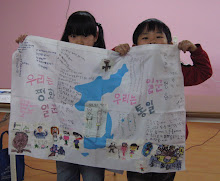
![[URGENT PLEA: In Update] EMERGENCY in GANGJEONG Since AUG. 24, 2011](https://blogger.googleusercontent.com/img/b/R29vZ2xl/AVvXsEiQvpaNf6EePZVucu97_JphYsFS5IgumnSiA4YAmen1PZcim6vMmW7XjZ7J6nLh-Cu36mwBN5n1evrA3ey0vYMpwlAGsgnSFggv6a1w4Qx9BvvqOB0hy0BIcBkL2Exfs3zIxBsBuDGa1kzg/s227/jejusit.jpg)


![[Solidarity from Japan for the Jeju] 253 individuals and 16 groups/organizations](https://blogger.googleusercontent.com/img/b/R29vZ2xl/AVvXsEivji7100kBkr0hzvqYfh4IBBilkZ6XgDIg89jOxS6kTssxsVKC6Wm-fZbKOEsiy3zcO-9gW6GHspD5R_2C9WsGx5S1Z5VPj_OVRF7H6dxdaT0S-2H1eqsDsYvIwOV26VscxTHnKmP5iZmh/s227/jeju_12_10j.jpg)

![[Translation] Korean organizations' statement: Immediately cancel the joint ROK-US drill Nov 26](https://blogger.googleusercontent.com/img/b/R29vZ2xl/AVvXsEgfKDMo-qyEjm5asUtHlREyJY_5Ou-2tyB8SH6aUxiViRbbKR-8W_rirFiGp5DYSoD_KaeNOPMWR0af0ZPUIbJKmR89ImDvADHsGAIqsJVBvJNBEIl5wLd3G_zhPDW3Z2SxsHXadOsXe8st/s227/1.jpg)
![HOT! [Hankyoreh Hani TV] Beneath the Surface: the investigation into the sinking of the Cheonan](https://blogger.googleusercontent.com/img/b/R29vZ2xl/AVvXsEh80rL3Qv9GnfHSqbYMfivdqX5gZN-1O_VQj3A_Gk3yjWdybHwJCsprA3l6cEQB0cYCP2oNeaLo2ohLGIy0Uqqkv_fRkBevGJ2f-qkKD5eP1ZGsKeQ-r-jHUUb79WvucIN7hpEtXza4xXCL/s227/HaniTV+Cheonan.gif)


![[Translation]Statement against illegal inspection and unjust lay-off by the Kunsan USAFK!(Nov_2010)](https://blogger.googleusercontent.com/img/b/R29vZ2xl/AVvXsEg3JlQ-lreusCIJo5Yv2e3ZrRwrSMUE7UQxlrDVjmBehl0Pa24QZIAbZ5vUpgnnExbkKL9PdCwxVYSHWJkr_XK0FM4EhU3CMFhqfborVNu_p4v3bEFpNm3ia-aEHnvMMuEBI27aB7_BETuJ/s227/gunsan+protest.gif)
![[Translation] Korean organizations' statement against dispatching special force to the UAE on Nov.](https://blogger.googleusercontent.com/img/b/R29vZ2xl/AVvXsEiU7TNhTDLLwZkKP0Z78JsCZKp6je-QSFll3_ThmLES_y_nPLXEzeakrsZXoNxhN5blopEhy6xGV2tneJrniPdTR-JvOQMmSLr_HhlucxFvbusxk4oKvvMO2laBOHSIkB9OOeOxrQlqCA0O/s227/antiwarpeace.jpg)
![[Translation] Stop, Joining MD!: South Korean activists' statement and writing on Oct. 25, 2010](https://blogger.googleusercontent.com/img/b/R29vZ2xl/AVvXsEggGIHVei8j7LCJPJB5HIrspd942q436daNTquP-pFd45Cl70Ml_1JFiFDHgKu6FcoqNgFVKIFqjeuSPau2k_BwGHhx0cqFFL2-4ybZSTlmua0_AsERBtKYQa7jZk7uNj41LX6rj2vksHbo/s227/StopMD.jpg)
![[In Update] People First, NO G-20 (Nov. 6 to 12, Korea)](https://blogger.googleusercontent.com/img/b/R29vZ2xl/AVvXsEhZl8VTqeL7o2ndliGIE-sZFCikbTgfB9KCc3AtZvDaYijBBEhdfultMEOpyrCaD5gzpH8mqfWjU20KXMbSUl-5KM7yQeHU6z3BWV8tiOy4UKaCudz9VKWoi5x58xdC_gQpJTjkR5u7O9xf/s227/left21_G20.jpg)
![[International Petition] Stop US helipad plan in Okinawa to save great nature](https://blogger.googleusercontent.com/img/b/R29vZ2xl/AVvXsEihgYmdb0N8ViPvTFC_5i-Psbt4eX_LnAUEOtZkUngv_pGvRyWag1r6W60NicLLyTgWq-sPT1hBxLY5SadEIVv5McfZQ5uIhe-W0VoflQNqojsYZjFW6AH-gB1jsmSDGnGuKIFk2UkvNbFG/s227/yanbaru_w.jpg)
![[Global Network] against the first launch of Quasi-Zenith Satellite, Japan, on Sept. 11, 2010](https://blogger.googleusercontent.com/img/b/R29vZ2xl/AVvXsEj2sYpfodDDMIA7qXwuda0DmKapxXFB479fDnn8RKy7QNZqz0VEvWucNd-DleZ37hWNXC-Z8QtaqtM37VuPwac5SgclJ9_khBBSWOedvm19MRXIP1j1kcWrK6EW5IFjQdEEY2h7E6xuyNvC/s227/Qzss-45-0_09.jpg)
![[In update] Some collections on the Koreans’ protests against the sanction & war on Iran](http://4.bp.blogspot.com/_gnM5QlRx-4c/TJMvke6t8zI/AAAAAAAAFO4/tamQ8LUnOOA/S227/No+Sanction+on+Iran.jpg)
![[Three International Petitions] to End the Korean war and peace treaty(or peace resolution)](https://blogger.googleusercontent.com/img/b/R29vZ2xl/AVvXsEhlohLVYtpCg7iMsZhNYY4hBbhTi2dIheHMHWLDph9X2y78cjgZV1LeSfUJeu80elhJm70Q9E059q72lK-spSPvsRG4bPuCDIytltJB9IH3mWt9OG98HqhnTsPakwhvNeoCFUgF1xoxQ2EZ/s227/border.jpg)


![[Collection of Documents] No Base Learning and Solidarity Program_Korea(June 14 to 20, 2010)](https://blogger.googleusercontent.com/img/b/R29vZ2xl/AVvXsEix_HzjToh3nNGHBc-_5gasq-ykcaZ6GInLixILmZVyRJ5xoeHCxWOyYd9fSM7bmnuFsjSrYOGEPnQOwB1Dcyo-sN4Pw0cFPhUtKig_qlVnGL1Wi82ClvPqbEPWYhJiqdNF0DyzLIBETMB9/s227/No-Base-banner.jpg)
![Site Fwd:[John Hines] A U.S. Debate coach’s research trip on the Issues of Korea](https://blogger.googleusercontent.com/img/b/R29vZ2xl/AVvXsEg8yRra0zNhKHN74Auqhd3Nx9tZ7BWCGflRJHGH4CfzBT_yjhZ8Nl9b3OZuLpYWJ2exsjmR0oVl-Qq_cf832p2VdmOZhUi-lCFzCNeDSyVtweX1lWZPC-RlHmDMLtilHwHjNFTenBiM4Fk4/s227/Jeju-Peace-Tour.jpg)


![[News Update] Struggle Against the Jeju Naval Base since Jan. 18, 2010](https://blogger.googleusercontent.com/img/b/R29vZ2xl/AVvXsEhKfSTRC5QKBBSFIq_m7QIqXdlbL4-gF5GJYn9Q-pN__k7sV7uxGDcLY5L8xmU7QuWuUhBT_GhG-URBPO80RT3AfWfDrWJr06h1hFuZC6ZBVKe4U6PS1Cd7Kr6olO8TYQtk13Drox7IS6ea/s226/scrum1.jpg)


![[Urgent] Please spread the Letter!: There was no Explosion! There was no Torpedo! (May 26, 2010)](https://blogger.googleusercontent.com/img/b/R29vZ2xl/AVvXsEhSd2yWZ3xGwnJQXB73z5FgXCqSosAoB9_33-GLYprOmLqjmvgSAQp1BYI7e4slK1FDxHRi9KK4um-OpDaj8QOkXwAScVAgvvq6-ehbDA-hbkr96wT9oHNNmWnBPv8GU4hoZp9X8F9AZBX4/s227/grounded.jpg)
![Text Fwd: [Stephen Gowans]The sinking of the Cheonan: Another Gulf of Tonkin incident](https://blogger.googleusercontent.com/img/b/R29vZ2xl/AVvXsEi_L6hB3RZ1MovTXHe0A8yn_RfgMALGR0kM6poBuGp809xwvHtB_-PGWtS_WpyPWatyd9lB2pPqL2gOLc4dTCEdJ9sMvxJWEdapl-mMLm7WHAsV-jVpgqarVh8XBtdz_0c-Vohdh3HtJahD/s227/lee-myung-bak.jpg)
![[Japan Focus]Politics in Command: The "International" Investigation into the Sinking of the Cheonan](https://blogger.googleusercontent.com/img/b/R29vZ2xl/AVvXsEiHmTo8v-uCJnabRhMdnBAkC9J3s5bb2JsDKiT5leJHwbK8IDJHxfJmqQ_C0Is_bPC6UGMf05CA0exF2y4r2x9RhFUHT0kjsKviaME_MZXKnq775UyYAdb7w2SAzE75XvBfHp1al2q6i3cf/s227/wen_jiabao_and_lee_myungbak.png)
![[Japan Focus] Who Sank the SK Warship Cheonan? A New Stage in the US-Korean War and US-China](https://blogger.googleusercontent.com/img/b/R29vZ2xl/AVvXsEiKSS5ULT5QBaMGYpXXqBMX9jtwLwMLuK469b6Ku72GTJYKUObzTANaPjZqvvpPzYMJgPF53sjhvhK3DVa88ipYlggsJageykXlkxY6s8TW05xcU-_vfhf-pACUoaWuFbT-fsU1qEhm_yIi/s227/buoy_map.gif)
![[Updated on 12/13/10] [Translation Project] Overseas Proofs on the Damages by the Military Bases](https://blogger.googleusercontent.com/img/b/R29vZ2xl/AVvXsEikADE6JovUNspQyZUWVMTLAQg7yQNqXpVUbqZPk8f4uc_1723_xm1Cco6WAmstQXVPnaJAcb1mZA8Ny_3xONT_f5uh8MNLPnUhtqdGgy3HCtC1Vbbz4Q0ZY1Cssu-4cJEVNdrvznbS5UzO/s227/missile.jpg)
![[International Petition] Close the Bases in Okinawa](https://blogger.googleusercontent.com/img/b/R29vZ2xl/AVvXsEhNpQiHklwFbWVlFK7GDFXnBSOOSFEj3Il-We-N3uTDldKiidL2NGZs7X_LtTnatzTo_r8CexRkFe8NhfxYqmgp1knEEslROTfNjI5_mSb57cdbhPkftvanveYBaevAD9xuKDGoIxiTwoSb/s227/2.jpg)
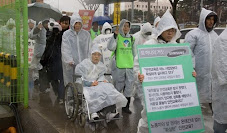
![[In Update]Blog Collection: No Korean Troops in Afghanistan](https://blogger.googleusercontent.com/img/b/R29vZ2xl/AVvXsEjjEmCRXSNAG7_QBxKWbdksmxoWR4nyAovQTTdR1G2AuXh0jxtqNkI9OmYgYWRoLAJShvtBvE840QXuBWSVh3u3zMYqkNAFX6OWy3m5Nur4HM7uNK-pKT1ycyApJp-VLyhIFRRcoisYAh0E/s226/No-Troops-to--Afghanistan.jpg)


