* Text Fwd from Bruce Gagnon on March 30, 2011
New York Times
http://www.nytimes.com/2011/03/30/business/30military.html?scp=1&sq=pentagon%20spending%20%2470%20billion%20waste&st=cse
Audit of Pentagon Spending Finds $70 Billion in WasteBy CHRISTOPHER DREW
March 29, 2011
Despite improvements, more than half of the Pentagon’s big weapons systems still cost more than they should, with management failures adding at least $70 billion to the projected costs over the last two years, government auditors said Tuesday.
The Government Accountability Office, a Congressional watchdog, said the biggest program, the F-35 Joint Strike Fighter, accounted for $28 billion of that increase. Other systems also had significant cost overruns, the agency said, adding that the increases could force the Pentagon to cut the number of ships and planes it buys.
The auditors said many of the problems occurred because the Pentagon began building the systems before the designs were fully tested.
The findings were significant because Congress and the Obama administration have promised to change many of the practices that have long allowed weapons costs to spiral out of control.
President Obama signed a law in 2009 to improve contracting. The accountability office said that Pentagon officials had done a better job in starting new programs. But the agency also found that most of the new programs were not “fully adhering” to the best procedures, leaving them “at a higher risk for cost growth and schedule delays.”
Pentagon officials questioned some of the calculations. But Nancy L. Spruill, a Pentagon acquisition official, added in a letter to the auditors that the military was determined to “address cost growth where it is real and unacceptable.”
The defense secretary, Robert M. Gates, has acknowledged that the Pentagon lacked discipline as its budget more than doubled after the 9/11 terrorist attacks. But with military budgets tightening, Mr. Gates has canceled several expensive systems and sought simpler alternatives.
All told, the accountability office said, the projected cost of the Pentagon’s largest programs has risen by $135 billion, or 9 percent, to $1.68 trillion since 2008.
It estimated that about $65 billion of that increase resulted from decisions to buy more of some systems, like mine-resistant vehicles and Navy destroyers, than had been planned.
But it said the other $70 billion of increases appeared “to be indicative of production problems and inefficiencies or flawed initial cost estimates.”
The auditors also found that a significant part of the total cost increase for nearly 100 programs came from just a few of the largest and oldest ones.
The F-35, which is supposed to become the main fighter for the Air Force, the Navy and the Marines, had by far the worst problems. The Pentagon has revamped the program, led by Lockheed Martin, twice over the last year. It has budgeted an additional $6 billion for development, as well as the projected $28 billion increase in production costs, for a program that is expected to cost well over $300 billion.
The report indicated that the Pentagon also had to spend $9 billion more on research and development to fix problems with satellites and other systems that had already entered production.
The auditors said the biggest problems occurred when the Pentagon changed the capabilities it sought or started production before critical technologies were ready.
Global Network Against Weapons & Nuclear Power in Space
PO Box 652
Brunswick, ME 04011
(207) 443-9502
globalnet@mindspring.com
www.space4peace.org
http://space4peace.blogspot.com/ (blog)
Showing posts with label F-35. Show all posts
Showing posts with label F-35. Show all posts
Thursday, March 31, 2011

Wednesday, March 30, 2011
Photos Fwd:[SPARK] No import of F-35
___________________________________
* Related blog 관련 블로그
http://nobasestorieskorea.blogspot.com/2011/03/text-fwd-translation-spark-discussion.html
SPARK, “Discussion on the TTX will be retrogressive to the non-nuclearization of the Korean peninsula”
____________________________________
* All the image source: Solidarity for Peace And Reunification of Korea, March 29, 2011 평화와 통일을 여는 사람들(클릭)
국방부는 성능 검증 안 된 전투기에 국민혈세를 쏟아 붓는 F-35 도입 계획 중단하라! 110차 국방부앞 평화군축집회
2011년 3월 29일 낮 12시, 국방부 민원실 앞 –
The Ministry of National Defense should stop its import plan of F-35, which is to pour the people’s bloody tax to the fighter planes that have not been proved of their functions!110th Peace Disarmament rally
In front of Ministry of National Defense
12pm, March 29, 2011


* Related blog 관련 블로그
http://nobasestorieskorea.blogspot.com/2011/03/text-fwd-translation-spark-discussion.html
SPARK, “Discussion on the TTX will be retrogressive to the non-nuclearization of the Korean peninsula”
____________________________________
* All the image source: Solidarity for Peace And Reunification of Korea, March 29, 2011 평화와 통일을 여는 사람들(클릭)
국방부는 성능 검증 안 된 전투기에 국민혈세를 쏟아 붓는 F-35 도입 계획 중단하라! 110차 국방부앞 평화군축집회
2011년 3월 29일 낮 12시, 국방부 민원실 앞 –
The Ministry of National Defense should stop its import plan of F-35, which is to pour the people’s bloody tax to the fighter planes that have not been proved of their functions!110th Peace Disarmament rally
In front of Ministry of National Defense
12pm, March 29, 2011


Saturday, March 12, 2011
Text Fwd: Seoul to bolster preemptive strike capability
 * Image source: Kyunghyang Shinmun
The Global Hawk first deployed in actual combat in Afghan War in 2001 (File photo)
_____________________________________________
Korea Times
Seoul to bolster preemptive strike capability
By Lee Tae-hoon
March 11, 2011
Seoul is seeking a paradigm shift in its defense posture senior military officials said Friday, moving toward beefing up its preemptive strike capability against North Korea by deploying high-tech weapons that could be used to take out its leadership.
“Following North Korea’s two attacks last year, we’ve come to the conclusion that the belligerent behavior of Pyongyang will only end when its leadership realizes that Seoul is capable of conducting surgical strikes or covert operations against them,” a top official said, asking for anonymity.
He said altering the country’s military focus from passive defense to proactive deterrence is one of the three main pillars of the “Defense Reform Plan 307” unveiled by Defense Minister Kim Kwan-jin, Tuesday.
Kim stressed in a press briefing that he would adopt an active defense policy, while seeking to enhance interoperability of the armed forces and streamlining the military command structure.
“I’ll adjust priorities on the country’s military buildup to deal with the North’s asymmetrical threats and a possible local war,” the defense chief said, adding that Seoul will speed up the purchase of high-altitude spy drones and stealth fighters.
Seoul has already asked Washington to sell its Global Hawk unmanned aerial vehicle capable of flying at an altitude of more than 60,000 feet and monitoring enemy locations on the entire Korean Peninsula with pinpoint accuracy.
As part of the FX-III acquisition program, it is also accelerating a stalled plan to replace its aging F-4 and F-5 fighters with combat aircraft with stealth features from 2016.
“The great strength of stealth fighters is that they are capable of infiltrating deep into North Korea and return home after undertaking surprise air raids at anytime, anywhere with high precision without being detected or leaving behind any trace evidence,” a senior Air Force official said.
“Given that stealth fighters are practically invisible, the North will face difficulties in figuring out how often stealth fighters were flying over their land or whether they would conduct an air raid.”
He said Kim wanted to deliver a clear message to the North that should it undertake further attacks against South Korea, Seoul may topple the communist regime by mounting precision attacks on its leadership.
However, the official ruled out the possibility of a preemptive attack on the North, claiming that Seoul is acutely aware that such an action would draw international condemnation and would significantly isolate the country from the rest of the world.
There have been growing calls to beef up military readiness against imminent threats from the North, including possible missile attacks, after Seoul “failed” to properly retaliate against Pyongyang’s two deadly attacks last year.
The North unleashed an artillery attack on Yeonpyeong Island in the West Sea in November, claiming the lives of four people, but the South Korean military failed to locate the exact weapons responsible in time for an effective counterattack.
Last March, a North Korea submarine managed to dodge the South Korean Navy after sinking the frigate Cheonan in the West Sea that killed 46 of the sailors onboard.
한국, 대북 선제타격 능력강화 추진
한국이 북한정권의 심장부를 도려낼 수 있는 최첨단 선제공격 무기 도입을 국방정책 패러다임 전환의 일환으로 추진하고 있다고 국방부 관계자가 11일 말했다.
익명을 요구한 한 고위 관계자는 "국방개혁 307 계획"의 핵심은 방어 중심에서 '선제(preemptive) 공격’을 포함한 적극적 억제전략으로의 전환이라고 말했다.
그는 스텔스 전투기 등을 도입 남한이 원하면 언제든지 평양으로 몰래 침투 김정일을 단번에 제압할 수 있는 능력이 있다는 공포심을 심어 줄 수 있을 정도의 군사력을 갖추어야 앞으로 북의 군사도발이 사라질 거라는 결론을 지난 해 천안함 침몰과 연평도 포격 이 후 내릴 수 있었다고 주장했다.
김관진 장관은 지난 8일 "국방개혁 307 계획"을 발표하며 3군 합동성 강화, 국방운영 효율성 극대화와 더불어 “적극적 대북 억제능력” 강화를 세 가지 중점 분야로 두고 개혁을 추진해 나아가겠다고 밝힌 바 있다.
김장관은 또한 북한의 국지도발과 비대칭 위협에 대비하기 위해 고고도 무인정찰기와 스텔스기를 조기 도입 하는 등 전력증강의 우선순위도 일부 조정하기로 했다 말한 바 있다.
________________________________________
See also Kyunghyang Shinmun
The Korean Military to Import the 'Global Hawk' and Stealth Fighters Earlier; Likely Influenced by US Government and Industry
Posted on : 2011-03-09 17:09
The military authorities have decided to import unmanned high-altitude reconnaissance planes such as the Global Hawk and the Stealth fighters at an earliest date.
These projects were stopped at the early stage of the Lee Myung-bak government, but were determined to be pursued afterwards, thus raising suspicions that these were influenced by the US lobbyists.
The National Defense Ministry announced 'National Defense Reform Plan 307' on Tuesday, Mar 08, 2011, while saying and that "it will pursue to secure state-of-the-art precision combat capability at an earlier date in order to respond to asymmetrical threats by the enemy.'
It was learned that the government determined to put into combat forces for 2015-2016 the Global Hawk reconnaissance planes and the Stealth fighters
However, voices are mounting that the reasons why the military excluded the unmanned Global Observer are unclear, which are competitors for the Global Hawk, in the course of putting high-altitude the unmanned reconnaissance planes into combat forces.
According to defense industry sources, the Global Hawk can stay in the air of 65,000 feet of altitude in the operational radius of 3000-4000 km for a duration of 38-42 hours, whereas the Global Observer can stay in the same altitude for over one week.
To compare the prices, the Global Hawk costs US$ 45,000,000 per plane and is more expensive than the Global Observer, and the expenditure for management and maintenance for the former is heavier than the latter, which uses hydrogen as fuel.
At first, the Joint Chiefs of the Staff proceeded with the importation of the Global Observer instead of the Global Hawk, but an official related to the Chong Wa Dae opposed the plan, citing that introduction of unverified weapons is inappropriate, it was learned.
In this context, analysts in and out of the military raise the possibility of lobbying activity by the Northrop Grumman which is the producer of the Global Hawk.
Previously, in 2008, the Korean military pushed for a plan to purchase four Global Hawks by 2010 but failed because of the opposition from the Chong Wa Dae's argument that the prices are too heavy.
In the meantime, the Ministry of National Defense decided to hasten the third FX project of introducing additional 60 Stealth-grade fighters, which requires a budget size of 9 trillion won.
The ROK Air Force argued for the necessity of the third FX project from 2007 onwards, but the project did not move forward with no budget allocated.
The talk about the third FX project became livelier with the US Secretary of Defense Robert Gates' visit to Korea in January. However, it is pointed out that if Koreans hasten the project, then it is likely that Koreans will have to buy the Stealth F35 at a higher price.
All the more, it was known that the F35's that the US proposed to Koreans for importation are the initial products that even the US Air Force refused to buy.
Given that the targeted level for the software version for the F35's is 3.0, if Koreans purchased the initial products of the F35's that are equipped with only 0.5 version, upgrading of the software version will require an astronomical cost.
Translated by Seol Wontai, Editor of Online English Edition
Friday, March 11, 2011
Text Fwd: Thank Tank: Japan Aircraft Carrier Power For First Time Since WWII
China Daily
March 9, 2001
Think Tank: Japan is an aircraft-carrier power
-"Once Japan acquires F-35s or another suitable short take-off aircraft for the Hyuga class, it will have a greatly increased expeditionary capability, and can operate in conjunction with the US more and more in regional security operations."
Li said the JMSDF is "very powerful" in terms of capabilities. "Its assets are arguably the second best after the US. The ships are modern, powerful, and with a wide range of services. However they suffer from the same problems as the Chinese navy in that it lacks expeditionary capabilities and also the crew lack real battle experience."
Japan has been formally classified for the first time since World War II as an aircraft-carrier power by a leading Western international affairs think tank.
Japan has one Hyuga-class aircraft carrier, according to Military Balance 2011, an annual report published on Tuesday by the London-based International Institute for Strategic Studies (IISS) assessing the military capabilities and defense economics of 170 countries worldwide.
The annual report is an essential resource for those involved in security policymaking, analysis and research.
Classifying Japan as an aircraft carrier power means China now has four Asian neighbors with the giant vessel. Russia, India and Thailand are reported to have one aircraft carrier in service.
Former Japanese foreign minister Seiji Maehara, shortly before he resigned for accepting an illegal donation, expressed Japan's "grave concern" over China's military development and alleged plan to build an aircraft carrier.
Gary Li, an expert on Asia military affairs at the IISS and the chief researcher of the East Asia section of Military Balance 2011, said Japan currently had one Hyuga and another is under construction.
"The Hyuga is not yet as powerful as the Japanese Maritime Self-Defense Force (JMSDF) would like it to be, mainly because there are no F-35s (fighter jets) as yet," Li said.
"Once Japan acquires F-35s or another suitable short take-off aircraft for the Hyuga class, it will have a greatly increased expeditionary capability, and can operate in conjunction with the US more and more in regional security operations."
Li said the JMSDF is "very powerful" in terms of capabilities. "Its assets are arguably the second best after the US. The ships are modern, powerful, and with a wide range of services. However they suffer from the same problems as the Chinese navy in that it lacks expeditionary capabilities and also the crew lack real battle experience."
Despite Japan's concern over China's military development, Christian Le Miere, research fellow for Naval Forces and Maritime Security at the IISS, said Japanese naval power is superior to China's.
He said Beijing's "main strategy" is still to "deter or prevent US intervention into Taiwan contingency for as long as possible".
In fact, long before the IISS classified only one Hyuga-class vessel as an aircraft carrier, earlier reports said Japan launched the second of the vessels, the Ise, as early as 2009.
The 197-meter long, 13,950-ton vessel can carry up to 11 helicopters.
The vessel is scheduled to be commissioned into the JMSDF this month, Xinhua News Agency reported in 2009.
====================================================================
Stop NATO e-mail list home page with archives and search engine:
http://groups.yahoo.com/group/stopnato/messages
Stop NATO website and articles:
http://rickrozoff.wordpress.com
March 9, 2001
Think Tank: Japan is an aircraft-carrier power
-"Once Japan acquires F-35s or another suitable short take-off aircraft for the Hyuga class, it will have a greatly increased expeditionary capability, and can operate in conjunction with the US more and more in regional security operations."
Li said the JMSDF is "very powerful" in terms of capabilities. "Its assets are arguably the second best after the US. The ships are modern, powerful, and with a wide range of services. However they suffer from the same problems as the Chinese navy in that it lacks expeditionary capabilities and also the crew lack real battle experience."
Japan has been formally classified for the first time since World War II as an aircraft-carrier power by a leading Western international affairs think tank.
Japan has one Hyuga-class aircraft carrier, according to Military Balance 2011, an annual report published on Tuesday by the London-based International Institute for Strategic Studies (IISS) assessing the military capabilities and defense economics of 170 countries worldwide.
The annual report is an essential resource for those involved in security policymaking, analysis and research.
Classifying Japan as an aircraft carrier power means China now has four Asian neighbors with the giant vessel. Russia, India and Thailand are reported to have one aircraft carrier in service.
Former Japanese foreign minister Seiji Maehara, shortly before he resigned for accepting an illegal donation, expressed Japan's "grave concern" over China's military development and alleged plan to build an aircraft carrier.
Gary Li, an expert on Asia military affairs at the IISS and the chief researcher of the East Asia section of Military Balance 2011, said Japan currently had one Hyuga and another is under construction.
"The Hyuga is not yet as powerful as the Japanese Maritime Self-Defense Force (JMSDF) would like it to be, mainly because there are no F-35s (fighter jets) as yet," Li said.
"Once Japan acquires F-35s or another suitable short take-off aircraft for the Hyuga class, it will have a greatly increased expeditionary capability, and can operate in conjunction with the US more and more in regional security operations."
Li said the JMSDF is "very powerful" in terms of capabilities. "Its assets are arguably the second best after the US. The ships are modern, powerful, and with a wide range of services. However they suffer from the same problems as the Chinese navy in that it lacks expeditionary capabilities and also the crew lack real battle experience."
Despite Japan's concern over China's military development, Christian Le Miere, research fellow for Naval Forces and Maritime Security at the IISS, said Japanese naval power is superior to China's.
He said Beijing's "main strategy" is still to "deter or prevent US intervention into Taiwan contingency for as long as possible".
In fact, long before the IISS classified only one Hyuga-class vessel as an aircraft carrier, earlier reports said Japan launched the second of the vessels, the Ise, as early as 2009.
The 197-meter long, 13,950-ton vessel can carry up to 11 helicopters.
The vessel is scheduled to be commissioned into the JMSDF this month, Xinhua News Agency reported in 2009.
====================================================================
Stop NATO e-mail list home page with archives and search engine:
http://groups.yahoo.com/group/stopnato/messages
Stop NATO website and articles:
http://rickrozoff.wordpress.com
Saturday, February 26, 2011
Text Fwd: White House Pushing F-35 Joint Strike Fighter Sales Worldwide
Stop NATO
White House Pushing F-35 Joint Strike Fighter Sales Worldwide
GlobalPost
Obama’s F-35 sales push :
Why is Obama peddling Lockheed Martin’s stealth F-35 fighter around the world?
Barry Neild
February 24, 2011
With prices starting at $110 million per jet, the F-35 Lightning II fighter isn’t really the sort of thing for sale on Craigslist. But the way the Obama administration has been peddling this sophisticated aerial combat tool around the world, perhaps it wouldn’t be a surprise if it were.
While countries including Australia, Canada, Turkey, the United Kingdom and the Netherlands have all placed orders amounting to hundreds of F-35s, the president and his team of executive salesmen have been pitching hard elsewhere.
Late last year, U.S. Secretary of Defense Robert Gates was in Japan singing the praises of the stealth fighter that has cost his government billions to develop. And in Israel, ministers have reportedly been debating F-35 deals offered by Barack Obama as sweeteners in the Middle East peace process.
To some, it might seem odd that the commander-in-chief is willing to hand over keys to aircraft packed to the hilt with the latest U.S. military technology — particularly radar-evading stealth, which no other country yet has — even if the paying customers are allies.
At a time of global instability, particularly in the Middle East, some observers say this hard sell is risky. In the 1970s, the United States sold F-14 fighters to a friendly, seemingly-stable Iran. These later fell into hostile hands after a regime change.
So what’s behind this sales drive? Has F-35 builder Lockheed Martin proved so successful at lobbying the Obama administration that the presidential team is now effectively selling its products door-to-door? Is it about votes? Is it money? Analysts say the truth – like the aircraft – is far more complex.
The F-35’s back story is scattered with controversy. Still not yet in service, the next-generation aircraft has been beset by missed deadlines, and by budgets that have helped make its decade-long development the most expensive weapons program ever undertaken in the United States.
Lockheed says the F-35 will be worth the wait. When it does finally make it off the runway, many experts agree it should be an impressive machine, crammed with gadgetry. Some models will even be capable of performing vertical take offs and landings.
Still five years from completion, the aircraft has already faced hostilities. It has been criticized for performing poorly in simulations, and for including features beyond what’s needed on the battlefield. It has been deemed such a drain on resources that Gates now wants to cut America’s F-35 order to reduce the Pentagon’s budget.
This reluctance to buy a product at home might seem at odds with the U.S. government’s eagerness to promote it abroad, were it not for the fact that the F-35 has been specifically designed with foreign sales in mind.
Since its inception, the F-35 has been known as the “Joint Strike Fighter” in reference to the involvement of allies including Britain, the Netherlands, Canada, Denmark, Norway and Turkey. All have contributed in varying degrees to the jet’s funding and development.
Strategically, that’s an advantage to the U.S., both in getting other nations to help foot the defense bill, and arming friends with familiar “interoperable” technology, says Craig Caffrey, a military aviation analyst with Jane’s Information Group.
“The vast majority of military operations that America undertakes nowadays are coalition operations,” he said. “If you can have a platform in service with your main allied nations — the U.K. in particular is a good example — it makes sense.”
Gates’ recent mission to Japan was also, said Caffrey, an attempt to capitalize on recent high-profile test flight of the J-20, China’s first foray into stealth fighters. “There's obviously a sales pitch here. They're saying if you're worried about that Chinese fifth generation aircraft, we can supply you with one of your own.”
According to reports from the WikiLeaks cache of U.S. State Department documents, American diplomats put pressure on Norway to choose the F-35 instead of rival machines from Swedish SAAB’s JAS Grippen or Eurofighter (another multinational military aircraft project).
Some arms watchers have suggested that the U.S. is playing one country off of another in order to boost its arms trade. Though clearly arranged with a possible threat from Iran in mind, sales of F-35s to Israel could be seen as a way to encourage potential rivals such as Saudi Arabia to spend money upgrading and expanding their fleets of F-15 fighters, made in the United States by Boeing.
To what extent are Obama administration officials acting at the behest of manufacturers such as Lockheed Martin — or perhaps seeking to win key votes from districts involved in the defence industry?
Lockheed spends good money on promoting its interests. In 2010 its lobbying bill exceeded $12.7 million, according to the non-partisan watchdog OpenSecrets.org. Much of this lobbying appears to be aimed at staving off military budget cuts rather than promoting aircraft sales.
But while aggressive sales pitches overseas may suggest otherwise, the Obama administration doesn’t seem to be bowing to the company’s every demand. For example, despite requests from Lockheed Martin, the government has refused to allow overseas sales of another of its stealth fighters, the F-22, which is said to be too technologically sensitive for foreign customers.
Moreover, Obama has urged Congress to scrap funding to build an alternative F-35 engine, a project that currently employs 1,000 people in the swing state of Ohio. (The House of Representatives in early February voted with the president on this.)
It would seem, therefore, that he’s not viewing the aircraft program as a vote winner. Instead, said Caffrey, any promotion of Lockheed’s interests is likely to result from simple economics.
“One key reason why you get heads of states involved in selling this kind of equipment abroad is because they are major industrial deals; they are worth large sums of money, and keep large numbers of people employed in high tech jobs," he said. He pointed out that similar overseas missions have been carried out by British Prime Minister David Cameron and French President Nicolas Sarkozy.
“It’s big business, and it’s long term business. You don't sell an aircraft and that's the end of the company's involvement — it goes on for at least 30 years.”
Jeff Abramson, deputy director of the Arms Control Association, argues that attempts to sell the F-35 overseas are part of the Obama administration’s efforts to double U.S. arms exports and thus aid economic recovery.
But even if F-35s are merely being deployed against economic uncertainty rather than into aerial combat, Abramson warned of other consequences.
“In general, it is unwise to think of arms sales as just any other commercial transaction,” he said, suggesting that the F-35s could be vulnerable to misuse or even contribute to regional arms races and instability.
“Any transfer agreement must consider whether the proposed weapons are appropriate for their intended use, and whether they might contribute to regional arms races or instability. It’s not clear that all the discussions around F-35s have adequately taken these considerations in mind.”
White House Pushing F-35 Joint Strike Fighter Sales Worldwide
GlobalPost
Obama’s F-35 sales push :
Why is Obama peddling Lockheed Martin’s stealth F-35 fighter around the world?
Barry Neild
February 24, 2011
With prices starting at $110 million per jet, the F-35 Lightning II fighter isn’t really the sort of thing for sale on Craigslist. But the way the Obama administration has been peddling this sophisticated aerial combat tool around the world, perhaps it wouldn’t be a surprise if it were.
While countries including Australia, Canada, Turkey, the United Kingdom and the Netherlands have all placed orders amounting to hundreds of F-35s, the president and his team of executive salesmen have been pitching hard elsewhere.
Late last year, U.S. Secretary of Defense Robert Gates was in Japan singing the praises of the stealth fighter that has cost his government billions to develop. And in Israel, ministers have reportedly been debating F-35 deals offered by Barack Obama as sweeteners in the Middle East peace process.
To some, it might seem odd that the commander-in-chief is willing to hand over keys to aircraft packed to the hilt with the latest U.S. military technology — particularly radar-evading stealth, which no other country yet has — even if the paying customers are allies.
At a time of global instability, particularly in the Middle East, some observers say this hard sell is risky. In the 1970s, the United States sold F-14 fighters to a friendly, seemingly-stable Iran. These later fell into hostile hands after a regime change.
So what’s behind this sales drive? Has F-35 builder Lockheed Martin proved so successful at lobbying the Obama administration that the presidential team is now effectively selling its products door-to-door? Is it about votes? Is it money? Analysts say the truth – like the aircraft – is far more complex.
The F-35’s back story is scattered with controversy. Still not yet in service, the next-generation aircraft has been beset by missed deadlines, and by budgets that have helped make its decade-long development the most expensive weapons program ever undertaken in the United States.
Lockheed says the F-35 will be worth the wait. When it does finally make it off the runway, many experts agree it should be an impressive machine, crammed with gadgetry. Some models will even be capable of performing vertical take offs and landings.
Still five years from completion, the aircraft has already faced hostilities. It has been criticized for performing poorly in simulations, and for including features beyond what’s needed on the battlefield. It has been deemed such a drain on resources that Gates now wants to cut America’s F-35 order to reduce the Pentagon’s budget.
This reluctance to buy a product at home might seem at odds with the U.S. government’s eagerness to promote it abroad, were it not for the fact that the F-35 has been specifically designed with foreign sales in mind.
Since its inception, the F-35 has been known as the “Joint Strike Fighter” in reference to the involvement of allies including Britain, the Netherlands, Canada, Denmark, Norway and Turkey. All have contributed in varying degrees to the jet’s funding and development.
Strategically, that’s an advantage to the U.S., both in getting other nations to help foot the defense bill, and arming friends with familiar “interoperable” technology, says Craig Caffrey, a military aviation analyst with Jane’s Information Group.
“The vast majority of military operations that America undertakes nowadays are coalition operations,” he said. “If you can have a platform in service with your main allied nations — the U.K. in particular is a good example — it makes sense.”
Gates’ recent mission to Japan was also, said Caffrey, an attempt to capitalize on recent high-profile test flight of the J-20, China’s first foray into stealth fighters. “There's obviously a sales pitch here. They're saying if you're worried about that Chinese fifth generation aircraft, we can supply you with one of your own.”
According to reports from the WikiLeaks cache of U.S. State Department documents, American diplomats put pressure on Norway to choose the F-35 instead of rival machines from Swedish SAAB’s JAS Grippen or Eurofighter (another multinational military aircraft project).
Some arms watchers have suggested that the U.S. is playing one country off of another in order to boost its arms trade. Though clearly arranged with a possible threat from Iran in mind, sales of F-35s to Israel could be seen as a way to encourage potential rivals such as Saudi Arabia to spend money upgrading and expanding their fleets of F-15 fighters, made in the United States by Boeing.
To what extent are Obama administration officials acting at the behest of manufacturers such as Lockheed Martin — or perhaps seeking to win key votes from districts involved in the defence industry?
Lockheed spends good money on promoting its interests. In 2010 its lobbying bill exceeded $12.7 million, according to the non-partisan watchdog OpenSecrets.org. Much of this lobbying appears to be aimed at staving off military budget cuts rather than promoting aircraft sales.
But while aggressive sales pitches overseas may suggest otherwise, the Obama administration doesn’t seem to be bowing to the company’s every demand. For example, despite requests from Lockheed Martin, the government has refused to allow overseas sales of another of its stealth fighters, the F-22, which is said to be too technologically sensitive for foreign customers.
Moreover, Obama has urged Congress to scrap funding to build an alternative F-35 engine, a project that currently employs 1,000 people in the swing state of Ohio. (The House of Representatives in early February voted with the president on this.)
It would seem, therefore, that he’s not viewing the aircraft program as a vote winner. Instead, said Caffrey, any promotion of Lockheed’s interests is likely to result from simple economics.
“One key reason why you get heads of states involved in selling this kind of equipment abroad is because they are major industrial deals; they are worth large sums of money, and keep large numbers of people employed in high tech jobs," he said. He pointed out that similar overseas missions have been carried out by British Prime Minister David Cameron and French President Nicolas Sarkozy.
“It’s big business, and it’s long term business. You don't sell an aircraft and that's the end of the company's involvement — it goes on for at least 30 years.”
Jeff Abramson, deputy director of the Arms Control Association, argues that attempts to sell the F-35 overseas are part of the Obama administration’s efforts to double U.S. arms exports and thus aid economic recovery.
But even if F-35s are merely being deployed against economic uncertainty rather than into aerial combat, Abramson warned of other consequences.
“In general, it is unwise to think of arms sales as just any other commercial transaction,” he said, suggesting that the F-35s could be vulnerable to misuse or even contribute to regional arms races and instability.
“Any transfer agreement must consider whether the proposed weapons are appropriate for their intended use, and whether they might contribute to regional arms races or instability. It’s not clear that all the discussions around F-35s have adequately taken these considerations in mind.”
Tuesday, January 11, 2011
Text Fwd: Australia Welcomes JSF Restructure
* Text sent from Corazon Valdez Fabros on Jan. 10, 2010
Space War
Australia Welcomes JSF Restructure
by Staff Writers
Canberra, Australia (SPX) Jan 10, 2011
The Acting Minister for Defence Jason Clare has welcomed the restructure of the Joint Strike Fighter (JSF) Program by US Defense Secretary Robert Gates.
The restructure follows a detailed six month Technical Baseline Review of the JSF Program's progress by the US Department of Defense to examine the remaining development tasks and the resources and time required to complete them.
The restructure will see an extension of the System Design and Development phase and a reduction in the production rate in the earlier batches of aircraft. The US will fund costs associated with extended design and test activity.
The JSF Program involves the development of three different types of aircraft:
1) the F-35A Conventional Take Off and Landing (CTOL) variant;
2) the F-35B Short Take Off and Vertical Landing (STOVL) variant; and
3) the F-35C Carrier Variant (CV).
Australia is purchasing the CTOL variant. The US Air Force is also purchasing this variant.
Secretary Gates has confirmed that this variant was on schedule and proceeding satisfactorily.
In 2010 it exceeded its test flight targets.
Secretary Gates advised that the STOVL variant being developed for the US Marines is experiencing significant testing problems and has now been placed at the back of the overall JSF production sequence.
Mr Clare welcomed the news that the development of the aircraft Australia is purchasing is on schedule and proceeding satisfactorily.
"It is less expensive and less complex than the other variants. The restructure announced by Secretary Gates means it is now at the front of the production queue", Mr Clare said.
Defence has advised that the restructure of the US JSF Program will reduce overall program risk to Australia and should not affect Australia's planned introduction date for the JSF.
The Australian Government approved the acquisition of the first 14 aircraft in November 2009. The first two aircraft will be delivered in 2014.
The first 10 aircraft will initially remain in the United States for pilot and maintainer training. The remaining four aircraft are planned to arrive in Australia in 2017 for operational test and evaluation activities with other ADF equipment to achieve an initial operational capability in Australia from 2018.
Defence has also advised it is confident Australia has adequate buffers in place to withstand any changes to the cost and schedule.
"Australia has always adopted a conservative approach to JSF cost estimates and has explicitly included contingency funds and buffers to the schedule," Mr Clare said.
"While there is no need to change our cost and schedule estimates, Defence will continue to assess options to ensure that cost and schedule buffers remain adequate."
A recent agreement between Lockheed Martin and the US Department of Defense to move to fixed price contract agreements - at a lower price than independent estimates - has enhanced confidence in the costs for future JSF production.
In December last year Mr Clare met with senior US Defense officials in Washington and inspected the Lockheed Martin JSF production line in Fort Worth Texas.
Space War
Australia Welcomes JSF Restructure
by Staff Writers
Canberra, Australia (SPX) Jan 10, 2011
The Acting Minister for Defence Jason Clare has welcomed the restructure of the Joint Strike Fighter (JSF) Program by US Defense Secretary Robert Gates.
The restructure follows a detailed six month Technical Baseline Review of the JSF Program's progress by the US Department of Defense to examine the remaining development tasks and the resources and time required to complete them.
The restructure will see an extension of the System Design and Development phase and a reduction in the production rate in the earlier batches of aircraft. The US will fund costs associated with extended design and test activity.
The JSF Program involves the development of three different types of aircraft:
1) the F-35A Conventional Take Off and Landing (CTOL) variant;
2) the F-35B Short Take Off and Vertical Landing (STOVL) variant; and
3) the F-35C Carrier Variant (CV).
Australia is purchasing the CTOL variant. The US Air Force is also purchasing this variant.
Secretary Gates has confirmed that this variant was on schedule and proceeding satisfactorily.
In 2010 it exceeded its test flight targets.
Secretary Gates advised that the STOVL variant being developed for the US Marines is experiencing significant testing problems and has now been placed at the back of the overall JSF production sequence.
Mr Clare welcomed the news that the development of the aircraft Australia is purchasing is on schedule and proceeding satisfactorily.
"It is less expensive and less complex than the other variants. The restructure announced by Secretary Gates means it is now at the front of the production queue", Mr Clare said.
Defence has advised that the restructure of the US JSF Program will reduce overall program risk to Australia and should not affect Australia's planned introduction date for the JSF.
The Australian Government approved the acquisition of the first 14 aircraft in November 2009. The first two aircraft will be delivered in 2014.
The first 10 aircraft will initially remain in the United States for pilot and maintainer training. The remaining four aircraft are planned to arrive in Australia in 2017 for operational test and evaluation activities with other ADF equipment to achieve an initial operational capability in Australia from 2018.
Defence has also advised it is confident Australia has adequate buffers in place to withstand any changes to the cost and schedule.
"Australia has always adopted a conservative approach to JSF cost estimates and has explicitly included contingency funds and buffers to the schedule," Mr Clare said.
"While there is no need to change our cost and schedule estimates, Defence will continue to assess options to ensure that cost and schedule buffers remain adequate."
A recent agreement between Lockheed Martin and the US Department of Defense to move to fixed price contract agreements - at a lower price than independent estimates - has enhanced confidence in the costs for future JSF production.
In December last year Mr Clare met with senior US Defense officials in Washington and inspected the Lockheed Martin JSF production line in Fort Worth Texas.
Thursday, May 13, 2010
Text Fwd: T-50 trainer jets in full service
 A T-50 supersonic trainer jet sits on a runway of the Air Force’s 1st Fighter Wing in Gwangju, Gyeonggi Province, Thursday, after completing its ceremonial flight marking the acceptance of the last of the planned delivery of 50 T-50 aircraft to the service. / Courtesy of Air Force.
Korea Times
05-13-2010 18:50
T-50 trainer jets in full service
By Jung Sung-ki
Staff Reporter
The Air Force said Thursday that it has received the 50th and last of the advanced T-50 Golden Eagle supersonic trainer jets from the aircraft's manufacturer Korea Aerospace Industries (KAI).
The delivery of the T-50 trainer jets jointly built by Lockheed Martin of the United States began in December 2005. KAI is the prime contractor, and Lockheed Martin is the principal subcontractor, assisting with development and international marketing.
The Air Force placed an order for 82 T-50 variants, including 50 advanced jet trainers, 22 TA-50 light armed aircraft and 10 other T-50Bs modified for aerobatic performances.
``I sincerely congratulate you on being fully operational with the world's best T-50 advanced trainer jet," President Lee Myung-bak said in a congratulatory message. "I expect the successful production of T-50 aircraft with outstanding pilot training capability will help achieve our dream of entering the world's seventh largest aerospace power within 10 years.''
The single-engine trainer aircraft features digital flight controls and a modern ground-based training system, which helps new pilots smoothly transition into advanced fighters, such the F-22 Raptor and F-35 Lightening II, as well as the F-16 Fighting Falcon.
It has a top speed of Mach 1.5. The per-unit price is about $25 million.
The government is accelerating efforts to make its first overseas sale of the``luxury'' T-50, tying the success of the jet to becoming a major arms exporter and reviving its economy.
The government aims to reach $3 billion in defense exports by 2012, and industry and government officials agree that sales of the T-50 are essential to attaining that goal.
But thus far, the marketing of the trainer has produced no tangible results.
The T-50 is competing with Italy's M-346 over deals in the United Arab Emirates, Singapore, Israel and Iraq.
The United States is also said to be looking to open a bid for trainer acquisition in the near future.
gallantjung@koreatimes.co.kr
Tuesday, February 2, 2010
Text Fwd: Obama seeks record $708 billion in defense budget
 * Image source: same as the link below
Reuter
Obama seeks record $708 billion in defense budget
WASHINGTON (Reuters) - President Barack Obama on Monday asked Congress to approve a record $708 billion in defense spending for fiscal year 2011, including a 3.4 percent increase in the Pentagon's base budget and $159 billion to fund U.S. military missions in Iraq, Afghanistan and Pakistan.
The White House budget request also included $33 billion in additional funding for fiscal 2010 to pay for increasing military and intelligence operations in Afghanistan and Pakistan, and drawing down U.S. forces in Iraq. That comes on top of $129.6 billion already provided for the current fiscal year, which ends September 30.
The Pentagon's base budget request of $549 billion is up $18 billion from $531 billion in fiscal 2010, and will pay for continued reforms of defense acquisitions, development of a ballistic missile defense system and care of wounded soldiers.
The budget also calls for cancellation of several major weapons programs, including Boeing Co's C-17 transport plane, saving $2.5 billion, and a second engine for the Lockheed Martin Corp F-35 fighter jet, saving $465 million in fiscal 2011 and more than $1 billion longer-term. The White House tried to kill both programs last year, but lawmakers revived them during the budget process.
The second engine is being developed by General Electric Co and Britain's Rolls-Royce as an alternate to the main engine built by Pratt & Whitney, a unit of United Technologies Corp.
The proposed budget also kills plans for development of a new Navy cruiser, scraps plans to replace the Navy's EP-3 intelligence aircraft and halts work on a missile early-warning satellite, opting instead to upgrade the Space Based Infrared System satellite already being developed by Lockheed.
The budget proposal also calls for a delay in replacing two new Navy command and control shops until after 2015, a move the White House said would save $3.8 billion across the Pentagon's five-year defense plan. The Navy had planned to buy one command ship in 2012, and a second one in 2014.
Procurement of a new amphibious vehicle being built by General Dynamics Corp for the Marine Corps would be delayed by one year, saving $50 million in fiscal 2011 and cutting risk by allowing more time for testing.
The Pentagon also said it would further reduce its use of high-risk contracts in areas that related to time, material and labor hours by 17 percent through the end of 2011.
The budget underscored the administration's commitment to a "robust defense against emerging missile threats," saying it would pay for use of increasingly capable sea- and land-based missile interceptors and a range of sensors in Europe.
The Pentagon's budget continues to fund new weapons already under development, including the F-35 fighter, a new ballistic missile submarine, a new family of ground vehicles and the P-8 surveillance aircraft built by Boeing.
It will also pay for more unmanned planes, helicopters, electronic warfare capabilities and cybersecurity measures.
Overall, the budget includes $112.8 billion for weapons procurement, up from $104.8 billion in fiscal 2010, and $76 billion for research and development, down from $80 billion.
Global Network Against Weapons & Nuclear Power in Space
PO Box 652
Brunswick, ME 04011
(207) 443-9502
globalnet@mindspring.com
www.space4peace.org
http://space4peace.blogspot.com/ (blog)
Monday, July 27, 2009
Text fwd: S. Korea Reconsidering Stealth Fighter Plans
 *Image Source/ Description: Same as below
'Boeing’s F-15 Silent Eagle prototype'
Korea Times
S. Korea Reconsidering Stealth Fighter Plans
Boeing’s F-15 Silent Eagle prototype
By Jung Sung-ki, Staff Reporter, 07-27-2009
The South Korean military is having second thoughts about introducing so-called fifth-generation stealth fighters due to technical and budgetary problems.
Last week, the Weapon Systems Concept Development and Application Research Center at Konkuk University in Seoul submitted its interim report on the feasibility of the KF-X indigenous fighter development project to the Defense Acquisition Program Administration (DAPA).
The agency commissioned a six-month final feasibility study on the KF-X program in April.
The report suggests major changes in required operational capabilities (ROCs) for the KF-X aircraft. In particular, the report says the KF-X jet should be an F-16-class fighter to be developed by foreign aircraft manufacturers.
Initiated in 2001, the KF-X program had originally been aimed at developing and producing by 2020 about 120 fifth-generation fighters stealthier than Dassault's Rafale or the Eurofighter Typhoon, though not as much as Lockheed Martin's F-35 Lightening II.
``The KF-X ROCs have been readjusted to a realistic level after consultations among parties concerned, as developing a full stealth fighter has already been assessed as technically and economically nonviable,'' a procurement official said on condition of anonymity.
The official was referring to an earlier feasibility report in 2007 that concluded that the KF-X project would cost at least $10 billion but could be expected to reap only $3 billion in economic benefits.
``The (Konkuk University) center is discussing ways to develop the KF-X with potential foreign partners, and it will report the outcome of its study to the DAPA and the Ministry of National Defense by the year's end for final approval,'' the official said.
According to the interim report, the KF-X will be an F-16 Block 50 level multi-role fighter jet with an engine thrust of 50,000 pounds. The aircraft would have either one or two engines, but a twin-engine system is preferred, it says.
The indigenous aircraft will be equipped with an active electronically scanned array (AESA) radar, an electronic warfare suite and infrared search-and-track system, and data link systems fit for a network-centric environment, the report states.
The report says the KF-X program now aims to develop and produce 120 aircraft after 2010 in the first phase to replace older F-4s and F-5s and manufacture 130 more after the first phase models reach initial operational capabilities.
In a related move, a chief researcher at the state-funded Korea Institute for Defense Analyses (KIDA) said the nation could delay the purchase of foreign stealth fighters under the F-X multi-phase fighter procurement program.
The F-X aims to buy 120 high-end fighter jets by 2020 in an effort to modernize the Air Force's fighter fleet. Boeing won the previous two deals in 2002 and 2008 to provide a total of 41 F-15Ks.
Seoul officials had said the third phase program, expected to begin by 2012, would focus on obtaining fifth-generation stealth fighters. The Lockheed Martin-built F-35 was referred to as a front-runner for the deal.
``At the request of the MND, a KIDA team began a comprehensive review of the Air Force's operational requirements and the effectiveness of the Air Force's current operational structure of high-, medium- and low-class aircraft,'' the researcher, who leads the feasibility study said, requesting to remain anonymous.
The researcher noted the procurement of the F-35 would be a key topic.
``South Korea, for sure, should purchase and operate stealth fighters as the radar-evading aircraft are expected to dominate the skies in the coming years. But as far as the timing is concerned, we need to think more and make a wise decision,'' he said.
Adopting early versions of the F-35 could cause operational risks, he said, so that Seoul should delay buying the aircraft by 2020 when its performances will be proved and upgraded.
He suggested introducing more ``4.5-generation'' fighters, such as Boeing's F-15 Silent Eagle, before the procurement of stealth-fighters could be an option to fill the Air Force's possible operational gap.
gallantjung@koreatimes.co.kr
Sunday, May 24, 2009
Text Fwd: Air Force eyeing faster retirement for many jets
* Text informed by Lindis Percy on May 23, 2009
http://www.stripes.com/article.asp?section=104&article=62852
Air Force eyeing faster retirement for many jets
By Franklin Fisher and Kent Harris, Stars and Stripes
Pacific edition, Saturday, May 23, 2009
OSAN AIR BASE, South Korea — The U.S. Air Force in the Pacific plans to speed the retirement of more than 40 combat aircraft, three of them from Osan Air Base, as part of a restructuring plan announced earlier this week, officials said Thursday.
The remaining aircraft will come from bases in Alaska and Hawaii.
That same restructuring will see the Air Force in Europe lose 18 F-16s and possibly one of its three fighter squadrons.
In all, the Air Force would get rid of about 250 fighter jets from its inventory worldwide under what’s called the Combat Air Forces restructuring plan.
Some of the losses would be offset by the addition of the newest generation of aircraft to the inventory and by upgrades to others.
The move is in line with the Air Force’s aim of freeing up money for next-generation aircraft and unmanned aerial vehicle operations.
It would save $355 million in fiscal 2010 and $3.5 billion over the next five years, according to an Air Force news release.
In the Pacific, the reduction will affect Osan Air Base, Elmendorf Air Force Base in Alaska and Hickam Air Force Base in Hawaii.
"So this move is part of a larger effort to bridge our current force structure with a smaller, more capable future force composed mainly of fifth-generation aircraft," Pacific Air Forces spokesman Maj. Kenneth L. Hoffman said Thursday.
Osan’s 51st Fighter Wing would lose three A-10 Thunderbolt II jets, which are designed mainly for close air support missions, Hoffman said.
But it will retain 45 aircraft and receive upgrades to 24 of its F-16s.
Officials at Osan had no immediate details Thursday on the timetable for the change.
By next year, Elmendorf’s 3rd Wing will have retired the last of its 24 F-15 Eagles, but it has 36 F-22 Raptors that are being upgraded to the most modern, Block 35 variant.
Also by next year, Hickam will have lost its 15 Hawaii Air National Guard F-15s, but will receive 18 F-22s, with delivery starting in early 2011.
Within the time between the F-15 departure and F-22 arrival, Air National Guard units will deploy to Hawaii to maintain mission capability.
The Air Force will retire 112 F-15s, 134 F-16s and Osan’s three A-10s under the restructuring plan.
Five other aircraft had already been slated for retirement during the current fiscal year, which ends in October.
"We have a strategic window of opportunity to do some important things with fighter aircraft restructuring," the news release quoted Secretary of the Air Force Michael B. Donley as saying.
"By accepting some short-term risk, we can convert our inventory of legacy fighters and F-22s into a smaller, more flexible and lethal bridge to fifth-generation fighters like the F-35."
(An earlier version of this story was posted on stripes.com May 20)
http://www.stripes.com/article.asp?section=104&article=62852
Air Force eyeing faster retirement for many jets
By Franklin Fisher and Kent Harris, Stars and Stripes
Pacific edition, Saturday, May 23, 2009
OSAN AIR BASE, South Korea — The U.S. Air Force in the Pacific plans to speed the retirement of more than 40 combat aircraft, three of them from Osan Air Base, as part of a restructuring plan announced earlier this week, officials said Thursday.
The remaining aircraft will come from bases in Alaska and Hawaii.
That same restructuring will see the Air Force in Europe lose 18 F-16s and possibly one of its three fighter squadrons.
In all, the Air Force would get rid of about 250 fighter jets from its inventory worldwide under what’s called the Combat Air Forces restructuring plan.
Some of the losses would be offset by the addition of the newest generation of aircraft to the inventory and by upgrades to others.
The move is in line with the Air Force’s aim of freeing up money for next-generation aircraft and unmanned aerial vehicle operations.
It would save $355 million in fiscal 2010 and $3.5 billion over the next five years, according to an Air Force news release.
In the Pacific, the reduction will affect Osan Air Base, Elmendorf Air Force Base in Alaska and Hickam Air Force Base in Hawaii.
"So this move is part of a larger effort to bridge our current force structure with a smaller, more capable future force composed mainly of fifth-generation aircraft," Pacific Air Forces spokesman Maj. Kenneth L. Hoffman said Thursday.
Osan’s 51st Fighter Wing would lose three A-10 Thunderbolt II jets, which are designed mainly for close air support missions, Hoffman said.
But it will retain 45 aircraft and receive upgrades to 24 of its F-16s.
Officials at Osan had no immediate details Thursday on the timetable for the change.
By next year, Elmendorf’s 3rd Wing will have retired the last of its 24 F-15 Eagles, but it has 36 F-22 Raptors that are being upgraded to the most modern, Block 35 variant.
Also by next year, Hickam will have lost its 15 Hawaii Air National Guard F-15s, but will receive 18 F-22s, with delivery starting in early 2011.
Within the time between the F-15 departure and F-22 arrival, Air National Guard units will deploy to Hawaii to maintain mission capability.
The Air Force will retire 112 F-15s, 134 F-16s and Osan’s three A-10s under the restructuring plan.
Five other aircraft had already been slated for retirement during the current fiscal year, which ends in October.
"We have a strategic window of opportunity to do some important things with fighter aircraft restructuring," the news release quoted Secretary of the Air Force Michael B. Donley as saying.
"By accepting some short-term risk, we can convert our inventory of legacy fighters and F-22s into a smaller, more flexible and lethal bridge to fifth-generation fighters like the F-35."
(An earlier version of this story was posted on stripes.com May 20)
Friday, May 8, 2009
Text Fwd: Australian Military Buildup And The Rise Of Asian NATO
* Text Fwd by Rick Rozoff on Thu, May 7, 2009 at 11:09 AM
Stop NATO
May 6, 2009
Australian Military Buildup And The Rise Of Asian NATO
Rick Rozoff
On March 2, 2009 the Australian Department of Defence released a 140-page white paper called Defending Australia in the Asia Pacific century: force 2030 (1), which announced $72 billion in new military spending for an island nation of barely 20 million inhabitants with no adversaries except those it chooses to make for itself.
The document details the Australian government's plans to acquire and expand a full spectrum - air, sea and land - arsenal of advanced weaponry in the nation's largest arms buildup since World War II. Canberra will replace six submarines with double that amount possessing greater range and longer mission capabilities, "hunter-killer submarines" [2], representing "a big new investment in anti-submarine warfare" [3] ; three new destroyers "specialising in air warfare" [4], which presumably be be Aegis class ones with missile killing capacity, and eight new frigates.
All of the above are to be equipped with land-attack cruise missiles with a range of up to 2,500 kilometers, almost certainly of the Tomahawk ground-launched cruise missile variety, which will make Australia "the first regional defence force to have the potent weapons system." [5]
The nation is also to acquire 46 Tiger [German-French Eurocopter multi-role combat] helicopters, Hercules and other new generation military transport planes, 100 armored vehicles and, most alarmingly, 100 F-35 Lightning Joint Strike Fighters. The last is a Lockheed Martin-manufactured fifth-generation, multi-role stealth-capable military strike fighter capable of short- and medium-range bombing.
Australia has been working with Norway on the Joint Strike Missile, "a newly developed anti surface warfare and land attack missile that will be adapted to meet an uncovered operational need on the F-35 Lightning II - Joint Strike Fighter" [6], which will be available for the 100 of the latter Australia plans to obtain.
In addition, plans include "the veteran AP-3 Orion [anti-surface and anti-submarine warfare] fleet being replaced with a mix of at least eight P-8 Poseidon [US Navy anti-submarine warfare and electronic intelligence] long-range surveillance aircraft, together with up to seven unmanned aerial surveillance vehicles, possibly the US-made Global Hawk...." [7]
Insular, comparatively isolated, unthreatened Australia has no legitimate reason to amass such an array of offensive, advanced weapons for use on land and sea and in the air. An article in a major Australian daily entitled "Kevin Rudd's push for missile supremacy," referring to the prime minister's unprecedented peacetime military expansion, states inter alia that the "navy will acquire a formidable arsenal of long-range cruise missiles for its new submarines, destroyers and frigates, able to strike at targets thousands of kilometres from Australia's shores." [8]
To project deadly force thousands of kilometers from its shores, in various interpretations of the new military policy, is based on designs that "Our military strategy will be a proactive one in which we seek to control the dynamic of a conflict, principally by way of sea control and air superiority" and "The government intends to place greater emphasis on our capacity to detect and respond to submarines" [9] and "Force 2030...will be a more potent force in certain areas, particularly in undersea warfare and anti-submarine warfare (ASW) surface maritime warfare, air superiority, strategic strike, special forces, ISR (Intelligence, Surveillance and Reconnaissance) and cyber warfare" for use in a potential "wider conflict in the Asia-Pacific region."
What the nature of that conflict might be and which nations are viewed as prospective co-belligerents in it was alluded to in a feature in the Financial Times: "Joel Fitzgibbon, defence minister, said the country's first defence white paper in almost a decade acknowledged the continued regional dominance of the US. But he warned of 'strategic tensions' arising from new powers, particularly China but also India, and the re-emergence of Russia." (10)
India is a red herring as it too is enmeshed in US-led plans for the creation of an Asian-Pacific military bloc unless, of course, a change in the political leadership and foreign policy orientation of the country would ally it with Russia and China, thereby in fact creating "strategic tensions" from the West's point of view.
The white paper, as seen above, grants the United States "regional dominance" in an area thousands of miles away from the superpower yet simultaneously attempts to strike a pose of Australian assertiveness and even self-reliance and independence. This is quite in keeping with the foreign policy of the Nixon-Kissinger years in which certain key allies were assigned the role of regional military policemen and enforcers or, as many described it at the time, regional subimperialist strongholds.
There is no truth is this 'patriotic' posturing, though. Australia is being built up as the major military strike force in its neighborhood and far beyond even as it is being integrated ever more tightly with the Pentagon. And NATO.
In February of 2007 in an article called "Secret new US spy base to get green light," it was announced that "Australia's close military alliance with the United States is to be further entrenched with the building of a high-tech communications base in Western Australia" which "will provide a crucial link for a new network of military satellites that will help the US's ability to fight wars in the Middle East and Asia" and "will be the first big US military installation to be built in Australia in decades, and follows controversies over other big bases such as Pine Gap and North West Cape."[11]
Last September Australian Prime Minister Rudd visited Hawaii and met with the head of the Pentagon's Pacific Command, Admiral Timothy Keating, to brief him "on the Australian Defence Force deployments in East Timor and Solomon Islands.
"The pair are understood to be discussing broader strategic trends in the western Pacific, including the steady build-up in regional maritime capabilities.
"Admiral Keating told a seminar at the East-West Center in Honolulu in July that Asia wanted the US to maintain a strong and visible presence throughout the region. 'It is certainly in the minds of all our friends, partners and colleagues that the US should maintain military superiority in the theatre.'" [12]
Australia has more troops serving with its US counterparts and under NATO command in Afghanistan, over 1,000, with Prime Minister Kevin Rudd announcing a few days ago that 400 more (including some to serve with the Special Operations Task Group elite combat group) on the way, than any other non-NATO member.
Australian troops, along with those from New Zealand, are among the foreign forces scheduled to be evicted from the Manas airbase in Kyrgyzstan where US and NATO personnel have been stationed for several years in pursuit of the war in Afghanistan.
Last June the nation's Foreign Minister, Stephen Smith, was already calling for an expansion of the Afghan War theater to include neighboring Pakistan, saying: "I think we've got to start looking at the border between Afghanistan not just as a bilateral issue between those two nations, but a regional issue in which the international community has to play a role." [13]
In the same month the head of Australia's Defence Force, Air Chief Marshal Angus Houston, said of the US and NATO war in South Asia: "I would say it's an endeavour that will last at least 10 years." [14] If so Australia has no plans to leave.
As it will not leave Iraq. Australia's troops were among the first to enter Iraq after the March 2003 invasion and are among the few national contingents that are remaining there. At the end of 2008 the Iraqi parliament, not without dissension, passed a resolution authorizing individual agreements on the only non-US troops there: Those from Australia, Britain, Estonia, Romania and NATO.
In January of this year when the head of the US Fifth Fleet, based in Bahrain, announced plans for aggressive naval moves in the Gulf of Aden off the coast of Somalia, Australia was one of the first nations to offer support.
A month earlier Australian Prime Minister Rudd traveled to the United Arab Emirates "where Australia is in the process of consolidating its air crews and Middle East command headquarters in a single secret base." [15]
This April Australia completed its first command of the Combined Task Force 152, a permanent naval surveillance and interdiction operation in the Persian Gulf run by the US Naval Forces Central Command. "The Royal Australian Navy's command rotation also saw the integration of representatives from Australia, the U.S., Bahrain and other Gulf Cooperation Council nations into the CTF 152 staff." [16]
Australia also participates in Combined Task Force 150, a sister operation in the Gulf of Oman and the Horn of Africa.
Last summer the commander of the US Sixth Fleet in the Mediterranean, Admiral James Winnefeld, referred to Iran as an "unpredictable adversary" that "demands our immediate attention in the event of a need for Australia or NATO response." [17]
Like the secret consolidated Australian base in the United Arab Emirates, Winnefeld was evidently speaking of matters not known to the general public or ordinarily divulged by Western military officials.
In February Canberra announced that it was quadrupling the amount of Pakistani military officers to be trained in Australia for the expanding war in South Asia, the same month that Australian troops killed five Afghan children while engaged in a combat mission.
Foreshadowing what would become this month's defense white paper, in September of last year Prime Minister Rudd stated that his nation needed "an enhanced naval capability that can protect our sea lanes of communication and support our land forces. We need an air force that can fill support and combat roles.'' [18]
The press wire service from which the above is quoted reminded its readers that "Australia still has 1,000 personnel in and around Iraq, about 1,000 soldiers under NATO command in southern Afghanistan and about 750 peacekeepers in East Timor and 140 in the Solomon Islands."
In the case of the last two nations, Australia's role is indeed that of a subimperialist regional policeman, with its nearly nine-year deployment in East Timor (Timor Este) as much a matter of protecting preferential oil and natural gas concessions in the Timor Gap and defying its major regional rival Indonesia as it is one of peacekeeping.
Though in the same news conference reported above, Rudd also affirmed that "Australia will strengthen security cooperation with Japan, South Korea, Indonesia, Malaysia and Singapore."
There are two significant aspects to the last statement. The first is the nation not mentioned, China, and the second is that it reflects a basis for what for several years now has been referred to as Asian NATO.
The expression has been used since the beginning of this century but first gained wider currency after then US Deputy Secretary of Defense Paul Wolfowitz paid a five-day trip to Japan, South Korea and Singapore in May of 2003. The first two countries already had troops stationed in Iraq, and South Korea and Singapore would later deploy military forces to Afghanistan with the Japanese navy playing a supporting role in the Indian Ocean.
Asian NATO has been referred to with increased frequency over the past several years and the concept, and project, was poignantly demonstrated in the 2007 Malabar naval exercises in the Bay of Bengal where warships from India, United States, Japan, Australia, and Singapore engaged in the largest multinational exercise of its sort - 25 ships - in Indian history. The exercises ranged from "Vizag on the eastern seaboard to the Andaman and Nicobar Islands that guard the approaches to the Strait of Malacca, considered the world's busiest waterway." [19]
The Malabar exercises before 2007 were bilateral US-India affairs but two years ago were employed to showcase an emerging American-led Asian military bloc.
In most discussions of Asian NATO the term is used metaphorically, as in an Asian-Pacific military alliance that parallels the North Atlantic Treaty Organization in the Euro-Atlantic zone, if in no other manner than it is becoming a military bloc in a world that has only one other, NATO.
This loose connotation of the term doesn't do justice to the truth.
Even with the addendum that Asian NATO is an attempt by Washington to reproduce NATO in the Asia Pacific, also under its domination, it is not the full truth.
In fact what has developed is an ever-broadening structure for integrating Asian nations directly with NATO as well as with its individual members, the US primarily of course, and an extension of NATO into the East. Previous articles in this series have examined direct NATO penetration of Asia and the South Pacific [20], the stationing of the bloc's military forces and the securing of permanent bases from the Balkans to the eastern rim of the Caspian Sea [21] and efforts by the US and its NATO allies to establish a global naval fleet to dominate most of the world and the Asia Pacific region in particular. [22].
The main components of this absorption of the Asia Pacific zone include individual partnerships; establishment of bases and positioning of military, including combat, forces; actual invasions, wars and occupations; conducting regular Western-led multinational military, including live-fire, exercises; recruiting and deploying troops from Asian nations to war zones like those in Afghanistan and Iraq; and in general integrating the military of Asia Pacific states under the direction of individual NATO nations and the alliance collectively.
Applying the above criteria, as will be shown below or has been examined in reference to the South Caucasus and Central Asia in the Stop NATO articles referred to earlier, there are few nations in the entire Asia Pacific area, including the South Caucasus and West Asia (the Middle East), that are not to some degree involved in the process of creating a Western-dominated Asian military bloc.
Excluding several smaller island nations in the South Pacific, those exceptions are Russia, China, Laos, Myanmar, North Korea, Bhutan, Iran and Syria.
In addition to collective NATO partnerships partially or entirely outside of Europe and North America - Partnership for Peace includes all three South Caucasus and all five Central Asian former Soviet republics; the Mediterranean Dialogue takes in all North Africa nations on the Atlantic Ocean and the Mediterranean Sea from Mauritania to Egypt except for Libya as well as Israel and Jordan; the Istanbul Cooperation Initiative includes the Persian Gulf states of Bahrain, Kuwait, Qatar and the United Arab Emirates, with Oman and Saudi Arabia soon to follow, NATO has a category of individual partnerships it refers to as Contact Countries.
This is how NATO itself describes it:
"In addition to its formal partnerships, NATO cooperates with a range of countries that are not part of these structures. Often referred to as 'other partners across the globe' or 'Contact Countries', they share similar strategic concerns and key Alliance values. Australia, Japan, the Republic of Korea and New Zealand are all examples in case." [23]
The Alliance has de facto individual partnerships with Afghanistan and Pakistan and heads up a Tripartite Commission with both nations for the prosecution of the war in South Asia.
Asia Pacific partners are also integrated in other fashions.
Last autumn the US Congress "passed a bill...aimed at helping South Korea purchase American weapons systems cheaper and faster in order to
strengthen the Korea-U.S. alliance, as well as increased interoperability between the two countries' militaries. Under the bill, South Korea will be granted the same status as members of the North Atlantic Treaty Organization (NATO) and three FMS [foreign military sales]-favored nations - Australia, Japan and New Zealand." [24]
When the Senate passed an equivalent resolution days later, a South Korean official stated, ``Now we can call the highest U.S. FMS group `NATO+4.' That is a symbolic move to prove the Korea-U.S. alliance has been upgraded further.'' [25]
Australia and Japan both participate in a NATO/Partnership for Peace Trust Fund in Azerbaijan, the Alliance's main military outpost on the Caspian Sea and the most pivotal partner for trans-Eurasian energy strategies.
This January NATO held a conference in Turkey called Changing Security Environment and a Renewed Transatlantic Vision for the 21st century which "highlighted the importance of setting up cooperation ties with countries such as Japan and Australia." [26]
This year the Standing NATO Response Force Maritime Group 1 was scheduled to visit Pakistan, Australia and Singapore and travel through the strategic Strait of Malacca - the first time the bloc would penetrate this part of the world - but was diverted to the coast of Somalia. However, the warships joined with the Pakistani navy for a two-day exercise in late April.
In September of last year NATO's Supreme Allied Commander, General John Craddock, visited Singapore, Australia, New Zealand and Japan to "provide their leadership with an assessment of the current operations in Afghanistan and express his appreciation for their efforts in the NATO-led mission." [27]
Australia is the only non-NATO country involved in the global SeaSparrow (ship-borne short-range anti-aircraft and anti-missile missile) system, along with members Canada, Denmark, Germany, Greece, the Netherlands, Norway, Spain, Turkey and the US.
This March it was announced that "Australia is set to conclude a deal with NATO on exchanging secret military information" in order to insure "a deeper strategic dialogue between Australia and NATO and increased cooperation on long-term common interests." [28]
In June of last year NATO deployed AWACS to Australia for the first time for Exercise Pitch Black "a Royal Australian Air Force led exercise with international participation that includes 3,000 participants and more than 60 aircraft from Australia, the United States, Singapore, Malaysia, Thailand, France and the E-3A Component." [29]
The E-3A is "NATO's Flagship Fleet. The E-3A Component is the world's only integrated, multi-national flying unit, providing rapid deployability, airborne surveillance, command, control and communication for NATO operations." [30]
"This historic deployment to Australia is another example of our transformation into a world-wide deployable force," said Brig. Gen. Stephen Schmidt, Component Commander.
"We are a lead element of the NATO Response Force and our daily mission requires that we be prepared to deploy on short notice to any location in the world as required by the Alliance...." [31]
Last winter NATO conducted joint training in Germany with Afghan troops and their counterparts from the United States, Germany, France, Hungary, Canada, Slovenia, Slovakia, Italy...and Australia.
In the same month perhaps the most influential - and infamous - Australian, media baron Rupert Murdoch, citing the "Russian invasion of Georgia," delivered himself of this demand:
"Australia needs to be part of a reform of the institutions most responsible for maintaining peace and stability. I'm thinking especially of NATO....The only path to reform NATO is to expand it to include nations like Australia. That way NATO will become a community based less on geography and more on common values. That is the only way NATO will be effective. And Australian leadership is critical to these efforts." [32]
Murdoch echoed demands of a Republican presidential candidate in last year's primary campaign: Rudolph Giuliani, who in 2007 called for NATO to admit Australia, India, Israel, Japan and Singapore to its ranks as full members.
This January NATO Secretary General Jaap de Hoop Scheffer while visiting Israel spoke on this and related topics:
"NATO has transformed to address the challenges of today and tomorrow. We have built partnerships around the globe from Japan to Australia to Pakistan and, of course, with the important countries of the Mediterranean and the Gulf. We have established political relations with the UN and the African Union that never existed until now. We've taken in new [countries], soon 28 in total, with more in line.
"[The] Alliance is projecting stability in Afghanistan, in Kosovo, in the Mediterranean (with Israeli support), and elsewhere - including fighting pirates off the Somali coast...." [33]
The incoming US ambassador to NATO, the Brookings Institution's Ivo Daalder, is reportedly an advocate of "Washington want[ing] NATO to be expanded by inviting counties like Australia, Japan, Brazil and South Africa and becom[ing] a global organization...." [34]
The mainstays for the evolving Asian NATO, or as Daalder's, Scheffer's and Giuliani's positions make clear an Asian NATO plus, are Australia and Japan with India eyed as the third leg of the stool.
Australia and Japan both have, in addition to hosting US military bases and deploying forces for the wars in Iraq and Afghanistan, entered on yet more dangerous ground by joining the American worldwide interceptor missile system.
In May of 2007 "Australia said...it had joined the U.S. and Japanese missile defense plans and would consider the deployment of a missile shield on its soil" at the same time that NATO Secretary General Jaap de Hoop Scheffer announced that his "organization will create its own missile defense system, which would be linked to the American system." [35]
With US interceptor missile installations in place at Fort Greely on the Alaskan mainland and the Aleutian Islands in the Bering Sea facing Russia, the incorporation of Japan and Australia into the missile shield system complements plans for similar facilities and deployments in Poland, the Czech Republic, Norway and elsewhere in Europe, neutralizing Russia's deterrent and retaliation capabilities on both ends of its territory.
Ahead of a visit to Japan in October of 2007 Russian Foreign Minister Sergei Lavrov said "Moscow regarded the joint missile defense effort as an 'object of concern,' expressing wariness over what he called the possibility that the system could be directed against Russia and China.
"We oppose the construction of missile defense systems whose purpose is to ensure military superiority." [36]
Lavrov would reiterate Russian concerns late last year when he "mentioned the problem of antimissile defences, which actually stands to reason, since the United States seeks to build such system on a global basis and deploy, among others, some of the system elements in Asia and the Pacific."
The report from which the preceding came concluded with the observation that "Moscow has major strategic interests in Asia and the Pacific, interests that invariably clash with no less significant US interests." [37]
A week later the US and Japan, in a significant return of the latter's military to Pearl Harbor in Hawaii, conducted a sea-based interceptor missile test.
"The Japanese missile destroyer Chokai will take part in a training firing session as part of the American-Japanese programme for testing a sea-based missile defence system, Christopher Taylor, a spokesman for the Pentagon’s Missile Defence Agency says, adding that the destroyer which is equipped with the AEGIS BMD Weapon System and with the Standard -3 interceptor missiles, has already arrived at the U.S.-operated Pearl Harbor Base in Honolulu.
"Missile defence complexes the Japanese destroyers are equipped with are linked to the U.S missile defence system.
"They can receive information about targets and provide it to the American warships, equipped with both missile defence systems and bases for interceptor missiles in Alaska and California." [38]
The US has also shifted substantial military forces and focus from Okinawa to Hokkaido on the Sea of Japan immediately across from Russia.
It is not only Russia that is alarmed by these developments and not only Australia and Japan that are being integrated into the global American interceptor missile, so-called son of Star Wars, network.
Last December the defense ministers of China and Russia met in Beijing and "Anatoly Serdyukov and Liang Guanglie [discussed] a project by the U.S., Japan, South Korea, Australia, and Taiwan to establish a regional missile defense system. China is against the project...." [39]
Earlier in the year Andrew Chang, a Hong Kong-based military expert, remarked on the US missile shield component in Asia that "it is aimed at targeting not only North Korea but China as well" and that "that China has every reason to voice unease over the matter, adding that US plans stipulate the deployment of elements of the missile defense shield also in Japan and Australia.
"Aside from missile interceptors, an array of high-power radars will be deployed in the areas – a move that will make it possible for the US to track down China’s launchings of its missiles from the main launch pad in the Shangsi province." [40]
The purpose of Asian NATO, then, is to establish US and broader Western military superiority, even invincibility, throughout Asia across the full spectrum of ground, air, naval and space forces and weapons.
Lastly, the following survey of reports over the past few months is not an exhaustive one, but provides an overview on how the web of Western military penetration of the Asia Pacific region is simultaneously widening and tightening.
As an illustrative example, the US has just completed the two-week (April 16-30) Balikatan 2009 joint military exercise in the Philippines, the latest in a series of annual war games. This year 5-6,000 US troops participated and at one point US Marines conducted a drill that can only be training for use against unarmed civilians - "'When you've got a big crowd agitated and moving at you,'" the nonlethal grenade would be a good choice." [41]
The exercise was held on the grounds of the former Clark Air Base which the US Air Force had vacated in 1991, one of only a few bases the US has departed voluntarily. Not only were US Marines back on the site of the base, but F-16 Fighting Falcon aircraft were employed for Balikatan 2009, the first American warplanes operating in the Philippines in sixteen years.
The Pentagon also deployed the PHIBRON-11, the Navy's only forward-deployed amphibious squadron, consisting of four warships, from Japan for the occasion.
The war games, note, were conducted in a nation that is waging several years-long counterinsurgency operations against not only the Abu Sayyaf Group but also the Moro Islamic Liberation Front and the secular New People's Army.
That war is backed by and includes the direct participation of US military forces (and those of Australia) who have established camps in Mindanao.
Given that the war games were designed for combat operations in an armed conflict zone, it's revealing that military observers were present from Britain, Australia, New Zealand, Singapore, Indonesia, Thailand, Brunei, Malaysia, Vietnam, Laos and South Korea. [42]
May 2008:
The defense ministers of Japan and South Korea met to "boost three-way military ties with the U.S." and to "revive a suspended three-way military dialogue with the United States as soon as possible...."
South Korean Defense Minister Lee Sang-hee "also met his Australian counterpart Joel Fitzgibbon and stressed the need for a military information protection accord between the two countries." [43]
June:
US Secretary of State Condoleezza Rice and Japanese and Australian foreign ministers Masahiko Komura and Stephen Smith, respectively, met at the third ministerial meeting of the Trilateral Strategic Dialogue and vowed to "to work in close strategic partnership to boost stability and security in the Asia-Pacific region as well as the world at large." [44)
July:
US Pacific Air Forces commander Gen. Carrol Chandler, mentioning that the US Air Force has partnerships with Japan, South Korea, Australia, Singapore, Thailand, Malaysia, Indonesia and the Philippines, said "We're not at war in the Pacific, but we're really not at peace, either," and stated that a "good example of...bilateral cooperation is missile defense." [45]
It was announced that a large US military contingent would participate in Exercise Maru in New Zealand along with Australian warships and aircraft and with Japan contributing a P3 Orion surveillance aircraft.
"In what will be seen as another step in breaking down the 20-year freeze by the Americans on joint participation in routine military exercises, its military will be strongly represented...." [46]
The US hosted the annual Rim of the Pacific naval exercise in Hawaii which involved naval forces from Australia, Canada, Chile, Japan, South Korea, the Netherlands, Peru, the United Kingdom, Singapore and the US.
"A total of 35 ships, six submarines, 150 aircraft and 20,000 personnel from the maritime forces of the 10 nations were involved in the exercise.
"[T]he 22-day sea phase exercise which covered combined anti-submarine and air defence exercises including the live-firing of the missile off the Hawaiian coast...." [47]
In a related development, the 2008 Pacific Rim Airpower Symposium was held in the capital of Malaysia, hosted by Royal Malaysian Air Force and US Pacific Air Forces' 13th Air Force officials and including the participation of delegations from Australia, Bangladesh, Brunei, Cambodia, Canada, Chile, India, Indonesia, Japan, Malaysia, Mongolia, Nepal, New Zealand, Philippines, South Korea, Singapore, Sri Lanka, Thailand, the United States and Vietnam.
"'Through this symposium, we have a great opportunity to share and understand what each nation brings to the battlefield,' said Lt. Gen. Loyd S. "Chip" Utterback, the 13th Air Force commander." [48]
August:
The Japanese defense ministry announced that in his upcoming visit to the United States the country's defense minister would discuss a series of proposals for expanding bilateral military cooperation including "rendering ...logistical support by Japan to a group of US battleships in the Indian Ocean that are involved in a military operation in Afghanistan.
"[T]he last few years saw Japan and the US successfully cement bilateral military cooperation, including the joint deployment of missile defense
systems....Aside from missile interceptors, an array of high-power radars will be deployed...." [49]
September:
Australian and New Zealand troops were among 2,000 from the Anglo-Saxon quint, along with forces from Britain, Canada and the United States, that trained in Germany for warfare in Afghanistan and Iraq.
"[A] group of New Zealand soldiers are practicing breaking into buildings and then making instant decisions on whether the occupants are friendly or hostile.
"The Kiwis are taking part in joint exercises with four other English-speaking nations — the U.S., Britain, Canada and Australia — designed to help them operate together and work out any kinks before they hit the battlefield...." [50]
October:
India and Japan signed a defense pact during a visit by Indian Prime Minister Manmohan Singh to Tokyo, "a security cooperation agreement under which India and Japan...will hold military exercises, police the Indian Ocean and conduct military-to-military exchanges....Japan has such a security pact with only two other countries - the United States and Australia." [51]
In a trip to the Czech capital of Prague, US Missile Defense Agency chief Henry Obering and Czech first Deputy Defence Minister Martin Bartak signed a framework treaty on strategic cooperation in missile defence, about which the local press revealed, "The United States has signed a similar agreement only with Australia, Britain, Denmark, Italy and Japan." [52]
A New Zealand government website inadvertently divulged that military ties with the US were being strengthened.
"After decades of cold-shoulder treatment, United States military brass are now saying a US-New Zealand military partnership is vital to meet security challenges in the Pacific region.
"Joint military exercises are on offer again, according to US Air Force commander Lieutenant General Loyd S. Utterback, who was in Wellington last month for a conference hosted by air force chief Air Vice-Marshal Graham Lintott." [53]
November:
Spanish Defense Minister Carme Chacon and her Australian counterpart Joel Fitzgibbon signed an agreement for defense industry cooperation. "Earlier this year, the two members of NATO [verbatim] struck a deal to enhance cooperation between their naval forces." [54]
December:
Australia and Japan signed an agreement in Tokyo to increase security cooperation and to conduct more joint military operations.
"Japan only has a similar security pact with the United States, while
Australia has agreements with the US and Great Britain." [55]
Japan's parliament voted to extend the nation's naval operations in the Indian Ocean to support the US-NATO war in Afghanistan by another year.
January 2009:
The outgoing US ambassador to Japan, Thomas Schieffer, called for Tokyo to play a larger role in global military missions "including reinterpreting its pacifist constitution to allow it to defend an ally if attacked." The Japanese constitution forbids what it calls collective defense.
Evoking a hypothetical case, "if a Japanese destroyer failed to eliminate a missile launched from Asia on the basis that it was headed for the US," Schieffer warned "I think the American people would find that very difficult to understand the value of the alliance with Japan."
He added that, in regards to US-Japanese post-World War II military relations, a "redefinition would be appropriate." [56]
The Financial Times reported that "The US is in preliminary talks with India over the sale of missile shield systems" in reference to Pakistan and "other volatile countries in the region." [57]
An Indian press service reported that "After signing its biggest-ever military deal with the US for eight long-range maritime reconnaissance aircraft for the Indian Navy for $2.1bn, New Delhi is now eyeing to fast track three key military pacts with Washington." [58]
February:
In a visit to Japan US Secretary of State Hillary Clinton said that Washington and Tokyo had "agreed to intensify consultations and coordination with the Republic of Korea, Australia, and India, which share universal values." [59]
March:
The head of Singapore's military, Lt-General Desmond Kuek, visited India to meet with his counterpart, Admiral Sureesh Mehta, to discuss increasing military ties and to sign pacts for joint military training.
"Singapore has signed similar agreements for training facilities with countries like the US, France, Australia, Thailand and Taiwan...." [60]
The US deployed F-15s to Thailand for Exercise Cope Tiger 2009 to engage in air combat training with the Thai and Singaporean air forces.
An American military official speaking of the exercise said:
"This exercise is a great opportunity to hone our air combat skills while
practicing against different adversaries than we normally train against here.
"This will facilitate any responses to regional events or contingencies in the future." [61]
Gen. Songgitti Jaggabatara, chief of the defense forces of the Royal Thai Armed Forces, invited the Philippines to join in a US-led multinational military exercise in his country.
"We have a multi-national exercise between Thailand, the United States, Indonesia, Singapore, and Japan and the Philippine Armed Force still is an observer. After this, maybe the Philippine Armed Force will join the exercise."
[62]
Cambodia announced it will host a US and ASEAN (Association of Southeast Asian Nations) military exercise.
Pol Saroeurn, Commander-in-Chief of Royal Cambodian Armed Forces, said: "It is an honor for Cambodia to be chosen by ASEAN (the Association of Southeast Asian Nations) and the superpower U.S. as the location for such a large-scale international military exercise" and recalled that in 2008 his forces had participated in a three-week exercise in Bangladesh in 2008 which "involved some 400 soldiers from 12 countries, including Bangladesh, India, Indonesia, South Korea, Sri Lanka, Malaysia, Nepal, Brunei, Mongolia, Tonga, Cambodia and the U.S." [63]
South Korean President Lee Myung-bak and Australian Prime Minister Kevin Rudd met in Seoul and signed a bilateral security treaty, one which "calls for increasing joint military training exercises and peacekeeping operations, as well as military-to-military exchanges and cooperation in defense industry, including the exploration of airborne early warning and control aircraft." [64]
April:
American arms manufacturer Lockheed Martin officials met with ranking Indian naval officers to discuss Aegis ship-launched anti-missile missile acquisitions.
"Apart from the US Navy, the Aegis system is operational on Japanese, South Korean, Norwegian, Spanish and Australian naval vessels." [65]
In coordination with US-supplied Aegis class destroyer and joint US-Japanese ground-based missile shield elements, Japan announced what the government called its first strategic space policy.
By which is meant not only space surveillance but preparing for warfare in outer space. Joining the United States in the militarization of the heavens. Plans for Asian NATO are not limited to Asia. Or to the Earth.
1) Defending Australia in the Asia Pacific century: force 2030 (PDF)
http://apo.org.au/sites/default/files/defence_white_paper_2009.pdf
2) Christian Science Monitor, May 3, 2009
3) The Australian, April 25, 2009
4) Financial Times, May 4, 2009
5) The Australian, May 2, 2009
6) F-16.net, May 1, 2009
7) The Australian, April 25, 2009
8) The Australian, May 2, 2009
9) Ibid
10) Financial Times, May 4, 2009
11) Sydney Morning Herald, February 15, 2007
12) The Australian, September 23, 2008
13) Agence France-Presse, June 15, 2008
14) Agence France-Presse, June 4, 2008
15) Sydney Morning Herald, December 22, 2008
16) U.S. Naval Forces Central Command Public Affairs, April 27, 2009
17) Zee News (India), July 4, 2008
18) Bloomberg News, September 10, 2008
19) India Defence, September 3, 2007
20) Stop NATO, January 24, 2009
Global Military Bloc: NATO's Drive Into Asia
http://groups.yahoo.com/group/stopnato/message/36946
21) Stop NATO, March 4, 2009
Mr. Simmons' Mission: NATO Bases From Balkans To Chinese Border
http://groups.yahoo.com/group/stopnato/message/37672
22) Stop NATO, January 29, 2009
Proliferation Security Initiative And US 1,000-Ship Navy: Control Of World's Oceans, Prelude To War
http://groups.yahoo.com/group/stopnato/message/37058
23) NATO International, March 9, 2009
24) Korea Times, September 24, 2008
25) Korea Times, October 2, 2008
26) Xinhua News Agency, January 30, 2009
27) NATO International, Supreme Headquarters Allied Powers Europe, September 1, 2008
28) Canberra Times, March 13, 2009
29) NATO International, Supreme Headquarters Allied Powers Europe, June 13, 2008
30) NATO Airborne Early Warning & Control Force, April 23, 2009
31) NATO International, Supreme Headquarters Allied Powers Europe, June 13, 2008
32) ABS CBN News (Philippines), November 5
33) Ha'aretz, January 10, 2009
34) Russia Today, March 13, 2009
35) Russian Information Agency Novosti, May 22, 2007
36) Associated Press, October 13, 2007
37) Voice of Russia, November 8, 2008
38) Voice of Russia, November 17, 2008]
39) Russian Information Agency Novosti, December 10, 2008
40) Voice of Russia, August 29, 2008
41) Stars and Stripes, April 26, 2009
42) Deutsche Presse-Agentur, January 29, 2009
43) Yonhap News Agency (South Korea), May 31, 2008
44) Xinhua News Agency, June 27, 2008
45) Pacific Air Forces, July 11, 2008
46) The Dominion Post, July 22, 2008
47) Bernama.com (Malaysia), July 29, 2008
48) Air Force Link, July 23, 2008
49) Voice of Russia, August 29, 2008
50) Associated Press, September 25, 2008
51) Reuters, October 25, 2008
52) Czech News Agency, October 30, 2008
53) The Dominion Post, October 11, 2008
54) Agence France-Presse, November 25, 2008
55) Radio Netherlands, December 18, 2008
56) Agence France-Presse, January 14, 2009
57) Financial Times, January 7, 2009
58) Indo-Asian News Service, January 6, 2009
59) The Hindu, February 18, 2009
60) Times of India, March 3, 2009
61) Air Force Link, American Forces News Service, March 6, 2009
62) Xinhua News Agency, March 3, 2009
63) Xinhua News Agency, March 3, 2009
64) Defense News, March 5, 2009
65) Indo-Asian News Service, April 23, 2009
* Related articles: StopNATO
Malaysia Conference: Anti-NATO Event A Tremendous Success
World Futures Online
May 6, 2009
Stop NATO
May 6, 2009
Australian Military Buildup And The Rise Of Asian NATO
Rick Rozoff
On March 2, 2009 the Australian Department of Defence released a 140-page white paper called Defending Australia in the Asia Pacific century: force 2030 (1), which announced $72 billion in new military spending for an island nation of barely 20 million inhabitants with no adversaries except those it chooses to make for itself.
The document details the Australian government's plans to acquire and expand a full spectrum - air, sea and land - arsenal of advanced weaponry in the nation's largest arms buildup since World War II. Canberra will replace six submarines with double that amount possessing greater range and longer mission capabilities, "hunter-killer submarines" [2], representing "a big new investment in anti-submarine warfare" [3] ; three new destroyers "specialising in air warfare" [4], which presumably be be Aegis class ones with missile killing capacity, and eight new frigates.
All of the above are to be equipped with land-attack cruise missiles with a range of up to 2,500 kilometers, almost certainly of the Tomahawk ground-launched cruise missile variety, which will make Australia "the first regional defence force to have the potent weapons system." [5]
The nation is also to acquire 46 Tiger [German-French Eurocopter multi-role combat] helicopters, Hercules and other new generation military transport planes, 100 armored vehicles and, most alarmingly, 100 F-35 Lightning Joint Strike Fighters. The last is a Lockheed Martin-manufactured fifth-generation, multi-role stealth-capable military strike fighter capable of short- and medium-range bombing.
Australia has been working with Norway on the Joint Strike Missile, "a newly developed anti surface warfare and land attack missile that will be adapted to meet an uncovered operational need on the F-35 Lightning II - Joint Strike Fighter" [6], which will be available for the 100 of the latter Australia plans to obtain.
In addition, plans include "the veteran AP-3 Orion [anti-surface and anti-submarine warfare] fleet being replaced with a mix of at least eight P-8 Poseidon [US Navy anti-submarine warfare and electronic intelligence] long-range surveillance aircraft, together with up to seven unmanned aerial surveillance vehicles, possibly the US-made Global Hawk...." [7]
Insular, comparatively isolated, unthreatened Australia has no legitimate reason to amass such an array of offensive, advanced weapons for use on land and sea and in the air. An article in a major Australian daily entitled "Kevin Rudd's push for missile supremacy," referring to the prime minister's unprecedented peacetime military expansion, states inter alia that the "navy will acquire a formidable arsenal of long-range cruise missiles for its new submarines, destroyers and frigates, able to strike at targets thousands of kilometres from Australia's shores." [8]
To project deadly force thousands of kilometers from its shores, in various interpretations of the new military policy, is based on designs that "Our military strategy will be a proactive one in which we seek to control the dynamic of a conflict, principally by way of sea control and air superiority" and "The government intends to place greater emphasis on our capacity to detect and respond to submarines" [9] and "Force 2030...will be a more potent force in certain areas, particularly in undersea warfare and anti-submarine warfare (ASW) surface maritime warfare, air superiority, strategic strike, special forces, ISR (Intelligence, Surveillance and Reconnaissance) and cyber warfare" for use in a potential "wider conflict in the Asia-Pacific region."
What the nature of that conflict might be and which nations are viewed as prospective co-belligerents in it was alluded to in a feature in the Financial Times: "Joel Fitzgibbon, defence minister, said the country's first defence white paper in almost a decade acknowledged the continued regional dominance of the US. But he warned of 'strategic tensions' arising from new powers, particularly China but also India, and the re-emergence of Russia." (10)
India is a red herring as it too is enmeshed in US-led plans for the creation of an Asian-Pacific military bloc unless, of course, a change in the political leadership and foreign policy orientation of the country would ally it with Russia and China, thereby in fact creating "strategic tensions" from the West's point of view.
The white paper, as seen above, grants the United States "regional dominance" in an area thousands of miles away from the superpower yet simultaneously attempts to strike a pose of Australian assertiveness and even self-reliance and independence. This is quite in keeping with the foreign policy of the Nixon-Kissinger years in which certain key allies were assigned the role of regional military policemen and enforcers or, as many described it at the time, regional subimperialist strongholds.
There is no truth is this 'patriotic' posturing, though. Australia is being built up as the major military strike force in its neighborhood and far beyond even as it is being integrated ever more tightly with the Pentagon. And NATO.
In February of 2007 in an article called "Secret new US spy base to get green light," it was announced that "Australia's close military alliance with the United States is to be further entrenched with the building of a high-tech communications base in Western Australia" which "will provide a crucial link for a new network of military satellites that will help the US's ability to fight wars in the Middle East and Asia" and "will be the first big US military installation to be built in Australia in decades, and follows controversies over other big bases such as Pine Gap and North West Cape."[11]
Last September Australian Prime Minister Rudd visited Hawaii and met with the head of the Pentagon's Pacific Command, Admiral Timothy Keating, to brief him "on the Australian Defence Force deployments in East Timor and Solomon Islands.
"The pair are understood to be discussing broader strategic trends in the western Pacific, including the steady build-up in regional maritime capabilities.
"Admiral Keating told a seminar at the East-West Center in Honolulu in July that Asia wanted the US to maintain a strong and visible presence throughout the region. 'It is certainly in the minds of all our friends, partners and colleagues that the US should maintain military superiority in the theatre.'" [12]
Australia has more troops serving with its US counterparts and under NATO command in Afghanistan, over 1,000, with Prime Minister Kevin Rudd announcing a few days ago that 400 more (including some to serve with the Special Operations Task Group elite combat group) on the way, than any other non-NATO member.
Australian troops, along with those from New Zealand, are among the foreign forces scheduled to be evicted from the Manas airbase in Kyrgyzstan where US and NATO personnel have been stationed for several years in pursuit of the war in Afghanistan.
Last June the nation's Foreign Minister, Stephen Smith, was already calling for an expansion of the Afghan War theater to include neighboring Pakistan, saying: "I think we've got to start looking at the border between Afghanistan not just as a bilateral issue between those two nations, but a regional issue in which the international community has to play a role." [13]
In the same month the head of Australia's Defence Force, Air Chief Marshal Angus Houston, said of the US and NATO war in South Asia: "I would say it's an endeavour that will last at least 10 years." [14] If so Australia has no plans to leave.
As it will not leave Iraq. Australia's troops were among the first to enter Iraq after the March 2003 invasion and are among the few national contingents that are remaining there. At the end of 2008 the Iraqi parliament, not without dissension, passed a resolution authorizing individual agreements on the only non-US troops there: Those from Australia, Britain, Estonia, Romania and NATO.
In January of this year when the head of the US Fifth Fleet, based in Bahrain, announced plans for aggressive naval moves in the Gulf of Aden off the coast of Somalia, Australia was one of the first nations to offer support.
A month earlier Australian Prime Minister Rudd traveled to the United Arab Emirates "where Australia is in the process of consolidating its air crews and Middle East command headquarters in a single secret base." [15]
This April Australia completed its first command of the Combined Task Force 152, a permanent naval surveillance and interdiction operation in the Persian Gulf run by the US Naval Forces Central Command. "The Royal Australian Navy's command rotation also saw the integration of representatives from Australia, the U.S., Bahrain and other Gulf Cooperation Council nations into the CTF 152 staff." [16]
Australia also participates in Combined Task Force 150, a sister operation in the Gulf of Oman and the Horn of Africa.
Last summer the commander of the US Sixth Fleet in the Mediterranean, Admiral James Winnefeld, referred to Iran as an "unpredictable adversary" that "demands our immediate attention in the event of a need for Australia or NATO response." [17]
Like the secret consolidated Australian base in the United Arab Emirates, Winnefeld was evidently speaking of matters not known to the general public or ordinarily divulged by Western military officials.
In February Canberra announced that it was quadrupling the amount of Pakistani military officers to be trained in Australia for the expanding war in South Asia, the same month that Australian troops killed five Afghan children while engaged in a combat mission.
Foreshadowing what would become this month's defense white paper, in September of last year Prime Minister Rudd stated that his nation needed "an enhanced naval capability that can protect our sea lanes of communication and support our land forces. We need an air force that can fill support and combat roles.'' [18]
The press wire service from which the above is quoted reminded its readers that "Australia still has 1,000 personnel in and around Iraq, about 1,000 soldiers under NATO command in southern Afghanistan and about 750 peacekeepers in East Timor and 140 in the Solomon Islands."
In the case of the last two nations, Australia's role is indeed that of a subimperialist regional policeman, with its nearly nine-year deployment in East Timor (Timor Este) as much a matter of protecting preferential oil and natural gas concessions in the Timor Gap and defying its major regional rival Indonesia as it is one of peacekeeping.
Though in the same news conference reported above, Rudd also affirmed that "Australia will strengthen security cooperation with Japan, South Korea, Indonesia, Malaysia and Singapore."
There are two significant aspects to the last statement. The first is the nation not mentioned, China, and the second is that it reflects a basis for what for several years now has been referred to as Asian NATO.
The expression has been used since the beginning of this century but first gained wider currency after then US Deputy Secretary of Defense Paul Wolfowitz paid a five-day trip to Japan, South Korea and Singapore in May of 2003. The first two countries already had troops stationed in Iraq, and South Korea and Singapore would later deploy military forces to Afghanistan with the Japanese navy playing a supporting role in the Indian Ocean.
Asian NATO has been referred to with increased frequency over the past several years and the concept, and project, was poignantly demonstrated in the 2007 Malabar naval exercises in the Bay of Bengal where warships from India, United States, Japan, Australia, and Singapore engaged in the largest multinational exercise of its sort - 25 ships - in Indian history. The exercises ranged from "Vizag on the eastern seaboard to the Andaman and Nicobar Islands that guard the approaches to the Strait of Malacca, considered the world's busiest waterway." [19]
The Malabar exercises before 2007 were bilateral US-India affairs but two years ago were employed to showcase an emerging American-led Asian military bloc.
In most discussions of Asian NATO the term is used metaphorically, as in an Asian-Pacific military alliance that parallels the North Atlantic Treaty Organization in the Euro-Atlantic zone, if in no other manner than it is becoming a military bloc in a world that has only one other, NATO.
This loose connotation of the term doesn't do justice to the truth.
Even with the addendum that Asian NATO is an attempt by Washington to reproduce NATO in the Asia Pacific, also under its domination, it is not the full truth.
In fact what has developed is an ever-broadening structure for integrating Asian nations directly with NATO as well as with its individual members, the US primarily of course, and an extension of NATO into the East. Previous articles in this series have examined direct NATO penetration of Asia and the South Pacific [20], the stationing of the bloc's military forces and the securing of permanent bases from the Balkans to the eastern rim of the Caspian Sea [21] and efforts by the US and its NATO allies to establish a global naval fleet to dominate most of the world and the Asia Pacific region in particular. [22].
The main components of this absorption of the Asia Pacific zone include individual partnerships; establishment of bases and positioning of military, including combat, forces; actual invasions, wars and occupations; conducting regular Western-led multinational military, including live-fire, exercises; recruiting and deploying troops from Asian nations to war zones like those in Afghanistan and Iraq; and in general integrating the military of Asia Pacific states under the direction of individual NATO nations and the alliance collectively.
Applying the above criteria, as will be shown below or has been examined in reference to the South Caucasus and Central Asia in the Stop NATO articles referred to earlier, there are few nations in the entire Asia Pacific area, including the South Caucasus and West Asia (the Middle East), that are not to some degree involved in the process of creating a Western-dominated Asian military bloc.
Excluding several smaller island nations in the South Pacific, those exceptions are Russia, China, Laos, Myanmar, North Korea, Bhutan, Iran and Syria.
In addition to collective NATO partnerships partially or entirely outside of Europe and North America - Partnership for Peace includes all three South Caucasus and all five Central Asian former Soviet republics; the Mediterranean Dialogue takes in all North Africa nations on the Atlantic Ocean and the Mediterranean Sea from Mauritania to Egypt except for Libya as well as Israel and Jordan; the Istanbul Cooperation Initiative includes the Persian Gulf states of Bahrain, Kuwait, Qatar and the United Arab Emirates, with Oman and Saudi Arabia soon to follow, NATO has a category of individual partnerships it refers to as Contact Countries.
This is how NATO itself describes it:
"In addition to its formal partnerships, NATO cooperates with a range of countries that are not part of these structures. Often referred to as 'other partners across the globe' or 'Contact Countries', they share similar strategic concerns and key Alliance values. Australia, Japan, the Republic of Korea and New Zealand are all examples in case." [23]
The Alliance has de facto individual partnerships with Afghanistan and Pakistan and heads up a Tripartite Commission with both nations for the prosecution of the war in South Asia.
Asia Pacific partners are also integrated in other fashions.
Last autumn the US Congress "passed a bill...aimed at helping South Korea purchase American weapons systems cheaper and faster in order to
strengthen the Korea-U.S. alliance, as well as increased interoperability between the two countries' militaries. Under the bill, South Korea will be granted the same status as members of the North Atlantic Treaty Organization (NATO) and three FMS [foreign military sales]-favored nations - Australia, Japan and New Zealand." [24]
When the Senate passed an equivalent resolution days later, a South Korean official stated, ``Now we can call the highest U.S. FMS group `NATO+4.' That is a symbolic move to prove the Korea-U.S. alliance has been upgraded further.'' [25]
Australia and Japan both participate in a NATO/Partnership for Peace Trust Fund in Azerbaijan, the Alliance's main military outpost on the Caspian Sea and the most pivotal partner for trans-Eurasian energy strategies.
This January NATO held a conference in Turkey called Changing Security Environment and a Renewed Transatlantic Vision for the 21st century which "highlighted the importance of setting up cooperation ties with countries such as Japan and Australia." [26]
This year the Standing NATO Response Force Maritime Group 1 was scheduled to visit Pakistan, Australia and Singapore and travel through the strategic Strait of Malacca - the first time the bloc would penetrate this part of the world - but was diverted to the coast of Somalia. However, the warships joined with the Pakistani navy for a two-day exercise in late April.
In September of last year NATO's Supreme Allied Commander, General John Craddock, visited Singapore, Australia, New Zealand and Japan to "provide their leadership with an assessment of the current operations in Afghanistan and express his appreciation for their efforts in the NATO-led mission." [27]
Australia is the only non-NATO country involved in the global SeaSparrow (ship-borne short-range anti-aircraft and anti-missile missile) system, along with members Canada, Denmark, Germany, Greece, the Netherlands, Norway, Spain, Turkey and the US.
This March it was announced that "Australia is set to conclude a deal with NATO on exchanging secret military information" in order to insure "a deeper strategic dialogue between Australia and NATO and increased cooperation on long-term common interests." [28]
In June of last year NATO deployed AWACS to Australia for the first time for Exercise Pitch Black "a Royal Australian Air Force led exercise with international participation that includes 3,000 participants and more than 60 aircraft from Australia, the United States, Singapore, Malaysia, Thailand, France and the E-3A Component." [29]
The E-3A is "NATO's Flagship Fleet. The E-3A Component is the world's only integrated, multi-national flying unit, providing rapid deployability, airborne surveillance, command, control and communication for NATO operations." [30]
"This historic deployment to Australia is another example of our transformation into a world-wide deployable force," said Brig. Gen. Stephen Schmidt, Component Commander.
"We are a lead element of the NATO Response Force and our daily mission requires that we be prepared to deploy on short notice to any location in the world as required by the Alliance...." [31]
Last winter NATO conducted joint training in Germany with Afghan troops and their counterparts from the United States, Germany, France, Hungary, Canada, Slovenia, Slovakia, Italy...and Australia.
In the same month perhaps the most influential - and infamous - Australian, media baron Rupert Murdoch, citing the "Russian invasion of Georgia," delivered himself of this demand:
"Australia needs to be part of a reform of the institutions most responsible for maintaining peace and stability. I'm thinking especially of NATO....The only path to reform NATO is to expand it to include nations like Australia. That way NATO will become a community based less on geography and more on common values. That is the only way NATO will be effective. And Australian leadership is critical to these efforts." [32]
Murdoch echoed demands of a Republican presidential candidate in last year's primary campaign: Rudolph Giuliani, who in 2007 called for NATO to admit Australia, India, Israel, Japan and Singapore to its ranks as full members.
This January NATO Secretary General Jaap de Hoop Scheffer while visiting Israel spoke on this and related topics:
"NATO has transformed to address the challenges of today and tomorrow. We have built partnerships around the globe from Japan to Australia to Pakistan and, of course, with the important countries of the Mediterranean and the Gulf. We have established political relations with the UN and the African Union that never existed until now. We've taken in new [countries], soon 28 in total, with more in line.
"[The] Alliance is projecting stability in Afghanistan, in Kosovo, in the Mediterranean (with Israeli support), and elsewhere - including fighting pirates off the Somali coast...." [33]
The incoming US ambassador to NATO, the Brookings Institution's Ivo Daalder, is reportedly an advocate of "Washington want[ing] NATO to be expanded by inviting counties like Australia, Japan, Brazil and South Africa and becom[ing] a global organization...." [34]
The mainstays for the evolving Asian NATO, or as Daalder's, Scheffer's and Giuliani's positions make clear an Asian NATO plus, are Australia and Japan with India eyed as the third leg of the stool.
Australia and Japan both have, in addition to hosting US military bases and deploying forces for the wars in Iraq and Afghanistan, entered on yet more dangerous ground by joining the American worldwide interceptor missile system.
In May of 2007 "Australia said...it had joined the U.S. and Japanese missile defense plans and would consider the deployment of a missile shield on its soil" at the same time that NATO Secretary General Jaap de Hoop Scheffer announced that his "organization will create its own missile defense system, which would be linked to the American system." [35]
With US interceptor missile installations in place at Fort Greely on the Alaskan mainland and the Aleutian Islands in the Bering Sea facing Russia, the incorporation of Japan and Australia into the missile shield system complements plans for similar facilities and deployments in Poland, the Czech Republic, Norway and elsewhere in Europe, neutralizing Russia's deterrent and retaliation capabilities on both ends of its territory.
Ahead of a visit to Japan in October of 2007 Russian Foreign Minister Sergei Lavrov said "Moscow regarded the joint missile defense effort as an 'object of concern,' expressing wariness over what he called the possibility that the system could be directed against Russia and China.
"We oppose the construction of missile defense systems whose purpose is to ensure military superiority." [36]
Lavrov would reiterate Russian concerns late last year when he "mentioned the problem of antimissile defences, which actually stands to reason, since the United States seeks to build such system on a global basis and deploy, among others, some of the system elements in Asia and the Pacific."
The report from which the preceding came concluded with the observation that "Moscow has major strategic interests in Asia and the Pacific, interests that invariably clash with no less significant US interests." [37]
A week later the US and Japan, in a significant return of the latter's military to Pearl Harbor in Hawaii, conducted a sea-based interceptor missile test.
"The Japanese missile destroyer Chokai will take part in a training firing session as part of the American-Japanese programme for testing a sea-based missile defence system, Christopher Taylor, a spokesman for the Pentagon’s Missile Defence Agency says, adding that the destroyer which is equipped with the AEGIS BMD Weapon System and with the Standard -3 interceptor missiles, has already arrived at the U.S.-operated Pearl Harbor Base in Honolulu.
"Missile defence complexes the Japanese destroyers are equipped with are linked to the U.S missile defence system.
"They can receive information about targets and provide it to the American warships, equipped with both missile defence systems and bases for interceptor missiles in Alaska and California." [38]
The US has also shifted substantial military forces and focus from Okinawa to Hokkaido on the Sea of Japan immediately across from Russia.
It is not only Russia that is alarmed by these developments and not only Australia and Japan that are being integrated into the global American interceptor missile, so-called son of Star Wars, network.
Last December the defense ministers of China and Russia met in Beijing and "Anatoly Serdyukov and Liang Guanglie [discussed] a project by the U.S., Japan, South Korea, Australia, and Taiwan to establish a regional missile defense system. China is against the project...." [39]
Earlier in the year Andrew Chang, a Hong Kong-based military expert, remarked on the US missile shield component in Asia that "it is aimed at targeting not only North Korea but China as well" and that "that China has every reason to voice unease over the matter, adding that US plans stipulate the deployment of elements of the missile defense shield also in Japan and Australia.
"Aside from missile interceptors, an array of high-power radars will be deployed in the areas – a move that will make it possible for the US to track down China’s launchings of its missiles from the main launch pad in the Shangsi province." [40]
The purpose of Asian NATO, then, is to establish US and broader Western military superiority, even invincibility, throughout Asia across the full spectrum of ground, air, naval and space forces and weapons.
Lastly, the following survey of reports over the past few months is not an exhaustive one, but provides an overview on how the web of Western military penetration of the Asia Pacific region is simultaneously widening and tightening.
As an illustrative example, the US has just completed the two-week (April 16-30) Balikatan 2009 joint military exercise in the Philippines, the latest in a series of annual war games. This year 5-6,000 US troops participated and at one point US Marines conducted a drill that can only be training for use against unarmed civilians - "'When you've got a big crowd agitated and moving at you,'" the nonlethal grenade would be a good choice." [41]
The exercise was held on the grounds of the former Clark Air Base which the US Air Force had vacated in 1991, one of only a few bases the US has departed voluntarily. Not only were US Marines back on the site of the base, but F-16 Fighting Falcon aircraft were employed for Balikatan 2009, the first American warplanes operating in the Philippines in sixteen years.
The Pentagon also deployed the PHIBRON-11, the Navy's only forward-deployed amphibious squadron, consisting of four warships, from Japan for the occasion.
The war games, note, were conducted in a nation that is waging several years-long counterinsurgency operations against not only the Abu Sayyaf Group but also the Moro Islamic Liberation Front and the secular New People's Army.
That war is backed by and includes the direct participation of US military forces (and those of Australia) who have established camps in Mindanao.
Given that the war games were designed for combat operations in an armed conflict zone, it's revealing that military observers were present from Britain, Australia, New Zealand, Singapore, Indonesia, Thailand, Brunei, Malaysia, Vietnam, Laos and South Korea. [42]
May 2008:
The defense ministers of Japan and South Korea met to "boost three-way military ties with the U.S." and to "revive a suspended three-way military dialogue with the United States as soon as possible...."
South Korean Defense Minister Lee Sang-hee "also met his Australian counterpart Joel Fitzgibbon and stressed the need for a military information protection accord between the two countries." [43]
June:
US Secretary of State Condoleezza Rice and Japanese and Australian foreign ministers Masahiko Komura and Stephen Smith, respectively, met at the third ministerial meeting of the Trilateral Strategic Dialogue and vowed to "to work in close strategic partnership to boost stability and security in the Asia-Pacific region as well as the world at large." [44)
July:
US Pacific Air Forces commander Gen. Carrol Chandler, mentioning that the US Air Force has partnerships with Japan, South Korea, Australia, Singapore, Thailand, Malaysia, Indonesia and the Philippines, said "We're not at war in the Pacific, but we're really not at peace, either," and stated that a "good example of...bilateral cooperation is missile defense." [45]
It was announced that a large US military contingent would participate in Exercise Maru in New Zealand along with Australian warships and aircraft and with Japan contributing a P3 Orion surveillance aircraft.
"In what will be seen as another step in breaking down the 20-year freeze by the Americans on joint participation in routine military exercises, its military will be strongly represented...." [46]
The US hosted the annual Rim of the Pacific naval exercise in Hawaii which involved naval forces from Australia, Canada, Chile, Japan, South Korea, the Netherlands, Peru, the United Kingdom, Singapore and the US.
"A total of 35 ships, six submarines, 150 aircraft and 20,000 personnel from the maritime forces of the 10 nations were involved in the exercise.
"[T]he 22-day sea phase exercise which covered combined anti-submarine and air defence exercises including the live-firing of the missile off the Hawaiian coast...." [47]
In a related development, the 2008 Pacific Rim Airpower Symposium was held in the capital of Malaysia, hosted by Royal Malaysian Air Force and US Pacific Air Forces' 13th Air Force officials and including the participation of delegations from Australia, Bangladesh, Brunei, Cambodia, Canada, Chile, India, Indonesia, Japan, Malaysia, Mongolia, Nepal, New Zealand, Philippines, South Korea, Singapore, Sri Lanka, Thailand, the United States and Vietnam.
"'Through this symposium, we have a great opportunity to share and understand what each nation brings to the battlefield,' said Lt. Gen. Loyd S. "Chip" Utterback, the 13th Air Force commander." [48]
August:
The Japanese defense ministry announced that in his upcoming visit to the United States the country's defense minister would discuss a series of proposals for expanding bilateral military cooperation including "rendering ...logistical support by Japan to a group of US battleships in the Indian Ocean that are involved in a military operation in Afghanistan.
"[T]he last few years saw Japan and the US successfully cement bilateral military cooperation, including the joint deployment of missile defense
systems....Aside from missile interceptors, an array of high-power radars will be deployed...." [49]
September:
Australian and New Zealand troops were among 2,000 from the Anglo-Saxon quint, along with forces from Britain, Canada and the United States, that trained in Germany for warfare in Afghanistan and Iraq.
"[A] group of New Zealand soldiers are practicing breaking into buildings and then making instant decisions on whether the occupants are friendly or hostile.
"The Kiwis are taking part in joint exercises with four other English-speaking nations — the U.S., Britain, Canada and Australia — designed to help them operate together and work out any kinks before they hit the battlefield...." [50]
October:
India and Japan signed a defense pact during a visit by Indian Prime Minister Manmohan Singh to Tokyo, "a security cooperation agreement under which India and Japan...will hold military exercises, police the Indian Ocean and conduct military-to-military exchanges....Japan has such a security pact with only two other countries - the United States and Australia." [51]
In a trip to the Czech capital of Prague, US Missile Defense Agency chief Henry Obering and Czech first Deputy Defence Minister Martin Bartak signed a framework treaty on strategic cooperation in missile defence, about which the local press revealed, "The United States has signed a similar agreement only with Australia, Britain, Denmark, Italy and Japan." [52]
A New Zealand government website inadvertently divulged that military ties with the US were being strengthened.
"After decades of cold-shoulder treatment, United States military brass are now saying a US-New Zealand military partnership is vital to meet security challenges in the Pacific region.
"Joint military exercises are on offer again, according to US Air Force commander Lieutenant General Loyd S. Utterback, who was in Wellington last month for a conference hosted by air force chief Air Vice-Marshal Graham Lintott." [53]
November:
Spanish Defense Minister Carme Chacon and her Australian counterpart Joel Fitzgibbon signed an agreement for defense industry cooperation. "Earlier this year, the two members of NATO [verbatim] struck a deal to enhance cooperation between their naval forces." [54]
December:
Australia and Japan signed an agreement in Tokyo to increase security cooperation and to conduct more joint military operations.
"Japan only has a similar security pact with the United States, while
Australia has agreements with the US and Great Britain." [55]
Japan's parliament voted to extend the nation's naval operations in the Indian Ocean to support the US-NATO war in Afghanistan by another year.
January 2009:
The outgoing US ambassador to Japan, Thomas Schieffer, called for Tokyo to play a larger role in global military missions "including reinterpreting its pacifist constitution to allow it to defend an ally if attacked." The Japanese constitution forbids what it calls collective defense.
Evoking a hypothetical case, "if a Japanese destroyer failed to eliminate a missile launched from Asia on the basis that it was headed for the US," Schieffer warned "I think the American people would find that very difficult to understand the value of the alliance with Japan."
He added that, in regards to US-Japanese post-World War II military relations, a "redefinition would be appropriate." [56]
The Financial Times reported that "The US is in preliminary talks with India over the sale of missile shield systems" in reference to Pakistan and "other volatile countries in the region." [57]
An Indian press service reported that "After signing its biggest-ever military deal with the US for eight long-range maritime reconnaissance aircraft for the Indian Navy for $2.1bn, New Delhi is now eyeing to fast track three key military pacts with Washington." [58]
February:
In a visit to Japan US Secretary of State Hillary Clinton said that Washington and Tokyo had "agreed to intensify consultations and coordination with the Republic of Korea, Australia, and India, which share universal values." [59]
March:
The head of Singapore's military, Lt-General Desmond Kuek, visited India to meet with his counterpart, Admiral Sureesh Mehta, to discuss increasing military ties and to sign pacts for joint military training.
"Singapore has signed similar agreements for training facilities with countries like the US, France, Australia, Thailand and Taiwan...." [60]
The US deployed F-15s to Thailand for Exercise Cope Tiger 2009 to engage in air combat training with the Thai and Singaporean air forces.
An American military official speaking of the exercise said:
"This exercise is a great opportunity to hone our air combat skills while
practicing against different adversaries than we normally train against here.
"This will facilitate any responses to regional events or contingencies in the future." [61]
Gen. Songgitti Jaggabatara, chief of the defense forces of the Royal Thai Armed Forces, invited the Philippines to join in a US-led multinational military exercise in his country.
"We have a multi-national exercise between Thailand, the United States, Indonesia, Singapore, and Japan and the Philippine Armed Force still is an observer. After this, maybe the Philippine Armed Force will join the exercise."
[62]
Cambodia announced it will host a US and ASEAN (Association of Southeast Asian Nations) military exercise.
Pol Saroeurn, Commander-in-Chief of Royal Cambodian Armed Forces, said: "It is an honor for Cambodia to be chosen by ASEAN (the Association of Southeast Asian Nations) and the superpower U.S. as the location for such a large-scale international military exercise" and recalled that in 2008 his forces had participated in a three-week exercise in Bangladesh in 2008 which "involved some 400 soldiers from 12 countries, including Bangladesh, India, Indonesia, South Korea, Sri Lanka, Malaysia, Nepal, Brunei, Mongolia, Tonga, Cambodia and the U.S." [63]
South Korean President Lee Myung-bak and Australian Prime Minister Kevin Rudd met in Seoul and signed a bilateral security treaty, one which "calls for increasing joint military training exercises and peacekeeping operations, as well as military-to-military exchanges and cooperation in defense industry, including the exploration of airborne early warning and control aircraft." [64]
April:
American arms manufacturer Lockheed Martin officials met with ranking Indian naval officers to discuss Aegis ship-launched anti-missile missile acquisitions.
"Apart from the US Navy, the Aegis system is operational on Japanese, South Korean, Norwegian, Spanish and Australian naval vessels." [65]
In coordination with US-supplied Aegis class destroyer and joint US-Japanese ground-based missile shield elements, Japan announced what the government called its first strategic space policy.
By which is meant not only space surveillance but preparing for warfare in outer space. Joining the United States in the militarization of the heavens. Plans for Asian NATO are not limited to Asia. Or to the Earth.
1) Defending Australia in the Asia Pacific century: force 2030 (PDF)
http://apo.org.au/sites/default/files/defence_white_paper_2009.pdf
2) Christian Science Monitor, May 3, 2009
3) The Australian, April 25, 2009
4) Financial Times, May 4, 2009
5) The Australian, May 2, 2009
6) F-16.net, May 1, 2009
7) The Australian, April 25, 2009
8) The Australian, May 2, 2009
9) Ibid
10) Financial Times, May 4, 2009
11) Sydney Morning Herald, February 15, 2007
12) The Australian, September 23, 2008
13) Agence France-Presse, June 15, 2008
14) Agence France-Presse, June 4, 2008
15) Sydney Morning Herald, December 22, 2008
16) U.S. Naval Forces Central Command Public Affairs, April 27, 2009
17) Zee News (India), July 4, 2008
18) Bloomberg News, September 10, 2008
19) India Defence, September 3, 2007
20) Stop NATO, January 24, 2009
Global Military Bloc: NATO's Drive Into Asia
http://groups.yahoo.com/group/stopnato/message/36946
21) Stop NATO, March 4, 2009
Mr. Simmons' Mission: NATO Bases From Balkans To Chinese Border
http://groups.yahoo.com/group/stopnato/message/37672
22) Stop NATO, January 29, 2009
Proliferation Security Initiative And US 1,000-Ship Navy: Control Of World's Oceans, Prelude To War
http://groups.yahoo.com/group/stopnato/message/37058
23) NATO International, March 9, 2009
24) Korea Times, September 24, 2008
25) Korea Times, October 2, 2008
26) Xinhua News Agency, January 30, 2009
27) NATO International, Supreme Headquarters Allied Powers Europe, September 1, 2008
28) Canberra Times, March 13, 2009
29) NATO International, Supreme Headquarters Allied Powers Europe, June 13, 2008
30) NATO Airborne Early Warning & Control Force, April 23, 2009
31) NATO International, Supreme Headquarters Allied Powers Europe, June 13, 2008
32) ABS CBN News (Philippines), November 5
33) Ha'aretz, January 10, 2009
34) Russia Today, March 13, 2009
35) Russian Information Agency Novosti, May 22, 2007
36) Associated Press, October 13, 2007
37) Voice of Russia, November 8, 2008
38) Voice of Russia, November 17, 2008]
39) Russian Information Agency Novosti, December 10, 2008
40) Voice of Russia, August 29, 2008
41) Stars and Stripes, April 26, 2009
42) Deutsche Presse-Agentur, January 29, 2009
43) Yonhap News Agency (South Korea), May 31, 2008
44) Xinhua News Agency, June 27, 2008
45) Pacific Air Forces, July 11, 2008
46) The Dominion Post, July 22, 2008
47) Bernama.com (Malaysia), July 29, 2008
48) Air Force Link, July 23, 2008
49) Voice of Russia, August 29, 2008
50) Associated Press, September 25, 2008
51) Reuters, October 25, 2008
52) Czech News Agency, October 30, 2008
53) The Dominion Post, October 11, 2008
54) Agence France-Presse, November 25, 2008
55) Radio Netherlands, December 18, 2008
56) Agence France-Presse, January 14, 2009
57) Financial Times, January 7, 2009
58) Indo-Asian News Service, January 6, 2009
59) The Hindu, February 18, 2009
60) Times of India, March 3, 2009
61) Air Force Link, American Forces News Service, March 6, 2009
62) Xinhua News Agency, March 3, 2009
63) Xinhua News Agency, March 3, 2009
64) Defense News, March 5, 2009
65) Indo-Asian News Service, April 23, 2009
* Related articles: StopNATO
Malaysia Conference: Anti-NATO Event A Tremendous Success
World Futures Online
May 6, 2009
Subscribe to:
Posts (Atom)
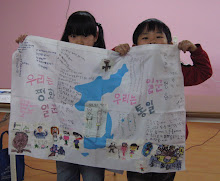
![[URGENT PLEA: In Update] EMERGENCY in GANGJEONG Since AUG. 24, 2011](https://blogger.googleusercontent.com/img/b/R29vZ2xl/AVvXsEiQvpaNf6EePZVucu97_JphYsFS5IgumnSiA4YAmen1PZcim6vMmW7XjZ7J6nLh-Cu36mwBN5n1evrA3ey0vYMpwlAGsgnSFggv6a1w4Qx9BvvqOB0hy0BIcBkL2Exfs3zIxBsBuDGa1kzg/s227/jejusit.jpg)


![[Solidarity from Japan for the Jeju] 253 individuals and 16 groups/organizations](https://blogger.googleusercontent.com/img/b/R29vZ2xl/AVvXsEivji7100kBkr0hzvqYfh4IBBilkZ6XgDIg89jOxS6kTssxsVKC6Wm-fZbKOEsiy3zcO-9gW6GHspD5R_2C9WsGx5S1Z5VPj_OVRF7H6dxdaT0S-2H1eqsDsYvIwOV26VscxTHnKmP5iZmh/s227/jeju_12_10j.jpg)

![[Translation] Korean organizations' statement: Immediately cancel the joint ROK-US drill Nov 26](https://blogger.googleusercontent.com/img/b/R29vZ2xl/AVvXsEgfKDMo-qyEjm5asUtHlREyJY_5Ou-2tyB8SH6aUxiViRbbKR-8W_rirFiGp5DYSoD_KaeNOPMWR0af0ZPUIbJKmR89ImDvADHsGAIqsJVBvJNBEIl5wLd3G_zhPDW3Z2SxsHXadOsXe8st/s227/1.jpg)
![HOT! [Hankyoreh Hani TV] Beneath the Surface: the investigation into the sinking of the Cheonan](https://blogger.googleusercontent.com/img/b/R29vZ2xl/AVvXsEh80rL3Qv9GnfHSqbYMfivdqX5gZN-1O_VQj3A_Gk3yjWdybHwJCsprA3l6cEQB0cYCP2oNeaLo2ohLGIy0Uqqkv_fRkBevGJ2f-qkKD5eP1ZGsKeQ-r-jHUUb79WvucIN7hpEtXza4xXCL/s227/HaniTV+Cheonan.gif)


![[Translation]Statement against illegal inspection and unjust lay-off by the Kunsan USAFK!(Nov_2010)](https://blogger.googleusercontent.com/img/b/R29vZ2xl/AVvXsEg3JlQ-lreusCIJo5Yv2e3ZrRwrSMUE7UQxlrDVjmBehl0Pa24QZIAbZ5vUpgnnExbkKL9PdCwxVYSHWJkr_XK0FM4EhU3CMFhqfborVNu_p4v3bEFpNm3ia-aEHnvMMuEBI27aB7_BETuJ/s227/gunsan+protest.gif)
![[Translation] Korean organizations' statement against dispatching special force to the UAE on Nov.](https://blogger.googleusercontent.com/img/b/R29vZ2xl/AVvXsEiU7TNhTDLLwZkKP0Z78JsCZKp6je-QSFll3_ThmLES_y_nPLXEzeakrsZXoNxhN5blopEhy6xGV2tneJrniPdTR-JvOQMmSLr_HhlucxFvbusxk4oKvvMO2laBOHSIkB9OOeOxrQlqCA0O/s227/antiwarpeace.jpg)
![[Translation] Stop, Joining MD!: South Korean activists' statement and writing on Oct. 25, 2010](https://blogger.googleusercontent.com/img/b/R29vZ2xl/AVvXsEggGIHVei8j7LCJPJB5HIrspd942q436daNTquP-pFd45Cl70Ml_1JFiFDHgKu6FcoqNgFVKIFqjeuSPau2k_BwGHhx0cqFFL2-4ybZSTlmua0_AsERBtKYQa7jZk7uNj41LX6rj2vksHbo/s227/StopMD.jpg)
![[In Update] People First, NO G-20 (Nov. 6 to 12, Korea)](https://blogger.googleusercontent.com/img/b/R29vZ2xl/AVvXsEhZl8VTqeL7o2ndliGIE-sZFCikbTgfB9KCc3AtZvDaYijBBEhdfultMEOpyrCaD5gzpH8mqfWjU20KXMbSUl-5KM7yQeHU6z3BWV8tiOy4UKaCudz9VKWoi5x58xdC_gQpJTjkR5u7O9xf/s227/left21_G20.jpg)
![[International Petition] Stop US helipad plan in Okinawa to save great nature](https://blogger.googleusercontent.com/img/b/R29vZ2xl/AVvXsEihgYmdb0N8ViPvTFC_5i-Psbt4eX_LnAUEOtZkUngv_pGvRyWag1r6W60NicLLyTgWq-sPT1hBxLY5SadEIVv5McfZQ5uIhe-W0VoflQNqojsYZjFW6AH-gB1jsmSDGnGuKIFk2UkvNbFG/s227/yanbaru_w.jpg)
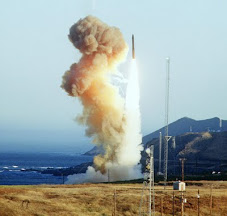
![[Global Network] against the first launch of Quasi-Zenith Satellite, Japan, on Sept. 11, 2010](https://blogger.googleusercontent.com/img/b/R29vZ2xl/AVvXsEj2sYpfodDDMIA7qXwuda0DmKapxXFB479fDnn8RKy7QNZqz0VEvWucNd-DleZ37hWNXC-Z8QtaqtM37VuPwac5SgclJ9_khBBSWOedvm19MRXIP1j1kcWrK6EW5IFjQdEEY2h7E6xuyNvC/s227/Qzss-45-0_09.jpg)
![[In update] Some collections on the Koreans’ protests against the sanction & war on Iran](http://4.bp.blogspot.com/_gnM5QlRx-4c/TJMvke6t8zI/AAAAAAAAFO4/tamQ8LUnOOA/S227/No+Sanction+on+Iran.jpg)
![[Three International Petitions] to End the Korean war and peace treaty(or peace resolution)](https://blogger.googleusercontent.com/img/b/R29vZ2xl/AVvXsEhlohLVYtpCg7iMsZhNYY4hBbhTi2dIheHMHWLDph9X2y78cjgZV1LeSfUJeu80elhJm70Q9E059q72lK-spSPvsRG4bPuCDIytltJB9IH3mWt9OG98HqhnTsPakwhvNeoCFUgF1xoxQ2EZ/s227/border.jpg)


![[Collection of Documents] No Base Learning and Solidarity Program_Korea(June 14 to 20, 2010)](https://blogger.googleusercontent.com/img/b/R29vZ2xl/AVvXsEix_HzjToh3nNGHBc-_5gasq-ykcaZ6GInLixILmZVyRJ5xoeHCxWOyYd9fSM7bmnuFsjSrYOGEPnQOwB1Dcyo-sN4Pw0cFPhUtKig_qlVnGL1Wi82ClvPqbEPWYhJiqdNF0DyzLIBETMB9/s227/No-Base-banner.jpg)
![Site Fwd:[John Hines] A U.S. Debate coach’s research trip on the Issues of Korea](https://blogger.googleusercontent.com/img/b/R29vZ2xl/AVvXsEg8yRra0zNhKHN74Auqhd3Nx9tZ7BWCGflRJHGH4CfzBT_yjhZ8Nl9b3OZuLpYWJ2exsjmR0oVl-Qq_cf832p2VdmOZhUi-lCFzCNeDSyVtweX1lWZPC-RlHmDMLtilHwHjNFTenBiM4Fk4/s227/Jeju-Peace-Tour.jpg)


![[News Update] Struggle Against the Jeju Naval Base since Jan. 18, 2010](https://blogger.googleusercontent.com/img/b/R29vZ2xl/AVvXsEhKfSTRC5QKBBSFIq_m7QIqXdlbL4-gF5GJYn9Q-pN__k7sV7uxGDcLY5L8xmU7QuWuUhBT_GhG-URBPO80RT3AfWfDrWJr06h1hFuZC6ZBVKe4U6PS1Cd7Kr6olO8TYQtk13Drox7IS6ea/s226/scrum1.jpg)


![[Urgent] Please spread the Letter!: There was no Explosion! There was no Torpedo! (May 26, 2010)](https://blogger.googleusercontent.com/img/b/R29vZ2xl/AVvXsEhSd2yWZ3xGwnJQXB73z5FgXCqSosAoB9_33-GLYprOmLqjmvgSAQp1BYI7e4slK1FDxHRi9KK4um-OpDaj8QOkXwAScVAgvvq6-ehbDA-hbkr96wT9oHNNmWnBPv8GU4hoZp9X8F9AZBX4/s227/grounded.jpg)
![Text Fwd: [Stephen Gowans]The sinking of the Cheonan: Another Gulf of Tonkin incident](https://blogger.googleusercontent.com/img/b/R29vZ2xl/AVvXsEi_L6hB3RZ1MovTXHe0A8yn_RfgMALGR0kM6poBuGp809xwvHtB_-PGWtS_WpyPWatyd9lB2pPqL2gOLc4dTCEdJ9sMvxJWEdapl-mMLm7WHAsV-jVpgqarVh8XBtdz_0c-Vohdh3HtJahD/s227/lee-myung-bak.jpg)
![[Japan Focus]Politics in Command: The "International" Investigation into the Sinking of the Cheonan](https://blogger.googleusercontent.com/img/b/R29vZ2xl/AVvXsEiHmTo8v-uCJnabRhMdnBAkC9J3s5bb2JsDKiT5leJHwbK8IDJHxfJmqQ_C0Is_bPC6UGMf05CA0exF2y4r2x9RhFUHT0kjsKviaME_MZXKnq775UyYAdb7w2SAzE75XvBfHp1al2q6i3cf/s227/wen_jiabao_and_lee_myungbak.png)
![[Japan Focus] Who Sank the SK Warship Cheonan? A New Stage in the US-Korean War and US-China](https://blogger.googleusercontent.com/img/b/R29vZ2xl/AVvXsEiKSS5ULT5QBaMGYpXXqBMX9jtwLwMLuK469b6Ku72GTJYKUObzTANaPjZqvvpPzYMJgPF53sjhvhK3DVa88ipYlggsJageykXlkxY6s8TW05xcU-_vfhf-pACUoaWuFbT-fsU1qEhm_yIi/s227/buoy_map.gif)
![[Updated on 12/13/10] [Translation Project] Overseas Proofs on the Damages by the Military Bases](https://blogger.googleusercontent.com/img/b/R29vZ2xl/AVvXsEikADE6JovUNspQyZUWVMTLAQg7yQNqXpVUbqZPk8f4uc_1723_xm1Cco6WAmstQXVPnaJAcb1mZA8Ny_3xONT_f5uh8MNLPnUhtqdGgy3HCtC1Vbbz4Q0ZY1Cssu-4cJEVNdrvznbS5UzO/s227/missile.jpg)
![[International Petition] Close the Bases in Okinawa](https://blogger.googleusercontent.com/img/b/R29vZ2xl/AVvXsEhNpQiHklwFbWVlFK7GDFXnBSOOSFEj3Il-We-N3uTDldKiidL2NGZs7X_LtTnatzTo_r8CexRkFe8NhfxYqmgp1knEEslROTfNjI5_mSb57cdbhPkftvanveYBaevAD9xuKDGoIxiTwoSb/s227/2.jpg)

![[In Update]Blog Collection: No Korean Troops in Afghanistan](https://blogger.googleusercontent.com/img/b/R29vZ2xl/AVvXsEjjEmCRXSNAG7_QBxKWbdksmxoWR4nyAovQTTdR1G2AuXh0jxtqNkI9OmYgYWRoLAJShvtBvE840QXuBWSVh3u3zMYqkNAFX6OWy3m5Nur4HM7uNK-pKT1ycyApJp-VLyhIFRRcoisYAh0E/s226/No-Troops-to--Afghanistan.jpg)


