* Rick Rozoff on Sept. 29, 2010
Stop NATO
September 29, 2010
Bangladesh: U.S. And NATO Forge New Military Partnership In South Asia
Rick Rozoff
The Foreign Ministry of Bangladesh disclosed on September 26 that the United States had requested combat troops for the North Atlantic Treaty Organization's military command in Afghanistan.
The effort to recruit Bangladeshi soldiers for the nine-year-old war was made in an overture by U.S. Special Representative for Afghanistan and Pakistan Richard Holbrooke to Bangladesh's Foreign Minister Dipu Moni in New York City, presumably on the sidelines of or following last week's United Nations General Assembly session.
A statement issued by the government of Bangladesh said that Holbrooke "sought for any kind of help like deploying combat troops, providing economic and development assistance or giving training among the law enforcement agencies." [1]
Should the government of Bangladesh accede to the American request, it would become the 48th official Troop Contributing Nation for NATO's International Security Assistance Force (ISAF) and the seventh Asia-Pacific nation to provide troops to the North Atlantic military alliance for its war in South Asia, one which has further advanced across Afghanistan's eastern border into Pakistan with marked ferocity during the past five days. NATO will have gained another major ally in the building of its Asian complement using the Afghan-Pakistani war theater as the grounds for integrating the armed forces of countries on the other side of the world from the North Atlantic for what is expanding into a global U.S.-led military network.
Bangladesh's combat forces would join military units from Malaysia, Mongolia, Singapore, South Korea, Australia and New Zealand among Asia-Pacific countries, with a report that a 275-troop marine contingent from Tonga is also to arrive in Afghanistan soon. Japan has personnel assigned to NATO's Provincial Reconstruction Teams in the country and in the past has supplied the U.S. with naval assistance for the war effort.
The inclusion of Bangladesh into the ranks of NATO's ISAF, however, would constitute a milestone in two key ways. It would be the only country in South Asia with troops in the war zone aside from the two nations in which the expanding conflict is being fought: Afghanistan and Pakistan. And Bangladesh would be the second most populous state contributing to NATO's military campaign, only surpassed by the U.S., as it has the seventh largest population in the world at 160 million.
The war in Afghanistan has provided the Pentagon and NATO the groundwork for working with the militaries of scores of nations under real-world and real-time combat conditions. Every European country except Belarus, Cyprus, Malta, Moldova, Russia and Serbia has deployed troops to Afghanistan under NATO command, as have the nations of the South Caucasus: Armenia, Azerbaijan and Georgia. The United Arab Emirates is the first Persian Gulf state to do so.
Though not yet official contributing nations, several other countries have personnel in Afghanistan or on the way, including Bahrain, Colombia, Egypt, Japan and Ukraine. Over a quarter of the world's nations have supplied military units of various size for the North Atlantic bloc's war in Afghanistan.
In the past year both the U.S. and NATO have intensified activities aimed at integrating Bangladesh into the West's military nexus, both in preparation for the deployment of its troops to Afghanistan and for solidifying what for the past decade has been referred to as Asian NATO.
This May 12 a roundtable meeting was held in the capital of Bangladesh entitled "The Role of NATO in the New Security Order" with the participation of several "experts, military personnel and former government officials from the region." [2] The title of the event suggests it was conducted in the context of last year's discussions of the new NATO Strategic Concept held in several European and North American nations. The Indian subcontinent is far-removed from the North Atlantic Alliance's point of origin, but the new doctrine to be adopted this November at NATO's summit in Portugal will institutionalize the bloc's expansion into an international military and - to use its own term - security organization.
READ MORE
Showing posts with label India/South Asia. Show all posts
Showing posts with label India/South Asia. Show all posts
Friday, October 1, 2010

Monday, September 27, 2010
Text Fwd: U.S. Deploys Aircraft Carrier Strike Group To Pacific, Indian Oceans 미국, 항공 모함 공격 전단, 아시아 태평양과 인도양에 배치

 *Image source/ caption: same as the link
'100919-N-5226D-355 PACIFIC OCEAN (Sept. 19, 2010) The aircraft carrier USS Abraham Lincoln (CVN 72) transits across the Pacific Ocean. The Abraham Lincoln Carrier Strike Group is on a scheduled deployment conducting maritime security operations and theater security cooperation efforts. (U.S. Navy photo by Mass Communication Specialist 3rd Class Stephen D. Doyle II/Released)'
___________________________________________________________
* Text sent from Rick Rozoff on Sept. 27, 2010
Navy NewsStand
September 25, 2010
Abraham Lincoln Carrier Strike Group Public Affairs
USS Abraham Lincoln, At Sea: Abraham Lincoln Carrier Strike Group entered the 7th Fleet Area of Responsibility (AOR) Sept. 25 as part of their scheduled 2010-2011 deployment.
The 7th Fleet AOR is the largest of the numbered fleets, covering more than 48 million square miles of the Pacific and Indian Oceans.
The mission of the Lincoln Strike Group while deployed will focus on maritime security operations and theater security cooperation efforts, which help establish conditions for regional stability.
"Working with our allies in this region is extremely important to us," said Rear Adm. Mark D. Guadagnini, strike group commander. "The U.S. commitment to cooperation and collaboration with like-minded nations is vital to Asia-Pacific security and stability."
....
Abraham Lincoln Carrier Strike Group consists of flagship USS Abraham Lincoln (CVN 72), embarked Carrier Air Wing (CVW) 2, San Diego-based guided-missile cruiser USS Cape St. George (CG 71), and the embarked Destroyer Squadron (DESRON) 9. Ships assigned to DESRON 9 include the Everett-based destroyers Momsen (DDG 92) and Shoup (DDG 86), as well as USS Halsey (DDG 97) and USS Sterett (DDG 104).
===========================
Stop NATO
Blog site
Wednesday, June 9, 2010
Text Fwd: Boeging Eyes India & Asia for Big Weapons Profits
* Text sent from Bruce Gagnon on June 8, 2010
Singapore Airfreight Directory
07 June 10
The Business Times
Boeing eyes Asia for its defence sales
(SINGAPORE) Faced with slumping demand and budget cuts in the United States, American aerospace giant Boeing's defence arm is looking to Asia to pick up the slack.
Singapore Airfreight Directory
07 June 10
The Business Times
Boeing eyes Asia for its defence sales
(SINGAPORE) Faced with slumping demand and budget cuts in the United States, American aerospace giant Boeing's defence arm is looking to Asia to pick up the slack.
Dennis Muilenburg, president and chief executive of Boeing Defense, Space and Security (BDS), estimates that countries such as South Korea, Japan, India, Australia and South-east Asian partners such as Malaysia will be strong markets for its fighter jets, unmanned systems, helicopters, energy systems security and even cyber-warfare technology amid a slowdown in defence spending in its US home market.
'We are seeing some pressure in our core business in the US, such as missile defence, but growth will come from other markets, particularly in Asia,' he said.
About 16 per cent of BDS's US$34 billion business comes from international sales. Mr Muilenburg, who was in Singapore last week for the Asia Security Summit, sees international business share rising to 25 per cent in five years.
Asian markets account for about half the international sales. And this could grow sharply in the next three years.
The company is awaiting a Japanese tender for some 40 next-generation fighters to replace its ageing F4 Phantoms.
In Korea, where it has delivered 61 F15-K Eagle fighters, it is looking at an opportunity to clinch another deal for 60 more of the planes.
In Australia, where it has delivered the first five of 25 F18 Superhornets and five C17 transport planes, it sees interest for the P8 anti-submarine planes.
In Malaysia, it is currently in talks to sell its F18 Hornets to replace the air force's ageing Russian MiG fighters, while in Singapore, it is in the process of supplying the 24 F15 Eagles on order.
But it is India which Mr Muilenburg sees as the 'Jewel in the Crown'.
The signing of the nuclear agreement by former president US George W Bush two years ago, and the subsequent thawing of relations between the US and India, have finally opened up the country's US$30 billion defence market to Boeing.
'In the past, Boeing's relationship with India was purely on the commercial airplanes side,' he said. 'Now, relations encompass the defence side.'
India has already inked a deal to buy eight P8i anti-submarine aircraft and has expressed an interest in purchasing 10 C17 military transport aircraft. If that US$4 billion C17 deal comes through, it will be Boeing's single biggest for this aircraft type.
But the biggest competition now going on is India's request for the supply of 126 multi-role combat fighter planes. Besides Boeing, others in the battle for this US$10 billion deal include Eurofighter Typhoon, Sweden's Griffin, France's Rafale and Lockheed Martin of the US.
Besides fighters, the Indian army is also looking to buy Apache attack helicopters and the Chinook heavy-lift helicopters.
Wednesday, March 17, 2010
Text Fwd: CLARITY ON AFGHANISTAN PIPELINE STORY
Bruce Gagnon blog on March 16, 2010
Tuesday, March 16, 2010
CLARITY ON AFGHANISTAN PIPELINE STORY
 I've had lots of responses to my post the other day about the Marines being used to clear out southwest Afghanistan. One friend here in Maine sent me the above map that was in a Canadian newspaper in 2008. This map lays out a similar pipeline route from Turkmenistan that would deliver natural gas through Afghanistan, Pakistan, and then into India.
The June, 2008 Globe and Mail story was entitled "Pipeline opens new front in Afghan war."
Here are a few tidbits from it:
"Afghanistan and three of its neighbouring countries have agreed to build a $7.6-billion (U.S.) pipeline that would deliver natural gas from Turkmenistan to energy-starved Pakistan and India – a project running right through the volatile Kandahar province – raising questions about what role Canadian Forces may play in defending the project.
"To prepare for proposed construction in 2010, the Afghan government has reportedly given assurances it will clear the route of land mines, and make the path free of Taliban influence.
"The so-called Turkmenistan-Afghanistan-Pakistan-India [TAPI] pipeline has strong support from Washington because the U.S. government is eager to block a competing pipeline that would bring gas to Pakistan and India from Iran.
"Afghanistan's national government could reap $160-million (U.S.) a year in transit fees, an amount equivalent to half the government's current revenue.
"The pipeline proposal goes back to the 1990s, when the Taliban government held talks with California-based Unocal Corp. – and its U.S. government backer – while considering a competing bid by Argentina's Bridas Corp. Those U.S.-Taliban talks broke down in August, 2001. India, which desperately needs natural gas imports to fuel its growth, later joined the revived project."
So the picture gets clearer still. It is likely that the plan in the end would call for parallel pipelines carrying oil and natural gas from the Caspian Sea region - one turning east into Pakistan and then India and the second continuing south into Pakistan and ending at ports along the Arabian Sea.
But everyone acknowledges now that the "success" of these proposals is conditioned on stabilizing Afghanistan - what the U.S. and Canadian governments call dealing with "security concerns."
One of the chief concerns of the U.S. and their NATO allies is certainly making sure that Iran does not succeed in their efforts to have the pipelines run through their country. So in a sense the U.S.-NATO war on Iran has already begun.
Tuesday, March 16, 2010
CLARITY ON AFGHANISTAN PIPELINE STORY
 I've had lots of responses to my post the other day about the Marines being used to clear out southwest Afghanistan. One friend here in Maine sent me the above map that was in a Canadian newspaper in 2008. This map lays out a similar pipeline route from Turkmenistan that would deliver natural gas through Afghanistan, Pakistan, and then into India.
The June, 2008 Globe and Mail story was entitled "Pipeline opens new front in Afghan war."
Here are a few tidbits from it:
"Afghanistan and three of its neighbouring countries have agreed to build a $7.6-billion (U.S.) pipeline that would deliver natural gas from Turkmenistan to energy-starved Pakistan and India – a project running right through the volatile Kandahar province – raising questions about what role Canadian Forces may play in defending the project.
"To prepare for proposed construction in 2010, the Afghan government has reportedly given assurances it will clear the route of land mines, and make the path free of Taliban influence.
"The so-called Turkmenistan-Afghanistan-Pakistan-India [TAPI] pipeline has strong support from Washington because the U.S. government is eager to block a competing pipeline that would bring gas to Pakistan and India from Iran.
"Afghanistan's national government could reap $160-million (U.S.) a year in transit fees, an amount equivalent to half the government's current revenue.
"The pipeline proposal goes back to the 1990s, when the Taliban government held talks with California-based Unocal Corp. – and its U.S. government backer – while considering a competing bid by Argentina's Bridas Corp. Those U.S.-Taliban talks broke down in August, 2001. India, which desperately needs natural gas imports to fuel its growth, later joined the revived project."
So the picture gets clearer still. It is likely that the plan in the end would call for parallel pipelines carrying oil and natural gas from the Caspian Sea region - one turning east into Pakistan and then India and the second continuing south into Pakistan and ending at ports along the Arabian Sea.
But everyone acknowledges now that the "success" of these proposals is conditioned on stabilizing Afghanistan - what the U.S. and Canadian governments call dealing with "security concerns."
One of the chief concerns of the U.S. and their NATO allies is certainly making sure that Iran does not succeed in their efforts to have the pipelines run through their country. So in a sense the U.S.-NATO war on Iran has already begun.
Monday, December 21, 2009
[국문 번역: Text Fwd] 2010 GN Conference, India, Oct. 9~12 인디아 주관 글로벌 넷워크 연간 회담 2010년 10월 9일~12일
 * Image source: Bruce Gagnon blog(Organizing Notes)
* Indian activists during the 'Keep Space for Peace week', Oct. 3~10, 2009
2009년 10월 3~10 '우주 평화주' 기간, 인도 활동가들
Click the image above for larger view
화면을 클릭하시면 이미지가 확대됩니다.
____________________________________________________________________________________
[역주] 글 로벌 넷워크 연간 모임은 회원이 아니더라도 관심있는 사람이면 '누구나' 참가할 수 있는 공개 회의입니다. 2010년 글로벌 넷워크는 2개의 회의를 여는데 5월 9일은 비핵확산 조약 심의 회담을 둘러싼 여러 민간 평화 행사들의 일부로서 뉴욕에서 연간 회원 모임을 갖고 10월 9~12일에는 인도 중부 지방 나그푸르에서 본 우주 [이슈] 조직 연간 회담을 갖습니다. 관심있으신 분들의 많은 참여를 바랍니다.
____________________________________________________________________________________: See the updated program at the bottom.
브루스 개그논이 글로벌 넷워크 및 해외 미군 기지 반대 리스트를 통해 12월 26일, 엎데이트를 보냄
: 엎데이트된 프로그렘은 맨 밑을 보시길.
"If you have interest in attending this international space organizing conference please let us know as soon as possible so we can pre-arrange for housing, Visa's, transportation and other important tasks. This will be an exceptional life changing experience for all of us." [Refer to the contact address below]
“ 여러분께서 국제 우주 [평화] 이슈 조직 회담에 관심이 있으시다면 [브루스 개그논]에게 가능한 한 되도록 빨리 알려주셔 거주, 비자, 운송, 그리고 그 외 다른 중요한 과제들을 미리 준비할 수 있도록 알려 주시길 바랍니다. 이 여행은 우리 모두에게 삶을 바꿀 예외적인 경험이 될 것입니다.”
[밑의 연락처 참조]
______________________________________________________________________________
* Sent from Bruce Gagnon through the No US Bases List on Dec. 20, 2009. Also Click HERE
브루스 개그논 2009년 12월 20일 No US Bases List를 통해 보냄. 여기를 또한 보시길.
'GN Friends:
글로벌 넷워크 친구 여러분께
You know we will hold our annual space organizing conference in Nagpur, India next October. Below see the preliminary program that Rao has outlined. Please send us any feedback.
아시겠지만 [우주의 무기와 핵을 반대하는 글로벌 넷워크]는 내년 10월 인디아 나그푸르에서 연간 우주 [평화] 회담을 열려 합니다. 라오씨께서 대략한 초기 입안 프로그램을 보시길. 어떠한 의견도 보내주시면 고맙겠읍니다.
Also please know that in order for Rao to get approval from the government of India to hold this conference he must provide a list of those of us coming from outside the country. If there is the slightest chance you might be attending please see me and Rao the following info ASAP. [Please refer to the contact address below]:
또한 라오씨께서 이 회담을 위해 인도 정부로부터 승인을 얻기 위해서는 해외에서 오는 우리의 리스트를 제출해야 한다 합니다. 여러분들 중 참석하실 가능성이 약간이라도 있다 생각되는 분들께서는 저와 라오씨에게 다음의 정보를 가능한 빨리 보내주시길 바랍니다. [아래 연락 정보 참조하시길]:
이름 (Name of the Participant)
아버지/남편 이름 (Father’s/Husband’s name)
국적 (Nationality)
생년월일 (Date of Birth)
탄생 장소 (Place of Birth)
여권 번호 (Passport N0)
여권 발행 일시 & 장소 (Date& Place of issue of Passport)
여권 만료일 (Date of Expiry of Passport)
주소 (Address)
Thanks.
감사합니다.
Bruce
브루스
Global Network Against Weapons & Nuclear Power in Space
PO Box 652
Brunswick, ME 04011
(207) 443-9502
globalnet@mindspring.com
www.space4peace.org
http://space4peace.blogspot.com/ (blog)'
______________________________________________________________________________
* Update was sent by Bruce Gagnon on Dec. 26,
with the fix of dates (from Oct. 11~14 to Oct. 9~12, 2010) etc.
2010년 인디아 나그푸르
우주의 무기와 핵을 반대하는 글로벌 넷워크 연간 회담
Global Network against Weapons and Nuclear Power in Space
(space4peace.org)
2010 Annual Conference, Nagpur, India
(Oct. 9~12, 2009)
(2009년 10월 9일~12일)
아시아의 비핵무장화와 비미사일 방어 실현을 위한 국제 회담
INTERNATIONAL CONFERENCE ON ACHIEVING
A NUCLEAR WEAPONS AND MISSILE DEFENCE FREE ASIA
INTERNATIONAL CONFERENCE ON ACHIEVING
A NUCLEAR WEAPONS AND MISSILE DEFENCE FREE ASIA
2010년 10월 9일
October 9, 2010
October 9, 2010
11.00 – 12.00 등록 Registration
12.00 – 13.00 점심 Lunch
13.00 – 14.00 환영사및 소개 Welcome and Introduction
나그푸르 방문 환영사 Welcome to Nagpur Address – 10min.
개시 연설 (기조 연설) Inaugural address (key note) – 20 min.
글로벌 넷워크 소개 (GN 의장 데이브 웹) Introduction to GN by Dave Webb – 10min.
환영 연설 (브루스 개그논 기조 연설) Welcome Address by Bruce Gagnon (key note) – 20 min.
14.00 – 17.00 주제 1- 인류가 생존할 수 있을 것인가?
Plenary Session I – Can the Humanity Survive?
대량 살상 무기
__Weapons of Mass Destruction,
기후 변화와 우주 기술의 역활
__Climate Change and the role of Space Technologies
[비]핵확산 조약 심의 위원회 결과
__Outcome of Nuclear Proliferation Treaty Review Committee
전략 사령부, 우주 지배와 지구 통제
__StratCom, Space Domination and Global Control
외계 우주의 무기 경쟁 금지
__Prevention of an Arms Race in Outer Space
기후 변화, 폭력 그리고 정치적 통제
__Climate Change, Violence and Political Control
17.00 – 18.00 문화 프로그램 Cultural Programme
18.00 – 20.00 주제 II-아시아 비핵무장의 문제들과 전망들
Plenary Session II – Problems and Prospects of Nuclear Disarmament in Asia
인디아, 파키스탄 그리고 비핵확산 조약
__India, Pakistan and the NPT
인디아 파키스탄 갈등(카쉬미르 문제 포함)
__India Conflict with Pakistan (including Kashmir)
인디아 대 중국 갈등
__ India Conflict with China
미국-인도 핵 거래
__US-India nuclear deal
한국 또는 일본의 전망
__ South Korea, Japanese perspectives
20.00 저녁 식사 Dinner
2010년 10월 10일
October 10, 2010
09.00 - 11.00 주제 III-아시아에서 미사일 방어와 우주 무기화의 위험
Plenary Session III -. The Danger of Missile Defence and Weaponisation of Space in Asia
인디아 우주 프로그램
__ Indian Space program
인디아와 미사일 방어
__ India and Missile Defence
파키스탄의 무인 비행기들
__Drones in Pakistan
11.00 – 13.00 주제 세션 IV- 아시아와 테러리즘
Plenary Session IV - Asia and Terrorism
:아프가니스탄 전쟁과 대서양 조약 기구의 역활
: The War in Afghanistan and role of NATO
13.00 점심 Lunch
15.00 – 17.00 주제 세션 V- 아시아 연합 조직의 전망
Plenary Session V - Prospects of Asian Union
: 아시아 주변의 전망들
: Perspectives from around Asia
16.00 – 18.00 나그푸르 선언 채택
Adoption of Nagpur Declaration.
20.00 저녁 식사 Dinner
2010년 10월 11일
October 11, 2010
October 11, 2010
09.00 – 11.00 글로벌 넷워크 연간 회의및 전략 토론
GN Annual Meeting and Strategy Discussion
11:00-12:00 청소년 그룹과의 만남(들)
Interaction with Youth Group(s)
12.00 – 14.00 교육 기관 방문들
Visit to Educational Institutions
14.00 점심 Lunch
16.00 – 18.00 관광 Sightseeing
2010년 10월 12일
October 12, 2010
마하트마 간디가 자유 투쟁기간 한 때 지냈던 세와그람 방문. 이 아쉬람은 마하트마 간디의 본부로 1934년부터 40년까지 6년간 봉사되었다. 간디는 지역적으로 이용가능한 물질들을 이용해 자신이 직접 세와그람 아쉬람을 지었다. 그는 풀이 무성한 녹색 환경 가운데에 있는 아쉬람에서 전기나 전화 없이 살았다.
Visit to Sewagram Ashram where Mahatma Gandhi spent time during the freedom struggle of India. The ashram served as the headquarters of Mahatma Gandhi for six years, from 1934 to 1940. Gandhi built the Sewagram Ashram himself, with the material that was available locally. He lived at the ashram, amidst lush green surroundings, without any facilities of electricity and telephone.
 * Image source: same as the link above
''Sewagram Ashram'
Monday, August 10, 2009
Text fwd: Afghan War: NATO Builds History's First Global Army
Stop NATO
August 9, 2009
Afghan War: NATO Builds History's First Global Army
Rick Rozoff
Two months before the eighth anniversary of the U.S. invasion of Afghanistan and the beginning of NATO's first-ever ground war the world is witness to a 21st Century armed conflict without end waged by the largest military coalition in history.
With recent announcements that troops from such diverse nations as Colombia, Mongolia, Armenia, Japan, South Korea, Ukraine and Montenegro are to or may join those of some 45 other countries serving under the command of the North Atlantic Treaty Organization-led International Security Assistance Force (ISAF), there will soon be military personnel from fifty nations on five continents and in the Middle East serving under a unified command structure.
Never before have soldiers from so many states served in the same war theater, much less the same country.
By way of comparison, there were twenty six (higher, and looser, estimates go as high as 34) national contingents in the so-called coalition of the willing in Iraq as of 2006. In the interim between now and then troops from all contributing nations but the United States and Great Britain have been withdrawn and in most cases redeployed to Afghanistan.
In 1999 NATO's fiftieth anniversary summit in Washington, D.C. welcomed the first expansion of the world's only military bloc in the post-Cold War era, absorbing former Warsaw Pact members the Czech Republic, Hungary and Poland, in the course of conducting NATO's first war, the relentless 78-day bombardment of Yugoslavia, Operation Allied Force.
Two years later, after the 9/11 attacks in New York City and Washington, D.C., NATO activated its Article 5 - "The Parties agree that an armed attack against one or more of them in Europe or North America shall be considered an attack against them all" - for the first time in the bloc's history and launched a number of operations from deploying German AWACS to patrol the Atlantic Coast of the U.S. to launching Operation Active Endeavor, a naval surveillance and interdiction program throughout the Mediterranean Sea which continues to this day.
But the main effect, and the main purpose, of invoking NATO's mutual military assistance clause was to rally the then 19 member military bloc for the invasion and occupation of Afghanistan and the stationing of troops, warplanes and bases throughout South and Central Asia, including in Kyrgyzstan, Pakistan, Tajikistan and Uzbekistan. Flyover rights were also arranged with Kazakhstan and Turkmenistan and newly acquired airbases in Bulgaria and Romania have since been used for the transit of troops and weapons to the Afghan war zone.
If the 1999 war against Yugoslavia was NATO's first "out of area" operation - that is, outside of North America and those parts of Europe in the Alliance - the war in Afghanistan marked NATO's transformation into a global warfighting machine. In the years intervening between the October 2001 invasion of Afghanistan and now NATO officials and advocates have come to employ such terms as Global, Expeditionary and 21st Century NATO. Afghanistan provided the Alliance the opportunity to add to its previous expansion to Eastern Europe with its attendant military operations in the Balkans into asserting itself as the world's first global military force.
As the U.S. State Department's Deputy Assistant Secretary of State for European Affairs Kurt Volker (later U.S. ambassador to NATO) said in 2006, “In 1994 NATO was an alliance of 16 [countries], without partners, having never conducted a military operation. By 2005, NATO had become an alliance of 26, engaged in eight simultaneous operations on four continents with the help of 20 partners in Eurasia, seven in the Mediterranean, four in the Persian Gulf, and a handful of capable contributors on our periphery.” [1]
The updated details of what he was alluding to are these:
From 1999 to this year NATO has added twelve new members - Albania, Bulgaria, Croatia, the Czech Republic, Estonia, Hungary, Latvia, Lithuania, Poland, Romania, Slovakia and Slovenia - all in Eastern Europe, nine of them formerly in the Warsaw Pact and three former Soviet and two Yugoslav republics.
All of the new members were prepared for full NATO accession under the Partnership for Peace (PfP) program, which first demands weapons interoperability (scrapping contemporary Russian and old Warsaw Pact arms in favor of Western ones), increasing future members' military spending to 2% of the national budget no matter how hard-hit the nation is since the collapse of the Eastern Bloc, the purging of "politically unreliable" personnel from military, defense and security posts, training abroad in NATO military academies, hosting U.S. Alliance military exercises, and instructing the officer corps in a common language - English - for joint overseas operations.
With a dozen PfP graduates now full NATO members who have deployed troops to Afghanistan - Bulgaria, the Czech Republic, Estonia, Latvia, Lithuania, Poland and Romania were also levied for troops in Iraq - the partnership still includes every former Soviet Republic not already in NATO but Russia - Armenia, Azerbaijan, Belarus, Georgia, Kazakhstan, Kyrgyzstan, Moldova, Tajikistan, Turkmenistan, Ukraine and Uzbekistan - and ten European nations that had never before been part of a military bloc: Austria, Bosnia, Finland, the Republic of Ireland, Macedonia, Malta, Montenegro, Serbia, Sweden and Switzerland.
All of the latter but Malta and Serbia have been tapped for soldiers in Afghanistan. The 28 full NATO members all have troops there also.
Of the former Soviet republics, troops from Armenia, Azerbaijan, Estonia, Georgia, Kazakhstan, Latvia, Lithuania, Moldova and Ukraine served in Iraq under PfP obligations. At the time of the South Caucasus war last August Georgia had the third largest national contingent in Iraq - 2,000 troops deployed near the Iranian border - which the U.S. rushed home on transport planes for the war with Russia.
NATO also upgraded its Mediterranean Dialogue, whose partners are Algeria, Egypt, Israel, Jordan, Mauritania, Morocco and Tunisia, at the 2004 NATO summit in Istanbul, Turkey with the so-called Istanbul Cooperation Initiative, which also laid the groundwork for military integration of the six members of the Gulf Cooperation Council: Bahrain, Kuwait, Oman, Qatar, Saudi Arabia and the United Arab Emirates. The last-named is the only Arab state to date with troops in Afghanistan.
The Afghan war has led to another category of NATO partnership, that of Contact Countries, which so far officially include Australia, Japan, New Zealand and South Korea.
The Alliance also has a Tripartite Commission with Afghanistan and Pakistan for the prosecution of the dangerously expanding war in South Asia, and defense, military and political leaders from both nations are regularly summoned to NATO Headquarters in Belgium for meetings and directives.
Afghan and Pakistani soldiers are trained at NATO bases in Europe.
Though not members of formal partnerships, nations with troops serving under NATO in Afghanistan like Singapore and Mongolia have been pulled into the bloc's global nexus and necessarily adopt military doctrines and structures in line with NATO standards.
Another component of the 2001 decision to activate the Alliance's Article 5 provision was to deploy NATO forces to the Horn of Africa, primarily to Camp Lemonier in Djibouti, where they have conducted maritime surveillance and boarding operations ever since. Last autumn NATO deployed its first naval task force off the coast of Somalia.
In addition to the five African nations in the Mediterranean Dialogue, NATO has expanded its penetration of the continent over the past eight years: An Alliance naval group has docked in Kenya. NATO has held military maneuvers in South Africa. Even Libya has begun cooperation with NATO in the Mediterranean.
With the launching of the Pentagon's Africa Command (AFRICOM) last year - and AFRICOM is the personal project of retired Marine General James Jones, from 2003-2006 top military commander of NATO and the U.S. European Command where AFRICOM was incubated and now U.S. National Security Adviser - the distinction between Pentagon and NATO operations in Africa will be a largely academic one and all of Africa's 53 nations except for Eritrea, Sudan and Zimbabwe are potential Alliance partners.
The central focus for the operationalization of NATO's worldwide plans is Afghanistan and adjoining nations.
In calendar year nine of the war in that nation and now with its expansion into Pakistan NATO has built upon previous and current joint military deployments in Bosnia, Albania, Kosovo, Macedonia, Djibouti, Iraq, Kuwait, Jordan, Sudan and off the coast of Somalia and secured a long-term, indeed a permanent, laboratory for molding history's first international rapid deployment, combat and occupation military force; a 650,000 square kilometer firing and weapons testing range; a string of airbases in the center of where Russian, Chinese, Indian and Iranian regional interests converge; a boot camp for breaking in the armed forces of dozens of nations slated for NATO membership.
As such, discussions about the "winnability" of the current war are beside the point.
Although there are currently over 100,000 troops serving under U.S. and NATO command in Afghanistan, many of them so-called niche deployment special forces, mountain and airborne troops and other units ordered by NATO from member and candidate nations, on August 7 the newly-installed Alliance Secretary General Anders Fogh Rasmussen issued an "open call for more troops" which "was perhaps the clearest indication yet that a major escalation ordered this year by new U.S. President Barack Obama is far from over."
In Rasmussen's words, "Honestly speaking, I think we need more troops." [2]
Two days after being sworn in as NATO chief on August 1 Rasmussen "ruled out setting a deadline for the withdrawal of international forces from Afghanistan, saying the western alliance will stay there 'for as long as it takes.'" [3]
The new secretary general hadn't time to begin to settle into his new post when he and NATO Supreme Allied Commander James Stavridis flew into Kabul on an unscheduled visit two days afterwards "in order to get a comprehensive view of the international effort." [4]
On August 7 British General David Richards, who will become Chief of the General Staff on August 28, stated that "There is absolutely no chance of Nato pulling out" [5] of Afghanistan and that his own nation's role there "might take as long as 30 to 40 years." [6]
Eight days earlier the British ambassador to the U.S., Sir Nigel Sheinwald, anticipated Richards in saying of the British - and by implication NATO - role in South and Central Asia that "This is going to be for decades...." [7]
In late July the Afghan ambassador to the U.S. also revealed that any hopes for an imminent deescalation of the war in his country, not to mention its eventual end, were non-existent by revealing that "NATO countries will provide 8,000 to 10,000 additional troops to allow Afghans to vote securely" [8] in this month's national elections. The official explanation by the U.S. and NATO for their increased deployment of troops to Afghanistan is that it is an ad hoc effort to insure the elections there proceed without interruption, but past elections have occurred and the fighting has increased with the introduction of more and yet more Western soldiers, tanks and other armor, attack helicopters, warplanes and large-scale military offensives.
In fact August is a good month for a NATO summer offensive and concerns over elections are a public relations ploy.
Further reading
August 9, 2009
Afghan War: NATO Builds History's First Global Army
Rick Rozoff
Two months before the eighth anniversary of the U.S. invasion of Afghanistan and the beginning of NATO's first-ever ground war the world is witness to a 21st Century armed conflict without end waged by the largest military coalition in history.
With recent announcements that troops from such diverse nations as Colombia, Mongolia, Armenia, Japan, South Korea, Ukraine and Montenegro are to or may join those of some 45 other countries serving under the command of the North Atlantic Treaty Organization-led International Security Assistance Force (ISAF), there will soon be military personnel from fifty nations on five continents and in the Middle East serving under a unified command structure.
Never before have soldiers from so many states served in the same war theater, much less the same country.
By way of comparison, there were twenty six (higher, and looser, estimates go as high as 34) national contingents in the so-called coalition of the willing in Iraq as of 2006. In the interim between now and then troops from all contributing nations but the United States and Great Britain have been withdrawn and in most cases redeployed to Afghanistan.
In 1999 NATO's fiftieth anniversary summit in Washington, D.C. welcomed the first expansion of the world's only military bloc in the post-Cold War era, absorbing former Warsaw Pact members the Czech Republic, Hungary and Poland, in the course of conducting NATO's first war, the relentless 78-day bombardment of Yugoslavia, Operation Allied Force.
Two years later, after the 9/11 attacks in New York City and Washington, D.C., NATO activated its Article 5 - "The Parties agree that an armed attack against one or more of them in Europe or North America shall be considered an attack against them all" - for the first time in the bloc's history and launched a number of operations from deploying German AWACS to patrol the Atlantic Coast of the U.S. to launching Operation Active Endeavor, a naval surveillance and interdiction program throughout the Mediterranean Sea which continues to this day.
But the main effect, and the main purpose, of invoking NATO's mutual military assistance clause was to rally the then 19 member military bloc for the invasion and occupation of Afghanistan and the stationing of troops, warplanes and bases throughout South and Central Asia, including in Kyrgyzstan, Pakistan, Tajikistan and Uzbekistan. Flyover rights were also arranged with Kazakhstan and Turkmenistan and newly acquired airbases in Bulgaria and Romania have since been used for the transit of troops and weapons to the Afghan war zone.
If the 1999 war against Yugoslavia was NATO's first "out of area" operation - that is, outside of North America and those parts of Europe in the Alliance - the war in Afghanistan marked NATO's transformation into a global warfighting machine. In the years intervening between the October 2001 invasion of Afghanistan and now NATO officials and advocates have come to employ such terms as Global, Expeditionary and 21st Century NATO. Afghanistan provided the Alliance the opportunity to add to its previous expansion to Eastern Europe with its attendant military operations in the Balkans into asserting itself as the world's first global military force.
As the U.S. State Department's Deputy Assistant Secretary of State for European Affairs Kurt Volker (later U.S. ambassador to NATO) said in 2006, “In 1994 NATO was an alliance of 16 [countries], without partners, having never conducted a military operation. By 2005, NATO had become an alliance of 26, engaged in eight simultaneous operations on four continents with the help of 20 partners in Eurasia, seven in the Mediterranean, four in the Persian Gulf, and a handful of capable contributors on our periphery.” [1]
The updated details of what he was alluding to are these:
From 1999 to this year NATO has added twelve new members - Albania, Bulgaria, Croatia, the Czech Republic, Estonia, Hungary, Latvia, Lithuania, Poland, Romania, Slovakia and Slovenia - all in Eastern Europe, nine of them formerly in the Warsaw Pact and three former Soviet and two Yugoslav republics.
All of the new members were prepared for full NATO accession under the Partnership for Peace (PfP) program, which first demands weapons interoperability (scrapping contemporary Russian and old Warsaw Pact arms in favor of Western ones), increasing future members' military spending to 2% of the national budget no matter how hard-hit the nation is since the collapse of the Eastern Bloc, the purging of "politically unreliable" personnel from military, defense and security posts, training abroad in NATO military academies, hosting U.S. Alliance military exercises, and instructing the officer corps in a common language - English - for joint overseas operations.
With a dozen PfP graduates now full NATO members who have deployed troops to Afghanistan - Bulgaria, the Czech Republic, Estonia, Latvia, Lithuania, Poland and Romania were also levied for troops in Iraq - the partnership still includes every former Soviet Republic not already in NATO but Russia - Armenia, Azerbaijan, Belarus, Georgia, Kazakhstan, Kyrgyzstan, Moldova, Tajikistan, Turkmenistan, Ukraine and Uzbekistan - and ten European nations that had never before been part of a military bloc: Austria, Bosnia, Finland, the Republic of Ireland, Macedonia, Malta, Montenegro, Serbia, Sweden and Switzerland.
All of the latter but Malta and Serbia have been tapped for soldiers in Afghanistan. The 28 full NATO members all have troops there also.
Of the former Soviet republics, troops from Armenia, Azerbaijan, Estonia, Georgia, Kazakhstan, Latvia, Lithuania, Moldova and Ukraine served in Iraq under PfP obligations. At the time of the South Caucasus war last August Georgia had the third largest national contingent in Iraq - 2,000 troops deployed near the Iranian border - which the U.S. rushed home on transport planes for the war with Russia.
NATO also upgraded its Mediterranean Dialogue, whose partners are Algeria, Egypt, Israel, Jordan, Mauritania, Morocco and Tunisia, at the 2004 NATO summit in Istanbul, Turkey with the so-called Istanbul Cooperation Initiative, which also laid the groundwork for military integration of the six members of the Gulf Cooperation Council: Bahrain, Kuwait, Oman, Qatar, Saudi Arabia and the United Arab Emirates. The last-named is the only Arab state to date with troops in Afghanistan.
The Afghan war has led to another category of NATO partnership, that of Contact Countries, which so far officially include Australia, Japan, New Zealand and South Korea.
The Alliance also has a Tripartite Commission with Afghanistan and Pakistan for the prosecution of the dangerously expanding war in South Asia, and defense, military and political leaders from both nations are regularly summoned to NATO Headquarters in Belgium for meetings and directives.
Afghan and Pakistani soldiers are trained at NATO bases in Europe.
Though not members of formal partnerships, nations with troops serving under NATO in Afghanistan like Singapore and Mongolia have been pulled into the bloc's global nexus and necessarily adopt military doctrines and structures in line with NATO standards.
Another component of the 2001 decision to activate the Alliance's Article 5 provision was to deploy NATO forces to the Horn of Africa, primarily to Camp Lemonier in Djibouti, where they have conducted maritime surveillance and boarding operations ever since. Last autumn NATO deployed its first naval task force off the coast of Somalia.
In addition to the five African nations in the Mediterranean Dialogue, NATO has expanded its penetration of the continent over the past eight years: An Alliance naval group has docked in Kenya. NATO has held military maneuvers in South Africa. Even Libya has begun cooperation with NATO in the Mediterranean.
With the launching of the Pentagon's Africa Command (AFRICOM) last year - and AFRICOM is the personal project of retired Marine General James Jones, from 2003-2006 top military commander of NATO and the U.S. European Command where AFRICOM was incubated and now U.S. National Security Adviser - the distinction between Pentagon and NATO operations in Africa will be a largely academic one and all of Africa's 53 nations except for Eritrea, Sudan and Zimbabwe are potential Alliance partners.
The central focus for the operationalization of NATO's worldwide plans is Afghanistan and adjoining nations.
In calendar year nine of the war in that nation and now with its expansion into Pakistan NATO has built upon previous and current joint military deployments in Bosnia, Albania, Kosovo, Macedonia, Djibouti, Iraq, Kuwait, Jordan, Sudan and off the coast of Somalia and secured a long-term, indeed a permanent, laboratory for molding history's first international rapid deployment, combat and occupation military force; a 650,000 square kilometer firing and weapons testing range; a string of airbases in the center of where Russian, Chinese, Indian and Iranian regional interests converge; a boot camp for breaking in the armed forces of dozens of nations slated for NATO membership.
As such, discussions about the "winnability" of the current war are beside the point.
Although there are currently over 100,000 troops serving under U.S. and NATO command in Afghanistan, many of them so-called niche deployment special forces, mountain and airborne troops and other units ordered by NATO from member and candidate nations, on August 7 the newly-installed Alliance Secretary General Anders Fogh Rasmussen issued an "open call for more troops" which "was perhaps the clearest indication yet that a major escalation ordered this year by new U.S. President Barack Obama is far from over."
In Rasmussen's words, "Honestly speaking, I think we need more troops." [2]
Two days after being sworn in as NATO chief on August 1 Rasmussen "ruled out setting a deadline for the withdrawal of international forces from Afghanistan, saying the western alliance will stay there 'for as long as it takes.'" [3]
The new secretary general hadn't time to begin to settle into his new post when he and NATO Supreme Allied Commander James Stavridis flew into Kabul on an unscheduled visit two days afterwards "in order to get a comprehensive view of the international effort." [4]
On August 7 British General David Richards, who will become Chief of the General Staff on August 28, stated that "There is absolutely no chance of Nato pulling out" [5] of Afghanistan and that his own nation's role there "might take as long as 30 to 40 years." [6]
Eight days earlier the British ambassador to the U.S., Sir Nigel Sheinwald, anticipated Richards in saying of the British - and by implication NATO - role in South and Central Asia that "This is going to be for decades...." [7]
In late July the Afghan ambassador to the U.S. also revealed that any hopes for an imminent deescalation of the war in his country, not to mention its eventual end, were non-existent by revealing that "NATO countries will provide 8,000 to 10,000 additional troops to allow Afghans to vote securely" [8] in this month's national elections. The official explanation by the U.S. and NATO for their increased deployment of troops to Afghanistan is that it is an ad hoc effort to insure the elections there proceed without interruption, but past elections have occurred and the fighting has increased with the introduction of more and yet more Western soldiers, tanks and other armor, attack helicopters, warplanes and large-scale military offensives.
In fact August is a good month for a NATO summer offensive and concerns over elections are a public relations ploy.
Further reading
Friday, July 31, 2009
Text fwd: Pushing South Asia Toward the Brink
Text Informed by Bruce Gagnon on July 30, 2009
Foreign Policy In Focus
http://www.fpif.org/fpiftxt/6295
Pushing South Asia Toward the Brink
By Zia Mian | July 27, 2009
The contradictions and confusions in U.S. policy in South Asia were
on full display during Secretary of State Hilary Clinton's recent
visit to India. U.S. support for India, which centers on making
money, selling weapons, and turning a blind eye to the country's
nuclear weapons, is fatally at odds with U.S. policy and concerns
about Pakistan.
By enabling an India-Pakistan arms race, rather than focusing on
resolving the conflict and helping them make peace, the United States
is driving Pakistan toward the very collapse it fears.
America's New India
In an op-ed in The Times of India just before the start of her visit,
Clinton laid out U.S. interests in India. The first item on Clinton's
list was "the 300 million members of India's burgeoning middle
class," that she identified as "a vast new market and opportunity."
The emerging Indian middle class is large - for comparison, the
current total U.S. population is also about 300 million - and greedy
for a more American lifestyle. But the focus on India as
fundamentally a market for U.S. goods and services, and a source of
cheap labor for U.S. corporations, marks a remarkable shift. The
United States and other western countries have traditionally seen
India as the home of the desperately poor, deserving charity and
needing development. But no more. Clinton's article made no mention
of India's poor, which the World Bank recently estimated as including
over 450 million people living on less than $1.25 a day.
India is also seen as a new emerging power of the 21st century, one
that can be an ally of the United States and help it balance and
contain the rise of China. Under the Bush Administration, in 2004,
the U.S. and India signed an agreement called the "Next Steps in
Strategic Partnership." To make India a fitting strategic partner, a
senior State Department official later explained the U.S."goal is to
help India become a major world power in the 21st century," and left
no doubt what this meant, saying "we understand fully the
implications, including military implications, of that statement."
India is seeking both to modernize and expand its military forces. It
has dramatically increased its military budget, up over 34% alone
this year. India now has the 10th-highest military spending in the
world. It's becoming a major market for U.S. arms sales. U.S. weapons
makers Lockheed Martin and Boeing have already racked up deals worth
billions of dollars. But the real bonanza is still to come. India is
said to be planning to spend as much $55 billion on weapons over the
next five years.
But the big news of the Clinton visit was the announcement of an
India-U.S. Strategic Dialogue. This will include an annual formal
meeting of key officials, co-chaired by the secretary of State and
India's external affairs minister, and including on the U.S. side the
secretaries of Agriculture, Trade, Energy, Education, Finance, Health
and Human Services, Homeland Security, and others. But given the
difference in the power and range of interests of the two states,
this will be no dialogue of equals. The process is intended to align
Indian interests and policies in a wide range of areas with those of
the United States.
Nuclear India
In her press conference with India's minister of external affairs,
Clinton said, "We discussed our common vision of a world without
nuclear weapons and the practical steps that our countries can take
to strengthen the goal of nonproliferation." But there was no mention
here of India's nuclear buildup, or of the United States asking India
to slow down or to end its program. In fact, one would never guess
from Clinton's remarks that India even had a nuclear weapons program.
She seemed interested only in the prospect of U.S. sales of nuclear
reactors to India worth $10 billion or more.
India is one of perhaps only three countries still making material
for new nuclear weapons. The others are Pakistan and Israel (with
North Korea threatening to resume production). India is building a
fast-breeder reactor that is expected to begin operation in 2010 and
is outside International Atomic Energy Agency safeguards. It could
increase three- to five-fold India's current capacity to make
plutonium for nuclear weapons.
India seeks to become a major nuclear power. On July 26, it launched
its first nuclear-powered submarine. India plans to deploy several of
these submarines. Last year, it carried out its first successful
underwater launch of a 700 kilometer-range ballistic missile,
Sagarika, intended for the submarine. India joins the United States,
Russia, the United Kingdom, France, and China in the club of those
owning such nuclear-armed, nuclear-powered submarines. Israel is
believed to have nuclear-armed cruise missiles on diesel powered
submarines.
India is also developing an array of land-based missiles. In May
2008, it tested the 3,500 kilometer-range Agni-III missile, which was
subsequently reported to have been approved for deployment with the
army, and is working on a missile with a range of over 5,000
kilometer. In November 2008, India also tested a 600 kilometer-range
silo-based missile, Shourya. In 2009, India carried out several tests
of its cruise missile, Brahmos, which the army and navy are inducting
into service.
The U.S. silence on India's nuclear weapons and missile programs is
all the more telling, given that it was the Clinton administration
that proposed United Nations Security Council resolution 1172. In
1998, this unanimous Security Council resolution called on India and
Pakistan to "immediately stop their nuclear weapon development
programs, to refrain from the deployment of nuclear weapons, to cease
development of ballistic missiles capable of delivering nuclear
weapons, and any further production of fissile material for nuclear
weapons." The Bush administration ignored it. It seems the Obama
administration will too.
Pakistan v. India
Pakistan was noticeable for its near absence from Clinton's agenda in
India. It came up only in the context of the need to fight terrorism.
Forgotten was the brute fact that India and Pakistan are straining
harder than ever in their nuclear and conventional arms race. A
Pakistani diplomat responded to the Clinton visit to India by telling
The Washington Post that "What Hillary is doing there is probably
again going to start an arms race." This race drives Pakistan toward
collapse, the very thing the United States fears.
Pakistan is buying U.S. weapons as fast as it can, some paid for with
U.S. military aid, with arms sales agreements worth over $6 billion
since 2001, including for new F-16 jet-fighters. China, an old ally,
is also supplying the country with jet fighters and other weapons.
Pakistan is also boosting its nuclear program. It's building two new
reactors to make plutonium for nuclear weapons. It continues to test
both ballistic missiles and cruise missiles to carry nuclear weapons.
The principal U.S. concern about Pakistan, aside from the country
falling apart and its nuclear weapons falling into the hands of
Islamists, is the war against al-Qaeda and the Taliban in Afghanistan
and in the border areas of Pakistan. It has been telling Pakistan to
focus its military forces and strategic concerns on this battle,
which requires moving more soldiers away from the border with India.
The generals who command Pakistan's army were bound to resist such a
redeployment. They worry about the new U.S.-India strategic
relationship, and what it may mean for them when the war on the
Taliban is over and the United States no longer needs Pakistan.
The Pakistani army, which rules the country even when civilians are
in office, will not easily shift its view of India. The army and
those who lead it see the threat from India as their very reason for
being. The army has grown in size, influence, and power, to the point
where it dwarfs all other institutions in society and would lose much
if there was peace with India. But there is a personal dimension as
well. The partition of the subcontinent 62 years ago that created
Pakistan is in the living memory of many who make decisions in
Pakistan. General Pervez Musharraf, who was chief of army staff
before he seized power in 1999 and ruled for nine years, was born in
India before partition. General Musharraf, along with the current
chief of army staff, General Kayani, and others in Pakistan's high
command, fought as young officers in the 1971 war against India. The
war ended with Pakistan itself partitioned, as East Pakistan became
the independent state of Bangladesh, with India's help, and 90,000
Pakistani soldiers captured by India as prisoners of war.
As Graham Usher notes in the new issue of the Middle East Report,
before becoming president, Barack Obama seemed to understand that
resolving the conflict between India and Pakistan was critical to
dealing with the problems in Afghanistan and with the Taliban. In
2007, Obama claimed "I will encourage dialogue between Pakistan and
India to work toward resolving their dispute over Kashmir and between
Afghanistan and Pakistan to resolve their historic differences and
develop the Pashtun border region. If Pakistan can look toward the
east with greater confidence, it will be less likely to believe that
its interests are best advanced through cooperation with the
Taliban." There is little evidence that this view has yet informed
U.S. policy.
The Reality of Pakistan
In their rush to make money and to preserve American power in the
world by crafting an alliance with India, U.S. policymakers seem to
have averted their eyes from the reality that stares them in the face
in Pakistan. In March 2009, the Director of National Intelligence
summed up the situation in Pakistan:
The government is losing authority in parts of the North-West
Frontier Province and has less control of its semi-autonomous tribal
areas: even in the more developed parts of the country, mounting
economic hardships and frustration over poor governance have given
rise to greater radicalization.Economic hardships are intense, and
the country is now facing a major balance of payments challenge.
Islamabad needs to make painful reforms to improve overall
macroeconomic stability. Pakistan's law-and-order situation is
dismal, affecting even Pakistani elites, and violence between various
sectarian, ethnic, and political groups threatens to escalate.
Pakistan's population is growing rapidly at a rate of about 2 percent
a year, and roughly half of the country's 172 million residents are
illiterate, under the age of 20, and live near or below the poverty
line.
Things have worsened since then. The Taliban is now seeking to escape
U.S. drone attacks and major assaults by the Pakistan army in the
Tribal Areas by taking refuge in the cities. There are already no-go
areas in Karachi, Pakistan's largest city, where the Taliban controls
the streets. Meanwhile electricity riots have exploded in cities
across the country, with mobs attacking public buildings, blocking
highways, and damaging trains and buses. Each day seems to bring news
of some new failure of the state to provide basic social services.
The Obama administration believes that an increase in U.S. aid to
Pakistan can help solve the problem. The Kerry-Lugar bill (the
Enhanced Partnership with Pakistan Act) approved by the Senate in
June would triple economic aid to Pakistan to $1.5 billion a year for
five years. But as the Congressional Research Service noted in its
recent report on Pakistan, the United States has given Pakistan about
$16.5 billion in "direct, overt U.S. aid" up to 2007. More of the
same offers little hope for change.
A basic reordering of U.S. priorities in South Asia is long overdue.
The first principle of U.S. policy in the region should be to do no
more harm. This means it has to stop feeding the fire between India
and Pakistan. Only an end to the South Asian arms race can begin to
undo the structures of fear, hostility, and violence that have
sustained the conflict in the subcontinent for so long. The search
for peace may then have at least a chance of success.
Zia Mian is a physicist with the Program on Science and Global
Security at the Woodrow Wilson School of Public and International
Affairs at Princeton University and a columnist for Foreign Policy In
Focus.
Global Network Against Weapons & Nuclear Power in Space
PO Box 652
Brunswick, ME 04011
(207) 443-9502
http://www.space4peace.org
globalnet@mindspring.com
http://space4peace.blogspot.com (Blog)
Foreign Policy In Focus
http://www.fpif.org/fpiftxt/6295
Pushing South Asia Toward the Brink
By Zia Mian | July 27, 2009
The contradictions and confusions in U.S. policy in South Asia were
on full display during Secretary of State Hilary Clinton's recent
visit to India. U.S. support for India, which centers on making
money, selling weapons, and turning a blind eye to the country's
nuclear weapons, is fatally at odds with U.S. policy and concerns
about Pakistan.
By enabling an India-Pakistan arms race, rather than focusing on
resolving the conflict and helping them make peace, the United States
is driving Pakistan toward the very collapse it fears.
America's New India
In an op-ed in The Times of India just before the start of her visit,
Clinton laid out U.S. interests in India. The first item on Clinton's
list was "the 300 million members of India's burgeoning middle
class," that she identified as "a vast new market and opportunity."
The emerging Indian middle class is large - for comparison, the
current total U.S. population is also about 300 million - and greedy
for a more American lifestyle. But the focus on India as
fundamentally a market for U.S. goods and services, and a source of
cheap labor for U.S. corporations, marks a remarkable shift. The
United States and other western countries have traditionally seen
India as the home of the desperately poor, deserving charity and
needing development. But no more. Clinton's article made no mention
of India's poor, which the World Bank recently estimated as including
over 450 million people living on less than $1.25 a day.
India is also seen as a new emerging power of the 21st century, one
that can be an ally of the United States and help it balance and
contain the rise of China. Under the Bush Administration, in 2004,
the U.S. and India signed an agreement called the "Next Steps in
Strategic Partnership." To make India a fitting strategic partner, a
senior State Department official later explained the U.S."goal is to
help India become a major world power in the 21st century," and left
no doubt what this meant, saying "we understand fully the
implications, including military implications, of that statement."
India is seeking both to modernize and expand its military forces. It
has dramatically increased its military budget, up over 34% alone
this year. India now has the 10th-highest military spending in the
world. It's becoming a major market for U.S. arms sales. U.S. weapons
makers Lockheed Martin and Boeing have already racked up deals worth
billions of dollars. But the real bonanza is still to come. India is
said to be planning to spend as much $55 billion on weapons over the
next five years.
But the big news of the Clinton visit was the announcement of an
India-U.S. Strategic Dialogue. This will include an annual formal
meeting of key officials, co-chaired by the secretary of State and
India's external affairs minister, and including on the U.S. side the
secretaries of Agriculture, Trade, Energy, Education, Finance, Health
and Human Services, Homeland Security, and others. But given the
difference in the power and range of interests of the two states,
this will be no dialogue of equals. The process is intended to align
Indian interests and policies in a wide range of areas with those of
the United States.
Nuclear India
In her press conference with India's minister of external affairs,
Clinton said, "We discussed our common vision of a world without
nuclear weapons and the practical steps that our countries can take
to strengthen the goal of nonproliferation." But there was no mention
here of India's nuclear buildup, or of the United States asking India
to slow down or to end its program. In fact, one would never guess
from Clinton's remarks that India even had a nuclear weapons program.
She seemed interested only in the prospect of U.S. sales of nuclear
reactors to India worth $10 billion or more.
India is one of perhaps only three countries still making material
for new nuclear weapons. The others are Pakistan and Israel (with
North Korea threatening to resume production). India is building a
fast-breeder reactor that is expected to begin operation in 2010 and
is outside International Atomic Energy Agency safeguards. It could
increase three- to five-fold India's current capacity to make
plutonium for nuclear weapons.
India seeks to become a major nuclear power. On July 26, it launched
its first nuclear-powered submarine. India plans to deploy several of
these submarines. Last year, it carried out its first successful
underwater launch of a 700 kilometer-range ballistic missile,
Sagarika, intended for the submarine. India joins the United States,
Russia, the United Kingdom, France, and China in the club of those
owning such nuclear-armed, nuclear-powered submarines. Israel is
believed to have nuclear-armed cruise missiles on diesel powered
submarines.
India is also developing an array of land-based missiles. In May
2008, it tested the 3,500 kilometer-range Agni-III missile, which was
subsequently reported to have been approved for deployment with the
army, and is working on a missile with a range of over 5,000
kilometer. In November 2008, India also tested a 600 kilometer-range
silo-based missile, Shourya. In 2009, India carried out several tests
of its cruise missile, Brahmos, which the army and navy are inducting
into service.
The U.S. silence on India's nuclear weapons and missile programs is
all the more telling, given that it was the Clinton administration
that proposed United Nations Security Council resolution 1172. In
1998, this unanimous Security Council resolution called on India and
Pakistan to "immediately stop their nuclear weapon development
programs, to refrain from the deployment of nuclear weapons, to cease
development of ballistic missiles capable of delivering nuclear
weapons, and any further production of fissile material for nuclear
weapons." The Bush administration ignored it. It seems the Obama
administration will too.
Pakistan v. India
Pakistan was noticeable for its near absence from Clinton's agenda in
India. It came up only in the context of the need to fight terrorism.
Forgotten was the brute fact that India and Pakistan are straining
harder than ever in their nuclear and conventional arms race. A
Pakistani diplomat responded to the Clinton visit to India by telling
The Washington Post that "What Hillary is doing there is probably
again going to start an arms race." This race drives Pakistan toward
collapse, the very thing the United States fears.
Pakistan is buying U.S. weapons as fast as it can, some paid for with
U.S. military aid, with arms sales agreements worth over $6 billion
since 2001, including for new F-16 jet-fighters. China, an old ally,
is also supplying the country with jet fighters and other weapons.
Pakistan is also boosting its nuclear program. It's building two new
reactors to make plutonium for nuclear weapons. It continues to test
both ballistic missiles and cruise missiles to carry nuclear weapons.
The principal U.S. concern about Pakistan, aside from the country
falling apart and its nuclear weapons falling into the hands of
Islamists, is the war against al-Qaeda and the Taliban in Afghanistan
and in the border areas of Pakistan. It has been telling Pakistan to
focus its military forces and strategic concerns on this battle,
which requires moving more soldiers away from the border with India.
The generals who command Pakistan's army were bound to resist such a
redeployment. They worry about the new U.S.-India strategic
relationship, and what it may mean for them when the war on the
Taliban is over and the United States no longer needs Pakistan.
The Pakistani army, which rules the country even when civilians are
in office, will not easily shift its view of India. The army and
those who lead it see the threat from India as their very reason for
being. The army has grown in size, influence, and power, to the point
where it dwarfs all other institutions in society and would lose much
if there was peace with India. But there is a personal dimension as
well. The partition of the subcontinent 62 years ago that created
Pakistan is in the living memory of many who make decisions in
Pakistan. General Pervez Musharraf, who was chief of army staff
before he seized power in 1999 and ruled for nine years, was born in
India before partition. General Musharraf, along with the current
chief of army staff, General Kayani, and others in Pakistan's high
command, fought as young officers in the 1971 war against India. The
war ended with Pakistan itself partitioned, as East Pakistan became
the independent state of Bangladesh, with India's help, and 90,000
Pakistani soldiers captured by India as prisoners of war.
As Graham Usher notes in the new issue of the Middle East Report,
before becoming president, Barack Obama seemed to understand that
resolving the conflict between India and Pakistan was critical to
dealing with the problems in Afghanistan and with the Taliban. In
2007, Obama claimed "I will encourage dialogue between Pakistan and
India to work toward resolving their dispute over Kashmir and between
Afghanistan and Pakistan to resolve their historic differences and
develop the Pashtun border region. If Pakistan can look toward the
east with greater confidence, it will be less likely to believe that
its interests are best advanced through cooperation with the
Taliban." There is little evidence that this view has yet informed
U.S. policy.
The Reality of Pakistan
In their rush to make money and to preserve American power in the
world by crafting an alliance with India, U.S. policymakers seem to
have averted their eyes from the reality that stares them in the face
in Pakistan. In March 2009, the Director of National Intelligence
summed up the situation in Pakistan:
The government is losing authority in parts of the North-West
Frontier Province and has less control of its semi-autonomous tribal
areas: even in the more developed parts of the country, mounting
economic hardships and frustration over poor governance have given
rise to greater radicalization.Economic hardships are intense, and
the country is now facing a major balance of payments challenge.
Islamabad needs to make painful reforms to improve overall
macroeconomic stability. Pakistan's law-and-order situation is
dismal, affecting even Pakistani elites, and violence between various
sectarian, ethnic, and political groups threatens to escalate.
Pakistan's population is growing rapidly at a rate of about 2 percent
a year, and roughly half of the country's 172 million residents are
illiterate, under the age of 20, and live near or below the poverty
line.
Things have worsened since then. The Taliban is now seeking to escape
U.S. drone attacks and major assaults by the Pakistan army in the
Tribal Areas by taking refuge in the cities. There are already no-go
areas in Karachi, Pakistan's largest city, where the Taliban controls
the streets. Meanwhile electricity riots have exploded in cities
across the country, with mobs attacking public buildings, blocking
highways, and damaging trains and buses. Each day seems to bring news
of some new failure of the state to provide basic social services.
The Obama administration believes that an increase in U.S. aid to
Pakistan can help solve the problem. The Kerry-Lugar bill (the
Enhanced Partnership with Pakistan Act) approved by the Senate in
June would triple economic aid to Pakistan to $1.5 billion a year for
five years. But as the Congressional Research Service noted in its
recent report on Pakistan, the United States has given Pakistan about
$16.5 billion in "direct, overt U.S. aid" up to 2007. More of the
same offers little hope for change.
A basic reordering of U.S. priorities in South Asia is long overdue.
The first principle of U.S. policy in the region should be to do no
more harm. This means it has to stop feeding the fire between India
and Pakistan. Only an end to the South Asian arms race can begin to
undo the structures of fear, hostility, and violence that have
sustained the conflict in the subcontinent for so long. The search
for peace may then have at least a chance of success.
Zia Mian is a physicist with the Program on Science and Global
Security at the Woodrow Wilson School of Public and International
Affairs at Princeton University and a columnist for Foreign Policy In
Focus.
Global Network Against Weapons & Nuclear Power in Space
PO Box 652
Brunswick, ME 04011
(207) 443-9502
http://www.space4peace.org
globalnet@mindspring.com
http://space4peace.blogspot.com (Blog)
Monday, July 20, 2009
Text Fwd: WHERE THE ACTION IS

Bruce Gagnon blog
Sunday, July 19, 2009 WHERE THE ACTION IS
This map is where the action is in the world today. Former National Security advisor for President Jimmy Carter, Zbigniew Brzezinski, spelled it out in his book The Grand Chess Board, when he wrote, "For America, the chief geopolitical prize is Eurasia... and America's global primacy is directly dependent on how long and how effectively its preponderance on the Eurasian continent is sustained…. The primary interest is to gain geostrategic depth through political influence in Afghanistan…and to benefit eventually from any pipeline construction linking Central Asia with the Arabian Sea."
Brzezinski also states in the book that the US will have to maintain a massive military presence in the region for a long time that will be extremely expensive. Brzezinski says that the American people are unlikely to appreciate such an expense and sustained military occupation unless a "Pearl Harbor like incident" happens that will galvanize their support. Brzezinski's book was published in 1998.
It should be remembered that Brzezinski was a chief foreign policy adviser to President Obama during his recent presidential campaign. Brzezinski first met Obama when he was a student at Columbia University in 1981 and helped nurture his career ever since.
If you click on the map, and enlarge it, find Afghanistan and Pakistan. Just north of those two countries is oil rich Turkmenistan bordering the Caspian Sea. The reason for much of the global conflict today is over who will control the pipeline routes from that resource laden Caspian Sea region.
If the Caspian Sea resources were moved westward to Europe they'd have to go through Iran or Russia. Or pipelines could head due east into China which is a huge energy market. The US-British oil corporations don't want those countries to get a piece of the action.
Thus control of Afghanistan and Pakistan by the US-British corporate oligarchy would allow resources from Turkmenistan to head directly south to the Arabian Sea where it could be then loaded onto tankers and shipped to fuel-hungry countries.
The US, telling the American people it's all about securing democracy and defeating the Taliban, is using our tax dollars and the lives of our young soldiers, to make a power grab in the region - essentially bypassing those who live there like Iran or Russia.
Russia has the world’s largest deposits of natural gas and significant supplies of oil. The US has recently built military bases in Romania and Bulgaria and will soon be adding more in Albania. NATO has been expanding eastward into Latvia, Lithuania and Estonia, right on Russia’s border. Georgia and the Ukraine are next on the list to become members of what is quickly becoming a global NATO military alliance.
The NATO Treaty’s Article 5 is quite clear that if one NATO member country is attacked, it is the responsibility, the obligation, of all NATO members to join in defense of that country. That means that if Georgia, which the US is now vigorously promoting for full membership in the alliance, got into another hot conflict with neighboring Russia, NATO would be called upon to go to war with Russia.
Since fossil fuels are a declining resource and global demand for energy is dramatically growing, this region will be even more in danger of eruption into shooting wars in the coming years. Get to know it intimately. Your hard earned tax dollars, and maybe your children or grandchildren, will be flowing into this part of the world for some time to come.
Friday, July 3, 2009
Text fwd: INDIA AND NUCLEAR WEAPONS
IINDIA AND NUCLEAR WEAPONS
BY J. Narayana Rao.
General Secretary , All India Peace &Solidarity Organization
Maharashtra State Committee, INDIA.
----------
After US dropped Nuclear Weapons on Hiroshima and Nagasaki in Aug 1945, killing lakhs of people and destroying both the citities the entire mankind was appauled and horrified at this barbaric and inhuman act.
Mahatma Gandhi expressed his anguish on the barbarity through a statement published in “Harijan” a journal which he used to edit and publish during the freedom struggle. On September 29, 1946 he wrote that “I regard the employment of the atom bomb for the whole sale destruction of men, women and children as the most diabolical use of Science”. In unequivocal terms Mahatma Gandhi condemned the use of Atomic Weapons to kill people. This is not only a reflection of his philosophy of non-violence but a total disapproval of the use of science for killing human beings to such a magnitude.
Sensing that the madness of Nuclear Proliferation Gandhiji advocated that non-violence should become an integral part of human society. Subsequently Gandhiji expressed that “unless the world adopts non-violence, this will spell certain suicide for humanity. I hold that those who invented the atomic bomb have committed the gravest sin”. Thus Gandhiji expressed his total disapproval of producing and using atomic weapons.
When Mrs. Indira Gandhi was the Prime Minister of India,on 18.05.1974 the first nuclear test was conducted at Pokharan in the State of Rajasthan. That event code named as ‘Buddha has smiled. It was a great humiliation for the memory of a great person who lived for Peace & Non-violence. Then it was declared that this explosion was for peaceful purposes and India had no intention to produce Nuclear Weapons. From 1974 till 1998 India remained a non-nuclear country.
NUCEAR NON-PROLIFERATION:
Late Prime Minister of India Rajiv Gandhi, made a fervent and passionate appeal against nuclear weapons in his speech on June 9,1988 in the United Nations General Assembly. He demolished every argument in support of the nuclear weapons in a splendidly articulated address. He expressed that “It is a dangerous delusion to believe that nuclear weapons have brought us peace. It is true that in the past four decades, parts of the world have experienced an absence of war. But a mere absence of war is not a durable peace. The balance of Nuclear terror rests on the retention and augmentation of nuclear armories. He assailed the concept of nuclear deterrence by saying that “nuclear deterrence is the ultimate expression of the philosophy of terrorism, holding humanity hostage to the presumed security needs of a few”.
Rajiv Gandhi stood for a nonviolent world order, free of nuclear weapons. He concluded his address to the U.N general Assembly by saying that “the battle for peace, disarmament and development must be waged both within this Assembly and outside by the people of the world. This battle should be waged in cooperation with scientists, strategic thinkers and leaders of peace movements who have repeatedly demonstrated their commitment to those ideals. We, therefore, seek their cooperation in securing the commitment of all nations and all peoples to the goal of non-violent order free of nuclear weapons.
INDIA GOES NUCLEAR:
Unfortunately Rajiv Gandhi was assasinated and after his death India could’t stick to Nuclear Non-Proliferation. When the National Democratic Alliance (NDA) headed by the Bharatiya Janata Party under the Prime Ministership of Atal Bihari Vajpayee came to power, on May 11,1998 India tested three nuclear devices and on May 13,1998 two more were tested .Thus India became the sixth country to join the Nuclear Club. It was declared immediately that “India will not be first to initiate a nuclear first strike, but will respond with punitive retaliation should deterrence fail”.
There are different estimates regarding the number of Nuclear Weapons which are in the possession of India now. According to the Weapons of Mass Destruction Commission headed by Hans Blix, there are about 50 Nuclear Weapons with India. According to another estimate India has produced enough weapons grade plutonium for 50-90 more nuclear weapons and an unknown quantity of weapons grade uranium.
WHY INDIA BECAME NUCLEAR:
Why India tested Nuclear Weapons in 1998,when, even prior to Independence in 1948,prominent leaders of India were advocating against Nuclear Weapons. Mahatma Gandhi, Jawaharlal Nehru, Indira Gandhi and Rajiv Gandhi have expressed in un-equivocal terms against Nuclear Weapons and wanted that Nuclear weapons should be banned. The May 1998 tests were conducted by the NDA Government and not by the Congress Government. Relations with two important neighbouring countries were not so good. There was a war with China in 1962 and India and Pakistan fought on the issue of Kashmir thrice. China has border claims on some Indian territory including Arunachalpradesh one of the North East States of India. But the relations between India and China are steadily improving.
Do the difference between India and China and India &Pakistan justify India possessing Nuclear Weapons. But ever since China tested a Nuclear Weapon in 1964 for what ever reasons, a section of the Political leadership of India is inching for India to become Nuclear since then.This ambition was fulfilled when the NDA Government came to power in 1998.Even after a new Government headed by the Congress Party came to power there is no change towards nuclearisation and the Nuclear Weapons have become part of the Indian weaponary system.
INDIA&CTBT.
From the beginning India was linking the Comprehensive Test Ban Treaty(CTBT) with total ban on nuclear weapons. Ban on testing should ultimately lead to ban nuclear weapons. Former Prime Minister of India Morarji Desai put forth a proposal in the U.N. General Assembly on 9 June 1978 containing (1) A declaration that utilization of nuclear technology for military purposes, including research in weapons technology should be outlawed.(2) Qualitative and quantitative limitations on nuclear weapons and an immediate freeze under international inspection (3) Formulation of a time bound program not exceeding a decade for gradual reduction of the stockpile with a view to achieving total elimination of all nuclear weapons and (4) A comprehensive Test Ban Treaty to be adopted. The Indian stand was a Comprehensive Test Ban should be part of a comprehensive agreement on total ban on Nuclear Weapons.
The first Prime Minister of India Jawaharlal Nehru realized as early as in 1954 after Hiroshima and Nagasaki were bombed with Atomic Weapons in August 1945 that the new weapon if not prohibited, many countries will try to acquire these weapons. Nehru wrote in 1954 that “fear would grow and grip nations and peoples and each would try frenetically to get this new weapon or some adequate protection from it” and Nehru recognized that “a dominating factor in the modern world is this prospect of these terrible weapons suddenly coming into use before which our normal weapons are completely useless”.
India mooted several proposals which were much more useful than the CTBT. When Indira Gandhi was the Prime Minister, in 1982 India proposed a convention on no use or threat to use of nuclear weapons, a freeze on the manufacture of nuclear weapons, combined with a cut-off in the production of fissionable material for weapons purpose.
Prime Minister Rajiv Gandhi proposed an action plan in 1988.The salient features of this plan were that (1)Nuclear Weapon States were to cease production of nuclear weapons and weapons grade fissile material;(2) a CTBT Convention outlawing the use and threat to use of nuclear weapons were to be concluded and (3)transfer of weapons, delivery systems and weapon grade fissionable material were to cease and (4) non nuclear weapon powers would not acquire nuclear weapons.
INDO US NUCLERA DEAL:
Article 9 of the Indo-US 123 Nuclear Deal for peaceful use of nuclear energy prohibits “Nuclear material, equipment and components transferred pursuant to this Agreement and nuclear material and by-product material used in or produced through the use of any nuclear material, equipment, and components so transferred shall not be used by the recipient party for any nuclear explosive device, for research on or development of any nuclear explosive device or for any military purpose”.
This Article does’t interfere with using domestic fissile material for producing nuclear weapons. The Uranium that will be now imported can completely go for power generation and the domestic product can be fully diverted for nuclear weapon production. This will augment the Nuclear Weapons stock in the Country.
INDIA AND NPT:
Nuclear Non-Proliferation Treaty is linked with elimination of Nuclear Weapons ultimately. But inspite of this treaty is in existence since 1968,for want of unanimity on how and when Nuclear Weapons can be eliminated, there is no progress in implementing the objectives of this treaty. The position of India is that it is either NPT or CTBT elimination of Nuclear Weapons should be targeted. India during the time of the first Prime Minister Jawaharlal Nehru proposed as early as in 1954 that the Nuclear Testing should be stopped. India refused to sign the NPT since this treaty is not leading to ending the nuclear weapons and it devides the country into two groups; Nuclear Weapon Countries and non Nuclear Weapon Countries. India wants a universal and comprehensive non-proliferation treaty. But the treaty allowed possession and multiplication of nuclear stockpiles by some countries.
In 1982 India proposed a convention to ban nuclear weapons and it was reiterated in 1988 during the U.N Special session on Disarmament. In a scathing attack on the previliged position of some countries to hold nuclear weapons indefinitely while others are being pressurized not to be nuclear in the name of non-proliferation, Rajiv Gandhi the then Prime Minister of India, in a speech in the UN argued that “we cannot accept the logic that few nations have the right to pursue their security by threatening the survival of mankind nor is it acceptable that those possess nuclear weapons are free of all controls while those without nuclear weapons are policed against their production. History is full of such prejudices paraded as iron laws. That men are superior to women; that white races are superior to the coloured; that colonialism is a civilizing mission; and that those who possess nuclear weapons are responsible powers and those who do not are not”.
The content of the NPT has not changed inspite of many review meetings and the stand of India has also not changed and screwed to the logic of late Prime Minister Rajiv Gandhi. India has got a holistic approach regarding abolition of Nuclear Weapons, CTBT and NPT. What is lacking is India’s initiative in the international arena to press for it’s stand. After Rajiv Gandhi’s address in the UN General Assembly on June 9,1988 India has not tried to press the big powers who are holding the maximum number of weapons to accept a time bound programme for abolition of Nuclear Weapons while some other countries are taking initiatives in this. The voice of India has become dormant. India has forsaken the idea of Rajiv Gandhi to wage the battle for peace, disarmament and development in cooperation with scientists, strategic thinkers and leaders of the peace movement.
BY J. Narayana Rao.
General Secretary , All India Peace &Solidarity Organization
Maharashtra State Committee, INDIA.
----------
After US dropped Nuclear Weapons on Hiroshima and Nagasaki in Aug 1945, killing lakhs of people and destroying both the citities the entire mankind was appauled and horrified at this barbaric and inhuman act.
Mahatma Gandhi expressed his anguish on the barbarity through a statement published in “Harijan” a journal which he used to edit and publish during the freedom struggle. On September 29, 1946 he wrote that “I regard the employment of the atom bomb for the whole sale destruction of men, women and children as the most diabolical use of Science”. In unequivocal terms Mahatma Gandhi condemned the use of Atomic Weapons to kill people. This is not only a reflection of his philosophy of non-violence but a total disapproval of the use of science for killing human beings to such a magnitude.
Sensing that the madness of Nuclear Proliferation Gandhiji advocated that non-violence should become an integral part of human society. Subsequently Gandhiji expressed that “unless the world adopts non-violence, this will spell certain suicide for humanity. I hold that those who invented the atomic bomb have committed the gravest sin”. Thus Gandhiji expressed his total disapproval of producing and using atomic weapons.
When Mrs. Indira Gandhi was the Prime Minister of India,on 18.05.1974 the first nuclear test was conducted at Pokharan in the State of Rajasthan. That event code named as ‘Buddha has smiled. It was a great humiliation for the memory of a great person who lived for Peace & Non-violence. Then it was declared that this explosion was for peaceful purposes and India had no intention to produce Nuclear Weapons. From 1974 till 1998 India remained a non-nuclear country.
NUCEAR NON-PROLIFERATION:
Late Prime Minister of India Rajiv Gandhi, made a fervent and passionate appeal against nuclear weapons in his speech on June 9,1988 in the United Nations General Assembly. He demolished every argument in support of the nuclear weapons in a splendidly articulated address. He expressed that “It is a dangerous delusion to believe that nuclear weapons have brought us peace. It is true that in the past four decades, parts of the world have experienced an absence of war. But a mere absence of war is not a durable peace. The balance of Nuclear terror rests on the retention and augmentation of nuclear armories. He assailed the concept of nuclear deterrence by saying that “nuclear deterrence is the ultimate expression of the philosophy of terrorism, holding humanity hostage to the presumed security needs of a few”.
Rajiv Gandhi stood for a nonviolent world order, free of nuclear weapons. He concluded his address to the U.N general Assembly by saying that “the battle for peace, disarmament and development must be waged both within this Assembly and outside by the people of the world. This battle should be waged in cooperation with scientists, strategic thinkers and leaders of peace movements who have repeatedly demonstrated their commitment to those ideals. We, therefore, seek their cooperation in securing the commitment of all nations and all peoples to the goal of non-violent order free of nuclear weapons.
INDIA GOES NUCLEAR:
Unfortunately Rajiv Gandhi was assasinated and after his death India could’t stick to Nuclear Non-Proliferation. When the National Democratic Alliance (NDA) headed by the Bharatiya Janata Party under the Prime Ministership of Atal Bihari Vajpayee came to power, on May 11,1998 India tested three nuclear devices and on May 13,1998 two more were tested .Thus India became the sixth country to join the Nuclear Club. It was declared immediately that “India will not be first to initiate a nuclear first strike, but will respond with punitive retaliation should deterrence fail”.
There are different estimates regarding the number of Nuclear Weapons which are in the possession of India now. According to the Weapons of Mass Destruction Commission headed by Hans Blix, there are about 50 Nuclear Weapons with India. According to another estimate India has produced enough weapons grade plutonium for 50-90 more nuclear weapons and an unknown quantity of weapons grade uranium.
WHY INDIA BECAME NUCLEAR:
Why India tested Nuclear Weapons in 1998,when, even prior to Independence in 1948,prominent leaders of India were advocating against Nuclear Weapons. Mahatma Gandhi, Jawaharlal Nehru, Indira Gandhi and Rajiv Gandhi have expressed in un-equivocal terms against Nuclear Weapons and wanted that Nuclear weapons should be banned. The May 1998 tests were conducted by the NDA Government and not by the Congress Government. Relations with two important neighbouring countries were not so good. There was a war with China in 1962 and India and Pakistan fought on the issue of Kashmir thrice. China has border claims on some Indian territory including Arunachalpradesh one of the North East States of India. But the relations between India and China are steadily improving.
Do the difference between India and China and India &Pakistan justify India possessing Nuclear Weapons. But ever since China tested a Nuclear Weapon in 1964 for what ever reasons, a section of the Political leadership of India is inching for India to become Nuclear since then.This ambition was fulfilled when the NDA Government came to power in 1998.Even after a new Government headed by the Congress Party came to power there is no change towards nuclearisation and the Nuclear Weapons have become part of the Indian weaponary system.
INDIA&CTBT.
From the beginning India was linking the Comprehensive Test Ban Treaty(CTBT) with total ban on nuclear weapons. Ban on testing should ultimately lead to ban nuclear weapons. Former Prime Minister of India Morarji Desai put forth a proposal in the U.N. General Assembly on 9 June 1978 containing (1) A declaration that utilization of nuclear technology for military purposes, including research in weapons technology should be outlawed.(2) Qualitative and quantitative limitations on nuclear weapons and an immediate freeze under international inspection (3) Formulation of a time bound program not exceeding a decade for gradual reduction of the stockpile with a view to achieving total elimination of all nuclear weapons and (4) A comprehensive Test Ban Treaty to be adopted. The Indian stand was a Comprehensive Test Ban should be part of a comprehensive agreement on total ban on Nuclear Weapons.
The first Prime Minister of India Jawaharlal Nehru realized as early as in 1954 after Hiroshima and Nagasaki were bombed with Atomic Weapons in August 1945 that the new weapon if not prohibited, many countries will try to acquire these weapons. Nehru wrote in 1954 that “fear would grow and grip nations and peoples and each would try frenetically to get this new weapon or some adequate protection from it” and Nehru recognized that “a dominating factor in the modern world is this prospect of these terrible weapons suddenly coming into use before which our normal weapons are completely useless”.
India mooted several proposals which were much more useful than the CTBT. When Indira Gandhi was the Prime Minister, in 1982 India proposed a convention on no use or threat to use of nuclear weapons, a freeze on the manufacture of nuclear weapons, combined with a cut-off in the production of fissionable material for weapons purpose.
Prime Minister Rajiv Gandhi proposed an action plan in 1988.The salient features of this plan were that (1)Nuclear Weapon States were to cease production of nuclear weapons and weapons grade fissile material;(2) a CTBT Convention outlawing the use and threat to use of nuclear weapons were to be concluded and (3)transfer of weapons, delivery systems and weapon grade fissionable material were to cease and (4) non nuclear weapon powers would not acquire nuclear weapons.
INDO US NUCLERA DEAL:
Article 9 of the Indo-US 123 Nuclear Deal for peaceful use of nuclear energy prohibits “Nuclear material, equipment and components transferred pursuant to this Agreement and nuclear material and by-product material used in or produced through the use of any nuclear material, equipment, and components so transferred shall not be used by the recipient party for any nuclear explosive device, for research on or development of any nuclear explosive device or for any military purpose”.
This Article does’t interfere with using domestic fissile material for producing nuclear weapons. The Uranium that will be now imported can completely go for power generation and the domestic product can be fully diverted for nuclear weapon production. This will augment the Nuclear Weapons stock in the Country.
INDIA AND NPT:
Nuclear Non-Proliferation Treaty is linked with elimination of Nuclear Weapons ultimately. But inspite of this treaty is in existence since 1968,for want of unanimity on how and when Nuclear Weapons can be eliminated, there is no progress in implementing the objectives of this treaty. The position of India is that it is either NPT or CTBT elimination of Nuclear Weapons should be targeted. India during the time of the first Prime Minister Jawaharlal Nehru proposed as early as in 1954 that the Nuclear Testing should be stopped. India refused to sign the NPT since this treaty is not leading to ending the nuclear weapons and it devides the country into two groups; Nuclear Weapon Countries and non Nuclear Weapon Countries. India wants a universal and comprehensive non-proliferation treaty. But the treaty allowed possession and multiplication of nuclear stockpiles by some countries.
In 1982 India proposed a convention to ban nuclear weapons and it was reiterated in 1988 during the U.N Special session on Disarmament. In a scathing attack on the previliged position of some countries to hold nuclear weapons indefinitely while others are being pressurized not to be nuclear in the name of non-proliferation, Rajiv Gandhi the then Prime Minister of India, in a speech in the UN argued that “we cannot accept the logic that few nations have the right to pursue their security by threatening the survival of mankind nor is it acceptable that those possess nuclear weapons are free of all controls while those without nuclear weapons are policed against their production. History is full of such prejudices paraded as iron laws. That men are superior to women; that white races are superior to the coloured; that colonialism is a civilizing mission; and that those who possess nuclear weapons are responsible powers and those who do not are not”.
The content of the NPT has not changed inspite of many review meetings and the stand of India has also not changed and screwed to the logic of late Prime Minister Rajiv Gandhi. India has got a holistic approach regarding abolition of Nuclear Weapons, CTBT and NPT. What is lacking is India’s initiative in the international arena to press for it’s stand. After Rajiv Gandhi’s address in the UN General Assembly on June 9,1988 India has not tried to press the big powers who are holding the maximum number of weapons to accept a time bound programme for abolition of Nuclear Weapons while some other countries are taking initiatives in this. The voice of India has become dormant. India has forsaken the idea of Rajiv Gandhi to wage the battle for peace, disarmament and development in cooperation with scientists, strategic thinkers and leaders of the peace movement.
Sunday, June 28, 2009
Text Fwd: Pentagon Launches Afghanistan-Pakistan Warfighting Center
StopNATO
http://www.defenselink.mil/news/newsarticle.aspx?id=54919
U.S. Department of Defense
American Forces Press Service
June 26, 2009
Coordination Cell to Provide Focus, Expertise for Afghanistan Mission
By Donna Miles
-Army Gen. Stanley A. McChrystal came up with the PACC concept, based on a similar model that’s proven successful in Iraq, while he was director of the Joint Staff.
-Michele Flournoy, undersecretary of defense for policy, told the House Oversight and Government Reform Committee this week the new cell’s focused support for McChrystal’s effort will have a big impact on advancing the administration’s Afghanistan-Pakistan strategy.
WASHINGTON: The new Pakistan Afghanistan Coordination Cell being stood up at the Pentagon is working to ensure expertise developed during deployments to Afghanistan gets channeled directly back into supporting warfighters on the ground.
About 30 officers who recently returned from deployments in Afghanistan make up the core of the cell, which is expected to grow to 50 or 60 members in the coming months. Their sole focus will be on issues related to Afghanistan and Pakistan, a senior military official told reporters earlier this week.
The staff was selected based on members’ expertise in areas ranging from intelligence to policy, plans and operations to logistics and communications, and works side by side within the newly renamed National Joint Operations and Intelligence Center.
“What’s different at the PACC is that we have people from every functionality throughout the military in one place and in one flat organization,” said a cell member who led reporters through a workspace dominated by low-walled cubicles designed to promote easy, close coordination.
“So when an issue related to Afghanistan or Pakistan comes up, we’re all right here, able to deal with it a lot faster,” he said. “We can sit down and look at it, and everybody brings their expertise so we can address the problem.”
To ensure this expertise doesn’t get lost through the standard assignments process, PACC members will alternate exclusively between deployments to Afghanistan and duty at the coordination cell.
Army Gen. David H. Petraeus, commander of U.S. Central Command, said maintaining a dedicated team with a long-term focus on Afghanistan keeps those with the latest battlefield experience and expertise in the fight after they redeploy.
“Even when they’re back in the states, they’re staying in this, and then they rotate back out there,” he told the Center for a New American Society during its June 11 conference here.
“We’re a group of people who will be constantly focused” on Afghanistan and Pakistan, said an official at the cell. “We’re looking for continuity. We’re looking for focus. We’re looking for expertise. And we don’t want to do it one year at a time.”
Army Gen. Stanley A. McChrystal came up with the PACC concept, based on a similar model that’s proven successful in Iraq, while he was director of the Joint Staff.
Now, as the top military commander in Afghanistan, McChrystal will benefit directly from the PACC’s talent pool, committed to breaking through obstacles to get him and his forces what they need - as quickly as possible.
“We can’t wait a weekend to get something they need forward,” said an official at the cell. “This is about speed and precision. We have to move at the speed of war.”
Michele Flournoy, undersecretary of defense for policy, told the House Oversight and Government Reform Committee this week the new cell’s focused support for McChrystal’s effort will have a big impact on advancing the administration’s Afghanistan-Pakistan strategy.
“Through the PACC, which will have liaison officers from other relevant [U.S. government] departments and agencies, real-time information on all aspects of U.S. operations and programs in the region will be shared, integrated and de-conflicted,” she said in written testimony submitted at the June 24 hearing.
Flournoy called the cell an important step toward developing more efficient and effective coordination - within the military, and among U.S. agencies and coalition partners.
....
Three weeks after the PACC began standing up within the bowels of the Pentagon, cell members say they’re already seeing evidence that it’s making a difference.
Afghanistan experts are no longer tucked behind different doors requiring special classifications and authorities to enter. Now they’re able to lean across their desks to confer on issues face to face.
Staffing decisions are being cut dramatically. “What might take two to three weeks, we can solve in an hour-long conversation when we’re put in the same room,” an official said.
“We can be the catalyst. We can be the accelerant,” he said. “The PACC might not be able to solve all the problems, but we can find all the people who can.”
===========================
Stop NATO
http://www.defenselink.mil/news/newsarticle.aspx?id=54919
U.S. Department of Defense
American Forces Press Service
June 26, 2009
Coordination Cell to Provide Focus, Expertise for Afghanistan Mission
By Donna Miles
-Army Gen. Stanley A. McChrystal came up with the PACC concept, based on a similar model that’s proven successful in Iraq, while he was director of the Joint Staff.
-Michele Flournoy, undersecretary of defense for policy, told the House Oversight and Government Reform Committee this week the new cell’s focused support for McChrystal’s effort will have a big impact on advancing the administration’s Afghanistan-Pakistan strategy.
WASHINGTON: The new Pakistan Afghanistan Coordination Cell being stood up at the Pentagon is working to ensure expertise developed during deployments to Afghanistan gets channeled directly back into supporting warfighters on the ground.
About 30 officers who recently returned from deployments in Afghanistan make up the core of the cell, which is expected to grow to 50 or 60 members in the coming months. Their sole focus will be on issues related to Afghanistan and Pakistan, a senior military official told reporters earlier this week.
The staff was selected based on members’ expertise in areas ranging from intelligence to policy, plans and operations to logistics and communications, and works side by side within the newly renamed National Joint Operations and Intelligence Center.
“What’s different at the PACC is that we have people from every functionality throughout the military in one place and in one flat organization,” said a cell member who led reporters through a workspace dominated by low-walled cubicles designed to promote easy, close coordination.
“So when an issue related to Afghanistan or Pakistan comes up, we’re all right here, able to deal with it a lot faster,” he said. “We can sit down and look at it, and everybody brings their expertise so we can address the problem.”
To ensure this expertise doesn’t get lost through the standard assignments process, PACC members will alternate exclusively between deployments to Afghanistan and duty at the coordination cell.
Army Gen. David H. Petraeus, commander of U.S. Central Command, said maintaining a dedicated team with a long-term focus on Afghanistan keeps those with the latest battlefield experience and expertise in the fight after they redeploy.
“Even when they’re back in the states, they’re staying in this, and then they rotate back out there,” he told the Center for a New American Society during its June 11 conference here.
“We’re a group of people who will be constantly focused” on Afghanistan and Pakistan, said an official at the cell. “We’re looking for continuity. We’re looking for focus. We’re looking for expertise. And we don’t want to do it one year at a time.”
Army Gen. Stanley A. McChrystal came up with the PACC concept, based on a similar model that’s proven successful in Iraq, while he was director of the Joint Staff.
Now, as the top military commander in Afghanistan, McChrystal will benefit directly from the PACC’s talent pool, committed to breaking through obstacles to get him and his forces what they need - as quickly as possible.
“We can’t wait a weekend to get something they need forward,” said an official at the cell. “This is about speed and precision. We have to move at the speed of war.”
Michele Flournoy, undersecretary of defense for policy, told the House Oversight and Government Reform Committee this week the new cell’s focused support for McChrystal’s effort will have a big impact on advancing the administration’s Afghanistan-Pakistan strategy.
“Through the PACC, which will have liaison officers from other relevant [U.S. government] departments and agencies, real-time information on all aspects of U.S. operations and programs in the region will be shared, integrated and de-conflicted,” she said in written testimony submitted at the June 24 hearing.
Flournoy called the cell an important step toward developing more efficient and effective coordination - within the military, and among U.S. agencies and coalition partners.
....
Three weeks after the PACC began standing up within the bowels of the Pentagon, cell members say they’re already seeing evidence that it’s making a difference.
Afghanistan experts are no longer tucked behind different doors requiring special classifications and authorities to enter. Now they’re able to lean across their desks to confer on issues face to face.
Staffing decisions are being cut dramatically. “What might take two to three weeks, we can solve in an hour-long conversation when we’re put in the same room,” an official said.
“We can be the catalyst. We can be the accelerant,” he said. “The PACC might not be able to solve all the problems, but we can find all the people who can.”
===========================
Stop NATO
Wednesday, June 24, 2009
Text Fwd: Like killing flies

Like Killing Flies
http://www.timesrecord.com/articles/2009/06/23/opinion/letters/doc4a410a46e9925659592879.txt
Tuesday, June 23, 2009
Times Record (Brunswick, Maine)
Dear Editor:
The national media made a big deal about President Obama killing a fly. His “I got the sucker” was even compared to a similar moment by honest Abe Lincoln.
But sadly little time in the national media is spent describing the tragic consequences to hundreds of innocent civilians in Afghanistan and Pakistan who have been killed by United States unmanned aerial vehicles, or “drones” as they are popularly called.
These drones are directed by military space satellites and flown by U.S. soldiers sitting at computer terminals inside Creech Air Force Base near Las Vegas, Nev. The Air Force named these drones the “Predator” and the “Reaper.” The pilots watch in “real time” as cameras on the drones send back images from the war zone and in split-second time a button is pressed and missiles are fired. Is it the Taliban? Is it a wedding?
Can there be the slightest doubt that this “hands off” way of killing today is absolutely repugnant? What does it say about us as a nation that we can cavalierly kill from a distance with little conscience or public outcry?
It’s as if we are just killing flies.
Bruce K. Gagnon
Coordinator
Global Network Against Weapons & Nuclear Power in Space
PO Box 652
Brunswick, ME 04011
(207) 443-9502
http://www.space4peace.org
globalnet@mindspring.com
http://space4peace.blogspot.com (Blog)
* Related Fwd article
http://www.facebook.com/ext/share.php?sid=131441413568&h=LG5kz&u=CKyiA&ref=nf
'Dozens dead' in US drone strike
June 24, 2009
Monday, May 25, 2009
Text Fwd: Aerial Bombing Makes Terrorists
 * Text informed by Bruce Gagnon
* Image source/ description: Same as the article below
"Continued aerial bombing will result in more civilian casualties, leading to more anger, resulting in more terrorists. (Photo: Getty Images)"
Aerial Bombing Makes Terrorists
Sunday 24 May 2009
By: Abdul Malik Mujahid
During the last thirty years of wars in Afghanistan, Afghan civilians have had one safe place to escape to: Pakistan.
They fled the Soviet invasion. They fled civil wars. They fled US bombing. Pakistan took care of millions of these Afghan refugees.
Now that safe haven with its lush green valleys is burning with bombs.
And the hosts, the people who themselves welcomed Afghan refugees, at times literally into their homes or into campsites on their farms, are on the run. They are streaming out of Swat, Dir and Buner and registering as refugees in Mardan and the fertile valleys of Pakistan. The UN says about two million Pakistanis have been displaced during the last year of drone attacks, bombing and fighting.
Pakistan is bombing its own land and its own people, who are caught between the Taliban and the Americans.
Whomever I talk to among Pakistanis, it seems, there is an emerging consensus. They hate both the Taliban who blast schools and the Americans who bomb Madrasahs. Both kill civilians.
The Soviets could not win by bombing Afghanistan, although even today, bomblets and mines left over by the Soviets kill and injure 60 Afghans a month.
And American bombings in Afghanistan are so ineffective and counterproductive that even the puppet president Karzai is consistently and publicly campaigning against the air strikes. He told CNN recently that "We believe strongly that air strikes are not an effective way of fighting terrorism," adding that "air strikes rather cause civilian casualties and do not do good for the US, do not do good for Afghanistan."
Just last Sunday, May 10, hundreds of students in Kabul held protests over US air strikes in the Farah province that killed nearly 150 Afghan civilians.
Students held up banners, including one describing America as "the biggest terrorist in the world," according to the BBC.
It is unfortunate that while the US has refused to listen to President Karzai, it has now successfully persuaded President Zardari of Pakistan to do the same. The Pakistani air force is using bombers and helicopters to bomb the "Taliban positions" and declare that they have already killed 200 of them. Zardari is asking for drones so they can do exactly what the US is doing. Yet, even the US air strikes have failed to accomplish their stated goals. There have been 65 to 85 US drone attacks on Pakistan, killing about 780 civilians and about 50 alleged terrorists.
I wonder which technology allows soldiers flying tens of thousands of feet high in the air to distinguish between one guy dressed in Salwar Kameez and another guy also dressed in Salwar Kameez? This is the dress all Taliban and all civilians use in that area. It is next to impossible to distinguish between them unless you are on the ground and know the language and the culture. The result is that wherever there is a crowd, people are at risk of being killed, be it a wedding party or any other gathering. It is so difficult to understand, from the air, what lies below that the US planes have ended up dropping a few bombs on Pakistani Frontier Corps outposts, killing 11 Pakistani border guards who all dress in the same Salwar Kameez as others. To confuse things further, for American air force pilots and video shooters handling war drones from sites as remote as Nevada, the Taliban, civilians and Frontier Corps all sport beards. And, culturally, most men in these mountainous areas will carry a gun, even if they are not fighting.
Pakistan cannot solve its problems by bombing its people.
The culprits are in the midst of people. The population is by and large with them since they are sick and tired of foreign intervention, corrupt governments and the absence of justice.
Just imagine that despite a seven-year-long massive air and ground hunt for Osama bin Laden and despite the US having placed on him the highest bounty in the history of humanity, which has been doubled to $50 million, all trails have gone cold to find Osama bin Laden.
Even when the US cornered bin Laden in the Tora Bora complex (which was built with CIA help during the "good Jihad" against the Soviets) he managed to escape; this despite the use of "Daisy Cutter bombs" which Rear Adm. John Stufflebeem of the Joint Chiefs of Staff described as "the most powerful in the US arsenal."
Unless the US does a massive ethnic cleansing, the Afghans/Pathans will win in their lands, no matter how many drones and air strikes take place.
Afghans don't like foreign occupations. This is the reason the British failed in the 19th century. This is the reason the Soviets failed in the 20th century. This is the reason the US is going nowhere in that region in the 21st century.
No wonder, Lord Curzon, the former British viceroy of India (1899-1905) who achieved peace with the Afghans and created the current Pakistani province of NWFP, said:
"No patchwork scheme - and all our present recent schemes, blockade, allowances, etc., are mere patchwork - will settle the Waziristan problem. Not until the military steamroller has passed over the country from end to end, will there be peace. But I do not want to be the person to start that machine."
The British were wise enough to stop invading Afghanistan after 100 years of wars. The date on the Afghan flag signifies that victory. In an apparently unrelated event, the wise Lord Curzon was appointed as the foreign secretary of the British Empire in the same year.
---------------------------------------------------------------------------------------------------------------
Global Network Against Weapons & Nuclear Power in Space
PO Box 652
Brunswick, ME 04011
(207) 443-9502
http://www.space4peace.org
globalnet@mindspring.com
http://space4peace.blogspot.com (Blog)
Subscribe to:
Posts (Atom)
![[URGENT PLEA: In Update] EMERGENCY in GANGJEONG Since AUG. 24, 2011](https://blogger.googleusercontent.com/img/b/R29vZ2xl/AVvXsEiQvpaNf6EePZVucu97_JphYsFS5IgumnSiA4YAmen1PZcim6vMmW7XjZ7J6nLh-Cu36mwBN5n1evrA3ey0vYMpwlAGsgnSFggv6a1w4Qx9BvvqOB0hy0BIcBkL2Exfs3zIxBsBuDGa1kzg/s227/jejusit.jpg)


![[Solidarity from Japan for the Jeju] 253 individuals and 16 groups/organizations](https://blogger.googleusercontent.com/img/b/R29vZ2xl/AVvXsEivji7100kBkr0hzvqYfh4IBBilkZ6XgDIg89jOxS6kTssxsVKC6Wm-fZbKOEsiy3zcO-9gW6GHspD5R_2C9WsGx5S1Z5VPj_OVRF7H6dxdaT0S-2H1eqsDsYvIwOV26VscxTHnKmP5iZmh/s227/jeju_12_10j.jpg)

![[Translation] Korean organizations' statement: Immediately cancel the joint ROK-US drill Nov 26](https://blogger.googleusercontent.com/img/b/R29vZ2xl/AVvXsEgfKDMo-qyEjm5asUtHlREyJY_5Ou-2tyB8SH6aUxiViRbbKR-8W_rirFiGp5DYSoD_KaeNOPMWR0af0ZPUIbJKmR89ImDvADHsGAIqsJVBvJNBEIl5wLd3G_zhPDW3Z2SxsHXadOsXe8st/s227/1.jpg)
![HOT! [Hankyoreh Hani TV] Beneath the Surface: the investigation into the sinking of the Cheonan](https://blogger.googleusercontent.com/img/b/R29vZ2xl/AVvXsEh80rL3Qv9GnfHSqbYMfivdqX5gZN-1O_VQj3A_Gk3yjWdybHwJCsprA3l6cEQB0cYCP2oNeaLo2ohLGIy0Uqqkv_fRkBevGJ2f-qkKD5eP1ZGsKeQ-r-jHUUb79WvucIN7hpEtXza4xXCL/s227/HaniTV+Cheonan.gif)


![[Translation]Statement against illegal inspection and unjust lay-off by the Kunsan USAFK!(Nov_2010)](https://blogger.googleusercontent.com/img/b/R29vZ2xl/AVvXsEg3JlQ-lreusCIJo5Yv2e3ZrRwrSMUE7UQxlrDVjmBehl0Pa24QZIAbZ5vUpgnnExbkKL9PdCwxVYSHWJkr_XK0FM4EhU3CMFhqfborVNu_p4v3bEFpNm3ia-aEHnvMMuEBI27aB7_BETuJ/s227/gunsan+protest.gif)
![[Translation] Korean organizations' statement against dispatching special force to the UAE on Nov.](https://blogger.googleusercontent.com/img/b/R29vZ2xl/AVvXsEiU7TNhTDLLwZkKP0Z78JsCZKp6je-QSFll3_ThmLES_y_nPLXEzeakrsZXoNxhN5blopEhy6xGV2tneJrniPdTR-JvOQMmSLr_HhlucxFvbusxk4oKvvMO2laBOHSIkB9OOeOxrQlqCA0O/s227/antiwarpeace.jpg)
![[Translation] Stop, Joining MD!: South Korean activists' statement and writing on Oct. 25, 2010](https://blogger.googleusercontent.com/img/b/R29vZ2xl/AVvXsEggGIHVei8j7LCJPJB5HIrspd942q436daNTquP-pFd45Cl70Ml_1JFiFDHgKu6FcoqNgFVKIFqjeuSPau2k_BwGHhx0cqFFL2-4ybZSTlmua0_AsERBtKYQa7jZk7uNj41LX6rj2vksHbo/s227/StopMD.jpg)
![[In Update] People First, NO G-20 (Nov. 6 to 12, Korea)](https://blogger.googleusercontent.com/img/b/R29vZ2xl/AVvXsEhZl8VTqeL7o2ndliGIE-sZFCikbTgfB9KCc3AtZvDaYijBBEhdfultMEOpyrCaD5gzpH8mqfWjU20KXMbSUl-5KM7yQeHU6z3BWV8tiOy4UKaCudz9VKWoi5x58xdC_gQpJTjkR5u7O9xf/s227/left21_G20.jpg)
![[International Petition] Stop US helipad plan in Okinawa to save great nature](https://blogger.googleusercontent.com/img/b/R29vZ2xl/AVvXsEihgYmdb0N8ViPvTFC_5i-Psbt4eX_LnAUEOtZkUngv_pGvRyWag1r6W60NicLLyTgWq-sPT1hBxLY5SadEIVv5McfZQ5uIhe-W0VoflQNqojsYZjFW6AH-gB1jsmSDGnGuKIFk2UkvNbFG/s227/yanbaru_w.jpg)
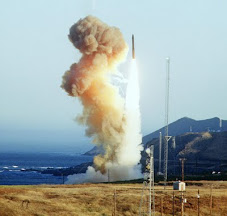
![[Global Network] against the first launch of Quasi-Zenith Satellite, Japan, on Sept. 11, 2010](https://blogger.googleusercontent.com/img/b/R29vZ2xl/AVvXsEj2sYpfodDDMIA7qXwuda0DmKapxXFB479fDnn8RKy7QNZqz0VEvWucNd-DleZ37hWNXC-Z8QtaqtM37VuPwac5SgclJ9_khBBSWOedvm19MRXIP1j1kcWrK6EW5IFjQdEEY2h7E6xuyNvC/s227/Qzss-45-0_09.jpg)
![[In update] Some collections on the Koreans’ protests against the sanction & war on Iran](http://4.bp.blogspot.com/_gnM5QlRx-4c/TJMvke6t8zI/AAAAAAAAFO4/tamQ8LUnOOA/S227/No+Sanction+on+Iran.jpg)
![[Three International Petitions] to End the Korean war and peace treaty(or peace resolution)](https://blogger.googleusercontent.com/img/b/R29vZ2xl/AVvXsEhlohLVYtpCg7iMsZhNYY4hBbhTi2dIheHMHWLDph9X2y78cjgZV1LeSfUJeu80elhJm70Q9E059q72lK-spSPvsRG4bPuCDIytltJB9IH3mWt9OG98HqhnTsPakwhvNeoCFUgF1xoxQ2EZ/s227/border.jpg)


![[Collection of Documents] No Base Learning and Solidarity Program_Korea(June 14 to 20, 2010)](https://blogger.googleusercontent.com/img/b/R29vZ2xl/AVvXsEix_HzjToh3nNGHBc-_5gasq-ykcaZ6GInLixILmZVyRJ5xoeHCxWOyYd9fSM7bmnuFsjSrYOGEPnQOwB1Dcyo-sN4Pw0cFPhUtKig_qlVnGL1Wi82ClvPqbEPWYhJiqdNF0DyzLIBETMB9/s227/No-Base-banner.jpg)
![Site Fwd:[John Hines] A U.S. Debate coach’s research trip on the Issues of Korea](https://blogger.googleusercontent.com/img/b/R29vZ2xl/AVvXsEg8yRra0zNhKHN74Auqhd3Nx9tZ7BWCGflRJHGH4CfzBT_yjhZ8Nl9b3OZuLpYWJ2exsjmR0oVl-Qq_cf832p2VdmOZhUi-lCFzCNeDSyVtweX1lWZPC-RlHmDMLtilHwHjNFTenBiM4Fk4/s227/Jeju-Peace-Tour.jpg)


![[News Update] Struggle Against the Jeju Naval Base since Jan. 18, 2010](https://blogger.googleusercontent.com/img/b/R29vZ2xl/AVvXsEhKfSTRC5QKBBSFIq_m7QIqXdlbL4-gF5GJYn9Q-pN__k7sV7uxGDcLY5L8xmU7QuWuUhBT_GhG-URBPO80RT3AfWfDrWJr06h1hFuZC6ZBVKe4U6PS1Cd7Kr6olO8TYQtk13Drox7IS6ea/s226/scrum1.jpg)


![[Urgent] Please spread the Letter!: There was no Explosion! There was no Torpedo! (May 26, 2010)](https://blogger.googleusercontent.com/img/b/R29vZ2xl/AVvXsEhSd2yWZ3xGwnJQXB73z5FgXCqSosAoB9_33-GLYprOmLqjmvgSAQp1BYI7e4slK1FDxHRi9KK4um-OpDaj8QOkXwAScVAgvvq6-ehbDA-hbkr96wT9oHNNmWnBPv8GU4hoZp9X8F9AZBX4/s227/grounded.jpg)
![Text Fwd: [Stephen Gowans]The sinking of the Cheonan: Another Gulf of Tonkin incident](https://blogger.googleusercontent.com/img/b/R29vZ2xl/AVvXsEi_L6hB3RZ1MovTXHe0A8yn_RfgMALGR0kM6poBuGp809xwvHtB_-PGWtS_WpyPWatyd9lB2pPqL2gOLc4dTCEdJ9sMvxJWEdapl-mMLm7WHAsV-jVpgqarVh8XBtdz_0c-Vohdh3HtJahD/s227/lee-myung-bak.jpg)
![[Japan Focus]Politics in Command: The "International" Investigation into the Sinking of the Cheonan](https://blogger.googleusercontent.com/img/b/R29vZ2xl/AVvXsEiHmTo8v-uCJnabRhMdnBAkC9J3s5bb2JsDKiT5leJHwbK8IDJHxfJmqQ_C0Is_bPC6UGMf05CA0exF2y4r2x9RhFUHT0kjsKviaME_MZXKnq775UyYAdb7w2SAzE75XvBfHp1al2q6i3cf/s227/wen_jiabao_and_lee_myungbak.png)
![[Japan Focus] Who Sank the SK Warship Cheonan? A New Stage in the US-Korean War and US-China](https://blogger.googleusercontent.com/img/b/R29vZ2xl/AVvXsEiKSS5ULT5QBaMGYpXXqBMX9jtwLwMLuK469b6Ku72GTJYKUObzTANaPjZqvvpPzYMJgPF53sjhvhK3DVa88ipYlggsJageykXlkxY6s8TW05xcU-_vfhf-pACUoaWuFbT-fsU1qEhm_yIi/s227/buoy_map.gif)
![[Updated on 12/13/10] [Translation Project] Overseas Proofs on the Damages by the Military Bases](https://blogger.googleusercontent.com/img/b/R29vZ2xl/AVvXsEikADE6JovUNspQyZUWVMTLAQg7yQNqXpVUbqZPk8f4uc_1723_xm1Cco6WAmstQXVPnaJAcb1mZA8Ny_3xONT_f5uh8MNLPnUhtqdGgy3HCtC1Vbbz4Q0ZY1Cssu-4cJEVNdrvznbS5UzO/s227/missile.jpg)
![[International Petition] Close the Bases in Okinawa](https://blogger.googleusercontent.com/img/b/R29vZ2xl/AVvXsEhNpQiHklwFbWVlFK7GDFXnBSOOSFEj3Il-We-N3uTDldKiidL2NGZs7X_LtTnatzTo_r8CexRkFe8NhfxYqmgp1knEEslROTfNjI5_mSb57cdbhPkftvanveYBaevAD9xuKDGoIxiTwoSb/s227/2.jpg)
![[In Update]Blog Collection: No Korean Troops in Afghanistan](https://blogger.googleusercontent.com/img/b/R29vZ2xl/AVvXsEjjEmCRXSNAG7_QBxKWbdksmxoWR4nyAovQTTdR1G2AuXh0jxtqNkI9OmYgYWRoLAJShvtBvE840QXuBWSVh3u3zMYqkNAFX6OWy3m5Nur4HM7uNK-pKT1ycyApJp-VLyhIFRRcoisYAh0E/s226/No-Troops-to--Afghanistan.jpg)


