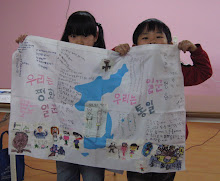
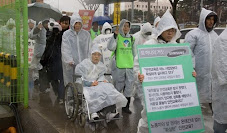
'저는 그들의 땅을 지키기 위하여 싸웠던 인디안들의 이야기를 기억합니다. 백인들이 그들의 신성한 숲에 도로를 만들기 위하여 나무들을 잘랐습니다. 매일밤 인디안들이 나가서 백인들이 만든 그 길을 해체하면 그 다음 날 백인들이 와서 도로를 다시 짓곤 했습니다. 한동안 그 것이 반복되었습니다. 그러던 어느날, 숲에서 가장 큰 나무가 백인들이 일할 동안 그들 머리 위로 떨어져 말과 마차들을 파괴하고 그들 중 몇몇을 죽였습니다. 그러자 백인들은 떠났고 결코 다시 오지 않았습니다….' (브루스 개그논)


For any updates on the struggle against the Jeju naval base, please go to savejejunow.org and facebook no naval base on Jeju. The facebook provides latest updates.
Showing posts with label Singapore. Show all posts

Tuesday, March 22, 2011

Text Fwd: Conspiracy theory on Lotte whodunit

Korea Times
Conspiracy theory on Lotte whodunit
By Jung Sung-ki

A spy break-in of an Indonesian special envoy’s hotel room in Seoul last week made headlines here and abroad and cast doubts on a number of angles.

On the operational side, the state spy agency, the National Intelligence Service (NIS), was rightly scorned. Its maneuvers to obtain information on Indonesia’s plans, including the potential purchase of T-50 Golden Eagle supersonic trainer aircraft, jointly developed by Korea Aerospace Industries (KAI) and Lockheed Martin of the United States were amateurish.

As for the political side, suspicion erupted about a test of authority between the NIS and the Defense Security Command (DSC), the military’s top intelligence-gathering branch. The two agencies have competed hard to gain up-to-date information about arms sales, which President Lee Myung-bak has called a new growth engine.

Some political insiders and intelligence officials depicted the spy scandal as the results of a simmering power game in the NIS between those supporting NIS chief Won Se-hoon and a group allegedly under the command of President Lee’s elder brother, Lee Sang-deuk.

The media was the subject of debate for making public the details of the botched intelligence operation at the risk of a diplomatic feud.

In all events, the finger was pointed at the NIS in the end for “harming national interest” on T-50 export negotiations that may have been close to a final agreement.

Citing unidentified government sources, many local newspapers claimed the bungled espionage attempt would likely deal a fatal blow to Seoul’s first chance of selling the luxury trainer jet.

It seems they took it for granted that Jakarta was in favor of the $25 billion Korean aircraft over Russia’s subsonic Yak-130 in its advanced trainer aircraft contest to buy 16 planes.

At this point, I can’t help raising my own doubt: Did Indonesia came close to buying the T-50?

From a nationalistic point of view, I hope that they did. But from a journalistic perspective, I can say that’s not the case now.

I’m not against the T-50, but no decision has been made by Indonesia regarding the aircraft, and the prospects for its export remain bleak due mainly to the jet’s high price tag, according to high-ranking officials at the Defense Acquisition Program Administration (DAPA), the NIS and the DSC.

After returning from Indonesia in December, former DAPA Commissioner Chang Soo-man, who stepped down last week over a bribery scandal, admitted that the T-50 sale to Indonesia had virtually failed because Jakarta was negative about the Golden Eagle’s high price tag and was being lobbied intensively by the Kremlin. Chang was a key member of President Lee Myung-bak’s delegation at the time.

“When President Lee and (Susilo Bambang) Yudhoyono held a summit, I sat just beside them and listened carefully to their conversation, hoping that the Indonesian leader would mention something about the T-50. But I couldn’t hear any mention of the ‘T’ word, and President Lee was also very disappointed,” Chang recalled in a meeting with reporters.

Following the trip Lee ordered efforts to speed up the privatization of the KAI, as his patience was wearing thin over exporting the T-50. The Korea Finance Corp. subsequently announced plans to sell its 30.1 percent stake in KAI by the year’s end.

On top of that, the head of state is said to have directed an audit of the KAI to look into alleged management failures in exporting the T-50.

A DAPA official in charge of weapons exports also voiced concerns on the outlook for T-50 sales.

“We’ve not engaged in specific negotiations with Indonesians over the T-50, and Indonesia hasn’t given any positive signal for the aircraft purchase,” said the official. “There were a few discussions about the T-50 when the Indonesian delegation visited Seoul last week. I don’t know why such groundless reports have been published, and I’m worried that such hasty action could provoke a backlash in negotiations.”

The T-50 is South Korea’s flagship weapons system and its export will serve as a springboard for the country to quadruple overseas arms sales to $4 billion by 2020 and become a top seven weapons exporter.

Against that backdrop, Cheong Wa Dae could be pressed to make the first sale of the T-50 and show off the CEO-turned-President’s business skills, following the back-to-back defeats in attempts to sell the Golden Eagle to the United Arab Emirates and Singapore.

One more conspiracy theory occurs to me. Are Lee’s office and KAI smiling behind the scenes because they’ve shifted the blame for an anticipated failure in sales of the T-50 to Indonesia to the NIS? More conspiracy theories may be conjured up before this spy saga ends.
gallantjung@koreatimes.co.kr

Saturday, October 30, 2010

Text Fwd: Clinton Presses, Courts Beijing 클린턴, 중국에 압력과 구애를 동시에

Agence France-Presse/Getty Images
Hillary Clinton speaks during a press conference in Honolulu on Wednesday.


* Defense Newletter on Oct. 29, 2010
Wall Street Journal
Clinton Presses, Courts Beijing
By JAY SOLOMON

HONOLULU—Secretary of State Hillary Clinton encouraged greater U.S.-China cooperation in Asia, even as she stressed that the U.S. will increase its effort to remain a military and economic power in the region.

Mrs. Clinton, embarking on a seven-nation tour of the Asia-Pacific region, said the Obama administration is committed to defining events regionally and safeguarding the defenses of its allies, such as Japan, South Korea and Singapore.

"Now, there are some who say that this long legacy of American leadership in the Asia-Pacific region is coming to a close. That we are not here to stay. I say, look at our record. It tells a different story," Mrs. Clinton said Thursday in Hawaii.

Still, Mrs. Clinton said the U.S.'s presence in Asia doesn't seek to isolate China nor does it need to turn into a zero-sum game for competing influence.

Rather, she said Washington and Beijing stood to benefit from cooperation on everything from combating global warming to nuclear proliferation.

"To those who still believe that the U.S. is bent on containing China, I would simply point out that since the opening of diplomatic relations between our two countries, China has experienced breathtaking growth and development," Mrs. Clinton said, adding, "We look forward to working closely with China, both bilaterally and through key institutions."

Mrs. Clinton travels to Asia amid heightened tensions among China, the U.S. and Washington's allies on a range of economic and security issues.

On Wednesday, the U.S.'s top she expressed concerns that Beijing might use its monopoly over rare-earth minerals as a political weapon.

She called for America's partners to find alternative sources of supply.

The U.S. and China have also jostled in recent months over issues ranging from the value of the yuan to territorial disputes in the South China Sea.

In a bid to smooth ties, Mrs. Clinton will visit China's Hainan Island on Saturday to meet with State Councilor Dai Bingguo.

Some analysts have warned that Mrs. Clinton's last-minute trip to Hainan could appear to be the U.S. acquiescing in the face of Chinese belligerence. Hainan is particularly sensitive to Americans, as Beijing grounded a U.S. EP-3 surveillance plane there in 2001 and held and interrogated its crew for 10 days before receiving a letter of apology from the U.S.

Mrs. Clinton said the U.S.-China relationship was too central to regional security for Washington not to remain continuously engaged with Beijing. On Wednesday, she said she will use her meeting with Mr. Dai to help plan Chinese President Hu Jintao's visit to Washington early next year.

"We have a long list of issues to discuss," Mrs. Clinton said.

She said she has been heartened by signs China is willing to open up the trade of rare-earth minerals and settle disputes through multilateral institutions.

On Saturday in Vietnam, Mrs. Clinton will be the first U.S. secretary of state to attend a gathering of the East Asia Summit. The event includes the 10 members of the Association of Southeast Asian Nations, plus China, Japan and other Asian nations.

Mrs. Clinton said in her speech that she is using her tour of the Asia-Pacific to showcase Washington's commitment to remaining an active player. She will also visit Cambodia, Malaysia, Australia, New Zealand and Papua New Guinea.

"Everywhere we go, we will advance one overarching set of goals: to sustain and strengthen America's leadership in the Asia-Pacific region and to improve security, heighten prosperity and promote our values," Mrs. Clinton said.

The issue of China's dominance over rare-earth metals is a potential flashpoint for the trip.

China is estimated to supply about 97% of the global demand for these metals, which are essential for the production of computers and other electronic products.

Tensions between China and Japan have increased in recent months, fueled by a dispute over islands jointly claimed by the two Asian nations. In July, Beijing announced a drastic curtailment of its export quotas for these minerals, as well as a crackdown on smuggling, which began to be felt in subsequent months. China says the limits reflect its growing environmental awareness, are perfectly legal and won't be used as a policy tool.

The moves nevertheless raised fears that China was seeking to pressure Japan and other industrial powers.

Mrs. Clinton stressed following a meeting with her Japanese counterpart in Hawaii that recent Chinese restrictions on sales of the important commercial inputs must serve as a "wake-up call" for the U.S. and its allies to diversify their sourcing.

"Because of the importance of these rare-earth minerals, I think both the minister and I are aware that our countries and others will have to look for additional sources of supply," Mrs. Clinton said at a joint news conference with Japanese Foreign Minister Seiji Maehara.

In Beijing Wednesday, China's Foreign Ministry said it wouldn't use its dominance in rare-earth minerals as a "bargaining tool" with competing nations. Mrs. Clinton said she would seek to clarify this position during her scheduled bilateral meeting with Mr. Dai.

"I would welcome any clarification of their policy and hope that it means trade and commerce around these important materials will continue unabated and without any interference," Mrs. Clinton said.

Write to Jay Solomon at jay.solomon@wsj.com

_____________________________________________________
* Related blog 관련 블로그

Saturday, October 30, 2010
Site Fwd:[PACOM] All the crazy PACOM headlines

사이트 포워드:[아시아 태평양 사령부] 미친 아시아 태평양 사령부 뉴스 제목들


Thursday, October 28, 2010
Text Fwd: PACOM Headlines: Pacific Integration key to Army strategy
[아태 사령부] 군사 전략에서 태평양 통합의 열쇠


Saturday, October 23, 2010
[국문 번역] Text Fwd: Clinton and the colonial paradigm
클린턴과 식민지 패러다임

Friday, July 9, 2010

Text Fwd: U.S. Missiles Deployed Near China Send Message

* Image source: same as the link: The U.S.S. Ohio, a guided-missile submarine, moors at a harbor in Pusan, South Korea, on Feb. 21, 2008 (Choi Jae-Ho / AFP / Getty Images)


* Text sent from Rick Rozoff on July 8, 2010

Times Magazine
July 8, 2010
U.S. Missiles Deployed Near China Send a Message
By Mark Thompson
_____________________________________________________________

-The 14 Trident-carrying subs are useful in the unlikely event of a nuclear Armageddon, and Russia remains their prime target. But the Tomahawk-outfitted quartet carries a weapon that the U.S. military has used repeatedly against targets in Afghanistan, Bosnia, Iraq and Sudan.
That's why alarm bells would have sounded in Beijing June 28 when the Tomahawk-laden 560-foot USS Ohio popped up in the Philippines' Subic Bay. More alarms likely were sounded when the USS Michigan arrived in Pusan, South Korea, the same day....The Chinese military awoke to find as many as 462 additional Tomahawks deployed by the U.S. in its neighborhood....The move forms part of a policy by the U.S. government to shift firepower from the Atlantic to the Pacific theater, which Washington sees as the military focus of the 21st Century.

_____________________________________________________________

Washington: If China's satellites and spies were working properly, there was a flood of unsettling intelligence flowing into the Beijing headquarters of the Chinese Navy last week. A new class of U.S. super weapon had suddenly surfaced nearby. It was an Ohio-class submarine, which for decades carried only nuclear missiles targeted against the Soviet Union, and then Russia. But this one was different: for nearly three years, the U.S. Navy has been dispatching modified "boomers" to who knows where (they do travel underwater, after all). Four of the 18 ballistic-missile subs no longer carry nuclear-tipped Trident missiles. Instead, they now hold up to 154 Tomahawk cruise missiles, capable of hitting anything within 1,000 miles with non-nuclear warheads.

Their capability makes watching these particular submarines especially interesting. The 14 Trident-carrying subs are useful in the unlikely event of a nuclear Armageddon, and Russia remains their prime target. But the Tomahawk-outfitted quartet carries a weapon that the U.S. military has used repeatedly against targets in Afghanistan, Bosnia, Iraq and Sudan.
(See pictures of the U.S. military in the Pacific.)

That's why alarm bells would have sounded in Beijing June 28 when the Tomahawk-laden 560-foot USS Ohio popped up in the Philippines' Subic Bay. More alarms likely were sounded when the USS Michigan arrived in Pusan, South Korea, the same day. And the klaxons would have maxed out as the USS Florida surfaced the same day at the joint U.S.-British naval base at Diego Garcia, a flyspeck of an island in the Indian Ocean. The Chinese military awoke to find as many as 462 additional Tomahawks deployed by the U.S. in its neighborhood. "There's been a decision to bolster our forces in the Pacific," says Bonnie Glaser, a China expert at the Center for Strategic and International Studies in Washington. "There is no doubt that China will stand up and take notice."

U.S. officials deny any message is being directed at Beijing, saying the Tomahawk triple-play was a coincidence. But they did make sure news of the new deployments appeared in the Hong Kong-based South China Morning Post — on July 4, no less. The Chinese took notice quietly. "At present, common aspirations of countries in the Asian and Pacific regions are seeking for peace, stability and regional security," Wang Baodong, spokesman for the Chinese Embassy in Washington, said Wednesday. "We hope the relevant U.S. military activities will serve for the regional peace, stability and security, and not the contrary."
(See pictures of the most expensive military planes.)

Last month, the Navy had announced that all four of the Tomahawk Tridents were operationally deployed away from their home ports for the first time. Each vessel packs "the firepower of multiple surface ships," says Capt. Tracy Howard, commander, Submarine Squadron 16 in Kings Bay, Ga., and can "respond to diverse threats on short notice."

The move forms part of a policy by the U.S. government to shift firepower from the Atlantic to the Pacific theater, which Washington sees as the military focus of the 21st Century. Reduced tensions since the end of the Cold War has seen the U.S. scale back its deployment of nuclear weapons, allowing the Navy to reduce its Trident fleet from 18 to 14. (Why 14 subs, as well as bombers and land-based missiles carrying nuclear weapons, are still required to deal with the Russian threat is a topic for another day.)
(See "Obama Shelves U.S. Missile Shield: The Winners and Losers.")

Sure, the Navy could have retired the four additional subs and saved the Pentagon some money, but that's not how bureaucracies operate. Instead, it spent about $4 billion replacing the Tridents with Tomahawks and making room for 60 special-ops troops to live aboard each sub and operate stealthily around the globe. "We're there for weeks, we have the situational awareness of being there, of being part of the environment," Navy Rear Adm. Mark Kenny explained after the first Tomahawk Trident set sail in 2008. "We can detect, classify and locate targets and, if need be, hit them from the same platform."
(Comment on this story.)

The submarines aren't the only new potential issue of concern for the Chinese. Two major military exercises involving the U.S. and its allies in the region are now underway. More than three dozen naval ships and subs began participating in the "Rim of the Pacific" war games off Hawaii on Wednesday. Some 20,000 personnel from 14 nations are involved in the biennial exercise which includes missile exercises and the sinking of three abandoned vessels playing the role of enemy ships. Nations joining the U.S. in what is billed as the world's largest-ever naval war game are Australia, Canada, Chile, Colombia, France, Indonesia, Japan, South Korea, Malaysia, Netherlands, Peru, Singapore and Thailand. Closer to China, CARAT 2010 — for Cooperation Afloat Readiness and Training — just got underway off Singapore. The operation involves 17,000 personnel and 73 ships from the U.S., Singapore, Bangladesh, Brunei, Cambodia, Indonesia, Malaysia, the Philippines and Thailand.
(See "Hu's Visit: Finding a Way Forward on U.S.-China Relations.")

China is absent from both exercises, and that's no oversight. Many nations in the eastern Pacific, including Australia, Japan, Indonesia, South Korea and Vietnam, have been encouraging the U.S. to push back against what they see as China's increasingly aggressive actions in the South China Sea. And the U.S. military remains concerned over China's growing missile force — now more than 1,000 — near the Taiwan Strait. The Tomahawks' arrival "is part of a larger effort to bolster our capabilities in the region," Glaser says. "It sends a signal that nobody should rule out our determination to be the balancer in the region that many countries there want us to be." No doubt Beijing got the signal.

See pictures of President Obama visiting Asia.

See "Why Is China Slowing Its Military Spending?"

===========================
Stop NATO
Blog site:

Friday, June 25, 2010

Text Fwd: Dozens of ships from 14 countries gather in Hawaii

Stop NATO
Associated Press
June 23, 2010
Dozens of ships from 14 countries gather in Hawaii

HONOLULU — Several dozen ships from 14 nations are converging on Hawaii for a
month of large-scale maritime military exercises.

The Rim of the Pacific drills are held every other year. This year's war games
began Wednesday and are due to last until Aug. 1.

Some 20,000 personnel aboard 34 ships, five submarines and more than 100
aircraft are expected to practice hunting submarines, clearing mines, firing
missiles and other maneuvers.

Australia, Chile, Indonesia, Japan, Singapore and South Korea are among the
countries participating.

The U.S. Pacific Fleet is hosting the exercises.

It says the drills prepare forces to work together, which helps ensure regional
stability.
===========================
Stop NATO
http://groups.yahoo.com/group/stopnato

Blog site:
http://rickrozoff.wordpress.com/

Wednesday, June 9, 2010

Text Fwd: Boeging Eyes India & Asia for Big Weapons Profits

* Text sent from Bruce Gagnon on June 8, 2010

Singapore Airfreight Directory
07 June 10
The Business Times

Boeing eyes Asia for its defence sales

(SINGAPORE) Faced with slumping demand and budget cuts in the United States, American aerospace giant Boeing's defence arm is looking to Asia to pick up the slack.

Dennis Muilenburg, president and chief executive of Boeing Defense, Space and Security (BDS), estimates that countries such as South Korea, Japan, India, Australia and South-east Asian partners such as Malaysia will be strong markets for its fighter jets, unmanned systems, helicopters, energy systems security and even cyber-warfare technology amid a slowdown in defence spending in its US home market.

'We are seeing some pressure in our core business in the US, such as missile defence, but growth will come from other markets, particularly in Asia,' he said.

About 16 per cent of BDS's US$34 billion business comes from international sales. Mr Muilenburg, who was in Singapore last week for the Asia Security Summit, sees international business share rising to 25 per cent in five years.

Asian markets account for about half the international sales. And this could grow sharply in the next three years.

The company is awaiting a Japanese tender for some 40 next-generation fighters to replace its ageing F4 Phantoms.

In Korea, where it has delivered 61 F15-K Eagle fighters, it is looking at an opportunity to clinch another deal for 60 more of the planes.

In Australia, where it has delivered the first five of 25 F18 Superhornets and five C17 transport planes, it sees interest for the P8 anti-submarine planes.

In Malaysia, it is currently in talks to sell its F18 Hornets to replace the air force's ageing Russian MiG fighters, while in Singapore, it is in the process of supplying the 24 F15 Eagles on order.

But it is India which Mr Muilenburg sees as the 'Jewel in the Crown'.

The signing of the nuclear agreement by former president US George W Bush two years ago, and the subsequent thawing of relations between the US and India, have finally opened up the country's US$30 billion defence market to Boeing.

'In the past, Boeing's relationship with India was purely on the commercial airplanes side,' he said. 'Now, relations encompass the defence side.'

India has already inked a deal to buy eight P8i anti-submarine aircraft and has expressed an interest in purchasing 10 C17 military transport aircraft. If that US$4 billion C17 deal comes through, it will be Boeing's single biggest for this aircraft type.

But the biggest competition now going on is India's request for the supply of 126 multi-role combat fighter planes. Besides Boeing, others in the battle for this US$10 billion deal include Eurofighter Typhoon, Sweden's Griffin, France's Rafale and Lockheed Martin of the US.

Besides fighters, the Indian army is also looking to buy Apache attack helicopters and the Chinook heavy-lift helicopters.

Sunday, June 6, 2010

Text fwd: Gates Describes U.S. Approach to Deterrence in Asia

U.S. Defense Secretary Robert M. Gates gives speaks at the 9th International Institute for Strategic Studies, The Shangri-La Dialogue, in Singapore, June 5, 2010. DoD photo by U.S. Air Force Master Sgt. Jerry Morrison
(Click photo for screen-resolution image);high-resolution image available.


* Text informed by Corazon Valdez Fabros on June 5, 2010

United States Department of Defense on June 5, 2010

Gates Describes U.S. Approach to Deterrence in Asia

By John D. Banusiewicz
American Forces Press Service

SINGAPORE, June 5, 2010 – A U.S. defense posture in Asia that is more geographically distributed, operationally resilient and politically sustainable is necessary in deterring conflict in today’s world, Defense Secretary Robert M. Gates said here today.

Gates addressed the first plenary session of the ninth annual “Shangri-La Dialogue,” an Asia security summit organized by the International Institute for Strategic Studies.

Conventional military bases, Gates said, are not the sole yardstick for measuring the U.S. presence in the region and its associated impact and influence. “Rather,” he said, “we must think about U.S. ‘presence’ in the broader sense of what we achieve in the region: the connections made, the results accomplished.”

This, he explained, includes the work of medical teams and engineers, as well as partner militaries that are more professional and capable of contributing to international efforts to deal with the most vexing challenges the United States and its Asian partners face.

“These kinds of activities reflect a priority of the overall United States security strategy: to prevent and deter conflict by better [employing] and integrating all elements of our national power and international cooperation,” the secretary said. “As we have learned, military capabilities are critically important, but by themselves, [they] do not deter conflict. Sustained diplomatic, economic and cultural ties also play vital roles in maintaining stability and improving relationships.

“The history of the past 60 years in this part of the world,” he continued, “has proven that historic tensions can be overcome, instability can be avoided, and strategic rivalries are not inevitable.”

The U.S. approach to its policy in Asia and its overall defense posture has been shaped by a series of strategy reviews over the past year, Gates said. “These reviews were shaped by a bracing dose of realism, and in a very sober and clear-eyed way assessed risks, set priorities, made tradeoffs, and identified requirements based on plausible real-world threats, scenarios and potential adversaries.”

An effective and affordable U.S. defense posture, the secretary explained, requires a broad and versatile portfolio of military capabilities across the widest possible spectrum of conflict. With regard to Asia, he said, the United States is increasing its deterrent capabilities in the region.

First, we are taking serious steps to enhance our missile defenses with the intent to develop capabilities in Asia that are flexible and deployable – tailored to the unique needs of our allies and partners and able to counter the clear and growing ballistic missile threats in the region,” he said.

The United States is renewing its commitment to a strong and effective deterrence that guarantees the safety of the American people and the defense of its allies and partners, Gates said. President Barack Obama is committed to reducing the role of nuclear weapons in the quest for a world without them, he noted. “But as long as these weapons exist,” he added, “we will maintain a safe, secure and effective nuclear arsenal.”

The forward presence of substantial U.S. forces is another example of the strong U.S. commitment and deterrent power in the region, as has been the case for six decades, Gates said, though a global posture review scheduled to be completed by the year’s end already has made one general trend clear.

“The U.S. defense posture in Asia is shifting to one that is more geographically distributed, operationally resilient and politically sustainable,” he said. “The buildup on Guam is part of this shift, as well as the agreement reached on basing with Japan – an agreement that fittingly comes during the 50th anniversary of our mutual security alliance and transcends any individual policymaker.” Plans call for more than 8,000 U.S. Marines to move to Guam from the Japanese island of Okinawa by 2014, and for a U.S. Marine air base on Okinawa to relocate on the island.

Gates noted that the economic growth and political development the Asia-Pacific region has enjoyed over the last several decades was not a foregone conclusion.

“Rather,” he said, “it was enabled by clear choices about the enduring principles that we all believe are essential to peace, prosperity and stability.” Those principles, he said, include:

-- Free and open commerce;

-- A just international order that emphasizes rights and responsibilities of nations and fidelity to the rule of law;

-- Open access by all to the global commons of sea, air, space, and now, cyberspace; and

-- The principle of resolving conflict without the use of force.

“Simply put,” he said, “pursuing our common interests has increased our common security. Today, the Asia-Pacific region is contending with new and evolving challenges, from rising powers and failing states to the proliferation of nuclear and ballistic missiles, extremist violence and new technologies that have the ability to disrupt the foundations of trade and commerce on which Asia’s economic stability depends.”

Confronting those threats, he told the delegates, is not the responsibility of a single nation acting alone.

“Rather,” he said, “our collective response will test our commitments to the principles I just mentioned – principles that are key to the region’s continued prosperity. In this, all of us have responsibilities we must fulfill, since all will bear the costs of instability as well as the rewards of international cooperation.”

Biographies:
Robert M. Gates

Related Sites:
Special Report: Travels With Gates
Shangri-La Dialogue

Text Fwd: ROK-US joint naval exercise postponed

Korea Times
ROK-US joint naval exercise postponed
June 4, 2010

Some excerpts:

'A planned naval exercise between the U.S. and South Korea in the West Sea next week will be delayed, a spokesman for Seoul's Ministry of National Defense said Friday, apparently fearful of the growing tension on the Korean Peninsula.'

'South Korea and the United States are seeking support from the international community before taking the March 26 ship sinking incident to the U.N. Security Council (UNSC) for tougher sanctions against the North. But China, a veto-wielding member of the UNSC, has been reluctant to blame Pyongyang, its Cold War ally, for the attack'

'The government said a U.S. nuclear-powered aircraft carrier and advanced U.S. warships will participate in the drill.'

'U.S. Defense Secretary Robert Gates denied any involvement of a U.S. aircraft carrier in a drill around the Korean Peninsula. Gates is in Singapore to attend an annual Asian security summit, where South Korean Defense Minister Kim Tae-young and scores of defense ministers, policymakers and military experts from 28 countries are attending.'

'However, Gates said Washington and Seoul are still consulting scenarios, including stepped-up anti-submarine exercises to deter a North Korean attack, apparently referring to the North's alleged torpedo attack on South Korea's Cheonan frigate in March. Forty-six sailors were killed in the ship sinking.'

Friday, June 4, 2010

Text Fwd: Seoul to seek support at Asian security summit

Korea Times
Seoul to seek support at Asian security summit
06-03-2010


Replica of sunken patrol ship: Defense Minister Kim Tae-young, on the rostrum, delivers a speech at the opening of a security-themed section of the War Memorial of Korea in Yongsan, Seoul, Thursday. The section includes a life-size replica of the patrol ship “Chamsuri-357,” seen in the background, which sank in 2002 during a naval skirmish against North Korea.
/ Korea Times

By Jung Sung-ki
Staff reporter

President Lee Myung-bak begins a two-day trip to Singapore today to attend a regional security summit, better known as the Shangri-La Dialogue.

Defense Minister Kim Tae-young embarked on a three-day trip to Singapore Thursday to attend the conference, amid full-fledged efforts to seek support from the international community over the sinking of the Navy ship Cheonan in March.

President Lee will hold a summit Saturday with Singaporean Prime Minister Lee Hsien Loong and give a keynote speech at the 9th Asia Security Summit on Korea's commitment to regional peace and security, and economic growth, Cheong Wa Dae said. "The speech will focus on the country's rise from the devastation of the 1950-1953 Korean War and the goal to assume a greater role in the international community," the office said. The security forum, inaugurated in 2002, will draw defense ministers of 28 countries, including the United States, China and Japan. The event is organized by the London-based think tank, the International Institute for Strategic Studies.

Minister Kim plans to hold bilateral talks with his counterparts from the United States, Japan, the United Kingdom, Australia and other nations on the sidelines of the meeting.

"Minister Kim will deliver a speech titled 'Asia-Pacific Security and Partnerships' and ask for support from regional allies over the Cheonan issue," the ministry said in a news release.

The security summit will, in particular, help explain the background of the sinking of the warship and solicit support from the international community, it added.

A multinational investigation team concluded last month that North Korea was behind the sinking of the 1,200-ton Cheonan in waters near the disputed inter-Korean sea border. North Korea has denied the allegation, threatening to cut all ties with South Korea.

Seoul announced a set of steps in retaliation, including the resumption of psychological warfare programs and the staging of massive naval exercises with the U.S. Navy.

gallantjung@koreatimes.co.kr

Tuesday, May 4, 2010

Text Fw: China Expands Navy to Protect Oil Supply Routes

*Imge source: same as the below link
'Bullit Marquez/Associated Press
The strategy reflects China’s growing sense of self-confidence and increasing willingness to assert its interests abroad. '

_______________________________________________________________________________

* Text Fw from
Bruce Gagnon on May 3, 2010

'In addition to China's expanding their Navy to keep their oil supply routes open, they are also putting part of their nuclear retaliatory forces on-board submarines in order to counter the U.S. deployment of "missile defense" systems in Taiwan, Japan, South Korea and on Aegis destroyers off their coast.'


April 23, 2010
New York Times
Chinese Military Seeks to Extend Its Naval Power
By EDWARD WONG

YALONG BAY, China — The Chinese military is seeking to project naval power well beyond the Chinese coast, from the oil ports of the Middle East to the shipping lanes of the Pacific, where the United States Navy has long reigned as the dominant force, military officials and analysts say.


China calls the new strategy “far sea defense,” and the speed with which it is building long-range capabilities has surprised foreign military officials.

The strategy is a sharp break from the traditional, narrower doctrine of preparing for war over the self-governing island of Taiwan or defending the Chinese coast. Now, Chinese admirals say they want warships to escort commercial vessels that are crucial to the country’s economy, from as far as the Persian Gulf to the Strait of Malacca, in Southeast Asia, and to help secure Chinese interests in the resource-rich South and East China Seas.

In late March, two Chinese warships docked in Abu Dhabi, the first time the modern Chinese Navy made a port visit in the Middle East.

The overall plan reflects China’s growing sense of self-confidence and increasing willingness to assert its interests abroad. China’s naval ambitions are being felt, too, in recent muscle flexing with the United States: in March, Chinese officials told senior American officials privately that China would brook no foreign interference in its territorial issues in the South China Sea, said a senior American official involved in China policy.

The naval expansion will not make China a serious rival to American naval hegemony in the near future, and there are few indications that China has aggressive intentions toward the United States or other countries.

But China, now the world’s leading exporter and a giant buyer of oil and other natural resources, is also no longer content to trust the security of sea lanes to the Americans, and its definition of its own core interests has expanded along with its economic clout.

In late March, Adm. Robert F. Willard, the leader of the United States Pacific Command, said in Congressional testimony that recent Chinese military developments were “pretty dramatic.” China has tested long-range ballistic missiles that could be used against aircraft carriers, he said. After years of denials, Chinese officials have confirmed that they intend to deploy an aircraft carrier group within a few years.

China is also developing a sophisticated submarine fleet that could try to prevent foreign naval vessels from entering its strategic waters if a conflict erupted in the region, said Admiral Willard and military analysts.

“Of particular concern is that elements of China’s military modernization appear designed to challenge our freedom of action in the region,” the admiral said.

Yalong Bay, on the southern coast of Hainan island in the South China Sea, is the site of five-star beach resorts just west of a new underground submarine base. The base allows submarines to reach deep water within 20 minutes and roam the South China Sea, which has some of the world’s busiest shipping lanes and areas rich in oil and natural gas that are the focus of territorial disputes between China and other Asian nations.

That has caused concern not only among American commanders, but also among officials in
Southeast Asian nations, which have been quietly acquiring more submarines, missiles and other weapons. “Regional officials have been surprised,” said Huang Jing, a scholar of the Chinese military at the National University of Singapore. “We were in a blinded situation. We thought the Chinese military was 20 years behind us, but we suddenly realized China is catching up.”

China is also pressing the United States to heed its claims in the region. In March, Chinese officials told two visiting senior Obama administration officials, Jeffrey A. Bader and James B. Steinberg, that China would not tolerate any interference in the South China Sea, now part of China’s “core interest” of sovereignty, said an American official involved in China policy. It was the first time the Chinese labeled the South China Sea a core interest, on par with Taiwan and Tibet, the official said.

Another element of the Chinese Navy’s new strategy is to extend its operational reach beyond the South China Sea and the Philippines to what is known as the “second island chain” — rocks and atolls out in the Pacific, the official said. That zone significantly overlaps the United States Navy’s area of supremacy.

Japan is anxious, too. Its defense minister, Toshimi Kitazawa, said in mid-April that two Chinese submarines and eight destroyers were spotted on April 10 heading between two Japanese islands en route to the Pacific, the first time such a large Chinese flotilla had been seen so close to Japan. When two Japanese destroyers began following the Chinese ships, a Chinese helicopter flew within 300 feet of one of the destroyers, the Japanese Defense Ministry said.

Since December 2008, China has maintained three ships in the Gulf of Aden to contribute to international antipiracy patrols, the first deployment of the Chinese Navy beyond the Pacific. The mission allows China to improve its navy’s long-range capabilities, analysts say.

A 2009 Pentagon report estimated Chinese naval forces at 260 vessels, including 75 “principal combatants” — major warships — and more than 60 submarines. The report noted the building of an aircraft carrier, and said China “continues to show interest” in acquiring carrier-borne jet fighters from Russia. The United States Navy has 286 battle-force ships and 3,700 naval aircraft, though ship for ship the American Navy is considered qualitatively superior to the Chinese Navy.

The Pentagon does not classify China as an enemy force. But partly in reaction to China’s growth, the United States has recently transferred submarines from the Atlantic to the Pacific so that most of its nuclear-powered attack submarines are now in the Pacific, said Bernard D. Cole, a former American naval officer and a professor at the National War College in Washington.

The United States has also begun rotating three to four submarines on deployments out of Guam, reviving a practice that had ended with the cold war, Mr. Cole said.

American vessels now frequently survey the submarine base at Hainan island, and that activity leads to occasional friction with Chinese ships. A survey mission last year by an American naval ship, the Impeccable, resulted in what Pentagon officials said was harassment by Chinese fishing vessels; the Chinese government said it had the right to block surveillance in those waters because they are an “exclusive economic zone” of China.

The United States and China have clashing definitions of such zones, defined by a United Nations convention as waters within 200 nautical miles of a coast. The United States says international law allows a coastal country to retain only special commercial rights in the zones, while China contends the country can control virtually any activity within them.

Military leaders here maintain that the Chinese Navy is purely a self-defense force. But the definition of self-defense has expanded to encompass broad maritime and economic interests, two Chinese admirals contended in March.

With our naval strategy changing now, we are going from coastal defense to far sea defense,” Rear Adm. Zhang Huachen, deputy commander of the East Sea Fleet, said in an interview with Xinhua, the state news agency.

“With the expansion of the country’s economic interests, the navy wants to better protect the country’s transportation routes and the safety of our major sea lanes,” he added. “In order to achieve this, the Chinese Navy needs to develop along the lines of bigger vessels and with more comprehensive capabilities.”

The navy gets more than one-third of the overall Chinese military budget, “reflecting the priority Beijing currently places on the navy as an instrument of national security,” Mr. Cole said. China’s official military budget for 2010 is $78 billion, but the Pentagon says China spends much more than that amount. Last year, the Pentagon estimated total Chinese military spending at $105 billion to $150 billion, still much less than what the United States spends on defense. For comparison, the Obama administration proposed $548.9 billion as the Pentagon’s base operating budget for next year.

The Chinese Navy’s most impressive growth has been in its submarine fleet, said Mr. Huang, the scholar in Singapore. It recently built at least two Jin-class submarines, the first regularly active ones in the fleet with ballistic missile capabilities, and two more are under construction. Two Shang-class nuclear-powered attack submarines reLinkcently entered service.


Countries in the region have responded with their own acquisitions, said Carlyle A. Thayer, a professor at the Australian Defense Force Academy. In December, Vietnam signed an arms deal with Russia that included six Kilo-class submarines, which would give Vietnam the most formidable submarine fleet in Southeast Asia. Last year, Malaysia took delivery of its first submarine, one of two ordered from France, and Singapore began operating one of two Archer-class submarines bought from Sweden.

Last fall, during a speech in Washington, Lee Kuan Yew, the former Singaporean leader, reflected widespread anxieties when he noted China’s naval rise and urged the United States to maintain its regional presence. “U.S. core interest requires that it remains the superior power on the Pacific,” he said. “To give up this position would diminish America’s role throughout the world.”


Thom Shanker contributed reporting from Washington.

Global Network Against Weapons & Nuclear Power in Space
PO Box 652
Brunswick, ME 04011
(207) 443-9502
globalnet@mindspring.com
http://www.space4peace.org/
http://space4peace.blogspot.com/ (blog)


Wednesday, April 28, 2010

Text Fw: South Korea Takes Over U.S.-Led Horn Of Africa Warship Group

* Text informed by STOP NATO on April 26, 2010

Stars and Stripes
April 27, 2010
South Korea takes Task Force 151 helm


The South Korean navy has assumed command of Combined Task Force 151, the international group of military personnel conducting counterpiracy operations off the eastern coast of Somalia and in the Gulf of ALinkden, officials stated in a news release.

Rear Adm. Boem-rim Lee took command Wednesday. He replaces Rear Adm. Bernard Miranda, of the Singapore navy, who commanded the task force since January, according to a Combined Maritime Forces news release.

The U.S. Navy created the task force in January 2009 to counter piracy of commercial vessels and fishing boats in the regional waters.

The European Union and NATO operate similar maritime patrols in the region, as do nations that deploy ships independent of the task forces, including China, India, Japan and Russia.
===========================
Stop NATO

Blog site:

Saturday, March 13, 2010

Text Fwd: KAI Faces Downsizing

Korea Times
03-13-2010 00:37
[Exclusive]KAI Faces Downsizing
By Jung Sung-ki
Staff Reporter

Korea Aerospace Industries (KAI), the nation’s only aircraft maker, is facing a major restructuring and a significant reduction of its executives in coming weeks, amid lingering speculation that the company may be privatized.

Currently, the Korea Finance Corp. (KoFC), which was spun off from the state-owned Korea Development Bank last October, holds a 30.5 percent stake in KAI, which also has three other major shareholders — Samsung Techwin, Doosan DST and Hyundai Motor, each with a 20.5 percent stake.

KDB wanted to sell KAI last year under a government policy to privatize public firms but withdrew the decision temporarily in the face of opposition from KAI’s labor union and concerns that such a move could harm efforts to sell the T-50 supersonic trainer jet to Singapore.

Singapore is set to announce a final bidder for its trainer acquisition program this or next month. The T-50 is competing with the M-346 jet built by Italy’s Alenia Aermacchi.

In a news conference Jan. 28, KoFC Chairman Ryu Jae-han said his organization was looking to sell KAI and other assets in the first half of the year in consideration of the market situation.

``KoFC notified KAI of its restructuring plan last month,’’ an industry source told The Korea Times. ``In particular, the organization asked KAI to halve the company’s executive officers in a bid to streamline the aircraft maker.’’

Other industry sources said the major restructuring could be a preliminary step for privatization.

``It seems that KoFC wants to slim down KAI and increase the company’s efficiency and profitability. If so, the organization will be able to manage KAI in a more flexible manner,’’ the source said.

Observers say the result of the Singapore competition is expected to influence the fate of KAI, which develops and produces a wide range of civil and military aircraft, including helicopters, basic trainer jets and unmanned aerial vehicles.

Last year, KAI apparently lost a bid to Aermacchi to sell up to 48 trainers to the United Arab Emirates (UAE) in a $1.3 billion deal. But reports said in January that the UAE was considering reopening talks with KAI after failing to finalize an agreement with the Italian company.
But reports said in January that the UAE was considering reopening talks with KAI after failing to finalize an agreement with the Italian company.

Tuesday, February 2, 2010

Text Fwd: US launches largest Asian war games in Thailand

* Image source: same as the link below
'Thai soldiers carry the flags of participating nations who have joined forces for an annual combined military exercise in Rayong province, Thailand. The US military has begun its largest war games in the Pacific region - an annual training exercise with troops from Thailand, Japan, Indonesia and Singapore, now joined by South Korea. (AFP/Pornchai Kittiwongsakul)'

____________________________________________________________________________________

* Text sent from Corazon Valdez Fabros, STOP the War Coalition Philippines on Feb. 1, 2010

Yahoo News
US launches largest Asian war games in Thailand
Mon Feb 1, 8:56 am ET

RAYONG, Thailand (AFP) – The US military began its largest war games in the Pacific region Monday -- an annual training exercise with troops from Thailand, Japan, Indonesia and Singapore, now joined by South Korea.

At the opening ceremony in the eastern Thai province of Rayong, US Ambassador Eric G. John said that the "Cobra Gold" exercise, now in its 29th year, had become a "multinational showcase event".

"The US continues to view this exercise, which is our premier training event in Thailand, as an important symbol of US military commitment to maintaining peace and security in Asia," he told the audience.

John welcomed South Korea's participation in the event, which runs until February 11 and will see soldiers, sailors, marines and airmen from the six countries taking part in operations across Thailand.

He said the focus of the exercise was on joint peacekeeping operations and humanitarian and disaster responses, for which it offered "unparalleled" preparation, citing the 2004 tsunami relief operation as an example.

"It's imperative that our separate militaries learn to work with each other -- together -- and rehearse for the day their services are needed to answer that call for help," he said.

"As Cobra Gold is the US military's largest exercise in the Pacific region -- and indeed, the largest exercise of its kind in Asia -- we welcome the contributions of all the nations who will participate in the coming days," he said.

In total representatives from more than 20 countries will participate, observe or support, he added.

Thailand and the United States are long-time allies, but a large sum of US military assistance to the Southeast Asian nation was suspended after a Thai coup in 2006. The aid was resumed after elections in December 2007.

Saturday, January 9, 2010

Text Fwd: Marines to Join Drills in Thailand

Image source/ caption: Yonhap News
‘S. Korea to join multinational drill in Thailand:
Jan, 8, SEOUL, South Korea -- South Korean navy and marine corps will join "Cobra Gold," a U.S.-led annual multinational exercise in Thailand that will start on Jan. 28 this year. It is the first time for South Korea to send troops to the drill, although it has previously joined as an observer. (Yonhap) (Photo courtesy of Navy)”

Korea Times
01-08-2010 19:44
Marines to Join Drills in Thailand
By Jung Sung-ki, Staff Reporter

About 330 South Korean Marines and sailors will participate in the U.S.-led multinational Cobra Gold exercise in Thailand to hone their joint humanitarian and peacekeeping operational skills with other nations, the Navy announced Friday.

The exercise will be held from Jan. 28 to Feb. 11, it said in a news release.

Cobra Gold is a joint exercise designed to ensure regional peace and strengthen the ability of allied forces to respond to regional contingencies.

South Korea has taken part in the drill, which the U.S. and Thai armed forces began in 1982, since 2002 as ab observer.

The exercise has expanded to include Singapore, Japan and Indonesia. Observers include Australia, Canada, China, France, Germany, India, Italy, Mongolia, the Philippines, the United Kingdom and Vietnam.

The South Korean Marine Corps will dispatch 187 troops, along with eight amphibious assault vehicles — a 2,600-ton landing ship tank. A total of 146 Navy sailors will accompany the Marines, according to the release.

The Korean Marine Corps is the second largest in troop strength in the world, with more than 27,000 personnel. The service saw action during the Vietnam War, fighting alongside the U.S. Marine Corps and Navy SEALs. During the war, the Korean Marines were never defeated on the battlefield, earning nicknames such as "Ghost Busters."

During the 1950-53 Korean War, the South Korean Marines successfully carried out the renowned Incheon landing operation with the U.S. Marines to reclaim the capital of Seoul, then occupied by North Korea.

gallantjung@koreatimes.co.kr


* Related blog

http://nobasestorieskorea.blogspot.com/2010/01/text-fwd-s-korea-to-join-us-thai-led_08.html
Friday, January 8, 2010
Text Fwd: Thailand: South Korea To Join "Asian NATO" Exercise For First Time


Text Fwd: Thailand: South Korea To Join "Asian NATO" Exercise For First Time

Xinhua New Agency
January 8, 2010
S Korea to join U.S., Thai-led Cobra Gold exercise in late January

SEOUL: South Korea will join the Cobra Gold, an annual combined-joint training
exercise led by the United States and Thailand, for the first time, in late
January, the Republic of Korea Navy said Friday.

About 380 soldiers at the squadron level will participate in the multilateral
exercise slated from Jan. 28 to April 11, a navy official in Seoul told Xinhua.

It is the first time South Korea takes part directly in the drill since the
country first joined it in 2002 as an observer, the navy said.

Along with Thailand, the United States and South Korea, Singapore, Indonesia,
Japan will be fully participating in the exercise to prepare for complex
multinational operations and improve military relations in the countries.

The exercise...will enhance South Korean navy's joint combat capabilities in
deterring various international security threats, according to the navy.
===========================
Stop NATO
Blog site:

Saturday, January 2, 2010

Text Fwd: Next Target for Lee’s “Sales Diplomacy” is T-50 Trainer Jets


"Today's Trainers, Tomorrow's Fighters"
(Korean Aerospace Industry (KAI) Intro. site)

* Image source: Wikipedia
'T-50 Golden Eagle'


* video source: Google


Korea Times
01-02-2010 20:53
Next Target for Lee’s “Sales Diplomacy” is T-50 Trainer Jets

Buoyed by the latest success on nuclear power plant bid in the United Arab Emirates (UAE), now the business-tycoon-turned President Lee Myung-bak’s “sales diplomacy” target for the year is set on exporting T-50 trainer jets.

Lee reportedly instructed the relevant defense industry affairs officials to wage an “all-out” campaign to export the trainer jets.

Last month, a consortium led by the Korea Electric Power Corp. inked a $40 billion contract to build nuclear power plants in the UAE.

At that time, Lee made a personal effort to make the bid successful, including flying to the Middle East country at the last minute to hold a summit with its top leaders.

T-50, South Korea's first indigenous supersonic aircraft built by Korea Aerospace Industry (KAI), Korea's only aerospace firm, is also one of the few supersonic trainers in the world. But it had failed to win a contract earlier last year in the UAE, which selected the Italian M-346 as the preferred aircraft in the $1.3-billion deal.

Currently, T-50 is competing with the same Italian M-346 in Singapore, which is expected to announce its final selection in February during an international air show or in March at the latest.

“T-50 has a better chance to be selected because Singapore attaches primary importance to high quality with low price,” said a high-level defense diplomacy official, according to local newspaper, Donga Ilbo.

“We are ready to make up our earlier loss at the UAE with our Italian rival this time (in Singapore),” he said.

The deal with Singapore is seen also important as it will have an impact to other potential buyers of the Korea-engineered trainer jets, including Poland, Greece and Israel.

KAI invested two trillion won and 13 years to develop the T-50.

“President Lee will make an all-out effort in the T-50 bidding campaigns in the new year,” a senior government official told the newspaper.

A T-50's flyaway cost is set at around 25 billion won ($16.9 million), comparable to the combined price of 1,000 medium-sized sedans.

Sunday, December 6, 2009

[국문 번역] Text Fwd: U.S., NATO War In Afghanistan: Antecedents And Precedents

Rick Rozoff blog
U.S., NATO War In Afghanistan: Antecedents And Precedents
아프가니스탄의 미국과 나토의 전쟁: 상황과 선례들
December 5, 2009
2009년 12월 5일
Rick Rozoff(릭 로조프)

The U.S. (and Britain) began bombing the Afghan capital of Kabul on October 7, 2001 with Tomahawk cruise missiles launched from warships and submarines and bombs dropped from warplanes and shortly thereafter American special forces began ground operations, a task that has been conducted since by regular Army and Marine units. The bombing and the ground combat operations continue more than eight years later and both will be intensified to record levels in short order.

미국과 영국은 2001년 10월 7일 전함과 잠수함으로 부터 발사된 토마호크 크루즈 미사일 공격과 전쟁 비행기에서 발사된 폭탄들로부터 아프가니스탄의 수도 카불을 공격하기 시작했고 그로부터 즉시 미국 특수 부대가 지상 작전을 시작했는데 이는 후에 정규 육군 부대와 해병 부대에 의해 진행되었다. 폭탄 투하와 지상 전투 작전은 후에 8년 이상 계속되었고 양자 모두 짧은 명령 내에 기록을 달성할 정도로 격화될 것이다.

The combined U.S. and NATO forces would represent a staggering number, in excess of 150,000 soldiers. By way of comparison, as of September of this year there were approximately 120,000 U.S. troops in Iraq and only a small handful of other nations’ personnel, those assigned to the NATO Training Mission – Iraq, remaining with them.

합쳐진 미국과 나토군은 15만 명 이상의 군인이란 휘청할 숫자를 대변할 것이다. 비교하면 올 9월 이라크에는 12만 미국 군대가 있었으며 나토 훈련 임무- 이라크에 할당된 단지 한 줌의 다른 나라의 개인들이 그들과 남아 있다.

“Secretary Gates has made clear that the conflicts we’re in should be at the very forefront of our agenda. He wants to make sure we’re not giving up capabilities needed now for those needed for some unknown future conflict. He wants to make sure the Pentagon is truly on war footing….For the first time in decades, the political and economic stars are aligned for a fundamental overhaul of the way the Pentagon does business.”

"게이츠 장관은 우리가 처한 그 갈등이 우리 안건의 최우선에 있어야 한다는 점을 분명히 했왔다. 그는 미래의 알려지지 않은 갈등들을 위해 우리가 지금 필요한 능력들을 포기하지 않을 것을 확실하게 하길 원한다. 그는 미 국방부가 진정 전쟁에 발딛고 있음을 확실하게 하길 원한다… 수십년 만에 처음으로 정치.경제계 거물들은 미국방부가 하는 식데로 근본적으로 정밀 분석하는 데 몰두해 있다.”

-----------------------------------------------------------------------------------------------------------------
Over the past ten years citizens of the United States and other Western nations, and unfortunately most of the world, have become accustomed to Washington and its military allies in Europe and those appointed as armed outposts on the periphery of the “Euro-Atlantic community” engaging in armed aggression around the world.

지난 십년간 미국과 다른 서구 국가들 그리고 불행히도 세계의 대부분의 시민들은 워싱턴과 그 유럽의 군사 동맹국들 그리고 “유로-아틀란틱 공동체” 의 변방 무장 전초 기지들로 임명된 국가들에 익숙해져 세계의 무장 공격에 참여해왔다.

Wars against Yugoslavia, Afghanistan and Iraq and lower profile military operations and surrogate campaigns in nations as diverse as Colombia, Yemen, the Philippines, Ivory Coast, Somalia, Chad, the Central African Republic, South Ossetia and elsewhere have become an unquestioned prerogative of the U.S. and its NATO partners. So much so that many have forgotten to consider how comparable actions have been or might be viewed if a non-Western nation attempted them.

유고슬라비아, 아프가니스탄, 이라크에 대한 전쟁들, 그리고 콜롬비아, 예멘, 필리핀, 아이보리 코스트, 소말리아, 차드, 중앙 아프리카 공화국, 남 오세티아와 그밖의 곳들의 다양한 지역에서 낮은 순위의 군사 작전들과 대리 켐페인들은 미국과 나토 동맹국들의 질문 필요없는 특권이 되어 왔다. 그 도가 너무 심해 많은 이들이 만약 비 서구 국가가 그와 비견할 만한 행동들을 시도하려 한다면 어떨 것인가 또는 어떻게 보일 건가하고 고려하는 곳을 잊었다.

Thirty years ago this December 24 the first Soviet troops entered Afghanistan to assist a neighboring nation’s government to combat an armed insurgency based in Pakistan and surreptitiously (later quite openly) supported by the United States.

30년전, 바로 12월 24일, 소비에트 연방의 첫 군대가 아프가니스탄에 들어갔는데 이는 이웃 국가 정부가 무장 반란에 맞서는 싸우는 것을 돕기 위한 것으로 [그 무장 반란은] 파키스탄에 기반을 두고 미국에 의해 은밀하게 (후에 꽤 노골적으로) 지지된 것이었다.

In the waning days of that year, 1979, and in the early ones of the following Soviet troop strength grew to some 50,000 soldiers. (In 1839 Britain invaded Afghanistan with 21,000 of its own and Indian colonial troops and in 1878 with twice that number to counter Russian influence in the country in what came to be called the Great Game.)

1979년 그 해 전세가 약화될 무렵, 그리고 그 다음의 초기 해들에 증원된 소 연방 병력은 5만 군인에 달했다. (1839년 영국이 자신과 인도 식민지 군대를 합친 2만 1천 병력으로 이프가니스탄을 침공했고 1878년에는 그 두배에 달하는 병력으로 [아프가니스탄]에 대한 러시아 영향에 맞서기 위해 아프가니스탄을 침공했는데 이는 큰 게임(Great Game) 이라 불리게 되었다.

On January 23, 1980 U.S. President James Earl (Jimmy) Carter stated in his last State of the Union Address that “The implications of the Soviet invasion of Afghanistan could pose the most serious threat to the peace since the Second World War.”

1980년 1월 23일, 미 대통령 제임스 얼 (지미) 카터는 그의 마지막 국정 연설에서 “아프가니스탄에 대한 소비에트의 침공이 암시하는 것은 그 것이 2차 대전 이후 평화에 대한 가장 심각한 위협이 될 수 있다라는 것이다” 라고 말했다.

When the Soviet Union began withdrawing its forces from the nation – the first half from May 15 to August 16, 1988 and the last from November 15, 1988 to February 15, 1989 – their peak number had been slightly over 100,000.

소비에트 연방이 [아프가니스탄]으로부터 자신의 병력을 철수하기 시작했을 무렵-첫번째는 1988년 5월 15일부터 8월 16일 일어났고 마지막은 1988년 11월 15일에서 1989년 2월 15일 일어났는데- 그들의 최고 병력은 10만을 약간 넘었었다.


On December 1 of 2009 U.S. President Barack Obama announced that he was deploying 30,000 new troops to Afghanistan in addition to the 68,000 already there and two days later “Defense Secretary Robert Gates told Congress…that the surge force of 30,000 going to Afghanistan will grow to at least 33,000 when support troops are included.” [1]

2009년 12월 1일 미국 대통령 버락 오바마는 이미 그 곳에 있는 6만 8천외에 아프가니스탄에 3만의 새 병력을 배치할 것이라 발표했고 이틀 후 “국방 장관 로버트 게이츠는 아프가니스탄으로 가는 3만 대증원은 지원 병력이 포함되면 적어도 3만 3천으로 증가할 것이라 국회에 말했다.” [1]


That is, over 100,000 troops. Along with private military and security contractors whose number is even larger.

이는 10만이 넘는 병력이다. 사적 군대들과 안보 계약업자들을 합치면 그 숫자는 더 커질 것이다.


Soviet troops were in Afghanistan barely over nine years. American troops are now involved in the ninth year of combat operations in the country and in less than four weeks will be engaged in their tenth calendar year of war there.

소비에트 군대는 아프가니스탄에 거의 9년 이상 있었다. 미국 군대는 그 나라의 전투 작전에 9년째 있으며 4주안으로 그 곳 전쟁의 열 번째 해를 맞게 될 것이다.


On November 25 White House spokesman Robert Gibbs assured the people of his nation that “We are in year nine of our efforts in Afghanistan. We are not going to be there another eight or nine years.” [2] The implication is that the U.S. may wage a war in Afghanistan that could last until 2017. For sixteen years.

11월 25일, 백악관 대변인 로버트 깁스는 [미] 국민들에게 말하길, “우리는 아프가니스탄에 9년 째 노력중이다. 우리는 또 다른 8년 또는 9년을 있지 않을 것이다.” 라고 확실하게 말했다[2]. 그 것이 암시하는 것은 미국은 2017년 까지 지속될 지 모르는 아프가니스탄 전쟁을 할 거라는 거다. 16년간.

The longest war in American history prior to the current one was that in Vietnam. U.S. military advisers were present in the country from the late 1950s onward and covert operations were carried on in the early 1960s, but only in the year after the contrived Gulf of Tonkin incident – 1965 – did the Pentagon begin major combat operations in the south and regular bombing raids in the north. The last American combat unit left South Vietnam in 1972, seven years later.

현재 [전쟁] 이전 미국 역사상 가장 긴 전쟁은 베트남 [전쟁] 이었다. 미국 군사 자문관들은 그 곳에 1950 년 대 후반 이후 계속 있었으며 1960년 대 초부터 전복 공작들이 실행되었으나 미 국방부가 남쪽에서 주요 전투 작전들을 시행하고 북쪽에 정기적인 폭탄 공습을 한 것은 1965년 조작된 통킹만 사건이 일어난 해 이 후 였다. 가장 마지막의 미국 전투 군대는 1972년, 7년이 지나자 남 베트남을 떠났다.

The U.S. (and Britain) began bombing the Afghan capital of Kabul on October 7, 2001 with Tomahawk cruise missiles launched from warships and submarines and bombs dropped from warplanes and shortly thereafter American special forces began ground operations, a task that has been conducted since by regular Army and Marine units. The bombing and the ground combat operations continue more than eight years later and both will be intensified to record levels in short order.

미국과 영국은 2001년 10월 7일 전함과 잠수함으로 부터 발사된 토마호크 크루즈 미사일 공격과 전쟁 비행기에서 발사된 폭탄들로부터 아프가니스탄의 수도 카불을 공격하기 시작했고 그로부터 즉시 미국 특수 부대가 지상 작전을 시작했는데 이는 후에 정규 육군 부대와 해병 부대에 의해 진행되었다. 폭탄 투하와 지상 전투 작전은 후에 8년 이상 계속되었고 양자 모두 짧은 명령 내에 기록을 달성할 정도로 격화될 것이다.

Since late last summer the U.S. and its NATO allies have launched regular drone missile and attack helicopter assaults inside Pakistan. Had the Soviets attempted to do likewise thirty years ago – when their own borders were threatened – Washington’s response might well have triggered a third world war.

지난 늦은 여름부터 미국과 나토 동맹국들은 파키스탄에 정기적으로 무인 비행기[로부터] 미사일을 발사하고 헬리콥터 공격을 가했다. 소비에트 연방이 자신의 국경들이 위협받았던 30년 전에 그렇게 하려 했다면 그에 대한 워싱턴의 반응은 제 3차 세계 대전을 일으켰을 법 했다.

The USSR did not deploy troops from any of its fellow Warsaw Pact nations in Afghanistan during the 1980s. In a historical irony that warrants more commentary that it has received – none – every one of those nations now has forces serving under NATO and killing and dying in the Afghan war theater: Bulgaria, the Czech Republic, Hungary, Poland, Romania, Slovakia and the former German Democratic Republic (subsumed under a united Federal Republic, which has almost 4,500 soldiers stationed there).

소비에트 연방은 1980년대 아프가니스탄에 바르샤바 조약 기구의 자신의 어떠한 동료 국가들로부터도 군대를 끌어들이지 않았다. 자신이 받았던 언급이상의 정당성을 제공하는 역사적 아이러니가운데-그 누구도 [1980년대 아프가니스탄에 소련을 따라 병력을 파견하지 않았던] -[구 바르샤바 조약 기구의] 각 국가들은 [현재] 아프가니스탄 전쟁 무대에 나토에 봉사하는 병력을 갖고 있으며 죽이고 죽고 있다: [그들은] 불가리아, 체코 공화국, 헝가리, 폴란드, 루마니아, 슬로바키아, 그리고 전 독일 민주 공화국[동독]( 독연방 공화국에 포섭되어 [아프가니스탄에] 4천 5백 군인들이 주둔해 있는) 등이다.

They are among troops from close to 50 nations serving or soon to serve under NATO command on the Afghanistan-Pakistan war front, which include the following from the Alliance and several of its partnership programs:

그들은 아프가니스탄-파키스탄 전선의 나토 사령관에 복무하고 있고 복무할 50여개에 가까운 국가들의 군대의 일부인데 [그 50여개국은] 다음의 동맹국들과 협력(Partnership) 프로그램들의 몇 개국들을 포함한다:

NATO members: 나토 회원국들:

Albania 알바니아
Belgium 벨지움
Britain 영국
Bulgaria 불가리아
Canada 캐나다
Croatia 크로아티아
The Czech Republic 체코 공화국
Denmark 덴마크
Estonia 에스토니아
France 프랑스
Germany 독일
Greece 그리스
Hungary 헝가리
Iceland 아이슬랜드
Italy 이탈리아
Latvia 라트비아
Lithuania 리투아니아
Luxembourg 룩셈부르그
The Netherlands 네델란드
Norway 노르웨이
Poland 폴란드
Portugal 포루투갈
Romania 루마니아
Slovakia 슬로바키아
Slovenia 슬로베니아
Spain 스페인
Turkey 터키
The United States (35,000 troops with as many more on the way)
미국 (3만 5천 또는 그 이상 현재 [증원] 진행중)

[* 이상 28개국]

Partnership for Peace/Euro-Atlantic Partnership Council (EAPC):
평화를 위한 협력/ 유로-아틀란틱 협력 위원회

Armenia 아르메니아
Austria 오스트리아
Azerbaijan 아제르바이잔
Bosnia 보스니아
Finland 핀란드
Georgia 조지아
Ireland 아일랜드
Macedonia 마케도니아
Montenegro 몬테네그로
Sweden 스웨덴
Switzerland (withdrawn last year) 스위스(작년 철수)
Ukraine 우크라이나

Contact Countries: 연락 국가들:

Australia 호주 [→ 오세아니아]
Japan (naval forces) 일본(해군)[ → 아시아]
[
* For Japan question, Please see HERE 일본 부분은 여기를 볼 것]

New Zealand 뉴질랜드 [→ 오세아니아]
South Korea 한국 [→ 아시아]

[*이상 4개국]

Adriatic Charter (overlaps with the Partnership for Peace):
아드리아 헌장 [국가들] (평화를 위한 협력국과 겹침)

Albania 알바니아[→ 나토 회원국]
Bosnia 보스니아 [→ 평화를 위한 협력]
Croatia 크로아티아[→ 나토 회원국]
Macedonia 마케도니아 [→ 평화를 위한 협력]
Montenegro 몬테네그로 [→ 평화를 위한 협력]

Istanbul Cooperation Initiative: 이스탄불 협력 기구

United Arab Emirates 유나이티드 아랍 에미레이츠[→ 중동]

[*이상 1개국]

Trilateral Afghanistan-Pakistan-NATO Military Commission:
아프가니스탄-파키스탄-나토 삼각 군사 위원회:

Afghanistan 아프가니스탄 [→ 아시아]
Pakistan 파키스탄[→ 아시아]

Miscellaneous: 그 외:

Colombia 콜롬비아 [→ 남미]
Mongolia 몽골리아 [→ 아시아]
Singapore 싱가포르 [→ 아시아]

[*이상 3개국]

[* 대륙별 색깔 표시는 번역자에 의한 것]

The above roster includes seven of fifteen former Soviet republics (another development worthy of consideration), with Moldova after this year’s “Twitter Revolution” and Kazakhstan, where in September the U.S. ambassador pressured the government for troops, candidates for deployments under Partnership for Peace obligations. (Both had earlier sent troops to Iraq.) Their participation would lead to 60% of former Soviet states having troops committed to NATO in Afghanistan. With Moldova added, every European nation (excluding microstates like Andorra, Liechtenstein, Monaco, San Marino and Vatican City) except for Belarus, Cyprus, Malta, Russia and Serbia will have military forces serving under NATO in Afghanistan.

위의 명부는 전 소련 공화국의 7 또는 15 개국을 포함하는데 (고려할 가치가 있는 또 하나의 진전) 그들은 올 해 “트위터 혁명”의 몰도바와 9월 미 대사가 군대를 보내라 정부에 압력했던 카자흐스탄으로 평화를 위한 협력 준수의무에 따라 파병할 후보들이다. (양국 모두 이라크에 이미 파병했었다.) 그들의 참여는 나토에 충실하여 아프가니스탄에 군대를 갖고 있는 구 소비에트 연방의 60%에 달할 것이다. 몰도바가 더해지면 벨라루스. 사이프러스, 말타, 러시아 그리고 세르비아를 제외. 모든 유럽 국가( 소국들인 안도라, 리히텐시타인, 모나코, 산 마리노와 바티칸 시 제외)가 나토의 명령 아래 아프가니스탄에 군병력을 갖게 될 것이다.

Never in the history of world warfare have military contingents from so many nations – fifty or more – served in one war theater. In a single nation. Troops from five continents, Oceania and the Middle East. [3]

세계 전쟁 역사상 50 또는 그 이상의 많은 국가들에서 하나의 전쟁 무대에 복무하기 위해 군대가 파견된 적이 없다. 단 하나의 국가에. 5대륙과 오세아니아 그리고 중동으로부터의 군대를 [3].

Even the putative coalition of the willing stitched together by the U.S. and Britain after the invasion of Iraq in March of 2003 and until troops were pulled for redeployment to Afghanistan only consisted of forces from thirty one nations: The U.S., Britain, Albania, Armenia, Australia, Azerbaijan, Bosnia, Bulgaria, Croatia, the Czech Republic, Denmark, El Salvador, Estonia, Georgia, Hungary, Japan, Italy, Kazakhstan, Latvia, Lithuania, Macedonia, Moldova, Mongolia, Poland, Romania, Slovakia, Slovenia, South Korea, Spain, Thailand and Ukraine. Twenty two of those thirty one contributors were former Soviet bloc (Albania remotely) nations or former Yugoslav republics that had recently (1999) joined NATO or were being prepared for integration into or in other manners with the bloc.

2003년 3월 이라크 침공 이후 그리고 아프가니스탄 재파병을 위해 군대들이 철수하기 전까지, 미국과 영국에 의해 함께 기꺼이 묶여지길 원한 [국가들의] 추정상의 연합은 단지 31개국을 이루었을 뿐이다: 미국, 영국, 알바니아, 아르메니아, 호주, 아제르바이잔, 보스니아, 불가리아, 크로아티아, 체코 공화국, 덴마크, 엘 살바도르, 에스토니아, 조지아, 헝가리, 일본, 이탤리, 카지흐스탄, 라트비아, 리투아니아, 마케도니아, 몰도바, 몽골리아, 폴란드, 루마니아, 슬로바키아, 슬로베니아, 남한, 스페인, 태국 그리고 우크라이나. 그 31개국 공헌국들 중 22개국이 전 소비에트 연방 국가들( 알바니아는 떨어져), 또는 최근 (1991년) 나토에 참여했던 전 유고슬라비아 공화국가들, 또는 [나토] 블록 통합이나 또 다른 식으로 블록과 연합을 위해 준비되었던 나라들이다.

The world’s last three major wars – those in and against Yugoslavia, Afghanistan and Iraq – have been used as testing and training grounds for the expansion of global NATO.

세계의 가장 최근 3대 주요 전쟁들-유고슬라비아 내전 및 침공, 아프가니스탄과 이라크는 전지구적 나토 확장을 위한 실험 및 훈련 장으로 이용되었다.

The consolidation of an international rapid response (strike) force and occupation army under NATO control was further advanced this week with Obama’s troop surge speech on the 1st and follow-up efforts by Secretary of State Hillary Clinton and NATO Secretary General Anders Fogh Rasmussen to recruit more allied troops at the recently concluded meeting of NATO (and allied) foreign ministers.

국제적 신속 대응 (공격) 병력과 점령군의 나토 통제하 통합은 이번주 [12월]1일 오바마의 군대 증파 연설과 이 후 국무 장관 힐러리 클린턴과 나토 사무 총장 앤더스 포그 라스무센의 나토 (그리고 동맹국들의) 외무 장관들과의 최근 결론된 회의에서 더 많은 동맹국 군대들을 끌어들이기 위한 사후 노력으로 진일보했다.

On December 4 “NATO’s top official said…that at least 25 countries will send a total of about 7,000 additional forces to Afghanistan next year ‘with more to come,’ as U.S. Secretary of State Hillary Rodham Clinton sought to bolster allied resolve.” [4] In attendance at the NATO meeting in Brussels were also an unspecified number of foreign ministers of non-NATO nations providing troops for the Afghan war, top military commander of all U.S. and NATO forces General Stanley McChrystal and Afghan Foreign Minister Rangeen Dadfar Spanta.

12월 4일 “나토의 고위 관리는 말했다… 미 국무 장관 힐러리 클린턴이 동맹국들의 결심을 강화하려 함에 따라, ‘더 많이 올’ [병력과 함께], 적어도 25개국이 도합 7천여명의 추가 병력을 다음해 아프가니스탄에 보낼 것이다. [4] 브뤼셀 나토 회의에 참석한 이들은 아프간 전쟁에 군대를 제공하는, 알려지지 않은 숫자의 비나토 국가들의 외무 장관들, 모든 미국과 나토 병력의 수석 군사령관 스탠리 맥크리스탈 장군, 그리고 아프간 외무장관 랑진 다드파 스판타였다.


7,000 more NATO troops with “more to come” would, added to some 42,000 non-U.S. soldiers currently serving with NATO and 35,000 U.S. forces doing the same, mean at least 85,000 troops under NATO command even without the 33,000 new U.S. troops headed to Afghanistan. The bloc’s largest foreign deployment before this was to Kosovo in 1999 when at its peak the Alliance-led Kosovo Force (KFOR) consisted of 50,000 troops from 39 nations. [5]

‘더 많이 올’ [병력과 함께], 7천 이상의 나토 군대가 현재 나토와 일하는 약 4만 2천 미국 [병력]아닌 군인들, 같은 일을 하는 3만 5천 미군 병력들과 더해지면, 아프가니스탄으로 향하는 3만 3천 새 미국 군인들이 없어도, 적어도 8만 5천의 군대가 나토 사령부 밑에 있게 될 것을 의미한다. 이 것 이전에 이 [나토] 블록의 가장 큰 해외 배치는 코소보인데 1999년 그 절정에 동맹국이 이끈 코소보 군대 (Alliance-led Kosovo Force (KFOR))가 39개국에서 온 5만으로 구성되어 있었다.

The combined U.S. and NATO forces would represent a staggering number, in excess of 150,000 soldiers. By way of comparison, as of September of this year there were approximately 120,000 U.S. troops in Iraq and only a small handful of other nations’ personnel, those assigned to the NATO Training Mission – Iraq, remaining with them.

합쳐진 미국과 나토군은 15만 명 이상의 군인이란 휘청할 숫자를 대변할 것이다. 비교하면 올 9월 이라크에는 12만 미국 군대가 있었으며 나토 훈련 임무- 이라크에 할당된 단지 한 줌의 다른 나라의 개인들이 그들과 남아 있다.

Among NATO member states Italian Defense Minister Ignazio La Russa recently announced an increase of 1,000 troops, bringing the nation’s total to almost 4,500, 50% more than had previously been stationed in Iraq.

나토 회원 국가들가운데 이탈리아 국방 장관 이그나지오 라 루사는 최근 1천여명 군대 증원을 발표했는데 [이를 합치면] 이 전 이라크에 주둔한 병력의 50%이상이 증가된 4천 5백여명으로 달하게 된다.

Poland will send another 600-700 troops which, added to those already in Afghanistan, will constitute the largest aggregate Polish military deployment abroad in the post-Cold War era and the highest number of troops ever deployed outside Europe in the nation’s history.

폴란드는 또 다른 600~700 병력을 보낼 것인데 이미 아프가니스탄에 있는 병력에 합치면 냉전후 폴란드 군대가 해외에 배치하는 가장 큰 숫자가 될 것이자 자국 역사상 유럽 외 배치할 가장 큰 숫자가 될 것이다.

Britain will provide another 500 troops, with its total rising to close to 10,000.

영국은 도합 1만에 가까운 숫자를 채울 또다른 500 여 병력을 보낼 것이다.

Bulgarian Defense Minister Nikolay Mladenov said last week that “there is a strong possibility that the country will increase its military contingent in Afghanistan.” [6] To indicate the nature of the commitments new NATO member states shoulder when they join the Alliance and what their priority then becomes, three days earlier Mladenov, speaking of budgetary constraints placed on the armed forces because of the current financial crisis, affirmed that “We may cut down some other items of the army budget, but there will always be enough money for missions abroad.” [7]

불가리아 국방 장관 니콜라이 믈라드노프는 지난 주 말하길, “국가가 아프가니스탄의 군대 파견을 늘릴 가능성이 강하다”라 말했다.[6] 믈라드노프는 나토 새 회원국들이 동맹에 참여하고 그들의 우선적 일이 무엇이 될 건지 그들의 어깨에 짊어질 사명감을 지적하기 위해, 3일 전 무장 병력 예산이 현재 재정 위기로 제한될 것에 대해 말하면서[도] “우리는 군대 예산의 다른 품목들을 삭감할 지 모르나 해외 임무에는 향상 충분한 돈이 있을 것이다.” 라 말했다.[7]

Washington has also pressured Croatia, which became a full member of the bloc this past April, to supply more troops and Prime Minister Jadranka Kosor hastened to pledge that “Croatia, being a NATO member, would fulfill its obligations.” [8]

워싱턴은 또한 올 지난 4월 블록의 정회원이 된 크로아티아를 압박하여 더 많은 군대를 공급하도록 했고 자드라나 코소르 수상은 서둘러 맹세했다. “크로아티아는 나토의 회원국으로 임무를 완수할 것이다.” [8]

The Czech republic’s defense minister, Martin Bartak, spoke after the Obama troop surge speech earlier this week and threatened the Czech parliament by stating “it will have to be explained to allies why the Czech Republic does not want to take part in the reinforcements while Slovakia and Britain, for instance, will reinforce their contingents….” [9]

체코 공화국의 국방 장관, 마틴 바탁은 이번 주 초에 있었던 오바마 군대 증파 연설 후에 다음과 같이 말하며 체코 국회를 위협했다. “예를 들면 슬로바키아와 영국이 그들의 파견을 강화하는데 비해 왜 체코 공화국이 참여하려 하지 않는지 동맹국들에 설명되어야 할 것이다…” [9]

Slovakia has announced that it will more than double its forces in Afghanistan.

슬로바키아는 아프가니스탄의 병력을 두 배이상 배가할 것이라 말했다.

The German parliament has just renewed for another year the deployment of the nation’s almost 4,500 troops in Afghanistan, the maximum allowed by the Bundestag, although discussions are being held to increase that number to 7,000 after a conference on Afghanistan in London on January 28. German armed forces in the country are engaged in their nation’s first ground combat operations since World War II.

독일 국회는 아프가니스탄에 있는 자국의 4천 5백 병력 배치를 한 해 더 갱신하기로 했는데 [이 숫자는] 분데스탁이 최대한 허락하는 수치이다. 그렇다 하더라도 1월 28일 런던에서 있는 아프가니스탄에 관한 회담 이후 그 숫자를 7천까지 늘릴 것에 대한 토론이 진행중 이다.
독일 무장 병력은 2차 대전 이후 자국의 첫 지상 전투 작전에 참여한다.

A news report on December 3 said that U.S. ambassador to Turkey James Jeffrey was pressuring Ankara to provide a “specific number” of troops and to be “”more flexible” [10] in how they will be deployed, meaning that Turkey must drop so-called combat caveats and engage in active fighting along with its NATO allies.

12월 3일 한 뉴스 리포트는 터키의 미대사 제임스 제프리가 “ 특정 숫자” 의 군대를 제공하고 그들이 어떻게 배치될 지 “더 유연하도록” [수도] 안카라를 압박하고 있었다는 것을 말했다. 이는 터키가 전투[에 대한] 법적 소송 중지를 포기하고 나토 동맹국들과 같이 적극적인 싸움에 참여하도록 의미하는 것이었다.

After meeting with U.S. Vice President Joseph Biden on December 4, Hungarian Prime Minister Gyorgy Gordon Bajnai vowed to send 200 more soldiers to the South Asian war zone, an increase of 60% as Hungary currently has 360 there.

미국 부통령 존 바이덴과 12월 4일 만난 헝가리 수상 기요르기 고르돈 바예나이는 남아시아 전쟁 지대에 200여명의 더 많은 군인들을 보낼 것을 맹세했다. 현재 그 곳에 있는 헝가리 [병력의] 60% 이상 증가이다.

Regarding NATO partner states, U.S. Deputy Assistant Secretary of Defense for Russia, Ukraine and Eurasia Celeste Wallander was in Armenia to secure that nation’s first military deployment to Afghanistan, the handiwork of NATO’s first Special Representative for the Caucasus and Central Asia Robert Simmons [11], who has also gained a doubling of troops from neighboring Azerbaijan and a pledge of as many as 1,000 Georgian troops by next year.

나토 협력국(partner states )들에 대해 말할 것 같으면, 러시아, 우크라이나, 유라시아 지역을 담당하는 미 국방 차관보 셀레스트 왈란더는 아르메니아의 아프가니스탄의 첫 군대 배치를 확보하기 위해 아르메니아에 있었다. 이는 코카사스와 중앙 아시아 지역 담당 나토의 첫 특별 대표 로버트 시몬스 [11]의 작업이었는데 그는 이웃 아제르바이잔으로부터도 군대를 두 배이상 늘리고 조지아로부터 다음해 1천 군대까지 받기로 하는 성과를 올리기도 했다.

During a press conference at NATO headquarters on the first day of the Alliance’s recent Afghan war council, December 3, the bloc’s chief Anders Fogh Rasmussen expressed gratitude to the United Arab Emirates for dispatching troops to Afghanistan and “hosting…the alliance’s International Conference on NATO-UAE Relations and the Way Forward in the Istanbul Cooperation Initiative last October.” [12]

동맹의 최근 아프간 전쟁 연석 회의 첫날, 12월 3일, 나토 본부에서 있었던 언론 인터뷰에서 블록 수장 앤더스 포그 라스무센은 유나이티드 아랍 에미레이츠가 아프가니스탄으로 군대를 파견하고 지난 10월, “나토-유나이티드 아랍 에미레이츠 관계에 대한 동맹의 국제 회담과 이스탄불 협력 구상의 ‘전방으로’ 를… 주관한 것에” 대해 감사를 표현했다. [12]

The Istanbul Cooperation Initiative was launched at the NATO summit in Turkey in 2004 to upgrade military partnerships with members of the Mediterranean Dialogue (Algeria, Egypt, Israel, Jordan, Mauritania, Morocco and Tunisia) and the Gulf Cooperation Council (Bahrain, Kuwait, Oman, Qatar, Saudi Arabia and the United Arab Emirates). [13]

이스탄불 협력 구상은 2004년 터키에서 열렸던 나토 정상 회담에서 지중해 대화 (Mediterranean Dialogue: 알제리아, 이집트, 이스라엘, 요르단, 모리타니아, 모로코 그리고 튀니지아)의 회원국들과 걸프 협력 연석 회의 (바레인, 쿠웨이트, 오만, 카타르, 사우디 아라비아 그리고 유나이티드 아랍 에미레이츠)의 군대 협력을 엎그레이드 하기 위해 개시되었다.[13]

A U.S. military news agency published an article on December 3 that discussed the Quadrennial Defense Review currently being deliberated on at the Pentagon.

미국 군대 뉴스 기관은 12월 3일 기사를 출판했는데 현재 미 국방부에서 진행되는 4년 국방 심의(The Quadrennial Defense Review: QDR)를 토론한 것이었다.

Deputy Defense Secretary William J. Lynn III, who before assuming that post was Vice President of Government Operations and Strategy for Raytheon, was quoted as boasting that “The Quadrennial Defense Review…will be unlike any other: the first to be driven by current wartime requirements, to balance conventional and nonconventional capabilities, and to embrace a ‘whole of government’ approach to national security….This is a landmark QDR.”

국방 차관 윌리암 제이 린 3세는 현재의 직 이전에 ‘정부 작전과 레이시온 전략(Government Operations and Strategy for Raytheon)’의 부의장이었는데 “[곧 발행될] 4년 국방 심의는 다른 것과 같지 않을 것이다: 현재의 전시 필요들에 의해 이끌어지고 재래식과 비재래식 능력[* 핵무기 포함: 역주]을 합치고 국방을 위해 ‘전 정부가 달려드는’식을 포함한 첫번째 것으로서… 이정표가 되는 4년간 국방 심의(QDR )이다 라고 자랑했다.

Lynn also said that “Secretary Gates has made clear that the conflicts we’re in should be at the very forefront of our agenda. He wants to make sure we’re not giving up capabilities needed now for those needed for some unknown future conflict. He wants to make sure the Pentagon is truly on war footing….For the first time in decades, the political and economic stars are aligned for a fundamental overhaul of the way the Pentagon does business.” [14]

린은 또한 말하길 “게이츠 장관은 우리가 처한 그 갈등이 우리 안건의 최우선에 있어야 한다는 점을 분명히 했왔다. 그는 미래의 알려지지 않은 갈등들을 위해 우리가 지금 필요한 능력들을 포기하지 않을 것을 확실하게 하길 원한다. 그는 미 국방부가 진정 전쟁에 발딛고 있음을 확실하게 하길 원한다… 수십년 만에 처음으로 정치.경제계 거물들은 미국방부가 하는 식데로 근본적으로 정밀 분석하는 데 몰두해 있다.” [14]

The more than eight-year war in Afghanistan is not going to end in 2011, Obama’s asseverations notwithstanding, nor will it be the last of its kind. It will continue to engulf neighboring Pakistan with the threat of also spilling over into Central Asia and Iran.

8년 이상의 아프가니스탄 전쟁은 오바마의 단언에도 불구, 2011년에 끝나지 않을 것이며 그러한 종류로서 마지막이 되지도 않을 것이다. 그것은 또한 중앙 아시아와 이란위를 흩뿌리는 위협과 함께 이웃 파키스탄을 삼키는 것을 계속 할 것이다.

The crisis confronting the world is not only the war in South Asia: It is war itself. More particularly, the recklessness of the self-proclaimed sole superpower and the military bloc it heads in arrogating to themselves the exclusive right to threaten nations around the world with military aggression.

세계를 마주하고 있는 위기는 남아시아의 전쟁만이 아니다: 그것은 전쟁 자체이다. 더 특별하게는 자칭 유일 초강대국과 [그 유일 초강대국]이 이끄는 군사 블록의 무모함으로 그들은 군사 공격으로 세계의 국가들을 위협하는 배타적 특권을 사취한다.

If that policy is not brought to an end by the real international community – the more than six-sevenths of humanity outside the greater Euro-Atlantic world (as it deems itself) – Afghanistan will not be this century’s last war front but its first and prototypical one. Portents are of even worse to come.

그 정책이 진정한 국제 공동체-확장된 유로-아틀란틱 세계(그것이 스스로를 판단하는 것처럼) 외곽의 7분의 6이상 인류에 의해 끝장나지 않으면 아프가니스탄은 이 세기의 마지막 전쟁이 되기는 커녕 첫번째 그리고 전형적인 전쟁이 될 것이다. 다가올 징조들은 더 불길하다.

___________________________________________________________________
1) New York Daily News, December 4, 2009
1) 뉴욕 데일리 뉴스 (New York Daily News), 2009년 12월 4일
2) New York Times, November 26, 2009
2) 뉴욕 타임즈 (New York Times), 2009년 11월 26일
3) Afghan War: NATO Builds History’s First Global Army
3) 아프간 전쟁: 나토, 역사상 첫 전지구적 군대를 세운다
Stop NATO, August 9, 2009 스탑 나토(Stop NATO), 2009년 8월 9일
http://rickrozoff.wordpress.com/2009/09/01/afghan-war-nato-builds-historys-first-global-army
4) Associated Press, December 4, 2009
4) 어소시에이티드 프레스, 2009년 4월
5) U.S., NATO Poised For Most Massive War In Afghanistan’s History
5) 미국, 나토, 아프가니스탄 역사상 가장 거대한 전쟁에 빠지다
Stop NATO, September 24, 2009
스탑 나토(Stop NATO), 2009년 9월 24일
http://rickrozoff.wordpress.com/2009/09/24/u-s-nato-poised-for-most-massive-war-in-afghanistans-history
6) Sofia News Agency, November 26, 2009
6)소피아 뉴스 에이전시 (Sofia News Agency) 2009년 11월 26일
7) Standart News, November 23, 2009
7) 스탠다드 뉴스 (Standart News) 2009년 11월 23일
8) Xinhua News Agency, December 3, 2009
8) 징후아 뉴스 에이전시 (Xinhua News Agency) 2009년 12월 3일
9) Czech News Agency, December 2, 2009
9) 체코 공화국 뉴스 에이전시(Czech News Agency), 2009 년 12월 2일
10) PanArmenian.net, December 3, 2009
10) 팬아메리카.넷 (PanArmenian.net) 2009 년 12월 3일
11) Mr. Simmons’ Mission: NATO Bases From Balkans To Chinese Border
11) 시몬스 씨의 임무: 발칸에서 중국 국경에 이르는 나토 기지들
Stop NATO, March 4, 2009 스탑 나토(Stop NATO), 2009년 3월 4일
http://rickrozoff.wordpress.com/2009/08/27/mr-simmons-mission-nato-bases-from-balkans-to-chinese-border
12) Emirates News Agency, December 3, 2009
12) 에미레이츠 뉴스 에이전시 (Emirates News Agency), 2009년 12월 3일
13) NATO In Persian Gulf: From Third World War To Istanbul
13) 페르시아 만의 나토: 3차 대전에서 이스탄불에 이르기까지
Stop NATO, February 6, 2009 스탑 나토 (Stop NATO) 2009년 2월 6일
http://rickrozoff.wordpress.com/2009/08/26/nato-in-persian-gulf-from-third-world-war-to-istanbul
14) American Forces Press Service, December 3, 2009
14) 미 병력 프레스 서비스 (American Forces Press Service) 2009년 12월 3일