DMZ Hawai'i
All missile defense programs are part of the same system
August 26, 2011 by kyle
Bruce Gagnon posted a link to this article about the U.S. missile defense program. As he points out, the article explains how all missile defense systems are “part of the same network of systems.” The proposed South Korean naval base in Jeju island, where islanders are waging a fierce struggle to oppose the base, is part of this network. Hereʻs a pertinent section:
In congressional testimony, you’ve highlighted the need for interoperability of all U.S. and allied interceptors and supporting sensors. Is this a realistic requirement?
Absolutely, and we’re not going for interoperability that’s achieved after the fact, but rather full integration from the get-go. MDA designs and manages the entire ballistic missile defense architecture — whether homeland or regional missile defense — from a single set of requirements and specifications. So they’re not separate systems, but literally one holistic network built to operate as a single system. It took us 10 years to get to the point where we have one systems engineering process and one set of specifications writ large for the entire globe. This allows us to do all the trades and provide the most low-risk, cost-effective means of meeting all our missile defense requirements.
Great rhetoric, but how can this be translated into the holistic system you speak of?
A good example is the Aegis ashore system. We saw this great capability on ships and saw the need to replicate this capability on land. By looking down from the top, it was a simple decision to take those [SM-3 Block 2A] missiles off the ship and build land variants of the same Aegis system. And now we have a brand new capability that never existed before, with a worldwide logistics sustainment and training program in place that costs tremendously less than had we developed a land system from scratch.
And what about systems deployed by the Israelis and those planned for NATO countries, Japan and other partners. Will they all work as a single system in combat?
The international partner program is part and parcel of our mainstream program. They’re not considered as adjuncts to U.S. missile defense, but part of the same network of systems. So with NATO, Israel or Japan, they’re all working from the same specifications that take into account all the required interfaces. We have a set process for all our partners. We typically start with studies, then move to simulations and assist in calibrating country-specific requirements from the very beginning to fit into the overall system. Today, we’re working with over 20 countries for the collective benefit of us all.
But each country has its own operational, cost and industrial base considerations. How does it all pull together?
First of all, I want to emphasize that we don’t control another country’s system or how a country chooses to develop its systems. But we put in place up-front agreements that drive genuine partnerships for designing systems that can be readily integrated. With Israel, for example — our oldest partner with whom we have an extremely mature relationship — we’ve actually replicated an Israeli command-and-control center here in the United States and similar interconnected laboratories are planned with NATO and other partners. Together we conduct many simulation excursions, hundreds of different scenarios to optimize and continually improve upon the design.
So when you ask about how we can have confidence in combat? The answer is we practice it, we exercise it, we’re full partners in flight tests to the point that beyond basic sharing of data, the links are in place to operate as a unit when we have to face actual threats.
Showing posts with label Hawaii. Show all posts
Showing posts with label Hawaii. Show all posts
Sunday, August 28, 2011

Wednesday, March 16, 2011
Text Fwd: Pentagon Takes Aim at Asia-Pacific, and deploys mercenary social scientists
DMZ Hawai'i
Pentagon Takes Aim at Asia-Pacific, and deploys mercenary social scientists
March 14, 2011 by kyle
Recently, versions of the same op ed piece appeared in both Guam and Hawai’i newspapers by James A. Kent and and Eric Casino. Kent describes himself as “an analyst of geographic-focused social and economic development in Pacific Rim countries; he is president of the JKA Group (www.jkagroup.com).” Eric Casino is “a social anthropologist and freelance consultant on international business and development in Southeast Asia and the Pacific.”
The authors argue that Guam and Hawai’i should capitalize on the U.S. militarization of the Pacific and remake our island societies into “convergence zones” to counter China’s growing power and influence in the region. They write:
Because of their critically important geographic positions at the heart of the Pacific, Hawaii and Guam are historically poised to become beneficial centers to the nations of the Western Pacific, the way Singapore serves countries around the South China Sea. In the 19th century, Hawaii was the “gas and go” center for whalers. In the 20th century it was the mobilization center for the war in the Pacific.
The writers even invoke the uprisings in the Arab world to encourage Guam and Hawai’i citizens to step up and take the reins of history:
Citizen action has shown itself as a critical component in the amazing political transformation sweeping the Middle East. It is time to change the old world of dominance and control by the few — to the participation and freedom for the many. The people of Hawaii and Guam will need to navigate these historic shifts with bold and creative rethinking.
“Change the old world dominance and control by the few – to the participation and freedom for the many”? You would think that they were preaching revolution. But its quite the opposite. In the Guam version of the article, they attempt to repackage the subjugation of the peoples of Guam and Hawai’i as liberation, part of the neoliberal agenda of the upcoming APEC summit:
The opportunity to capitalize on these trends is aligned with the choice of Hawaii as the host of the Asian-Pacific Economic Cooperation summit in November.
Furthermore they encourage the people of Guam and Hawai’i to partake in and feed off of the militarization of our island nations while denigrating grassroots resistance:
The planned move of a part of the Marine Corps base must take place in a manner that builds Guam into a full social and economic participant in the power realignments and not just a military outpost for repositioning of American forces. Citizen unrest in Guam would sap U.S. energy to remain strategic and undermine its forward defense security.
So, while they exhort the people of Hawai’i and Guam “to navigate these historic shifts with bold and creative rethinking,” in the end, they are just selling the same old imperial and neoliberal arrangements imposed by foreign powers that the people of Hawai’i and Guam have had to contend with for centuries.
So what is the point of the op ed? It makes more sense when you understand the history and context of the authors. Both Kent and Casino are part of James Kent Associates, a consulting firm that has worked extensively with the Bureau of Land Management to manage the community concerns regarding development of natural resources in a number of western states. In 1997, the Marine Corps hired JKA Group to help counter resistance from the Wai’anae community to proposed amphibious assault training at Makua Beach, or as they put it to help “sustain its training options at Makua Beach in a cooperative manner with the community, and to be sure that community impacts and environmental justice issues were adequately addressed. JKA engaged in informal community contact and description by entering the routines of the local communities.”
They were essentially ‘hired gun’ social scientists helping the military manipulate the community through anthropological techniques:
Prior to JKA’s involvement, the NEPA process was being “captured” by organized militants from the urban zones of Hawaii. The strategy of the militants was to disrupt NEPA by advocating for the importance of Makua as a sacred beach. As community workers identified elders in the local communities, the elders did not support the notion of a sacred beach-”What, you think we didn’t walk on our beaches?” They pointed to specific sites on the beach that were culturally important and could not be disturbed by any civilian or military activity. As this level of detail was injected into the EA process, the militants were less able to dominate the process and to bring forward their ideological agenda. They had to be more responsible or lose standing in the informal community because the latter understood: “how the training activity, through enhancements to the culture, can directly benefit community members. Therefore, the training becomes a mutual benefit, with the community networks standing between the military and the activists.”
So community members active in the Native Hawaiian, environmental and peace movements are “organized militants from urban zones of Hawaii”? The military uses similar language to describe the resistance fighters in Iraq and Afghanistan. In a way, their methods anticipated the use of anthropologists in the battlefield in the “Human Terrain System” program.
What they don’t report on their website is that they failed to win over the community. Opposition to the Marine amphibious exercises was so strong that PACOM hosted an unprecedented meeting between Wai’anae community leaders on the one hand and CINCPAC, the Governor, and other public officials on the other. As preparations were made for nonviolent civil resistance, CINCPAC canceled the exercise in Makua and moved the amphibious landing to Waimanalo, where the community also protested.
It seems as though JKA Group has been contracted by the Marines once again to help manage the community resistance to the military invasion planned for Guam and Hawai’i. So the people of Hawai’i and Guam will have to resist this assault “with bold and creative rethinking.” One such initiative is the Moana Nui conference planned to coincide with APEC in Hawai’i in which the peoples of the Asia Pacific region can chart our own course for development, environmental protection, peace and security in a ways that “change the old world dominance and control by the few – to the participation and freedom for the many.”
On the topic of the militarization of the Asia-Pacific region, I recently spoke with Korean solidarity and human rights activist Hyun Lee and community organizer Irene Tung on their radio program Asia Pacific Forum on WBAI in New York City.
http://www.asiapacificforum.org/show-detail.php?show_id=221#610
Pentagon Takes Aim at Asia-Pacific
Listen to this segment (Download MP3)
Last month, the Pentagon unveiled the first revision of the National Military Strategy since 2004, declaring, “the Nation’s strategic priorities and interests will increasingly emanate from the Asia-Pacific region.” Join APF as we discuss the implications of the new document.
Guests
KYLE KAJIHIRO is Director of DMZ Hawaii and Program Director of the American Friends Service Committee in Hawaii.
Pentagon Takes Aim at Asia-Pacific, and deploys mercenary social scientists
March 14, 2011 by kyle
Recently, versions of the same op ed piece appeared in both Guam and Hawai’i newspapers by James A. Kent and and Eric Casino. Kent describes himself as “an analyst of geographic-focused social and economic development in Pacific Rim countries; he is president of the JKA Group (www.jkagroup.com).” Eric Casino is “a social anthropologist and freelance consultant on international business and development in Southeast Asia and the Pacific.”
The authors argue that Guam and Hawai’i should capitalize on the U.S. militarization of the Pacific and remake our island societies into “convergence zones” to counter China’s growing power and influence in the region. They write:
Because of their critically important geographic positions at the heart of the Pacific, Hawaii and Guam are historically poised to become beneficial centers to the nations of the Western Pacific, the way Singapore serves countries around the South China Sea. In the 19th century, Hawaii was the “gas and go” center for whalers. In the 20th century it was the mobilization center for the war in the Pacific.
The writers even invoke the uprisings in the Arab world to encourage Guam and Hawai’i citizens to step up and take the reins of history:
Citizen action has shown itself as a critical component in the amazing political transformation sweeping the Middle East. It is time to change the old world of dominance and control by the few — to the participation and freedom for the many. The people of Hawaii and Guam will need to navigate these historic shifts with bold and creative rethinking.
“Change the old world dominance and control by the few – to the participation and freedom for the many”? You would think that they were preaching revolution. But its quite the opposite. In the Guam version of the article, they attempt to repackage the subjugation of the peoples of Guam and Hawai’i as liberation, part of the neoliberal agenda of the upcoming APEC summit:
The opportunity to capitalize on these trends is aligned with the choice of Hawaii as the host of the Asian-Pacific Economic Cooperation summit in November.
Furthermore they encourage the people of Guam and Hawai’i to partake in and feed off of the militarization of our island nations while denigrating grassroots resistance:
The planned move of a part of the Marine Corps base must take place in a manner that builds Guam into a full social and economic participant in the power realignments and not just a military outpost for repositioning of American forces. Citizen unrest in Guam would sap U.S. energy to remain strategic and undermine its forward defense security.
So, while they exhort the people of Hawai’i and Guam “to navigate these historic shifts with bold and creative rethinking,” in the end, they are just selling the same old imperial and neoliberal arrangements imposed by foreign powers that the people of Hawai’i and Guam have had to contend with for centuries.
So what is the point of the op ed? It makes more sense when you understand the history and context of the authors. Both Kent and Casino are part of James Kent Associates, a consulting firm that has worked extensively with the Bureau of Land Management to manage the community concerns regarding development of natural resources in a number of western states. In 1997, the Marine Corps hired JKA Group to help counter resistance from the Wai’anae community to proposed amphibious assault training at Makua Beach, or as they put it to help “sustain its training options at Makua Beach in a cooperative manner with the community, and to be sure that community impacts and environmental justice issues were adequately addressed. JKA engaged in informal community contact and description by entering the routines of the local communities.”
They were essentially ‘hired gun’ social scientists helping the military manipulate the community through anthropological techniques:
Prior to JKA’s involvement, the NEPA process was being “captured” by organized militants from the urban zones of Hawaii. The strategy of the militants was to disrupt NEPA by advocating for the importance of Makua as a sacred beach. As community workers identified elders in the local communities, the elders did not support the notion of a sacred beach-”What, you think we didn’t walk on our beaches?” They pointed to specific sites on the beach that were culturally important and could not be disturbed by any civilian or military activity. As this level of detail was injected into the EA process, the militants were less able to dominate the process and to bring forward their ideological agenda. They had to be more responsible or lose standing in the informal community because the latter understood: “how the training activity, through enhancements to the culture, can directly benefit community members. Therefore, the training becomes a mutual benefit, with the community networks standing between the military and the activists.”
So community members active in the Native Hawaiian, environmental and peace movements are “organized militants from urban zones of Hawaii”? The military uses similar language to describe the resistance fighters in Iraq and Afghanistan. In a way, their methods anticipated the use of anthropologists in the battlefield in the “Human Terrain System” program.
What they don’t report on their website is that they failed to win over the community. Opposition to the Marine amphibious exercises was so strong that PACOM hosted an unprecedented meeting between Wai’anae community leaders on the one hand and CINCPAC, the Governor, and other public officials on the other. As preparations were made for nonviolent civil resistance, CINCPAC canceled the exercise in Makua and moved the amphibious landing to Waimanalo, where the community also protested.
It seems as though JKA Group has been contracted by the Marines once again to help manage the community resistance to the military invasion planned for Guam and Hawai’i. So the people of Hawai’i and Guam will have to resist this assault “with bold and creative rethinking.” One such initiative is the Moana Nui conference planned to coincide with APEC in Hawai’i in which the peoples of the Asia Pacific region can chart our own course for development, environmental protection, peace and security in a ways that “change the old world dominance and control by the few – to the participation and freedom for the many.”
On the topic of the militarization of the Asia-Pacific region, I recently spoke with Korean solidarity and human rights activist Hyun Lee and community organizer Irene Tung on their radio program Asia Pacific Forum on WBAI in New York City.
http://www.asiapacificforum.org/show-detail.php?show_id=221#610
Pentagon Takes Aim at Asia-Pacific
Listen to this segment (Download MP3)
Last month, the Pentagon unveiled the first revision of the National Military Strategy since 2004, declaring, “the Nation’s strategic priorities and interests will increasingly emanate from the Asia-Pacific region.” Join APF as we discuss the implications of the new document.
Guests
KYLE KAJIHIRO is Director of DMZ Hawaii and Program Director of the American Friends Service Committee in Hawaii.
Wednesday, March 9, 2011
Text Fwd: Solidarity appeal for the Jeju from Hawai'i and Japan 하와이와 일본으로부터 제주 연대를 위한 호소문
_____________________________________
* 관련 한국 기사들 Related Korean articles:
Jeju Sori 제주 소리(클릭)
Sisa Jeju 시사 제주(클릭)
Headline Jeju 헤드라인 제주(클릭)
_____________________________________
1. The below letter was sent from Kyle Kajihiro, program director for the American Friends Service Committee Hawai'i Area Program to Mr. Kim Bong-Joo, Consulate General of the Republic of Korea in Honolulu, Hawai’i on March 8, 2011, upon the urgent solidarity appeal to save Gangjeong and Jeju Island from Korea from the naval base construction. The Korean translation is below of the original English letter. He also works for the DMZ Hawai’i. You can see the Korean articles on his visit to the Jeju Island(2007) and interview with him(2005) by clicking the links. Grateful to Kyle Kajihiro!
아래는 미국 친우 봉사회 하와이 지역 프로그램의 프로그램 감독이 해군 기지 건설로부터 강정과 제주도를 구해 달라는 한국으로부터의 긴급 연대 호소를 받고 하와이 호놀룰루 영사관인 김봉주에게 2011년 3월 8일 보낸 것입니다. 국문 번역은 원문인 영문의 아래에 있습니다. 카일 카지히로는 DMZ 하와이를 위해 또한 일합니다. 카일 카지히로의 제주도 방문 기사(2007: 클릭)와 인터뷰(2005: 클릭)등의 한국 기사를 클릭함으로서 보실 수 있습니다. 카일 카지히로에게 감사합니다.
Aloha Mr. Bong Joo Kim, Consul General
My name is Kyle Kajihiro. I am the program director for the American Friends Service Committee Hawai'i Area Program. We are a Quaker peace and social justice organization.
I am writing to express my deep concern about the construction of a military base in Jeju island.
I have been to Jeju-do and seen its magnificent natural beauty and cultural treasures. It is truly worthy of its recognition as a world peace island. So I was very distressed to learn that the South Korean government plans to build a military base on Jeju.
In Hawai'i, the beauty of our islands has been damaged by the destructive activities of the U.S. military. What was once abundant fisheries have become contaminated toxic sites. Sacred places have become minefields of unexploded munitions.
I would hate for Jeju to experience a similar fate.
The villagers of Gangjeong have been clear and steadfast in their nonviolent opposition to the construction of this base and their efforts to uphold Jeju as a peace island. I was very disturbed to learn the government was arresting villagers and proceeding with the construction. I urge to end the arrest of villagers and stop the construction of the military base on Jeju.
Please protect the natural and cultural treasures of Jeju from the destructive impacts of military activities. In Hawai'i, we have learned too late that militarization is incompatible with the protection of our environment and the peaceful and sustainable development of our society. We urge you to not make the same mistake with Jeju.
Thank you.
Sincerely
Kyle Kajihiro
알로하, 김봉주 영사관님
제 이름은 카일 카지히로입니다. 저는 미국 친우 봉사회 하와이 지역 프로그램의 프로그램 감독입니다. 우리는 퀘이커 평화 사회 정의 조직입니다.
저는 제주도 군사 기지 건설에 대한 제 깊은 우려를 표현하려 합니다.
저는 제주도를 방문한 적이 있으며 그 장엄한 자연의 아름다움과 문화적 유산들을 본 적이 있습니다. 제주도는 세계 평화의 섬으로 진정 가치가 있습니다. 그래서 남한 정부가 제주에 군사 기지를 지으려 한다는 계획을 듣고 매우 괴로웠습니다.
하와이에서, 우리 섬들의 아름다움은 미국 군대의 파괴적인 행위로 인해 피해를 입어 왔습니다. 한때 풍부한 수산 지역들은 오염된 유독성 장소들로 되었습니다. 신성한 장소들은 폭발되지 않은 군수품들로 광산들이 되었습니다.
저는 제주가 유사한 운명을 경험하는 것이 싫습니다.
강정 주민들은 이 기지를 짓는 것에 대한 비폭력적 반대 및 제주를 평화의 섬으로 지키려는 노력들에 명확하고 일관되었습니다. 저는 정부가 주민들을 체포하고 건설을 진행하고 있다는 사실에 매우 괴로웠습니다. 주민들을 체포하길 그만하고 제주도 군사 기지 건설을 중단할 것을 간곡히 청합니다.
군대 활동들의 파괴적 영향들로부터 자연과 문화 유산들을 보호하시길 바랍니다., 하와이에서 저희는 군사화가 우리 환경을 보호하지 않고 우리 사회의 평화적이고 지속될 수 있는 개발과 양립하지 않는다는 것을 알게 되었습니다. 우리는 당신이 제주 또한 그렇게 만드는 착오를 하지 않길 바랍니다.,
감사합니다.
성심으로
카일 카지히로
__________________________________________________
2. Makiko Sato, an advisory board member of Global Network against Weapons and Nuclear Power in Space, Japan has forwarded her below email opposing naval base construction in the Jeju island to the prime minister of Republic of Korea on March 8, 2011. Makiko Sato has translated many urgent news in Korea, including the updates of the struggle against Jeju naval base, into Japanese and spread the information in Japan. See her website. Korean language translation is below the original English version. Grateful to Makiko Sato!
우주의 무기와 핵을 반대하는 글로벌 넷워크의 일본 자문 위원인 마키코 사토가 201년 3월 8일 대한 민국 국무 총리에게 제주도의 해군 기지 건설을 반대하는 보낸 이 메일을 포워드하였습니다. 마키코 사토는 제주 해군 기지 반대 투쟁 엎데이트등 한국의 많은 절박한 소식들을 일본어로 번역하고 일본에 알렸습니다. 마키코 사토의 웹사이트를 보실 것(클릭). 국문은 영문 원문 밑에 있습니다. 마키코 사토에게 감사합니다.
Please stop the construction of a naval base on Jeju Island
Dear Prime Minister of Republic of Korea,
I was informed by Korean citizens that the construction plan of a naval base on Jeju Island has proceeded to another stage. It is so sad to see the ongoing loss of the beauty of this island
and the surrounging precious environments.
Your country has a long history. I don't see the reason why the ROK has to lose such beauty having been cherished for long time over centuries, by surrendering it to the demand of the U.S. to construct a naval base there, while the U.S., which has only a 200-year old history,
lose nothing historical in exchange.
Many Japanese tourists want to visit the Jeju Island, which has become popular through some Korean TV series. And many western tourists want to visit it as well just for the beauty of the island which UNESCO has admitted. If the planned naval base is constructed, the ROK will lose such future tourists, to the detriment of its domestic economy.
Only peace brings true prosperity. Your country cannot make war with any neighboring country including China from its strategic location.
Please abandon the construction of an unnecessary naval base at the expense of Jeju Island.
I wholeheartedly wish for peace of the whole ROK, the whole Korean Peninsula,
as a one-time tourist to your country 30 years ago who then was told by a Korean lady tour-guide that not the Korean Peninsula but the Japanese Archipelago should have been divided.
Makiko Sato,
Japan
제주도 해군 기지 건설을 중단하시길.
대한 민국 국무 총리 귀하
저는 한국 시민들로부터 제주도의 해군 기지 건설이 또다른 단계로 진행되고 있다는 것을 들었습니다. 섬과 주위 소중한 환경의 아름다움이 계속 상실되는 것을 보는 것은 너무 슬픈 일입니다.
당신의 나라는 오래된 역사를 갖고 있습니다. 저는 왜 대한민국이 그 곳에 해군 기지를 지으라는 미국의 요구에 굴복하여 몇 세기에 걸쳐 오랫동안 소중히 여겨졌던 그러한 아름다움을 잃어야 하는지 이해할 수 없습니다. 반면 200년 역사 밖에 안되는 미국은 그 거래에서 아무것도 역사적으로 잃을 것이 없는 반면에요.
많은 일본 관광객들은 몇 남한 TV 시리즈들을 통해 인기가 높아진 제주도를 방문하길 원합니다,
또한 많은 서구 관광객들은 유네스코가 인정한 제주도의 아름다움 때문에라도 그 곳을 방문하길 원합니다. 예정된 해군 기지가 건설되면 대한민국은 국내 경제의 손해를 보면서 그러한 미래의 관광객들을 잃을 것입니다.
평화만이 진정한 번영을 가져옵니다. 당신 나라는 그 전략적 위치로 인해 중국을 비롯한 어떤 이웃 국가들과도 전쟁을 벌여선 안됩니다.
제주도의 희생을 치르는 불필요한 해군 기지 건설을 포기하십시요. 저는 30년전 당신 나라를 한번 방문했을 때 당시 한반도 아닌 일본 열도가 분단되었어야 했다라는 말을 여성 여행 가이드에게 들은 바 있는 관광객으로서 대한 민국 전체와 한반도 전체의 평화를 진심으로 원합니다.
일본의 마키꼬 사토로부터
* 관련 한국 기사들 Related Korean articles:
Jeju Sori 제주 소리(클릭)
Sisa Jeju 시사 제주(클릭)
Headline Jeju 헤드라인 제주(클릭)
_____________________________________
1. The below letter was sent from Kyle Kajihiro, program director for the American Friends Service Committee Hawai'i Area Program to Mr. Kim Bong-Joo, Consulate General of the Republic of Korea in Honolulu, Hawai’i on March 8, 2011, upon the urgent solidarity appeal to save Gangjeong and Jeju Island from Korea from the naval base construction. The Korean translation is below of the original English letter. He also works for the DMZ Hawai’i. You can see the Korean articles on his visit to the Jeju Island(2007) and interview with him(2005) by clicking the links. Grateful to Kyle Kajihiro!
아래는 미국 친우 봉사회 하와이 지역 프로그램의 프로그램 감독이 해군 기지 건설로부터 강정과 제주도를 구해 달라는 한국으로부터의 긴급 연대 호소를 받고 하와이 호놀룰루 영사관인 김봉주에게 2011년 3월 8일 보낸 것입니다. 국문 번역은 원문인 영문의 아래에 있습니다. 카일 카지히로는 DMZ 하와이를 위해 또한 일합니다. 카일 카지히로의 제주도 방문 기사(2007: 클릭)와 인터뷰(2005: 클릭)등의 한국 기사를 클릭함으로서 보실 수 있습니다. 카일 카지히로에게 감사합니다.
Aloha Mr. Bong Joo Kim, Consul General
My name is Kyle Kajihiro. I am the program director for the American Friends Service Committee Hawai'i Area Program. We are a Quaker peace and social justice organization.
I am writing to express my deep concern about the construction of a military base in Jeju island.
I have been to Jeju-do and seen its magnificent natural beauty and cultural treasures. It is truly worthy of its recognition as a world peace island. So I was very distressed to learn that the South Korean government plans to build a military base on Jeju.
In Hawai'i, the beauty of our islands has been damaged by the destructive activities of the U.S. military. What was once abundant fisheries have become contaminated toxic sites. Sacred places have become minefields of unexploded munitions.
I would hate for Jeju to experience a similar fate.
The villagers of Gangjeong have been clear and steadfast in their nonviolent opposition to the construction of this base and their efforts to uphold Jeju as a peace island. I was very disturbed to learn the government was arresting villagers and proceeding with the construction. I urge to end the arrest of villagers and stop the construction of the military base on Jeju.
Please protect the natural and cultural treasures of Jeju from the destructive impacts of military activities. In Hawai'i, we have learned too late that militarization is incompatible with the protection of our environment and the peaceful and sustainable development of our society. We urge you to not make the same mistake with Jeju.
Thank you.
Sincerely
Kyle Kajihiro
알로하, 김봉주 영사관님
제 이름은 카일 카지히로입니다. 저는 미국 친우 봉사회 하와이 지역 프로그램의 프로그램 감독입니다. 우리는 퀘이커 평화 사회 정의 조직입니다.
저는 제주도 군사 기지 건설에 대한 제 깊은 우려를 표현하려 합니다.
저는 제주도를 방문한 적이 있으며 그 장엄한 자연의 아름다움과 문화적 유산들을 본 적이 있습니다. 제주도는 세계 평화의 섬으로 진정 가치가 있습니다. 그래서 남한 정부가 제주에 군사 기지를 지으려 한다는 계획을 듣고 매우 괴로웠습니다.
하와이에서, 우리 섬들의 아름다움은 미국 군대의 파괴적인 행위로 인해 피해를 입어 왔습니다. 한때 풍부한 수산 지역들은 오염된 유독성 장소들로 되었습니다. 신성한 장소들은 폭발되지 않은 군수품들로 광산들이 되었습니다.
저는 제주가 유사한 운명을 경험하는 것이 싫습니다.
강정 주민들은 이 기지를 짓는 것에 대한 비폭력적 반대 및 제주를 평화의 섬으로 지키려는 노력들에 명확하고 일관되었습니다. 저는 정부가 주민들을 체포하고 건설을 진행하고 있다는 사실에 매우 괴로웠습니다. 주민들을 체포하길 그만하고 제주도 군사 기지 건설을 중단할 것을 간곡히 청합니다.
군대 활동들의 파괴적 영향들로부터 자연과 문화 유산들을 보호하시길 바랍니다., 하와이에서 저희는 군사화가 우리 환경을 보호하지 않고 우리 사회의 평화적이고 지속될 수 있는 개발과 양립하지 않는다는 것을 알게 되었습니다. 우리는 당신이 제주 또한 그렇게 만드는 착오를 하지 않길 바랍니다.,
감사합니다.
성심으로
카일 카지히로
__________________________________________________
2. Makiko Sato, an advisory board member of Global Network against Weapons and Nuclear Power in Space, Japan has forwarded her below email opposing naval base construction in the Jeju island to the prime minister of Republic of Korea on March 8, 2011. Makiko Sato has translated many urgent news in Korea, including the updates of the struggle against Jeju naval base, into Japanese and spread the information in Japan. See her website. Korean language translation is below the original English version. Grateful to Makiko Sato!
우주의 무기와 핵을 반대하는 글로벌 넷워크의 일본 자문 위원인 마키코 사토가 201년 3월 8일 대한 민국 국무 총리에게 제주도의 해군 기지 건설을 반대하는 보낸 이 메일을 포워드하였습니다. 마키코 사토는 제주 해군 기지 반대 투쟁 엎데이트등 한국의 많은 절박한 소식들을 일본어로 번역하고 일본에 알렸습니다. 마키코 사토의 웹사이트를 보실 것(클릭). 국문은 영문 원문 밑에 있습니다. 마키코 사토에게 감사합니다.
Please stop the construction of a naval base on Jeju Island
Dear Prime Minister of Republic of Korea,
I was informed by Korean citizens that the construction plan of a naval base on Jeju Island has proceeded to another stage. It is so sad to see the ongoing loss of the beauty of this island
and the surrounging precious environments.
Your country has a long history. I don't see the reason why the ROK has to lose such beauty having been cherished for long time over centuries, by surrendering it to the demand of the U.S. to construct a naval base there, while the U.S., which has only a 200-year old history,
lose nothing historical in exchange.
Many Japanese tourists want to visit the Jeju Island, which has become popular through some Korean TV series. And many western tourists want to visit it as well just for the beauty of the island which UNESCO has admitted. If the planned naval base is constructed, the ROK will lose such future tourists, to the detriment of its domestic economy.
Only peace brings true prosperity. Your country cannot make war with any neighboring country including China from its strategic location.
Please abandon the construction of an unnecessary naval base at the expense of Jeju Island.
I wholeheartedly wish for peace of the whole ROK, the whole Korean Peninsula,
as a one-time tourist to your country 30 years ago who then was told by a Korean lady tour-guide that not the Korean Peninsula but the Japanese Archipelago should have been divided.
Makiko Sato,
Japan
제주도 해군 기지 건설을 중단하시길.
대한 민국 국무 총리 귀하
저는 한국 시민들로부터 제주도의 해군 기지 건설이 또다른 단계로 진행되고 있다는 것을 들었습니다. 섬과 주위 소중한 환경의 아름다움이 계속 상실되는 것을 보는 것은 너무 슬픈 일입니다.
당신의 나라는 오래된 역사를 갖고 있습니다. 저는 왜 대한민국이 그 곳에 해군 기지를 지으라는 미국의 요구에 굴복하여 몇 세기에 걸쳐 오랫동안 소중히 여겨졌던 그러한 아름다움을 잃어야 하는지 이해할 수 없습니다. 반면 200년 역사 밖에 안되는 미국은 그 거래에서 아무것도 역사적으로 잃을 것이 없는 반면에요.
많은 일본 관광객들은 몇 남한 TV 시리즈들을 통해 인기가 높아진 제주도를 방문하길 원합니다,
또한 많은 서구 관광객들은 유네스코가 인정한 제주도의 아름다움 때문에라도 그 곳을 방문하길 원합니다. 예정된 해군 기지가 건설되면 대한민국은 국내 경제의 손해를 보면서 그러한 미래의 관광객들을 잃을 것입니다.
평화만이 진정한 번영을 가져옵니다. 당신 나라는 그 전략적 위치로 인해 중국을 비롯한 어떤 이웃 국가들과도 전쟁을 벌여선 안됩니다.
제주도의 희생을 치르는 불필요한 해군 기지 건설을 포기하십시요. 저는 30년전 당신 나라를 한번 방문했을 때 당시 한반도 아닌 일본 열도가 분단되었어야 했다라는 말을 여성 여행 가이드에게 들은 바 있는 관광객으로서 대한 민국 전체와 한반도 전체의 평화를 진심으로 원합니다.
일본의 마키꼬 사토로부터
Friday, February 25, 2011
Text Fwd: [Hawai'i] Center boosts military communications
 DENNIS ODA / DODA@STARADVERTISER.COM
Lt. Gen. Richard Formica, right front, commander of the U.S. Army Space and Missile Defense Command, was on hand yesterday for the dedication of the new Army Wideband Satellite Communications Operations Center at the Wahiawa Annex of Pearl Harbor. The center is one of three big communications projects the Pentagon has undertaken at the Wahiawa Annex in recent years.
 DENNIS ODA / DODA@STARADVERTISER.COM
The large antenna dishes measure 60 feet in diameter.
 The U.S. Army Space and Missile Defense Command/Army Forces Strategic Command dedicated its new Army Wideband Satellite Communications Operations Center during a ceremony yesterday at the Wahiawa Annex of Pearl Harbor. A tour was held during the ceremony, with one of the stops being inside a giant dome that houses one of the satellite dish receivers.
_______________________________________
* Text fwd from Kyle Kajihiro on Feb. 24, 2011
Star Advertizer
The Army facility is one of three big projects undertaken at the Pearl Harbor site recently
By William Cole
POSTED: 01:30 a.m. HST, Feb 24, 2011
Estimates are that four years after the start of the Iraq War in 2003, U.S. government demand for satellite bandwidth jumped from 7 gigabits per second to 12 gigabits.
Military satellite use is increasing, from troops on the ground and unmanned aerial vehicles in the air, to ships at sea.
The Wahiawa Annex of Pearl Harbor near Whitmore Village -- where 60-foot-diameter antenna dishes have sprouted in recent years -- has become a major communications crossroads.
A new 28,244-square-foot, $25.3 million Army Wideband Satellite Communications Operations Center was dedicated yesterday at the annex, bringing a greater capability to manage the river of satellite information that passes through the facility.
The 55 soldiers with Company D of the 53rd Signal Battalion, five Australian service members who augment them, and 10 contractors oversee the communications payload.
The information is transmitted through the Defense Satellite Communications System and Wideband Global Satellite Communication network.
The new center replaces and improves on 1980s-era satellite control capability that before the Wahiawa Annex facility was completed was controlled from Camp Roberts in California.
"Now we're able to provide the combatant commander the capability to have real-time images to make those tough decisions on the battlefield," said Capt. Daniel Zisa, the Company D commander.
The Army's communications center is one of three big projects the Pentagon has undertaken at the annex in recent years.
The National Security Agency/Central Security Service has a new $318 million Hawaii Regional Operations Security Center on 70 acres.
A new $65 million operations center also was built for the Naval and Telecommunications Area Master Station Pacific at the annex, and filled with $92 million in electronics, officials said.
The facility was named the Dan Healy Building after a Pearl Harbor SEAL killed in Afghanistan in 2005.
A Navy official previously called the Wahiawa Annex the most strategic piece of land west of the Mississippi.
"I think what's happening is it's really solidifying its place in the overall communications structure within the United States," said Navy Capt. Patricia Cole, commander of NCTAMS.
Officials say there were about 700 military members and other workers at the Wahiawa facility around 2006-07, and there are expected to be 3,500 by 2013.
Gone from the annex is an old high-frequency antenna known as the "elephant cage" because of its circular shape and high latticework walls, officials said. The design allowed for signal direction-finding.
By 2008, General Dynamics SATCOM Technologies had completed installation of three 60-foot antennas on 53-foot-tall pedestals at the Wahiawa Annex as part of the Mobile User Objective System, a narrow-band satellite communications system. The MUOS antennas joined five already there that are between 40 and 60 feet in diameter, officials said.
The Army's new Wideband Satellite Communications Operations Center has a 38-foot antenna enclosed in a fiberglass geodesic dome.
Officials said Hawaii is a better site for the center than its former location at Camp Roberts in California because of Hawaii's closer location to one of the military's Wideband Global Satellites.
The high-capacity military communications satellite is in geosynchronous orbit at 22,300 miles altitude.
"We call it a look angle," said Master Sgt. Dean McClain, operations officer for the 53rd Signal Battalion.
The angle was low from Camp Roberts and had to look through a lot of space.
"To be physically underneath the satellite is the most advantageous as far as transmission power," he said.
The satellite covers the Pacific Rim and is one of three WGS satellites. Three others are expected to be sent into space in 2011 and 2012.
The military also uses nine older Defense Satellite Communications System satellites. Each WGS satellite has more than 10 times the capacity of the DSCS satellites, according to WGS maker Boeing.
The operations floor of the new Army facility has a very large flat-screen monitor on the wall and 10 individual stations with six computer monitors at each station.
Sgt. Joshua Quenga, 25, who's originally from Maui, takes requests for satellite access. He said he sometimes gets 15 requests at once, and often about 50 requests a day.
"It's busy," he said.
Lt. Gen. Richard Formica, commander of the U.S. Army Space and Missile Defense Command, said yesterday that the center dedication "represents an important milestone in our command's core task to provide trained and ready space and missile defense forces and capability to our combatant commanders and warfighters."
The Wahiawa Annex facility is being used as a model for similar improvements that will be made at satellite centers at Forts Detrick and Meade in Maryland and in Germany.
__________________________________
See also
DMZ Hawai'i
Please don’t build your telescope on Mauna Kea, Mr. Moore
February 24, 2011
DMZ Hawai'i
Protect Mauna Kea
February 24, 2011
Thursday, February 24, 2011
Text Fwd: The Army’s persistent Depleted Uranium problem in Hawai’i

DMZ Hawai'i
The Army’s persistent Depleted Uranium problem in Hawai’i
February 22, 2011 by kyle
Joan Conrow has written an excellent synopsis of the military’s depleted uranium (DU) contamination issue in Hawai’i on the Civil Beat website. Here’s an excerpt of her article:
The Army prohibited all training with DU in 1996; however, munitions containing DU remain in wide use.
Although the Army for years denied that it had ever used DU munitions in Hawaii, contractors found 15 tail assemblies from the M101 spotting rounds while clearing a firing range at Schofield Barracks in 2005. Even then the Army did not publicly disclose the presence of DU in Hawaii. The issue came to light inadvertently in 2006, when Earthjustice discovered communication about DU in Army e-mails subpoenaed as part of the ongoing litigation over the use of Makua as a live fire training facility.
The Army subsequently acknowledged that it trained soldiers on the Davy Crockett weapon in Hawaii and at least seven other states during the 1960s.
As a result, some residents have developed a deep distrust of the Army’s statements regarding DU, even though the Army maintains it is committed to transparency on the issue.
Impacts
It’s unclear how much DU is located in the Islands, or exactly where. Some 29,318 M101 spotting rounds containing 12,232 pounds of DU remain unaccounted for on American installations, according to the Army’s permit application. In Hawaii, the Army’s initial surveys were conducted at just three installations — Schofield, PTA and Makua — and the effort was severely limited by dense vegetation, rugged terrain and what the military characterized as “safety considerations” due to unexploded ordnance.
It’s also unclear just how DU may be affecting human health and the environment in Hawaii, as well as other parts of the world where it was used in combat. Its potentially severe and long-lasting impacts are the core of a growing controversy over its use on the battlefield and its presence in the Islands.
READ THE FULL ARTICLE
Here’s a related article from August 2010 on the Army’s application to the Nuclear Regulatory Commission for an after-the-fact license to “possess” DU at ranges in Hawai’i.
The Army’s persistent Depleted Uranium problem in Hawai’i
February 22, 2011 by kyle
Joan Conrow has written an excellent synopsis of the military’s depleted uranium (DU) contamination issue in Hawai’i on the Civil Beat website. Here’s an excerpt of her article:
The Army prohibited all training with DU in 1996; however, munitions containing DU remain in wide use.
Although the Army for years denied that it had ever used DU munitions in Hawaii, contractors found 15 tail assemblies from the M101 spotting rounds while clearing a firing range at Schofield Barracks in 2005. Even then the Army did not publicly disclose the presence of DU in Hawaii. The issue came to light inadvertently in 2006, when Earthjustice discovered communication about DU in Army e-mails subpoenaed as part of the ongoing litigation over the use of Makua as a live fire training facility.
The Army subsequently acknowledged that it trained soldiers on the Davy Crockett weapon in Hawaii and at least seven other states during the 1960s.
As a result, some residents have developed a deep distrust of the Army’s statements regarding DU, even though the Army maintains it is committed to transparency on the issue.
Impacts
It’s unclear how much DU is located in the Islands, or exactly where. Some 29,318 M101 spotting rounds containing 12,232 pounds of DU remain unaccounted for on American installations, according to the Army’s permit application. In Hawaii, the Army’s initial surveys were conducted at just three installations — Schofield, PTA and Makua — and the effort was severely limited by dense vegetation, rugged terrain and what the military characterized as “safety considerations” due to unexploded ordnance.
It’s also unclear just how DU may be affecting human health and the environment in Hawaii, as well as other parts of the world where it was used in combat. Its potentially severe and long-lasting impacts are the core of a growing controversy over its use on the battlefield and its presence in the Islands.
READ THE FULL ARTICLE
Here’s a related article from August 2010 on the Army’s application to the Nuclear Regulatory Commission for an after-the-fact license to “possess” DU at ranges in Hawai’i.
Saturday, February 12, 2011
Text Fwd: NEW ARMORY UNDER CONSTRUCTION IN KOLONIA, POHNPEI
* Text fwd from Mike Reitz and Kyle Kajihiro on Feb. 11, 2011
…if you’ve even been to Pohnpei, there’s no way to make sense of this.
m
U.S. Embassy
Palikir, Pohnpei
Feb. 9, 2011
NEW ARMORY UNDER CONSTRUCTION IN KOLONIA, POHNPEI
On Feb. 2, Pohnpei State Department of Public Safety held a ground breaking ceremony for a new armory in Kolonia Town. Attending the event was Pohnpei Lt. Gov. Churchill Edward, Department of Public Safety Director Lucas Carlos, U.S. Embassy chargé d’ affaires Lori Dando, Larry Adams of ABCOR, and members of the Pohnpei State Department of Public Safety.
Funded by the U.S. Pacific Command Joint Inter-Agency Task Force, the armory is one of three facilities to be constructed in the Federated States of Micronesia (FSM), two of which will be located on Pohnpei. Upon completing of the armories, the FSM National Police, Pohnpei State Public Safety, and Yap State Public Safety will have the means to properly house and secure weapons and ammunition for the first time.
During her remarks at the ceremony, Dando said: "The Pohnpei State Armory and those who guard it will ensure that the contents of facility are utilized only for their intended purpose: to ensure public safety. Public safety and security are values shared by the citizens of our two nations, and are of the utmost significance to uphold democracy, the rule of law, and respect for human rights."
Speaking on behalf of Pohnpei, Edward thanked the U.S. government for funding the armory, noting the uptick of ground breakings and ribbon cuttings for U.S.-funded projects across Pohnpei.
In 2010, the Joint Inter-Agency Task Force provided weapons training to FSM national police, the Pohnpei Department of Public Safety and the Yap State Department of Public Safety. Training will continue this July.
The Joint Inter-Agency Task Force is the U.S. Pacific Command’s executive agent for U.S. Department of Defense support to law enforcement drug-related transnational organized crime to reduce threats in the Asia-Pacific region. It provides technical assistance, training, and support to law enforcement, and combats in order to protect national security interests and promote regional stability. It is based in Hawaii.
…if you’ve even been to Pohnpei, there’s no way to make sense of this.
m
U.S. Embassy
Palikir, Pohnpei
Feb. 9, 2011
NEW ARMORY UNDER CONSTRUCTION IN KOLONIA, POHNPEI
On Feb. 2, Pohnpei State Department of Public Safety held a ground breaking ceremony for a new armory in Kolonia Town. Attending the event was Pohnpei Lt. Gov. Churchill Edward, Department of Public Safety Director Lucas Carlos, U.S. Embassy chargé d’ affaires Lori Dando, Larry Adams of ABCOR, and members of the Pohnpei State Department of Public Safety.
Funded by the U.S. Pacific Command Joint Inter-Agency Task Force, the armory is one of three facilities to be constructed in the Federated States of Micronesia (FSM), two of which will be located on Pohnpei. Upon completing of the armories, the FSM National Police, Pohnpei State Public Safety, and Yap State Public Safety will have the means to properly house and secure weapons and ammunition for the first time.
During her remarks at the ceremony, Dando said: "The Pohnpei State Armory and those who guard it will ensure that the contents of facility are utilized only for their intended purpose: to ensure public safety. Public safety and security are values shared by the citizens of our two nations, and are of the utmost significance to uphold democracy, the rule of law, and respect for human rights."
Speaking on behalf of Pohnpei, Edward thanked the U.S. government for funding the armory, noting the uptick of ground breakings and ribbon cuttings for U.S.-funded projects across Pohnpei.
In 2010, the Joint Inter-Agency Task Force provided weapons training to FSM national police, the Pohnpei Department of Public Safety and the Yap State Department of Public Safety. Training will continue this July.
The Joint Inter-Agency Task Force is the U.S. Pacific Command’s executive agent for U.S. Department of Defense support to law enforcement drug-related transnational organized crime to reduce threats in the Asia-Pacific region. It provides technical assistance, training, and support to law enforcement, and combats in order to protect national security interests and promote regional stability. It is based in Hawaii.
Tuesday, February 8, 2011
Text Fwd: 10th anniversary of sinking of Ehime Maru
 Associated Press / 2001
“This is the Ehime Maru. Please salvage the ship,” Kazuo Nakata pleads as he holds a picture of the sunken fishing vessel. Also attending a tearful news conference in Honolulu are Naoko Nakata, center, wife of missing teacher Jun Nakata, and family member Mika Makisawa. Nine people were killed when the Ehime Maru was struck by the surfacing USS Greeneville.
________________________________________
* Text informed by Kyle Kajihiro
Honolulu Star Advertiser
Man responsible bears guilt
By William Cole
POSTED: 01:30 a.m. HST, Feb 07, 2011
Ten years ago Wednesday, the USS Greeneville was impressing 16 civilian guests south of Oahu with some of the capabilities of a U.S. nuclear-powered submarine.
On the surface, there was open-air time with the Greeneville's gregarious, cigar-smoking captain, Cmdr. Scott Waddle, as the sub powered through the waves.
Underwater there were steep ascents and descents -- "angles and dangles" in Navy jargon, at one point reaching a classified depth below 800 feet -- as well as high-speed turns.
And finally, there was the demonstration of an emergency main ballast tank blow, an action that forces 4,500 pounds per square inch of air into ballast tanks, causing the 6,900-ton submarine to breach the surface like a humpback whale.
On Feb. 9, 2001, the Greeneville, longer than a football field, rocketed upward from a depth of 400 feet, its crew not knowing it was on a collision course with a Japanese high school fishing training vessel, the Ehime Maru.
What came at 1:43 p.m. was unthinkable: The submarine hit the Japanese ship. The Greeneville's steel rudder -- reinforced to punch through Arctic ice -- cut through the underbelly of the 190-foot Ehime Maru.
The Japanese vessel sank in five minutes nine miles south of Diamond Head. Twenty-six on board survived, but nine others -- including four high school students -- perished.
Never in U.S. Navy history had a collision between a nuclear submarine and a civilian vessel killed so many people.
"I'm fully aware there's a lot of pain and anguish, and I know from my perspective I'll never be able to get forgiveness from the Japanese families for the losses they suffered," Waddle said last week by phone from his home in Cary, N.C.
Memorial set for Wednesday
Waddle was not tried at court-martial, but he was found guilty at an "admiral's mast" of dereliction of duty and negligent hazarding of a vessel. He was allowed to retire with full benefits after 20 years in the Navy.
He was accused of cutting corners, marginalizing key crew members and rushing through procedures leading up to the sinking.
On Wednesday the Ehime Maru Memorial Association will hold a service from 1:30 to 3 p.m. at Kakaako Waterfront Park, where there is a memorial to the loss.
Seven of the nine families who lost a family member are expected to attend, along with Ehime prefecture Gov. Tokihiro Nakamura, Uwajima City Mayor Hirohisa Ishibashi, Uwajima Fisheries High School Principal Kanji Nogami and other officials, the memorial association said.
Waddle apologized to the families at least four times -- once in Japan in late 2002 to relatives of 17-year-old Yusuke Terata, whose body was the final recovery made by the Navy.
Waddle still lives with the details that caused so much pain, relating how Terata's roommate, Takeshi Mizuguchi, also 17, was never found.
"Yusuke clung onto the foremast crying out to Takeshi Mizuguchi and also to Jun Nakata, his instructor, and he (Nakata) wasn't about to leave either one of them, and all three perished," Waddle said.
The sinking was a public relations disaster for Waddle, the Navy and the United States. The events of that day commanded international news for months to come and led to permanent changes in how the U.S. submarine force trains.
President George W. Bush apologized on national television as Japanese Prime Minister Yoshiro Mori immediately requested that the sunken vessel be raised. The families of the dead bitterly criticized Waddle for his actions.
The Navy spent $60 million to recover the Ehime Maru and eight of nine missing crew, $11.47 million for compensation to Ehime prefecture, $16.5 million to compensate families and $2 million to repair the Greeneville.
Man responsible bears guilt
By William Cole
POSTED: 01:30 a.m. HST, Feb 07, 2011
Ten years ago Wednesday, the USS Greeneville was impressing 16 civilian guests south of Oahu with some of the capabilities of a U.S. nuclear-powered submarine.
On the surface, there was open-air time with the Greeneville's gregarious, cigar-smoking captain, Cmdr. Scott Waddle, as the sub powered through the waves.
Underwater there were steep ascents and descents -- "angles and dangles" in Navy jargon, at one point reaching a classified depth below 800 feet -- as well as high-speed turns.
And finally, there was the demonstration of an emergency main ballast tank blow, an action that forces 4,500 pounds per square inch of air into ballast tanks, causing the 6,900-ton submarine to breach the surface like a humpback whale.
On Feb. 9, 2001, the Greeneville, longer than a football field, rocketed upward from a depth of 400 feet, its crew not knowing it was on a collision course with a Japanese high school fishing training vessel, the Ehime Maru.
What came at 1:43 p.m. was unthinkable: The submarine hit the Japanese ship. The Greeneville's steel rudder -- reinforced to punch through Arctic ice -- cut through the underbelly of the 190-foot Ehime Maru.
The Japanese vessel sank in five minutes nine miles south of Diamond Head. Twenty-six on board survived, but nine others -- including four high school students -- perished.
Never in U.S. Navy history had a collision between a nuclear submarine and a civilian vessel killed so many people.
"I'm fully aware there's a lot of pain and anguish, and I know from my perspective I'll never be able to get forgiveness from the Japanese families for the losses they suffered," Waddle said last week by phone from his home in Cary, N.C.
Memorial set for Wednesday
Waddle was not tried at court-martial, but he was found guilty at an "admiral's mast" of dereliction of duty and negligent hazarding of a vessel. He was allowed to retire with full benefits after 20 years in the Navy.
He was accused of cutting corners, marginalizing key crew members and rushing through procedures leading up to the sinking.
On Wednesday the Ehime Maru Memorial Association will hold a service from 1:30 to 3 p.m. at Kakaako Waterfront Park, where there is a memorial to the loss.
Seven of the nine families who lost a family member are expected to attend, along with Ehime prefecture Gov. Tokihiro Nakamura, Uwajima City Mayor Hirohisa Ishibashi, Uwajima Fisheries High School Principal Kanji Nogami and other officials, the memorial association said.
Waddle apologized to the families at least four times -- once in Japan in late 2002 to relatives of 17-year-old Yusuke Terata, whose body was the final recovery made by the Navy.
Waddle still lives with the details that caused so much pain, relating how Terata's roommate, Takeshi Mizuguchi, also 17, was never found.
"Yusuke clung onto the foremast crying out to Takeshi Mizuguchi and also to Jun Nakata, his instructor, and he (Nakata) wasn't about to leave either one of them, and all three perished," Waddle said.
The sinking was a public relations disaster for Waddle, the Navy and the United States. The events of that day commanded international news for months to come and led to permanent changes in how the U.S. submarine force trains.
President George W. Bush apologized on national television as Japanese Prime Minister Yoshiro Mori immediately requested that the sunken vessel be raised. The families of the dead bitterly criticized Waddle for his actions.
The Navy spent $60 million to recover the Ehime Maru and eight of nine missing crew, $11.47 million for compensation to Ehime prefecture, $16.5 million to compensate families and $2 million to repair the Greeneville.
Friday, February 4, 2011
Text Fwd: Hawai'i Island Call for Solidarity Concerning US Military Training at Pohakuloa
* Text fwd from Martha Duenas on Feb. 4, 2011
from DMZ Hawai'i:
Activists from Hawai’i island issued an appeal for solidarity in the face of a massive military expansion planned for Pohakuloa. Please send solidarity statements to ja@interpac.net. Mahalo!
>><< For Public Release Concerning U.S. Military Training at Pohakuloa
See list of individual signers below
Further contact: Jim Albertini 966-7622
Contact:
Malu `Aina Center for Non-violent Education & Action
P.O. Box AB
Kurtistown, Hawai`i 96760.
Phone (808) 966-7622
begin_of_the_skype_highlighting (808) 966-7622 end_of_the_skype_highlighting.
Email ja@interpac.net http://www.malu-aina.org
Appeal for Solidarity!
We (the undersigned) appeal to all Hawaii peace, justice, environment, and independence activists, to the general public, and to local and state government officials. We ask that you stand in solidarity with us on Moku O Keawe in resistance to major U.S. military expansion at the 133,000-acre Pohakuloa Training Area, and now even helicopter assault training for Afghanistan on our sacred mountains –Mauna Kea and Mauna Loa.
We congratulate the Malama Makua community organization for its victory in stopping all military live fire in Makua Valley on Oahu. But Makua is still held hostage by the military and used to train for ongoing U.S. wars of aggression.
We are opposed to pushing U.S. desecration and contamination from one site to another. We want an end to U.S. occupation in Hawaii and the restoration of the Hawaii nation. We want the U.S. to stop bombing Hawaii and clean up its opala. We want to put an end to U.S. desecration and contamination of all sacred cultural sites. We do not want the U.S. training anywhere to do to others what the U.S. has already done to Hawaii: overthrow and occupy its government and nation, desecrate its sacred sites, and contaminate its air, land, water, people, plants, and animals with military toxins.
Restore the Hawaii Nation!
End U.S. Terrorism!
Military Clean-Up NOT Build Up!
Stop all the Wars! End all Occupations!
Signers
Isaac Harp, Kelii “Skippy” Ioane, Hanalei Fergerstrom, Kihei Soli Niheu, Ali`i Sir Kaliko Kanaele, Calvin Kaleiwahea, Lloyd Buell, Danny Li, Stephen Paulmier, Ronald Fujiyoshi, Moanikeala Akaka, Tomas Belsky, Samuel Kaleleiki, Jim Albertini
from DMZ Hawai'i:
Activists from Hawai’i island issued an appeal for solidarity in the face of a massive military expansion planned for Pohakuloa. Please send solidarity statements to ja@interpac.net. Mahalo!
>><< For Public Release Concerning U.S. Military Training at Pohakuloa
See list of individual signers below
Further contact: Jim Albertini 966-7622
Contact:
Malu `Aina Center for Non-violent Education & Action
P.O. Box AB
Kurtistown, Hawai`i 96760.
Phone (808) 966-7622
begin_of_the_skype_highlighting (808) 966-7622 end_of_the_skype_highlighting.
Email ja@interpac.net http://www.malu-aina.org
Appeal for Solidarity!
We (the undersigned) appeal to all Hawaii peace, justice, environment, and independence activists, to the general public, and to local and state government officials. We ask that you stand in solidarity with us on Moku O Keawe in resistance to major U.S. military expansion at the 133,000-acre Pohakuloa Training Area, and now even helicopter assault training for Afghanistan on our sacred mountains –Mauna Kea and Mauna Loa.
We congratulate the Malama Makua community organization for its victory in stopping all military live fire in Makua Valley on Oahu. But Makua is still held hostage by the military and used to train for ongoing U.S. wars of aggression.
We are opposed to pushing U.S. desecration and contamination from one site to another. We want an end to U.S. occupation in Hawaii and the restoration of the Hawaii nation. We want the U.S. to stop bombing Hawaii and clean up its opala. We want to put an end to U.S. desecration and contamination of all sacred cultural sites. We do not want the U.S. training anywhere to do to others what the U.S. has already done to Hawaii: overthrow and occupy its government and nation, desecrate its sacred sites, and contaminate its air, land, water, people, plants, and animals with military toxins.
Restore the Hawaii Nation!
End U.S. Terrorism!
Military Clean-Up NOT Build Up!
Stop all the Wars! End all Occupations!
Signers
Isaac Harp, Kelii “Skippy” Ioane, Hanalei Fergerstrom, Kihei Soli Niheu, Ali`i Sir Kaliko Kanaele, Calvin Kaleiwahea, Lloyd Buell, Danny Li, Stephen Paulmier, Ronald Fujiyoshi, Moanikeala Akaka, Tomas Belsky, Samuel Kaleleiki, Jim Albertini
Tuesday, February 1, 2011
Text Fwd:Pearl Harbor has become the X-Band radar’s informal home
DMZ Hawai'i
Pearl Harbor has become the X-Band radar’s informal home
January 31, 2011 by kyle
The Sea-Based X-band Radar (SBX) pulled into Pearl Harbor again on December 22, 2010. When the military originally proposed the expansion of its missile defense test range to include most of the north Pacific, many opposed the project, especially the homeporting of the $1 billion Sea-Based X-band Radar monstrosity in Hawai’i.
We were relieved when Hawai’i was not selected as the site, but soon we saw the terrible eye looming on the horizon as it pulled into Ke Awalau O Pu’uloa for repairs and maintenance, or so we were told. However, as this Honolulu Star Advertiser article explains, the SBX radar never spent a day in its Adak, Alaska homeport.
When it does head in, Hawaii has become the SBX’s home port by default. Ironically, in 2003, military officials considered but rejected permanently basing the SBX here. A spot three miles south of Kalaeloa was examined along with five other locations before Adak was selected.
Adak got the nod because it is between the “threat ballistic missiles” — presumably in North Korea — and the interceptor missiles in California and Alaska, Lt. Gen. Henry Obering III, then-head of the missile agency, said in a 2006 memo.
Instead it has been a kolea, wintering annually in the islands. The newspaper reports “The 280-foot-tall SBX, as it is called, has “loitered” in the vicinity of Adak several times, the U.S. Missile Defense Agency said, but it has returned to Pearl Harbor 11 times and spent a combined total of more than a year and a half in port in Hawaii.”
DAYS SPENT IN ISLES
» 2006: 170 days
» 2007: 63 days
» 2008: 63 days
» 2009: 177 days
» 2010: 51 days
» Dec. 22 to present
Source: Missile Defense Agency
The Honolulu Star Advertiser writes:
Like a loyal tourist, the massive $1 billion Sea-Based X-Band Radar platform keeps returning to Hawaii, becoming an instant focus of public interest every time it moors at Pearl Harbor.
» Size: 240 feet wide and 390 feet long
» Height: 280 feet from keel to top of radar dome
» Displacement: Nearly 50,000 tons
The Missile Defense Agency is tight-lipped about the reasons for never mooring the SBX in Adak as planned in 2006, but the Coast Guard raised concern over operating a 280-foot-tall oil rig ship in the unforgiving Bering Sea, where waves routinely exceed 30 feet and winds top 130 mph.
The SBX radar is part of the massive expansion of the U.S. missile defense system in the Pacific. On the one hand, the system is anything but defensive. Russia and China both feel threatened by the ring of missile defense sites encircling them, as these missiles could neutralize retaliatory capabilities in the event of a first strike by the U.S. So they view the missile defenses as an escalation to be met by expanded offensive capabilities. The expansion of missile defense systems is causing great political and social unrest in the places where the U.S. wants to station the facilities including Poland, the Czech Republic, Guam and Jeju-do, Korea. Kwajalein in the Marshall Islands has already been taken over by the U.S. missile defense system, its native islanders crammed into one small squalid slum on Ebeye island.
On the other hand, the missile defense is a massive boondoggle for missile defense aerospace contractors. As one former engineer from the Pacific Missile Range Facility told me in disgust, the system is not designed to work. It is only supposed to be improved incrementally, thereby keeping the federal dollars flowing. So perhaps the decision to homeport the SBX radar in Adak was only to ensure that Alaska got its fair share of the military pork through construction projects. The program was initiated during the double reign of Senators Stevens and Inouye on the Senate Defense Appropriations Subcommittee.
Meanwhile, the terrible eye is watching…
READ THE FULL ARTICLE
Pearl Harbor has become the X-Band radar’s informal home
January 31, 2011 by kyle
The Sea-Based X-band Radar (SBX) pulled into Pearl Harbor again on December 22, 2010. When the military originally proposed the expansion of its missile defense test range to include most of the north Pacific, many opposed the project, especially the homeporting of the $1 billion Sea-Based X-band Radar monstrosity in Hawai’i.
We were relieved when Hawai’i was not selected as the site, but soon we saw the terrible eye looming on the horizon as it pulled into Ke Awalau O Pu’uloa for repairs and maintenance, or so we were told. However, as this Honolulu Star Advertiser article explains, the SBX radar never spent a day in its Adak, Alaska homeport.
When it does head in, Hawaii has become the SBX’s home port by default. Ironically, in 2003, military officials considered but rejected permanently basing the SBX here. A spot three miles south of Kalaeloa was examined along with five other locations before Adak was selected.
Adak got the nod because it is between the “threat ballistic missiles” — presumably in North Korea — and the interceptor missiles in California and Alaska, Lt. Gen. Henry Obering III, then-head of the missile agency, said in a 2006 memo.
Instead it has been a kolea, wintering annually in the islands. The newspaper reports “The 280-foot-tall SBX, as it is called, has “loitered” in the vicinity of Adak several times, the U.S. Missile Defense Agency said, but it has returned to Pearl Harbor 11 times and spent a combined total of more than a year and a half in port in Hawaii.”
DAYS SPENT IN ISLES
» 2006: 170 days
» 2007: 63 days
» 2008: 63 days
» 2009: 177 days
» 2010: 51 days
» Dec. 22 to present
Source: Missile Defense Agency
The Honolulu Star Advertiser writes:
Like a loyal tourist, the massive $1 billion Sea-Based X-Band Radar platform keeps returning to Hawaii, becoming an instant focus of public interest every time it moors at Pearl Harbor.
» Size: 240 feet wide and 390 feet long
» Height: 280 feet from keel to top of radar dome
» Displacement: Nearly 50,000 tons
The Missile Defense Agency is tight-lipped about the reasons for never mooring the SBX in Adak as planned in 2006, but the Coast Guard raised concern over operating a 280-foot-tall oil rig ship in the unforgiving Bering Sea, where waves routinely exceed 30 feet and winds top 130 mph.
The SBX radar is part of the massive expansion of the U.S. missile defense system in the Pacific. On the one hand, the system is anything but defensive. Russia and China both feel threatened by the ring of missile defense sites encircling them, as these missiles could neutralize retaliatory capabilities in the event of a first strike by the U.S. So they view the missile defenses as an escalation to be met by expanded offensive capabilities. The expansion of missile defense systems is causing great political and social unrest in the places where the U.S. wants to station the facilities including Poland, the Czech Republic, Guam and Jeju-do, Korea. Kwajalein in the Marshall Islands has already been taken over by the U.S. missile defense system, its native islanders crammed into one small squalid slum on Ebeye island.
On the other hand, the missile defense is a massive boondoggle for missile defense aerospace contractors. As one former engineer from the Pacific Missile Range Facility told me in disgust, the system is not designed to work. It is only supposed to be improved incrementally, thereby keeping the federal dollars flowing. So perhaps the decision to homeport the SBX radar in Adak was only to ensure that Alaska got its fair share of the military pork through construction projects. The program was initiated during the double reign of Senators Stevens and Inouye on the Senate Defense Appropriations Subcommittee.
Meanwhile, the terrible eye is watching…
READ THE FULL ARTICLE
Monday, January 31, 2011
Text Fwd: Hawaii fights release of details on drone contracts
DMZ Hawai'i
Hawaii fights release of details on drone contracts
January 29, 2011 by kyle
Jim Dooley wrote an interesting article on watchdog.org about the proposed use of aerial drones to monitor harbors in Hawai’i as part of no-bid contracts awarded to Hawaiya Technologies. Hawaiya is a military technology company owned by Paul Schultz. Schultz, formerly a Rear Admiral and commander of a fleet stationed in Okinawa, was demoted to captain when he retired from the Navy. He had come under investigation for allegations of adultery and fraud tied to a Navy research contracts scandal at the University of Hawai’i and the Pacific Missile Range Facility.
While in the Navy, the married Schultz allegedly had an affair with an Office of Naval Research program manager Mun Won Chang Fenton who helped to steer research funds and technology to Schultz’s ships outside of normal procurement channels. Fenton later awarded several grants to University of Hawai’i professors for research related to missile defense systems. She directed the UH researchers to hire technical personnel under the grant. These “directed hires” took their orders from Chang Fenton. Chang Fenton directed these personnel to write a large net-centric warfare technology contract proposal under the auspices of the Research Corporation of the University of Hawai’i (RCUH) and submit the proposal to Navy research programs that Chang Fenton helped to manage. The Navy awarded RCUH a contract for its proposal named “Project Kai e’e”, to establish a military Pacific Research Center to serve as a conduit for federal military high technology funding.
Naval Criminal Investigation Service (NCIS) documents and other sources allege that the Schultz and Chang Fenton tried to use government funds to create jobs for themselves in the new Pacific Research Center. The job announcement for Executive Director of the Pacific Research Center was posted on the bulletin board in the RCUH office for a few minutes. After Schultz submitted his application the job announcement was taken down. RCUH staff were directed by Chang Fenton to rate the applicant favorably. Schultz was offered the job, but he never formally accepted it. RCUH Executive Director Harold Masumoto suddenly sent a letter to the Office of Naval Research canceling the contract award.
Naval investigators were closing in. My theory is that someone may have tipped off Schultz and his co-conspirators, sending them scurrying for cover.
The Project Kai e’e scandal morphed into the proposed University Affiliated Research Center (UARC), a military classified research lab that met fierce protest by students, faculty and community groups in 2004 – 2006. The really interesting part of the this sordid tale is that the various projects were earmarks from Senator Inouye. Sources familiar with the scandal told me that the investigation went nowhere because it could have implicated four admirals and a senator.
As Dooley’s article suggests, Schultz seems to have found a new niche in the homeland security gold-rush. But the proposed use of unmanned aerial drones to monitor harbors raises many issues of civil liberties, safety and propriety. The contracts were awarded without any bidding. The plans for aerial drones are proceeding without approval from the Federal Aviation Administration. And details about the project are being kept from the public.
Could the no-bid contract have been awarded via Aina Kai, a Native Hawaiian Organization (NHO) established by Schultz and Chang Fenton (who are now married) in partnership with former Hawai’i governor John Waihe’e? NHOs are given special preferences for federal contracting to receive contract awards without competition and without a limit on the size of the award.
High stakes government funding, exotic and dangerous military technologies and secrecy are a recipe for corruption. The tsunami of military spending that was unleashed in the wake of the 9/11 attacks have brought with it a flood of corruption. Such is life in the military-industrial-political complex.
>><<
http://watchdog.org/8124/hawaii-fights-release-of-details-on-drone-contracts/
Hawaii fights release of details on drone contracts
Posted on January 28, 2011
BY JIM DOOLEY — The state and a private contractor are installing extensive new security and surveillance measures at harbors and shorelines that include planned use of unmanned aerial drones, according to public records.
Neither the contractor nor state officials have applied to the Federal Aviation Administration for necessary permission to deploy the unmanned aerial vehicles in civilian air space here.
Repeated requests for details about the plans and their status made to the state and its contractor have not been answered for more than a month.
Paul Schultz, chief executive of Hawaiya Technologies, the company installing the new security measures, refused to discuss his company’s shoreline security plans in general or the use of UAV’s in particular.
“You can go find out your story on your own,” Schultz said.
“This is not a friendly story,” Schultz continued. ”You’re coming after me. You can come after me by yourself. But don’t call me looking for information.”
State Department of Transportation and harbors division personnel did not respond to repeated requests for comment submitted by email, telephone and in-person since late last year.
Glenn Okimoto, nominated by Gov. Neil Abercrombie as director of the Transportation Department, and his harbors division deputy director, Randy Grune, have said a department response was being prepared.
Okimoto was head of the harbors division in 2007 and personally recommended award of the original $1.46 million non-bid Honolulu harbor security contract to Hawaiya Technologies, according to state purchasing records.
Some $1 million of the contract is paid with federal grant money and the remainder comes from the state.
Grune said three weeks ago the department was still researching “technical issues” about non-bid security contracts awarded to Hawaiya.
The UAV’s are described as an anti-terrorism tool in documents describing new security measures at Honolulu and Kalaeloa Harbors on Oahu under a 2009 contract awarded to Hawaiya Technologies.
Another non-bid contract award worth nearly $1 million to Hawaiya is planned for Kahului harbor on Maui and the contractor has proposed installing the same system on Kauai and the Big Island.
The jobs would include use of UAV’s to conduct surveillance flights in the congested skies above state harbors, which abut two international airports, a general aviation airfield and Hickam Air Force Base.
The drones can’t fly without an FAA “certificate of authorization” and the state has not applied for one, said Ian Gregor, FAA spokesman.
The drones cost $75,000 each, according to purchasing records posted at the state procurement office website.
The type of drones – there are many different designs being marketed now – and the number to be purchased are details that the state has redacted from contracting files.
Only two civilian government agencies in the country – one in Texas and one in Kansas – have applied for and received necessary certifications for use of the drones, which must be operated by licensed pilots from ground control stations, said Gregor.
The Texas aircraft would be used to patrol remote sections of the Mexican border and the Kansas drones would be flown at a UAV testing and training facility 30 miles outside of Wichita.
The FAA requires that civilian-operated airborne drones must also be tracked by either a ground spotter vehicle or a manned chase plane.
The American Civil Liberties Union has expressed concern about invasion of privacy issues raised by use of surveillance drones in other states and is monitoring the Hawaii plans.
“Use of ‘Unmanned Aerial Vehicles’ or ‘drones’ by law enforcement has a vast potential for abuse,” sad Daniel Gluck, senior staff attorney for ACLU Hawaii.
READ FULL ARTICLE
Hawaii fights release of details on drone contracts
January 29, 2011 by kyle
Jim Dooley wrote an interesting article on watchdog.org about the proposed use of aerial drones to monitor harbors in Hawai’i as part of no-bid contracts awarded to Hawaiya Technologies. Hawaiya is a military technology company owned by Paul Schultz. Schultz, formerly a Rear Admiral and commander of a fleet stationed in Okinawa, was demoted to captain when he retired from the Navy. He had come under investigation for allegations of adultery and fraud tied to a Navy research contracts scandal at the University of Hawai’i and the Pacific Missile Range Facility.
While in the Navy, the married Schultz allegedly had an affair with an Office of Naval Research program manager Mun Won Chang Fenton who helped to steer research funds and technology to Schultz’s ships outside of normal procurement channels. Fenton later awarded several grants to University of Hawai’i professors for research related to missile defense systems. She directed the UH researchers to hire technical personnel under the grant. These “directed hires” took their orders from Chang Fenton. Chang Fenton directed these personnel to write a large net-centric warfare technology contract proposal under the auspices of the Research Corporation of the University of Hawai’i (RCUH) and submit the proposal to Navy research programs that Chang Fenton helped to manage. The Navy awarded RCUH a contract for its proposal named “Project Kai e’e”, to establish a military Pacific Research Center to serve as a conduit for federal military high technology funding.
Naval Criminal Investigation Service (NCIS) documents and other sources allege that the Schultz and Chang Fenton tried to use government funds to create jobs for themselves in the new Pacific Research Center. The job announcement for Executive Director of the Pacific Research Center was posted on the bulletin board in the RCUH office for a few minutes. After Schultz submitted his application the job announcement was taken down. RCUH staff were directed by Chang Fenton to rate the applicant favorably. Schultz was offered the job, but he never formally accepted it. RCUH Executive Director Harold Masumoto suddenly sent a letter to the Office of Naval Research canceling the contract award.
Naval investigators were closing in. My theory is that someone may have tipped off Schultz and his co-conspirators, sending them scurrying for cover.
The Project Kai e’e scandal morphed into the proposed University Affiliated Research Center (UARC), a military classified research lab that met fierce protest by students, faculty and community groups in 2004 – 2006. The really interesting part of the this sordid tale is that the various projects were earmarks from Senator Inouye. Sources familiar with the scandal told me that the investigation went nowhere because it could have implicated four admirals and a senator.
As Dooley’s article suggests, Schultz seems to have found a new niche in the homeland security gold-rush. But the proposed use of unmanned aerial drones to monitor harbors raises many issues of civil liberties, safety and propriety. The contracts were awarded without any bidding. The plans for aerial drones are proceeding without approval from the Federal Aviation Administration. And details about the project are being kept from the public.
Could the no-bid contract have been awarded via Aina Kai, a Native Hawaiian Organization (NHO) established by Schultz and Chang Fenton (who are now married) in partnership with former Hawai’i governor John Waihe’e? NHOs are given special preferences for federal contracting to receive contract awards without competition and without a limit on the size of the award.
High stakes government funding, exotic and dangerous military technologies and secrecy are a recipe for corruption. The tsunami of military spending that was unleashed in the wake of the 9/11 attacks have brought with it a flood of corruption. Such is life in the military-industrial-political complex.
>><<
http://watchdog.org/8124/hawaii-fights-release-of-details-on-drone-contracts/
Hawaii fights release of details on drone contracts
Posted on January 28, 2011
BY JIM DOOLEY — The state and a private contractor are installing extensive new security and surveillance measures at harbors and shorelines that include planned use of unmanned aerial drones, according to public records.
Neither the contractor nor state officials have applied to the Federal Aviation Administration for necessary permission to deploy the unmanned aerial vehicles in civilian air space here.
Repeated requests for details about the plans and their status made to the state and its contractor have not been answered for more than a month.
Paul Schultz, chief executive of Hawaiya Technologies, the company installing the new security measures, refused to discuss his company’s shoreline security plans in general or the use of UAV’s in particular.
“You can go find out your story on your own,” Schultz said.
“This is not a friendly story,” Schultz continued. ”You’re coming after me. You can come after me by yourself. But don’t call me looking for information.”
State Department of Transportation and harbors division personnel did not respond to repeated requests for comment submitted by email, telephone and in-person since late last year.
Glenn Okimoto, nominated by Gov. Neil Abercrombie as director of the Transportation Department, and his harbors division deputy director, Randy Grune, have said a department response was being prepared.
Okimoto was head of the harbors division in 2007 and personally recommended award of the original $1.46 million non-bid Honolulu harbor security contract to Hawaiya Technologies, according to state purchasing records.
Some $1 million of the contract is paid with federal grant money and the remainder comes from the state.
Grune said three weeks ago the department was still researching “technical issues” about non-bid security contracts awarded to Hawaiya.
The UAV’s are described as an anti-terrorism tool in documents describing new security measures at Honolulu and Kalaeloa Harbors on Oahu under a 2009 contract awarded to Hawaiya Technologies.
Another non-bid contract award worth nearly $1 million to Hawaiya is planned for Kahului harbor on Maui and the contractor has proposed installing the same system on Kauai and the Big Island.
The jobs would include use of UAV’s to conduct surveillance flights in the congested skies above state harbors, which abut two international airports, a general aviation airfield and Hickam Air Force Base.
The drones can’t fly without an FAA “certificate of authorization” and the state has not applied for one, said Ian Gregor, FAA spokesman.
The drones cost $75,000 each, according to purchasing records posted at the state procurement office website.
The type of drones – there are many different designs being marketed now – and the number to be purchased are details that the state has redacted from contracting files.
Only two civilian government agencies in the country – one in Texas and one in Kansas – have applied for and received necessary certifications for use of the drones, which must be operated by licensed pilots from ground control stations, said Gregor.
The Texas aircraft would be used to patrol remote sections of the Mexican border and the Kansas drones would be flown at a UAV testing and training facility 30 miles outside of Wichita.
The FAA requires that civilian-operated airborne drones must also be tracked by either a ground spotter vehicle or a manned chase plane.
The American Civil Liberties Union has expressed concern about invasion of privacy issues raised by use of surveillance drones in other states and is monitoring the Hawaii plans.
“Use of ‘Unmanned Aerial Vehicles’ or ‘drones’ by law enforcement has a vast potential for abuse,” sad Daniel Gluck, senior staff attorney for ACLU Hawaii.
READ FULL ARTICLE
Friday, January 28, 2011
Text Fwd: We Are Guahan Questions Buildup Estimate
 Attorney Leevin Camacho, We Are Guahan member, yesterday disputed Governor Eddie Calvo’s claim that $15 billion is coming to Guam from the military buildup. Photo by Matt Weiss
 ___________________________________________________________
* Texts fwd from Martha Duenas on Jan. 28, 2011
Marianas Variety
$15 Billion Disputed
We Are Guahan Questions Buildup Estimate
Jennifer Naylor Gesick
Friday, 28 January 2011
Attorney Leevin Camacho, We Are Guahan member, yesterday disputed Governor Eddie Calvo’s claim that $15 billion is coming to Guam from the military buildup and that the entire buildup may stop because of the disagreement over Pagat.
Camacho made this statement when he addressed members of the Rotary Club of Guam yesterday.
Camacho said he does not know where the $15 billion figure is coming from, because according to documents the Department of Defense has released, the Government of Guam is only set to receive $1.78 billion to be spread out over 10 years, and even that figure has been overstated.
“No one has looked at how much the buildup is going to cost GovGuam,” he said. “In terms of net, the $1.78 billion is an overstatement, it’s generous, and it does not take into account any increasing costs,” said Camacho.
Camacho also stated that according to University of Guam professor and economist Dr. Claret M. Ruane, the $1.78 billion figure from the Department of Defense’s Environmental Impact Statement may be overestimated by 18 to 41 percent because information from Hawaii was used to prepare the figures.
Camacho asked: “If the Governor thinks the money coming for projects inside the fence will go to Guam, of the projects that were awarded how many were given to Guam companies?”
Camacho said We Are Guahan is concerned mostly about the ancient village of Pagat being turned into a series of firing ranges.
But the group is also worried about public education, housing, traffic and health care being negatively affected by the relocation of 8,400 U.S. Marines and their over 9,000 dependants from Okinawa to Guam.
“Are the benefits greater than the cost? I’m not sure,” he said.
Camacho also told Rotary Club of Guam members that Governor Calvo’s statements that the buildup may stop because of the dispute over Pagat “are untrue.”
There are over 160 projects identified in the Programmatic Agreement, said Camacho. The Programmatic Agreement is an agreement that governs the handling of projects related to the buildup with respect to cultural and historic sites.
Camacho said that Pagat has taken centerstage, but in reality most of those projects are not disputed. But he said the military has taken an “all or nothing approach to the buildup.”
Pagat is the only ancient Chamorro village with public access, said Camacho. And it is still being used by indigenous healers and for cultural practices like fishing. All other villages are on DoD property and those without base access are usually unable to visit the sites, said Camacho.
He said that the military has disregarded all other options, including splitting up the series of five firing ranges and keeping them on property DoD currently controls, which is 28.5 percent of the island.
Camacho also said that DoD’s recent claims that they will be firing over Pagat and into the water, thus leaving the area open all the time for people to visit the site does not seem logical, and he can’t imagine anyone wanting to go down there while fifty caliber machine guns are going off.
The lawsuit filed over Pagat by the Guam Preservation Trust, We Are Guahan, and the National Trust for Historic Preservation in Hawaii has a scheduling hearing in the second week of February with a response from the defendants expected by Feb. 14.
___________________________________
See also
Pacific News Center
We Are Guahan Faces Skepticism & Though Questions At Rotary Meeting
Clynt Ridgell
Thursday, 27 January 2011 18:24
Marianas Variety
Ghost Town: Abandoned Construction Project?
Jennifer Naylor Gesick Variety News Staff
Friday, 28 January 2011
[video]
Camacho replied saying, "Unless you care about something for the entire time at no point can you realize how important something is and that's incorrect I think it's awesome it's awesome and incredible that people now are looking at cultures being valuable outside of being strictly monetary. People want to learn about Pagat now. That's unfortunate that it's taken DOD's plans to acquire it and build a grenade launcher and machine gun range over it but that doesn't mean that it's any less valid to argue that DOD should stay within it's footprint and leave Pagat alone."
Marianas Variety
The Silent Sentinels Editorial
Friday, 28 January 2011
Pacific News Center
Okinawan Delegation Tells Speaker Delays in Futenma Move Will Delay Buildup
Clynt Ridgell
Thursday, 27 January 2011 17:04
KUAM News
Okinawan Officials on Fact-Finding Mission
Nick Delgado
January 27, 2011
Kuam News
Calvo: Buildup Goals Must Be Good for Guam
Mindy Aguon
January 26, 2011
KUAM News
GovGuam Awaits Japan's Word on Upgrades
Sabrina Salas Matanane
January 25, 2011
Japan Update
Futenma Move Not Coming Any Time Soon
January 20, 2011
KUAM News
Definition of "Pagat" Unclear
Michele CatahayJanuary 21, 2011
KUAM News
Cruz Pens Letter to DoD
Michele Catahay
January 21, 2011
Tuesday, January 25, 2011
Text Fwd: [DMZ Hawai'i] Target: Pohakuloa
DMZ Hawai'i
Target: Pohakuloa
January 23, 2011 by kyle
The graphic in the Honolulu Star Advertiser article “Upgrade in Sight” is fitting: Pohakuloa in the crosshairs of a sniper’s scope.
 STAR-ADVERTISER / October 2009
Pohakuloa has become the target of massive military expansion since 2001. First the Stryker brigade expansion led to a 23,000 acre land grab by the Army:
In 2006 the Army bought 23,000 acres from Parker Ranch for military maneuver training for $31.5 million, and it has spent $33.6 million for a Stryker armored vehicle “battle area complex” expected to open in 2012 at a separate spot at Pohakuloa. But that facility is mainly for Stryker gunnery, officials said.
Then the Air Force expanded its aerial bombardment training to use 2000 lb dummy bombs dropped from stealth B-2 bombers. Then the Marine Corps expansion. Now the Army “upgrade”of the range and proposed high altitude helicopter training on the slopes of Mauna Kea. The recent announcement that the Army is abandoning live-fire training in Makua on O’ahu after more than 60 years is hardly cause for celebration in light of the shift of major military training activity to Lihu’e (Schofield range on O’ahu) and Pohakuloa on Hawai’i island.
Pohakuloa has been subjected to intense military activity:
Pohakuloa has 153 ranges, including the 566-acre housing and base operations area, and numerous firing ranges directed at a central 51,000-acre ordnance impact area.
Army soldiers, Hawaii-based and transiting Marines, and the Hawaii National Guard are among the ground forces that regularly train at Pohakuloa, officials said.
Artillery, mortars, rockets and missiles are fired at Pohakuloa, and Air Force bombers drop dummy bombs on the range.
Army expansion plans include helicopter training on Mauna Kea, outside the military base:
The high-altitude helicopter training plan seeks to standardize and make an annual requirement of similar exercises that were held at Pohakuloa in 2003, 2004 and 2006, a change that reflects new Army doctrine, according to documents.
The 25th Combat Aviation Brigade at Schofield would use the Mauna Kea and Mauna Loa training as it too prepares for deployment to Afghanistan, where operations routinely exceed 10,000 feet.
Six existing landing zones would be used for approach, landings and takeoff at elevations above 8,000 feet under high winds, extreme temperatures and during night operations.
The training was examined in an environmental assessment separate from the infantry plans. A draft finding of “no significant impact” was released in December.
Helicopter training hours at Pohakuloa would be increased by 30 percent to 6,000 total hours based on 300 to 400 aviators receiving the training, the Army said.
People will resist:
The Army faces opposition to the Pohakuloa plan from some Big Island residents, including peace activist Jim Albertini.
Albertini said in a statement following a public meeting held by the Army on the modernization plan that he is concerned about depleted uranium left over from a 1960s weapon system used at Pohakuloa.
“There has been plenty of money over the years for military buildup but very little funding for military cleanup. It’s time to change those priorities,” Albertini said. “The bottom line is this: Hawaii residents don’t want the U.S. military training to do to others what the U.S. has already done to Hawaii — overthrow and occupy its government and nation and contaminate its air, land, water, people, plants and animals with military toxins.”
The destruction of Pohakuloa, Makua, Kaho’olawe is not simply a result of “training”. What is happening to Pohakuloa is symptomatic of the wars that have become permanent fixtures of these islands. It exposes the Big Lie of Empire: “Pax Americana” – the American Peace. From the mountains of Afghanistan to the slopes of Mauna Kea, Empire is endless war.
As Ann Wright recently shared about her trip to Afghanistan, Afghan Youth Peace Volunteers have engaged in several global call-in days. People from around the world having conversations with youth from a remote part of Afghanistan. For those who still justify the war in Afghanistan and the military training in Hawai’i in preparation for that war, listen to these youth:
http://ourjourneytosmile.com/blog/
>><<
Honolulu Star Advertiser
Upgrade in sight
By William Cole
POSTED: 01:30 a.m. HST, Jan 22, 2011
Schofield Barracks soldiers of the 2nd Stryker Brigade Combat Team’s 1st Battalion, 21st Infantry spent two weeks at the Big Island’s Pohakuloa Training Area preparing for a deployment to Iraq. Army soldiers, Hawaii-based and transiting Marines, and the Hawaii National Guard are among the ground forces that regularly train there.
The Army wants to modernize its vast Pohakuloa Training Area on the Big Island for the 10,000 to 20,000 U.S. troops who use it each year, and increase high-altitude helicopter training on Mauna Kea and Mauna Loa to meet a shift in emphasis to Afghanistan.
An Infantry Platoon Battle Area at 133,000-acre Pohakuloa that also could be used for companies of about 150 soldiers — and replace past live-fire training at Makua Valley — is a priority for the Army, with the service hoping it can begin construction in 2013.
READ FULL ARTICLE
Target: Pohakuloa
January 23, 2011 by kyle
The graphic in the Honolulu Star Advertiser article “Upgrade in Sight” is fitting: Pohakuloa in the crosshairs of a sniper’s scope.
 STAR-ADVERTISER / October 2009
Pohakuloa has become the target of massive military expansion since 2001. First the Stryker brigade expansion led to a 23,000 acre land grab by the Army:
In 2006 the Army bought 23,000 acres from Parker Ranch for military maneuver training for $31.5 million, and it has spent $33.6 million for a Stryker armored vehicle “battle area complex” expected to open in 2012 at a separate spot at Pohakuloa. But that facility is mainly for Stryker gunnery, officials said.
Then the Air Force expanded its aerial bombardment training to use 2000 lb dummy bombs dropped from stealth B-2 bombers. Then the Marine Corps expansion. Now the Army “upgrade”of the range and proposed high altitude helicopter training on the slopes of Mauna Kea. The recent announcement that the Army is abandoning live-fire training in Makua on O’ahu after more than 60 years is hardly cause for celebration in light of the shift of major military training activity to Lihu’e (Schofield range on O’ahu) and Pohakuloa on Hawai’i island.
Pohakuloa has been subjected to intense military activity:
Pohakuloa has 153 ranges, including the 566-acre housing and base operations area, and numerous firing ranges directed at a central 51,000-acre ordnance impact area.
Army soldiers, Hawaii-based and transiting Marines, and the Hawaii National Guard are among the ground forces that regularly train at Pohakuloa, officials said.
Artillery, mortars, rockets and missiles are fired at Pohakuloa, and Air Force bombers drop dummy bombs on the range.
Army expansion plans include helicopter training on Mauna Kea, outside the military base:
The high-altitude helicopter training plan seeks to standardize and make an annual requirement of similar exercises that were held at Pohakuloa in 2003, 2004 and 2006, a change that reflects new Army doctrine, according to documents.
The 25th Combat Aviation Brigade at Schofield would use the Mauna Kea and Mauna Loa training as it too prepares for deployment to Afghanistan, where operations routinely exceed 10,000 feet.
Six existing landing zones would be used for approach, landings and takeoff at elevations above 8,000 feet under high winds, extreme temperatures and during night operations.
The training was examined in an environmental assessment separate from the infantry plans. A draft finding of “no significant impact” was released in December.
Helicopter training hours at Pohakuloa would be increased by 30 percent to 6,000 total hours based on 300 to 400 aviators receiving the training, the Army said.
People will resist:
The Army faces opposition to the Pohakuloa plan from some Big Island residents, including peace activist Jim Albertini.
Albertini said in a statement following a public meeting held by the Army on the modernization plan that he is concerned about depleted uranium left over from a 1960s weapon system used at Pohakuloa.
“There has been plenty of money over the years for military buildup but very little funding for military cleanup. It’s time to change those priorities,” Albertini said. “The bottom line is this: Hawaii residents don’t want the U.S. military training to do to others what the U.S. has already done to Hawaii — overthrow and occupy its government and nation and contaminate its air, land, water, people, plants and animals with military toxins.”
The destruction of Pohakuloa, Makua, Kaho’olawe is not simply a result of “training”. What is happening to Pohakuloa is symptomatic of the wars that have become permanent fixtures of these islands. It exposes the Big Lie of Empire: “Pax Americana” – the American Peace. From the mountains of Afghanistan to the slopes of Mauna Kea, Empire is endless war.
As Ann Wright recently shared about her trip to Afghanistan, Afghan Youth Peace Volunteers have engaged in several global call-in days. People from around the world having conversations with youth from a remote part of Afghanistan. For those who still justify the war in Afghanistan and the military training in Hawai’i in preparation for that war, listen to these youth:
http://ourjourneytosmile.com/blog/
>><<
Honolulu Star Advertiser
Upgrade in sight
By William Cole
POSTED: 01:30 a.m. HST, Jan 22, 2011
Schofield Barracks soldiers of the 2nd Stryker Brigade Combat Team’s 1st Battalion, 21st Infantry spent two weeks at the Big Island’s Pohakuloa Training Area preparing for a deployment to Iraq. Army soldiers, Hawaii-based and transiting Marines, and the Hawaii National Guard are among the ground forces that regularly train there.
The Army wants to modernize its vast Pohakuloa Training Area on the Big Island for the 10,000 to 20,000 U.S. troops who use it each year, and increase high-altitude helicopter training on Mauna Kea and Mauna Loa to meet a shift in emphasis to Afghanistan.
An Infantry Platoon Battle Area at 133,000-acre Pohakuloa that also could be used for companies of about 150 soldiers — and replace past live-fire training at Makua Valley — is a priority for the Army, with the service hoping it can begin construction in 2013.
READ FULL ARTICLE
Saturday, January 22, 2011
Text Fwd: In the wake of the Army’s Makua decision
DMZ Hawai'i
In the wake of the Army’s Makua decision
January 21, 2011
by Kyle Kajihiro
The Honolulu Star Advertiser did a feature article on David Henkin, an attorney for EarthJustice who represents Malama Makua in its fight with the U.S. Army. David is a friend and Makahiki brother who has done a great job as the attorney for Malama Makua. However, I disagree with his suggestion that live fire or other training is more acceptable at Schofield (Lihu’e) or Pohakuloa. The principles of aloha ‘aina and solidarity that bring thousands of people from around the world to stand with Makua must be reciprocated. The ‘not-in-my-backyard’ argument leaves unchallenged the very premise that the training is necessary and for some legitimate purpose, which, as the death toll and costs rise in Iraq and Afghanistan, we know to be a lie. As Jim Albertini writes in his January 12, 2011 leaflet: “The bottom line is this: Hawaii residents don’t want the U.S. military training to do to others what the U.S. has already done to Hawaii: overthrow and occupy its government and nation, and contaminate it’s air, land, water, people, plants, and animals with military toxins.”
Below is the leaflet issued by Malu ‘Aina followed by the interview with David Henkin:
Pohakuloa Military Expansion Opposed Unanimously!
Below is a brief report on the public hearing held Jan. 11th at Hilo Intermediate School cafeteria on plans for military expansion at Pohakuloa. The plans call for new live-fire ranges and training, and construction activities, at Pohakuloa, as well as high altitude helicopter flights and landings on Mauna Kea and Mauna Loa in training for Afghanistan/Pakistan high altitude mountainous warfare.
The first hour and a half was taken up with “open house” science fair type displays by military people who knew very little about the history of militarism in Hawaii and couldn’t answer many questions asked. But the public testimony portion on Pohakuloa was powerful.
The public hearing portion started with Kumu Paul Neves and his Ohana/halau doing chants and then Paul led a Pule. Lots of young Hawaiians testified both in their native tongue and English. They spoke eloquently against the military desecration of the sacred mountains and aina. Other Hawaiians and people of all ages, testified as well. The testimony went for 2 hours. Not one person spoke in support of the military expansion plans. The PTA new commander and the Army Garrison commander from Oahu sat stoned-faced throughout the 2 hours of public testimony
Many citizens noted that no further military activity at the Pohakuloa Training Area (PTA) should go forward. On July 2, 2008 the Hawaii County Council passed a resolution by a vote of 8-1 calling for a complete halt to all live-fire at PTA and any activities that create dust until their is a comprehensive independent assessment of the depleted uranium (DU) at PTA and a clean up of the DU present. The council’s resolution also called for 7 additional actions, none of which have been implemented.
Several people emphasized that stopping the bombing and all live-fire, construction, and other activities that create dust at PTA is key. Du particles are particularly hazardous when inhaled. People testified that the federal government should pay for the comprehensive independent assessment, testing and monitoring for radiation contamination and that federal funds should be sought through Hawaii’s congressional delegation –senators Inouye and Akaka, and representatives Hirono and Hanabusa. There has been plenty of money over the years for military build up but very little funding for military clean up. It’s time to change those priorities.
The bottom line is this: Hawaii residents don’t want the U.S. military training to do to others what the U.S. has already done to Hawaii: overthrow and occupy its government and nation, and contaminate it’s air, land, water, people, plants, and animals with military toxins.
Stop the Bombing! Stop All the Wars!
Military Clean Up NOT Build Up Now!
End all Occupations! Restore the Hawaii Nation!
1. Mourn all victims of violence.
2. Reject war as a solution.
3. Defend civil liberties.
4. Oppose all discrimination, anti-Islamic, anti-Semitic, etc. 5. Seek peace through justice in Hawai`i and around the world.
Contact: Malu `Aina Center for Non-violent Education & Action P.O. Box AB Kurtistown, Hawai`i 96760.
Phone (808) 966-7622.
Email ja@interpac.net
http://www.malu-aina.org/
Hilo Peace Vigil leaflet (Jan. 14, 2011 – 487th week) – Friday 3:30-5PM downtown Post Office
–
Jim Albertini
Malu ‘Aina Center for Non-violent Education & Action
P.O.Box AB
Kurtistown, Hawai’i 96760
phone: 808-966-7622
email: JA@interpac.net
Visit us on the web at: http://www.malu-aina.org/
...............................................................
Honolulu Star Advertiser
David Henkin, The lawyer for Earthjustice won a long campaign to stop the Army’s live-fire training in Makua Valley
By Dave Koga
POSTED: 01:30 a.m. HST, Jan 21, 2011
_________________________________________
See also
DMZ Hawai'i
Big Island Weekly
Testifiers oppose Pohakuloa training plans
January 20, 2011 by Kyle
In the wake of the Army’s Makua decision
January 21, 2011
by Kyle Kajihiro
The Honolulu Star Advertiser did a feature article on David Henkin, an attorney for EarthJustice who represents Malama Makua in its fight with the U.S. Army. David is a friend and Makahiki brother who has done a great job as the attorney for Malama Makua. However, I disagree with his suggestion that live fire or other training is more acceptable at Schofield (Lihu’e) or Pohakuloa. The principles of aloha ‘aina and solidarity that bring thousands of people from around the world to stand with Makua must be reciprocated. The ‘not-in-my-backyard’ argument leaves unchallenged the very premise that the training is necessary and for some legitimate purpose, which, as the death toll and costs rise in Iraq and Afghanistan, we know to be a lie. As Jim Albertini writes in his January 12, 2011 leaflet: “The bottom line is this: Hawaii residents don’t want the U.S. military training to do to others what the U.S. has already done to Hawaii: overthrow and occupy its government and nation, and contaminate it’s air, land, water, people, plants, and animals with military toxins.”
Below is the leaflet issued by Malu ‘Aina followed by the interview with David Henkin:
Pohakuloa Military Expansion Opposed Unanimously!
Below is a brief report on the public hearing held Jan. 11th at Hilo Intermediate School cafeteria on plans for military expansion at Pohakuloa. The plans call for new live-fire ranges and training, and construction activities, at Pohakuloa, as well as high altitude helicopter flights and landings on Mauna Kea and Mauna Loa in training for Afghanistan/Pakistan high altitude mountainous warfare.
The first hour and a half was taken up with “open house” science fair type displays by military people who knew very little about the history of militarism in Hawaii and couldn’t answer many questions asked. But the public testimony portion on Pohakuloa was powerful.
The public hearing portion started with Kumu Paul Neves and his Ohana/halau doing chants and then Paul led a Pule. Lots of young Hawaiians testified both in their native tongue and English. They spoke eloquently against the military desecration of the sacred mountains and aina. Other Hawaiians and people of all ages, testified as well. The testimony went for 2 hours. Not one person spoke in support of the military expansion plans. The PTA new commander and the Army Garrison commander from Oahu sat stoned-faced throughout the 2 hours of public testimony
Many citizens noted that no further military activity at the Pohakuloa Training Area (PTA) should go forward. On July 2, 2008 the Hawaii County Council passed a resolution by a vote of 8-1 calling for a complete halt to all live-fire at PTA and any activities that create dust until their is a comprehensive independent assessment of the depleted uranium (DU) at PTA and a clean up of the DU present. The council’s resolution also called for 7 additional actions, none of which have been implemented.
Several people emphasized that stopping the bombing and all live-fire, construction, and other activities that create dust at PTA is key. Du particles are particularly hazardous when inhaled. People testified that the federal government should pay for the comprehensive independent assessment, testing and monitoring for radiation contamination and that federal funds should be sought through Hawaii’s congressional delegation –senators Inouye and Akaka, and representatives Hirono and Hanabusa. There has been plenty of money over the years for military build up but very little funding for military clean up. It’s time to change those priorities.
The bottom line is this: Hawaii residents don’t want the U.S. military training to do to others what the U.S. has already done to Hawaii: overthrow and occupy its government and nation, and contaminate it’s air, land, water, people, plants, and animals with military toxins.
Stop the Bombing! Stop All the Wars!
Military Clean Up NOT Build Up Now!
End all Occupations! Restore the Hawaii Nation!
1. Mourn all victims of violence.
2. Reject war as a solution.
3. Defend civil liberties.
4. Oppose all discrimination, anti-Islamic, anti-Semitic, etc. 5. Seek peace through justice in Hawai`i and around the world.
Contact: Malu `Aina Center for Non-violent Education & Action P.O. Box AB Kurtistown, Hawai`i 96760.
Phone (808) 966-7622.
Email ja@interpac.net
http://www.malu-aina.org/
Hilo Peace Vigil leaflet (Jan. 14, 2011 – 487th week) – Friday 3:30-5PM downtown Post Office
–
Jim Albertini
Malu ‘Aina Center for Non-violent Education & Action
P.O.Box AB
Kurtistown, Hawai’i 96760
phone: 808-966-7622
email: JA@interpac.net
Visit us on the web at: http://www.malu-aina.org/
...............................................................
Honolulu Star Advertiser
David Henkin, The lawyer for Earthjustice won a long campaign to stop the Army’s live-fire training in Makua Valley
By Dave Koga
POSTED: 01:30 a.m. HST, Jan 21, 2011
_________________________________________
See also
DMZ Hawai'i
Big Island Weekly
Testifiers oppose Pohakuloa training plans
January 20, 2011 by Kyle
Thursday, January 20, 2011
[Site Fwd: DMZ Hawai'i] High-Altitude Mountainous Environmental Triaing (HAMET) on Mauna Kea criticized
DMZ Hawai'i
High-Altitude Mountainous Environmental Triaing (HAMET) on Mauna Kea criticized
January 18, 2011
by Kyle Kajihiro
Hawai’i island activist Cory Harden reports that the Mauna Kea Management Board was sharply critical of the Army’s High-Altitude Mountainous Environmental Training (HAMET) environmental assessment. Mahalo to Cory for sharing her comments on the Army’s Environmental Assessment for High-Altitude Mountainous Environmental Training on Mauna Kea:
Comments Re: Environmental Assessment (EA) for High-Altitude Mountainous Environmental Triaing (HAMET)
at Pohakuloa, December 2010
for Mauna Kea Management Board meeting 10 AM Tuesday, January 18, 2011
by Cory Harden, Box 10265, Hilo, Occupied Hawai’i 96721 8080-968-8965 mh@interpac.net
Please call for a Federal Environmental Impact Statement. The Army wants to start training next month, but the EA has many shortcomings.
ALTERNATIVES
The EA does not fully explore the alternative of training in Colorado, where a train-the-trainer course for HAMET is already available. [p. 2-13]
SCOPE
An “exercise would include up to three flights [of one or two aircraft] per mountain [Mauna Kea and Mauna Loa], running continuous operations for up to 18 hours for each 24-hour period.” Helicopters would fly 1,500 to 2,000 hours each year. LZs (landing zones) are at 8,000 to 12,000 feet. [p. 2-8]
LZs were already constructed under special-use permits [p. 2-8], not an EIS, so we may never know the full impacts. Helicopters have been already landing on Mauna Kea for seven years with little public oversight. Helicopters expand military training beyond Pohakuloa Training Area into the State Conservation District.
SAFETY
The EA says crashes are “unlikely” [p. 4-12] and “…the CAB (Combat Aviation Brigade) has had zero accidents related to flight at high altitude, both in theater and at garrison” [p. 2-7]
There is no mention of three fatal military helicopter crashes in fifteen years on O’ahu
2009– two pilots died in a Kiowa crash and fire. [1]
2001– six soldiers died when two Black Hawks crashed at night. [2]
1996– two soldiers died when a Cobra crashed. [2]
The EA describes no plans for
*Crashes
* Fires
* Releases of fuel or other hazardous substances
* High winds, clouds, or fog
* Landings outside of LZs (landing zones) due to mistakes or emergencies, such as the landing near the adze quarry, inside the Natural Area Reserve, in November 2003
People hike and camp at some of the pu’u that will be used as LZs. How will they be warned about helicopters, especially at night?
CULTURE
The Army says noise and visual impacts on cultural practices and recreation will be insignificant. Would they say the same it was Machu Picchu?
An EA map shows a high density of cultural and historic sites–but only inside the Science Reserve boundary. There may be a similar density of undiscovered sites outside the boundary.
[map D-8]
[1]Team to investigate Kiowa crash that killed 2, Honolulu Advertiser, 5-29-09
[2] Six die in crash of Army copters, Star-Bulletin, 2-13-01
There are four mounds about 100 feet from LZ-6 believed to be prehistoric Hawaiian features. (And a fifth nearby.) The EA should have a thorough survey, a literature review, and oral history documentation.
[p. 3-31]
Mounds and rock enclosures near the LZs appear on Google maps, but not the EA maps.
The Humu’ula trail and other trails are missing from EA maps. The EA does not describe present day use of these trails.
Kepa Maly’s extensive cultural/ oral history review for Mauna Kea is not referenced.
There is no mention of the illegal takeover of the nation of Hawai’i in the cultural overview. [p. 3-29]
BIOLOGICAL RESOURCES
There are seven listed wildlife species, and eight plants, that are confirmed, may occur, or have potential habitat in the project area. [p. 3-23 to 3-24]
The EA admits there is no information on wildlife population densities near the landing zones and flight paths. [p. 3-22]
The EA says studies would be needed to evaluate wildlife reactions to helicopter noise, but mentions no plans for studies.[p. 4-12]
“Information on the range of the Hawaiian hoary bat or ‘ope‘ape‘a…was not available at the time of this assessment, but the USFWS biological opinion for PTA states that the Hawaiian hoary bat does occur on PTA…” [p. 3-26]
Flight paths are over palila critical habitat and over hammerhead bird habitat. Both species are on the Federal and State endangered list. Effects of noise and vibration on breeding and rearing success is not analyzed, and mitigation is not described in detail. [p. 4-10 ff]
Wekiu bugs live in loose cinders without dust. Rotor wash will probably blow dust into cinders, and landings will probably compact cinders.
Helicopters will land on pu’u with fragile ecosystems.
A helicopter hovered too low over critical habitat in early 2006. [p. 2-7]
The EA says cleaning and mitigation measures will minimize impacts from invasive species, but gives no specifics. [p. 4-12]
NOISE
Noise is only analyzed as averages over 24 hours. [p. 4-24] Effects of intermittent loud noise, plus vibration, are not analyzed.
VIEWS
The EA says impacts would not be significant partly because the area isn’t “used by…large numbers of people.” [p. 4-25] By this logic, it’s acceptable to flood wilderness areas with helicopters.
Day training would impact views. Night training would impact star-gazing for locals, tourists, and perhaps observatories.
There are no viewplane maps showing where people will see helicopters.
CONSULTATION
11 of the 17 people on the consultation list are military.
One person on the list apparently was not consulted (Stephanie Nagata).
One never formally commented (State Historic Preservation Division) [p. 4-19, pp. 7-1 to 7-3]
Cultural practitioners, lineal families associated with the area, hunters, hikers, and others who use the area were not consulted.
CUMULATIVE IMPACTS
The EA cites numerous projects with serious impacts—observatories, Strykers, adding Keamuku to Pohakuloa, Saddle Road construction, the current Pohakuloa Modernization project—but says cumulative impacts with helicopters added would not be significant. [p. 5-10 to 5-12]
AIRSPACE CONFLICTS
The EA does not go into detail re. impacts on air tours from closing airspace. [p. 4-31 to 4-32]
SPECIFICS MISSING
The EA does not say when training will occur, except for sometime between February and August 2011, and perhaps through February 2012. [p. 2-7 to 2-8]
The EA does not identify the type of permit used in past, nor the State department that issued it. [p. 2-6]
The EA does not specify mitigations requested by DLNR (State Department of Land and Natural Resources) after the 2003 landing in the NAR.
Photos of LZs don’t show all of them, and don’t identify which LZs are shown. [pp. B-9 to B-13]
The EA quotes the UH (University of Hawai’i) CMP (Comprehensive Management Plan)—but the CMP covers a different geographical area.
Cory Harden
PO Box 10265
Hilo, Hawai’i 96721
mh@interpac.net
808-968-8965
High-Altitude Mountainous Environmental Triaing (HAMET) on Mauna Kea criticized
January 18, 2011
by Kyle Kajihiro
Hawai’i island activist Cory Harden reports that the Mauna Kea Management Board was sharply critical of the Army’s High-Altitude Mountainous Environmental Training (HAMET) environmental assessment. Mahalo to Cory for sharing her comments on the Army’s Environmental Assessment for High-Altitude Mountainous Environmental Training on Mauna Kea:
Comments Re: Environmental Assessment (EA) for High-Altitude Mountainous Environmental Triaing (HAMET)
at Pohakuloa, December 2010
for Mauna Kea Management Board meeting 10 AM Tuesday, January 18, 2011
by Cory Harden, Box 10265, Hilo, Occupied Hawai’i 96721 8080-968-8965 mh@interpac.net
Please call for a Federal Environmental Impact Statement. The Army wants to start training next month, but the EA has many shortcomings.
ALTERNATIVES
The EA does not fully explore the alternative of training in Colorado, where a train-the-trainer course for HAMET is already available. [p. 2-13]
SCOPE
An “exercise would include up to three flights [of one or two aircraft] per mountain [Mauna Kea and Mauna Loa], running continuous operations for up to 18 hours for each 24-hour period.” Helicopters would fly 1,500 to 2,000 hours each year. LZs (landing zones) are at 8,000 to 12,000 feet. [p. 2-8]
LZs were already constructed under special-use permits [p. 2-8], not an EIS, so we may never know the full impacts. Helicopters have been already landing on Mauna Kea for seven years with little public oversight. Helicopters expand military training beyond Pohakuloa Training Area into the State Conservation District.
SAFETY
The EA says crashes are “unlikely” [p. 4-12] and “…the CAB (Combat Aviation Brigade) has had zero accidents related to flight at high altitude, both in theater and at garrison” [p. 2-7]
There is no mention of three fatal military helicopter crashes in fifteen years on O’ahu
2009– two pilots died in a Kiowa crash and fire. [1]
2001– six soldiers died when two Black Hawks crashed at night. [2]
1996– two soldiers died when a Cobra crashed. [2]
The EA describes no plans for
*Crashes
* Fires
* Releases of fuel or other hazardous substances
* High winds, clouds, or fog
* Landings outside of LZs (landing zones) due to mistakes or emergencies, such as the landing near the adze quarry, inside the Natural Area Reserve, in November 2003
People hike and camp at some of the pu’u that will be used as LZs. How will they be warned about helicopters, especially at night?
CULTURE
The Army says noise and visual impacts on cultural practices and recreation will be insignificant. Would they say the same it was Machu Picchu?
An EA map shows a high density of cultural and historic sites–but only inside the Science Reserve boundary. There may be a similar density of undiscovered sites outside the boundary.
[map D-8]
[1]Team to investigate Kiowa crash that killed 2, Honolulu Advertiser, 5-29-09
[2] Six die in crash of Army copters, Star-Bulletin, 2-13-01
There are four mounds about 100 feet from LZ-6 believed to be prehistoric Hawaiian features. (And a fifth nearby.) The EA should have a thorough survey, a literature review, and oral history documentation.
[p. 3-31]
Mounds and rock enclosures near the LZs appear on Google maps, but not the EA maps.
The Humu’ula trail and other trails are missing from EA maps. The EA does not describe present day use of these trails.
Kepa Maly’s extensive cultural/ oral history review for Mauna Kea is not referenced.
There is no mention of the illegal takeover of the nation of Hawai’i in the cultural overview. [p. 3-29]
BIOLOGICAL RESOURCES
There are seven listed wildlife species, and eight plants, that are confirmed, may occur, or have potential habitat in the project area. [p. 3-23 to 3-24]
The EA admits there is no information on wildlife population densities near the landing zones and flight paths. [p. 3-22]
The EA says studies would be needed to evaluate wildlife reactions to helicopter noise, but mentions no plans for studies.[p. 4-12]
“Information on the range of the Hawaiian hoary bat or ‘ope‘ape‘a…was not available at the time of this assessment, but the USFWS biological opinion for PTA states that the Hawaiian hoary bat does occur on PTA…” [p. 3-26]
Flight paths are over palila critical habitat and over hammerhead bird habitat. Both species are on the Federal and State endangered list. Effects of noise and vibration on breeding and rearing success is not analyzed, and mitigation is not described in detail. [p. 4-10 ff]
Wekiu bugs live in loose cinders without dust. Rotor wash will probably blow dust into cinders, and landings will probably compact cinders.
Helicopters will land on pu’u with fragile ecosystems.
A helicopter hovered too low over critical habitat in early 2006. [p. 2-7]
The EA says cleaning and mitigation measures will minimize impacts from invasive species, but gives no specifics. [p. 4-12]
NOISE
Noise is only analyzed as averages over 24 hours. [p. 4-24] Effects of intermittent loud noise, plus vibration, are not analyzed.
VIEWS
The EA says impacts would not be significant partly because the area isn’t “used by…large numbers of people.” [p. 4-25] By this logic, it’s acceptable to flood wilderness areas with helicopters.
Day training would impact views. Night training would impact star-gazing for locals, tourists, and perhaps observatories.
There are no viewplane maps showing where people will see helicopters.
CONSULTATION
11 of the 17 people on the consultation list are military.
One person on the list apparently was not consulted (Stephanie Nagata).
One never formally commented (State Historic Preservation Division) [p. 4-19, pp. 7-1 to 7-3]
Cultural practitioners, lineal families associated with the area, hunters, hikers, and others who use the area were not consulted.
CUMULATIVE IMPACTS
The EA cites numerous projects with serious impacts—observatories, Strykers, adding Keamuku to Pohakuloa, Saddle Road construction, the current Pohakuloa Modernization project—but says cumulative impacts with helicopters added would not be significant. [p. 5-10 to 5-12]
AIRSPACE CONFLICTS
The EA does not go into detail re. impacts on air tours from closing airspace. [p. 4-31 to 4-32]
SPECIFICS MISSING
The EA does not say when training will occur, except for sometime between February and August 2011, and perhaps through February 2012. [p. 2-7 to 2-8]
The EA does not identify the type of permit used in past, nor the State department that issued it. [p. 2-6]
The EA does not specify mitigations requested by DLNR (State Department of Land and Natural Resources) after the 2003 landing in the NAR.
Photos of LZs don’t show all of them, and don’t identify which LZs are shown. [pp. B-9 to B-13]
The EA quotes the UH (University of Hawai’i) CMP (Comprehensive Management Plan)—but the CMP covers a different geographical area.
Cory Harden
PO Box 10265
Hilo, Hawai’i 96721
mh@interpac.net
808-968-8965
Monday, January 17, 2011
Site Fwd: [DMZ Hawai'i] Public pans Army plan
DMZ Hawai'i
Public pans Army plan
January 15, 2011
by Kyle Kajihiro
As West Hawaii Today reports, Moku o Keawe (Hawai’i island) turned out to oppose a proposed plan to expand and renovate Army training sites at Pohakuloa. The Army seeks to move live fire training from Makua to Pohakuloa rather than reduce the overall impacts in the islands. On Wednesday, the Army announced that it would end live fire training in Makua and instead conduct counterinsurgency training there while moving the live fire training elements to Pohakuloa.
The Army is proposing to do a Programmatic Environmental Impact Statement (PEIS) for its expansion plans in Pohakuloa. The PEIS is a broad environmental impact review that considers impacts in the most general and superficial way. It is usually accompanied by subsequent Environmental Assessments (EA) for the individual components of the project. However, EAs are far less substantial in their investigations than normal Environmental Impact Statements (EIS) and are not subject to the same requirements for public participation in the environmental review and decision making process. This use of PEIS coupled with EA is a common trick of federal agencies to avoid serious public scrutiny of its actions. We should strongly oppose this approach and demand that each individual project have its own environmental impact statement with full public participation.
Comments must be received by Feb. 7. Comments may be mailed to PTA PEIS, P.O. Box 514, Honolulu, HI 96809, faxed to (808) 545-6808, e-mailed to PTAPEIS@bah.com.
........................................................................
West Hawai'i Today
Public pans Army plan
by Erin Miller Stephens
Media Published: Friday, January 14, 2011 7:38 AM HST
Modernizing PTA runs counter to sentiments at meeting Will the Army and the federal government listen to island residents this time? That’s the question Isaac Harp posed during a public meeting this week at Waimea Elementary School. Army officials were taking comments Wednesday evening on a plan to modernize Pohakuloa Training Area.
“What percentage of people need to oppose your project before you stop?” Harp asked. “The public doesn’t want it. The people’s voice needs to be important here. They’re robbing us of our enjoyment of life. I’m tired of coming to these meetings and talking and wasting my time. It doesn’t change anything. It’s just to make the people feel they’re being included.”
READ THE FULL ARTICLE HERE
Public pans Army plan
January 15, 2011
by Kyle Kajihiro
As West Hawaii Today reports, Moku o Keawe (Hawai’i island) turned out to oppose a proposed plan to expand and renovate Army training sites at Pohakuloa. The Army seeks to move live fire training from Makua to Pohakuloa rather than reduce the overall impacts in the islands. On Wednesday, the Army announced that it would end live fire training in Makua and instead conduct counterinsurgency training there while moving the live fire training elements to Pohakuloa.
The Army is proposing to do a Programmatic Environmental Impact Statement (PEIS) for its expansion plans in Pohakuloa. The PEIS is a broad environmental impact review that considers impacts in the most general and superficial way. It is usually accompanied by subsequent Environmental Assessments (EA) for the individual components of the project. However, EAs are far less substantial in their investigations than normal Environmental Impact Statements (EIS) and are not subject to the same requirements for public participation in the environmental review and decision making process. This use of PEIS coupled with EA is a common trick of federal agencies to avoid serious public scrutiny of its actions. We should strongly oppose this approach and demand that each individual project have its own environmental impact statement with full public participation.
Comments must be received by Feb. 7. Comments may be mailed to PTA PEIS, P.O. Box 514, Honolulu, HI 96809, faxed to (808) 545-6808, e-mailed to PTAPEIS@bah.com.
........................................................................
West Hawai'i Today
Public pans Army plan
by Erin Miller Stephens
Media Published: Friday, January 14, 2011 7:38 AM HST
Modernizing PTA runs counter to sentiments at meeting Will the Army and the federal government listen to island residents this time? That’s the question Isaac Harp posed during a public meeting this week at Waimea Elementary School. Army officials were taking comments Wednesday evening on a plan to modernize Pohakuloa Training Area.
“What percentage of people need to oppose your project before you stop?” Harp asked. “The public doesn’t want it. The people’s voice needs to be important here. They’re robbing us of our enjoyment of life. I’m tired of coming to these meetings and talking and wasting my time. It doesn’t change anything. It’s just to make the people feel they’re being included.”
READ THE FULL ARTICLE HERE
Sunday, January 16, 2011
Site Fwd: [DMZ Hawai'i] A partial win for Makua, but struggle far from over
DMZ Hawai'i
A partial win for Makua, but struggle far from over
January 14, 2011
by Kyle Kajihiro
Yesterday, the Army announced that it will end live fire training in Makua valley. This is a win for those who have struggled for many years to save Makua from the destructive and contaminating activities of the U.S. military.
However, it is only a partial victory.
The Army continues to hold Makua hostage and plans to use the valley for other kinds of training. Furthermore, the Army is shifting the bulk of its training to Schofield in Lihu’e, O’ahu and Pohakuloa on Hawai’i island. This is consistent with the recent announcement of a Programmatic Environmental Impact Statement for expanding or renovating training facilities at Pohakuloa.
This was never a “Not-In-My-Back-Yard” movement. Trading one ‘aina for another is not acceptable. Furthermore, it leaves unchallenged the very premise that the training is needed. Training for what purpose? To invade and occupy other countries? Inflict death and destruction in the name of Pax Americana?
The movement to protect Makua moves into a challenging phase as we now push for the cleanup and return of the land. The Army is hoping that non-live fire training will be less likely to inflame community anger. By removing a major flashpoint, the Army hopes to deflate the momentum of the movement. It is more difficult to sustain high levels of energy around the technical and tedious clean up and restoration of a site. So we must be inspired by our vision of the alternative we hope to grow in Makua.
Every gain we make in Makua owes to the thousands in Hawai’i and around the world who have come forward to malama ‘aina, speak out, protest, pray and grow the peaceful and blessed community we wish to see in the world. The Makua movement must not forget its kuleana to the many people who have stood in solidarity with us, as we continue to stand and speak out in solidarity with others.
>><<
Star Honolulu Advertizer
Army ends live-fire training at Makua
: After decades of opposition to bombing the valley, real ordnance will be used only at Schofield and Pohakuloa
By William Cole
POSTED: 01:30 a.m. HST, Jan 13, 2011
The last company of soldiers may have stormed the hills of Makua Valley with M-4 rifles blazing, artillery whistling overhead, mortars pounding mock enemy positions and helicopters firing from above.
After battling environmentalists and Hawaiian cultural practitioners since at least the late 1980s, the Army said this week it is acceding to community concerns and no longer will use the heavy firepower in Makua that started multiple fires in the 4,190-acre Waianae Coast valley and fueled a number of lawsuits.
In place of the company Combined Arms Live-Fire Exercises, known as CALFEXes, the Army said it is moving ahead with a plan to turn Makua into a “world class” roadside-bomb and counterinsurgency training center with convoys along hillside roads, simulated explosions and multiple “villages” to replicate Afghanistan.
READ THE FULL ARTICLE
A partial win for Makua, but struggle far from over
January 14, 2011
by Kyle Kajihiro
Yesterday, the Army announced that it will end live fire training in Makua valley. This is a win for those who have struggled for many years to save Makua from the destructive and contaminating activities of the U.S. military.
However, it is only a partial victory.
The Army continues to hold Makua hostage and plans to use the valley for other kinds of training. Furthermore, the Army is shifting the bulk of its training to Schofield in Lihu’e, O’ahu and Pohakuloa on Hawai’i island. This is consistent with the recent announcement of a Programmatic Environmental Impact Statement for expanding or renovating training facilities at Pohakuloa.
This was never a “Not-In-My-Back-Yard” movement. Trading one ‘aina for another is not acceptable. Furthermore, it leaves unchallenged the very premise that the training is needed. Training for what purpose? To invade and occupy other countries? Inflict death and destruction in the name of Pax Americana?
The movement to protect Makua moves into a challenging phase as we now push for the cleanup and return of the land. The Army is hoping that non-live fire training will be less likely to inflame community anger. By removing a major flashpoint, the Army hopes to deflate the momentum of the movement. It is more difficult to sustain high levels of energy around the technical and tedious clean up and restoration of a site. So we must be inspired by our vision of the alternative we hope to grow in Makua.
Every gain we make in Makua owes to the thousands in Hawai’i and around the world who have come forward to malama ‘aina, speak out, protest, pray and grow the peaceful and blessed community we wish to see in the world. The Makua movement must not forget its kuleana to the many people who have stood in solidarity with us, as we continue to stand and speak out in solidarity with others.
>><<
Star Honolulu Advertizer
Army ends live-fire training at Makua
: After decades of opposition to bombing the valley, real ordnance will be used only at Schofield and Pohakuloa
By William Cole
POSTED: 01:30 a.m. HST, Jan 13, 2011
The last company of soldiers may have stormed the hills of Makua Valley with M-4 rifles blazing, artillery whistling overhead, mortars pounding mock enemy positions and helicopters firing from above.
After battling environmentalists and Hawaiian cultural practitioners since at least the late 1980s, the Army said this week it is acceding to community concerns and no longer will use the heavy firepower in Makua that started multiple fires in the 4,190-acre Waianae Coast valley and fueled a number of lawsuits.
In place of the company Combined Arms Live-Fire Exercises, known as CALFEXes, the Army said it is moving ahead with a plan to turn Makua into a “world class” roadside-bomb and counterinsurgency training center with convoys along hillside roads, simulated explosions and multiple “villages” to replicate Afghanistan.
READ THE FULL ARTICLE
Monday, January 10, 2011
[국문 번역]Text Fwd:[Kyle Kajihiro on the article of] Hawaii key in U.S. plans for Pacific region 하와이, 미국의 태평양 지역 계획들에서 핵심

* Image & caption source 이미지와 캡션 출처:
Honolulu Star Advertiser, Jan. 7, 2011호놀룰루 스타 어드버타이저, 2011년 1월 7일
'CINDY ELLEN RUSSELL / CRUSSELL@STARADVERTISER.COMHonolulu Star Advertiser, Jan. 7, 2011호놀룰루 스타 어드버타이저, 2011년 1월 7일
Oceanit owner and founder Patrick Sullivan, right, explained the science and engineering company’s sniper detection system to Adm. Gary Roughead, left, Adm. Robert F. Willard and Gov. Neil Abercrombie yesterday at the Hawai‘i Convention Center, where the officials and other military commanders were attending the 10th annual Hawaii military partnership conference.'
'신디 엘렌 러셀/ CRUSSELL@STARADVERTISER.COM
Oceanit의 소유자이자 창설자인 패트릭 설리반(오른쪽)이 어제 하와이 회담 센터에서 사령관 개리 러프헤드(왼쪽), 로버트 윌라드와 닐 아버크롬비 주지사에게 그 과학 및 공학 회사의 저격 탐지 시스템을설명했다. 하와이 회담 센터에서는 관리들과 다른 군대 사령관들이 10번째 연간 하와이 군사 협력 회담에 참석했다.
____________________________________________
* See also Bruce Gagnon's Organizing Notes blog 브루스 개그논의 조직 노트 블로그를 또한 보시길.
Monday, January 10, 2011 2011년 1월 10일
EMPIRE OF ISLAND BASES 섬 기지들의 제국
____________________________________________
DMZ Hawai'i 하와이 비무장 지대(클릭)
Hawaii key in U.S. plans for Pacific region
하와이, 미국의 태평양 지역 계획들에서 핵심
January 7, 2011 2011년 1월 7일
by Kyle Kajihiro 카일 카지히로 씀
As the Honolulu Star Advertiser reports, despite the Pentagon’s announced budget cuts of $78 billion, the message from the 10th annual Hawaii military partnership conference is that “Hawaii is of extreme strategic importance” to the United States because of our location in the critically important Asia Pacific region and because of the rising economic and military power of China, which the U.S. hopes to contain.
호놀룰루 스타 어드버타이저(Honolulu Star Advertiser)가 보도하듯 미국방부의 780억 달러 예산 삭감 발표에도 불구, 10번째 연간 하와이 군사 협력 회담의 메시지는, 결정적으로 중요한 아시아 태평양 지역에서의 우리의 위치와, 미국이 봉쇄하길 희망하는 중국의 증가하는 경제와 군사 역활이라는 점들 때문에, 미국에게 “하와이는 지극히 전략적으로 중요한 곳” 이라는 메시지이다.
The military-business love fest was sponsored by the Chamber of Commerce of Hawaii, the same organization that conspired with U.S. elites in the 19th century to obtain a Treaty of Reciprocity, which allowed the U.S. to use Ke Awalau o Pu’uloa (aka Pearl Harbor) in exchange for dropping tariffs on Hawaiian sugar imports to the U.S. The Treaty of Reciprocity was opposed by many Hawaiian citizens because it was rightfully seen as an erosion of Hawaiian sovereignty and a threat to one of the richest food resources for the island of O’ahu. This treaty, which could be considered a precursor to modern neoliberal trade agreements, was a key event in the U.S. takeover of Hawai’i. Today, Hawai’i is still hostage to the economic and military interests that engineered the overthrow of the Hawaiian Kingdom and the U.S. occupation of the islands. The Hawai’i military partnership conference and upcoming APEC summit in Honolulu only confirms this fact.
군사-사업 애호 축제는 19세기경 호혜 조약을 획득하려 미국의 엘리트들과 공모한 조직과 같은 조직인 하와이 상업 위원회에 의해 주최되었는데 그 조직은 미국에 수입되는 하와이 설탕 관세를 떨어뜨리는 교환으로 미국으로 하여금 케 아왈라우 오 풀로아 (Ke Awalau o Pu’uloa. 진주항 Pearl Harbor 로 불림) 를 사용하도록 허락하였던 조직이다. 그 호혜 조약은 많은 하와이 시민들에 의해 반대되었는데 왜냐하면 그것은 하와이의 주권을 침식시키고 오아후 (O’ahu) 섬으로서는 가장 풍부한 식량 자원의 하나에 대한 위협으로 옳게 보여졌기 때문이다. 현대의 신자유주의 무역 혐정들의 전조라 고려될 수 있는 이 조약은 미국의 하와이 탈취의 핵심 사건이었다. 오늘날, 하와이는 여전히 하와이 왕국을 쓰러뜨리고 섬들에 대한 미국 점령을 몰고갔던 경제적, 군사적 이득의 볼모이다. 하와이 군사 협력 회담과 호놀룰루에서 열릴 다가올 아태 경제 협력 정상 회담 (APEC summit) 은 이 사실을 확인시킬 뿐이다.
 * Image source: DMZ Hawai'i 오하우 섬 (See the related article 관련 글 클릭)
케 아왈라우 오 풀로아 (Ke Awalau o Pu’uloa. 진주항 Pearl Harbor) 가 오하우 섬 남쪽으로 보입니다. 지도의 붉은 색들이 군사 기지 또는 시설들.
According to the Star Advertiser article, the U.S. military population in Hawai’i is approximately 110,000 (50,000 active-duty military members and 60,000 dependents), which is around 8.5 percent of the total population of Hawai’i. Large scale military-driven population transfer of Americans to Hawai’i have had major negative social and cultural impacts on Kanaka Maoli, not the least of which is the loss of self-determination. The international community understands that the influx of settlers to an occupied territory, such as Palestine, Tibet and East Timor, constitute serious human rights problems. However the influx of American settlers in Hawai’i or Guam have not gotten the same attention.
스타 어드버타이즈 가사에 의하면 하와이의 미국 군대 인구는 대략 11만으로서 (5만의 현역 군인들과 6만의 부양가족들) 하와이 총 인구의 대략 8.5 % 이다. 미국인들의 하와이로의 군대에 의한 큰 규모의 인구 이동은 카나카 마올리(Kanaka Maoli)에 주요한 부정적인 사회, 문화적 충격들을 입혔는데 그 중 간과할 수 없는 것이 자기 결정의 상실이다. 국제 공동체는 이주인들의 팔레스타인, 티벳, 이스트 티모르와 같은 피점령 영토로의 유입이 심각한 인권 문제들을 일으킴을 이해한다. 그러나 하와이나 괌으로의 미국 이주인들의 유입은 그 같은 주의를 받지 못하였다.
Chief of Naval Operations Adm. Gary said “There’s no question in my mind that the importance of this region, the Asia-Pacific region and in particular Hawaii, and the vital role it will play in the future is not going to diminish.” This means that the threat of militarization will continue or worsen for places like Korea, Okinawa, Guam and Hawai’i. Peace and justice movements in this region will have to grow our movements and strengthen our networks within the region and with allies in the U.S. We need to call on peace and justice movements within the U.S. to understand developments in the Asia Pacific region, and especially the importance small island bases in the expansion and maintenance of U.S. empire, and to step up their own efforts to dismantle the oppressive “empire of bases” (to borrow a phrase from the late Chalmers Johnson). Now that fiscal realities are finally forcing some in Washington to consider the taboo subject of cutting the military budget, the U.S. peace and justice movements have an opportunity to advocate for the reduction of the military troops and bases around the world.
해군 작전 참모 총장 개리는 “이지역, 이 아시아 태평양 지역, 특히 하와이와 하와이의 역활이 미래에 행할 필요 불가결한 역활은 축소되지 않을 것이란 덴 의문의 여지가 없다.” 라고 말했다. 이는 군사화의 위협이 한국, 오키나와, 괌, 그리고 하와이에서 계속되거나 악화될 것을 의미한다. 이 지역의 평화와 정의 운동들은 이 지역내 및 미국의 동맹국들과 우리의 운동들을 성장시키고 우리의 넷워크를 강화시켜야 한다. 우리는 미국 내 평화와 정의 운동들에 아시아 태평양 에서의 진전들 그리고 특히 미 제국의 확장과 유지에 있어 작은 섬들의 기지들의 중요성에 대해 이해하고 이 압제적인 “기지들의 제국”(찰머스 존슨의 후반 삶에서 귀절을 빌려오면) 을 붕괴시키기 위해 그들 자신의 노력을 하도록 행보를 디딜 것을 요청할 필요를 느낀다. 이제 재정 현실은 워싱턴의 사람들로 하여금 금기 주제 였던 군사 예산을 삭감하도록 마침내 밀어부치고 있는데 미국의 평화와 정의 운동들은 세계의 군대와 기지들을 축소하는 것을 지지할 기회를 갖게 된 것이다.
 One of the many photos the Navy has set up inside the busy tourist-filled Jeju Island airport as a way to "promote" the planned base in the Gangjeong village. These Aegis destroyers, built at Bath Iron Works in Maine, are outfitted with missile offense systems and will be used to surround China's coastline (Bruce Gagnon blog)
관광객들로 바쁘게 채워지는 제주도 공항에 해군이 강정 마을의 예정된 해군 기지를 "홍보"하기 위한 한 방안으로 건 사진들 중의 하나 .
메인주 배쓰 철강 공장에서 지어지는 이 이지스 구축함들은 미사일 공격 시스템들로 장착되어 중국의 해안을 봉쇄하기 위해 이용될 것이다.
(브루스 개그논 블로그)
The article also reports:
그 기사는 또한 보도하길:
Lt. Gen. Benjamin “Randy” Mixon, head of the U.S. Army in the Pacific and headquartered at Fort Shafter, said the Army is looking at shifting Makua Valley away from its past use as an intensive live-fire training facility and bringing in “more relevant” training focused on roadside bomb detection.
포트 섀프터에 본부가 있는 태평양 미 육군의 사령관인 중장 벤자민 “랜디” 믹슨은 미 육군이 마쿠아 계곡을 과거 강도높은 실사격 훈련 시설의 사용으로부터 도로의 폭탄 탐지에 촛점을 둔 “더 관련있는” 훈련으로 사용되도록 알아보고 있다고 말했다.
Due to a lawsuit, there has been no live-fire training in Makua Valley since 2004.
한 소송 때문에, 2004년 이후 마쿠아 계곡에는 실사격 훈련이 없었다.
Another focus would be unmanned aerial vehicle training using Makua, which has unrestricted airspace, Mixon said. In conjunction with those changes, the Army is planning to move some live-fire training to new facilities it would build at Pohakuloa Training Area on the Big Island.
믹슨은 또한 또다른 촛점은 제한없는 항공 공간을 지닌 마쿠아의 무인 비행기 훈련이 될 것이라고 말했다. 그러한 변화들과 관련하여 미 육군은 몇 실사격 훈련장을 큰 섬(Big Island)의 포하쿨로아훈련 지역(Pohakuloa Training Area)에 지을 새로운 시설들로 옮길 계획을 하고 있다.
 * Image source: DMZ Hawai'i 하와이 섬 (See the related article 관련 글 클릭)
포하쿨로아훈련 지역(Pohakuloa Training Area) 이 하와이 제도에서 가장 큰 하와이 섬 한가운데 있음이 보여진다.(붉은 색)
So the Programmatic Environmental Impact Statement being prepared for construction at Pohakuloa is related to the shifting of training activities from Makua to Pohakuloa.
그러므로 포하쿨로아에 건설을 위해 준비되어 있는 프로그램별 환경 영향 성명서는 훈련 활동들을 마쿠아로부터 포하쿨로아로 옮기는 것과 관련되어 있다.
The language coming out of these kinds of conferences also reveals a lot about how the military and businesses view Hawai’i. Hawai’i is used to serve certain interests. Our lands, seas and skies are used. Our people are used. The entire Pacific ocean is used. It reveals the arrogance of empire. Empire never asks permission of the people in its far flung possessions. It imposes, announces, decides.
이러한 종류의 회담들로부터 나오는 언어들은 군대와 사업들이 어떻게 하와이를 보느냐를 또한 폭로한다. 하와이는 특정한 이익들에 복무하기 위해 이용된다. 우리의 땅들, 바다들, 그리고 하늘들이 이용된다. 우리의 민중들이 이용된다. 태평양 바다 전체가 이용된다. 그것은 제국의 오만을 폭로한다. 제국은 절대로 그것이 소유한 광범위한 지역의 사람들의 허락을 묻지 않는다. 그것은 개입하고 알리고 결정한다.
Adm. Robert F. Willard, commander in chief of the Pacific Command said that the Pentagon is focusing its attention on the Asia Pacific Region. Willard said. “We’ll be discussing Pacific Command’s vision for a future posture that is an improved posture in the region — not a lessening posture by any means, but rather a reorienting of some of our forces.” “Improved posture”? As in stop slouching? Interesting language. It sounds like a bit of spin on possible budget cuts. We’ll see.
태평양 사령부의 사령관 로버트 F. 윌라드는 미 국방부가 아시아 태평양 지역에 주의의 촛점을 맞추고 있다 하였다. 윌라드는 “우리는 지역에서 개선된 태세인, 미래의 태세를 위해, 태평양 사령부의 전망에 대해 토론할 것이다. 결코 태세를 줄이는 것이 아니라 우리의 군대에 새로운 방침을 주는 것으로 말이다.” “개선된 태세”? 꼼짝도 못하고 수그린 와중에 말인가? 흥미로운 언어이다. 그것은 가능한 예산 삭감을 질질 끄는 것으로 보인다. 우리는 알게 될 것이다.
READ THE FULL ARTICLE HERE
기사 전체는 여기서 읽을 수 있다.
Subscribe to:
Posts (Atom)

![[URGENT PLEA: In Update] EMERGENCY in GANGJEONG Since AUG. 24, 2011](https://blogger.googleusercontent.com/img/b/R29vZ2xl/AVvXsEiQvpaNf6EePZVucu97_JphYsFS5IgumnSiA4YAmen1PZcim6vMmW7XjZ7J6nLh-Cu36mwBN5n1evrA3ey0vYMpwlAGsgnSFggv6a1w4Qx9BvvqOB0hy0BIcBkL2Exfs3zIxBsBuDGa1kzg/s227/jejusit.jpg)


![[Solidarity from Japan for the Jeju] 253 individuals and 16 groups/organizations](https://blogger.googleusercontent.com/img/b/R29vZ2xl/AVvXsEivji7100kBkr0hzvqYfh4IBBilkZ6XgDIg89jOxS6kTssxsVKC6Wm-fZbKOEsiy3zcO-9gW6GHspD5R_2C9WsGx5S1Z5VPj_OVRF7H6dxdaT0S-2H1eqsDsYvIwOV26VscxTHnKmP5iZmh/s227/jeju_12_10j.jpg)

![[Translation] Korean organizations' statement: Immediately cancel the joint ROK-US drill Nov 26](https://blogger.googleusercontent.com/img/b/R29vZ2xl/AVvXsEgfKDMo-qyEjm5asUtHlREyJY_5Ou-2tyB8SH6aUxiViRbbKR-8W_rirFiGp5DYSoD_KaeNOPMWR0af0ZPUIbJKmR89ImDvADHsGAIqsJVBvJNBEIl5wLd3G_zhPDW3Z2SxsHXadOsXe8st/s227/1.jpg)
![HOT! [Hankyoreh Hani TV] Beneath the Surface: the investigation into the sinking of the Cheonan](https://blogger.googleusercontent.com/img/b/R29vZ2xl/AVvXsEh80rL3Qv9GnfHSqbYMfivdqX5gZN-1O_VQj3A_Gk3yjWdybHwJCsprA3l6cEQB0cYCP2oNeaLo2ohLGIy0Uqqkv_fRkBevGJ2f-qkKD5eP1ZGsKeQ-r-jHUUb79WvucIN7hpEtXza4xXCL/s227/HaniTV+Cheonan.gif)


![[Translation]Statement against illegal inspection and unjust lay-off by the Kunsan USAFK!(Nov_2010)](https://blogger.googleusercontent.com/img/b/R29vZ2xl/AVvXsEg3JlQ-lreusCIJo5Yv2e3ZrRwrSMUE7UQxlrDVjmBehl0Pa24QZIAbZ5vUpgnnExbkKL9PdCwxVYSHWJkr_XK0FM4EhU3CMFhqfborVNu_p4v3bEFpNm3ia-aEHnvMMuEBI27aB7_BETuJ/s227/gunsan+protest.gif)
![[Translation] Korean organizations' statement against dispatching special force to the UAE on Nov.](https://blogger.googleusercontent.com/img/b/R29vZ2xl/AVvXsEiU7TNhTDLLwZkKP0Z78JsCZKp6je-QSFll3_ThmLES_y_nPLXEzeakrsZXoNxhN5blopEhy6xGV2tneJrniPdTR-JvOQMmSLr_HhlucxFvbusxk4oKvvMO2laBOHSIkB9OOeOxrQlqCA0O/s227/antiwarpeace.jpg)
![[Translation] Stop, Joining MD!: South Korean activists' statement and writing on Oct. 25, 2010](https://blogger.googleusercontent.com/img/b/R29vZ2xl/AVvXsEggGIHVei8j7LCJPJB5HIrspd942q436daNTquP-pFd45Cl70Ml_1JFiFDHgKu6FcoqNgFVKIFqjeuSPau2k_BwGHhx0cqFFL2-4ybZSTlmua0_AsERBtKYQa7jZk7uNj41LX6rj2vksHbo/s227/StopMD.jpg)
![[In Update] People First, NO G-20 (Nov. 6 to 12, Korea)](https://blogger.googleusercontent.com/img/b/R29vZ2xl/AVvXsEhZl8VTqeL7o2ndliGIE-sZFCikbTgfB9KCc3AtZvDaYijBBEhdfultMEOpyrCaD5gzpH8mqfWjU20KXMbSUl-5KM7yQeHU6z3BWV8tiOy4UKaCudz9VKWoi5x58xdC_gQpJTjkR5u7O9xf/s227/left21_G20.jpg)
![[International Petition] Stop US helipad plan in Okinawa to save great nature](https://blogger.googleusercontent.com/img/b/R29vZ2xl/AVvXsEihgYmdb0N8ViPvTFC_5i-Psbt4eX_LnAUEOtZkUngv_pGvRyWag1r6W60NicLLyTgWq-sPT1hBxLY5SadEIVv5McfZQ5uIhe-W0VoflQNqojsYZjFW6AH-gB1jsmSDGnGuKIFk2UkvNbFG/s227/yanbaru_w.jpg)
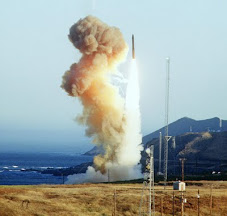
![[Global Network] against the first launch of Quasi-Zenith Satellite, Japan, on Sept. 11, 2010](https://blogger.googleusercontent.com/img/b/R29vZ2xl/AVvXsEj2sYpfodDDMIA7qXwuda0DmKapxXFB479fDnn8RKy7QNZqz0VEvWucNd-DleZ37hWNXC-Z8QtaqtM37VuPwac5SgclJ9_khBBSWOedvm19MRXIP1j1kcWrK6EW5IFjQdEEY2h7E6xuyNvC/s227/Qzss-45-0_09.jpg)
![[In update] Some collections on the Koreans’ protests against the sanction & war on Iran](http://4.bp.blogspot.com/_gnM5QlRx-4c/TJMvke6t8zI/AAAAAAAAFO4/tamQ8LUnOOA/S227/No+Sanction+on+Iran.jpg)
![[Three International Petitions] to End the Korean war and peace treaty(or peace resolution)](https://blogger.googleusercontent.com/img/b/R29vZ2xl/AVvXsEhlohLVYtpCg7iMsZhNYY4hBbhTi2dIheHMHWLDph9X2y78cjgZV1LeSfUJeu80elhJm70Q9E059q72lK-spSPvsRG4bPuCDIytltJB9IH3mWt9OG98HqhnTsPakwhvNeoCFUgF1xoxQ2EZ/s227/border.jpg)


![[Collection of Documents] No Base Learning and Solidarity Program_Korea(June 14 to 20, 2010)](https://blogger.googleusercontent.com/img/b/R29vZ2xl/AVvXsEix_HzjToh3nNGHBc-_5gasq-ykcaZ6GInLixILmZVyRJ5xoeHCxWOyYd9fSM7bmnuFsjSrYOGEPnQOwB1Dcyo-sN4Pw0cFPhUtKig_qlVnGL1Wi82ClvPqbEPWYhJiqdNF0DyzLIBETMB9/s227/No-Base-banner.jpg)
![Site Fwd:[John Hines] A U.S. Debate coach’s research trip on the Issues of Korea](https://blogger.googleusercontent.com/img/b/R29vZ2xl/AVvXsEg8yRra0zNhKHN74Auqhd3Nx9tZ7BWCGflRJHGH4CfzBT_yjhZ8Nl9b3OZuLpYWJ2exsjmR0oVl-Qq_cf832p2VdmOZhUi-lCFzCNeDSyVtweX1lWZPC-RlHmDMLtilHwHjNFTenBiM4Fk4/s227/Jeju-Peace-Tour.jpg)


![[News Update] Struggle Against the Jeju Naval Base since Jan. 18, 2010](https://blogger.googleusercontent.com/img/b/R29vZ2xl/AVvXsEhKfSTRC5QKBBSFIq_m7QIqXdlbL4-gF5GJYn9Q-pN__k7sV7uxGDcLY5L8xmU7QuWuUhBT_GhG-URBPO80RT3AfWfDrWJr06h1hFuZC6ZBVKe4U6PS1Cd7Kr6olO8TYQtk13Drox7IS6ea/s226/scrum1.jpg)


![[Urgent] Please spread the Letter!: There was no Explosion! There was no Torpedo! (May 26, 2010)](https://blogger.googleusercontent.com/img/b/R29vZ2xl/AVvXsEhSd2yWZ3xGwnJQXB73z5FgXCqSosAoB9_33-GLYprOmLqjmvgSAQp1BYI7e4slK1FDxHRi9KK4um-OpDaj8QOkXwAScVAgvvq6-ehbDA-hbkr96wT9oHNNmWnBPv8GU4hoZp9X8F9AZBX4/s227/grounded.jpg)
![Text Fwd: [Stephen Gowans]The sinking of the Cheonan: Another Gulf of Tonkin incident](https://blogger.googleusercontent.com/img/b/R29vZ2xl/AVvXsEi_L6hB3RZ1MovTXHe0A8yn_RfgMALGR0kM6poBuGp809xwvHtB_-PGWtS_WpyPWatyd9lB2pPqL2gOLc4dTCEdJ9sMvxJWEdapl-mMLm7WHAsV-jVpgqarVh8XBtdz_0c-Vohdh3HtJahD/s227/lee-myung-bak.jpg)
![[Japan Focus]Politics in Command: The "International" Investigation into the Sinking of the Cheonan](https://blogger.googleusercontent.com/img/b/R29vZ2xl/AVvXsEiHmTo8v-uCJnabRhMdnBAkC9J3s5bb2JsDKiT5leJHwbK8IDJHxfJmqQ_C0Is_bPC6UGMf05CA0exF2y4r2x9RhFUHT0kjsKviaME_MZXKnq775UyYAdb7w2SAzE75XvBfHp1al2q6i3cf/s227/wen_jiabao_and_lee_myungbak.png)
![[Japan Focus] Who Sank the SK Warship Cheonan? A New Stage in the US-Korean War and US-China](https://blogger.googleusercontent.com/img/b/R29vZ2xl/AVvXsEiKSS5ULT5QBaMGYpXXqBMX9jtwLwMLuK469b6Ku72GTJYKUObzTANaPjZqvvpPzYMJgPF53sjhvhK3DVa88ipYlggsJageykXlkxY6s8TW05xcU-_vfhf-pACUoaWuFbT-fsU1qEhm_yIi/s227/buoy_map.gif)
![[Updated on 12/13/10] [Translation Project] Overseas Proofs on the Damages by the Military Bases](https://blogger.googleusercontent.com/img/b/R29vZ2xl/AVvXsEikADE6JovUNspQyZUWVMTLAQg7yQNqXpVUbqZPk8f4uc_1723_xm1Cco6WAmstQXVPnaJAcb1mZA8Ny_3xONT_f5uh8MNLPnUhtqdGgy3HCtC1Vbbz4Q0ZY1Cssu-4cJEVNdrvznbS5UzO/s227/missile.jpg)
![[International Petition] Close the Bases in Okinawa](https://blogger.googleusercontent.com/img/b/R29vZ2xl/AVvXsEhNpQiHklwFbWVlFK7GDFXnBSOOSFEj3Il-We-N3uTDldKiidL2NGZs7X_LtTnatzTo_r8CexRkFe8NhfxYqmgp1knEEslROTfNjI5_mSb57cdbhPkftvanveYBaevAD9xuKDGoIxiTwoSb/s227/2.jpg)

![[In Update]Blog Collection: No Korean Troops in Afghanistan](https://blogger.googleusercontent.com/img/b/R29vZ2xl/AVvXsEjjEmCRXSNAG7_QBxKWbdksmxoWR4nyAovQTTdR1G2AuXh0jxtqNkI9OmYgYWRoLAJShvtBvE840QXuBWSVh3u3zMYqkNAFX6OWy3m5Nur4HM7uNK-pKT1ycyApJp-VLyhIFRRcoisYAh0E/s226/No-Troops-to--Afghanistan.jpg)


