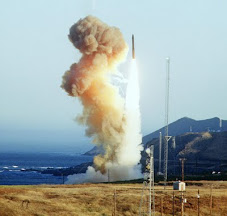
'저는 그들의 땅을 지키기 위하여 싸웠던 인디안들의 이야기를 기억합니다. 백인들이 그들의 신성한 숲에 도로를 만들기 위하여 나무들을 잘랐습니다. 매일밤 인디안들이 나가서 백인들이 만든 그 길을 해체하면 그 다음 날 백인들이 와서 도로를 다시 짓곤 했습니다. 한동안 그 것이 반복되었습니다. 그러던 어느날, 숲에서 가장 큰 나무가 백인들이 일할 동안 그들 머리 위로 떨어져 말과 마차들을 파괴하고 그들 중 몇몇을 죽였습니다. 그러자 백인들은 떠났고 결코 다시 오지 않았습니다….' (브루스 개그논)


For any updates on the struggle against the Jeju naval base, please go to savejejunow.org and facebook no naval base on Jeju. The facebook provides latest updates.
Showing posts with label 2010 Quadrennial Defense Review (QDR). Show all posts

Tuesday, March 9, 2010

[126th Self-Reliance Unification Peace Action] ‘Stop the Key Resolve war exercise against the N. Korea and conclude the peace agreement in Korea

* Below are arbitrary translations of the parts of the two articles combined together. One is the report from the Solidarity for Peace And Reunification of Korea and the other is the article of the Tongil News on March 9.


*All the image sources/references are Solidarity for Peace And Reunification of Korea.

About 60 people joined the 126th Self-Reliance Unification Peace Action
in front of the United States embassy, Seoul, on March 9, 2009.


Joo Byung-Joon, Chairman of the Village People’s Committee
against the Expansion of the Mugeon-ri Military training Field, joining in peace performance
in which people puts on various peace signs on the strings.


People put up the peace signs of pepper (* Korean traditional sign of abundance/prosperity)
and pigeons such as ‘withdrawal of the United States Forces of Korea’ and ‘Conclusion of peace agreement’ etc.

The letters beside the photo of the United States soldier say, “Occupation of North Korea
then establishment of the pro-US regime [in North Korea].”

Choi Sa-Mook. Co-representative of Veterans for Peace delivered the request letter
that was read aloud in the rally, to the United States embassy.

Police has occupied the rally site prior to the rally. The police finally withdrew from the site
after about 10 minute conflicts with the rally participants who demanded their right to have the rally.

Men from the Defense security Command whom even the police doesn’t know?
Those men were secretly recording the rally participants with camera, which is illegal.


*All the image sources/references are Solidarity for Peace And Reunification of Korea.

There was the 126th Self-Reliance Unification Peace Action in front of the United States embassy under the issue of ‘Stop the Key Resolve war exercise against the North Korea and conclude the peace agreement in the Korean peninsula’ in Seoul, at 12pm on March 9, Tuesday, 2010.

The police claming even before the rally that “We can not guarantee the rally site because the contents on opposition against the Key Resolve is directly related to the United States,” Blockaded the rally site with the police units, saying, “Process the rally in the site more than 100M from the United States embassy.” The participants including the SPARK activists demanded, “The police behavior is illegal so guarantee the rally site.” After 10minutes of conflicts, the police accepted the rally participants’ request and withdrew the police units. Through the police behavior, the thing that the United States embassy has much burden on the currently being progressed Key resolve exercise, could be indirectly confirmed.

The organizations who participated in the rally pointed out that “ This war exercise is clearly invasive in the sense that, following the operational plan 5027 aiming the annihilation of the North Korean troops and removal of the North Korean regime, it is mobilized with the 18,000 United States force & 20,000 South Korean forces, and that its trainings are such as WMD removal operation, MD operation, mountain & urban area combat for being accustomed to the North Korean topography, and SK-US joint marine exercise assuming the urban combat in Pyeongyang that are premised on the collapse of the North Korean regime and occupational ruling.”

Kwon Oh-Chang, the executive representative, Solidarity for the Practice of the South-North Joint Declaration, claimed that, “The armistice agreement was concluded in July 1953 and within three months, by opening the political meeting, the withdrawal of the foreign troops and conclusion of the peace agreement in the Korean peninsula, were to be discussed… However the authorities of the South Korea and United States made powerless of the armistice agreement with their conclusion of Mutual Security Treaty in 1953.”

He, introducing “There is the nuclear security summit meeting in April and NPT in May,” claimed that “The United States should does either the simultaneous actions of the conclusion of the peace agreement and non-nuclearization, or ‘continuous progress of the hostile policy against the North Korea.’

You Young-Jae, SPARK, introducing that “The SK and US authorities are to finish the discussion on the ways of the procedures on the strategic flexibility of the United States Forces before the SK-US Security Consultative Meeting in Washington DC in coming October,” pointed out that “In the QDR report announced in January, the contents that the strategic flexibility would be stipulated and that, under the possible condition of foreign dispatch, base relocation, equipment moving, making flexible of the prior procedures would be progressed, are included.”

He also pointing out that, “ The United States can any more maintain the world domination with the fixed military,” claimed that, “ Therefore, to maintain the world domination, she intends to realize the strategic flexibility of the United States.”

Finally, he, pointing out that “The United States changed the status of Korea from the combat area to non-combat area. It means there is no all-out war possibility in the Korean peninsula,” claimed that “If the United States does not need the defense against the North Korea, the United States Forces of Korea, should not think of the permanent staying in South Korea, through the strategic flexibility but should go away from this land.”

Wednesday, February 10, 2010

[Translation] 125th [Monthly] Self-Reliance Unification Peace Action

* Below is the arbitrary translation of a report in the Solidarity for Peace And Reunification of Korea (SPARK) site. All the image source is the SPARK.

125th [Monthly] Self-Reliance Unification Peace Action
Feb. 9, 2010 (Tuesday)

There was the 125th [monthly] Self-Reliance Unification Peace Action in front of the KT beside the United States Embassy, Seoul, at 12pm, Feb. 9. About 30 participants started the rally with the powerful slogans despite the winter-raining cold weather.

* The furthest right panel says: the 125th [Monthly] Self-Reliance Unification Peace Action
in front of the United States Embassy, Korea. The letter '자주 Jaju' means self-Reliance;
'통일 Tongil' means unification; '평화 Pyeonghwa' means peace; and '행동 Haengdong' means Action.


The first speech was done by Mr. You Yong-Jae, the chief of the USFK (United States Forces of Korea) Matters Team, SPARK, with the content opposing the drive for the Strategic Flexibility by the USFK, which was revealed in the 2014 Quadrennial Defense Review that the United States has recently announced.

Mr. You said that “Obama who has visited the South Korea informed her that [the United States] would send part of the USFK to Afghanistan and it is being almost certain. That is illegal and should be stopped because it violates the Mutual Defense Treaty [in 1953] between the South Korea and United States. He also said that “Our country is freely providing the base to the USFK under the cause of the defense against the North Korea. However, if the USFK bases became the invasive war bases of the United States, there would be no reason to freely provide her the bases. It means there is no more cause for the USFK to stay [in South Korea].

Otherwise, he denounced the behavior of the [South Korean] government authorities saying that, “ In this situation, it is like giving all the liver and gall-bladder [to the United States] to guarantee even the rentals of the family houses of the United States soldiers.

Finally, he appealed to people that “The USFK strategic flexibility that threatens the peace in the Korean peninsula and the world should be immediately stopped. Let’s be powerfully mobilized for the struggle for the withdrawal of the USFK.”

‘We oppose the participation in MD that makes China as enemy’

The second speech was done, by Ms. Oh Hye-Ran, Chief of the Peace Disarmament Team of the SPARK, with the content of ‘ The Obama administration must stop the enforcement of the South Korea to join the Missile Defense system.’

Ms. Oh said that “Even though the South Korea has never expressed her official participation in the MD for the sake of the military domination by the United States, the reason that the United States is demanding the South Korea to join the MD is that she intends to make the South Korea to pay the required cost for the establishment of the missile [defense system].”

She also saying that “The hidden intention of the United States to tell [the South Korea] to join MD, despite the [predictable] conclusion of the peace agreement in front of her eyes, is to establish of the defense system targeting the North Korea & China, to maintain her dominance in the northeast Asia, to build strategy, to have the military confrontation system between the South & North Korea, and to establish the Missile Defense system, while the United States force who are to be expelled from the north east Asia, utilize us for [the MD system]”, strongly denounced the cunning trickery by the United States government and urged her to stop to enforce the South Korea to join the MD.

'Immediately open for the US-NK Summit meeting'

The third speech was done by Mr. Choi Bock-Yeol, [the External Cooperation] Director of the Pan-Korean Alliance for Reunification (PKAR), South Korean branch, with the content to stop the composition of the New Joint Operational Plan 5012 that is led by the United States and that would be strengthen of the offense against the North Korea.

Mr. Choi, saying, “The Operational Plan 5026, 5027- of which the contents are about the annihilation of the NK soldiers, elimination of the North Korean regime, military unification of Korea, and the pre-emptive strike against the North Korea- all clearly show the hostile policy of the United States against the North Korea that it would shape the [Korean] unification by absorbing the North Korea.

“ The New Joint Operational Plan 5012” newly composed in preparation for the returning-back of the operational control right is beefed up with more offensive contents against the North Korea and means the operational plan by the Asia Pacific Command, starting with ‘50’ is to be maintained as it is. Further, the Air Force operational control right that can be said the core of the modern warfare is intended to be operation-controlled by the Air force commander of the USFK, who would found the Combined Air Force Command (CAC) so that the returning back of the operational control right [to South Korea] is to be an empty nut” strongly denounced the both authorities of the South Korea and United States.

Finally he strongly urged [the United States government] saying that “ While the peace agreement is to be soon concluded, the United States saying she wants peace in front but setting-up operational plans which is offensive against the North Korea in the rear, is hoping the collapse of the North Korea regime. [The United States government should abolish the OP 5012 and fully return the OP right [to South Korea].


The forth speech was done by Mr. Kim Hwan-Young, Secretary of the Veterans for Peace, ROK, with the content of ‘Stop the Dispatch to Afghanistan”

Secretary Kim saying, “The dispatch to Afghanistan has no cause and would turn the Islam as our enemy”, told that “It is to make second Kim Sun-Il ( who were murdered in Iraq), and the 2nd kidnapping accident in 2007.

Saying, “The dispatch to Afghanistan is by enforcement of the United States in marsh due to the invasive war and to send our troops to such invasive war is the debasement and insult on our soldiers. Therefore, for a normal progress of our military and for the contribution to the peace in the Korean peninsula and the world, the dispatch has to be stopped”, he strongly scolded the South Korean government.

'Stop to make the OP 5012 aiming for the occupation of the North Korea!'

Tuesday, February 2, 2010

Text Fwd: QDR: New U.S. Air-Sea Battle Plan Focuses On China, Iran

StopNATO
QDR: New U.S. Air-Sea Battle Plan Focuses On China, Iran

Business Week
Bloomberg News
February 1, 2010

China, Iran Prompt U.S. Air-Sea Battle Plan in Strategy Review
By Viola Gienger and Tony Capaccio

-The joint Air Force-Navy plan would combine the strengths of each service to
conduct long-range strikes that could utilize a new generation of bombers, a new
cruise missile and drones launched from aircraft carriers.

-“This is truly a wartime QDR,” Defense Secretary Robert Gates wrote in a

cover letter for the report.

-“In the mid- to long-term, U.S. military forces must plan and prepare to

prevail in a broad range of operations that may occur in multiple theaters in
overlapping time frames,” the Defense Department says in the review.
“This includes maintaining the ability to prevail against two capable
nation-state aggressors.”

-[T]he review calls for “a more widely distributed” and flexible U.S.
presence in Asia that relies more on allies. Partners would include Australia,
Thailand, the Philippines, Singapore, Indonesia, Malaysia and Vietnam.

-The Pentagon has about 400,000 U.S. military personnel stationed overseas,
either in war zones or elsewhere. The review emphasizes “taking care of our
people” serving in multiple long deployments that take a “significant
toll” on them and their families.


The U.S. military is drawing up a new air-sea battle plan in response to threats
such as China’s persistent military build-up and Iran’s possession of
advanced weapons, according to the Pentagon’s latest strategy review.

The Air Force and Navy are seeking more effective ways of ensuring continued
access to the western Pacific...according to the Quadrennial Defense Review to
be released later today.

The joint Air Force-Navy plan would combine the strengths of each service to
conduct long-range strikes that could utilize a new generation of bombers, a new
cruise missile and drones launched from aircraft carriers. The Navy also is
increasing funding to develop an unmanned underwater vehicle, according to the
report.

The battle plan is among a range of new initiatives outlined in the review,
which is conducted every four years to revise U.S. military strategy for the
coming decade or more. The new report places top priority on the fights in
Afghanistan and Iraq and against terrorist threats elsewhere, while also
preparing for future threats.

This is truly a wartime QDR,” Defense Secretary Robert Gates wrote in a
cover letter for the report. “For the first time, it places the current
conflicts at the top of our budgeting, policy and program priorities.”

Two-War Capability

The review deemphasizes but does not abandon the Pentagon’s doctrine that
calls for the military to be able to fight two major wars nearly simultaneously.
It acknowledges this mission but says planning should focus more closely on
other scenarios, such as irregular warfare including conflicts involving
insurgents or drug traffickers and even humanitarian disasters.

“In the mid- to long-term, U.S. military forces must plan and prepare to
prevail in a broad range of operations that may occur in multiple theaters in
overlapping time frames,” the Defense Department says in the review.

“This includes maintaining the ability to prevail against two capable
nation-state aggressors,” it states.

Alluding to China in his cover letter, Gates cites longer- term threats such as
“the military modernization programs of other countries.” He also hints at
dangers such as al-Qaeda in referring to “non-state groups developing more
cunning and destructive means to attack the United States and our allies and
partners.”

Tensions With China

U.S. officials have often called on their Chinese counterparts to provide
explanations and assurances that their moves are purely defensive. The two
countries resumed military talks last June, then China halted visits again over
the Defense Department’s Jan. 29 announcement of a new arms sale to Taiwan.

China is developing and deploying “large numbers” of advanced missiles, new
attack submarines, long-range air defense systems and capabilities to wage
electronic warfare and target computer systems, according to the report, which
echoes an assessment of China’s military power issued almost a year ago.

China’s refusal to provide adequate assurances of its intentions raises “a
number of legitimate questions regarding its long-term intentions,” the
Pentagon says in the review.

Citing “more complex” security conditions in the region, including North
Korea and terrorist threats in Southeast Asia, the review calls for “a more
widely distributed” and flexible U.S. presence in Asia that relies more on
allies. Partners would include Australia, Thailand, the Philippines, Singapore,
Indonesia, Malaysia and Vietnam.

Threat From Iran

In the Middle East, Iran is fielding small attack boats in the Persian Gulf, a
development that U.S. officials have cited in the past. That compounds the
threat to naval operations from the acquisition by Iran and other nations of
weapons such as quiet submarines and advanced cruise missiles that can target
ships, according to the report.

Iran also has provided drones and shoulder-fired missiles to the Islamic
militant group Hezbollah in Lebanon, and Russia and other nations have
contributed to the spread of surface-to- air missiles, the department said.

Among the solutions proposed are more ways to deploy U.S. forces abroad, such as
naval assets, “in regions facing new challenges.” Existing bases also need
to be either hardened to protect against potential attacks or reinforced with
back-up locations or by dispersing them in multiple places, the department
concluded.

The Pentagon has about 400,000 U.S. military personnel stationed overseas,
either in war zones or elsewhere. The review emphasizes “taking care of our
people” serving in multiple long deployments that take a “significant
toll” on them and their families.

Other Concerns

In addition to supporting existing wars, the Quadrennial review emphasizes the
need for more unmanned aircraft, intelligence, special forces, helicopters and
long-range strike capabilities as well as skills such as foreign languages and
training of foreign military forces.

The U.S. military, especially the Navy and Air Force, also should find better
and faster ways to strengthen the defense systems of foreign allies and partners
as needed, the Pentagon said.

The Pentagon should continue to maintain a nuclear arsenal as a “core
mission” until “such time as the administration’s goal of a world free of
nuclear weapons is achieved,” according to the report.

The potential threat of cyber attacks and the need to conduct “high-tempo
operations” will require more expertise in that field and centralized command
of cyber operations, the department said.

-Editor: Bill Schmick
===========================
Stop NATO
http://groups.yahoo.com/group/stopnato

Blog site:
http://rickrozoff.wordpress.com/

Sunday, June 7, 2009

Text Fwd: Prompt Global Strike: Pentagon Plans Series Of 5-10 Year Wars

* Text informed by StopNATO and Bruce Gagnon on June 6, 2009

Prompt Global Strike: Pentagon Plans Series Of 5-10 Year Wars

http://www.defensenews.com/story.php?i=4123641&c=AME&s=LAN
Defense News, June 4, 2009

Cartwright: U.S. Force-Sizing, Basing Strategy Need Overhaul
By JOHN T. BENNETT

-The Marine Corps general said he has concluded conventionally armed bombers are "too slow and too intrusive" for many "global strike missions."
Cartwright for several years has advocated for a "prompt global strike" weapon, which would be ultra-fast and fitted with a conventional warhead.
Congress, due largely to worries that other nations, like Russia, would be unable to quickly determine whether an in-flight warhead was nuclear, has refused to fund the program.
-The military might need a "hypersonic" weapon that would travel in the exoatmosphere to take out a limited number of fleeting targets....


Over the next few years, the U.S. military is likely to become engaged in a number of hot and cold conflicts, each spanning five to 10 years, meaning the Pentagon must "adjust" its decades-old force sizing and basing constructs, says Gen. James Cartwright, vice chairman of the Joint Chiefs.

But the world has changed in major ways, meaning the two conventional war-based approach is no longer a good fit, according to defense officials. Those changes are the reason senior Pentagon officials are examining whether the 2010 Quadrennial Defense Review (QDR) should include a new force-planning construct, as well as a new plan for how American bases, troops and combat equipment are located around the globe.

"It is clear we are going to have conflicts whose character will not be the same" as the ones on which the Pentagon has for decades based its force planning and global basing postures, Cartwright said. "It's clear [U.S. forces] will be engaged in operations that [each] last five or 10 years - and that is fundamentally different that in the past."

Such conflicts are the "most likely" ones the U.S. military will fight in coming years, he said during an appearance at a Center for Strategic and International Studies forum. Senior Pentagon officials are mulling whether these conflicts - not conventional ones against peer militaries - should garner the majority of the military's planning focus.

Plus, he said, officials have concluded that "the level of lethality" potential U.S. foes bring to the fight is no longer tilted so excessively toward conventional threats.

For those reasons, Cartwright said, "it is my opinion … that we have to adjust the balance" between focusing resources and effort on the "most likely" and "most deadly" threats as part of the QDR process.

The QDR will examine what future threats the U.S. military will have to combat, "and how we must be postured to do those things."

Altering the force-sizing construct will affect which weapons the services buy and how the U.S. military is positioned around the world.

Cartwright said QDR study participants must look at the benefits and drawbacks of how American forces and gear are based, including: permanent, prepositioned and rotational basing.

Acquisition "Crossroads"

The vice chairman also said the U.S. military must shift from developing new and expensive weapons aimed at taking out a specific threat to focusing on how platforms fit into "the IT world."

On defense acquisition, "we're at a crossroads" that incorporates all of American society. The nation is fundamentally "an industrial society," but must adjust to a global change that "the competitive advantage is on the IT side."

The same is true for DoD, he said.

"When [the services] build a plane, you build it for a threat," Cartwright said. "You can only update it every four or five years....So the utility of that plane is limited in an IT world."

The model for where the military must go in terms of new weapon systems lies in how it has come to use unmanned aircraft.

Like with UAVs in Iraq and Afghanistan, the most important feature of future U.S. weapon systems will be their "ability to gather information to help solve problems," the vice chairman said. He also touted the ability of UAVs to take on multiple missions, depending on a commander's needs like ISR gathering today and targeting tomorrow.

Prompt Global Strike

Additionally, Cartwright said he continues to press for development of a new weapon that would allow Washington to take out a fleeting target in a manner of minutes.

The Marine Corps general said he has concluded conventionally armed bombers are "too slow and too intrusive" for many "global strike missions."

Cartwright for several years has advocated for a "prompt global strike" weapon, which would be ultra-fast and fitted with a conventional warhead.

Congress, due largely to worries that other nations, like Russia, would be unable to quickly determine whether an in-flight warhead was nuclear, has refused to fund the program.

Cartwright said even congressional skeptics of the idea realize there is a "military requirement" for such a fast weapon to take out fleeting targets.

The requirements for such a weapon are "starting to emerge," he said.

"At the low end," a PGS weapon would probably need to be launched and hit a target within "one hour," Cartwright said. "At the high end," the time frame could be as short as "300 milliseconds."

The military might need a "hypersonic" weapon that would travel in the exoatmosphere to take out a limited number of fleeting targets, he said.

Finally, Cartwright told the audience the Pentagon is examining a new concept, called "extended deterrence," something "we're trying to force into the QDR."

The idea would be to field a weapon so effective that it would dissuade enemies from carrying out a specific activity, while also "not starting a nuclear arms race" and "giving allies comfort."

The options for an "extended deterrence" capability, he said, are not limited to nuclear-armed weapons.
===========================
Stop NATO