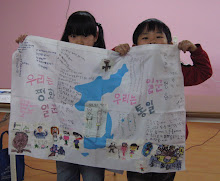
'저는 그들의 땅을 지키기 위하여 싸웠던 인디안들의 이야기를 기억합니다. 백인들이 그들의 신성한 숲에 도로를 만들기 위하여 나무들을 잘랐습니다. 매일밤 인디안들이 나가서 백인들이 만든 그 길을 해체하면 그 다음 날 백인들이 와서 도로를 다시 짓곤 했습니다. 한동안 그 것이 반복되었습니다. 그러던 어느날, 숲에서 가장 큰 나무가 백인들이 일할 동안 그들 머리 위로 떨어져 말과 마차들을 파괴하고 그들 중 몇몇을 죽였습니다. 그러자 백인들은 떠났고 결코 다시 오지 않았습니다….' (브루스 개그논)


For any updates on the struggle against the Jeju naval base, please go to savejejunow.org and facebook no naval base on Jeju. The facebook provides latest updates.
Showing posts with label Nuclear weapon. Show all posts

Saturday, March 19, 2011

Text Fwd: Civic groups call for closure of aging nuclear plant

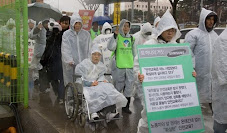
Environmental organization members hold umbrellas to demonstrate the dangers of nuclear energy that say, “Nuclear-free earth, nuclear-free future,” in Seoul’s Gwanghwamun, Mar. 17. (Photo by Lee Jong-keun)

Hankyoreh
Civic groups call for closure of aging nuclear plant
The Wolseong reactor received an extra 10-year operational extension prior to the nuclear crisis in Japan
March 18, 2011
By Park Ju-hee
  

As the crisis at Japan’s Fukushima Dai-ichi nuclear power plant races out of control following a series of explosions resulting from last week’s earthquake and tsunami, concerns are mounting rapidly among South Koreans living near power plants. Civic organizations in the area of Gyeongju, North Gyeongsang Province, demanded the permanent closure of the No. 1 reactor of the Wolseong Nuclear Power Plant in the city’s Yangnam Township. The extension of the reactor’s operating life is under examination.

Hoisting a banner reading “Wolsung = next Hukusima,” members of Gyeongju Nuclear Safety Solidarity held a press conference Thursday in front of Gyeongju City Hall, where they demanded that authorities “withdraw plans to extend the operational life of the decrepit first reactor at the Wolseong Nuclear Power Plant, and close it permanently.”

The group was organized by twenty local civic and social organizations including the Gyeongju Federation for Environmental Movement.

“The series of explosions at the Fukushima plant shows that the more time-worn a power plant is, the more it is susceptible to natural disasters such as earthquakes,” the group said. “As citizens of a city with numerous nuclear power plants, we cannot view the Japanese people’s tragedy as someone else’s affair.”

The No. 1 reactor at Wolseong, which began commercial operation in April 1983, is facing the end of its thirty-year design lifespan in March 2013. The Ministry of Education, Science and Technology (MEST) is scheduled to make a decision around June as to whether to prolong its lifespan by another ten years.

“The Eupcheon Fault near the Wolseong plant is an active fault, so there is a possibility that the land may be unstable as a result of the earthquake in Japan,” the group said.

The Wolseong Nuclear Facility Environment and Safety Monitoring Committee (WSNESC) produced an analysis of tritium concentrations in the bodies of residents in the area around the Wolseong plant. According to the group, the concentration of tritium in the bodies of residents of Naa Village in Gyeongju’s Yangnam Township, at an average of 23.6 becquerels per liter, is 25.7 times higher than the 0.919Bq/L concentration seen in residents of Gyeongju’s urban area.


Please direct questions or comments to [englishhani@hani.co.kr]

_____________________________________

See also
The Kyunghyang Shinmun
Are We Abandoning Energy Reductions and Just Building More Nuclear Plants?
March 17, 2011

The Kyunghyang Shinmun
Radiation Terror and the Lee Government's 'Safety Incantation'
March 18, 2011

Thursday, March 10, 2011

Text Fwd: Official: Japan Nuclear Arms In Year Against Enemies China, Russia

* Text fwd from Rick Rozoff on March 9, 2011

The Independent
March 8, 2011
Japan must develop nuclear weapons, warns Tokyo mayor
By David McNeill in Tokyo

-"China wouldn't have dared lay a hand on the Senkakus [if Japan had nuclear weapons]."
-The right-wing Governor added that a nuclear-armed Japan would also win more respect from Russia, which seized four Japanese-owned islands during the Second World War.

Tokyo's outspoken Governor says his country, which suffered history's only nuclear attack, should build nuclear weapons to counter the threat from fast-rising China.

In an interview with The Independent, Shintaro Ishihara said Japan could develop nuclear weapons within a year and send a strong message to the world.

"All our enemies: China, North Korea and Russia – all close neighbours – have nuclear weapons. Is there another country in the world in a similar situation?

"People talk about the cost and other things but the fact is that diplomatic bargaining power means nuclear weapons. All the [permanent] members of the [United Nations] Security Council have them."

The comments from the leader of Japan's second-most powerful political office come amid concerns about China's growing military muscle.

Beijing announced last week that its 2011 defence budget will be hiked by 12.7 per cent to 601.1bn yuan (£56.2bn) up from 532.1bn yuan last year. Most experts say that those figures are an underestimate.

China officially overtook Japan as the world's second largest economy last month. Despite booming bilateral trade, the relationship has regularly been shaken by disputes over territorial and historical issues. Ties are still struggling to recover from a maritime clash last year over the Senkaku Islands, which are owned by Tokyo but claimed by Beijing.

Mr Ishihara said the clash, which ended when police released the captain of a Chinese ship accused of ramming Japan's coastguard vessels, had exposed his country's weakness in Asia. "China wouldn't have dared lay a hand on the Senkakus [if Japan had nuclear weapons]."

The right-wing Governor added that a nuclear-armed Japan would also win more respect from Russia, which seized four Japanese-owned islands during the Second World War. And he advised his constitutionally pacifist nation to scrap restrictions on the manufacture and sale of weapons. "We should develop sophisticated weapons and sell them abroad. Japan made the best tanks in the world before America crushed the industry. We could get that back."

Conservatives have long demanded that Tokyo ditch its postwar constitution, which was written during the American occupation of the country and renounces war as a sovereign right.

Japan's so-called non-nuclear principles, produced during the time of Prime Minister Eisaku Sato in 1964-72, later committed the country to never produce, possess or allow the entry of nuclear weapons. The principles were partly a response to popular revulsion over the deaths of more than quarter of a million mostly civilians in the 1945 US bombing of Hiroshima and Nagasaki.

Mr Ishihara claimed that Mr Sato, who won the 1974 Nobel Peace Prize for his opposition to plans for a nuclear weapons programme, was at the same time secretly approaching the US for help in developing an atomic bomb.

"If the Sato administration had unilaterally developed weapons then, for a start North Korea wouldn't have taken so many of our citizens," said the Governor, referring to Pyongyang's abduction of an unknown number of Japanese people.

Mr Ishihara is expected to step down this year after 12 years governing the city of 13 million people. He once called gay people "abnormal" and elderly women who can't have babies "useless". His right-wing politics and persistent warnings about the rise of China have earned him the sobriquet "Japan's Jean-Marie Le Pen".
====================================================================
Stop NATO e-mail list home page with archives and search engine:
http://groups.yahoo.com/group/stopnato/messages

Stop NATO website and articles:
http://rickrozoff.wordpress.com

Tuesday, March 1, 2011

Text Fwd: U.S. trims its nuclear arsenal while upgrading production


* Text fwd from Frank Cordaro on Feb. 26, 2011
The Kansas City Star
Posted on Sat, Feb. 26, 2011 10:15 PM
U.S. trims its nuclear arsenal while upgrading production
By DONALD BRADLEY

The construction site of the new billion-dollar Honeywell plant in
south Kansas City is quite the head-turner.

Workers everywhere, trucks scurrying about like mice, monster earth
movers, cranes reaching to the sky and enough trailers to start a
retirement community. All on 185 acres inside a perimeter fence and
under a wind-whipped Old Glory.

But drive past the former bean field on Missouri 150 enough times and
the thought occurs: Kansas City produces parts for every nuclear
weapon now in our arsenal. The country is making more nuclear bombs,
has been building them virtually non-stop for 65 years, hasn’t used
one against an enemy since 1945, and a significant new arms reduction
treaty went into effect just this month.

Nine thousand warheads, about a quarter capable of being triggered
tomorrow, is a lot of product sitting around.

Any is too many, critics said. “Modernization” is a joke, just more of
the world-threatening, same-old, same-old madness.

Others counter that the world cannot “disinvent” the bomb. What the
country needs, they said, is to scrap the big nukes in the stockpile —
hardly a deterrent — for smaller, tactical ones that potential enemies
think we would actually use.

The $85 billion upgrade of our bomb-making infrastructure in Kansas
City with Honeywell and at other locations is occurring 50 years after
President Dwight Eisenhower warned in his farewell address of the
military-industrial complex and its “potential for the disastrous rise
of misplaced power.”

It’s also taking place two years after President Barack Obama told the
world in a speech in Prague, Czech Republic, that the United States
was committed to ridding itself of nuclear weapons.

“Today, I state clearly and with conviction America’s commitment to
seek the peace and security of a world without nuclear weapons,” he
said to the cheers of 20,000 people.

He had the backing of the so-called “Gang of Four” — former
secretaries of state George Shultz, William Perry and Henry Kissinger
and former U.S. Sen. Sam Nunn, all foreign policy heavyweights — who
called in a Wall Street Journal op-ed in 2007 for worldwide nuclear
disarmament.

Then late last year, Obama won Senate approval of the New START
(Strategic Arms Reduction Treaty). Under it, strategic nuclear missile
launchers will be cut in half in seven years. More than 100 missile
silos, bomber wings and submarine launch tubes will be taken off-line.

America’s immediately usable warheads will be halved to 1,550, with
the option of possibly jamming a few hundred more onto bombers.

So what happened? How did the administration get from Prague to that
soybean field in south Kansas City, where ever more non-nuclear
warhead components — the electronics, arming, fusing, firing packages
— will be churned out?

The answer, said experts, even those opposed to nuclear weapons, is
that no matter how many START treaties are ratified, complete
disarmament is unlikely to ever happen because the knowledge and
technology are in the open.

The realistic and responsible course now is to maintain a safe,
reliable deterrent to nuclear attack, they said.
More specifically, the experts go on, Obama needed Republican votes to
get New START approved, so he agreed to continue the expensive
modernization plan.

U.S. Sen. Lamar Alexander, a Tennessee Republican, in explaining his
vote on the Senate floor in December made no effort to make the deal
sound anything but quid pro quo:

“I will vote to ratify the New START treaty with Russia because it
leaves our country with enough nuclear warheads to blow any attacker
to kingdom come and because the president has committed to an $85
billion, 10-year plan to make sure that those weapons work.”

A major protest by Midwest Catholic Worker groups is scheduled for May
2 at the new Honeywell site. Frank Cordaro, a Des Moines anti-nuke
protester who has been arrested at the construction site, agrees a
deal was made.

“Obama needed the war mongrels to go along,” Cordaro said. “It was
easy to flim flam Americans because the public is so militarized, so
caught up in being an empire.”

But James Carafano, a defense expert for the Heritage Foundation, said
talk of a nuclear-free world was fantasy.

“Disarmament is like cops giving up their guns,” he said.

Noting that a nuclear blast over a major American city would kill
thousands and cost trillions, he said, “The consequences of getting it
wrong are too great.

“If you ask people if they want nuclear weapons to be safe and
reliable, they’re going to say yes. Old ones that may or may not work
are not a credible deterrent.”

Experts agree that Obama’s Prague speech was more global posturing
than realistic policy goal and that our nation is unlikely ever to
fold its top hand in the high stakes game of nuclear deterrent.

Uncertain shelf life

Since August 1945, when “Little Boy” and “Fat Man” ushered in the
nuclear age, the United States and the Soviet Union have spent
billions of dollars building and stockpiling nuclear weapons.

The U.S. arsenal peaked with about 30,000 warheads in the 1960s; the
Soviets topped out at about 40,000 in the 1980s.
Conventional wisdom is that a nuclear bomb has a shelf life. They go
bad ... maybe … we think. Since nuclear testing has been banned since
1991, it’s hard to know for sure.

The uncertainty has kept plants like Kansas City’s busy. The military
didn’t want to risk “duds,” so bombs routinely were refit with new
parts.

“We used to think parts wore out after 20 years or so,” said Steven
Pifer, a senior fellow at the Brookings Institute. “So we were
constantly dismantling and putting on new parts.”

Having even less confidence in their bombs, the Soviets assumed a
10-year shelf life.

Now, most experts think the U.S. components actually could be good for
a hundred years.

The fall of the Soviet Union in 1991 didn’t change much, although
Belarus, Kazakhstan and Ukraine decided against being nuclear powers
and turned their warheads over to Moscow.

Still, the nuclear club has grown, from the United States, Russia,
France, Britain and China originally, then India, Pakistan, Israel
and, most worrisome, North Korea.

Iran reportedly is enriching uranium but is believed to be some years
from its first warhead.

Owen Cote at Massachusetts Institute of Technology said it may be good
politics to talk disarmament but the worry was that some weapons
states could agree to dismantle but then keep those parts close to
alert status.

“We can’t create conditions to get to zero,” Cote said.
Cordaro disagrees. Other countries are simply following the U.S. lead,
he argued.

“Those other countries are no threats to us,” he said. “They are only
aping us. They would stop if we would.”

Although anti-missile systems are being debated and deployed against
some nations, many believe the first nuclear attack on U.S. soil is
more likely from an enemy undeterred by what sits in our silos or
undersea-launch tubes.

The biggest worry is that a terrorist group, such as al-Qaida, could
lay hands on a black market nuke or create a radiation-spewing “dirty
bomb.” Even in that case, it would be hard to find a target at which
to fire nuclear weapons in response.

Terrorism is a poor man’s war, Cordaro noted. War is a rich man’s terrorism.

The modernizing effort

On Feb. 18, 1943, with the outcome of World War II unsettled, ground
was broken in Bear Creek Valley in rural Tennessee for a factory to
enrich plutonium. A month later, J. Robert Oppenheimer arrived in New
Mexico to discover that Los Alamos housing for his bomb designers
wasn’t ready, but the Army had arranged stays at dude ranches.


Sixty-five years later, those two facilities today remain vital to
America’s nuclear weapons infrastructure.

The Y-12 National Security Complex in Oak Ridge will get $6 billion in
improvements and expansion as part of the modernization. The plant,
which employs about 6,000 workers, makes the “secondary” for bombs —
the part that makes them thermonuclear.


The Los Alamos National Laboratory, with 11,700 employees, is home to
the Chemistry and Metallurgy Research Replacement facility, which is
key to creating new plutonium pits, the “primary” components of
warheads. New facilities there will cost about $5 billion.

The rest of the modernization funding will go over time for smaller
facilities, clean-ups and for the new or refurbished weapons
themselves.

From 2000 to 2010, the Kansas City plant shipped nearly 1,000 MSAD
(mechanical safe arming detonator) kits, a safety component that
prevents accidental or unintended detonation of a nuclear warhead.

According to the National Nuclear Security Administration, in recent
years the plant, built during World War II to make engines for Navy
fighter planes, has evolved into “science-based manufacturing.”

Now the facility is under fire by current and former employees,
environmentalists and residents about issues of massive pollution and
illnesses that remain unresolved. A cleanup could cost hundreds of
millions of dollars.

Here’s a quirk about the new plant:

“Kansas City will be the only city in world that owns a weapons plant
— let alone a nuclear weapons plant,” said Chris Paine of the Natural
Resources Defense Council, a national environmental group.

“There is absolutely no reason to build this plant. This place will
have ponds and bike paths, a suburban monument to nuclear weapons.”

Jay Coghlan of Nukewatch said the Clinton administration considered
closing the Kansas City plant.

“This terrified Kansas City politicians, even though it made no sense
to build the new plant. They wanted to keep those jobs.”
Bombs at Whiteman

According to the Bulletin of the Atomic Scientists, formed by
Manhattan Project veterans who started the Doomsday Clock, more than
9,000 warheads are stored at 18 locations in 12 states and six
European countries.
Today, about 2,700 are considered operational, 2,500 in reserve and
the rest awaiting dismantlement.

The biggest concentration of the operational nukes is at the Strategic
Weapons Facility Pacific at Bangor, Wash., which sends out Ohio-class
submarines operating in the Pacific and Indian oceans.
The Air Force has about 500 warheads on long-range bombers, such as
the B-2A Spirits clustered at Whiteman Air Force Base east of Kansas
City.
An additional 450 or so warheads are on ballistic missiles in the
American West; the remainder at eight military bases spread through
Europe. The United States is the only country that deploys nuclear
weapons in other countries.

That means the push for more sophisticated weapons and delivery
systems will continue because, as if in response to the famous Rodney
King question, no, countries of the world cannot all get along.

But then doesn’t that mean that this country will forever be building
nuclear bombs?

Not forever, Carafano said.

“Some day the sun’s going to burn out.”

How many nukes?

The exact number of nuclear weapons is not known, as each country
guards the number closely. The Federation of American Scientists
estimates that the global nuclear inventory is approximately 22,400.
Most are in possession by the United States or Russia.

12,000 Nukes in Russia’s arsenal
9,400 Nukes in the United States’ arsenal

To reach Donald Bradley, call 816-234-4182 or send e-mail to
dbradley@kcstar.com. Source: Federation of American Scientists

Saturday, February 26, 2011

Text Fwd: Chung calls for redeployment of nukes in South

Korea Times
Chung calls for redeployment of nukes in South
Feb. 25, 2011
By Kang Hyun-kyung

A senior lawmaker called on the United States, Friday, to redeploy tactical nuclear weapons to South Korea _ which were withdrawn in 1991 _ to thwart any nuclear threat from North Korea.

The remarks made by Rep. Chung Mong-joon of the ruling Grand National Party (GNP) were expected to cause a stir as a nuclear-free Korea has been a core U.S. policy toward the peninsula.
During a parliamentary session, Chung told Defense Minister Kim Kwan-jin that South Korea had no other cards to play to convince North Korea to give up its nuclear ambitions.

“Earlier, U.S. Secretary of State Hillary Clinton said North Korea has six nuclear bombs,” he said.

Chung went on to say that he overheard that former Secretary Condoleezza Rice told former U.S. nuclear negotiator Christopher Hill that “Don’t try to solve it (North Korea’s nuclear weapons program). Try to manage it.”

The lawmaker took these remarks made by the two U.S. officials as meaning that the U.S. government may accept the North as a nuclear state.

Chung said Seoul cannot accept Pyongyang as a nuclear state under any circumstances.

“But the problem is our hands are tied. We have no options to frustrate the North’s nuclear ambitions,” he said. “That explains why some people here say that South Korea needs to be armed with nuclear weapons. This reflects that we have few other options to tackle North Korea’s nuclear weapons program.”

Last November, then Defense Minister Kim Tae-young told a parliamentary committee that South Korea would consider asking the United States to redeploy nuclear weapons. The defense chief’s remarks sparked debate.

Hours after this, an official from the presidential office tried to control the damage. He told reporters on condition of anonymity that there had been no discussion about the redeployment of nuclear weapons to the South and it would never be an agenda item between Seoul and Washington.

Rep. Chung, a presidential hopeful, reignited the controversy months after the former defense minister started it. The lawmaker also questioned China’s motives over the dismantlement of North Korea’s nuclear program.

“China looks as if it opposes a nuclear-armed North. But this may not be its real intention,” he said. “Even though the North has one or two nuclear bombs, China would not feel threatened by this because it also has two other nuclear-armed neighbors in India and Pakistan,” Chung said.

“Some pundits say having a nuclear-armed North Korea as its neighbor is not so bad for China because it will pose a joint threat to the United States and Japan.”

Minister of Foreign Affairs and Trade Kim Sung-hwan disagreed. Mentioning his recent talks with Chinese Foreign Minister Yang Jiechi, Kim stressed that there was no question that Beijing stood firm on the dismantlement of Pyongyang’s nuclear program.

Friday, January 28, 2011

Text Fwd: 60 Years of Disaster...an Unhappy Anniversary of the Nevada Test Site

* Text fwd from Frank Cordaro on Jan. 27, 2011


60 Years of Disaster
by Jim Haber,
Coordinator of Nevada Desert Experience

January 27 marks 60 years since the first atomic bomb test in Nevada.
Codenamed “Able” it was tiny for a nuclear weapon: the equivalent of
1,000 tons of TNT, about 1/15 the size of the bomb that killed upwards
of 130,000 people in Hiroshima. Anniversaries are times to reflect, so
what is the legacy of the Nevada Test Site (NTS), now called the
Nevada National Security Site (NNSS)? What is the current state of the
NNSS and what is going on there? Are the nation and world safer for
all the Cold War and post-Cold War efforts? As the NNSS re-purposes
itself to focus more on detecting and containing national security
threats, it still stands as a world-wide symbol of the making of
weapons of mass destruction. The name change is intended to reassert
its relevance in the absence of exploding nuclear devices, but the
inherent problem of the NTS remains. The NNSS is always able to resume
testing nuclear weapons within two years should the president order
it.

Testing of nuclear weapons didn't only happen at the Nevada Test Site.
Historians even argue that using the bombs on Japan rather than
demonstrating them on an unpopulated location constitute human
experimentation. Treating victims as research subjects rather than
patients was widely reported in Japan, as well as from victims of
atmospheric testing in the 1950s. Targeting civilians was and remains
a crime against humanity, as does threatening nuclear attack on
non-nuclear states, no matter how repressive their leaders.

We, as a people, caused much worldwide grief for our part in the Cold
War, which used small countries as battlegrounds with no concern for
local populations or environments. Official tours of the NNSS and the
displays at the Atomic Testing Museum in Las Vegas exhibit great pride
in the NTS' Cold War role. There is little mention in their history
about efforts to stop testing and other parts of the nuclear weapons
complex. Efforts to shut down the Soviet nuclear test site in
Kazakhstan or French test sites in Africa and the South Pacific garner
barely a word. Only a limited view is presented.

At the NNSS which is run by the Department of Energy (blurring the
lines between civilian and military in this country), military nuclear
waste is buried even as remediation efforts elsewhere are undertaken.
The detection and first responder trainings are only defensive in
nature if we concurrently support the leadership of the International
Atomic Energy Agency (IAEA) in its mission to monitor nuclear programs
around the world. Unilateral or bilateral agreements that ignore the
mandate of the IAEA actually encourage other states to seek nuclear
weapons to be seen as worthy players on the international stage.

The United States military budget is on par with military spending of
all other countries combined. When the US attacks countries that don't
have nuclear weapons, it makes the possession of nuclear weapons seem
like a necessary deterrent. But if more countries have deterrent
forces, then we've lost the disarmament fight.

Taking the land of the Western Shoshone and other native peoples to
use it for nuclear testing is not just. Forcing the people of
Kwajalein Atoll in the Marshall Islands to live on tiny Ebeye Island,
creating one of the most densely populated places on Earth is not
just. Stealing and contaminating native hunting and fishing grounds is
not just.

Thank God so few countries have tested or possess nuclear weapons. The
global consensus is clearly to eliminate all nuclear weapons.
"Stockpile Stewardship" tests at the NNSS, along with missile tests in
the Pacific are undermining the credibility of the U.S.'s agreement to
seriously reduce nuclear stockpiles. Sharing nuclear technology with
violators and abstainers of the Nuclear Non-Proliferation Treaty while
threatening countries not in egregious, well-documented breaches of
the NPT is not just and promotes horizontal proliferation. Hence,
continued testing whether they're full-scale tests or not, signals to
the world that the US will keep its finger on the button and will
brook no new players in the nuclear game.

When we devise ways for nuclear weapons to be more precise and kill
fewer civilians, to be more militarily useful, we undermine the
international consensus against all weapons of mass destruction. And
how many design upgrades and revisions can be implemented and still
not require a real test? At some point, unless we in the United States
get serious about pressuring our government to cut its nuclear weapons
arsenal, the Nevada Desert will again quake with detonations...and be
filled with peacemakers crashing the gates like in the 1980s to shut
it down once and for all. This anniversary should serve as a time to
work for peace and disarmament.

--
Check out http://nevadadesertexperience.org/ for NDE action updates and
news about the Nevada Test Site and Creech Air Force Base's Predator
and Reaper, "hunter-killer," remotely piloted systems. Get our
newsletter, Desert Voices, and even make a donation on-line there too.

_________________________________________

For more news on STRATCOM/Offutt AFB List, CLICK HERE

Thursday, January 20, 2011

Text Fwd: Request for your endorsement to our ban nuclear weapons petition appeal

* Text informed by Park Jung-Eun on Jan. 20, 2011

일본 반핵운동단체, Gensuikyo 에서 모든 핵무기의 금지 서명 캠페인을 하고 있는데,
연명 요청과 함께 한국 평화,반핵단체에 뿌려달라는 요청이 와서 회람합니다.

회신은 antiatom@topaz.plala.or.jp 로 보내시면 됩니다.

박정은 드림
_____________________________________

---------- Forwarded message ----------
From: Gensuikyo
Date: 2011/1/18
Subject: Request for your endorsement to our ban nuclear weapons petition appeal

[..] please spread this appeal to your network so that we can get more endorsements from Korean civil society. Thank you. (Yayoi)
..........................................................................
Please support our new signature campaign
“Appeal for a Total Ban on Nuclear Weapons”

Dear friends,

At the start of the New Year, we would like to extend our heartfelt
gratitude to you for your continued understanding of and cooperation with
our movement.

In order for the current worldwide momentum for the abolition of
nuclear weapons to develop further and bear fruit, we are planning to launch a new
signature campaign in February 2011, calling on all the governments of the
world to take action to totally ban nuclear weapons.

In May last year, the Review Conference of the Nuclear
Non-Proliferation Treaty (NPT), in which 189 States took part, agreed on the Final Document
aiming to “achieve peace and security of a world without nuclear weapons”
and urged all governments to make special efforts to establish the necessary
“framework” to reach this goal. This was followed by the visit of U.N.
Secretary General Ban Ki-moon to Hiroshima and Nagasaki, who called for
achieving a “world without nuclear weapons” in the lifetime of the
Hibakusha in his speech at the Peace Memorial Ceremony of Hiroshima on
August 6.

On the other hand, we continue to witness attempts by some to justify
the use or threat of nuclear weapons in the name of “deterrence” or the
“nuclear umbrella”, and the danger of nuclear proliferation by others who,
in response to these attempts, seek to develop nuclear weapons of their own.

However, as the experiences of Hiroshima and Nagasaki demonstrate,
human survival and security cannot be ensured by nuclear weapons. The only sure
way to prevent the use of nuclear weapons is to abolish all nuclear weapons,
as confirmed by the NPT Review Conference.

Through the new signature campaign, we, anti-nuclear movement from the
only nation to have suffered the A-bomb devastation, will urge that the tragedy
of Hiroshima and Nagasaki never be repeated, and call on the governments of
all states to build on the past agreements made in the international arena
to take the bold course of starting negotiations for a treaty totally
banning all nuclear weapons.

We plan to announce the launch of this signature campaign
simultaneously in Hiroshima and Nagasaki on February 15, and in cooperation with all the
people who support this initiative, we aim to insure that this demand is
reflected in public opinion nationwide, and that it goes on to gain broad
support internationally. The text of the signature campaign, “Appeal for a
total ban on nuclear weapons” is attached at the end of this letter.
Please have a read through the appeal, and send your endorsement, and if
possible your message, to us by post, fax or email. The list and messages
of the initial endorsers is to be announced together with the launch of the
signature campaign on February 15. We are convinced that your endorsement
will help bring a great deal of support internationally.

This signature campaign will be promoted in solidarity with all the
campaigns sharing the same goal of eliminating nuclear weapons, including
the Mayors for Peace signature campaign led by the cities of Hiroshima and
Nagasaki and the “International Campaign to Abolish Nuclear Weapons
(ICAN)”. Starting with the signature campaign in the wake of the Bikini
hydrogen bomb test of March 1954, the anti-A and H-Bomb movement of Japan
has, through massive signature drives, been at the forefront in bringing
about the coalescence of public opinion calling for a total ban on and
elimination of nuclear weapons. This new signature campaign will carry
forward this tradition and help ensure the achievement of a nuclear
weapon-free world.

:::::::::::::::::::::::::::::::::::::::::::::::::::::::::::::::::::::::::::::::::::::::::::::::::::::::::::::::::::::::::::::::::::::::::::::::::: Appeal for a Total Ban on Nuclear Weapons

In August 1945, two atomic bombs dropped on Hiroshima and Nagasaki
instantly turned the two cities into ruins and took the lives of about 210 thousand
people. Even now, more than 200,000 Hibakusha, or A-bomb survivors, are
carrying with them scars. Their tragedy should not be repeated anywhere on
earth.

The call for the elimination of nuclear weapons is becoming ever
widespread across the world. Citizens are taking actions, and many governments are
endeavoring to reach this goal. The surest guarantee against there being
another Hiroshima, or Nagasaki, is a total ban and the elimination of
nuclear weapons.

In May 2010, the 189 parties to the Nuclear Non-Proliferation Treaty
(NPT), including the Nuclear weapons States, agreed “to achieve the peace and
security of a world without nuclear weapons”. Now is the time to act to
accomplish it.

We call on all governments to enter negotiations without delay on a
treaty banning nuclear weapons.

Endorser’s name:
Position:
Organization:
Message:

Sincerely yours,
Hiroshi TAKA
Secretary General
=============================================
Japan Council against A & H Bombs (GENSUIKYO)
2-4-4 Yushima, Bunkyo-ku, Tokyo 113-8464 JAPAN
phone: +81-3-5842-6034
fax: +81-3-5842-6033
Email: antiatom@topaz.plala.or.jp
URL: http://www.antiatom.org/
=============================================
박정은

참여연대 평화국제팀 팀장
People's Solidarity for Participatory Democracy (PSPD)
http://www.peoplepower21.org
http://blog.peoplepower21.org/English

Tuesday, November 23, 2010

Text Fwd: [Press interview info] Aganist the move for the redeployment of the nuclear weapon in Korean Peninsula 한반도 핵무기 재배치 반대 기자 회견 알림

* 아래는 평통사 국문을 번역한 것입니다. 여기 클릭
_____________________________________________

* As Rick Rozoff has informed an article(click), the South Korea Minister of National Defense said he would examine the redeployment of nuclear weapon in the Korean peninsula.

The Solidarity for Peace And Reunification of Korea will have a press interview to denounce Kim Tae-Young, Minister of National Defense who has made an absurd remarks on his “examination on the redeployment of the tactical nuclear weapons, under the title, “Resign, Kim Tae-Young , Minister of National Defense, who counters against the non-nuclearization of the Korean Peninsula,” on Nov. 23, 2010, in front of the Ministry of National Defense. The SPARK says its purpose of the press interview as in the below (translated). Its original Korean notice can be seen HERE.
_____________________________________________

1. Kim Tae-Young, Ministry of National Defense told, in relation to North Koreans’ opening to the public of the uranium enrichment facility, that he would examine on the redeployment of the tactical nuclear weapon in the ‘ROK-US Extended Deterrence Committee [in Dec.].’

2. At present, it is difficult to see North Koreans’ uranium enrichment facility to be deviated from the ‘the right to peaceful uses of nuclear energy’ mentioned in the 9.19 joint statement, and it can be said that the reason that North Korea made public of that is, to press the Obama administration-who has just prolonged time without any measure while maintaining ‘strategic endurance’-to come to the stage for talks by showing her possibility of manufacture of nuclear weapons by uranium enrichment. Therefore, because North Korea’s intrinsic intention is not of nuclear arming, if [the North Korea and United States] resume the six party talks and accept each other’s demand, the nuclear issue of the Korean peninsula can be possibly solved without limit.

3. In such sense, the remarks by Kim Tae-Young, Minister of National Defense, not only violate the joint statement of non-nuclearization of North Korea, but also pour cold water onto the political situation that demands the resumption of the six party talks for the non-nuclearization of the Korean Peninsula. While North Korea has only made public open the uranium facilities, it is to violate the principal of proportionality that he says such and such of re-deployment of tactical nuclear weapons. If the remarks by the Minister Kim are realized, non-nuclearization of the Korean peninsula would be little possible and there would be the situation of nuclear domino displayed and the danger of nuclear weapons would be heightened.

4. It seems there is the political judgment working in the provocative remarks by the Minister Kim, to weaken people’s distrust and voice of criticism that are being poured onto him and the Ministry of National Defense, because of its concealment and manipulation on the Cheonan ship incident, by drawing the support by the bellicose anti-North Korean power who wishes the re-deployment of nuclear weapons by the United States or nuclear disarmament of North Korea.

5. Therefore, we will hold the press interview to denounce such absurd remarks by Kim Tae-Young, Minister of National Defense, who tries to avoid the reproaches being poured onto him and the Ministry of National Defense countering against the political situation that demands non-nuclearization of the Korean Peninsula and six-party talks.

________________________________________

See also

NTI
South Korea might request to again host U.S. tactical nuclear weapons,
the Financial Times reported today (see GSN, April 21).
Monday, Nov. 22, 2010
(* Thanks to Bruce Gagnon)

STOP NATO
DM: U.S. Tactical Nuclear Weapons Can Return To South Korea
Itar-Tass
November 22, 2010
(* Thanks to Rick Rozoff)

Hankyoreh
Confirmed uranium enrichment marks new stage in N.Korea nuclear issue : Six-party talks envoys have begun to embark on
Nov. 22, 2010

Saturday, November 20, 2010

Text & Video Fwd: Bombspotting hoax exposes irrationality of NATO's nuclear strategy 밤스팟팅의 장난이 나토 핵 전략의 비합리성을 노출시킴

* Video and Text sent from Hans Lammerant (Vredesactie) through Nousbases

Nuclear Terrorism : proof of concept (Video URL)


_____________________________________________________

press release Bombspotting

NATO's new Strategic Concept: How I Learned to Stop Worrying and Love the Bomb part 2

Bombspotting hoax exposes irrationality of NATO's nuclear strategy
Bombspotting exposes the irrational Cold War rhetoric behind NATO's new Strategic Concept with a hoax NATO News-website (natonews.tv) and interview on nuclear strategy with a representative of the Political Affairs and Security Policy Division.
________________________________________________

NATO NEWS TV Issue 17 Nov 2010


NATO's nuclear policy

NATO's nuclear policy has been subject of vivid discussions between the NATO member states during the drafting process of the new Strategic Concept. Mr Tulpens of the Political Affairs and Security Policy Division explains NATO's nuclear policy and why NATO still needs nuclear weapons. Watch this video on natonews.tv
________________________________________________

The interview is not with NATO's but with Bombspotting's Political Affairs and Security Policy Division. History presents itself sometimes as a tragedy and sometimes as a farce, and NATO participates in both. Bombspotting's Political Affairs and Security Policy Division mimicks the NATO Division in its farcical aspects, while hoping this can limit a bit NATO's capacity for tragedy.

NATO continues to put a nuclear deterrence doctrine in practice, in unofficial terms known as MAD or Mutual Assured Destruction. The video interview exposes the logic behind NATO's nuclear policy in less sanitized language as commonly used by NATO.

Where islamist suicide terrorists are considered as irrational fanatics, the interview challenges the viewer to question if the only difference between so-called rational and irrational behaviour is institutionalized group think.


NATO's Nuclear weapons

By approving the new Strategic Concept NATO is deciding about its future. This future seems to consist of continuing old recepies like nuclear weapons. 20 years after the end of the Cold War, NATO decides it still needs nuclear weapons for its safety.

At the same moment it is not even capable of naming an enemy against which nuclear deterrence is a necessity. No political interest proves capable of legitimating the use of nuclear weapons. By consequence NATO is, in the new as in the old Strategic Concept, only able to point to hypothetical dangers as legitimation for its nuclear posture. Although it will prove lip service to nuclear disarmament, NATO is rather an obstacle for the new nuclear disarmament dynamic.

The only interest served by the 150-250 tactical nuclear weapons at NATO's disposal are the interests of the NATO bureaucrats. These nuclear weapons serve no military purpose anymore, but give NATO diplomats an opportunity to discuss nuclear strategy with the US. In other words, these bombs deliver prestige to some NATO bureaucrats and they do not want to lose it. But with security these nuclear bombs have nothing to do.

Even the US military, who have these weapons under control, state that these nukes are useless and a waste of money. A report of a Defense Secretary Task force on nuclear weapons management quotes a USEUCOM senior leader: "We pay a king’s ransom for these things and . . . they have no military value.” and states that according to USEUCOM "there is no military downside to the unilateral withdrawal of nuclear weapons from Europe" and that "strategic nuclear capabilities outside of Europe are more cost effective". (source: Report Task Force on DoD Nuclear Weapons Management (dec 2008), p.59 - http://www.defense.gov/npr/docs/DOD%20NW%20Management%20Phase%20II%20Schlesinger.pdf)

A similar attitude can be found at the European air forces with nuclear tasks. Result is that the military continues to do nuclear tasks, but try to spend as little money on it as possible. Security problems are the logical consequence of this gap between the military reality and the bureaucratic power games.

Bombspotting exposed the security problems in the video 'Nuclear Terrorism: Proof of Concept', showing the weak security at the nuclear weapon base in Belgium. (http://www.youtube.com/watch?v=a1fnDhwWm-U)

NATO's Cold war recepies do not bring security but are rather a source of insecurity. NATO brings no solution but is part of the problem. If Europe wants more security, it can better give NATO a burial: NATO Game Over. NATO keeps Europe catched in a military approach of international relations. NATO has no future anymore, it merely can prolong the past. Europe would be better of without NATO.


www.bombspotting.org - www.vredesactie.be

Thursday, November 4, 2010

Text Fwd: Seoul to dispatch troops to UAE 서울, 유나이티드 아랍 에미레이츠에 군대 파견 계획

Map of Middle East
* Image source: Global Research. click HERE

* Image source: Japan Focus (click HERE)

Middle East states that have discussed bilateral nuclear cooperation agreements since 2008

* Image source: Japan Focus (click HERE)

___________________________________________________

Korea Times
11-03-2010 17:00
Seoul to dispatch troops to UAE
By Jung Sung-ki

Korea plans to dispatch about 130 troops to the United Arab Emirates (UAE) next year as part of efforts to establish closer defense ties with the Middle Eastern nation, the Ministry of National Defense said Wednesday.

The plan was discussed during a policy coordination meeting in Seoul, a ministry spokesman said. Defense Minister Kim Tae-young and ruling party lawmakers belonging to the National Assembly Defense Committee attended the session, he said.

The troop dispatch plan comes after Seoul won a landmark $20 billion contract last December to build four nuclear reactors in the UAE.

Before the contract was announced, Defense Minister Kim Tae-young flew to the Middle East country twice to support the contract and discuss bilateral defense issues.

Kim and his UAE counterpart reportedly signed a closed-door agreement on specific defense cooperation measures, including the dispatch of Korean troops.

UAE military leaders also asked for the troop dispatch when they visited Seoul earlier this year, the spokesman said.

The local contingent will help train UAE troops and protect Korean nationals there from any possible terror attack, he added.

A motion for the troop deployment will be presented in the Assembly’s regular session,” he said. “Once approved, the deployment could be possible early next year.”

The UAE military is interested in Korea’s operational skills and training methods, such as the battlefield Military Integrated Laser Engagement System (MILES), harbor protection systems and pilot training.

The armed forces of the UAE, officially called the Union Defense Force, consist of 65,000 troops, and are headquartered in Abu Dhabi. It is a federal military force and is primarily responsible for the defense of all seven emirates.

Korea has 650,000 troops and is supported by 28,500 U.S. forces. The troops are being equipped with high-tech weapons under the Defense Reform 2020 modernization program.

An official at the Defense Acquisition Program Administration said a closer military relationship with the UAE could help exports of Korean weapons systems.

Seoul is seeking to boost its defense exports to nations in the Middle East and Africa.

Last year, the UAE selected Italy’s M-346 trainer jet as the preferred model for its trainer acquisition program.

But both sides have failed to finalize the deal, so there is a possibility that the UAE will reopen talks with officials over the sale of the T-50 Golden Eagle supersonic trainer.

Seoul is also trying to sell its K-9 self-propelled howitzer to the UAE.
gallantjung@koreatimes.co.kr

________________________________________________

See all the blogs on United Arab Emirates

Monday, December 28, 2009
Text Fwd: Korea, UAE Seek Closer Defense Ties


Monday, December 28, 2009
Text Fwd: Landmark nuclear power plant deal sounds energy alarm within South Korea


________________________________________________

Some excerpts from previous blogs

Friday, April 30, 2010
Text Fw: Propaganda about PAC-3 from Pro-MD organization


Excerpt

Last week MDAA had the honor to visit and interact with our nation's men and women in uniform at Fort Sill, Oklahoma; home of the U.S. Army Air Defense Artillery (ADA) School. This school teaches all current and soon to be deployed air defense soldiers who are stationed with the 13 Patriot battalions deployed in support of U.S. missile and air defense throughout the world; most prominently in the Middle East and East Asia. Fort Sill runs courses for Patriot operators and maintenance crews ranging in length from 8 to 30 weeks. The ADA school trains approximately 1,500 to 2,000 U.S. soldiers a year, as well as several hundred soldiers from Israel, Germany, Japan, South Korea,United Arab Emirates and other allied nations that have Patriot Air and Missile Defense Systems.
---------------------------------------------------------------------------------------

Thursday, March 18, 2010
Text Fwd: S. Korea, Japan Can Build Nuclear Weapons Quickly


Excerpt


The 2008 report categorized South Korea, Taiwan and Japan as three "threshold nuclear states" that have the capability to develop nuclear weapons rapidly, should their political leaders decide to do so.

South Korea is recognized globally as a pioneer in the study of the "pyprocessing" method aimed at reprocessing spent fuel without extracting weapons-grade plutonium from it.


---------------------------------------------------------------------------------------

Thursday, January 7, 2010
Text fwd: [Exclusive] S. Korea to Transfer UAV, Missile Technologies to UAE


Excerpt

Korea promised to transfer technology for its unmanned aerial vehicle (UAV) to the United Arab Emirates (UAE), following its successful bid to build four nuclear reactors in the Middle East nation, a government source said Thursday.

EMPs can severely disrupt electronic equipment, which is susceptible to damage by transient power surges. An EMP attack is generated by a very short, intense energy pulse or high-altitude nuclear blast.

The agency plans to complete the development by 2014.

Some observers say, however, potential exports of the RQ-101 to either the UAE or Libya could cause a political or diplomatic row between South Korea and Israel given the ground-control station for the UAV was developed with technical assistance from Israel Aerospace Industries (IAI).

Sunday, October 31, 2010

Text Fwd: Missing Nukes from the US Air Force: Treason of the Highest Order 미공군 기지에서 없어진 핵무기: 최상부 명령으로부터 온 모반

Global Research
Missing Nukes from the US Air Force: Treason of the Highest Order
by Mahdi Darius Nazemroaya
Oct. 29, 2010
____________________________________________________
Global Research Editor's Note

On October 27, 2010, a computer failure emerged at the FE Warren Air force Base in Wyoming. "Mr President we've lost control of FIFTY nuclear warheads"

"Pentagon chiefs were stunned to discover that a U.S. air force base had lost control of 50 nuclear, inter-continental missiles.

A power failure meant that one-ninth of America’s nuclear arsenal went offline for three-quarters of an hour, it emerged yesterday. Minuteman missile: Computer breakdown meant the U.S. Air Force lost control for 45 minutes

As multiple error codes appeared on the computer control system at FE Warren Air Force Base in Wyoming, the Minuteman III missiles went into ‘LF Down’ status, which meant that officers were unable to communicate with them.

Defence officials insisted yesterday there was never any danger of an accidental launch. But the incident was deemed serious enough for Barack Obama to be briefed on it later. (http://www.dailymail.co.uk/news/article-1324190/Obama-told-nuclear-arsenal-hit-45-minute-glitch.html?ito=feeds-newsxml)

The failure involved the launch control computers at F.E. Warren Air Force Base in Wyoming, "causing a loss of communication with the missiles".

"The failure also meant that certain security protocols were down as well. While the missiles were still able to be launched, control was only possible via an airborne communications platform." Failure at U.S. Air Force Base Takes 50 Nukes Offline)

This is not the first time there is a "glitch" in the control over America's nuclear arsenal. Invariably, these failures are not reported.

A far more serious incident emerged in August 2007. As documented by CRG Research Associate Mahdi Darius Nazemroaya, several nuclear warheads actually disappeared.

In total there were six W80-1 nuclear warheads armed on AGM-129 Advanced Cruise Missiles (ACMs) that were “lost.”

This was not a computer glitch. It was something far more serious.

"There is a rigorous, almost inflexible, chain of command in regards to the handling of nuclear weapons".

Why then did these nuclear warheads go missing?

Nazemroaya's research suggests that "unauthorized removal" of nuclear warheads is an impossibility unless the chain of command is bypassed, "involving the deliberate tampering of the paperwork and tracking procedures."

The incident went virtually unreported and was casually categorized by the media as "negligence".

See Mahdi Darius Nazemroaya's detailed analysis, published in October 2007, on how these nukes went missing.

Michel Chossudovsky, Global Research, October 28, 2010

The original October 2007 Global Research article

____________________________________________________

Missing Nukes on August 29-30, 2007

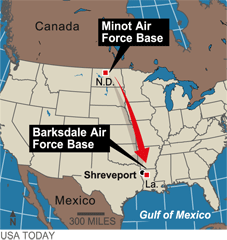
According to a wide range of reports, several nuclear bombs were “lost” for 36 hours after taking off August 29/30, 2007 on a “cross-country journey” across the U.S., from U.S.A.F Base Minot in North Dakota to U.S.A.F. Base Barksdale in Louisiana. [1] Reportedly, in total there were six W80-1 nuclear warheads armed on AGM-129 Advanced Cruise Missiles (ACMs) that were “lost.” [2] The story was first reported by the Military Times, after military servicemen leaked the story.


It is also worth noting that on August 27, 2007, just days before the "lost" nukes incident, three B-52 Bombers were performing special missions under the direct authorization of General Moseley, the Chief of Staff of the U.S. Air Force. [3] The exercise was reported as being an aerial information and image gathering mission. The base at Minot is also home of the 91st Space Wings, a unit under the command of Air Force Space Command (AFSPC).

According to official reports, the U.S. Air Force pilots did not know that they were carrying weapons of mass destruction (WMDs). Once in Louisiana, they also left the nuclear weapons unsecured on the runway for several hours. [4]

U.S. Air Force Deputy Chief of Staff for Operations, Plans, and Requirements, Major-General Richard Y. Newton III commented on the incident, saying there was an “unprecedented” series of procedural errors, which revealed “an erosion of adherence to weapons-handling standards” [5]

These statements are misleading. The lax security was not the result of procedural negligence within the U.S. Air Force, but rather the consequence of a deliberate tampering of these procedures.

If a soldier, marine, airman, or sailor were even to be issued a rifle and rifle magazine — weaponry of a far lesser significance, danger, and cost — there is a strict signing and accountability process that involves a chain of command and paperwork. This is part of the set of military checks and balances used by all the services within the U.S. Armed Forces.

Military servicemen qualified to speak on the subject will confirm that there is a stringent nuclear weapons handling procedure. There is a rigorous, almost inflexible, chain of command in regards to the handling of nuclear weapons and not just any soldier, sailor, airman, or marine is allowed to handle nuclear weapons. Only servicemen specialized in specific handling and loading procedures, are perm certified to handle, access and load nuclear warheads.

Every service personnel that moves or even touches these weapons must sign a tracking paper and has total accountability for their movement. There is good reason for the paperwork behind moving these weapons. The military officers that order the movement of nuclear weapons, including base commanders, must also fill out paper forms.

In other words, unauthorized removal of nuclear weapons would be virtually impossible to accomplish unless the chain of command were bypassed, involving, in this case, the deliberate tampering of the paperwork and tracking procedures.

The strategic bombers that carried the nuclear weapons also could not fly with their loaded nuclear weaponry without the authorization of senior military officials and the base commander. The go-ahead authorization of senior military officials must be transmitted to the servicemen that upload the nuclear weapons. Without this authorization no flights can take place.

In the case of the missing nukes, orders were given and flight permission was granted. Once again, any competent and eligible U.S. Air Force member can certify that this is the standard procedure.

There are two important questions to be answered in relation to the "lost" nukes incident:

1. Who gave the order to arm the W80-1 thermonuclear warheads on the AGM-129 Advanced Cruise Missiles (ACMs)? At what level in the military hierarchy did this order originate? How was the order transmitted down the command chain?

2. If this was not a procedural error, what was the underlying military-political objective sought by those who gave the orders?

The Impossibility of "Losing" Nuclear Weapons


READ MORE

Tuesday, August 3, 2010

Text Fwd: Toxic Legacy of US Assault on Fallujah 'Worse than Hiroshima'

*From The Nuclear Age Peace Foundation's 'Sun Flower Newsletter(Issue 157, Aug., 2010)'


Toxic Legacy of US Assault on Fallujah 'Worse than Hiroshima'

Since 2005, doctors in the Iraqi city of Fallujah have reported an overwhelming number of babies born with serious birth defects, and a sharp rise in cancers. A survey of 4,800 individuals, carried out in January and February 2010 confirmed that that city had experienced a four-fold increase in cancer, and a 12-fold increase in cancer for children under 14. Additionally, Fallujah’s infant mortality rate is more than four times that of neighboring Jordan’s, and a staggering eight times higher than that of Kuwait, Iraq’s neighbor to the South.

The types of cancer reported are “similar to that in the Hiroshima survivors who were exposed to ionizing radiation from the bomb and uranium in the fallout.” While Hiroshima survivors showed a 17-fold increase in leukemia, researchers in Fallujah found a 38-fold increase, accompanied by a 10-fold increase in female breast cancer, and significant increases in lymphoma and brain tumors. Doctors are also shocked and concerned by the speed with which various cancers are affecting the population.

Dr Chris Busby, a visiting professor at the University of Ulster and one of the authors of the survey, said that the extent of genetic damage suffered by inhabitants suggests the use of uranium in some form. Fallujah was besieged and bombarded by US Marines in April of 2004. Eight months later, the Marines stormed the city with artillery and aerial bombing. They later admitted that white phosphorous and other munitions were used in the attack. Busby said that he couldn’t be sure of the type of armaments used by the Marines, but guessed that “they used a new weapon against buildings to break through walls and kill those inside.”

Cockburn, Patrick, “Toxic Legacy of US Assault on Fallujah 'Worse than Hiroshima,'” The Independent, July 24, 2010.

Thursday, March 18, 2010

Text Fwd: S. Korea, Japan Can Build Nuclear Weapons Quickly

Korea Times
03-18-2010 20:42
S. Korea, Japan Can Build Nuclear Weapons Quickly
By Jung Sung-ki
Staff Reporter

South Korea, like Japan, has the technology to build a nuclear arsenal quickly if it decides to do so, a U.S. defense report said Thursday.

"Several friends or allies of the United States, such as Japan and South Korea, are highly advanced technological states and could quickly build nuclear devices if they chose to do so," said the Joint Operating Environment (JOE) 2010, released on Feb. 18, by the U.S. Joint Forces Command.

The biennial report forecasts possible threats and opportunities for the U.S. military.

The 2008 report categorized South Korea, Taiwan and Japan as three "threshold nuclear states" that have the capability to develop nuclear weapons rapidly, should their political leaders decide to do so.

The latest assessment of South Korea's nuclear capability comes as Seoul and Washington are negotiating an extension of a 1974 agreement that bans South Korea from reprocessing spent nuclear fuel without consent from the United States.

The agreement expires in 2014. South Korea wants to regain the rights to reprocess spent fuel rods by its own will. The country, which won a $20 billion contract in December to build four nuclear reactors in the United Arab Emirates, has long complained that the restrictions on the reprocessing work has blocked its aspirations.

South Korea is recognized globally as a pioneer in the study of the "pyprocessing" method aimed at reprocessing spent fuel without extracting weapons-grade plutonium from it.

The U.S. government fears South Korea's reprocessing of spent nuclear fuel might undermine global nonproliferation efforts, and provoke the North, and then Japan, making the security situation in Northeast Asia more volatile.

The JOE said North Korea is "pursuing nuclear weapons technology and the means to deliver them as well."

The 2008 edition had categorized North Korea as a nuclear power, saying, "The rim of the great Asian continent is already home to five nuclear powers: China, India, Pakistan, North Korea and Russia."

Pyongyang conducted its second nuclear test in May last year, after one in 2006, inviting stronger U.N. sanctions. North Korea has boycotted the six-party talks on ending its nuclear weapons programs to protest the imposed international sanctions.

gallantjung@koreatimes.co.kr

Friday, February 19, 2010

[국문 번역]Text Fwd: BIDEN AT NATIONAL DEFENSE UNIVERSITY [미] 국방 대학에서의 [부통령] 바이든

Bruce Gagnon blog 브루스 개그논 블로그
Friday, February 19, 2010 2010년 2월 19일
BIDEN AT NATIONAL DEFENSE UNIVERSITY
[미] 국방 대학에서의 [부통령] 바이든


Vice-President Biden says that U.S. "missile defense" systems and new global strike systems will allow the U.S. to reduce some of our nuclear weapons.

부통령 바이든은 미국 “미사일 방어” 시스템과 새로운 전 지구적 공격 시스템이 우리의 몇 핵무기들을 축소할 거라 말합니다.

The Obama administration delivered a budget request for 2011 calling for a full 10 percent increase in nuclear weapons spending, to be followed by further increases in subsequent years.

오바마 행정부는 핵무기를 위한 소비에 10% 꽉 찬 증액을 청하는 2011년 예산 책정을 내놨는데 이는 이후 연도들에 더 증액될 것입니다.

A new study by Economists for Peace and Security called The Full Cost of Ballistic Missile Defense estimates that the total life cycle cost for a layered missile defense system could reach $1.2 trillion through 2035. The study can be found here.

평화와 안보를 위한 경제학자들의 ‘탄도 미사일 방어 총 비용’이 라 불리우는 새로운 연구는 층층화된 미사일 방어 시스템의 전체 생활환(life cycle) 비용이 2035년까지 1.2조 달러에 달할 수 있다 평가합니다. 그 연구는
여기서 [영문 원문 첨부] 보실 수 있읍니다.

Greg Mello, Director of the Los Alamos Study Group writes about Obama's proposed nuclear weapons spending increase: "This proposed 'surge' responds to a December 2009 request from Senate Republicans (plus Joe Lieberman) for significant increases in nuclear weapons spending. Such increases, these senators said, were necessary (but not necessarily sufficient) to obtain their ratification votes for a follow-on to the START treaty (which expired in December)."

로스 알라모스 연구 그룹의 감독인 그렉 멜로는 오바마의 제안된 핵무기 지출 증가에 대해 이렇게 씁니다: “이 제안된 ‘쇄도(surge)’는 2009년 12월, 상원 공화단 의원들(조 리버만을 더해)이 핵무기 지출에서 심대한 증가를 요청한 것에 대한 대답이다. 이 상원 의원들은 그러한 증가들이 전략핵무기 감축 조약 START treaty (12월에 만료한) 후속 협상에서 [자신들의]비준 투표를 얻기 위해 필요한 것이라 말했다( 그러나 반드시 충분한 것은 아니다).”

Mello continues, "Will Congress, especially the Democratic members of Congress, fund these increases? In part the answer depends on how seriously they take the several converging crises facing the country and the planet, and how seriously they address populist anger about the economy, especially in relation to their own reelection prospects.

멜로는 계속해서 말합니다, “국회가, 특히 국회 민주당 위원들이 이 증액에 [찬성할] 것인가? 그 대답은 그들이 국가와 행성이 직면한 몇가지 수렴되는 위기들을 얼마나 진지하게 받아들이는가 또한 그들이 경제, 특히 그들의 재선 전망과 관련하여 그들이 대중주의적 분노를 얼마나 진지하게 전달할 것인가에 부분적으로 달려있다.”

"In many ways the proposed nuclear weapons budget, and the defense budget overall, can be seen as bold raids on a diminishing pool of resources, as well as very real commitments to fading imperial pretensions. Nuclear weapons compete directly with the renewable energy and conservation jobs funded in the Energy and Water funding bills."

“많은 점에서, 제안된 핵무기 예산과 국방 예산은 전체적으로, 감소해가는 자원층에 대한 뻔뻔한 급습이자 쇠퇴해가는 제국의 허세를 위한 진짜 사명감으로 볼 수 있다. 핵무기는 에너지와 물 기금 법안에 의해 자금이 지급되는 재생 에너지, 보전 직업들과 직접적으로 경쟁한다.”

Coupled with increases in the "missile defense" budget it is clear that the signals to Russia and China are that the U.S. is not serious about ending the arms race any time soon.

“미사일 방어” 예산 증액과 짝을 이뤄 [이것이] 러시아와 중국에게 보내는 신호가 미국이 무기 경쟁을 언젠가 곧 끝낼 것에 대해 진지하지 않다라는 것은 분명합니다.

It is obvious to me that Obama is trying to buy off Republican support for the very timid nuclear reduction treaty now being negotiated with Russia.

저에게는 오바마가 현재 러시아와 협상되는 매우 소심한 핵감축 조약을 위해 공화당 의원들의 지지를 사려고 한다는 것이 분명합니다.

* See also the site of the Global Network against Weapons and Nuclear Power in Space
우주의 무기와 핵을 반대하는 글로벌 넷워크 사이트도 참고하시길.


____________________________________________________________________
* Related article

http://ncronline.org/blogs/road-peace/obama-and-works-death
Obama and the works of death
by John Dear SJ on Feb. 09, 2010
(
site informed from Makiko Sato)
오바마와 죽음의 작업
존 디어, 2010년 2월 9일

(사이트는 마키코 사토로부터 정보 제공됨)

____________________________________________________________________
* Related Korean articles

http://blog.ohmynews.com/wooksik/320577
핵협상, 결승점 눈앞에 두고 ‘MD 허들’ 넘을까?
2010년 2월 18일
정욱식, 평화네트워크(www.peacekorea.org) 대표
Nuclear Negotiation, Will It Come Over the ‘MD’ Huddle before the Final?
Feb. 18, 2010
Cheong Wook-Sik (representative, Peace Network, www.peacekorea.org)


http://spark946.org/bugsboard/index.php?BBS=s_conews&action=viewForm&uid=6847&page=1
바이든 "가장 강력한 대북제재..NPT강화 성과"
(워싱턴=연합뉴스, 2010.2.19)
Biden, " The strongest deterrence against North Korea.. accomplishment of the strengthened NPT"
(Washington= Yonhap News, 2010. 2. 19)


Friday, January 29, 2010

[국문 번역:Text Fwd: IMMEDIATE RELEASE: VANDENBERG MISSILE TEST, Jan. 31, 2010


* Text Fwd From
MacGregor Eddy on Jan. 28, 2010
2010년 1월 28일 맥그리거 에디 보냄

January 28, 2010 2010년 1월 28일

VANDENBERG MISSILE TEST “DANGEROUS, DESTABILIZING AND PROVOCATIVE” FOR IMMEDIATE RELEASE:
“위험하고 불안정하게 하며 촉발시키는” 밴던버그 미사일 실험에 대한 긴급 보도

SANTA BARBARA -- The Nuclear Age Peace Foundation today condemned Sunday’s scheduled missile defense test from Vandenberg Air Force Base as “dangerous, destabilizing and provocative.”
산타 바바라-- 오늘 핵시대 재단은 일요일[1월 31일], 밴던버그 공군 기지에서 계획된 미사일 실험을 “위험하고 불안정하게 하며 촉발시키는” 것이라 경멸했다.

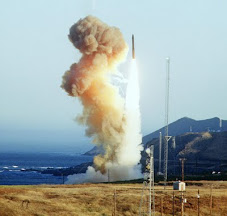
The test involves a missile being fired from the Marshall Islands to simulate an attack on the United States by Iran, a country that neither possesses nuclear weapons nor long-range missiles capable of reaching the United States. An interceptor missile will be fired from Vandenberg AFB in an attempt to collide with the incoming missile.
그 실험은 마샬 제도에서 발사하는 미사일을 포함하는 것인데 이란에 의한 미국 공격을 가상하는 것으로 이란은 핵 무기도 미국에 도달할 수 있는 장거리 미사일도 소유하지 않는다. 밴던버그 공군 기지에서 요격 미사일이 발사된다는 것은 진입하는 미사일과 충돌하는 것이다.

David Krieger, President of the Nuclear Age Peace Foundation, pointed to the provocative nature of the test. He said:
데이비드 크리저, 핵시대 평화 재단 대통령은 실험의 자극하는 측면을 지적했다. 그는 말했다:

“Missile defense testing by the United States does not make our country more secure. Rather, the tests are provocative and dangerous, leading other countries to further develop their offensive missile systems to assure that the US does not contemplate a first-strike attack. The United States continues throwing billions of dollars into the bottomless pit of missile defense, a technology that remains largely ineffective. This test, which is estimated to cost $150 million, is designed to simulate an attack by Iran, even though Iran does not have long-range missiles or nuclear weapons with which to attack the United States. Such scenarios destabilize relations with other countries and waste taxpayer dollars.”
미국에 의한 미사일 방어 실험은 우리 나라를 더 안전하게 하지 않는다. 오히려 그 실험은 자극적이며 위험하고 다른 나라들이 미국이 첫번째 공격을 숙고하지 않도록 더 공격적인 미사일 시스템을 개발하도록 이끌 것이다. 미국은 수십억 달러를 끝도 없이 미사일 방어망 시스템에 퍼붓기를 계속한다. 이란이 장거리 미사일을 갖고 있지도 미국을 공격할 핵무기도 갖고 있지 않음에도 불구, 1억 5천만 달러가 들 것으로 산정되는 이 실험은 이란에 의한 공격을 가상실험하도록 고안된 것이다. 그러한 시나리오는 다름 나라들과의 관계를 불안정하게 하며 납세자들의 달러를 낭비한다.

For additional comments and interviews, please contact David Krieger, NAPF President, at (805) 965-3443 or Rick Wayman, NAPF Director of Programs, at (805) 696-5159.
그 외의 언급이나 인터뷰는 데이비드 크리저에게 (805) 965-3443 으로 연락하거나 릭 웨이만, 핵시대 재단 프로그램 감독에게 (805) 696-5159으로 연락하길

# # #

The Nuclear Age Peace Foundation initiates and supports worldwide efforts to abolish nuclear weapons, to strengthen international law and institutions, and to inspire and empower a new generation of peace leaders. Founded in 1982, the Foundation is comprised of individuals and organizations worldwide who realize the imperative for peace in the Nuclear Age. The Nuclear Age Peace Foundation is a non-profit, non-partisan international education and advocacy organization. It has consultative status to the United Nations Economic and Social Council and is recognized by the UN as a Peace Messenger Organization.
핵시대 평화 재단은 핵무기를 제거하고 국제 법및 기관들을 강화하며 새로운 세대와 평화 지도자 세대들에게 영감을 주고 힘을 북돋우려는 전세계적 노력을 이끌고 지지한다. 1982년에 창설된 이 재단은 핵 시대에 평화를 절대 강령으로 깨닫는 전 세계의 개인들, 조직들로 구성되어 있다. 핵시대 평화 재단은 비영리, 비당파 국제 교육, 후원 조직이다. 이는 유엔 경제 사회 위원회의 상담적인 위치에 있으며 유엔에 의해 평화 전달자 조직으로 인정된다.


* Related blog

http://nobasestorieskorea.blogspot.com/2010/01/protest-call-stop-monkey-business-no.html
Tuesday, January 5, 2010
[국문 번역: Protest Call] STOP THE MONKEY BUSINESS: NO STAR WARS!
기만을 멈춰라! 우주 전쟁 반대!

Sunday, January 3, 2010

Text fwd: HUMAN RIGHTS AND WEAPONS OF MASS DESTRUCTION

* Text Fwd from J. Narayana Rao on Jan. 3, 2009

HUMAN RIGHTS AND WEAPONS OF MASS DESTRUCTION
By J.Narayana Rao
General Secretary,
All India Peace & Solidarity Organisation, Maharashtra State Committee

The Universal Declaration of Human Rights proclaimed by the U.N.General Assembly on 10 December 1948

• Conferred on the humanity to live in peace, dignity, freedom and free from want. The preamble of Universal Declaration of Human Rights states that “Where as disregard and contempt for human rights have resulted in barbarious acts which have outraged the conscience of mankind, and the advent of world in which human beings shall enjoy freedom of speech and belief and and freedom from fear and want has been proclaimed as the highest aspiration of the common people”.

Article 3 of the Declaration affirms that “Every one has the right to life, liberty and security of person”. This can only be possible when peace prevails in place of wars, the sound of guns disappears. In wars more innocent people are killed than men in uniform. The preamble of the United Nations Charter states that “ to save succeeding generations from the scourge of war which twice in our life time has brought untold sorrow to mankind”.

• The UN Charter and the Declaration of Human Rights rely on Peace as the corner stone for human progress. The Weapons of Mass Declaration threaten the very existence of human beings. The U.N General Assembly in it’s resolution adopted on 12 November 1984 reiterated that “preservation of the right of people to peace and promotion of the right of people to peace and promotion of its implementation constitute a fundamental obligation of each State” and appeals to avert a world wide nuclear catastrophe.

• The Weapons of Mass Destruction stand against every thing the Human rights profess. Weapons Of Mass Destruction hae been used on human beings for the first time when United States of America dropped two Atom Bombs on Hiroshima and Nagasaki on 6 Aug and 9 August 1945. This has resulted in the death of lakhs of people mostly civilians depriving their life and liberty. Both the cities were ragged to the ground. In Hiroshima 1,50,000 people died and in Nagasaki 74,000 people died and even now the Hibakhusas are still dying.

• In Hiroshima after the Atom Bomb was dropped at 8.15 AM on 06.08.1945, the fire raging in an area of 11.5 Km generated a wind with a velocity up to 55 Km an hour. Crops and trees were set ablaze. 84% of unprotected people with in a distance of 2 Km perished immediately. 90% of people with in a distance of 4 Km suffered from burns. Buildings were damaged in an area of 132 Sq Km. On the twelth day 34.9% of survivors were suffering from radiation sickness. 20.6 from burns and 35.5% from wounds. 60% of the injured required hospitalization. But more than 50% of the Doctors died and less than half of the surviving Doctors were in a condition to work. Many children whose parents were in Hiroshima during the Atom Bomb raid were born with genetic defects.The same was the pathetic condition with Nagasaki.

The present Nuclear weapons are much more powerful and deadlier that those which dropped on Hiroshima and Nagasaki. The destructive power of those Bombs were measured by Kilo Tons. The present Nuclear Weapons are measured by Megatons. One Megaton Bomb is equivalent to 80 Boms of Hiroshima type. A five megaton nuclear weapon has more powerful than all the Bombs used during the Second World War. A 20 Megaton Bomb is more powerful than all the explosives used in all the wars in History. According to the Weapons of Mass Destruction Commission headed by Hans Blix, there are 27,000 Nuclear Weapons in the world at present.

• The present Nuclear weapons can destroy the entire ecosystem of the Planet. They have the potential of destroying life on the planet several times. When they are exploded, produce heat, blast and radiation. According to a study by the International Physicans for Prevention of Nuclear War(IPPNW) if one megaton Hdrogen Bomb is detonated on the ground,the explosion will create a crater of 92 meters deep and 367 meters in diameter.With in one second the atmosphere ignites into a fireball of more than 1 Km in dameter. The surface of the fireball radiate three tmes of the light and heat can be compared with an area on the surface of the Sun. The fire ball rises to a height of six miles or more. All the life below will be destroyed in seconds. The flash and heat from the explosion spreads outward at the speed of light, causing instantaneous and severe burns.

• Debris carried by winds with a speed of 290 mph will inflict deadly injuries. At least 50% of people will die immediately. The direct heat radiating from the eplosives causes immediate third degree burns to exposed skins. The expanding blast wave destroys small buildings and fuel tanks will explode. Instant heat and winds combine fires at different places into a single raging great destructive fire. The fire storm consumes all nearby oxygen and even sucking it out from under ground places suffocating the occupants. Shelters will become ovens and on the following minutes and hours deaths are likely to be about 100%.

• Justice C.G.Weeramantry of the Sri Lanka who was one of the Judges of the International Court of Justice which dealt on the “legality of the threat and use of Nuclear Weapons in his dissenting opinion,s tates that “it has been orgued that the right to life is not an absolute right and that the taking of life in armed hostilities is a necessary exception to this principle. However, when a weapon has the potential to kill between one million and one billion people, as WHO told the Court, human life becomes reduced to a level of worthlessness that totally belies human dignity as understood in any culture.Such a deliberate action by any state is, in any circumstances whatsoever, incompatible with a recognition by it of that respect for basic human dignity on which world peace depends, and respect for which is assumed on the part of Member States of the United Nations.

• This is not merely a provision of the Universal Declaration of human Rights and other human right instruments but is fundamental Charter Laws enshrined in the very preamble to the United Nations Charater, for one of the ends to which the United Nations is dedicated is “to reaffirm faith in fundamental human rights, in the dignity and worth of the human person. No weapon ever invented in the long history of man’s inhumanity to man has so negative the dignity and worth of the human person as has the nuclear bomb”.

• Article 2(3) of the UN Charter guides that “All Members shall settle their international disputes by peaceful means in such a manner that international peace and security and justice are not endangered”. Article 6(1) of the International Covenent on Civil and Political Rights affirms that “Every human being has the right to life, This right shall be protected by Law. No one shall be arbitrarily deprived of his life”. Therefore the Nuclear Weapons which cause death of overwhelming number of people would violate the most basic human rights the right to life.

• The existence of Nuclear Weapons is a constant threat to the fundamental human right of life and liberty.The right of the people for a peaceful living is always strained. These weapons threaten devasting and indiscriminate long term damage to large segement of the civilian population and environment. The resolution adopted in an International conference held in Teharan in May 1968 proclaims that “massive denials of human rights, arising out of aggression or any armed conflict with their tragic consequences and resulting in untold human misery, engender reactions which could engulf the world in ever growing hostilities. It is the obligation of the international community to co-operate in erading such scourges”.

• Peace is the aspiration of the people of the world either living in the developed countries or developing countries or in underdeveloped countries. Weapons of Mass Destruction always create a sense of fear psychosis

• The International Court observed that the use of Nuclear weapons could constitute a catastrophe for the environment and observed that the environment represents the living space, the quality of life and the very health of human beings, including generations of unborn. The use of nuclear weapons would necessarily entail a massive violation of the most basic human rights,the right to life.

• These Weapons absorb huge amount of money which otherwise could be used for human development and upkeep of the basic human rights. Article 25(1) of the Universal Declaration of Human Rights States that “Every one has the right to a standard of living adequate for the health and well being of himself and of his family, including food, clothing, housing and medical caré and necessary social services, and the right to security in the event of unemployment, sickness, disability, widowhood, old age or other lack of livelihood in circumstances beyond his control.”At present huge amount is being spent on Nuclear weapons.


Country No of War Heads Nuc Bud 2008 Daily Spending
China 150-300 10 Billion.USD 12,400,000 USD
DPRK 4-12 OneBillion USD -
France 300-350 6.5 Billion USD 12,300,000 USD
India 50-90 3.35Billion USD 8,400,000 USD
Israel 200-400 1.5 Billion USD 4,200,000 USD
Pakistan 40-70 1.1 Billion USD 3,000,000 USD
Russia 5200-5600 6.7 Billion USD 18,000,000 USD
U.K 185-200 6.7 Billion USD 10,000,000 USD
U.S.A 4075-5500 52.55 Billion USD 145,000,000 USD


Money need to attend to attend some of the global problems


To provide clean, safey energy. 50 Billion USD
Retire developing Nations Debt 30 Billion USD
Prevent Soil Erosion. 30 Billion USD
Provide Health Care & Aids Control 21 Billion USD
Provide Shelter for the Homeless 21Billion USD
Eliminate Starvation & Malnutrition 19 Billion USD
Stabilize Population 10.5 Billion USD
Provide Safe Clean Water. 10 Billion USD
Prevent Acid Rain 8 Billion USD
Prevent Global Warming 8 Billion USD
Stop Deforestation 7 Billion USD
Refuge Relief 5 Billion USD
Stop Ozone Depletion 5 Billion USD
Elimination of Nuclear Weapons 7 Billion USD

Spending huge amounts of money on Weapons of Mass Destruction is to negate implementation of the Article 25(1) of the universal Declaration of Human Rights. Complete abolition of the existing stock piles of Nuclear Weapons and ban possessing of these by any country in future has to be achieved for the peace, security and well being of the mankind.
-------