Organizing Notes
SUNDAY, MAY 15, 2011
NATO - WAR ARM OF CORPORATE GLOBALIZATION
http://rt.com/usa/news/nato-libya-us-war/
Showing posts with label Libya. Show all posts
Showing posts with label Libya. Show all posts
Tuesday, May 17, 2011

Saturday, May 7, 2011
Text Fwd" SYRIA - Who is Behind The Protest Movement?
URL of this article: www.globalresearch.ca/index.php?context=va&aid=24591
Global Research, May 3, 2011
Michel Chossudovsky: SYRIA - Who is Behind The Protest Movement? Fabricating a Pretext for a US-NATO "Humanitarian Intervention"
URL of this article: www.globalresearch.ca/index.php?context=va&aid=24617
Global Research, May 4, 2011
engdahl.oilgeopolitics.net/
Humanitarian Neo-colonialism: Framing Libya and Reframing War
Creative Destruction Part III
By F. William Engdahl
Global Research, May 3, 2011
Michel Chossudovsky: SYRIA - Who is Behind The Protest Movement? Fabricating a Pretext for a US-NATO "Humanitarian Intervention"
URL of this article: www.globalresearch.ca/index.php?context=va&aid=24617
Global Research, May 4, 2011
engdahl.oilgeopolitics.net/
Humanitarian Neo-colonialism: Framing Libya and Reframing War
Creative Destruction Part III
By F. William Engdahl
Saturday, April 30, 2011
Text Fwd: Libya and the Imperial Re-Division of Africa
Libya and the Imperial Re-Division of Africa
The Imperialist Powers' Odyssey of “Return” into Africa
By Mahdi Darius Nazemroaya
URL of this article: www.globalresearch.ca/index.php?context=va&aid=24471
Global Research, April 26, 2011
The Imperialist Powers' Odyssey of “Return” into Africa
By Mahdi Darius Nazemroaya
URL of this article: www.globalresearch.ca/index.php?context=va&aid=24471
Global Research, April 26, 2011
Friday, April 29, 2011
Text Fwd: NATO Expansion Worries Russia
* Text fwd by Bruce Gagnon on April 28, 2011
http://af.reuters.com/article/worldNews/idAFTRE73Q3GH20110427
Russia worried by NATO expansion near its border April 27, 2011
STOCKHOLM (Reuters) - Russian Prime Minister Vladimir Putin expressed worries again Wednesday about the expansion of NATO, which has already taken in former Soviet states as members.
"The expansion of NATO infrastructure towards our borders is causing us concern," Putin told a news conference after meeting Swedish Prime Minister Fredrik Reinfeldt.
"NATO is not simply a political bloc, it is a military bloc. No one cancelled the agreements on how the bloc reacts to external threats. It is a defence structure," added Putin.
NATO has already taken in the three former Soviet Baltic states as members, as well as old Warsaw Pact nations including Poland and the Czech Republic.
Moscow has long been worried by the military alliance's growth and the possibility of its further expansion to take in former Soviet republics such as Georgia or Ukraine. And it is wary of U.S. and NATO plans for a European missile defence shield, which it fears could be a threat to its security unless Russia too is integrated into such a system.
Visiting Denmark Tuesday, Putin criticized the Western coalition attacking Libya, saying it had neither the right nor the mandate to kill the country's leader, Muammar Gaddafi.
Sweden is taking part in the NATO operation in Libya, though it is not a member of the military alliance.
In the context of the Libya operation, Putin also said decisions on using military force were being taken too easily.
He contrasted this with the Soviet war in Afghanistan in the 1980s, when he said Soviet commanders were much more careful in their use of force for fear of causing civilian deaths and casualties.
Global Network Against Weapons & Nuclear Power in Space
PO Box 652
Brunswick, ME 04011
(207) 443-9502
globalnet@mindspring.com
www.space4peace.org
http://space4peace.blogspot.com/ (blog)
Thank God men cannot fly, and lay waste the sky as well as the earth. ~Henry David Thoreau
http://af.reuters.com/article/worldNews/idAFTRE73Q3GH20110427
Russia worried by NATO expansion near its border April 27, 2011
STOCKHOLM (Reuters) - Russian Prime Minister Vladimir Putin expressed worries again Wednesday about the expansion of NATO, which has already taken in former Soviet states as members.
"The expansion of NATO infrastructure towards our borders is causing us concern," Putin told a news conference after meeting Swedish Prime Minister Fredrik Reinfeldt.
"NATO is not simply a political bloc, it is a military bloc. No one cancelled the agreements on how the bloc reacts to external threats. It is a defence structure," added Putin.
NATO has already taken in the three former Soviet Baltic states as members, as well as old Warsaw Pact nations including Poland and the Czech Republic.
Moscow has long been worried by the military alliance's growth and the possibility of its further expansion to take in former Soviet republics such as Georgia or Ukraine. And it is wary of U.S. and NATO plans for a European missile defence shield, which it fears could be a threat to its security unless Russia too is integrated into such a system.
Visiting Denmark Tuesday, Putin criticized the Western coalition attacking Libya, saying it had neither the right nor the mandate to kill the country's leader, Muammar Gaddafi.
Sweden is taking part in the NATO operation in Libya, though it is not a member of the military alliance.
In the context of the Libya operation, Putin also said decisions on using military force were being taken too easily.
He contrasted this with the Soviet war in Afghanistan in the 1980s, when he said Soviet commanders were much more careful in their use of force for fear of causing civilian deaths and casualties.
Global Network Against Weapons & Nuclear Power in Space
PO Box 652
Brunswick, ME 04011
(207) 443-9502
globalnet@mindspring.com
www.space4peace.org
http://space4peace.blogspot.com/ (blog)
Thank God men cannot fly, and lay waste the sky as well as the earth. ~Henry David Thoreau
Sunday, April 24, 2011
Video Fwd: THE CHAIR FORCE TO LIBYA - DRONES TO EXPAND WAR
Organizing Notes
HTTP://SPACE4PEACE.BLOGSPOT.COM/2011/04/CHAIR-FORCE-TO-LIBYA-DRONES-TO-EXPAND.HTML
FRIDAY, APRIL 22, 2011
THE CHAIR FORCE TO LIBYA - DRONES TO EXPAND WAR
HTTP://SPACE4PEACE.BLOGSPOT.COM/2011/04/CHAIR-FORCE-TO-LIBYA-DRONES-TO-EXPAND.HTML
FRIDAY, APRIL 22, 2011
THE CHAIR FORCE TO LIBYA - DRONES TO EXPAND WAR
Monday, April 4, 2011
Text Fwd: Libyan War In Third Week As NATO Takes Command
Stop NATO blog
http://rickrozoff.wordpress.com/2011/04/03/libyan-war-in-third-week-as-nato-takes-command/
April 3, 2011
Libyan War In Third Week As NATO Takes CommandRick Rozoff
On the morning of March 31 the North Atlantic Treaty Organization assumed full command of military operations against Libya, effecting the transfer of air, naval and preliminary ground operations from U.S. Africa Command's Joint Task Force Odyssey Dawn to NATO's Operation Unified Protector. In NATO's words, "The Alliance has the assets in place to conduct its tasks under Operation Unified Protector – the arms embargo, no-fly zone and actions to protect civilians and civilian centres."
On the same day a press conference was conducted by NATO Spokesperson Oana Lungescu, the commander of Unified Protector Lieutenant General Charles Bouchard and the chairman of NATO's Military Committee Admiral Giampaolo Di Paola to announce the transition.
Romania's Lungescu (a veteran of BBC World Service), Quebec's Bouchard and Italy's Di Paola spoke entirely in English, as notwithstanding NATO's formal command of Libyan war operations Bouchard reports to America's Admiral James Stavridis, NATO's Supreme Allied Commander Europe and also the chief of the Pentagon's European Command, and NATO is after all a U.S.-controlled military alliance. One speaks to a master in his language.
The day after NATO took over control of the war Stavridis asserted that "the Libyan operation demonstrates just how capable the Western alliance remains two decades after the end of the Cold War," in the words of an Associated Press dispatch. The news agency added that "This is the first time in its history that NATO is engaged in two major conflicts at once," meaning the wars in Libya and Afghanistan, in Africa and Asia.
The day before NATO assumed command of the North African war, Stavridis told the House Armed Services Committee that the war in Afghanistan "has become a global effort, with committed partners from nations that include Mongolia, Bulgaria, Tonga and El Salvador." He referred to 49 nations contributing troops for NATO's International Security Assistance Force, one more than has been acknowledged before, with El Salvador evidently the latest. There are also military personnel assigned to NATO in Afghanistan from countries that are not yet official Troop Contributing Nations like Bahrain, Colombia, Egypt, Japan and Kazakhstan. Never before have armed forces from so many nations been stationed in a war zone in a single country.
Stavridis, who as NATO's top military commander is in ultimate charge of both current wars, made the latter comments in an address commemorating the 60th anniversary of NATO's Supreme Headquarters Allied Powers Europe in Mons, Belgium, which "was set up by NATO's then-commander and later U.S. President Dwight Eisenhower" as Associated Press reminded its readers.
On March 21, hours after NATO launched Operation Unified Protector, Secretary of Defense Roberts Gates and chairman of the Joint Chiefs of Staff Admiral Michael Mullen also addressed the House Armed Services Committee on Libya. Later Gates appeared before the Senate Armed Services Committee and confirmed that U.S. warplanes would remain in the Libyan war theater to assist the new NATO mission.
Referring to the twelve days of Operation Odyssey Dawn, he said: “That part of our mission is complete and successful.”
He further boasted of Western bombs and cruise missiles destroying Libyan air capabilities and ground assets - the second category includes administrative buildings, oil depots, ammunition dumps and naval facilities - and affirmed that the intensive onslaught "will not diminish under NATO leadership.”
And indeed it hasn't. On the third day of Unified Protector, April 2, NATO announced that it had conducted 174 air missions over Libya on the preceding day, including 74 strike sorties, ones involving bombing missions and missile strikes. The total for the first two days of the NATO operation were 363 sorties and 148 strike sorties.
In his testimony on March 1, Secretary Gates also said: "A decision about support to the opposition is clearly the next step. I think all members of the coalition are thinking about that at this point.”
NATO Military Committee chief Admiral Paola was more candid, stating that he was "confident, absolutely confident, that one of the (NATO) allies" has already been arming anti-government insurgents in Libya.
Gates offered the standard official explanation of the ongoing war as being actuated by alleged humanitarian concerns and disavowed a formal policy of regime change, but gave the lie to his own words in adding that NATO forces “will continue to attack (Gadhafi’s) ground forces with no opportunity for resupply" to the point where “His military is going to face the question of whether they are prepared to be destroyed by air attacks, or if it’s time for him to go.”
In addition, according to the Pentagon's website: "The issue is more complicated than simply arming the rebels. What the opposition really needs, Gates said, is organization, training, and command and control - something he said likely requires coalition forces on the ground in Libya." He refrained from openly endorsing that strategy although it is already being implemented with American and British special forces and intelligence operatives directing air strikes from the ground in Libya.
Gates warned against the alternative to an overthrow of the government and ground operations while speaking in the House earlier, saying "We have considered the possibility of this being a stalemate and being a drawn-out affair...where you achieve the military goal but not achieve the political goal" of regime change.
Chairman of the House Armed Services Committee Howard McKeon cautioned that NATO "could be expected to support a decade-long no-fly zone enforcement like the one over Iraq in the 1990s," a further incentive for entertaining the alternative - or complementary - option of staging a ground war.
A recent poll demonstrated 47 percent of Americans in opposition to the military operation in Libya with 41 supporting it. The same survey, conducted by Quinnipiac University, shows that by a two-to-one majority, 58-29 percent, Americans feel that President Obama has not clearly and convincingly presented an argument for U.S. involvement.
Pressure will be applied on the public to support a prospective invasion of Libya employing the same rationale used for the ongoing air war: The need for an alleged humanitarian intervention.
Modeled after the calls by the likes of former British Prime Minister Tony Blair and NATO Supreme Allied Commander General Wesley Clark during the 1999 war against Yugoslavia, a ground invasion will be presented as a humane remedy for the death and destruction not so much exacerbated as caused by an air campaign.
And there is no lack of Libyans being killed and wounded by the current one.
The Vatican's senior representative (vicar apostolic) in Libya, Bishop Giovanni Innocenzo Martinelli, recently decried the fact that NATO air attacks "are killing dozens of civilians."
He added that "In the Tajoura neighborhood [of the Libyan capital, Tripoli], around 40 civilians were killed, and a house with a family inside collapsed."
In early March Bishop Martinelli had pleaded against the "further spilling of blood” in the country, warning against outside intervention and saying any attempt at a military resolution of the Libyan crisis would only escalate the level of violence.
On April 1 it was announced that a NATO air strike killed seven Libyan civilians, including three girls from one family, and injured 25 in the village of Zawia el Argobe.
On the same day Western warplanes strafed areas east and southwest of Tripoli.
An Associated Press correspondent interviewed the mother and uncle of an 18-month-old boy killed by a NATO air strike in the village of Khorum on March 29.
The mother said, "His blood was streaming down my arm." The uncle added: "We took him to the hospital where they treated him for...burns and some broken bones. But by nightfall he was dead."
On April 2 a spokesman for the Libyan opposition reported that a NATO air strike had killed 13 rebels and wounded at least a score more, adding that the "collateral damage" was "an unfortunate accident." Evidently being killed by Western bombers is more humane than being killed in a firefight with government forces.
Far more Libyans stand to be killed and injured in what NATO has announced will be at least a 90-day campaign.
To indicate the probable true duration, and the scope, of the war, NATO spokesperson Lungescu said at the press conference on March 31 that the North Atlantic Council, the military bloc's highest decision-making body consisting of the permanent representatives (ambassadors) of its 28 member states, had met the day before to discuss the transfer of the war's command to the Alliance.
She also said that the North Atlantic Council met with representatives of the Euro-Atlantic Partnership Council, the Mediterranean Dialogue, the Istanbul Cooperation Initiative "and other partners around the globe."
She added that "I can tell you it was a big room and the room was full."
The Euro-Atlantic Partnership Council includes all 28 full NATO members and the 22 affiliates of its Partnership for Peace program:
Armenia, Austria, Azerbaijan, Belarus, Bosnia, Georgia, Finland, Ireland, Kazakhstan, Kyrgyzstan, Macedonia, Malta, Moldova, Montenegro, Russia, Serbia, Sweden, Switzerland, Tajikistan, Turkmenistan, Ukraine and Uzbekistan.
NATO's Mediterranean Dialogue partners are Libya's neighbors Algeria, Egypt and Tunisia and Israel, Jordan, Mauritania and Morocco.
The Istanbul Cooperation Initiative's members are Bahrain, Kuwait, Qatar and the United Arab Emirates - the last two providing warplanes for NATO's Operation Unified Protector - with Oman and Saudi Arabia next in line to join.
After NATO led a conference in London on March 29 to plan for a "post-Gaddafi" Libya along the lines of such precedents as Bosnia, Kosovo, Macedonia, Afghanistan and Iraq, the bloc's Secretary General Anders Fogh Rasmussen celebrated the creation of a Contact Group on Libya and stated "NATO has long-standing relations with partner countries from the region, notably through its Mediterranean Dialogue programme and the Istanbul Cooperation Initiative."
Two days later Rasmussen delivered an address in Stockholm titled "The New NATO and Sweden’s security" in which he stated:
"NATO welcomes contributions from all its partners across the world to ensure that the will of the international community is heard....We have extensive experience of involving partner nations in our operations – partners such as Sweden, but also partners in the Mediterranean and Gulf regions."
"Afghanistan is another example where we can see the value of partnership. 48 countries are now part of the International Stabilisation Force [International Security Assistance Force] ISAF. With one in four UN member states taking part, this is the largest coalition in history. And Sweden is part of it, along with NATO Allies."
400 Swedish troops serving under NATO in Afghanistan are fighting their country's first war in 200 years.
On April 2, two days after the NATO chief left the country, Sweden deployed the first three warplanes assigned for NATO's air operations in Libya with five more leaving the next day.
As with Afghanistan, the war against Libya is being employed by the U.S. and NATO to consolidate military partnerships with nations around the world under wartime conditions.
Russian political analyst Pyotr Iskenderov recently wrote that "A deployment of multinational forces on a long-term basis under the aegis of NATO paves the way for Brussels to bypass the only restriction [against military occupation] imposed by the UN Security Council on an operation in Libya."
His compatriot Alexander Karasev added:
"An allegedly humanitarian intervention by NATO against Yugoslavia in 1999 ended with the deployment of NATO forces in Kosovo and the setting up of the largest U.S. [overseas base since the Vietnam war] Camp Bondsteel in the province. The U.S. and NATO may repeat this scenario in Libya."
As U.S. military vessels are scheduled to depart the Mediterranean Sea, NATO is amassing an imposing array of warplanes and warships to intensify the attack against Libya.
Tallies compiled by Agence France-Presse and Deutsche Presse-Agentur list the following inventory of military assets deployed against Libya:
Britain: 17 Tornado and Typhoon fighter bombers as well as surveillance, reconnaissance and refuelling aircraft and two frigates and a submarine.
France: 36 warplanes. 20 Mirage and Rafale combat planes and the Charles de Gaulle aircraft carrier with ten Rafale and six Super Etendard attack jets escorted by two frigates, as well as AWACS and refuelling aircraft.
Italy: 16 jets, the Garibaldi aircraft carrier and four other ships as well as seven air and naval bases.
Canada: Eleven fighter jets, patrol and refuelling planes and a frigate.
Belgium: Six F-16 fighter jets and mine-hunting ship.
The Netherlands: Seven jets and a ship.
Turkey: Seven jets, five warships and a submarine.
Norway: Six F-16s.
Denmark: Six F-16s.
Greece: Two jets, a helicopter, a ship and four bases.
Bulgaria: A frigate.
Romania: A frigate and use of an air base.
From NATO partner nations:
Sweden: Eight Gripen fighter jets, a C-130 transport plane and reconnaissance aircraft.
Qatar: Six Mirage fighter jets and two C-17 military transport planes.
United Arab Emirates: Six Mirage jets, six F-16s and one C-17 transport aircraft.
Warplanes from the above nations have launched several hundred ground strikes against Libyan targets already.
NATO's first African war, following its first European and Asian wars in Yugoslavia and Afghanistan respectively, will be neither short nor limited in scale and intensity.
The new commander of U.S. Africa Command, General Carter Ham, said of the first phase of the war that "We've demonstrated the capability to [lead military operations]."
Now NATO is following suit and escalating the conflict to new and more dangerous heights.
====================================================================
Stop NATO e-mail list home page with archives and search engine:
http://groups.yahoo.com/group/stopnato/messages
Stop NATO website and articles:
http://rickrozoff.wordpress.com
http://rickrozoff.wordpress.com/2011/04/03/libyan-war-in-third-week-as-nato-takes-command/
April 3, 2011
Libyan War In Third Week As NATO Takes CommandRick Rozoff
On the morning of March 31 the North Atlantic Treaty Organization assumed full command of military operations against Libya, effecting the transfer of air, naval and preliminary ground operations from U.S. Africa Command's Joint Task Force Odyssey Dawn to NATO's Operation Unified Protector. In NATO's words, "The Alliance has the assets in place to conduct its tasks under Operation Unified Protector – the arms embargo, no-fly zone and actions to protect civilians and civilian centres."
On the same day a press conference was conducted by NATO Spokesperson Oana Lungescu, the commander of Unified Protector Lieutenant General Charles Bouchard and the chairman of NATO's Military Committee Admiral Giampaolo Di Paola to announce the transition.
Romania's Lungescu (a veteran of BBC World Service), Quebec's Bouchard and Italy's Di Paola spoke entirely in English, as notwithstanding NATO's formal command of Libyan war operations Bouchard reports to America's Admiral James Stavridis, NATO's Supreme Allied Commander Europe and also the chief of the Pentagon's European Command, and NATO is after all a U.S.-controlled military alliance. One speaks to a master in his language.
The day after NATO took over control of the war Stavridis asserted that "the Libyan operation demonstrates just how capable the Western alliance remains two decades after the end of the Cold War," in the words of an Associated Press dispatch. The news agency added that "This is the first time in its history that NATO is engaged in two major conflicts at once," meaning the wars in Libya and Afghanistan, in Africa and Asia.
The day before NATO assumed command of the North African war, Stavridis told the House Armed Services Committee that the war in Afghanistan "has become a global effort, with committed partners from nations that include Mongolia, Bulgaria, Tonga and El Salvador." He referred to 49 nations contributing troops for NATO's International Security Assistance Force, one more than has been acknowledged before, with El Salvador evidently the latest. There are also military personnel assigned to NATO in Afghanistan from countries that are not yet official Troop Contributing Nations like Bahrain, Colombia, Egypt, Japan and Kazakhstan. Never before have armed forces from so many nations been stationed in a war zone in a single country.
Stavridis, who as NATO's top military commander is in ultimate charge of both current wars, made the latter comments in an address commemorating the 60th anniversary of NATO's Supreme Headquarters Allied Powers Europe in Mons, Belgium, which "was set up by NATO's then-commander and later U.S. President Dwight Eisenhower" as Associated Press reminded its readers.
On March 21, hours after NATO launched Operation Unified Protector, Secretary of Defense Roberts Gates and chairman of the Joint Chiefs of Staff Admiral Michael Mullen also addressed the House Armed Services Committee on Libya. Later Gates appeared before the Senate Armed Services Committee and confirmed that U.S. warplanes would remain in the Libyan war theater to assist the new NATO mission.
Referring to the twelve days of Operation Odyssey Dawn, he said: “That part of our mission is complete and successful.”
He further boasted of Western bombs and cruise missiles destroying Libyan air capabilities and ground assets - the second category includes administrative buildings, oil depots, ammunition dumps and naval facilities - and affirmed that the intensive onslaught "will not diminish under NATO leadership.”
And indeed it hasn't. On the third day of Unified Protector, April 2, NATO announced that it had conducted 174 air missions over Libya on the preceding day, including 74 strike sorties, ones involving bombing missions and missile strikes. The total for the first two days of the NATO operation were 363 sorties and 148 strike sorties.
In his testimony on March 1, Secretary Gates also said: "A decision about support to the opposition is clearly the next step. I think all members of the coalition are thinking about that at this point.”
NATO Military Committee chief Admiral Paola was more candid, stating that he was "confident, absolutely confident, that one of the (NATO) allies" has already been arming anti-government insurgents in Libya.
Gates offered the standard official explanation of the ongoing war as being actuated by alleged humanitarian concerns and disavowed a formal policy of regime change, but gave the lie to his own words in adding that NATO forces “will continue to attack (Gadhafi’s) ground forces with no opportunity for resupply" to the point where “His military is going to face the question of whether they are prepared to be destroyed by air attacks, or if it’s time for him to go.”
In addition, according to the Pentagon's website: "The issue is more complicated than simply arming the rebels. What the opposition really needs, Gates said, is organization, training, and command and control - something he said likely requires coalition forces on the ground in Libya." He refrained from openly endorsing that strategy although it is already being implemented with American and British special forces and intelligence operatives directing air strikes from the ground in Libya.
Gates warned against the alternative to an overthrow of the government and ground operations while speaking in the House earlier, saying "We have considered the possibility of this being a stalemate and being a drawn-out affair...where you achieve the military goal but not achieve the political goal" of regime change.
Chairman of the House Armed Services Committee Howard McKeon cautioned that NATO "could be expected to support a decade-long no-fly zone enforcement like the one over Iraq in the 1990s," a further incentive for entertaining the alternative - or complementary - option of staging a ground war.
A recent poll demonstrated 47 percent of Americans in opposition to the military operation in Libya with 41 supporting it. The same survey, conducted by Quinnipiac University, shows that by a two-to-one majority, 58-29 percent, Americans feel that President Obama has not clearly and convincingly presented an argument for U.S. involvement.
Pressure will be applied on the public to support a prospective invasion of Libya employing the same rationale used for the ongoing air war: The need for an alleged humanitarian intervention.
Modeled after the calls by the likes of former British Prime Minister Tony Blair and NATO Supreme Allied Commander General Wesley Clark during the 1999 war against Yugoslavia, a ground invasion will be presented as a humane remedy for the death and destruction not so much exacerbated as caused by an air campaign.
And there is no lack of Libyans being killed and wounded by the current one.
The Vatican's senior representative (vicar apostolic) in Libya, Bishop Giovanni Innocenzo Martinelli, recently decried the fact that NATO air attacks "are killing dozens of civilians."
He added that "In the Tajoura neighborhood [of the Libyan capital, Tripoli], around 40 civilians were killed, and a house with a family inside collapsed."
In early March Bishop Martinelli had pleaded against the "further spilling of blood” in the country, warning against outside intervention and saying any attempt at a military resolution of the Libyan crisis would only escalate the level of violence.
On April 1 it was announced that a NATO air strike killed seven Libyan civilians, including three girls from one family, and injured 25 in the village of Zawia el Argobe.
On the same day Western warplanes strafed areas east and southwest of Tripoli.
An Associated Press correspondent interviewed the mother and uncle of an 18-month-old boy killed by a NATO air strike in the village of Khorum on March 29.
The mother said, "His blood was streaming down my arm." The uncle added: "We took him to the hospital where they treated him for...burns and some broken bones. But by nightfall he was dead."
On April 2 a spokesman for the Libyan opposition reported that a NATO air strike had killed 13 rebels and wounded at least a score more, adding that the "collateral damage" was "an unfortunate accident." Evidently being killed by Western bombers is more humane than being killed in a firefight with government forces.
Far more Libyans stand to be killed and injured in what NATO has announced will be at least a 90-day campaign.
To indicate the probable true duration, and the scope, of the war, NATO spokesperson Lungescu said at the press conference on March 31 that the North Atlantic Council, the military bloc's highest decision-making body consisting of the permanent representatives (ambassadors) of its 28 member states, had met the day before to discuss the transfer of the war's command to the Alliance.
She also said that the North Atlantic Council met with representatives of the Euro-Atlantic Partnership Council, the Mediterranean Dialogue, the Istanbul Cooperation Initiative "and other partners around the globe."
She added that "I can tell you it was a big room and the room was full."
The Euro-Atlantic Partnership Council includes all 28 full NATO members and the 22 affiliates of its Partnership for Peace program:
Armenia, Austria, Azerbaijan, Belarus, Bosnia, Georgia, Finland, Ireland, Kazakhstan, Kyrgyzstan, Macedonia, Malta, Moldova, Montenegro, Russia, Serbia, Sweden, Switzerland, Tajikistan, Turkmenistan, Ukraine and Uzbekistan.
NATO's Mediterranean Dialogue partners are Libya's neighbors Algeria, Egypt and Tunisia and Israel, Jordan, Mauritania and Morocco.
The Istanbul Cooperation Initiative's members are Bahrain, Kuwait, Qatar and the United Arab Emirates - the last two providing warplanes for NATO's Operation Unified Protector - with Oman and Saudi Arabia next in line to join.
After NATO led a conference in London on March 29 to plan for a "post-Gaddafi" Libya along the lines of such precedents as Bosnia, Kosovo, Macedonia, Afghanistan and Iraq, the bloc's Secretary General Anders Fogh Rasmussen celebrated the creation of a Contact Group on Libya and stated "NATO has long-standing relations with partner countries from the region, notably through its Mediterranean Dialogue programme and the Istanbul Cooperation Initiative."
Two days later Rasmussen delivered an address in Stockholm titled "The New NATO and Sweden’s security" in which he stated:
"NATO welcomes contributions from all its partners across the world to ensure that the will of the international community is heard....We have extensive experience of involving partner nations in our operations – partners such as Sweden, but also partners in the Mediterranean and Gulf regions."
"Afghanistan is another example where we can see the value of partnership. 48 countries are now part of the International Stabilisation Force [International Security Assistance Force] ISAF. With one in four UN member states taking part, this is the largest coalition in history. And Sweden is part of it, along with NATO Allies."
400 Swedish troops serving under NATO in Afghanistan are fighting their country's first war in 200 years.
On April 2, two days after the NATO chief left the country, Sweden deployed the first three warplanes assigned for NATO's air operations in Libya with five more leaving the next day.
As with Afghanistan, the war against Libya is being employed by the U.S. and NATO to consolidate military partnerships with nations around the world under wartime conditions.
Russian political analyst Pyotr Iskenderov recently wrote that "A deployment of multinational forces on a long-term basis under the aegis of NATO paves the way for Brussels to bypass the only restriction [against military occupation] imposed by the UN Security Council on an operation in Libya."
His compatriot Alexander Karasev added:
"An allegedly humanitarian intervention by NATO against Yugoslavia in 1999 ended with the deployment of NATO forces in Kosovo and the setting up of the largest U.S. [overseas base since the Vietnam war] Camp Bondsteel in the province. The U.S. and NATO may repeat this scenario in Libya."
As U.S. military vessels are scheduled to depart the Mediterranean Sea, NATO is amassing an imposing array of warplanes and warships to intensify the attack against Libya.
Tallies compiled by Agence France-Presse and Deutsche Presse-Agentur list the following inventory of military assets deployed against Libya:
Britain: 17 Tornado and Typhoon fighter bombers as well as surveillance, reconnaissance and refuelling aircraft and two frigates and a submarine.
France: 36 warplanes. 20 Mirage and Rafale combat planes and the Charles de Gaulle aircraft carrier with ten Rafale and six Super Etendard attack jets escorted by two frigates, as well as AWACS and refuelling aircraft.
Italy: 16 jets, the Garibaldi aircraft carrier and four other ships as well as seven air and naval bases.
Canada: Eleven fighter jets, patrol and refuelling planes and a frigate.
Belgium: Six F-16 fighter jets and mine-hunting ship.
The Netherlands: Seven jets and a ship.
Turkey: Seven jets, five warships and a submarine.
Norway: Six F-16s.
Denmark: Six F-16s.
Greece: Two jets, a helicopter, a ship and four bases.
Bulgaria: A frigate.
Romania: A frigate and use of an air base.
From NATO partner nations:
Sweden: Eight Gripen fighter jets, a C-130 transport plane and reconnaissance aircraft.
Qatar: Six Mirage fighter jets and two C-17 military transport planes.
United Arab Emirates: Six Mirage jets, six F-16s and one C-17 transport aircraft.
Warplanes from the above nations have launched several hundred ground strikes against Libyan targets already.
NATO's first African war, following its first European and Asian wars in Yugoslavia and Afghanistan respectively, will be neither short nor limited in scale and intensity.
The new commander of U.S. Africa Command, General Carter Ham, said of the first phase of the war that "We've demonstrated the capability to [lead military operations]."
Now NATO is following suit and escalating the conflict to new and more dangerous heights.
====================================================================
Stop NATO e-mail list home page with archives and search engine:
http://groups.yahoo.com/group/stopnato/messages
Stop NATO website and articles:
http://rickrozoff.wordpress.com
Saturday, April 2, 2011
Text Fwd: Bring War Dollars Home by Closing Down Bases
Bring War Dollars Home by Closing Down Bases
http://www.fpif.org/articles/bring_war_dollars_home_by_closing_down_bases
By Christine Ahn and Sukjong Hong
Foreign Policy in Focus
March 31, 2011
On the eighth anniversary of the U.S. invasion of Iraq, U.S. fighter planes took off to start yet another military action -- this time, in Libya. A recent Gallup poll found that only 47 percent of Americans approved of military action in Libya, the lowest level of support for military intervention in 40 years. At the same time, U.S. President Barack Obama has sent Congress a budget that includes $1.2 trillion dollars for military and security expenditures. Clearly, Americans are weary of war, especially during an economic crisis that has threatened jobs, health plans, and pensions most families need to survive.
The hopeful news is that a grassroots movement of ordinary people across U.S. towns and cities has launched the New Priorities campaign, uniting under the demand to “bring the troops and war dollars home” by cutting defense spending instead of benefits, jobs, and basic government services. Worldwide actions are also being planned for the Global Day of Action on Military Spending on April 12th to shine a light on egregious amounts of military spending by the world’s governments. Central to these efforts must include demands to shut the 1,000-plus U.S. military bases in over 46 countries.
Bases are the most visible structures of the U.S. drive to maintain global military hegemony. Yet for most Americans, bases remain out of sight and outside the national discourse on war. Many don’t know about the enormous footprint of U.S. military installations around the world and how they undermine the lives and aspirations of the people who live directly in their shadow. Ending U.S. wars is essential, but closing down foreign bases is even more critical to dismantling U.S. militarism and global hegemony.
On the island of Cheju off the coast of South Korea, villagers are struggling to prevent the construction of a South Korean naval base intended for U.S. military use. In 2009, one of us traveled there and can still remember the tattered yellow flags lining the fence posts of homes, symbolizing the movement’s determination to stop the project. Walking along the endangered rocky coastline at the edge of this quiet village of farmers and fisherfolk, it was clear that Cheju Island and other sites of U.S. military bases in Korea have borne enormous costs to the people and to the future of peace in the region.
A Huge Financial Cost
Most figures used to estimate the cost of U.S. wars omit the global network of U.S. bases that provides vital resources and infrastructure to existing military conflicts. The Pentagon’s 2010 Base Structure Report, for example, lists 662 overseas bases but fails to include the 411 bases in Afghanistan, the 88 remaining bases in Iraq, or sites in Qatar and other countries where U.S. military personnel are stationed. Maintaining and constructing all U.S. bases cost American taxpayers $41.6 billion in 2010, according to Undersecretary of Defense Dorothy Robyn.
Of these 662 overseas bases, more than 70 military installations and bases and 28,500 U.S. troops are stationed in South Korea. Ted Galen Carpenter and Doug Bandow of the Cato Institute estimate that the cost of U.S. bases in Korea “probably runs on the order of $15 to $20 billion annually.” Although the United States and South Korea have agreed to reduce and consolidate the number of U.S. military bases in Korea, other bases and training ranges — including Osan Air Base in Pyeongtaek — are expanding displacing thousands of villagers and destroying Korea’s productive and limited farmland.
The agreements governing the responsibility for U.S. base relocation in Korea illustrate the unequal dynamic prevalent in countries that host U.S. bases. Under the Special Measures and Base Relocation Agreements, the United States and South Korea agreed to share the cost burden of moving U.S. bases, with South Korea obligated to pay more than half that cost. In 2008, South Korea paid $741.4 million, angering South Koreans unhappy over having to foot the majority of the moving bill and pay to clean up 60 years of environmental contamination. At some of the 23 bases ”returned” to South Korea, the levels of contamination are 100 times above the limit set by Korean law. Cleanup at these sites will require years of decontamination at enormous cost to South Korean citizens, not to mention the public health and ecological consequences for generations to come.
Moreover, U.S. bases and troop presence are an extension of U.S. intervention in South Korea. Historically, the U.S. military provided legitimacy, economic aid, and protection to dictatorial regimes that maintained their power with brute force. Today, the U.S. and South Korean governments control and suppress dissent through the infrastructure of bases, particularly Pyeongtaek and Osan, which are now major U.S. military intelligence outposts for the U.S. National Security Agency (NSA). While conducting research for his book Spies for Hire on the privatization of U.S. intelligence, Tim Shorrock found unsavory evidence of eavesdropping on Korean civilian activities by U.S. military bases located there. Although the primary target of surveillance activity is North Korea, U.S. intelligence also monitors China and Vietnam from Korean bases. What worries Shorrock is that since 9/11, what is considered a threat has widened to include almost any activity that questions or challenges U.S. interests. His discovery of the U.S. military in Korea colluding with Korean police to monitor anti-base activities is “an amazingly frank assessment that the anti-bases movement is being as closely monitored, and probably more so, than Al Qaeda - and basically puts the movement in the same camp as global terrorists." But it’s not just anti-base movements. Recently protests against the U.S.-Korea Free Trade Agreement were also noted in the log of the U.S. forces in Korea.
Resistance to U.S. Military Bases in Korea
Given the fierce opposition to U.S. military bases throughout the Asia-Pacific rim, the United States has become savvy at reducing its military footprint in regions where its presence is politically contested. Rather than establish its own base, the U.S. military has sought the cover of the South Korean military in the construction of a new naval base in Cheju, an island located off the southern coast of South Korea.
The people of Cheju Island are known for their fierce resistance to Korea’s division and occupation by U.S. troops over the south during the post-World War II period. For their resistance, the people of Cheju paid dearly. Following the April 3 rebellion of 1948, South Korean government forces killed up to 30,000 people – more than one in ten residents –for opposing separate elections between the north and south and the U.S. occupation of the southern half of Korea. In a long-awaited gesture of apology, in 2005, former President Roh Moo-Hyun named Cheju the “Peace Island.”
Cheju Island is a designated UNESCO World Heritage Site and a national protected area by the Korean Cultural Heritage Administration. The Joongduk coastline, adjacent to Gangjeong village, is home to rare sea life, including soft coral, and is the seasonal habitat for dolphins migrating across the Pacific Ocean from Alaska during the summer.
In 2002, Seoul announced plans to build a naval base on Cheju. After two villages resisted, Gangjeong Village became the government’s third target. In 2007, 94 percent of the Gangjeong Village People’s Council voted “no” to the base plans. The government then proceeded to pressure residents. Some 1,500 farmers and fishermen live in Gangjeong village, including the legendary Haenye pearl divers—women in their 50s and older who forage in the sea for their livelihoods. Some of the villagers, including a few elderly Haenye divers, sold their farmland to the military under pressure from the South Korean government. According to Sung-Hee Choi, a South Korean peace activist and blogger, many of the villagers who signed the contract now regret their decision. However, they’ve been told that if they renege, they would have to pay back the money plus interest. Still, dozens of families are resisting the naval base construction.
In May 2009, the South Korean government approved construction of the joint U.S.-South Korean naval base. The military has begun to dredge the Joongduk coastline to accommodate the massive naval warships. If construction proceeds, it will not only destroy the rare coral reefs and surrounding ecosystems, it will kill the area’s fishing industry and displace citrus growers in Gangjeong village whose lands will be confiscated as part of the base expansion.
Gangjeong villagers have filed several lawsuits without much success. On December 15, 2010, a Cheju court ruled that the naval base did not infringe on the rights of the villagers, despite the projected destruction of the tangerine groves and the soft coral habitat where the villagers fish. The Gangjeong villagers have used every possible democratic means to block the base construction, but the South Korean government has been completely unresponsive. On Christmas Day, some 500 supporters joined dozens of villagers to block the cement trucks brought in by the Navy to pour concrete over the coral reefs along the shoreline.
The Cheju facility is ostensibly a South Korean naval base, but for all intents and purposes it will be used by the U.S. military. This was confirmed when Americans made calls to the South Korean embassy urging them to close the base, to which the South Korean embassy responded, “Call your own government, which is pressuring us to build this base.” The villagers are currently occupying the site, stopping the construction cranes from dredging up the shoreline and facing off against riot police.
Not for Korean Security
When most Americans learn how U.S. military bases are infringing on the sovereignty and rights of the Korean people, most agree that it’s high time for troops to be withdrawn. But many ask, what about the threat of nuclear-armed North Korea — who will protect the Korean people?
Although the U.S. military has long stated that it maintains a presence in South Korea to protect the civilian population, South Koreans have experienced the impunity with which U.S. troops behave on their territory. Organizations have documented thousands of crimes committed by soldiers against South Koreans. Between 1988 and 1996, U.S. troops committed an average of two crimes per day, ranging from the mundane to the heinous. The frequency of crimes committed by U.S. military personnel demonstrates the impunity with which U.S. forces act in South Korea — and likely, in many other host countries in which Status of Forces Agreements clearly give the U.S. military the upper hand. Furthermore, contrary to most fear-mongering projections of a nuclear-North Korea, “Most economic and military indicators show that South Korea has an edge over North Korea in almost all measures of power,” writes Jae-Jung Suh.
But perhaps more relevant today than the U.S.-South Korean military alliance is the grander regional alliance the United States has been forming in response to the perception of a growing Chinese military and economic threat. A key indicator of this is how the Mutual Defense alliance of the U.S. and South Korea has been transformed. Under the 2009 “Strategic Flexibility” agreement signed by Presidents Obama and Lee, the defense of South Korea is returned to Seoul, allowing the United States to deploy its forces outside Korea. Under the new arrangement, not only will South Korea be used as a rapid deployment hub for US military objectives elsewhere, South Korean troops will also be deployed for U.S.-led military deployments beyond Korean borders.
The realignment and consolidation of U.S. bases is also revealing. Many of the larger U.S. bases are along Korea’s West Coast and have moved away from the Demilitarized Zone toward more southern locations. This network of bases is part of a new missile defense shield directed as much toward China as toward North Korea. In the region as a whole, U.S. base expansions are taking place in Japan, Okinawa, Guam, Australia, and other key locations in the Asia-Pacific theatre, which effectively form a belt of bases that encircle China and Russia. The United States, South Korea and Japan have strengthened their tri-lateral alliance, which has resulted in more intense and frequent joint war games among all three nations, including the recent Key Resolve Foal Eagle ROK-U.S. joint military exercises involving 13,000 US troops and a nuclear aircraft carrier,
In a 2007 interview, former U.S. Forces in Korea Commander General B.B. Bell explained why South Korea was so vital to the United States by saying, “Twenty-five percent of the world’s trade flows through northeast Asia. Whether it’s Korea, Japan, or China, if you’re trading in the world, one out of every four things you trade, commodity-wise and dollar-wise, is going through that area.” Korea itself is the seventh-largest U.S. trading partner. Bell further explained the need for U.S. military engagement in Northeast Asia “because of the natural resources, lines of communication, and products that we will have to deliver around the world.”
But there’s more than cargo protection driving U.S. base strategy — U.S. bases are there to encircle China. Of all U.S. military bases, South Korea is the closest spot to Beijing, a strategic location to gather intelligence, and a key point for a possible standoff with China. The Project for the New American Century clearly states this: “Raising U.S. military strength in East Asia is the key to coping with the rise of China to great-power status.”
This broader regional strategy also explains U.S. pressure on South Korea to build a naval base in Cheju. Bruce Gagnon of the Global Network Against Weapons and Nuclear Power in Space explains why villages in Cheju are being destroyed to accommodate the expansion of the U.S. military base: “China imports 80 percent of its oil on ships and a Navy base on Cheju would help give the U.S. ability to ‘control’ this vital shipping lane in the Yellow Sea. While the declining U.S. economy can’t compete with China anymore, the Pentagon is embarking on a strategy that says if we can control access to declining supplies of oil then we will still hold the keys to the global economic engine.” This year, China surpassed the United States in energy consumption. As Michael Klare puts it, “China’s decisions on energy preferences will largely determine whether China and the United States can avoid becoming embroiled in a global struggle over imported oil and whether the world will escape catastrophic climate change.”
With bases encircling China, the U.S. military has the capacity to stave off a growing Chinese presence and control its growing demand for energy. South Koreans know this reality well. In a recent visit to Pyeongtaek, when Bruce Gagnon asked the Pyongtaek Peace Center, an organization based in South Korea, to whom the United States was directing its aggression, Center representatives replied, “Russia and China. Russia has large supplies of natural gas. It’s about energy wars.”
Close Down U.S. Bases and Cut Military Spending
As grassroots efforts are made in the U.S. to shift funding from the military budget to our communities, we must remember the active struggles of groups overseas that are directly resisting the footprint of U.S. military bases. Whether in Okinawa, Guam, or Korea, residents are on a daily basis fighting to stop the construction or expansion of U.S. military bases. Not only are the massive joint U.S.-South Korean military exercises diverting critically needed public dollars in both countries, they are moving the two Koreas further away from the promise of reconciliation and reunification. U.S. bases in Korea are no longer needed. The real issue is how these bases are serving to keep tensions high on the Korean peninsula and in the region as a whole.
Rather than accept the unending stalemate that continually threatens to erupt into war, in the United States, a broad movement is calling for the end of the Korean War, in solidarity with groups in South Korea that have long campaigned for the same demand. The signing of a peace treaty is the first step to demilitarizing not just the Korean peninsula, but also the Asia-Pacific region as a whole, and paving the way for a self-determined reunification of the two Koreas.
Bringing the war dollars home refers not just to active, hot-wars but also to the network of bases that makes war and U.S. empire-building possible and thwarts democratic advancement and the development of more just, equitable societies.
Perhaps few can express the importance of this struggle better than those who have defended their rights to land and life against US military interests. From 2004 to 2007, for nearly 1000 days, villagers in Pyongtaek, South Korea held candlelight vigils to stop the expansion of the US military base, Camp Humphreys. When asked by the South Korean Defense Ministry for the price for his land, Pyongtaek village leader Kim Ji Tae replied, "The price will be unimaginably high. The price must include every grain of rice grown and harvested here. It must include all of our efforts to grow them, as well as our whole life here, including our sighs, tears, and laughter. The price must include the stars, which have witnessed our grief and joy, and the wind, which has dried our tears. If all of these could be added, I would tell you the price."
We must call for the defunding of U.S. bases and war games, and join this global people’s struggle for peace and sovereignty.
Christine Ahn is the executive director of the Korea Policy Institute and a columnist for Foreign Policy In Focus. Sukjong Hong is a member of Nodutdol for Korean Community Development and a contributor to Foreign Policy In Focus.
Global Network Against Weapons & Nuclear Power in Space
PO Box 652
Brunswick, ME 04011
(207) 443-9502
globalnet@mindspring.com
www.space4peace.org
http://space4peace.blogspot.com/ (blog)
Thank God men cannot fly, and lay waste the sky as well as the earth. ~Henry David Thoreau
http://www.fpif.org/articles/bring_war_dollars_home_by_closing_down_bases
By Christine Ahn and Sukjong Hong
Foreign Policy in Focus
March 31, 2011
On the eighth anniversary of the U.S. invasion of Iraq, U.S. fighter planes took off to start yet another military action -- this time, in Libya. A recent Gallup poll found that only 47 percent of Americans approved of military action in Libya, the lowest level of support for military intervention in 40 years. At the same time, U.S. President Barack Obama has sent Congress a budget that includes $1.2 trillion dollars for military and security expenditures. Clearly, Americans are weary of war, especially during an economic crisis that has threatened jobs, health plans, and pensions most families need to survive.
The hopeful news is that a grassroots movement of ordinary people across U.S. towns and cities has launched the New Priorities campaign, uniting under the demand to “bring the troops and war dollars home” by cutting defense spending instead of benefits, jobs, and basic government services. Worldwide actions are also being planned for the Global Day of Action on Military Spending on April 12th to shine a light on egregious amounts of military spending by the world’s governments. Central to these efforts must include demands to shut the 1,000-plus U.S. military bases in over 46 countries.
Bases are the most visible structures of the U.S. drive to maintain global military hegemony. Yet for most Americans, bases remain out of sight and outside the national discourse on war. Many don’t know about the enormous footprint of U.S. military installations around the world and how they undermine the lives and aspirations of the people who live directly in their shadow. Ending U.S. wars is essential, but closing down foreign bases is even more critical to dismantling U.S. militarism and global hegemony.
On the island of Cheju off the coast of South Korea, villagers are struggling to prevent the construction of a South Korean naval base intended for U.S. military use. In 2009, one of us traveled there and can still remember the tattered yellow flags lining the fence posts of homes, symbolizing the movement’s determination to stop the project. Walking along the endangered rocky coastline at the edge of this quiet village of farmers and fisherfolk, it was clear that Cheju Island and other sites of U.S. military bases in Korea have borne enormous costs to the people and to the future of peace in the region.
A Huge Financial Cost
Most figures used to estimate the cost of U.S. wars omit the global network of U.S. bases that provides vital resources and infrastructure to existing military conflicts. The Pentagon’s 2010 Base Structure Report, for example, lists 662 overseas bases but fails to include the 411 bases in Afghanistan, the 88 remaining bases in Iraq, or sites in Qatar and other countries where U.S. military personnel are stationed. Maintaining and constructing all U.S. bases cost American taxpayers $41.6 billion in 2010, according to Undersecretary of Defense Dorothy Robyn.
Of these 662 overseas bases, more than 70 military installations and bases and 28,500 U.S. troops are stationed in South Korea. Ted Galen Carpenter and Doug Bandow of the Cato Institute estimate that the cost of U.S. bases in Korea “probably runs on the order of $15 to $20 billion annually.” Although the United States and South Korea have agreed to reduce and consolidate the number of U.S. military bases in Korea, other bases and training ranges — including Osan Air Base in Pyeongtaek — are expanding displacing thousands of villagers and destroying Korea’s productive and limited farmland.
The agreements governing the responsibility for U.S. base relocation in Korea illustrate the unequal dynamic prevalent in countries that host U.S. bases. Under the Special Measures and Base Relocation Agreements, the United States and South Korea agreed to share the cost burden of moving U.S. bases, with South Korea obligated to pay more than half that cost. In 2008, South Korea paid $741.4 million, angering South Koreans unhappy over having to foot the majority of the moving bill and pay to clean up 60 years of environmental contamination. At some of the 23 bases ”returned” to South Korea, the levels of contamination are 100 times above the limit set by Korean law. Cleanup at these sites will require years of decontamination at enormous cost to South Korean citizens, not to mention the public health and ecological consequences for generations to come.
Moreover, U.S. bases and troop presence are an extension of U.S. intervention in South Korea. Historically, the U.S. military provided legitimacy, economic aid, and protection to dictatorial regimes that maintained their power with brute force. Today, the U.S. and South Korean governments control and suppress dissent through the infrastructure of bases, particularly Pyeongtaek and Osan, which are now major U.S. military intelligence outposts for the U.S. National Security Agency (NSA). While conducting research for his book Spies for Hire on the privatization of U.S. intelligence, Tim Shorrock found unsavory evidence of eavesdropping on Korean civilian activities by U.S. military bases located there. Although the primary target of surveillance activity is North Korea, U.S. intelligence also monitors China and Vietnam from Korean bases. What worries Shorrock is that since 9/11, what is considered a threat has widened to include almost any activity that questions or challenges U.S. interests. His discovery of the U.S. military in Korea colluding with Korean police to monitor anti-base activities is “an amazingly frank assessment that the anti-bases movement is being as closely monitored, and probably more so, than Al Qaeda - and basically puts the movement in the same camp as global terrorists." But it’s not just anti-base movements. Recently protests against the U.S.-Korea Free Trade Agreement were also noted in the log of the U.S. forces in Korea.
Resistance to U.S. Military Bases in Korea
Given the fierce opposition to U.S. military bases throughout the Asia-Pacific rim, the United States has become savvy at reducing its military footprint in regions where its presence is politically contested. Rather than establish its own base, the U.S. military has sought the cover of the South Korean military in the construction of a new naval base in Cheju, an island located off the southern coast of South Korea.
The people of Cheju Island are known for their fierce resistance to Korea’s division and occupation by U.S. troops over the south during the post-World War II period. For their resistance, the people of Cheju paid dearly. Following the April 3 rebellion of 1948, South Korean government forces killed up to 30,000 people – more than one in ten residents –for opposing separate elections between the north and south and the U.S. occupation of the southern half of Korea. In a long-awaited gesture of apology, in 2005, former President Roh Moo-Hyun named Cheju the “Peace Island.”
Cheju Island is a designated UNESCO World Heritage Site and a national protected area by the Korean Cultural Heritage Administration. The Joongduk coastline, adjacent to Gangjeong village, is home to rare sea life, including soft coral, and is the seasonal habitat for dolphins migrating across the Pacific Ocean from Alaska during the summer.
In 2002, Seoul announced plans to build a naval base on Cheju. After two villages resisted, Gangjeong Village became the government’s third target. In 2007, 94 percent of the Gangjeong Village People’s Council voted “no” to the base plans. The government then proceeded to pressure residents. Some 1,500 farmers and fishermen live in Gangjeong village, including the legendary Haenye pearl divers—women in their 50s and older who forage in the sea for their livelihoods. Some of the villagers, including a few elderly Haenye divers, sold their farmland to the military under pressure from the South Korean government. According to Sung-Hee Choi, a South Korean peace activist and blogger, many of the villagers who signed the contract now regret their decision. However, they’ve been told that if they renege, they would have to pay back the money plus interest. Still, dozens of families are resisting the naval base construction.
In May 2009, the South Korean government approved construction of the joint U.S.-South Korean naval base. The military has begun to dredge the Joongduk coastline to accommodate the massive naval warships. If construction proceeds, it will not only destroy the rare coral reefs and surrounding ecosystems, it will kill the area’s fishing industry and displace citrus growers in Gangjeong village whose lands will be confiscated as part of the base expansion.
Gangjeong villagers have filed several lawsuits without much success. On December 15, 2010, a Cheju court ruled that the naval base did not infringe on the rights of the villagers, despite the projected destruction of the tangerine groves and the soft coral habitat where the villagers fish. The Gangjeong villagers have used every possible democratic means to block the base construction, but the South Korean government has been completely unresponsive. On Christmas Day, some 500 supporters joined dozens of villagers to block the cement trucks brought in by the Navy to pour concrete over the coral reefs along the shoreline.
The Cheju facility is ostensibly a South Korean naval base, but for all intents and purposes it will be used by the U.S. military. This was confirmed when Americans made calls to the South Korean embassy urging them to close the base, to which the South Korean embassy responded, “Call your own government, which is pressuring us to build this base.” The villagers are currently occupying the site, stopping the construction cranes from dredging up the shoreline and facing off against riot police.
Not for Korean Security
When most Americans learn how U.S. military bases are infringing on the sovereignty and rights of the Korean people, most agree that it’s high time for troops to be withdrawn. But many ask, what about the threat of nuclear-armed North Korea — who will protect the Korean people?
Although the U.S. military has long stated that it maintains a presence in South Korea to protect the civilian population, South Koreans have experienced the impunity with which U.S. troops behave on their territory. Organizations have documented thousands of crimes committed by soldiers against South Koreans. Between 1988 and 1996, U.S. troops committed an average of two crimes per day, ranging from the mundane to the heinous. The frequency of crimes committed by U.S. military personnel demonstrates the impunity with which U.S. forces act in South Korea — and likely, in many other host countries in which Status of Forces Agreements clearly give the U.S. military the upper hand. Furthermore, contrary to most fear-mongering projections of a nuclear-North Korea, “Most economic and military indicators show that South Korea has an edge over North Korea in almost all measures of power,” writes Jae-Jung Suh.
But perhaps more relevant today than the U.S.-South Korean military alliance is the grander regional alliance the United States has been forming in response to the perception of a growing Chinese military and economic threat. A key indicator of this is how the Mutual Defense alliance of the U.S. and South Korea has been transformed. Under the 2009 “Strategic Flexibility” agreement signed by Presidents Obama and Lee, the defense of South Korea is returned to Seoul, allowing the United States to deploy its forces outside Korea. Under the new arrangement, not only will South Korea be used as a rapid deployment hub for US military objectives elsewhere, South Korean troops will also be deployed for U.S.-led military deployments beyond Korean borders.
The realignment and consolidation of U.S. bases is also revealing. Many of the larger U.S. bases are along Korea’s West Coast and have moved away from the Demilitarized Zone toward more southern locations. This network of bases is part of a new missile defense shield directed as much toward China as toward North Korea. In the region as a whole, U.S. base expansions are taking place in Japan, Okinawa, Guam, Australia, and other key locations in the Asia-Pacific theatre, which effectively form a belt of bases that encircle China and Russia. The United States, South Korea and Japan have strengthened their tri-lateral alliance, which has resulted in more intense and frequent joint war games among all three nations, including the recent Key Resolve Foal Eagle ROK-U.S. joint military exercises involving 13,000 US troops and a nuclear aircraft carrier,
In a 2007 interview, former U.S. Forces in Korea Commander General B.B. Bell explained why South Korea was so vital to the United States by saying, “Twenty-five percent of the world’s trade flows through northeast Asia. Whether it’s Korea, Japan, or China, if you’re trading in the world, one out of every four things you trade, commodity-wise and dollar-wise, is going through that area.” Korea itself is the seventh-largest U.S. trading partner. Bell further explained the need for U.S. military engagement in Northeast Asia “because of the natural resources, lines of communication, and products that we will have to deliver around the world.”
But there’s more than cargo protection driving U.S. base strategy — U.S. bases are there to encircle China. Of all U.S. military bases, South Korea is the closest spot to Beijing, a strategic location to gather intelligence, and a key point for a possible standoff with China. The Project for the New American Century clearly states this: “Raising U.S. military strength in East Asia is the key to coping with the rise of China to great-power status.”
This broader regional strategy also explains U.S. pressure on South Korea to build a naval base in Cheju. Bruce Gagnon of the Global Network Against Weapons and Nuclear Power in Space explains why villages in Cheju are being destroyed to accommodate the expansion of the U.S. military base: “China imports 80 percent of its oil on ships and a Navy base on Cheju would help give the U.S. ability to ‘control’ this vital shipping lane in the Yellow Sea. While the declining U.S. economy can’t compete with China anymore, the Pentagon is embarking on a strategy that says if we can control access to declining supplies of oil then we will still hold the keys to the global economic engine.” This year, China surpassed the United States in energy consumption. As Michael Klare puts it, “China’s decisions on energy preferences will largely determine whether China and the United States can avoid becoming embroiled in a global struggle over imported oil and whether the world will escape catastrophic climate change.”
With bases encircling China, the U.S. military has the capacity to stave off a growing Chinese presence and control its growing demand for energy. South Koreans know this reality well. In a recent visit to Pyeongtaek, when Bruce Gagnon asked the Pyongtaek Peace Center, an organization based in South Korea, to whom the United States was directing its aggression, Center representatives replied, “Russia and China. Russia has large supplies of natural gas. It’s about energy wars.”
Close Down U.S. Bases and Cut Military Spending
As grassroots efforts are made in the U.S. to shift funding from the military budget to our communities, we must remember the active struggles of groups overseas that are directly resisting the footprint of U.S. military bases. Whether in Okinawa, Guam, or Korea, residents are on a daily basis fighting to stop the construction or expansion of U.S. military bases. Not only are the massive joint U.S.-South Korean military exercises diverting critically needed public dollars in both countries, they are moving the two Koreas further away from the promise of reconciliation and reunification. U.S. bases in Korea are no longer needed. The real issue is how these bases are serving to keep tensions high on the Korean peninsula and in the region as a whole.
Rather than accept the unending stalemate that continually threatens to erupt into war, in the United States, a broad movement is calling for the end of the Korean War, in solidarity with groups in South Korea that have long campaigned for the same demand. The signing of a peace treaty is the first step to demilitarizing not just the Korean peninsula, but also the Asia-Pacific region as a whole, and paving the way for a self-determined reunification of the two Koreas.
Bringing the war dollars home refers not just to active, hot-wars but also to the network of bases that makes war and U.S. empire-building possible and thwarts democratic advancement and the development of more just, equitable societies.
Perhaps few can express the importance of this struggle better than those who have defended their rights to land and life against US military interests. From 2004 to 2007, for nearly 1000 days, villagers in Pyongtaek, South Korea held candlelight vigils to stop the expansion of the US military base, Camp Humphreys. When asked by the South Korean Defense Ministry for the price for his land, Pyongtaek village leader Kim Ji Tae replied, "The price will be unimaginably high. The price must include every grain of rice grown and harvested here. It must include all of our efforts to grow them, as well as our whole life here, including our sighs, tears, and laughter. The price must include the stars, which have witnessed our grief and joy, and the wind, which has dried our tears. If all of these could be added, I would tell you the price."
We must call for the defunding of U.S. bases and war games, and join this global people’s struggle for peace and sovereignty.
Christine Ahn is the executive director of the Korea Policy Institute and a columnist for Foreign Policy In Focus. Sukjong Hong is a member of Nodutdol for Korean Community Development and a contributor to Foreign Policy In Focus.
Global Network Against Weapons & Nuclear Power in Space
PO Box 652
Brunswick, ME 04011
(207) 443-9502
globalnet@mindspring.com
www.space4peace.org
http://space4peace.blogspot.com/ (blog)
Thank God men cannot fly, and lay waste the sky as well as the earth. ~Henry David Thoreau
Thursday, March 31, 2011
Photos Fwd: [March 26] Stop Bombing Libya!

* Image source: Anti-War Peace Solidarity's March 26
protest rally poster 반전 평화 연대(클릭)
Part of the poster contents reads: "What the western countries aim are domination and oil in the middle east and Africa."
________________________________________
*All the below image source: Cho Sung-Bong, Tongil News, March 26, 20
11 통일 뉴스, 조성봉, 2011년 3월 26일(클릭)
About 200 people protested against the multi-nations' bombing on Libya, in the Boshingak, Seoul, 4pm, March 26, 2011. The protesters denouncing the bombings "not of humanitarian intervention but of another invasive war,' demanded to the western countries to immediately stop those.


Text Fwd: PSSP’s Position on the UN’s 2nd Resolution and the Coalition Forces’ Attack on Libya
People's Solidarity for Social Progress
http://www.pssp.org/eng/?p=218
PSSP’s Position on the UN’s 2nd Resolution and the Coalition Forces’ Attack on Libya
25 March 2011
-The Western power must cease their attack on Libya immediately!
-Libya’s liberation must be achieved by the Libyan people!
On 17 March 2011, the UN Security Council quickly adopted Resolution 1973, the second resolution imposing sanctions against Libya. Shortly thereafter, U.S., U.K. and France-dominated coalition forces began a military strike against Libya that has now gone on for several days without stop. The UN Security Councils speaks of the attack in humanitarian terms saying its goal is the protection of civilian life. We are certain, however, that the ultimate goal of the Resolution 1973 and the attack on Libya is to serve the imperialist goals of Western powers.
1. Libya’s anti-government forces and even the UN Security Council are not the ones who get to decide whether the attack will be limited to the goal of “protecting civilians” or not. It is the participating Western powers who decide the targets of military operations and the ultimate war aims. Libyan anti-government forces have no say whatsoever concerning the form, means or scope of military operations.
2. The Western powers are currently considering the next steps in their attack, including the possibility of sending in ground troops. It is true that Resolution 1973 does not allow for occupation of Libya. We only have to look a few years back, however, to know that this means little. With Iraq and Afghanistan, the U.S. said occupation was not the goal, but we all know what the result of the wars perpetrated on these countries were.
3. If the Iraq and Afghanistan experiences are repeated in Libya, then Libya’s future is dark regardless of whether it is the anti-government forces or the Western forces who ultimately depose Gaddaffi. The Western country’s power to make war is overwhelming, but their ability to bring peace, political security and economic prosperity to the countries that are the victims of their wars is sorrowfully weak. In addition, we can be sure that the elites the western governments help to bring to power will be the ones most beneficial to western oil companies, the ones most ready to deliver up Libya’s underground resources.
4. Contrary to what some claim, it has already been proven that western intervention is not the best means to prevent civilian casualties. The NATO bombing of Yugoslavia in 1999 was disastrous, only serving to increase animosity and fear. In its wake the most horrible of racial cleansing campaigns occurred in Kosovo.
The ultimate goal of the Western power’s military action is to suppress the Arab people’s movement against western imperialism. We condemn the western power’s hypocritical talk of humanitarianism and call on the United States, the United Kingdom and France to end their attack on Libya immediately.
http://www.pssp.org/eng/?p=218
PSSP’s Position on the UN’s 2nd Resolution and the Coalition Forces’ Attack on Libya
25 March 2011
-The Western power must cease their attack on Libya immediately!
-Libya’s liberation must be achieved by the Libyan people!
On 17 March 2011, the UN Security Council quickly adopted Resolution 1973, the second resolution imposing sanctions against Libya. Shortly thereafter, U.S., U.K. and France-dominated coalition forces began a military strike against Libya that has now gone on for several days without stop. The UN Security Councils speaks of the attack in humanitarian terms saying its goal is the protection of civilian life. We are certain, however, that the ultimate goal of the Resolution 1973 and the attack on Libya is to serve the imperialist goals of Western powers.
1. Libya’s anti-government forces and even the UN Security Council are not the ones who get to decide whether the attack will be limited to the goal of “protecting civilians” or not. It is the participating Western powers who decide the targets of military operations and the ultimate war aims. Libyan anti-government forces have no say whatsoever concerning the form, means or scope of military operations.
2. The Western powers are currently considering the next steps in their attack, including the possibility of sending in ground troops. It is true that Resolution 1973 does not allow for occupation of Libya. We only have to look a few years back, however, to know that this means little. With Iraq and Afghanistan, the U.S. said occupation was not the goal, but we all know what the result of the wars perpetrated on these countries were.
3. If the Iraq and Afghanistan experiences are repeated in Libya, then Libya’s future is dark regardless of whether it is the anti-government forces or the Western forces who ultimately depose Gaddaffi. The Western country’s power to make war is overwhelming, but their ability to bring peace, political security and economic prosperity to the countries that are the victims of their wars is sorrowfully weak. In addition, we can be sure that the elites the western governments help to bring to power will be the ones most beneficial to western oil companies, the ones most ready to deliver up Libya’s underground resources.
4. Contrary to what some claim, it has already been proven that western intervention is not the best means to prevent civilian casualties. The NATO bombing of Yugoslavia in 1999 was disastrous, only serving to increase animosity and fear. In its wake the most horrible of racial cleansing campaigns occurred in Kosovo.
The ultimate goal of the Western power’s military action is to suppress the Arab people’s movement against western imperialism. We condemn the western power’s hypocritical talk of humanitarianism and call on the United States, the United Kingdom and France to end their attack on Libya immediately.
Wednesday, March 30, 2011
Text Fwd: SAD NEWS on Maine, Japan, and Libya

During March 20 protest at Quantico Marine Base in Virginia in support of Bradley Manning
Organizing Notes
Tuesday, March 29, 2011
SAD NEWS
The governator of Maine took down the mural from the Department of Labor office sometime over the weekend. Was probably during the dark of night. He has hidden it and won't disclose the location. Even the artist of the mural had no idea her work was being removed nor does she know what was done with it. The Union of Maine Visual Artists is planning a news conference on Friday in the state capital Hall of Flags to demand the return of the mural and have invited me to speak on behalf of the Bring Our War $$ Home campaign. Things will start at noon.
The latest faux pas from the governator was his statement about prisoners in the Maine jail system getting "health care and some education" while old ladies go without. “If it were up to me, I’d find a dungeon very cheaply and house them all," he grunted as his divide the public against one another strategy continues to play out.
The National Police Agency in Japan announced today:
It gave up transportation of a man’s body found in Okuma-town, Fukushima prefecture within 10km from Fukushima No.1 nuclear power plant. The body showed such a high level radioactive contamination that there is no way to carry it. There is possibility that more bodies are left in this 10km area. The agency says it has to plan “a measure to counter this”. The agency says the man's body was found by the Fukushima Prefectural Riot Police men and others who had been informed of it, in the open lot of a workshop 5 to 6 km from the nuclear plant.
The surface of the body counted radioactivity level of “over 100,000 CPM (count per minute) ” for which a whole body decontamination is required. There is possibility that while carrying it, the body will contaminate the men at work. The agency gave up moving the body because it will contaminate the recipients and the surroundings, too. The body is contained in a sack and laid in the nearby building for the time being.
Washington Post reports: The military intervention in Libya has cost the United States “about $550 million” in extra spending so far, a Defense Department spokeswoman said Tuesday, providing the first official estimate of the mission’s price tag. Almost 60 percent of the total cost has been for munitions — the most expensive of which are Tomahawk missiles, which cost more than $1 million each to replace.
Tuesday, March 29, 2011
Video Fwd: HOW DO WE PAY FOR WAR IN LIBYA?
Organizing Notes Monday, March 28, 2011 HOW DO WE PAY FOR WAR IN LIBYA?
Hundreds of millions of dollars have already been spent and much more is committed to the military mission in Libya. United States president Barack Obama has said it is in the country's national interest to have intervened in the north African state. But the massive cost of yet another military campaign has had some questioning whether it's worth it. Al Jazeera's Kimberly Halkett reports from Washington.
Hundreds of millions of dollars have already been spent and much more is committed to the military mission in Libya. United States president Barack Obama has said it is in the country's national interest to have intervened in the north African state. But the massive cost of yet another military campaign has had some questioning whether it's worth it. Al Jazeera's Kimberly Halkett reports from Washington.
Monday, March 28, 2011
Text Fwd: Libya Conflict Highlights NATO's Imperialist Mission
* Text Fwd from Bruce Gagnon and Corazon Valdez Fabros on March 27, 2011
Truth out
Libya Conflict Highlights NATO's Imperialist Mission
By Joseph Gerson
Having launched its Libyan regime change war to oust the Qaddafi dictatorship from the United States' German-based Africa Command, the Obama administration this week arranged to continue its air war under cover of the North Atlantic Treaty Organization (NATO) alliance. Long understood to be a relatively benign and defensive alliance focused on European security needs, people across Europe and, increasingly, in the United States, are questioning how and why NATO is now focused on waging non-defensive wars beyond Europe.
From the beginning, 1948, NATO was about more than containing the Soviet Union, which in the immediate aftermath of World War II was a devastated nation whose occupation of Eastern Europe was as, George Kennan wrote, primarily designed to ensure a buffer against future invasions from the West. Think in terms of the devastation wrought by Napoleon, the Kaiser and Hitler.
Like the unequal treaties that defined 19th- and early 21st-century European colonialism in Asia, NATO has served as a fig leaf, providing a degree of legitimacy for the continuing US military occupation and related US political influence across Western Eurasia. Recall that Zbigniew Brzezinski, President Carter's national security adviser, wrote that US global dominance requires US hegemony of Eurasia, which in turn necessitates that the United States maintain toeholds (or more) on its western, southern, and eastern peripheries.
Twenty-first century NATO isn't the cold war alliance that many of us grew up with. The collapse of the Soviet Union eliminated NATO's cold war raison d'etre, thereby undermining the rationales for the foreign deployment of hundreds of thousands of US warriors on hundreds of US and "NATO" bases across Europe. The Clinton, George W. Bush and Obama administrations responded by transforming NATO into a global alliance to reinforce US imperial ambitions and the privileges of sectors of the European elite. Violating President George H.W. Bush's pledge not to expand NATO a centimeter nearer to Moscow, in exchange for Gorbachev's blessing of German reunification on Western terms Clinton began the process of expanding NATO to Russia's borders, along the way creating the foundation for Donald Rumsfeld and company to renew the game of divide and conquer by playing "New Europe" against "Old Europe." The US now has bases across Eastern Europe, and there will be more to come with "missile defense" deployments. In violation of the UN Charter, the Clinton administration used NATO to fight its war against Serbia, making possible the creation of Kosovo and the rise of its corrupt client political leadership there.
As the cold war wound down, NATO adopted doctrines permitting "out of area operations," i.e. military interventions in Africa, the Middle East and beyond. With NATO's role in the Afghan war, "out of area operations" became the alliance's primary mission. Today, with 22 additional partnerships still more being planned for Japan, Korea and Southeast Asian nations, NATO is also being used to ensure access to the mineral resources of the Global South and to reinforce the encirclement of China, as well as Russia. Thus, we can identify a major reason that NATO is today fighting in support of a ragtag collection of Libyan rebels in that oil-rich nation. And, as a recent edition of Foreign Affairs put it, China's rise does not inevitably mean it will become the world's dominant nation. If NATO can be merged with the European Union, the West, it argued, will remain dominant through the 21st century. During its recent summits in Strasbourg - enforced by massive and brutal police state repression against nonviolent protesters - and Lisbon, and under pressure from the United States, NATO has resolved to remain at war in Afghanistan at least until 2014. It has adopted a new "strategic concept" consolidating and pointing toward the expansion of the global alliance that can serve as a military enforcer for the United Nations or act in violation of the UN Charter. And NATO has been reaffirmed as a nuclear alliance, while its members have been urged to further increase their military spending.
The 2012 summit to be held in the United States, likely in or near Washington, DC, will be used to plan and build support for the continuing Central Asian and Long wars, to continue the "containment" and encirclement of China and Russia, to bolster the Pentagon and its obscene budget and to reinforce President Obama's re-election campaign.
Western European peace activists and progressives have long opposed NATO. This opposition grew with the 2001 invasion of Afghanistan, and it is worth noting that there is anything but unity about NATO's Libyan war in elite European circles. Even Germany has turned its back on the war, leaving the goal of a united European foreign policy a short-lived dream, while Norway has reversed course, no longer contributing its air force to the war.
At the popular level, growing out of the 2008 International Conference on Afghanistan held in Hanover, Germany, a "No to NATO/No to War" network of leading European and US peace organizations has come into being. It organized counter-summit conferences and protests in both Strasbourg and Lisbon. Its members are rallying to oppose NATO's Libya war and are planning a major demonstration in Bonn this November, when the tenth anniversary of the creation of the Karzai government there will be celebrated. And, with the next NATO summit to be held in the US in 2012, plans on both sides of the Atlantic pond are gearing up to oppose NATO's wars, related military spending that is robbing our communities of essential social services and the alliance itself.
Global Network Against Weapons & Nuclear Power in Space
PO Box 652 Brunswick, ME 04011
(207) 443-9502 globalnet@mindspring.com
http://www.space4peace.org/
http://space4peace.blogspot.com/ (blog)
Thank God men cannot fly, and lay waste the sky as well as the earth. ~Henry David Thoreau
Truth out
Libya Conflict Highlights NATO's Imperialist Mission
By Joseph Gerson
Having launched its Libyan regime change war to oust the Qaddafi dictatorship from the United States' German-based Africa Command, the Obama administration this week arranged to continue its air war under cover of the North Atlantic Treaty Organization (NATO) alliance. Long understood to be a relatively benign and defensive alliance focused on European security needs, people across Europe and, increasingly, in the United States, are questioning how and why NATO is now focused on waging non-defensive wars beyond Europe.
From the beginning, 1948, NATO was about more than containing the Soviet Union, which in the immediate aftermath of World War II was a devastated nation whose occupation of Eastern Europe was as, George Kennan wrote, primarily designed to ensure a buffer against future invasions from the West. Think in terms of the devastation wrought by Napoleon, the Kaiser and Hitler.
Like the unequal treaties that defined 19th- and early 21st-century European colonialism in Asia, NATO has served as a fig leaf, providing a degree of legitimacy for the continuing US military occupation and related US political influence across Western Eurasia. Recall that Zbigniew Brzezinski, President Carter's national security adviser, wrote that US global dominance requires US hegemony of Eurasia, which in turn necessitates that the United States maintain toeholds (or more) on its western, southern, and eastern peripheries.
Twenty-first century NATO isn't the cold war alliance that many of us grew up with. The collapse of the Soviet Union eliminated NATO's cold war raison d'etre, thereby undermining the rationales for the foreign deployment of hundreds of thousands of US warriors on hundreds of US and "NATO" bases across Europe. The Clinton, George W. Bush and Obama administrations responded by transforming NATO into a global alliance to reinforce US imperial ambitions and the privileges of sectors of the European elite. Violating President George H.W. Bush's pledge not to expand NATO a centimeter nearer to Moscow, in exchange for Gorbachev's blessing of German reunification on Western terms Clinton began the process of expanding NATO to Russia's borders, along the way creating the foundation for Donald Rumsfeld and company to renew the game of divide and conquer by playing "New Europe" against "Old Europe." The US now has bases across Eastern Europe, and there will be more to come with "missile defense" deployments. In violation of the UN Charter, the Clinton administration used NATO to fight its war against Serbia, making possible the creation of Kosovo and the rise of its corrupt client political leadership there.
As the cold war wound down, NATO adopted doctrines permitting "out of area operations," i.e. military interventions in Africa, the Middle East and beyond. With NATO's role in the Afghan war, "out of area operations" became the alliance's primary mission. Today, with 22 additional partnerships still more being planned for Japan, Korea and Southeast Asian nations, NATO is also being used to ensure access to the mineral resources of the Global South and to reinforce the encirclement of China, as well as Russia. Thus, we can identify a major reason that NATO is today fighting in support of a ragtag collection of Libyan rebels in that oil-rich nation. And, as a recent edition of Foreign Affairs put it, China's rise does not inevitably mean it will become the world's dominant nation. If NATO can be merged with the European Union, the West, it argued, will remain dominant through the 21st century. During its recent summits in Strasbourg - enforced by massive and brutal police state repression against nonviolent protesters - and Lisbon, and under pressure from the United States, NATO has resolved to remain at war in Afghanistan at least until 2014. It has adopted a new "strategic concept" consolidating and pointing toward the expansion of the global alliance that can serve as a military enforcer for the United Nations or act in violation of the UN Charter. And NATO has been reaffirmed as a nuclear alliance, while its members have been urged to further increase their military spending.
The 2012 summit to be held in the United States, likely in or near Washington, DC, will be used to plan and build support for the continuing Central Asian and Long wars, to continue the "containment" and encirclement of China and Russia, to bolster the Pentagon and its obscene budget and to reinforce President Obama's re-election campaign.
Western European peace activists and progressives have long opposed NATO. This opposition grew with the 2001 invasion of Afghanistan, and it is worth noting that there is anything but unity about NATO's Libyan war in elite European circles. Even Germany has turned its back on the war, leaving the goal of a united European foreign policy a short-lived dream, while Norway has reversed course, no longer contributing its air force to the war.
At the popular level, growing out of the 2008 International Conference on Afghanistan held in Hanover, Germany, a "No to NATO/No to War" network of leading European and US peace organizations has come into being. It organized counter-summit conferences and protests in both Strasbourg and Lisbon. Its members are rallying to oppose NATO's Libya war and are planning a major demonstration in Bonn this November, when the tenth anniversary of the creation of the Karzai government there will be celebrated. And, with the next NATO summit to be held in the US in 2012, plans on both sides of the Atlantic pond are gearing up to oppose NATO's wars, related military spending that is robbing our communities of essential social services and the alliance itself.
Global Network Against Weapons & Nuclear Power in Space
PO Box 652 Brunswick, ME 04011
(207) 443-9502 globalnet@mindspring.com
http://www.space4peace.org/
http://space4peace.blogspot.com/ (blog)
Thank God men cannot fly, and lay waste the sky as well as the earth. ~Henry David Thoreau
Saturday, March 26, 2011
Video & Text Fwd: Video/Text: Libyan U.S.-Led Coalition Cluster Bomb
Stop NATO
RT
Libyan US-led coalition clusterbomb
March 25, 2011
AFP Photo / Eric Feferberg
Operation Odyssey Dawn struck with quick might. France and Britain campaigned for the military offensive into Libya, but it was America that led the way.
In six days, the US-led coalition has fired hundreds of Tomahawk missiles against Muammar Gadhafi’s tanks, compounds and Libyan air defenses.
Nearly one week after waging war, no country has been able to clarify a clear goal or exit strategy for Libya. US and Western allies sold the humanitarian intervention as a means of protecting Libyan civilians from Gadhafi’s firepower, but coalition strikes are now being blamed for mounting casualties.
"We have not choices. Only victory or death. We have no other reason to live,” said a Libyan woman whose relative was killed in the crossfire.
There is also little sign of anti-Gaddhafi forces gaining much traction with only a few government forces switching sides.
“They are randomly shooting. They are killing a lot of people and civilians. The Americans, the Brits and French,” said a Gaddhafi supporter.
Meanwhile, US President Barack Obama said the US will soon hand over control of the mission.
Question is, to whom?
As for the 22 Arab countries that pushed for the no-fly zone, their militaries are nowhere to be found. Only Qatar put up a handful of warplanes while being prohibited from flying too close to Libya.
....
With the cost of this odyssey at a reported $100 million per day, US lawmakers want some answers.
"We would've asked, what is the intelligence that we have. When Secretary Gates leads us to believe he doesn't know plan ‘B’. We would've pursued that," said US Congressman, Charles Rangel.
Just last month, US Defense Secretary Robert Gates publicly opposed American military intervention in Libya.A third US war he’s now forced to defend.
"This command and control business is complicated, and we haven’t done something like this kind ‘of on the fly’ before … so it’s not surprising to me that it would take a few days to get it all sorted out," said US Secretary of Defense Robert Gates.
Also hard to sort out is US Senator John McCain’s position on Libya.The Republican has repeatedly called for Gadhafi’s removal in recent months.
“He has American blood on his hand because he was responsible for the bombing of Pan Am 103,” said US Senator John McCain.
Yet just 18-months ago, McCain flew to shake hands with the Libyan leader and peddling American military equipment.
Tripoli peddling American military equipment and shaking hands with the Libyan leader and his son "We intend to do everything we can to ensure relations between our countries deepen," said McCain.
Today, the rift between Libya and US couldn’t be further apart as Gadhafi has vowed to fight fire with fire.
In the short term, we will beat them. In the long term, we will beat them," said Gadhafi.
====================================================================
Stop NATO e-mail list home page with archives and search engine:
http://groups.yahoo.com/group/stopnato/messages
Stop NATO website and articles:
http://rickrozoff.wordpress.com/
RT
Libyan US-led coalition clusterbomb
March 25, 2011
AFP Photo / Eric Feferberg
Operation Odyssey Dawn struck with quick might. France and Britain campaigned for the military offensive into Libya, but it was America that led the way.
In six days, the US-led coalition has fired hundreds of Tomahawk missiles against Muammar Gadhafi’s tanks, compounds and Libyan air defenses.
Nearly one week after waging war, no country has been able to clarify a clear goal or exit strategy for Libya. US and Western allies sold the humanitarian intervention as a means of protecting Libyan civilians from Gadhafi’s firepower, but coalition strikes are now being blamed for mounting casualties.
"We have not choices. Only victory or death. We have no other reason to live,” said a Libyan woman whose relative was killed in the crossfire.
There is also little sign of anti-Gaddhafi forces gaining much traction with only a few government forces switching sides.
“They are randomly shooting. They are killing a lot of people and civilians. The Americans, the Brits and French,” said a Gaddhafi supporter.
Meanwhile, US President Barack Obama said the US will soon hand over control of the mission.
Question is, to whom?
As for the 22 Arab countries that pushed for the no-fly zone, their militaries are nowhere to be found. Only Qatar put up a handful of warplanes while being prohibited from flying too close to Libya.
....
With the cost of this odyssey at a reported $100 million per day, US lawmakers want some answers.
"We would've asked, what is the intelligence that we have. When Secretary Gates leads us to believe he doesn't know plan ‘B’. We would've pursued that," said US Congressman, Charles Rangel.
Just last month, US Defense Secretary Robert Gates publicly opposed American military intervention in Libya.A third US war he’s now forced to defend.
"This command and control business is complicated, and we haven’t done something like this kind ‘of on the fly’ before … so it’s not surprising to me that it would take a few days to get it all sorted out," said US Secretary of Defense Robert Gates.
Also hard to sort out is US Senator John McCain’s position on Libya.The Republican has repeatedly called for Gadhafi’s removal in recent months.
“He has American blood on his hand because he was responsible for the bombing of Pan Am 103,” said US Senator John McCain.
Yet just 18-months ago, McCain flew to shake hands with the Libyan leader and peddling American military equipment.
Tripoli peddling American military equipment and shaking hands with the Libyan leader and his son "We intend to do everything we can to ensure relations between our countries deepen," said McCain.
Today, the rift between Libya and US couldn’t be further apart as Gadhafi has vowed to fight fire with fire.
In the short term, we will beat them. In the long term, we will beat them," said Gadhafi.
====================================================================
Stop NATO e-mail list home page with archives and search engine:
http://groups.yahoo.com/group/stopnato/messages
Stop NATO website and articles:
http://rickrozoff.wordpress.com/
Thursday, March 24, 2011
Text Fwd: 'A butterfly effect' of Libya and North Korea
Peace Network
'A butterfly effect' of Libya and North Korea
March 11, 2011.
Written by Wooksik Cheong(Representative of Peace Network)
“When the North collapses _ and one day it will, of course _ we’re going to face a problem that we’ve been spared in Libya. You have to bet that the (North Korean) leadership is going to threaten to use its weapons to stay in power. Even if they are bluffing, it’s going to change the entire strategy.”
This is a remark made by a high-ranking official of the Lee Myung-bak administration during an interview with the New York Times on March, 1. “While South Korea is dropping leaflets in North Korea alerting its population to the uprisings in the Middle East, senior South Korean officials acknowledged in interviews last week that should North Korea face a similar uprising, it could use the threat to unleash its arsenal _ which includes six to a dozen nuclear weapons by most estimates _ in an effort to keep neighboring countries from encouraging the government’s ouster” said the official on the condition of anonymity.
This analysis carries a significant implication about current and future situation of the Korean peninsula. Those who have been hawkish toward the North around the Lee Myung-bak administration seem to hope that “butterfly effect of Libya” spreads over North Korea, regarding “North Korea’s sudden change” such as, they classify, death of Kim Jong-il or a large-scale civil uprising as a great opportunity for “Absorbing Unification” (Unification through absorbing North Korea). In the same vein lies the reason why even military authorities and some members of the Grand National Party (the ruling party of the South) all are eager to distribute the leaflets. Moreover, Joint South Korea and the U.S. Military Exercise which began last 28th February is also focusing on making provision for this sudden change of the North.
As emerges this preparation for sudden change of the North in Seoul and Washington, an opposition of Pyongyang is also escalating. It reacted against the discourse by mentioning “a deluge of fire of Seoul” and “a nuclear disaster”. In particular, there increases the possibility that Pyongyang will cling to its nuclear as it faces the turmoil in Libya and Seoul and Washington’s preparation for North Korea’s sudden change. This is because the North Korean authorities, witnessing Qaddafi’s exposure to external military intervention especially by the U.S. and the U.K. after Qaddafi gave up nuclear weapons and missiles, will be convinced of its faith that “they need one decisive blow”.
A Libyan Model and North Korea
December, 2003, the Qaddafi’s administration, with arbitration of the U.K., signed up an agreement with the U.S. Under the terms of the agreement, Qaddafi contributed himself to abandoning weapons of massive destruction (WMD) and the U.S also has lifted economic sanctions and normalized relation with Libya. Believing that so called “Iraq Effect” (an effect that one must meet the U.S.’ attack if it does not voluntarily abandon WMD) brought Libya’s abandonment of WMD, the Bush administration was so encouraged by the agreement and insisted that North Korea and Iran need to follow the “Libyan Model”. However, North Korea and Iran, who were pointed as an axis of evil by Bush, interpreted this as a U.S.’ gesture for “regime change” and rather accelerated development of nuclear capabilities.
Now, the United States, who once referred to the Qaddafi’s administration as the epitome of non-proliferation, struggles to dethrone Qaddafi by all means available. Following economic sanctions such as freezing assets of family of Qaddafi’s, the U.S. is even considering military intervention including No-flight zone and forward deployment of Navy and Air force. While doing so, it sighed with relief given that it successfully had a deal to remove WMD with Qaddafi in 2003. Affirming that there is no question Qaddafi would have used whatever he felt necessary to stay in power including WMD had it failed to remove them, the U.S. believes that the worst nightmare possible had been prevented through the 2003 agreement.
At this point, we can figure out why the U.S. is so enthusiastic in hindering its adversary countries from possessing nuclear weapons and missiles. When the U.S. feels necessity of military intervention, the prime strategic consideration is whether or not the countries have nuclear weapons and ballistic missiles. On the other hand, it also explains why Pyongyang and Tehran, who are being first targeted even by the Obama administration, keep attempting to possess them.
Reinforcing this analysis, New York Times reported that “the message of the Libyan experience to other countries under pressure to give up their arsenals may not be the one Washington intends” and also reported that “Iran and North Korea, who have often been urged by the West to follow Libya’s example, may conclude that Colonel Qaddafi made a fatal error.” The “fatal error” in this context refers to Qaddafi’s abandonment of WMD.
Policy toward North Korea should not lose prime goal
As most North Korea experts pointed, there is very little likelihood that a large-scale civil uprising will occur in the North as did in the Middle East. Thus, being focused are sudden political changes such as death of Kim Jong-il and social unrest caused by consecutive power succession through three generations. However, a civil uprising for democratization and instability of regime are totally different. For international society, humanitarian interventions are relatively easy in the case of Libya where massive citizens rise for democracy under the threat of massacre by Qaddafi regime. However, should external military forces intervene due to potential political unrest caused by such a thing as death of Kim Jong-il, it is clearly violation of international law and able to trigger another disaster like a total war.
What is the most worrisome situation on the Korean peninsula is a meet of the two sides; first, conservative camps of South Korea and the U.S. which seem to regard democracy wave in the Middle East as an opportunity to overthrow “Dictator Kim Jong-il regime” and second, “Nuclear Deification” of North Korean leaderships wishing to dispel the suspicion and to prevent external military intervention by reinforcing “nuclear deterrent.” When these two movements converges, forming vicious circle, chances are there will be decadence of South Korean democracy and increased probability of the second Korean War, not a democratization of the North or Absorbing Unification.
In short, what is significant at this point is to clear up the principal goals in North Korean policies which have been missing since the Lee Myung-Bak administration. Prevention of Korean War is the priority of the priorities. Thus, not only deterrence of Pyongyang’s provocation but also restraint of behaviors provoking Pyongyang are now necessity. Denuclearization of the Korean peninsula also became more important. In order to achieve this denuclearization, required is not a unilateral nuclear abandonment of the North, but corresponding measures such as lifting economic sanctions and building peace system. In addition, what is also needed for stabilization of the peninsula is a special effort for restoration of the relationship of the two Koreas.
It is obvious that these principal goals in policies toward North Korea are incompatible with the current effort to trigger sudden change of the North. Therefore, the Lee Myung-bak administration’s idle and incompetent North Korean policies assuming that “the North will collapse someday” and doing nothing other than promoting the collapse need to be changed urgently.
'A butterfly effect' of Libya and North Korea
March 11, 2011.
Written by Wooksik Cheong(Representative of Peace Network)
“When the North collapses _ and one day it will, of course _ we’re going to face a problem that we’ve been spared in Libya. You have to bet that the (North Korean) leadership is going to threaten to use its weapons to stay in power. Even if they are bluffing, it’s going to change the entire strategy.”
This is a remark made by a high-ranking official of the Lee Myung-bak administration during an interview with the New York Times on March, 1. “While South Korea is dropping leaflets in North Korea alerting its population to the uprisings in the Middle East, senior South Korean officials acknowledged in interviews last week that should North Korea face a similar uprising, it could use the threat to unleash its arsenal _ which includes six to a dozen nuclear weapons by most estimates _ in an effort to keep neighboring countries from encouraging the government’s ouster” said the official on the condition of anonymity.
This analysis carries a significant implication about current and future situation of the Korean peninsula. Those who have been hawkish toward the North around the Lee Myung-bak administration seem to hope that “butterfly effect of Libya” spreads over North Korea, regarding “North Korea’s sudden change” such as, they classify, death of Kim Jong-il or a large-scale civil uprising as a great opportunity for “Absorbing Unification” (Unification through absorbing North Korea). In the same vein lies the reason why even military authorities and some members of the Grand National Party (the ruling party of the South) all are eager to distribute the leaflets. Moreover, Joint South Korea and the U.S. Military Exercise which began last 28th February is also focusing on making provision for this sudden change of the North.
As emerges this preparation for sudden change of the North in Seoul and Washington, an opposition of Pyongyang is also escalating. It reacted against the discourse by mentioning “a deluge of fire of Seoul” and “a nuclear disaster”. In particular, there increases the possibility that Pyongyang will cling to its nuclear as it faces the turmoil in Libya and Seoul and Washington’s preparation for North Korea’s sudden change. This is because the North Korean authorities, witnessing Qaddafi’s exposure to external military intervention especially by the U.S. and the U.K. after Qaddafi gave up nuclear weapons and missiles, will be convinced of its faith that “they need one decisive blow”.
A Libyan Model and North Korea
December, 2003, the Qaddafi’s administration, with arbitration of the U.K., signed up an agreement with the U.S. Under the terms of the agreement, Qaddafi contributed himself to abandoning weapons of massive destruction (WMD) and the U.S also has lifted economic sanctions and normalized relation with Libya. Believing that so called “Iraq Effect” (an effect that one must meet the U.S.’ attack if it does not voluntarily abandon WMD) brought Libya’s abandonment of WMD, the Bush administration was so encouraged by the agreement and insisted that North Korea and Iran need to follow the “Libyan Model”. However, North Korea and Iran, who were pointed as an axis of evil by Bush, interpreted this as a U.S.’ gesture for “regime change” and rather accelerated development of nuclear capabilities.
Now, the United States, who once referred to the Qaddafi’s administration as the epitome of non-proliferation, struggles to dethrone Qaddafi by all means available. Following economic sanctions such as freezing assets of family of Qaddafi’s, the U.S. is even considering military intervention including No-flight zone and forward deployment of Navy and Air force. While doing so, it sighed with relief given that it successfully had a deal to remove WMD with Qaddafi in 2003. Affirming that there is no question Qaddafi would have used whatever he felt necessary to stay in power including WMD had it failed to remove them, the U.S. believes that the worst nightmare possible had been prevented through the 2003 agreement.
At this point, we can figure out why the U.S. is so enthusiastic in hindering its adversary countries from possessing nuclear weapons and missiles. When the U.S. feels necessity of military intervention, the prime strategic consideration is whether or not the countries have nuclear weapons and ballistic missiles. On the other hand, it also explains why Pyongyang and Tehran, who are being first targeted even by the Obama administration, keep attempting to possess them.
Reinforcing this analysis, New York Times reported that “the message of the Libyan experience to other countries under pressure to give up their arsenals may not be the one Washington intends” and also reported that “Iran and North Korea, who have often been urged by the West to follow Libya’s example, may conclude that Colonel Qaddafi made a fatal error.” The “fatal error” in this context refers to Qaddafi’s abandonment of WMD.
Policy toward North Korea should not lose prime goal
As most North Korea experts pointed, there is very little likelihood that a large-scale civil uprising will occur in the North as did in the Middle East. Thus, being focused are sudden political changes such as death of Kim Jong-il and social unrest caused by consecutive power succession through three generations. However, a civil uprising for democratization and instability of regime are totally different. For international society, humanitarian interventions are relatively easy in the case of Libya where massive citizens rise for democracy under the threat of massacre by Qaddafi regime. However, should external military forces intervene due to potential political unrest caused by such a thing as death of Kim Jong-il, it is clearly violation of international law and able to trigger another disaster like a total war.
What is the most worrisome situation on the Korean peninsula is a meet of the two sides; first, conservative camps of South Korea and the U.S. which seem to regard democracy wave in the Middle East as an opportunity to overthrow “Dictator Kim Jong-il regime” and second, “Nuclear Deification” of North Korean leaderships wishing to dispel the suspicion and to prevent external military intervention by reinforcing “nuclear deterrent.” When these two movements converges, forming vicious circle, chances are there will be decadence of South Korean democracy and increased probability of the second Korean War, not a democratization of the North or Absorbing Unification.
In short, what is significant at this point is to clear up the principal goals in North Korean policies which have been missing since the Lee Myung-Bak administration. Prevention of Korean War is the priority of the priorities. Thus, not only deterrence of Pyongyang’s provocation but also restraint of behaviors provoking Pyongyang are now necessity. Denuclearization of the Korean peninsula also became more important. In order to achieve this denuclearization, required is not a unilateral nuclear abandonment of the North, but corresponding measures such as lifting economic sanctions and building peace system. In addition, what is also needed for stabilization of the peninsula is a special effort for restoration of the relationship of the two Koreas.
It is obvious that these principal goals in policies toward North Korea are incompatible with the current effort to trigger sudden change of the North. Therefore, the Lee Myung-bak administration’s idle and incompetent North Korean policies assuming that “the North will collapse someday” and doing nothing other than promoting the collapse need to be changed urgently.
Text Fwqd: Suicidal cousins of drones lead attack on Gaddafi
* Text fwd by Bruce Gagnon on March 23, 2011
Wired
Suicidal cousins of drones lead attack on Gaddafi
By Noah Shachtman
March 22, 2011
When the US military wanted to take out Muammar Gaddafi's air defense systems, it unleashed a barrage of 122 Tomahawk cruise missiles. But these munitions aren't like most others in the American arsenal.
Smart, maneuverable, able to see its surroundings and shift to new targets mid-flight, the newest Tomahawks are closer to the unmanned planes flying over Afghanistan than to the weapons they fire. In some ways, the Tomahawk is the drone's suicidal cousin: a robotic aircraft, packed with explosives, that has no intention of ever coming home.
When officers get ready to shoot off a Tomahawk, "they are basically planning a flight for a little aeroplane," one Navy official tells Danger Room. "It's got stubby little wings -- but is is an unmanned aerial vehicle."
The next-gen Tomahawks -- known as "Block IVs" -- start their flights out just like other missiles, launched from {Aegis destroyer] ships or subs. But after 12 seconds of flight, things change. The Tomahawk starts to fly horizontally, skimming above the ocean at a height of less than 15 metres to avoid enemy radar.
GPS waypoints keep the missile on track until it makes landfall. Then, a Tercom (Terrain Contour Matching) system kicks in. too. Using a radar altimeter, the Tomahawk Tercom checks its height, and matches that altitude against a database of satellite and overhead imagery, to make sure the missile is headed in the right direction and at the right height.
Once the Tomahawk's target is in sight, the missile can dart in for the attack. A Digital Scene-Mapping Area Correlator ("dee-smack" in military jargon) matches a stored picture of the target to the missile's last sight, to make sure the two match.
Or, the missile can wait a while. The Tomahawk's controller can give it a new route, telling the Tomahawk to circle around in the air, lingering until an enemy pops up its head. Then comes the strike.
In May 2010, the Tomahawk demonstrated a new move, as Sam LaGrone from Jane's Defence Weekly reported at the time. The Los Angeles-class submarine USS Cheyenne fired off a Block IV at a target in the Mojave Desert.
Meanwhile, a team from Naval Special Warfare Group 3 shot a second set of co-ordinates to the Tomahawk's controllers in Japan, nearly 5,000 miles away. They reprogrammed the missile via satellite, and sent the Tomahawk crashing into a new target. (In an earlier test (.pdf), special operations forces were able to use the pictures taken from a handheld Raven drone to direct its bigger, more destructive relative to its end.)
Cruise missiles have been around in one form or another since World War II, and Tomahawks have been schwacking American enemies since the days of Desert Storm. Some earlier models had nuclear warheads. Others (still in service) employ cluster-bombs, much to the chagrin of human rights groups, who aren't keen on how the minimunitions can linger on a battlefield long after a war is over.
From the outside, the Block IVs look much like their predecessors: a little over six metres long, and about 1500kg. Like the older models, they're still expensive, too -- at about £670,000 a pop, the initial assault on Libya chewed through £82 million in missile costs alone. They can fly for about two hours or 1,000 miles, whichever comes first.
However, that could radically change if an experimental Air Force program pans out. The X-51a aircraft is designed to test technologies for a next-gen cruise missile -- one that would fly at six times the speed of sound. Which means tomorrow's cruise missiles could be like suicidal, smart, and more than eight times faster than today's Tomahawks.
Global Network Against Weapons & Nuclear Power in Space
PO Box 652
Brunswick, ME 04011
(207) 443-9502
globalnet@mindspring.com
www.space4peace.org
http://space4peace.blogspot.com/ (blog)
Thank God men cannot fly, and lay waste the sky as well as the earth. ~Henry David Thoreau
Wired
Suicidal cousins of drones lead attack on Gaddafi
By Noah Shachtman
March 22, 2011
When the US military wanted to take out Muammar Gaddafi's air defense systems, it unleashed a barrage of 122 Tomahawk cruise missiles. But these munitions aren't like most others in the American arsenal.
Smart, maneuverable, able to see its surroundings and shift to new targets mid-flight, the newest Tomahawks are closer to the unmanned planes flying over Afghanistan than to the weapons they fire. In some ways, the Tomahawk is the drone's suicidal cousin: a robotic aircraft, packed with explosives, that has no intention of ever coming home.
When officers get ready to shoot off a Tomahawk, "they are basically planning a flight for a little aeroplane," one Navy official tells Danger Room. "It's got stubby little wings -- but is is an unmanned aerial vehicle."
The next-gen Tomahawks -- known as "Block IVs" -- start their flights out just like other missiles, launched from {Aegis destroyer] ships or subs. But after 12 seconds of flight, things change. The Tomahawk starts to fly horizontally, skimming above the ocean at a height of less than 15 metres to avoid enemy radar.
GPS waypoints keep the missile on track until it makes landfall. Then, a Tercom (Terrain Contour Matching) system kicks in. too. Using a radar altimeter, the Tomahawk Tercom checks its height, and matches that altitude against a database of satellite and overhead imagery, to make sure the missile is headed in the right direction and at the right height.
Once the Tomahawk's target is in sight, the missile can dart in for the attack. A Digital Scene-Mapping Area Correlator ("dee-smack" in military jargon) matches a stored picture of the target to the missile's last sight, to make sure the two match.
Or, the missile can wait a while. The Tomahawk's controller can give it a new route, telling the Tomahawk to circle around in the air, lingering until an enemy pops up its head. Then comes the strike.
In May 2010, the Tomahawk demonstrated a new move, as Sam LaGrone from Jane's Defence Weekly reported at the time. The Los Angeles-class submarine USS Cheyenne fired off a Block IV at a target in the Mojave Desert.
Meanwhile, a team from Naval Special Warfare Group 3 shot a second set of co-ordinates to the Tomahawk's controllers in Japan, nearly 5,000 miles away. They reprogrammed the missile via satellite, and sent the Tomahawk crashing into a new target. (In an earlier test (.pdf), special operations forces were able to use the pictures taken from a handheld Raven drone to direct its bigger, more destructive relative to its end.)
Cruise missiles have been around in one form or another since World War II, and Tomahawks have been schwacking American enemies since the days of Desert Storm. Some earlier models had nuclear warheads. Others (still in service) employ cluster-bombs, much to the chagrin of human rights groups, who aren't keen on how the minimunitions can linger on a battlefield long after a war is over.
From the outside, the Block IVs look much like their predecessors: a little over six metres long, and about 1500kg. Like the older models, they're still expensive, too -- at about £670,000 a pop, the initial assault on Libya chewed through £82 million in missile costs alone. They can fly for about two hours or 1,000 miles, whichever comes first.
However, that could radically change if an experimental Air Force program pans out. The X-51a aircraft is designed to test technologies for a next-gen cruise missile -- one that would fly at six times the speed of sound. Which means tomorrow's cruise missiles could be like suicidal, smart, and more than eight times faster than today's Tomahawks.
Global Network Against Weapons & Nuclear Power in Space
PO Box 652
Brunswick, ME 04011
(207) 443-9502
globalnet@mindspring.com
www.space4peace.org
http://space4peace.blogspot.com/ (blog)
Thank God men cannot fly, and lay waste the sky as well as the earth. ~Henry David Thoreau
Wednesday, March 23, 2011
Text Fwd: U.S. dismisses N. Korea's claim Libya's nuke abandonment led to bombings: State Dept.
Yonhap News
U.S. dismisses N. Korea's claim Libya's nuke abandonment led to bombings: State Dept.
By Hwang Doo-hyong
WASHINGTON, March 22 (Yonhap) -- The United States Tuesday dismissed North Korea's claim that Libya's abandonment of its nuclear weapons programs resulted in the recent bombings of the North African state by the U.S. and its allies and called on the North to abide by its denuclearization pledge for better relations with the U.S.
Mark Toner, State Department spokesman, was reacting to the North Korean Foreign Ministry, which said earlier in the day that the air raids on Libya justify Pyongyang's military-first policy focusing on its nuclear armament as a deterrent against invasion.
"Where they're at today has absolutely no connection with them renouncing their nuclear program or nuclear weapons," Toner said. "It's a good thing that they did because if they had such weapons of mass destruction, and they turn weapons so easily against their own people, then God help us."
After years of negotiations, Muammar Qaddafi announced in 2003 he would abandon his programs for the development of weapons of mass destruction in return for improved ties with and economic assistance from the U.S. and its western allies. Washington normalized ties with Tripoli in 2006.
Toner said the air raids on Libya have nothing to do with Qaddafi's nuclear dismantlement, but with military attacks on civilians.
"Qaddafi made a decision when he turned weapons against his own people and conducted an armed military campaign, and vowed to show no mercy on the several hundred thousand residents of Benghazi," the spokesman said. "The international community came together to take action to stop that humanitarian disaster. For me to say that that's some kind of retribution for giving up nuclear weapons is -- I don't see how the argument holds."
Toner fell short of ensuring Washington will not attack Pyongyang after the latter's denuclearization, if it occurs, just saying, "I'm not going to go there."
"We've made quite clear that North Korea needs to engage in a more constructive way in the region and it needs to live up to its commitments in the joint communique and it needs to denuclearize," he said. "And if it takes those steps, then it can engage with the international community in a more constructive way."
The six-party talks on North Korea's denuclearization have been stalled for more than two years over U.N. sanctions for the North's nuclear and missile tests and most recently Pyongyang's sinking of a South Korean warship and shelling of a border island that killed 50 people last year.
North Korea conducted nuclear tests in 2006 and 2009 and test-fired ballistic missiles three times -- in 1998, 2006 and 2009 -- which were seen as a partial success.
U.S. Defense Secretary Robert Gates said in January that North Korea's missiles and nuclear weapons will pose a threat to the U.S. within five years. Some experts say Pyongyang may have already developed nuclear warheads small enough for missile payloads.
The foreign ministry's statement came as an Austrian scholar predicted the war in Libya will hinder international efforts toward North Korea's nuclear dismantlement.
"The latest developments in Libya will have a strong effect on North Korea," Ruediger Frank, a professor at the University of Vienna, said in a contribution to the Web site "38 North," specializing in North Korean affairs. "The North Koreans must feel alarmed, but also deeply satisfied with themselves. After all, this is at least the third instance in two decades that would seem to offer proof that they did something right while others failed and ultimately paid the price."
Frank was referring to the collapse of the Soviet Union and Saddam Hussein's Iraq.
Mikhail Gorbachev's "foolish belief that his policies to end the arms race and confrontation with the West would be rewarded by respect for the Soviet Union's existence and support for its faltering economy" was betrayed by "Western support of anti-communist governments in its European satellites and independence movements in various former Soviet Republics," the scholar said.
In Iraq, Hussein's compliance with Western control over half of his airspace "did not save Hussein's regime from allegations of hiding weapons of mass destruction, and ultimately from complete annihilation in the Second Gulf War," he said.
North Korea has said that Hussein's failure to secure a nuclear arsenal led to his collapse.
Then-South Korean Foreign Minister Ban Ki-moon, currently U.N. secretary general, visited Tripoli in 2005 and urged Qaddafi to persuade North Korean leader Kim Jong-il to abandon nuclear weapons.
Speaking at the National Press Club here through a video conference from Libya in April, Qaddafi dismissed calls for his government to persuade North Korea and Iran to quit their nuclear weapons programs.
"The problem is that Libya has not been compensated for its good deed," the Libyan leader said.
"The Libyan example is not attractive to them because Libya has not made any big gain, for example, using the nuclear energy for peaceful purposes. So we really don't have much of a strong argument that we can use with Iran or North Korea."
The U.S. and its European allies began aerial attacks on Libya last week under the authority of the U.N. Security Council to protect the lives of civilians. Qaddafi's forces have attacked revolutionaries who took control of the eastern part of the oil-rich North African state.
"In the eyes of the North Korean leadership, all three countries took the economic bait, foolishly disarmed themselves, and once they were defenseless, were mercilessly punished by the West," Frank said. "It requires little imaginative power to see what conclusions will be drawn in Pyongyang. If there was anybody left at all in the elite who would dare try to persuade his leaders to sit down with the West and find a way to denuclearize, he will now be silent. Those who thought that the economic price of the military-first policy was too high will stand corrected. Not yielding an inch on the nuclear question will continue to be the key paradigm of North Korea's foreign policy for the foreseeable future."
Few analysts see the chances of any imminent collapse of the impoverished, nuclear-armed North Korean regime, citing tight control of information, the lack of a civil society, and investment in the status quo by the military and ruling elite.
North Korea has shown no sign of vulnerability despite a chronic economic crisis and severe food shortages.
"When the various uprisings began in North Africa and the Middle East in January 2011, the combination of wishful thinking and a lack of knowledge led some to hope for a similar process to occur in North Korea," Frank said. "Drawing such parallels, however, overlooked the very different domestic situation and the dim chances for a coordinated grass roots movements in the DPRK."
The Democratic People's Republic of Korea is North Korea's official name.
dh@yna.co.kr
U.S. dismisses N. Korea's claim Libya's nuke abandonment led to bombings: State Dept.
By Hwang Doo-hyong
WASHINGTON, March 22 (Yonhap) -- The United States Tuesday dismissed North Korea's claim that Libya's abandonment of its nuclear weapons programs resulted in the recent bombings of the North African state by the U.S. and its allies and called on the North to abide by its denuclearization pledge for better relations with the U.S.
Mark Toner, State Department spokesman, was reacting to the North Korean Foreign Ministry, which said earlier in the day that the air raids on Libya justify Pyongyang's military-first policy focusing on its nuclear armament as a deterrent against invasion.
"Where they're at today has absolutely no connection with them renouncing their nuclear program or nuclear weapons," Toner said. "It's a good thing that they did because if they had such weapons of mass destruction, and they turn weapons so easily against their own people, then God help us."
After years of negotiations, Muammar Qaddafi announced in 2003 he would abandon his programs for the development of weapons of mass destruction in return for improved ties with and economic assistance from the U.S. and its western allies. Washington normalized ties with Tripoli in 2006.
Toner said the air raids on Libya have nothing to do with Qaddafi's nuclear dismantlement, but with military attacks on civilians.
"Qaddafi made a decision when he turned weapons against his own people and conducted an armed military campaign, and vowed to show no mercy on the several hundred thousand residents of Benghazi," the spokesman said. "The international community came together to take action to stop that humanitarian disaster. For me to say that that's some kind of retribution for giving up nuclear weapons is -- I don't see how the argument holds."
Toner fell short of ensuring Washington will not attack Pyongyang after the latter's denuclearization, if it occurs, just saying, "I'm not going to go there."
"We've made quite clear that North Korea needs to engage in a more constructive way in the region and it needs to live up to its commitments in the joint communique and it needs to denuclearize," he said. "And if it takes those steps, then it can engage with the international community in a more constructive way."
The six-party talks on North Korea's denuclearization have been stalled for more than two years over U.N. sanctions for the North's nuclear and missile tests and most recently Pyongyang's sinking of a South Korean warship and shelling of a border island that killed 50 people last year.
North Korea conducted nuclear tests in 2006 and 2009 and test-fired ballistic missiles three times -- in 1998, 2006 and 2009 -- which were seen as a partial success.
U.S. Defense Secretary Robert Gates said in January that North Korea's missiles and nuclear weapons will pose a threat to the U.S. within five years. Some experts say Pyongyang may have already developed nuclear warheads small enough for missile payloads.
The foreign ministry's statement came as an Austrian scholar predicted the war in Libya will hinder international efforts toward North Korea's nuclear dismantlement.
"The latest developments in Libya will have a strong effect on North Korea," Ruediger Frank, a professor at the University of Vienna, said in a contribution to the Web site "38 North," specializing in North Korean affairs. "The North Koreans must feel alarmed, but also deeply satisfied with themselves. After all, this is at least the third instance in two decades that would seem to offer proof that they did something right while others failed and ultimately paid the price."
Frank was referring to the collapse of the Soviet Union and Saddam Hussein's Iraq.
Mikhail Gorbachev's "foolish belief that his policies to end the arms race and confrontation with the West would be rewarded by respect for the Soviet Union's existence and support for its faltering economy" was betrayed by "Western support of anti-communist governments in its European satellites and independence movements in various former Soviet Republics," the scholar said.
In Iraq, Hussein's compliance with Western control over half of his airspace "did not save Hussein's regime from allegations of hiding weapons of mass destruction, and ultimately from complete annihilation in the Second Gulf War," he said.
North Korea has said that Hussein's failure to secure a nuclear arsenal led to his collapse.
Then-South Korean Foreign Minister Ban Ki-moon, currently U.N. secretary general, visited Tripoli in 2005 and urged Qaddafi to persuade North Korean leader Kim Jong-il to abandon nuclear weapons.
Speaking at the National Press Club here through a video conference from Libya in April, Qaddafi dismissed calls for his government to persuade North Korea and Iran to quit their nuclear weapons programs.
"The problem is that Libya has not been compensated for its good deed," the Libyan leader said.
"The Libyan example is not attractive to them because Libya has not made any big gain, for example, using the nuclear energy for peaceful purposes. So we really don't have much of a strong argument that we can use with Iran or North Korea."
The U.S. and its European allies began aerial attacks on Libya last week under the authority of the U.N. Security Council to protect the lives of civilians. Qaddafi's forces have attacked revolutionaries who took control of the eastern part of the oil-rich North African state.
"In the eyes of the North Korean leadership, all three countries took the economic bait, foolishly disarmed themselves, and once they were defenseless, were mercilessly punished by the West," Frank said. "It requires little imaginative power to see what conclusions will be drawn in Pyongyang. If there was anybody left at all in the elite who would dare try to persuade his leaders to sit down with the West and find a way to denuclearize, he will now be silent. Those who thought that the economic price of the military-first policy was too high will stand corrected. Not yielding an inch on the nuclear question will continue to be the key paradigm of North Korea's foreign policy for the foreseeable future."
Few analysts see the chances of any imminent collapse of the impoverished, nuclear-armed North Korean regime, citing tight control of information, the lack of a civil society, and investment in the status quo by the military and ruling elite.
North Korea has shown no sign of vulnerability despite a chronic economic crisis and severe food shortages.
"When the various uprisings began in North Africa and the Middle East in January 2011, the combination of wishful thinking and a lack of knowledge led some to hope for a similar process to occur in North Korea," Frank said. "Drawing such parallels, however, overlooked the very different domestic situation and the dim chances for a coordinated grass roots movements in the DPRK."
The Democratic People's Republic of Korea is North Korea's official name.
dh@yna.co.kr
Text Fwd: The Libyan War of 2011 and Crisis in Yemen
DMZ Hawai'i
The Libyan War of 2011 and Crisis in Yemen
March 21, 2011 by Kyle Kajihiro
After obtaining a United Nations Security Council resolution establishing a “no fly zone” and authorizing “all necessary measures” to stop Libyaʻs military assault on rebel forces, the U.S. and European began their attack on Libya. The AP wrote:
The U.S. claimed initial success two days into an assault on Libya that included some of the heaviest firepower in the American arsenal — long-range bombers designed for the Cold War — but American officials on Sunday said it was too early to define the international military campaign’s end game.
The New York Times reported:
American and European forces began a broad campaign of strikes against the government of Col. Muammar el-Qaddafi on Saturday, unleashing warplanes and missiles in a military intervention on a scale not seen in the Arab world since the Iraq war.
The mission to impose a United Nations-sanctioned no-fly zone and keep Colonel Qaddafi from using air power against beleaguered rebel forces was portrayed by Pentagon and NATO officials as under French and British leadership.
But the Pentagon said that American forces were mounting an initial campaign to knock out Libya’s air defense systems, firing volley after volley of Tomahawk missiles from nearby ships against missile, radar and communications centers around Tripoli, the capital, and the western cities of Misurata and Surt.
And while the Pentagon is reporting that the initial missile and bombardment campaign was successful, the U.S. strategy is unclear. Another AP articlereports that the western campaign in Libya could last “a while”:
The U.S. military, for now at the lead of the international campaign, is trying to walk a fine line over the end game of the assault. It is avoiding for now any appearance that it aims to take out Gadhafi or help the rebels oust him, instead limiting its stated goals to protecting civilians.
Britain also is treading carefully. Foreign Secretary William Hague refused Monday to say if Gadhafi would or could be assassinated, insisting he would not “get drawn into details about what or whom may be targeted.”
“I’m not going to speculate on the targets,” Hague said in a heated interview with BBC radio. “That depends on the circumstances at the time.”
So, the legal and moral justification for the military intervention is “humanitarian”, to protect civilians. But the real objective is regime change. As Global Research reports, the Security Council resolution was not unanimous; Russia, China, Germany, Brazil and India abstained from the vote. A Russian commentator also remarked that the “humanitarian” bombing of Yugoslavia was the precedent for the latest U.S. attack on Libya and that Libya was the fourth country in twelve years to be directly attacked by the west. Russian Prime Minister Vladimir Putin criticized the UN Security Council resolution authorizing military attacks against Libya:
“The Security Council resolution is deficient and flawed; it allows everything and is reminiscent of a medieval call for a crusade,” Putin told workers at a ballistic missile factory in the Urals region. “It effectively allows intervention in a sovereign state.”
Analysis from Stratfor suggests that while the immediate objective is regime change, the long term strategy in Libya is unclear:
The Libyan war has now begun. It pits a coalition of European powers plus the United States, a handful of Arab states and rebels in Libya against the Libyan government. The long-term goal, unspoken but well understood, is regime change — displacing the government of Libyan leader Moammar Gadhafi and replacing it with a new regime built around the rebels.
The mission is clearer than the strategy, and that strategy can’t be figured out from the first moves. The strategy might be the imposition of a no-fly zone, the imposition of a no-fly zone and attacks against Libya’s command-and-control centers, or these two plus direct ground attacks on Gadhafi’s forces. These could also be combined with an invasion and occupation of Libya.
The question, therefore, is not the mission but the strategy to be pursued. How far is the coalition, or at least some of its members, prepared to go to effect regime change and manage the consequences following regime change? How many resources are they prepared to provide and how long are they prepared to fight? It should be remembered that in Iraq and Afghanistan the occupation became the heart of the war, and regime change was merely the opening act. It is possible that the coalition partners haven’t decided on the strategy yet, or may not be in agreement. Let’s therefore consider the first phases of the war, regardless of how far they are prepared to go in pursuit of the mission.
Read more: The Libyan War of 2011 STRATFOR
Rick Rozoff points out in Global Research that the war on Libya is NATOʻs first direct African conflict as well as the first war for the newly created U.S. African Command (AFRICOM). He also points out that the humanitarian war justification for the attack on Libya has not been applied consistently the current wave of protest in the Arab world:
The slaying of unarmed civilian protesters in Yemen and Bahrain has not evoked a comparable outcry and has not produced analogous military actions from Western military powers.
Meanwhile the crisis in Yemen is heating up with government troops firing on and killing 46 protesters and a top military commander defecting to the side of the protesters. Stratfor writes:
A crisis in Yemen is rapidly escalating. A standoff centered on the presidential palace is taking place between security forces in the capital city of Sanaa while embattled President Ali Abdullah Saleh continues to resist stepping down, claiming that the “majority of Yemeni people” support him. While a Western-led military intervention in Libya is dominating the headlines, the crisis in Yemen and its implications for Persian Gulf stability is of greater strategic consequence. Saudi Arabia is already facing the threat of an Iranian destabilization campaign in eastern Arabia and has deployed forces to Bahrain in an effort to prevent Shiite unrest from spreading. With a second front now threatening the Saudi underbelly, the situation in Yemen is becoming one that the Saudis can no longer leave on the backburner.
The turning point in Yemen occurred March 18 after Friday prayers, when tens of thousands of protesters in the streets calling for Saleh’s ouster came under a heavy crackdown that reportedly left some 46 people dead and hundreds wounded. It is unclear whether the shootings were ordered by Saleh himself, orchestrated by a member of the Yemeni defense establishment to facilitate Saleh’s political exit or simply provoked by tensions in the streets, but it does not really matter. Scores of defections from the ruling party, the prominent Hashid tribe in the north and military old guard followed the March 18 events, both putting Saleh at risk of being removed in a coup and putting the already deeply fractious country at risk of a civil war.
Read more: Yemen in Crisis: A Special Report STRATFOR
The U.S. has conducted secret military operations in Yemen to hunt Al-Qaeda in Yemen. Last year it was reported Yemenʻs President Saleh and General David Petraeus, Commander of the US Central Command held closed door meetings during which arrangements were made for the U.S. to establish a military base on the Yemeni island of Socotra.
The Libyan War of 2011 and Crisis in Yemen
March 21, 2011 by Kyle Kajihiro
After obtaining a United Nations Security Council resolution establishing a “no fly zone” and authorizing “all necessary measures” to stop Libyaʻs military assault on rebel forces, the U.S. and European began their attack on Libya. The AP wrote:
The U.S. claimed initial success two days into an assault on Libya that included some of the heaviest firepower in the American arsenal — long-range bombers designed for the Cold War — but American officials on Sunday said it was too early to define the international military campaign’s end game.
The New York Times reported:
American and European forces began a broad campaign of strikes against the government of Col. Muammar el-Qaddafi on Saturday, unleashing warplanes and missiles in a military intervention on a scale not seen in the Arab world since the Iraq war.
The mission to impose a United Nations-sanctioned no-fly zone and keep Colonel Qaddafi from using air power against beleaguered rebel forces was portrayed by Pentagon and NATO officials as under French and British leadership.
But the Pentagon said that American forces were mounting an initial campaign to knock out Libya’s air defense systems, firing volley after volley of Tomahawk missiles from nearby ships against missile, radar and communications centers around Tripoli, the capital, and the western cities of Misurata and Surt.
And while the Pentagon is reporting that the initial missile and bombardment campaign was successful, the U.S. strategy is unclear. Another AP articlereports that the western campaign in Libya could last “a while”:
The U.S. military, for now at the lead of the international campaign, is trying to walk a fine line over the end game of the assault. It is avoiding for now any appearance that it aims to take out Gadhafi or help the rebels oust him, instead limiting its stated goals to protecting civilians.
Britain also is treading carefully. Foreign Secretary William Hague refused Monday to say if Gadhafi would or could be assassinated, insisting he would not “get drawn into details about what or whom may be targeted.”
“I’m not going to speculate on the targets,” Hague said in a heated interview with BBC radio. “That depends on the circumstances at the time.”
So, the legal and moral justification for the military intervention is “humanitarian”, to protect civilians. But the real objective is regime change. As Global Research reports, the Security Council resolution was not unanimous; Russia, China, Germany, Brazil and India abstained from the vote. A Russian commentator also remarked that the “humanitarian” bombing of Yugoslavia was the precedent for the latest U.S. attack on Libya and that Libya was the fourth country in twelve years to be directly attacked by the west. Russian Prime Minister Vladimir Putin criticized the UN Security Council resolution authorizing military attacks against Libya:
“The Security Council resolution is deficient and flawed; it allows everything and is reminiscent of a medieval call for a crusade,” Putin told workers at a ballistic missile factory in the Urals region. “It effectively allows intervention in a sovereign state.”
Analysis from Stratfor suggests that while the immediate objective is regime change, the long term strategy in Libya is unclear:
The Libyan war has now begun. It pits a coalition of European powers plus the United States, a handful of Arab states and rebels in Libya against the Libyan government. The long-term goal, unspoken but well understood, is regime change — displacing the government of Libyan leader Moammar Gadhafi and replacing it with a new regime built around the rebels.
The mission is clearer than the strategy, and that strategy can’t be figured out from the first moves. The strategy might be the imposition of a no-fly zone, the imposition of a no-fly zone and attacks against Libya’s command-and-control centers, or these two plus direct ground attacks on Gadhafi’s forces. These could also be combined with an invasion and occupation of Libya.
The question, therefore, is not the mission but the strategy to be pursued. How far is the coalition, or at least some of its members, prepared to go to effect regime change and manage the consequences following regime change? How many resources are they prepared to provide and how long are they prepared to fight? It should be remembered that in Iraq and Afghanistan the occupation became the heart of the war, and regime change was merely the opening act. It is possible that the coalition partners haven’t decided on the strategy yet, or may not be in agreement. Let’s therefore consider the first phases of the war, regardless of how far they are prepared to go in pursuit of the mission.
Read more: The Libyan War of 2011 STRATFOR
Rick Rozoff points out in Global Research that the war on Libya is NATOʻs first direct African conflict as well as the first war for the newly created U.S. African Command (AFRICOM). He also points out that the humanitarian war justification for the attack on Libya has not been applied consistently the current wave of protest in the Arab world:
The slaying of unarmed civilian protesters in Yemen and Bahrain has not evoked a comparable outcry and has not produced analogous military actions from Western military powers.
Meanwhile the crisis in Yemen is heating up with government troops firing on and killing 46 protesters and a top military commander defecting to the side of the protesters. Stratfor writes:
A crisis in Yemen is rapidly escalating. A standoff centered on the presidential palace is taking place between security forces in the capital city of Sanaa while embattled President Ali Abdullah Saleh continues to resist stepping down, claiming that the “majority of Yemeni people” support him. While a Western-led military intervention in Libya is dominating the headlines, the crisis in Yemen and its implications for Persian Gulf stability is of greater strategic consequence. Saudi Arabia is already facing the threat of an Iranian destabilization campaign in eastern Arabia and has deployed forces to Bahrain in an effort to prevent Shiite unrest from spreading. With a second front now threatening the Saudi underbelly, the situation in Yemen is becoming one that the Saudis can no longer leave on the backburner.
The turning point in Yemen occurred March 18 after Friday prayers, when tens of thousands of protesters in the streets calling for Saleh’s ouster came under a heavy crackdown that reportedly left some 46 people dead and hundreds wounded. It is unclear whether the shootings were ordered by Saleh himself, orchestrated by a member of the Yemeni defense establishment to facilitate Saleh’s political exit or simply provoked by tensions in the streets, but it does not really matter. Scores of defections from the ruling party, the prominent Hashid tribe in the north and military old guard followed the March 18 events, both putting Saleh at risk of being removed in a coup and putting the already deeply fractious country at risk of a civil war.
Read more: Yemen in Crisis: A Special Report STRATFOR
The U.S. has conducted secret military operations in Yemen to hunt Al-Qaeda in Yemen. Last year it was reported Yemenʻs President Saleh and General David Petraeus, Commander of the US Central Command held closed door meetings during which arrangements were made for the U.S. to establish a military base on the Yemeni island of Socotra.
Text Fwd: STOP THE U.S. WAR AGAINST LIBYA and BAHRAIN
See also Global Research
International Action Center
STOP THE U.S. WAR AGAINST LIBYA
March 19, 2011
On March 17, 2011, Washington showed its true intentions by pushing through a U.N. Security Council resolution that amounts to a declaration of war on the government and people of Libya.
A U.S. attack is the worst possible thing that could happen to the people of Libya. It also puts the unfolding Arab revolutions, which have inspired people across North Africa and Western Asia, in the gravest danger.
The resolution goes beyond a no-fly zone. It includes language saying U.N. member states could "take all necessary measures" ... "by halting attacks by air, land and sea forces under the control of the Gadhafi regime."(CNN.com, Mar 17)
The new resolution not only calls for attacks on Libyan aircraft and air defenses, but authorizes the strafing and bombing of ground forces as well. The U.S. and French governments immediately announced that they were ready to go. Britain and Italy are aiding. In essence the former colonial powers have begun an armed attack on the Libyan government and its people, backing one side of a civil war.
No matter how one feels about Libya today and the role of the Gadhafi government; regardless of how one evaluates the Libyan opposition, a U.S.-led war or intervention in Libya is a disaster for the Libyan people, and for peace and progress around the world.
The U.S. and its allies are repeating over and over the lie that they are trying to "prevent attacks on civilians" and are acting from humanitarian motives. But nobody should be fooled. Consider these “humanitarians” and how they react to Bahrain.
The U.S. Fifth Fleet is based in Bahrain, which is an absolute monarchy. Its people have been valiantly trying to change their government for weeks. They had some initial success. The king responded with deadly repression and later with hints at reform.
On March 14, however, the day after Secretary of Defense Gates visited Bahrain, supposedly to urge "restraint", the Bahraini government commenced a brutal crackdown, backed up by Saudi Arabian troops. Helicopters, tear gas, rubber bullets, and live ammunition were used, killing and injuring many people. Nearly all of Bahrain's security forces are foreign mercenaries.
Unlike the Libyan rebels, the Bahraini people have absolutely no arms. But there has been no talk of a no-fly zone over Bahrain, let alone attacks on the murderous Bahraini and Saudi armies.
This is because the real motivation for the U.S. and its allies in both Bahrain and Libya, and indeed the whole region, is to control the OIL! It is Washington’s main strategic interest and a primary financial interest for U.S. big business.
This is true even though the U.S. is not directly dependent on imported oil from Libya. Oil is a worldwide commodity, and any country which imports oil must deal with a world market, no matter from which individual country or countries they import the oil.
Of even more importance to the U.S. and Europeans is who controls the flow of oil. A military presence or a reliable puppet in Libya would give Washington --and to a lesser extent the European imperialists -- control of the oil spigot to Europe and also establish a military presence in North Africa from which to influence or prevent the development of the revolutions, especially in Egypt and Tunisia.
Not only a demonization campaign against the Libyan leader, but every form of fraud and propaganda is being used to push for this intervention, including a supposed "vote" by the Arab League supporting the latest U.N. resolution. Left unsaid is the fact that only 11 of the 22 members of the League even attended the meeting, which was held behind closed doors. Two of these 11 attending members, Syria and Algeria, made clear that they were completely opposed to military intervention in Libya.
Meanwhile the corporate media has ignored a resolution by the African Union, representing 53 countries, which adamantly rejected a no-fly zone or other intervention.
The U. S. blocked any UN action, even a toothless resolution, during the massive Israeli bombardment of Gaza in 2008 and also during the Israeli bombing and attempted invasion of Lebanon in 2006.
It is important that peace-loving and progressive people around the world develop a consistent approach opposing ALL U.S. intervention. This is the only way to avoid becoming just an echo of the U.S. State Department and Pentagon.
U.S., French, British, Italian hands off Libya!
International Action Center
c/o Solidarity Center
55 W 17th St Suite 5C
New York, NY 10011
212-633-6646
iacenter@iacenter.org
www.iacenter.org
International Action Center
STOP THE U.S. WAR AGAINST LIBYA
March 19, 2011
On March 17, 2011, Washington showed its true intentions by pushing through a U.N. Security Council resolution that amounts to a declaration of war on the government and people of Libya.
A U.S. attack is the worst possible thing that could happen to the people of Libya. It also puts the unfolding Arab revolutions, which have inspired people across North Africa and Western Asia, in the gravest danger.
The resolution goes beyond a no-fly zone. It includes language saying U.N. member states could "take all necessary measures" ... "by halting attacks by air, land and sea forces under the control of the Gadhafi regime."(CNN.com, Mar 17)
The new resolution not only calls for attacks on Libyan aircraft and air defenses, but authorizes the strafing and bombing of ground forces as well. The U.S. and French governments immediately announced that they were ready to go. Britain and Italy are aiding. In essence the former colonial powers have begun an armed attack on the Libyan government and its people, backing one side of a civil war.
No matter how one feels about Libya today and the role of the Gadhafi government; regardless of how one evaluates the Libyan opposition, a U.S.-led war or intervention in Libya is a disaster for the Libyan people, and for peace and progress around the world.
The U.S. and its allies are repeating over and over the lie that they are trying to "prevent attacks on civilians" and are acting from humanitarian motives. But nobody should be fooled. Consider these “humanitarians” and how they react to Bahrain.
The U.S. Fifth Fleet is based in Bahrain, which is an absolute monarchy. Its people have been valiantly trying to change their government for weeks. They had some initial success. The king responded with deadly repression and later with hints at reform.
On March 14, however, the day after Secretary of Defense Gates visited Bahrain, supposedly to urge "restraint", the Bahraini government commenced a brutal crackdown, backed up by Saudi Arabian troops. Helicopters, tear gas, rubber bullets, and live ammunition were used, killing and injuring many people. Nearly all of Bahrain's security forces are foreign mercenaries.
Unlike the Libyan rebels, the Bahraini people have absolutely no arms. But there has been no talk of a no-fly zone over Bahrain, let alone attacks on the murderous Bahraini and Saudi armies.
This is because the real motivation for the U.S. and its allies in both Bahrain and Libya, and indeed the whole region, is to control the OIL! It is Washington’s main strategic interest and a primary financial interest for U.S. big business.
This is true even though the U.S. is not directly dependent on imported oil from Libya. Oil is a worldwide commodity, and any country which imports oil must deal with a world market, no matter from which individual country or countries they import the oil.
Of even more importance to the U.S. and Europeans is who controls the flow of oil. A military presence or a reliable puppet in Libya would give Washington --and to a lesser extent the European imperialists -- control of the oil spigot to Europe and also establish a military presence in North Africa from which to influence or prevent the development of the revolutions, especially in Egypt and Tunisia.
Not only a demonization campaign against the Libyan leader, but every form of fraud and propaganda is being used to push for this intervention, including a supposed "vote" by the Arab League supporting the latest U.N. resolution. Left unsaid is the fact that only 11 of the 22 members of the League even attended the meeting, which was held behind closed doors. Two of these 11 attending members, Syria and Algeria, made clear that they were completely opposed to military intervention in Libya.
Meanwhile the corporate media has ignored a resolution by the African Union, representing 53 countries, which adamantly rejected a no-fly zone or other intervention.
The U. S. blocked any UN action, even a toothless resolution, during the massive Israeli bombardment of Gaza in 2008 and also during the Israeli bombing and attempted invasion of Lebanon in 2006.
It is important that peace-loving and progressive people around the world develop a consistent approach opposing ALL U.S. intervention. This is the only way to avoid becoming just an echo of the U.S. State Department and Pentagon.
U.S., French, British, Italian hands off Libya!
International Action Center
c/o Solidarity Center
55 W 17th St Suite 5C
New York, NY 10011
212-633-6646
iacenter@iacenter.org
www.iacenter.org
Tuesday, March 22, 2011
Text Fwd: Aftermath of Libya bombardment by West; The Korean government won't welcome the attacks, Korean firms hesitant to leave Libya

Emergency ejection for the pilot whose plane was hit. A pilot was ejected from the plane which was hit by the anti-air fires during the West's attacks on Libya's pro-Gadhafi forces. Although the international community embarked on attacks against Libya, the Korean government will not issue any welcoming statement in favor of the attacks. (Photo by AP, Yonhap News from Benghazi, Libya.)
Kyunghyang Shinmun
Aftermath of Libya bombardment by West; The Korean government won't welcome the attacks, Korean firms hesitant to leave Libya
Posted on : 2011-03-21 17:01
As the Western multinational forces launced an attack on Libya, the issue of evacuating Korean residents in Libya has loomed as an urgent problem.
Some analysts say that the Korean government has now confronted an awkward situation, given that it has ridden a tight rope between the voices of the international community and the government of Gadhafi.
The Korean government had a meeting between relevant ministries and determined to continue advising the 118 remaining Korean workers such as employees at construction companies and self-employed people to leave Libya.
Also, it prepared for a contingent situation by mooring the Choi Young of the Chunghae Unit to the north of the Suez Canal, which was on her way back to the Gulf of Aden after having completed the mission of evacuating Korean residents.
An official at the Foreign Ministry said "The government is now recommending the whole of remaining 118 Korean residents to evacuate, but the construction companies insist on stationing their workers still there by arguing that previously they had protected their interests by remaining to the last."
However, given that the attacks launched by the Western countries are in part purported to intensify sanctions on Muammar Gadhafi's government, business prospects for Korean firms have also become unclear.
The Korean government does not plan to issue any welcoming statement in connection with the UN resolution No. 1973, which includes establishment of no-fly zones, freezing of assets, and arms embargo.
An unnamed Foreign Ministry official said, "Considering that the attacks launched this time are a limited battle, excluding sending in of ground troops and that the US des not stand in the vanguard, the US will not request Korean soldiers' participation in their military action."
As the international community embarked on a punishment of the Gadhafi regime, National Assemblyman Lee Sang-deug has fallen into an awkward situation, who led the so-called 'shuttle Libya diplomacy' last year to alleviate the coarsened bilateral relations.
Rewritten by Seol Wontai, Editor of Online English Edition
(Political News. The Kyunghyang Daily News, March 21, 2011. p. 2,)
Subscribe to:
Posts (Atom)

![[URGENT PLEA: In Update] EMERGENCY in GANGJEONG Since AUG. 24, 2011](https://blogger.googleusercontent.com/img/b/R29vZ2xl/AVvXsEiQvpaNf6EePZVucu97_JphYsFS5IgumnSiA4YAmen1PZcim6vMmW7XjZ7J6nLh-Cu36mwBN5n1evrA3ey0vYMpwlAGsgnSFggv6a1w4Qx9BvvqOB0hy0BIcBkL2Exfs3zIxBsBuDGa1kzg/s227/jejusit.jpg)


![[Solidarity from Japan for the Jeju] 253 individuals and 16 groups/organizations](https://blogger.googleusercontent.com/img/b/R29vZ2xl/AVvXsEivji7100kBkr0hzvqYfh4IBBilkZ6XgDIg89jOxS6kTssxsVKC6Wm-fZbKOEsiy3zcO-9gW6GHspD5R_2C9WsGx5S1Z5VPj_OVRF7H6dxdaT0S-2H1eqsDsYvIwOV26VscxTHnKmP5iZmh/s227/jeju_12_10j.jpg)

![[Translation] Korean organizations' statement: Immediately cancel the joint ROK-US drill Nov 26](https://blogger.googleusercontent.com/img/b/R29vZ2xl/AVvXsEgfKDMo-qyEjm5asUtHlREyJY_5Ou-2tyB8SH6aUxiViRbbKR-8W_rirFiGp5DYSoD_KaeNOPMWR0af0ZPUIbJKmR89ImDvADHsGAIqsJVBvJNBEIl5wLd3G_zhPDW3Z2SxsHXadOsXe8st/s227/1.jpg)
![HOT! [Hankyoreh Hani TV] Beneath the Surface: the investigation into the sinking of the Cheonan](https://blogger.googleusercontent.com/img/b/R29vZ2xl/AVvXsEh80rL3Qv9GnfHSqbYMfivdqX5gZN-1O_VQj3A_Gk3yjWdybHwJCsprA3l6cEQB0cYCP2oNeaLo2ohLGIy0Uqqkv_fRkBevGJ2f-qkKD5eP1ZGsKeQ-r-jHUUb79WvucIN7hpEtXza4xXCL/s227/HaniTV+Cheonan.gif)


![[Translation]Statement against illegal inspection and unjust lay-off by the Kunsan USAFK!(Nov_2010)](https://blogger.googleusercontent.com/img/b/R29vZ2xl/AVvXsEg3JlQ-lreusCIJo5Yv2e3ZrRwrSMUE7UQxlrDVjmBehl0Pa24QZIAbZ5vUpgnnExbkKL9PdCwxVYSHWJkr_XK0FM4EhU3CMFhqfborVNu_p4v3bEFpNm3ia-aEHnvMMuEBI27aB7_BETuJ/s227/gunsan+protest.gif)
![[Translation] Korean organizations' statement against dispatching special force to the UAE on Nov.](https://blogger.googleusercontent.com/img/b/R29vZ2xl/AVvXsEiU7TNhTDLLwZkKP0Z78JsCZKp6je-QSFll3_ThmLES_y_nPLXEzeakrsZXoNxhN5blopEhy6xGV2tneJrniPdTR-JvOQMmSLr_HhlucxFvbusxk4oKvvMO2laBOHSIkB9OOeOxrQlqCA0O/s227/antiwarpeace.jpg)
![[Translation] Stop, Joining MD!: South Korean activists' statement and writing on Oct. 25, 2010](https://blogger.googleusercontent.com/img/b/R29vZ2xl/AVvXsEggGIHVei8j7LCJPJB5HIrspd942q436daNTquP-pFd45Cl70Ml_1JFiFDHgKu6FcoqNgFVKIFqjeuSPau2k_BwGHhx0cqFFL2-4ybZSTlmua0_AsERBtKYQa7jZk7uNj41LX6rj2vksHbo/s227/StopMD.jpg)
![[In Update] People First, NO G-20 (Nov. 6 to 12, Korea)](https://blogger.googleusercontent.com/img/b/R29vZ2xl/AVvXsEhZl8VTqeL7o2ndliGIE-sZFCikbTgfB9KCc3AtZvDaYijBBEhdfultMEOpyrCaD5gzpH8mqfWjU20KXMbSUl-5KM7yQeHU6z3BWV8tiOy4UKaCudz9VKWoi5x58xdC_gQpJTjkR5u7O9xf/s227/left21_G20.jpg)
![[International Petition] Stop US helipad plan in Okinawa to save great nature](https://blogger.googleusercontent.com/img/b/R29vZ2xl/AVvXsEihgYmdb0N8ViPvTFC_5i-Psbt4eX_LnAUEOtZkUngv_pGvRyWag1r6W60NicLLyTgWq-sPT1hBxLY5SadEIVv5McfZQ5uIhe-W0VoflQNqojsYZjFW6AH-gB1jsmSDGnGuKIFk2UkvNbFG/s227/yanbaru_w.jpg)
![[Global Network] against the first launch of Quasi-Zenith Satellite, Japan, on Sept. 11, 2010](https://blogger.googleusercontent.com/img/b/R29vZ2xl/AVvXsEj2sYpfodDDMIA7qXwuda0DmKapxXFB479fDnn8RKy7QNZqz0VEvWucNd-DleZ37hWNXC-Z8QtaqtM37VuPwac5SgclJ9_khBBSWOedvm19MRXIP1j1kcWrK6EW5IFjQdEEY2h7E6xuyNvC/s227/Qzss-45-0_09.jpg)
![[In update] Some collections on the Koreans’ protests against the sanction & war on Iran](http://4.bp.blogspot.com/_gnM5QlRx-4c/TJMvke6t8zI/AAAAAAAAFO4/tamQ8LUnOOA/S227/No+Sanction+on+Iran.jpg)
![[Three International Petitions] to End the Korean war and peace treaty(or peace resolution)](https://blogger.googleusercontent.com/img/b/R29vZ2xl/AVvXsEhlohLVYtpCg7iMsZhNYY4hBbhTi2dIheHMHWLDph9X2y78cjgZV1LeSfUJeu80elhJm70Q9E059q72lK-spSPvsRG4bPuCDIytltJB9IH3mWt9OG98HqhnTsPakwhvNeoCFUgF1xoxQ2EZ/s227/border.jpg)


![[Collection of Documents] No Base Learning and Solidarity Program_Korea(June 14 to 20, 2010)](https://blogger.googleusercontent.com/img/b/R29vZ2xl/AVvXsEix_HzjToh3nNGHBc-_5gasq-ykcaZ6GInLixILmZVyRJ5xoeHCxWOyYd9fSM7bmnuFsjSrYOGEPnQOwB1Dcyo-sN4Pw0cFPhUtKig_qlVnGL1Wi82ClvPqbEPWYhJiqdNF0DyzLIBETMB9/s227/No-Base-banner.jpg)
![Site Fwd:[John Hines] A U.S. Debate coach’s research trip on the Issues of Korea](https://blogger.googleusercontent.com/img/b/R29vZ2xl/AVvXsEg8yRra0zNhKHN74Auqhd3Nx9tZ7BWCGflRJHGH4CfzBT_yjhZ8Nl9b3OZuLpYWJ2exsjmR0oVl-Qq_cf832p2VdmOZhUi-lCFzCNeDSyVtweX1lWZPC-RlHmDMLtilHwHjNFTenBiM4Fk4/s227/Jeju-Peace-Tour.jpg)


![[News Update] Struggle Against the Jeju Naval Base since Jan. 18, 2010](https://blogger.googleusercontent.com/img/b/R29vZ2xl/AVvXsEhKfSTRC5QKBBSFIq_m7QIqXdlbL4-gF5GJYn9Q-pN__k7sV7uxGDcLY5L8xmU7QuWuUhBT_GhG-URBPO80RT3AfWfDrWJr06h1hFuZC6ZBVKe4U6PS1Cd7Kr6olO8TYQtk13Drox7IS6ea/s226/scrum1.jpg)


![[Urgent] Please spread the Letter!: There was no Explosion! There was no Torpedo! (May 26, 2010)](https://blogger.googleusercontent.com/img/b/R29vZ2xl/AVvXsEhSd2yWZ3xGwnJQXB73z5FgXCqSosAoB9_33-GLYprOmLqjmvgSAQp1BYI7e4slK1FDxHRi9KK4um-OpDaj8QOkXwAScVAgvvq6-ehbDA-hbkr96wT9oHNNmWnBPv8GU4hoZp9X8F9AZBX4/s227/grounded.jpg)
![Text Fwd: [Stephen Gowans]The sinking of the Cheonan: Another Gulf of Tonkin incident](https://blogger.googleusercontent.com/img/b/R29vZ2xl/AVvXsEi_L6hB3RZ1MovTXHe0A8yn_RfgMALGR0kM6poBuGp809xwvHtB_-PGWtS_WpyPWatyd9lB2pPqL2gOLc4dTCEdJ9sMvxJWEdapl-mMLm7WHAsV-jVpgqarVh8XBtdz_0c-Vohdh3HtJahD/s227/lee-myung-bak.jpg)
![[Japan Focus]Politics in Command: The "International" Investigation into the Sinking of the Cheonan](https://blogger.googleusercontent.com/img/b/R29vZ2xl/AVvXsEiHmTo8v-uCJnabRhMdnBAkC9J3s5bb2JsDKiT5leJHwbK8IDJHxfJmqQ_C0Is_bPC6UGMf05CA0exF2y4r2x9RhFUHT0kjsKviaME_MZXKnq775UyYAdb7w2SAzE75XvBfHp1al2q6i3cf/s227/wen_jiabao_and_lee_myungbak.png)
![[Japan Focus] Who Sank the SK Warship Cheonan? A New Stage in the US-Korean War and US-China](https://blogger.googleusercontent.com/img/b/R29vZ2xl/AVvXsEiKSS5ULT5QBaMGYpXXqBMX9jtwLwMLuK469b6Ku72GTJYKUObzTANaPjZqvvpPzYMJgPF53sjhvhK3DVa88ipYlggsJageykXlkxY6s8TW05xcU-_vfhf-pACUoaWuFbT-fsU1qEhm_yIi/s227/buoy_map.gif)
![[Updated on 12/13/10] [Translation Project] Overseas Proofs on the Damages by the Military Bases](https://blogger.googleusercontent.com/img/b/R29vZ2xl/AVvXsEikADE6JovUNspQyZUWVMTLAQg7yQNqXpVUbqZPk8f4uc_1723_xm1Cco6WAmstQXVPnaJAcb1mZA8Ny_3xONT_f5uh8MNLPnUhtqdGgy3HCtC1Vbbz4Q0ZY1Cssu-4cJEVNdrvznbS5UzO/s227/missile.jpg)
![[International Petition] Close the Bases in Okinawa](https://blogger.googleusercontent.com/img/b/R29vZ2xl/AVvXsEhNpQiHklwFbWVlFK7GDFXnBSOOSFEj3Il-We-N3uTDldKiidL2NGZs7X_LtTnatzTo_r8CexRkFe8NhfxYqmgp1knEEslROTfNjI5_mSb57cdbhPkftvanveYBaevAD9xuKDGoIxiTwoSb/s227/2.jpg)
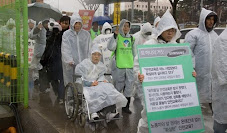
![[In Update]Blog Collection: No Korean Troops in Afghanistan](https://blogger.googleusercontent.com/img/b/R29vZ2xl/AVvXsEjjEmCRXSNAG7_QBxKWbdksmxoWR4nyAovQTTdR1G2AuXh0jxtqNkI9OmYgYWRoLAJShvtBvE840QXuBWSVh3u3zMYqkNAFX6OWy3m5Nur4HM7uNK-pKT1ycyApJp-VLyhIFRRcoisYAh0E/s226/No-Troops-to--Afghanistan.jpg)


