It is mostly about stories on the Korean people’s struggles against the U. S. bases in Korea. Hope many of you find some clues and sources here. Please just be kind and fair to the source.많은 분들께서 여기에서 단서들과 자료들을 찾길 바랍니다. 다만 단서와 자료의 기원에 대해 친절하고 공정하게 표기해 주시면 감사하겠읍니다.
'저는 그들의 땅을 지키기 위하여 싸웠던 인디안들의 이야기를 기억합니다. 백인들이 그들의 신성한 숲에 도로를 만들기 위하여 나무들을 잘랐습니다. 매일밤 인디안들이 나가서 백인들이 만든 그 길을 해체하면 그 다음 날 백인들이 와서 도로를 다시 짓곤 했습니다. 한동안 그 것이 반복되었습니다. 그러던 어느날, 숲에서 가장 큰 나무가 백인들이 일할 동안 그들 머리 위로 떨어져 말과 마차들을 파괴하고 그들 중 몇몇을 죽였습니다. 그러자 백인들은 떠났고 결코 다시 오지 않았습니다….' (브루스 개그논)
CNSNews September 22, 2010 Small Pacific Island Becoming A U.S. Strategic Hub By Patrick Goodenough __________________________________________________________
-Guam, which is currently home to U.S. Navy facilities and Andersen Air Force Base, has long been a functional forward-deployed location for the military, and in 2000 became the first installation outside the continental U.S. to store long-range air-launched cruise missiles, easily accessible in the event of a future conflict in the region.
-In another sign of its growing importance, Andersen on Monday became the first permanent U.S. base to deploy an RQ-4 Global Hawk, the advanced unmanned surveillance and reconnaissance aircraft slated in time to replace the venerable U-2 spy plane.
Andersen is scheduled to get three Global Hawks, which are capable of flying at high altitudes for long-distance missions lasting 30 hours or more, tracking moving targets and intercepting ground communications. __________________________________________________________
The signing of a document on Guam Tuesday marked the beginning of a historic build-up of U.S. military assets on the small Pacific island, part of an alignment of forces designed to better handle future security challenges in a key part of the world.
The plan calls for the relocation to Guam of 8,600 U.S. Marines and their estimated 9,000 dependents, from Japan’s Okinawa some 1,400 miles to the northwest; the construction of a deepwater wharf capable of accommodating visiting nuclear-powered aircraft carriers; and the development of a U.S. Army air and missile defense facility, to provide a defensive umbrella for the military assets.
Some Marine training facilities also are expected to be built on Tinian island, 100 miles to the north – part of the Northern Marianas, a U.S. commonwealth.
Guam, which is currently home to U.S. Navy facilities and Andersen Air Force Base, has long been a functional forward-deployed location for the military, and in 2000 became the first installation outside the continental U.S. to store long-range air-launched cruise missiles, easily accessible in the event of a future conflict in the region.
But now it is on track to become a much more important strategic hub and staging point for the U.S. as the closest military presence on U.S. soil to regional hot spots such as North Korea and the Taiwan Strait.Guam is about 3,700 miles closer to the Korean peninsula than is Hawaii.
Being U.S. territory, Guam also meets the “freedom of action” requirement, the absence of which has at times hampered U.S. forces based in America’s main regional military allies, Japan and South Korea.
In another sign of its growing importance, Andersen on Monday became the first permanent U.S. base to deploy an RQ-4 Global Hawk, the advanced unmanned surveillance and reconnaissance aircraft slated in time to replace the venerable U-2 spy plane.
Andersen is scheduled to get three Global Hawks, which are capable of flying at high altitudes for long-distance missions lasting 30 hours or more, tracking moving targets and intercepting ground communications. .... At Naval Base Guam on Tuesday, a U.S. Navy “record of decision” was signed, marking what the Joint Guam Program Office (JGPO) executive director, retired Marine Maj. Gen. David Bice, called the “transition point” for the major project.
When then Defense Secretary Donald Rumsfeld visited Guam during a 2003 visit to Northeast Asia to first discuss force repositioning options Gov. Felix Camacho and Guam’s congressional delegate, Madeleine Bordallo, urged him to consider deploying more U.S. personnel there. They also wanted the Pentagon to choose Guam over Hawaii as the homeport for the first nuclear-powered carrier to be permanently stationed outside the continental U.S.
Although they did not get their wish on the carrier homeport – Yokosuka Naval Base in Japan was chosen instead to house the USS George Washington – Guam will see a significant influx of military personnel and dependents in the coming years.
The report signed Tuesday estimates that the population increase on Guam will total around 34,000, although it will reach double that for a limited period while construction work is underway.
The influx will have a big impact on the island, which is about three times the size of Washington, D.C., and has a population of around 178,000 people, about 40 percent of them indigenous Chamorros.
.... Two sensitive aspects of the plans relate to the location of a live-fire training range near an ancient Chamorro village, raising heritage preservation concerns; and the impact of the carrier berth on coral reefs. The document signed Tuesday deferred final decisions on those two issues, allowing more time for consultation and marine surveys of possible alternative berth sites.
The U.S. Marines’ move to Guam by 2014 is part of a broader bilateral agreement with Japan, aimed at reducing the U.S. military footprint on Okinawa while retaining U.S. commitments to provide for the defense and security of Japan. As such, Japan agreed in 2006 to carry just under 60 percent of the costs of the relocation. =========================== Stop NATO Blog site
Asahi Newspaper SPECIAL TO THE ASAHI SHIMBUN POINT OF VIEW/ Masanao Kano: Tokyo must answer Okinawa's cries of agony 2010/07/14
Tokyo and Washington have reached a new agreement on the issue of relocating the U.S. Marine Corps Air Station Futenma in Ginowan, Okinawa Prefecture. While the accord is extremely close to the existing plan, there are also signs that the Okinawa problem might move forward, albeit slightly.
Last year's change of government gave hope to the people of Okinawa that they may finally be about to part company with the politics of necessitarianism; in doing so, they inevitably made the U.S. bases problem one that does not concern Okinawa alone, but the entire nation. The movement to reject U.S. military bases started with a sit-in protest in Nago's Henoko district at the close of the last century, and has already reached the stage of no-return.
As a mainlander, while shaken by the events in Okinawa, I feel the situation has given rise to a wide variety of flashpoints that could spark ideological controversy. Why does Okinawa alone have to suffer? The frustration and anger that arose among residents led to cries of "discrimination" and a "rift" with the rest of Japan.
With Okinawa's agony etched in my mind, I can recognize that at least two major questions are being addressed to us.
One is that the core assertion of Okinawans is not "relocation" of U.S. bases but their "removal" and "closure" altogether. The assertion is based on three political viewpoints:
* Their judgment that they do not need the U.S. Marine presence;
* Their refusal to entertain any attempt to strengthen the functions of the bases in the guise of relocation; and
* Their determination that they will no longer accept the status quo of having to make an agonizing choice or settle for second best.
Another reason they argue for the removal and closure of the bases is that they don't want to pass their burdens on to others through relocation of the facilities.
In short, their awareness is changing. They are now hoping to exist without bases, as many mainland people do, instead of continuing to share the sufferings of other base-hosting communities.
In trying to sever the negative chain reaction of shared suffering, they are also trying to fight on behalf of Tokunoshima island in Kagoshima Prefecture as well as Guam and Tinian in the western Pacific Ocean, thereby transcending national borders.
They are concerned that the rights to self-determination of those islanders could be disregarded.
The other point is that the vast majority of Okinawans share the historical view that their island prefecture's primary role for the past 65 years has been to serve as a site for U.S. military bases.
Okinawa reverted to Japanese sovereignty in 1972. But the significance of that date is rapidly fading in their minds.
When the hand-over of sovereignty was decided in the late 1960s, Seizen Nakasone (1907-1995), a teacher who led the Himeyuri student corps, a group of female high school students who served as a nursing unit for the Imperial Japanese Army during the 1945 Battle of Okinawa, heaved a sigh of grief. He said, "For the past 24 years, we have been calling for reversion to Japan. What we achieved is the situation in which we must keep repeating, from square one, the movement to call for a reduction of bases."
Looking back, we realize that is precisely what Okinawa has kept doing, just as Nakasone predicted.
This status aroused anger and grief among Okinawans because they thought that Okinawa had yet to enter the postwar period in a proper sense. At the time of the Battle of Okinawa, Tokyo positioned Okinawa as "a sacrifice stone." U.S. forces occupying the island saw it as "a keystone."
It means that the Japanese government is trying to use Okinawa as a sacrifice stone to host the new base, which is a keystone for security policy. It also ensures that the new base is not built on the mainland.
Okinawa has been forced to bear the excessive burden of hosting bases under the pretext of deterrence in the event of emergencies. This "abnormal" situation has lasted so long that local people are numb to it. In that sense, the rejection of bases is none other than a declaration of their determination to take a new approach to the longstanding issue.
Okinawans have had many years to fine-tune their thoughts on the inequality they face in hosting so many U.S. bases. That is all the more reason they form those questions directly at the mainland.
It behooves us to squarely face another question; that is, whether the mainland has really thought about military emergencies. Rather, have we not taken the Japan-U.S. security alliance for granted and, in the process, become lackadaisical? These questions punch home.
So, how should we answer these questions posed by Okinawa? I believe what the Japanese government must do at this juncture is not to focus on the problem as a domestic issue but hold face-to-face talks with Washington and the U.S. military.
This year marks the 50th anniversary of the revision of the Japan-U.S. Security Treaty. As a political problem, the movement in Okinawa put before us the question whether the Japan-U.S. security system should be kept as it is. It may be a distant goal to abolish the security alliance.
But at least the government should present a package of three proposals:
* That the Japan-U.S. Status of Forces Agreement be revised;
* That sympathy budget allocations for U.S. forces stationed in Japan be scrapped; and
* That the Futenma airfield be closed.
Only when it does, can this year be the start of the process to re-examine the security alliance. I think voicing such thoughts is the least we can do to respond to the cries of agony of Okinawa.
* * *
Masanao Kano is a historian specializing in modern Japanese thought.
Sayo' ________________________________________________________________ * From Makiko Sato on April 24, 2010
'Something in yellow color is desirable, if you show solidarity with Okinawa, Jeju, Guam, Tinian, Hawaii, Vicenza, on, around or even after April 25th. How about holding a yellow-colored paper with slogans on it? Below is an email from Etsumi Tahira, a woman aged 75, who has been conducting sit-ins for long with local women on the beach of Henoko, Okinawa. Cheers'
'4월 25일 또는 그 이후라도 오키나와, 제주, 괌, 티니안, 하와이, 빈센차에 대한 연대를 표현하기 위해 노란색이 좋습니다. 구호가 쓰여진 노란색 종이를 들면 어떨까요? 아래는 75세된 여성, 에추미 타히라가에게서 온 이 메일로 오키나와 헤노코 해안에서 오랫동안 지역 여성들과 연좌 시위를 진행했습니다. 힘내세요. '
Below is an email from Etsumi Tahira, a woman aged 75, who has been conducting sit-ins for long with local women on the beach of Henoko, Okinawa.
아래는 75세된 여성, 에추미 타히라가로 오키나와 헤노코 해안에서 오랫동안 지역 여성들과 연좌 시위를 진행했습니다.
....................( Estumi Tahira's email )................. I hear SDFs bases throughout Japan are under the joint use with the US forces.
저는 일본 전역에 걸쳐 일본 자위대 기지들이 미 군대와 공동 사용되고 있다는 얘기를 듣습니다.
Those who visit Henoko talk about their anxiety about this situation.
헤노코를 방문하는 사람들은 이 상황에 대한 그들의 우려를 말합니다.
Does Japanese central government think that Japan is safe as long as it is a subject state under the US power ?
일본 중앙 정부는 일본이 미국의 권력을 따르는 한 안전하다고 생각하는 걸까요?
I do an early morning sit-in in front of the gate of Camp Shuwab every Friday, then later move on to the Henoko Beach to conduct a vigil there.
저는 매주 금요일 이른 아침 캠프 슈와브 정문 앞에서 연좌를 하고 침번을 하기 위해 헤노코 해안으로 갑니다.
On the occasion of such morning sit-ins, about 90 banners are tied to the fence.
그러한 아침 연좌 때마다 약 90여 깃발들이 울타리에 묶여집니다.
American soldiers soon try to cut or burn them, then, we take them away and bring them back. I bring to the sit-in site a flag in which I wrote the Chinese letters of ' non-war Ryukyu Kingdom.'
미국 병사들은 그것들을 곧 자르거나 불태웁니다. 저는 ‘류큐 왕국 전쟁 반대’라고 제가 한자로 쓴 깃발을 연좌 장소에 가져갑니다.
At the planned rally on 25th by inhabitants of Okinawa Prefecture, we are supposed to show our consolidated will by using the color of yellow.
오키나와 현 거주인들의 25일 계획된 집회에서 우리는 노란 색을 사용함으로서 우리의 뭉쳐진 의지를 보이기로 되어 있습니다.
Those unfortunate who cannot come over will do the same, wearing something yellow. I'll go, with a yellow parasol, wearing a white one-piece dress of my own making, with a lot of messages on it written in yellow water-paint.
안타깝게도 오실 수 없는 분들도 노란 색을 입고 같은 행동을 할 것입니다. 저 역시 노란색 양산에 노란색으로 쓰여진 많은 메시지들을 담은 제가 만든 하얀 옷을 입고 갈 것입니다.
________________________________________________________________ * Message forwarded from Makiko on April2 4, 2010
‘It is from Yumi Kikuchi, who has been for several years making continued efforts to look for and convey the truth of 911 to the Japanese. She thinks if Japan doesn't financially support the US' wars, which it does in various ways, then the world will become more peaceful.
아래는 유미 기구치에게서 온 것으로 그는 911의 진실을 몇 년간 꾸준히 찾고 일본인들에게 911의 진실을 알렸습니다. 그는 일본이 미국의 전쟁을 다양한 방면으로 재정적으로 돕지 않으면 세계는 좀 더 평화적으로 될 거라 생각하고 있습니다.
Dear People of Okinawa, Jeju, Guam, Hawaii and Vecenza ,
오키나와, 제주, 괌, 하와이, 그리고 빈센차의 사람들에게
I am sending my photo with one of my children to show my solidarity to your action on April 25, 2010. Imagine all the bases on Earth turned into organic gardens and parks for people! Imagine Peace, Imagine Ministries and Departments of Peace in all nations.
저는 2010년 4월 25일 당신들에게 저의 연대를 보이기 위해 제 자녀들중 하나와 찍은 사진을 보냅니다. 지구의 모든 기지들이 유기농 정원들과 사람들을 위한 공원으로 바뀌어 지는 것을 상상해 보세요. 모든 국가들에 있을 평화 장관들과 부서들을 상상해 보세요.
love and peace, Yumi Kikuchi author, peace & environmental activist from her organic farm in Chiba.
* Fw from Jean Downy on April 24, 2010 2010년 4월 24일 진 다우니로부터
Gavan McCormack: Okinawan rally on 25th-unprecedented event in Japanese & World History
"The 25th becomes an unprecedented event in modern Japanese history, if not the world history," Gavan McCormack, Professor of Australian National University, shared his thoughts on the upcoming mass rally in Okinawa.
25일은 세계 역사가 아니라면, 현대 일본 역사에서 전례없는 날이 될 것이다. 개번 맥코맥, 호주 국립 대학 교수는 다가오는 오끼나와 군중 집회에 대한 자신의 생각을 다음과 같이 나누었다.
"Never before in Japanese history has an entire region stood up and said 'No' to the central state authorities. And it is so much the more remarkable because they are actually saying 'No' not just to Tokyo but to Washington."
"일본 역사상 지역 전체가 일어나 중앙 정부 당국에 아니오라고 말한 적은 이 전에 결코 없었다. 그리고 그것은 한층 더 주목할 만한데 단지 도쿄뿐만 아니라 워싱턴에 '실제로 아니오' 라고말하기 때문이다."
"And, not only that, they now almost certainly are going to win: they are going to impose their will upon the two most powerful governments in the world. For citizens to assert, successfully, their moral authority and their right to dictate to government(s) is really something to celebrate!
"그리고 그것뿐만 아니라 그들은 거의 확실히 이길 것이다: 그들은 세계에서 가장 힘있는 두 정부들에 그들의 의지를 개입시키고 있다. 시민들이 자신들의 도덕적 권위와 정부를 다스릴 권리를 성공적으로 주장하는 것은 진실로 축하할 만한 일이다.
"This may be a new phase in democracy. "
" 이것은 민주주의 새로운 국면이 될 것이다." http://closethebase.org/ ________________________________________________________________
* Text Fw from Kyle Kajihiro on April 24, 2010
[ap-nobases] Solidarity Statement from the Members of the Network for Okinawa
Solidarity Statement from the Members of the Network for Okinawa
April 25, 2010
Network for Okinawa
We, the members of the Network for Okinawa, represent many hundreds of thousands of Americans and people around the world who support democracy and environmental protection in Okinawa. Our grassroots network draws together representatives from U.S. and international peace groups, environmental organizations, faith-based organizations, academia, and think tanks.
Today we proudly announce our stand with the governor, the mayors, the media, the Henoko village elders, and the one million citizens of Okinawa; the thirty thousand residents of Tokunoshima, and the hundreds of thousands of citizens across Japan who support Okinawa. From across the Pacific Ocean, we support their demand for the closure of the Futenma U.S. Marine Base and opposition to any new military base construction in Okinawa and Tokunoshima Island.
We appeal to Prime Minister Hatoyama to keep his promise to the Okinawan people and honor their rejection of any new construction in Camp Schwab. This includes a proposal to build a runway within the base already rejected in the 1990’s. The mayor of Nago, Inamine Susumu reiterated this rejection this year. We also ask Prime Minister Hatoyama to reject the U.S.-Japan 2006 proposal to construct partially offshore runways. This expansion would destroy the coral reef which is the home to the Okinawan dugong, blue coral, and other species, It would damage beautiful Yanbaru Forest, home of many beautiful animals and plants, including endangered species.
We call upon President Obama, as the commander-in-chief of the U.S. military, to honor the Okinawan democratic decision to remove the U.S. Futenma Marine base out of their prefecture and their call for no further U.S. military base construction.
The U.S. military built its first military bases during the Battle of Okinawa to serve as a platform for an invasion into Japan, then ruled by an imperial militarist wartime regime. Over two hundred thousand Okinawan civilians, American soldiers, and Japanese soldiers died in the crossfire between the U.S. and Japan in that battle. It was the bloodiest in the Pacific War.
But the war’s end did not bring peace to Okinawa. The U.S. never dismantled its military bases and began to use them under its own Cold War military regime with a never-ending succession of enemies: Korea, Vietnam, Laos, China and the Soviet Union. Some U.S. and Japanese officials again imagine China a threat—despite détente and ever-increasing economic integration between China and the U.S., Japan, South Korea, Australia, and other nations that deems war very unlikely.
Former Okinawan governor Masahide Ota stated—that for Okinawans—the war never ended. Many Okinawans still experience anxiety and depression from wartime trauma. The remains of 4,000-5,000 dead Okinawans have yet to be collected. Unexploded bombs remain throughout the island. Over 5,000 Okinawans have been the victims of crimes committed by American soldiers. Mr. Ota, therefore, asks: “Why shall we start preparing for a new war, while the old war is not over yet?”
Network member Peter Galvin, Conservation Director of the Center for Biological Diversity states, “Destroying the environmental and social well-being of an area, even in the name of ‘national or global security,’ is itself like actively waging warfare against nature and human communities.”
The US government has repeatedly promised reform in Okinawa. The 1972 “reversion” of Okinawa from the U.S. to Japan did not result in promised demilitarization. Their latest proposal—first made in 1996 and renegotiated in 2006—does not “lighten a burden.” It instead would move U.S. military pollution, noise, and assaults from Ginowan City to untouched Henoko.
How many elections, resolutions, and mass-scale rallies does the Japanese government and US government need before they hear the message of the Okinawan people?
We, the many people in the U.S. and worldwide, of the Network for Okinawa–hear and support these messages for removal, not relocation of military bases from Okinawa.
To illustrate, we would like to share some individual remarks from our supporters:
Gavan McCormack, Australian National University professor states, “An alliance that treats the opinion of Okinawans with such contempt is not an alliance of or for democracy. The ‘free world’ used to be fiercely critical of Moscow for trampling on the opinions of Poles, Czechs, and Hungarians; now, in the name of ‘freedom,’ it is about to act in precisely the same way. Does freedom mean so little to those who pretend they defend it?”
John Lindsay-Poland, Director of Fellowship of Reconciliation’s Latin America program, states: “Military bases in Japan and other countries are material projections of the will of the U.S. to use war and violent force. War is not only brutal, unjust, and ecologically devastating, but unnecessary to achieve legitimate aims.”
Kyle Kajihiro, Program Director, American Friends Service Committee – Hawai’i Area Office, states: “The powerful Okinawan demand is clear: peace is a human right. The Okinawan people are an inspiration to our own movement. We stand with them in solidarity for peace across the Pacific.”
In a speech she gave in Stockholm, Japanese Canadian author Joy Kogawa paid tribute to Okinawa’s peace-loving traditional culture that honors the sanctity of life:
“There is a certain small island in the east, where the world’s longest living and intensely peaceable people live.
“My brother, a retired Episcopalian priest, was in Okinawa for a few years in the 1990’s. He told me that in 1815, Captain Basil Hall of the British navy steamed into Naha, Okinawa and was amazed at what he found. The story goes, that on his way back to England, he dropped in to the island of St. Helena and had a chat with Napoleon.
“’I have been to an island of peace,’ the captain reported. ‘The island has no soldiers and no weapons.’
“’No weapons? Oh, but there must be a few swords around,’ Napoleon remarked.
“’No. Even the swords have been embargoed by the king.’
“Napoleon, we’re told, was astonished. ‘No soldiers, no weapons, no swords! It must be heaven.’
“A unique culture of peace had developed in one tiny part of our warring planet…
“When Japan, that once warring nation, took over the kingdom, there was an entirely bloodless coup. No soldiers were found to help later with the invasion of Korea. A disobedient people, Japan concluded. A kingdom without soldiers was clearly impossible. Okinawa, with its history of peace, must surely have had a culture as close to heaven as this planet has managed. And perhaps therefore a special target for the forces of hate.”
Today our world stands at a crossroads between survival and self-destruction. We must transform from a world dominated by a culture of war into a world led by cooperation and nonviolent conflict resolution. Instead of forcing more unwanted military violence upon this peaceful island, the U.S. and Japan would be wise to model Okinawa’s democratic culture of life.
-''Moving these forces to Guam would place them on the furthest forward element of sovereign U.S. territory in the Pacific, thereby maximizing their freedom of action.''
-The relocation and buildup cost, including expansion of infrastructure needed to maintain a permanent base for Marines and U.S. Army troops on Guam and Tinian, an island 160 kilometers to the northeast, is pegged at $12 billion.
-A U.S. Army ''Air and Missile Defense Task Force'' is also proposed for Guam to protect the island....Weapons emplacement sites would be constructed to accommodate the ''Terminal High Altitude Area Defense'' system, which is designed to intercept missiles during late mid-course or final stage flight. _____________________________________________________________________
HAGATNA, Guam: The United States plans to fortify Guam, upgrading its military base on the island into a strategic staging post that would allow rapid access to potential flashpoints in the Pacific region.
More troops, including 9,182 Marines, army soldiers and their dependents from Okinawa, Japan, will be relocated to this island, while more than 9,000 transient troops, mainly from the navy's carrier strike group, will also be based here.
The ''overarching purpose'' of beefing up Guam as a military fortress is ''to provide mutual defense, deter aggression, and dissuade coercion in the Western Pacific Region, according to a draft impact report recently released by the U.S. Defense Department.
The proposed buildup would allow U.S. military forces to respond to regional threats and contingencies in a ''flexible'' and ''timely manner'' as they work to ''defend U.S., Japan and allied interests,'' the study says.
''Moving these forces to Guam would place them on the furthest forward element of sovereign U.S. territory in the Pacific, thereby maximizing their freedom of action,'' it says.
According to the report, the United States envisions Guam as a ''local command and control structure'' manned, equipped, trained, and sustained by a modern logistics infrastructure.
The relocation and buildup cost, including expansion of infrastructure needed to maintain a permanent base for Marines and U.S. Army troops on Guam and Tinian, an island 160 kilometers to the northeast, is pegged at $12 billion.
Japan has agreed to chip in $6.09 billion of the total.
The plan would entail ''increased operational activities,'' more frequent berthing by aircraft carriers and other warships, building aviation training ranges and upgrading of harbors, wharves and ports.
The existing Andersen Air Force Base on Guam would be expanded to include the air elements of the Marines. A new Marine base would be built ''right next door,'' the study says.
Various firing ranges would be built to meet the various training requirements of a larger military contingent.
The U.S. also plans to expand its live fire training ranges in Tinian where about 200 or more Marines could ''realistically train'' with their weapons and equipment ''without restrictions.''Also on the drawing board is the building of a deep-draft wharf at Guam's Apra Harbor to support nuclear-powered aircraft carriers transiting through the area.
A U.S. Army ''Air and Missile Defense Task Force'' is also proposed for Guam to protect the island and U.S. forces there against the threat of harm from ballistic missile attacks.
Weapons emplacement sites would be constructed to accommodate the''Terminal High Altitude Area Defense'' system, which is designed to intercept missiles during late mid-course or final stage flight.
Other emplacement sites would accommodate Patriot missiles, which are designed to strike threat aircraft, unmanned aerial vehicles, and cruise missiles just before impact.
The U.S military is beefing up its presence in Guam after U.S. allies in the Pacific - the Philippines, Thailand, Australia, South Korea and Singapore - turned down U.S. requests for permanent basing of U.S. troops on their soil.
Already concerns are being raised over plans to transform Guam into ''a multi-service military base.'' .... Henry Simpson, general manager of Guam Racing Federation, said the U.S. military aims to take his race track without even consulting him. ''They want to run over our land,'' he said. .... =========================== Stop NATO Blog site:
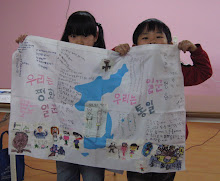
The site is managed by an artist living in the South Korea. The photo in the profile is the children in Osan, near the Pyeongtaek where the planned US military base hub in the north east Asia and a large US air base exists. They are the children of a teacher who manages the Children Peace School there. As a part of the class programs, the children in the class drew and wrote in a cloth, their wishes of the peaceful unification of Korea some day.
[URGENT PLEA: In Update] EMERGENCY in GANGJEONG Since AUG. 24, 2011
엎데이트 모음: 강정 긴급, 8월 24일 이후
2011 Keep Space for Peace Week
2011 우주 평화주
Winter 2011 News letter of Global Network against Weapons and Nuclear Power in Space
2011년 겨울 우주의 무기와 핵을 반대하는 글로벌 넷워크
Save Takae!: ARMY HELICOPTERS ON OKINAWA DRIVING PEOPLE CRAZY
Update on Jan. 15 with texts & images onTokyo action on Jan. 10 / 1월 15일 오키나와를 위한 1월 10일 토쿄 행동 업데이트 / 국문 번역: 오키나와 타카에 헬기장반대: 오키나와 타카에의 미군 헬리콥터, 사람들을 위협함
[Solidarity from Japan for the Jeju] 253 individuals and 16 groups/organizations
Upload on Jan. 1, 2011 (엎로드: 2011년 1월 1일) 일본으로부터 제주 긴급 연대 서명: 253 개인과 16 단체
From Japan: Urgent request for action: Japan is to lift the ban on weapons export (by Dec. 10)
Update on Dec. 12( 12월 12일 엎데이트)/ [일본으로부터:국문 번역] 긴급 행동 요청: 일본이 무기 수출을 금지하는 조항을 해제하는 것을 막는 행동 부탁 (12 월 10일까지)
[Translation] Korean organizations' statement: Immediately cancel the joint ROK-US drill Nov 26
Updated on Dec. 3 with Fact Sheets 서해 위기 사실 영문 자료 다운로드 (12월 3일 엎데이트) [번역]한국 단체들의 행항모 동원 한미 연습 반대 성명서 11/26/10
HOT! [Hankyoreh Hani TV] Beneath the Surface: the investigation into the sinking of the Cheonan
天安艦事件調査の矛盾を暴く ハンギョレ系TV [심층리포트] 천안함 사건 5대 미스터리: Update on Nov. 18: Korean, English, Japanese scripts available! 엎데이트 11월 18일자: 한국어, 영어, 일어 스크립 참조 가능!
Korean Domestic: No Jeju naval base_Relay one-man protest
Sponsored by the Pan-Island Committee against Military Base: Nov. 18 to Dec. 10/ 제주 군사 기지 범대위: 11월 18일~12월 10일
No to NATO activities, Lisbon, Portugal, Nov. 19 to 21, 2010
나토 반대 공동 행동, 포루투칼 리스본, 11월 19일~21일
International petition: Stop War on Iran
Stop War on Iran before it starts 이란에 대한 전쟁 음모 반대 국제 서명 운동
[Translation]Statement against illegal inspection and unjust lay-off by the Kunsan USAFK!(Nov_2010)
[성명서 번역]군산 미공군의 불법사찰, 부당해고를 강력히 규탄한다! (2010년11월 10일)
[Translation] Korean organizations' statement against dispatching special force to the UAE on Nov.
[번역] 반전 평화 연대의 11월 9일 아랍 에미레이트 (UAE) 특전사 파병안 규탄 성명서
[Translation] Stop, Joining MD!: South Korean activists' statement and writing on Oct. 25, 2010
[번역] 한국의 MD 참여 중단! 한국 활동가들 2010년 10월 25일 성명서 및 글
[In Update] People First, NO G-20 (Nov. 6 to 12, Korea)
Update on Nov. 12: No G-20 Joint action reports 엎데이트 11월 12일: G-20 반대 공동 행동
[International Petition] Stop US helipad plan in Okinawa to save great nature
[국제 서명 포워드] 훌륭한 자연을 보호하기 위해 오끼나와 미국 비행장 설치를 중단하라!
Protest against the Minuteman III high speed solid fuel ICBM, Vandenberg, Sep. 17, 2010
Update on Sept. 26; 9월 26일 엎데이트: Minotaur IV Rocket goes up Sept 25, with Space Surveillance satellite 미노타르 IV 로켓, 우주 정찰 위성을 싣고 9 월 25일 발사
[Global Network] against the first launch of Quasi-Zenith Satellite, Japan, on Sept. 11, 2010
[국문 번역] [글로벌 넷워크 성명서] 일본의 준 천정 위성 첫번째 발사(2010년 9월 11일) 반대
Fwd: U.S. BASE SAVED FROM PAKISTAN FLOOD BUT NOT THE PEOPLE -A Statement by the AHRC
Update on Oct. 15, 2010 엎데이트, 2010년 10월 15일: [국문 번역]미군 기지는 홍수로부터 구해졌으나 파키스탄 사람들은 아님- 아시아 인권 위원회 성명
[In update] Some collections on the Koreans’ protests against the sanction & war on Iran
Updated on Nov. 9 엎데이트 11월 9일 [엎데이트 중]이란 제재와전쟁 공격에 반대하는 한국인들의 시위기록 모음
[Three International Petitions] to End the Korean war and peace treaty(or peace resolution)
한국 전쟁 종식과 평화 협정(또는 평화 결의안) 실현을 위한 [세 개의 국제 서명]
The problamaic issue of 2nd Runway Construction in the Osan U.S. AFB, Pyeongtaek
Update on Nov.1: realted article 평택 오산 미 공군 기지 제 2의 활주로 건설 문제 이슈 증가중: 엎데이트, 11월 1일 관련 기사
Fwd: A Banner for the Solidarity bet. the VfP in Corea & U.S.
[From the 25th Veterans for Peace Convention, U. S.] including Korean War workshop and No Gun Ri movie [미 평군 25 주년 회담] 한미 평화 재향 군인회 연대를 위한 배너; 한국 전쟁 워크샵과 노근리 영화 상영 포함
Campaign from Japan: Stop Muji from expanding into Israel!
[일본으로부터 캠페인]무인양품의 이스라엘 진출을 중단시키자!
[Collection of Documents] No Base Learning and Solidarity Program_Korea(June 14 to 20, 2010)
[문헌 모음] 기지 반대_배움과 연대 프로그램_한국 방문 (2010년 6월 14일~20일)
Site Fwd:[John Hines] A U.S. Debate coach’s research trip on the Issues of Korea
A U.S. Debate coach’s research trip on the Issues of struggles against the USFK bases & Unification in Korea, Aug. 4 to 8, 2010 [사이트 포워드][존 하인즈] 미국 고등학교 토론 코치의 주한 미군 기지에 반대하는 투쟁들 및 코리아의 통일 이슈들에 관한 연구 여행 2010년 8월 4일 부터 8일.
Gangjeong Mayor's Solidarity Message to Okinawa and the world
강정 마을 강동균 회장님의 오키나와와 세계인에 대한 연대 메시지
Solidarity Messages With Jeju from Tokyo and Okinawa
[국문 번역]도쿄와 오키나와에서 제주에 보내는 연대 메시지
[News Update] Struggle Against the Jeju Naval Base since Jan. 18, 2010
The records of the struggle and international response 2010년 1월 18일, 강정 마을 급습과 항의 시위 및 국제 반응 기록
Koreans’ Domestic Campaign: No War with the evil-spell of Cheonan! (by Lee J. H., Congress Woman)
이정희 의원 주최 전쟁 반대 긴급서명 캠페인: 많은 한국인의 청원을 바랍니다.
Korean Scholars launch the Website on the Truth of Cheonan
한국 학자들, 천안함의 진실에 관한웹사이트 만듦
[Urgent] Please spread the Letter!: There was no Explosion! There was no Torpedo! (May 26, 2010)
신상철 조사위원의 힐러리 클린턴에게 보내는 긴급 편지: 폭팔이나 어뢰가 아닙니다. 먼저 좌초되었읍니다! (2010년 5월 26일)
Text Fwd: [Stephen Gowans]The sinking of the Cheonan: Another Gulf of Tonkin incident
스테펜 고완스: 천안: 또 하나의 통킹만 사건
[Japan Focus]Politics in Command: The "International" Investigation into the Sinking of the Cheonan
[재팬 포커스] 명령의 정치: 천안함 침몰에 대한 "국제" 조사 와 새 한국 전쟁의 위험
[Japan Focus] Who Sank the SK Warship Cheonan? A New Stage in the US-Korean War and US-China
한국판 9/11? 누가 천안함을 쓰러뜨렸는가?
[Updated on 12/13/10] [Translation Project] Overseas Proofs on the Damages by the Military Bases
[12/13/10 엎데이트] 국문 번역 프로젝트: 군사 기지들에 의한 환경 피해와 경제 감퇴 해외 증거들
[International Petition] Close the Bases in Okinawa
[국문 번역] 오키나와 기지 폐쇄 국제 서명
International Petition: Calling on Samsung to Accept Responsibility for Occupational Deaths
국제 청원: 삼성은 노동자들의 산재 사망을 인정하라!
[In Update]Blog Collection: No Korean Troops in Afghanistan
Continuously Updated 아프가니스타 파병 반대 블로그 모음. 계속 엎데이트 중
View from Sweden: South Korea, “The most Dangerous Country in the World”
Torbjörn Björkman, a Sweden journalist who visited South Korea from Dec. 1 to 7, 2009 and met the Korean organizers reports about his interview with them. 2009년 12월 1일~7일 까지 한국 활동가들을 만난 스웨덴 언론인, 토르비요른 비요르크맨이 그들과의 인터뷰를 기사화
Protest Call: Indict John Yoo, A War Criminal
시위_이라크 전쟁 범죄자 존 유를 고소하자, 2010년 3월 19일
Protest Appeal: No PAC 3 in Kurume City, Fukuoka, Japan
[국문 번역]일본 후쿠오카현 구루메 시 PAC3 배치에 반대하는 항의 호소문
Petition: GUAM NEEDS MORE TIME!!
Petition: GUAM NEEDS MORE TIME!! Petition & Comment Requests from Indigenous Chamoru & Residents of Guam 1만 1천 페이지를 90일간 보라구? 구암을 구합시다.
News and Articles: The World Does Not Need Missile Defense and Star Wars
뉴스와 기사들: 세계는 미사일 방어망과 우주 전쟁을 원하지 않는다.
No Korean Troops in Afghanistan again
Koreans' domestic campaign against the re-dispatch to Afghanistan 아프가니스탄 파병 반대 한국인 서명 운동
 * Image source: Minagahet Chamorro blog on Sept. 23, 2010


![[URGENT PLEA: In Update] EMERGENCY in GANGJEONG Since AUG. 24, 2011](https://blogger.googleusercontent.com/img/b/R29vZ2xl/AVvXsEiQvpaNf6EePZVucu97_JphYsFS5IgumnSiA4YAmen1PZcim6vMmW7XjZ7J6nLh-Cu36mwBN5n1evrA3ey0vYMpwlAGsgnSFggv6a1w4Qx9BvvqOB0hy0BIcBkL2Exfs3zIxBsBuDGa1kzg/s227/jejusit.jpg)


![[Solidarity from Japan for the Jeju] 253 individuals and 16 groups/organizations](https://blogger.googleusercontent.com/img/b/R29vZ2xl/AVvXsEivji7100kBkr0hzvqYfh4IBBilkZ6XgDIg89jOxS6kTssxsVKC6Wm-fZbKOEsiy3zcO-9gW6GHspD5R_2C9WsGx5S1Z5VPj_OVRF7H6dxdaT0S-2H1eqsDsYvIwOV26VscxTHnKmP5iZmh/s227/jeju_12_10j.jpg)

![[Translation] Korean organizations' statement: Immediately cancel the joint ROK-US drill Nov 26](https://blogger.googleusercontent.com/img/b/R29vZ2xl/AVvXsEgfKDMo-qyEjm5asUtHlREyJY_5Ou-2tyB8SH6aUxiViRbbKR-8W_rirFiGp5DYSoD_KaeNOPMWR0af0ZPUIbJKmR89ImDvADHsGAIqsJVBvJNBEIl5wLd3G_zhPDW3Z2SxsHXadOsXe8st/s227/1.jpg)
![HOT! [Hankyoreh Hani TV] Beneath the Surface: the investigation into the sinking of the Cheonan](https://blogger.googleusercontent.com/img/b/R29vZ2xl/AVvXsEh80rL3Qv9GnfHSqbYMfivdqX5gZN-1O_VQj3A_Gk3yjWdybHwJCsprA3l6cEQB0cYCP2oNeaLo2ohLGIy0Uqqkv_fRkBevGJ2f-qkKD5eP1ZGsKeQ-r-jHUUb79WvucIN7hpEtXza4xXCL/s227/HaniTV+Cheonan.gif)


![[Translation]Statement against illegal inspection and unjust lay-off by the Kunsan USAFK!(Nov_2010)](https://blogger.googleusercontent.com/img/b/R29vZ2xl/AVvXsEg3JlQ-lreusCIJo5Yv2e3ZrRwrSMUE7UQxlrDVjmBehl0Pa24QZIAbZ5vUpgnnExbkKL9PdCwxVYSHWJkr_XK0FM4EhU3CMFhqfborVNu_p4v3bEFpNm3ia-aEHnvMMuEBI27aB7_BETuJ/s227/gunsan+protest.gif)
![[Translation] Korean organizations' statement against dispatching special force to the UAE on Nov.](https://blogger.googleusercontent.com/img/b/R29vZ2xl/AVvXsEiU7TNhTDLLwZkKP0Z78JsCZKp6je-QSFll3_ThmLES_y_nPLXEzeakrsZXoNxhN5blopEhy6xGV2tneJrniPdTR-JvOQMmSLr_HhlucxFvbusxk4oKvvMO2laBOHSIkB9OOeOxrQlqCA0O/s227/antiwarpeace.jpg)
![[Translation] Stop, Joining MD!: South Korean activists' statement and writing on Oct. 25, 2010](https://blogger.googleusercontent.com/img/b/R29vZ2xl/AVvXsEggGIHVei8j7LCJPJB5HIrspd942q436daNTquP-pFd45Cl70Ml_1JFiFDHgKu6FcoqNgFVKIFqjeuSPau2k_BwGHhx0cqFFL2-4ybZSTlmua0_AsERBtKYQa7jZk7uNj41LX6rj2vksHbo/s227/StopMD.jpg)
![[In Update] People First, NO G-20 (Nov. 6 to 12, Korea)](https://blogger.googleusercontent.com/img/b/R29vZ2xl/AVvXsEhZl8VTqeL7o2ndliGIE-sZFCikbTgfB9KCc3AtZvDaYijBBEhdfultMEOpyrCaD5gzpH8mqfWjU20KXMbSUl-5KM7yQeHU6z3BWV8tiOy4UKaCudz9VKWoi5x58xdC_gQpJTjkR5u7O9xf/s227/left21_G20.jpg)
![[International Petition] Stop US helipad plan in Okinawa to save great nature](https://blogger.googleusercontent.com/img/b/R29vZ2xl/AVvXsEihgYmdb0N8ViPvTFC_5i-Psbt4eX_LnAUEOtZkUngv_pGvRyWag1r6W60NicLLyTgWq-sPT1hBxLY5SadEIVv5McfZQ5uIhe-W0VoflQNqojsYZjFW6AH-gB1jsmSDGnGuKIFk2UkvNbFG/s227/yanbaru_w.jpg)
![[Global Network] against the first launch of Quasi-Zenith Satellite, Japan, on Sept. 11, 2010](https://blogger.googleusercontent.com/img/b/R29vZ2xl/AVvXsEj2sYpfodDDMIA7qXwuda0DmKapxXFB479fDnn8RKy7QNZqz0VEvWucNd-DleZ37hWNXC-Z8QtaqtM37VuPwac5SgclJ9_khBBSWOedvm19MRXIP1j1kcWrK6EW5IFjQdEEY2h7E6xuyNvC/s227/Qzss-45-0_09.jpg)
![[In update] Some collections on the Koreans’ protests against the sanction & war on Iran](http://4.bp.blogspot.com/_gnM5QlRx-4c/TJMvke6t8zI/AAAAAAAAFO4/tamQ8LUnOOA/S227/No+Sanction+on+Iran.jpg)
![[Three International Petitions] to End the Korean war and peace treaty(or peace resolution)](https://blogger.googleusercontent.com/img/b/R29vZ2xl/AVvXsEhlohLVYtpCg7iMsZhNYY4hBbhTi2dIheHMHWLDph9X2y78cjgZV1LeSfUJeu80elhJm70Q9E059q72lK-spSPvsRG4bPuCDIytltJB9IH3mWt9OG98HqhnTsPakwhvNeoCFUgF1xoxQ2EZ/s227/border.jpg)


![[Collection of Documents] No Base Learning and Solidarity Program_Korea(June 14 to 20, 2010)](https://blogger.googleusercontent.com/img/b/R29vZ2xl/AVvXsEix_HzjToh3nNGHBc-_5gasq-ykcaZ6GInLixILmZVyRJ5xoeHCxWOyYd9fSM7bmnuFsjSrYOGEPnQOwB1Dcyo-sN4Pw0cFPhUtKig_qlVnGL1Wi82ClvPqbEPWYhJiqdNF0DyzLIBETMB9/s227/No-Base-banner.jpg)
![Site Fwd:[John Hines] A U.S. Debate coach’s research trip on the Issues of Korea](https://blogger.googleusercontent.com/img/b/R29vZ2xl/AVvXsEg8yRra0zNhKHN74Auqhd3Nx9tZ7BWCGflRJHGH4CfzBT_yjhZ8Nl9b3OZuLpYWJ2exsjmR0oVl-Qq_cf832p2VdmOZhUi-lCFzCNeDSyVtweX1lWZPC-RlHmDMLtilHwHjNFTenBiM4Fk4/s227/Jeju-Peace-Tour.jpg)


![[News Update] Struggle Against the Jeju Naval Base since Jan. 18, 2010](https://blogger.googleusercontent.com/img/b/R29vZ2xl/AVvXsEhKfSTRC5QKBBSFIq_m7QIqXdlbL4-gF5GJYn9Q-pN__k7sV7uxGDcLY5L8xmU7QuWuUhBT_GhG-URBPO80RT3AfWfDrWJr06h1hFuZC6ZBVKe4U6PS1Cd7Kr6olO8TYQtk13Drox7IS6ea/s226/scrum1.jpg)


![[Urgent] Please spread the Letter!: There was no Explosion! There was no Torpedo! (May 26, 2010)](https://blogger.googleusercontent.com/img/b/R29vZ2xl/AVvXsEhSd2yWZ3xGwnJQXB73z5FgXCqSosAoB9_33-GLYprOmLqjmvgSAQp1BYI7e4slK1FDxHRi9KK4um-OpDaj8QOkXwAScVAgvvq6-ehbDA-hbkr96wT9oHNNmWnBPv8GU4hoZp9X8F9AZBX4/s227/grounded.jpg)
![Text Fwd: [Stephen Gowans]The sinking of the Cheonan: Another Gulf of Tonkin incident](https://blogger.googleusercontent.com/img/b/R29vZ2xl/AVvXsEi_L6hB3RZ1MovTXHe0A8yn_RfgMALGR0kM6poBuGp809xwvHtB_-PGWtS_WpyPWatyd9lB2pPqL2gOLc4dTCEdJ9sMvxJWEdapl-mMLm7WHAsV-jVpgqarVh8XBtdz_0c-Vohdh3HtJahD/s227/lee-myung-bak.jpg)
![[Japan Focus]Politics in Command: The "International" Investigation into the Sinking of the Cheonan](https://blogger.googleusercontent.com/img/b/R29vZ2xl/AVvXsEiHmTo8v-uCJnabRhMdnBAkC9J3s5bb2JsDKiT5leJHwbK8IDJHxfJmqQ_C0Is_bPC6UGMf05CA0exF2y4r2x9RhFUHT0kjsKviaME_MZXKnq775UyYAdb7w2SAzE75XvBfHp1al2q6i3cf/s227/wen_jiabao_and_lee_myungbak.png)
![[Japan Focus] Who Sank the SK Warship Cheonan? A New Stage in the US-Korean War and US-China](https://blogger.googleusercontent.com/img/b/R29vZ2xl/AVvXsEiKSS5ULT5QBaMGYpXXqBMX9jtwLwMLuK469b6Ku72GTJYKUObzTANaPjZqvvpPzYMJgPF53sjhvhK3DVa88ipYlggsJageykXlkxY6s8TW05xcU-_vfhf-pACUoaWuFbT-fsU1qEhm_yIi/s227/buoy_map.gif)
![[Updated on 12/13/10] [Translation Project] Overseas Proofs on the Damages by the Military Bases](https://blogger.googleusercontent.com/img/b/R29vZ2xl/AVvXsEikADE6JovUNspQyZUWVMTLAQg7yQNqXpVUbqZPk8f4uc_1723_xm1Cco6WAmstQXVPnaJAcb1mZA8Ny_3xONT_f5uh8MNLPnUhtqdGgy3HCtC1Vbbz4Q0ZY1Cssu-4cJEVNdrvznbS5UzO/s227/missile.jpg)
![[International Petition] Close the Bases in Okinawa](https://blogger.googleusercontent.com/img/b/R29vZ2xl/AVvXsEhNpQiHklwFbWVlFK7GDFXnBSOOSFEj3Il-We-N3uTDldKiidL2NGZs7X_LtTnatzTo_r8CexRkFe8NhfxYqmgp1knEEslROTfNjI5_mSb57cdbhPkftvanveYBaevAD9xuKDGoIxiTwoSb/s227/2.jpg)
![[In Update]Blog Collection: No Korean Troops in Afghanistan](https://blogger.googleusercontent.com/img/b/R29vZ2xl/AVvXsEjjEmCRXSNAG7_QBxKWbdksmxoWR4nyAovQTTdR1G2AuXh0jxtqNkI9OmYgYWRoLAJShvtBvE840QXuBWSVh3u3zMYqkNAFX6OWy3m5Nur4HM7uNK-pKT1ycyApJp-VLyhIFRRcoisYAh0E/s226/No-Troops-to--Afghanistan.jpg)


