
* Solidarity for Peace and Reunification of Korea (SPARK)
The Struggle against US bases in Korea - for Denuclearization and Peace
Oh Hye-ran
Solidarity for Peace and Reunification of Korea (SPARK)
The Struggle against US bases in Korea - for Denuclearization and Peace
Oh Hye-ran
Solidarity for Peace and Reunification of Korea (SPARK)
Korea-U.S. Alliance – Obstacle to Peace
In July 1953, only 2 months after they signed the “Korean War Armistice Agreement,” South Korea and the United States entered into an alliance through the “Korea-U.S. Mutual Defense Treaty”. A military alliance is an arrangement in which parties come together for the purpose of a potential war. The South Korea-U.S. alliance is premised on a temporary truce after the Korean War, and its continued existence means the state of war has not yet ended.
Article IV: 60 of the Korean War Armistice Agreement recommended that “a political conference” be held “within three (3) months after the Armistice Agreement is signed”, “to settle through negotiation the questions of the withdrawal of all foreign forces from Korea and the peaceful settlement of the Korean question”. The Korea-U.S. alliance contradicts Article IV: 60, which recommends the replacement of the Armistice Agreement with a permanent peace treaty.
US Bases in Korea and the “Strategic Flexibility” Doctrine
South Korea is covered with U.S. military bases. U.S. Forces in Korea (USFK) has 87 bases, which take up a total of 32,000 acres of land. In addition, there are 37 joint training facilities for the South Korea-U.S. Combined Forces, which occupy more than 49,000 acres of land, and 5 Korean Air Force bases designated “Collateral Operation Bases” for U.S. reinforcement.
Today, U.S. bases in Korea are being transformed into advanced operation bases for preemptive strike against North Korea. According to the strategic flexibility doctrine of the USFK, its troops can be flexibly and rapidly deployed at any time to any place in the world. For example, 3600 troops of the Second Division were sent to Iraq in 2004. Strategic flexibility has nothing to do with the main stated role of U.S. Forces in Korea, which is to serve as a deterrent force against a possible attack from the north. Rather, it is intended to turn U.S. bases in Korea into launch pads for U.S. military domination of the world. It violates the Korea-U.S. Mutual Defense Treaty, which stipulates the stationing of U.S. Forces in Korea with the mission of defending South Korea from a potential attack from the north.
Furthermore, U.S. bases cause numerous critical problems to local communities, such as forced evacuation of residents and farmers from their land and disastrous ecological damage. The strategic flexibility doctrine of the USFK must be discarded and unilateral U.S. base expansions must be stopped. All U.S. bases should be removed from Korea immediately for the sake of peace on the Korean peninsula, justice for the people, and preservation of our livelihoods off the land.
The Struggle against U.S. military bases in Korea
After their struggle against the expansion of Camp Humphrey in 2006, residents of Pyeongtaek continue to fight against the construction of a second landing strip at Osan Air Base. This additional runway currently under construction is for large scale transport planes to quickly dispatch troops and supplies from Korea to conflict regions all over the world.
Residents of Mugeon-ri are also taking to the streets to stop the expansion of a military training facility. The Mugeon-ri training facility is used not only by troops stationed in Korea but also by other U.S. forces abroad, such as the Stryker Brigade Combat Team in the United States, U.S. Forces Japan, and the U.S. Air force in Australia. The site for the planned expansion is home to white herons and ash trees, considered natural heritages in Korea.
Residents of Jejudo also continue to struggle against the planned construction of a naval base. The Jejudo naval base will be the base port of the Korean Navy Task Fleet, mainly equipped with Aegis destroyers. The United States plans to use Jeju Island as a port to deploy nuclear-powered aircraft carriers and Aegis destroyers, because Jeju Island is strategically located with direct access to the East China Sea. Gangjeong village, the site of the planned base construction, boasts the only coral reefs in Korea and is the habitat of red soft coral. It was designated by UNESCO as a natural heritage site in 2002.
It is important to stand in solidarity with the residents of local communities fighting against U.S. bases in Korea. The “Korea-U.S. Mutual Defense Treaty” which provides the legal basis for the Korea-U.S. alliance must be abolished. SPARK is part of the struggle in solidarity with the residents of the local communities of Pyongtaek, Mugeon-ri, and Jeju Island to resist U.S. bases and carry out our mission to abolish the “Korea-U.S. Mutual Defense Treaty” and the Korea-U.S. alliance. We ask you for your support and solidarity with the people in Pyeongtaek, Mugeon-ri, and Jeju Island.
A Peace Treaty to End the Korean War – Key to Denuclearization and Peace on the Korean Peninsula
The so-called nuclear crisis in Korea began in 1957, when the United States first deployed nuclear weapons in South Korea. The United States still extends its Nuclear Umbrella to South Korea, and preemptive strike against North Korea is central to the U.S. strategic doctrine, despite U.S. assertions that its nuclear weapons were withdrawn from South Korea in the 1990’s.
In 2002, the former Bush administration declared North Korea part of an “axis of evil”, then carried out a preemptive attack against Iraq, also part of Bush’s “evil axis”. This was the decisive moment when North Korea began to develop its nuclear weapons. The U.S. Nuclear Posture Review, released on April 6, 2010 by the Obama administration, still leaves the door open for the possibility of a preemptive attack against North Korea.
A 2007 report on North Korea by the Atlantic Council states the root cause that led North Korea to develop its Nuclear Weapons is military provocations by U.S. Forces in Korea. According to a 2005 survey, 85% of South Korean civilians regard North Korea’s Nuclear Weapons as a deterrent force against the United States and a means for self-defense. (Korean Institute for National Unification)
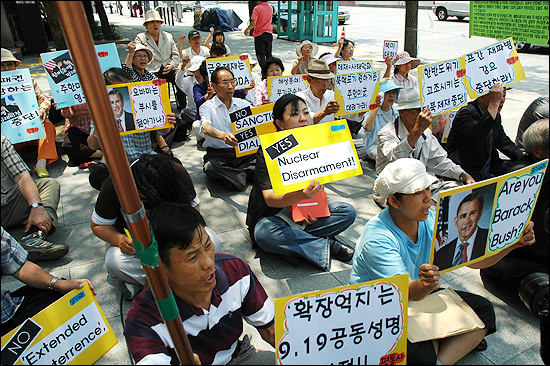
Nuclear disarmament by North Korea is possible if U.S. troops withdraw from the Korean Peninsula and the Korea-U.S. alliance is abolished. As a condition for abandoning its Nuclear Weapon Program, North Korea demanded the United States abandon its hostile policies, abolish its Nuclear Umbrella in South Korea, as well as the Korea-U.S. alliance.
The Korean Peninsula still remains at war 60 years after the “Korean War Armistice Agreement” was signed on July 27, 1953. A peace treaty to end the Korean War can be a definite turning point that leads to denuclearization of the Korean peninsula. Replacing the Armistice Agreement with a peace treaty and terminating the Korea-U.S. alliance are necessary for peace not only on the Korean Peninsula but also the broader Northeast Asian region and the world. Denuclearization of the Korean peninsula, facilitated by a peace treaty, along with the Mongolian Nuclear-Weapons-Free Zone, can become the foundation for a broader North East Asia Nuclear-Free Zone.
SPARK continues to organize a “one million signature campaign” for denuclearization and peace on the Korean Peninsula. We urge your active support and appreciate your participation in the struggle.
In July 1953, only 2 months after they signed the “Korean War Armistice Agreement,” South Korea and the United States entered into an alliance through the “Korea-U.S. Mutual Defense Treaty”. A military alliance is an arrangement in which parties come together for the purpose of a potential war. The South Korea-U.S. alliance is premised on a temporary truce after the Korean War, and its continued existence means the state of war has not yet ended.
Article IV: 60 of the Korean War Armistice Agreement recommended that “a political conference” be held “within three (3) months after the Armistice Agreement is signed”, “to settle through negotiation the questions of the withdrawal of all foreign forces from Korea and the peaceful settlement of the Korean question”. The Korea-U.S. alliance contradicts Article IV: 60, which recommends the replacement of the Armistice Agreement with a permanent peace treaty.
US Bases in Korea and the “Strategic Flexibility” Doctrine
South Korea is covered with U.S. military bases. U.S. Forces in Korea (USFK) has 87 bases, which take up a total of 32,000 acres of land. In addition, there are 37 joint training facilities for the South Korea-U.S. Combined Forces, which occupy more than 49,000 acres of land, and 5 Korean Air Force bases designated “Collateral Operation Bases” for U.S. reinforcement.
Today, U.S. bases in Korea are being transformed into advanced operation bases for preemptive strike against North Korea. According to the strategic flexibility doctrine of the USFK, its troops can be flexibly and rapidly deployed at any time to any place in the world. For example, 3600 troops of the Second Division were sent to Iraq in 2004. Strategic flexibility has nothing to do with the main stated role of U.S. Forces in Korea, which is to serve as a deterrent force against a possible attack from the north. Rather, it is intended to turn U.S. bases in Korea into launch pads for U.S. military domination of the world. It violates the Korea-U.S. Mutual Defense Treaty, which stipulates the stationing of U.S. Forces in Korea with the mission of defending South Korea from a potential attack from the north.
Furthermore, U.S. bases cause numerous critical problems to local communities, such as forced evacuation of residents and farmers from their land and disastrous ecological damage. The strategic flexibility doctrine of the USFK must be discarded and unilateral U.S. base expansions must be stopped. All U.S. bases should be removed from Korea immediately for the sake of peace on the Korean peninsula, justice for the people, and preservation of our livelihoods off the land.
The Struggle against U.S. military bases in Korea
After their struggle against the expansion of Camp Humphrey in 2006, residents of Pyeongtaek continue to fight against the construction of a second landing strip at Osan Air Base. This additional runway currently under construction is for large scale transport planes to quickly dispatch troops and supplies from Korea to conflict regions all over the world.
Residents of Mugeon-ri are also taking to the streets to stop the expansion of a military training facility. The Mugeon-ri training facility is used not only by troops stationed in Korea but also by other U.S. forces abroad, such as the Stryker Brigade Combat Team in the United States, U.S. Forces Japan, and the U.S. Air force in Australia. The site for the planned expansion is home to white herons and ash trees, considered natural heritages in Korea.
Residents of Jejudo also continue to struggle against the planned construction of a naval base. The Jejudo naval base will be the base port of the Korean Navy Task Fleet, mainly equipped with Aegis destroyers. The United States plans to use Jeju Island as a port to deploy nuclear-powered aircraft carriers and Aegis destroyers, because Jeju Island is strategically located with direct access to the East China Sea. Gangjeong village, the site of the planned base construction, boasts the only coral reefs in Korea and is the habitat of red soft coral. It was designated by UNESCO as a natural heritage site in 2002.
It is important to stand in solidarity with the residents of local communities fighting against U.S. bases in Korea. The “Korea-U.S. Mutual Defense Treaty” which provides the legal basis for the Korea-U.S. alliance must be abolished. SPARK is part of the struggle in solidarity with the residents of the local communities of Pyongtaek, Mugeon-ri, and Jeju Island to resist U.S. bases and carry out our mission to abolish the “Korea-U.S. Mutual Defense Treaty” and the Korea-U.S. alliance. We ask you for your support and solidarity with the people in Pyeongtaek, Mugeon-ri, and Jeju Island.
A Peace Treaty to End the Korean War – Key to Denuclearization and Peace on the Korean Peninsula
The so-called nuclear crisis in Korea began in 1957, when the United States first deployed nuclear weapons in South Korea. The United States still extends its Nuclear Umbrella to South Korea, and preemptive strike against North Korea is central to the U.S. strategic doctrine, despite U.S. assertions that its nuclear weapons were withdrawn from South Korea in the 1990’s.
In 2002, the former Bush administration declared North Korea part of an “axis of evil”, then carried out a preemptive attack against Iraq, also part of Bush’s “evil axis”. This was the decisive moment when North Korea began to develop its nuclear weapons. The U.S. Nuclear Posture Review, released on April 6, 2010 by the Obama administration, still leaves the door open for the possibility of a preemptive attack against North Korea.
A 2007 report on North Korea by the Atlantic Council states the root cause that led North Korea to develop its Nuclear Weapons is military provocations by U.S. Forces in Korea. According to a 2005 survey, 85% of South Korean civilians regard North Korea’s Nuclear Weapons as a deterrent force against the United States and a means for self-defense. (Korean Institute for National Unification)
Nuclear disarmament by North Korea is possible if U.S. troops withdraw from the Korean Peninsula and the Korea-U.S. alliance is abolished. As a condition for abandoning its Nuclear Weapon Program, North Korea demanded the United States abandon its hostile policies, abolish its Nuclear Umbrella in South Korea, as well as the Korea-U.S. alliance.
The Korean Peninsula still remains at war 60 years after the “Korean War Armistice Agreement” was signed on July 27, 1953. A peace treaty to end the Korean War can be a definite turning point that leads to denuclearization of the Korean peninsula. Replacing the Armistice Agreement with a peace treaty and terminating the Korea-U.S. alliance are necessary for peace not only on the Korean Peninsula but also the broader Northeast Asian region and the world. Denuclearization of the Korean peninsula, facilitated by a peace treaty, along with the Mongolian Nuclear-Weapons-Free Zone, can become the foundation for a broader North East Asia Nuclear-Free Zone.
SPARK continues to organize a “one million signature campaign” for denuclearization and peace on the Korean Peninsula. We urge your active support and appreciate your participation in the struggle.


![[URGENT PLEA: In Update] EMERGENCY in GANGJEONG Since AUG. 24, 2011](https://blogger.googleusercontent.com/img/b/R29vZ2xl/AVvXsEiQvpaNf6EePZVucu97_JphYsFS5IgumnSiA4YAmen1PZcim6vMmW7XjZ7J6nLh-Cu36mwBN5n1evrA3ey0vYMpwlAGsgnSFggv6a1w4Qx9BvvqOB0hy0BIcBkL2Exfs3zIxBsBuDGa1kzg/s227/jejusit.jpg)


![[Solidarity from Japan for the Jeju] 253 individuals and 16 groups/organizations](https://blogger.googleusercontent.com/img/b/R29vZ2xl/AVvXsEivji7100kBkr0hzvqYfh4IBBilkZ6XgDIg89jOxS6kTssxsVKC6Wm-fZbKOEsiy3zcO-9gW6GHspD5R_2C9WsGx5S1Z5VPj_OVRF7H6dxdaT0S-2H1eqsDsYvIwOV26VscxTHnKmP5iZmh/s227/jeju_12_10j.jpg)

![[Translation] Korean organizations' statement: Immediately cancel the joint ROK-US drill Nov 26](https://blogger.googleusercontent.com/img/b/R29vZ2xl/AVvXsEgfKDMo-qyEjm5asUtHlREyJY_5Ou-2tyB8SH6aUxiViRbbKR-8W_rirFiGp5DYSoD_KaeNOPMWR0af0ZPUIbJKmR89ImDvADHsGAIqsJVBvJNBEIl5wLd3G_zhPDW3Z2SxsHXadOsXe8st/s227/1.jpg)
![HOT! [Hankyoreh Hani TV] Beneath the Surface: the investigation into the sinking of the Cheonan](https://blogger.googleusercontent.com/img/b/R29vZ2xl/AVvXsEh80rL3Qv9GnfHSqbYMfivdqX5gZN-1O_VQj3A_Gk3yjWdybHwJCsprA3l6cEQB0cYCP2oNeaLo2ohLGIy0Uqqkv_fRkBevGJ2f-qkKD5eP1ZGsKeQ-r-jHUUb79WvucIN7hpEtXza4xXCL/s227/HaniTV+Cheonan.gif)


![[Translation]Statement against illegal inspection and unjust lay-off by the Kunsan USAFK!(Nov_2010)](https://blogger.googleusercontent.com/img/b/R29vZ2xl/AVvXsEg3JlQ-lreusCIJo5Yv2e3ZrRwrSMUE7UQxlrDVjmBehl0Pa24QZIAbZ5vUpgnnExbkKL9PdCwxVYSHWJkr_XK0FM4EhU3CMFhqfborVNu_p4v3bEFpNm3ia-aEHnvMMuEBI27aB7_BETuJ/s227/gunsan+protest.gif)
![[Translation] Korean organizations' statement against dispatching special force to the UAE on Nov.](https://blogger.googleusercontent.com/img/b/R29vZ2xl/AVvXsEiU7TNhTDLLwZkKP0Z78JsCZKp6je-QSFll3_ThmLES_y_nPLXEzeakrsZXoNxhN5blopEhy6xGV2tneJrniPdTR-JvOQMmSLr_HhlucxFvbusxk4oKvvMO2laBOHSIkB9OOeOxrQlqCA0O/s227/antiwarpeace.jpg)
![[Translation] Stop, Joining MD!: South Korean activists' statement and writing on Oct. 25, 2010](https://blogger.googleusercontent.com/img/b/R29vZ2xl/AVvXsEggGIHVei8j7LCJPJB5HIrspd942q436daNTquP-pFd45Cl70Ml_1JFiFDHgKu6FcoqNgFVKIFqjeuSPau2k_BwGHhx0cqFFL2-4ybZSTlmua0_AsERBtKYQa7jZk7uNj41LX6rj2vksHbo/s227/StopMD.jpg)
![[In Update] People First, NO G-20 (Nov. 6 to 12, Korea)](https://blogger.googleusercontent.com/img/b/R29vZ2xl/AVvXsEhZl8VTqeL7o2ndliGIE-sZFCikbTgfB9KCc3AtZvDaYijBBEhdfultMEOpyrCaD5gzpH8mqfWjU20KXMbSUl-5KM7yQeHU6z3BWV8tiOy4UKaCudz9VKWoi5x58xdC_gQpJTjkR5u7O9xf/s227/left21_G20.jpg)
![[International Petition] Stop US helipad plan in Okinawa to save great nature](https://blogger.googleusercontent.com/img/b/R29vZ2xl/AVvXsEihgYmdb0N8ViPvTFC_5i-Psbt4eX_LnAUEOtZkUngv_pGvRyWag1r6W60NicLLyTgWq-sPT1hBxLY5SadEIVv5McfZQ5uIhe-W0VoflQNqojsYZjFW6AH-gB1jsmSDGnGuKIFk2UkvNbFG/s227/yanbaru_w.jpg)
![[Global Network] against the first launch of Quasi-Zenith Satellite, Japan, on Sept. 11, 2010](https://blogger.googleusercontent.com/img/b/R29vZ2xl/AVvXsEj2sYpfodDDMIA7qXwuda0DmKapxXFB479fDnn8RKy7QNZqz0VEvWucNd-DleZ37hWNXC-Z8QtaqtM37VuPwac5SgclJ9_khBBSWOedvm19MRXIP1j1kcWrK6EW5IFjQdEEY2h7E6xuyNvC/s227/Qzss-45-0_09.jpg)
![[In update] Some collections on the Koreans’ protests against the sanction & war on Iran](http://4.bp.blogspot.com/_gnM5QlRx-4c/TJMvke6t8zI/AAAAAAAAFO4/tamQ8LUnOOA/S227/No+Sanction+on+Iran.jpg)
![[Three International Petitions] to End the Korean war and peace treaty(or peace resolution)](https://blogger.googleusercontent.com/img/b/R29vZ2xl/AVvXsEhlohLVYtpCg7iMsZhNYY4hBbhTi2dIheHMHWLDph9X2y78cjgZV1LeSfUJeu80elhJm70Q9E059q72lK-spSPvsRG4bPuCDIytltJB9IH3mWt9OG98HqhnTsPakwhvNeoCFUgF1xoxQ2EZ/s227/border.jpg)


![[Collection of Documents] No Base Learning and Solidarity Program_Korea(June 14 to 20, 2010)](https://blogger.googleusercontent.com/img/b/R29vZ2xl/AVvXsEix_HzjToh3nNGHBc-_5gasq-ykcaZ6GInLixILmZVyRJ5xoeHCxWOyYd9fSM7bmnuFsjSrYOGEPnQOwB1Dcyo-sN4Pw0cFPhUtKig_qlVnGL1Wi82ClvPqbEPWYhJiqdNF0DyzLIBETMB9/s227/No-Base-banner.jpg)
![Site Fwd:[John Hines] A U.S. Debate coach’s research trip on the Issues of Korea](https://blogger.googleusercontent.com/img/b/R29vZ2xl/AVvXsEg8yRra0zNhKHN74Auqhd3Nx9tZ7BWCGflRJHGH4CfzBT_yjhZ8Nl9b3OZuLpYWJ2exsjmR0oVl-Qq_cf832p2VdmOZhUi-lCFzCNeDSyVtweX1lWZPC-RlHmDMLtilHwHjNFTenBiM4Fk4/s227/Jeju-Peace-Tour.jpg)


![[News Update] Struggle Against the Jeju Naval Base since Jan. 18, 2010](https://blogger.googleusercontent.com/img/b/R29vZ2xl/AVvXsEhKfSTRC5QKBBSFIq_m7QIqXdlbL4-gF5GJYn9Q-pN__k7sV7uxGDcLY5L8xmU7QuWuUhBT_GhG-URBPO80RT3AfWfDrWJr06h1hFuZC6ZBVKe4U6PS1Cd7Kr6olO8TYQtk13Drox7IS6ea/s226/scrum1.jpg)


![[Urgent] Please spread the Letter!: There was no Explosion! There was no Torpedo! (May 26, 2010)](https://blogger.googleusercontent.com/img/b/R29vZ2xl/AVvXsEhSd2yWZ3xGwnJQXB73z5FgXCqSosAoB9_33-GLYprOmLqjmvgSAQp1BYI7e4slK1FDxHRi9KK4um-OpDaj8QOkXwAScVAgvvq6-ehbDA-hbkr96wT9oHNNmWnBPv8GU4hoZp9X8F9AZBX4/s227/grounded.jpg)
![Text Fwd: [Stephen Gowans]The sinking of the Cheonan: Another Gulf of Tonkin incident](https://blogger.googleusercontent.com/img/b/R29vZ2xl/AVvXsEi_L6hB3RZ1MovTXHe0A8yn_RfgMALGR0kM6poBuGp809xwvHtB_-PGWtS_WpyPWatyd9lB2pPqL2gOLc4dTCEdJ9sMvxJWEdapl-mMLm7WHAsV-jVpgqarVh8XBtdz_0c-Vohdh3HtJahD/s227/lee-myung-bak.jpg)
![[Japan Focus]Politics in Command: The "International" Investigation into the Sinking of the Cheonan](https://blogger.googleusercontent.com/img/b/R29vZ2xl/AVvXsEiHmTo8v-uCJnabRhMdnBAkC9J3s5bb2JsDKiT5leJHwbK8IDJHxfJmqQ_C0Is_bPC6UGMf05CA0exF2y4r2x9RhFUHT0kjsKviaME_MZXKnq775UyYAdb7w2SAzE75XvBfHp1al2q6i3cf/s227/wen_jiabao_and_lee_myungbak.png)
![[Japan Focus] Who Sank the SK Warship Cheonan? A New Stage in the US-Korean War and US-China](https://blogger.googleusercontent.com/img/b/R29vZ2xl/AVvXsEiKSS5ULT5QBaMGYpXXqBMX9jtwLwMLuK469b6Ku72GTJYKUObzTANaPjZqvvpPzYMJgPF53sjhvhK3DVa88ipYlggsJageykXlkxY6s8TW05xcU-_vfhf-pACUoaWuFbT-fsU1qEhm_yIi/s227/buoy_map.gif)
![[Updated on 12/13/10] [Translation Project] Overseas Proofs on the Damages by the Military Bases](https://blogger.googleusercontent.com/img/b/R29vZ2xl/AVvXsEikADE6JovUNspQyZUWVMTLAQg7yQNqXpVUbqZPk8f4uc_1723_xm1Cco6WAmstQXVPnaJAcb1mZA8Ny_3xONT_f5uh8MNLPnUhtqdGgy3HCtC1Vbbz4Q0ZY1Cssu-4cJEVNdrvznbS5UzO/s227/missile.jpg)
![[International Petition] Close the Bases in Okinawa](https://blogger.googleusercontent.com/img/b/R29vZ2xl/AVvXsEhNpQiHklwFbWVlFK7GDFXnBSOOSFEj3Il-We-N3uTDldKiidL2NGZs7X_LtTnatzTo_r8CexRkFe8NhfxYqmgp1knEEslROTfNjI5_mSb57cdbhPkftvanveYBaevAD9xuKDGoIxiTwoSb/s227/2.jpg)
![[In Update]Blog Collection: No Korean Troops in Afghanistan](https://blogger.googleusercontent.com/img/b/R29vZ2xl/AVvXsEjjEmCRXSNAG7_QBxKWbdksmxoWR4nyAovQTTdR1G2AuXh0jxtqNkI9OmYgYWRoLAJShvtBvE840QXuBWSVh3u3zMYqkNAFX6OWy3m5Nur4HM7uNK-pKT1ycyApJp-VLyhIFRRcoisYAh0E/s226/No-Troops-to--Afghanistan.jpg)


![[Translation] 125th [Monthly] Self-Reliance Unification Peace Action](http://www.blogger.com/img/blank.gif)