Organizing Notes
SUNDAY, MAY 15, 2011
NATO - WAR ARM OF CORPORATE GLOBALIZATION
http://rt.com/usa/news/nato-libya-us-war/
Showing posts with label Arms sale. Show all posts
Showing posts with label Arms sale. Show all posts
Tuesday, May 17, 2011

Monday, May 9, 2011
[Korea MND News Catch Up] Military aims to boost defense/ The number of U.S. troops will be maintained / Defense Industry 2020 follow-up plan unveiled
Ministry of National Defense, ROK
Recent News
http://www.mnd.go.kr/mndEng_2009/WhatsNew/RecentNews/index.jsp
____________________________________________________
Image: Attendants listen to presentations from experts during the third 'Defense Green Technology Symposium' which was held on April 26 at the War Memorial of Korea in Yongsan, Seoul.
NO 756
2011-05-02 15:07
Military aims to boost defense 'green' technologyApril 27, 2011
The third 'Defense Green Technology Symposium,' organized by the state-run Agency for Defense Development (ADD) aimed at sharing current status of defense green technology development and its research achievements, was held on April 26 at the War Memorial of Korea in Yongsan, Seoul.
Some 100 experts from the military, government, academia and industry attended the symposium, which was sponsored by the Presidential Committee on Green Growth. The symposium begin with an opening address delivered by the Vice Minister of National Defense Lee Young-geol. Then Noh Dae-lae, Commissioner of Defense Acquisition ProgramAdministration, delivered welcoming speech.
In a topic presentation session, Kim Hwa-seok, an official responsible for managing military force and resources at the Defense Ministry, and three experts of ADD, presented subjects related to green technology development.
Kim, who made presentation under the title 'Direction for Implementing Defense Green Growth Policy,' explained the necessity of Defense Green Growth by giving examples of worldwide environment changes, special characteristics of defense technology development and aspects of future warfare. Also he introduced measures for successful development of Defense Green Growth, including training troops the importance of green growth and change their lifestyle living with green growth, establishing green growth promotion system in the military and adopting advanced green growth know-hows from other countries.
Choi Chang from ADD said that the agency is in the middle of studying overall scope of the flow of green energy source in order to obtain eco-friendly and green energy technology as well as to prepare of energy security. Choi added that people can anticipate highly on a result of defense eco-friendly energy research since the result will attain the world level. Future arms trade market can also be boosted as a result of the research, Choi said.
Another expert from ADD Kim Dong-hyeon presented the work on developing future weapon system based on taking advantage of low carbon future energy. For instance, hybrid combat vehicle, new energy resource warship and high-altitude unmanned surveillance plane, said Kim.
Expert Lee Yun-hui of ADD revealed the process and current status of building military management technology based on 'Modeling and Simulation' system. In addition, explained many ripple effects that could be caused by an experiment using Modeling and Simulation system, including reinforcing combat capabilities by reducing energy in various battle fields and lessen environment damage as well as danger of leaking toxic waste.
In particular, ADD drew attendants' attention at the symposium by exhibiting eight research achievements, including eco-friendly fuel cell and high mobility hybrid propel system for special-purpose military vehicles.
_________________________________
The number of U.S. troops will be maintained : Ministry
2011-04-25 16:32
April 19, 2011
The Ministry of National Defense of South Korea said on April 18 that the number of the United States Forces Korea (USFK) troops maintains at 28,500.
The ministry's announcement was released in response to some media reports claiming that the number of U.S. troops here reduced to 26,305 in 2009 based on the Base Structure Report by the Pentagon. The ministry also said that there is no change in the number of U.S. troops in South Korea according to a status report of USFK military capabilities.
"The number written on the Pentagon's report is not an actual number of troops but total figure that is estimated based on a scale of facilities they can be accommodated," said a defense official at the ministry.
Even though the number of South Korean and U.S. troops here have been steadily decreased since 2000, Seoul and Washington had agreed during a summit talks between leaders of two countries in April 2008 to maintain the number of U.S. troops in South Korea at 28,500 under a decision that joint defense capabilities should not be weakened when North Korea keep on making military provocations.
______________________________________
Image : Lt. Gen. John D. Johnson, the commander of the Eighth U.S. Army, talks to reporters at Yongsan Garrison in Seoul on April 20.
NO 753
2011-04-25 16:33
USFK is committed to defending Korean Peninsula
April 21, 2011
The U.S. Forces Korea (USFK) is taking priority of defending South Korea and it will also participate in more multinational military exercises in the Asia-Pacific region, going beyond its duties to defend the Korean Peninsula.
Lt. Gen. John D. Johnson, the commander of the Eighth U.S. Army, talks to reporters at Yongsan Garrison in Seoul on April 20.
In a press briefing at Yongsan Garrison in Seoul on April 20, Lt. Gen. John D. Johnson, the commander of the Eighth U.S. Army (EUSA), said there will be no change of the number of U.S. forces here as agreed on by Seoul and Washington. Johnson stressed that the USFK is always taking top priority of defending South Korea.
He also said that about 500 members of the 2nd U.S. Infantry Division had joined joint military exercise in the Philippines earlier this month. In addition, he claimed the USFK has secured transport so troops can immediately return to South Korea from overseas missions in case of emergencies on the peninsula.
"We can strengthen combat capabilities as well as readiness posture if the USFK take part in overseas drills and that will benefit South Korea's security," Johnson said. "Maintaining readiness posture to prepare for actual battles is the reason for the presence of the USFK here."
Following deployment of latest-model M1 tanks, the USFK plans to introduce newest armored combat vehicles this summer, he said.
In response to questions related to the wartime operational control transfer from U.S. to South Korea, he said that even after the transition reinforcement capabilities of U.S. forces to the peninsula in emergencies will be maintained as it is. The commander said he will not make security vacuum while moving U.S. bases from Seoul to Pyeongtaek.
In a separate briefing, an officer under the EUSA said that currently EUSA is experiencing its structure system change from Army Service Component Command to Field Army. The EUSA is focus on combat mission while most of administrative and logistics duties will be transferred to the U.S. Army Pacific.
The officer also said that EUSA is in process of altering work system of U.S. soldiers to serve in South Korea for three years accompanying their families rather than to serve only one year without bringing their families.
"With this change of work system, safe working environment will be created by improving living condition of U.S. soldiers," the officer said. "It is going to strengthen readiness posture as well."
_________________________________
Recent News NO 752
Defense Industry 2020 follow-up plan unveiled
2011-04-25 16:30
April 18, 2011
Eleven defense industry projects, including creating Korean Fighter Experimental (KFX) and Korea Attack Helicopter (KAH) programs, will be handed over to private sector from state-run Agency for Defense Development (ADD).
ADD is planning to increase the number experts to focus on developing Korean-made weapon system and give weight to creating strategic weapon system as well as fundamental core technology.
model fighter jet that is expected to be made from Korean Fighter Experimental program
The Ministry of National Defense and Defense Acquisition Program Administration (DAPA) announced the outline of follow-up measures for 'Defense Industry 2020' plan on April 15.
The follow-up plan was first reported to the President Lee Myung-bak in the Presidential Council for Future and Vision in October last year. Since then for six months, defense experts from ministries, government agencies, defense firms and academic field work on details of the plan and reported the final measures during a meeting organized by Yim Tae-hee, Blue House chief of staff.
In particular, the Defense Ministry and DAPA prospects of earning economic benefit worth $4 billion through arms trade and create some 25,000 job positions in case follow-up plan proceed without trouble.
Under the plan, private sectors are expected to have high control over researching and developing general strategic weapon system. After reviewing 13 defense projects responsible for ADD since October last year, DAPA decided to transfer 11 projects to private sector. Among them, six projects, including making new Nuclear-biological-chemical Reconnaissance vehicles, radio sets for small units and target measuring device for Air Control jet, are going to be handed over right away. FTX and KAH programs will be transferred later.
In addition, other projects such as developing new unmanned aerial vehicles to be used in reconnaissance operations, military satellite communication system and anti-artillery detect radar are scheduled to be transferred to private firms but ADD is considering complementary measures for technical parts that private sectors are lack of.
Basically, all defense projects related to developing general strategic weapon system are going to be controlled by private firms from 2012, according to the Defense Industry 2020 follow-up plan. The plan expects to raise the ratio of private firms involved in defense weapon system from current 60 percent to 75 percent.
In order to ease the pressure of project management after transfer, DAPA is planning to strengthen professionalism by increasing the number of experts in the management team.
The follow-up measure said that ADD is going to reinforce professionalism in basic science field by recruiting more experts up to 40 percent from current 16 percent.
Also the number of experts with doctoral degree will be increased up to 60 percent from current 39 percent. In other words, projects aimed at developing strategic weapon system and basic core technology are slated to be more focused than creating general weapon system. ADD is expected to expand the ratio of its own research to 60 percent from current 13.5 percent. So far, ADD has been relying on private contractors for developing weapon system due to heavy burden on the work. The proportion of its own research of Korea Atomic Energy Research Institute, Korea Institute of Science and Technology Information and Korea Institute of Science and Technology accounts for 96, 97 and 92 percent, respectively.
A special team responsible for managing the use of new weapon system will be created within the Joint Chiefs of Staff in order to contribute in improve its capabilities and domestic industry. The team is going to be consisted of experts from defense industry and economic industry as well as specialists recommended by DAPA.
Under the follow-up plan, a military power review committee which has been operated since December last year will design mission, organization structure and management method so that the new plan could be put into practice systematically and efficiently. The committee will also first review the operation of 21 short- and medium-term defense projects, including K-2 tank, K-11 rifle, new multiple rocket launcher, Future Frigate Experimental and high-altitude unmanned aerial vehicles.
In order to foster globally competitive defense firms, DAPA and the Ministry of Knowledge Economy will beef up professionalism of defense firms by promoting investment on research and development until July this year, reforming production cost system and improving potential small and medium companies.
Moreover, the government will push for revising a law related to defense reform within this year so that it can establish mandatory plan of using private resources. By August this year, the government is planning to select sectors that can be easily privatized to take advantage of their resources and set up yearly plan.
Recent News
http://www.mnd.go.kr/mndEng_2009/WhatsNew/RecentNews/index.jsp
____________________________________________________
Image: Attendants listen to presentations from experts during the third 'Defense Green Technology Symposium' which was held on April 26 at the War Memorial of Korea in Yongsan, Seoul.
NO 756
2011-05-02 15:07
Military aims to boost defense 'green' technologyApril 27, 2011
The third 'Defense Green Technology Symposium,' organized by the state-run Agency for Defense Development (ADD) aimed at sharing current status of defense green technology development and its research achievements, was held on April 26 at the War Memorial of Korea in Yongsan, Seoul.
Some 100 experts from the military, government, academia and industry attended the symposium, which was sponsored by the Presidential Committee on Green Growth. The symposium begin with an opening address delivered by the Vice Minister of National Defense Lee Young-geol. Then Noh Dae-lae, Commissioner of Defense Acquisition ProgramAdministration, delivered welcoming speech.
In a topic presentation session, Kim Hwa-seok, an official responsible for managing military force and resources at the Defense Ministry, and three experts of ADD, presented subjects related to green technology development.
Kim, who made presentation under the title 'Direction for Implementing Defense Green Growth Policy,' explained the necessity of Defense Green Growth by giving examples of worldwide environment changes, special characteristics of defense technology development and aspects of future warfare. Also he introduced measures for successful development of Defense Green Growth, including training troops the importance of green growth and change their lifestyle living with green growth, establishing green growth promotion system in the military and adopting advanced green growth know-hows from other countries.
Choi Chang from ADD said that the agency is in the middle of studying overall scope of the flow of green energy source in order to obtain eco-friendly and green energy technology as well as to prepare of energy security. Choi added that people can anticipate highly on a result of defense eco-friendly energy research since the result will attain the world level. Future arms trade market can also be boosted as a result of the research, Choi said.
Another expert from ADD Kim Dong-hyeon presented the work on developing future weapon system based on taking advantage of low carbon future energy. For instance, hybrid combat vehicle, new energy resource warship and high-altitude unmanned surveillance plane, said Kim.
Expert Lee Yun-hui of ADD revealed the process and current status of building military management technology based on 'Modeling and Simulation' system. In addition, explained many ripple effects that could be caused by an experiment using Modeling and Simulation system, including reinforcing combat capabilities by reducing energy in various battle fields and lessen environment damage as well as danger of leaking toxic waste.
In particular, ADD drew attendants' attention at the symposium by exhibiting eight research achievements, including eco-friendly fuel cell and high mobility hybrid propel system for special-purpose military vehicles.
_________________________________
The number of U.S. troops will be maintained : Ministry
2011-04-25 16:32
April 19, 2011
The Ministry of National Defense of South Korea said on April 18 that the number of the United States Forces Korea (USFK) troops maintains at 28,500.
The ministry's announcement was released in response to some media reports claiming that the number of U.S. troops here reduced to 26,305 in 2009 based on the Base Structure Report by the Pentagon. The ministry also said that there is no change in the number of U.S. troops in South Korea according to a status report of USFK military capabilities.
"The number written on the Pentagon's report is not an actual number of troops but total figure that is estimated based on a scale of facilities they can be accommodated," said a defense official at the ministry.
Even though the number of South Korean and U.S. troops here have been steadily decreased since 2000, Seoul and Washington had agreed during a summit talks between leaders of two countries in April 2008 to maintain the number of U.S. troops in South Korea at 28,500 under a decision that joint defense capabilities should not be weakened when North Korea keep on making military provocations.
______________________________________
Image : Lt. Gen. John D. Johnson, the commander of the Eighth U.S. Army, talks to reporters at Yongsan Garrison in Seoul on April 20.
NO 753
2011-04-25 16:33
USFK is committed to defending Korean Peninsula
April 21, 2011
The U.S. Forces Korea (USFK) is taking priority of defending South Korea and it will also participate in more multinational military exercises in the Asia-Pacific region, going beyond its duties to defend the Korean Peninsula.
Lt. Gen. John D. Johnson, the commander of the Eighth U.S. Army, talks to reporters at Yongsan Garrison in Seoul on April 20.
In a press briefing at Yongsan Garrison in Seoul on April 20, Lt. Gen. John D. Johnson, the commander of the Eighth U.S. Army (EUSA), said there will be no change of the number of U.S. forces here as agreed on by Seoul and Washington. Johnson stressed that the USFK is always taking top priority of defending South Korea.
He also said that about 500 members of the 2nd U.S. Infantry Division had joined joint military exercise in the Philippines earlier this month. In addition, he claimed the USFK has secured transport so troops can immediately return to South Korea from overseas missions in case of emergencies on the peninsula.
"We can strengthen combat capabilities as well as readiness posture if the USFK take part in overseas drills and that will benefit South Korea's security," Johnson said. "Maintaining readiness posture to prepare for actual battles is the reason for the presence of the USFK here."
Following deployment of latest-model M1 tanks, the USFK plans to introduce newest armored combat vehicles this summer, he said.
In response to questions related to the wartime operational control transfer from U.S. to South Korea, he said that even after the transition reinforcement capabilities of U.S. forces to the peninsula in emergencies will be maintained as it is. The commander said he will not make security vacuum while moving U.S. bases from Seoul to Pyeongtaek.
In a separate briefing, an officer under the EUSA said that currently EUSA is experiencing its structure system change from Army Service Component Command to Field Army. The EUSA is focus on combat mission while most of administrative and logistics duties will be transferred to the U.S. Army Pacific.
The officer also said that EUSA is in process of altering work system of U.S. soldiers to serve in South Korea for three years accompanying their families rather than to serve only one year without bringing their families.
"With this change of work system, safe working environment will be created by improving living condition of U.S. soldiers," the officer said. "It is going to strengthen readiness posture as well."
_________________________________
Recent News NO 752
Defense Industry 2020 follow-up plan unveiled
2011-04-25 16:30
April 18, 2011
Eleven defense industry projects, including creating Korean Fighter Experimental (KFX) and Korea Attack Helicopter (KAH) programs, will be handed over to private sector from state-run Agency for Defense Development (ADD).
ADD is planning to increase the number experts to focus on developing Korean-made weapon system and give weight to creating strategic weapon system as well as fundamental core technology.
model fighter jet that is expected to be made from Korean Fighter Experimental program
The Ministry of National Defense and Defense Acquisition Program Administration (DAPA) announced the outline of follow-up measures for 'Defense Industry 2020' plan on April 15.
The follow-up plan was first reported to the President Lee Myung-bak in the Presidential Council for Future and Vision in October last year. Since then for six months, defense experts from ministries, government agencies, defense firms and academic field work on details of the plan and reported the final measures during a meeting organized by Yim Tae-hee, Blue House chief of staff.
In particular, the Defense Ministry and DAPA prospects of earning economic benefit worth $4 billion through arms trade and create some 25,000 job positions in case follow-up plan proceed without trouble.
Under the plan, private sectors are expected to have high control over researching and developing general strategic weapon system. After reviewing 13 defense projects responsible for ADD since October last year, DAPA decided to transfer 11 projects to private sector. Among them, six projects, including making new Nuclear-biological-chemical Reconnaissance vehicles, radio sets for small units and target measuring device for Air Control jet, are going to be handed over right away. FTX and KAH programs will be transferred later.
In addition, other projects such as developing new unmanned aerial vehicles to be used in reconnaissance operations, military satellite communication system and anti-artillery detect radar are scheduled to be transferred to private firms but ADD is considering complementary measures for technical parts that private sectors are lack of.
Basically, all defense projects related to developing general strategic weapon system are going to be controlled by private firms from 2012, according to the Defense Industry 2020 follow-up plan. The plan expects to raise the ratio of private firms involved in defense weapon system from current 60 percent to 75 percent.
In order to ease the pressure of project management after transfer, DAPA is planning to strengthen professionalism by increasing the number of experts in the management team.
The follow-up measure said that ADD is going to reinforce professionalism in basic science field by recruiting more experts up to 40 percent from current 16 percent.
Also the number of experts with doctoral degree will be increased up to 60 percent from current 39 percent. In other words, projects aimed at developing strategic weapon system and basic core technology are slated to be more focused than creating general weapon system. ADD is expected to expand the ratio of its own research to 60 percent from current 13.5 percent. So far, ADD has been relying on private contractors for developing weapon system due to heavy burden on the work. The proportion of its own research of Korea Atomic Energy Research Institute, Korea Institute of Science and Technology Information and Korea Institute of Science and Technology accounts for 96, 97 and 92 percent, respectively.
A special team responsible for managing the use of new weapon system will be created within the Joint Chiefs of Staff in order to contribute in improve its capabilities and domestic industry. The team is going to be consisted of experts from defense industry and economic industry as well as specialists recommended by DAPA.
Under the follow-up plan, a military power review committee which has been operated since December last year will design mission, organization structure and management method so that the new plan could be put into practice systematically and efficiently. The committee will also first review the operation of 21 short- and medium-term defense projects, including K-2 tank, K-11 rifle, new multiple rocket launcher, Future Frigate Experimental and high-altitude unmanned aerial vehicles.
In order to foster globally competitive defense firms, DAPA and the Ministry of Knowledge Economy will beef up professionalism of defense firms by promoting investment on research and development until July this year, reforming production cost system and improving potential small and medium companies.
Moreover, the government will push for revising a law related to defense reform within this year so that it can establish mandatory plan of using private resources. By August this year, the government is planning to select sectors that can be easily privatized to take advantage of their resources and set up yearly plan.
Thursday, May 5, 2011
Text Fwd: 30% of Air Force bomb fuses may not work
http://www.koreatimes.co.kr/www/news/nation/2011/05/205_86368.html
05-03-2011 18:11
30% of Air Force bomb fuses may not work
05-03-2011 18:11
30% of Air Force bomb fuses may not work
Monday, May 2, 2011
Text Fwd: [April 12] Civil Society's Joint Declaration for the 1st Global Day of Action on Military Spending
Source: People's Solidarity for Participatory Democracy
http://blog.peoplepower21.org/English/21046
[April 12 Joint Declaration]
National Assembly-Civil Society's Joint Declaration for the 1st Global Day of Action on Military Spending
" Use the Tax for Welfare, not Warfare "
As we celebrate the Global Day of Action on Military Spending, we are here to concern ever-increasing military spending and following challenges challenge and menace to our peace. We need to focus on the fact that the sum of global military spending in 2010 marked 1.6 trillion dollars, which is an increase of about 150% compared to that of 2000; the trend does not seem to be discontinued even in the global economic crisis.
30 countries are raising their voices for military spending reduction. The reason is in that
the huge military spending does not guarantee world peace and security but only brings ceaseless military tension and accelerates arms race. Arms race in Northeastern Asia is a typical example on the phenomenon. The sum of military spending by the U.S., China, Russia, Japan and South Korea reached about 889.4 billion dollars in 2009, which holds 58% of the total military spending worldwide. South Korea’s military expenditure has been doubly increased in 2009 compared with 2000. Though each country increases military budget drastically, peace on the Korean Peninsular and Northeastern Asia is in a very distant future. Present situation we are currently facing proves that enormous amount of military spending and multitudinous weapons do not assure peace.
We deeply concern that considerable numbers of matters critical for human lives are ignored and pushed back on the priority list of budget expenditure, while military spending is always overspent. Global warming, poverty, unemployment, education, housing, disease and energy policies relying on nuclear power are highly urgent tasks not only for South Korea, but the whole world. An analysis shows that even only 20% of the global military spending can achieve the Millenum Development Goals(MDG) that the United Nations has set to eradicate global poverty. Therefore, it is the right time to ask what is the most urgent threat of our lives.
We believe that each country should break out of vicious circle of endless arms race. We also believe that even many issues “military readiness” can be solved peacefully through extended mutual respect and trust, and a tight control and reduction in military spending. A huge amount of military spending can be cut by strict verification and effective execution of budget. We emphasize that reduced budget should be used for prioritized issues for people’s lives.
On the Gloal Day of Action on Military Spending , MPs and civic groups in Korea promise to take a leading role in alleviating military tension and confrontation in the Northeastern region of Asia and in establishing a community of permanent peace and coexistence
and suggest as below:
1. We reasonably secure welfare resources through freezing and reducing military budget.
Building mutual trust among countries and reconsidering the validity, transparency and efficiency of military spending will make a considerable amount of fund should be used to relieve many social threats people are facing in their lives.
We are concerned about the fact that major countries in Northeast Asia including South Korea are seeking to foster their war. It is an exaggeration that war industry could benefit the development of civilian technologies. It is war industry that mounts military tension and conflicts at home and abroad and destroys the foundation of peaceful life. Each government should reconsider their policies involved with the investment in war industry, and restrain themselves from promoting weapons which may lead to conflicts. From this aspect, South Korea, which is the world’s second largest arms importer along with China, must reconsider its current policy that it would develop arms industry as the growth engines to become the world’s 7th largest arms exporter. Instead, we are calling upon your government to join the Convention on Cluster Munition and Mine Ban Treaty that regulate inhumane arms.
1. We insist that the Korean Peninsular be denuclearized without relying on nuclear deterrent. lethal nuclear threat is bound to occur from the defense policies dependent on nuclear deterrent such as North’s nuclear weapons the U.S. nuclear umbrella over South Korea and Japan. Treaty banning nuclear weapons should be concluded at the earliest possible moment as the U.N. Secretary-General Ban Ki-moon suggested. We urge every related country to quickly reopen six-party talks on the denuclearization in Northeast Asia. Also, we call on each nation in Northeastern Asia to start a discussion about the denuclearization of Northeastern Asia to remove nuclear threat from the region as a comprehensive measure.
1. We are worried that continuous arms race, military alliances and aggressive military schemes have been becoming permanent while Northeast Asia being the world’s biggest arsenal. Arms race has not brought peace in the region and only justified military motivations to possess asymmetrical deterrent such as nuclear weapons and missiles. Therefore, we urge peaceful and multilateral efforts to reduce the threats out of conventional arms and alleviate military imbalance along with a discussion on denuclearization of the Korean Peninsular.
1. We are concerned that the expansion of military security education by the government and the army to inject old distorted sense of security. We firmly believe our children need peace education that reflects the values of democracy such as human rights, peace, diversity and tolerance, not the one internalizing confrontation, hostility, militarism, and nationalism. Therefore, one-sided propaganda in the form of education by the government and quasi-military trainings in the name of military experience should be immediately stopped.
1. We do not think the government is the only one that should try to alleviate military tension and confrontation and secure peace and coexistence. As the ultimate goal of military and security policy is to guarantee people live safely, civil engagement is both desirable and essential in the prioritization. We urge to improve systems of all countries including South Korea for the public disclosure and the civil engagement of the policymaking procedures on military security.
12 April, 2011 Global Day of Action on Military Spending
31 MPs and 35 Civil Groups
http://blog.peoplepower21.org/English/21046
[April 12 Joint Declaration]
National Assembly-Civil Society's Joint Declaration for the 1st Global Day of Action on Military Spending
" Use the Tax for Welfare, not Warfare "
As we celebrate the Global Day of Action on Military Spending, we are here to concern ever-increasing military spending and following challenges challenge and menace to our peace. We need to focus on the fact that the sum of global military spending in 2010 marked 1.6 trillion dollars, which is an increase of about 150% compared to that of 2000; the trend does not seem to be discontinued even in the global economic crisis.
30 countries are raising their voices for military spending reduction. The reason is in that
the huge military spending does not guarantee world peace and security but only brings ceaseless military tension and accelerates arms race. Arms race in Northeastern Asia is a typical example on the phenomenon. The sum of military spending by the U.S., China, Russia, Japan and South Korea reached about 889.4 billion dollars in 2009, which holds 58% of the total military spending worldwide. South Korea’s military expenditure has been doubly increased in 2009 compared with 2000. Though each country increases military budget drastically, peace on the Korean Peninsular and Northeastern Asia is in a very distant future. Present situation we are currently facing proves that enormous amount of military spending and multitudinous weapons do not assure peace.
We deeply concern that considerable numbers of matters critical for human lives are ignored and pushed back on the priority list of budget expenditure, while military spending is always overspent. Global warming, poverty, unemployment, education, housing, disease and energy policies relying on nuclear power are highly urgent tasks not only for South Korea, but the whole world. An analysis shows that even only 20% of the global military spending can achieve the Millenum Development Goals(MDG) that the United Nations has set to eradicate global poverty. Therefore, it is the right time to ask what is the most urgent threat of our lives.
We believe that each country should break out of vicious circle of endless arms race. We also believe that even many issues “military readiness” can be solved peacefully through extended mutual respect and trust, and a tight control and reduction in military spending. A huge amount of military spending can be cut by strict verification and effective execution of budget. We emphasize that reduced budget should be used for prioritized issues for people’s lives.
On the Gloal Day of Action on Military Spending , MPs and civic groups in Korea promise to take a leading role in alleviating military tension and confrontation in the Northeastern region of Asia and in establishing a community of permanent peace and coexistence
and suggest as below:
1. We reasonably secure welfare resources through freezing and reducing military budget.
Building mutual trust among countries and reconsidering the validity, transparency and efficiency of military spending will make a considerable amount of fund should be used to relieve many social threats people are facing in their lives.
We are concerned about the fact that major countries in Northeast Asia including South Korea are seeking to foster their war. It is an exaggeration that war industry could benefit the development of civilian technologies. It is war industry that mounts military tension and conflicts at home and abroad and destroys the foundation of peaceful life. Each government should reconsider their policies involved with the investment in war industry, and restrain themselves from promoting weapons which may lead to conflicts. From this aspect, South Korea, which is the world’s second largest arms importer along with China, must reconsider its current policy that it would develop arms industry as the growth engines to become the world’s 7th largest arms exporter. Instead, we are calling upon your government to join the Convention on Cluster Munition and Mine Ban Treaty that regulate inhumane arms.
1. We insist that the Korean Peninsular be denuclearized without relying on nuclear deterrent. lethal nuclear threat is bound to occur from the defense policies dependent on nuclear deterrent such as North’s nuclear weapons the U.S. nuclear umbrella over South Korea and Japan. Treaty banning nuclear weapons should be concluded at the earliest possible moment as the U.N. Secretary-General Ban Ki-moon suggested. We urge every related country to quickly reopen six-party talks on the denuclearization in Northeast Asia. Also, we call on each nation in Northeastern Asia to start a discussion about the denuclearization of Northeastern Asia to remove nuclear threat from the region as a comprehensive measure.
1. We are worried that continuous arms race, military alliances and aggressive military schemes have been becoming permanent while Northeast Asia being the world’s biggest arsenal. Arms race has not brought peace in the region and only justified military motivations to possess asymmetrical deterrent such as nuclear weapons and missiles. Therefore, we urge peaceful and multilateral efforts to reduce the threats out of conventional arms and alleviate military imbalance along with a discussion on denuclearization of the Korean Peninsular.
1. We are concerned that the expansion of military security education by the government and the army to inject old distorted sense of security. We firmly believe our children need peace education that reflects the values of democracy such as human rights, peace, diversity and tolerance, not the one internalizing confrontation, hostility, militarism, and nationalism. Therefore, one-sided propaganda in the form of education by the government and quasi-military trainings in the name of military experience should be immediately stopped.
1. We do not think the government is the only one that should try to alleviate military tension and confrontation and secure peace and coexistence. As the ultimate goal of military and security policy is to guarantee people live safely, civil engagement is both desirable and essential in the prioritization. We urge to improve systems of all countries including South Korea for the public disclosure and the civil engagement of the policymaking procedures on military security.
12 April, 2011 Global Day of Action on Military Spending
31 MPs and 35 Civil Groups
Text Fwd: Global Hawk purchase in trouble as U.S. price tag jumps twofold
http://english.hani.co.kr/arti/english_edition/e_national/475725.html
Hankyoreh
Global Hawk purchase in trouble as U.S. price tag jumps twofold
: A decline in demand due to U.S. defense budget cuts has been cited for the price hike
Posted on : Apr.30,2011 13:20 KST
By Lee Soon-hyuk
Following the South Korean government’s announcement of plans to hasten the introduction of the Global Hawk unmanned high-altitude surveillance aircraft in the wake of the Cheonan sinking and artillery attack on Yeonpyeong Island, the United States has reportedly raised its quote for the aircraft more than twofold.
While Seoul announced plans in March to move up the introduction of the Global Hawk in order to improve its North Korean intelligence gathering capabilities, the large increase in the price may generate controversy.
Military web journal Defense 21 reported Friday that the United States recently quoted a purchase price of $450 million for four Global Hawks and demanded an additional $350 million in development costs. Taking into account demands for the settlement of additional expenses at the time of delivery reflecting the rate of increase in consumer prices, the report added that the total purchase amount would be over one trillion won, more than twice the initially predicted amount, and that operation expenses are predicted to increase by 25 percent each year.
Defense 21 also reported the United States announced its intention to install an operation station at its military base in Guam with terrestrial reception station facilities in order to operate a surveillance and reconnaissance network linking unmanned surveillance aircraft and satellites.
The Global Hawk is an unmanned high-altitude aircraft capable of observing and photographing terrestrial facilities and movements even in the presence of clouds using state-of-the-art radar and optical and infrared sensors from an altitude of 20 kilometers. The top-level strategic spy satellite weapon, which over a 24-hour period is capable of generating thousands of detailed photographs in which a single point represents 30 square centimeters, has an operational radius of some 3,000 kilometers.
The reason cited for the sharp rise in the price of the Global Hawk was a decline in demand stemming from reductions in the U.S. defense budget.
According to a Bloomberg report, U.S. Secretary of the Air Force Michael Donley stated in a letter submitted to Congress on April 12 that the per-unit price for the Global Hawk would increase by more than 25 percent owing to a 14 percent drop in the number of orders. Northrop Grumman, the manufacturer of the aircraft, also said that a decision by Air Force authorities to reduce the number of new and improved Block 40 models scheduled for production through 2015 from 22 to 11 also had a major impact. Amid this situation, the effects of U.S. defense budget cuts spilled over onto the South Korean government’s plan to introduce the Global Hawk.
The South Korean government currently has concerns over the matting. It is awaiting a response to a letter of offer and acceptance (LOA) request submitted to the United States following its decision in the second half of 2010 to introduce the Global Hawk, citing the transfer of wartime operational control (OPCON) and strengthening its North Korea monitoring system.
It also made official its plans to hasten the introduction of next-generation stealth fighters and the Global Hawk with last month’s announcement of “National Defense Reform Plan 307.”
Regarding the controversy, an official of South Korea’s Defense Acquisition Program Administration (DAPA) said, “It has not been verified that the U.S. made such a proposal.”
“There should be an official response to the LOA request very soon, and we will handle the matter through transparent discussions at that time,” the official added.
Please direct questions or comments to [englishhani@hani.co.kr]
Hankyoreh
Global Hawk purchase in trouble as U.S. price tag jumps twofold
: A decline in demand due to U.S. defense budget cuts has been cited for the price hike
Posted on : Apr.30,2011 13:20 KST
By Lee Soon-hyuk
Following the South Korean government’s announcement of plans to hasten the introduction of the Global Hawk unmanned high-altitude surveillance aircraft in the wake of the Cheonan sinking and artillery attack on Yeonpyeong Island, the United States has reportedly raised its quote for the aircraft more than twofold.
While Seoul announced plans in March to move up the introduction of the Global Hawk in order to improve its North Korean intelligence gathering capabilities, the large increase in the price may generate controversy.
Military web journal Defense 21 reported Friday that the United States recently quoted a purchase price of $450 million for four Global Hawks and demanded an additional $350 million in development costs. Taking into account demands for the settlement of additional expenses at the time of delivery reflecting the rate of increase in consumer prices, the report added that the total purchase amount would be over one trillion won, more than twice the initially predicted amount, and that operation expenses are predicted to increase by 25 percent each year.
Defense 21 also reported the United States announced its intention to install an operation station at its military base in Guam with terrestrial reception station facilities in order to operate a surveillance and reconnaissance network linking unmanned surveillance aircraft and satellites.
The Global Hawk is an unmanned high-altitude aircraft capable of observing and photographing terrestrial facilities and movements even in the presence of clouds using state-of-the-art radar and optical and infrared sensors from an altitude of 20 kilometers. The top-level strategic spy satellite weapon, which over a 24-hour period is capable of generating thousands of detailed photographs in which a single point represents 30 square centimeters, has an operational radius of some 3,000 kilometers.
The reason cited for the sharp rise in the price of the Global Hawk was a decline in demand stemming from reductions in the U.S. defense budget.
According to a Bloomberg report, U.S. Secretary of the Air Force Michael Donley stated in a letter submitted to Congress on April 12 that the per-unit price for the Global Hawk would increase by more than 25 percent owing to a 14 percent drop in the number of orders. Northrop Grumman, the manufacturer of the aircraft, also said that a decision by Air Force authorities to reduce the number of new and improved Block 40 models scheduled for production through 2015 from 22 to 11 also had a major impact. Amid this situation, the effects of U.S. defense budget cuts spilled over onto the South Korean government’s plan to introduce the Global Hawk.
The South Korean government currently has concerns over the matting. It is awaiting a response to a letter of offer and acceptance (LOA) request submitted to the United States following its decision in the second half of 2010 to introduce the Global Hawk, citing the transfer of wartime operational control (OPCON) and strengthening its North Korea monitoring system.
It also made official its plans to hasten the introduction of next-generation stealth fighters and the Global Hawk with last month’s announcement of “National Defense Reform Plan 307.”
Regarding the controversy, an official of South Korea’s Defense Acquisition Program Administration (DAPA) said, “It has not been verified that the U.S. made such a proposal.”
“There should be an official response to the LOA request very soon, and we will handle the matter through transparent discussions at that time,” the official added.
Please direct questions or comments to [englishhani@hani.co.kr]
Saturday, April 30, 2011
Photos Fwd: [April 12] Global Day to cut military spending: Our tax to welfare instead weapons
http://peacekorea.org/zbxe/79182#0
[세계군축행동의날] 국회-시민사회 공동선언 '우리 세금을 무기 대신 복지에'
Global Day to cut military spending: Our tax to welfare instead weapons
April 12
See more:
Peace Network 평화 넷워크
http://peacekorea.org/zbxe/
People's Solidarity for Participatory Democracy 참여 연대 평화 군축 센터
http://blog.peoplepower21.org/Peace/
[세계군축행동의날] 국회-시민사회 공동선언 '우리 세금을 무기 대신 복지에'
Global Day to cut military spending: Our tax to welfare instead weapons
April 12
See more:
Peace Network 평화 넷워크
http://peacekorea.org/zbxe/
People's Solidarity for Participatory Democracy 참여 연대 평화 군축 센터
http://blog.peoplepower21.org/Peace/
Thursday, April 14, 2011
Text Fwd: GLOBAL MILITARY SPENDING OR SUSTAINABLE TECHNOLOGY?

Organizing Notes
http://space4peace.blogspot.com/2011/04/global-military-or-sustainable.html
Tuesday, April 12, 2011
GLOBAL MILITARY SPENDING OR SUSTAINABLE TECHNOLOGY?
A new report from a Swedish-based think tank (SIPRI) reveals that U.S. military spending has almost doubled since 2001. The U.S. spent more than $700 billion on the military last year, an 81% increase over the last decade. Writing for Time magazine, Romesh Ratnesar says:
For all the posturing in Washington about confronting the "existential threat" posed by the country's dire fiscal state, there has been, until now, almost no serious discussion about reducing America's vast military expenditures. The White House says Obama's speech on the deficit this week will call for Pentagon cuts. But as TIME's Mark Thompson has shown, neither Obama's 2012 budget proposal nor Representative Paul Ryan's "Path to Prosperity" contemplate a major decrease in overall military spending anytime in the near future. At best, Ryan's proposal would slow the rate of growth of the defense budget over the next 10 years but won't halt it. Even after pocketing the expected savings from a pullback of U.S. troops from Afghanistan, Ryan's budget projection calls for nearly $8 trillion in military spending over the next decade — more than the government's Medicare obligations, which Ryan asserts (correctly) must be reformed. The justification for continued runaway defense spending? "The U.S. cannot retreat in its aggressive campaign against the global network of terrorists intent on taking American lives and destroying the American way of life."
One way we could spend our money would be to dramatically invest in sustainable technologies. We do have a serious problem ahead due to climate change. The citizens of Germany seem to get it. They are demanding (successfully it appears) that their country abandon nuclear power production. They are also building a giant wind farm with 89 turbines, set for completion off their North Sea coast in 2014, that will supply electricity for 330,000 homes. Over the next 20 years, Germany plans to install enough wind power to replace what's now produced by its 17 nuclear reactors. About 21,000 wind turbines produce 7% of Germany's electricity, one of the highest rates in the world. (Note above the military spending of Germany.) China meanwhile is now the world leader in clean energy investment, having spent $51.1 billion last year alone. China also moved to the top of the installed wind power list. (Thanks to Nukewatch for this info.)
Associated Press reports, "The military is investigating what appears to be the first case of American troops killed by a missile fired from a U.S. drone. The investigation is looking into the deaths of a Marine and a Navy medic killed by a Hellfire missile fired from a Predator after they apparently were mistaken for insurgents in southern Afghanistan last week, two senior U.S. defense officials said Tuesday. The officials spoke on condition of anonymity because the investigation is ongoing."
Associated Press reports, "The military is investigating what appears to be the first case of American troops killed by a missile fired from a U.S. drone. The investigation is looking into the deaths of a Marine and a Navy medic killed by a Hellfire missile fired from a Predator after they apparently were mistaken for insurgents in southern Afghanistan last week, two senior U.S. defense officials said Tuesday. The officials spoke on condition of anonymity because the investigation is ongoing."
Watch the full episode. See more Journey to Planet Earth.
Monday, April 11, 2011
Text Fwd: Support The Global Day of Action on Military Spending, April 12
From 'The National Campaign to End the Korean War' on April 10, 2011 supports*
The Global Day of Action on Military Spending, April 12
The National Campaign to End the Korean War strongly encourages its
members and member organizations to participate in the first-ever
Global Day of Action on Military Spending (GDAMS) on Tuesday, April
12, 2011.
Co-organized by the Institute for Policy Studies in Washington, DC,
and the International Peace Bureau in Geneva, Switzerland, GDAMS has
been endorsed by more than 100 organizations in 35 countries. Actions
will include a protest in front of the White House, actions at the
United Nations in New York and Geneva, a march in Kampala, a
demonstration in Dhaka, a forum in Seoul, and much more.
The National Campaign to End the Korean War adds its voice to these
protests by underscoring the military costs stemming from the ongoing
state of unresolved war on the Korean peninsula. This figure is
estimated to exceed $15 to $20 billion annually, including costs of
expanding and maintaining U.S. bases and troops stationed in South
Korea and in the region in the event of a conflict.
As a global action, GDAMS coincides with the annual release of the
figures for global military expenditures by the Stockholm
International Peace Research Institute. In 2009, the world spent more
than $1.5 trillion on the military. Even in the middle of a global
economic crisis, military spending has increased, with the United
States responsible for nearly half of all expenditures. People around
the world say enough to war and preparation for war. We need
investments in jobs, education, healthcare, and sustainable economies,
including the production of safe, renewable energy.
On April 12, people around the world will demand that their
governments reduce military spending and redirect our public tax
dollars towards investments in building more just and sustainable
societies. We will send a message that these astronomical sums –
whether $20 billion/year related to the unresolved Korean War, or $1.5
trillion/year in overall military spending -- are far too much, and
such excessive military spending takes us far off the path from global
peace and security.
Please visit GDAMS website http://www.demilitarize.org
for more information about the Global Day, the endorsing
organizations, and the specific actions.
From the National Campaign to End the Korean War
www.endthekoreanwar.org
The Global Day of Action on Military Spending, April 12
The National Campaign to End the Korean War strongly encourages its
members and member organizations to participate in the first-ever
Global Day of Action on Military Spending (GDAMS) on Tuesday, April
12, 2011.
Co-organized by the Institute for Policy Studies in Washington, DC,
and the International Peace Bureau in Geneva, Switzerland, GDAMS has
been endorsed by more than 100 organizations in 35 countries. Actions
will include a protest in front of the White House, actions at the
United Nations in New York and Geneva, a march in Kampala, a
demonstration in Dhaka, a forum in Seoul, and much more.
The National Campaign to End the Korean War adds its voice to these
protests by underscoring the military costs stemming from the ongoing
state of unresolved war on the Korean peninsula. This figure is
estimated to exceed $15 to $20 billion annually, including costs of
expanding and maintaining U.S. bases and troops stationed in South
Korea and in the region in the event of a conflict.
As a global action, GDAMS coincides with the annual release of the
figures for global military expenditures by the Stockholm
International Peace Research Institute. In 2009, the world spent more
than $1.5 trillion on the military. Even in the middle of a global
economic crisis, military spending has increased, with the United
States responsible for nearly half of all expenditures. People around
the world say enough to war and preparation for war. We need
investments in jobs, education, healthcare, and sustainable economies,
including the production of safe, renewable energy.
On April 12, people around the world will demand that their
governments reduce military spending and redirect our public tax
dollars towards investments in building more just and sustainable
societies. We will send a message that these astronomical sums –
whether $20 billion/year related to the unresolved Korean War, or $1.5
trillion/year in overall military spending -- are far too much, and
such excessive military spending takes us far off the path from global
peace and security.
Please visit GDAMS website http://www.demilitarize.org
for more information about the Global Day, the endorsing
organizations, and the specific actions.
From the National Campaign to End the Korean War
www.endthekoreanwar.org
Thursday, March 31, 2011
Text Fwd: Audit of Pentagon Spending Finds $70 Billion in Waste
* Text Fwd from Bruce Gagnon on March 30, 2011
New York Times
http://www.nytimes.com/2011/03/30/business/30military.html?scp=1&sq=pentagon%20spending%20%2470%20billion%20waste&st=cse
Audit of Pentagon Spending Finds $70 Billion in WasteBy CHRISTOPHER DREW
March 29, 2011
Despite improvements, more than half of the Pentagon’s big weapons systems still cost more than they should, with management failures adding at least $70 billion to the projected costs over the last two years, government auditors said Tuesday.
The Government Accountability Office, a Congressional watchdog, said the biggest program, the F-35 Joint Strike Fighter, accounted for $28 billion of that increase. Other systems also had significant cost overruns, the agency said, adding that the increases could force the Pentagon to cut the number of ships and planes it buys.
The auditors said many of the problems occurred because the Pentagon began building the systems before the designs were fully tested.
The findings were significant because Congress and the Obama administration have promised to change many of the practices that have long allowed weapons costs to spiral out of control.
President Obama signed a law in 2009 to improve contracting. The accountability office said that Pentagon officials had done a better job in starting new programs. But the agency also found that most of the new programs were not “fully adhering” to the best procedures, leaving them “at a higher risk for cost growth and schedule delays.”
Pentagon officials questioned some of the calculations. But Nancy L. Spruill, a Pentagon acquisition official, added in a letter to the auditors that the military was determined to “address cost growth where it is real and unacceptable.”
The defense secretary, Robert M. Gates, has acknowledged that the Pentagon lacked discipline as its budget more than doubled after the 9/11 terrorist attacks. But with military budgets tightening, Mr. Gates has canceled several expensive systems and sought simpler alternatives.
All told, the accountability office said, the projected cost of the Pentagon’s largest programs has risen by $135 billion, or 9 percent, to $1.68 trillion since 2008.
It estimated that about $65 billion of that increase resulted from decisions to buy more of some systems, like mine-resistant vehicles and Navy destroyers, than had been planned.
But it said the other $70 billion of increases appeared “to be indicative of production problems and inefficiencies or flawed initial cost estimates.”
The auditors also found that a significant part of the total cost increase for nearly 100 programs came from just a few of the largest and oldest ones.
The F-35, which is supposed to become the main fighter for the Air Force, the Navy and the Marines, had by far the worst problems. The Pentagon has revamped the program, led by Lockheed Martin, twice over the last year. It has budgeted an additional $6 billion for development, as well as the projected $28 billion increase in production costs, for a program that is expected to cost well over $300 billion.
The report indicated that the Pentagon also had to spend $9 billion more on research and development to fix problems with satellites and other systems that had already entered production.
The auditors said the biggest problems occurred when the Pentagon changed the capabilities it sought or started production before critical technologies were ready.
Global Network Against Weapons & Nuclear Power in Space
PO Box 652
Brunswick, ME 04011
(207) 443-9502
globalnet@mindspring.com
www.space4peace.org
http://space4peace.blogspot.com/ (blog)
New York Times
http://www.nytimes.com/2011/03/30/business/30military.html?scp=1&sq=pentagon%20spending%20%2470%20billion%20waste&st=cse
Audit of Pentagon Spending Finds $70 Billion in WasteBy CHRISTOPHER DREW
March 29, 2011
Despite improvements, more than half of the Pentagon’s big weapons systems still cost more than they should, with management failures adding at least $70 billion to the projected costs over the last two years, government auditors said Tuesday.
The Government Accountability Office, a Congressional watchdog, said the biggest program, the F-35 Joint Strike Fighter, accounted for $28 billion of that increase. Other systems also had significant cost overruns, the agency said, adding that the increases could force the Pentagon to cut the number of ships and planes it buys.
The auditors said many of the problems occurred because the Pentagon began building the systems before the designs were fully tested.
The findings were significant because Congress and the Obama administration have promised to change many of the practices that have long allowed weapons costs to spiral out of control.
President Obama signed a law in 2009 to improve contracting. The accountability office said that Pentagon officials had done a better job in starting new programs. But the agency also found that most of the new programs were not “fully adhering” to the best procedures, leaving them “at a higher risk for cost growth and schedule delays.”
Pentagon officials questioned some of the calculations. But Nancy L. Spruill, a Pentagon acquisition official, added in a letter to the auditors that the military was determined to “address cost growth where it is real and unacceptable.”
The defense secretary, Robert M. Gates, has acknowledged that the Pentagon lacked discipline as its budget more than doubled after the 9/11 terrorist attacks. But with military budgets tightening, Mr. Gates has canceled several expensive systems and sought simpler alternatives.
All told, the accountability office said, the projected cost of the Pentagon’s largest programs has risen by $135 billion, or 9 percent, to $1.68 trillion since 2008.
It estimated that about $65 billion of that increase resulted from decisions to buy more of some systems, like mine-resistant vehicles and Navy destroyers, than had been planned.
But it said the other $70 billion of increases appeared “to be indicative of production problems and inefficiencies or flawed initial cost estimates.”
The auditors also found that a significant part of the total cost increase for nearly 100 programs came from just a few of the largest and oldest ones.
The F-35, which is supposed to become the main fighter for the Air Force, the Navy and the Marines, had by far the worst problems. The Pentagon has revamped the program, led by Lockheed Martin, twice over the last year. It has budgeted an additional $6 billion for development, as well as the projected $28 billion increase in production costs, for a program that is expected to cost well over $300 billion.
The report indicated that the Pentagon also had to spend $9 billion more on research and development to fix problems with satellites and other systems that had already entered production.
The auditors said the biggest problems occurred when the Pentagon changed the capabilities it sought or started production before critical technologies were ready.
Global Network Against Weapons & Nuclear Power in Space
PO Box 652
Brunswick, ME 04011
(207) 443-9502
globalnet@mindspring.com
www.space4peace.org
http://space4peace.blogspot.com/ (blog)
Wednesday, March 30, 2011
Photos Fwd:[SPARK] No import of F-35
___________________________________
* Related blog 관련 블로그
http://nobasestorieskorea.blogspot.com/2011/03/text-fwd-translation-spark-discussion.html
SPARK, “Discussion on the TTX will be retrogressive to the non-nuclearization of the Korean peninsula”
____________________________________
* All the image source: Solidarity for Peace And Reunification of Korea, March 29, 2011 평화와 통일을 여는 사람들(클릭)
국방부는 성능 검증 안 된 전투기에 국민혈세를 쏟아 붓는 F-35 도입 계획 중단하라! 110차 국방부앞 평화군축집회
2011년 3월 29일 낮 12시, 국방부 민원실 앞 –
The Ministry of National Defense should stop its import plan of F-35, which is to pour the people’s bloody tax to the fighter planes that have not been proved of their functions!110th Peace Disarmament rally
In front of Ministry of National Defense
12pm, March 29, 2011


* Related blog 관련 블로그
http://nobasestorieskorea.blogspot.com/2011/03/text-fwd-translation-spark-discussion.html
SPARK, “Discussion on the TTX will be retrogressive to the non-nuclearization of the Korean peninsula”
____________________________________
* All the image source: Solidarity for Peace And Reunification of Korea, March 29, 2011 평화와 통일을 여는 사람들(클릭)
국방부는 성능 검증 안 된 전투기에 국민혈세를 쏟아 붓는 F-35 도입 계획 중단하라! 110차 국방부앞 평화군축집회
2011년 3월 29일 낮 12시, 국방부 민원실 앞 –
The Ministry of National Defense should stop its import plan of F-35, which is to pour the people’s bloody tax to the fighter planes that have not been proved of their functions!110th Peace Disarmament rally
In front of Ministry of National Defense
12pm, March 29, 2011


Tuesday, March 22, 2011
Text Fwd: Conspiracy theory on Lotte whodunit
Korea Times
Conspiracy theory on Lotte whodunit
By Jung Sung-ki
A spy break-in of an Indonesian special envoy’s hotel room in Seoul last week made headlines here and abroad and cast doubts on a number of angles.
On the operational side, the state spy agency, the National Intelligence Service (NIS), was rightly scorned. Its maneuvers to obtain information on Indonesia’s plans, including the potential purchase of T-50 Golden Eagle supersonic trainer aircraft, jointly developed by Korea Aerospace Industries (KAI) and Lockheed Martin of the United States were amateurish.
As for the political side, suspicion erupted about a test of authority between the NIS and the Defense Security Command (DSC), the military’s top intelligence-gathering branch. The two agencies have competed hard to gain up-to-date information about arms sales, which President Lee Myung-bak has called a new growth engine.
Some political insiders and intelligence officials depicted the spy scandal as the results of a simmering power game in the NIS between those supporting NIS chief Won Se-hoon and a group allegedly under the command of President Lee’s elder brother, Lee Sang-deuk.
The media was the subject of debate for making public the details of the botched intelligence operation at the risk of a diplomatic feud.
In all events, the finger was pointed at the NIS in the end for “harming national interest” on T-50 export negotiations that may have been close to a final agreement.
Citing unidentified government sources, many local newspapers claimed the bungled espionage attempt would likely deal a fatal blow to Seoul’s first chance of selling the luxury trainer jet.
It seems they took it for granted that Jakarta was in favor of the $25 billion Korean aircraft over Russia’s subsonic Yak-130 in its advanced trainer aircraft contest to buy 16 planes.
At this point, I can’t help raising my own doubt: Did Indonesia came close to buying the T-50?
From a nationalistic point of view, I hope that they did. But from a journalistic perspective, I can say that’s not the case now.
I’m not against the T-50, but no decision has been made by Indonesia regarding the aircraft, and the prospects for its export remain bleak due mainly to the jet’s high price tag, according to high-ranking officials at the Defense Acquisition Program Administration (DAPA), the NIS and the DSC.
After returning from Indonesia in December, former DAPA Commissioner Chang Soo-man, who stepped down last week over a bribery scandal, admitted that the T-50 sale to Indonesia had virtually failed because Jakarta was negative about the Golden Eagle’s high price tag and was being lobbied intensively by the Kremlin. Chang was a key member of President Lee Myung-bak’s delegation at the time.
“When President Lee and (Susilo Bambang) Yudhoyono held a summit, I sat just beside them and listened carefully to their conversation, hoping that the Indonesian leader would mention something about the T-50. But I couldn’t hear any mention of the ‘T’ word, and President Lee was also very disappointed,” Chang recalled in a meeting with reporters.
Following the trip Lee ordered efforts to speed up the privatization of the KAI, as his patience was wearing thin over exporting the T-50. The Korea Finance Corp. subsequently announced plans to sell its 30.1 percent stake in KAI by the year’s end.
On top of that, the head of state is said to have directed an audit of the KAI to look into alleged management failures in exporting the T-50.
A DAPA official in charge of weapons exports also voiced concerns on the outlook for T-50 sales.
“We’ve not engaged in specific negotiations with Indonesians over the T-50, and Indonesia hasn’t given any positive signal for the aircraft purchase,” said the official. “There were a few discussions about the T-50 when the Indonesian delegation visited Seoul last week. I don’t know why such groundless reports have been published, and I’m worried that such hasty action could provoke a backlash in negotiations.”
The T-50 is South Korea’s flagship weapons system and its export will serve as a springboard for the country to quadruple overseas arms sales to $4 billion by 2020 and become a top seven weapons exporter.
Against that backdrop, Cheong Wa Dae could be pressed to make the first sale of the T-50 and show off the CEO-turned-President’s business skills, following the back-to-back defeats in attempts to sell the Golden Eagle to the United Arab Emirates and Singapore.
One more conspiracy theory occurs to me. Are Lee’s office and KAI smiling behind the scenes because they’ve shifted the blame for an anticipated failure in sales of the T-50 to Indonesia to the NIS? More conspiracy theories may be conjured up before this spy saga ends.
gallantjung@koreatimes.co.kr
Conspiracy theory on Lotte whodunit
By Jung Sung-ki
A spy break-in of an Indonesian special envoy’s hotel room in Seoul last week made headlines here and abroad and cast doubts on a number of angles.
On the operational side, the state spy agency, the National Intelligence Service (NIS), was rightly scorned. Its maneuvers to obtain information on Indonesia’s plans, including the potential purchase of T-50 Golden Eagle supersonic trainer aircraft, jointly developed by Korea Aerospace Industries (KAI) and Lockheed Martin of the United States were amateurish.
As for the political side, suspicion erupted about a test of authority between the NIS and the Defense Security Command (DSC), the military’s top intelligence-gathering branch. The two agencies have competed hard to gain up-to-date information about arms sales, which President Lee Myung-bak has called a new growth engine.
Some political insiders and intelligence officials depicted the spy scandal as the results of a simmering power game in the NIS between those supporting NIS chief Won Se-hoon and a group allegedly under the command of President Lee’s elder brother, Lee Sang-deuk.
The media was the subject of debate for making public the details of the botched intelligence operation at the risk of a diplomatic feud.
In all events, the finger was pointed at the NIS in the end for “harming national interest” on T-50 export negotiations that may have been close to a final agreement.
Citing unidentified government sources, many local newspapers claimed the bungled espionage attempt would likely deal a fatal blow to Seoul’s first chance of selling the luxury trainer jet.
It seems they took it for granted that Jakarta was in favor of the $25 billion Korean aircraft over Russia’s subsonic Yak-130 in its advanced trainer aircraft contest to buy 16 planes.
At this point, I can’t help raising my own doubt: Did Indonesia came close to buying the T-50?
From a nationalistic point of view, I hope that they did. But from a journalistic perspective, I can say that’s not the case now.
I’m not against the T-50, but no decision has been made by Indonesia regarding the aircraft, and the prospects for its export remain bleak due mainly to the jet’s high price tag, according to high-ranking officials at the Defense Acquisition Program Administration (DAPA), the NIS and the DSC.
After returning from Indonesia in December, former DAPA Commissioner Chang Soo-man, who stepped down last week over a bribery scandal, admitted that the T-50 sale to Indonesia had virtually failed because Jakarta was negative about the Golden Eagle’s high price tag and was being lobbied intensively by the Kremlin. Chang was a key member of President Lee Myung-bak’s delegation at the time.
“When President Lee and (Susilo Bambang) Yudhoyono held a summit, I sat just beside them and listened carefully to their conversation, hoping that the Indonesian leader would mention something about the T-50. But I couldn’t hear any mention of the ‘T’ word, and President Lee was also very disappointed,” Chang recalled in a meeting with reporters.
Following the trip Lee ordered efforts to speed up the privatization of the KAI, as his patience was wearing thin over exporting the T-50. The Korea Finance Corp. subsequently announced plans to sell its 30.1 percent stake in KAI by the year’s end.
On top of that, the head of state is said to have directed an audit of the KAI to look into alleged management failures in exporting the T-50.
A DAPA official in charge of weapons exports also voiced concerns on the outlook for T-50 sales.
“We’ve not engaged in specific negotiations with Indonesians over the T-50, and Indonesia hasn’t given any positive signal for the aircraft purchase,” said the official. “There were a few discussions about the T-50 when the Indonesian delegation visited Seoul last week. I don’t know why such groundless reports have been published, and I’m worried that such hasty action could provoke a backlash in negotiations.”
The T-50 is South Korea’s flagship weapons system and its export will serve as a springboard for the country to quadruple overseas arms sales to $4 billion by 2020 and become a top seven weapons exporter.
Against that backdrop, Cheong Wa Dae could be pressed to make the first sale of the T-50 and show off the CEO-turned-President’s business skills, following the back-to-back defeats in attempts to sell the Golden Eagle to the United Arab Emirates and Singapore.
One more conspiracy theory occurs to me. Are Lee’s office and KAI smiling behind the scenes because they’ve shifted the blame for an anticipated failure in sales of the T-50 to Indonesia to the NIS? More conspiracy theories may be conjured up before this spy saga ends.
gallantjung@koreatimes.co.kr
Saturday, March 12, 2011
Text Fwd: Seoul to bolster preemptive strike capability
 * Image source: Kyunghyang Shinmun
The Global Hawk first deployed in actual combat in Afghan War in 2001 (File photo)
_____________________________________________
Korea Times
Seoul to bolster preemptive strike capability
By Lee Tae-hoon
March 11, 2011
Seoul is seeking a paradigm shift in its defense posture senior military officials said Friday, moving toward beefing up its preemptive strike capability against North Korea by deploying high-tech weapons that could be used to take out its leadership.
“Following North Korea’s two attacks last year, we’ve come to the conclusion that the belligerent behavior of Pyongyang will only end when its leadership realizes that Seoul is capable of conducting surgical strikes or covert operations against them,” a top official said, asking for anonymity.
He said altering the country’s military focus from passive defense to proactive deterrence is one of the three main pillars of the “Defense Reform Plan 307” unveiled by Defense Minister Kim Kwan-jin, Tuesday.
Kim stressed in a press briefing that he would adopt an active defense policy, while seeking to enhance interoperability of the armed forces and streamlining the military command structure.
“I’ll adjust priorities on the country’s military buildup to deal with the North’s asymmetrical threats and a possible local war,” the defense chief said, adding that Seoul will speed up the purchase of high-altitude spy drones and stealth fighters.
Seoul has already asked Washington to sell its Global Hawk unmanned aerial vehicle capable of flying at an altitude of more than 60,000 feet and monitoring enemy locations on the entire Korean Peninsula with pinpoint accuracy.
As part of the FX-III acquisition program, it is also accelerating a stalled plan to replace its aging F-4 and F-5 fighters with combat aircraft with stealth features from 2016.
“The great strength of stealth fighters is that they are capable of infiltrating deep into North Korea and return home after undertaking surprise air raids at anytime, anywhere with high precision without being detected or leaving behind any trace evidence,” a senior Air Force official said.
“Given that stealth fighters are practically invisible, the North will face difficulties in figuring out how often stealth fighters were flying over their land or whether they would conduct an air raid.”
He said Kim wanted to deliver a clear message to the North that should it undertake further attacks against South Korea, Seoul may topple the communist regime by mounting precision attacks on its leadership.
However, the official ruled out the possibility of a preemptive attack on the North, claiming that Seoul is acutely aware that such an action would draw international condemnation and would significantly isolate the country from the rest of the world.
There have been growing calls to beef up military readiness against imminent threats from the North, including possible missile attacks, after Seoul “failed” to properly retaliate against Pyongyang’s two deadly attacks last year.
The North unleashed an artillery attack on Yeonpyeong Island in the West Sea in November, claiming the lives of four people, but the South Korean military failed to locate the exact weapons responsible in time for an effective counterattack.
Last March, a North Korea submarine managed to dodge the South Korean Navy after sinking the frigate Cheonan in the West Sea that killed 46 of the sailors onboard.
한국, 대북 선제타격 능력강화 추진
한국이 북한정권의 심장부를 도려낼 수 있는 최첨단 선제공격 무기 도입을 국방정책 패러다임 전환의 일환으로 추진하고 있다고 국방부 관계자가 11일 말했다.
익명을 요구한 한 고위 관계자는 "국방개혁 307 계획"의 핵심은 방어 중심에서 '선제(preemptive) 공격’을 포함한 적극적 억제전략으로의 전환이라고 말했다.
그는 스텔스 전투기 등을 도입 남한이 원하면 언제든지 평양으로 몰래 침투 김정일을 단번에 제압할 수 있는 능력이 있다는 공포심을 심어 줄 수 있을 정도의 군사력을 갖추어야 앞으로 북의 군사도발이 사라질 거라는 결론을 지난 해 천안함 침몰과 연평도 포격 이 후 내릴 수 있었다고 주장했다.
김관진 장관은 지난 8일 "국방개혁 307 계획"을 발표하며 3군 합동성 강화, 국방운영 효율성 극대화와 더불어 “적극적 대북 억제능력” 강화를 세 가지 중점 분야로 두고 개혁을 추진해 나아가겠다고 밝힌 바 있다.
김장관은 또한 북한의 국지도발과 비대칭 위협에 대비하기 위해 고고도 무인정찰기와 스텔스기를 조기 도입 하는 등 전력증강의 우선순위도 일부 조정하기로 했다 말한 바 있다.
________________________________________
See also Kyunghyang Shinmun
The Korean Military to Import the 'Global Hawk' and Stealth Fighters Earlier; Likely Influenced by US Government and Industry
Posted on : 2011-03-09 17:09
The military authorities have decided to import unmanned high-altitude reconnaissance planes such as the Global Hawk and the Stealth fighters at an earliest date.
These projects were stopped at the early stage of the Lee Myung-bak government, but were determined to be pursued afterwards, thus raising suspicions that these were influenced by the US lobbyists.
The National Defense Ministry announced 'National Defense Reform Plan 307' on Tuesday, Mar 08, 2011, while saying and that "it will pursue to secure state-of-the-art precision combat capability at an earlier date in order to respond to asymmetrical threats by the enemy.'
It was learned that the government determined to put into combat forces for 2015-2016 the Global Hawk reconnaissance planes and the Stealth fighters
However, voices are mounting that the reasons why the military excluded the unmanned Global Observer are unclear, which are competitors for the Global Hawk, in the course of putting high-altitude the unmanned reconnaissance planes into combat forces.
According to defense industry sources, the Global Hawk can stay in the air of 65,000 feet of altitude in the operational radius of 3000-4000 km for a duration of 38-42 hours, whereas the Global Observer can stay in the same altitude for over one week.
To compare the prices, the Global Hawk costs US$ 45,000,000 per plane and is more expensive than the Global Observer, and the expenditure for management and maintenance for the former is heavier than the latter, which uses hydrogen as fuel.
At first, the Joint Chiefs of the Staff proceeded with the importation of the Global Observer instead of the Global Hawk, but an official related to the Chong Wa Dae opposed the plan, citing that introduction of unverified weapons is inappropriate, it was learned.
In this context, analysts in and out of the military raise the possibility of lobbying activity by the Northrop Grumman which is the producer of the Global Hawk.
Previously, in 2008, the Korean military pushed for a plan to purchase four Global Hawks by 2010 but failed because of the opposition from the Chong Wa Dae's argument that the prices are too heavy.
In the meantime, the Ministry of National Defense decided to hasten the third FX project of introducing additional 60 Stealth-grade fighters, which requires a budget size of 9 trillion won.
The ROK Air Force argued for the necessity of the third FX project from 2007 onwards, but the project did not move forward with no budget allocated.
The talk about the third FX project became livelier with the US Secretary of Defense Robert Gates' visit to Korea in January. However, it is pointed out that if Koreans hasten the project, then it is likely that Koreans will have to buy the Stealth F35 at a higher price.
All the more, it was known that the F35's that the US proposed to Koreans for importation are the initial products that even the US Air Force refused to buy.
Given that the targeted level for the software version for the F35's is 3.0, if Koreans purchased the initial products of the F35's that are equipped with only 0.5 version, upgrading of the software version will require an astronomical cost.
Translated by Seol Wontai, Editor of Online English Edition
Friday, March 4, 2011
Text Fwd: General James Thurman to head USFK
Hankyoreh News Briefing
General James Thurman to head USFK
March 3, 2011
The United States has appointed the head of the US Army Forces Command, General James Thurman, as the new head of the US Forces in South Korea.
US Defense Secretary Robert Gates appointed Thurman on Tuesday, replacing General Walter Sharp who is set to retire after assuming his post in 2008. Thurman has responsibility for more than 700-thousand soldiers in the continental United States and has experience in combat, including a stint as a division commander in Iraq.
South Korea’s military will soon deploy light attack helicopters on islands near the Yellow Sea border with North Korea as part of its efforts to bolster defense capability there, following North Korea’s deadly artillery attack, an official said Wednesday.
The planned deployment of 500MD helicopters is aimed at countering a possible hovercraft infiltration by North Korea’s special forces into one of the border islands, the official at the South’s Joint Chiefs of Staff (JCS) said.
U.S. aircraft maker Boeing Co. will deliver the first of four airborne early warning aircraft to South Korea’s Air Force in July, a company official said Wednesday, a move that would beef up the South’s surveillance capabilities over North Korea.
Boeing won a US$1.6 billion order in 2006 to sell four Airborne Early Warning & Control (AEW&C) planes to South Korea. The three remaining aircraft are expected to be delivered to South Korea by the end of 2012 (Yonhap News Agency)
____________________________
See also
Kyunghyang
US Says, "Regime Change in North Korea Is Not Our Goal"; Bosworth Hints at Food Assistance to North Korea
March 3, 2011
General James Thurman to head USFK
March 3, 2011
The United States has appointed the head of the US Army Forces Command, General James Thurman, as the new head of the US Forces in South Korea.
US Defense Secretary Robert Gates appointed Thurman on Tuesday, replacing General Walter Sharp who is set to retire after assuming his post in 2008. Thurman has responsibility for more than 700-thousand soldiers in the continental United States and has experience in combat, including a stint as a division commander in Iraq.
South Korea’s military will soon deploy light attack helicopters on islands near the Yellow Sea border with North Korea as part of its efforts to bolster defense capability there, following North Korea’s deadly artillery attack, an official said Wednesday.
The planned deployment of 500MD helicopters is aimed at countering a possible hovercraft infiltration by North Korea’s special forces into one of the border islands, the official at the South’s Joint Chiefs of Staff (JCS) said.
U.S. aircraft maker Boeing Co. will deliver the first of four airborne early warning aircraft to South Korea’s Air Force in July, a company official said Wednesday, a move that would beef up the South’s surveillance capabilities over North Korea.
Boeing won a US$1.6 billion order in 2006 to sell four Airborne Early Warning & Control (AEW&C) planes to South Korea. The three remaining aircraft are expected to be delivered to South Korea by the end of 2012 (Yonhap News Agency)
____________________________
See also
Kyunghyang
US Says, "Regime Change in North Korea Is Not Our Goal"; Bosworth Hints at Food Assistance to North Korea
March 3, 2011
Saturday, February 26, 2011
Text Fwd: White House Pushing F-35 Joint Strike Fighter Sales Worldwide
Stop NATO
White House Pushing F-35 Joint Strike Fighter Sales Worldwide
GlobalPost
Obama’s F-35 sales push :
Why is Obama peddling Lockheed Martin’s stealth F-35 fighter around the world?
Barry Neild
February 24, 2011
With prices starting at $110 million per jet, the F-35 Lightning II fighter isn’t really the sort of thing for sale on Craigslist. But the way the Obama administration has been peddling this sophisticated aerial combat tool around the world, perhaps it wouldn’t be a surprise if it were.
While countries including Australia, Canada, Turkey, the United Kingdom and the Netherlands have all placed orders amounting to hundreds of F-35s, the president and his team of executive salesmen have been pitching hard elsewhere.
Late last year, U.S. Secretary of Defense Robert Gates was in Japan singing the praises of the stealth fighter that has cost his government billions to develop. And in Israel, ministers have reportedly been debating F-35 deals offered by Barack Obama as sweeteners in the Middle East peace process.
To some, it might seem odd that the commander-in-chief is willing to hand over keys to aircraft packed to the hilt with the latest U.S. military technology — particularly radar-evading stealth, which no other country yet has — even if the paying customers are allies.
At a time of global instability, particularly in the Middle East, some observers say this hard sell is risky. In the 1970s, the United States sold F-14 fighters to a friendly, seemingly-stable Iran. These later fell into hostile hands after a regime change.
So what’s behind this sales drive? Has F-35 builder Lockheed Martin proved so successful at lobbying the Obama administration that the presidential team is now effectively selling its products door-to-door? Is it about votes? Is it money? Analysts say the truth – like the aircraft – is far more complex.
The F-35’s back story is scattered with controversy. Still not yet in service, the next-generation aircraft has been beset by missed deadlines, and by budgets that have helped make its decade-long development the most expensive weapons program ever undertaken in the United States.
Lockheed says the F-35 will be worth the wait. When it does finally make it off the runway, many experts agree it should be an impressive machine, crammed with gadgetry. Some models will even be capable of performing vertical take offs and landings.
Still five years from completion, the aircraft has already faced hostilities. It has been criticized for performing poorly in simulations, and for including features beyond what’s needed on the battlefield. It has been deemed such a drain on resources that Gates now wants to cut America’s F-35 order to reduce the Pentagon’s budget.
This reluctance to buy a product at home might seem at odds with the U.S. government’s eagerness to promote it abroad, were it not for the fact that the F-35 has been specifically designed with foreign sales in mind.
Since its inception, the F-35 has been known as the “Joint Strike Fighter” in reference to the involvement of allies including Britain, the Netherlands, Canada, Denmark, Norway and Turkey. All have contributed in varying degrees to the jet’s funding and development.
Strategically, that’s an advantage to the U.S., both in getting other nations to help foot the defense bill, and arming friends with familiar “interoperable” technology, says Craig Caffrey, a military aviation analyst with Jane’s Information Group.
“The vast majority of military operations that America undertakes nowadays are coalition operations,” he said. “If you can have a platform in service with your main allied nations — the U.K. in particular is a good example — it makes sense.”
Gates’ recent mission to Japan was also, said Caffrey, an attempt to capitalize on recent high-profile test flight of the J-20, China’s first foray into stealth fighters. “There's obviously a sales pitch here. They're saying if you're worried about that Chinese fifth generation aircraft, we can supply you with one of your own.”
According to reports from the WikiLeaks cache of U.S. State Department documents, American diplomats put pressure on Norway to choose the F-35 instead of rival machines from Swedish SAAB’s JAS Grippen or Eurofighter (another multinational military aircraft project).
Some arms watchers have suggested that the U.S. is playing one country off of another in order to boost its arms trade. Though clearly arranged with a possible threat from Iran in mind, sales of F-35s to Israel could be seen as a way to encourage potential rivals such as Saudi Arabia to spend money upgrading and expanding their fleets of F-15 fighters, made in the United States by Boeing.
To what extent are Obama administration officials acting at the behest of manufacturers such as Lockheed Martin — or perhaps seeking to win key votes from districts involved in the defence industry?
Lockheed spends good money on promoting its interests. In 2010 its lobbying bill exceeded $12.7 million, according to the non-partisan watchdog OpenSecrets.org. Much of this lobbying appears to be aimed at staving off military budget cuts rather than promoting aircraft sales.
But while aggressive sales pitches overseas may suggest otherwise, the Obama administration doesn’t seem to be bowing to the company’s every demand. For example, despite requests from Lockheed Martin, the government has refused to allow overseas sales of another of its stealth fighters, the F-22, which is said to be too technologically sensitive for foreign customers.
Moreover, Obama has urged Congress to scrap funding to build an alternative F-35 engine, a project that currently employs 1,000 people in the swing state of Ohio. (The House of Representatives in early February voted with the president on this.)
It would seem, therefore, that he’s not viewing the aircraft program as a vote winner. Instead, said Caffrey, any promotion of Lockheed’s interests is likely to result from simple economics.
“One key reason why you get heads of states involved in selling this kind of equipment abroad is because they are major industrial deals; they are worth large sums of money, and keep large numbers of people employed in high tech jobs," he said. He pointed out that similar overseas missions have been carried out by British Prime Minister David Cameron and French President Nicolas Sarkozy.
“It’s big business, and it’s long term business. You don't sell an aircraft and that's the end of the company's involvement — it goes on for at least 30 years.”
Jeff Abramson, deputy director of the Arms Control Association, argues that attempts to sell the F-35 overseas are part of the Obama administration’s efforts to double U.S. arms exports and thus aid economic recovery.
But even if F-35s are merely being deployed against economic uncertainty rather than into aerial combat, Abramson warned of other consequences.
“In general, it is unwise to think of arms sales as just any other commercial transaction,” he said, suggesting that the F-35s could be vulnerable to misuse or even contribute to regional arms races and instability.
“Any transfer agreement must consider whether the proposed weapons are appropriate for their intended use, and whether they might contribute to regional arms races or instability. It’s not clear that all the discussions around F-35s have adequately taken these considerations in mind.”
White House Pushing F-35 Joint Strike Fighter Sales Worldwide
GlobalPost
Obama’s F-35 sales push :
Why is Obama peddling Lockheed Martin’s stealth F-35 fighter around the world?
Barry Neild
February 24, 2011
With prices starting at $110 million per jet, the F-35 Lightning II fighter isn’t really the sort of thing for sale on Craigslist. But the way the Obama administration has been peddling this sophisticated aerial combat tool around the world, perhaps it wouldn’t be a surprise if it were.
While countries including Australia, Canada, Turkey, the United Kingdom and the Netherlands have all placed orders amounting to hundreds of F-35s, the president and his team of executive salesmen have been pitching hard elsewhere.
Late last year, U.S. Secretary of Defense Robert Gates was in Japan singing the praises of the stealth fighter that has cost his government billions to develop. And in Israel, ministers have reportedly been debating F-35 deals offered by Barack Obama as sweeteners in the Middle East peace process.
To some, it might seem odd that the commander-in-chief is willing to hand over keys to aircraft packed to the hilt with the latest U.S. military technology — particularly radar-evading stealth, which no other country yet has — even if the paying customers are allies.
At a time of global instability, particularly in the Middle East, some observers say this hard sell is risky. In the 1970s, the United States sold F-14 fighters to a friendly, seemingly-stable Iran. These later fell into hostile hands after a regime change.
So what’s behind this sales drive? Has F-35 builder Lockheed Martin proved so successful at lobbying the Obama administration that the presidential team is now effectively selling its products door-to-door? Is it about votes? Is it money? Analysts say the truth – like the aircraft – is far more complex.
The F-35’s back story is scattered with controversy. Still not yet in service, the next-generation aircraft has been beset by missed deadlines, and by budgets that have helped make its decade-long development the most expensive weapons program ever undertaken in the United States.
Lockheed says the F-35 will be worth the wait. When it does finally make it off the runway, many experts agree it should be an impressive machine, crammed with gadgetry. Some models will even be capable of performing vertical take offs and landings.
Still five years from completion, the aircraft has already faced hostilities. It has been criticized for performing poorly in simulations, and for including features beyond what’s needed on the battlefield. It has been deemed such a drain on resources that Gates now wants to cut America’s F-35 order to reduce the Pentagon’s budget.
This reluctance to buy a product at home might seem at odds with the U.S. government’s eagerness to promote it abroad, were it not for the fact that the F-35 has been specifically designed with foreign sales in mind.
Since its inception, the F-35 has been known as the “Joint Strike Fighter” in reference to the involvement of allies including Britain, the Netherlands, Canada, Denmark, Norway and Turkey. All have contributed in varying degrees to the jet’s funding and development.
Strategically, that’s an advantage to the U.S., both in getting other nations to help foot the defense bill, and arming friends with familiar “interoperable” technology, says Craig Caffrey, a military aviation analyst with Jane’s Information Group.
“The vast majority of military operations that America undertakes nowadays are coalition operations,” he said. “If you can have a platform in service with your main allied nations — the U.K. in particular is a good example — it makes sense.”
Gates’ recent mission to Japan was also, said Caffrey, an attempt to capitalize on recent high-profile test flight of the J-20, China’s first foray into stealth fighters. “There's obviously a sales pitch here. They're saying if you're worried about that Chinese fifth generation aircraft, we can supply you with one of your own.”
According to reports from the WikiLeaks cache of U.S. State Department documents, American diplomats put pressure on Norway to choose the F-35 instead of rival machines from Swedish SAAB’s JAS Grippen or Eurofighter (another multinational military aircraft project).
Some arms watchers have suggested that the U.S. is playing one country off of another in order to boost its arms trade. Though clearly arranged with a possible threat from Iran in mind, sales of F-35s to Israel could be seen as a way to encourage potential rivals such as Saudi Arabia to spend money upgrading and expanding their fleets of F-15 fighters, made in the United States by Boeing.
To what extent are Obama administration officials acting at the behest of manufacturers such as Lockheed Martin — or perhaps seeking to win key votes from districts involved in the defence industry?
Lockheed spends good money on promoting its interests. In 2010 its lobbying bill exceeded $12.7 million, according to the non-partisan watchdog OpenSecrets.org. Much of this lobbying appears to be aimed at staving off military budget cuts rather than promoting aircraft sales.
But while aggressive sales pitches overseas may suggest otherwise, the Obama administration doesn’t seem to be bowing to the company’s every demand. For example, despite requests from Lockheed Martin, the government has refused to allow overseas sales of another of its stealth fighters, the F-22, which is said to be too technologically sensitive for foreign customers.
Moreover, Obama has urged Congress to scrap funding to build an alternative F-35 engine, a project that currently employs 1,000 people in the swing state of Ohio. (The House of Representatives in early February voted with the president on this.)
It would seem, therefore, that he’s not viewing the aircraft program as a vote winner. Instead, said Caffrey, any promotion of Lockheed’s interests is likely to result from simple economics.
“One key reason why you get heads of states involved in selling this kind of equipment abroad is because they are major industrial deals; they are worth large sums of money, and keep large numbers of people employed in high tech jobs," he said. He pointed out that similar overseas missions have been carried out by British Prime Minister David Cameron and French President Nicolas Sarkozy.
“It’s big business, and it’s long term business. You don't sell an aircraft and that's the end of the company's involvement — it goes on for at least 30 years.”
Jeff Abramson, deputy director of the Arms Control Association, argues that attempts to sell the F-35 overseas are part of the Obama administration’s efforts to double U.S. arms exports and thus aid economic recovery.
But even if F-35s are merely being deployed against economic uncertainty rather than into aerial combat, Abramson warned of other consequences.
“In general, it is unwise to think of arms sales as just any other commercial transaction,” he said, suggesting that the F-35s could be vulnerable to misuse or even contribute to regional arms races and instability.
“Any transfer agreement must consider whether the proposed weapons are appropriate for their intended use, and whether they might contribute to regional arms races or instability. It’s not clear that all the discussions around F-35s have adequately taken these considerations in mind.”
Friday, February 25, 2011
Text Fwd: Mullen finds Middle East leaders anxious about upheaval in the region
 Abu Dhabi and deputy supreme commander of the United Arab Emirates armed forces, talked about the uprisings sweeping the Middle East at a massive international arms expo in Abu Dhabi on Tuesday. Kevin Baron/Stars and Stripes
________________________________________
Defense News
Stars and Stripes
Mullen finds Middle East leaders anxious about upheaval in the region
By Kevin Baron
Stars and Stripes
Published: February 22, 2011
ABU DHABI, United Arab Emirates — Adm. Mike Mullen said Persian Gulf leaders have told him they are anxious about uprisings elsewhere in the Middle East and are hoping for peaceful resolution across the region.
“We all agree that this is a time of enormous change, and it needs to be resolved peacefully, without violence, without loss of life, and leaders have to step forward in that regard,” Mullen said, after meeting with Sheik Mohammed bin Zayed, crown prince of Abu Dhabi and deputy supreme commander of the UAE armed forces.
Keeping up with the region’s rapid developments, Mullen condemned the Libyan military’s violent response against its citizens.
“That kind of loss of life, that kind of military firing on its own people, killing its own people, is absolutely unacceptable,” said Mullen, chairman of the Joint Chiefs of Staff.
Mullen and Zayed met for more than an hour in a corner of a crowded food court in an exhibition hall at the Middle East’s largest arms expo.
The glitzy five-day International Defense Exposition and Conference is hosting more than 1,000 companies, 110 from the U.S., showcasing everything from drones to armored vehicles and the latest rifles.
As Arabic television remains rapt with wall-to-wall coverage of collapsing regimes, Mullen’s tour of Persian Gulf states has quickly become an exercise in delicate diplomacy. The top U.S. military officer is meeting with autocratic rulers, royal families and military chiefs the Pentagon has supported for decades. The reason: To listen to their perspectives and offer reassurances to longtime friends, he said.
Mullen’s first stop was to see Saudi military leaders in Riyadh, where state television one day earlier had stopped airing Al-Jazeera, the Arabic-language cable news network widely credited with keeping the revolutionary movement alive through live, unflinching broadcasts from the streets of Cairo, Tripoli and Manama.
Mullen then visited Qatar, the home of Al-Jazeera, where he met with Maj. Gen. Hama al-Attiyah, the chief of staff; and his heir apparent, Sheikh Tamim Bin Hamad Al Thani, among others.
But a short flight later Mullen was walking the convention floor at IDEX, where U.S. weapons manufacturers will log billions of dollars in orders this week from friendly militaries across the region.
Mullen also appeared unaware that across the peninsula an Iranian naval frigate and a supply ship had passed through the Suez Canal on Tuesday – the first Iranian ships to do so in roughly 30 years.
“That’s something that the government of Egypt controls, the Suez Canal,” he said, flatly. “Actually, this is news to me.” baronk@stripes.osd.mil
_________________________________
See also
New York Times
Protests in Bahrain Become Test of Wills
By MICHAEL SLACKMAN and NADIM AUDI
Published: February 22, 2011
Reuters
INTERVIEW-Mideast unrest shows need for alternative fuels-Mabus
Wed Feb 23, 2011 3:39am GMT
U.S. Reviews Arms Sales Amid Turmoil(Wall Street Journal)
By Adam Entous
The Obama administration has launched a review of military assistance and prospective weapons sales to countries caught up in a wave of popular revolts, underlining growing uncertainty about how the turmoil sweeping the Middle East will alter fundamentals of U.S. policy in the region.
Saturday, February 12, 2011
Text Fwd: S. Korea probing fraud over defective anti-aircraft guns

Yonhap News
S. Korea probing fraud over defective anti-aircraft guns
2011/02/11 18:24 KST
SEOUL, Feb. 11 (Yonhap) -- South Korea's defense ministry is investigating a U.S. arms broker and its local importer suspected of swindling the Army out of millions of dollars by supplying faulty barrels for anti-aircraft guns that safeguard the skies of the nation's capital, officials said Friday.
The ministry started the investigation following complaints early last year by the Army that some of the Oerlikon 35mm twin cannons didn't work properly because of the defective barrels, a ministry official said on the condition of anonymity.
"The investigation is also to determine allegations of bribery involving local procurement officials," the official said, without disclosing the name of the U.S. company.
Under a contract signed in 1998 with South Korea's arms procurement agency, the U.S. broker and the local importer were required to supply barrels of the anti-aircraft guns by 2003 to the Army by importing them from an overseas manufacturer.
The two firms, however, were suspected of selling barrels made by an unqualified company in South Korea by disguising them as imported ones, according to the official.
"We suspect that the two companies swindled the Army out of millions of dollars by exploiting the method," the official said.
The faulty barrels caused some of the guns to be damaged when fired, the official said, adding the Army is now replacing them with locally developed barrels.
Of 72 barrels on 36 Oerlikon twin cannons deployed in Seoul, 49 were found to be defective, the official said.
An official from the Joint Chiefs of Staff said the military's air defense capabilities were little affected by the defective weapons, as their areas of responsibility overlap with one another.
"Out of 49 defective barrels, 19 have already been replaced and the rest will be replaced before the end of May when additional shipments arrive," the official told reporters, asking not to be identified.
The official added the military will soon set up plans to replace its Oerlikon canons with new, indigenously developed anti-aircraft guns.
South Korea purchased the Oerlikons in 1975 to guard key sites in Seoul, including the presidential office of Cheong Wa Dae, and upgraded their control system and other parts early 2000s, the Army said.
S. Korea probing fraud over defective anti-aircraft guns
2011/02/11 18:24 KST
SEOUL, Feb. 11 (Yonhap) -- South Korea's defense ministry is investigating a U.S. arms broker and its local importer suspected of swindling the Army out of millions of dollars by supplying faulty barrels for anti-aircraft guns that safeguard the skies of the nation's capital, officials said Friday.
The ministry started the investigation following complaints early last year by the Army that some of the Oerlikon 35mm twin cannons didn't work properly because of the defective barrels, a ministry official said on the condition of anonymity.
"The investigation is also to determine allegations of bribery involving local procurement officials," the official said, without disclosing the name of the U.S. company.
Under a contract signed in 1998 with South Korea's arms procurement agency, the U.S. broker and the local importer were required to supply barrels of the anti-aircraft guns by 2003 to the Army by importing them from an overseas manufacturer.
The two firms, however, were suspected of selling barrels made by an unqualified company in South Korea by disguising them as imported ones, according to the official.
"We suspect that the two companies swindled the Army out of millions of dollars by exploiting the method," the official said.
The faulty barrels caused some of the guns to be damaged when fired, the official said, adding the Army is now replacing them with locally developed barrels.
Of 72 barrels on 36 Oerlikon twin cannons deployed in Seoul, 49 were found to be defective, the official said.
An official from the Joint Chiefs of Staff said the military's air defense capabilities were little affected by the defective weapons, as their areas of responsibility overlap with one another.
"Out of 49 defective barrels, 19 have already been replaced and the rest will be replaced before the end of May when additional shipments arrive," the official told reporters, asking not to be identified.
The official added the military will soon set up plans to replace its Oerlikon canons with new, indigenously developed anti-aircraft guns.
South Korea purchased the Oerlikons in 1975 to guard key sites in Seoul, including the presidential office of Cheong Wa Dae, and upgraded their control system and other parts early 2000s, the Army said.
Monday, January 31, 2011
Text Fwd: S. Korea seeks to deploy stealth fighters in 2015
Korea Times
01-30-2011 16:10
S. Korea seeks to deploy stealth fighters in 2015
By Lee Tae-hoon
South Korea is seeking to purchase its first stealth fighter jets at an earlier date to replace aging Air Force fighters and to secure capabilities to counter North Korea's increasing provocations, government sources said Sunday.
Initially, the Air Force sought to launch the third and final phase of the F-X fighter acquisition program this year with the aim of obtaining fifth generation combat aircraft to be commissioned in 2016.
The sources said Seoul is now seeking to introduce and weaponize next generation stealth fighters ahead of schedule to enhance combat readiness to counter possible North Korean attacks.
"There is a growing consensus within the government that the third phase fighter acquisition program should be launched at the earliest date possible," a defense official said asking for anonymity.
"It usually takes about four years for the first shipment of aircraft after a contract is signed, which means the new fighter jets can start to be deployed as early as 2015."
He noted that there has been a growing call to speed up the fighter program since Pyongyang’s string of armed provocations last year near the maritime border in the West Sea.
The North’s March 26 torpedoing of the South’s warship Cheonan killed 46 of the sailors onboard and the shelling of Yeonpyeong Island killed four people, including two civilians, on Nov. 23.
Some, however, remain skeptical about the move, given that the National Assembly has already slashed the Ministry of National Defense’s request for some 15.7 billion won ($14 million) to launch the new jet procurement program this year, granting only 300 million won.
"There is only 300 million won to fund research this year,” another official said.
He noted that the government will need to allocate additional funds from its defense budget if it wants to accelerate the project.
South Korea has purchased 60 F-15K fighter jets from U.S. manufacturer Boeing under an earlier program.
Sources say Seoul is also considering purchasing fighter jets with partial stealth capabilities, such the semi-stealth version of Boeing's F-15 aircraft, the Silent Eagle (SE).
The new fighter jet program is expected to be worth some 10 trillion won with potential candidates for jets include the F-15SE, Lockheed Martin's F-35 and Eurofighter’s Typhoon.
한국, 스텔스 전투기도입 조기추진
한국이 노후 기종을 대체하고 점증하는 북한의 도발에 대처하기 위해 스텔스기 도입을 추진하고 있다고 정부소식통이 30일 전했다.
공군은 당초 2016년에 제5세대 전투기를 획득한다는 목표를 가지고 제3차 차세대 전투기 사업을 금년에 시작할 방침이었다.
이 소식통은 한국은 북한의 공격에 대처하기 위한 전투태세 강화를 위해 차
세대 스텔스기 전투화 사업을 예정보다 앞당기는 것을 모색하고 있다고 말했
다.
“정부 내에서 3차 차세대 전투기 사업을 빨리 추진해야 한다는 공감대가 형성되고 있다"고 익명을 요구하는 국방부의 한 관계자가 말했다.
이 관계자는“전투기사업의 첫번째 선적은 계약 체결 후 통상 4년이 걸린다”며 “이는 새로운 전투기가 빠르면 2015년부터 배치될 수 있다는 것을 의미한다”고 설명했다.
________________________________
See also Yonhap News
S. Korea seeking early purchase of stealth jets: sources
2011/01/30 14:36 KST
01-30-2011 16:10
S. Korea seeks to deploy stealth fighters in 2015
By Lee Tae-hoon
South Korea is seeking to purchase its first stealth fighter jets at an earlier date to replace aging Air Force fighters and to secure capabilities to counter North Korea's increasing provocations, government sources said Sunday.
Initially, the Air Force sought to launch the third and final phase of the F-X fighter acquisition program this year with the aim of obtaining fifth generation combat aircraft to be commissioned in 2016.
The sources said Seoul is now seeking to introduce and weaponize next generation stealth fighters ahead of schedule to enhance combat readiness to counter possible North Korean attacks.
"There is a growing consensus within the government that the third phase fighter acquisition program should be launched at the earliest date possible," a defense official said asking for anonymity.
"It usually takes about four years for the first shipment of aircraft after a contract is signed, which means the new fighter jets can start to be deployed as early as 2015."
He noted that there has been a growing call to speed up the fighter program since Pyongyang’s string of armed provocations last year near the maritime border in the West Sea.
The North’s March 26 torpedoing of the South’s warship Cheonan killed 46 of the sailors onboard and the shelling of Yeonpyeong Island killed four people, including two civilians, on Nov. 23.
Some, however, remain skeptical about the move, given that the National Assembly has already slashed the Ministry of National Defense’s request for some 15.7 billion won ($14 million) to launch the new jet procurement program this year, granting only 300 million won.
"There is only 300 million won to fund research this year,” another official said.
He noted that the government will need to allocate additional funds from its defense budget if it wants to accelerate the project.
South Korea has purchased 60 F-15K fighter jets from U.S. manufacturer Boeing under an earlier program.
Sources say Seoul is also considering purchasing fighter jets with partial stealth capabilities, such the semi-stealth version of Boeing's F-15 aircraft, the Silent Eagle (SE).
The new fighter jet program is expected to be worth some 10 trillion won with potential candidates for jets include the F-15SE, Lockheed Martin's F-35 and Eurofighter’s Typhoon.
한국, 스텔스 전투기도입 조기추진
한국이 노후 기종을 대체하고 점증하는 북한의 도발에 대처하기 위해 스텔스기 도입을 추진하고 있다고 정부소식통이 30일 전했다.
공군은 당초 2016년에 제5세대 전투기를 획득한다는 목표를 가지고 제3차 차세대 전투기 사업을 금년에 시작할 방침이었다.
이 소식통은 한국은 북한의 공격에 대처하기 위한 전투태세 강화를 위해 차
세대 스텔스기 전투화 사업을 예정보다 앞당기는 것을 모색하고 있다고 말했
다.
“정부 내에서 3차 차세대 전투기 사업을 빨리 추진해야 한다는 공감대가 형성되고 있다"고 익명을 요구하는 국방부의 한 관계자가 말했다.
이 관계자는“전투기사업의 첫번째 선적은 계약 체결 후 통상 4년이 걸린다”며 “이는 새로운 전투기가 빠르면 2015년부터 배치될 수 있다는 것을 의미한다”고 설명했다.
________________________________
See also Yonhap News
S. Korea seeking early purchase of stealth jets: sources
2011/01/30 14:36 KST
Tuesday, January 18, 2011
Text Fwd: East Asia’s military buildup sparks concern
 * Image source: same as the link
_______________________________________
*Text thanks to Mr. Go Gwon-Il
* On the SPARK missile, see here
* 스파크 미사일에 대해서 여기를 보시길. (고권일 선생님 링크 제공)___________________________________________
Korea Times
East Asia’s military buildup sparks concern
Jan. 17, 2011
By Kang Hyun-kyung
Some defense watchers note that East Asian nations are becoming more conservative of late, voicing concern that this could raise the possibility of an arms buildup in the region.
They allege that an assertive China and provocative North Korea together are playing a role in changing the security landscape, adding this could motivate regional players to upgrade their weapons’ capability.
The concern was addressed days before U.S. President Barack Obama will meet with his Chinese counterpart Hu Jintao in Washington to discuss issues of mutual concern.
The Obama-Hu summit coincides with a growing concern in Seoul over the Cold War-like confrontations between the blocs of South Korea, the United States and Japan, and China and North Korea looming large on the Korean Peninsula.
“When China bashes Japan about the islands (Senkaku in Japanese and Daioyu in Chinese); that has a strong impact on Japanese behavior and also on Korean behavior,” a U.S. defense expert told The Korea Times last week on condition of anonymity.
“North Korea on the nuclear front especially prompts the Japanese to think that a missile defense system is good, but I think Chinese behavior is much more important in shaping the general need for security in the region.”
The expert noted that there was a possibility of an arms race in East Asia.
His remarks came days after photos and images of a Chinese radar-evading stealth fighter, the J-20, surfaced.
The Chinese version of “a show of force” came at a time when Seoul and Tokyo agreed to seek their first-ever bilateral military agreement after Washington called on the two sides to work closely to deter North Korean aggression.
Washington reportedly wants Japan’s Self-Defense Forces to take a larger role in regional security.
Upgrading missile defense
While seeking military ties with Japan, the South Korean military announced a plan to deploy Israeli-built precision-guided anti-tank missiles on Yeonpyeong Island in February. The island was devastated by a deadly North Korean attack last November.
The embryonic trilateral military partnership among South Korea, Japan and the United States appears to have made China uncomfortable.
William Tobey, senior fellow at the Harvard University Belfer Center for Science and International Affairs, told The Korea Times last week that some Chinese have complained that the ties were aimed at countering China.
Tobey travelled to China before arriving in Seoul. The former U.S. National Security Council staffer met with several academics there and made the point that China needed to do more to rein in North Korea as the latter’s provocations work against its interests.
Earlier, Japan unveiled plans to field three additional Patriot advanced missile interceptor units and expedite production of Aegis missile defense warships.
Although Japan said the plan was focused on North Korea after it sank the warship Cheonan in March, unveiled an enriched uranium program and shelled Yeonpyeong, China reacted nervously.
A Chinese diplomat was quoted as saying in December that China will have no other choice but to respond by enhancing its own military capabilities.
China’s unveiling of the new stealth fighter came while U.S. Defense Secretary Gates was visiting the country.
The U.S. defense chief told reporters that he learned “the test spin of the stealth fighter had absolutely nothing to do with the visit and had been a pre-planned test.”
However, Gates expressed worries over Beijing’s progress in developing anti-ship cruise and ballistic missiles as he believed this could potentially target U.S. vessels in East Asia.
Asked about Chinese motives behind the timing of the test of the fighter, William Tobey speculated there might be a rift among Chinese policymakers over the decision.
“It’s totally difficult to speculate on their motives. The Chinese government may not be united. It may be that some people wanted to point this out regardless of what President Hu wanted and took advantage of that timing to reveal their firepower,” he said.
Tobey stressed that North Korea’s bad behavior increases the need for missile defense and this makes for a continuing presence of U.S. troops on the Korean Peninsula.
It may increase the proliferation of nuclear weapons and other things that run counter to Chinese security interests, he noted, adding it was less North Korea but “the China factor” behind East Asian nations’ interests in missile systems.
“I think Chinese behavior last year has also been provocative. It’s not clear why. Whether the People’s Liberation Army has been enhanced or whether there is a succession crisis in Beijing. Everyone is moving to the right,” the U.S. expert said.
Xi Jinping, vice president of China, was appointed last October as one of the vice chairmen of the Central Military Commission, a move seen as a key step toward his succession in two year’s time.
Xi is reportedly on track to become Communist Party general secretary when President Hu Jintao’s term ends in 2012 and President in 2013.
Military buildup: 한중일, 미사일 방어체제 강화
한반도 긴장이 계속되면서 동아시아 국가들간 군비증강 움직임이 공통적으로 포착되고 있다. 미국 국방 전문가들은 한국, 중국, 일본에서 미사일 방위체제에 대한 관심이 증대되고 있는 점에 주목하고 있으며, 일부는 이러한 움직임이 탈냉전 시대에 군비경쟁으로 이어질 가능성도 배제할 수 없다고 지적한다.
한국은 스파이크 미사일을 연평도에 배치할 예정이며, 중국은 게이츠 미국방장관이 중국을 방문한 시점에 신형 스텔스 전투기를 선보이며 긴장을 조성한 바 있다.
일본은 작년 12월 북한의 도발에 대응하기 위해 미사일 체제를 강화할 것임을 밝힌 바 있다.
미국 전문가들은 북한의 한반도 도발과 중국이 작년 센카쿠 열도를 둘러싼 영토분쟁을 통해 보여준 공세적인 자세가 일본이 미사일 방어체제에 관심을 갖는 이유라고 분석한다.
Korea Times
East Asia’s military buildup sparks concern
Jan. 17, 2011
By Kang Hyun-kyung
Some defense watchers note that East Asian nations are becoming more conservative of late, voicing concern that this could raise the possibility of an arms buildup in the region.
They allege that an assertive China and provocative North Korea together are playing a role in changing the security landscape, adding this could motivate regional players to upgrade their weapons’ capability.
The concern was addressed days before U.S. President Barack Obama will meet with his Chinese counterpart Hu Jintao in Washington to discuss issues of mutual concern.
The Obama-Hu summit coincides with a growing concern in Seoul over the Cold War-like confrontations between the blocs of South Korea, the United States and Japan, and China and North Korea looming large on the Korean Peninsula.
“When China bashes Japan about the islands (Senkaku in Japanese and Daioyu in Chinese); that has a strong impact on Japanese behavior and also on Korean behavior,” a U.S. defense expert told The Korea Times last week on condition of anonymity.
“North Korea on the nuclear front especially prompts the Japanese to think that a missile defense system is good, but I think Chinese behavior is much more important in shaping the general need for security in the region.”
The expert noted that there was a possibility of an arms race in East Asia.
His remarks came days after photos and images of a Chinese radar-evading stealth fighter, the J-20, surfaced.
The Chinese version of “a show of force” came at a time when Seoul and Tokyo agreed to seek their first-ever bilateral military agreement after Washington called on the two sides to work closely to deter North Korean aggression.
Washington reportedly wants Japan’s Self-Defense Forces to take a larger role in regional security.
Upgrading missile defense
While seeking military ties with Japan, the South Korean military announced a plan to deploy Israeli-built precision-guided anti-tank missiles on Yeonpyeong Island in February. The island was devastated by a deadly North Korean attack last November.
The embryonic trilateral military partnership among South Korea, Japan and the United States appears to have made China uncomfortable.
William Tobey, senior fellow at the Harvard University Belfer Center for Science and International Affairs, told The Korea Times last week that some Chinese have complained that the ties were aimed at countering China.
Tobey travelled to China before arriving in Seoul. The former U.S. National Security Council staffer met with several academics there and made the point that China needed to do more to rein in North Korea as the latter’s provocations work against its interests.
Earlier, Japan unveiled plans to field three additional Patriot advanced missile interceptor units and expedite production of Aegis missile defense warships.
Although Japan said the plan was focused on North Korea after it sank the warship Cheonan in March, unveiled an enriched uranium program and shelled Yeonpyeong, China reacted nervously.
A Chinese diplomat was quoted as saying in December that China will have no other choice but to respond by enhancing its own military capabilities.
China’s unveiling of the new stealth fighter came while U.S. Defense Secretary Gates was visiting the country.
The U.S. defense chief told reporters that he learned “the test spin of the stealth fighter had absolutely nothing to do with the visit and had been a pre-planned test.”
However, Gates expressed worries over Beijing’s progress in developing anti-ship cruise and ballistic missiles as he believed this could potentially target U.S. vessels in East Asia.
Asked about Chinese motives behind the timing of the test of the fighter, William Tobey speculated there might be a rift among Chinese policymakers over the decision.
“It’s totally difficult to speculate on their motives. The Chinese government may not be united. It may be that some people wanted to point this out regardless of what President Hu wanted and took advantage of that timing to reveal their firepower,” he said.
Tobey stressed that North Korea’s bad behavior increases the need for missile defense and this makes for a continuing presence of U.S. troops on the Korean Peninsula.
It may increase the proliferation of nuclear weapons and other things that run counter to Chinese security interests, he noted, adding it was less North Korea but “the China factor” behind East Asian nations’ interests in missile systems.
“I think Chinese behavior last year has also been provocative. It’s not clear why. Whether the People’s Liberation Army has been enhanced or whether there is a succession crisis in Beijing. Everyone is moving to the right,” the U.S. expert said.
Xi Jinping, vice president of China, was appointed last October as one of the vice chairmen of the Central Military Commission, a move seen as a key step toward his succession in two year’s time.
Xi is reportedly on track to become Communist Party general secretary when President Hu Jintao’s term ends in 2012 and President in 2013.
Military buildup: 한중일, 미사일 방어체제 강화
한반도 긴장이 계속되면서 동아시아 국가들간 군비증강 움직임이 공통적으로 포착되고 있다. 미국 국방 전문가들은 한국, 중국, 일본에서 미사일 방위체제에 대한 관심이 증대되고 있는 점에 주목하고 있으며, 일부는 이러한 움직임이 탈냉전 시대에 군비경쟁으로 이어질 가능성도 배제할 수 없다고 지적한다.
한국은 스파이크 미사일을 연평도에 배치할 예정이며, 중국은 게이츠 미국방장관이 중국을 방문한 시점에 신형 스텔스 전투기를 선보이며 긴장을 조성한 바 있다.
일본은 작년 12월 북한의 도발에 대응하기 위해 미사일 체제를 강화할 것임을 밝힌 바 있다.
미국 전문가들은 북한의 한반도 도발과 중국이 작년 센카쿠 열도를 둘러싼 영토분쟁을 통해 보여준 공세적인 자세가 일본이 미사일 방어체제에 관심을 갖는 이유라고 분석한다.
Thursday, January 6, 2011
Text Fwd: Korean govt. wants nation to become 7th-largest weapons exporter by 2020
 F-15K pilots on standby as they prepare for an emergency drill at an airbase. The fighter jet is designed to fit South Korean conditions. The South Korean government intends to invest more in developing technologies for its fighter jets. By Park Jong-keun

 K2 Black Panther tank, developed by Hyundai Rotem, is on the move during a military excercise. [JoongAng Ibo]
* Text sent from J. D. on Jan. 5, 2011
Joongang Ilbo
Arms industry: Self-sufficiency or overreach?
[NEWS ANALYSIS] Korea wants to become the world’s seventh-largest defense exporter by 2020 despite problems
December 29, 2010
The recent North Korean artillery attack on Yeonpyeong Island has put the spotlight on South Korea’s defense industry after several of the K9 self-propelled 155-millimeter howitzers stationed on the island failed to function in response.
With many analysts expecting a further rise in tensions with the North, attention is being paid to operating standards of South Korea’s homemade weaponry and whether the country is justified in having created an extensive arms industry.
“South Korea may be a perfect example of ‘technology overreach’ in its indigenous arms industry as earlier success with local arms production has bred greater ambitions, which in turn might spur it to pursue programs that lay beyond its economic or technological capabilities,” said Richard Bitzinger, a senior fellow at the S. Rajaratnam School of International Studies in Singapore in a recent commentary.
For example, among the six K9s that were stationed on Yeonpyeong Island, more than half failed to operate on the day North Korea attacked.
At a National Assembly hearing to examine the attack, the K9 units were found to have problems with its engine being damaged by an antifreeze liquid.
In addition, 1,181 K-11 assault rifles, which went into production this year by S&T Daewoo, are being investigated for technical flaws.
There are reports that the next-generation PKX-A high-speed patrol boat has steering problems, while the K-21 infantry fighting vehicle, built by Doosan DST, has had flooding problems during military exercises.
“The budget for research and development of weapons is only 5 to 6 percent of total defense spending,” said an analyst. “We’re in a situation where even the accumulation of such technologies is not properly managed.”
Minister of National Defense Kim Kwan-jin earlier this month said the domestic production of military equipment, including the K9 howitzers, needs to be re-evaluated. He said there was a need to localize weapons production, but problems arose when the weapons were put into the field prematurely.
The recent North Korean provocations coincide with a recent effort by the Lee Myung-bak administration to further push for the domestic production of military weapons.
On Oct. 19, the Presidential Council for Future and Vision proposed a plan to the Blue House on how to advance the nation’s defense industry. The target is to increase production of weapons from $6.5 billion in 2008 to $10 billion in 2020.
The government is also aiming to increase exports of Korean weapons from $253 million in 2008 to $4 billion by 2020. Korea now only accounts for 0.5 percent of the global arms market.
Reaching the 2020 target of $4 billion in annual arms exports would mean the country’s market share would increase to 5 percent. This would make Korea the world’s seventh-largest weapons exporters and create 50,000 new jobs, according to the council.
There has been a recent surge in Korean arms export, which reached a record high of $1.17 billion in 2009 and an estimated $1.5 billion this year.
The biggest buyer of Korean weapons is the United States. Korea sold $390 million worth of ammunition, engine parts and electronic telecommunications parts. Additionally, Korea sold $85 million of telecommunications equipment to Iraq and earned $224 million in ammunition sales to 18 countries. Korea also sold special military vehicles to the Middle East for $180 million.
Korea began exporting military equipment in 1975, and the amount of arms exports has steadily risen. The number of international customers has increased from 46 countries in 2007 to 59 in 2008 and 74 countries in 2009.
This has led to an increase in the number of local defense-related companies, from 54 in 2007 to 80 in 2008 and 104 in 2009.
K2 Black Panther tank, developed by Hyundai Rotem, is on the move during a military excercise. [JoongAng Ibo]
The variety of weapons has gradually expanded from bullets and shells to more sophisticated and high-tech weapons such as the K9 howitzers and the T-50 Golden Eagle, one of the world’s few supersonic trainer jets.
The Korean military industry started in the early 1970s under President Park Chung Hee, who wanted to create self-sufficiency in national defense capability because of fears at the time that the United States would reduce its military support. The initial stage involved the reverse engineering of U.S. military equipment.
In the early 1980s Korea started to assemble F-5F fighter jets and produce the K55 self-propelled 155-millimeter howitzer. However many of the core parts were imported from the United States, making it difficult for Korea to export the equipment since it needed U.S. government approval.
Korea’s first arms exports consisted of ammunition in 1975 that brought in $470,000 that year. Progress was slow. In the 1980s, Korea’s annual arms exports grew to $100 million mainly due to the war between Iran and Iraq.
However, exports fell in the 1990s after the end of the Cold War but started to recover in the late 1990s and early 2000s along with an expansion of the local defense industry into new weapons systems.
Korea has concentrated on the production of armored vehicles and self-propelled howitzers, incorporating domestic technology from its rapidly developed machinery and electronics industries.
Samsung Techwin, formerly known as Samsung Aerospace Industries until 2000, is the largest weapons manufacturer listed on the Korean stock market. Last year, its sales amounted to 1.3 trillion won ($1.1 billion). The company’s main defense equipment is the K9 Thunder howitzer, the successor to its K55 howitzer, and the K10 ammunition resupply vehicle, which operates in groups with the K9.
In July, the company paid 208 billion won to buy a 50-percent stake in Samsung Thales, a leading Korean electronics defense systems maker with sales of 623 billion won last year.
“The acquisition is promoting synergy between Samsung Techwin’s hardware and Samsung Thales’ software,” said Seo Won-seok, an analyst at NH Investment Securities.
Hanwha and Poongsan are other conglomerates that have had deep roots in the defense industry by supplying various forms of ammunition.
Hanwha, which was formerly known as Korea Explosives, began in 1952 and within several years was producing nitroglycerin and dynamite before it diversified into other business sectors.
But it expanded into producing a 130-millimeter 36-round multiple-launch rocket system (MLRS), with a range of 36 kilometers (22.4 miles), for the Army in the early 1980s. Hanwha is now developing a 230-millimeter MLRS, with a range of 65 kilometers, by 2013 to replace the 130-millimeter MLRS.
Analysts expect Hanwha’s military sales to post annual growth of 16 percent from 2013 when production of the MLRS begins.
Meanwhile, Poongsan focuses on ammunition for small arms and artillery as the exclusive supplier to the South Korean military, while its exports have expanded from 20 percent of total sales in 2000 to 46 percent this year.
The company is now developing next-generation ammunition that includes relying on sensors and guided systems.
Another listed defense contractor is S&T Heavy Industries, which develops and manufactures electric generator transmitters and military vehicle transmission that are used in the K9 howitzer and the K21 next-generation infantry fighting vehicle.
The company will supply a power pack-engine, automatic transmission and cooling system for the next generation K2 Black Panther tank. About 47 percent of the company’s revenue comes from defense sales.
The K2 tank has been developed by Hyundai Rotem, formerly Hyundai Precision and a part of Hyundai Motor Group.
The company earlier produced the third-generation K1 main battle tank before switching over to production of the K2. In 2007, it won an order from Turkey for the K2 after it competed against France’s Leclerc and Germany’s Leopard 2. Turkey has also ordered the K9 howitzer and KT-1 trainer jet from Korea.
The K2 is considered to represent the leading edge of the Korean defense industry since all its parts were locally developed and produced in contrast to the K1 tank, which had to rely on imported components.
State-owned Korea Aerospace Industries is another leading defense producer, with its production of the supersonic T-50 jet trainer. The company’s biggest shareholder is Korea Finance Corp. with a 30-percent stake, with the rest held by Samsung Techwin, Hyundai Motor and Doosan Infracore.
LIG Nex1, which is not listed, specializes in precision guided munitions and ranked second in defense sales last year after Samsung Techwin with 996 billion won.
The local defense industry is highly concentrated among the top 10 companies, which account for 70 to 80 percent of all local sales in the sector. Most of these companies are subsidiaries of major conglomerates including Samsung and Hyundai Motor Group.
Despite the growth in the number of companies and the variety of weapons, the Korean defense industry remains a small global player in the military sector.
At a major international defense weapons exhibition in Washington in October that attracted more than 500 companies, only three Korean companies attended, with Poongsan being the only one that had a sales booth.
Only five Korean companies are among the world’s top 100 defense contractors, with Samsung Techwin ranked 65th followed by LIG Nex1 at 68th, KAI at 73rd, Samsung Thales 99th and shipbuilder Hyundai Heavy Industries at 100th.
Moreover, Korea still heavily relies on imports of military equipment, being one of the five biggest buyers of U.S. weapons systems after Saudi Arabia, Israel, Egypt and Australia. Korea and Iraq each bought $800 million worth of weapons from the U.S. in 2008.
The government wants to accelerate the development of defense technology by transferring R&D responsibility from state agencies such as the Agency for Defense Development to the private sector.
Analysts say the industry needs to be restructured so that small- and medium-sized businesses can actively participate in the sector and reduce the industry’s dependence on the major conglomerates. (THIS WOULD BROADEN SUPPORT FOR MILITARIZATION THROUGHOUT THE POPULATION - THIS IS the course encouraged domestically IN THE US IN THE 1960's through now).
They explain that the involvement of SMEs are necessary to reduce Korea’s dependence on imported components for military equipment, which is still seen as a weakness.
Subscribe to:
Posts (Atom)
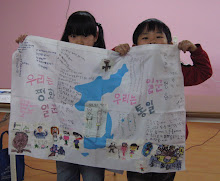
![[URGENT PLEA: In Update] EMERGENCY in GANGJEONG Since AUG. 24, 2011](https://blogger.googleusercontent.com/img/b/R29vZ2xl/AVvXsEiQvpaNf6EePZVucu97_JphYsFS5IgumnSiA4YAmen1PZcim6vMmW7XjZ7J6nLh-Cu36mwBN5n1evrA3ey0vYMpwlAGsgnSFggv6a1w4Qx9BvvqOB0hy0BIcBkL2Exfs3zIxBsBuDGa1kzg/s227/jejusit.jpg)


![[Solidarity from Japan for the Jeju] 253 individuals and 16 groups/organizations](https://blogger.googleusercontent.com/img/b/R29vZ2xl/AVvXsEivji7100kBkr0hzvqYfh4IBBilkZ6XgDIg89jOxS6kTssxsVKC6Wm-fZbKOEsiy3zcO-9gW6GHspD5R_2C9WsGx5S1Z5VPj_OVRF7H6dxdaT0S-2H1eqsDsYvIwOV26VscxTHnKmP5iZmh/s227/jeju_12_10j.jpg)

![[Translation] Korean organizations' statement: Immediately cancel the joint ROK-US drill Nov 26](https://blogger.googleusercontent.com/img/b/R29vZ2xl/AVvXsEgfKDMo-qyEjm5asUtHlREyJY_5Ou-2tyB8SH6aUxiViRbbKR-8W_rirFiGp5DYSoD_KaeNOPMWR0af0ZPUIbJKmR89ImDvADHsGAIqsJVBvJNBEIl5wLd3G_zhPDW3Z2SxsHXadOsXe8st/s227/1.jpg)
![HOT! [Hankyoreh Hani TV] Beneath the Surface: the investigation into the sinking of the Cheonan](https://blogger.googleusercontent.com/img/b/R29vZ2xl/AVvXsEh80rL3Qv9GnfHSqbYMfivdqX5gZN-1O_VQj3A_Gk3yjWdybHwJCsprA3l6cEQB0cYCP2oNeaLo2ohLGIy0Uqqkv_fRkBevGJ2f-qkKD5eP1ZGsKeQ-r-jHUUb79WvucIN7hpEtXza4xXCL/s227/HaniTV+Cheonan.gif)


![[Translation]Statement against illegal inspection and unjust lay-off by the Kunsan USAFK!(Nov_2010)](https://blogger.googleusercontent.com/img/b/R29vZ2xl/AVvXsEg3JlQ-lreusCIJo5Yv2e3ZrRwrSMUE7UQxlrDVjmBehl0Pa24QZIAbZ5vUpgnnExbkKL9PdCwxVYSHWJkr_XK0FM4EhU3CMFhqfborVNu_p4v3bEFpNm3ia-aEHnvMMuEBI27aB7_BETuJ/s227/gunsan+protest.gif)
![[Translation] Korean organizations' statement against dispatching special force to the UAE on Nov.](https://blogger.googleusercontent.com/img/b/R29vZ2xl/AVvXsEiU7TNhTDLLwZkKP0Z78JsCZKp6je-QSFll3_ThmLES_y_nPLXEzeakrsZXoNxhN5blopEhy6xGV2tneJrniPdTR-JvOQMmSLr_HhlucxFvbusxk4oKvvMO2laBOHSIkB9OOeOxrQlqCA0O/s227/antiwarpeace.jpg)
![[Translation] Stop, Joining MD!: South Korean activists' statement and writing on Oct. 25, 2010](https://blogger.googleusercontent.com/img/b/R29vZ2xl/AVvXsEggGIHVei8j7LCJPJB5HIrspd942q436daNTquP-pFd45Cl70Ml_1JFiFDHgKu6FcoqNgFVKIFqjeuSPau2k_BwGHhx0cqFFL2-4ybZSTlmua0_AsERBtKYQa7jZk7uNj41LX6rj2vksHbo/s227/StopMD.jpg)
![[In Update] People First, NO G-20 (Nov. 6 to 12, Korea)](https://blogger.googleusercontent.com/img/b/R29vZ2xl/AVvXsEhZl8VTqeL7o2ndliGIE-sZFCikbTgfB9KCc3AtZvDaYijBBEhdfultMEOpyrCaD5gzpH8mqfWjU20KXMbSUl-5KM7yQeHU6z3BWV8tiOy4UKaCudz9VKWoi5x58xdC_gQpJTjkR5u7O9xf/s227/left21_G20.jpg)
![[International Petition] Stop US helipad plan in Okinawa to save great nature](https://blogger.googleusercontent.com/img/b/R29vZ2xl/AVvXsEihgYmdb0N8ViPvTFC_5i-Psbt4eX_LnAUEOtZkUngv_pGvRyWag1r6W60NicLLyTgWq-sPT1hBxLY5SadEIVv5McfZQ5uIhe-W0VoflQNqojsYZjFW6AH-gB1jsmSDGnGuKIFk2UkvNbFG/s227/yanbaru_w.jpg)
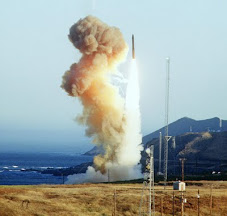
![[Global Network] against the first launch of Quasi-Zenith Satellite, Japan, on Sept. 11, 2010](https://blogger.googleusercontent.com/img/b/R29vZ2xl/AVvXsEj2sYpfodDDMIA7qXwuda0DmKapxXFB479fDnn8RKy7QNZqz0VEvWucNd-DleZ37hWNXC-Z8QtaqtM37VuPwac5SgclJ9_khBBSWOedvm19MRXIP1j1kcWrK6EW5IFjQdEEY2h7E6xuyNvC/s227/Qzss-45-0_09.jpg)
![[In update] Some collections on the Koreans’ protests against the sanction & war on Iran](http://4.bp.blogspot.com/_gnM5QlRx-4c/TJMvke6t8zI/AAAAAAAAFO4/tamQ8LUnOOA/S227/No+Sanction+on+Iran.jpg)
![[Three International Petitions] to End the Korean war and peace treaty(or peace resolution)](https://blogger.googleusercontent.com/img/b/R29vZ2xl/AVvXsEhlohLVYtpCg7iMsZhNYY4hBbhTi2dIheHMHWLDph9X2y78cjgZV1LeSfUJeu80elhJm70Q9E059q72lK-spSPvsRG4bPuCDIytltJB9IH3mWt9OG98HqhnTsPakwhvNeoCFUgF1xoxQ2EZ/s227/border.jpg)


![[Collection of Documents] No Base Learning and Solidarity Program_Korea(June 14 to 20, 2010)](https://blogger.googleusercontent.com/img/b/R29vZ2xl/AVvXsEix_HzjToh3nNGHBc-_5gasq-ykcaZ6GInLixILmZVyRJ5xoeHCxWOyYd9fSM7bmnuFsjSrYOGEPnQOwB1Dcyo-sN4Pw0cFPhUtKig_qlVnGL1Wi82ClvPqbEPWYhJiqdNF0DyzLIBETMB9/s227/No-Base-banner.jpg)
![Site Fwd:[John Hines] A U.S. Debate coach’s research trip on the Issues of Korea](https://blogger.googleusercontent.com/img/b/R29vZ2xl/AVvXsEg8yRra0zNhKHN74Auqhd3Nx9tZ7BWCGflRJHGH4CfzBT_yjhZ8Nl9b3OZuLpYWJ2exsjmR0oVl-Qq_cf832p2VdmOZhUi-lCFzCNeDSyVtweX1lWZPC-RlHmDMLtilHwHjNFTenBiM4Fk4/s227/Jeju-Peace-Tour.jpg)


![[News Update] Struggle Against the Jeju Naval Base since Jan. 18, 2010](https://blogger.googleusercontent.com/img/b/R29vZ2xl/AVvXsEhKfSTRC5QKBBSFIq_m7QIqXdlbL4-gF5GJYn9Q-pN__k7sV7uxGDcLY5L8xmU7QuWuUhBT_GhG-URBPO80RT3AfWfDrWJr06h1hFuZC6ZBVKe4U6PS1Cd7Kr6olO8TYQtk13Drox7IS6ea/s226/scrum1.jpg)


![[Urgent] Please spread the Letter!: There was no Explosion! There was no Torpedo! (May 26, 2010)](https://blogger.googleusercontent.com/img/b/R29vZ2xl/AVvXsEhSd2yWZ3xGwnJQXB73z5FgXCqSosAoB9_33-GLYprOmLqjmvgSAQp1BYI7e4slK1FDxHRi9KK4um-OpDaj8QOkXwAScVAgvvq6-ehbDA-hbkr96wT9oHNNmWnBPv8GU4hoZp9X8F9AZBX4/s227/grounded.jpg)
![Text Fwd: [Stephen Gowans]The sinking of the Cheonan: Another Gulf of Tonkin incident](https://blogger.googleusercontent.com/img/b/R29vZ2xl/AVvXsEi_L6hB3RZ1MovTXHe0A8yn_RfgMALGR0kM6poBuGp809xwvHtB_-PGWtS_WpyPWatyd9lB2pPqL2gOLc4dTCEdJ9sMvxJWEdapl-mMLm7WHAsV-jVpgqarVh8XBtdz_0c-Vohdh3HtJahD/s227/lee-myung-bak.jpg)
![[Japan Focus]Politics in Command: The "International" Investigation into the Sinking of the Cheonan](https://blogger.googleusercontent.com/img/b/R29vZ2xl/AVvXsEiHmTo8v-uCJnabRhMdnBAkC9J3s5bb2JsDKiT5leJHwbK8IDJHxfJmqQ_C0Is_bPC6UGMf05CA0exF2y4r2x9RhFUHT0kjsKviaME_MZXKnq775UyYAdb7w2SAzE75XvBfHp1al2q6i3cf/s227/wen_jiabao_and_lee_myungbak.png)
![[Japan Focus] Who Sank the SK Warship Cheonan? A New Stage in the US-Korean War and US-China](https://blogger.googleusercontent.com/img/b/R29vZ2xl/AVvXsEiKSS5ULT5QBaMGYpXXqBMX9jtwLwMLuK469b6Ku72GTJYKUObzTANaPjZqvvpPzYMJgPF53sjhvhK3DVa88ipYlggsJageykXlkxY6s8TW05xcU-_vfhf-pACUoaWuFbT-fsU1qEhm_yIi/s227/buoy_map.gif)
![[Updated on 12/13/10] [Translation Project] Overseas Proofs on the Damages by the Military Bases](https://blogger.googleusercontent.com/img/b/R29vZ2xl/AVvXsEikADE6JovUNspQyZUWVMTLAQg7yQNqXpVUbqZPk8f4uc_1723_xm1Cco6WAmstQXVPnaJAcb1mZA8Ny_3xONT_f5uh8MNLPnUhtqdGgy3HCtC1Vbbz4Q0ZY1Cssu-4cJEVNdrvznbS5UzO/s227/missile.jpg)
![[International Petition] Close the Bases in Okinawa](https://blogger.googleusercontent.com/img/b/R29vZ2xl/AVvXsEhNpQiHklwFbWVlFK7GDFXnBSOOSFEj3Il-We-N3uTDldKiidL2NGZs7X_LtTnatzTo_r8CexRkFe8NhfxYqmgp1knEEslROTfNjI5_mSb57cdbhPkftvanveYBaevAD9xuKDGoIxiTwoSb/s227/2.jpg)
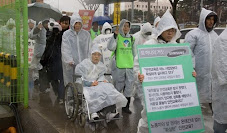
![[In Update]Blog Collection: No Korean Troops in Afghanistan](https://blogger.googleusercontent.com/img/b/R29vZ2xl/AVvXsEjjEmCRXSNAG7_QBxKWbdksmxoWR4nyAovQTTdR1G2AuXh0jxtqNkI9OmYgYWRoLAJShvtBvE840QXuBWSVh3u3zMYqkNAFX6OWy3m5Nur4HM7uNK-pKT1ycyApJp-VLyhIFRRcoisYAh0E/s226/No-Troops-to--Afghanistan.jpg)


