* Text fwd from Martha Duenas on May 14, 2011
http://www.dispatchjapan.com/blog/
Pressure Builds for US Shift on Okinawa
Pressure is growing on the Obama Administration to significantly alter plans for US Marine basing arrangements on Okinawa, but chances seem slim for a policy shift at least until Defense Secretary Robert Gates departs office late next month.
Several factors have converged to give the issue new urgency. Opposition remains strong on Okinawa to construction of a new facility in the Henoko Bay area, to replace the US Marine Air Station Futenma, which has been slated for closure since 1995. There is simply no momentum in Japan to move forward with the project, a situation made more stark by the Great Eastern Earthquake of March 11. Tokyo is intensely focused on reconstruction efforts; neither the financial nor political capital is available to push the Henoko project through.
Meanwhile, construction delays and cost overruns continue to bedevil a critical, related portion of the plan: the relocation of over 8,000 Marines and 9,000 family members from Okinawa to Guam.
And in Washington, an increasingly debt-weary Congress is asking whether it is worth the cost of building the new Henoko facility and the new Marine housing and related facilities on Guam, when cheaper force configurations more conducive to strategic needs in Asia might be found.
Diplomats are under stress to find some answers because of plans for a “2+2” meeting of defense and foreign ministers from the two countries, to be followed by a summit meeting between President Barack Obama and Prime Minister Naoto Kan. With leaders in Japan tied down with reconstruction efforts, no schedule has yet been set for either meeting, though staging both by the end of June has been discussed.
When those meetings do occur, it won’t be possible to simply ignore Futenma and related Okinawa issues. It is very possible Washington and Tokyo will agree to state the obvious: the 2014 deadline to complete the Okinawa and Guam force structure realignment will have to be pushed back. It is also possible the administration will accept a very low-key statement of continued support for the Henoko plan, rather than a high-profile emphasis, so as to avoid the issue returning as a major irritant at the top of the bilateral agenda.
There remain pockets of hope within the Obama administration that White House will force the Pentagon to accept a review of the whole base realignment plan for Okinawa prior to the Obama-Kan summit, but that seems very unlikely.
PENTAGON BOTTLENECK: Secretary Gates remains adamantly opposed, and there does not yet exist within the administration the necessary correlation of political forces willing to force Gates to accept a new approach. The Pentagon’s rigid stance is worsened by the lack of a replacement yet for General Chip Gregson, who retired recently as assistant secretary of defense for Asian affairs.
Senior Pentagon officials continue to say the administration is committed to the Henoko plan. But with the Pentagon leadership in transition, with CIA director Leon Panetta set to take over once Gates departs, the senior officials are exceedingly reluctant to veer from established policy, even if they want to. Officials at this level are in a bind: aware of the opposition in Japan, aware of the enormous investment the US Marines, and US diplomacy, have in the existing policy, but not politically strong enough to even push for, much less win, a policy change.
AWAITING LIPPERT: The White House has tapped Obama confidante Mark Lippert to replace Gregson, but Lippert has been bruised a bit as he works his way through the administration’s internal political gauntlet. Some Pentagon officials have quietly raised concerns that Lippert might have the kind of strained relations with senior military officers that could hinder his effectiveness.
Lippert, who has served in Iraq as a Navy intelligence officer, is “pro-military,” and is known to have functioned as a bit of a window into the US armed forces for then-Senator and presidential candidate Barack Obama. But Lippert is not “pro-Pentagon.” Lippert is an international relations major from Stanford University who has served in the military with pride, but is committed to the military as a tool of policy, not out of institutional loyalty. His loyalty is to Obama.
For much of Obama’s first year in office, Lippert served as chief of staff for the National Security Council (NSC). He clashed with General Douglas Lute, a holdover from the Bush administration as “war czar” for Iraq and Afghanistan. He also had tense relations with his nominal boss, then-National Security Advisor General Jim Jones. Critics say Lippert flaunted his close relationship with Obama. But the close tie with Obama is real, and strong, and Obama personally would like to see Lippert overseeing Asia policy for the Pentagon. That is still likely to happen, though those harboring reservations could trip him up.
ASIA POLICY SHIFT: Evidence continues to grow that President Obama and his top aides would like to see a major US strategic shift toward greater emphasis on Asia, which should be particularly evident when the President hosts the APEC summit in Hawaii next November.
It’s notable that in a recent New Yorker analysis of Obama’s foreign policy, NSC director Tom Donilon, deputy director Ben Rhodes (Obama’s long-time chief foreign policy speechwriter), and Assistant Secretary of State for East Asia Kurt Campbell were all quoted outlining just such a strategic “rebalancing” of American foreign policy. The Pentagon’s top policy chief, Michelle Flournoy, outlined a similar policy in a recent talk at Johns Hopkins.
The administration is looking to energize America’s role in East Asia by fomenting a system of open and transparent economic and security cooperation in the region, defining the terms of engagement to which China has to respond. The economic component, for now, is the Trans-Pacific Partnership regional trade initiative. And the security component involves building on America’s traditional bilateral security alliances in the region to include a network of overlapping bilateral, trilateral, and multilateral security relationships from India, through Vietnam and Indonesia, to Australia, and up to Korea and Japan.
Japan is already cultivating security ties with India and Vietnam, and deepening ties with South Korea, including discussion of formal military agreements involving information sharing and the exchange of military goods and services. China and South Korea both provided relief assistance to Japan after March 11, opening the door to expansion of the existing “Plus Three” dialogue between Tokyo, Seoul, and Beijing.
Washington is supportive of these steps by Japan, as they indirectly extend the influence of the US-Japan alliance, while providing Tokyo a far greater degree of self-determination than possible through the exclusively bilateral US-Japan security alliance.
THE FUTENMA DILEMMA: The problem Washington faces is that continued focus on the Futenma dispute threatens to distract the US and Japan from this broader strategic goal, allowing a relatively minor base dispute to disrupt the whole alliance. Excess focus on Futenma also detracts from the absolutely critical role played by the naval facility at Yokosuka, where the US home ports the USS George Washington carrier group, and the role of the huge Kadena Air Force base on Okinawa. Together, Kadena and Yokosuka allow the US to project enormous power throughout East Asia, and are the principle means to deter North Korean aggression, and to balance China’s rising military role in the region.
Tokyo continues to insist Japan fully backs the plan for a new facility at Henoko, fearful that admitting the plan is dead will cause tension with Washington. And Washington continues to back the Henoko plan, because no political decision has been made to abandon the bureaucratic status quo.
With no decision yet made to abandon the Henoko project, none of the necessary talks about a new plan can proceed. That leaves the US-Japan alliance dangerously vulnerable to a crisis in the event of a helicopter crash at the Futenma facility, which is surrounded by civilian communities.
CONGRESSIONAL INTRIGUE: Into this bureaucratic quagmire have stepped three senior and very influential US senators: Carl Levin, Chairman of the Armed Services Committee; John McCain, the Ranking Republican on Armed Services; and, Jim Webb, chairman of the Asia subcommittee of Senate Foreign Relations. On May 13, the three senators issued a joint statement calling for the Defense Department to “re-examine plans to restructure U.S. military forces in East Asia.” The senators said the US “strongly supports a continuous and vigorous US presence in the region,” but emphasized that they “believe the current DoD realignment plans are unrealistic, unworkable, and unaffordable.”
While the statement was “joint,” Senator Levin seemed to emphasize the need for restraint, and cost-effectiveness, in defense spending, especially in the construction of new overseas facilities. Senator McCain tended to emphasize strategy, saying: “The Asia-Pacific region’s growing role in the global distribution of power requires us to consistently view and update plans for the U.S. military’s role in the region.” And Webb forcefully challenged the Marine Corps claims that construction of a new facility in Henoko Bay to replace the Futenma air station is indispensable to the Marine presence in, and thus the stability of, East Asia.
Webb brings to the issue years of experience as a Naval Academy graduate, a highly-decorated Marine officer, a military planner, a former Secretary of the Navy, and now almost a full term as a US senator.
With Webb taking the lead, the three senators proposed a dramatic overhaul of the US Marine presence in East Asia. The key elements would include: a) “abandonment” of the Henoko project at Camp Schwab as a replacement for the Futenma facility; b) integration of the Marine Corps assets at Futenma into Kadena Air Force base, while dispersing some Air Force assets now at Kadena to other areas of the Pacific; c) home-basing in Hawaii or at Camp Pendleton the 8,000 Marines now scheduled to redeploy to Guam, and deploy those Marines on a rotating basis throughout the Pacific.
THE JONES ROLE: Most intriguing is that retired Marine Corps General Jim Jones, who was President Obama’s national security advisor until last October, played an important role in helping Webb craft these proposals. It will be difficult for the current Marine Corps leadership to argue to legendary Marine veterans Jones and Webb that their proposals would be harmful to the Marine Corps, and are otherwise operationally unrealistic.
Jones first publicly revealed his apparently evolving views on Okinawa in a meeting last week with a group of Japanese parliamentarians, including former Chief Cabinet Secretary Yasuhisa Shiozaki (LDP) and Mikio Shimoji, policy research chief for the People’s New Party (PNP). According to Shiozaki and Shimoji, who met with reporters after their meeting with Jones and displayed their written notes, Jones said that he had always thought the best approach on Okinawa was to merge into the Kadena air base the Marine aircraft operations now based at Futenma. The Henoko project was not needed.
It remains unclear what, if anything, Jones did to try to change American policy toward Futenma while he was national security advisor.
THE SKEPTICAL VIEW: Some sources very close to the situation are skeptical that the Obama administration will shift Okinawa policy any time soon. According to this view, it makes sense that the administration would seek to kick the Futenma-Henoko issue down the road a while longer.
Pushing back the 2014 deadline would amount to acknowledging the obvious, and acknowledging the difficulties to proceed so soon after the March 11 natural disasters would also buy more time to find a permanent solution.
But Senator Webb is proposing a wholesale rethinking of American strategy and force structure in the Western Pacific, and only the Secretary of Defense and/or the President himself can make those kinds of decisions. Without that heavy push from the White House, according to this view, it would not be possible to shake the bureaucracy out of its policy rut.
From a strategy standpoint, opponents of a shift in Okinawa policy will argue that it would signal a US retreat from Asia, and reduce the American deterrence of China.
WORKING WITH CONGRESS: But the White House continues to send signals that it is serious about a shiftin strategy toward Asia. A restructured US force posture would not be seen as retreat, but rather an effective region-wide “hedge” in the event China tries to throw its growing weight around in the region. And sources close to Kurt Campbell say that he is convinced that continued US and Japanese wrangling over Futenma will threaten the whole “shift” strategy, because it can’t work without a vibrant US-Japan alliance.
Campbell is prepared to work with Webb and others in Congress on a new basing arrangement for the Marines in the Pacific. Once Panetta takes over as defense secretary, and assuming Lippert becomes his top deputy for Asia, the White House would have in place an administration-wide team to pursue an expanded role in the region.
Showing posts with label Japan. Show all posts
Showing posts with label Japan. Show all posts
Sunday, May 15, 2011

Text Fwd: WikiLeaks: US Offered SDF Permanent Presence on Guam
* Text fwd from Martha Duenas on May 12, 2011
Japan Times
US Offered SDF Permanent Presence on Guam
Kyodo
May 12, 2011
Guam - Washington has proposed that the Self-Defense Forces maintain a permanent presence on Guam to reinforce Japan-U.S. disaster response training, according to a U.S. diplomatic cable released by WikiLeaks.
According to the cable, then U.S. Assistant Secretary of Defense Wallace Gregson said at a bilateral meeting in Tokyo on Feb. 2 last year that the U.S. "seeks the expanded use of Guam" for joint training between the U.S. military and the SDF.
If the plan were to be realized, it would be the first instance of the SDF having a permanent presence overseas.
The cable released by the whistle-blowing website indicated that Japanese officials at the meeting, including Nobushige Takamizawa, director general of the Defense Ministry's Defense Policy Bureau, did not give a clear response to the proposal.
"This joint training, combined with Japan's increased experience with humanitarian assistance and disaster response, such as with the SDF deployment to (quake-hit) Haiti, will demonstrate to the region Japan's ability to react to humanitarian aid situations and improve its national image," the cable said.
"A permanent SDF presence on Guam to support the training would be appropriate," Gregson was quoted as saying.
Japan has sent SDF units abroad for long-term missions to support U.N. peacekeeping and reconstruction in Iraq.
Japan Times
US Offered SDF Permanent Presence on Guam
Kyodo
May 12, 2011
Guam - Washington has proposed that the Self-Defense Forces maintain a permanent presence on Guam to reinforce Japan-U.S. disaster response training, according to a U.S. diplomatic cable released by WikiLeaks.
According to the cable, then U.S. Assistant Secretary of Defense Wallace Gregson said at a bilateral meeting in Tokyo on Feb. 2 last year that the U.S. "seeks the expanded use of Guam" for joint training between the U.S. military and the SDF.
If the plan were to be realized, it would be the first instance of the SDF having a permanent presence overseas.
The cable released by the whistle-blowing website indicated that Japanese officials at the meeting, including Nobushige Takamizawa, director general of the Defense Ministry's Defense Policy Bureau, did not give a clear response to the proposal.
"This joint training, combined with Japan's increased experience with humanitarian assistance and disaster response, such as with the SDF deployment to (quake-hit) Haiti, will demonstrate to the region Japan's ability to react to humanitarian aid situations and improve its national image," the cable said.
"A permanent SDF presence on Guam to support the training would be appropriate," Gregson was quoted as saying.
Japan has sent SDF units abroad for long-term missions to support U.N. peacekeeping and reconstruction in Iraq.
Tuesday, May 3, 2011
Photos fwd: 131th May Day in Korea, Japan and Indonesia
 * Image source: Solidarity for Peace And Reunification of Korea
Organization: Korean Confederation of Trade Unions
Slogans: "Realization of the basic wage," " total revision of the labor law," " judge on the Lee Myung-Bak administration!"
In front of Seoul City Hall, 3pm, May 1, 2011
______________________________
 http://tenthousandthingsfromkyoto.blogspot.com/2011/05/workers-rally-on-may-day-demanding.html
Workers rally on May Day demanding compensation for nuclear victims, more support for disaster victims, end to nuclear power Monday, May 2, 2011
'Around 21,000 unionized workers rallied at a Tokyo park Sunday to push for a faster resolution to the nuclear power plant crisis in Fukushima and compensation for the victims, as well as support for areas devastated by the March 11 quake and tsunami. '
____________________________________

'Around thousand of people from many trade unions, students,and urban poor yesterday was join in the May Day rally 2011 in Jakarta, Indonesia. Majority issues for this year May Day is Social security law, No outsourcing, and critic economic policy government because pro neoliberalism. The protest also in several city in Indonesia with the same main issues. Some protester have been chaos with Police when the workers try to blockade Jakarta International Airport. For more look rally yesterday you can see our blog at
http://mediabebas.blogspot.com/ '
Sunday, May 1, 2011
Video Fwd: HISTORY: THE BIG EMPIRE
http://space4peace.blogspot.com/2011/04/history-big-empire.html
Friday, April 29, 2011
HISTORY: THE BIG EMPIRE
An old U.S. military propaganda film about turning Okinawa into a U.S. "possession" as a power projection hub.
These days the people of Okinawa are fed up with the presence of U.S. bases and want them gone. But the U.S. military still sees Okinawa as a key outpost in its goal of maintaining bases to enable control of the Asian-Pacific, particularly China.
Friday, April 29, 2011
HISTORY: THE BIG EMPIRE
An old U.S. military propaganda film about turning Okinawa into a U.S. "possession" as a power projection hub.
These days the people of Okinawa are fed up with the presence of U.S. bases and want them gone. But the U.S. military still sees Okinawa as a key outpost in its goal of maintaining bases to enable control of the Asian-Pacific, particularly China.
Text Fwd:Releases: children and fetuses must be well protected

* Text and image fwd from M.Sato on April 30, 2011
Friends,
I've just happened to find this website below, so I wanted to let you know, just in case some of you don't know.
And below that, I'll put some additional information as well.
(I must have missed some more names. )
I'm terribly sorry, especially to those in the Pacific, specifically to those in Hawai'i,
which must be the most badly affected area out side of Japan
by the on-going and the forthcoming long-term releases of radiation from Fukushima.
The situations of radiation in the U.S.west coast and Vancouver seem to be bad as well.
I do hope children in other areas are well warned and protected;our future generations--children here in Japan-- are not.
It must be that IAEA, WHO, NRC,... above all, Japanese consecutive governments...
are currently and have been colluded
to conceal the consequence reports of the present one as well as
the past nuclear disasters, including, perhaps, those in Hiroshima, Nagasaki.
That matter should be delved into as well later, but so many problems have been surfaced now here,
and more than anything, Japanese citizens have to stop some nuclear reactors here,
which are still shaking, sometimes. Thank you for your concern. Sorry to interrupt.
Makiko
__________________________________
Additionally, four pieces of information:
。。。。。。。。。。。。
(* from Junko Abe)
Friends,
Japanese citizens, especially those in the Fukushima nuclear disaster area and those who are trying to help them in many ways respect you all and your concern on our nuclear problems. You would not realize it but voices from overseas are strong support for us all. We are very thankful about it.
I am sure many of you are concerned about schools. We do have to save children. Here is an example of how the power hinders the school from protecting children. Junko Abe
( * below was translated by Junko Abe )..............
From School Home Page in Koriyam city, Fukushima, Japan
*Radioactivity level at the east entrance of Koriyama Building for Prefectural Offices, 58km west of Fukushiam nuclear plant, was 1.57μsv/h (2011-04-29, 15:00)
Tachibana Elementary School, Koriyama city, Fukushima, Japan
Emergency information 2011-04-26 10:31 up
・We have been posting results of radioactivity measurement we made independently at points at school buildings and grounds. We inform you that we suspend our posting starting this week. It was prohibited (by the ministry and the prefecture) because posting radioactivity results on the web is restricted to those that were made by public institutions such as the Ministry of Education, Culture, Sports, Science and Technology and prefectures.
Yet, we will continue independent measurement we have carried on so far. We will inform parents how the results change on the school bulletin. We would like to ask you for your generous understanding.
emergency information 2011-04-28 11:50 up
・Concerning publication of our radioactivity measurement results
Formerly, we put on notice in our home page about suspending the publicity of our radioactivity measurement results there that we had continued. Reasons for this are: 1. Correct measurement is publicized by the Government and the Ministry of Education, Culture, Sports, Science and Technology. The radioactivity measurement at this school is basically made by the hands of the teachers, therefore, it would be more appropriate to send it to parents through letters rather than posting on the Home Page. 2. Seeing that parents come first as receivers of our information, they will rather get it surely by letters than posted on Home Page.
We will continue the measurement and inform the results regularly by letters. We would like to ask you for generous understanding. (writer: Sato Morihiro, Principal, Tachibana Elementary School)
emergency information 2011-04-28 13:25 up
・ Concerning Introducing radioactivity measurement results.
We continue the measurement of radioactivity level at school. From now on, we will send the parents the results of radioactivity measurement through “School Bulletin”. Furthermore, in response to local demands, we will publicize the results in our Home Page in PDF.
Presently, we use radioactivity counter we borrowed from the Ministry of Education, Culture, Sports, Science and Technology, “Counter Boy 2” . It is for the range 0.001μsv/h~9.999μsv/h.
~~~~~~~~~~~~~~~~~~~~~~~~~~~~~~~~
sent to me by Junko Okura this morning:
。。。。。。。
Extra! The Magazine of FAIR The Media Watch Group
May 2011
Cover Story
Downplaying deadly dangers in Japan and at home
After Fukushima, Media Still Buying Nuclear Spin
by Karl Grossman
Ever since the start of nuclear technology, those behind it have made
heavy use of deception, obfuscation and denial--with the complicity of
most of the media. New York Times reporter William Laurence, working
at the same time with the Manhattan Project, wrote a widely-published
press release covering up the first nuclear test in New Mexico in
1945, claiming it was nothing more than an ammunition dump explosion.
The Times and Laurence went on to boost nuclear power for years to
come (Beverly Deepe Keever, News Zero: The New York Times and The
Bomb).
A central concern of nuclear promoters, as Rosalie Bertell writes in
her book No Immediate Danger: Prognosis for a Radioactive Earth, has
been: "Should the public discover the true health cost of nuclear
pollution, a cry would rise from all parts of the world and people
would refuse to cooperate passively with their own death." In the
U.S., nuclear industry and government nuclear agencies lied after the
accident at Three Mile Island. In the Soviet Union, government lies
flowed after the catastrophe at Chernobyl. There have been cover-up
after cover-up of the smaller accidents in between (Harvey Wasserman
and Norman Solomon, Killing Our Own, The Disaster of America’s
Experience with Atomic Radiation; Jay M. Gould and Benjamin A.
Goldman, Deadly Deceit; Low-level Radiation, High-level Cover-up).
The nuclear enterprise, with its army of PR people, has had little
trouble through the years manipulating a largely compliant media, a
major component of which it has owned: Westinghouse owning CBS for
many years, and General Electric, NBC. And this continues in the
still-unfolding nuclear disaster in Japan.
Media coverage of the Fukushima nuclear power facility disaster has
ranged from dreadful to barely passable. Much of the reporting about
the threats of nuclear power and the impacts of radioactivity has been
outrageously poor, as journalists and their talking-head experts have
parroted the assurances of Japanese and other officials that the
amounts of radioactivity being released were low and thus posed "no
health threat" to people (e.g., AP, 3/21/11).
Decades ago, there was the notion of a "threshold dose" of radiation,
below which there was no harm. That’s because when nuclear technology
began and people were exposed to radioactivity, they didn’t promptly
fall down dead. But as the years went by, it was realized that lower
levels of radioactivity take time to result in cancer and other
illnesses--that there is a five-to-40-year "incubation" period.
Now most scientists acknowledge that any amount of radioactivity can
lead to illness and death, especially in fetuses and children whose
cells are dividing more rapidly than in adults. As the National
Council on Radiation Protection (No. 136, 2001) has said: "Every
increment of radiation exposure produces an incremental increase in
the risk of cancer." Or the U.S. Nuclear Regulatory Commission ("Fact
Sheet: Biological Effects of Radiation"): "Any amount of radiation may
pose some risk for causing cancer.”
Much coverage reassured the public that, even if there was some risk,
potassium iodide pills being distributed in Japan "block
radioactivity" (CNN, 3/18/11). In fact, potassium iodide pills work
only on the thyroid, filling it with "good" iodine so radioactive
iodine-131, which causes thyroid cancer, cannot be absorbed. But there
are hundreds of other fission products--including cesium-137 and
strontium-90, both of which were discharged when the Fukushima nuclear
plants erupted--and there are no magic pills for any of them.
Fox News took its coverage to another level, with Geraldo Rivera
declaring (3/18/11): "I love nuclear power." And right-wing firebrand
Ann Coulter on the O'Reilly Factor (Fox News, 3/17/11) asserted that
"radiation [amounts] in excess of what the government says are the
minimum amounts we should be exposed to are actually good for you and
reduce cases of cancer." Even fellow right-wing firebrand Bill
O’Reilly was taken aback. "You have to be responsible," he told her.
Coulter's comment stems from a wild theory of some nuclear scientists
called "hormesis," which holds that radioactivity is good because it
exercises the immune system. Coulter challenged media for not pursuing
the radiation-is-good hypothesis. They should--they'll find that it's
been dismissed by national and international agencies involved with
radiation protection, including the U.S. National Research Council,
the National Council on Radiation Protection and the U.N. Scientific
Committee on the Effects of Atomic Radiation.
There have been huge scientific errors, even by people who
acknowledged the seriousness of the disastersuch as the
explanation for cesium-137 by "expert" Bill Nye, aka "The Science
Guy," on CNN (3/12/11). "We hear about this substance called cesium,
which is being released," anchor John Vause said to Nye. "What's the
significance of that?" The "Science Guy" responded: "Cesium is used to
slow and control the nuclear reaction, the fission of these very large
atoms of uranium. And so when cesium can’t get in there to slow things
down, it gets hotter and hotter."
In fact, cesium-137 has absolutely nothing to do with slowing or
controlling fission (that's boron); it is one of the deadliest
radioactive products created by fission, and one of the main reasons
there's still a 1,660-square-mile Exclusion Zone around the site of
the Chernobyl nuclear disaster. "The Science Guy" flubs a high-school
physics exam question, and one that is crucial to understanding the
health effects of nuclear accidents.
Media have betrayed a lack of understanding about the hydrogen
explosions that blew the roofs off the Fukushima plants as well. It
was reported that this had to do with fuel rods, and sometimes
zirconium was mentioned. (e.g. LA Times, 3/16/11). But missed was a
huge issue: Zirconium, which is used to make nuclear fuel rods because
it allows neutrons to pass freely, is extremely volatile. It explodes
at 2,000[o] F with the explosive power, pound for pound, of
nitroglycerin. (A tiny speck of zirconium produces the flash in a
flashbulb; a typical nuclear plant contains 20 tons.) With lesser
heat, it emits hydrogen, which itself can explode, and this is what
occurred at Fukushima. Using zirconium in a nuclear plant is like
building a bridge out of firecrackers. It’s not hard to explain, but
that didn’t happen.
Then there were the reports about three GE nuclear engineers who
resigned because of defects in the GE Mark 1 Boiling Water Reactor
used at Fukushima (ABC News, 3/16/11). This was in line with the spin
that the problem is not nuclear power in general, but merely one
flawed plant design.
While the Mark 1 design was, indeed, a factor in why the three GE
nuclear engineering supervisors, Dale Bridenbaugh, Richard Hubbard and
Gregory Minor, left the nuclear industry, their broader point went
missing in media coverage: As they declared in a statement to the
Joint Committee on Atomic Energy in Congress in 1976,
We did so because we could no longer
justify devoting our life energies to the
continued development and expansion
of nuclear fission power--a system we
believe to be so dangerous that it
now threatens the very existence of life on
this planet.
Meanwhile, disinformation about the impacts of previous nuclear plant
disasters has served to downplay the potential impacts of the
Fukushima disaster.
U.S. media regularly reported that only a few thousand people died as
a result of the 1986 Chernobyl nuclear power plant
catastrophe--commonly used as a baseline of comparison (e.g. New York
Times, 3/27/11). These numbers ignore the most comprehensive study
done on the effects of Chernobyl, a book published in 2009 by the New
York Academy of Sciences titled Consequences of the Catastrophe for
People and the Environment. A team of scientists from Russia and
Belarus studied health data, radiological surveys and scientific
reports--some 5,000 in all--from 1986 to 2004, and estimated that the
accident caused the deaths of 985,000 people worldwide. More deaths,
they wrote, will follow. That’s the real baseline for a major disaster
at one nuclear power plant.
Indeed, the senior scientist in that study, Dr. Alexey Yablokov, at a
March 25 press conference in Washington, D.C., pointed out that
because of the multiple nuclear power plants and spent fuel pools
involved in the Fukushima disaster, and "because the area is far more
densely populated than around Chernobyl, the human toll could
eventually be far worse." The New York Times did not cover or run a
story on that press conference at the National Press Club--or the New
York Academy of Science's book.
There were also declarations that "no one died" as a result of the
Three Mile Island accident in 1979 (e.g., O'Reilly Factor, 3/16/11).
NPR (3/28/11) went so far as to claim that "relatively small amounts
of radiation had escaped from the plant. No one was even injured."
That myth was long ago long exploded by the book Killing Our Own,
which includes a chapter called "People Died at Three Mile Island,"
detailing infant and adult deaths. I wrote and narrated a TV
documentary on the impacts of the TMI partial meltdown, Three Mile
Island Revisited, that focused on the cancers and death in the area
around the plant, and how its owner has quietly given pay-outs, many
for $1 million apiece, to settle with people who suffered health
impacts or lost family members because of the accident.
Meanwhile, media didn't mention that Japan in recent years has become
a global giant in the sale of nuclear power plants. GE and
Westinghouse have long been the Coke and Pepsi of nuclear power plants
worldwide, historically manufacturing or designing 80 percent of all
nuclear plants. In 2006, Toshiba bought Westinghouse's nuclear
division and Hitachi entered into a partnership with GE to run its
nuclear division. How might this huge Japanese stake in selling
nuclear plants worldwide affect what Japanese officials were saying
about Fukushima? This area was ignored by U.S. media--many of which
have links to the nuclear industry themselves. (See FAIR Blog,
4/12/11).
A pioneer journalist on nuclear technology, Anna Mayo, had one word to
describe U.S. media coverage of the Japanese disaster: "grotesque."
From 1969 to 1989, Mayo worked for the Village Voice, writing a column
titled "Geiger Counter." She once said (Karl Grossman, Cover Up), "I
built a full-time career on covering nuclear horror stories that the
New York Times neglected." Mayo was forced out after changes of
ownership at the Village Voice, with "nuclear industry pressure"
having much to do with her ouster: "The nuclear industry went after
me. It was very obvious."
The nuclear industry on the disaster in Japan, said Mayo, "is trying
desperately to conceal the extent of radiation exposure, and they’ve
wheeled out the same old lies." And media, as usual, have bought the
deadly nuclear deception.
Karl Grossman, professor of journalism at the State University of New
York/College at Old Westbury, is the author of books on nuclear
technology, including Cover Up: What You Are Not Supposed to Know
About Nuclear Power, and is the writer and host of many TV programs on
the issue (Envirovideo.com).
_______________________________________________________________________
NukeNet Anti-Nuclear Network (nukenet@energyjustice.net)
Un/subscribe or change your settings at:
http://energyjustice.net/mailman/listinfo/nukenet_energyjustice.net
~~~~~~~~~~~~~~~~~~~~~~~~~~~~~~~~~
(*I cannot help suspecting that chem trail, which has been for some time being released into the sky in my hometown as well,
must have something to do with nuclear radiation from such plants.)
http://video.google.com/videoplay?docid=9062737295949774810#
Rosalie Bertell tells about Chem Trail
~~~~~~~~~~~~~~~~~~~~~~~~~~~~~~~~~
(* Bruce told about this below issue to some Japanese citizens in Fukuoka, Japan,
two years ago, and I later read about it in his book. I happened to find this pdf last year.
This shows how mercilessly these mere soldiers were used as scientific test samples,
maybe just as those victims in Hiroshima and Nagasaki.)
http://www.energy.gov/media/NTS_History.pdf
P.16/258pages : After the Charlie shot, members of the 82nd Airorne Division parashute into the
area near ground zero.
(p.15)They were met on the north side of the blast area by 120 paratroopers who had been air
dropped by C-46 aircraft. Thirty paratroopers failed to show up when they jumped early, landing as far
as 13 kilometers from the designated drop zone.5]
~~~~~~~~~~~~~~~~~~~~~~~~~~~~~~~~~_
Saturday, April 30, 2011
Video Fwd: VOICES FROM THE CHERNOBYL NUCLEAR DISASTER
Organizing Notes
HTTP://SPACE4PEACE.BLOGSPOT.COM/2011/04/VOICES-FROM-CHERNOBYL-NUCLEAR-DISASTER.HTML
THURSDAY, APRIL 28, 2011
VOICES FROM THE CHERNOBYL NUCLEAR DISASTER
HTTP://SPACE4PEACE.BLOGSPOT.COM/2011/04/VOICES-FROM-CHERNOBYL-NUCLEAR-DISASTER.HTML
THURSDAY, APRIL 28, 2011
VOICES FROM THE CHERNOBYL NUCLEAR DISASTER
Thursday, April 28, 2011
Text Fwd: PROTEST OF AEGIS "CHRISTENING" PLANNED IN MAINE
 Japanese peace activists protesting porting of Aegis destroyers outfitted with "missile defense" systems in their country
 South Koreans, on Jeju Island, protest the construction of a Navy base on their environmentally sensitive island that will be used to port U.S. Navy Aegis destroyers
________________________________
Organizing Notes
http://space4peace.blogspot.com/2011/04/protest-of-aegis-christening-planned-in.html
Tuesday, April 26, 2011
PROTEST OF AEGIS "CHRISTENING" PLANNED IN MAINE
The Navy will "christen" another Aegis destroyer on Saturday, May 7 at Bath Iron Works (BIW) in Maine. Peace groups plan to hold a protest at the event from 8:30 - 10:00 am. Following the protest people are invited to come to the Addams-Melman House (212 Centre St) in Bath for a pot luck lunch at noon.
The protest is being sponsored by the Smiling Trees Disarmament Farm, Global Network Against Weapons & Nuclear Power in Space, Maine Veterans for Peace and CodePink Maine.
These destroyers, with so-called "missile defense" systems on-board, are keys to the aggressive Pentagon military strategy that calls for Aegis deployments around Russian and Chinese borders in order to neutralize their nuclear retaliatory forces.
The hard fought struggle of villagers now going on at Jeju Island in South Korea against the construction of a Navy base is linked to these Aegis destroyers as the Navy needs more ports of call for the ever-expanding fleet of these ships.
The recent cruise missile attacks on Libya, costing $1.2 million each, were launched from Aegis warships.
Studies show that spending $1 billion on military production creates 8,555 jobs. But if that same $1 billion was invested in building rail systems at places like BIW we'd get 19,795 jobs.
The public is clamoring for jobs these days. Corporations, despite huge tax cuts, are not investing here in the U.S. because they are attracted to cheaper labor overseas. So if we want more jobs in this country we've got to take our federal tax dollars, that are presently being wasted on endless war, and invest them in building rail systems, wind turbines, and solar systems at facilities like BIW.
For more information please contact (207) 763-4062 or (207) 443-9502.
Text Fwd: Sen. Jim Webb to Visit Korea, Vietnam, Japan and Guam
* Text fwd from Martha Duenas and Jean Downey on April 27, 2011
The State Column
http://www.thestatecolumn.com/state_politics/virginia/sen-jim-webb-to-visit-korea-vietnam-japan-and-guam/
Sen. Jim Webb to Visit Korea, Vietnam, Japan and GuamThe State Column | Staff | Sunday, April 17, 2011
U.S. Senator Jim Webb, chair of the Senate Committee on Foreign Relations East Asian and Pacific Affairs Subcommittee and member of the Senate Committee on Armed Services, will visit the Republic of Korea, Vietnam, Japan, and Guam April 16-29. Senator Webb is scheduled to hold meetings with government officials, U.S. diplomats and military commanders, and business leaders.
In Korea, Senator Webb will review the security situation on the Korean peninsula and reaffirm his support for passage of the U.S.-Korea Free Trade Agreement.
(ONLY GOOD NEWS) In Vietnam, Senator Webb will address water security issues in Southeast Asia and continue advocating a multilateral approach to avert the devastating consequences of proposed mainstream dams along the Mekong River. If completed, these dams could fundamentally change the world’s 12th longest river and place at risk the Mekong Delta, Vietnam’s “rice bowl” and the world’s richest inland fishery.
Senator Webb is returning to Japan for the second time this year after keynoting the New Shimoda Conference in February. On this trip, he is traveling to Tokyo with Senator Carl Levin, chairman of the Senate Committee on Armed Services, to reaffirm the critical importance of the U.S.-Japan alliance and express condolences to the Japanese people and government following last month’s earthquake and tsunami.
Senator Webb will also visit Okinawa, Guam and Tinian, as a follow-on to visits he made last year, in order to meet with local officials and American military leaders responsible for the proposed realignment of U.S. military bases in the Pacific region.
Senator Webb has enjoyed a continuous personal involvement in Asian and Pacific affairs that long predates his time in the Senate. In addition to his more recent visits as a member of the Senate Foreign Relations Committee, he has worked and traveled throughout this vast region for more than four decades—as a Marine Corps officer, a defense planner, a journalist, a novelist, a senior official in the Department of Defense, and as a business consultant.
The Chamorro activists and Koohan Paik (who worked at Pacific News Center as a reporter) said not to believe its reports, which slanted to pro-build-up.
__________________________________
See also
Marianas Variety
http://www.mvguam.com/index.php?option=com_content&view=article&id=17773:us-senators-buildup-not-set-in-stone&catid=59:frontpagenews
US Senators: 'Buildup Not Set in Stone'
Therese Hart
Tuesday, April 25, 2011
KUAM News
http://www.kuam.com/story/14512570/2011/04/26/us-senators-discuss-buildup
US Senators Discuss BuildupNick Delgado
Apr 26, 2011 1:41 AM PDT
The State Column
http://www.thestatecolumn.com/state_politics/virginia/sen-jim-webb-to-visit-korea-vietnam-japan-and-guam/
Sen. Jim Webb to Visit Korea, Vietnam, Japan and GuamThe State Column | Staff | Sunday, April 17, 2011
U.S. Senator Jim Webb, chair of the Senate Committee on Foreign Relations East Asian and Pacific Affairs Subcommittee and member of the Senate Committee on Armed Services, will visit the Republic of Korea, Vietnam, Japan, and Guam April 16-29. Senator Webb is scheduled to hold meetings with government officials, U.S. diplomats and military commanders, and business leaders.
In Korea, Senator Webb will review the security situation on the Korean peninsula and reaffirm his support for passage of the U.S.-Korea Free Trade Agreement.
(ONLY GOOD NEWS) In Vietnam, Senator Webb will address water security issues in Southeast Asia and continue advocating a multilateral approach to avert the devastating consequences of proposed mainstream dams along the Mekong River. If completed, these dams could fundamentally change the world’s 12th longest river and place at risk the Mekong Delta, Vietnam’s “rice bowl” and the world’s richest inland fishery.
Senator Webb is returning to Japan for the second time this year after keynoting the New Shimoda Conference in February. On this trip, he is traveling to Tokyo with Senator Carl Levin, chairman of the Senate Committee on Armed Services, to reaffirm the critical importance of the U.S.-Japan alliance and express condolences to the Japanese people and government following last month’s earthquake and tsunami.
Senator Webb will also visit Okinawa, Guam and Tinian, as a follow-on to visits he made last year, in order to meet with local officials and American military leaders responsible for the proposed realignment of U.S. military bases in the Pacific region.
Senator Webb has enjoyed a continuous personal involvement in Asian and Pacific affairs that long predates his time in the Senate. In addition to his more recent visits as a member of the Senate Foreign Relations Committee, he has worked and traveled throughout this vast region for more than four decades—as a Marine Corps officer, a defense planner, a journalist, a novelist, a senior official in the Department of Defense, and as a business consultant.
The Chamorro activists and Koohan Paik (who worked at Pacific News Center as a reporter) said not to believe its reports, which slanted to pro-build-up.
__________________________________
See also
Marianas Variety
http://www.mvguam.com/index.php?option=com_content&view=article&id=17773:us-senators-buildup-not-set-in-stone&catid=59:frontpagenews
US Senators: 'Buildup Not Set in Stone'
Therese Hart
Tuesday, April 25, 2011
KUAM News
http://www.kuam.com/story/14512570/2011/04/26/us-senators-discuss-buildup
US Senators Discuss BuildupNick Delgado
Apr 26, 2011 1:41 AM PDT
Monday, April 25, 2011
Fwd: Urgent Petition Against 20mSv Radiation Exposure onto Children in Fukushima
* Petition fwd from Makiko Sato on April 24, 2011
Friends,
Let me forward to you the below email.
If you can help with endorsing and spreading this, they'd very much appreciate it.
In two days, 16,000 endorsements have been collected.
As our government may make little of such domestic petitions,
we need some endorsements from the outside of Japan as pressure to our government.
Thank you in advance.
Makiko Sato
~~~~~~~~~~~~~~~~~~~~~~~~~~~~~~~~~~~~~~~~
Dear all,
This is urgent request from Japanese civil societies for children in
Fukushima. Japanese Government decided the level of 20mSv per year (mSv/y)
as a Radiation Safety Standard for schools in Fukushima Prefecture. It
is also comparable to the maximum dose allowed for nuclear power plant
workers in Germany.
==================================
Urgent Petition Against 20mSv Radiation Exposure onto Children in Fukushima
http://blog.canpan.info/foejapan/daily/201104/24
==================================
[Date will be date of submission: April or May 2011]
[Emergency Statement and Demands]
We urgently demand the withdrawal of the Japanese Government's inhumane
decision to force 20mSv per year radiation exposure onto children
Sign the petition http://blog.canpan.info/foejapan/daily/201104/24
Preliminary deadline: Tue. April 26, 2011 at 23:00 in Japanese time
(UTC/GMT +9 hours)
Final deadline:Sat. April 30, 2011 at 23:00 in Japanese time
On April 19th, the Ministry of Education, Culture, Sports, Science and
Technology (MEXT) notified the Board of Education and related
institutions in Fukushima Prefecture the level of 20mSv per year (mSv/y)
as a Radiation Safety Standard for schools in Fukushima Prefecture. This
is the standard to be used for school grounds and buildings. The
Government has indicated that 20mSv/y is equivalent to 3.8mSv per hour
(mSv/h) measured outdoors.
3.8 mSv/h is roughly 6 times [the 0.6mSv/h] of “Radiation Controlled
Areas” (0.6 mSv/h or more). The Labour Standards Act prohibits those
under the age of 18 from working under these conditions. Forcing
children to be exposed to such radiation doses is an exceedingly
inhumane decision. Therefore, we condemn this in the strongest terms.
20 mSv/y is comparable to the [legally] recognized dose for inducing
leukemia in nuclear power plant workers. It is also comparable to the
maximum dose allowed for nuclear power plant workers in Germany.
In addition, this 20mSv standard [for Japanese children] does not take
into account the fact children have higher sensitivity to radiation than
adults, nor does it take into account any internal radiation exposure.
Currently, according to the radiation monitoring conducted at elementary
and middle schools within Fukushima Prefecture, more than 75% of these
schools have contamination levels comparable to "Radiation Controlled
Areas" (0.6 mSv/h or more). Further, roughly 20% of the schools fall
within "Individual Exposure Controlled Areas" (2.3 mSv/h or more) and
are in an extremely dangerous situation.
The level set by the Japanese Government at this time amounts to
coercion of this dangerous situation upon children, and, can interfere
with voluntary measures by schools to minimize exposure.
MEXT states that 20mSv/y is based on the recommendation Pub.109 by the
International Commission on Radiological Protection (ICRP) as well as on
the reference levels in the band of 1 to 20 mSv/y as "Post Emergency
Situation" Standards from the ICRP statement released on March 21st. The
latter means MEXT has adopted the maximum level.
As of March 21st, there has been no substantive information disclosure
by the Japanese Government on the decision-making process for
establishing these standards. Moreover, no explanation has been given
concerning why the Government has neither taken the sensitivity of
children into consideration nor internal radiation exposure into account.
The contents of the consultation held between MEXT and the Nuclear
Safety Commission (NSC) are not disclosed, and the situation remains
extremely opaque.
We demand the following of the Japanese Government:
-Retraction of the "20mSv/y" standard for children.
-Disclosure of the names of experts, who deemed "20mSv/y" for children
to be safe.
Note:
At the governmental negotiation held on April 21st, it became evident
that the Nuclear Safety Commission (NSC) concluded the 20mSv/y standard
for children as "Permissible" without undertaking any formal
consultation. Moreover, on April 22nd, the Commission reported to the
office of Mizuho FUKUSHIMA, member of the Japanese Diet, House of
Councillors that no minutes (records) exist of the 5 Nuclear Safety
Commission members' deliberation leading to the 20mSv/year standard.
References:
Expert comments cited from the articles on the establishment of the
20mSv/y standard ("Fukushima-Katastrophe - Japan legt hohe
Strahlengrenzwerte fur Kinder fest" or "Japan's MEXT sets High Exposure
Limits for Children"), Der Spiegel, April 21st, 2011.
(See comparison to German workers.)
http://www.spiegel.de/wissenschaft/mensch/0,1518,758410,00.html
Edmund Lengfelder (Otto Hug Radiation Institute),
"The cancer risk will visibly rise in the future. By setting these
standards, the government will steer clear of any liability legally,
however not morally."
-------
This petition is being organized by:
Green Action, Greenpeace Japan, Citizens' Nuclear Information Center,
Citizens Against Fukushima Aging Nuclear Power Plants (Fukuro-no-Kai),
Osaka Citizens Against the Mihama, Oi, and Takahama Nuclear Power Plants
(Mihama-no-Kai), Friends of the Earth Japan
For further inquiries, please contact:
Green Action
Suite 103, 22-75 Tanaka Sekiden-cho
Sakyo-ku, Kyoto 606-8203 Japan
Tel: +81-75-701-7223
info@greenaction-japan.org
Friends of the Earth Japan
3-30-8-1F Ikebukuro Toshima-ku Tokyo 171-0014, Japan
TEL: +81-3-6907-7217
finance@foejapan.org
[English translation of Japanese original: FoE Japan / Green Action]
http://fukushima.greenaction-japan.org/2011/04/23/save-the-fukushima-children-japanese-citizens-meet-with-government/
Fukushima Update
Friends,
Let me forward to you the below email.
If you can help with endorsing and spreading this, they'd very much appreciate it.
In two days, 16,000 endorsements have been collected.
As our government may make little of such domestic petitions,
we need some endorsements from the outside of Japan as pressure to our government.
Thank you in advance.
Makiko Sato
~~~~~~~~~~~~~~~~~~~~~~~~~~~~~~~~~~~~~~~~
Dear all,
This is urgent request from Japanese civil societies for children in
Fukushima. Japanese Government decided the level of 20mSv per year (mSv/y)
as a Radiation Safety Standard for schools in Fukushima Prefecture. It
is also comparable to the maximum dose allowed for nuclear power plant
workers in Germany.
==================================
Urgent Petition Against 20mSv Radiation Exposure onto Children in Fukushima
http://blog.canpan.info/foejapan/daily/201104/24
==================================
[Date will be date of submission: April or May 2011]
[Emergency Statement and Demands]
We urgently demand the withdrawal of the Japanese Government's inhumane
decision to force 20mSv per year radiation exposure onto children
Sign the petition http://blog.canpan.info/foejapan/daily/201104/24
Preliminary deadline: Tue. April 26, 2011 at 23:00 in Japanese time
(UTC/GMT +9 hours)
Final deadline:Sat. April 30, 2011 at 23:00 in Japanese time
On April 19th, the Ministry of Education, Culture, Sports, Science and
Technology (MEXT) notified the Board of Education and related
institutions in Fukushima Prefecture the level of 20mSv per year (mSv/y)
as a Radiation Safety Standard for schools in Fukushima Prefecture. This
is the standard to be used for school grounds and buildings. The
Government has indicated that 20mSv/y is equivalent to 3.8mSv per hour
(mSv/h) measured outdoors.
3.8 mSv/h is roughly 6 times [the 0.6mSv/h] of “Radiation Controlled
Areas” (0.6 mSv/h or more). The Labour Standards Act prohibits those
under the age of 18 from working under these conditions. Forcing
children to be exposed to such radiation doses is an exceedingly
inhumane decision. Therefore, we condemn this in the strongest terms.
20 mSv/y is comparable to the [legally] recognized dose for inducing
leukemia in nuclear power plant workers. It is also comparable to the
maximum dose allowed for nuclear power plant workers in Germany.
In addition, this 20mSv standard [for Japanese children] does not take
into account the fact children have higher sensitivity to radiation than
adults, nor does it take into account any internal radiation exposure.
Currently, according to the radiation monitoring conducted at elementary
and middle schools within Fukushima Prefecture, more than 75% of these
schools have contamination levels comparable to "Radiation Controlled
Areas" (0.6 mSv/h or more). Further, roughly 20% of the schools fall
within "Individual Exposure Controlled Areas" (2.3 mSv/h or more) and
are in an extremely dangerous situation.
The level set by the Japanese Government at this time amounts to
coercion of this dangerous situation upon children, and, can interfere
with voluntary measures by schools to minimize exposure.
MEXT states that 20mSv/y is based on the recommendation Pub.109 by the
International Commission on Radiological Protection (ICRP) as well as on
the reference levels in the band of 1 to 20 mSv/y as "Post Emergency
Situation" Standards from the ICRP statement released on March 21st. The
latter means MEXT has adopted the maximum level.
As of March 21st, there has been no substantive information disclosure
by the Japanese Government on the decision-making process for
establishing these standards. Moreover, no explanation has been given
concerning why the Government has neither taken the sensitivity of
children into consideration nor internal radiation exposure into account.
The contents of the consultation held between MEXT and the Nuclear
Safety Commission (NSC) are not disclosed, and the situation remains
extremely opaque.
We demand the following of the Japanese Government:
-Retraction of the "20mSv/y" standard for children.
-Disclosure of the names of experts, who deemed "20mSv/y" for children
to be safe.
Note:
At the governmental negotiation held on April 21st, it became evident
that the Nuclear Safety Commission (NSC) concluded the 20mSv/y standard
for children as "Permissible" without undertaking any formal
consultation. Moreover, on April 22nd, the Commission reported to the
office of Mizuho FUKUSHIMA, member of the Japanese Diet, House of
Councillors that no minutes (records) exist of the 5 Nuclear Safety
Commission members' deliberation leading to the 20mSv/year standard.
References:
Expert comments cited from the articles on the establishment of the
20mSv/y standard ("Fukushima-Katastrophe - Japan legt hohe
Strahlengrenzwerte fur Kinder fest" or "Japan's MEXT sets High Exposure
Limits for Children"), Der Spiegel, April 21st, 2011.
(See comparison to German workers.)
http://www.spiegel.de/wissenschaft/mensch/0,1518,758410,00.html
Edmund Lengfelder (Otto Hug Radiation Institute),
"The cancer risk will visibly rise in the future. By setting these
standards, the government will steer clear of any liability legally,
however not morally."
-------
This petition is being organized by:
Green Action, Greenpeace Japan, Citizens' Nuclear Information Center,
Citizens Against Fukushima Aging Nuclear Power Plants (Fukuro-no-Kai),
Osaka Citizens Against the Mihama, Oi, and Takahama Nuclear Power Plants
(Mihama-no-Kai), Friends of the Earth Japan
For further inquiries, please contact:
Green Action
Suite 103, 22-75 Tanaka Sekiden-cho
Sakyo-ku, Kyoto 606-8203 Japan
Tel: +81-75-701-7223
info@greenaction-japan.org
Friends of the Earth Japan
3-30-8-1F Ikebukuro Toshima-ku Tokyo 171-0014, Japan
TEL: +81-3-6907-7217
finance@foejapan.org
[English translation of Japanese original: FoE Japan / Green Action]
http://fukushima.greenaction-japan.org/2011/04/23/save-the-fukushima-children-japanese-citizens-meet-with-government/
Fukushima Update
Thursday, April 21, 2011
Text Fwd: USS George Washington to Return to Yokosuka
Text Fwd from Corazon Valdez Fabros on April 20, 2011
USS George Washington to Return to Yokosuka Tue, 19 Apr 2011 09:37:00 -0500
From a U.S. 7th Fleet News Release
YOKOSUKA, Japan, April 19, 2011 - The forward-deployed aircraft carrier USS George Washington will return here tomorrow, nearly a month after it left its port following the earthquake and tsunami that struck northern Japan.
The nuclear-powered aircraft carrier was completing routine maintenance March 11 when the earthquake and tsunami struck northern Honshu. The ship departed Fleet Activities Yokosuka on March 21 with 466 civilian contractors and shipyard workers embarked, who continued to conduct scheduled maintenance while the ship operated in waters near the Japanese islands of Shikoku and Kyushu.
USS George Washington departed Yokosuka to ensure that the ship could maintain readiness, and workers could continue work required to support the U.S.-Japan alliance, officials said.
The carrier made two visits to Sasebo while it was away from Yokosuka to exchange shipyard personnel and take on equipment to support the routine maintenance.
Throughout this time, officials said, the Navy has maintained a strong desire and every intention to return to George Washington to its homeport at Yokosuka.
While George Washington was at sea continuing its routine maintenance, more than 20 U.S. 7th Fleet ships, including the USS Ronald Reagan carrier strike group, supported disaster relief operations off the coast of northern Honshu.
Upon returning to Yokosuka, George Washington will continue its maintenance while maintaining a heightened state of readiness to return to sea if necessary, officials said.
USS George Washington to Return to Yokosuka Tue, 19 Apr 2011 09:37:00 -0500
From a U.S. 7th Fleet News Release
YOKOSUKA, Japan, April 19, 2011 - The forward-deployed aircraft carrier USS George Washington will return here tomorrow, nearly a month after it left its port following the earthquake and tsunami that struck northern Japan.
The nuclear-powered aircraft carrier was completing routine maintenance March 11 when the earthquake and tsunami struck northern Honshu. The ship departed Fleet Activities Yokosuka on March 21 with 466 civilian contractors and shipyard workers embarked, who continued to conduct scheduled maintenance while the ship operated in waters near the Japanese islands of Shikoku and Kyushu.
USS George Washington departed Yokosuka to ensure that the ship could maintain readiness, and workers could continue work required to support the U.S.-Japan alliance, officials said.
The carrier made two visits to Sasebo while it was away from Yokosuka to exchange shipyard personnel and take on equipment to support the routine maintenance.
Throughout this time, officials said, the Navy has maintained a strong desire and every intention to return to George Washington to its homeport at Yokosuka.
While George Washington was at sea continuing its routine maintenance, more than 20 U.S. 7th Fleet ships, including the USS Ronald Reagan carrier strike group, supported disaster relief operations off the coast of northern Honshu.
Upon returning to Yokosuka, George Washington will continue its maintenance while maintaining a heightened state of readiness to return to sea if necessary, officials said.
Text Fwd: Kan's Hint at New Nuclear Plant Moratorium and the Choice Facing Korea

Japanese Prime Minister Naoto Kan holds an emergency meeting to cope with the unparalleled earthquake and tsunami on March 11, 2011. Kan said recently that "As long as the safety of nuclear plants remains uncertain, we cannot continue as before with plans to build more." His statement is interpreted to mean that he will freeze the existing plans to build more nuclear power plants. File photo by Yonhap News/ Caption by Seol Wontai
http://english.khan.co.kr/khan_art_view.html?artid=201104201441077&code=790101
Kan's Hint at New Nuclear Plant Moratorium and the Choice Facing Korea
2011-04-20 14:41
Japanese Prime Minister Naoto Kan has hinted that his country may freeze plans to build more nuclear power plants. At a budget committee meeting in the Diet's upper house, Kan stated: "As long as the safety (of nuclear plants) remains uncertain, we cannot continue as before with plans to build more."
Kan's statement was not an official declaration of abandonment of plans to build more nuclear plants. Coming at a time, however, when the myth of safe nuclear power is in a state of utter collapse, his comments have drawn attention by referring to a major revision to Japan's nuclear power policy.
In the case of Japan, this is the natural direction to adopt. Japan is a typical nuclear dependent nation. It had planned to build at least 14 new reactors, in addition to the 54 that it currently possesses, by 2030, thereby increasing nuclear's share of the country's total power generation from 30% to 40%.
Now, however, with a nuclear disaster of a level equivalent to that of Chernobyl still in progress, we think that withdrawing this plan in its entirety is the right thing to do.
Kan said on the same day that this issue had to be re-examined from square one, but we believe that Japan needs to be even more positive and produce a "nuclear exit strategy." Japanese public opinion, too, is rapidly turning in this direction.
Korea must carefully read the message sent by such movements in Japan. South Korea's level of dependency on nuclear power, like that of Japan, is high. It has 21 nuclear power plant reactors, the fifth highest number in the world after the USA, France, Japan and Russia.
Last year, the South Korean government confirmed its fifth basic plan for electric supply and demand (2010-2024), which involves increasing the number of reactors to 35, thus raising nuclear's share of electricity generation from the current 23% to 48.5%.
In a 2008 national basic plan for energy, the government also stated that this share would be increased to 59% by 2030. The Fukushima nuclear accident, however, has given a clear and ample reason for this plan to be fundamentally reconsidered.
President Lee Myung-bak emphasizes that "Korean-style nuclear plants are the best in terms of safety and efficiency," but such optimistic arguments do not equate to safety. Japan's example illustrates this.
The timely shutdown incident that occurred last week at the No. 1 reactor of Korea's Kori Nuclear Power Plant, despite Korea Hydro & Nuclear Power (KHNP)'s explanation that it was of negligible importance, exposed several problems.
KHNP is refusing opposition party demands to reveal data from safety inspections. The company says the incident was no more serious than a fuse box breakdown in a family home, but there is no way of knowing when things will be back to normal.
The Kyunghyang Daily News reporter visited Chernobyl recently on the 25th anniversary of the disaster. A technician in his 50s, who was deployed to sort out the situation at the time, told the reporter: "In view of Fukushima, scholars and governments must change their minds. Since Korea is an intelligent country, it will think of a wise way to do this."
There is no way of telling if his judgment was correct. What is clear is that nuclear power policies are matters of great national importance that go beyond the dimension of single governments. (Editorial, The Kyunghyang Daily News. April 20, 2011)
Sunday, April 17, 2011
Text Fwd: Kori Nuclear Power Plant Must Not Repeat the Mistakes of Fukushima

Gori Nuclear Power Plant. File photo taken March 16, 2011.
Kyunghyang
http://english.khan.co.kr/khan_art_view.html?artid=201104141616397&code=790101
Kori Nuclear Power Plant Must Not Repeat the Mistakes of Fukushima April 10, 2011
Kori Nuclear Power Plant Must Not Repeat the Mistakes of Fukushima
A few days ago, there was an accidental shutdown at the No. 1 reactor at Kori Nuclear Power Plant, the subject of recent controversy over extended lifetime.
Authorities at the Kori plant explained that the incident was simply an automatic shutdown due to the breakdown of electricity supply equipment, and that there are no problems regarding the safety of the reactor. Such explanations, however, no longer provide us with the sense of trust that they once did.
It so happens that, a few hours before Kori 1 shut down, the Japanese government suddenly acknowledged that the danger level of the Fukushima nuclear plant accident was equivalent to that of Chernobyl, while the Busan Bar Association applied for a court injunction to have Kori 1 taken out of operation.
At a time when trust in nuclear power has collapsed, the accident at Kori 1 is not something that can merely be disregarded as inconsequential. Kori 1's planned lifetime expired in June 2007, but the government decided to extend it for a further 10 years, starting in 2008.
It is said that at the time, one of the grounds for claiming that Kori 1 should not be closed down and should be run for longer was the successful lifetime extension of Japan's Fukushima Plant.
No reports from safety inspections regarding the lifetime extension of Kori 1 have been made public, however, and it has never been made known which or how many of its components have been replaced.
This is what makes it difficult to believe that the recent shutdown accident was simply due to equipment failure. It is highly likely that this accident was related to overall decrepitude. Parts that have surpassed their planned lifetime but not been replaced can go wrong at any time.
Japan's nuclear accident provides two lessons. Firstly, when an accident does happen, its results go beyond the imaginable; and secondly, that there is no use in believing that nuclear power plants can be managed safely.
Japan, which excels in management, increased distrust by responding in a flustered manner to the nuclear accident. Only the other day did the Japanese government finally raise the danger level of the Fukushima accident by a whole two grades to level seven, a level that can have serious effects on neighboring countries too.
It is not only the people of Japan who are surprised and disappointed. Until that point, the government and nuclear experts had been saying that the Japanese accident would not correspond to the worst possible scenario, and that there would be no problems when it came to Korea's safety.
Some even went as far as to suggest conspiracy theories when it came to those expressing doubts about the safety of nuclear power. Confidence in nuclear power, however, has already collapsed due to what happened in Japan.
When it comes to Kori 1, this is not just a matter of fixing the electrical equipment and hurrying to restart the reactor. There is no questioning the danger of decrepit nuclear plants.
Kori 1 produces no more than one percent of the total electricity consumed in Korea, and it is said that total electricity generation exceeds total demand by around 10%.
In other words, Korea's electricity situation is not so critical that we must place ourselves in danger. The decision on whether to restart Kori 1 must be taken through public debate and consensus. (Editorial, The Kyunghyang Daily News. April 14, 2011)
Saturday, April 9, 2011
Text Fwd: GLOBAL NETWORK STATEMENT ON JAPANESE NUCLEAR DISASTER


Organizing Notes
Friday, April 08, 2011
GLOBAL NETWORK STATEMENT ON JAPANESE NUCLEAR DISASTER
The Global Network mourns for the people of Japan following the recent disastrous chain of events that began with the earthquake, tsunami and then the nuclear power plant. Sadly Japan is now the victim of three gargantuan nuclear disasters: Hiroshima, Nagasaki, and Fukushima.
The Fukushima nuclear disaster in Japan tragically demonstrates, again, the dangers of nuclear power, an energy source that must be abandoned--as a clear and present threat to life. Instead there must be full implementation of safe, clean energy technologies --- which are here today.
The Global Network Against Weapons & Nuclear Power in Space has long challenged the use of atomic energy in space. The network has emphasized that there are safe alternatives to energize space devices. In recent times, NASA, at long last, has begun substituting solar energy for nuclear power in space. Indeed, in coming months NASA's solar-powered Juno spacecraft will be launched on a five-year mission to Jupiter. It was not long ago that NASA emphatically insisted that solar power could not substitute for nuclear beyond the orbit of Mars. Suddenly, it now can be done.
Likewise, as numerous studies have documented, safe, clean, renewable energy technologies now here can provide all the power we need on earth. Nuclear power and its deadly dangers are unnecessary. As the conservative scientific magazine, Scientific American, in its October 26, 2009 cover story, "A Plan for A Sustainable Future," declared, "Wind, water, solar technologies, [and conservation] can provide 100 percent of the world's energy needs."
The issue of switching to safe, clean energy is not technological -- it's political.
The problem involves vested interests: the government agencies which push nuclear power, notably in the United States the national nuclear laboratories and the entity that owns them, the Department of Energy (headed currently by a former national nuclear laboratory director), and the nuclear industry as it seeks to profit from selling nuclear technology despite the cost in people's lives.
These same entities are pushing nuclear power world-wide as evidenced by GE’s involvement in the construction of Japanese reactors and the recent U.S.-India Nuclear deal. China and other emerging nations are also expanding plans for nuclear power despite the horrific memories of Chernobyl and now Fukushima.
A disgrace in demanding nuclear power on earth and space has been President Barack Obama. As president, he has reversed the critical position he espoused as a candidate and now, even in the wake of the Fukushima disaster in Japan, is seeking to "revive" the nuclear industry with the building of new nuclear plants using billions of taxpayer dollars. Meanwhile, his administration has been pushing to also "revive" the use of nuclear power in space by restarting U.S. production of Plutonium-238 for use on space devices.
The Global Network Against Weapons & Nuclear Power in Space calls for:
* The end of nuclear power on earth. Although the nuclear establishment claims this is impractical, it is not. In the U.S. where nuclear power provides 20% of the electricity, there's a 20% reserve capacity in the electrical system. All 104 U.S. nuclear plants could -- and must -- be immediately shut down. The reserve capacity can deal with their absence.
And, meanwhile, a concentrated effort could -- and must -- be made to swiftly bring the safe, clean energy technologies on line. Instead of promoting nuclear power expansion globally the nuclear power industry should be dismantled or converted to a green technology industry.
* The end of nuclear power in space. Accidents such as the 1964 SNAP-9A disaster in which a plutonium-powered satellite fell from orbit, disintegrating and spreading the plutonium widely -- a plutonium release long seen as causing an increase in lung cancer on earth -- have demonstrated the folly of using nuclear power overhead.
* The closure of all national nuclear laboratories. They have been breeding grounds for developing lethal atomic energy -- on earth and in space. There's an effort now underway in Washington to cut back on the federal government spending. Here is a federal government activity that must be cut back -- a string of national nuclear laboratories, including Los Alamos, Oak Ridge, Lawrence Livermore, Idaho, Sandia, Brookhaven, Lawrence Berkeley, Argonne, spending billions upon billions in taxpayer money annually while developing deadly nuclear technology.
Unless the nuclear juggernaut is stopped, we all live in Hiroshima, Nagasaki and Fukushima.
Global Network Board of Directors & Advisors:
Bob Anderson (Stop the War Machine, New Mexico)
Dr. Helen Caldicott (Pediatrician/Anti-nuclear activist, Australia)
Sung-Hee Choi (Artist/teacher/activist, South Korea)
MacGregor Eddy (Women’s International League for Peace & Freedom, California)
Stacey Fritz (No Nukes North, Alaska)
Atsushi Fujioka (Professor of Economics Ritsumeikan University, Japan)
Bruce Gagnon (Global Network Coordinator, Maine)
Holly Gwinn Graham (Singer/songwriter/activist, Washington)
Karl Grossman (Professor of Journalism SUNY/College of Old Westbury, New York)
Regina Hagen (Darmstadter Friedensform, Germany)
Matthew Hoey (Military Space Transparency Project, Massachusetts)
Filip Ilkowski (Lecturer Political Science/History Warsaw University, Poland)
Helen John (Peace activist, England)
Dr. Michio Kaku (Professor Theoretical Physics CUNY, New York)
Tamara Lorincz (Halifax Peace Coalition, Canada)
Dr. Hannah Middleton (Anti-Bases Campaign Coalition, Australia)
Agneta Norberg (Swedish Peace Council, Sweden)
Lindis Percy (Campaign for the Accountability of American Bases, England)
J. Sri Raman (Movement Against Nuclear Weapons, India)
J. Narayana Rao (All India Peace & Solidarity Organization, India)
Tim Rinne (Nebraskans for Peace, Nebraska)
Makiko Sato (Anti-nuclear activist, Japan)
Wolfgang Schlupp-Hauck (Friedenswerkstatt Mutlangen, Germany)
Alice Slater (Nuclear Age Peace Foundation, New York)
Koji Sugihara (No to Nukes & Missile Defense Campaign, Japan)
Bill Sulzman (Citizens for Peace in Space, Colorado)
Jan Tamas (Humanist Party, Czech Republic)
Dr. Dave Webb (Campaign for Nuclear Disarmament, United Kingdom)
Carol Urner (Women’s International League for Peace & Freedom, Oregon)
Loring Wirbel (Citizens for Peace in Space, Colorado)
Lynda Williams (Physics teacher/activist, California)
Wooksik Cheong (Peace Network, South Korea)
Hibiki Yamaguchi (People’s Plan Study Group, Japan)
Global Network Against Weapons & Nuclear Power in Space
PO Box 652
Brunswick, ME 04011
(207) 443-9502
globalnet@mindspring.com
www.space4peace.org
Thank God men cannot fly, and lay waste the sky as well as the earth. ~Henry David Thoreau
Wednesday, April 6, 2011
Text Fwd: NO MORE FUKUSHIMA: GLOBAL CALL FOR SOLIDARITY ACTIONS AGAINST NUCLEAR PLANTS
* Text sent from Makiko Sato on April 5, 2011
APRIL 10th "NO MORE FUKUSHIMA":
GLOBAL CALL FOR SOLIDARITY ACTIONS AGAINST NUCLEAR PLANTS
We took big risk depending on nuclear energy in exchange for creating unlimited prosperity. Then we are now facing assumed danger. Human being seems to take wrong choice. We have to make sure. No more nuclear plants.
We individuals living in Tokyo are planning an demonstration against nuclear plants on 10th April in Koenji, Tokyo. We also would like to call for global solidarity actions on the same day. We believe that the global response and action will be significant support for all disaster victims and movements against the current nuclear policy in general.
CALL FOR ACTION:
This is a global call for actions on 10th April.
We sincerely hope that you will take any actions, like demonstrations, media actions, street performances or benefit lives, together on that day.
Work with us in solidarity against all nuclear plants worldwide!
PLEASE SEND US:
Plans for actions and Records of actions.
Please send us the texts, documents, footage, images and/or anything else relating to your actoins to:
http://410nonuke.tumblr.com/
PLEASE SPREAD:
to your local Indymedia, Mailing List, Individuals, Facebook and so on.
We are glad if you forward this message.
in strong solidarity,
===========================================
・If you have some friends who reside in Japan who still don't know about this below website of Gernman Weather
Forcaset Bureau, please let them know. This regards simulated radiation dispersion depending on winds direction
from Fukushima Daiichi, every 6 hours for current time till 3 days ahead. Presently radioactive winds cover
half or most of areas of Japan, except for Okinawa. Internal exposure to very low-level radiation,
to thyroids, immune systems, gene, through eating, drinking, inhaling air, is dangerous to minors, infants, fetus,
pregnant women or would-be in middle or long-terms.
http://www.dwd.de/bvbw/generator/DWDWWW/Content/Oeffentlichkeit/KU/KUPK/Homepage/Aktuelles/Sonderbericht__Bild5,templateId=poster,property=poster.gif
・Talk by Dr. Arnest Sternglass regarding radiation and health in Japan, 2006 (with interpretation by Yumi Kikuchi)
http://fujiwaratoshikazu.com/2011disaster
・http://video.google.com/videoplay?docid=4411946789896689299#
Nuclear Ginza ( produced by BBC 1995 ) --the reality of risky labor and laborers at nuclear power plants--
APRIL 10th "NO MORE FUKUSHIMA":
GLOBAL CALL FOR SOLIDARITY ACTIONS AGAINST NUCLEAR PLANTS
We took big risk depending on nuclear energy in exchange for creating unlimited prosperity. Then we are now facing assumed danger. Human being seems to take wrong choice. We have to make sure. No more nuclear plants.
We individuals living in Tokyo are planning an demonstration against nuclear plants on 10th April in Koenji, Tokyo. We also would like to call for global solidarity actions on the same day. We believe that the global response and action will be significant support for all disaster victims and movements against the current nuclear policy in general.
CALL FOR ACTION:
This is a global call for actions on 10th April.
We sincerely hope that you will take any actions, like demonstrations, media actions, street performances or benefit lives, together on that day.
Work with us in solidarity against all nuclear plants worldwide!
PLEASE SEND US:
Plans for actions and Records of actions.
Please send us the texts, documents, footage, images and/or anything else relating to your actoins to:
http://410nonuke.tumblr.com/
PLEASE SPREAD:
to your local Indymedia, Mailing List, Individuals, Facebook and so on.
We are glad if you forward this message.
in strong solidarity,
===========================================
・If you have some friends who reside in Japan who still don't know about this below website of Gernman Weather
Forcaset Bureau, please let them know. This regards simulated radiation dispersion depending on winds direction
from Fukushima Daiichi, every 6 hours for current time till 3 days ahead. Presently radioactive winds cover
half or most of areas of Japan, except for Okinawa. Internal exposure to very low-level radiation,
to thyroids, immune systems, gene, through eating, drinking, inhaling air, is dangerous to minors, infants, fetus,
pregnant women or would-be in middle or long-terms.
http://www.dwd.de/bvbw/generator/DWDWWW/Content/Oeffentlichkeit/KU/KUPK/Homepage/Aktuelles/Sonderbericht__Bild5,templateId=poster,property=poster.gif
・Talk by Dr. Arnest Sternglass regarding radiation and health in Japan, 2006 (with interpretation by Yumi Kikuchi)
http://fujiwaratoshikazu.com/2011disaster
・http://video.google.com/videoplay?docid=4411946789896689299#
Nuclear Ginza ( produced by BBC 1995 ) --the reality of risky labor and laborers at nuclear power plants--
Monday, April 4, 2011
Video Fwd: PLEA FROM LOCAL MAYOR NEAR FUKUSHIMA
Organizing Notes Sunday, April 03, 2011 PLEA FROM LOCAL MAYOR NEAR FUKUSHIMA
Message from the Mayor of Minami-Soma City; filmed on March 24, 2011. The mayor talks about how the city lacks supplies and that there is no means to deliver supplies to the citizens stranded at home. See a news article with more info here
Message from the Mayor of Minami-Soma City; filmed on March 24, 2011. The mayor talks about how the city lacks supplies and that there is no means to deliver supplies to the citizens stranded at home. See a news article with more info here
Sunday, April 3, 2011
Petition Fwd: Sign Petition to Support Japanese People, Expand Evacuation Zone
* Text fwd from Martha Duenas on April 3, 2011
FOR IMMEDIATE RELEASE
April 1, 2011
2:00 PM
CONTACT: Nuclear Information and Resource Service (NIRS)Email: nirsnet@nirs.org
Sign Petition to Support Japanese People, Expand Evacuation Zone
WASHINGTON - April 1 - More than 168 citizens organizations in Japan submitted a petition to their government March 28 calling for an expanded evacuation zone near the Fukushima nuclear disaster site and other urgent measures to protect the public health and safety.
The official evacuation zone remains only 20 kilometers (12 miles), while the government has encouraged people within 30 kilometers (18.6 miles) to evacuate. Yet levels of cesium-137 in the village of Iitate, for example, have been measured at more than twice the levels that prompted the Soviet Union to evacuate people near Chernobyl. Iitate is 40 kilometers (24 miles) northwest of Fukushima. The U.S. Nuclear Regulatory Commission recommended a 50-mile evacuation zone for U.S. citizens in Japan.
The people of Japan are now asking for international support for their petition. NIRS supports this effort wholeheartedly: these are our colleagues and friends. We hope you'll sign by going to the Green Action site here: http://fukushima.greenaction-japan.org/petition/
Sign the Petition!
This petition is from concerned Japanese citizens, who would appreciate an international show of support.
Radiological Impact of Fukushima Daiichi Nuclear Disaster
On March 11th, Japan was struck by a devastating earthquake and tsunamis. A nuclear disaster followed.
Please support this petition by Japanese citizens. It was submitted to the Japanese government on March 28th at a meeting backed by 168 citizen organizations. It addresses the radiological impact of the Fukushima Daiichi nuclear power plant disaster and the need to extend the exclusion zone around the plant.
Your voices will be delivered to the Japanese government.
What the petition says:
1. Immediately issue a directive to evacuate and enlarge the evacuation zone.
2. Calculate and publicize regularly the total cumulative radiation dose local residents receive collectively.
3. Repeal the upward revision of the maximum permissible radiation dose (250 milliSieverts) for emergency-response workers at the Fukushima plant.
4. Expand the scope of radiation monitoring and publicize the results.
5. Undertake immediately a comprehensive survey of the radiation exposure and current state of health of local residents and provide for their long-term health care.
6. Do not relax the provisional standards governing the maximum permissible levels of radionuclides in food.
7. Provide compensation for damages to farm and dairy producers and to people who are forced to relocate.
8. Generally, take all measures necessary to ensure that members of the public do not receive radiation doses greater than 1 milliSievert per annum.
_____________________________________________
Please fill out the form below - with your name, email address, and in the box "Please enter an optional comment" - add your organization, city, and country.
When done, click the button "Sign the petition". You will receive an email from Green Action (Japan) info@greenaction-japan.org. Please check your email and click the link in your signature confirmation message. If you don't see the email, check your spam or junk folder.
Thank you for your interest!
FOR IMMEDIATE RELEASE
April 1, 2011
2:00 PM
CONTACT: Nuclear Information and Resource Service (NIRS)Email: nirsnet@nirs.org
Sign Petition to Support Japanese People, Expand Evacuation Zone
WASHINGTON - April 1 - More than 168 citizens organizations in Japan submitted a petition to their government March 28 calling for an expanded evacuation zone near the Fukushima nuclear disaster site and other urgent measures to protect the public health and safety.
The official evacuation zone remains only 20 kilometers (12 miles), while the government has encouraged people within 30 kilometers (18.6 miles) to evacuate. Yet levels of cesium-137 in the village of Iitate, for example, have been measured at more than twice the levels that prompted the Soviet Union to evacuate people near Chernobyl. Iitate is 40 kilometers (24 miles) northwest of Fukushima. The U.S. Nuclear Regulatory Commission recommended a 50-mile evacuation zone for U.S. citizens in Japan.
The people of Japan are now asking for international support for their petition. NIRS supports this effort wholeheartedly: these are our colleagues and friends. We hope you'll sign by going to the Green Action site here: http://fukushima.greenaction-japan.org/petition/
Sign the Petition!
This petition is from concerned Japanese citizens, who would appreciate an international show of support.
Radiological Impact of Fukushima Daiichi Nuclear Disaster
On March 11th, Japan was struck by a devastating earthquake and tsunamis. A nuclear disaster followed.
Please support this petition by Japanese citizens. It was submitted to the Japanese government on March 28th at a meeting backed by 168 citizen organizations. It addresses the radiological impact of the Fukushima Daiichi nuclear power plant disaster and the need to extend the exclusion zone around the plant.
Your voices will be delivered to the Japanese government.
What the petition says:
1. Immediately issue a directive to evacuate and enlarge the evacuation zone.
2. Calculate and publicize regularly the total cumulative radiation dose local residents receive collectively.
3. Repeal the upward revision of the maximum permissible radiation dose (250 milliSieverts) for emergency-response workers at the Fukushima plant.
4. Expand the scope of radiation monitoring and publicize the results.
5. Undertake immediately a comprehensive survey of the radiation exposure and current state of health of local residents and provide for their long-term health care.
6. Do not relax the provisional standards governing the maximum permissible levels of radionuclides in food.
7. Provide compensation for damages to farm and dairy producers and to people who are forced to relocate.
8. Generally, take all measures necessary to ensure that members of the public do not receive radiation doses greater than 1 milliSievert per annum.
_____________________________________________
Please fill out the form below - with your name, email address, and in the box "Please enter an optional comment" - add your organization, city, and country.
When done, click the button "Sign the petition". You will receive an email from Green Action (Japan) info@greenaction-japan.org. Please check your email and click the link in your signature confirmation message. If you don't see the email, check your spam or junk folder.
Thank you for your interest!
Saturday, April 2, 2011
Text Fwd: Living and Dying Downwind
* Text Fwd from Martha Duenas on April 1, 2011
counterpunch
http://www.counterpunch.org/alcalay03292011.html
March 29, 2011
Living and Dying Downwind
Radiation, Japan and the Marshall Islands
By GLENN ALCALAY
When the dangerous dust and gases settle and we discover just how much radiation escaped the damaged Fukushima reactors and spent fuel rods, we may never know how many people are being exposed to radiation from the burning fuel rods and reactor cores, and how much exposure they will receive over time. Minute and above-background traces of Iodine-131 are already showing up in Tokyo's water supply - 150 miles southwest of the leaking reactors - and in milk and spinach [with a dash of Cesium-137] from 75 miles away. The Japanese government has recently warned pregnant women and children to avoid drinking Tokyo tap water, and I-131 levels 1,200 times above background levels were recorded in seawater near the reactors.
Aside from sharing the dubious distinction of both nations having been at the receiving end of America's nuclear weapons, Japan and the Marshall Islands now share another dubious distinction. The unleashed isotopes of concern from the damaged Japanese reactors - Iodine-131, Cesium-137, Strontium-90 and Plutonium-239 - are well known to the Marshall Islanders living downwind of the testing sites at Bikini and Enewetak atolls in the central Pacific, following sixty-seven A- and H-bombs exploded between 1946-58. In fact, it is precisely these isotopes that continue to haunt the 80,000 Marshallese fifty-three years after the last thermonuclear test in the megaton range shook their pristine coral atolls and contaminated their fragile marine ecosystems.
In fact, it was the irradiated downwind Marshallese on Rongelap and Utrik in 1954 caught in the Bravo fallout - and I-131 - that taught the world about the thyroid effect from the uptake of radioactive iodine.
The U.S.' largest [fusion] hydrogen bomb - Bravo - was 1,000 times the Hiroshima atomic [fission] bomb, and deposited a liberal sprinkling of these and a potent potpourri of 300 other radionuclides over a wide swath of the Central Pacific and the inhabited atolls in the Marshalls archipelago in March 1954 during "Operation Castle."
The Rongelap islanders 120 miles downwind from Bikini received 190 rems [1.9 Sv] of whole-body gamma dose before being evacuated. The Utrik people 320 miles downwind received 15 rems [150 mSv] before their evacuation. Many of the on-site nuclear workers at Fukushima have already exceeded the Utrik dose in multiples.
Also entrapped within the thermonuclear maelstrom from Bravo was the not-so-Lucky Dragon [Fukuryu Maru] Japanese fishing trawler with its crew of twenty-three fishing for tuna near Bikini [see The Voyage of the Lucky Dragon by Ralph Lapp]. As the heavily exposed fishermen's health quickly deteriorated after Bravo, the radio operator Aikichi Kuboyama died of a liver illness six months after his exposure; his is now a household name in Japan and is associated with the "Bikini bomb."
Meanwhile, the Japanese fishing industry was rocked when Geiger counters registered "talking fish" [what the Japanese called the clicking sound of the contaminated fish being monitored] from the 800 pounds of tuna catch of the Lucky Dragon in Yaizu and in local fish markets. Much of the Japanese tuna at the time was caught by a fleet of 1,000 fishing boats operating in the fertile tuna waters near the U.S.' Pacific Proving Ground in the Marshalls.
In response to the plight and symbolism of the Lucky Dragon, Japanese women collected 34 million signatures on petitions advocating the immediate abolition of both atomic and hydrogen bombs in 1955. Pugwash, the Nobel Peace Prize-winning anti-nuclear organization was founded in 1955 by Bertrand Russell and Albert Einstein in response to Bravo. The dangers of radioactive fallout from Bravo inspired Nevil Shute's classic nuclear dystopia On the Beach, as well as Godzilla.
To quell the diplomatic furor - whereby the Japanese representative to the U.N. accused the U.S. in March 1954 of "once again using nuclear weapons against the Japanese people" - the U.S. paid two million dollars to the fishing company which owned the Lucky Dragon; each of the 23 fishermen ended up with the princely sum of $5,000 in 1956 and the tuna company kept the rest.
AEC chair Lewis Strauss (who originally proposed nuclear energy "too cheap to meter" in the post-War Atoms for Peace program) told President Eisenhower's press secretary James Hagerty in April 1954 that the Lucky Dragon was not a fishing boat at all - it was a "Red spy outfit" snooping on the American nuclear tests.
The legacy of latent radiogenic diseases from hydrogen bomb testing in the Marshall Islands provides some clues about what ill-health mysteries await the affected Japanese in the decades ahead. Also, the Marshall Islands provide insight about ecosystem contamination of these dangerous radioactive isotopes, and what this means for the affected Japanese.
Profiles of the four isotopes
o Iodine-131 [radioactive iodine] has a half life of eight days, and concentrates in the thyroid gland about 5,000 times more efficiently than other parts of the body. Traces of I-131 have been discovered in Tokyo drinking water and in seawater offshore from the reactors. It took nine years for the first thyroid tumor to appear among the exposed Marshallese and hypothyroidism and cancer continued to appear decades later.
o Cesium-137 has a half life of thirty years and is a chemical analog of potassium; Cs-137 concentrates in muscle and other parts of the body. Rongelap Island has a new layer of topsoil containing potassium to help neutralize the Cs-137 left over from the H-bomb tests, but the Marshallese residents remain unconvinced and suspicious about the habitability of their long abandoned home atoll. Meanwhile, the U.S. is pressuring hard for their repatriation despite the fact that most islands at Rongelap will remain off limits for many decades with strict dietary restrictions of local foods.
o Strontium-90 has a half life of twenty-eight years, is a chemical analog of calcium and is known as a "bone seeker." Rongelap and the other downwind atolls have residual Sr-90 in their soils, groundwater and marine ecosystems.
o Plutonium-239 has a half life of 24,000 years, is considered one of the most toxic substances on Earth, and if absorbed is a potent alpha emitter that can induce cancer. This isotope too is found in the soils and groundwater of the downwind atolls from the Bikini and Enewetak H-bomb tests.
Lessons from the Marshall Islands
* It took nine years after exposure to the 1954 Bravo fallout for the first thyroid tumor and hypothyroidism to occur in an exposed Utrik woman from the I-131. Several more tumors [and other radiogenic disorders] among the exposed people appeared the following year and every year thereafter. The latency period for thyroid abnormalities and other radiogenic disorders [see below] endures for several decades.
* Because a child's thyroid gland is much smaller than an adult's thyroid, it receives a higher concentration of I-131 than an adult dose. Also, because a child's thyroid gland is growing more quickly than an adult's, it requires and absorbs more iodine [and I-131] than an adult thyroid gland. That is, the thyroid effect is age-related.
* Radioactive Iodine-129 with a half-life of 15 million years and a well-documented capacity to bioaccumulate in the foodchain, will also remain as a persistent problem for the affected Japanese.
* The Majuro-based Nuclear Claims Tribunal was established in 1988 to settle all past and future claims against the U.S. for health injury and property loss damages from the nuclear tests. As of 2006, the NCT had paid out $73 million [of the $91 million awarded] for 1,999 Marshallese claimants. There are thirty-six medical conditions that are presumed to be caused by the nuclear tests [http://www.nuclearclaimstribunal.com]. Eligibility for Marshallese citizens consists of having been in the Marshall Islands during the testing period [1946-58] and having at least one of the presumptive medical disorders.
* The sociocultural and psychological effects [e.g., PTSD] of the Fukushima nuclear disaster will be long-lasting, given the uncertainty surrounding the contamination of their prefecture and beyond. Psychiatrist Robert Jay Lifton eloquently detailed this uncertain future and fears about "invisible contamination" concerning the Hiroshima and Nagasaki "hibakusha" ["A-bomb survivors"] in his award-winning 1968 magnum opus Death in Life.
* Noted radiation experts John Gofman [co-discoverer of U-232 and U-233 and author of Radiation and Human Health], Karl Z. Morgan [a founder of health physics] and Edward Radford [Chair of the National Academy of Sciences' BEIR III committee and advisor to the Nuclear Claims Tribunal] stated that there is no threshold dose for low level ionizing radiation:
Any amount of ionizing radiation - which is cumulative - can pose a health threat for certain individuals, and especially those with compromised immune systems.
Glenn Alcalay is an adjunct professor of anthropology at Wm Paterson Univ. and Montclair State Univ. in New Jersey. Alcalay was a Peace Corps volunteer on Utrik Atoll in the Marshalls, speaks fluent Marshallese, and has conducted anthropological research re: reproductive abnormalities among the downwind islanders. He can be reached at: alcalayg@wpunj.edu
counterpunch
http://www.counterpunch.org/alcalay03292011.html
March 29, 2011
Living and Dying Downwind
Radiation, Japan and the Marshall Islands
By GLENN ALCALAY
When the dangerous dust and gases settle and we discover just how much radiation escaped the damaged Fukushima reactors and spent fuel rods, we may never know how many people are being exposed to radiation from the burning fuel rods and reactor cores, and how much exposure they will receive over time. Minute and above-background traces of Iodine-131 are already showing up in Tokyo's water supply - 150 miles southwest of the leaking reactors - and in milk and spinach [with a dash of Cesium-137] from 75 miles away. The Japanese government has recently warned pregnant women and children to avoid drinking Tokyo tap water, and I-131 levels 1,200 times above background levels were recorded in seawater near the reactors.
Aside from sharing the dubious distinction of both nations having been at the receiving end of America's nuclear weapons, Japan and the Marshall Islands now share another dubious distinction. The unleashed isotopes of concern from the damaged Japanese reactors - Iodine-131, Cesium-137, Strontium-90 and Plutonium-239 - are well known to the Marshall Islanders living downwind of the testing sites at Bikini and Enewetak atolls in the central Pacific, following sixty-seven A- and H-bombs exploded between 1946-58. In fact, it is precisely these isotopes that continue to haunt the 80,000 Marshallese fifty-three years after the last thermonuclear test in the megaton range shook their pristine coral atolls and contaminated their fragile marine ecosystems.
In fact, it was the irradiated downwind Marshallese on Rongelap and Utrik in 1954 caught in the Bravo fallout - and I-131 - that taught the world about the thyroid effect from the uptake of radioactive iodine.
The U.S.' largest [fusion] hydrogen bomb - Bravo - was 1,000 times the Hiroshima atomic [fission] bomb, and deposited a liberal sprinkling of these and a potent potpourri of 300 other radionuclides over a wide swath of the Central Pacific and the inhabited atolls in the Marshalls archipelago in March 1954 during "Operation Castle."
The Rongelap islanders 120 miles downwind from Bikini received 190 rems [1.9 Sv] of whole-body gamma dose before being evacuated. The Utrik people 320 miles downwind received 15 rems [150 mSv] before their evacuation. Many of the on-site nuclear workers at Fukushima have already exceeded the Utrik dose in multiples.
Also entrapped within the thermonuclear maelstrom from Bravo was the not-so-Lucky Dragon [Fukuryu Maru] Japanese fishing trawler with its crew of twenty-three fishing for tuna near Bikini [see The Voyage of the Lucky Dragon by Ralph Lapp]. As the heavily exposed fishermen's health quickly deteriorated after Bravo, the radio operator Aikichi Kuboyama died of a liver illness six months after his exposure; his is now a household name in Japan and is associated with the "Bikini bomb."
Meanwhile, the Japanese fishing industry was rocked when Geiger counters registered "talking fish" [what the Japanese called the clicking sound of the contaminated fish being monitored] from the 800 pounds of tuna catch of the Lucky Dragon in Yaizu and in local fish markets. Much of the Japanese tuna at the time was caught by a fleet of 1,000 fishing boats operating in the fertile tuna waters near the U.S.' Pacific Proving Ground in the Marshalls.
In response to the plight and symbolism of the Lucky Dragon, Japanese women collected 34 million signatures on petitions advocating the immediate abolition of both atomic and hydrogen bombs in 1955. Pugwash, the Nobel Peace Prize-winning anti-nuclear organization was founded in 1955 by Bertrand Russell and Albert Einstein in response to Bravo. The dangers of radioactive fallout from Bravo inspired Nevil Shute's classic nuclear dystopia On the Beach, as well as Godzilla.
To quell the diplomatic furor - whereby the Japanese representative to the U.N. accused the U.S. in March 1954 of "once again using nuclear weapons against the Japanese people" - the U.S. paid two million dollars to the fishing company which owned the Lucky Dragon; each of the 23 fishermen ended up with the princely sum of $5,000 in 1956 and the tuna company kept the rest.
AEC chair Lewis Strauss (who originally proposed nuclear energy "too cheap to meter" in the post-War Atoms for Peace program) told President Eisenhower's press secretary James Hagerty in April 1954 that the Lucky Dragon was not a fishing boat at all - it was a "Red spy outfit" snooping on the American nuclear tests.
The legacy of latent radiogenic diseases from hydrogen bomb testing in the Marshall Islands provides some clues about what ill-health mysteries await the affected Japanese in the decades ahead. Also, the Marshall Islands provide insight about ecosystem contamination of these dangerous radioactive isotopes, and what this means for the affected Japanese.
Profiles of the four isotopes
o Iodine-131 [radioactive iodine] has a half life of eight days, and concentrates in the thyroid gland about 5,000 times more efficiently than other parts of the body. Traces of I-131 have been discovered in Tokyo drinking water and in seawater offshore from the reactors. It took nine years for the first thyroid tumor to appear among the exposed Marshallese and hypothyroidism and cancer continued to appear decades later.
o Cesium-137 has a half life of thirty years and is a chemical analog of potassium; Cs-137 concentrates in muscle and other parts of the body. Rongelap Island has a new layer of topsoil containing potassium to help neutralize the Cs-137 left over from the H-bomb tests, but the Marshallese residents remain unconvinced and suspicious about the habitability of their long abandoned home atoll. Meanwhile, the U.S. is pressuring hard for their repatriation despite the fact that most islands at Rongelap will remain off limits for many decades with strict dietary restrictions of local foods.
o Strontium-90 has a half life of twenty-eight years, is a chemical analog of calcium and is known as a "bone seeker." Rongelap and the other downwind atolls have residual Sr-90 in their soils, groundwater and marine ecosystems.
o Plutonium-239 has a half life of 24,000 years, is considered one of the most toxic substances on Earth, and if absorbed is a potent alpha emitter that can induce cancer. This isotope too is found in the soils and groundwater of the downwind atolls from the Bikini and Enewetak H-bomb tests.
Lessons from the Marshall Islands
* It took nine years after exposure to the 1954 Bravo fallout for the first thyroid tumor and hypothyroidism to occur in an exposed Utrik woman from the I-131. Several more tumors [and other radiogenic disorders] among the exposed people appeared the following year and every year thereafter. The latency period for thyroid abnormalities and other radiogenic disorders [see below] endures for several decades.
* Because a child's thyroid gland is much smaller than an adult's thyroid, it receives a higher concentration of I-131 than an adult dose. Also, because a child's thyroid gland is growing more quickly than an adult's, it requires and absorbs more iodine [and I-131] than an adult thyroid gland. That is, the thyroid effect is age-related.
* Radioactive Iodine-129 with a half-life of 15 million years and a well-documented capacity to bioaccumulate in the foodchain, will also remain as a persistent problem for the affected Japanese.
* The Majuro-based Nuclear Claims Tribunal was established in 1988 to settle all past and future claims against the U.S. for health injury and property loss damages from the nuclear tests. As of 2006, the NCT had paid out $73 million [of the $91 million awarded] for 1,999 Marshallese claimants. There are thirty-six medical conditions that are presumed to be caused by the nuclear tests [http://www.nuclearclaimstribunal.com]. Eligibility for Marshallese citizens consists of having been in the Marshall Islands during the testing period [1946-58] and having at least one of the presumptive medical disorders.
* The sociocultural and psychological effects [e.g., PTSD] of the Fukushima nuclear disaster will be long-lasting, given the uncertainty surrounding the contamination of their prefecture and beyond. Psychiatrist Robert Jay Lifton eloquently detailed this uncertain future and fears about "invisible contamination" concerning the Hiroshima and Nagasaki "hibakusha" ["A-bomb survivors"] in his award-winning 1968 magnum opus Death in Life.
* Noted radiation experts John Gofman [co-discoverer of U-232 and U-233 and author of Radiation and Human Health], Karl Z. Morgan [a founder of health physics] and Edward Radford [Chair of the National Academy of Sciences' BEIR III committee and advisor to the Nuclear Claims Tribunal] stated that there is no threshold dose for low level ionizing radiation:
Any amount of ionizing radiation - which is cumulative - can pose a health threat for certain individuals, and especially those with compromised immune systems.
Glenn Alcalay is an adjunct professor of anthropology at Wm Paterson Univ. and Montclair State Univ. in New Jersey. Alcalay was a Peace Corps volunteer on Utrik Atoll in the Marshalls, speaks fluent Marshallese, and has conducted anthropological research re: reproductive abnormalities among the downwind islanders. He can be reached at: alcalayg@wpunj.edu
Thursday, March 31, 2011
Text Fwd: Radioactive Substances Detected Throughout Korea, Lee Government's Response 'Belated'

* Image source: Kyunghyang Shinmun, March 30, 2011 경향 신문(클릭)
http://english.khan.co.kr/khan_art_view.html?code=710100&artid=20110330154834A&medid=AP
South Korean environmentalists stage a rally demanding halt of expansion of nuclear power plants by the government in Seoul, South Korea, Tuesday, March 29, 2011.
Fears over possible radiation contamination are growing in South Korea, the country closest to Japan, after the latter's nuclear power plants were damaged by the March 11 tsunami. (AP Photo/Ahn Young-joon)

* Image source: Kyunghyang Shinmun, March 30, 2011 경향 신문(클릭)
http://english.khan.co.kr/khan_art_view.html?code=710100&artid=20110328173354A&medid=AP
South Korean environmentalists stage a rally to commemorate the 32nd anniversary of the Three Mile Island nuclear disaster in the United States, in front of the Myungdong Catholic Church in Seoul, South Korea, Monday, March 28, 2011
______________________________________________

Marking 32nd anniversary of the Three Mile Island nuclear accident---"Stop nuclear power plant." Environmentalists such as activists at the Coalition of the Environmental Movement stage a performance in front of Myungdong Cathedral, downtown Seoul demanding the Lee government to repeal the nuclear power - centered energy policy on March 28, 2011. The nuclear accident in Japan seems to have raised the level of sense of unease around the world.
Photo by Seo Sung-il/ Caption by Seol Wontai
Kyunghyang Shinmun
http://english.khan.co.kr/khan_art_view.html?artid=201103301648577&code=710100
Radioactive Substances Detected Throughout Korea, Lee Government's Response 'Belated'
March 30, 2011
It has emerged that radioactive iodine and cesium released from Japan's Fukushima nuclear plant have traveled on the wind and been spread all over Korea.
Although the amounts of the substances detected have been minute, their combination with the Korean government's belated response is increasing the Korean people's sense of unease.
At a briefing on March 29, Korea Institute of Nuclear Safety (KINS) president Yun Choul-ho stated that "the result of analyses of air samples gathered at all of Korea's 12 radioactivity measuring stations on March 28 showed minute amounts of radioactive iodine to be present at each station."
Levels of radioactive iodine detected ranged from 0.049mBq/m3 (millibecquerels) to 0.356 mBq/m3. In terms of exposure of the human body to radioactivity, this is equivalent to between 1/200,000th and 1/30,000th of the annual maximum dose of 1mSv (millisievert).
At one of Korea's measuring stations, in Chuncheon, cesium was detected in addition to radioactive iodine. The radioactive exposure represented by this amount of cesium, too, was equivalent to around 1/80,000th of the annual maximum dose of 1mSv.
"There is no need to link these discoveries to any possible risk to human health, in as much as they are minute quantities," said Yun.
KINS, however, has incurred distrust for its "belated response," including only starting nationwide radioactivity measurements two weeks after the Fukushima accident, despite the anticipated influx of radioactive substances, and delaying announcement of the fact that such substances had been detected.
The Korea Meteorological Association has also changed its stance, having previously just repeated that "westerly winds mean Korea is the safest country [from Japanese radiation] in the world."
President Lee Myung-bak said at a cabinet meeting on the same day that "Examination results must be made public swiftly and transparently in order to bring the people peace of mind. When it comes to amounts [of radioactivity] detected, experts must explain them to the people in an easily comprehensible manner and use specific illustrations."
Japanese prime minister Naoto Kan, meanwhile, at an upper house budget committee meeting on the same day, said that "the unpredictable emergency situation at Fukushima No. 1 nuclear plant continues. We will respond to it with the greatest urgency." (General News, Major story on the front page. The Kyunghyang Daily News. March 30, 2011)
Story by Jung Yu-jin and Tokyo correspondent Seo Eu-dong
____________________________________________
See also
http://english.hani.co.kr/arti/english_edition/e_national/470621.html
No More Fukushima: a poem for Yuko TsushimaMarch 30, 2011
Wednesday, March 30, 2011
[Hankyoreh Editorial] Radioactive risks in Northeast Asia
Hankyoreh
[Editorial] Radioactive risks in Northeast Asia
Posted on : Mar.28,2011 13:00 KST
Radioactive material apparently leaked from Japan’s Fukushima Dai-ichi Nuclear Power Plant has been detected in South Korea. According to the Korea Institute of Nuclear Safety (KINS), a minute quantity of xenon was detected by a radioactivity measurement site in Gangwon Province a few days ago, and it is surmised that some of the radioactive material from the Fukushima plant traveled to the Kamchatka Peninsula, rounded the polar regions, and returned south by way of Siberia.
While it was only an exceedingly small quantity incapable of having any negative effects on South Koreans’ health or environment, it still raises grave concerns. Contrary to government’s statements that the country is safe because of the westerlies, it has now been proven that radioactive material can arrive anywhere on the branches formed in the different regions.
With the detection of material in other areas affected by westerlies, including not only the United States and Europe but also neighboring China, the sense of alarm is heightening all over the world. Depending on how the analysis results turn out, there is a possibility that other radioactive materials besides xenon will be discovered. While xenon is relatively harmless to the human body, prolonged exposure is said to lead to lung ailments.
The Lee Myung-back administration must abandon its laid-back assessment of the situation and prepare far-ranging measures in consideration of a potential worst-case scenario. While the possibility of other radioactive materials besides xenon being detected is slight, infants and pregnant women can suffer harm from even small quantities, a fact that is prompting growing concerns.
Above all else, it needs to conduct thorough monitoring and notify the public in advance about the quantities and routes of any material that could enter the country. Nuclear power authorities reportedly discovered xenon in a sample collected on Mar. 23 but delayed the announcement for four days because the quantities were small and they were attempting to determine a connection with a possible North Korean nuclear test. This is untrustworthy behavior in light of concerns and anxieties among the South Korean public.
It is fortunate, at least, that the administration made the belated decision at an Atomic Energy Commission meeting presided over by the prime minister yesterday to examine the safety of all nuclear power plants in South Korea and confirm their security under worst-case scenario conditions. However, it also needs to set up thorough measures to prepare for the eventuality of radioactive material entering the Korean Peninsula from one of the surrounding countries.
China, which has thirteen nuclear power plants in operation, is planning to build 77 more in the future, which will make East Asia a high-density region for such plants. Should radioactive material leak from central China, it is said that it will enter the West Sea area two days later, and that all of South Korea will fall in a high-concentration impact zone after four days. If we imagine a situation like the Fukushima disaster occurring in China, the northwest and southeast winds would place the peninsula smack in the middle of a danger zone the likes of which are too terrible to contemplate. We hope to see the administration holding close discussions with China and Japan over the nuclear power plant safety issue.
Please direct questions or comments to [englishhani@hani.co.kr]
[Editorial] Radioactive risks in Northeast Asia
Posted on : Mar.28,2011 13:00 KST
Radioactive material apparently leaked from Japan’s Fukushima Dai-ichi Nuclear Power Plant has been detected in South Korea. According to the Korea Institute of Nuclear Safety (KINS), a minute quantity of xenon was detected by a radioactivity measurement site in Gangwon Province a few days ago, and it is surmised that some of the radioactive material from the Fukushima plant traveled to the Kamchatka Peninsula, rounded the polar regions, and returned south by way of Siberia.
While it was only an exceedingly small quantity incapable of having any negative effects on South Koreans’ health or environment, it still raises grave concerns. Contrary to government’s statements that the country is safe because of the westerlies, it has now been proven that radioactive material can arrive anywhere on the branches formed in the different regions.
With the detection of material in other areas affected by westerlies, including not only the United States and Europe but also neighboring China, the sense of alarm is heightening all over the world. Depending on how the analysis results turn out, there is a possibility that other radioactive materials besides xenon will be discovered. While xenon is relatively harmless to the human body, prolonged exposure is said to lead to lung ailments.
The Lee Myung-back administration must abandon its laid-back assessment of the situation and prepare far-ranging measures in consideration of a potential worst-case scenario. While the possibility of other radioactive materials besides xenon being detected is slight, infants and pregnant women can suffer harm from even small quantities, a fact that is prompting growing concerns.
Above all else, it needs to conduct thorough monitoring and notify the public in advance about the quantities and routes of any material that could enter the country. Nuclear power authorities reportedly discovered xenon in a sample collected on Mar. 23 but delayed the announcement for four days because the quantities were small and they were attempting to determine a connection with a possible North Korean nuclear test. This is untrustworthy behavior in light of concerns and anxieties among the South Korean public.
It is fortunate, at least, that the administration made the belated decision at an Atomic Energy Commission meeting presided over by the prime minister yesterday to examine the safety of all nuclear power plants in South Korea and confirm their security under worst-case scenario conditions. However, it also needs to set up thorough measures to prepare for the eventuality of radioactive material entering the Korean Peninsula from one of the surrounding countries.
China, which has thirteen nuclear power plants in operation, is planning to build 77 more in the future, which will make East Asia a high-density region for such plants. Should radioactive material leak from central China, it is said that it will enter the West Sea area two days later, and that all of South Korea will fall in a high-concentration impact zone after four days. If we imagine a situation like the Fukushima disaster occurring in China, the northwest and southeast winds would place the peninsula smack in the middle of a danger zone the likes of which are too terrible to contemplate. We hope to see the administration holding close discussions with China and Japan over the nuclear power plant safety issue.
Please direct questions or comments to [englishhani@hani.co.kr]
Subscribe to:
Posts (Atom)
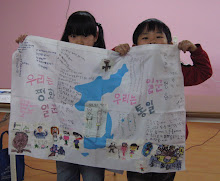
![[URGENT PLEA: In Update] EMERGENCY in GANGJEONG Since AUG. 24, 2011](https://blogger.googleusercontent.com/img/b/R29vZ2xl/AVvXsEiQvpaNf6EePZVucu97_JphYsFS5IgumnSiA4YAmen1PZcim6vMmW7XjZ7J6nLh-Cu36mwBN5n1evrA3ey0vYMpwlAGsgnSFggv6a1w4Qx9BvvqOB0hy0BIcBkL2Exfs3zIxBsBuDGa1kzg/s227/jejusit.jpg)


![[Solidarity from Japan for the Jeju] 253 individuals and 16 groups/organizations](https://blogger.googleusercontent.com/img/b/R29vZ2xl/AVvXsEivji7100kBkr0hzvqYfh4IBBilkZ6XgDIg89jOxS6kTssxsVKC6Wm-fZbKOEsiy3zcO-9gW6GHspD5R_2C9WsGx5S1Z5VPj_OVRF7H6dxdaT0S-2H1eqsDsYvIwOV26VscxTHnKmP5iZmh/s227/jeju_12_10j.jpg)

![[Translation] Korean organizations' statement: Immediately cancel the joint ROK-US drill Nov 26](https://blogger.googleusercontent.com/img/b/R29vZ2xl/AVvXsEgfKDMo-qyEjm5asUtHlREyJY_5Ou-2tyB8SH6aUxiViRbbKR-8W_rirFiGp5DYSoD_KaeNOPMWR0af0ZPUIbJKmR89ImDvADHsGAIqsJVBvJNBEIl5wLd3G_zhPDW3Z2SxsHXadOsXe8st/s227/1.jpg)
![HOT! [Hankyoreh Hani TV] Beneath the Surface: the investigation into the sinking of the Cheonan](https://blogger.googleusercontent.com/img/b/R29vZ2xl/AVvXsEh80rL3Qv9GnfHSqbYMfivdqX5gZN-1O_VQj3A_Gk3yjWdybHwJCsprA3l6cEQB0cYCP2oNeaLo2ohLGIy0Uqqkv_fRkBevGJ2f-qkKD5eP1ZGsKeQ-r-jHUUb79WvucIN7hpEtXza4xXCL/s227/HaniTV+Cheonan.gif)


![[Translation]Statement against illegal inspection and unjust lay-off by the Kunsan USAFK!(Nov_2010)](https://blogger.googleusercontent.com/img/b/R29vZ2xl/AVvXsEg3JlQ-lreusCIJo5Yv2e3ZrRwrSMUE7UQxlrDVjmBehl0Pa24QZIAbZ5vUpgnnExbkKL9PdCwxVYSHWJkr_XK0FM4EhU3CMFhqfborVNu_p4v3bEFpNm3ia-aEHnvMMuEBI27aB7_BETuJ/s227/gunsan+protest.gif)
![[Translation] Korean organizations' statement against dispatching special force to the UAE on Nov.](https://blogger.googleusercontent.com/img/b/R29vZ2xl/AVvXsEiU7TNhTDLLwZkKP0Z78JsCZKp6je-QSFll3_ThmLES_y_nPLXEzeakrsZXoNxhN5blopEhy6xGV2tneJrniPdTR-JvOQMmSLr_HhlucxFvbusxk4oKvvMO2laBOHSIkB9OOeOxrQlqCA0O/s227/antiwarpeace.jpg)
![[Translation] Stop, Joining MD!: South Korean activists' statement and writing on Oct. 25, 2010](https://blogger.googleusercontent.com/img/b/R29vZ2xl/AVvXsEggGIHVei8j7LCJPJB5HIrspd942q436daNTquP-pFd45Cl70Ml_1JFiFDHgKu6FcoqNgFVKIFqjeuSPau2k_BwGHhx0cqFFL2-4ybZSTlmua0_AsERBtKYQa7jZk7uNj41LX6rj2vksHbo/s227/StopMD.jpg)
![[In Update] People First, NO G-20 (Nov. 6 to 12, Korea)](https://blogger.googleusercontent.com/img/b/R29vZ2xl/AVvXsEhZl8VTqeL7o2ndliGIE-sZFCikbTgfB9KCc3AtZvDaYijBBEhdfultMEOpyrCaD5gzpH8mqfWjU20KXMbSUl-5KM7yQeHU6z3BWV8tiOy4UKaCudz9VKWoi5x58xdC_gQpJTjkR5u7O9xf/s227/left21_G20.jpg)
![[International Petition] Stop US helipad plan in Okinawa to save great nature](https://blogger.googleusercontent.com/img/b/R29vZ2xl/AVvXsEihgYmdb0N8ViPvTFC_5i-Psbt4eX_LnAUEOtZkUngv_pGvRyWag1r6W60NicLLyTgWq-sPT1hBxLY5SadEIVv5McfZQ5uIhe-W0VoflQNqojsYZjFW6AH-gB1jsmSDGnGuKIFk2UkvNbFG/s227/yanbaru_w.jpg)
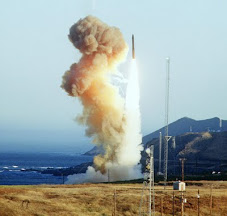
![[Global Network] against the first launch of Quasi-Zenith Satellite, Japan, on Sept. 11, 2010](https://blogger.googleusercontent.com/img/b/R29vZ2xl/AVvXsEj2sYpfodDDMIA7qXwuda0DmKapxXFB479fDnn8RKy7QNZqz0VEvWucNd-DleZ37hWNXC-Z8QtaqtM37VuPwac5SgclJ9_khBBSWOedvm19MRXIP1j1kcWrK6EW5IFjQdEEY2h7E6xuyNvC/s227/Qzss-45-0_09.jpg)
![[In update] Some collections on the Koreans’ protests against the sanction & war on Iran](http://4.bp.blogspot.com/_gnM5QlRx-4c/TJMvke6t8zI/AAAAAAAAFO4/tamQ8LUnOOA/S227/No+Sanction+on+Iran.jpg)
![[Three International Petitions] to End the Korean war and peace treaty(or peace resolution)](https://blogger.googleusercontent.com/img/b/R29vZ2xl/AVvXsEhlohLVYtpCg7iMsZhNYY4hBbhTi2dIheHMHWLDph9X2y78cjgZV1LeSfUJeu80elhJm70Q9E059q72lK-spSPvsRG4bPuCDIytltJB9IH3mWt9OG98HqhnTsPakwhvNeoCFUgF1xoxQ2EZ/s227/border.jpg)


![[Collection of Documents] No Base Learning and Solidarity Program_Korea(June 14 to 20, 2010)](https://blogger.googleusercontent.com/img/b/R29vZ2xl/AVvXsEix_HzjToh3nNGHBc-_5gasq-ykcaZ6GInLixILmZVyRJ5xoeHCxWOyYd9fSM7bmnuFsjSrYOGEPnQOwB1Dcyo-sN4Pw0cFPhUtKig_qlVnGL1Wi82ClvPqbEPWYhJiqdNF0DyzLIBETMB9/s227/No-Base-banner.jpg)
![Site Fwd:[John Hines] A U.S. Debate coach’s research trip on the Issues of Korea](https://blogger.googleusercontent.com/img/b/R29vZ2xl/AVvXsEg8yRra0zNhKHN74Auqhd3Nx9tZ7BWCGflRJHGH4CfzBT_yjhZ8Nl9b3OZuLpYWJ2exsjmR0oVl-Qq_cf832p2VdmOZhUi-lCFzCNeDSyVtweX1lWZPC-RlHmDMLtilHwHjNFTenBiM4Fk4/s227/Jeju-Peace-Tour.jpg)


![[News Update] Struggle Against the Jeju Naval Base since Jan. 18, 2010](https://blogger.googleusercontent.com/img/b/R29vZ2xl/AVvXsEhKfSTRC5QKBBSFIq_m7QIqXdlbL4-gF5GJYn9Q-pN__k7sV7uxGDcLY5L8xmU7QuWuUhBT_GhG-URBPO80RT3AfWfDrWJr06h1hFuZC6ZBVKe4U6PS1Cd7Kr6olO8TYQtk13Drox7IS6ea/s226/scrum1.jpg)


![[Urgent] Please spread the Letter!: There was no Explosion! There was no Torpedo! (May 26, 2010)](https://blogger.googleusercontent.com/img/b/R29vZ2xl/AVvXsEhSd2yWZ3xGwnJQXB73z5FgXCqSosAoB9_33-GLYprOmLqjmvgSAQp1BYI7e4slK1FDxHRi9KK4um-OpDaj8QOkXwAScVAgvvq6-ehbDA-hbkr96wT9oHNNmWnBPv8GU4hoZp9X8F9AZBX4/s227/grounded.jpg)
![Text Fwd: [Stephen Gowans]The sinking of the Cheonan: Another Gulf of Tonkin incident](https://blogger.googleusercontent.com/img/b/R29vZ2xl/AVvXsEi_L6hB3RZ1MovTXHe0A8yn_RfgMALGR0kM6poBuGp809xwvHtB_-PGWtS_WpyPWatyd9lB2pPqL2gOLc4dTCEdJ9sMvxJWEdapl-mMLm7WHAsV-jVpgqarVh8XBtdz_0c-Vohdh3HtJahD/s227/lee-myung-bak.jpg)
![[Japan Focus]Politics in Command: The "International" Investigation into the Sinking of the Cheonan](https://blogger.googleusercontent.com/img/b/R29vZ2xl/AVvXsEiHmTo8v-uCJnabRhMdnBAkC9J3s5bb2JsDKiT5leJHwbK8IDJHxfJmqQ_C0Is_bPC6UGMf05CA0exF2y4r2x9RhFUHT0kjsKviaME_MZXKnq775UyYAdb7w2SAzE75XvBfHp1al2q6i3cf/s227/wen_jiabao_and_lee_myungbak.png)
![[Japan Focus] Who Sank the SK Warship Cheonan? A New Stage in the US-Korean War and US-China](https://blogger.googleusercontent.com/img/b/R29vZ2xl/AVvXsEiKSS5ULT5QBaMGYpXXqBMX9jtwLwMLuK469b6Ku72GTJYKUObzTANaPjZqvvpPzYMJgPF53sjhvhK3DVa88ipYlggsJageykXlkxY6s8TW05xcU-_vfhf-pACUoaWuFbT-fsU1qEhm_yIi/s227/buoy_map.gif)
![[Updated on 12/13/10] [Translation Project] Overseas Proofs on the Damages by the Military Bases](https://blogger.googleusercontent.com/img/b/R29vZ2xl/AVvXsEikADE6JovUNspQyZUWVMTLAQg7yQNqXpVUbqZPk8f4uc_1723_xm1Cco6WAmstQXVPnaJAcb1mZA8Ny_3xONT_f5uh8MNLPnUhtqdGgy3HCtC1Vbbz4Q0ZY1Cssu-4cJEVNdrvznbS5UzO/s227/missile.jpg)
![[International Petition] Close the Bases in Okinawa](https://blogger.googleusercontent.com/img/b/R29vZ2xl/AVvXsEhNpQiHklwFbWVlFK7GDFXnBSOOSFEj3Il-We-N3uTDldKiidL2NGZs7X_LtTnatzTo_r8CexRkFe8NhfxYqmgp1knEEslROTfNjI5_mSb57cdbhPkftvanveYBaevAD9xuKDGoIxiTwoSb/s227/2.jpg)
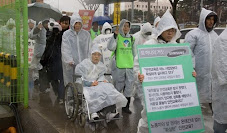
![[In Update]Blog Collection: No Korean Troops in Afghanistan](https://blogger.googleusercontent.com/img/b/R29vZ2xl/AVvXsEjjEmCRXSNAG7_QBxKWbdksmxoWR4nyAovQTTdR1G2AuXh0jxtqNkI9OmYgYWRoLAJShvtBvE840QXuBWSVh3u3zMYqkNAFX6OWy3m5Nur4HM7uNK-pKT1ycyApJp-VLyhIFRRcoisYAh0E/s226/No-Troops-to--Afghanistan.jpg)


