* Rick Rozoff sent on Oct. 11, 2010
Manila Bulletin
October 10, 2010
Joint RP-US Military Training Exercises Begin
By ELENA L. ABEN
MANILA, Philippines: The annual bilateral military training exercises — called Amphibious Landing Exercise (PHIBLEX) and Cooperation Afloat Readiness and Training (CARAT) — between Philippine and American forces start Monday.
At least 3,000 US servicemen are now in the country for the nine-day bilateral training, with their counterparts in the Armed Forces of the Philippines.
Lt. Col. Edgard Arevalo, Philippine Navy Public Affairs Office (NPAO) director, said around six US Navy vessels and aircraft will also participate in the annual event that involve five Philippine Navy ships and at least 1,000 Philippine Navy and Marine personnel.
....
The NPAO director said PHIBLEX will involve American and Filipino Marines and amphibious vehicles. A boat raid exercise will be held in Marine Base Ternate in Cavite and a mechanized raid will be held in the coast of the Naval Education and Training Command (NETC) in Zambales.
PHIBLEX will officially begin on Thursday, Oct. 14, at Clark, Pampanga and will end on Oct. 22 at the Philippine Marine Corps Headquarters at Marine Barracks Rudiardo Brown, Naval Station Jose Francisco in Taguig City.
===========================
Stop NATO
Blog site
Showing posts with label Asia Pacific/ Japan/ Philippines (US military bases). Show all posts
Showing posts with label Asia Pacific/ Japan/ Philippines (US military bases). Show all posts
Tuesday, October 12, 2010

Saturday, July 24, 2010
Text Fwd: [famoksaiyanfriends] Island Residents Form Human Chain to Protect Pagat
 * Image source: Pacific News Center
* Video source: Guam News (same as the below link)
* Text sent from Martha Duenas on July 24, 2010
KUAM News
Islanders unite to protect Pagat July 23, 2010
by Lannie Walker
Guam - Hoping to protect Pagat from the Department of Defense plans to use the area as a firing and training range for the U.S. Marine Corps, concerned island residents gathered along the Back Road to Andersen Air Force Base, uniting hands to form a human chain - a show of solidarity that the ancient Chamorro village of Pagat must be protected.
Joe Quinata is from the Guam Historic Preservation Trust and is hoping to build an alliance with the DoD in the preservation and protection of Pagat. "And if the DoD wants to be part of this alliance, then we're happy," he told KUAM News. "If they don't, then we have another step to take." Asked what that next step is, he responded without hesitation: litigation.
Pagat, a historic site that dates back to 700 A.D., was officially placed on the National Trust For Historic Preservation's 11 Most Endangered Historic Places List. Anthea Hartig is the organization's regional director, and said about today's rally, "If you think of it contextually in terms of advocacy from grassroots, spending 20-30 hours poring over the Final Environmental Impact Statement, effort of this magnitude it takes all of us together individual and as a whole to make a difference. So, we're really glad to be here."
It wasn't just residents of Guam that gathered at Pagat, but Jeannae Flores and Hermon Farahi traveled from Saipan to show their support and are filming a documentary called "Weaving Solidarity: Taking A Look At The Military Buildup from An Indigenous Perspective." "We're here to pretty much document all of it and also me personally I want to be here to preserve my culture history and my Chamorro people," said Flores.
Farahi added, "It seems like Pagat represents lot of tradition for Chamorro people. the problem being that lots of lands have been given up since acquisition in Spanish-American War all the way to the present, and I think people really feel enough is enough and this sacred land for a lot of people there's burial sites here a lot of the suruhanus the healers come here to find inspiration and it just means a lot for local people and the fact that they want to create firing range here has brought a lot of resentment toward the military and what they want to accomplish.
"And it seems like there's some tensions now with the local people and what the military wants to accomplish. We're here to support and document the Chamorro people as they engage in the struggle."
_____________________________________________________________
Thursday, July 22, 2010
Texy Fwd: [U.S. Social Forum] Resolution Opposing U.S. Imperialist Wars and Militarism
DMZ Hawai'i
Resolution Opposing U.S. Imperialist Wars and Militarism
July 20, 2010 Resolution Opposing U.S. Imperialist Wars and Militarism
Resolution Opposing U.S. Imperialist Wars and Militarism
July 20, 2010
Full text
Resolution Opposing U.S. Imperialist Wars and Militarism
Prepared for the 2010 U.S. Social Forum People’s Movement Assembly
WHEREAS, Pentagon spending has doubled to over $700 billion in the past eight years, and the U.S. Empire maintains over 700 military bases around the globe to wage perpetual war in its unending pursuit of profits and power;
WHEREAS, in the process, the U.S. military kills innocent civilians and destroys infrastructure, undermines democracy and human rights, threatens the sovereignty of nations, displaces farmers and indigenous people from their land, and wreaks environmental devastation;
WHEREAS, the U.S. government uses the so-called War on Terror as justification for the militarization of the U.S. border, the wholesale targeting of Muslim and Arab communities, the expansion of police departments, the prison industrial complex, and other institutions and policies aimed at silencing all those seen as threats to capitalism, white supremacy, patriarchy and heterosexism;
WHEREAS, U.S. wars in Iraq and Afghanistan have stolen more than $1 trillion away from vital needed services, such as universal healthcare, affordable housing, and living wage jobs in communities victimized by the economic crisis – especially people of color, who bear the brunt of these crises due to structural racism, and immigrants, who become scapegoats in times of economic recession;
WHEREAS, the Pentagon continues to invest billions of our tax dollars and human resources each year into developing new and more advanced weapons systems that have no civilian or military justification, while the average living standard in the United States has long been on the decline, and unemployment has steadily been on the rise;
WHEREAS, mobilizing hundreds of thousands of troops for war, and dropping tons of munitions on urban centers and rural communities not only destroy lives, but pushes the planet closer to ecological destruction by consuming a massive amount of fossil fuels, destroying critical ecosystems, and creating resource scarcity;
WHEREAS, we believe all people should have the right to self-determination and peaceful existence; that collective security comes from mutual respect, not by hoarding of the world’s resources by a few; and we must move beyond empire and militarized methods of control; and
WHEREAS, people in the United States have a stake in challenging the power of war-making institutions and converting the vast resources now wasted on war-making into productive capacity for raising the quality of life for all; and we see our futures intertwined with the futures of the people of the Global South, and believe that we have a responsibility to hold this government accountable; therefore, be it
RESOLVED, that we, the undersigned organizations, united in our opposition to imperialist war and militarism, commit to building a movement for a truly just and lasting peace; and be it further
RESOLVED, that we stand in solidarity with our brothers and sisters who are struggling under the weight of U.S. militarism and imperialism for peace, justice and self-determination in other countries; and be it further
RESOLVED, that we demand an immediate withdrawal of all foreign troops from Iraq and Afghanistan, and call on the U.S. government to provide reparations to address the humanitarian crises in these countries, as well as repair the physical damage caused by its invasion and occupation; and be it further
RESOLVED, that we reject any planned attack on Iran, and call on the U.S. government to stop funding Israel’s occupation and colonization of the Palestinian people; and be it further
RESOLVED, that we call on the U.S. government to respect the self-determination of people in Africa, Asia Pacific, Latin America, and the Middle East, and demand a total abolition of all foreign military bases and other infrastructure for wars of aggression, including military interventions, operations, trainings, exercises, and laboratories dedicated to weapons construction; and be it further
RESOLVED, that we call on the U.S. government to put the vast resources now wasted on war-making toward meeting urgent civilian needs, including the funding of jobs in housing, health care, education, clean energy and infrastructure repairs, and preventing the layoff of state and local public workers; and be it further
RESOLVED, that we declare October 2010 a month of people’s resistance against empire, and be it further
RESOLVED, that on October 2, we will take to the streets of Washington, DC to call for moving the money from wars, weapons and war planning to jobs, homes and education; and be it further
RESOLVED, that on October 3-7, we will mark the anniversary of the launching of the Afghanistan war with decentralized international days of action for an immediate ceasefire, negotiations and total withdrawal of all US and NATO troops.
AfroEco
CAAAV Organizing Asian Communities
Causa Justa: Just Cause
Communities for a Better Environment
Direct Action for Rights and Equality
Desis Rising Up & Moving
DMZ Hawaii/Aloha Aina
Grassroots Global Justice – Beyond Empire
Grassroots International
Hawaiian Independence Action Alliance
Labor Community Strategy Center
Malcolm X Grassroots Movement
Malu ‘Aina
National Priorities Project
Nodutdol for Korean Community Development
Ohana Koa / Nuclear Free and Independent Pacific
Palestine Solidarity Group-Chicago
Peace Action
People Organized to Win Employment Rights (POWER)
Veterans for Peace Chapter 27
Veterans for Peace Chapter 47 (Southwestern Pennsylvania)
West Coast Famoksaiyan
Women for Genuine Security
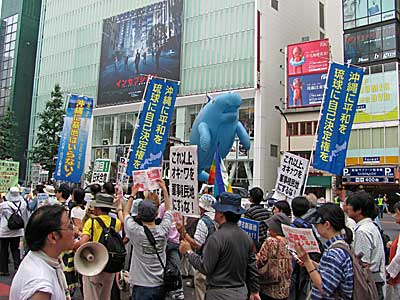
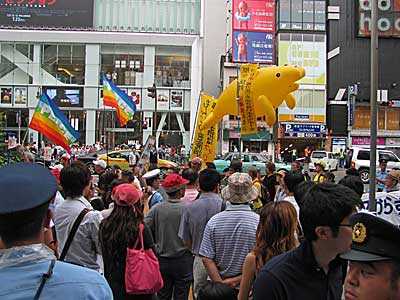
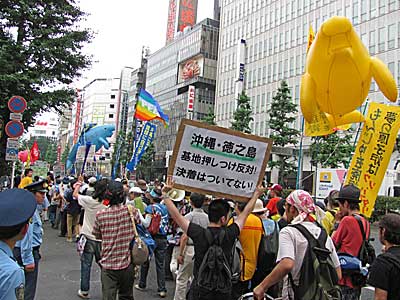
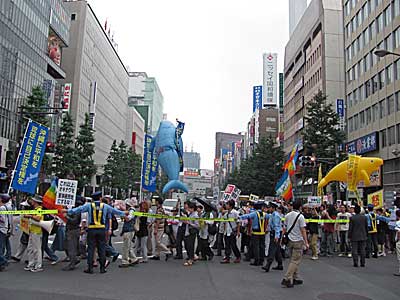
Photos & Texts Fwd: [famoksaiyanfriends] Tokyo demonstration against Henoko relocation. Send military base to continental US, not Guam
__________________________________________________________________
* Original link was from M.S. in Japan on July 21, 2010
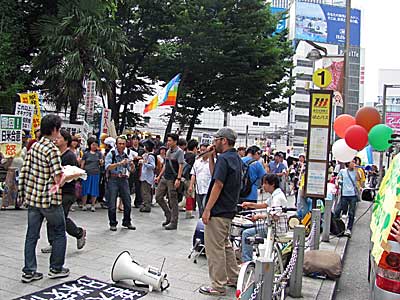
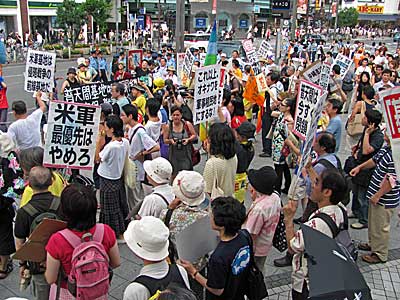
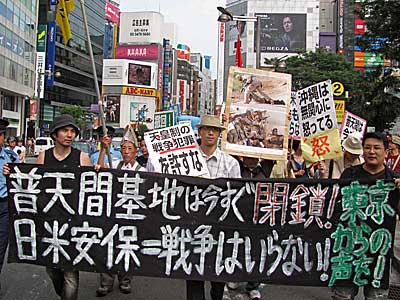
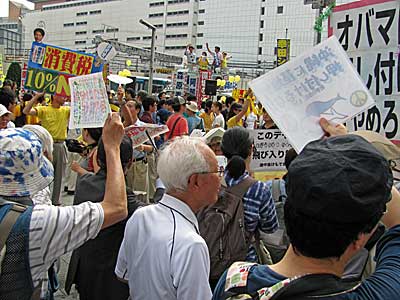
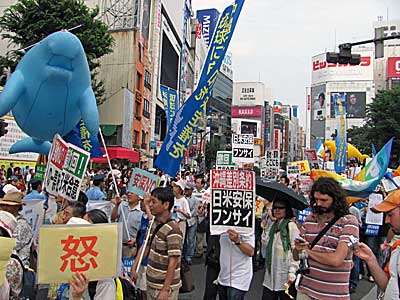
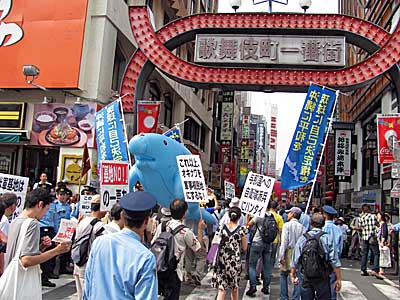
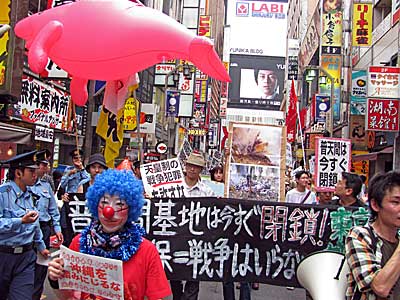
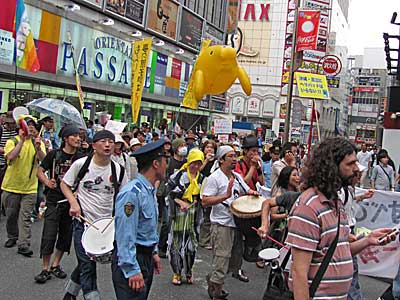
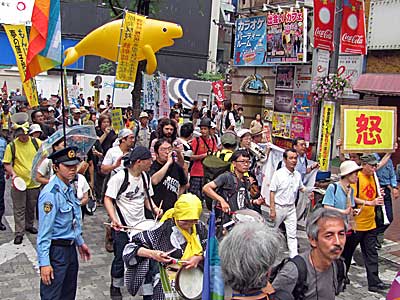
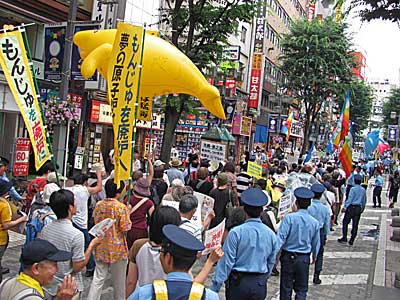
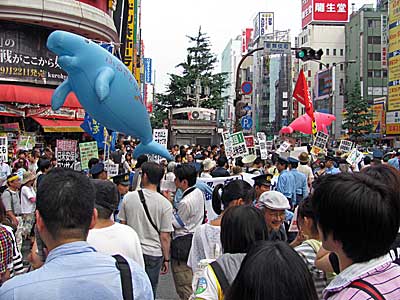
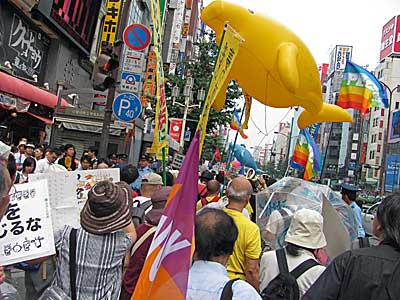
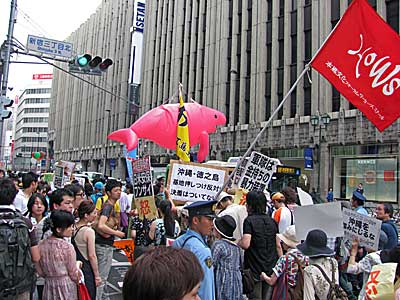
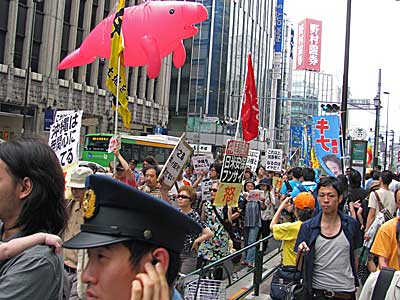
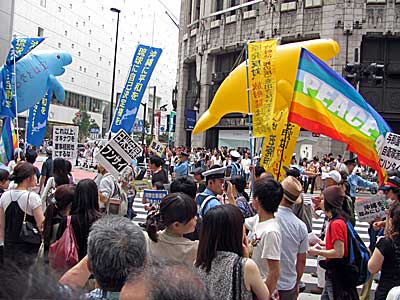
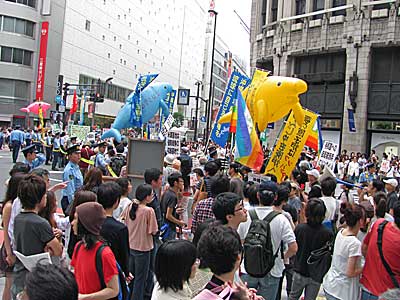
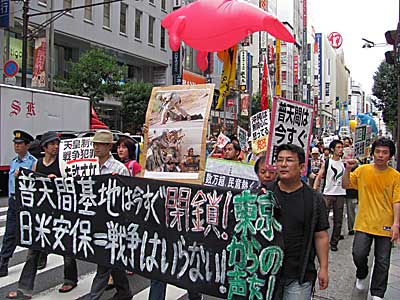
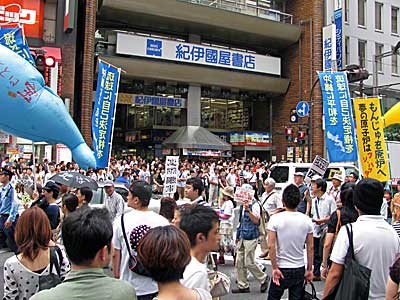
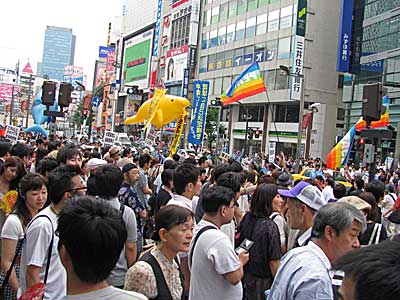
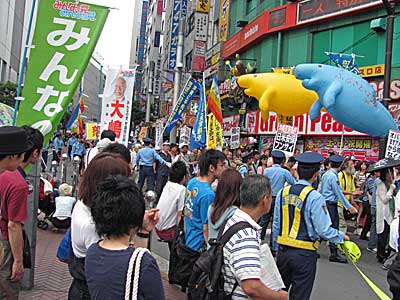
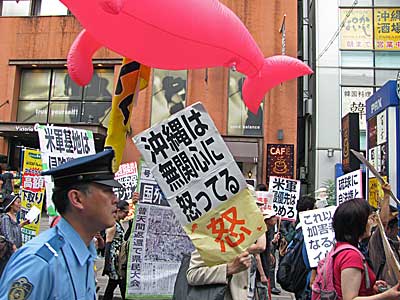
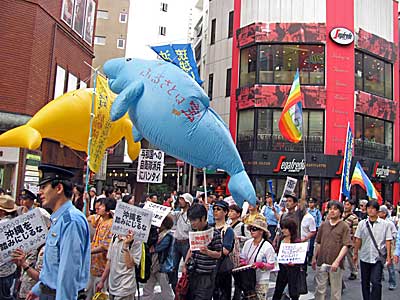
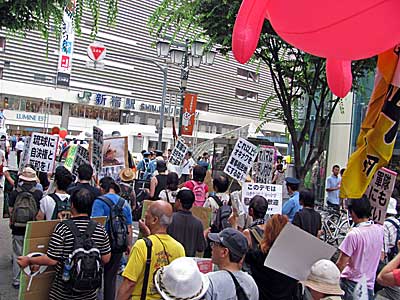
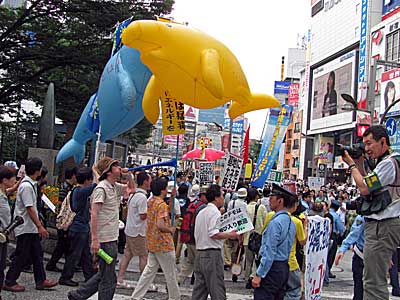
'This was the demonstration in the center of Shinjyuku, Tokyo, on July 5th, against Henoko relocation plan.
http://mkimpo.sakura.ne.jp/diary/2010/shinjuku_10-07-04.html Great.
What effect will the cut in the US defense budget bring to Guam? I hope for much better.
Hiroshi Ashitomi, the one who sent from Okinawa a solidarity message to Jeju movement, says in a blog he never wished for Futenma relocation to Guam. He hopes for the relocation to the mainland US. (M. S. on July 21, 2010)'
________________________________________________________________
* The below texts were re-forwarded and forwarded from Martha Duenas on July 22, 2010.
from blogger M. S.:
Photo coverage of a demonstration in the center of Shinjyuku, Tokyo, on July 5th, against Henoko relocation plan. http://mkimpo.sakura.ne.jp/diary/2010/shinjuku_10-07-04.html
Citizens are calling for the base relocation to the continental US, not to Guam.
to Diary Top 参院選スペシャル 10.5.30 10.4.24
~ ~ ~ ~ ~ ~ ~ ~ ~ ~ ~ ~ ~ ~ ~ ~ ~ ~ ~ ~ ~ ~ ~ ~ ~ ~ ~ ~ ~ ~ ~ ~ ~
SBS Dateline: Japan's Other Voices
"Why do we have to, and why do we still have to, host over 70% of US bases in Japan?"
Toshiko Shimabukuro, Okinawa Base Opponent
* Original link was from M.S. in Japan on July 21, 2010
'This was the demonstration in the center of Shinjyuku, Tokyo, on July 5th, against Henoko relocation plan.
http://mkimpo.sakura.ne.jp/diary/2010/shinjuku_10-07-04.html Great.
What effect will the cut in the US defense budget bring to Guam? I hope for much better.
Hiroshi Ashitomi, the one who sent from Okinawa a solidarity message to Jeju movement, says in a blog he never wished for Futenma relocation to Guam. He hopes for the relocation to the mainland US. (M. S. on July 21, 2010)'
________________________________________________________________
* The below texts were re-forwarded and forwarded from Martha Duenas on July 22, 2010.
from blogger M. S.:
Photo coverage of a demonstration in the center of Shinjyuku, Tokyo, on July 5th, against Henoko relocation plan. http://mkimpo.sakura.ne.jp/
Citizens are calling for the base relocation to the continental US, not to Guam.
to Diary Top 参院選スペシャル 10.5.30 10.4.24

沖縄に基地を押し付けるな! 決着はついてない ぞ! 7.4新宿ど真ん中デモ
2010年7月4日(日)
沖縄を踏みにじるな!緊急アクション実行委員会
http://d.hatena.ne.jp/
辺野古への基地建設を許さない実行委員会
http://www.jca.apc.org/HHK/
| アルタ前出発~靖国通り~歌舞伎町一番街~コマ劇前広場を一周~ |
 |  |
 |  |
 |  |
 |  |
 |  |
 |  |
 |  |
 |  |
 |  |
 |  |
 |  |
 |  |
 |  |
 |  |
 |  |
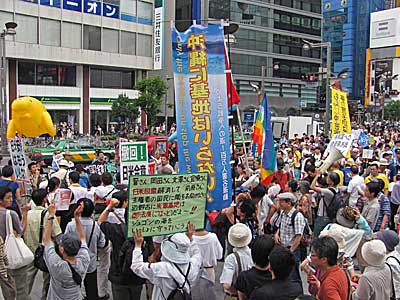 | 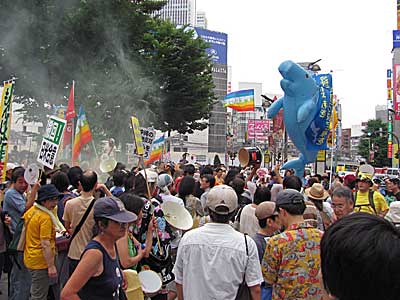 |
| 参院選スペシャル |
| 2010年5月30日(日) 沖縄を裏切るな! 新宿ど真ん中デモ |
| 2010年4月24日(土) 沖縄を踏みにじるな!新宿緊急デモ |
_____________________________________________________________________
Futenma Base Issue Leaves Okinawans Increasingly Disillusioned with Empty Government Promises
May 10, 2010
The prime minister had promised to move the US Marines air base "elsewhere in Japan, at the very least" and hinted that he had "a plan for an alternative location." Now that he has had to backpedal on those statements, Okinawans are increasingly convinced that believing the government's easy assurances will lead to greater hardship. Okinawa bears a heavy burden, with not only military bases, but also a growing population of unemployed drifters.
On May 4, Prime Minister Yukio Hatoyama changed his stance on the removal of Futenma Air Station from Okinawa. "I must apologize to the people of Okinawa. Moving [all the functions of this base] outside the prefecture has proven to be extremely difficult."
It had been Hatoyama's long-held view that the Marine Corps Air Station in Futenma should be moved "outside the country, and, at the very least, outside of [Okinawa] prefecture." Visiting Okinawa for the first time since assuming office, he was forced to concede that this was not possible.
The de facto conclusion is that the base will have to be relocated to the Henoko district of Nago. Hiroshi Ashitomi, the leading member of a group opposed to building a helicopter base there, is continuing a sit-in at the coastal site.

Hiroshi Ashitomi continues his protest sit-in in front of the proposed Henoko site.(Photo credit: Shinichiro Kaneda)
He had believed Hatoyama, until the prime minister reneged on his promise, and had called for calm among the increasingly frustrated protesters, "How could he have lied to the citizens of this country?" he now asks. "He should be ashamed, someone in his position!"
Hatoyama's about turn has caused Ashitomi to change his position as well. He raised his voice in protest at Hatoyama as his entourage stopped by Camp Schwab in Nago immediately after the public apology. "I absolutely refuse to end this sit-in," Ashitomi said. "We have succeeded in blocking the construction of military facilities. We can thwart this move as well."
Okinawa, a favored destination for the homeless
Ashitomi's resentment of the military bases stems from the hardships he and his family endured in the 1960s, when Ashitomi was still in his teens. His family had moved to Okinawa from Tokyo and tried to make a living farming, but a prolonged dry spell threatened to wipe out their crops. Ashitomi remembers carrying waste water from the house to the fields, and being shocked to see American military personnel showering and washing vehicles on the other side of the fence.
He recalls thinking, "This can't be right. Here we are, Japanese citizens living in Japan―why are we living under such terrible conditions?" It is this formative experience that moves him now to actively protest the relocation of the military installation in Okinawa.
Violent crimes committed by military personnel are not the only reason for local antipathy toward the military installations. While the most serious incidents have received national media attention, lesser incidents in everyday life have hardened the hearts of Okinawans against the military bases. Yet, they have also known that it will never be easy to remove the bases built when Okinawa was still under American control.


Okinawans were resigned to the status quo, but a nagging sense of injustice moved many to hope that Hatoyama could make good on his promise of last August to move the base "at the very least, outside of [Okinawa] prefecture."
"It was the prime minister himself that lit the fire," says an executive of a local firm. And now that the desire for change has been encouraged, it will take a great deal more than a contrite bow of apology from Hatoyama to calm the current unrest.
"Being obliged to host the bases has done tremendous damage to the economy of Okinawa," says Kohatsu Sesihou, chairman of Takunan Steel Co., the only steel refinery in Okinawa. He charges that "having the bases on land that would be highly valuable if it could be otherwise utilized has inhibited the development of our economy."
In the first place, a military-based economy can not continue to develop and prosper as the private sector can. When Okinawa was restored to Japanese control in 1972, earnings related to the US bases rose to as much as 15.5% of the population's gross income, but the figure has since fallen to about 5%.
It is relevant to note that throughout this period, the Okinawan prefectural economy has always been the least developed economy in Japan. Yearly income is 2,049,000 yen per capita, and unemployment stands at 8.0%―both figures are the worst in the country.
Besides these statistical testaments to the burden borne by Okinawa, there is a new social phenomenon that is impacting on the region's vitality. "Homeless people are coming to Okinawa from all over the country," says Masayoshi Yamauchi, a representative of the Promise Keepers, a non-profit organization. Drawn by Okinawa's warm climate, they come by ferry, and live outdoors in parks.
The NPO makes the rounds of parks in the Naha area by car every Friday and Saturday, distributing bread, juice, and snacks to the growing number of homeless people. These foods―mostly packaged foods that are near their best-by date―are donated by wholesalers and other businesses in the area.
The Promise Keepers also operate a shelter for the homeless. Before the financial crisis of 2008, there were 55 people living at the shelter; now there are 163. Almost half are from other prefectures. They include a 68-year-old man from Osaka who was found trying to hang himself at Ounoyama, a park by the Kokuba River in Naha. Another resident was taken in by the shelter after being arrested by police for trying to make his home at Naha Airport.
The organization tries to find work for the people at the shelter. Some ten firms are helping, offering work in construction, waste processing, and at a taxi company. However, fewer than 30 of the residents go to work every day, and increasing their motivation to seek regular employment takes time. Also, some residents have problems with substance abuse or alcoholism, and others simply drift off again.
The downsides of depending on the government
Yamauchi is sometimes asked if his organization is doing work that the government or local councils should be doing. He says no. For one thing, government employees only work regular hours, while the non-profit's activities demand more than that. Furthermore, he knows that a mentality of entitlement takes over when the homeless deal with the government.

For these reasons, Yamauchi declines public funds, soliciting donations instead from local businesses and individuals. His decision is characteristic of a growing consciousness in Okinawa―there is a groundswell of mistrust toward the government, particularly at the national level.
The citizens of Okinawa are keeping the government at arm's length, feeling instinctively that they will pay a heavy price later if they go along with its assistance measures. Their suspicions are down to a feeling that the government does not really understand what is holding Okinawa back.
One supposedly beneficial development was the drive to introduce casinos to Okinawa. Spearheaded by the tourism and construction industries, the push to establish "special zones" allowing casinos to operate was considered a high-potential initiative that would spark tourism. The plan excited considerable support at one point, as local citizens got behind the possible revival of Okinawa's economy.
This broad support quickly ebbed, however, when Keiko Itokazu, an Okinawan elected to the upper house, reported what she had seen on a study tour of casinos in South Korea. What she saw was a local society struggling with rising crime and gambling addiction.
"The reality," she said, "is a situation where women are even selling themselves to continue gambling. Simple fixes for the economy may be effective at first, but their effects are not lasting."


Homeless people at a park in Naha, Okinawa, gather for food hand-outs from a non-profit organization.(Photo credit:Shinichiro Kaneda)
Development that is right for Okinawa―that is what local citizens seek. Unsettled by the never-ending dispute over the military bases and forced to bear more than their share of Japan's social responsibilities, Okinawans have learned to see through the glib promises of their national government.
The latest upheavals set in motion by Hatoyama's promises are proceeding toward a worst-case resolution for the local populace. But it is because they have been disappointed yet again that they have begun to see the path they should take.
Ashitomi, who is continuing his protest sit-in at Henoko, has a plan for the area if the threat of military construction can be successfully thwarted: a world-class tourist destination featuring coral and dugongs, a manatee-like marine mammal. "It will be much more effective for economic development than a military base," he says. "We have a dream to pursue."
There is no way to know whether such a plan will be successful. That remains to be seen, and the dream may never even be put to the test. One thing is certain―immediate economic rationale is not the yardstick by which local sentiment or hopes for the future can be gauged. The rift between the state and the people of Okinawa is wider and deeper than could ever have been imagined.
~ ~ ~ ~ ~ ~ ~ ~ ~ ~ ~ ~ ~ ~ ~ ~ ~ ~ ~ ~ ~ ~ ~ ~ ~ ~ ~ ~ ~ ~ ~ ~ ~
SBS Dateline: Japan's Other Voices
"Why do we have to, and why do we still have to, host over 70% of US bases in Japan?"
Toshiko Shimabukuro, Okinawa Base Opponent
May 2, 2010
Last Sunday in Japan an estimated 90,000 people gathered on the island of Okinawa - The purpose of their exercise? To send a very clear message to both Tokyo and Washington that the giant US bases that dot the island are not welcome and should be removed. If that were to happen, it would fracture a 50-year relationship between the two nations, not to mention ripping out a vital strategic plank in America's defence policy. From the island some have labelled "an unsinkable US aircraft carrier" here's Adrian Brown.
REPORTER: Adrian Brown
Okinawa City on a Saturday night. The clubs and streets are filled with drunken marines. It's a menacing and seedy place - the result of what happens when young soldiers and a lot of beer get together. For decades, the catalogue of trouble caused by the more than 30,000 US troops living on the island has been growing, fuelling last Sunday's massive anti-bases rally. Not only was Washington put on notice but speakers including Okinawa's governor demanded that Japan's Prime Minister Yukio Hatoyama also honour a pre-election commitment to move the bases.
HIROKAZU NAKAIMA, GOVERNOR OF OKINAWA (Translation): As promised in the election campaign, solutions must be presented, on the Futenma Air Base issue, in particular – a responsible solution must be presented.
REPORTER: So these files all relate to cases involving the US military?
Criminal lawyer Ikemiyagi Toshio specialises in cases involving the US bases.
IKEMIYAGI TOSHIO, CRIMINAL LAWYER (Translation): The most common are traffic-related accidents, firstly some are caused by soldiers drinking and driving, there are hit-and-runs some resulting in death. Apart from hit and runs, there are other fatal accidents caused by negligence. We have a lot of such accidents. Besides those, there are a lot of sexual crimes committed against women.
In 1995, anger erupted after four marines gang-raped a 12-year-old girl. The last reported rape was two years ago, and involved a 14-year-old girl. But according to Barack Obama's top diplomat for East Asia, the behaviour of the US forces has actually been improving.
KURT CAMPBELL, US ASSISTANT SECRETARY OF STATE: I think the more important feature of the last 15 years is that you will note in that period of time that the incidence of crime is far below the national levels in the United States and so you've seen a thorough-going improvement in the behaviour and the activities of deployed American forces in Okinawa over the course of the last 15 years or so.
However Ikemiyagi Toshio tells me the statistics are misleading because many more sex crimes go unreported.
IKEMIYAGI TOSHIO (Translation): The US soldiers live within the bases and that makes it extremely difficult for an individual to file a suit against a US soldier. So in many cases the victim just gives up.
This is the big Futenma air base located right in the middle of the city of Ginowan. It's one of 12 bases on the island. This photo shows just how densely packed the surrounding residential areas are. It is home to 4,000 marines, who train regularly, ready for deployment to Afghanistan. Okinawa is a strategic gem for the US located close to mainland China, Taiwan and North Korea. Now it's all threatened by the anti-bases movement. Because of the sensitivity of this issue, few journalists are allowed onto Futenma base. It's become the fault line in the US-Japan defence alliance. Both governments agree this camp has to close. The sticking points are though when it will happen and more importantly where it will be moved to.
From the roof top of Okinawa International University you get a direct view of the air base. But it's a view university president Moritake Tomikawa has grown tired of.
REPORTER: When do you want the marines to go?
MORITAKE TOMIKAWA, UNIVERSITY PRESIDENT: Right now, right now.
REPORTER: Right now?
MORITAKE TOMIKAWA: Yes, as soon as possible.
In 2003, the then US Secretary of State, Donald Rumsfeld, called Futenma air base "an accident waiting to happen". A year later, he was proved right when a US helicopter crashed into the university. Incredibly no-one was killed but an administration building was destroyed. The Americans sealed off the area, denying access even to Japanese emergency services.
REPORTER: Do you worry there might be another accident here?
RITAKE TOMIKAWA, PRESIDENT, OKINAWA INTERNATIONAL UNIVERSITY: Sure - Every day. I feel so. Yeah, I worry about that. We have over 6,000 people here so I worry about that crash again - whenever I saw the helicopter flying.
In 2006, Washington and Tokyo finally agreed to move Futenma to another part of the island. But late last year, Japan's new Prime Minister suggested the base should be shifted off Okinawa altogether. The deal was put on hold and a 50-year-old military alliance came under strain.
REPORTER: When will the marines and their aircraft be leaving Futenma?
KURT CAMPBELL: I can't answer that question. In fact, I will tell you quite honestly, I've been working on this matter for almost 15 years and I would've thought it would've been resolved long ago. The problem, of course, has been a new government - a government very different that the preceding government - has come to power in Japan, and they have a different conception, or at least they had a different conception, about some specifics associated with the US-Japan security relationship, and we have yet been able to gain a full understanding from them on what's the best way forward.
Hajime Kanai knows these waters well. They boast coral reefs, tropical fish and the endangered dugong. Technically these are American territorial waters because of what stretches along the coastline here - another sprawling base, Camp Schwab.
REPORTER: Everything here is American? All these waters?
HAJIME KANAI, ANTI BASES PROTESTER: Yes, but we think this is Okinawan sea.
REPORTER: Beautiful, clear water.
In return for closing Futenma, the Americans want to shift air operations to Camp Schwab. The plan includes a proposal for a new runway inside the base. But another more controversial option would bury part of this picturesque bay under a V-shaped runway.
HAJIME KANAI (Translation): There are a few reasons. One - I don't want them to destroy the beautiful sea of Okinawa and secondly - I want to protect the precious creature, Dugong, Butt. 20% of Okinawa is occupied by the US bases. It is upsetting - put daily lives - it is an undesirable existence.
Clearly visible from the boat is the American razor wire that divides Henoko beach. The fence is festooned with colourful banners and protest notes. Among the visitors today, tourists from Tokyo, keen to know what will eventually happen here. The keep-out sign was not enough to deter him. Another sign of growing Japanese defiance - A defiance you also find at the heart of Japan's government. 1,600 kilometres away in Tokyo, I've come to meet an outspoken member of the Japanese Cabinet.
MRS MIZUHO FUKUSHIMA SOCIAL DEMOCRATIC PARTY: Nice to meet you, thank you.
REPORTER: Thank you for sparing the time to see us, I know you're very busy at the moment.
Mizuho Fukushima is head of the left-leaning Social Democratic Party and a staunch opponent of the relocation plan.
MRS MIZUHO FUKUSHIMA: I want to emphasize that plan will not be able to realize. One point with that, people dislike such plan. Most people don't agree and every persons, every politicians in Okinawa prefecture oppose that plan.
While the echoes of last week's demonstration are being heard in Tokyo and Washington, this weekly ritual outside Camp Schwab has been going on for six years. A small group of protesters, most of them pensioners, are busy decorating the perimeter fence. Many remember when the Americans first arrived in April 1945 and have resented their presence ever since. In the past, there have been clashes with the police, but today the demonstration is peaceful.
HIROSHI ASHITOMI, ANTI US BASES PROTESTER (Translation): I want to emphasize the worst plan is the island plan.
Their leader is a retired civil servant who says the protests will continue until the relocation plan is dropped.
HIROSHI ASHITOMI (Translation): The destruction of the environment is one of our strongest concerns. There are sea turtles, dugong, and a coral reef here. By destroying the environment here it might drive some of those species into extinction.
Okinawa is etched deeply in the memory of both Japan and America. The battle of Okinawa was the bloodiest of the Pacific War. The island's memorial park commemorates 200,000 Japanese troops and civilians who lost their lives. More than were killed during the atomic bombings of Hiroshima and Nagasaki. Over 12,000 Americans also perished.
TOSHIKO SHIMABUKURO (Translation): We did not know how terrifying a war was, we did not think that our friends will die like this.
Toshiko Shimabukuro was a 17-year-old schoolgirl when the invasion began. She was treated by American medics after being shot in the leg running for cover.
TOSHIKO SHIMABUKURO (Translation): I wonder why the military bases exist in islands that had over 200,000 people dying 65 years ago? But they seem to be trying to build stronger base with stronger foothold here. We would like to ask the US why they do not consider the lives of Okinawans? We ask ourselves, what is Okinawa? And ask if they would think of what we went through even before the war. We do not want the bases. I wish the US would be more considerate towards Okinawa.
Japan has to pay more than $2 billion a year towards the cost of supporting the US presence. Washington insists that this allows Japan to hold down its defence costs in line with its pacifist constitution.
KURT CAMPBELL: Overall it's one of the best deals imaginable for a country like Japan that spends less than 1% on its national defence but at the same time has the robust and very firm commitment on the part of the United States to maintain peace and stability and indeed the security of Japan.
But Tokyo now says it wants a more equal partnership with Washington and the flashpoint of this marathon debate is Futenma.
MIZUHO FUKUSHIMA (Translation): Of course US-Japan bilateral relationship is of utmost importance. But US itself said it is not beneficial for the US Government to have a base surrounded by hostile sentiment. 75% of the US bases in Japan are concentrated in an area only 0.5% the size of Japan, why should Okinawa accept another base.
The anti-base campaign received a boost earlier this year in the nearby city of Nago. Voters elected a mayor who had campaigned against the expansion of the US military presence. The results reverberated around the country. One national daily said the biggest loser was not the victor's opponent but the Japan-US Defence Alliance. Later Japan's Prime Minister Yukio Hatoyama said "The people had spoken" and promised to settle the issue once and for all.
YUKIO HATOYAMA, PRIME MINISTER (Translation): My government has said it will take responsibility and settle this issue by the end of May. We will definitely carry this out.
The new mayor has no say in national policy, but still insists it's now impossible for the air base to be moved here.
SUSUME INAMINE, NAGO MAYOR (Translation): As for the new plan with a V-shaped runway, the base would be bigger than the current air station an expansion not only in size but in functions is incorporated in the plan. What would the consequences be? Futenma is said to be one of the most dangerous bases in the world and the new base would expose the residents to even bigger risks.
But almost 50% of the electorate didn't vote for him and doesn't support an anti-base stance. Masatake Kyoda is an unemployed construction worker. He heads a group that wants the base to come to this area because of the jobs that would follow.
MASATAKE KYODA (Translation): If the base is to come, we'll insist on our terms that will benefit the community and our children in the future.
Here in Henoko, shop after shop in the main street is shuttered by the economic downturn. Young people are leaving to find work elsewhere. It's a dying town.
MASATAKE KYODA (Translation): The issue is going over our heads. Our community is in a state of limbo.
It's not jobs this gaggle of protesters worry about. They are ardent supporters of Japan's defence pact with America. They fear that Okinawa without the bases would leave the country militarily vulnerable.
SHIGEKO OBARA, PRO BASES SUPPORTER: China is trying to invade our country step by step.
REPORTER: Do you think that would happen if the American bases were closed?
SHIGEKO OBARA: Yes, Yes. It gonna happen. Yes, yes.
At the US State Department in Washington officials know they have to tread carefully right now. But it is impatient to end the months of uncertainty.
KURT CAMPBELL: So we are coming to that stage now where we're expecting our friends in Japan to take the appropriate steps. So I wouldn't say frustration, but a gathering anticipation that we are about to see some real steps. But I think a larger point, Adrian, must be made, that although we are concerned and we do care deeply about the people of Okinawa, there are larger issues at play. The US-Japan relationship, in many respects, transcends local communities and this is fundamentally not just about public opinion in Okinawa, it's about decision making in Tokyo and indeed in Washington.
Last week's rally has upped the pressure on both sides, but particularly on Japanese Prime Minister Yukio Hatoyama. Almost half the respondents in a recent opinion poll said that the Prime Minister should resign if the relocation issue isn't settled by the end of May.
YUKIO HATOYAMA (Translation): I believe that the extremely huge rally held by the people of Okinawa was definitely an indication of public opinion. We'd like to reiterate that we hope to further ease the burden of the Okinawa people and eliminate the dangers of Futenma airbase. I will continue to make efforts with this thought in mind.
Whatever decision is made later this month - one thing is certain, the US-Japan relationship is changing.
KURT CAMPBELL: Japanese want to know more, they want to be consulted more actively, they want to be engaged in decision-making. I think that's entirely appropriate. This will also demand and require changes in how the United States conceptualises its relationship with Japan and I believe we're in the midst of trying to do that right now.
GEORGE NEGUS: And if you want to tell us what you think of those US bases in Japan go to our website, where there's a forum where you can voice your comments and opinions on all of our stories.
Reporter/Camera
ADRIAN BROWN
Fixer
TERRENCE TERASHIMA
Producer
VICTORIA STROBL
Researcher
DONALD CAMERON
Editor
NICK O’BRIEN
Translations/Subtitling
HIROKO MOORE
Stills courtesy of the City of Ginowan
Thursday, July 15, 2010
Site Fwd: [Ten Thousand Things] Kickstarter Project: "Weaving Solidarity: Indigenous Chamorro Movements & the US Military Buildup of Guam"
Ten Thousand Things
Wednesday, July 14, 2010
Kickstarter Project: "Weaving Solidarity: Indigenous Chamorro Movements & the US Military Buildup of Guam"
Filmed at the US Social Forum, held in Detroit, MI, June 22-26, 2010, this video promo is from the Kickstarter Project Campaign, and features Christine Illarmo and Kyle Kajihiro:
_______________________________________________________________
# The Ten Thousand Things blog has the wonderful collections of the recent Guam news that this site manager could not recently have the time to arrange. Please see the other links of the blog as in the below as well.
Christina Illarmo: 'American Lake' or Ka Moana Nui?: Demilitarization Movements in the Asia-Pacific (links to great blogs & resources)
Wednesday, July 14, 2010
Beyond the Fence: "Pågat Under Fire: Resistance through Historic Preservation"
Tuesday, July 13, 2010
Guam News Watch: Local leaders discuss Pagat with military officials; concerns about respect for sacred site & private property unabated
Tuesday, July 13, 2010
They want to destroy a sacred historic site to build firing range? Guam governor & U.S. military still haven't yet changed mind on Pagat -Below video (original source: We Are Guahan) informed.
Tuesday, July 13, 2010
Wednesday, July 14, 2010
Kickstarter Project: "Weaving Solidarity: Indigenous Chamorro Movements & the US Military Buildup of Guam"
Weaving Solidarity: Indigenous Chamorro Movements & The US Military Buildup of Guam from Hermon Farahi on Vimeo.
Filmed at the US Social Forum, held in Detroit, MI, June 22-26, 2010, this video promo is from the Kickstarter Project Campaign, and features Christine Illarmo and Kyle Kajihiro:
THE ISSUE:Many thanks to filmmaker and writer Koohan Paik, author of "Living at the "'Tip of the Spear'," about the proposed U.S. military buildup on Guam, for the head's up on this video and project.
The indigenous Chamorro people of Guam and the Mariana Islands are facing the impacts of the single largest military base expenditure in modern history, with an estimated budget of $16 Billion USD. The U.S. already occupies one third of the island for military purposes, and seeks to further dispossess the local inhabitants off their land. In addition, the Environmental Protection Agency (EPA) has deemed the buildup as “environmentally unsatisfactory," attributing the worst possible rating to the proposed plans. All this is in the context of 500 years of continuous colonial occupation, which has not changed til this day.
_______________________________________________________________
# The Ten Thousand Things blog has the wonderful collections of the recent Guam news that this site manager could not recently have the time to arrange. Please see the other links of the blog as in the below as well.
Christina Illarmo: 'American Lake' or Ka Moana Nui?: Demilitarization Movements in the Asia-Pacific (links to great blogs & resources)
Wednesday, July 14, 2010
Beyond the Fence: "Pågat Under Fire: Resistance through Historic Preservation"
Tuesday, July 13, 2010
Guam News Watch: Local leaders discuss Pagat with military officials; concerns about respect for sacred site & private property unabated
Tuesday, July 13, 2010
They want to destroy a sacred historic site to build firing range? Guam governor & U.S. military still haven't yet changed mind on Pagat -Below video (original source: We Are Guahan) informed.
Tuesday, July 13, 2010
Tuesday, June 29, 2010
Text Fwd: [Japan Focus]:Okinawa and Guam: In the Shadow of US and Japanese "Global Defense Posture"
* Text informed by Martha Duenas on June 28, 2010
Japan Focus
Okinawa and Guam:
In the Shadow of U.S. and Japanese “Global Defense Posture”
Japan Focus
Okinawa and Guam:
In the Shadow of U.S. and Japanese “Global Defense Posture”
Kensei YOSHIDA
Okinawa is Japan’s southernmost prefecture lying between mainland Japan and Taiwan off China’s east coast. The main island measures twice the size of Guam and has a population roughly seven times greater, or one-third the size of New York’s Long Island with 50,000 more people. On its slender, irregularly shaped island, which constitutes a mere 0.3 per cent of the country、Okinawa hosts 75 per cent in size of all U.S. only military bases in Japan, exclusive of sea and air space. U.S. bases include the Marine Corps jungle training, aviation, bombing and shooting ranges, landing training grounds and an ammunition depot, the largest Air Force base in the region with its own ammunition site, a naval station often visited by nuclear submarines and Army facilities, adding in sum to roughly one-fifth of the densely populated island. It is home to an estimated 24,600 U.S. service personnel, out of a total of 36,000 in all of Japan, many of them living with their dependents in fenced-in “American towns” with schools, gyms, golf courses, shopping centers and churches. Nearly 90 per cent (about 15,000 in number) of the Japan-based Marines are concentrated in Okinawa.
Marine Corps Air Station Futenma, located in the middle of a residential area of the city of Ginowan (population 91,000) north of the capital Naha, reportedly stations 2000 to 4000 personnel of the 1st Marine Aircraft Wing of the III Marine Expeditionary Force. Helicopters and fixed/wing aircraft are constantly flying low in circles over the residences, schools and hospitals for embarkation and touch-and-go exercises, creating roaring noise and the danger of crashes. People are so concerned that they have long been demanding its closure and return, with particular urgency since 2004 when one of Futenma’s heavy helicopters spiraled into the wall of the administration building of a university right across the fence and splattered its broken pieces all over during the summer break. In 2006, the Japanese and U.S. governments agreed to relocate many Okinawa-based Marines to Guam by 2014 to lessen the Okinawan people’s burdens or to accommodate “the pressing need to reduce friction on Okinawa.” MCAS Futenma would be returned, but only after being replaced by a new facility that Japan would construct within Okinawa.
* MORE READINGText Fwd: Christina Illarmo: USSF Presentation at the 'American Lake' or Ka Moana Nui?: Demilitarization Movements in the Asia-Pacific Workshop
* Text informed by Corazon Valdez Fabros on June 28, 2010
Christina Illarmo: USSF Presentation at the 'American Lake' or Ka Moana Nui?: Demilitarization Movements in the Asia-Pacific Workshop
June 28, 2010 at 10:44 am
Christina Illarmo: USSF Presentation at the 'American Lake' or Ka Moana Nui?: Demilitarization Movements in the Asia-Pacific Workshop
June 28, 2010 at 10:44 am
Presentation at the
USSF - United States Social Forum
24 June 2010
'American Lake' or Ka Moana Nui?: Demilitarization Movements in the Asia-Pacific
The Pacific island of Guahan, where I was born and raised, has been touted to mainstream audiences as "the tip of the spear," "the unsinkable aircraft carrier," or as a kind of "gas station" for U.S troops. But this island is more than a military outpost, it’s place of waterfalls, fresh water caves, thick jungles, and warm sandy beaches. It’s also home to a loving and resilient native people who after surviving centuries of Western colonization have yet to receive their inherent right to self-determination.
We’ve been citizens since the 50’s, yet we still can’t vote for President, we aren’t represented in the senate, and our one Congressional Delegate can’t vote on the floor; but our voices are valid and our concerns are real.
This massive military buildup, which will realign troops from Okinawa to Guahan, puts our culture, environment, and our quality of life at risk while simultaneously violating our human rights. While Okinawa, Hawai’i, California, Philippines, and Korea have said no- we have not; and it is not because we say "yes"; it is because we were never ASKED. Our political status as a US Territory provides the United States a place wherein they may implement their plans with "no restrictions," meaning: they can do whatever is in their best interest. When our local leaders voiced concerns during realignment negotiations, they were told that this was a "nation-to-nation" conversation. This response reminds our people that we have never been equals within this country. We are Americans; but then we are not.
Why does the US go so far out of its way to subjugate a peaceful little island 30 miles long and 7 miles wide with a population of 171,000?
In a simple word: LOCATION.
Any military official will tell you as a US Territory, Guahan is the only location of its kind in the Pacific, from which long-range bombers can strike nearly any target in Northeast, East and Southeast Asia. They see us as the “Diego Garcia of the Pacific”.
But in the grand scheme of things, it doesn’t matter how important the Pentagon thinks we are, this costly, immoral and unsustainable practice of forcing bases on unwilling soil has a huge price tag ($4 billion) and it is breaking the backs of the American working class while destroying the lives of native peoples abroad.
Currently, the military is Guahan’s largest landowner, occupying roughly 1/3 of the land. Air force and naval bases restricted to the civilian public have not only displaced thousands of people, they have created a unique form of racial and socioeconomic segregation in which the service people behind the fence have their own hospitals, schools, homes, parks, churches, shopping centers, camping grounds, and beaches- all on land which was mostly stolen or forcibly bought for insultingly low prices from the indigenous Chamoru people. Besides the trauma of displacement, and being forced to use the English language in place of our own, our quality of life has seen other impacts. Before much of our rich and fertile ancestral farmlands were confiscated we had sustainable agriculture. Our farmers produced over 90% of our food. Today we must rely on expensive importing with our own local production reduced to 5%.
Last November the required draft environmental impact was released, outlining plans for the buildup. Those familiar with environmental impact statements and NEPA regulations will quickly tell you that the typical length of these types of documents run somewhere around 350 pages. However, the DEIS detailing US plans to realign Okinawan troops to Guam was over 11,000 pages and contained three separate projects (all three of which contained plans large enough to justify their own formal commenting period). This forced residents of Guam to digest, understand, and critique this massive document within a 90 day period. Residents were welcome to submit written comments but each were only given 3 minutes to testify at a series of only 3 hearings. You can see a few of these testimonies on the Voice of Guam Youtube Channel.
At first, attention and most discussion on the buildup was about how it was going to help our economy and create more jobs. But as the inadequacy of plans became apparent during the formal comment period, a shift in the island's attitude occurred as agencies, such as the Guam Water Authority, began to speak out in concern, worried that the expected population boom of 80,000 people would overwhelm our already outdated and stressed sewage system and threaten our freshwater source.
Other organizations such as the Boonie Stompers, a club of hiking enthusiasts, began doing outreach, revealing that the military intended to acquire more land to create live firing ranges in pristine jungles. One such site for a proposed firing range is on the Northeastern shore between Anderson Air Force Base and another base we call “Andy-South”. This site includes the ancient Chamoru village of Pagat, considered to not only hold archeological and historical significance- to us it is a truly spiritual place- one of the few left intact that we still have access to. A firing range in Pagat would be no less an outrage than when the Taliban blew up the treasured, ancient Buddhas carved into the cliffs of Afghanistan.
The Guam’s Fisherman Coop helped make the public aware that the military wants to dredge 73 acres of thriving coral reef at Apra Harbor to make another parking spot for a nuclear aircraft carrier. Against the wishes of our people, local leaders, and the urging of the EPA and Center for Biological Diversity, they want to slam the reef with giant weights where the spinner dolphin plays, scalloped hammer head sharks pup, sea turtles swim, and giant blue elephant ear sponge grow. Then they want to scoop the remains out with giant cranes and dispose the equivalent of 50,000 dump truck loads several miles off the coast of the island.
Now, thanks to the work and dedication of local agencies and organizations, and help from off-island folks, our local people have chosen to reject the sense that all of these sacrifices are worth the false promise of economic security from an increased military presence.
It has been truly inspiring to see this grassroots movement explode. And this is where you come in.
First, commit to further educating yourself on the what is happening in the Pacific. Peruse the newsletter, “Stop the military buildup” produced by Famoksaiyan, a group of Chamoru activist based out of California. On it you will find more background on the issue and links to awesome resources such as “No Rest for the Awake” and the “Drowning Mermaid Blog”. Both blogs are written by University of Guam instructors, bright minds who are very active in youth work and are driving forces behind this movement. There is also an amazing podcast you can subscribe to for free on Itunes called “Beyond the Fence”. This is a weekly radio show on the islands NPR station which discuses different aspects of the buildup on every episode.
Next I implore you to stand in solidarity with us and take action. Spread the word about what you’ve learned. Tell your leaders that you don’t support your tax money being used on any more excessive military expenditures. Join the movement to close the base on Okinawa and other sites abroad. Because whether we are talking about Guam, Okinawa or Hawai’i… it’s no different, our suffering and our commitment to oppose the militarization of our homelands is the same.
- Christina Illarmo
Monday, May 24, 2010
Video Fwd: Labor Beat: Mass Rally in Okinawa against U.S. Bases
* Video informed by Masumi Mukai on May 23, 2010
Labor Beat: Mass Rally in Okinawa against U.S. Bases (Video URL)
"A mass rally in Okinawa against U.S. bases took place on April 25, 2010.
Iraq Peace TV in Japan has produced this important video report showing
broad public sentiment in Okinawa and Japan to remove U.S. bases. With
English subtitles. 6 min. Presented by Labor Beat.
*****
Labor Beat is an independent video-producing group based in Chicago. They
have a strong tie with the Iraq Peace TV in Japan coopeating in spreading
news on non-violent pro-peace/anti-occupation movements mainly in Iraq, the
UK, the US and Japan."(Masumi Mukai)
Labor Beat: Mass Rally in Okinawa against U.S. Bases (Video URL)
"A mass rally in Okinawa against U.S. bases took place on April 25, 2010.
Iraq Peace TV in Japan has produced this important video report showing
broad public sentiment in Okinawa and Japan to remove U.S. bases. With
English subtitles. 6 min. Presented by Labor Beat.
*****
Labor Beat is an independent video-producing group based in Chicago. They
have a strong tie with the Iraq Peace TV in Japan coopeating in spreading
news on non-violent pro-peace/anti-occupation movements mainly in Iraq, the
UK, the US and Japan."(Masumi Mukai)
Subscribe to:
Posts (Atom)

![[URGENT PLEA: In Update] EMERGENCY in GANGJEONG Since AUG. 24, 2011](https://blogger.googleusercontent.com/img/b/R29vZ2xl/AVvXsEiQvpaNf6EePZVucu97_JphYsFS5IgumnSiA4YAmen1PZcim6vMmW7XjZ7J6nLh-Cu36mwBN5n1evrA3ey0vYMpwlAGsgnSFggv6a1w4Qx9BvvqOB0hy0BIcBkL2Exfs3zIxBsBuDGa1kzg/s227/jejusit.jpg)


![[Solidarity from Japan for the Jeju] 253 individuals and 16 groups/organizations](https://blogger.googleusercontent.com/img/b/R29vZ2xl/AVvXsEivji7100kBkr0hzvqYfh4IBBilkZ6XgDIg89jOxS6kTssxsVKC6Wm-fZbKOEsiy3zcO-9gW6GHspD5R_2C9WsGx5S1Z5VPj_OVRF7H6dxdaT0S-2H1eqsDsYvIwOV26VscxTHnKmP5iZmh/s227/jeju_12_10j.jpg)

![[Translation] Korean organizations' statement: Immediately cancel the joint ROK-US drill Nov 26](https://blogger.googleusercontent.com/img/b/R29vZ2xl/AVvXsEgfKDMo-qyEjm5asUtHlREyJY_5Ou-2tyB8SH6aUxiViRbbKR-8W_rirFiGp5DYSoD_KaeNOPMWR0af0ZPUIbJKmR89ImDvADHsGAIqsJVBvJNBEIl5wLd3G_zhPDW3Z2SxsHXadOsXe8st/s227/1.jpg)
![HOT! [Hankyoreh Hani TV] Beneath the Surface: the investigation into the sinking of the Cheonan](https://blogger.googleusercontent.com/img/b/R29vZ2xl/AVvXsEh80rL3Qv9GnfHSqbYMfivdqX5gZN-1O_VQj3A_Gk3yjWdybHwJCsprA3l6cEQB0cYCP2oNeaLo2ohLGIy0Uqqkv_fRkBevGJ2f-qkKD5eP1ZGsKeQ-r-jHUUb79WvucIN7hpEtXza4xXCL/s227/HaniTV+Cheonan.gif)


![[Translation]Statement against illegal inspection and unjust lay-off by the Kunsan USAFK!(Nov_2010)](https://blogger.googleusercontent.com/img/b/R29vZ2xl/AVvXsEg3JlQ-lreusCIJo5Yv2e3ZrRwrSMUE7UQxlrDVjmBehl0Pa24QZIAbZ5vUpgnnExbkKL9PdCwxVYSHWJkr_XK0FM4EhU3CMFhqfborVNu_p4v3bEFpNm3ia-aEHnvMMuEBI27aB7_BETuJ/s227/gunsan+protest.gif)
![[Translation] Korean organizations' statement against dispatching special force to the UAE on Nov.](https://blogger.googleusercontent.com/img/b/R29vZ2xl/AVvXsEiU7TNhTDLLwZkKP0Z78JsCZKp6je-QSFll3_ThmLES_y_nPLXEzeakrsZXoNxhN5blopEhy6xGV2tneJrniPdTR-JvOQMmSLr_HhlucxFvbusxk4oKvvMO2laBOHSIkB9OOeOxrQlqCA0O/s227/antiwarpeace.jpg)
![[Translation] Stop, Joining MD!: South Korean activists' statement and writing on Oct. 25, 2010](https://blogger.googleusercontent.com/img/b/R29vZ2xl/AVvXsEggGIHVei8j7LCJPJB5HIrspd942q436daNTquP-pFd45Cl70Ml_1JFiFDHgKu6FcoqNgFVKIFqjeuSPau2k_BwGHhx0cqFFL2-4ybZSTlmua0_AsERBtKYQa7jZk7uNj41LX6rj2vksHbo/s227/StopMD.jpg)
![[In Update] People First, NO G-20 (Nov. 6 to 12, Korea)](https://blogger.googleusercontent.com/img/b/R29vZ2xl/AVvXsEhZl8VTqeL7o2ndliGIE-sZFCikbTgfB9KCc3AtZvDaYijBBEhdfultMEOpyrCaD5gzpH8mqfWjU20KXMbSUl-5KM7yQeHU6z3BWV8tiOy4UKaCudz9VKWoi5x58xdC_gQpJTjkR5u7O9xf/s227/left21_G20.jpg)
![[International Petition] Stop US helipad plan in Okinawa to save great nature](https://blogger.googleusercontent.com/img/b/R29vZ2xl/AVvXsEihgYmdb0N8ViPvTFC_5i-Psbt4eX_LnAUEOtZkUngv_pGvRyWag1r6W60NicLLyTgWq-sPT1hBxLY5SadEIVv5McfZQ5uIhe-W0VoflQNqojsYZjFW6AH-gB1jsmSDGnGuKIFk2UkvNbFG/s227/yanbaru_w.jpg)
![[Global Network] against the first launch of Quasi-Zenith Satellite, Japan, on Sept. 11, 2010](https://blogger.googleusercontent.com/img/b/R29vZ2xl/AVvXsEj2sYpfodDDMIA7qXwuda0DmKapxXFB479fDnn8RKy7QNZqz0VEvWucNd-DleZ37hWNXC-Z8QtaqtM37VuPwac5SgclJ9_khBBSWOedvm19MRXIP1j1kcWrK6EW5IFjQdEEY2h7E6xuyNvC/s227/Qzss-45-0_09.jpg)
![[In update] Some collections on the Koreans’ protests against the sanction & war on Iran](http://4.bp.blogspot.com/_gnM5QlRx-4c/TJMvke6t8zI/AAAAAAAAFO4/tamQ8LUnOOA/S227/No+Sanction+on+Iran.jpg)
![[Three International Petitions] to End the Korean war and peace treaty(or peace resolution)](https://blogger.googleusercontent.com/img/b/R29vZ2xl/AVvXsEhlohLVYtpCg7iMsZhNYY4hBbhTi2dIheHMHWLDph9X2y78cjgZV1LeSfUJeu80elhJm70Q9E059q72lK-spSPvsRG4bPuCDIytltJB9IH3mWt9OG98HqhnTsPakwhvNeoCFUgF1xoxQ2EZ/s227/border.jpg)


![[Collection of Documents] No Base Learning and Solidarity Program_Korea(June 14 to 20, 2010)](https://blogger.googleusercontent.com/img/b/R29vZ2xl/AVvXsEix_HzjToh3nNGHBc-_5gasq-ykcaZ6GInLixILmZVyRJ5xoeHCxWOyYd9fSM7bmnuFsjSrYOGEPnQOwB1Dcyo-sN4Pw0cFPhUtKig_qlVnGL1Wi82ClvPqbEPWYhJiqdNF0DyzLIBETMB9/s227/No-Base-banner.jpg)
![Site Fwd:[John Hines] A U.S. Debate coach’s research trip on the Issues of Korea](https://blogger.googleusercontent.com/img/b/R29vZ2xl/AVvXsEg8yRra0zNhKHN74Auqhd3Nx9tZ7BWCGflRJHGH4CfzBT_yjhZ8Nl9b3OZuLpYWJ2exsjmR0oVl-Qq_cf832p2VdmOZhUi-lCFzCNeDSyVtweX1lWZPC-RlHmDMLtilHwHjNFTenBiM4Fk4/s227/Jeju-Peace-Tour.jpg)


![[News Update] Struggle Against the Jeju Naval Base since Jan. 18, 2010](https://blogger.googleusercontent.com/img/b/R29vZ2xl/AVvXsEhKfSTRC5QKBBSFIq_m7QIqXdlbL4-gF5GJYn9Q-pN__k7sV7uxGDcLY5L8xmU7QuWuUhBT_GhG-URBPO80RT3AfWfDrWJr06h1hFuZC6ZBVKe4U6PS1Cd7Kr6olO8TYQtk13Drox7IS6ea/s226/scrum1.jpg)


![[Urgent] Please spread the Letter!: There was no Explosion! There was no Torpedo! (May 26, 2010)](https://blogger.googleusercontent.com/img/b/R29vZ2xl/AVvXsEhSd2yWZ3xGwnJQXB73z5FgXCqSosAoB9_33-GLYprOmLqjmvgSAQp1BYI7e4slK1FDxHRi9KK4um-OpDaj8QOkXwAScVAgvvq6-ehbDA-hbkr96wT9oHNNmWnBPv8GU4hoZp9X8F9AZBX4/s227/grounded.jpg)
![Text Fwd: [Stephen Gowans]The sinking of the Cheonan: Another Gulf of Tonkin incident](https://blogger.googleusercontent.com/img/b/R29vZ2xl/AVvXsEi_L6hB3RZ1MovTXHe0A8yn_RfgMALGR0kM6poBuGp809xwvHtB_-PGWtS_WpyPWatyd9lB2pPqL2gOLc4dTCEdJ9sMvxJWEdapl-mMLm7WHAsV-jVpgqarVh8XBtdz_0c-Vohdh3HtJahD/s227/lee-myung-bak.jpg)
![[Japan Focus]Politics in Command: The "International" Investigation into the Sinking of the Cheonan](https://blogger.googleusercontent.com/img/b/R29vZ2xl/AVvXsEiHmTo8v-uCJnabRhMdnBAkC9J3s5bb2JsDKiT5leJHwbK8IDJHxfJmqQ_C0Is_bPC6UGMf05CA0exF2y4r2x9RhFUHT0kjsKviaME_MZXKnq775UyYAdb7w2SAzE75XvBfHp1al2q6i3cf/s227/wen_jiabao_and_lee_myungbak.png)
![[Japan Focus] Who Sank the SK Warship Cheonan? A New Stage in the US-Korean War and US-China](https://blogger.googleusercontent.com/img/b/R29vZ2xl/AVvXsEiKSS5ULT5QBaMGYpXXqBMX9jtwLwMLuK469b6Ku72GTJYKUObzTANaPjZqvvpPzYMJgPF53sjhvhK3DVa88ipYlggsJageykXlkxY6s8TW05xcU-_vfhf-pACUoaWuFbT-fsU1qEhm_yIi/s227/buoy_map.gif)
![[Updated on 12/13/10] [Translation Project] Overseas Proofs on the Damages by the Military Bases](https://blogger.googleusercontent.com/img/b/R29vZ2xl/AVvXsEikADE6JovUNspQyZUWVMTLAQg7yQNqXpVUbqZPk8f4uc_1723_xm1Cco6WAmstQXVPnaJAcb1mZA8Ny_3xONT_f5uh8MNLPnUhtqdGgy3HCtC1Vbbz4Q0ZY1Cssu-4cJEVNdrvznbS5UzO/s227/missile.jpg)
![[International Petition] Close the Bases in Okinawa](https://blogger.googleusercontent.com/img/b/R29vZ2xl/AVvXsEhNpQiHklwFbWVlFK7GDFXnBSOOSFEj3Il-We-N3uTDldKiidL2NGZs7X_LtTnatzTo_r8CexRkFe8NhfxYqmgp1knEEslROTfNjI5_mSb57cdbhPkftvanveYBaevAD9xuKDGoIxiTwoSb/s227/2.jpg)

![[In Update]Blog Collection: No Korean Troops in Afghanistan](https://blogger.googleusercontent.com/img/b/R29vZ2xl/AVvXsEjjEmCRXSNAG7_QBxKWbdksmxoWR4nyAovQTTdR1G2AuXh0jxtqNkI9OmYgYWRoLAJShvtBvE840QXuBWSVh3u3zMYqkNAFX6OWy3m5Nur4HM7uNK-pKT1ycyApJp-VLyhIFRRcoisYAh0E/s226/No-Troops-to--Afghanistan.jpg)


