Organizing Notes
SUNDAY, MAY 15, 2011
NATO - WAR ARM OF CORPORATE GLOBALIZATION
http://rt.com/usa/news/nato-libya-us-war/
Showing posts with label NATO. Show all posts
Showing posts with label NATO. Show all posts
Tuesday, May 17, 2011

Friday, May 6, 2011
Text Fwd: Russia may counter U.S. - Romanian missile shield deal
* Text fwd by Bruce Gagnon on May 5, 2011
http://en.rian.ru/russia/20110504/163853797.html
Russia May Counter US-Romanian missile shield deal
May 4 (RIA Novosti)
Moscow: Romania and the United States should expect counter measures from Russia in response to a missile shield agreement, a senior Russian lawmaker said on Wednesday.
Bucharest announced on Tuesday that it had reached an agreement with the United States to deploy a U.S. missile interceptor system at a disused Soviet airbase on its territory.
"Military specialists in the United States, NATO and Romania should be absolutely aware that any measure entails counter-measures," said Konstantin Kosachev, who heads the foreign policy committee of State Duma, the lower house of the Russian parliament.
He said the counter measures would be used with the sole purpose of protecting Russia and would not be aimed at any particular state.
Moscow issued an urgent request on Tuesday for legal guarantees from the United States that its missile shield will not target Russia's strategic nuclear forces.
"My personal point of view is that the ideal scenario would be for the United States to issue legal guarantees, but the Americans are unlikely to do that," Kosachev said.
The head of the State Duma's defense committee, Viktor Zavarzin, said the U.S.-Romanian deal would have "a negative impact on inter-European relations and undermine the existing balance of forces and interests."
"And this, in turn, will provoke an unnecessary escalation of tensions," he added.
[Moscow is concerned that U.S. interceptors would have the capacity to target Russia’s long-range missiles once the missile shield is fully deployed by 2020 under Mr. Obama’s “phased adaptive approach” plan.]
Global Network Against Weapons & Nuclear Power in Space
PO Box 652
Brunswick, ME 04011
(207) 443-9502
globalnet@mindspring.com
www.space4peace.org
http://space4peace.blogspot.com/ (blog)
Thank God men cannot fly, and lay waste the sky as well as the earth. ~Henry David Thoreau
http://en.rian.ru/russia/20110504/163853797.html
Russia May Counter US-Romanian missile shield deal
May 4 (RIA Novosti)
Moscow: Romania and the United States should expect counter measures from Russia in response to a missile shield agreement, a senior Russian lawmaker said on Wednesday.
Bucharest announced on Tuesday that it had reached an agreement with the United States to deploy a U.S. missile interceptor system at a disused Soviet airbase on its territory.
"Military specialists in the United States, NATO and Romania should be absolutely aware that any measure entails counter-measures," said Konstantin Kosachev, who heads the foreign policy committee of State Duma, the lower house of the Russian parliament.
He said the counter measures would be used with the sole purpose of protecting Russia and would not be aimed at any particular state.
Moscow issued an urgent request on Tuesday for legal guarantees from the United States that its missile shield will not target Russia's strategic nuclear forces.
"My personal point of view is that the ideal scenario would be for the United States to issue legal guarantees, but the Americans are unlikely to do that," Kosachev said.
The head of the State Duma's defense committee, Viktor Zavarzin, said the U.S.-Romanian deal would have "a negative impact on inter-European relations and undermine the existing balance of forces and interests."
"And this, in turn, will provoke an unnecessary escalation of tensions," he added.
[Moscow is concerned that U.S. interceptors would have the capacity to target Russia’s long-range missiles once the missile shield is fully deployed by 2020 under Mr. Obama’s “phased adaptive approach” plan.]
Global Network Against Weapons & Nuclear Power in Space
PO Box 652
Brunswick, ME 04011
(207) 443-9502
globalnet@mindspring.com
www.space4peace.org
http://space4peace.blogspot.com/ (blog)
Thank God men cannot fly, and lay waste the sky as well as the earth. ~Henry David Thoreau
Friday, April 29, 2011
Text Fwd: NATO Expansion Worries Russia
* Text fwd by Bruce Gagnon on April 28, 2011
http://af.reuters.com/article/worldNews/idAFTRE73Q3GH20110427
Russia worried by NATO expansion near its border April 27, 2011
STOCKHOLM (Reuters) - Russian Prime Minister Vladimir Putin expressed worries again Wednesday about the expansion of NATO, which has already taken in former Soviet states as members.
"The expansion of NATO infrastructure towards our borders is causing us concern," Putin told a news conference after meeting Swedish Prime Minister Fredrik Reinfeldt.
"NATO is not simply a political bloc, it is a military bloc. No one cancelled the agreements on how the bloc reacts to external threats. It is a defence structure," added Putin.
NATO has already taken in the three former Soviet Baltic states as members, as well as old Warsaw Pact nations including Poland and the Czech Republic.
Moscow has long been worried by the military alliance's growth and the possibility of its further expansion to take in former Soviet republics such as Georgia or Ukraine. And it is wary of U.S. and NATO plans for a European missile defence shield, which it fears could be a threat to its security unless Russia too is integrated into such a system.
Visiting Denmark Tuesday, Putin criticized the Western coalition attacking Libya, saying it had neither the right nor the mandate to kill the country's leader, Muammar Gaddafi.
Sweden is taking part in the NATO operation in Libya, though it is not a member of the military alliance.
In the context of the Libya operation, Putin also said decisions on using military force were being taken too easily.
He contrasted this with the Soviet war in Afghanistan in the 1980s, when he said Soviet commanders were much more careful in their use of force for fear of causing civilian deaths and casualties.
Global Network Against Weapons & Nuclear Power in Space
PO Box 652
Brunswick, ME 04011
(207) 443-9502
globalnet@mindspring.com
www.space4peace.org
http://space4peace.blogspot.com/ (blog)
Thank God men cannot fly, and lay waste the sky as well as the earth. ~Henry David Thoreau
http://af.reuters.com/article/worldNews/idAFTRE73Q3GH20110427
Russia worried by NATO expansion near its border April 27, 2011
STOCKHOLM (Reuters) - Russian Prime Minister Vladimir Putin expressed worries again Wednesday about the expansion of NATO, which has already taken in former Soviet states as members.
"The expansion of NATO infrastructure towards our borders is causing us concern," Putin told a news conference after meeting Swedish Prime Minister Fredrik Reinfeldt.
"NATO is not simply a political bloc, it is a military bloc. No one cancelled the agreements on how the bloc reacts to external threats. It is a defence structure," added Putin.
NATO has already taken in the three former Soviet Baltic states as members, as well as old Warsaw Pact nations including Poland and the Czech Republic.
Moscow has long been worried by the military alliance's growth and the possibility of its further expansion to take in former Soviet republics such as Georgia or Ukraine. And it is wary of U.S. and NATO plans for a European missile defence shield, which it fears could be a threat to its security unless Russia too is integrated into such a system.
Visiting Denmark Tuesday, Putin criticized the Western coalition attacking Libya, saying it had neither the right nor the mandate to kill the country's leader, Muammar Gaddafi.
Sweden is taking part in the NATO operation in Libya, though it is not a member of the military alliance.
In the context of the Libya operation, Putin also said decisions on using military force were being taken too easily.
He contrasted this with the Soviet war in Afghanistan in the 1980s, when he said Soviet commanders were much more careful in their use of force for fear of causing civilian deaths and casualties.
Global Network Against Weapons & Nuclear Power in Space
PO Box 652
Brunswick, ME 04011
(207) 443-9502
globalnet@mindspring.com
www.space4peace.org
http://space4peace.blogspot.com/ (blog)
Thank God men cannot fly, and lay waste the sky as well as the earth. ~Henry David Thoreau
Monday, April 4, 2011
Text Fwd: Libyan War In Third Week As NATO Takes Command
Stop NATO blog
http://rickrozoff.wordpress.com/2011/04/03/libyan-war-in-third-week-as-nato-takes-command/
April 3, 2011
Libyan War In Third Week As NATO Takes CommandRick Rozoff
On the morning of March 31 the North Atlantic Treaty Organization assumed full command of military operations against Libya, effecting the transfer of air, naval and preliminary ground operations from U.S. Africa Command's Joint Task Force Odyssey Dawn to NATO's Operation Unified Protector. In NATO's words, "The Alliance has the assets in place to conduct its tasks under Operation Unified Protector – the arms embargo, no-fly zone and actions to protect civilians and civilian centres."
On the same day a press conference was conducted by NATO Spokesperson Oana Lungescu, the commander of Unified Protector Lieutenant General Charles Bouchard and the chairman of NATO's Military Committee Admiral Giampaolo Di Paola to announce the transition.
Romania's Lungescu (a veteran of BBC World Service), Quebec's Bouchard and Italy's Di Paola spoke entirely in English, as notwithstanding NATO's formal command of Libyan war operations Bouchard reports to America's Admiral James Stavridis, NATO's Supreme Allied Commander Europe and also the chief of the Pentagon's European Command, and NATO is after all a U.S.-controlled military alliance. One speaks to a master in his language.
The day after NATO took over control of the war Stavridis asserted that "the Libyan operation demonstrates just how capable the Western alliance remains two decades after the end of the Cold War," in the words of an Associated Press dispatch. The news agency added that "This is the first time in its history that NATO is engaged in two major conflicts at once," meaning the wars in Libya and Afghanistan, in Africa and Asia.
The day before NATO assumed command of the North African war, Stavridis told the House Armed Services Committee that the war in Afghanistan "has become a global effort, with committed partners from nations that include Mongolia, Bulgaria, Tonga and El Salvador." He referred to 49 nations contributing troops for NATO's International Security Assistance Force, one more than has been acknowledged before, with El Salvador evidently the latest. There are also military personnel assigned to NATO in Afghanistan from countries that are not yet official Troop Contributing Nations like Bahrain, Colombia, Egypt, Japan and Kazakhstan. Never before have armed forces from so many nations been stationed in a war zone in a single country.
Stavridis, who as NATO's top military commander is in ultimate charge of both current wars, made the latter comments in an address commemorating the 60th anniversary of NATO's Supreme Headquarters Allied Powers Europe in Mons, Belgium, which "was set up by NATO's then-commander and later U.S. President Dwight Eisenhower" as Associated Press reminded its readers.
On March 21, hours after NATO launched Operation Unified Protector, Secretary of Defense Roberts Gates and chairman of the Joint Chiefs of Staff Admiral Michael Mullen also addressed the House Armed Services Committee on Libya. Later Gates appeared before the Senate Armed Services Committee and confirmed that U.S. warplanes would remain in the Libyan war theater to assist the new NATO mission.
Referring to the twelve days of Operation Odyssey Dawn, he said: “That part of our mission is complete and successful.”
He further boasted of Western bombs and cruise missiles destroying Libyan air capabilities and ground assets - the second category includes administrative buildings, oil depots, ammunition dumps and naval facilities - and affirmed that the intensive onslaught "will not diminish under NATO leadership.”
And indeed it hasn't. On the third day of Unified Protector, April 2, NATO announced that it had conducted 174 air missions over Libya on the preceding day, including 74 strike sorties, ones involving bombing missions and missile strikes. The total for the first two days of the NATO operation were 363 sorties and 148 strike sorties.
In his testimony on March 1, Secretary Gates also said: "A decision about support to the opposition is clearly the next step. I think all members of the coalition are thinking about that at this point.”
NATO Military Committee chief Admiral Paola was more candid, stating that he was "confident, absolutely confident, that one of the (NATO) allies" has already been arming anti-government insurgents in Libya.
Gates offered the standard official explanation of the ongoing war as being actuated by alleged humanitarian concerns and disavowed a formal policy of regime change, but gave the lie to his own words in adding that NATO forces “will continue to attack (Gadhafi’s) ground forces with no opportunity for resupply" to the point where “His military is going to face the question of whether they are prepared to be destroyed by air attacks, or if it’s time for him to go.”
In addition, according to the Pentagon's website: "The issue is more complicated than simply arming the rebels. What the opposition really needs, Gates said, is organization, training, and command and control - something he said likely requires coalition forces on the ground in Libya." He refrained from openly endorsing that strategy although it is already being implemented with American and British special forces and intelligence operatives directing air strikes from the ground in Libya.
Gates warned against the alternative to an overthrow of the government and ground operations while speaking in the House earlier, saying "We have considered the possibility of this being a stalemate and being a drawn-out affair...where you achieve the military goal but not achieve the political goal" of regime change.
Chairman of the House Armed Services Committee Howard McKeon cautioned that NATO "could be expected to support a decade-long no-fly zone enforcement like the one over Iraq in the 1990s," a further incentive for entertaining the alternative - or complementary - option of staging a ground war.
A recent poll demonstrated 47 percent of Americans in opposition to the military operation in Libya with 41 supporting it. The same survey, conducted by Quinnipiac University, shows that by a two-to-one majority, 58-29 percent, Americans feel that President Obama has not clearly and convincingly presented an argument for U.S. involvement.
Pressure will be applied on the public to support a prospective invasion of Libya employing the same rationale used for the ongoing air war: The need for an alleged humanitarian intervention.
Modeled after the calls by the likes of former British Prime Minister Tony Blair and NATO Supreme Allied Commander General Wesley Clark during the 1999 war against Yugoslavia, a ground invasion will be presented as a humane remedy for the death and destruction not so much exacerbated as caused by an air campaign.
And there is no lack of Libyans being killed and wounded by the current one.
The Vatican's senior representative (vicar apostolic) in Libya, Bishop Giovanni Innocenzo Martinelli, recently decried the fact that NATO air attacks "are killing dozens of civilians."
He added that "In the Tajoura neighborhood [of the Libyan capital, Tripoli], around 40 civilians were killed, and a house with a family inside collapsed."
In early March Bishop Martinelli had pleaded against the "further spilling of blood” in the country, warning against outside intervention and saying any attempt at a military resolution of the Libyan crisis would only escalate the level of violence.
On April 1 it was announced that a NATO air strike killed seven Libyan civilians, including three girls from one family, and injured 25 in the village of Zawia el Argobe.
On the same day Western warplanes strafed areas east and southwest of Tripoli.
An Associated Press correspondent interviewed the mother and uncle of an 18-month-old boy killed by a NATO air strike in the village of Khorum on March 29.
The mother said, "His blood was streaming down my arm." The uncle added: "We took him to the hospital where they treated him for...burns and some broken bones. But by nightfall he was dead."
On April 2 a spokesman for the Libyan opposition reported that a NATO air strike had killed 13 rebels and wounded at least a score more, adding that the "collateral damage" was "an unfortunate accident." Evidently being killed by Western bombers is more humane than being killed in a firefight with government forces.
Far more Libyans stand to be killed and injured in what NATO has announced will be at least a 90-day campaign.
To indicate the probable true duration, and the scope, of the war, NATO spokesperson Lungescu said at the press conference on March 31 that the North Atlantic Council, the military bloc's highest decision-making body consisting of the permanent representatives (ambassadors) of its 28 member states, had met the day before to discuss the transfer of the war's command to the Alliance.
She also said that the North Atlantic Council met with representatives of the Euro-Atlantic Partnership Council, the Mediterranean Dialogue, the Istanbul Cooperation Initiative "and other partners around the globe."
She added that "I can tell you it was a big room and the room was full."
The Euro-Atlantic Partnership Council includes all 28 full NATO members and the 22 affiliates of its Partnership for Peace program:
Armenia, Austria, Azerbaijan, Belarus, Bosnia, Georgia, Finland, Ireland, Kazakhstan, Kyrgyzstan, Macedonia, Malta, Moldova, Montenegro, Russia, Serbia, Sweden, Switzerland, Tajikistan, Turkmenistan, Ukraine and Uzbekistan.
NATO's Mediterranean Dialogue partners are Libya's neighbors Algeria, Egypt and Tunisia and Israel, Jordan, Mauritania and Morocco.
The Istanbul Cooperation Initiative's members are Bahrain, Kuwait, Qatar and the United Arab Emirates - the last two providing warplanes for NATO's Operation Unified Protector - with Oman and Saudi Arabia next in line to join.
After NATO led a conference in London on March 29 to plan for a "post-Gaddafi" Libya along the lines of such precedents as Bosnia, Kosovo, Macedonia, Afghanistan and Iraq, the bloc's Secretary General Anders Fogh Rasmussen celebrated the creation of a Contact Group on Libya and stated "NATO has long-standing relations with partner countries from the region, notably through its Mediterranean Dialogue programme and the Istanbul Cooperation Initiative."
Two days later Rasmussen delivered an address in Stockholm titled "The New NATO and Sweden’s security" in which he stated:
"NATO welcomes contributions from all its partners across the world to ensure that the will of the international community is heard....We have extensive experience of involving partner nations in our operations – partners such as Sweden, but also partners in the Mediterranean and Gulf regions."
"Afghanistan is another example where we can see the value of partnership. 48 countries are now part of the International Stabilisation Force [International Security Assistance Force] ISAF. With one in four UN member states taking part, this is the largest coalition in history. And Sweden is part of it, along with NATO Allies."
400 Swedish troops serving under NATO in Afghanistan are fighting their country's first war in 200 years.
On April 2, two days after the NATO chief left the country, Sweden deployed the first three warplanes assigned for NATO's air operations in Libya with five more leaving the next day.
As with Afghanistan, the war against Libya is being employed by the U.S. and NATO to consolidate military partnerships with nations around the world under wartime conditions.
Russian political analyst Pyotr Iskenderov recently wrote that "A deployment of multinational forces on a long-term basis under the aegis of NATO paves the way for Brussels to bypass the only restriction [against military occupation] imposed by the UN Security Council on an operation in Libya."
His compatriot Alexander Karasev added:
"An allegedly humanitarian intervention by NATO against Yugoslavia in 1999 ended with the deployment of NATO forces in Kosovo and the setting up of the largest U.S. [overseas base since the Vietnam war] Camp Bondsteel in the province. The U.S. and NATO may repeat this scenario in Libya."
As U.S. military vessels are scheduled to depart the Mediterranean Sea, NATO is amassing an imposing array of warplanes and warships to intensify the attack against Libya.
Tallies compiled by Agence France-Presse and Deutsche Presse-Agentur list the following inventory of military assets deployed against Libya:
Britain: 17 Tornado and Typhoon fighter bombers as well as surveillance, reconnaissance and refuelling aircraft and two frigates and a submarine.
France: 36 warplanes. 20 Mirage and Rafale combat planes and the Charles de Gaulle aircraft carrier with ten Rafale and six Super Etendard attack jets escorted by two frigates, as well as AWACS and refuelling aircraft.
Italy: 16 jets, the Garibaldi aircraft carrier and four other ships as well as seven air and naval bases.
Canada: Eleven fighter jets, patrol and refuelling planes and a frigate.
Belgium: Six F-16 fighter jets and mine-hunting ship.
The Netherlands: Seven jets and a ship.
Turkey: Seven jets, five warships and a submarine.
Norway: Six F-16s.
Denmark: Six F-16s.
Greece: Two jets, a helicopter, a ship and four bases.
Bulgaria: A frigate.
Romania: A frigate and use of an air base.
From NATO partner nations:
Sweden: Eight Gripen fighter jets, a C-130 transport plane and reconnaissance aircraft.
Qatar: Six Mirage fighter jets and two C-17 military transport planes.
United Arab Emirates: Six Mirage jets, six F-16s and one C-17 transport aircraft.
Warplanes from the above nations have launched several hundred ground strikes against Libyan targets already.
NATO's first African war, following its first European and Asian wars in Yugoslavia and Afghanistan respectively, will be neither short nor limited in scale and intensity.
The new commander of U.S. Africa Command, General Carter Ham, said of the first phase of the war that "We've demonstrated the capability to [lead military operations]."
Now NATO is following suit and escalating the conflict to new and more dangerous heights.
====================================================================
Stop NATO e-mail list home page with archives and search engine:
http://groups.yahoo.com/group/stopnato/messages
Stop NATO website and articles:
http://rickrozoff.wordpress.com
http://rickrozoff.wordpress.com/2011/04/03/libyan-war-in-third-week-as-nato-takes-command/
April 3, 2011
Libyan War In Third Week As NATO Takes CommandRick Rozoff
On the morning of March 31 the North Atlantic Treaty Organization assumed full command of military operations against Libya, effecting the transfer of air, naval and preliminary ground operations from U.S. Africa Command's Joint Task Force Odyssey Dawn to NATO's Operation Unified Protector. In NATO's words, "The Alliance has the assets in place to conduct its tasks under Operation Unified Protector – the arms embargo, no-fly zone and actions to protect civilians and civilian centres."
On the same day a press conference was conducted by NATO Spokesperson Oana Lungescu, the commander of Unified Protector Lieutenant General Charles Bouchard and the chairman of NATO's Military Committee Admiral Giampaolo Di Paola to announce the transition.
Romania's Lungescu (a veteran of BBC World Service), Quebec's Bouchard and Italy's Di Paola spoke entirely in English, as notwithstanding NATO's formal command of Libyan war operations Bouchard reports to America's Admiral James Stavridis, NATO's Supreme Allied Commander Europe and also the chief of the Pentagon's European Command, and NATO is after all a U.S.-controlled military alliance. One speaks to a master in his language.
The day after NATO took over control of the war Stavridis asserted that "the Libyan operation demonstrates just how capable the Western alliance remains two decades after the end of the Cold War," in the words of an Associated Press dispatch. The news agency added that "This is the first time in its history that NATO is engaged in two major conflicts at once," meaning the wars in Libya and Afghanistan, in Africa and Asia.
The day before NATO assumed command of the North African war, Stavridis told the House Armed Services Committee that the war in Afghanistan "has become a global effort, with committed partners from nations that include Mongolia, Bulgaria, Tonga and El Salvador." He referred to 49 nations contributing troops for NATO's International Security Assistance Force, one more than has been acknowledged before, with El Salvador evidently the latest. There are also military personnel assigned to NATO in Afghanistan from countries that are not yet official Troop Contributing Nations like Bahrain, Colombia, Egypt, Japan and Kazakhstan. Never before have armed forces from so many nations been stationed in a war zone in a single country.
Stavridis, who as NATO's top military commander is in ultimate charge of both current wars, made the latter comments in an address commemorating the 60th anniversary of NATO's Supreme Headquarters Allied Powers Europe in Mons, Belgium, which "was set up by NATO's then-commander and later U.S. President Dwight Eisenhower" as Associated Press reminded its readers.
On March 21, hours after NATO launched Operation Unified Protector, Secretary of Defense Roberts Gates and chairman of the Joint Chiefs of Staff Admiral Michael Mullen also addressed the House Armed Services Committee on Libya. Later Gates appeared before the Senate Armed Services Committee and confirmed that U.S. warplanes would remain in the Libyan war theater to assist the new NATO mission.
Referring to the twelve days of Operation Odyssey Dawn, he said: “That part of our mission is complete and successful.”
He further boasted of Western bombs and cruise missiles destroying Libyan air capabilities and ground assets - the second category includes administrative buildings, oil depots, ammunition dumps and naval facilities - and affirmed that the intensive onslaught "will not diminish under NATO leadership.”
And indeed it hasn't. On the third day of Unified Protector, April 2, NATO announced that it had conducted 174 air missions over Libya on the preceding day, including 74 strike sorties, ones involving bombing missions and missile strikes. The total for the first two days of the NATO operation were 363 sorties and 148 strike sorties.
In his testimony on March 1, Secretary Gates also said: "A decision about support to the opposition is clearly the next step. I think all members of the coalition are thinking about that at this point.”
NATO Military Committee chief Admiral Paola was more candid, stating that he was "confident, absolutely confident, that one of the (NATO) allies" has already been arming anti-government insurgents in Libya.
Gates offered the standard official explanation of the ongoing war as being actuated by alleged humanitarian concerns and disavowed a formal policy of regime change, but gave the lie to his own words in adding that NATO forces “will continue to attack (Gadhafi’s) ground forces with no opportunity for resupply" to the point where “His military is going to face the question of whether they are prepared to be destroyed by air attacks, or if it’s time for him to go.”
In addition, according to the Pentagon's website: "The issue is more complicated than simply arming the rebels. What the opposition really needs, Gates said, is organization, training, and command and control - something he said likely requires coalition forces on the ground in Libya." He refrained from openly endorsing that strategy although it is already being implemented with American and British special forces and intelligence operatives directing air strikes from the ground in Libya.
Gates warned against the alternative to an overthrow of the government and ground operations while speaking in the House earlier, saying "We have considered the possibility of this being a stalemate and being a drawn-out affair...where you achieve the military goal but not achieve the political goal" of regime change.
Chairman of the House Armed Services Committee Howard McKeon cautioned that NATO "could be expected to support a decade-long no-fly zone enforcement like the one over Iraq in the 1990s," a further incentive for entertaining the alternative - or complementary - option of staging a ground war.
A recent poll demonstrated 47 percent of Americans in opposition to the military operation in Libya with 41 supporting it. The same survey, conducted by Quinnipiac University, shows that by a two-to-one majority, 58-29 percent, Americans feel that President Obama has not clearly and convincingly presented an argument for U.S. involvement.
Pressure will be applied on the public to support a prospective invasion of Libya employing the same rationale used for the ongoing air war: The need for an alleged humanitarian intervention.
Modeled after the calls by the likes of former British Prime Minister Tony Blair and NATO Supreme Allied Commander General Wesley Clark during the 1999 war against Yugoslavia, a ground invasion will be presented as a humane remedy for the death and destruction not so much exacerbated as caused by an air campaign.
And there is no lack of Libyans being killed and wounded by the current one.
The Vatican's senior representative (vicar apostolic) in Libya, Bishop Giovanni Innocenzo Martinelli, recently decried the fact that NATO air attacks "are killing dozens of civilians."
He added that "In the Tajoura neighborhood [of the Libyan capital, Tripoli], around 40 civilians were killed, and a house with a family inside collapsed."
In early March Bishop Martinelli had pleaded against the "further spilling of blood” in the country, warning against outside intervention and saying any attempt at a military resolution of the Libyan crisis would only escalate the level of violence.
On April 1 it was announced that a NATO air strike killed seven Libyan civilians, including three girls from one family, and injured 25 in the village of Zawia el Argobe.
On the same day Western warplanes strafed areas east and southwest of Tripoli.
An Associated Press correspondent interviewed the mother and uncle of an 18-month-old boy killed by a NATO air strike in the village of Khorum on March 29.
The mother said, "His blood was streaming down my arm." The uncle added: "We took him to the hospital where they treated him for...burns and some broken bones. But by nightfall he was dead."
On April 2 a spokesman for the Libyan opposition reported that a NATO air strike had killed 13 rebels and wounded at least a score more, adding that the "collateral damage" was "an unfortunate accident." Evidently being killed by Western bombers is more humane than being killed in a firefight with government forces.
Far more Libyans stand to be killed and injured in what NATO has announced will be at least a 90-day campaign.
To indicate the probable true duration, and the scope, of the war, NATO spokesperson Lungescu said at the press conference on March 31 that the North Atlantic Council, the military bloc's highest decision-making body consisting of the permanent representatives (ambassadors) of its 28 member states, had met the day before to discuss the transfer of the war's command to the Alliance.
She also said that the North Atlantic Council met with representatives of the Euro-Atlantic Partnership Council, the Mediterranean Dialogue, the Istanbul Cooperation Initiative "and other partners around the globe."
She added that "I can tell you it was a big room and the room was full."
The Euro-Atlantic Partnership Council includes all 28 full NATO members and the 22 affiliates of its Partnership for Peace program:
Armenia, Austria, Azerbaijan, Belarus, Bosnia, Georgia, Finland, Ireland, Kazakhstan, Kyrgyzstan, Macedonia, Malta, Moldova, Montenegro, Russia, Serbia, Sweden, Switzerland, Tajikistan, Turkmenistan, Ukraine and Uzbekistan.
NATO's Mediterranean Dialogue partners are Libya's neighbors Algeria, Egypt and Tunisia and Israel, Jordan, Mauritania and Morocco.
The Istanbul Cooperation Initiative's members are Bahrain, Kuwait, Qatar and the United Arab Emirates - the last two providing warplanes for NATO's Operation Unified Protector - with Oman and Saudi Arabia next in line to join.
After NATO led a conference in London on March 29 to plan for a "post-Gaddafi" Libya along the lines of such precedents as Bosnia, Kosovo, Macedonia, Afghanistan and Iraq, the bloc's Secretary General Anders Fogh Rasmussen celebrated the creation of a Contact Group on Libya and stated "NATO has long-standing relations with partner countries from the region, notably through its Mediterranean Dialogue programme and the Istanbul Cooperation Initiative."
Two days later Rasmussen delivered an address in Stockholm titled "The New NATO and Sweden’s security" in which he stated:
"NATO welcomes contributions from all its partners across the world to ensure that the will of the international community is heard....We have extensive experience of involving partner nations in our operations – partners such as Sweden, but also partners in the Mediterranean and Gulf regions."
"Afghanistan is another example where we can see the value of partnership. 48 countries are now part of the International Stabilisation Force [International Security Assistance Force] ISAF. With one in four UN member states taking part, this is the largest coalition in history. And Sweden is part of it, along with NATO Allies."
400 Swedish troops serving under NATO in Afghanistan are fighting their country's first war in 200 years.
On April 2, two days after the NATO chief left the country, Sweden deployed the first three warplanes assigned for NATO's air operations in Libya with five more leaving the next day.
As with Afghanistan, the war against Libya is being employed by the U.S. and NATO to consolidate military partnerships with nations around the world under wartime conditions.
Russian political analyst Pyotr Iskenderov recently wrote that "A deployment of multinational forces on a long-term basis under the aegis of NATO paves the way for Brussels to bypass the only restriction [against military occupation] imposed by the UN Security Council on an operation in Libya."
His compatriot Alexander Karasev added:
"An allegedly humanitarian intervention by NATO against Yugoslavia in 1999 ended with the deployment of NATO forces in Kosovo and the setting up of the largest U.S. [overseas base since the Vietnam war] Camp Bondsteel in the province. The U.S. and NATO may repeat this scenario in Libya."
As U.S. military vessels are scheduled to depart the Mediterranean Sea, NATO is amassing an imposing array of warplanes and warships to intensify the attack against Libya.
Tallies compiled by Agence France-Presse and Deutsche Presse-Agentur list the following inventory of military assets deployed against Libya:
Britain: 17 Tornado and Typhoon fighter bombers as well as surveillance, reconnaissance and refuelling aircraft and two frigates and a submarine.
France: 36 warplanes. 20 Mirage and Rafale combat planes and the Charles de Gaulle aircraft carrier with ten Rafale and six Super Etendard attack jets escorted by two frigates, as well as AWACS and refuelling aircraft.
Italy: 16 jets, the Garibaldi aircraft carrier and four other ships as well as seven air and naval bases.
Canada: Eleven fighter jets, patrol and refuelling planes and a frigate.
Belgium: Six F-16 fighter jets and mine-hunting ship.
The Netherlands: Seven jets and a ship.
Turkey: Seven jets, five warships and a submarine.
Norway: Six F-16s.
Denmark: Six F-16s.
Greece: Two jets, a helicopter, a ship and four bases.
Bulgaria: A frigate.
Romania: A frigate and use of an air base.
From NATO partner nations:
Sweden: Eight Gripen fighter jets, a C-130 transport plane and reconnaissance aircraft.
Qatar: Six Mirage fighter jets and two C-17 military transport planes.
United Arab Emirates: Six Mirage jets, six F-16s and one C-17 transport aircraft.
Warplanes from the above nations have launched several hundred ground strikes against Libyan targets already.
NATO's first African war, following its first European and Asian wars in Yugoslavia and Afghanistan respectively, will be neither short nor limited in scale and intensity.
The new commander of U.S. Africa Command, General Carter Ham, said of the first phase of the war that "We've demonstrated the capability to [lead military operations]."
Now NATO is following suit and escalating the conflict to new and more dangerous heights.
====================================================================
Stop NATO e-mail list home page with archives and search engine:
http://groups.yahoo.com/group/stopnato/messages
Stop NATO website and articles:
http://rickrozoff.wordpress.com
Monday, March 28, 2011
Text Fwd: Libya Conflict Highlights NATO's Imperialist Mission
* Text Fwd from Bruce Gagnon and Corazon Valdez Fabros on March 27, 2011
Truth out
Libya Conflict Highlights NATO's Imperialist Mission
By Joseph Gerson
Having launched its Libyan regime change war to oust the Qaddafi dictatorship from the United States' German-based Africa Command, the Obama administration this week arranged to continue its air war under cover of the North Atlantic Treaty Organization (NATO) alliance. Long understood to be a relatively benign and defensive alliance focused on European security needs, people across Europe and, increasingly, in the United States, are questioning how and why NATO is now focused on waging non-defensive wars beyond Europe.
From the beginning, 1948, NATO was about more than containing the Soviet Union, which in the immediate aftermath of World War II was a devastated nation whose occupation of Eastern Europe was as, George Kennan wrote, primarily designed to ensure a buffer against future invasions from the West. Think in terms of the devastation wrought by Napoleon, the Kaiser and Hitler.
Like the unequal treaties that defined 19th- and early 21st-century European colonialism in Asia, NATO has served as a fig leaf, providing a degree of legitimacy for the continuing US military occupation and related US political influence across Western Eurasia. Recall that Zbigniew Brzezinski, President Carter's national security adviser, wrote that US global dominance requires US hegemony of Eurasia, which in turn necessitates that the United States maintain toeholds (or more) on its western, southern, and eastern peripheries.
Twenty-first century NATO isn't the cold war alliance that many of us grew up with. The collapse of the Soviet Union eliminated NATO's cold war raison d'etre, thereby undermining the rationales for the foreign deployment of hundreds of thousands of US warriors on hundreds of US and "NATO" bases across Europe. The Clinton, George W. Bush and Obama administrations responded by transforming NATO into a global alliance to reinforce US imperial ambitions and the privileges of sectors of the European elite. Violating President George H.W. Bush's pledge not to expand NATO a centimeter nearer to Moscow, in exchange for Gorbachev's blessing of German reunification on Western terms Clinton began the process of expanding NATO to Russia's borders, along the way creating the foundation for Donald Rumsfeld and company to renew the game of divide and conquer by playing "New Europe" against "Old Europe." The US now has bases across Eastern Europe, and there will be more to come with "missile defense" deployments. In violation of the UN Charter, the Clinton administration used NATO to fight its war against Serbia, making possible the creation of Kosovo and the rise of its corrupt client political leadership there.
As the cold war wound down, NATO adopted doctrines permitting "out of area operations," i.e. military interventions in Africa, the Middle East and beyond. With NATO's role in the Afghan war, "out of area operations" became the alliance's primary mission. Today, with 22 additional partnerships still more being planned for Japan, Korea and Southeast Asian nations, NATO is also being used to ensure access to the mineral resources of the Global South and to reinforce the encirclement of China, as well as Russia. Thus, we can identify a major reason that NATO is today fighting in support of a ragtag collection of Libyan rebels in that oil-rich nation. And, as a recent edition of Foreign Affairs put it, China's rise does not inevitably mean it will become the world's dominant nation. If NATO can be merged with the European Union, the West, it argued, will remain dominant through the 21st century. During its recent summits in Strasbourg - enforced by massive and brutal police state repression against nonviolent protesters - and Lisbon, and under pressure from the United States, NATO has resolved to remain at war in Afghanistan at least until 2014. It has adopted a new "strategic concept" consolidating and pointing toward the expansion of the global alliance that can serve as a military enforcer for the United Nations or act in violation of the UN Charter. And NATO has been reaffirmed as a nuclear alliance, while its members have been urged to further increase their military spending.
The 2012 summit to be held in the United States, likely in or near Washington, DC, will be used to plan and build support for the continuing Central Asian and Long wars, to continue the "containment" and encirclement of China and Russia, to bolster the Pentagon and its obscene budget and to reinforce President Obama's re-election campaign.
Western European peace activists and progressives have long opposed NATO. This opposition grew with the 2001 invasion of Afghanistan, and it is worth noting that there is anything but unity about NATO's Libyan war in elite European circles. Even Germany has turned its back on the war, leaving the goal of a united European foreign policy a short-lived dream, while Norway has reversed course, no longer contributing its air force to the war.
At the popular level, growing out of the 2008 International Conference on Afghanistan held in Hanover, Germany, a "No to NATO/No to War" network of leading European and US peace organizations has come into being. It organized counter-summit conferences and protests in both Strasbourg and Lisbon. Its members are rallying to oppose NATO's Libya war and are planning a major demonstration in Bonn this November, when the tenth anniversary of the creation of the Karzai government there will be celebrated. And, with the next NATO summit to be held in the US in 2012, plans on both sides of the Atlantic pond are gearing up to oppose NATO's wars, related military spending that is robbing our communities of essential social services and the alliance itself.
Global Network Against Weapons & Nuclear Power in Space
PO Box 652 Brunswick, ME 04011
(207) 443-9502 globalnet@mindspring.com
http://www.space4peace.org/
http://space4peace.blogspot.com/ (blog)
Thank God men cannot fly, and lay waste the sky as well as the earth. ~Henry David Thoreau
Truth out
Libya Conflict Highlights NATO's Imperialist Mission
By Joseph Gerson
Having launched its Libyan regime change war to oust the Qaddafi dictatorship from the United States' German-based Africa Command, the Obama administration this week arranged to continue its air war under cover of the North Atlantic Treaty Organization (NATO) alliance. Long understood to be a relatively benign and defensive alliance focused on European security needs, people across Europe and, increasingly, in the United States, are questioning how and why NATO is now focused on waging non-defensive wars beyond Europe.
From the beginning, 1948, NATO was about more than containing the Soviet Union, which in the immediate aftermath of World War II was a devastated nation whose occupation of Eastern Europe was as, George Kennan wrote, primarily designed to ensure a buffer against future invasions from the West. Think in terms of the devastation wrought by Napoleon, the Kaiser and Hitler.
Like the unequal treaties that defined 19th- and early 21st-century European colonialism in Asia, NATO has served as a fig leaf, providing a degree of legitimacy for the continuing US military occupation and related US political influence across Western Eurasia. Recall that Zbigniew Brzezinski, President Carter's national security adviser, wrote that US global dominance requires US hegemony of Eurasia, which in turn necessitates that the United States maintain toeholds (or more) on its western, southern, and eastern peripheries.
Twenty-first century NATO isn't the cold war alliance that many of us grew up with. The collapse of the Soviet Union eliminated NATO's cold war raison d'etre, thereby undermining the rationales for the foreign deployment of hundreds of thousands of US warriors on hundreds of US and "NATO" bases across Europe. The Clinton, George W. Bush and Obama administrations responded by transforming NATO into a global alliance to reinforce US imperial ambitions and the privileges of sectors of the European elite. Violating President George H.W. Bush's pledge not to expand NATO a centimeter nearer to Moscow, in exchange for Gorbachev's blessing of German reunification on Western terms Clinton began the process of expanding NATO to Russia's borders, along the way creating the foundation for Donald Rumsfeld and company to renew the game of divide and conquer by playing "New Europe" against "Old Europe." The US now has bases across Eastern Europe, and there will be more to come with "missile defense" deployments. In violation of the UN Charter, the Clinton administration used NATO to fight its war against Serbia, making possible the creation of Kosovo and the rise of its corrupt client political leadership there.
As the cold war wound down, NATO adopted doctrines permitting "out of area operations," i.e. military interventions in Africa, the Middle East and beyond. With NATO's role in the Afghan war, "out of area operations" became the alliance's primary mission. Today, with 22 additional partnerships still more being planned for Japan, Korea and Southeast Asian nations, NATO is also being used to ensure access to the mineral resources of the Global South and to reinforce the encirclement of China, as well as Russia. Thus, we can identify a major reason that NATO is today fighting in support of a ragtag collection of Libyan rebels in that oil-rich nation. And, as a recent edition of Foreign Affairs put it, China's rise does not inevitably mean it will become the world's dominant nation. If NATO can be merged with the European Union, the West, it argued, will remain dominant through the 21st century. During its recent summits in Strasbourg - enforced by massive and brutal police state repression against nonviolent protesters - and Lisbon, and under pressure from the United States, NATO has resolved to remain at war in Afghanistan at least until 2014. It has adopted a new "strategic concept" consolidating and pointing toward the expansion of the global alliance that can serve as a military enforcer for the United Nations or act in violation of the UN Charter. And NATO has been reaffirmed as a nuclear alliance, while its members have been urged to further increase their military spending.
The 2012 summit to be held in the United States, likely in or near Washington, DC, will be used to plan and build support for the continuing Central Asian and Long wars, to continue the "containment" and encirclement of China and Russia, to bolster the Pentagon and its obscene budget and to reinforce President Obama's re-election campaign.
Western European peace activists and progressives have long opposed NATO. This opposition grew with the 2001 invasion of Afghanistan, and it is worth noting that there is anything but unity about NATO's Libyan war in elite European circles. Even Germany has turned its back on the war, leaving the goal of a united European foreign policy a short-lived dream, while Norway has reversed course, no longer contributing its air force to the war.
At the popular level, growing out of the 2008 International Conference on Afghanistan held in Hanover, Germany, a "No to NATO/No to War" network of leading European and US peace organizations has come into being. It organized counter-summit conferences and protests in both Strasbourg and Lisbon. Its members are rallying to oppose NATO's Libya war and are planning a major demonstration in Bonn this November, when the tenth anniversary of the creation of the Karzai government there will be celebrated. And, with the next NATO summit to be held in the US in 2012, plans on both sides of the Atlantic pond are gearing up to oppose NATO's wars, related military spending that is robbing our communities of essential social services and the alliance itself.
Global Network Against Weapons & Nuclear Power in Space
PO Box 652 Brunswick, ME 04011
(207) 443-9502 globalnet@mindspring.com
http://www.space4peace.org/
http://space4peace.blogspot.com/ (blog)
Thank God men cannot fly, and lay waste the sky as well as the earth. ~Henry David Thoreau
Wednesday, March 23, 2011
Text Fwd: The Libyan War of 2011 and Crisis in Yemen
DMZ Hawai'i
The Libyan War of 2011 and Crisis in Yemen
March 21, 2011 by Kyle Kajihiro
After obtaining a United Nations Security Council resolution establishing a “no fly zone” and authorizing “all necessary measures” to stop Libyaʻs military assault on rebel forces, the U.S. and European began their attack on Libya. The AP wrote:
The U.S. claimed initial success two days into an assault on Libya that included some of the heaviest firepower in the American arsenal — long-range bombers designed for the Cold War — but American officials on Sunday said it was too early to define the international military campaign’s end game.
The New York Times reported:
American and European forces began a broad campaign of strikes against the government of Col. Muammar el-Qaddafi on Saturday, unleashing warplanes and missiles in a military intervention on a scale not seen in the Arab world since the Iraq war.
The mission to impose a United Nations-sanctioned no-fly zone and keep Colonel Qaddafi from using air power against beleaguered rebel forces was portrayed by Pentagon and NATO officials as under French and British leadership.
But the Pentagon said that American forces were mounting an initial campaign to knock out Libya’s air defense systems, firing volley after volley of Tomahawk missiles from nearby ships against missile, radar and communications centers around Tripoli, the capital, and the western cities of Misurata and Surt.
And while the Pentagon is reporting that the initial missile and bombardment campaign was successful, the U.S. strategy is unclear. Another AP articlereports that the western campaign in Libya could last “a while”:
The U.S. military, for now at the lead of the international campaign, is trying to walk a fine line over the end game of the assault. It is avoiding for now any appearance that it aims to take out Gadhafi or help the rebels oust him, instead limiting its stated goals to protecting civilians.
Britain also is treading carefully. Foreign Secretary William Hague refused Monday to say if Gadhafi would or could be assassinated, insisting he would not “get drawn into details about what or whom may be targeted.”
“I’m not going to speculate on the targets,” Hague said in a heated interview with BBC radio. “That depends on the circumstances at the time.”
So, the legal and moral justification for the military intervention is “humanitarian”, to protect civilians. But the real objective is regime change. As Global Research reports, the Security Council resolution was not unanimous; Russia, China, Germany, Brazil and India abstained from the vote. A Russian commentator also remarked that the “humanitarian” bombing of Yugoslavia was the precedent for the latest U.S. attack on Libya and that Libya was the fourth country in twelve years to be directly attacked by the west. Russian Prime Minister Vladimir Putin criticized the UN Security Council resolution authorizing military attacks against Libya:
“The Security Council resolution is deficient and flawed; it allows everything and is reminiscent of a medieval call for a crusade,” Putin told workers at a ballistic missile factory in the Urals region. “It effectively allows intervention in a sovereign state.”
Analysis from Stratfor suggests that while the immediate objective is regime change, the long term strategy in Libya is unclear:
The Libyan war has now begun. It pits a coalition of European powers plus the United States, a handful of Arab states and rebels in Libya against the Libyan government. The long-term goal, unspoken but well understood, is regime change — displacing the government of Libyan leader Moammar Gadhafi and replacing it with a new regime built around the rebels.
The mission is clearer than the strategy, and that strategy can’t be figured out from the first moves. The strategy might be the imposition of a no-fly zone, the imposition of a no-fly zone and attacks against Libya’s command-and-control centers, or these two plus direct ground attacks on Gadhafi’s forces. These could also be combined with an invasion and occupation of Libya.
The question, therefore, is not the mission but the strategy to be pursued. How far is the coalition, or at least some of its members, prepared to go to effect regime change and manage the consequences following regime change? How many resources are they prepared to provide and how long are they prepared to fight? It should be remembered that in Iraq and Afghanistan the occupation became the heart of the war, and regime change was merely the opening act. It is possible that the coalition partners haven’t decided on the strategy yet, or may not be in agreement. Let’s therefore consider the first phases of the war, regardless of how far they are prepared to go in pursuit of the mission.
Read more: The Libyan War of 2011 STRATFOR
Rick Rozoff points out in Global Research that the war on Libya is NATOʻs first direct African conflict as well as the first war for the newly created U.S. African Command (AFRICOM). He also points out that the humanitarian war justification for the attack on Libya has not been applied consistently the current wave of protest in the Arab world:
The slaying of unarmed civilian protesters in Yemen and Bahrain has not evoked a comparable outcry and has not produced analogous military actions from Western military powers.
Meanwhile the crisis in Yemen is heating up with government troops firing on and killing 46 protesters and a top military commander defecting to the side of the protesters. Stratfor writes:
A crisis in Yemen is rapidly escalating. A standoff centered on the presidential palace is taking place between security forces in the capital city of Sanaa while embattled President Ali Abdullah Saleh continues to resist stepping down, claiming that the “majority of Yemeni people” support him. While a Western-led military intervention in Libya is dominating the headlines, the crisis in Yemen and its implications for Persian Gulf stability is of greater strategic consequence. Saudi Arabia is already facing the threat of an Iranian destabilization campaign in eastern Arabia and has deployed forces to Bahrain in an effort to prevent Shiite unrest from spreading. With a second front now threatening the Saudi underbelly, the situation in Yemen is becoming one that the Saudis can no longer leave on the backburner.
The turning point in Yemen occurred March 18 after Friday prayers, when tens of thousands of protesters in the streets calling for Saleh’s ouster came under a heavy crackdown that reportedly left some 46 people dead and hundreds wounded. It is unclear whether the shootings were ordered by Saleh himself, orchestrated by a member of the Yemeni defense establishment to facilitate Saleh’s political exit or simply provoked by tensions in the streets, but it does not really matter. Scores of defections from the ruling party, the prominent Hashid tribe in the north and military old guard followed the March 18 events, both putting Saleh at risk of being removed in a coup and putting the already deeply fractious country at risk of a civil war.
Read more: Yemen in Crisis: A Special Report STRATFOR
The U.S. has conducted secret military operations in Yemen to hunt Al-Qaeda in Yemen. Last year it was reported Yemenʻs President Saleh and General David Petraeus, Commander of the US Central Command held closed door meetings during which arrangements were made for the U.S. to establish a military base on the Yemeni island of Socotra.
The Libyan War of 2011 and Crisis in Yemen
March 21, 2011 by Kyle Kajihiro
After obtaining a United Nations Security Council resolution establishing a “no fly zone” and authorizing “all necessary measures” to stop Libyaʻs military assault on rebel forces, the U.S. and European began their attack on Libya. The AP wrote:
The U.S. claimed initial success two days into an assault on Libya that included some of the heaviest firepower in the American arsenal — long-range bombers designed for the Cold War — but American officials on Sunday said it was too early to define the international military campaign’s end game.
The New York Times reported:
American and European forces began a broad campaign of strikes against the government of Col. Muammar el-Qaddafi on Saturday, unleashing warplanes and missiles in a military intervention on a scale not seen in the Arab world since the Iraq war.
The mission to impose a United Nations-sanctioned no-fly zone and keep Colonel Qaddafi from using air power against beleaguered rebel forces was portrayed by Pentagon and NATO officials as under French and British leadership.
But the Pentagon said that American forces were mounting an initial campaign to knock out Libya’s air defense systems, firing volley after volley of Tomahawk missiles from nearby ships against missile, radar and communications centers around Tripoli, the capital, and the western cities of Misurata and Surt.
And while the Pentagon is reporting that the initial missile and bombardment campaign was successful, the U.S. strategy is unclear. Another AP articlereports that the western campaign in Libya could last “a while”:
The U.S. military, for now at the lead of the international campaign, is trying to walk a fine line over the end game of the assault. It is avoiding for now any appearance that it aims to take out Gadhafi or help the rebels oust him, instead limiting its stated goals to protecting civilians.
Britain also is treading carefully. Foreign Secretary William Hague refused Monday to say if Gadhafi would or could be assassinated, insisting he would not “get drawn into details about what or whom may be targeted.”
“I’m not going to speculate on the targets,” Hague said in a heated interview with BBC radio. “That depends on the circumstances at the time.”
So, the legal and moral justification for the military intervention is “humanitarian”, to protect civilians. But the real objective is regime change. As Global Research reports, the Security Council resolution was not unanimous; Russia, China, Germany, Brazil and India abstained from the vote. A Russian commentator also remarked that the “humanitarian” bombing of Yugoslavia was the precedent for the latest U.S. attack on Libya and that Libya was the fourth country in twelve years to be directly attacked by the west. Russian Prime Minister Vladimir Putin criticized the UN Security Council resolution authorizing military attacks against Libya:
“The Security Council resolution is deficient and flawed; it allows everything and is reminiscent of a medieval call for a crusade,” Putin told workers at a ballistic missile factory in the Urals region. “It effectively allows intervention in a sovereign state.”
Analysis from Stratfor suggests that while the immediate objective is regime change, the long term strategy in Libya is unclear:
The Libyan war has now begun. It pits a coalition of European powers plus the United States, a handful of Arab states and rebels in Libya against the Libyan government. The long-term goal, unspoken but well understood, is regime change — displacing the government of Libyan leader Moammar Gadhafi and replacing it with a new regime built around the rebels.
The mission is clearer than the strategy, and that strategy can’t be figured out from the first moves. The strategy might be the imposition of a no-fly zone, the imposition of a no-fly zone and attacks against Libya’s command-and-control centers, or these two plus direct ground attacks on Gadhafi’s forces. These could also be combined with an invasion and occupation of Libya.
The question, therefore, is not the mission but the strategy to be pursued. How far is the coalition, or at least some of its members, prepared to go to effect regime change and manage the consequences following regime change? How many resources are they prepared to provide and how long are they prepared to fight? It should be remembered that in Iraq and Afghanistan the occupation became the heart of the war, and regime change was merely the opening act. It is possible that the coalition partners haven’t decided on the strategy yet, or may not be in agreement. Let’s therefore consider the first phases of the war, regardless of how far they are prepared to go in pursuit of the mission.
Read more: The Libyan War of 2011 STRATFOR
Rick Rozoff points out in Global Research that the war on Libya is NATOʻs first direct African conflict as well as the first war for the newly created U.S. African Command (AFRICOM). He also points out that the humanitarian war justification for the attack on Libya has not been applied consistently the current wave of protest in the Arab world:
The slaying of unarmed civilian protesters in Yemen and Bahrain has not evoked a comparable outcry and has not produced analogous military actions from Western military powers.
Meanwhile the crisis in Yemen is heating up with government troops firing on and killing 46 protesters and a top military commander defecting to the side of the protesters. Stratfor writes:
A crisis in Yemen is rapidly escalating. A standoff centered on the presidential palace is taking place between security forces in the capital city of Sanaa while embattled President Ali Abdullah Saleh continues to resist stepping down, claiming that the “majority of Yemeni people” support him. While a Western-led military intervention in Libya is dominating the headlines, the crisis in Yemen and its implications for Persian Gulf stability is of greater strategic consequence. Saudi Arabia is already facing the threat of an Iranian destabilization campaign in eastern Arabia and has deployed forces to Bahrain in an effort to prevent Shiite unrest from spreading. With a second front now threatening the Saudi underbelly, the situation in Yemen is becoming one that the Saudis can no longer leave on the backburner.
The turning point in Yemen occurred March 18 after Friday prayers, when tens of thousands of protesters in the streets calling for Saleh’s ouster came under a heavy crackdown that reportedly left some 46 people dead and hundreds wounded. It is unclear whether the shootings were ordered by Saleh himself, orchestrated by a member of the Yemeni defense establishment to facilitate Saleh’s political exit or simply provoked by tensions in the streets, but it does not really matter. Scores of defections from the ruling party, the prominent Hashid tribe in the north and military old guard followed the March 18 events, both putting Saleh at risk of being removed in a coup and putting the already deeply fractious country at risk of a civil war.
Read more: Yemen in Crisis: A Special Report STRATFOR
The U.S. has conducted secret military operations in Yemen to hunt Al-Qaeda in Yemen. Last year it was reported Yemenʻs President Saleh and General David Petraeus, Commander of the US Central Command held closed door meetings during which arrangements were made for the U.S. to establish a military base on the Yemeni island of Socotra.
Tuesday, March 22, 2011
Text & Video Fwd: NATO WAR MOVES ONTO AFRICAN CONTINENT
Organizing Notes
Monday, March 21, 2011
NATO WAR MOVES ONTO AFRICAN CONTINENT
More war for control of oil. NATO is the military arm of the U.S. imperial effort to control access to oil around the globe on behalf of corporate globalization.
A few members of Congress are saying that Obama violated the constitution by not going to Congress for permission to attack Libya. The Arab League, who supported the "No Fly Zone," says this attack is beyond defending the skies and is an illegal intervention.
As Daniel Ellsberg said in Washington this past weekend - Obama might have once been a "constitutional scholar" but he no longer is. He is now an international law violater just like George W. Bush. They both work for the CIA.
Monday, March 21, 2011
NATO WAR MOVES ONTO AFRICAN CONTINENT
More war for control of oil. NATO is the military arm of the U.S. imperial effort to control access to oil around the globe on behalf of corporate globalization.
A few members of Congress are saying that Obama violated the constitution by not going to Congress for permission to attack Libya. The Arab League, who supported the "No Fly Zone," says this attack is beyond defending the skies and is an illegal intervention.
As Daniel Ellsberg said in Washington this past weekend - Obama might have once been a "constitutional scholar" but he no longer is. He is now an international law violater just like George W. Bush. They both work for the CIA.
Monday, March 21, 2011
Text Fwd: All Out War on Libya, Surge in the Price of Crude Oil...


Global Research
All Out War on Libya, Surge in the Price of Crude Oil...
"Humanitarian Wars are Good for Business".... Speculators Applaud....
by Michel Chossudovsky
March 16, 2011
PART III
The establishment of a no fly zone is on the drawing board of the Pentagon. Saudi Arabia and the Gulf states, supported by the Arab League and the Organization for African Unity (OUA) have labelled Libya as "An Unfriendly Nation".
The scenario envisaged by Washington is to involve Saudi Arabia and the Gulf states in aerial attacks directed against Libya.
They have also called on Saudi Arabia to supply opposition forces with weapons.
Reports confirm that NATO special forces and military advisers to the rebellion are on the ground in Eastern Libya.
The geopolitical and economic implications of a US-NATO led military intervention directed against Libya are far-reaching.
Libya is among the World's largest oil economies with approximately 3.5% of global oil reserves, more than twice those of the US.
A war on Libya would have an immediate impact on the price of crude oil. The latter has risen by 18 percent since the beginning of the insurrection in Libya.
It currently stands at $104.42 a barrel for April delivery on the New York Mercantile Exchange, its highest level since the financial crash of September 2008. Since August 2010, the price of crude oil has risen from 75.93 a barrel to 104.42 (March 2011), a hefty increase of 37.5 percent. (See Table below)
READ MORE
Saturday, March 19, 2011
Text Fwd: NOW IT GETS REAL COMPLICATED


Bruce Gagnon's Organizing Notes
Friday, March 18, 2011
NOW IT GETS REAL COMPLICATED
The U.N. has now given NATO the authority to begin bombing Libya. Don't think for a minute that this will be a short-term campaign. Expect NATO to ultimately say they must "put bases" into the North African country in order to bring stability and democracy. But don't be fooled by that. This is all about Libya's oil.
According to the Washington Post:
France said it was prepared to launch attacks within hours, and Britain also indicated that it was prepared to act quickly. Initial strikes are likely to target air defense systems and runways; it was unclear whether plans were also in motion to strike at tank columns and other government ground forces headed east.
U.S. officials said that it would probably take several days for a full operation to be undertaken and that President Obama had not yet approved the use of U.S. military assets. Obama has preferred to let other nations publicly lead the response to the Libyan crisis, and White House officials said he would not appear on camera Thursday night to speak about the U.N. vote.
At a Senate hearing Thursday, Undersecretary of State William J. Burns confronted sharply differing views about the Libyan crisis that crossed party lines. Some, led by Sen. John F. Kerry (D-Mass.), said the administration has been too cautious in its response. “Time is running out for the Libyan people,” Kerry said.
But Sen. Richard G. Lugar (R-Ind.), along with several Democrats, warned of the “risk that our involvement would escalate” and said the administration should “seek congressional debate on a declaration of war” against Libya before U.S. forces participate in any action.
Using NATO (which is a military tool of the U.S. empire) as cover it is likely that once Gaddafi is taken down from power in Libya a puppet government will be installed that will allow the U.S. and British oil corporations to take control of the black gold.
Eventually the people of Libya, who are demanding and deserve freedom, will discover that they have been betrayed by a NATO command that is more interested in oil profits than their hopes and dreams. At that point the real revolution will begin but by then NATO bases will likely have settled onto the dusty lands of North Africa.
I am reminded of the words of Thomas Barnett, who during the Bush II administration was described as Donald Rumsfeld's "strategy guy", speaking to an auditorium full of high-level military brass and CIA operatives and saying, "In 20 years we will be fighting in Africa for their oil."
It appears that Barnett's prophecy is running ahead of schedule.
Sunday, March 13, 2011
Text Fwd: "Operation Libya" and the Battle for Oil: Redrawing the Map of Africa


Global Research
"Operation Libya" and the Battle for Oil: Redrawing the Map of Africa
By Prof Michel Chossudovsky
March 9, 2011
Part II
See Part I Insurrection and Military Intervention: The US NATO Attempted Coup d'Etat in Libya?
The geopolitical and economic implications of a US-NATO led military intervention directed against Libya are far-reaching.
Libya is among the World's largest oil economies with approximately 3.5% of global oil reserves, more than twice those of the US.
"Operation Libya" is part of the broader military agenda in the Middle East and Central Asia which consists in gaining control and corporate ownership over more than sixty percent of the world's reserves of oil and natural gas, including oil and gas pipeline routes.
"Muslim countries including Saudi Arabia, Iraq, Iran, Kuwait, the United Arab Emirates, Qatar, Yemen, Libya, Egypt, Nigeria, Algeria, Kazakhstan, Azerbaijan, Malaysia, Indonesia, Brunei, possess between 66.2 and 75.9 percent of total oil reserves, depending on the source and methodology of the estimate." (See Michel Chossudovsky, The "Demonization" of Muslims and the Battle for Oil, Global Research, January 4, 2007) .
With 46.5 billion barrels of proven reserves, (10 times those of Egypt), Libya is the largest oil economy in the African continent followed by Nigeria and Algeria (Oil and Gas Journal). In contrast, US proven oil reserves are of the order of 20.6 billion barrels (December 2008) according to the Energy Information Administration. U.S. Crude Oil, Natural Gas, and Natural Gas Liquids Reserves)
Saturday, February 26, 2011
Text Fwd: NATO Chief Convenes Emergency Session Of NAC ON Libya

North Atlantic Treaty Organization
NATO Secretary General convenes emergency meeting of the North Atlantic Council
February 25, 2011
NATO Secretary General convenes emergency meeting of the North Atlantic Council
During a visit to Budapest, the NATO Secretary General made the following statement:
What is happening in Libya is of great concern to all of us. It’s a crisis in our immediate neighbourhood. It affects the lives and safety of Libyan civilians and those of thousands of citizens from NATO member states. Many countries are now evacuating their citizens from Libya – clearly, a massive challenges.
NATO Secretary General convenes emergency meeting of the North Atlantic Council
February 25, 2011
NATO Secretary General convenes emergency meeting of the North Atlantic Council
During a visit to Budapest, the NATO Secretary General made the following statement:
What is happening in Libya is of great concern to all of us. It’s a crisis in our immediate neighbourhood. It affects the lives and safety of Libyan civilians and those of thousands of citizens from NATO member states. Many countries are now evacuating their citizens from Libya – clearly, a massive challenges.
I can tell you that I have convened an emergency meeting of the NATO council this afternoon to consult on the fast-moving situation. I will return to Brussels in a few hours. Before I do so, I will meet with EU Defence Ministers and discuss with them how we, in a pragmatic way, can help those in need and limit the consequences of these events.
Q (Reuters): What kind of possible action can NATO consider to help resolve this crisis? NATO Secretary General: I will not go into specifics at this time, but clearly priority must be given to evacuation and possibly, also, humanitarian assistance.
Q (Reuters): What kind of capabilities does NATO have to deploy and how quickly can they deploy these capabilities, if the need arises?
NATO Secretary General: I think, again, it’s a bit pre-mature to go into specifics, but it’s well known that NATO has assets that can be used in a situation like this and NATO can act as an enabler and coordinator, if and when, individual member states want to take action.
__________________________________________
See also Stop NATO
Report: NATO Prepares For Air Strikes Against Libya
The Teamasek Preview
The Teamasek Preview
NATO is preparing a possible strike on Libya if the Libyian Government continue to bomb protesters.
A NATO official who spoke to the Al-Quds al-Arabi newspaper in London said that U.S. and NATO planes stationed in southern Italy have been preparing for the mission since Thursday morning.
International momentum is building for action to punish Gadhafi’s regime for the bloody crackdown it has unleashed against the uprising that began on 15th February.
On Wednesday night, U.S. President Barack H. Obama said that the suffering and bloodshed in Libya “is outrageous and it is unacceptable”, adding that a NATO attack on Libya was a possibility.
British Foreign Minister William Hague said that the UK would initiate a World Court investigation into Libyan leader Muammar Qaddafi for crimes against humanity.
French Defense Minister Alain Juppé said that he hoped that Qaddafi would soon be deposed, and that if he was not, France would likely support sanctions against the country.
The U.N. Security Council held an emergency meeting that ended with a statement condemning the crackdown, expressing “grave concern” and calling for an “immediate end to the violence” and steps to address the legitimate demands of the Libyan people.
Reports said that thousands had been killed in Libya after being bombarded by air and naval strikes. (Alan Au)
Wednesday, February 23, 2011
Text Fwd: Africa - Global NATO Seeks To Recruit 50 New Military Partners

Global Research
Africa: Global NATO Seeks To Recruit 50 New Military Partners
by Rick Rozoff
A recent article in Kenya’s Africa Review cited sources in the African Union (AU) disclosing that the 28-member North Atlantic Treaty Organization is preparing to sign a military partnership treaty with the 53-nation AU.
The author of the article, relaying comments from AU officials in Addis Ababa, Ethiopia where the organization has its headquarters, wrote that although “the stated aim is to counter global security threats and specifically threats against Africa, some observers read the pact as aiming to counter Chinese expansion in Africa.”
The feature further claimed that NATO is negotiating the opening of a liaison office at AU headquarters and that the North Atlantic Alliance’s legal department is working with its AU counterpart “to finalise the new pact, which will be signed soon.” [1]
The news story additionally divulged that Ramtane Lamamra, African Union Commissioner for Peace and Security, “confirmed that Nato is to sign a military cooperation agreement with the AU” with particular emphasis on consolidating the African Standby Force (ASF). The latter is intended to consist of brigades attached to the five Regional Economic Communities on the continent. (North, East, West, Central and Southern.) The West African Standby Force has been tasked the role of intervening in – which is to say invading and occupying – Ivory Coast since the announcement of presidential runoff election results in the country in December [2], and contributors to the East Africa Standby Brigade (EASBRIG), Uganda and Burundi, are engaged as combatants in the civil war in Somalia.
The AU’s Lamamra stated “Africa would like to learn from Nato on strategic airlift, advanced communications, rotation of important units among regions and to meet logistical challenges,” adding that “Nato was a good model on which to build the ASF.” [3]
NATO airlifted thousands of Ugandan troops into and out of the Somali capital of Mogadishu last March – 1,700 and 800, respectively – in support of the Ugandan-Burundian African Union Mission in Somalia (AMISOM). [4]
The Kenyan report also revealed that “Experts say Africa is becoming a strategic battleground between world powers and in particular the US, the European Union, China and Russia,” with the first two – collectively subsumed under NATO and its Partnership for Peace program (except, for the time being, Cyprus) – working in unison and the second two expanding oil and natural gas investments on the continent. In addition, Russia and China are competitors of the U.S. and its NATO allies in regards to arms sales to African nations. The piece added:
“According to knowledgeable sources, the new security arrangement could be a way to block the continent’s other main arms suppliers – China and Russia.
“If the pact gets endorsed by AU member states, it would be a big blow for China and Russia.”
“In its 2010 annual summit, Nato set itself a target to be a global ‘security guarantor’ by the year 2020.” [5]
On February 18 and 19 a delegation of high-level officials from the African Union led by Sivuyile Thandikhaya Bam, head of the Peace Support Operations Division of the AU, visited NATO Headquarters and the Supreme Headquarters Allied Powers Europe (SHAPE) in Belgium. As NATO reports:
“NATO and the African Union have developed an increasingly fruitful practical cooperation since 2005….NATO supported the AU Mission in Sudan [airlifting over 30,000 troops to and from the Darfur region] and is currently assisting the AU mission in Somalia in terms of air- and sea-lift, but also planning support.
“NATO is also providing…training opportunities and capacity building support to the African Union’s long term peacekeeping capabilities, in particular the African Standby Force.” [6]
The African Standby Force has been systematically modeled after the NATO Response Force, which was launched with large-scale war games in the African island nation of Cape Verde in 2006. The ASF is a joint project of NATO and U.S. Africa Command, which before achieving full operational capability on October 1, 2008 was conceived, developed and run by U.S. European Command, whose commander is simultaneously NATO Supreme Allied Commander Europe.
READ MORE
Sunday, February 20, 2011
Video & Text Fwd: U.S. Surrounds Eurasia, NATO Courts Sweden
* Informed by Agneta Noeberg on Feb. 19, 2011
U.S. Surrounds Eurasia, NATO Courts Sweden
RT
February 17, 2011
US wants more influence in Europe: NATO courts Sweden
NATO is keen to get on board the few Western European countries that remain outside of the alliance. Sweden is one of those being enticed.
But as Swedish anti-NATO peace activist Agneta Norberg told RT, the expansion is simply a part of the US' attempts to strengthen its influence in Europe and beyond.
“What are they [NATO] doing to get them [Swedish political elite] on the hook? What are they promising them? I don’t have the answer because for me it’s insane, it’s pure insanity,” she said.
“How many things can the United States government show that they don’t care a s**t about? For instance, all these terrible torture places in Abu Ghraib, in Guantanamo – in every place they are violating international law, they are violating all treaties, all treaties. And they get away with it,” Agneta Norberg concluded.
__________________________________________
Stop NATO e-mail list home page with archives and search engine:
http://groups.yahoo.com/group/stopnato/messages
Stop NATO website and articles:
http://rickrozoff.wordpress.com
To subscribe for individual e-mails or the daily digest, unsubscribe, and otherwise change subscription status:
stopnato-subscribe@yahoogroups.com
U.S. Surrounds Eurasia, NATO Courts Sweden
RT
February 17, 2011
US wants more influence in Europe: NATO courts Sweden
NATO is keen to get on board the few Western European countries that remain outside of the alliance. Sweden is one of those being enticed.
But as Swedish anti-NATO peace activist Agneta Norberg told RT, the expansion is simply a part of the US' attempts to strengthen its influence in Europe and beyond.
“What are they [NATO] doing to get them [Swedish political elite] on the hook? What are they promising them? I don’t have the answer because for me it’s insane, it’s pure insanity,” she said.
“How many things can the United States government show that they don’t care a s**t about? For instance, all these terrible torture places in Abu Ghraib, in Guantanamo – in every place they are violating international law, they are violating all treaties, all treaties. And they get away with it,” Agneta Norberg concluded.
__________________________________________
Stop NATO e-mail list home page with archives and search engine:
http://groups.yahoo.com/group/stopnato/messages
Stop NATO website and articles:
http://rickrozoff.wordpress.com
To subscribe for individual e-mails or the daily digest, unsubscribe, and otherwise change subscription status:
stopnato-subscribe@yahoogroups.com
Tuesday, February 8, 2011
Text Fwd: NATO Pushes Closer Links With Asia-Pacific
* Texts informed by Rick Rozoff
The Australian
February 7, 2011
NATO wants closer links with Asia-Pacific
Mark Dodd
NATO has flagged its intention to boost engagement in the Asia-Pacific region, saying it wants increased cooperation with Australia across a range of issues including counter-terrorism, organised crime and cyber security.
Speaking at the Australian National University tonight, visiting NATO deputy secretary-general, Claudio Bisogniero, warned that while globalisation had brought many benefits, security threats had also globalised.
Foreign Minister Kevin Rudd will meet Mr Bisogniero tomorrow for official talks.
The 10th anniversary of the September 11 World Trade Centre attacks was a timely reminder of how al-Qa'ida and Jemaah Islamiah epitomised a new breed of terrorism “bent on sowing death and destruction”, Mr Bisogniero said.
“From the Caucasus, through the Horn of Africa, to central and South-East Asia, fragile states have become hotbeds for organised crime, and for the trafficking of people, weapons and narcotics.
....
Despite many challenges, the 48-member NATO-led International Security Assistance Force was making encouraging progress in creating a peaceful and stable Afghanistan.
“Our resolve is strong, our strategy is sound and we have in place the necessary resources to accomplish it,” Mr Bisogniero said.
“This year, 2011 will be a pivotal year for our engagement in Afghanistan,” Mr Bisogniero said.
NATO was keen to intensify its dialogue with Australia across a range of shared concerns including counter-terrorism, non-proliferation and cyber security.
Canberra was also praised for its commitment to support Afghanistan beyond 2014....
______________________________________
See also
Russian Information Agency Novosti
Kurils: Russia Condemns Anti-Russian Rhetoric In Japan
February 7, 2011
The Australian
February 7, 2011
NATO wants closer links with Asia-Pacific
Mark Dodd
NATO has flagged its intention to boost engagement in the Asia-Pacific region, saying it wants increased cooperation with Australia across a range of issues including counter-terrorism, organised crime and cyber security.
Speaking at the Australian National University tonight, visiting NATO deputy secretary-general, Claudio Bisogniero, warned that while globalisation had brought many benefits, security threats had also globalised.
Foreign Minister Kevin Rudd will meet Mr Bisogniero tomorrow for official talks.
The 10th anniversary of the September 11 World Trade Centre attacks was a timely reminder of how al-Qa'ida and Jemaah Islamiah epitomised a new breed of terrorism “bent on sowing death and destruction”, Mr Bisogniero said.
“From the Caucasus, through the Horn of Africa, to central and South-East Asia, fragile states have become hotbeds for organised crime, and for the trafficking of people, weapons and narcotics.
....
Despite many challenges, the 48-member NATO-led International Security Assistance Force was making encouraging progress in creating a peaceful and stable Afghanistan.
“Our resolve is strong, our strategy is sound and we have in place the necessary resources to accomplish it,” Mr Bisogniero said.
“This year, 2011 will be a pivotal year for our engagement in Afghanistan,” Mr Bisogniero said.
NATO was keen to intensify its dialogue with Australia across a range of shared concerns including counter-terrorism, non-proliferation and cyber security.
Canberra was also praised for its commitment to support Afghanistan beyond 2014....
______________________________________
See also
Russian Information Agency Novosti
Kurils: Russia Condemns Anti-Russian Rhetoric In Japan
February 7, 2011
Text Fwd: NATO Surrenders Europe To U.S. Global Missile Shield Project
Stop NATO blog
February 5, 2011
NATO Surrenders Europe To U.S. Global Missile Shield Project
Rick Rozoff
On January 27 the North Atlantic Treaty Organization took the most decisive step yet toward the implementation of the decades-old project first proposed by the Ronald Reagan administration for a Strategic Defense Initiative, popularly known as Star Wars.
In what will be the culmination of five years of extensive planning by the U.S. and NATO to construct an impenetrable interceptor missile shield to cover the European continent, the military bloc announced on the above date that it had handed over the first-ever theater ballistic missile defence capability to NATO military commanders at the NATO Combined Air Operations Centre in the German city of Uedem, which occurred "after NATO technicians computer-tested a software system linking anti-missile equipment from France, Germany, Italy, the Netherlands and the United States." [1]
Italian Air Force Brigadier General Alessandro Pera, head of the NATO Active Layered Theatre Ballistic Missile Defence (ALTBMD) Programme Office, delivered the plan to NATO Deputy Secretary General Claudio Bisogniero while the second day of a NATO Military Committee meeting at the Atlantic Alliance headquarters in Brussels with chiefs of defense staff and other military representatives from 66 countries was underway.
Those also present in Germany included U.S. Air Force Major General Mark Ramsay, deputy chief of staff for Operations and Intelligence at Supreme Headquarters Allied Powers Europe (NATO's main European command) and other military and civilian authorities from the Alliance and Germany. General Mark Welsh III, commander of Allied Air Command Ramstein, paid his first visit to the NATO Combined Air Operations Centre to coincide with the capability demonstration of the ALTBMD program. Brigadier General Pera "handed over a symbolic key to the operational user of the capability," represented by Major General Ramsay. [2]
This year the Pentagon will begin its announced ten-year Phased Adaptive Approach (sometimes with a comma between the first two words) project to deploy medium- and intermediate-range interceptor missiles on ships in the Baltic Sea and Mediterranean Sea, which will be followed by the stationing of no fewer than 48 advanced Standard Missile-3 (SM-3) interceptors in Eastern Europe: 24 each in Romania and Poland.
The SM-3 is a ship-based missile jointly developed by the U.S. and Japan which will be deployed on Aegis class guided missile destroyers and cruisers in the two above-mentioned seas. A land-based version of the missile (Aegis Ashore) will be deployed near the Baltic and Black Seas in Poland and Romania.
Missile radar sites will accompany the interceptors, with potential sites discussed to date including Bulgaria, Turkey, the Czech Republic, Azerbaijan and Georgia in addition to the X-band radar (AN/TPY-2 Transportable Radar Surveillance/Forward Based X-band Transportable) designed for the Terminal High Altitude Area Defense (THAAD) anti-ballistic missile system, with a range of 2,900 miles, deployed to the Negev Desert in Israel in 2008, manned by over 100 U.S. military personnel including a representative of the Missile Defense Agency. [3] The Azerbaijani location would be the early warning radar facility at Gabala currently operated by the Russian Space Forces.
This week four U.S. senators endorsed the placement of an interceptor missile radar facility in Georgia, which fought a five-day war with Russia in August 2008.
Last May the U.S. deployed the first interceptors in Europe, a Patriot Advanced Capability-3 battery in the Polish city of Morag, 35-40 miles from the Russian Kaliningrad district. An estimated 150 American troops arrived with the missiles to service and train Polish service members to operate them.
Until 2005 the U.S. had concentrated its missile shield initiatives further east: In Alaska, including its Aleutian Islands chain, and Japan, with preliminary radar facilities in Greenland, Britain and Norway to the west. The Missile Defense Agency's 280-foot-high Sea-Based X-Band Radar, which displaces 50,000 tons and has a surface as large as two football fields, is based in Adak in the Aleutian Islands near Russia's Kamchatka Peninsula.
Developments took a dramatic turn in that year, however. On March 11 NATO’s North Atlantic Council, its highest civilian governing body, approved plans for a theater missile defense (TMD) system to protect deployed troops. The military bloc at that time had forces on the ground in Bosnia, Kosovo, Macedonia, Afghanistan, Kyrgyzstan, Tajikistan and Uzbekistan.
Six years ago NATO envisioned a combination of the U.S.-German-Italian Medium Extended Air Defense System (MEADS), Patriot Advanced Capability-3 and Surface Air Moyenne Portée/Terre systems as the foundation for lower-tier - battlefield or theater - components of its interceptor missile program, with U.S. Theater (now Terminal) High Altitude Area Defense and the then-current sea-based Standard Missile-2 systems serving as the upper-layer complements. [4]
The integrated system was to achieve initial operating capability last year - when NATO's 28 members unanimously authorized a far wider-ranging missile shield at the Alliance's summit in Portugal in November - and full operating capability in 2013.
To that end NATO's Active Layered Theatre Ballistic Missile Defence (ALTBMD) program was established in September 2005 after a seven-year feasibility study had been conducted by eight of the bloc's leading members and in which "various NATO projects cooperatively participated." [5]
At that time the ALTBMD project was described in part as an "integrated system-of-systems architecture [that] will create a larger range of detection, communication and missile defence capabilities for NATO forces, whether deployed within or beyond NATO’s area of responsibility. It will also provide complete coverage against the threat posed by tactical ballistic missiles with ranges up to 3,000 kilometres. [6]
The U.S. arms manufacturers Boeing and Northrop Grumman announced intentions in the same month to bid on "systems engineering and integration work on NATO’s Theater Missile Defense capability." [7]
At almost exactly the same time, in November of 2005, Agence France-Presse disclosed that the U.S. was developing a complementary and more advanced interceptor missile program for Europe. Eastern Europe.
Citing a senior, unnamed, Pentagon official, the press service stated that although discussions had been held "below the radar screen" since 2002, "the US government was now nearing the point of making decisions on whether and how to go forward with such an initiative."
The Defense Department source was quoted as stating: "There have been a handful of countries, Poland is one, but there are several others with whom we've been having discussions with." [8]
A week earlier the Gazeta Wyborcza had revealed the plans to base American interceptor missiles in Poland. Four years later the same newspaper divulged weeks ahead of the event that Washington was shifting its plans for ten ground-based interceptors in Poland and a missile radar base in the Czech Republic - because of their impracticability, their ineffectiveness - to what on September 17, 2009 President Barack Obama termed a "smarter, stronger, and swifter" missile shield system that would include components from the Baltic to the Black to the Mediterranean Seas. [9]
The U.S. official quoted above would not divulge which other countries would be involved in the system as planned at the time, but confirmed that the deployment in Poland would be comparable to those at Fort Greely, Alaska where the Missile Defense Agency is working on completing the construction of as many as 14 silos with 30-40 long-range ground-based interceptors as part of the Ground-based Midcourse Defense element of America's global missile shield plans.
That was the strategy pursued by the George W. Bush administration but superseded by its successor in 2009.
In adopting a continent-wide interceptor missile program as part of its new Strategic Concept last November, NATO agreed to subordinate its 26 members and 14 partners (17 if the South Caucasus is included) in Europe to a U.S.-dominated missile system that is not limited to the continent but is an integral part of a global layered and integrated missile shield network.
The Lisbon summit declaration of November 20 affirms that "We have adopted a new Strategic Concept [and] decided to develop a missile defence capability to protect all NATO European populations, territory and forces...."
"Our Strategic Concept underscores our commitment to ensuring that NATO has the full range of capabilities necessary to deter and defend against any threat to the safety of our populations and the security of our territory. To that end, NATO will maintain an appropriate mix of conventional, nuclear, and missile defence forces. Missile defence will become an integral part of our overall defence posture...."
"[W]e have decided that the Alliance will develop a missile defence capability to pursue its core task of collective defence. The aim of a NATO missile defence capability is to provide full coverage and protection for all NATO European populations, territory and forces against the increasing threats posed by the proliferation of ballistic missiles, based on the principles of the indivisibility of Allied security and NATO solidarity...."
"To this end, we have decided that the scope of NATO’s current Active Layered Theatre Ballistic Missile Defence (ALTBMD) programme’s command, control and communications capabilities will be expanded beyond the protection of NATO deployed forces to also protect NATO European populations, territory and forces. In this context, the United States European Phased Adaptive Approach is welcomed as a valuable national contribution to the NATO missile defence architecture, as are other possible voluntary contributions by Allies. We have tasked the Council to develop missile defence consultation, command and control arrangements by the time of the March 2011 meeting of our Defence Ministers. We have also tasked the Council to draft an action plan addressing steps to implement the missile defence capability by the time of the June 2011 Defence Ministers’ meeting." [10]
A sop was thrown to Russia, which with the best of reasons had been suspicious of American and NATO interceptor missile plans since their inception, with the summit statement claiming that NATO had "invited Russia to cooperate with us."
READ MORE
February 5, 2011
NATO Surrenders Europe To U.S. Global Missile Shield Project
Rick Rozoff
On January 27 the North Atlantic Treaty Organization took the most decisive step yet toward the implementation of the decades-old project first proposed by the Ronald Reagan administration for a Strategic Defense Initiative, popularly known as Star Wars.
In what will be the culmination of five years of extensive planning by the U.S. and NATO to construct an impenetrable interceptor missile shield to cover the European continent, the military bloc announced on the above date that it had handed over the first-ever theater ballistic missile defence capability to NATO military commanders at the NATO Combined Air Operations Centre in the German city of Uedem, which occurred "after NATO technicians computer-tested a software system linking anti-missile equipment from France, Germany, Italy, the Netherlands and the United States." [1]
Italian Air Force Brigadier General Alessandro Pera, head of the NATO Active Layered Theatre Ballistic Missile Defence (ALTBMD) Programme Office, delivered the plan to NATO Deputy Secretary General Claudio Bisogniero while the second day of a NATO Military Committee meeting at the Atlantic Alliance headquarters in Brussels with chiefs of defense staff and other military representatives from 66 countries was underway.
Those also present in Germany included U.S. Air Force Major General Mark Ramsay, deputy chief of staff for Operations and Intelligence at Supreme Headquarters Allied Powers Europe (NATO's main European command) and other military and civilian authorities from the Alliance and Germany. General Mark Welsh III, commander of Allied Air Command Ramstein, paid his first visit to the NATO Combined Air Operations Centre to coincide with the capability demonstration of the ALTBMD program. Brigadier General Pera "handed over a symbolic key to the operational user of the capability," represented by Major General Ramsay. [2]
This year the Pentagon will begin its announced ten-year Phased Adaptive Approach (sometimes with a comma between the first two words) project to deploy medium- and intermediate-range interceptor missiles on ships in the Baltic Sea and Mediterranean Sea, which will be followed by the stationing of no fewer than 48 advanced Standard Missile-3 (SM-3) interceptors in Eastern Europe: 24 each in Romania and Poland.
The SM-3 is a ship-based missile jointly developed by the U.S. and Japan which will be deployed on Aegis class guided missile destroyers and cruisers in the two above-mentioned seas. A land-based version of the missile (Aegis Ashore) will be deployed near the Baltic and Black Seas in Poland and Romania.
Missile radar sites will accompany the interceptors, with potential sites discussed to date including Bulgaria, Turkey, the Czech Republic, Azerbaijan and Georgia in addition to the X-band radar (AN/TPY-2 Transportable Radar Surveillance/Forward Based X-band Transportable) designed for the Terminal High Altitude Area Defense (THAAD) anti-ballistic missile system, with a range of 2,900 miles, deployed to the Negev Desert in Israel in 2008, manned by over 100 U.S. military personnel including a representative of the Missile Defense Agency. [3] The Azerbaijani location would be the early warning radar facility at Gabala currently operated by the Russian Space Forces.
This week four U.S. senators endorsed the placement of an interceptor missile radar facility in Georgia, which fought a five-day war with Russia in August 2008.
Last May the U.S. deployed the first interceptors in Europe, a Patriot Advanced Capability-3 battery in the Polish city of Morag, 35-40 miles from the Russian Kaliningrad district. An estimated 150 American troops arrived with the missiles to service and train Polish service members to operate them.
Until 2005 the U.S. had concentrated its missile shield initiatives further east: In Alaska, including its Aleutian Islands chain, and Japan, with preliminary radar facilities in Greenland, Britain and Norway to the west. The Missile Defense Agency's 280-foot-high Sea-Based X-Band Radar, which displaces 50,000 tons and has a surface as large as two football fields, is based in Adak in the Aleutian Islands near Russia's Kamchatka Peninsula.
Developments took a dramatic turn in that year, however. On March 11 NATO’s North Atlantic Council, its highest civilian governing body, approved plans for a theater missile defense (TMD) system to protect deployed troops. The military bloc at that time had forces on the ground in Bosnia, Kosovo, Macedonia, Afghanistan, Kyrgyzstan, Tajikistan and Uzbekistan.
Six years ago NATO envisioned a combination of the U.S.-German-Italian Medium Extended Air Defense System (MEADS), Patriot Advanced Capability-3 and Surface Air Moyenne Portée/Terre systems as the foundation for lower-tier - battlefield or theater - components of its interceptor missile program, with U.S. Theater (now Terminal) High Altitude Area Defense and the then-current sea-based Standard Missile-2 systems serving as the upper-layer complements. [4]
The integrated system was to achieve initial operating capability last year - when NATO's 28 members unanimously authorized a far wider-ranging missile shield at the Alliance's summit in Portugal in November - and full operating capability in 2013.
To that end NATO's Active Layered Theatre Ballistic Missile Defence (ALTBMD) program was established in September 2005 after a seven-year feasibility study had been conducted by eight of the bloc's leading members and in which "various NATO projects cooperatively participated." [5]
At that time the ALTBMD project was described in part as an "integrated system-of-systems architecture [that] will create a larger range of detection, communication and missile defence capabilities for NATO forces, whether deployed within or beyond NATO’s area of responsibility. It will also provide complete coverage against the threat posed by tactical ballistic missiles with ranges up to 3,000 kilometres. [6]
The U.S. arms manufacturers Boeing and Northrop Grumman announced intentions in the same month to bid on "systems engineering and integration work on NATO’s Theater Missile Defense capability." [7]
At almost exactly the same time, in November of 2005, Agence France-Presse disclosed that the U.S. was developing a complementary and more advanced interceptor missile program for Europe. Eastern Europe.
Citing a senior, unnamed, Pentagon official, the press service stated that although discussions had been held "below the radar screen" since 2002, "the US government was now nearing the point of making decisions on whether and how to go forward with such an initiative."
The Defense Department source was quoted as stating: "There have been a handful of countries, Poland is one, but there are several others with whom we've been having discussions with." [8]
A week earlier the Gazeta Wyborcza had revealed the plans to base American interceptor missiles in Poland. Four years later the same newspaper divulged weeks ahead of the event that Washington was shifting its plans for ten ground-based interceptors in Poland and a missile radar base in the Czech Republic - because of their impracticability, their ineffectiveness - to what on September 17, 2009 President Barack Obama termed a "smarter, stronger, and swifter" missile shield system that would include components from the Baltic to the Black to the Mediterranean Seas. [9]
The U.S. official quoted above would not divulge which other countries would be involved in the system as planned at the time, but confirmed that the deployment in Poland would be comparable to those at Fort Greely, Alaska where the Missile Defense Agency is working on completing the construction of as many as 14 silos with 30-40 long-range ground-based interceptors as part of the Ground-based Midcourse Defense element of America's global missile shield plans.
That was the strategy pursued by the George W. Bush administration but superseded by its successor in 2009.
In adopting a continent-wide interceptor missile program as part of its new Strategic Concept last November, NATO agreed to subordinate its 26 members and 14 partners (17 if the South Caucasus is included) in Europe to a U.S.-dominated missile system that is not limited to the continent but is an integral part of a global layered and integrated missile shield network.
The Lisbon summit declaration of November 20 affirms that "We have adopted a new Strategic Concept [and] decided to develop a missile defence capability to protect all NATO European populations, territory and forces...."
"Our Strategic Concept underscores our commitment to ensuring that NATO has the full range of capabilities necessary to deter and defend against any threat to the safety of our populations and the security of our territory. To that end, NATO will maintain an appropriate mix of conventional, nuclear, and missile defence forces. Missile defence will become an integral part of our overall defence posture...."
"[W]e have decided that the Alliance will develop a missile defence capability to pursue its core task of collective defence. The aim of a NATO missile defence capability is to provide full coverage and protection for all NATO European populations, territory and forces against the increasing threats posed by the proliferation of ballistic missiles, based on the principles of the indivisibility of Allied security and NATO solidarity...."
"To this end, we have decided that the scope of NATO’s current Active Layered Theatre Ballistic Missile Defence (ALTBMD) programme’s command, control and communications capabilities will be expanded beyond the protection of NATO deployed forces to also protect NATO European populations, territory and forces. In this context, the United States European Phased Adaptive Approach is welcomed as a valuable national contribution to the NATO missile defence architecture, as are other possible voluntary contributions by Allies. We have tasked the Council to develop missile defence consultation, command and control arrangements by the time of the March 2011 meeting of our Defence Ministers. We have also tasked the Council to draft an action plan addressing steps to implement the missile defence capability by the time of the June 2011 Defence Ministers’ meeting." [10]
A sop was thrown to Russia, which with the best of reasons had been suspicious of American and NATO interceptor missile plans since their inception, with the summit statement claiming that NATO had "invited Russia to cooperate with us."
READ MORE
Saturday, January 29, 2011
Text Fwd: Washington Intensifies Push Into Central Asia

A recent editorial on the website of Voice of America reflected on last year being one in which the United States solidified relations with the five former Soviet republics in Central Asia: Kazakhstan, Kyrgyzstan, Tajikistan, Turkmenistan and Uzbekistan.
One or more of the five nations border Afghanistan, Russia, China and Iran and several more than one of the latter. Kazakhstan, for example, adjoins China and Russia.
The U.S. and Britain, with the support of the North Atlantic Treaty Organization, invaded Afghanistan and fanned out into Kyrgyzstan, Tajikistan and Uzbekistan in October of 2001, less than four months after Russia, China, Kazakhstan, Kyrgyzstan, Tajikistan and Uzbekistan founded the Shanghai Cooperation Organization (SCO) to foster expanding economic, security, transportation and energy cooperation and integration in and through Central Asia. In 2005 India, Iran and Pakistan joined the SCO as observers and Afghan President Hamid Karzai has attended its last five annual heads of state summits. [1]
Now the U.S. and the NATO have over 150,000 troops planted directly south of three Central Asian nations.
Kazakhstan and Turkmenistan are also on the Caspian Sea, a reservoir of oil and natural gas whose dimensions have only been accurately determined in the past twenty years and where American companies are active in hydrocarbon projects.
After the U.S. invasion of Afghanistan, the Pentagon and its NATO allies deployed military forces to, in addition to Soviet-constructed air bases in Afghanistan, bases in Kyrgyzstan, Tajikistan and Uzbekistan. The first two countries border China.
As of last March the U.S. military confirmed that a monthly average of 50,000 American and NATO troops passed through Kyrgyzstan's Transit Center at Manas as part of the war in Afghanistan. Also last year, U.S. officials mentioned building new military training centers in Kyrgyzstan and Tajikistan.
The Voice of America feature mentioned above cited a speech by U.S. Assistant Secretary for South and Central Asian Affairs Robert O. Blake, Jr., who two years ago succeeded Richard Boucher in that role.
The State Department's Blake delivered a speech at the James A. Baker III Institute for Public Policy at Rice University in Houston, Texas entitled "The Obama Administration's Priorities in South and Central Asia."
Shorn of superfluous banter and obligatory diplomatese, his address accentuated American geopolitical designs in an area which Blake highlighted as being of vitally important interest to Washington:
"Central Asia lies at a critical strategic crossroads, bordering Afghanistan, China, Russia and Iran, which is why the United States wants to continue to expand our engagement and our cooperation with this critical region." [2]
In furtherance of U.S. designs in an area that not only abuts the four nations named, but if controlled by the U.S. would prevent regional cooperation between them except insofar as it is mediated by an outside power, Washington, Blake listed the three priorities for the region as being to:
Support international efforts in Afghanistan
Build a strategic partnership with India
Develop more durable and stable relations with the Central Asian countries
One or more of the five nations border Afghanistan, Russia, China and Iran and several more than one of the latter. Kazakhstan, for example, adjoins China and Russia.
The U.S. and Britain, with the support of the North Atlantic Treaty Organization, invaded Afghanistan and fanned out into Kyrgyzstan, Tajikistan and Uzbekistan in October of 2001, less than four months after Russia, China, Kazakhstan, Kyrgyzstan, Tajikistan and Uzbekistan founded the Shanghai Cooperation Organization (SCO) to foster expanding economic, security, transportation and energy cooperation and integration in and through Central Asia. In 2005 India, Iran and Pakistan joined the SCO as observers and Afghan President Hamid Karzai has attended its last five annual heads of state summits. [1]
Now the U.S. and the NATO have over 150,000 troops planted directly south of three Central Asian nations.
Kazakhstan and Turkmenistan are also on the Caspian Sea, a reservoir of oil and natural gas whose dimensions have only been accurately determined in the past twenty years and where American companies are active in hydrocarbon projects.
After the U.S. invasion of Afghanistan, the Pentagon and its NATO allies deployed military forces to, in addition to Soviet-constructed air bases in Afghanistan, bases in Kyrgyzstan, Tajikistan and Uzbekistan. The first two countries border China.
As of last March the U.S. military confirmed that a monthly average of 50,000 American and NATO troops passed through Kyrgyzstan's Transit Center at Manas as part of the war in Afghanistan. Also last year, U.S. officials mentioned building new military training centers in Kyrgyzstan and Tajikistan.
The Voice of America feature mentioned above cited a speech by U.S. Assistant Secretary for South and Central Asian Affairs Robert O. Blake, Jr., who two years ago succeeded Richard Boucher in that role.
The State Department's Blake delivered a speech at the James A. Baker III Institute for Public Policy at Rice University in Houston, Texas entitled "The Obama Administration's Priorities in South and Central Asia."
Shorn of superfluous banter and obligatory diplomatese, his address accentuated American geopolitical designs in an area which Blake highlighted as being of vitally important interest to Washington:
"Central Asia lies at a critical strategic crossroads, bordering Afghanistan, China, Russia and Iran, which is why the United States wants to continue to expand our engagement and our cooperation with this critical region." [2]
In furtherance of U.S. designs in an area that not only abuts the four nations named, but if controlled by the U.S. would prevent regional cooperation between them except insofar as it is mediated by an outside power, Washington, Blake listed the three priorities for the region as being to:
Support international efforts in Afghanistan
Build a strategic partnership with India
Develop more durable and stable relations with the Central Asian countries
Sunday, January 23, 2011
Text Fwd: Britain Spearheads "Mini-NATO" In Arctic Ocean, Baltic Sea
Rick Rozoff, Stop NATO blog
January 22, 2011
Britain Spearheads "Mini-NATO" In Arctic Ocean, Baltic Sea
Rick Rozoff
On January 19 and 20 British Prime Minister David Cameron hosted his counterparts from Denmark, Finland, Iceland, Norway, Sweden, Estonia, Latvia and Lithuania at the first Nordic Baltic Summit to consolidate an "alliance of common interests."
Cameron's initiative followed by two months a two-day meeting of Nordic-Baltic defense ministers in Norway with the defense chiefs of the same nine nations that participated in the London gathering along with defense representatives from Germany and Poland.
A Russian commentary on the day of the opening of the Nordic Baltic Summit in the United Kingdom stated:
"Europeans have decided to watch the Russians in the Arctic and how they behave there closely. The idea of creating an Arctic 'mini-NATO' was discussed at the [Nordic Baltic] Summit in London on Wednesday. According to analysts, the heightened activity of North Europe is explained by an increased interest in the Arctic and its natural resources."
In addition to economic and energy issues, "experts insist that British Prime Minister David Cameron will discuss with his counterparts a draft agreement on the foundation of a new military alliance."
The author of the piece argued that as part of a Nordic-Baltic military structure stretching from the Barents to the Norwegian to the North to the Baltic Seas "a Scandinavian mini-NATO alliance has long been hovering in the air." [1]
The North Atlantic Treaty Organization subdivision is to include Alliance members Denmark and Norway, partners Finland and Sweden, and non-contiguous outposts Greenland (Denmark), the Faroe Islands (Denmark) and the Aland Islands (Finland).
The project for a Nordic military pact, modeled after and in the long run subordinated to NATO, was taken up in earnest by former Norwegian defense and foreign minister Thorvald Stoltenberg in 2009 and "provides for the creation of a mini-NATO for Scandinavia and the Arctic." [2] Stoltenberg's son Jens is currently Norway's prime minister.
The Stoltenberg report of 2009, whose formal name is "Nordic Co-operation on foreign and security policy," focused on "13 areas of potential closer co-operation in the Nordic region, such as peace-building, air-policing and maritime monitoring, security in the High North, cyber-security, co-operation between foreign services and defence." [3] More specifically, it called for "creating a military and civilian taskforce for unstable regions; a joint amphibious unit; a disaster-response unit; a coastguard-level maritime response force; joint cyber-defence systems; joint air, maritime and satellite surveillance; co-operation on Arctic governance; and a war crimes investigation unit." [4]
READ MORE
January 22, 2011
Britain Spearheads "Mini-NATO" In Arctic Ocean, Baltic Sea
Rick Rozoff
On January 19 and 20 British Prime Minister David Cameron hosted his counterparts from Denmark, Finland, Iceland, Norway, Sweden, Estonia, Latvia and Lithuania at the first Nordic Baltic Summit to consolidate an "alliance of common interests."
Cameron's initiative followed by two months a two-day meeting of Nordic-Baltic defense ministers in Norway with the defense chiefs of the same nine nations that participated in the London gathering along with defense representatives from Germany and Poland.
A Russian commentary on the day of the opening of the Nordic Baltic Summit in the United Kingdom stated:
"Europeans have decided to watch the Russians in the Arctic and how they behave there closely. The idea of creating an Arctic 'mini-NATO' was discussed at the [Nordic Baltic] Summit in London on Wednesday. According to analysts, the heightened activity of North Europe is explained by an increased interest in the Arctic and its natural resources."
In addition to economic and energy issues, "experts insist that British Prime Minister David Cameron will discuss with his counterparts a draft agreement on the foundation of a new military alliance."
The author of the piece argued that as part of a Nordic-Baltic military structure stretching from the Barents to the Norwegian to the North to the Baltic Seas "a Scandinavian mini-NATO alliance has long been hovering in the air." [1]
The North Atlantic Treaty Organization subdivision is to include Alliance members Denmark and Norway, partners Finland and Sweden, and non-contiguous outposts Greenland (Denmark), the Faroe Islands (Denmark) and the Aland Islands (Finland).
The project for a Nordic military pact, modeled after and in the long run subordinated to NATO, was taken up in earnest by former Norwegian defense and foreign minister Thorvald Stoltenberg in 2009 and "provides for the creation of a mini-NATO for Scandinavia and the Arctic." [2] Stoltenberg's son Jens is currently Norway's prime minister.
The Stoltenberg report of 2009, whose formal name is "Nordic Co-operation on foreign and security policy," focused on "13 areas of potential closer co-operation in the Nordic region, such as peace-building, air-policing and maritime monitoring, security in the High North, cyber-security, co-operation between foreign services and defence." [3] More specifically, it called for "creating a military and civilian taskforce for unstable regions; a joint amphibious unit; a disaster-response unit; a coastguard-level maritime response force; joint cyber-defence systems; joint air, maritime and satellite surveillance; co-operation on Arctic governance; and a war crimes investigation unit." [4]
READ MORE
Friday, January 14, 2011
Video & Text Fwd: BROKEN PROMISES ABOUND
Bruce Gagnon's Organizing Notes
Thursday, January 13, 2011
BROKEN PROMISES ABOUND
Not only is the closing of Guantanamo a broken promise. Now we are hearing this:
“We are not leaving in 2014,” V-P Joseph Biden assured President Hamid Karzai during a news conference in Afghanistan on Tuesday, insisting that the U.S. was prepared to continue with its military occupation “well beyond 2014" if Karzai wants us to stay.
Guess what? Karzai will ask us to stay. Of course he will. All very neat and tidy. Now if George W. Bush did this the "liberals" would be howling from the top of Capital Hill. But when a Democrat plays the shell-game there is virtual silence in Washington and from much of the peace movement. People still will find a reason to excuse Obama-Biden on these broken promises. Why are they afraid to challenge their own party? How can "liberals" expect to have any credibility any longer?
Currently there are some 150,000 NATO troops, predominantly from the U.S. in Afghanistan. In November, NATO Secretary General Anders Fogh Rasmussen signed a long-term partnership agreement with Afghan President Hamid Karzai under which "NATO will stay as long as necessary to support Afghanistan until it can no longer become a safe haven for terrorism."
How do we pay for these occupations, now costing us $10 billion per month?
Here is a song for those out there who are "too scared to complain" (Click)
Thursday, January 13, 2011
BROKEN PROMISES ABOUND
Not only is the closing of Guantanamo a broken promise. Now we are hearing this:
“We are not leaving in 2014,” V-P Joseph Biden assured President Hamid Karzai during a news conference in Afghanistan on Tuesday, insisting that the U.S. was prepared to continue with its military occupation “well beyond 2014" if Karzai wants us to stay.
Guess what? Karzai will ask us to stay. Of course he will. All very neat and tidy. Now if George W. Bush did this the "liberals" would be howling from the top of Capital Hill. But when a Democrat plays the shell-game there is virtual silence in Washington and from much of the peace movement. People still will find a reason to excuse Obama-Biden on these broken promises. Why are they afraid to challenge their own party? How can "liberals" expect to have any credibility any longer?
Currently there are some 150,000 NATO troops, predominantly from the U.S. in Afghanistan. In November, NATO Secretary General Anders Fogh Rasmussen signed a long-term partnership agreement with Afghan President Hamid Karzai under which "NATO will stay as long as necessary to support Afghanistan until it can no longer become a safe haven for terrorism."
How do we pay for these occupations, now costing us $10 billion per month?
Here is a song for those out there who are "too scared to complain" (Click)
Monday, January 10, 2011
Text Fwd: US sets up center for 'secret war'
* Text Fwd: Corazon Valdez Fabros on Jan. 8, 2011
Note that this kind of "center" for clandestine or secret wars is not really new. They have had this since John F. Kennedy. They just reorganize it everytime there is a new administration.
==============
Press TV
US sets up center for 'secret war'
Thu Jan 6, 2011 1:48AM
The US administration is ramping up a "secret war on terror groups" in hot spots around the globe by establishing a new military targeting center, officials say.
According to incumbent and former US officials, the center, run by the US Joint Special Operations Command (JSOC), keeps an eye on the growing use of special operation strikes against individuals.
"The new center would be a significant step in streamlining targeting operations previously scattered among US and battlefields abroad and giving elite military officials closer access to Washington decision-makers and counter-terror experts," the officials revealed to the Associated Press.
"The center is staffed with at least 100 counter terror experts fusing the military's special operations elite with analysts, intelligence and law enforcement officials from the FBI, Homeland Security and other agencies," they said.
The new military center focuses on "the offensive end of counter-terrorism, tracking and targeting terrorist threats that have surfaced in recent years from Pakistan to Yemen and Somalia and other hot zones."
The revelation comes while the US military has already increased the number of special operations and commando raids in Afghanistan.
A surge in unauthorized CIA-operated drone attacks in Pakistan along with NATO operations along the the country's border has sparked criticism from officials in Islamabad and given rise to the anti-US sentiment in the affected tribal regions.
"We've gone from 30-35 targeted operations a month in June 2009 now to about 1,000 a month," said NATO spokeswoman Maj. Sunset Belinsky.
The raids, which Washington claims to be aimed at weeding out pro-Taliban militants, often come at night and often claim many civilian lives in Pakistan.
US officials noted that several other centers dubbed military intelligence "fusion" offices are already operating in Iraq and Afghanistan.
The creation of the center, according to military officials, was an idea of JSOC's current commander, Vice Adm. Bill McRaven.
Previously McRaven had set up a military system called "counter-network" using unmanned planes, satellites and human intelligences to carry out ground operations in Iraq and Afghanistan.
"While directly run by JSOC, the center's staff is overseen by the Pentagon, while congressional committees have been briefed on its operations," officials said.
Note that this kind of "center" for clandestine or secret wars is not really new. They have had this since John F. Kennedy. They just reorganize it everytime there is a new administration.
==============
Press TV
US sets up center for 'secret war'
Thu Jan 6, 2011 1:48AM
The US administration is ramping up a "secret war on terror groups" in hot spots around the globe by establishing a new military targeting center, officials say.
According to incumbent and former US officials, the center, run by the US Joint Special Operations Command (JSOC), keeps an eye on the growing use of special operation strikes against individuals.
"The new center would be a significant step in streamlining targeting operations previously scattered among US and battlefields abroad and giving elite military officials closer access to Washington decision-makers and counter-terror experts," the officials revealed to the Associated Press.
"The center is staffed with at least 100 counter terror experts fusing the military's special operations elite with analysts, intelligence and law enforcement officials from the FBI, Homeland Security and other agencies," they said.
The new military center focuses on "the offensive end of counter-terrorism, tracking and targeting terrorist threats that have surfaced in recent years from Pakistan to Yemen and Somalia and other hot zones."
The revelation comes while the US military has already increased the number of special operations and commando raids in Afghanistan.
A surge in unauthorized CIA-operated drone attacks in Pakistan along with NATO operations along the the country's border has sparked criticism from officials in Islamabad and given rise to the anti-US sentiment in the affected tribal regions.
"We've gone from 30-35 targeted operations a month in June 2009 now to about 1,000 a month," said NATO spokeswoman Maj. Sunset Belinsky.
The raids, which Washington claims to be aimed at weeding out pro-Taliban militants, often come at night and often claim many civilian lives in Pakistan.
US officials noted that several other centers dubbed military intelligence "fusion" offices are already operating in Iraq and Afghanistan.
The creation of the center, according to military officials, was an idea of JSOC's current commander, Vice Adm. Bill McRaven.
Previously McRaven had set up a military system called "counter-network" using unmanned planes, satellites and human intelligences to carry out ground operations in Iraq and Afghanistan.
"While directly run by JSOC, the center's staff is overseen by the Pentagon, while congressional committees have been briefed on its operations," officials said.
Friday, January 7, 2011
Text Fwd: U.S. Military Chief: Pentagon To Focus On Asia
* Text sent from Rick Rozoff on Jan. 6, 2011
Press Trust of India
January 6, 2011
Pentagon to give special focus to Asia: Mullen
Lalit K Jha
-"We will be prepared to support and defend our freedom of navigation and access to the global commons. Our partners and allies are our greatest strategic asset in the region. We will work with them to conduct multilateral exercises and operations...."
Washington: With North Korea displaying an aggressive posture and China becoming increasingly assertive, the US Defense Department would lend special focus to Asia to demonstrate a "responsible military leadership" in the region, America''s top military leader has said.
In his annual guidance for 2011, Admiral Mike Mullen, Chairman of the Joint Chiefs of Staff, said the US would closely monitor the developments in North Korea while seeking to resume appropriate military-to-military ties with China.
"In response to an aggressive North Korea and a more assertive China, our efforts to balance risk have increasingly focused on Asia.
"We will demonstrate responsible military leadership in the region that both reassures our allies and partners and strengthens the international norms that serve the interests of all nations," said Admiral Mike Mullen, Chairman of the Joint Chiefs of Staff in his annual guidance for 2011.
The Pentagon will closely monitor the uncertainty stemming from political succession in North Korea and maintain a robust deterrent against future provocations, he said.
"We seek to resume appropriate military-to-military relations with China in order to prevent miscommunication and foster cooperation on areas of mutual interest," Mullen said.
Defense Secretary Robert Gates is travelling to China next week to resume military to military dialogue with China.
"We will be prepared to support and defend our freedom of navigation and access to the global commons. Our partners and allies are our greatest strategic asset in the region. We will work with them to conduct multilateral exercises and operations that enhance broader regional stability," he said.
Mullen said the United States must continue to balance global strategic risk by maintaining a ready, forward presence and available forces that can meet the full scope of its security commitments.
"Since our top priority this year is success in Afghanistan, our air and maritime forces must shoulder additional responsibilities and provide the primary capabilities to balance global strategic risk elsewhere," he said.
As the US faces additional challenges and opportunities elsewhere around the globe, it must continue to support local efforts to combat the extremist threat that emanates from places like Somalia, Yemen and North Africa, he asserted.
"To do so, we will complement US and international development, governance, and rule of law efforts - the true bedrock of a sustainable counter-terror strategy.
Press Trust of India
January 6, 2011
Pentagon to give special focus to Asia: Mullen
Lalit K Jha
-"We will be prepared to support and defend our freedom of navigation and access to the global commons. Our partners and allies are our greatest strategic asset in the region. We will work with them to conduct multilateral exercises and operations...."
Washington: With North Korea displaying an aggressive posture and China becoming increasingly assertive, the US Defense Department would lend special focus to Asia to demonstrate a "responsible military leadership" in the region, America''s top military leader has said.
In his annual guidance for 2011, Admiral Mike Mullen, Chairman of the Joint Chiefs of Staff, said the US would closely monitor the developments in North Korea while seeking to resume appropriate military-to-military ties with China.
"In response to an aggressive North Korea and a more assertive China, our efforts to balance risk have increasingly focused on Asia.
"We will demonstrate responsible military leadership in the region that both reassures our allies and partners and strengthens the international norms that serve the interests of all nations," said Admiral Mike Mullen, Chairman of the Joint Chiefs of Staff in his annual guidance for 2011.
The Pentagon will closely monitor the uncertainty stemming from political succession in North Korea and maintain a robust deterrent against future provocations, he said.
"We seek to resume appropriate military-to-military relations with China in order to prevent miscommunication and foster cooperation on areas of mutual interest," Mullen said.
Defense Secretary Robert Gates is travelling to China next week to resume military to military dialogue with China.
"We will be prepared to support and defend our freedom of navigation and access to the global commons. Our partners and allies are our greatest strategic asset in the region. We will work with them to conduct multilateral exercises and operations that enhance broader regional stability," he said.
Mullen said the United States must continue to balance global strategic risk by maintaining a ready, forward presence and available forces that can meet the full scope of its security commitments.
"Since our top priority this year is success in Afghanistan, our air and maritime forces must shoulder additional responsibilities and provide the primary capabilities to balance global strategic risk elsewhere," he said.
As the US faces additional challenges and opportunities elsewhere around the globe, it must continue to support local efforts to combat the extremist threat that emanates from places like Somalia, Yemen and North Africa, he asserted.
"To do so, we will complement US and international development, governance, and rule of law efforts - the true bedrock of a sustainable counter-terror strategy.
Subscribe to:
Posts (Atom)
![[URGENT PLEA: In Update] EMERGENCY in GANGJEONG Since AUG. 24, 2011](https://blogger.googleusercontent.com/img/b/R29vZ2xl/AVvXsEiQvpaNf6EePZVucu97_JphYsFS5IgumnSiA4YAmen1PZcim6vMmW7XjZ7J6nLh-Cu36mwBN5n1evrA3ey0vYMpwlAGsgnSFggv6a1w4Qx9BvvqOB0hy0BIcBkL2Exfs3zIxBsBuDGa1kzg/s227/jejusit.jpg)


![[Solidarity from Japan for the Jeju] 253 individuals and 16 groups/organizations](https://blogger.googleusercontent.com/img/b/R29vZ2xl/AVvXsEivji7100kBkr0hzvqYfh4IBBilkZ6XgDIg89jOxS6kTssxsVKC6Wm-fZbKOEsiy3zcO-9gW6GHspD5R_2C9WsGx5S1Z5VPj_OVRF7H6dxdaT0S-2H1eqsDsYvIwOV26VscxTHnKmP5iZmh/s227/jeju_12_10j.jpg)

![[Translation] Korean organizations' statement: Immediately cancel the joint ROK-US drill Nov 26](https://blogger.googleusercontent.com/img/b/R29vZ2xl/AVvXsEgfKDMo-qyEjm5asUtHlREyJY_5Ou-2tyB8SH6aUxiViRbbKR-8W_rirFiGp5DYSoD_KaeNOPMWR0af0ZPUIbJKmR89ImDvADHsGAIqsJVBvJNBEIl5wLd3G_zhPDW3Z2SxsHXadOsXe8st/s227/1.jpg)
![HOT! [Hankyoreh Hani TV] Beneath the Surface: the investigation into the sinking of the Cheonan](https://blogger.googleusercontent.com/img/b/R29vZ2xl/AVvXsEh80rL3Qv9GnfHSqbYMfivdqX5gZN-1O_VQj3A_Gk3yjWdybHwJCsprA3l6cEQB0cYCP2oNeaLo2ohLGIy0Uqqkv_fRkBevGJ2f-qkKD5eP1ZGsKeQ-r-jHUUb79WvucIN7hpEtXza4xXCL/s227/HaniTV+Cheonan.gif)


![[Translation]Statement against illegal inspection and unjust lay-off by the Kunsan USAFK!(Nov_2010)](https://blogger.googleusercontent.com/img/b/R29vZ2xl/AVvXsEg3JlQ-lreusCIJo5Yv2e3ZrRwrSMUE7UQxlrDVjmBehl0Pa24QZIAbZ5vUpgnnExbkKL9PdCwxVYSHWJkr_XK0FM4EhU3CMFhqfborVNu_p4v3bEFpNm3ia-aEHnvMMuEBI27aB7_BETuJ/s227/gunsan+protest.gif)
![[Translation] Korean organizations' statement against dispatching special force to the UAE on Nov.](https://blogger.googleusercontent.com/img/b/R29vZ2xl/AVvXsEiU7TNhTDLLwZkKP0Z78JsCZKp6je-QSFll3_ThmLES_y_nPLXEzeakrsZXoNxhN5blopEhy6xGV2tneJrniPdTR-JvOQMmSLr_HhlucxFvbusxk4oKvvMO2laBOHSIkB9OOeOxrQlqCA0O/s227/antiwarpeace.jpg)
![[Translation] Stop, Joining MD!: South Korean activists' statement and writing on Oct. 25, 2010](https://blogger.googleusercontent.com/img/b/R29vZ2xl/AVvXsEggGIHVei8j7LCJPJB5HIrspd942q436daNTquP-pFd45Cl70Ml_1JFiFDHgKu6FcoqNgFVKIFqjeuSPau2k_BwGHhx0cqFFL2-4ybZSTlmua0_AsERBtKYQa7jZk7uNj41LX6rj2vksHbo/s227/StopMD.jpg)
![[In Update] People First, NO G-20 (Nov. 6 to 12, Korea)](https://blogger.googleusercontent.com/img/b/R29vZ2xl/AVvXsEhZl8VTqeL7o2ndliGIE-sZFCikbTgfB9KCc3AtZvDaYijBBEhdfultMEOpyrCaD5gzpH8mqfWjU20KXMbSUl-5KM7yQeHU6z3BWV8tiOy4UKaCudz9VKWoi5x58xdC_gQpJTjkR5u7O9xf/s227/left21_G20.jpg)
![[International Petition] Stop US helipad plan in Okinawa to save great nature](https://blogger.googleusercontent.com/img/b/R29vZ2xl/AVvXsEihgYmdb0N8ViPvTFC_5i-Psbt4eX_LnAUEOtZkUngv_pGvRyWag1r6W60NicLLyTgWq-sPT1hBxLY5SadEIVv5McfZQ5uIhe-W0VoflQNqojsYZjFW6AH-gB1jsmSDGnGuKIFk2UkvNbFG/s227/yanbaru_w.jpg)
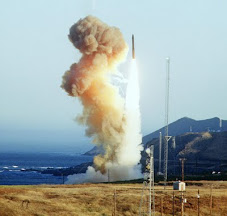
![[Global Network] against the first launch of Quasi-Zenith Satellite, Japan, on Sept. 11, 2010](https://blogger.googleusercontent.com/img/b/R29vZ2xl/AVvXsEj2sYpfodDDMIA7qXwuda0DmKapxXFB479fDnn8RKy7QNZqz0VEvWucNd-DleZ37hWNXC-Z8QtaqtM37VuPwac5SgclJ9_khBBSWOedvm19MRXIP1j1kcWrK6EW5IFjQdEEY2h7E6xuyNvC/s227/Qzss-45-0_09.jpg)
![[In update] Some collections on the Koreans’ protests against the sanction & war on Iran](http://4.bp.blogspot.com/_gnM5QlRx-4c/TJMvke6t8zI/AAAAAAAAFO4/tamQ8LUnOOA/S227/No+Sanction+on+Iran.jpg)
![[Three International Petitions] to End the Korean war and peace treaty(or peace resolution)](https://blogger.googleusercontent.com/img/b/R29vZ2xl/AVvXsEhlohLVYtpCg7iMsZhNYY4hBbhTi2dIheHMHWLDph9X2y78cjgZV1LeSfUJeu80elhJm70Q9E059q72lK-spSPvsRG4bPuCDIytltJB9IH3mWt9OG98HqhnTsPakwhvNeoCFUgF1xoxQ2EZ/s227/border.jpg)


![[Collection of Documents] No Base Learning and Solidarity Program_Korea(June 14 to 20, 2010)](https://blogger.googleusercontent.com/img/b/R29vZ2xl/AVvXsEix_HzjToh3nNGHBc-_5gasq-ykcaZ6GInLixILmZVyRJ5xoeHCxWOyYd9fSM7bmnuFsjSrYOGEPnQOwB1Dcyo-sN4Pw0cFPhUtKig_qlVnGL1Wi82ClvPqbEPWYhJiqdNF0DyzLIBETMB9/s227/No-Base-banner.jpg)
![Site Fwd:[John Hines] A U.S. Debate coach’s research trip on the Issues of Korea](https://blogger.googleusercontent.com/img/b/R29vZ2xl/AVvXsEg8yRra0zNhKHN74Auqhd3Nx9tZ7BWCGflRJHGH4CfzBT_yjhZ8Nl9b3OZuLpYWJ2exsjmR0oVl-Qq_cf832p2VdmOZhUi-lCFzCNeDSyVtweX1lWZPC-RlHmDMLtilHwHjNFTenBiM4Fk4/s227/Jeju-Peace-Tour.jpg)


![[News Update] Struggle Against the Jeju Naval Base since Jan. 18, 2010](https://blogger.googleusercontent.com/img/b/R29vZ2xl/AVvXsEhKfSTRC5QKBBSFIq_m7QIqXdlbL4-gF5GJYn9Q-pN__k7sV7uxGDcLY5L8xmU7QuWuUhBT_GhG-URBPO80RT3AfWfDrWJr06h1hFuZC6ZBVKe4U6PS1Cd7Kr6olO8TYQtk13Drox7IS6ea/s226/scrum1.jpg)


![[Urgent] Please spread the Letter!: There was no Explosion! There was no Torpedo! (May 26, 2010)](https://blogger.googleusercontent.com/img/b/R29vZ2xl/AVvXsEhSd2yWZ3xGwnJQXB73z5FgXCqSosAoB9_33-GLYprOmLqjmvgSAQp1BYI7e4slK1FDxHRi9KK4um-OpDaj8QOkXwAScVAgvvq6-ehbDA-hbkr96wT9oHNNmWnBPv8GU4hoZp9X8F9AZBX4/s227/grounded.jpg)
![Text Fwd: [Stephen Gowans]The sinking of the Cheonan: Another Gulf of Tonkin incident](https://blogger.googleusercontent.com/img/b/R29vZ2xl/AVvXsEi_L6hB3RZ1MovTXHe0A8yn_RfgMALGR0kM6poBuGp809xwvHtB_-PGWtS_WpyPWatyd9lB2pPqL2gOLc4dTCEdJ9sMvxJWEdapl-mMLm7WHAsV-jVpgqarVh8XBtdz_0c-Vohdh3HtJahD/s227/lee-myung-bak.jpg)
![[Japan Focus]Politics in Command: The "International" Investigation into the Sinking of the Cheonan](https://blogger.googleusercontent.com/img/b/R29vZ2xl/AVvXsEiHmTo8v-uCJnabRhMdnBAkC9J3s5bb2JsDKiT5leJHwbK8IDJHxfJmqQ_C0Is_bPC6UGMf05CA0exF2y4r2x9RhFUHT0kjsKviaME_MZXKnq775UyYAdb7w2SAzE75XvBfHp1al2q6i3cf/s227/wen_jiabao_and_lee_myungbak.png)
![[Japan Focus] Who Sank the SK Warship Cheonan? A New Stage in the US-Korean War and US-China](https://blogger.googleusercontent.com/img/b/R29vZ2xl/AVvXsEiKSS5ULT5QBaMGYpXXqBMX9jtwLwMLuK469b6Ku72GTJYKUObzTANaPjZqvvpPzYMJgPF53sjhvhK3DVa88ipYlggsJageykXlkxY6s8TW05xcU-_vfhf-pACUoaWuFbT-fsU1qEhm_yIi/s227/buoy_map.gif)
![[Updated on 12/13/10] [Translation Project] Overseas Proofs on the Damages by the Military Bases](https://blogger.googleusercontent.com/img/b/R29vZ2xl/AVvXsEikADE6JovUNspQyZUWVMTLAQg7yQNqXpVUbqZPk8f4uc_1723_xm1Cco6WAmstQXVPnaJAcb1mZA8Ny_3xONT_f5uh8MNLPnUhtqdGgy3HCtC1Vbbz4Q0ZY1Cssu-4cJEVNdrvznbS5UzO/s227/missile.jpg)
![[International Petition] Close the Bases in Okinawa](https://blogger.googleusercontent.com/img/b/R29vZ2xl/AVvXsEhNpQiHklwFbWVlFK7GDFXnBSOOSFEj3Il-We-N3uTDldKiidL2NGZs7X_LtTnatzTo_r8CexRkFe8NhfxYqmgp1knEEslROTfNjI5_mSb57cdbhPkftvanveYBaevAD9xuKDGoIxiTwoSb/s227/2.jpg)
![[In Update]Blog Collection: No Korean Troops in Afghanistan](https://blogger.googleusercontent.com/img/b/R29vZ2xl/AVvXsEjjEmCRXSNAG7_QBxKWbdksmxoWR4nyAovQTTdR1G2AuXh0jxtqNkI9OmYgYWRoLAJShvtBvE840QXuBWSVh3u3zMYqkNAFX6OWy3m5Nur4HM7uNK-pKT1ycyApJp-VLyhIFRRcoisYAh0E/s226/No-Troops-to--Afghanistan.jpg)


