'저는 그들의 땅을 지키기 위하여 싸웠던 인디안들의 이야기를 기억합니다. 백인들이 그들의 신성한 숲에 도로를 만들기 위하여 나무들을 잘랐습니다. 매일밤 인디안들이 나가서 백인들이 만든 그 길을 해체하면 그 다음 날 백인들이 와서 도로를 다시 짓곤 했습니다. 한동안 그 것이 반복되었습니다. 그러던 어느날, 숲에서 가장 큰 나무가 백인들이 일할 동안 그들 머리 위로 떨어져 말과 마차들을 파괴하고 그들 중 몇몇을 죽였습니다. 그러자 백인들은 떠났고 결코 다시 오지 않았습니다….' (브루스 개그논)


For any updates on the struggle against the Jeju naval base, please go to savejejunow.org and facebook no naval base on Jeju. The facebook provides latest updates.
Showing posts with label Nuclear Non-proliferation Treaty. Show all posts

Sunday, September 19, 2010

Reminding 9. 19 Joint Statement in 2005; 2005년 9. 19 공동 성명 상기하기

* Image source: Solidarity for Peace And Reunification of Korea, June 16, 2009

_________________________________________________________
* 국문으로 된 9. 19 공동 성명 전문은 여기를 클릭
_________________________________________________________

9. 19 Joint Statement

9. 19, 2005

The Fourth Round of the Six-Party Talks was held in Beijing, China among the People's Republic of China, the Democratic People's Republic of Korea, Japan, the Republic of Korea, the Russian Federation, and the United States of America from July 26th to August 7th, and from September 13th to 19th, 2005.

Mr. Wu Dawei, Vice Minister of Foreign Affairs of the PRC, Mr. Kim Gye Gwan, Vice Minister of Foreign Affairs of the DPRK; Mr. Kenichiro Sasae, Director-General for Asian and Oceanian Affairs, Ministry of Foreign Affairs of Japan; Mr. Song Min-soon, Deputy Minister of Foreign Affairs and Trade of the ROK; Mr. Alekseyev, Deputy Minister of Foreign Affairs of the Russian Federation; and Mr. Christopher Hill, Assistant Secretary of State for East Asian and Pacific Affairs of the United States attended the talks as heads of their respective delegations.

Vice Foreign Minister Wu Dawei chaired the talks.

For the cause of peace and stability on the Korean Peninsula and in Northeast Asia at large, the Six Parties held, in the spirit of mutual respect and equality, serious and practical talks concerning the denuclearization of the Korean Peninsula on the basis of the common understanding of the previous three rounds of talks, and agreed, in this context, to the following:

1. The Six Parties unanimously reaffirmed that the goal of the Six-Party Talks is the verifiable denuclearization of the Korean Peninsula in a peaceful manner.

The DPRK committed to abandoning all nuclear weapons and existing nuclear programs and returning, at an early date, to the Treaty on the Non-Proliferation of Nuclear Weapons and to IAEA safeguards.

The United States affirmed that it has no nuclear weapons on the Korean Peninsula and has no intention to attack or invade the DPRK with nuclear or conventional weapons.

The ROK reaffirmed its commitment not to receive or deploy nuclear weapons in accordance with the 1992 Joint Declaration of the Denuclearization of the Korean Peninsula, while affirming that there exist no nuclear weapons within its territory.

The 1992 Joint Declaration of the Denuclearization of the Korean Peninsula should be observed and implemented.

The DPRK stated that it has the right to peaceful uses of nuclear energy. The other parties expressed their respect and agreed to discuss, at an appropriate time, the subject of the provision of light water reactor to the DPRK.

2. The Six Parties undertook, in their relations, to abide by the purposes and principles of the Charter of the United Nations and recognized norms of international relations.

The DPRK and the United States undertook to respect each other's sovereignty, exist peacefully together, and take steps to normalize their relations subject to their respective bilateral policies.

The DPRK and Japan undertook to take steps to normalize their relations in accordance with the Pyongyang Declaration, on the basis of the settlement of unfortunate past and the outstanding issues of concern.

3. The Six Parties undertook to promote economic cooperation in the fields of energy, trade and investment, bilaterally and/or multilaterally.

China, Japan, ROK, Russia and the US stated their willingness to provide energy assistance to the DPRK.

The ROK reaffirmed its proposal of July 12th 2005 concerning the provision of 2 million kilowatts of electric power to the DPRK.

4. The Six Parties committed to joint efforts for lasting peace and stability in Northeast Asia.

The directly related parties will negotiate a permanent peace regime on the Korean Peninsula at an appropriate separate forum.

The Six Parties agreed to explore ways and means for promoting security cooperation in Northeast Asia.

5. The Six Parties agreed to take coordinated steps to implement the afore-mentioned consensus in a phased manner in line with the principle of "commitment for commitment, action for action".

6. The Six Parties agreed to hold the Fifth Round of the Six-Party Talks in Beijing in early November 2005 at a date to be determined through consultations.

_______________________________________________________
Related Korean articles 관련 국문 기사들

5주년 맞은 북핵 9.19 공동성명 (연합뉴스,2010.09.19) (평화와 통일을 여는 사람들 사이트 관련 기사난)

평화 넷트 워크: [토론회] 9.19 공동성명과 6자회담의 전망(9. 16, 2010)

_______________________________________________________

Related English articles 관련 영문 기사들

People's Solidarity for Participatory Democracy(PSPD)
Initial Actions for the Implementation of the Joint Statement (in Korean & English)
13 February 2007

참여 연대 평화 군축 센터(click)
9.19 공동성명 이행을 위한 초기조치(국, 영문전문)
2007.2.13
* English follows after Korean.


Solidarity for Peace And Reunification of Korea:
Letter Sent to the Presidents of the Republic of Korea and the United States on the Occasion of the Korean-US Summit Conference (2009.6.16)


Excerpt 발제:

'The ROK and the US intend to convert the ROK-US alliance into a global and permanent alliance. Burwell Bell, while acting as the USFK commander, said that he hoped that the US troops would be stationed in Korea even after a Korean peninsula peace agreement is concluded, and last July, Timothy Keating, the US Pacific commander, explained that while the USFK are stationed here permanently, the US troops would participate in humanitarian aid or disaster relief operations and the like.

This shows clearly that the US intends to continue the stationing of the USFK and the ROK-US alliance permanently. The "joint vision for the future ROK-US alliance", which aims to perpetuate the aggressive ROK-US alliance, goes against the trend of our time, which is to establish a structure of peace and security for the Korean peninsula and Northeast Asia by means of the withdrawal of foreign military forces, the abolition of the military alliance, and achieving peace and disarmament.
In particular, stipulating "extended deterrence" in the "joint vision for the future ROK-US alliance", runs counter to the 9.19 joint statement which declares the goal of denuclearization of the Korean peninsula.'


Pacific Freeze website

All the blogs on 9. 19, 2005 Joint Statement

Tuesday, September 14, 2010

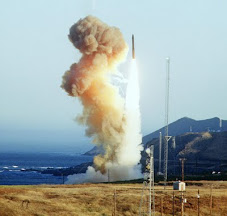
[국문 번역] Text Fwd:[PRESS RELEASE] Nuclear Missile Testing Continues in California [보도 자료]캘리포니아에서 핵 미사일 실험 계속되다

*Image source: Bruce Gagnon blog 브루스 개그논 블로그 on Sept. 14, 2001 2001년 9월 14일

*Image source 이미지 소스: Mike, Vandenberg Witness 마이크, 밴던버그 증인
http://vandenbergwitness.org/photos/main.php?g2_itemId=318

'Minuteman III Protest
: Midnight June 28/29, 2009 protest against the launch of a Minuteman III Intercontinental Ballistic Missile (ICBM)–the most destructive first strike missile in the U.S. arsenal. The "successful" target was the Ronald Reagan Missile Test Range, Kwajalein Atoll in the Marshall Islands in the South Pacific.

'미뉴트맨 III 시위: 2009년 6월 28일/ 29일 자정, 미뉴트맨 III대륙간 탄도 미사일 발사 실험에 항의하는 시위-미국 무기고에서 가장 파괴적인 첫번째 공격 미사일. 그 "성공적인" 목표물은 남태평양 마샬 군도 콰잘렌 환초 로널드 레이건 미사일 실험 구역이였다.

*Image source 이미지 소스: NAPF's albums (Vandenberg AFB protest)
(*Informed at 자료 제공: Photos from the June 5 Nuclear Weapons Abolition Day event in MacGregor Eddy's Peace Protests at Vandenberg Space Command/ Air Force Base blog)
__________________________________________________________
*Text sent from MacGregor Eddy on Sept. 13, with the title of
맥그리거 에디로부터 9월 13일 , 아래의 제목과 함께 옴
'ICBM launch set for Sept 15 from Vandenberg to Kwajalein'

9월 15일로 정해진, 밴던버그로부터 콰잘렌으로 가는 대륙간 탄도 미사일 실험 발사
__________________________________________________________
Nuclear Age Peace Foundation
핵시대 평화 재단
http://www.wagingpeace.org/

September 13, 2010
2010년 9월 13일

FOR IMMEDIATE RELEASE: 즉각적인 보도 요망:

For more information, contact Rick Wayman, rwayman@napf.org . (805) 965-3443
좀 더 많은 정보를 위해서는 릭 웨이만 rwayman@napf.org 에게 연락 (805) 965-3443


Nuclear Missile Testing Continues in California
캘리포니아에서 핵 미사일 실험 계속되다

Santa Barbara, CA – The US military has announced a test of a Minuteman III Intercontinental Ballistic Missile from Vandenberg Air Force Base on September 15. The Minuteman missile will carry a “dummy” nuclear warhead from Vandenberg to the Kwajalein Atoll in the Marshall Islands. The test is scheduled less than three weeks after the official UN International Day against Nuclear Tests (August 29).

캘리포니아 산타 바바라-미국 군대는 9월 15일, 미뉴트맨 III 대륙간탄도 미사일 실험을 할 것을 발표하였다. 미뉴트맨 미사일은 밴던버그로부터 마샬 군도의 콰잘렌 환초에 “모조” 핵 탄두를 나를 것이다. 그 실험은 핵 실험들에 반대하는 유엔 국제일이 공식적으로 있은 지 3 주도 안되어 계획된 것이다 (8월 29일)

David Krieger, President of the Nuclear Age Peace Foundation, said, “The US moratorium on nuclear testing remains incomplete as long as we continue testing missiles designed to carry nuclear warheads. Minuteman III missiles are used solely to deliver nuclear warheads.”

데이비드 크리거, 핵 시대 평화 재단의 의장은 “미국의 핵 실험 중지는 핵 탄두들을 나르기 위해 고안된 미사일들을 실험하는 것을 계속하는 한 미완성인 채로 남아 있다. 미뉴트맨 III 미사일들은 단지 핵 탄두들을 싵기 위해 사용된다.” 라고 말했다.

The Nuclear Age Peace Foundation seeks the abolition of all nuclear weapons worldwide. The Foundation calls on the United States and all countries around the world to recognize their full obligation to halt all nuclear testing – not only of the warheads, but also of nuclear- capable missiles. The Preamble to the nuclear Non-Proliferation Treaty (NPT) calls upon the 189 countries that signed the NPT to facilitate “the elimination from national arsenals of nuclear weapons and the means of their delivery.”

핵 평화 재단은 전 세계 모든 핵무기들을 폐지하려 한다. 이 재단은 미국과 전 세계의 국가들이 모든 핵 실험들을 중단할 완전한 의무를 깨닫기를 요청한다. 비핵확산 조약 nuclear Non-Proliferation Treaty (NPT) 서문은 비핵확산 조약에 서명한 189개국들에게 “국가 무기고들로부터 핵무기들및 또한 그것들을 수송하는 수단을 제거하는 것을 촉진할 것을 촉구한다.”
Dr. Krieger added, “The US is demonstrating a stark double standard by condemning missile tests of other nations while continuing to conduct them on a regular basis itself. Continued testing of Minuteman III missiles by the United States sends a provocative message and encourages other countries to pursue their own nuclear weapon and missile delivery programs.”

크리거 박사는 “미국은 다른 나라들의 미사일 실험들을 경멸하면서 주기적으로 그것들을 행하는 적나라한 이중 기준을 보이고 있다. 미국의 계속되는 미뉴트맨 III 미사일 실험들은 다른 나라들이 자신들만의 핵무기들및 미사일 수송 프로그램들을 추구하도록 도발적인 메시지를 보내고 조장한다. “라고 덧붙였다.

There will be a peaceful protest of the US missile launch outside the front gate of Vandenberg Air Force Base at 11:55 pm on September 14.

9월 14일 밴던버그 공군 기지 정문 바깥에서 미국 미사일 발사 실험에 항의하는 평화적인 시위가 있을 것이다.
For more information or interviews, contact Rick Wayman at (805) 965-3443 or (805) 696-5159.

더 많은 정보 또는 인터뷰는 릭 웨이만에게 연락: (805) 965-3443 또는 (805) 696-5159.

_______________________________________________________

The Nuclear Age Peace Foundation initiates and supports worldwide efforts to abolish nuclear weapons, to strengthen international law and institutions, and to inspire and empower a new generation of peace leaders. Founded in 1982, the Foundation is comprised of individuals and organizations worldwide who realize the imperative for peace in the Nuclear Age. The Nuclear Age Peace Foundation is a non-profit, non-partisan international education and advocacy organization. It has consultative status to the United Nations Economic and Social Council and is recognized by the UN as a Peace Messenger Organization.

핵 시대 평화 재단은 핵 무기들을 제거하고 국제법과 기관들을 강화하고 평화 지도자들의 새로운 세대들을 고무하고 자격을 행사할 수 있도록 전 세계적인 노력을 시작하고 지지한다. 1982년에 창설돤 이 재단은 핵세대의 평화의 엄숙한 명령을 깨닫는 전 세계의 개인들및 조직들로 구성되었다. 핵 시대 평화 재단은 비영리적이고 초당파적인 국제 교욱 후원 조직 기관이다. 이 재단은 유엔 경제 사회 위원회의 협의 지위를 갖고 있으며 유엔에 의해 평화 메신저 조직으로 인정된다
.

___________________________________________________________

* Related blog 관련 블로그

Saturday, September 4, 2010
[국문 번역Text Fwd: famoksaiyanfriends] Protest against the Minuteman III high speed solid fuel ICBM, Vandenberg 밴던버그 미 우주 사령부 대륙간 탄도 미사일 발사 [실험]에 반대하는 시위

Sunday, September 12, 2010

[In update] Some collections on the Koreans’ protests against the sanction & war on Iran

The banner says:
We want peace:The problems are President Lee Myung-Bak and the United States!
(21th Century Korean University Students' Association (temporary translation))

* Image source:
Solidarity for Peace And Reunification of Korea (SPARK)
* Related blog: Click HERE

________________________________________________________
*This site which will be updated includes some collection of the photos, videos, statements etc. on the Koreans' protests against the sanction (& war) on Iran. Sorry that only Korean is available for most statements so far. Hopefully some English translations will come in time.
*엎데이트될 이 사이트는 이란 제재 (및 이란에 대한 전쟁)에 반대하는 한국인들의 시위 사진, 비디오, 성명서들을 모은 것입니다. 현재까지 대부분의 성명서는 국문만 이용가능합니다. 몇 영어 성명서가 조만간 나오길 기대하며.

________________________________________________________


November 9, 2010
Text Fwd: [Translation] Korean organizations' press interview on Nov. 9: We denounce the [government’s] decision to dispatch special force to the UAE!
2010년 11월 9일
[번역] 한국 시민 사회 단체 공동 인터뷰: 한국 정부의 유나이티드 아랍 에미레이츠 파병 결정을 규탄한다!


Sept. 14, 2010
[Photos Fwd] Upon the 60th Commemoration of the Incheon Landing Operation on Sept. 15, 1950: No War, No Sanction [on Iran & North Korea], Yes, Peace Treaty!
2010년 9월 14일
[사진 포워드] 1950년 9월 15일 인천 상륙 작전 60주년을 맞이하여: 전쟁 반대! 제재 반대! 평화 조약 찬성!


* Excerpt translation from the joint statement by 12 organizations on Sept. 14, 2010.
* 2010년 9월 14일, 12 단체 공동 성명서 국문 원문 링크됨
________________________________________________________
September 9, 2010
Photos Fwd: Ongoing Protests on the Streets, Seoul_ No Sanction on Iran, Stop the Four River Project!
2010년 9월 9일
사진 포워드: 서울 거리의 계속되는 시위들_이란 제재 반대! 4대강 사업 중단!


*Includes the photos of students’ protests on Aug. 9, and Aug. 15, 2010
;48 Korean students have been arrested on August 15, 2010, in the protest against the ROK government' decision on sanction against Iran.

* 2010년 8월 9일 및 8월 15일 학생들 항의 시위 사진 포함
; 8월 15일, 48명 학생들이 남한 정부의 이란 제재 반대 결정에 항의하다 체포됨.

________________________________________________________
Sept. 9, 2010
Press interview: Against the Lee Myung-Bak government’s announcement
of the independent sanction on Iran (by 32 organizations)
2010 년 9월 9일
기자 회견: 이명박 정부의 이란 독자 제재 발표 반대!
(32 개 단체)

* See also 또한:

Sept. 9, 2010
[Cheong Wook-Sik, Peace Network]
Sanction on Iran, a dire price of the ‘all-in’ into the ROK-US alliance (Korean)
2010년 9월 9일
[정욱식, 평화 넷트 워크] 이란 제재, 한미동맹 ‘올인’의 참담한 대가(국문)


Sept. 9, 2010
[People's Solidarity Participatory Democracy (PSPD)] statement(Korean)
: The ROK government’s proposal on sanction on Iran is an act of the violation of law with no basis on the domestic & international laws and of abuse of authority
2010년 9월 9일
[참여 연대 논평] 정부 이란 제재안은 국내법, 국제법 근거없는 위법, 월권 행위 (국문)

________________________________________________________
August 31, 2010
[Korean]: No Sanction on Iran!: Press release by 48 Korean organizations
2010년 8월 31일
[국문] 48 개 단체 이란제재 중단 촉구 기자회견문

________________________________________________________
Aug. 24, 2010
Video Fwd: Forum: 21th Century Global Nuclear Issue and Korean Peninsula: ‘NPT system and Iran’
2010년 8월 24일
[국문] [비디오] 포럼: 21세기 글로벌 핵문제와 한반도 'NPT체제와 이란'


* The video is Korean but the blog includes some useful English article links
* 비디오는 국문이나 블로그는 몇 유용한 영어 기사들 링크 포함

________________________________________________________
Tuesday, August 1, 2010
Text Fwd: [Michel Chossudovsky] Preparing for World War III, Targeting Iran
[영문] [마이클 초스도프스키] 이란을 공격 목표로 3차 대전 준비

________________________________________________________

Thursday, August 26, 2010

[국문] Video Fwd: 21th Century Global Nuclear Issue and Korean Peninsula: ‘NPT system and Iran’ 21세기 글로벌 핵문제와 한반도 'NPT체제와 이란'

*Informed in the Peace Network site 평화 넷트 워크

[영상] 21세기 글로벌 핵문제와 한반도 'NPT체제와 이란'
[Video] 21th Century Global Nuclear Issue and Korean Peninsula: ‘NPT system and Iran’

8월 24일 비핵화 라운드테이블 월례포럼 칼라TV 녹화영상입니다.
A Color TV record of the monthly round table forum on the non-nuclearization on Aug. 24, 2010

칼라TV 바로가기

* , , , ,

_____________________________________________________________

* 아래는 2010년 8월 23일 참여 연대 평화 군축 센터 김희순 님께서 보낸 프로그램 안내였읍니다. 아래의 영어 번역은 부분적으로 자의적인 것입니다.

* Kim Hee-Soon, Peace Disarmament Center, PSPD sent the below program introduction on Aug. 23, 2010. The below English translation is arbitrary in some parts.


[비핵화라운드테이블 월례포럼]
Monthly round table forum on the non-nuclearization


: 21세기 글로벌 핵문제와 한반도

: 21th Century Global Nuclear Issue and Korean Peninsula


제1회 ‘NPT 체제와 이란’
1st: 'NPT System and Iran'

* 일시: 2010년 8월 24일(화) 저녁 7시
7pm, Tuesday, Aug. 24, 2010

* 장소: 참여연대 느티나무홀(오시는 길)
Place; Neutinamu Hall, People’s Solidarity for Participatory Democracy (PSPD)

* 주최 : 참여연대, 평화네트워크, 에너지정의행동, 노틸러스 아리, 진보신당 상상연구소
Sponsor: PSPD, Peace Network, Energy Justice Actions, Nautilus Asia Regional Initiative, and Sangsang Institute_New Progressive Party

<순서>
* 발제1: NPT 체제와 이란/ 정욱식 (평화네트워크)
Speech 1: NPT system and Iran/ Cheong Wooksik (Peace Network)

* 발제2: 이란 사람들이 말하는 핵에너지 개발의 논리/ 김재명(프레시안 편집위원회)
Speech 2: The nuclear energy development logic spoken by the Iranians/
Kim Jae-Myung (Pressian Editing Committee)

* 발제3: 2010 NPT 검토회의와 국제 시민사회의 대응/ 김수현 (진보신당 상상연구소)
Speech 3: 2010 NPT review meting and international citizen society’s response/ Kim Soo-Hyun (Sangsang Institute_New Progressive Party)

* 패널: 이태호 (참여연대 평화군축센터), 이기호 (한신대 평화와 공공성 센터)
Panel: Lee Tae-Ho (Peace Disarmament Center, PSPD). Lee Gi-Ho (Peace and quasi-public Center, Hanshin University)

* 전체 토론
Discussion by all

_________________________________________________________

Other reference articles 그 외 참조 기사들


Korean (국문)


참여 연대, 2010년 8월 23일 (People’s Solidarity for Peace And Disarmament,
2010/08/23 )
미국의 일방적 이란 제재에 동참해서는 안된다
[South Korea] Should not involve into the United States’ unilateral sanction against Iran

정욱식, 평화 넷트 워크, 2010년 8월 17일 ( Cheong Wooksik, Peace Network,
2010/08/17)
‘중동 아마겟돈’과 한국 외교의 선택
‘Middle East Armageddon and Korean Diplomacy’s Choice


English (영문)

Hankyoreh,
Aug.10,2010 한겨레, 2010년 8월 10일
Iranian envoy says business ties will suffer if S.Korea adopts sanctions
:Ambassador Bakhtiari warned of reciprocity against S.Korean businesses

이란 대사는 남한이 [이란에 대한] 제재를 가하면 사업 유대가 불편해 질거라 말함
:바크티아리 대사, 남한 기업들에 대한 대응 보복이 있을 것임을 경고

Hankyoreh,
Aug.7,2010 한겨레, 2010년 8월 7일
U.S. official pressures S.Korean companies over compliance with Iran sanctions Escape clauses remain on the table, but the company’s national government must demonstrate full cooperation in sanctions
미국 관리들, 남한 기업들에 이란 제재에동참할 것을 압력
도피 조항들은 테이블위에 있으나 기업의 국가 정부는 제재에 완전히 협조함을 보여야 한다고 압력

Bruce Gagnon blog,
August 06, 2010브루스 개그논 블로그, 2010년 8월 6일
Video: ATTACK ON IRAN GOING TO HAPPEN?
비디오: 이란에 대한 공격이 일어날 것인가?

Obama Warned Israel May Bomb Iran
오바마가 이스라엘이 이란을 공격할 지 모른다 경고함
MEMORANDUM FOR: The President
FROM: Veteran Intelligence Professionals for Sanity (VIPS)
SUBJECT: War With Iran

(*Text Fwd from Bruce Gagnon on Aug 4, 2010
2010 년 8월 4일 브루스 개그논으로부터 포워드)


Global Research, July 26, 2010 글로벌 리서치, 2010년 7월 26일
Israel’s Insane War on Iran Must Be Prevented
이스라엘의 이란에 대한 미친 공격은 막아져야
By Muriel Mirak-Weissbach
뮤리엘 미락-위스바크

Thursday, June 17, 2010

Text Fwd: HOPE IS FAR AWAY

Bruce Gagnon blog
Tuesday, June 15, 2010
HOPE IS FAR AWAY

The wall along the base.
Yesterday's action outside the U.S. Embassy. The embassy faces the South Korean government building - a symbol of who is really in charge.

A photo from one of the monthly vigils outside the U.S. embassy in Seoul

We spent the day inside Seoul yesterday attending a couple different events. First we went to a 10th anniversary remembrance ceremony of the June 15 Declaration that was signed between the governments of South and North Korea that began to open up contacts between the people and family members. But in the last two years the right-wing government in South Korea of President Lee has begun to destroy those steps toward progress and he has resumed hostility toward the North.

Leading politicians from a couple different opposition political parties spoke at the event and after it was finished the former minister of unification came up to our delegation (which had been recognized during the ceremony) and introduced himself.

Following that event our delegation that includes Michael Lujan Bevacqua (Guam) and Shinako Oyakawa (Okinawa) went to a protest in front of the U.S. embassy that is held each month by Global Network affiliate group called SPARK (Solidarity for Peace & Reunification in Korea). SPARK began holding these regular protests at the embassy in 1999 and for a few years were met with arrests and beatings by their government. But persistance paid off and they are now left alone although the police were noticeably present.

At this protest, attended by about 100 people, they had reports on key issues including the recent sinking of the South Korea Naval vessel and reports from the U.N.'s recent NPT Review Conference. Peace groups and the public in South Korea remain convinced that North Korea had nothing to do with the sinking of the Navy ship which happened at the time of joint U.S.-South Korean war games aimed at North Korea.

After a wonderful lunch of grilled fish we were taken on a driving tour of the vast U.S. Yongsan Army Post that sits in the center of busy Seoul. The Army base is on both sides of hectic downtown streets and its stone walls with circular razor wire at the top is a visible reminder that this unwanted intrusion not only takes precious land but also makes the city a military target.
The South Korean Ministry of National Defense sits inside the Army base which well illustrates the fact that South Korea always has been a military colony of the United States. After WW II ended, and the Japanese colonizers were removed from power in South Korea, the U.S. put the Koreans who had been collaboraters with fascist Japan into positions of power.

The Korean War was essentially a civil war against those Japanese imperial collaboraters and those who had fought against the Japanese occupation and could not accept the U.S. as the new colonizing government. Since the Korean War never resulted in a peace treaty the war continues to this day with the U.S. still remaining in control of the South Korean government.

We were taken to dinner last night by leaders of the Pan-Korean Alliance for Reunification (PKAR). You might remember several postings I did late last year about the three activits from PKAR who had been jailed by the Lee government under the "National Security Act". Their crime allegedly was calling for national reunification and demanding that U.S. military bases in Korea be closed. After several months in jail they were released after the high court ruled that they had been illegally spied on by the government.

Many members of this organization had been jailed for many years due to their political work. One man at the dinner last night was in prison for 36 years. During the Korean War, as a 16 year old boy, he had fought against the U.S. and had refused to renounce his belief that the U.S. had become another colonizing power just like Japan had previously been.

One of the PKAR leaders told me that it would take the U.S. 1,000 years to make up for all the wrong they had done to North Korea. From the carpet bombing of the north during the war (the North Koreans had to live underground because virtually every building in the north was destroyed), to the present situation of perpetual preparations for war that has kept the north in a state of seige, the U.S. has prevented North Korea from fully developing much like Cuba has been prevented from doing the same.

Earlier in the day while at the U.S. embassy protest, one speaker from the political prisoners family organization told the crowd that "Our hope is very far away." There is much sadness in Korea as the nation remains divided and the U.S. displays no intention of ending its aggressive military control in the region. The U.S. likes having military bases in Korea because of its strategic borders with China and Russia. Control and domination of the region is most important and what happens to the good people on the Korean peninsula is of no interest to the U.S. war machine.
* For more photos, see HERE

Sunday, June 6, 2010

Text Fwd: [Vandenberg Witness] a Minuteman III (ICBM) from Vandenberg AFB on June 6, 2010

* Image source: Vandenberg Witness

Vandenberg Witness

On June 6, 2010, the United States plans to launch a Minuteman III Intercontinental Ballistic Missile (ICBM) from Vandenberg Air Force Base on the California central coast. The missile will likely carry one or more “unarmed” warheads to the Ronald Reagan Test Site in the Kwajalein Atoll in the Marshall Islands.

The launch, the first of two planned for the month of June, will come just nine days after the completion of the nuclear Non-Proliferation Treaty (NPT) Review Conference at the United Nations.

Nuclear Age Peace Foundation President, David Krieger, who attended the NPT Review Conference earlier this month, said, “U.S. testing so close to the end of the NPT Review Conference will make many countries doubt our sincerity in fulfilling our nuclear disarmament obligations under the NPT. President Obama has said that he wants to reduce the role of nuclear weapons in US security policy, but tests such as this one suggest that we are continuing with business as usual.”

Krieger continued, “When any country tests long-range missiles and nuclear weapons, it is more than just a test. It is a message to the world and perhaps to specific countries; it says in effect, ‘This is what we can do to you.’ If the US wants to lead the way to a world free of nuclear weapons, it needs to stop sending such provocative messages. In the US we are very aware of such messages when other countries test. We seem to have a blind spot in our thinking about our
own tests.” For more info contact Rick Wayman at rwayman@napf.org or call (805) 965 3443

There will be a protest at the front gate of Vandenberg on Saturday, June 5 at 1:00 pm to oppose the upcoming ICBM tests. David Krieger, President of the Nuclear Age Peace Foundation and Andrew Lichterman of the Western States Legal Foundation will speak at the event. June 5 is
“Nuclear Abolition Day,” with events promoting the abolition of nuclear weapons taking place in cities around the world. For more information on Nuclear Abolition Day, including the protest event in Los Angeles, please visit Nuclear Abolition Day Web Site

Monday, May 17, 2010

Text Fwd: WBAI sunday @ 6: NORTH KOREA'S BOMB & THE ROAD TO PEACE

* Fwd by Hyun Lee, siddharta5, siddharta2 on May 16, 2010

---------- Forwarded message ----------
From: FAN
Date: Sun, May 16
Subject: WBAISN@6: NORTH KOREA'S BOMB & THE ROAD TO PEACE
To: siddharta2


WBAI SUNDAY SUNDAY NEWS SEGMENT: 5/15/2010 6 PM, WBAI 99.5 FM, WBAI.ORG
EVENT: NORTH KOREA'S BOMB & THE ROAD TO PEACE, BRECHT FORUM, MAY 12, 2010
DISCUSSION SPONSORED BY NODUTDOL FOR KOREAN COMMUNITY
BY: FRED NGUYEN
DURATION: 2 MIN 46 SEC

AUDIO: http://www.radio4all.net/index.php/program/42763

PROPOSED LEDE:
SIXTY YEARS AGO, ON JUNE 25, 1950, WAR BROKE OUT IN KOREA.
THE UNITED STATES, CHINA, THE SOVIET UNION AND THE UNITED
NATIONS SOON THREW THEIR MILITARY WEIGHT INTO THE CONFLICT
BETWEEN THE NORTH OR THE SOUTH, AND, BEFORE AN
ARMISTICE WAS SIGNED THREE YEARS LATER, MILLIONS HAD DIED
AND A NUCLEAR HOLOCAUST HAD NARROWLY BEEN AVERTED.
THIS PAST WEDNESDAY, AS 189 NATIONS ARE ATTENDING A UNITED
NATIONS REVIEW CONFERENCE ON THE NUCLEAR NON PROLIFERATION
TREATY, NODUTDOL FOR KOREAN COMMUNITY DEVELOPMENT ORGANIZED
A DISCUSSION AT THE BRECHT FORUM IN MANHATTAN ON "NORTH
KOREA'S BOMB AND THE ROAD TO PEACE".
WBAI FRED NGUYEN WAS THERE AND FILED THIS REPORT:

Friday, May 14, 2010

Video Fwd: [Peace Network] Global Voice Goodbye Nukes

Global Voice Goodbye Nukes(Video URL)

Source informed in the Peace Network website. According to the site, this video was screened during the NPT events in 2010. The Peace Network wants to establish the North East Asia Non-nuclear zone through the dialogue with the Japanese peace organizations etc.


Production by Peace Network

Wednesday, May 12, 2010

Photos Fwd: “Non-Nuclear & Peace, Our Voice to New York!”

* Image source: Cho Jung-Hoon, Tongil News, May 11, Tuesday, 2010

'The United States holds 9,713 nuclear weapons
Deployment amount in the operational area + storage retention amount =5,113
Dismantlement planned nuclear weapon=4,600

[United States Scientists League]

‘Nuclear-Free World’
United States first, Step forward to abolish the nuclear weapons
!

* Image source: Cho Jung-Hoon, Tongil News, May 11, Tuesday, 2010

'Conclusion of the peace agreement is the shortcut to nuclear-free Korean peninsula !!'

'Simultaneously hold the non-nuclearization of the Korean peninsula and the peace agreement!'

'The guide for the ROK-US Defense Guideline is to aim at the permanent ROK-US Alliance!'


* Image source: Solidarity for Peace And Reunification of Korea, May 11, 2010

Obama says~, “For Nuclear-Free World!”

BUT inside his brain:

Increment on the MD & traditional war power!
Four times increment on the nuclear weapon production ability!’
Preemptive strike against the North Korea and Iran!’
Israel and India nuclear weapons are O.K.!’


* Image source: Solidarity for Peace And Reunification of Korea, May 11, 2010

Obama says~, “For Nuclear-Free World!”


IF he changes himself:

“Yes. I decided!
Me First, Dismantle of Nuclear Weapon!!”
“U.S. First!”


Civil organizations including the Solidarity for Peace And Reunification of Korea, encouraging the NGO delegates who participated in the NPT evaluation meeting, shouted for the nuclear-free peace world in front of the United States embassy, at 12pm, during the day of May 11th. The event was upon the 128th Self-Reliance Unification Peace Action.

Text Fwd: Obama’s inconsistency? There’s nothing but negotiation

Peace Network
Obama’s inconsistency? There’s nothing but negotiation

2010. 04. 23

Written by Wook-sik Cheong
Translated by intern En-hye Lee and volunteer Michael Glendinning

Obama administration is taking three contradictory approaches to relations with North Korea over the issue of nuclear weapons. First of all, Obama is not admitting nuclear weapons even though North Korea possesses them. Secondly, Obama administration’s determination to oversee the “complete implementation” of the 9.19 Joint Statement from the six-party talks changed direction during the 2010 Nuclear Posture Review (NPR). Thirdly, Obama administration is consistent with negative and indirect diplomacy despite it having declared undertaking ‘tough and direct dialogues’ with North Korea.

The Secretary of State, Hilary Clinton, stated that North Korea has somewhere between one and six nuclear weapons. This statement brought about a strong presumption that the US acknowledged North Korea as a state possessing nuclear weapons. Especially, there has been a huge doubt whether the US has come up with a new revised goal which attempts to block the transfer of the North Korea’s nuclear materials and technology to other nations or terrorist groups, concluding that North Korea’s denuclearization is impossible.

Gary Samore, White House Coordinator for Arms control and Weapons of Mass Destruction, played down the presumptions claiming that the US cannot acknowledge North Korea as a nuclear weapons state and that the US policy is absolute in its support of complete denuclearization in the Korean peninsula.

It is understandable that the US has inconsistent views about the issues. North Korea has a multitude of plutonium which can lead to the production of nuclear weapons. Moreover, the North has undertaken two nuclear tests. So North Korea, at least ‘technically’, can be classified as a nuclear state. However, the US is taking a clear stance that North Korea cannot be described as a nuclear state because ‘political and diplomatic’ acknowledgment directly violates the US’s nonproliferation policy.

The problem is that if the inconsistency between technological and political acknowledgement of North Korea’s possessing nuclear warheads cannot be resolved at once, the contradictory nature of Obama’s North Korean policy will only intensify the situation and the suspicions will expand whether the US, which thinks it is impossible to settle North Korea’s nuclear issue, is only focusing on the blocking of nuclear transfer.

Preemptive attacks on North Korea or Strategic Obscurity?

The Obama administration declared that the United States will not use or threaten to use nuclear weapons against non-nuclear weapons sates that are party to the Nuclear Nonproliferation Treaty (NPT) and which are in compliance with their nuclear nonproliferation obligations. According to this standard, North Korea which conducted two nuclear tests and Iran, which is well known as a state that violated NPT, remained as possible targets of the US nuclear preemptive attack. The US government has confirmed this declaration several times.

The problem is that this kind of US position could be seen as a violation of the 9.19 Joint Statement decided upon during six-party talks. This agreement states that “The United States affirmed that it has no nuclear weapons on the Korean Peninsula and has no intention to attack or invade the DPRK with nuclear or conventional weapons.” However, 9.19 Joint Statement was agreed during the period when North Korea withdrew from NPT and declared that they were in possession of nuclear weapons.

Regarding this, there could be a counterargument which supports the fact that North Korea has to be excluded from the provision of negative security assurance since the North has undertaken two nuclear tests. But if the US maintains the key option of nuclear preemptive attack, this does not accord with the current US policy towards the North as the US does not currently acknowledge North Korea as a nuclear state.

When it comes to North Korea’s previous nuclear tests, it is understandable that Obama administration’s position towards North Korea is trying to create an exception from negative security assurance. However, it would have been better to take strategic ambiguity instead of mentioning the possibility of a nuclear preemptive attack on the North. In other words, Obama should have stayed at the level of pushing North Korea towards discarding nuclear weapons at the earliest possible moment and return to NPT while simultaneously clarifying the basic position of negative security assurance.

Obama administration believes that making it clear about the possibility of a nuclear preemptive attack will be an incentive for North Korea to abandon the nuclear program. However, with North Korea’s denouncement of Nuclear Posture Review(NPR), this brings about an adverse effect for North Korea to come up with modernization of nuclear weapons and the declaration of nuclear state.

Retracing Bush’s failed diplomacy?

These two contradictions stem from the renouncement of Obama’s “tough and direct dialogue”. In regards to North Korea’s request to have bilateral talks with the US, Obama administration keeps repeating “it is possible only within the framework of six-party talks”. It is obvious that this is just the same as the Bush administration’s tiresome and repetitive statement used up until 2006.

Bush administration stoutly refused to participate in the bilateral talks with the North up until 2006. The two countries finally met for talks in 2007. The six-party talks made great progress towards the denuclearization of North Korea. This means that direct talks with the North are not the partial parts of the six-party talks but the crucial part that has to go together with the six-party talks. Obama administration once firmly criticized Bush administration’s foreign policy and pursued to have dialogues with hostile nations without any preconditions, however, it turned back to Bush administration’s ‘failed diplomacy’.

Moreover, the US has recently delayed the resumption of six-party talks because of the ongoing investigation which is still putting a lot of effort into finding out the truth. The US related this incident to the six-party talks even though it is uncertain whether the Korean attack was caused by North Korea. In light of this, it is somewhat disappointing that Obama administration’s foremost goal in foreign policy in the area which is to achieve denuclearization on the Korean peninsula through six-party talks turned out to be nothing.

Due largely to tragic incident, Obama believes that the two countries cannot participate in the bilateral talks and six-party talks right away. This issue should be discussed once this incident is resolved. So far in this situation, there is a lot of thought that this Cheonan ship sinking incident remains to be a permanent mystery. Relating this incident to six-party talks will debilitate the dialogue. The key lesson we can learn from the North Korean nuclear issue, which lasted for about 20 years, is that if we get far away from any dialogue, North Korea’s nuclear potential is more likely to become a reality. Furthermore, the US’s contradictory position will become even further entrenched.

The way to resolve the multiple contradictions is entirely up to Obama. He has to start over and go back to his original plans for US foreign policy. We need to keep in mind that bilateral talks and six-party talks have to get together and also work together instead of confining bilateral talks to six-party talks. This was also the Obama’s promise during his presidential campaign. Furthermore, we need to get rid of self-satisfactory and unilateral ways of thinking in order to demolish North Korea with sanctions and pressures and we should be open-minded to understand North Korea’s demands. It is my understanding that it is a must to prevent the ‘Korean Armageddon’ when we are faced with the North’s modernization of nuclear weapons and a possible US nuclear preemptive attack.

Text Fwd: REPORT ON [Global Network] NEW YORK MEETINGS


Bruce Gagnon blog
Monday, May 10, 2010
REPORT ON NEW YORK MEETINGS

I am at Penn Station in New York City waiting for my train back north. I will get off in Southern Maine and stay the night with Herb Hoffman who will then drive us both to Boston on Tuesday morning for an exciting meeting of key leaders from many progressive movements in the greater Boston area. The idea of the meeting will be to explore how we might build more unified movements during this time of corporate domination of U.S. and global politics.

Right now though I want to post a few notes from the two meetings I attended during this past weekend here in NYC.

On Saturday I went to the Abolition 2000 annual general meeting. Nearly 100 people were there from around the world. These folks are attending the UN''s Nuclear Non-Proliferation Treaty (NPT) meetings that will last nearly the entire month of May.

There are serious questions about what the NPT meetings will come up with. The nuclear powers (led by the U.S.) want to hang onto their nuclear weapons but don't want countries like North Korea or Iran to have them. This brand of double-standard does not create the climate for serious negotiations. At the same time the U.S. is pushing the use of nuclear power for energy production to countries like India who are also building more nuclear weapons - with U.S. help.

During this meeting I was given five minutes to update folks on the work of the Global Network and I made the case that as long as the U.S. is pushing so-called "missile defense," and new Prompt Global Strike weapons, then countries like Russia and China (and others) are not likely to be willing to dramatically reduce their nuclear forces.

The Abolition 2000 (A2000) network is very diverse with many different agendas and strategies represented. But fundamentally everyone wants to get rid of nuclear weapons. My observation though is that despite their great work to bring about nuclear disarmament, many A2000 groups are so fixed on their deep concern about nukes that they are not able to recognize the wider forces that are having direct impact on their hopes for abolition. Without these key linkages - to "missile offense" and new space technologies - then their work will be severely hampered.

One issue that came up (and one that I need to write more about here) is the competition between Russia and the U.S. (and its NATO allies) over control of the Arctic region as global warming makes it possible to explore that region for oil. A call was made at the A2000 meeting for a nuclear-free Arctic campaign.

On Sunday we had the annual membership meeting of the Global Network at the Church Center which is just across the street from the U.N. About 50 people attended throughout the day.

We spent considerable time talking about the theme for our 2010 Keep Space for Peace Week (October 2-9). Last year's theme (and poster) was on the use of drones and people felt it was a great success in communicating the links between Unmanned Aerial Vehicles (UAV's) and the larger space technology issue. We came up with a good list of possible ideas for the 2010 theme that included:

• Obama's new "missile offense" deployment plan of Patriot (PAC-3) and Aegis destroyer based (SM-3) interceptors in Poland, Bulgaria, Romania, Taiwan, Japan, Australia, and South Korea that are being used to surround Russia and China.

• NATO expansion into a global military offensive alliance under U.S. control

• Prompt Global Strike systems (to give the U.S. the ability to hit targets on the other side of the world in first-strike attack in less than one hour.)

• No U.S. bases worldwide

• Prevention of an Arms Race in Outer Space (PAROS) Treaty at the U.N.

• Alternatives to endless war (conversion of the military industrial complex) and creation of green jobs by cutting military spending.

• Global warming

This was a great brainstorming session and the list above is all important and timely. It was ultimately decided that we would center our space week theme around the first item of U.S. "missile offense" deployments to surround Russia and China. The other items will be extensively featured in our next newsletter and in on-going work of the Global Network.

We had a partial showing of the new documentary film Pax Americana and the Weaponization of Space. You can see the film's web site here. The filmmaker, Denis Delestrac, came from Barcelona, Spain to be with us for the meeting and answered the many questions about the film and the distribution plan.

Pax Americana is now showing throughout Europe (already seen by 3 million people) and Canada. But sadly Delestrac has yet to be able to get the film into any film festivals in the U.S. (even though it won Best Documentary award at a festival in Vancouver) nor has he been able to find a U.S. theatre distribution deal.

We talked extensively about using the film during our October 2-9 Keep Space for Peace Week and Delestrac promised to find a way to have it available for us in DVD form by then. His problem is that it cost him one million dollars to make this fine film and he must first try to recoup some of those funds through theatrical showings. People loved the film (they wanted to see the whole thing but time did not allow it) and they loved Delestrac as well.

Other important items for discussion at the meeting included:


• U.S. efforts to draw India into the space warfare program as a way to further encircle China.

• Pentagon efforts to expand the use of 'cyber warfare" to gain space domination and control.

• Beginning to talk about a "moratorium" on science as they are now out of control and the people of the world cannot keep up with new technological developments in areas like nano-technology and robotics.

• U.S. militarization of the Asian-Pacific region, particularly the deployments of "missile offense" in South Korea and Japan and expansion of U.S. bases in that region.

• Obama's recent announcement of Mars missions that will use nuclear power. (Journalist Karl Grossman was at the meeting and reminded us that NASA is also calling for nuclear power to be used in "near Earth commercial missions.")

The Global Network will hold its 18th annual space organizing conference in Nagpur, India on October 9-12. Many of our key leaders will be attending as we recognize the urgency to expand organizing on the Indian continent if we hope to stop the U.S. effort to spread a new space arms race to that part of the world. Please let us know if you are interested in joining with us in India.

____________________________________________________________

* You may want to see the below as well.

Bruce Gagnon's Annual Global Network Report


Posing with striking tugboat workers in Busan, South Korea last year

Text Fwd: U.S. Military Strategy on the Korean Peninsula and Missile Defense in Northeast Asia (2010.5.9)

* Image source: Solidarity for Peace And Reunification of Korea

________________________________________________________________
* Thanks, Bruce Gagnon. See the blog.

TRANSCRIPT OF SPEECH AT GN MEETING IN NEW YORK

________________________________________________________________

* Solidarity for Peace And Reunification of Korea

U.S. Military Strategy on the Korean Peninsula and Missile Defense in Northeast Asia

Ko Young Dae/SPARK (KOREA)


1. U.S. Military Strategy on the Korean Peninsula

In the 2010 U.S. Nuclear Posture Review (NPR), the Obama administration named North Korea along with Iran as a potential target for nuclear preemptive attack, making the Korean peninsula, as it was during the Bush administration, one of the most dangerous regions in the world. This is a violation of the “Agreed Framework between the DPRK and the United States” (October 1994) in which the United States pledged negative security assurance for North Korea, as well as the “Joint Statement” of the fourth Six Party Talks (September 2005). In response to the Obama administration’s new NPR, North Korea declared, “As long as the nuclear threat against us persists, we will continue to develop various nuclear weapons as deterrence and seek to modernize our nuclear weapons.”

Based on the NPR, the US Strategic Command (STRATCOM) takes command of U.S. nuclear war on the Korean Peninsula. Following “CONPLAN 8022” and “OPLAN 8044,” the US STRATCOM designed a new “OPLAN 8010” based on the “New Triad” concept. “OPLAN 8010” uses both high-tech conventional and nuclear war capabilities, including various strategic attacks against North Korea, such as pinpoint attack, bombing of underground military facilities, and cyber wars to paralyze missile and anti-aircraft defense networks. The US STRATCOM’s nuclear war plan on the Korean Peninsula also includes “CONPLAN 8099” in which the Center for Combating WMD takes command. The primary aim of “CONPLAN 8099” is to occupy North Korean nuclear facilities and seize its nuclear weapons. The Center for Combating WMD is the command that leads the Proliferation Security Initiative (PSI) against North Korea.

The United States also has plans to carry out a war on the Korean Peninsula by executing “OPLAN 5027,” 5026, 5028, 5029, 5030, which are all under the command of the US Pacific Command, the ROK-US Combined Forces Command (CFC), and United Nations Command (UNC). “OPLAN 5027” was developed in 1974 to prepare for nuclear war and “OPLAN 5027-98” adopted the strategy of preemptive strike for the first time. “OPLAN 5027-04” includes the construction of Missile Defense and “OPLAN 5027-06” outlines the strategy of preemptive strike against North Korea’s nuclear and missile facilities.

In anticipation of the transfer of wartime operational control from the United States to South Korea, the two states are currently developing “OPLAN 5012” in place of “OPLAN 5027.” “OPLAN 5012” is a much more offensive plan for nuclear war. “CONPLAN 5029,” which faced opposition from the former Korean government, has now been elevated to an OPLAN. “OPLAN 5029” envisions a military intervention in North Korea in times of internal turmoil, including a natural disaster; such an outrageous plan is in violation of international law. The main goal of “OPLAN 5029” lies in the U.S. desire to seize North Korea’s nuclear facilities and materials for itself, as opposed to by South Korea. “OPLAN 5026” was initiated in December 2002 and completed in July 2003. Its main goal is to execute pinpoint attacks on approximately 700 North Korean targets including nuclear, biological, and chemical weapons facilities, and command and control facilities. In this way, “OPLAN 5026” and “OPLAN 5029” under the command of the US Pacific Command and the Combined Forces Command, are designed to complement “OPLAN 8010” of the US STRATCOM.

2. The US MD in Northeast Asia

1) The US MD system in the Pacific Ocean

The MD system that the United States deploys in the Pacific Ocean is aimed at China’s MD and North Korea’s missile system. The Early Warning Radar system which includes the DSP satellite, SBIRS satellite, Cobra Dane Early Warning Radar, SBX (Sea-based X-band) Radar, Aegis BMD Radar, FBX, etc, centers on detecting and tracking long-range missiles or ICBMs aimed at the main land of the United States. In June 2009, to prepare for the event of a long range missile launch from North Korea, the United States ordered the forward deployment of the SBX Radar and the THAAD (Theater High Altitude Air Defense) system in the vicinity of Hawaii. The US Pacific Command also ordered the forward deployment of the Aegis ship, equipped with Standard Missile 3 (SM-3).

2) Japan’s MD system

The United States regards Japan as its most significant international BMD partner. Japan’s MD system is part of the US MD system. Japan’s MD system is being constructed through technical and operative cooperation with the United States. Japan has deployed the US FBX(Forward-based X band) Radar, and has interfaced its 28 ground radar networks with U.S. spy satellites. The principal weapons systems of Japan’s MD are the Aegis BMD system and the PAC-3 system. In January 2008, Japan operationally deployed SM-3 block IA, capable of intercepting long-range missiles. Currently Japan is developing SM-3 block IIA, capable of intercepting ICBMs, and scheduled to debut in 2015. Reversing its previous policy of non-deployment of THAAD, Japan intends to introduce THAAD as a higher tier defense system than a PAC-3. Japan has also deployed its self-developed FPS-XX (L Band) Radar. The FPS-XX Radar is known to have succeeded in detecting and tracking Russian long-range missiles launched from the Sea of Okhotsk

3) South Korea’s MD system

In its 2010 Ballistic Missile Defense Review (BMDR), the United States named South Korea an “important partner.” The BMDR also stated that the United States has been working together with South Korea to “define possible future BMD requirements.” In other words, the United States takes for granted South Korea’s participation in the US MD system. Although the Lee Myung Bak government initially refused to participate in the US MD system, now it has changed its position. This reverses the position maintained by the former Kim Dae Jung and Roh Moo Hyun administrations, which opposed South Korea’s participation in the US MD system for reasons related to South Korea’s technical, financial, and diplomatic relations with Russia and China. The current South Korean government is in the midst of constructing the so-called “South Korean-style MD System” based on PAC-2 Lower Tier Defense and the SM-2 Aegis system.

Further, the South Korean government plans to upgrade PAC-2 to the level of PAC-3 and SM-2 to SM-6, construct K-THAAD by improving Cheolmae-2, construct Early Warning System by importing Green Pine Block-B (whose detection range is 500 km) and AWACS, construct AMD Cell, and thus complete the construction of the so-called South Korean-style MD system. But it is evident that the South Korean-style MD system will be incorporated into and subordinate under the US MD system.

With the planned transfer of wartime operational control from the United States to South Korea, South Korea and the United States plan to interface both of their Armed Force’s C4I through the “Allied Korea Joint Command Control System (AKJCCS)” and integrate and operate both ROK and US Armed Force’s Air and Missile Defense (AMD) Cell. This means that the US MD system and its operations will be at the center of the MD system on the Korean Peninsula.

Through the interface of both ROK and U.S. Armed Forces’ C4I, USAFK’s Theater Missile Defense Warning System (TMDWS) will provide the ROK MD system with a range of information, such as TMD’s launching position, launched missile, track, estimated drop area, drop time, etc., which is essential to the operation of the ROK MD. The Joint Tactical Ground Station (JTAGS) of the USFK provides accurate data about DPRK’s ICBMs.
That both South Korea and the United States incorporate and operate Air and Missile Defense (AMD) Cell means that the ROK MD will interface with the US 14th Air Force’s Joint Space Operation Center (JSPOC). In lieu of US STRACOM, the US 14th Air Force will plan and execute the US Air Force’s space operations. In such a scenario, the South Korean MD’s interface with the US 14th Air Force’s JSPOC means that it will be fully subordinate to the US MD system (DSP, SBIRS, Early Warning Radar, etc). In other words, the South Korean MD will become nothing but one part of the US MD.

For instance, if the South Korean MD intends to defend against an intermediate-range missile from China or Russia, it will need to depend on the US MD system, especially for its early warning system.

3. US MD in Northeast Asia Increases the Possibility of Nuclear War in Northeast Asia

Part of the New Triad axis, MD is a means of preemptive nuclear strike. The United States sees MD as part of its extended deterrence. China is the only nation among the nuclear weapons states that has officially declared adoption of NSA and No First Use (NFU) policies. Due to its concern regarding the US construction of MD, China opposes the start of the Fissile Material Cut-Off Treaty (FMCT). If the United States strengthens its MD in the Northeast Asian region in order to debilitate China’s nuclear capability, it may encourage China to abandon its NSA and NFU policies and engage in a nuclear arms race.

North Korea has declared that it is willing to give up its nuclear programs and facilities, and even its nuclear weapons. North Korea takes a fundamentally different position from that of other nuclear weapons states. If the preconditions that North Korea outlined are met– namely a Peace Treaty, and the abolishment of the ROK-US alliance and the US nuclear umbrella in South Korea - North Korea’s nuclear weapons can be abolished. But if the US’ MD, with its doctrine of preemptive strike, is aimed at incapacitating North Korea’s missile capability, North Korea will turn to increase its reliance on nuclear weapons, resulting in North Korea’s continued strengthening of its nuclear power and eventually leading to a domino phenomenon of more states going nuclear in Northeast Asia.

The U.S. construction of MD increases the possibility of nuclear first strike and all-out nuclear war and radically shatters international security and prosperity. Let us not forget that the Northeast Asian region includes Japan, which the United States attacked with nuclear weapons not too long ago, North Korea, the Taiwan Strait, and Vietnam, which in the past the United States threatened with nuclear attack. It is only when the US MD system is abolished that we can prevent this world from nuclear preemptive strikes and nuclear war, and the Pacific Ocean can become true to its name.