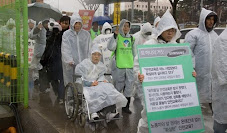
'저는 그들의 땅을 지키기 위하여 싸웠던 인디안들의 이야기를 기억합니다. 백인들이 그들의 신성한 숲에 도로를 만들기 위하여 나무들을 잘랐습니다. 매일밤 인디안들이 나가서 백인들이 만든 그 길을 해체하면 그 다음 날 백인들이 와서 도로를 다시 짓곤 했습니다. 한동안 그 것이 반복되었습니다. 그러던 어느날, 숲에서 가장 큰 나무가 백인들이 일할 동안 그들 머리 위로 떨어져 말과 마차들을 파괴하고 그들 중 몇몇을 죽였습니다. 그러자 백인들은 떠났고 결코 다시 오지 않았습니다….' (브루스 개그논)


For any updates on the struggle against the Jeju naval base, please go to savejejunow.org and facebook no naval base on Jeju. The facebook provides latest updates.
Showing posts with label U.N.. Show all posts

Friday, May 21, 2010

Text Fwd: Japan, Australia Sign "Historic" Military Deal

* Stop NATO

Defense News
Agence France-Presse
May 19, 2010
Japan, Australia Sign 'Historic' Military Deal

-It was the third such meeting of the foreign and defense ministers since the nations signed a security pact in March 2007, and the first under the government of Japanese Prime Minister Yukio Hatoyama.
The pact was the first for officially pacifist Japan outside its military alliance with the United States.


TOKYO: Japan and Australia on May 19 signed a "historic" military deal in Tokyo, stepping up defense and diplomatic cooperation despite a dispute over Japanese whaling.

Japan Foreign Minister Katsuya Okada and Defence Minister Toshimi Kitazawa held talks with Australian counterparts Stephen Smith and John Faulkner in the so-called "two-plus-two" meeting.

The two sides signed the Acquisition and Cross-Servicing Agreement (ACSA), under which their armed forces will provide each other with food, fuel and logistical support during peacekeeping and disaster-relief missions.

"This is a historic moment for Japan and Australia," Faulkner said at a joint press conference. "Signing the ACSA is symbolic of a new stage in our bilateral defense relationship."

"This is a very tangible indication of the growing depth and strength in the defense relationship between our two countries," he said, adding one specific area of cooperation will be in peacekeeping operations in East Timor.

The agreement will enable Japanese troops and Australian forces to cooperate "in the field of United Nations peacekeeping operations, humanitarian international relief operations and other operations," the document said.

Specifically, the Pacific allies will jointly conduct military exercises and training...the paper said.

It was the third such meeting of the foreign and defense ministers since the nations signed a security pact in March 2007, and the first under the government of Japanese Prime Minister Yukio Hatoyama.

The pact was the first for officially pacifist Japan outside its military alliance with the United States.

The Australian and Japanese ministers also expressed concern about North Korea's nuclear programs and Iran's need to comply with U.N. resolutions.

In December 2008, Japan and Australia agreed to share confidential information, pledged to expand joint military exercises and to set up regular consultations on disaster prevention, fighting terrorism and peacekeeping.
....
===========================
Stop NATO
http://groups.yahoo.com/group/stopnato

Friday, December 25, 2009

Text Fwd: Assembly Panel Passes Bill on Rapid Dispatch of Peacekeeping Troops

Korea Times
12-24-2009 22:54
Assembly Panel Passes Bill on Rapid Dispatch of Peacekeeping Troops
By Jung Sung-ki
Staff Reporter

The National Assembly Judiciary Committee passed a motion Thursday to improve the nation's ability to response to a United Nations request for the dispatch of peacekeeping forces (PKFs).

The motion, which had already been passed the Assembly Foreign Affairs Committee, calls for allowing the government to decide on the location, troop level, and equipment of PKF deployments before getting parliamentary approval.

The motion calls for deploying up to 1,000 troops.

Under the current law, the government is required to obtain parliamentary approval when it wants to send a PKF overseas. Under the system, it typically takes six to seven months to train the troops and receive approval from the Assembly, which critics say is too long to meet U.N. requirements.

The motion is expected to be ratified during the plenary session, as ruling and opposition lawmakers agree on the need for a system facilitating rapid PKF deployment.

``So far, discussions on the deployment have to be made after parliamentary approval. Therefore, the schedule has been frequently delayed and South Korea has failed to secure favorable locations for its troops as other countries have taken them first,'' Rep. Song Min-soon of the main opposition Democratic Party said.

Since his inauguration early last year, President Lee Myung-bak has pledged to raise Korea's international profile by participating in more peacekeeping operations (PKO) around the world.

Seoul is the 10th-largest donor to U.N. PKOs, but its troop contribution is only the 39th largest.

Currently, some 400 South Korean troops are taking part in U.N. operations, including the 350-strong Dongmyeong Unit stationed in Lebanon.

gallantjung@koreatimes.co.kr

Friday, November 13, 2009

Text Fwd: CESCR draws a grim picture of human rights in South Korea


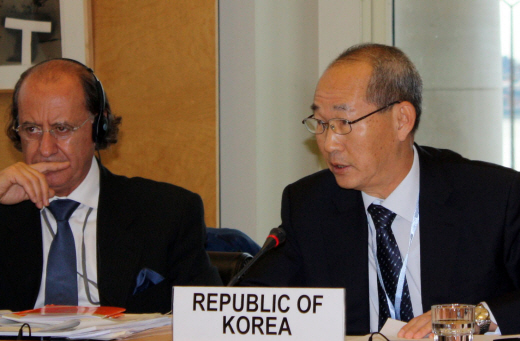
* Image source: same as below

'Lee Sung-joo, the Permanent Representative of the Republic of Korea to the United Nations (UN) Office
at Geneva answers questions from the Experts of the Committee
on Economic, Social and Cultural Rights at the UN building in Geneva, Nov. 10.'


Hankyoreh
CESCR draws a grim picture of human rights in South Korea:
UN representatives points out concerns with migrant workers’ issues and forced evictions, and suggests funds for river project could be better spent elsewhere
Posted on : Nov.13,2009 12:01 KST

Experts of the United Nations (UN) Committee on Economic, Social and Cultural Rights (CESCR) has been examining current issues in South Korea, including the Yongsan tragedy, through the lens of the International Covenant on Economic, Social and Cultural Rights (ICESCR) at the UN building located in Geneva, Nov. 11. This is results of discussion on the South Korean issue.

On the National Human Rights Commission of Korea

An expert questioned why the staff of the National Human Rights Commission of Korea (NHRCK) had been reduced by 30 percent. Another expert noted that its budget had also been drastically reduced and that the Chairman of the Commission does not have competence in human rights. One expert wondered if the ICESCR was considered non-judiciable by the Republic of Korea. If so, the government would be denying even the minimum standards applicable to the provisions of the ICESCR.

On pursuing the privatization of public services

One expert said that the privatization of certain public services, such as healthcare, water and electricity, in the Republic of Korea has become a cause of concern because the state risks being no longer able to comply with its obligations under the ICESCR. The expert asked how the state party anticipates being able to comply with the essential minimum obligations to protect economic, social and cultural rights from the influence of third parties.

On the Four Major Rivers Restoration Project

Regarding development projects, an expert noted that the Four Major Rivers Restoration Project is being criticized because of its tremendous budget allocation, and because the economic return derived from it would be too little. They are saying the money used for it could have been better used.

One expert also clarified that she had not previously stated a concern in how the budget for the project had been taken from the government’s welfare budget, but rather had intended to highlight the fact that there have been no prior consultations held with groups directdly affected by the project.

On the downsizing at the Ministry of Gender Equality

An expert noted that the Ministry of Gender Equality has been downsized, and that this has had a weakening effect on plans to improve gender equality.

On labor issues

In addressing working hours, an expert noted that the Republic of Korea had the highest number of working hours in the Organization for Economic Co-operation and Development (OECD), the highest record of industrial accidents in the OECD area and also had a high rate of deaths in the workplace. There are currently only 350 labor inspectorates in the country. The expert said labor inspectors are apparently more focused on investigating undocumented migrant workers rather that inspecting corporations for safety and occupational hazards.

On demonstrations

Turning to the matter of strikes and demonstrations, one expert noted that holding demonstrations in downtown Seoul have become no longer possible due to an article of the penal code regarding obstruction of business. The expert questioned why trade unions’ rallies and demonstrations were being banned and the exact meaning of “obstruction of business.”

One expert made reference to a disproportionate number of military and police personnel deployed in Seoul around a peaceful demonstration she had witnessed.

On migrant workers

Turning to the situation of migrant workers in the Republic of Korea, one expert noted that there were several problems linked to restriction of labor mobility, safety and health, and services offered to foreign workers.

An expert said Amnesty International had reported about the problem of exploitation and trafficking of workers in the Republic of Korea’s entertainment industry. The country has signed, but not yet ratified the Protocol to Prevent, Suppress and Punish Trafficking in Persons, Especially Women and Children.

In addition, the Republic of Korea seems to have a very narrow definition of trafficking, which only includes trafficking for prostitution. However, there have been incidences of sex trafficking within the entertainment industry. Women from the Philippines are often recruited to work in bars and nightclubs and at the end of the day are very often forced to offer their sex services to the clients by their employers. If they fail to do so, the employer threatens to cancel their work permit and sends them back to their country. These workers do not fall within the definition of trafficking, under the current legislation.

On the Yongsan Tragedy

On forced evictions, an expert cited an event that had taken place in the Republic of Korea where 40 persons had been evicted by force. In response, 1,400 riot police officers plus members of private security forces were sent in and violence was used. This had resulted in the death of five protesters and one police officer. This clearly showed that excessive force is being used in forced evictions. Furthermore, no alternative settlement programs have been offered in this case and the bodies of the victims have not yet been buried as their families are still asking for an official apology and compensation.

The expert said the Republic of Korea must establish a law on forced evictions, and said this could be simply done by adopting the guidelines included in the Committee’s General Comment on forced evictions.

On the issue of the Korean National University of Arts

An Expert noted that the Korean National University of Arts had been asked by the government to concentrate only on practical teaching and its theoretical courses had been cut. The Expert questioned why the state felt that it had the right to dictate to academic institutions at the tertiary level what they should teach and to whom they should teach. The Expert added that this infringed on academic freedom.

On Press Freedom

Another expert mentioned and questioned the arrests of journalists who have written critical reports about Lee administration policies. The expert asked whether this did not amount to censorship of some kind.

Marchan Romero, Chairperson of the Committee, said that he hopes that the South Korean delegation will add leverage to how the South Korean government gives consideration to the Committee’s recommendations.

In response, Paik Ji-ah, director-general for International Organizations Bureau, Ministry of Foreign Affairs and Trade, said that the intense discussions have been highly constructive. She believes that the Committee’s advice and recommendations will serve as a valuable guide and source of inspiration for the government in years to come.

This was the third examination conducted in the eight years since South Korea ratified the ICESCR. The Committee will compile final results from its study and will be submitting its recommendations to the South Korean government.

Please direct questions or comments to [englishhani@hani.co.kr]


Sunday, November 8, 2009

Text Fwd: Spy Agency Now Regards NK as 'International' Affairs

Korea Times
Oct. 7, 2009
Spy Agency Now Regards NK as 'International' Affairs

South Korea’s main spy agency quietly went through an internal restructuring and has started to deal the North Korean issue not just as an inter-Korean matter, but more from an international perspective, a major daily said on Saturday.

The National Intelligence Service (NIS) recently removed its department that specifically deals with North Korea and placed it under another body within the organization that deals with international affairs, Chosun Ilbo reported.

A senior government source told the newspaper that the change reflects President Lee Myung-bak’s view that the North Korean issue should now be dealt more from the international geopolitical perspective.

The change was reportedly made during the visit by the North Korean delegation to Seoul to pay tribute to the late President Kim Dae-Jung this year. At that time, another senior government official was cited to use the term “paradigm shift” in dealing with North Korean issue.

Analysts view the move reflects of an “upgrade” of the North Korean issue.

With the change, the North Korea issue now rests with Kim Sook, a former chief nuclear envoy.

The spy agency declined to confirm the change, citing internal rules, according to the newspaper.

Sunday, May 31, 2009

Text Fwd: West Plots To Supplant United Nations With Global NATO

* Text below alos informed by Agneta Noberg
http://www.globalresearch.ca/index.php?context=viewArticle&code=ROZ20090527&articleId=13759
Stop NATO
May 27, 2009
West Plots To Supplant United Nations With Global NATO
Rick Rozoff

Ten years ago it first became evident to the world that moves were afoot in
major Western capitals to circumvent, subvert and ultimately supplant the United
Nations, as the UN could not always be counted on to act in strict accordance
with the dictates of the United States and its NATO allies.

At that time in 1999 the NATO alliance was waging what would become a 78-day
bombing war against Yugoslavia in flagrant contravention of the United Nations
and of international law in general.

As two of the five permanent members of the UN Security Council - the five
permanent members being the main victorious World War II allies, with the
People's Republic of China having replaced the Republic of China (Taiwan) in
1971 and with Russia as the successor state to the Soviet Union - exactly China
and Russia, not being NATO members states, opposed that war and in several other
instances the use of sanctions and military force against nations targeted for
both by the West.

The first indication that the United Nations was marked for marginalization,
selective application (and exploitation) or even de facto dissolution, however,
occurred three years earlier in 1996 when the United States single-handedly
browbeat the other fourteen then members of the Security Council to depose
Secretary General Boutros Boutros-Ghali and replace him with Kofi Annan, who the preceding year had been appointed UN special envoy to NATO and authorized the NATO bombing in Bosnia behind the back of Boutros-Ghali.

Boutros-Ghali was deprived of the traditional second term for not authorizing
NATO's bombing of Bosnian Serb targets in 1995 and for speaking the truth about
the deadly Israeli bombing of a refugee camp in Qana, Lebanon in the following
year when 106 civilians were killed and 116 injured.

As former Clinton and Bush administrations' National Security Council
counter-terrorism adviser Richard Clarke acknowledged:

"[Madeleine] Albright and I and a handful of others (Michael Sheehan, Jamie
Rubin) had entered into a pact together in 1996 to oust Boutros-Ghali as
Secretary General of the United Nations, a secret plan we had called Operation
Orient Express, reflecting our hope that many nations would join us in doing in
the UN head.

"In the end, the US had to do it alone (with its UN veto) and Sheehan and I had
to prevent the President from giving in to pressure from world leaders and
extending Boutros-Ghali's tenure, often by our racing to the Oval Office when we
were alerted that a head of state was telephoning the President. In the end
Clinton was impressed that we had managed not only to oust Boutros-Ghali but to
have Kofi Annan selected to replace him." [1]

...

In a following section named "UN-NATO-accord: incompatible with UN Charter," he exposed a clandestine accord signed between the secretaries general of NATO and the United Nations, Jaap de Hoop Scheffer and Ban Ki-moon, respectively, on
September 23, 2008, which "took place without any reference to the United
Nations Security Council.

...

Analogous demands have been voiced over the past few years by former Spanish
prime minister Jose Aznar, NATO Secretary General Jaap de Hoop Scheffer and
spokesman James Appathurai and US Republican Party candidates in last year's
presidential election Rudolph Giuliani and John McCain, alternately identified
as an alliance, a concert or a league of democracies. In 2007 the now deceased
US congressman Tom Lantos, at the time chairman of the House of Representatives
Foreign Affairs Committee, said that "NATO should seriously consider expanding
into a global alliance including democratic countries such as Australia, New
Zealand, South Korea and Israel," and posed the rhetorical query "Would it not
make the (NATO) Supreme Allied Commander feel more comfortable about upcoming
global crises if he would have a NATO of a global reach?" To which the commander
identified, Gen. Bantz John Craddock, replied: "From a best military advice
perspective, it would indeed be enormously helpful to have more democratic, peace-loving nations as part of the alliance." [34]

...

The nations targeted for the NATO-led Alliance of Democracies include Australia,
Botswana, Brazil, Colombia, Costa Rica, India, Israel, Japan, New Zealand,
Singapore, South Africa and South Korea inter alia.

...

"Collective defense, enshrined in Article 5's dictum that an attack on one

member is an attack on all, must remain at the core of an expanded alliance as
it has in the past. For the United States, such commitments
elsewhere would not be novel, as it already guarantees, either formally or
informally, the security of countries such as Australia, Israel, Japan, New
Zealand and South Korea.

...

The record of the past thirteen years under the stewardship of Kofi Annan and

Ban Ki-moon has been abysmal. Three major wars have been conducted by the United States and its NATO allies, the first against a founding member of the UN,
Yugoslavia, while the organization made no meaningful efforts to prevent or halt
them once started and has even legitimized them after the fact with assorted
resolutions. Even UN resolutions following unauthorized wars are trampled on, as
with the recognition by most NATO members of the illegal secession of Kosovo
from Serbia last February, flagrantly contradicting UN Resolution 1244 which
commits the UN to "Reaffirming the commitment of all Member States to the
sovereignty and territorial integrity of the Federal Republic of Yugoslavia and
the other States of the region, as set out in the Helsinki Final Act...."


Read More

* Related article
A letter to Ban Ki-Moon, Secretary General United Nations by bird of peace in New York(Choi SungHee). 2007/09/25

Thursday, May 21, 2009

Tetx Fwd: [Ramsey Clark] Demand G20 Head of State participation in U. N. World Economic Crisis Conference!

Support U.N. Economic Crisis World Conference

AN URGENT CALL TO G-20 COUNTRIES: Treat the UN G-192 ECONOMIC CRISIS Summit Seriously

The June 1-3 UN Conference on the World Financial and Economic Crisis needs the highest level of participation from all countries
Initiated by 2008 U.N. Human Rights Award winner Ramsey Clark

Based on the global capitalist economic crisis which is wreaking havoc on the lives of hundreds of millions of people world wide, United Nations General Assembly President Miguel D'Escoto-Brockman is organizing an urgent Conference on the World Financial and Economic Crisis and its Impact on Development, to take place on June 1-3 at the United Nations in New York City. This international gathering, sometimes called the G-192 because every member nation of the UN will participate, is virtually tenfold the participation of nations in the G-20. This summit of world leaders will for the first time give an equal opportunity to those who represent the world’s poorest and most vulnerable people, those who are suffering the most but who have been left out in the decisions which have caused this systemic failure, to express their people’s needs to the world and make known their suffering caused by arbitrary acts and excesses of rich nations. The powerful financial institutions that have long been entrusted to manage national and global financial and economic systems have failed. It is time to give all the others a voice and a choice. It is critical that the United States and the other G-20 nations treat this conference seriously and send their heads of state to participate fully to hear what the most impacted nations have to say.

Let President Barack Obama, Secretary of State Hillary Clinton, Vice President Joe Biden, Congressional leaders, Governments of G20 countries, U.N. General Assembly President D'Escoto-Brockman, U.N. Secretary General Ban, members of the U.N. Security Council, U.N. member states, and Major media representatives know you support this urgent call initiated by 2008 U.N. Human Rights Award recipient Ramsey Clark for all countries, and particularly the G20 countries, to fully support the U.N. June 1-3 Conference on the World Financial and Economic Crisis and its Impact on Development including by participating in the conference at the Head of State level.

Sign the Petition Online Now - http://www.iacenter.org/uneconconf

The eyes of the world as well as the eyes of many here in the U.S. will be focused on the important UN conference.

Indeed, activists and social movements from the U.S. and around the world will hold a “Peoples Economic Summit” in conjunction with the UN Conference on Sunday May 31, under tents in Dag Hammarskjold Plaza, 47 St. and 1st Ave. (directly across the street from the UN). For more information on this event see www.bailoutpeople.org

Petition Text:

AN URGENT CALL TO G-20 COUNTRIES: Treat the UN G-192 ECONOMIC CRISIS Summit Seriously

The June 1-3, 2009 UN Conference on the World Financial and Economic Crisis and its Impact on Development Needs the Highest Level of Participation from all Countries

To: President Barack Obama, Secretary of State Hillary Clinton, Vice President Joe Biden, Congressional leaders, Governments of G20 countries, U.N. General Assembly President d'Escoto-Brockmann, U.N. Secretary General Ban, members of the U.N. Security Council, U.N. member states, and Major media representatives:

General Assembly President Miguel D'Escoto Brockman will convene a critical, high level United Nations Conference on the World Financial and Economic Crisis and its Impact on Development, to be held at UN headquarters, on 1-3 June 2009. This international gathering, sometimes called the G-192 because every member nation of the UN will participate, is virtually tenfold the participation of nations in the G-20. The Conference's goal is to identify emergency and long-term responses to arrest and reverse the worst world global economic crisis since the Great Depression of the 1930s and assure that such a self-inflicted human tragedy never happens again.

This summit of world leaders will for the first time give an equal opportunity to those who represent the world's poorest and most vulnerable people, those who are suffering the most but who have been left out in the decisions which have caused this systemic failure, to express their people's needs to the world and make known their suffering caused by arbitrary acts and excesses of rich nations. The powerful financial institutions that have long been entrusted to manage national and global financial and economic systems have failed. It is time to give all the others a voice and a choice.

This Conference must be the starting point in a process that will allow a reevaluation and reform, or replacement of the institutions and policies that have failed to meet the urgent and growing needs of the world's developing countries for investment in human capital. The present institutions and policies have totally failed to meet the most fundamental challenges of the 21st century that must protect all nations and people from devastating economic collapses that are more deadly and costly than ever, including the challenge to protect our Mother Earth from the rapacious destruction that threatens us all.

If the United Nations is to meet its responsibility to assure stability and sustainability to the international economic and financial order, then all the nations of the world must participate. This is the G-192.

For this Conference to be successful, I join in calling upon all countries, and especially the richest and most powerful countries that are members of G-20, to lend their full support to it and wherever possible to send their heads of government to attend. There is no issue that will have greater impact on the future of humanity, even war which is most often the child of economic conflict. I urge the widest dissemination of this international conference's proposals, documents, initiatives. and an unrelenting commitment to the creation of economic and financial policies and institutions that will achieve freedom from want for all.

Sincerely,

Initiated and signed by
Ramsey Clark, winner, 2008 U.N.Human Rights Award and Founder, International Action Center

Add your signature to this letter now - go to htpt://www.iacenter.org/uneconconf

Monday, April 6, 2009

Text Fwd: Ban regrets DPR Korea rocket launch, calls for dialogue


*Image Source*
Same as article belwo
[Secretary-General Ban Ki-moon]

http://www.un.org/apps/news/story.asp?NewsID=30399&Cr=dprk&Cr1=
Ban regrets DPR Korea rocket launch, calls for dialogue

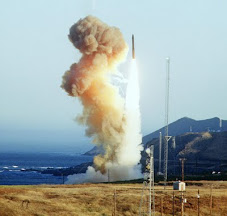
5 April 2009 – Secretary-General Ban Ki-moon today expressed his regret that the Democratic People's Republic of Korea (DPRK) has, against strong international appeals, proceeded with its planned rocket launch, urging the resumption of diplomatic talks.

According to media reports, the East Asian nation carried out its launch this morning, and the Security Council held an emergency meeting today, at Japan's request, on the issue.

“Given the volatility in the region, as well as a stalemate in interaction among the concerned parties, such a launch is not conducive to efforts to promote dialogue, regional peace and stability,” Mr. Ban said in a statement issued by his spokesperson.

He urged the DPRK to comply with Security Council resolutions, such as resolution 1718, which demanded that the country “not conduct any further nuclear test or launch of a ballistic missile,” following its claims to have conducted a nuclear test in October 2006.

The Secretary-General also appealed to all concerned countries to “focus on ways to build confidence and restore dialogue, including the early resumption of the Six-Party Talks,” referring to the discussions involving DPRK, Republic of Korea, Japan, China, Russia and the United States.

During today's closed-door meeting to address the “serious” situation, Security Council members agreed to “consultations on the appropriate reaction by the Council in accordance with its responsibilities given the urgency of the matter,” said Ambassador Claude Heller of Mexico, which holds the 15-member body's rotating presidency this month.

Consultations are expected to continue, and Mr. Heller noted that among members, there is a “consensus saying that the Security Council regretted that the Government of the DPRK disregarded the calls by the international community to suspend” its launch.

http://www.un.org/apps/sg/sgstats.asp?nid=3772
New York/Paris, 5 April 2009 - Statement attributable to the Spokesperson for the Secretary-General on the DPRK

The Secretary-General regrets that, against strong international appeal, the Democratic People's Republic of Korea (DPRK) went ahead with its planned launch. Given the volatility in the region, as well as a stalemate in interaction among the concerned parties, such a launch is not conducive to efforts to promote dialogue, regional peace and stability. The Secretary-General urges DPRK to comply with relevant Security Council resolutions, and all countries concerned to focus on ways to build confidence and restore dialogue, including the early resumption of the Six-Party Talks. The Secretary-General will lend his full support to these efforts.

Saturday, March 14, 2009

Text fwd: Paper: Washington Plans Global NATO To Replace UN

Fwd from Stop NATO

Paper: Washington Plans Global NATO To Replace UN

Fri Mar 13, 2009 5:43 am (PDT)

Link
http://www.russiatoday.com/Politics/2009-03-13/NATO_s_expansion_vector___global.html
Russia Today
March 13, 2009
NATO’s expansion vector – global?

-The idea to exclude Russia and China from global decision making is counterproductive.
The expert added: “This community of democratic nations is like a new Holy Alliance [a 19th century alliance between Russia, Prussia and Austria meant to provide pan-European security and promote Christian values] and a very anachronistic idea.”

Barack Obama’s administration sees NATO as the nucleus for a global organization of democracies that will eventually replace the United Nations, believes an influential Russian newspaper.

Washington wants NATO to be expanded by inviting counties like Australia, Japan, Brazil and South Africa and become a global organization tackling not only security issues but also epidemics and human rights, reports Kommersant daily on Friday. The next US Ambassador to NATO Ivo H. Daalder is a great supporter of this idea.

Daalder, expert of the Brookings Institution and a foreign policy adviser to Barack Obama during the election campaign, is a strong proponent of the so-called Concert of Democracies.

Exclusive club for democratic nations

The idea, coined by the think-tank Princeton Project on National Security, is that the United Nations is outdated, because it was created to prevent a war between great nations, but now this threat is negligible. On the other hand, the UN is inefficient in dealing with local conflicts between small nations or between a great power and a small nation. Examples of those include conflicts in Darfur, Kosovo or, a more recent example, in South Ossetia. Authors of the concept, including Daalder, see the solution in an organization of democratic nations with resources both diplomatic and military to answer these challenges.

According to them, democracies are eager to co-operate for the sake of defending human rights and providing securities, while authoritarian nations are not. If you drop out authoritarian regimes – including the great powers of Russia and China – then decision making will be quicker and action is far more likely to be taken. This Concert of Democracies will serve as a magnet for other nations and coerce them into becoming democracies in order to have a say on global affairs.

The argument continues, saying that actions by this limited club including military ones will be legitimate, even if they violate national sovereignty of non-democratic nations, and will not need the sanction of the UN. Daalder believes that NATO is a prototype of the proposed concert, being an alliance of democracies with a long success record, and can be extended to the new global organization.

The upcoming anniversary summit of the alliance in April may be the time when Daalder presents Washington’s reform plan to other NATO members, the newspaper Kommersant continues. The event will be a sort of ‘family reunion’ with no would-be members like Ukraine and Georgia invited. The event will be dedicated to a discussion of the future of the organization.

Kommersant cites a source in the White House as saying that Vice President Joe Biden is among the supporters of the Concert of Democracies. During the security conference in Munich he mentioned that Washington wants its European partners to play a larger role, but this means they’ll have to take a larger share of the burden of maintaining international security. Inviting new non-European members to NATO will allow Europeans not to increase their expenditures.

However it is not known what President Obama himself thinks about the idea, since he never commented on it in public.

Experts doubt radical NATO reform

The idea is unlikely to find much support, as both countries that would be invited to a Concert of Democracies and even present-day NATO members may see it as a US-dominated club and be reluctant to join it, Viktor Mizin, a political analyst from the Moscow State Institute of International Relations, told RT.

“I doubt that countries like Australia, South Korea or Japan for that matter would rush to support future military operation both financially and militarily,” he said.

The idea to exclude Russia and China from global decision making is counterproductive.

The expert added: “This community of democratic nations is like a new Holy Alliance [a 19th century alliance between Russia, Prussia and Austria meant to provide pan-European security and promote Christian values] and a very anachronistic idea,” he said.

Ivo Daalder’s personal views do not determine US policy towards NATO, but it may help him in dealing with NATO members eager to increase the alliance’s influence, says Sergey Utkin from the Institute of World Economy and International Relations.
....
===========================
Stop NATO

Friday, March 6, 2009

Text fwd: The Unfinished Decolonisation Agenda for 2009

Text fwd: from Overseas Review, Debbie Quinata, and Agatha Haun

http://overseasreview.blogspot.com/2009/03/unfinished-decolonisation-agenda-for.html
The Unfinished Decolonisation Agenda for 2009
An Editoral 04 March 2009

The international community has reached the penultimate year of the Second International Decade for the Eradication of Colonialism. Yet, the process of decolonisation in the remaining territories remains un-filled. The United Nations must continue to play its statutory role in making recommendations to the General Assembly for the full implementation of the decolonisation mandate contained in Article 73(b) of the Charter.

This article requires that countries which administer territories must promote full self-government. To this end, innovative means must be devised to expand the information available to the territories on the legitimate political status options available to them. The information deficit in the territories and at the United Nations continues as a significant impediment to the realisation of the right to self-determination by the peoples of these territories.

It is favourably acknowledged that internal reforms have been enacted in several territories, particular in some of the United Kingdom – administered dependencies in the Caribbean. It should be emphasized, however, that the delegation of some authorities resulting from the reform process was not intended to change the dependency political status. The U.N. must, therefore, focus attention on the intricacies of such constitutional adjustments which must be must be reviewed in detail, lest they be successfully projected as some sort of legitimate power sharing arrangement. Accordingly, the information and analysis available to the U.N. on these issues must be significantly enhanced in order that a more comprehensive picture of the contemporary dependency dynamic is clearly understood.

U.N. Member states have spoken clearly on these issues over the years. The regional statements of the Caribbean Community (CARICOM) to the U.N. Fourth Committee for at least a decade have continued to emphasize the need for innovative measures to increase the chances of success in implementing the decolonisation mandate. In this regard, the General Assembly in 2006 endorsed by resolution the Programme of Implementation (POI) first proposed by a former Caribbean chair of the Special Committee on Decolonisation. This Programme identified the role of the wider United Nations system and other relevant actors in implementing the mandate of the first and second international decades for the eradication of colonialism.

Had this Programme been operationalised as intended by the General Assembly, a number of mandated activities would have been completed, and the awareness of member states of the situation on the ground in the territories significantly enhanced. These activities include the analytical studies and analyses on the evolution of self-government in each territory, the case-by-case work plan, the reports on implementation of decolonisation resolutions, and the introduction of Special Mechanisms.

The U.N. must therefore endeavor to facilitate the implementation of these innovative actions called for by the General Assembly. Otherwise, progress will remain limited, with the U.N. technically satisfying its responsibility to review the situation in the territories, while not bringing about decolonisation, in earnest. In fact, since the independence of Namibia at the beginning of the 1990s, only one territory – Timor Leste – has gained the full measure of self-government – through independence. Most of the other territories continue to suffer from a lack of information as to whether the other legitimate political status options of political Integration and Free Association are even available to them, despite the consensus resolutions of the General Assembly which annually confirm their relevance to all of the territories.

The 2009 Organisational Session of the Special Committee on Decolonisation convened on 27th February under the chairmanship of Indonesia. One year before, several Caribbean delegations proposed the establishment of an open-ended Working Group to examine the situation in the small island territories, in particular, where there are no issues of sovereignty dispute which have overshadowed the U.N. deliberations. The predictable “budgetary implications” argument short-circuited this innovative proposal, however. This is a tactic often employed by the U.N. bureaucracy to stymie innovations proposed by member states, where no new financial resources are required, or the re-ordering of existing resources. The majority block of developing countries, the Group of 77 and China, reminded the U.N. system in 2008 that it is only the member states through the Fifth Committee can determine “budgetary implications.”

Thus, the U.N. General Assembly has repeatedly adopted innovative recommendations which would facilitate the decolonisation process in the territories, and designed to increase the understanding of member states of the situation in the territories. It is regrettable that these innovations appear to have no chance of being carried out.

2010 will be the final year of the Second International Decade for the Eradication of Colonialism. It is clearly obvious that a third decade is in order, but it would only be successful if the modus operandi is totally revamped.

* For the full article*
http://overseasreview.blogspot.com/2009/03/unfinished-decolonisation-agenda-for.html