* 아래는 평통사 국문을 번역한 것입니다. 여기 클릭
_____________________________________________
* As Rick Rozoff has informed an article(click), the South Korea Minister of National Defense said he would examine the redeployment of nuclear weapon in the Korean peninsula.
The Solidarity for Peace And Reunification of Korea will have a press interview to denounce Kim Tae-Young, Minister of National Defense who has made an absurd remarks on his “examination on the redeployment of the tactical nuclear weapons, under the title, “Resign, Kim Tae-Young , Minister of National Defense, who counters against the non-nuclearization of the Korean Peninsula,” on Nov. 23, 2010, in front of the Ministry of National Defense. The SPARK says its purpose of the press interview as in the below (translated). Its original Korean notice can be seen HERE.
_____________________________________________
1. Kim Tae-Young, Ministry of National Defense told, in relation to North Koreans’ opening to the public of the uranium enrichment facility, that he would examine on the redeployment of the tactical nuclear weapon in the ‘ROK-US Extended Deterrence Committee [in Dec.].’
2. At present, it is difficult to see North Koreans’ uranium enrichment facility to be deviated from the ‘the right to peaceful uses of nuclear energy’ mentioned in the 9.19 joint statement, and it can be said that the reason that North Korea made public of that is, to press the Obama administration-who has just prolonged time without any measure while maintaining ‘strategic endurance’-to come to the stage for talks by showing her possibility of manufacture of nuclear weapons by uranium enrichment. Therefore, because North Korea’s intrinsic intention is not of nuclear arming, if [the North Korea and United States] resume the six party talks and accept each other’s demand, the nuclear issue of the Korean peninsula can be possibly solved without limit.
3. In such sense, the remarks by Kim Tae-Young, Minister of National Defense, not only violate the joint statement of non-nuclearization of North Korea, but also pour cold water onto the political situation that demands the resumption of the six party talks for the non-nuclearization of the Korean Peninsula. While North Korea has only made public open the uranium facilities, it is to violate the principal of proportionality that he says such and such of re-deployment of tactical nuclear weapons. If the remarks by the Minister Kim are realized, non-nuclearization of the Korean peninsula would be little possible and there would be the situation of nuclear domino displayed and the danger of nuclear weapons would be heightened.
4. It seems there is the political judgment working in the provocative remarks by the Minister Kim, to weaken people’s distrust and voice of criticism that are being poured onto him and the Ministry of National Defense, because of its concealment and manipulation on the Cheonan ship incident, by drawing the support by the bellicose anti-North Korean power who wishes the re-deployment of nuclear weapons by the United States or nuclear disarmament of North Korea.
5. Therefore, we will hold the press interview to denounce such absurd remarks by Kim Tae-Young, Minister of National Defense, who tries to avoid the reproaches being poured onto him and the Ministry of National Defense countering against the political situation that demands non-nuclearization of the Korean Peninsula and six-party talks.
________________________________________
See also
NTI
South Korea might request to again host U.S. tactical nuclear weapons,
the Financial Times reported today (see GSN, April 21).
Monday, Nov. 22, 2010
(* Thanks to Bruce Gagnon)
STOP NATO
DM: U.S. Tactical Nuclear Weapons Can Return To South Korea
Itar-Tass
November 22, 2010
(* Thanks to Rick Rozoff)
Hankyoreh
Confirmed uranium enrichment marks new stage in N.Korea nuclear issue : Six-party talks envoys have begun to embark on
Nov. 22, 2010
Showing posts with label NK-SK relationship. Show all posts
Showing posts with label NK-SK relationship. Show all posts
Tuesday, November 23, 2010

Friday, November 12, 2010
Photos Fwd: [Upon the ROK-US summit meeting] Abolish the FTA! Resume the NK-US talks! No ROK-US alliance! [한미 정상 회담 즈음] FTA 폐기! 북미 대화 재개! 한-미 동맹 폐기!
_________________________________________________________
Civil organizations’ joint press interview
Abolish the FTA- Infringement of economic sovereignty, destruction of people’s survival rights!
Resume the NK-US talks! No ROK-US alliance! Yes, peace treaty!
In front of the Presidential House, Seoul, 12pm, Nov. 11, 2010
Labor Front; Korea Confederation of Trade Unions; Democratic Labor Party; Anti-War Peace Solidarity; Revolution 4.19 Committee*; Socialist Party of Korea; People’s Solidarity for Social Progress; Living with Jejus; Research Institute for the Spirit of Jeon Tae-Il*; New Progressive Party; Catholic Association for Justice; Solidarity for Peace And Reunification of Korea; Korea Alliance of Progressive Movements; AWC_ Korea
Click the images for larger view
이미지들을 클릭하시면 확대됩니다.


* Related blogs
[In Update] People’s Response Action against G-20
[엎데이트중] G20대응민중행동
Friday, November 12, 2010
Text Fwd: 'No waver in commitment to security of S. Korea' (*Obama)
남한의 안보에 대한 사명감에 어떠한 지연도 없을 것(*오바마)
Thursday, November 11, 2010
Text Fwd: [Translation] The problems of the ROK-US summit meeting
[번역] 한미 정상 회담의 문제점들
_________________________________________________________
[In Update] People’s Response Action against G-20
[엎데이트중] G20대응민중행동
Friday, November 12, 2010
Text Fwd: 'No waver in commitment to security of S. Korea' (*Obama)
남한의 안보에 대한 사명감에 어떠한 지연도 없을 것(*오바마)
Thursday, November 11, 2010
Text Fwd: [Translation] The problems of the ROK-US summit meeting
[번역] 한미 정상 회담의 문제점들
_________________________________________________________
Civil organizations’ joint press interview
Abolish the FTA- Infringement of economic sovereignty, destruction of people’s survival rights!
Resume the NK-US talks! No ROK-US alliance! Yes, peace treaty!
In front of the Presidential House, Seoul, 12pm, Nov. 11, 2010
Labor Front; Korea Confederation of Trade Unions; Democratic Labor Party; Anti-War Peace Solidarity; Revolution 4.19 Committee*; Socialist Party of Korea; People’s Solidarity for Social Progress; Living with Jejus; Research Institute for the Spirit of Jeon Tae-Il*; New Progressive Party; Catholic Association for Justice; Solidarity for Peace And Reunification of Korea; Korea Alliance of Progressive Movements; AWC_ Korea
___________________________________________________________
Click the images for larger view
이미지들을 클릭하시면 확대됩니다.


Tuesday, June 29, 2010
Text Fwd: N. Korea warns of attack ahead of S. Korea-U.S. naval drill
Yonhap News
N. Korea warns of attack ahead of S. Korea-U.S. naval drill
By Sam Kim
SEOUL, June 29 (Yonhap) -- North Korea warned Tuesday it would attack "the stronghold of invaders" if the United States provoked a war in the process of a joint naval drill with South Korea, as tension persists on the Korean Peninsula over the deadly sinking of a South Korean warship.
South Korea and the United States are planning joint naval exercises following Seoul's ongoing efforts to punish North Korea for the sinking through the U.N. Security Council.
* Related articles
Yonhap News
_ N. Korea accuses U.S. of bringing heavy arms into truce village
_China voices concern over S. Korea-U.S. naval drill
N. Korea warns of attack ahead of S. Korea-U.S. naval drill
By Sam Kim
SEOUL, June 29 (Yonhap) -- North Korea warned Tuesday it would attack "the stronghold of invaders" if the United States provoked a war in the process of a joint naval drill with South Korea, as tension persists on the Korean Peninsula over the deadly sinking of a South Korean warship.
South Korea and the United States are planning joint naval exercises following Seoul's ongoing efforts to punish North Korea for the sinking through the U.N. Security Council.
* Related articles
Yonhap News
_ N. Korea accuses U.S. of bringing heavy arms into truce village
_China voices concern over S. Korea-U.S. naval drill
Monday, May 3, 2010
Photos Fw: Stop KOR-US Alliance! NPT is Not Fair!
*All the Image sources: Solidarity for Peace And Reunification of Korea, May 3, 2010


 'Do Not Make the NPT Evaluation Meeting as a Mean to Put Pressure the North Korea! '
Sunday, April 4, 2010
Text Fw: President Lee confirms thus far “No evidence of N.Korean involvement in Cheonan incident”

'President Lee Myung-bak speaks with a military officer over the phone
about the sunken navy vessel Cheonan at the Cheong Wa Dae, March 28.'
about the sunken navy vessel Cheonan at the Cheong Wa Dae, March 28.'
Hankyoreh
President Lee confirms thus far “No evidence of N.Korean involvement in Cheonan incident”:
The statement comes in the wake of conflicting statements by administration and military officials
Posted on : Apr.2, 2010 12:40 KST
Addressing the cause of the sinking of the Patrol Combat Corvette (PCC) Cheonan on Thursday, President Lee Myung-bak said that they are leaving all possibilities open, but thus far no evidence has been uncovered indicating that North Korea was involved.
This was reported by several participants in attendance at a morning meeting with the ruling GNP lawmakers that have returned from abroad, having recently served as presidential envoys.
One lawmaker who attended said that when one GNP lawmaker stated that it is highly probable North Korea was involved in the sinking and the opposition was planning to politically misuse the sinking by calling an emergency inquiry, President Lee said it is not the case that North Korea was involved, and while they are investigating all possibilities, there has been no evidence of North Korean involvement. President Lee also said if one talks of North Korean involvement without evidence, South Korea would be in a dilemma if surrounding nations like China and Russia ask to see the evidence. Another participating lawmaker said the theory that the boat had been hit by a North Korean mine is just one possibility, and that it would not be desirable to speculate about it. President Lee reportedly cautioned against rash speculation and called on people to speak based on scientific and objective evidence.
To address the fact that the Cheonan was split in two, President Lee said from what he knew from building ships, a wave has the capacity to do cause such damage, and that a ship could break more easily than seems possible coming down off a big wave. He said that the sinking could have been an accident.
In citing a reason for which speedboats fired warning shots, President Lee said that he too wondered why a warship would fire at a flock of birds, but that the ship fired both at a flock heading north and one heading south, and that it is true that they were birds. As for the investigation into the cause of the accident, he said that it could take a long time, and that some investigations take over a year. President Lee said he has asked U.S. President Barack Obama to help provide personnel and equipment assistance to look into the exact cause of the sinking after the Cheonan has been raised.
Please direct questions or comments to [englishhani@hani.co.kr]
___________________________________________________________________
* Related blog
http://nobasestorieskorea.blogspot.com/2010/03/choenan-navy-ship-sinking-mystery-due.html
Tuesday, March 30, 2010
Choenan Navy Ship Sinking Mystery: Due to Key Resove War Drill?
Thursday, February 4, 2010
Text Fwd: Extra U.S. troops not likely to arrive in time in case of N.K. crisis: Gates
Yonhap News
2010/02/04 09:01 KST
Extra U.S. troops not likely to arrive in time in case of N.K. crisis: Gates
By Hwang Doo-hyong
WASHINGTON, Feb. 3 (Yonhap) -- Additional U.S. ground forces may not be able to arrive in South Korea in time in case of an emergency situation in North Korea due to America's heavy commitment in Iraq and Afghanistan, senior U.S. officials said Wednesday.
"We could not get the Army units required for South Korea into South Korea on the time line required by the plan," Secretary of Defense Robert Gates told a hearing of the House Armed Services Committee. "That's not to say they wouldn't get there. It's just that they wouldn't get there as quickly because of the commitments that we have in Iraq and Afghanistan. And so certainly initially we would be especially dependent on the Navy and the Air Force."
The United States, however, will be able to send extra ground troops to Korea in time after the completion of the proposed drawdown of U.S. troops in Iraq in 2011, Michael Mullen, chairman of the Joint Chiefs of Staff, said.
"I would only add that, as you look at the time line that you just described -- end of '11, Army's out of -- we're out of Iraq -- it's the beginning of reset, really, for the Army in terms of equipment and actually training," Mullen said. "Ideally, probably a year or two before we're well into that, to be able to do it ... on a time line we choose."
Mullen was responding to a question from Rep. Joe Sestak (D-Pa), saying that if the U.S. "could not meet our warfare commitments with the Army for, like, (Operational Plan) 5027 in South Korea, but that the Air Force and the Navy and the others could back that up with acceptable risk."
North Korea recently warned of a "sacred war" against South Korea over reports that Seoul had come up with a new Operational Plan (OPLAN) 5029 in case of regime change or any other contingencies in the nuclear-armed communist state.
Talk of such contingency plans abounded last year amid rumors of a power transition to North Korean leader Kim Jong-il's third and youngest son Jong-un, 27, after the senior Kim apparently suffered a stroke in the summer of 2008.
Secretary of State Hillary Clinton and other senior U.S. officials have publicly discussed contingency plans for the North, but China, Pyongyang's biggest benefactor, has refused to talk openly with the U.S. about its contingency plans for North Korea in order not to provoke its communist ally.
A report issued by the Council on Foreign Relations last year said that South Korea, the United States and their allies would need to send up to 460,000 troops -- three times more than the number of U.S. troops deployed in Iraq -- to help maintain stability in North Korea in case of its collapse.
The report noted that securing North Korea's weapons of mass destruction, including nuclear warheads, chemical and biological weapons and long range missiles, should be a top priority.
"Locating, safeguarding, and disposing of materials and stockpiles of the North's estimated six to eight nuclear weapons, four thousand tons of chemical weapons, and any biological weapons, as well as its ballistic missile program, would be a high priority, especially for the United States," it said.
North Korea detonated its second nuclear device in May last year, after an earlier test in 2006, and is believed to possess ballistic missiles capable of reaching western parts of the mainland U.S.
The report also stressed the need for the U.S. to seek "a quiet dialogue" with China "to reduce the risk of misunderstanding and friction in a crisis involving North Korea."
hdh@yna.co.kr
2010/02/04 09:01 KST
Extra U.S. troops not likely to arrive in time in case of N.K. crisis: Gates
By Hwang Doo-hyong
WASHINGTON, Feb. 3 (Yonhap) -- Additional U.S. ground forces may not be able to arrive in South Korea in time in case of an emergency situation in North Korea due to America's heavy commitment in Iraq and Afghanistan, senior U.S. officials said Wednesday.
"We could not get the Army units required for South Korea into South Korea on the time line required by the plan," Secretary of Defense Robert Gates told a hearing of the House Armed Services Committee. "That's not to say they wouldn't get there. It's just that they wouldn't get there as quickly because of the commitments that we have in Iraq and Afghanistan. And so certainly initially we would be especially dependent on the Navy and the Air Force."
The United States, however, will be able to send extra ground troops to Korea in time after the completion of the proposed drawdown of U.S. troops in Iraq in 2011, Michael Mullen, chairman of the Joint Chiefs of Staff, said.
"I would only add that, as you look at the time line that you just described -- end of '11, Army's out of -- we're out of Iraq -- it's the beginning of reset, really, for the Army in terms of equipment and actually training," Mullen said. "Ideally, probably a year or two before we're well into that, to be able to do it ... on a time line we choose."
Mullen was responding to a question from Rep. Joe Sestak (D-Pa), saying that if the U.S. "could not meet our warfare commitments with the Army for, like, (Operational Plan) 5027 in South Korea, but that the Air Force and the Navy and the others could back that up with acceptable risk."
North Korea recently warned of a "sacred war" against South Korea over reports that Seoul had come up with a new Operational Plan (OPLAN) 5029 in case of regime change or any other contingencies in the nuclear-armed communist state.
Talk of such contingency plans abounded last year amid rumors of a power transition to North Korean leader Kim Jong-il's third and youngest son Jong-un, 27, after the senior Kim apparently suffered a stroke in the summer of 2008.
Secretary of State Hillary Clinton and other senior U.S. officials have publicly discussed contingency plans for the North, but China, Pyongyang's biggest benefactor, has refused to talk openly with the U.S. about its contingency plans for North Korea in order not to provoke its communist ally.
A report issued by the Council on Foreign Relations last year said that South Korea, the United States and their allies would need to send up to 460,000 troops -- three times more than the number of U.S. troops deployed in Iraq -- to help maintain stability in North Korea in case of its collapse.
The report noted that securing North Korea's weapons of mass destruction, including nuclear warheads, chemical and biological weapons and long range missiles, should be a top priority.
"Locating, safeguarding, and disposing of materials and stockpiles of the North's estimated six to eight nuclear weapons, four thousand tons of chemical weapons, and any biological weapons, as well as its ballistic missile program, would be a high priority, especially for the United States," it said.
North Korea detonated its second nuclear device in May last year, after an earlier test in 2006, and is believed to possess ballistic missiles capable of reaching western parts of the mainland U.S.
The report also stressed the need for the U.S. to seek "a quiet dialogue" with China "to reduce the risk of misunderstanding and friction in a crisis involving North Korea."
hdh@yna.co.kr
Text Fwd: South Korea, “The most Dangerous Country in the World”
_____________________________________________________________________________________
*The text below was sent from Torbjörn Björkman, a Sweden journalist who visited South Korea from Dec. 1 to 7, 2009, thanks to introduction by Agneta Noberg who has visited South Korea last April when there was the International Conference against the Asia Pacific Missile Defense and for the End of Arms Race. Torbjörn Björkman works for the Swedish Friendship Organisation, Sweden, which has a long time history, and founded after the end of the Korean war. When the organization was set up, it was centred around the Swedish investigators who had visited the North Korea and investigated the indiscriminate U.S. bombings against the civilians during the Korean war, 1950 to 1953.
His organization publishes the magazine four times a year (In the below image, a photo of Pyeongyang, North Korea is in cover). He has also translated Bruce Gagnon’s No Gun Ri visit report in last October, 2009 in Swedish
Torbjörn Björkman has himself visited the North Korea four times before. It was his first visit to South Korea, this time and he has met the activists from various organizations to interview them (Photo below). Bruce Gagnon has also met many of them in Torbjörn Björkman’s article here, in August 2009. The emphases below are by No Base Stories of Korea.

 Click the images for larger view
_____________________________________________________________________________________
Torbjörn Björkman says on Feb. 3, 2010
"This is a translation of the article in the weekly paper Proletären no 3 in January and Korea Information, the paper from the Swedish Friendship Organisation, Sweden. Proletären is printed in 4.000 copies. The Swedish Friendship Organisation in 400 copies. It´s nearly the same article in the two papers."
 Click the image for larger view
_____________________________________________________________________________________
North Korea gets some attention in Swedish mass media, but there have been very few reporters from Western countries to North Korea. But North Korea couldn’t exist without it’s antipole South Korea. However, no Swedish reporter gives any interest to South Korea, this big country with more than 50 millions inhabitants.
In December 2009, Torbjörn Björkman visited Seuol to learn more about South Korea.
- I made an interview with Agneta Noberg this autumn, Torbjörn Björkman says. She works with spreading information about Nato and took part in an Conference in South Korea. During the discussion with her, I got the idea to go there. Our knowledge about South Korea is very bad. We know less about South Korea, than about North Korea, despite our knowledge about North Korea comes from the imperialistic propaganda.
- My visit in Seoul turned to be quite different to what I have thought and could expect, continue Torbjörn Björkman. Many persons in organisations that I meet see South Korea as a prison.
One of them Torbjörn Björkman met in Seoul was Kim Young-je working as unification director of the KCTU, Korean Confederation of Trade Unions.
- We must get human rights, Kim Young-je said. The division between North and South is one of the big problems of the humanity.
Is caught in two sentences the Korean problem, in a new way for me. The construction of the Korean peninsula in two separate stats; The Democratic Peoples Republic Korea and The Republic [of] Korea, is a product of the US Imperialism and is total undemocratic. The most of the Koreans had [chosen a] united Korea. Without to understand the US oppressing of South- and North Korea we can’t see the questions of the human rights. The US-imperialism is the problem. This is the background to that the Korean peninsula is one of the most militarized areas in the world, were the government force an expansion of the already very large military exercise areas and where US now are expanding there bases. South Korea has 40 times more military investments than North Korea. It is easy to se[se] the grotesque proportions in armaments of South Korea, one of the most armed military in Asia. One of the representatives of Veterans for Peace in Korea proclaimed that South Korea is the most dangerous country in the world. The best way to describe the Korean peninsula is to describe the US-imperialistic tyrannize over the Korean people. In South Korea, it occurs through agents in the South Korea government. Against North US all the time have trade restrictions and an alert political blockade that affect the country with brutal power.
Torbjörn Björkman knows the problem. The journey to Seoul was his first to South Korea, but he has visited North Korea several times. The people in South and North suffer hard through the 38th degree. South Koreas formal democratic freedom, have great restrictions through the National Security Act, implemented after the war and give no different political opinions any space. Any contact with North Korea and North Koreans is prohibited. Any, that break this law, can be put in prison. Under the president Kim Dae Jung, they used a smoother use of this act, but now the mode of application now is harder. The acts make the two formal resolutions between North and South unlawful. The lay make North Korea to an anti nation, a treachery state and an enemy.
- US make a mistake in the division of the Korean peninsula and the prevent of the unification, says Lee Kyeong-won from PKAR, Pan Korean Alliance for reunification of Korea, when he let Torbjörn Björkman to make his first interview after got away from prison, accused for broken the National Security Act when he visited the North Korea. Through this act the US continue to dominant the country.
2008 it was still possible to go to North Korea, but not any more. The only way to get permission is to travel in groups, for instance a sport club.
In a party organised by Solidarity for Peace and Reunification of Korea, SPARK, Torbjörn Björkman was invited to say some worlds. He says:
- I got enthusiastic applause from the 200 gests when I told them that I love North Korea and that it’s a very nice country and nice people and that I have been in Pyongyang 4 times. I said that I worked for the united Korea and for better relations between North and South. They saw it important what I said, that I spoke positively about North Korea. I got greetings with me to give to there relatives in North, the next time when I go there. They saw it important that I spoke positively about North Korea.
- South Korea is a prison for the people, says Torbjörn Björkman, because they cannot speak free or cannot contact there relatives or friends in the North.
- The right wing in South Korea has been strong since the Japanese colonial time. In 1997 started a broad people movement that chose Kim Dae Jung to president. His ”sunshine politic” pushed North and South near to another and ended in a summit with him and Kim Jong Il in Pyongyang 2000 and gave Kim Dae Jung the Nobel Peace Price this year.
The first real opening in the contacts between North and South was not in the political field, but through the sport. The trade unions that worked for unification decides to organise a football match with workers from South and North. The right wing didn’t dare to oppose it and the match accomplished in Pyongyang the 15th of August 1999.
- The South Korean workers are forbidden to speak, said Kim Young-je. We are forbidden to discuss about socialism and communism. We have censure against our thinking. We in South are prisoners. In North are 25 millions forced to isolate themselves.
- Even if South Korea has a high economical standard, we cannot speak of human rights in a country that control of the minds.
Unavoidable, a discussion about the Korean peninsula must include the question about nuclear weapons. What is the South Koreans saying in that question?
- This question is very important in South Korea, says Torbjörn Björkman. All the organisations I met had it in there program. PKAR have the nuclear weapon as the central question.
Lee Kyeong-won says:
- The central question in the Korean peninsula is the nuclear weapons. US have the nuclear umbrella in South. We must have a peace treaty, we must have collaboration between US and North Korea, but US do not want peace. That is why there will be no honest discussions.
- The SPARK started 1994 just because the nuclear question, under the first crisis about the North Korean nuclear weapons, said Oh Hye-Ran, one of the investigators in SPARK, when the meet Torbjörn Björkman in her office in central Seoul. We are fighting against the hostile politic against North Korea and we want peace and unification between North and South. We want that the South break the connections with US and that US leave the Korean peninsula. We want that the armistice will chance to a peace treaty.
In the SPARK's Office also works the peace investigator [K]o Yong-Dae. He wants to discuss the classification of weapons that started under the 90th. The weapons were divided into protection weapons and aggressive weapons, defensive and offensive, a theory that disappeared among the investigators when Nato expanded eastward.
The Korean Peninsula is a centre for develop new systems of weapon, says Yo Yong-Dae. It is important to let people know about this, to get them to understand the train of thought.
Trade unions, the peace movement and the movement for the united Korea are in different ways connected to each other. Even the trade unions have an opinion in the question of nuclear weapon.
The majority of the South Koreans be aware of that North Korea has nuclear weapons because the treat from US, says Kim Young-je. The trade unions are against nuclear weapons. They want them to be liquidated, but they are aware of that North Korea has them against the US threat.
Cheong Wook-sik from the organisation Peace Network says:
- The central question is not if North Korea are threatening with nuclear weapons, but that we have to built the Korean Peninsula as a zone without nuclear weapons and in the long run create a world without nuclear weapons.
- The militarism is central for the Korean question in south, where the government se[se] North Korea as the main enemy, he continues. Men it’s an asymmetric threat. South Koreans military investments with US support are much bigger than North Koreas. North Korea wants a peace agreement, not this armistice. However, US do not accept this. There is an unbalance in military power. South Korea-US has the initiative in the case of conventional weapon. Therefore North Korea has to built nuclear weapons and missiles.
- I cannot understand the critic against North Korea, accused in lack of democratic rights, says Cheong Wook-sik, if you at the same time accused China or South Korea in those deficits.
Torbjörn Björkman have a great memory from the journey; a protest meeting on the way to another meeting in the question for unification between South and North. The protest meeting was outside of the KCTU and was to support the ongoing streak among the railway workers. To catch the trade unions leader stood many police officers outside the building. The right wing government Lee Myung-bak sees all streaks as illegal and the trade unions leaders arrested. Björkman says:
- There is no accident occurrence that we met police officers against workers in streak when we went to a meeting about unification between North and South. The solution of two stats and the workers fight in South is a direct result of that US made South Korea to there vassal state. This is also a product of the Japanese colonial power, there fascism and there fight against the communism, that is the people influence.
In the meeting about unification, we put ourselves with enthusiasm behind a big photo with Kim Jung Il and Kim Dae Jung in the summit the year 2000.
Kim Bung Tae is a represent for Veterans for Peace in Korea. He says:
- I have a brother [in law] who is artist in North Korea. He recently got a gold medal in Beijing for his art. As South Korean, I have no possibility to meet or to get in contact with my brother [in law]. That is why I ask you, that the next time you come to Pyongyang, give my brother [in law] a greeting from me.
We let the old soldier get the last word before, we say “Good Bye”:
- I am glad to meet real friends for peace.
Lena Thomsson (* Lena Thomsson is wife of Torbjörn Björkman)
_____________________________________________________________________________________
* Sent from Agneta Noberg on Wed, Feb 3, 2010
National Security Archive Update, February 2, 2010
Seeing human rights in the "proper manner"
The Reagan-Chun Summit of February 1981
For more information:
202/994-7000 or wampler@gwu.edu
http://www.nsarchive.org
Washington, DC, February 2, 2010 - Twenty-nine years ago today, less than two weeks after his inauguration, President Ronald Reagan rolled out the welcome mat at the White House for South Korean president and strongman Chun Doo Hwan, despite internal U.S. government concerns about Chun's poor human rights record. Over the previous year, Chun's regime had brutally suppressed the Kwangju student protests and thrown dissident leader Kim Dae Jung into prison. Nevertheless, the new administration, keen to send a strong signal of support for key anti-Communist allies, decided to reverse the previous U.S. policy of voicing public criticism of South Korean repression of its domestic opposition.
Today, the National Security Archive is posting a set of formerly classified documents that provide a revealing window into this pivotal moment in U.S.-South Korean relations. The materials include the memorandum of conversation of Reagan's meeting with Chun on February 2, 1981, Reagan's State Department briefing book, as well as White House memos and State Department cables. The records illuminate the delicate balancing act Reagan's advisers chose to follow in squaring the White House's eagerness to reinvigorate the security relationship with Seoul with the need to avoid the impression of uncritical approval of Chun's repressive human rights policies.
Among other insights into the risky new policy, the documents (acquired through the Freedom of Information Act and from presidential libraries) describe:
* Secretary of State Alexander Haig's acknowledgement that Reagan's invitation to Chun "spoke louder than words" about the administration's desire to strengthen ties to South Korea.
• National Security Advisor Richard V. Allen's euphemistic take on the state of play in South Korea: "Human rights survives as a concept, but in a broadened context."
* Chun's response to Reagan's assurance about potential U.S. approaches to Pyongyang: "I take your words as a gift, and they will allow me to return home with an easy mind."
* U.S. assurances that South Korea can rely on it for supplies and technology for its nuclear power program.
Reagan's warm reception of Chun was the public side of a strategy that favored handling human rights concerns behind closed doors. In the short term, the new U.S. approach engendered deep mistrust and suspicion of the U.S. for its role in legitimizing the South Korean government. Over the longer term, the combination of public political support and private encouragement of reform yielded mixed results.
This year, the National Security Archive will publish through ProQuest a major document collection, "U.S.-Korean Relations, 1968-2000," which explores the complex history of the two countries' ties.
http://www.nsarchive.org/
_____________________________________________________________________________________
THE NATIONAL SECURITY ARCHIVE is an independent non-governmental research institute and library located at The George Washington University in Washington, D.C. The Archive collects and publishes declassified documents acquired through the Freedom of Information Act (FOIA). A tax-exempt public charity, the Archive receives no U.S. government funding; its budget is supported by publication royalties and donations from foundations and individuals.
_________________________________________________________________________________________________________________
PRIVACY NOTICE The National Security Archive does not and will never share the names or e-mail addresses of its subscribers with any other organization. Once a year, we will write you and ask for your financial support. We may also ask you for your ideas for Freedom of Information requests, documentation projects, or other issues that the Archive should take on. We would welcome your input, and any information you care to share with us about your special interests. But we do not sell or rent any information about subscribers to any other party.
_____________________________________________________________________________________
* Two videos about Gwangju
1. Kwangju Uprising - news cast (Youtuve URL)
'American news casts on the 1980 Kwangju Uprising in South Korea.'
2. Resurrection of Oppression: May, Month of Uprising (Link is HERE)
'The video informed at the PKAR (Pan-Korean Alliance for Reunification) was screened on the May 12 press interview for the release of the six arrested unification activists under the National Security Law. The press interview was participated by more than 100 people from the 80 organizations.
The video compares the current situation of the oppression by the Lee, Myung Bak government, South Korea to the oppression of the military dictatorship, in the city of Kwangju during the two weeks since May 18, 1980 when the general and soon-self-becoming President, Chun, Doo-Hwan murdered more than 2000 Kwangju citizens for cementing his regime, against the Korean people’s wish of the Democracy, called “The Spring of Seoul”, after the death of the precedent military dictatorship, Park, Jung-Hee who had been murdered by his staff months before.'
*The text below was sent from Torbjörn Björkman, a Sweden journalist who visited South Korea from Dec. 1 to 7, 2009, thanks to introduction by Agneta Noberg who has visited South Korea last April when there was the International Conference against the Asia Pacific Missile Defense and for the End of Arms Race. Torbjörn Björkman works for the Swedish Friendship Organisation, Sweden, which has a long time history, and founded after the end of the Korean war. When the organization was set up, it was centred around the Swedish investigators who had visited the North Korea and investigated the indiscriminate U.S. bombings against the civilians during the Korean war, 1950 to 1953.
His organization publishes the magazine four times a year (In the below image, a photo of Pyeongyang, North Korea is in cover). He has also translated Bruce Gagnon’s No Gun Ri visit report in last October, 2009 in Swedish
Torbjörn Björkman has himself visited the North Korea four times before. It was his first visit to South Korea, this time and he has met the activists from various organizations to interview them (Photo below). Bruce Gagnon has also met many of them in Torbjörn Björkman’s article here, in August 2009. The emphases below are by No Base Stories of Korea.

 Click the images for larger view
Torbjörn Björkman says on Feb. 3, 2010
"This is a translation of the article in the weekly paper Proletären no 3 in January and Korea Information, the paper from the Swedish Friendship Organisation, Sweden. Proletären is printed in 4.000 copies. The Swedish Friendship Organisation in 400 copies. It´s nearly the same article in the two papers."
 Click the image for larger view
_____________________________________________________________________________________
South Korea, “The most Dangerous Country in the World”
by Lena Thomsson based on the talk with Torbjörn Björkman
 Click the image for larger view
by Lena Thomsson based on the talk with Torbjörn Björkman
 Click the image for larger view
North Korea gets some attention in Swedish mass media, but there have been very few reporters from Western countries to North Korea. But North Korea couldn’t exist without it’s antipole South Korea. However, no Swedish reporter gives any interest to South Korea, this big country with more than 50 millions inhabitants.
In December 2009, Torbjörn Björkman visited Seuol to learn more about South Korea.
- I made an interview with Agneta Noberg this autumn, Torbjörn Björkman says. She works with spreading information about Nato and took part in an Conference in South Korea. During the discussion with her, I got the idea to go there. Our knowledge about South Korea is very bad. We know less about South Korea, than about North Korea, despite our knowledge about North Korea comes from the imperialistic propaganda.
- My visit in Seoul turned to be quite different to what I have thought and could expect, continue Torbjörn Björkman. Many persons in organisations that I meet see South Korea as a prison.
One of them Torbjörn Björkman met in Seoul was Kim Young-je working as unification director of the KCTU, Korean Confederation of Trade Unions.
- We must get human rights, Kim Young-je said. The division between North and South is one of the big problems of the humanity.
Is caught in two sentences the Korean problem, in a new way for me. The construction of the Korean peninsula in two separate stats; The Democratic Peoples Republic Korea and The Republic [of] Korea, is a product of the US Imperialism and is total undemocratic. The most of the Koreans had [chosen a] united Korea. Without to understand the US oppressing of South- and North Korea we can’t see the questions of the human rights. The US-imperialism is the problem. This is the background to that the Korean peninsula is one of the most militarized areas in the world, were the government force an expansion of the already very large military exercise areas and where US now are expanding there bases. South Korea has 40 times more military investments than North Korea. It is easy to se[se] the grotesque proportions in armaments of South Korea, one of the most armed military in Asia. One of the representatives of Veterans for Peace in Korea proclaimed that South Korea is the most dangerous country in the world. The best way to describe the Korean peninsula is to describe the US-imperialistic tyrannize over the Korean people. In South Korea, it occurs through agents in the South Korea government. Against North US all the time have trade restrictions and an alert political blockade that affect the country with brutal power.
Torbjörn Björkman knows the problem. The journey to Seoul was his first to South Korea, but he has visited North Korea several times. The people in South and North suffer hard through the 38th degree. South Koreas formal democratic freedom, have great restrictions through the National Security Act, implemented after the war and give no different political opinions any space. Any contact with North Korea and North Koreans is prohibited. Any, that break this law, can be put in prison. Under the president Kim Dae Jung, they used a smoother use of this act, but now the mode of application now is harder. The acts make the two formal resolutions between North and South unlawful. The lay make North Korea to an anti nation, a treachery state and an enemy.
- US make a mistake in the division of the Korean peninsula and the prevent of the unification, says Lee Kyeong-won from PKAR, Pan Korean Alliance for reunification of Korea, when he let Torbjörn Björkman to make his first interview after got away from prison, accused for broken the National Security Act when he visited the North Korea. Through this act the US continue to dominant the country.
2008 it was still possible to go to North Korea, but not any more. The only way to get permission is to travel in groups, for instance a sport club.
In a party organised by Solidarity for Peace and Reunification of Korea, SPARK, Torbjörn Björkman was invited to say some worlds. He says:
- I got enthusiastic applause from the 200 gests when I told them that I love North Korea and that it’s a very nice country and nice people and that I have been in Pyongyang 4 times. I said that I worked for the united Korea and for better relations between North and South. They saw it important what I said, that I spoke positively about North Korea. I got greetings with me to give to there relatives in North, the next time when I go there. They saw it important that I spoke positively about North Korea.
- South Korea is a prison for the people, says Torbjörn Björkman, because they cannot speak free or cannot contact there relatives or friends in the North.
- The right wing in South Korea has been strong since the Japanese colonial time. In 1997 started a broad people movement that chose Kim Dae Jung to president. His ”sunshine politic” pushed North and South near to another and ended in a summit with him and Kim Jong Il in Pyongyang 2000 and gave Kim Dae Jung the Nobel Peace Price this year.
The first real opening in the contacts between North and South was not in the political field, but through the sport. The trade unions that worked for unification decides to organise a football match with workers from South and North. The right wing didn’t dare to oppose it and the match accomplished in Pyongyang the 15th of August 1999.
- The South Korean workers are forbidden to speak, said Kim Young-je. We are forbidden to discuss about socialism and communism. We have censure against our thinking. We in South are prisoners. In North are 25 millions forced to isolate themselves.
- Even if South Korea has a high economical standard, we cannot speak of human rights in a country that control of the minds.
Unavoidable, a discussion about the Korean peninsula must include the question about nuclear weapons. What is the South Koreans saying in that question?
- This question is very important in South Korea, says Torbjörn Björkman. All the organisations I met had it in there program. PKAR have the nuclear weapon as the central question.
Lee Kyeong-won says:
- The central question in the Korean peninsula is the nuclear weapons. US have the nuclear umbrella in South. We must have a peace treaty, we must have collaboration between US and North Korea, but US do not want peace. That is why there will be no honest discussions.
- The SPARK started 1994 just because the nuclear question, under the first crisis about the North Korean nuclear weapons, said Oh Hye-Ran, one of the investigators in SPARK, when the meet Torbjörn Björkman in her office in central Seoul. We are fighting against the hostile politic against North Korea and we want peace and unification between North and South. We want that the South break the connections with US and that US leave the Korean peninsula. We want that the armistice will chance to a peace treaty.
In the SPARK's Office also works the peace investigator [K]o Yong-Dae. He wants to discuss the classification of weapons that started under the 90th. The weapons were divided into protection weapons and aggressive weapons, defensive and offensive, a theory that disappeared among the investigators when Nato expanded eastward.
The Korean Peninsula is a centre for develop new systems of weapon, says Yo Yong-Dae. It is important to let people know about this, to get them to understand the train of thought.
Trade unions, the peace movement and the movement for the united Korea are in different ways connected to each other. Even the trade unions have an opinion in the question of nuclear weapon.
The majority of the South Koreans be aware of that North Korea has nuclear weapons because the treat from US, says Kim Young-je. The trade unions are against nuclear weapons. They want them to be liquidated, but they are aware of that North Korea has them against the US threat.
Cheong Wook-sik from the organisation Peace Network says:
- The central question is not if North Korea are threatening with nuclear weapons, but that we have to built the Korean Peninsula as a zone without nuclear weapons and in the long run create a world without nuclear weapons.
- The militarism is central for the Korean question in south, where the government se[se] North Korea as the main enemy, he continues. Men it’s an asymmetric threat. South Koreans military investments with US support are much bigger than North Koreas. North Korea wants a peace agreement, not this armistice. However, US do not accept this. There is an unbalance in military power. South Korea-US has the initiative in the case of conventional weapon. Therefore North Korea has to built nuclear weapons and missiles.
- I cannot understand the critic against North Korea, accused in lack of democratic rights, says Cheong Wook-sik, if you at the same time accused China or South Korea in those deficits.
Torbjörn Björkman have a great memory from the journey; a protest meeting on the way to another meeting in the question for unification between South and North. The protest meeting was outside of the KCTU and was to support the ongoing streak among the railway workers. To catch the trade unions leader stood many police officers outside the building. The right wing government Lee Myung-bak sees all streaks as illegal and the trade unions leaders arrested. Björkman says:
- There is no accident occurrence that we met police officers against workers in streak when we went to a meeting about unification between North and South. The solution of two stats and the workers fight in South is a direct result of that US made South Korea to there vassal state. This is also a product of the Japanese colonial power, there fascism and there fight against the communism, that is the people influence.
In the meeting about unification, we put ourselves with enthusiasm behind a big photo with Kim Jung Il and Kim Dae Jung in the summit the year 2000.
Kim Bung Tae is a represent for Veterans for Peace in Korea. He says:
- I have a brother [in law] who is artist in North Korea. He recently got a gold medal in Beijing for his art. As South Korean, I have no possibility to meet or to get in contact with my brother [in law]. That is why I ask you, that the next time you come to Pyongyang, give my brother [in law] a greeting from me.
We let the old soldier get the last word before, we say “Good Bye”:
- I am glad to meet real friends for peace.
Lena Thomsson (* Lena Thomsson is wife of Torbjörn Björkman)
_____________________________________________________________________________________
* Sent from Agneta Noberg on Wed, Feb 3, 2010
National Security Archive Update, February 2, 2010
Seeing human rights in the "proper manner"
The Reagan-Chun Summit of February 1981
For more information:
202/994-7000 or wampler@gwu.edu
http://www.nsarchive.org
Washington, DC, February 2, 2010 - Twenty-nine years ago today, less than two weeks after his inauguration, President Ronald Reagan rolled out the welcome mat at the White House for South Korean president and strongman Chun Doo Hwan, despite internal U.S. government concerns about Chun's poor human rights record. Over the previous year, Chun's regime had brutally suppressed the Kwangju student protests and thrown dissident leader Kim Dae Jung into prison. Nevertheless, the new administration, keen to send a strong signal of support for key anti-Communist allies, decided to reverse the previous U.S. policy of voicing public criticism of South Korean repression of its domestic opposition.
Today, the National Security Archive is posting a set of formerly classified documents that provide a revealing window into this pivotal moment in U.S.-South Korean relations. The materials include the memorandum of conversation of Reagan's meeting with Chun on February 2, 1981, Reagan's State Department briefing book, as well as White House memos and State Department cables. The records illuminate the delicate balancing act Reagan's advisers chose to follow in squaring the White House's eagerness to reinvigorate the security relationship with Seoul with the need to avoid the impression of uncritical approval of Chun's repressive human rights policies.
Among other insights into the risky new policy, the documents (acquired through the Freedom of Information Act and from presidential libraries) describe:
* Secretary of State Alexander Haig's acknowledgement that Reagan's invitation to Chun "spoke louder than words" about the administration's desire to strengthen ties to South Korea.
• National Security Advisor Richard V. Allen's euphemistic take on the state of play in South Korea: "Human rights survives as a concept, but in a broadened context."
* Chun's response to Reagan's assurance about potential U.S. approaches to Pyongyang: "I take your words as a gift, and they will allow me to return home with an easy mind."
* U.S. assurances that South Korea can rely on it for supplies and technology for its nuclear power program.
Reagan's warm reception of Chun was the public side of a strategy that favored handling human rights concerns behind closed doors. In the short term, the new U.S. approach engendered deep mistrust and suspicion of the U.S. for its role in legitimizing the South Korean government. Over the longer term, the combination of public political support and private encouragement of reform yielded mixed results.
This year, the National Security Archive will publish through ProQuest a major document collection, "U.S.-Korean Relations, 1968-2000," which explores the complex history of the two countries' ties.
http://www.nsarchive.org/
_____________________________________________________________________________________
THE NATIONAL SECURITY ARCHIVE is an independent non-governmental research institute and library located at The George Washington University in Washington, D.C. The Archive collects and publishes declassified documents acquired through the Freedom of Information Act (FOIA). A tax-exempt public charity, the Archive receives no U.S. government funding; its budget is supported by publication royalties and donations from foundations and individuals.
_________________________________________________________________________________________________________________
PRIVACY NOTICE The National Security Archive does not and will never share the names or e-mail addresses of its subscribers with any other organization. Once a year, we will write you and ask for your financial support. We may also ask you for your ideas for Freedom of Information requests, documentation projects, or other issues that the Archive should take on. We would welcome your input, and any information you care to share with us about your special interests. But we do not sell or rent any information about subscribers to any other party.
_____________________________________________________________________________________
* Two videos about Gwangju
1. Kwangju Uprising - news cast (Youtuve URL)
'American news casts on the 1980 Kwangju Uprising in South Korea.'
2. Resurrection of Oppression: May, Month of Uprising (Link is HERE)
'The video informed at the PKAR (Pan-Korean Alliance for Reunification) was screened on the May 12 press interview for the release of the six arrested unification activists under the National Security Law. The press interview was participated by more than 100 people from the 80 organizations.
The video compares the current situation of the oppression by the Lee, Myung Bak government, South Korea to the oppression of the military dictatorship, in the city of Kwangju during the two weeks since May 18, 1980 when the general and soon-self-becoming President, Chun, Doo-Hwan murdered more than 2000 Kwangju citizens for cementing his regime, against the Korean people’s wish of the Democracy, called “The Spring of Seoul”, after the death of the precedent military dictatorship, Park, Jung-Hee who had been murdered by his staff months before.'
Monday, December 28, 2009
Text Fwd: ROK-US Alliance Evolves, Challenges Linger
 * Image source: same as the link below
Korea Times
12-24-2009 19:30
ROK-US Alliance Evolves, Challenges Linger
By Jung Sung-ki
Staff Reporter
The year 2009 saw South Korea and the United States take a new step forward in their strategic military alliance, as they ironed out thorny issues of mutual concern, defense experts say.
North Korea's continued, provocative military actions on the peninsula also boosted the importance of the alliance, they added.
``Overall, the development of the alliance was fruitful this year, but there are still issues to be further fine-tuned,'' a defense researcher here told The Korea Times on condition of anonymity. He was apparently referring to Seoul's recent decision to redeploy troops to Afghanistan to help U.S. and other coalition forces fight against terrorists there as a case in point.
``As for the deployment to Afghanistan, which is hailed by the U.S. administration, there are still unresolved issues and questions, such as the appropriate number of troops and the timing of the deployment,'' the researcher said. ``The motion hasn't been approved by the National Assembly and we're not sure that the deployment can go ahead as scheduled in the first half of next year, when the U.S. will need troop support the most.''
The administration announced earlier this month that it would send 320 troops and 40 police officers to the Central Asian nation to accompany 100 Korean reconstruction workers to be dispatched to the country.
The decision was made after Washington had repeatedly requested Seoul to contribute troops to Afghanistan. The presidential office said the deployment would help to further strengthen ties with Washington as well as increase the country's global profile to match its economic power.
Some in the military argued a brigade-level unit should be dispatched for full-fledged anti-terror operations. But Cheong Wa Dae was wary of possible public backlash over a large-scale troop deployment.
Opposition lawmakers have opposed the deployment, worrying the country could become a target of terror attacks. The passage of the motion is expected to be delayed until February.
Change in USFK Roles
A key challenge ahead for the alliance is Seoul's smooth acceptance of the U.S. Forces Korea's (USFK) strategic flexibility, the researcher said.
In the early 2000s, the U.S. military initiated the idea of changing the mission of American forces abroad from stationary ones focused on defending host nations to a rapid-deployment strategy in which troops are swiftly dispatched to parts of the world where the U.S. faces conflict.
Seoul and Washington agreed to the altering of the role of U.S. forces in Korea in 2006. The plan has not been fully implemented amid concerns that it could weaken the Korea-U.S. combined defense posture against North Korea.
In recent months, U.S. military leaders repeatedly mentioned the need for the scheme, in line with the planned longer, family-accompanied tours by U.S. forces in Korea.
Speaking at a forum organized by the Center for Strategic and International Studies (CSIS) in Washington, USFK Commander Gen. Walter Sharp said, ``We want the troops to be regionally engaged and globally deployed, but we'll never forget that our No. 1 responsibility in Korea is to defend the Republic of Korea.
``Sometime in the future we could have forces that could, with consultations between both nations, be able to be deployed in different places around the world,'' he said.
The researcher said the strategic flexibility of U.S. troops overseas is an unavoidable ``trend.''
``The strategic flexibility is not a matter of conflict but a matter of consultation or coordination,'' he noted. ``It's time for us to think of what we can get from the U.S. strategic flexibility, not what we can lose from it.
``Given that the agreed 21st strategic alliance partnership calls for boosting bilateral cooperation in global issues, we can't and shouldn't deny the strategic flexibility mechanism,'' said the expert. ``The Lee government should think of how it will get this message across to the public and prevent unnecessary controversy over this issue.''
In June, Presidents Lee Myung-bak and Barack Obama issued the Joint Vision for the ROK-US Alliance at the end of their summit in Washington, D.C. The plan calls for building a broader alliance in the realms of politics, economy, culture and other areas, in addition to the security arena.
Nuclear Deterrence
In the summit, President Obama reaffirmed that Washington will continue to provide an extended nuclear umbrella to South Korea in response to North Korea's increasing nuclear threats.
The pledge was stipulated in a joint communique of the defense ministers from the two nations at the Security Consultative Meeting (SCM) in October in Seoul.
``I think 2009 has been extremely important for the alliance because North Korea has repeatedly demonstrated the importance of the alliance during a period where some key people in both the ROK and the United States seem to be doubting its importance,'' Bruce Bennett, a senior defense analyst at the Rand Corporation, a U.S. non-profit policy think tank, wrote in an e-mail.
North Korean insistence on retaining its nuclear weapons and being designated a nuclear power makes the ROK-US alliance ever more critical for the security of South Korea and the region, he said.
``As a result, I found the ROK-US Joint Vision of the Alliance statement to be a key development. I was especially struck by the US commitment to extended deterrence, including its nuclear umbrella,'' said the analyst.
Bennett said North Korean leader Kim Jong-il's illness early in the year implied that succession could come soon, and the failure of Kim Jong-il to clearly designate a successor suggests that a third-generation Kim family succession could fail.
This view was reinforced by North Korea's provocations — its missile launches and nuclear test — in the first half of the year, which apparently stemmed from Kim Jong-Il's deteriorating health and the need to demonstrate his power, he analyzed.
``If anyone in the ROK was feeling safe from North Korean nuclear weapons, they should have developed a different perspective after May 25 (the nuclear test), and worried about how the ROK government was going to protect them,'' the analyst said.
``While most experts have focused on Kim Jong-Il's efforts to appear peaceful and cooperative in the second half of this year, I think there have been clear signs even in this period of the need for our alliance, given North Korean instability,'' he said.
North Korea's poor crop yield this year likely means that many North Koreans could face famine over the coming year, increasing instability in the communist state, he added, saying the North Korean currency revaluation early this month was a major event that hurt the North Korean elite.
This action is likely to destabilize the North Korean government, increasing the chances of the regime collapsing, he said.
gallantjung@koreatimes.co.kr
Sunday, December 6, 2009
Text Fwd: N. Korea lambastes Seoul for human rights campaign
Yonhap News
2009/12/05 18:59 KST
N. Korea lambastes Seoul for human rights campaign
SEOUL, Dec. 5 (Yonhap) -- North Korea lashed out Saturday at South Korea's move to introduce a law on the communist neighbor's widely-reported human rights abuses, calling it an "unpardonable and grave hostile act."
A subcommittee at the National Assembly passed the bill on human rights in North Korea late last month with the aim of getting it passed through the floor before the current session ends on Dec. 9.
The bill calls for the foreign ministry to appoint a special envoy on North Korean human rights that would cooperate with the international community and the unification minister to draw up a plan every three years to improve the North's human rights conditions and report results to the National Assembly.
2009/12/05 18:59 KST
N. Korea lambastes Seoul for human rights campaign
SEOUL, Dec. 5 (Yonhap) -- North Korea lashed out Saturday at South Korea's move to introduce a law on the communist neighbor's widely-reported human rights abuses, calling it an "unpardonable and grave hostile act."
A subcommittee at the National Assembly passed the bill on human rights in North Korea late last month with the aim of getting it passed through the floor before the current session ends on Dec. 9.
The bill calls for the foreign ministry to appoint a special envoy on North Korean human rights that would cooperate with the international community and the unification minister to draw up a plan every three years to improve the North's human rights conditions and report results to the National Assembly.
Text Fwd: NK Military Ready for Contingency Amid Currency Reform
Korea Times
NK Military Ready for Contingency Amid Currency Reform
Dec. 5, 2009
The North Korean military is readying itself for a possible civil unrest amid the escalating signs of social unrest caused by the newly implemented currency reforms, Chosun Ilbo[The most rightwing newspaper] reported Saturday citing Russian news reports.
The measure came against the backdrop that there has been increasing criticism against the government's decision to implement a new currency system, which sets a restriction on the amount old money each individual can exchange with the new one.
Some North Koreans called the new measure, which makes excess old money one possesses practically useless, a "robber-like policy," it said.
Citing North Korea's internal sources, Chosun also said North Korean authorities issued an order to "shoot on the spot" against those who would attempt to cross the China-North Korea border without authorization.
"North Korean citizens don't have experience in carrying out group protests in the streets. So, if the situation aggravates, people are likely to favor defection to China over mass protest activities," it said citing an unnamed intelligence official.
* Related Korean article
Tongil News [ Progressive newspaper]
북한 '화폐개혁' 공식 확인
<조선신보> "사회주의 경제강국건설 다그치기 위한 것"
2009년 12월 04일 (금) 18:05:19 정명진 기자
NK Military Ready for Contingency Amid Currency Reform
Dec. 5, 2009
The North Korean military is readying itself for a possible civil unrest amid the escalating signs of social unrest caused by the newly implemented currency reforms, Chosun Ilbo[The most rightwing newspaper] reported Saturday citing Russian news reports.
The measure came against the backdrop that there has been increasing criticism against the government's decision to implement a new currency system, which sets a restriction on the amount old money each individual can exchange with the new one.
Some North Koreans called the new measure, which makes excess old money one possesses practically useless, a "robber-like policy," it said.
Citing North Korea's internal sources, Chosun also said North Korean authorities issued an order to "shoot on the spot" against those who would attempt to cross the China-North Korea border without authorization.
"North Korean citizens don't have experience in carrying out group protests in the streets. So, if the situation aggravates, people are likely to favor defection to China over mass protest activities," it said citing an unnamed intelligence official.
* Related Korean article
Tongil News [ Progressive newspaper]
북한 '화폐개혁' 공식 확인
<조선신보> "사회주의 경제강국건설 다그치기 위한 것"
2009년 12월 04일 (금) 18:05:19 정명진 기자
Friday, September 25, 2009
Text fwd: N. Korean nuclear bases pose greatest threat: S. Korean commander
 *Image source: Same as the article below
2009/09/24 14:00 KST
By Sam Kim
SEOUL, Sept. 24 (Yonhap) -- Potential North Korean nuclear bases pose the greatest security threat to South Korea and will come under "swift and precise attacks" in the event of war between the two countries, a four-star South Korean general told lawmakers Thursday.
North Korea is believed to have up to 40kg of plutonium, enough to produce at least six nuclear bombs, according to a statement by Lee Sang-eui, picked as the next chairman of the Joint Chiefs of Staff.
South Korea and the United States have yet to formally recognize North Korea as a nuclear weapons state, even though the country set off two underground atomic explosions in 2006 and May this year.
The communist state said earlier this year that it would weaponize all new plutonium it extracts from its facilities, vowing to use nuclear bombs in retaliatory attacks against outside foes.
Speaking at a confirmation hearing at the National Assembly in Seoul, Lee said South Korea has a list of "major targets" its forces would strike first should a conflict erupt with North Korea.
Nuclear weaponry "is a target that would pose the greatest threat in war," Lee said, vowing to "mobilize all means available to precisely and swiftly strike" North Korean bases armed with it.
Last week, Defense Minister Kim Tae-young said in a separate confirmation hearing that he has knowledge of sites where the North Korean military could be storing its nuclear arsenal.
Lee refrained from discussing the sites at Thursday's hearing, only saying his forces have set up an operational "plan to strike the most immediate security threats" during a conflict.
In a pre-hearing statement, Lee also expressed hope that South Korea will step up its efforts to compete with North Korea in the development of missile technology.
South Korea is under a voluntary ban on the development of missiles to not exceed a range of 300km and a throw-weight of 500kg, backed by the U.S. which has 28,500 troops stationed here.
South Korea has been under increasing domestic pressure to exit the ban since North Korea in April launched a long-range rocket that could be converted into a ballistic missile.
"North Korea is threatening us with missiles" of various ranges, Lee said in the statement.
"We, too, need to possess further improved missile capabilities," he said, expressing willingness to look into "long-term measures to reinforce" them.
The two Koreas remain technically at war, as the 1950-53 Korean War ended in a ceasefire instead of a peace treaty.
samkim@yna.co.kr
(END)
*Related articles
Yonhap News
2009/09/24 10:57 KST
S. Korea should seek better missiles to match N. Korean threat: commander
Korea Times
09-24-2009 22:16
JCS Chief Nominee Vows Surgical Strikes on NK
By Jung Sung-ki Staff Reporter
* Related blogs
http://nobasestorieskorea.blogspot.com/2009/09/text-fwd-us-designates-n-korea-among.html
Sept. 15, 2009
Text Fwd: U.S. designates N. Korea among four countries challenging U.S. interests
Yonhap News
http://nobasestorieskorea.blogspot.com/2009/09/text-fwd-us-braces-for-possible-nuke.html
Wednesday, September 9, 2009
Text Fwd: 'US Braces for Possible Nuke War With NK'
Korea Times
Tuesday, August 11, 2009
Text Fwd: N. Korea to 'closely watch' how regional powers treat S. Korean rocket launch
Yonhap News
N. Korea to 'closely watch' how regional powers treat S. Korean rocket launch
By Kim Hyun
SEOUL, Aug. 10 (Yonhap) -- North Korea warned Monday that it will "closely watch" how regional countries react to South Korea's imminent launch of a space rocket, claiming it has been unfairly punished for its own.
North Korea's long-range rocket test in April prompted the United States and other regional powers to turn to the U.N. Security Council, which then unanimously adopted a resolution of sanctions against Pyongyang.
"We will closely watch if the above-said parties will also refer South Korea's satellite launch to the UNSC," an unidentified spokesman for the North's foreign ministry said in a report carried by the Korean Central News Agency.
"Their reaction and attitude towards South Korea's satellite launch will once again clearly prove whether the principle of equality exists or has collapsed," he said.
The statement follows a rare upbeat signal in Pyongyang's frayed relations with Washington. U.S. former President Bill Clinton traveled to Pyongyang and met with North Korean leader Kim Jong-il last week, who then pardoned two U.S. journalists after months of detention on charges of illegal entry.
South Korea plans to launch its first space rocket, the Korea Space Launch Vehicle-1 (KSLV-1), within the month after it was twice delayed due to technical glitches.
North Korea launched a long-range rocket carrying a satellite in April, which was condemned by regional countries as a disguised test for its missile technology. While Pyongyang claimed the satellite successfully entered orbit, outside monitors found no such object in space.
Following the punitive U.N. resolution, North Korea withdrew from the six-party talks aimed at ending its nuclear weapons program and began reprocessing its spent fuel rods used for making nuclear bombs. Pyongyang claimed the talks lost their merit, as the U.N. punishment breached its spirit of equality. The dialogue also involves South Korea, the U.S., China, Japan and Russia.
In May, Pyongyang conducted a nuclear test, prompting the U.N. council to intensify existing sanctions with a new resolution.
Cho Myung-chul, a former economics professor at Pyongyang's Kim Il Sung university who defected to the South in 1994, said North Korea's renewed justification of its rocket launch is aimed at pressuring the U.S. to withdraw the punitive sanctions.
"It is saying, Japan has launched rockets and South Korea is about to do so, and why not us?'" Cho, now an analyst with the Korea Institute for International Economic Policy in Seoul, said.
"It's the language used to emphasize that the sanctions should be eased and relations improved, and otherwise it is free to conduct more launches."
N. Korea to 'closely watch' how regional powers treat S. Korean rocket launch
By Kim Hyun
SEOUL, Aug. 10 (Yonhap) -- North Korea warned Monday that it will "closely watch" how regional countries react to South Korea's imminent launch of a space rocket, claiming it has been unfairly punished for its own.
North Korea's long-range rocket test in April prompted the United States and other regional powers to turn to the U.N. Security Council, which then unanimously adopted a resolution of sanctions against Pyongyang.
"We will closely watch if the above-said parties will also refer South Korea's satellite launch to the UNSC," an unidentified spokesman for the North's foreign ministry said in a report carried by the Korean Central News Agency.
"Their reaction and attitude towards South Korea's satellite launch will once again clearly prove whether the principle of equality exists or has collapsed," he said.
The statement follows a rare upbeat signal in Pyongyang's frayed relations with Washington. U.S. former President Bill Clinton traveled to Pyongyang and met with North Korean leader Kim Jong-il last week, who then pardoned two U.S. journalists after months of detention on charges of illegal entry.
South Korea plans to launch its first space rocket, the Korea Space Launch Vehicle-1 (KSLV-1), within the month after it was twice delayed due to technical glitches.
North Korea launched a long-range rocket carrying a satellite in April, which was condemned by regional countries as a disguised test for its missile technology. While Pyongyang claimed the satellite successfully entered orbit, outside monitors found no such object in space.
Following the punitive U.N. resolution, North Korea withdrew from the six-party talks aimed at ending its nuclear weapons program and began reprocessing its spent fuel rods used for making nuclear bombs. Pyongyang claimed the talks lost their merit, as the U.N. punishment breached its spirit of equality. The dialogue also involves South Korea, the U.S., China, Japan and Russia.
In May, Pyongyang conducted a nuclear test, prompting the U.N. council to intensify existing sanctions with a new resolution.
Cho Myung-chul, a former economics professor at Pyongyang's Kim Il Sung university who defected to the South in 1994, said North Korea's renewed justification of its rocket launch is aimed at pressuring the U.S. to withdraw the punitive sanctions.
"It is saying, Japan has launched rockets and South Korea is about to do so, and why not us?'" Cho, now an analyst with the Korea Institute for International Economic Policy in Seoul, said.
"It's the language used to emphasize that the sanctions should be eased and relations improved, and otherwise it is free to conduct more launches."
Sunday, August 9, 2009
Text Fwd: Reasons for Progressives to Oppose North Korean Nuclear Armament
Below was the speech by Gwang Eun, Choi, Representative, Socialist Party, South Korea, during the 64th World Conferences against A- and H-Bombs in Hiroshima, from Aug. 3 to Aug. 7. The writing does not necessarily reflects the opinion of this blogger.
Second Nuclear Experiment and Missile Launch of North Korea
The 64th World Conferences against A- and H-Bombs has the subject of 'Northeast Asian Security and Denuclearization.' The biggest concern, when discussing the Northeast Asian security, will undoubtedly be the North Korean nuclear armament. The second nuclear experiment of North Korea that was carried out on May 25th morning, as well as the succeeding missile launches, has severely aggravated the unpredictability of the Northeast Asain security. North Korea repeatedly claimed that the May nuclear experiment has been performed “to consolidate the self-defensive nuclear control”, and that it will secure the autonomy of the nation as well as contributing to the peace and safety of the region including the Korean Peninsula, which is too doubtful.
On May 26th, the day after the experiment, North Korea held the immensely scaled 'Pyongyang People's Rally of Celebrating the Successful Nuclear Test', which has shown that the experiment had not only an effect of outward ostentation but also functioned to strengthen the internal unity. Notably this second experiment is quite different from the first one of 2006 in terms of denuclearization. Back then that was the whole point, the country open to communication and negotiation in quest of denuclearization, while this time the 'consolidation of nuclear control' is highly accentuated and denuclearization is not even mentioned.
In the background of North Korean nuclear experiment is surely the well-known hostile USA-NK relation, but since the North-South Korean relationship is also playing a certain role here, and for that this relationship has been further worsened during the Lee Myung-Bak administration, the discussion needs to expand to include the behavior of South Korean government so far.
Further reading
Reasons for Progressives to Oppose North Korean Nuclear Armament
- In Support of Universal Pacifism and Antinuclear Universalism
- In Support of Universal Pacifism and Antinuclear Universalism
Gwang Eun Choi / Representative, Socialist Party (South Korea)
Second Nuclear Experiment and Missile Launch of North Korea
The 64th World Conferences against A- and H-Bombs has the subject of 'Northeast Asian Security and Denuclearization.' The biggest concern, when discussing the Northeast Asian security, will undoubtedly be the North Korean nuclear armament. The second nuclear experiment of North Korea that was carried out on May 25th morning, as well as the succeeding missile launches, has severely aggravated the unpredictability of the Northeast Asain security. North Korea repeatedly claimed that the May nuclear experiment has been performed “to consolidate the self-defensive nuclear control”, and that it will secure the autonomy of the nation as well as contributing to the peace and safety of the region including the Korean Peninsula, which is too doubtful.
On May 26th, the day after the experiment, North Korea held the immensely scaled 'Pyongyang People's Rally of Celebrating the Successful Nuclear Test', which has shown that the experiment had not only an effect of outward ostentation but also functioned to strengthen the internal unity. Notably this second experiment is quite different from the first one of 2006 in terms of denuclearization. Back then that was the whole point, the country open to communication and negotiation in quest of denuclearization, while this time the 'consolidation of nuclear control' is highly accentuated and denuclearization is not even mentioned.
In the background of North Korean nuclear experiment is surely the well-known hostile USA-NK relation, but since the North-South Korean relationship is also playing a certain role here, and for that this relationship has been further worsened during the Lee Myung-Bak administration, the discussion needs to expand to include the behavior of South Korean government so far.
Further reading
Wednesday, August 5, 2009
Text Fwd: N. Korean leader receives Obama's message from Clinton: state media


* Image source:
1. Korea Report
August 4, 2009
Bill Clinton in Pyongyang
2. New York Times
'A photo released by North Korea's news agency Tuesday shows former president Bill Clinton and North Korean leader Kim Jong-il in Pyongyang. (KCNA, via Reuters)'
Yonhap News
2009/08/04 22:57 KST
(2nd LD) N. Korean leader receives Obama's message from Clinton: state media
SEOUL, Aug. 4 (Yonhap) -- North Korean leader Kim Jong-il met with visiting former U.S. President Bill Clinton in Pyongyang on Tuesday and received a "verbal message" from the U.S. president, the North's state media said.
Clinton arrived in North Korea earlier Tuesday in a trip apparently aimed at winning the release of two detained American journalists.
"Bill Clinton courteously conveyed a verbal message of U.S. President Barack Obama to Kim Jong-il," the official Korean Central News Agency said.
"Kim Jong-il expressed thanks for this. He welcomed Clinton's visit to the DPRK (North Korea) and had an exhaustive conversation with him," it said.
The White House, however, denied sending a message through Clinton. "That's not true," its spokesman Robert Gibbs told reporters.
North Korea's media report said there was "a wide-ranging exchange of views on the matters of common concern" between Kim and Clinton.
North Korean Foreign Minister Kang Sok-ju and a Workers' Party department director, Kim Yang-gon, attended the meeting, it said.
The National Defense Commission, which oversees the country's military and is chaired by Kim Jong-il, later hosted a dinner for Clinton and his entourage at the state guest house, according to the media report.
Laura Ling and Euna Lee, female reporters from the San Francisco-based media group Current TV, were arrested March 17 near the North Korea-China border while reporting on North Korean defectors. They were sentenced to 12 years of hard labor by the North on charges of illegal entry and hostile acts.
Current TV was co-founded by Al Gore, who was Clinton's vice president.
Clinton's surprise visit raised hopes for renewed momentum for dialogue and a breakthrough in the long-stalled nuclear disarmament talks.
hkim@yna.co.kr
* Related articles
Tongil News(Korean)
Kim Jong Il-Clinton Discuss the Joint Concern
[Alternative] "Delivery of Obama's Spoken Message".. Welcome Dinner at the Baekwhawon
2009. 08. 04
Korea Report
August 4, 2009
Bill Clinton in Pyongyang
Yonhap News
Clinton Discusses 'Issues of Interest' With Kim Jong-il
08-04-2009 19:14
New York Times
North Korea Is Said to Pardon Two American Journalists
By CHOE SANG-HUN, MARK LANDLER and PETER BAKER
Published: August 4, 2009
Washington Post
N. Korea Says Two U.S. Journalists Have Been Pardoned
By Glenn Kessler and Stella Kim
Washington Post Staff Writers
Tuesday, August 4, 2009
Washington Post
Clinton's Unwise Trip to North Korea By John R. Bolton
Tuesday, August 4, 2009
Tuesday, August 4, 2009
Text Fwd: N. Korea eases paperwork for South Koreans traveling to Kaesong park
Yonhap News
2009/08/02 18:29 KST
N. Korea eases paperwork for South Koreans traveling to Kaesong park
SEOUL, Aug. 2 (Yonhap) -- In a small, attention-getting move, North Korea decided to make it easier for South Koreans to travel to a joint industrial park on its soil by car beginning this week, Seoul officials said Sunday.
The North's move comes as the fate of the inter-Korean factory park remains uncertain, with the communist country pressing for steep wage and rent hikes. The North has even hinted at closing the five-year-old venture unless its demands are met.
* Related
Yonhap
2009/08/02 11:26 KST
N. Korea bashes South for blocking cross-border NGO meeting
Chosun (most Conservative right wing newspaper)
China Declines to Discuss U.S. Scenario for N.Korea
August 3, 2009
2009/08/02 18:29 KST
N. Korea eases paperwork for South Koreans traveling to Kaesong park
SEOUL, Aug. 2 (Yonhap) -- In a small, attention-getting move, North Korea decided to make it easier for South Koreans to travel to a joint industrial park on its soil by car beginning this week, Seoul officials said Sunday.
The North's move comes as the fate of the inter-Korean factory park remains uncertain, with the communist country pressing for steep wage and rent hikes. The North has even hinted at closing the five-year-old venture unless its demands are met.
* Related
Yonhap
2009/08/02 11:26 KST
N. Korea bashes South for blocking cross-border NGO meeting
Chosun (most Conservative right wing newspaper)
China Declines to Discuss U.S. Scenario for N.Korea
August 3, 2009
Sunday, August 2, 2009
Text Fwd: S. Korean, U.S. nuclear envoys to meet in Hawaii
Yonhap News
2009/08/01 15:48 KST
S. Korean, U.S. nuclear envoys to meet in Hawaii
SEOUL, Aug. 1 (Yonhap) -- The nuclear envoys of South Korea and the United States will meet in Hawaii next week to exchange views about the diplomatic stalemate with North Korea on the sidelines of an international seminar, Seoul's foreign ministry said Saturday.
Wi Sung-lac, South Korea's top negotiator to the six-party talks on denuclearizing North Korea, and Sung Kim, the U.S. special envoy for the talks, will hold informal discussions about the North while attending the closed-door, two-day seminar, which begins Tuesday
Their meeting will be a follow-up to the ASEAN Regional Forum, a security meeting of foreign ministers held in Thailand last month, the ministry said.
Seoul is also trying to set up a meeting between Wi and Stephen Bosworth, U.S. special representative for North Korea policy, who will also be attending the seminar hosted by the East-West Center, a U.S. research organization focused on the Asia-Pacific region.
If the two meet, they are expected to discuss the details of a proposed "comprehensive package" of incentives for North Korea should the communist nation dismantle its nuclear program in a complete and irreversible way, Wi's aides said earlier.
The Hawaii seminar will also be attended by: Keith Luse, senior professional staff member with the U.S. Senate Foreign Relations Committee; Frank Jannuzi, senior East Asia specialist with the Foreign Relations Committee; James Kelly, a former assistant secretary of state who handled negotiations with North Korea; and Marcus Noland, senior researcher at the Peterson Institute for International Economics.
2009/08/01 15:48 KST
S. Korean, U.S. nuclear envoys to meet in Hawaii
SEOUL, Aug. 1 (Yonhap) -- The nuclear envoys of South Korea and the United States will meet in Hawaii next week to exchange views about the diplomatic stalemate with North Korea on the sidelines of an international seminar, Seoul's foreign ministry said Saturday.
Wi Sung-lac, South Korea's top negotiator to the six-party talks on denuclearizing North Korea, and Sung Kim, the U.S. special envoy for the talks, will hold informal discussions about the North while attending the closed-door, two-day seminar, which begins Tuesday
Their meeting will be a follow-up to the ASEAN Regional Forum, a security meeting of foreign ministers held in Thailand last month, the ministry said.
Seoul is also trying to set up a meeting between Wi and Stephen Bosworth, U.S. special representative for North Korea policy, who will also be attending the seminar hosted by the East-West Center, a U.S. research organization focused on the Asia-Pacific region.
If the two meet, they are expected to discuss the details of a proposed "comprehensive package" of incentives for North Korea should the communist nation dismantle its nuclear program in a complete and irreversible way, Wi's aides said earlier.
The Hawaii seminar will also be attended by: Keith Luse, senior professional staff member with the U.S. Senate Foreign Relations Committee; Frank Jannuzi, senior East Asia specialist with the Foreign Relations Committee; James Kelly, a former assistant secretary of state who handled negotiations with North Korea; and Marcus Noland, senior researcher at the Peterson Institute for International Economics.
Saturday, August 1, 2009
Text Fwd: S. Korea fishing boat taken to N. Korea port after traveling over the NLL

Hankyoreh
S. Korea fishing boat taken to N. Korea port after traveling over the NLL
Observers wait to see if boat’s crew will be repatriated or become a factor in inter-Korean negotiations
Posted on : Jul.31, 2009 12:45 KST
The 29-ton South Korean fishing boat with four crew members crossed the Northern Limit Line (NLL) on Thursday morning as it was catching squid. The fishing boat was brought back to the North Korean port of Jangjon by a North Korean patrol boat. The repatriation of the crew is expected to become a new factor in inter-Korean relations.
Unification Ministry Spokesman Chun Hae-sung said Thursday that at around 6:17 a.m., the 800 Yeonanho, a squid boat from Geojin, Gangwon Province, was on its way home after fishing in international waters in the East Sea when it was intercepted and towed by a North Korean patrol boat some 20 nautical miles northeast of the port of Jejin. The boat was about seven nautical miles across the NLL when it was towed. A military official said the boat left Geojin Harbor at 1:30 p.m. the previous day to catch squid in the distant seas. On its way home, however, it appears its GPS equipment malfunctioned and it entered North Korean waters. The boat entered the North Korean port of Jangjon near the Kumgang Mountains at around 9:30 a.m. Thursday.
A military official said they used a wireless radio to tell the North Korean patrol boat twice that the boat had gone off-course and asked that it be allowed to return south, but there was no response. The South Korean government sent a message through the inter-Korean maritime authority communication net demanding the speedy repatriation of the boat and its crew. North Korea responded in the afternoon via the same communication net, informing South Korean authorities that relevant bodies were currently investigating the incident. The four men on the boat include skipper Park Gwang-seon, chief engineer Kim Yeong-gil, and crewmen Kim Bok-man and Lee Tae-yeol (53).
Since the 2000 inter-Korean summit, North Korea has freed stray South Korean fishing boats that have accidentally crossed the NLL within a couple of days after conducting a brief investigation. In April 2005, for instance, North Korea returned the fishing boat Hwangmanho after its skipper crossed the NLL in a state of severe drunkenness. In December of the same year, the Ujinho was returned in 18 days.
In the case of North Korean boats that wander south, the South Koreans, too, have returned anyone who did not wish to defect. Chun said two North Korean fishing boats crossed the NLL in the West Sea this year, however, both boats were immediately repatriated in the name of humanitarianism, he said.
If North Korea follows these precedents, it will be a positive sign for inter-Korean relations. Observers are saying if North Korea treats this incident, the first of a South Korean fishing boat crossing the NLL since the Lee Myung-bak administration took office, similar to how it has in the past by applying the principle of repatriation, it could signal that North Korea does not want to further aggravate its relationship with South Korea.
Observers are adding, however, that the crew’s repatriation could be delayed if North Korea intends to negotiate or apply pressure by drawing out the length of the investigation. It the crew becomes a negotiating card with South Korea, one could see this incident as opening another channel in the currently blocked-up inter-Korean relationship. On the other hand, if North Koreas uses the crew to apply pressure on South Korea, it would mean it now has another “hostage” card to play, in addition to the currently detained Hyundai Asan employee who had been working in Kaesong (Gaseong) and negatively effect inter-Korean relations.
Please direct questions or comments to [englishhani@hani.co.kr]
© 2006 The Hankyoreh Media Company. All rights reserved.
* Related blogs
Korean War Armistice Agreement
Tuesday, July 28, 2009
Koreans Declare the “7.27 Peace Ship Launch in the Mouth of Han River” Movement into the New Conversion Movement


* Image source*
1. Nonviolence Peaceforce Corea
2. No Base Stories of Korea
3. Original Photo by Yoo, Young-Ho, 2001, Tongil News
‘A map attached to the Korean War Armistice Agreement, July 27, 1953’ (Name of the places in English added; The author notices the DMZ line-the thick line in the middle- along with the Northern Limited Line(NLL) and Southern Limited Line(SLL) -the both lines along the DMZ- were not drawn in the sea areas during the armistice negotiation period. The arbitrary NLL in the sea areas since then has specially become the controversy and source of conflict.
Koreans Declare the “ 7.27 Peace Ship Launch in the Mouth of Han River” Movement into the New Conversion Movement
July 27, 2009 (on the 56th anniversary of the Korean War Armistice Agreement)
There was a “Public Forum on the Ways of the Peaceful Solution on the Issue of Mouth of Han River and Re-Recognition of the UN Command” at the 2nd auditorium, Christian Hall, Jongno-Gu, Seoul, on July 27, 2009.
The event was hosted by the Nonviolence Peaceforce Korea and Peace Life Christian Association. It was sponsored by the ‘Committee for the 7.27 Peace Ship Launch in the Mouth of Han River’, Incheon, Ganghwa committee, and Seoul preparatory committee. It was also sponsored by the Korea Committee for the World March for Peace and Nonviolence. There was the photo exhibition about the 7.27 Peace Ship Launch event in the last four years by the committees and Lee, Si-Woo. It also included the video of the event last year. The statement translated below was announced before the two hour forum. The opening remark for the forum was done by Rev, Park, Hyung-Kyu & Fr. Lee, Jae-Jung and the forum was moderated by Dr. Park, Sung-Yong, Executive Chairperson of the Committee for the 7.27 Peace Ship Launch in the Mouth of Han River, Secretary of the Korea Committee for the World March for Peace and Nonviolence, and the representative for the Nonviolence Peaceforce Corea.
The 1 hour section was of the presentations by Seo, Bo Hyuk, Korea National Strategy Institute, on “The Korean War and the Birth, Role & Position of the UN Command”; Lee, Si-Woo, the theorist of the Mouth of Han River & peace photographer on the “ The Mouth of Han River and the Issue of the UN Command’s Jurisdiction Right”; and by Kim, Da-Sub, Attorney of Law on“the Victorious Indictment Examples in the U. S. courts around the Cases of the Crash of the Fighter Plane and Death of the Korean Pilot” .
The 2nd 30 minute section was the discussion by Cheong, Wooksik, representative of the Peace Network, Lee, Jong-Chul, Korea Peace Institute and the suggestion by Park, Jong-Ryol, representative of the Committee for the 7.27 Peace Ship Launch in the Mouth of Han River.
The final section was discussed with the audience. There were many village people & organizers from the Ganghwa Island and Kyodong Island, who actively participated for the questions and suggestions.
[Below is the temporary unofficial translation of the statement and needs check & proofreading. The original Korean site is Nonviolence Peaceforce Corea.]
http://peacewave.net/bbs/zboard.php?id=N01&no=176
Statement Urging for Peace
Toward the Governments of the South and North Korea
Toward the Governments of the South and North Korea
We Declare the “ 7.27 Peace Ship Launch in the Mouth of Han River” Movement into the New Conversion Movement:
- Han River as the River for Reconciliation and Co-Living,
Cease Fire Agreement into the Peace Agreement-
- Han River as the River for Reconciliation and Co-Living,
Cease Fire Agreement into the Peace Agreement-
As today is the 56th anniversary of the Korean War Armistice Agreement (Cease Fire Agreement), we meditate the event of launching the ‘Peace Ship’ four times at the mouth of Han River during the last [4 years], and urge the positive will for the new conversion of the mass peace movement by the civil society and for the peaceful co-existence by the both South & North Korean authorities so that we can take a first step toward the peaceful formation of the Korean peninsula at the mouth of Han River.
The Han River has once taken the role as the breakthrough for the ups & downs and wax & wane of the national history and for the big vein of the politics/economy/culture. However, it has become the powder magazine for the showdown by the DMZ [Demilitarized Zone] after the division and by the military confrontation between the South and North Korea. Even though the atmosphere for the reconciliation exchange and the discussion for the peaceful use of the mouth of the Han River that have waxed for a wile during the last participatory government, have progressed toward the 2.13 agreement and 10.4 conference [in 2007], they have confronted with the higher tension and crisis situation because of the counter-wind of the North Korea’s nuclear weapon development and the South Korea’s joint MD system [with the United States] & PSI participation.
The ‘Committee for the 7.27 Peace Ship Launch in the Mouth of Han River’( Committee for the Peace Ship Launch), basing on the positive clause of the safe navigation upon the Korean War Armistice Agreement, has brought the imagination of the reconciliation & exchange among all the people, media, and political system for the last 4 years since it has tried the first event for the Peace Ship Launch on July 27, 2005. However, the Peace Ship could not reach into its desired seaway because of the present frozen current, reason of safety, and the UN Command’s claim of ‘Jurisdiction’ that is not listed on the armistice agreement.
The present military showdown and the confrontational phase the authorities of the South & North Korea have reached to be immediately replaced with the co-trust & negotiation toward the peaceful reunification. We confirm for the Han river that has existed as of the blocked and the killing, to be conversed into reconciliation & co-existence, there have to be co-efforts of: Building the peaceful atmosphere in the political areas of the South & North; Revealing of the truth on the Jurisdiction [claimed by the] UN Command and the readjustment of its role through the international co-operation; and the strengthening of the power of the civil society.
We, especially begin not only with the mass movement for the peaceful reconciliation & co-existence but also with the self-examination that we solve our current issue by ourselves and with the alternative-suggestion movement . For that, we intend to open the mouth of Han River, the river of the killing & war as the practical zone for peace & life, through today’s “Public Symposium for the Ways of the Peaceful Solution for the Mouth of Han River and Re-Recognition of the UN Command”. For that, we declare to do as below.
First, we will re-illuminate the responsibility area by the international law on the UN Command and strengthen the international co-operation for defining the proper position of the UN Command, through the research on the proper role of the UN Command which has blocked the free navigation of the civilian ship in the mouth of Han river.
Second, we urge the both authorities of the North & South Korea to bring into the positive solution for the safe navigation for the civilian ships in the mouth of Han river and for the multiple infra-peace buildings on the ecological heath & peaceful resource development in the area of the mouth of Han river.
Third, we suggest: To restore the seaways between the North & South to heal the suffering & pain of the home-losing migrants [during the war] , to co-exchange the civilians and materials at the areas of the mouth of Han river so that it can contribute the development of the home in the North Korea; and to drive the Kyodong island at the north tip of the Gwanghwa island into a ‘ Peace Island’. [* If you see the Gangwha map in the wikipedia, you can see how most sites do mot corectly reflect the Korea DMZ line. In fact, the DMZ line did nor exist in the original maps during the Koraen War Armistice Agreement, the researchers here have said. ]
Forth, we suggest to immediately compose the ‘Association for the Peace Policy of the Mouth of Han River’, of regional authorities, specialists and civil groups, to consistently drive toward the peace & ecological health of the mouth of Han river.
Five, we will have solidarity with all the people who love life& peace, the general value of all the human being so that the cease fire agreement can be conversed into the peace agreement, through the setting of the life & peace area. We will also try to make our efforts to dissolve the social division, confrontation & conflict through the peace campaign so that the future generations inherit the peaceful Korean peninsula.
Participating individuals and groups for the Peace Ship Launch in the Mouth of Han River
July 27, 2009
* Related blogs
http://nobasestorieskorea.blogspot.com/2009/07/text-fwd-significance-of-kaesung-as.html
Friday, July 31, 2009
Text Fwd: The Significance of Kaesung as the City of Peace
http://nobasestorieskorea.blogspot.com/2009/07/text-fwd-s-korea-fishing-boat-taken-to.html
Friday, July 31, 2009
Text Fwd: S. Korea fishing boat taken to N. Korea port after traveling over the NLL
http://nobasestorieskorea.blogspot.com/2009/07/text-fwd-united-nations-command.html
Saturday, July 25, 2009
Text Fwd: The United Nations Command Informed the North Korea of the Ulchi Freedom Guardian
http://nobasestorieskorea.blogspot.com/2009/05/text-fwd-peace-network-north-koreas.html
Wednesday, May 27, 2009
Text Fwd:[Peace Network] North Korea’s Stronger Repulsion against the PSI…The West Sea is Dangerous
* Related English articles
http://news.findlaw.com/hdocs/docs/korea/kwarmagr072753.html
Text of the Korean War Armistice War Agreement
http://en.wikipedia.org/wiki/Constitution_of_the_Republic_of_Korea
Constitution of the Republic of Korea
* Related Korean articles/ photos/ Videos
http://www.worldmarch.kr/?document_srl=712#0
http://www.worldmarch.kr/?document_srl=599#0
http://peacewave.net/bbs/zboard.php?id=N01&no=175
http://www.tongilnews.com/news/articleView.html?idxno=73348
[긴급 ]한강하구에 쏟아지는 섣부른 공약
이시우 사진가가 옥중에서 보내온 서신
2007년 06월 26일 (화) 18:41:56 이시우
[Express] The Awkward Promises [By the Roh Moon Hyun Governmnet] upon the Mouth of Han River : Lee, Si-Woo's Letter from the Jail, June 26, 2007
http://blog.daum.net/_blog/ArticleCateList.do?blogid=0LWxq&CATEGORYID=741877&dispkind=B2203#ajax_history_home
Series on the Mouth of Han River by Lee, Si-Woo
http://cafe.naver.com/umania.cafe?iframe_url=/ArticleRead.nhn%3Farticleid=637
http://www.tagstory.com/video/video_post.aspx?media_id=V000076971
http://blog.naver.com/PostView.nhn?blogId=615bum&logNo=60079616240
Subscribe to:
Posts (Atom)
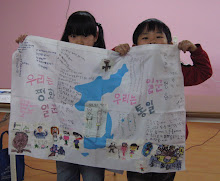
![[URGENT PLEA: In Update] EMERGENCY in GANGJEONG Since AUG. 24, 2011](https://blogger.googleusercontent.com/img/b/R29vZ2xl/AVvXsEiQvpaNf6EePZVucu97_JphYsFS5IgumnSiA4YAmen1PZcim6vMmW7XjZ7J6nLh-Cu36mwBN5n1evrA3ey0vYMpwlAGsgnSFggv6a1w4Qx9BvvqOB0hy0BIcBkL2Exfs3zIxBsBuDGa1kzg/s227/jejusit.jpg)


![[Solidarity from Japan for the Jeju] 253 individuals and 16 groups/organizations](https://blogger.googleusercontent.com/img/b/R29vZ2xl/AVvXsEivji7100kBkr0hzvqYfh4IBBilkZ6XgDIg89jOxS6kTssxsVKC6Wm-fZbKOEsiy3zcO-9gW6GHspD5R_2C9WsGx5S1Z5VPj_OVRF7H6dxdaT0S-2H1eqsDsYvIwOV26VscxTHnKmP5iZmh/s227/jeju_12_10j.jpg)

![[Translation] Korean organizations' statement: Immediately cancel the joint ROK-US drill Nov 26](https://blogger.googleusercontent.com/img/b/R29vZ2xl/AVvXsEgfKDMo-qyEjm5asUtHlREyJY_5Ou-2tyB8SH6aUxiViRbbKR-8W_rirFiGp5DYSoD_KaeNOPMWR0af0ZPUIbJKmR89ImDvADHsGAIqsJVBvJNBEIl5wLd3G_zhPDW3Z2SxsHXadOsXe8st/s227/1.jpg)
![HOT! [Hankyoreh Hani TV] Beneath the Surface: the investigation into the sinking of the Cheonan](https://blogger.googleusercontent.com/img/b/R29vZ2xl/AVvXsEh80rL3Qv9GnfHSqbYMfivdqX5gZN-1O_VQj3A_Gk3yjWdybHwJCsprA3l6cEQB0cYCP2oNeaLo2ohLGIy0Uqqkv_fRkBevGJ2f-qkKD5eP1ZGsKeQ-r-jHUUb79WvucIN7hpEtXza4xXCL/s227/HaniTV+Cheonan.gif)


![[Translation]Statement against illegal inspection and unjust lay-off by the Kunsan USAFK!(Nov_2010)](https://blogger.googleusercontent.com/img/b/R29vZ2xl/AVvXsEg3JlQ-lreusCIJo5Yv2e3ZrRwrSMUE7UQxlrDVjmBehl0Pa24QZIAbZ5vUpgnnExbkKL9PdCwxVYSHWJkr_XK0FM4EhU3CMFhqfborVNu_p4v3bEFpNm3ia-aEHnvMMuEBI27aB7_BETuJ/s227/gunsan+protest.gif)
![[Translation] Korean organizations' statement against dispatching special force to the UAE on Nov.](https://blogger.googleusercontent.com/img/b/R29vZ2xl/AVvXsEiU7TNhTDLLwZkKP0Z78JsCZKp6je-QSFll3_ThmLES_y_nPLXEzeakrsZXoNxhN5blopEhy6xGV2tneJrniPdTR-JvOQMmSLr_HhlucxFvbusxk4oKvvMO2laBOHSIkB9OOeOxrQlqCA0O/s227/antiwarpeace.jpg)
![[Translation] Stop, Joining MD!: South Korean activists' statement and writing on Oct. 25, 2010](https://blogger.googleusercontent.com/img/b/R29vZ2xl/AVvXsEggGIHVei8j7LCJPJB5HIrspd942q436daNTquP-pFd45Cl70Ml_1JFiFDHgKu6FcoqNgFVKIFqjeuSPau2k_BwGHhx0cqFFL2-4ybZSTlmua0_AsERBtKYQa7jZk7uNj41LX6rj2vksHbo/s227/StopMD.jpg)
![[In Update] People First, NO G-20 (Nov. 6 to 12, Korea)](https://blogger.googleusercontent.com/img/b/R29vZ2xl/AVvXsEhZl8VTqeL7o2ndliGIE-sZFCikbTgfB9KCc3AtZvDaYijBBEhdfultMEOpyrCaD5gzpH8mqfWjU20KXMbSUl-5KM7yQeHU6z3BWV8tiOy4UKaCudz9VKWoi5x58xdC_gQpJTjkR5u7O9xf/s227/left21_G20.jpg)
![[International Petition] Stop US helipad plan in Okinawa to save great nature](https://blogger.googleusercontent.com/img/b/R29vZ2xl/AVvXsEihgYmdb0N8ViPvTFC_5i-Psbt4eX_LnAUEOtZkUngv_pGvRyWag1r6W60NicLLyTgWq-sPT1hBxLY5SadEIVv5McfZQ5uIhe-W0VoflQNqojsYZjFW6AH-gB1jsmSDGnGuKIFk2UkvNbFG/s227/yanbaru_w.jpg)
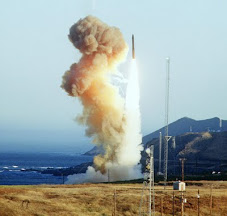
![[Global Network] against the first launch of Quasi-Zenith Satellite, Japan, on Sept. 11, 2010](https://blogger.googleusercontent.com/img/b/R29vZ2xl/AVvXsEj2sYpfodDDMIA7qXwuda0DmKapxXFB479fDnn8RKy7QNZqz0VEvWucNd-DleZ37hWNXC-Z8QtaqtM37VuPwac5SgclJ9_khBBSWOedvm19MRXIP1j1kcWrK6EW5IFjQdEEY2h7E6xuyNvC/s227/Qzss-45-0_09.jpg)
![[In update] Some collections on the Koreans’ protests against the sanction & war on Iran](http://4.bp.blogspot.com/_gnM5QlRx-4c/TJMvke6t8zI/AAAAAAAAFO4/tamQ8LUnOOA/S227/No+Sanction+on+Iran.jpg)
![[Three International Petitions] to End the Korean war and peace treaty(or peace resolution)](https://blogger.googleusercontent.com/img/b/R29vZ2xl/AVvXsEhlohLVYtpCg7iMsZhNYY4hBbhTi2dIheHMHWLDph9X2y78cjgZV1LeSfUJeu80elhJm70Q9E059q72lK-spSPvsRG4bPuCDIytltJB9IH3mWt9OG98HqhnTsPakwhvNeoCFUgF1xoxQ2EZ/s227/border.jpg)


![[Collection of Documents] No Base Learning and Solidarity Program_Korea(June 14 to 20, 2010)](https://blogger.googleusercontent.com/img/b/R29vZ2xl/AVvXsEix_HzjToh3nNGHBc-_5gasq-ykcaZ6GInLixILmZVyRJ5xoeHCxWOyYd9fSM7bmnuFsjSrYOGEPnQOwB1Dcyo-sN4Pw0cFPhUtKig_qlVnGL1Wi82ClvPqbEPWYhJiqdNF0DyzLIBETMB9/s227/No-Base-banner.jpg)
![Site Fwd:[John Hines] A U.S. Debate coach’s research trip on the Issues of Korea](https://blogger.googleusercontent.com/img/b/R29vZ2xl/AVvXsEg8yRra0zNhKHN74Auqhd3Nx9tZ7BWCGflRJHGH4CfzBT_yjhZ8Nl9b3OZuLpYWJ2exsjmR0oVl-Qq_cf832p2VdmOZhUi-lCFzCNeDSyVtweX1lWZPC-RlHmDMLtilHwHjNFTenBiM4Fk4/s227/Jeju-Peace-Tour.jpg)


![[News Update] Struggle Against the Jeju Naval Base since Jan. 18, 2010](https://blogger.googleusercontent.com/img/b/R29vZ2xl/AVvXsEhKfSTRC5QKBBSFIq_m7QIqXdlbL4-gF5GJYn9Q-pN__k7sV7uxGDcLY5L8xmU7QuWuUhBT_GhG-URBPO80RT3AfWfDrWJr06h1hFuZC6ZBVKe4U6PS1Cd7Kr6olO8TYQtk13Drox7IS6ea/s226/scrum1.jpg)


![[Urgent] Please spread the Letter!: There was no Explosion! There was no Torpedo! (May 26, 2010)](https://blogger.googleusercontent.com/img/b/R29vZ2xl/AVvXsEhSd2yWZ3xGwnJQXB73z5FgXCqSosAoB9_33-GLYprOmLqjmvgSAQp1BYI7e4slK1FDxHRi9KK4um-OpDaj8QOkXwAScVAgvvq6-ehbDA-hbkr96wT9oHNNmWnBPv8GU4hoZp9X8F9AZBX4/s227/grounded.jpg)
![Text Fwd: [Stephen Gowans]The sinking of the Cheonan: Another Gulf of Tonkin incident](https://blogger.googleusercontent.com/img/b/R29vZ2xl/AVvXsEi_L6hB3RZ1MovTXHe0A8yn_RfgMALGR0kM6poBuGp809xwvHtB_-PGWtS_WpyPWatyd9lB2pPqL2gOLc4dTCEdJ9sMvxJWEdapl-mMLm7WHAsV-jVpgqarVh8XBtdz_0c-Vohdh3HtJahD/s227/lee-myung-bak.jpg)
![[Japan Focus]Politics in Command: The "International" Investigation into the Sinking of the Cheonan](https://blogger.googleusercontent.com/img/b/R29vZ2xl/AVvXsEiHmTo8v-uCJnabRhMdnBAkC9J3s5bb2JsDKiT5leJHwbK8IDJHxfJmqQ_C0Is_bPC6UGMf05CA0exF2y4r2x9RhFUHT0kjsKviaME_MZXKnq775UyYAdb7w2SAzE75XvBfHp1al2q6i3cf/s227/wen_jiabao_and_lee_myungbak.png)
![[Japan Focus] Who Sank the SK Warship Cheonan? A New Stage in the US-Korean War and US-China](https://blogger.googleusercontent.com/img/b/R29vZ2xl/AVvXsEiKSS5ULT5QBaMGYpXXqBMX9jtwLwMLuK469b6Ku72GTJYKUObzTANaPjZqvvpPzYMJgPF53sjhvhK3DVa88ipYlggsJageykXlkxY6s8TW05xcU-_vfhf-pACUoaWuFbT-fsU1qEhm_yIi/s227/buoy_map.gif)
![[Updated on 12/13/10] [Translation Project] Overseas Proofs on the Damages by the Military Bases](https://blogger.googleusercontent.com/img/b/R29vZ2xl/AVvXsEikADE6JovUNspQyZUWVMTLAQg7yQNqXpVUbqZPk8f4uc_1723_xm1Cco6WAmstQXVPnaJAcb1mZA8Ny_3xONT_f5uh8MNLPnUhtqdGgy3HCtC1Vbbz4Q0ZY1Cssu-4cJEVNdrvznbS5UzO/s227/missile.jpg)
![[International Petition] Close the Bases in Okinawa](https://blogger.googleusercontent.com/img/b/R29vZ2xl/AVvXsEhNpQiHklwFbWVlFK7GDFXnBSOOSFEj3Il-We-N3uTDldKiidL2NGZs7X_LtTnatzTo_r8CexRkFe8NhfxYqmgp1knEEslROTfNjI5_mSb57cdbhPkftvanveYBaevAD9xuKDGoIxiTwoSb/s227/2.jpg)
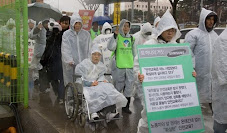
![[In Update]Blog Collection: No Korean Troops in Afghanistan](https://blogger.googleusercontent.com/img/b/R29vZ2xl/AVvXsEjjEmCRXSNAG7_QBxKWbdksmxoWR4nyAovQTTdR1G2AuXh0jxtqNkI9OmYgYWRoLAJShvtBvE840QXuBWSVh3u3zMYqkNAFX6OWy3m5Nur4HM7uNK-pKT1ycyApJp-VLyhIFRRcoisYAh0E/s226/No-Troops-to--Afghanistan.jpg)


