* Text fwd by Bruce Gagnon on May 4, 2011
Arms Control and International Security: United States Ballistic Missile Defense Site at Deveselu Air Base in RomaniaTue, 03 May 2011
U.S. Ballistic Missile Defense Site at Deveselu Air Base in Romania
Fact Sheet
Bureau of Arms Control, Verification and Compliance
May 3, 2011
The United States and Romania jointly selected the Deveselu Air Base near Caracal, Romania, to host a U.S. Ballistic Missile Defense System which employs the SM-3 interceptor (also referred to as the “Aegis Ashore System”). The deployment to Romania is anticipated to occur in the 2015 timeframe as part of the second phase of the European Phased Adaptive Approach (EPAA) – the U.S. national contribution to a NATO missile defense architecture.
The EPAA will provide protection of NATO European territories and populations, and augment protection of the United States, against the increasing threats posed by the proliferation of ballistic missiles from the Middle East. At the November 2010 NATO Summit, the Alliance welcomed the EPAA as a U.S. national contribution to the NATO missile defense capability.
Technical Aspects of the United States Ballistic Missile Defense System in Romania
The site will consist of a radar deckhouse and associated Aegis command, control, and communications suite. Separately, it will house a number of launch modules containing SM-3 interceptors.
Personnel can live and work safely near the Aegis radar system. The United States has safely operated the Aegis Radar Test site in Moorestown, New Jersey for over 30 years without any danger to people or the environment.
SM-3 interceptors are for defensive purposes only and have no offensive capability. They carry no explosive warheads of any type, and rely on their kinetic energy to collide with and destroy incoming enemy ballistic missile warheads.
The Aegis Ashore configuration of the ballistic missile defense system will be thoroughly tested at a specialized test center at the Pacific Missile Range Facility (PMRF) in Hawaii starting in 2014.
Proposed Characteristics of the United States Ballistic Missile Defense System in Romania
The U.S. Ballistic Missile Defense site is approximately 430 acres (175 hectares) and is located within the existing Romanian Air Base at Deveselu.
An estimated 200 military, government civilians, and support contractors will be required to operate the U.S. facility at the site.
Potential Debris from Intercept
SM-3 Interceptors based in Romania will not be used for flight tests, and will be launched only in defense against an actual attack.
The risk of damage or injury from an intercept and debris are small and pose little threat to people and property. The alternative (allowing a threat warhead to impact its target) likely would result in far more severe consequences.
Proven Defensive Capabilities
The Aegis Ashore ballistic missile defense system incorporates decades of reliable and effective operations of the Aegis ship-based system into its design and test program.
The Aegis Ballistic Missile Defense System has been proven effective through repeated testing. Since 2002, the system has been successful in 21 of 25 flight tests with the SM-3 interceptor.
Arms Control and International Security: United States European Phased Adaptive Approach (EPAA) and NATO Missile Defense
Tue, 03 May 2011 05:01:01 -0500
United States European Phased Adaptive Approach (EPAA) and NATO Missile Defense
Fact Sheet
Bureau of Arms Control, Verification and Compliance
May 3, 2011
On September 17, 2009, President Barack Obama announced the U.S. decision to adopt a new approach to ballistic missile defense in Europe. This plan is called the European Phased Adaptive Approach or EPAA. The President stated:
To put it simply, our new missile defense architecture in Europe will provide stronger, smarter, and swifter defenses of American forces and America's Allies. It is more comprehensive than the previous program; it deploys capabilities that are proven and cost-effective; and it sustains and builds upon our commitment to protect the U.S. homeland against long-range ballistic missile threats; and it ensures and enhances the protection of all our NATO Allies.
The United States has demonstrated substantial progress in implementing the President’s vision, consisting of four phases.
Phase 1 (2011 timeframe) – Addresses regional ballistic missile threats to our European Allies and our deployed personnel and their families by deploying a land-based AN/TPY-2 radar and existing Aegis BMD-capable ships equipped with proven SM-3 Block IA interceptors. In March 2011, the United States announced the deployment of the USS Monterey to the Mediterranean to begin a sustained deployment of Aegis BMD-capable ships in support of the EPAA.
Phase 2 (2015 timeframe) – After appropriate testing, we will deploy a more capable version of the SM-3 interceptor (Block IB). We will also add a land-based SM-3 ballistic missile defense interceptor site, which Romania has agreed to host, in order to expand the defended area against short- and medium-range missile threats. Negotiations for a basing agreement are well underway and the United States and Romania announced the joint selection of a site in May 2011.
Phase 3 (2018 timeframe) – After development and testing are complete, we will deploy a more advanced SM-3 interceptor (Block IIA) and add a second land-based SM-3 site, which Poland agreed to host in October 2009, to counter short-, medium-, and intermediate-range missile threats. In July 2010, the United States and Poland signed the Protocol amending the August 2008 Ballistic Missile Defense Agreement to provide the basis for Poland to host the land-based SM-3 site. On April 22, 2011, Polish President Komorowski signed legislation ratifying the Agreement.
Phase 4 (2020 timeframe) – After development and testing are complete, we will deploy the SM-3 Block IIB interceptor to enhance our ability to counter medium- and intermediate-range missiles and potential future ICBM threats to the United States from the Middle East.
One of the most important milestones since President Obama’s announcement in 2009 was NATO’s decision at the Lisbon Summit in November 2010 to develop a missile defense capability whose aim is to protect NATO European populations, territory and forces against the increasing threats posed by the proliferation of ballistic missiles. NATO also agreed to expand its current missile defense command, control, and communications capabilities to protect NATO European populations, territory, and forces. Allies at Lisbon welcomed the EPAA as the U.S. national contribution to NATO’s missile defense architecture, as well as contributions from other Allies.
Another important milestone was the commitment made during the November 2010 NATO-Russia Council (NRC) Summit for NATO and Russia to explore opportunities for missile defense cooperation. Effective cooperation with Russia could enhance the overall effectivenss and efficiency of our combined territorial missiles defenses, and at the same time provide Russia with greater security. As an initial step, NATO and Russia agreed on a joint ballistic missile threat assessment and that the NRC would resume theater missile defense cooperation. The United States and Russia also continue to discuss missile defense cooperation.
For more information on U.S. missile defense policy, please see the Ballistic Missile Defense Review (BMDR).
Global Network Against Weapons & Nuclear Power in Space
PO Box 652
Brunswick, ME 04011
(207) 443-9502
globalnet@mindspring.com
www.space4peace.org
http://space4peace.blogspot.com/ (blog)
Thank God men cannot fly, and lay waste the sky as well as the earth. ~Henry David Thoreau
Showing posts with label Ballistic Missile Defense Organization (BMDO). Show all posts
Showing posts with label Ballistic Missile Defense Organization (BMDO). Show all posts
Thursday, May 5, 2011

Sunday, April 17, 2011
Text Fwd: S.Korea-U.S. missile defense discussions underway

Illustration of KAMD System
Hankyoreh
http://english.hani.co.kr/arti/english_edition/e_national/473345.html
S.Korea-U.S. missile defense discussions underway
Concerns remain over which country will lead the defense programs
April 16, 2011
By Kwon Soon-hyuk
South Korean and U.S. officials have said that discussions are underway between the two countries regarding missile defense. Seoul has drawn a line, saying the discussions are merely to discuss an effective, Korean Air and Missile Defense (KAMD), but there are concerns that this may be a step towards participation in a US-led ballistic missile defense (BMD) program.
At a Senate Armed Services Committee hearing Wednesday, deputy assistant secretary of defense for nuclear and missile defense policy, Bradley Roberts, said, “The United States is holding bilateral discussions with South Korea on the issue of cooperating on missile defense.” Roberts added, “With South Korea, we have engaged in bilateral missile-defense cooperation discussions and have recently signed a Terms of Reference and an agreement that will enable our two nations to carry out a requirements analysis so that South Korea can make informed decisions about the utility of any future BMD program.”
In the same hearing, Missile Defense Agency Director Patrick O’Reilly said, “The United States is currently pursuing, researching or analyzing missile defense with over 20 nations, and South Korea is one of the countries with which the United States is cooperating.”
When these comments were reported in the foreign press, the Ministry of Defense, too, said Friday that the Korea Institute of Defense Analyses and the U.S. Defense Department had signed Terms of Reference agreement in September of last year to conduct joint research on the construction and operation of an effective Korean missile defense system. It said working-level officials held their first planning and analysis working group (PAWG) meeting on Wednesday and Thursday in Washington. Defense Ministry spokesman Kim Min-seok said they plan to meet three to four times a year, and that this did not mean Korea was participating in the US-led ballistic missile defense program. Such discussion did not even come up between officials, he said.
However, for a Korean missile defense system to function properly, its early warning system and control system, such as early warning satellites watching for North Korean missile launches, would have to depend on the United States. Accordingly, there is concern that no matter what form it takes, the program will ultimately be linked to the US ballistic missile defense system, and that South Korea will participate in the system as a junior partner.
The Korea Air and Missile Defense (KAMD) system is a missile defense system tailored to the Korean Peninsula to deal with North Korea’s short and medium range missile threat. Discussion of such a system began under the Roh Moo-hyun administration. The U.S. ballistic missile defense system (BMD) counters mostly threats to the U.S. homeland from long-range, high-altitude missiles, while the KAMD would defense against short-range, low-altitude missiles, with North Korea's 300-500km-range Scud B and C missiles in mind. The system would be built around missile defense command and control centers, Patriot 2 and 3 missiles and Aegis warships.
Please direct questions or comments to [englishhani@hani.co.kr]
Tuesday, September 28, 2010
Text Fwd: U.S. Missile Agency Agency Awards Raytheon $175M For Japan Deal [레이시온, 미사일 방어국에게 일본 거래로 1.75억 달러 제공]
Business Week
U.S. Missile Agency Agency Awards Raytheon $175M For Japan Deal
Associated Press
September 27, 2010
Raytheon awarded $175 million contract
The Missile Defense Agency has awarded Raytheon Company a $175 million
development contract, the defense company said Monday.
Under the contract, Raytheon will work with partners in Japan on the cooperative
engineering and development efforts for the SM-3 Block IIA missile through the
preliminary design process. The contract also includes an option for future
studies totaling $9.8 million.
Raytheon and Mitsubishi Heavy Industries, under contract to the MDA and Japan's
Ministry of Defense, are developing the next-generation SM-3 Block IIA missile,
scheduled to begin flight testing in 2014. The company says the new missile will
include larger second- and third-stage rocket motors and a larger kinetic
warhead to provide a greater area of defense against sophisticated threats.
---------------------------------------------------------------------------
Phoenix Business Journal
September 27, 2010
Raytheon gets $175M Japan contract
Raytheon Co. has received a $175 million contract from the Missile Defense
Agency for a development program with Japan.
The contract continues engineering and development efforts for the SM-3 Block
IIA missile, the next generation of which is scheduled to begin test flights in
2014.
The missile, being developed out of the company’s operations in Tucson, will
be built with larger motors and warheads to make it more effective against
various targets.
The contract covers preliminary design revue, scheduled for early 2011.
Raytheon expects to deploy the missile by 2018 in Europe. It is being developed
by the Department of Defense’s MDA and the U.S. Navy’s Aegis Ballistic
Missile Defense System.
===========================
Stop NATO
Blog site
U.S. Missile Agency Agency Awards Raytheon $175M For Japan Deal
Associated Press
September 27, 2010
Raytheon awarded $175 million contract
The Missile Defense Agency has awarded Raytheon Company a $175 million
development contract, the defense company said Monday.
Under the contract, Raytheon will work with partners in Japan on the cooperative
engineering and development efforts for the SM-3 Block IIA missile through the
preliminary design process. The contract also includes an option for future
studies totaling $9.8 million.
Raytheon and Mitsubishi Heavy Industries, under contract to the MDA and Japan's
Ministry of Defense, are developing the next-generation SM-3 Block IIA missile,
scheduled to begin flight testing in 2014. The company says the new missile will
include larger second- and third-stage rocket motors and a larger kinetic
warhead to provide a greater area of defense against sophisticated threats.
---------------------------------------------------------------------------
Phoenix Business Journal
September 27, 2010
Raytheon gets $175M Japan contract
Raytheon Co. has received a $175 million contract from the Missile Defense
Agency for a development program with Japan.
The contract continues engineering and development efforts for the SM-3 Block
IIA missile, the next generation of which is scheduled to begin test flights in
2014.
The missile, being developed out of the company’s operations in Tucson, will
be built with larger motors and warheads to make it more effective against
various targets.
The contract covers preliminary design revue, scheduled for early 2011.
Raytheon expects to deploy the missile by 2018 in Europe. It is being developed
by the Department of Defense’s MDA and the U.S. Navy’s Aegis Ballistic
Missile Defense System.
===========================
Stop NATO
Blog site
Friday, February 19, 2010
[국문 번역]Text Fwd: BIDEN AT NATIONAL DEFENSE UNIVERSITY [미] 국방 대학에서의 [부통령] 바이든
Bruce Gagnon blog 브루스 개그논 블로그
Friday, February 19, 2010 2010년 2월 19일
BIDEN AT NATIONAL DEFENSE UNIVERSITY
[미] 국방 대학에서의 [부통령] 바이든
Vice-President Biden says that U.S. "missile defense" systems and new global strike systems will allow the U.S. to reduce some of our nuclear weapons.
부통령 바이든은 미국 “미사일 방어” 시스템과 새로운 전 지구적 공격 시스템이 우리의 몇 핵무기들을 축소할 거라 말합니다.
The Obama administration delivered a budget request for 2011 calling for a full 10 percent increase in nuclear weapons spending, to be followed by further increases in subsequent years.
오바마 행정부는 핵무기를 위한 소비에 10% 꽉 찬 증액을 청하는 2011년 예산 책정을 내놨는데 이는 이후 연도들에 더 증액될 것입니다.
A new study by Economists for Peace and Security called The Full Cost of Ballistic Missile Defense estimates that the total life cycle cost for a layered missile defense system could reach $1.2 trillion through 2035. The study can be found here.
평화와 안보를 위한 경제학자들의 ‘탄도 미사일 방어 총 비용’이 라 불리우는 새로운 연구는 층층화된 미사일 방어 시스템의 전체 생활환(life cycle) 비용이 2035년까지 1.2조 달러에 달할 수 있다 평가합니다. 그 연구는 여기서 [영문 원문 첨부] 보실 수 있읍니다.
Greg Mello, Director of the Los Alamos Study Group writes about Obama's proposed nuclear weapons spending increase: "This proposed 'surge' responds to a December 2009 request from Senate Republicans (plus Joe Lieberman) for significant increases in nuclear weapons spending. Such increases, these senators said, were necessary (but not necessarily sufficient) to obtain their ratification votes for a follow-on to the START treaty (which expired in December)."
로스 알라모스 연구 그룹의 감독인 그렉 멜로는 오바마의 제안된 핵무기 지출 증가에 대해 이렇게 씁니다: “이 제안된 ‘쇄도(surge)’는 2009년 12월, 상원 공화단 의원들(조 리버만을 더해)이 핵무기 지출에서 심대한 증가를 요청한 것에 대한 대답이다. 이 상원 의원들은 그러한 증가들이 전략핵무기 감축 조약 START treaty (12월에 만료한) 후속 협상에서 [자신들의]비준 투표를 얻기 위해 필요한 것이라 말했다( 그러나 반드시 충분한 것은 아니다).”
Mello continues, "Will Congress, especially the Democratic members of Congress, fund these increases? In part the answer depends on how seriously they take the several converging crises facing the country and the planet, and how seriously they address populist anger about the economy, especially in relation to their own reelection prospects.
멜로는 계속해서 말합니다, “국회가, 특히 국회 민주당 위원들이 이 증액에 [찬성할] 것인가? 그 대답은 그들이 국가와 행성이 직면한 몇가지 수렴되는 위기들을 얼마나 진지하게 받아들이는가 또한 그들이 경제, 특히 그들의 재선 전망과 관련하여 그들이 대중주의적 분노를 얼마나 진지하게 전달할 것인가에 부분적으로 달려있다.”
"In many ways the proposed nuclear weapons budget, and the defense budget overall, can be seen as bold raids on a diminishing pool of resources, as well as very real commitments to fading imperial pretensions. Nuclear weapons compete directly with the renewable energy and conservation jobs funded in the Energy and Water funding bills."
“많은 점에서, 제안된 핵무기 예산과 국방 예산은 전체적으로, 감소해가는 자원층에 대한 뻔뻔한 급습이자 쇠퇴해가는 제국의 허세를 위한 진짜 사명감으로 볼 수 있다. 핵무기는 에너지와 물 기금 법안에 의해 자금이 지급되는 재생 에너지, 보전 직업들과 직접적으로 경쟁한다.”
Coupled with increases in the "missile defense" budget it is clear that the signals to Russia and China are that the U.S. is not serious about ending the arms race any time soon.
“미사일 방어” 예산 증액과 짝을 이뤄 [이것이] 러시아와 중국에게 보내는 신호가 미국이 무기 경쟁을 언젠가 곧 끝낼 것에 대해 진지하지 않다라는 것은 분명합니다.
It is obvious to me that Obama is trying to buy off Republican support for the very timid nuclear reduction treaty now being negotiated with Russia.
저에게는 오바마가 현재 러시아와 협상되는 매우 소심한 핵감축 조약을 위해 공화당 의원들의 지지를 사려고 한다는 것이 분명합니다.
* See also the site of the Global Network against Weapons and Nuclear Power in Space
우주의 무기와 핵을 반대하는 글로벌 넷워크 사이트도 참고하시길.
____________________________________________________________________
* Related article
http://ncronline.org/blogs/road-peace/obama-and-works-death
Obama and the works of death
by John Dear SJ on Feb. 09, 2010
(site informed from Makiko Sato)
오바마와 죽음의 작업
존 디어, 2010년 2월 9일
(사이트는 마키코 사토로부터 정보 제공됨)
____________________________________________________________________
* Related Korean articles
http://blog.ohmynews.com/wooksik/320577
핵협상, 결승점 눈앞에 두고 ‘MD 허들’ 넘을까?
2010년 2월 18일
정욱식, 평화네트워크(www.peacekorea.org) 대표
Nuclear Negotiation, Will It Come Over the ‘MD’ Huddle before the Final?
Feb. 18, 2010
Cheong Wook-Sik (representative, Peace Network, www.peacekorea.org)
http://spark946.org/bugsboard/index.php?BBS=s_conews&action=viewForm&uid=6847&page=1
바이든 "가장 강력한 대북제재..NPT강화 성과"
(워싱턴=연합뉴스, 2010.2.19)
Biden, " The strongest deterrence against North Korea.. accomplishment of the strengthened NPT"
(Washington= Yonhap News, 2010. 2. 19)
Friday, February 19, 2010 2010년 2월 19일
BIDEN AT NATIONAL DEFENSE UNIVERSITY
[미] 국방 대학에서의 [부통령] 바이든
Vice-President Biden says that U.S. "missile defense" systems and new global strike systems will allow the U.S. to reduce some of our nuclear weapons.
부통령 바이든은 미국 “미사일 방어” 시스템과 새로운 전 지구적 공격 시스템이 우리의 몇 핵무기들을 축소할 거라 말합니다.
The Obama administration delivered a budget request for 2011 calling for a full 10 percent increase in nuclear weapons spending, to be followed by further increases in subsequent years.
오바마 행정부는 핵무기를 위한 소비에 10% 꽉 찬 증액을 청하는 2011년 예산 책정을 내놨는데 이는 이후 연도들에 더 증액될 것입니다.
A new study by Economists for Peace and Security called The Full Cost of Ballistic Missile Defense estimates that the total life cycle cost for a layered missile defense system could reach $1.2 trillion through 2035. The study can be found here.
평화와 안보를 위한 경제학자들의 ‘탄도 미사일 방어 총 비용’이 라 불리우는 새로운 연구는 층층화된 미사일 방어 시스템의 전체 생활환(life cycle) 비용이 2035년까지 1.2조 달러에 달할 수 있다 평가합니다. 그 연구는 여기서 [영문 원문 첨부] 보실 수 있읍니다.
Greg Mello, Director of the Los Alamos Study Group writes about Obama's proposed nuclear weapons spending increase: "This proposed 'surge' responds to a December 2009 request from Senate Republicans (plus Joe Lieberman) for significant increases in nuclear weapons spending. Such increases, these senators said, were necessary (but not necessarily sufficient) to obtain their ratification votes for a follow-on to the START treaty (which expired in December)."
로스 알라모스 연구 그룹의 감독인 그렉 멜로는 오바마의 제안된 핵무기 지출 증가에 대해 이렇게 씁니다: “이 제안된 ‘쇄도(surge)’는 2009년 12월, 상원 공화단 의원들(조 리버만을 더해)이 핵무기 지출에서 심대한 증가를 요청한 것에 대한 대답이다. 이 상원 의원들은 그러한 증가들이 전략핵무기 감축 조약 START treaty (12월에 만료한) 후속 협상에서 [자신들의]비준 투표를 얻기 위해 필요한 것이라 말했다( 그러나 반드시 충분한 것은 아니다).”
Mello continues, "Will Congress, especially the Democratic members of Congress, fund these increases? In part the answer depends on how seriously they take the several converging crises facing the country and the planet, and how seriously they address populist anger about the economy, especially in relation to their own reelection prospects.
멜로는 계속해서 말합니다, “국회가, 특히 국회 민주당 위원들이 이 증액에 [찬성할] 것인가? 그 대답은 그들이 국가와 행성이 직면한 몇가지 수렴되는 위기들을 얼마나 진지하게 받아들이는가 또한 그들이 경제, 특히 그들의 재선 전망과 관련하여 그들이 대중주의적 분노를 얼마나 진지하게 전달할 것인가에 부분적으로 달려있다.”
"In many ways the proposed nuclear weapons budget, and the defense budget overall, can be seen as bold raids on a diminishing pool of resources, as well as very real commitments to fading imperial pretensions. Nuclear weapons compete directly with the renewable energy and conservation jobs funded in the Energy and Water funding bills."
“많은 점에서, 제안된 핵무기 예산과 국방 예산은 전체적으로, 감소해가는 자원층에 대한 뻔뻔한 급습이자 쇠퇴해가는 제국의 허세를 위한 진짜 사명감으로 볼 수 있다. 핵무기는 에너지와 물 기금 법안에 의해 자금이 지급되는 재생 에너지, 보전 직업들과 직접적으로 경쟁한다.”
Coupled with increases in the "missile defense" budget it is clear that the signals to Russia and China are that the U.S. is not serious about ending the arms race any time soon.
“미사일 방어” 예산 증액과 짝을 이뤄 [이것이] 러시아와 중국에게 보내는 신호가 미국이 무기 경쟁을 언젠가 곧 끝낼 것에 대해 진지하지 않다라는 것은 분명합니다.
It is obvious to me that Obama is trying to buy off Republican support for the very timid nuclear reduction treaty now being negotiated with Russia.
저에게는 오바마가 현재 러시아와 협상되는 매우 소심한 핵감축 조약을 위해 공화당 의원들의 지지를 사려고 한다는 것이 분명합니다.
* See also the site of the Global Network against Weapons and Nuclear Power in Space
우주의 무기와 핵을 반대하는 글로벌 넷워크 사이트도 참고하시길.
____________________________________________________________________
* Related article
http://ncronline.org/blogs/road-peace/obama-and-works-death
Obama and the works of death
by John Dear SJ on Feb. 09, 2010
(site informed from Makiko Sato)
오바마와 죽음의 작업
존 디어, 2010년 2월 9일
(사이트는 마키코 사토로부터 정보 제공됨)
____________________________________________________________________
* Related Korean articles
http://blog.ohmynews.com/wooksik/320577
핵협상, 결승점 눈앞에 두고 ‘MD 허들’ 넘을까?
2010년 2월 18일
정욱식, 평화네트워크(www.peacekorea.org) 대표
Nuclear Negotiation, Will It Come Over the ‘MD’ Huddle before the Final?
Feb. 18, 2010
Cheong Wook-Sik (representative, Peace Network, www.peacekorea.org)
http://spark946.org/bugsboard/index.php?BBS=s_conews&action=viewForm&uid=6847&page=1
바이든 "가장 강력한 대북제재..NPT강화 성과"
(워싱턴=연합뉴스, 2010.2.19)
Biden, " The strongest deterrence against North Korea.. accomplishment of the strengthened NPT"
(Washington= Yonhap News, 2010. 2. 19)
Thursday, February 4, 2010
Text fwd: Pentagon Wants South Korea In Missile Shield System
* Text fwd: Rick Rozoff on Feb. 4, 2010
Chosun Ilbo
February 4, 2010
Seoul Denies Plan to Join U.S. Missile Defense Scheme
The U.S. Defense Department claims South Korea is interested in participating in a U.S.-led ballistic missile defense system, but Seoul officials deny that any concrete commitment has been made. In a report released Monday, the department said Seoul "is also an important U.S. BMD partner" and "has indicated interest in acquiring a missile defense capability that includes land- and sea-based systems, early warning radars, and a command and control system."
"The United States and [South Korea] are working to define possible future BMD requirements," the report says. It expresses the hope that South Korea will actively participate, saying, "The United States looks forward to taking further steps to enhance operational coordination and build upon ongoing missile defense cooperation" between Seoul and Washington.
But South Korean military authorities on Wednesday dismissed the claims, saying the report does not represent an official expression of the U.S. government views. They say there has been no formal request through diplomatic channels, nor has Seoul expressed such an interest.
Defense Ministry spokesman Won Tae-jae said, "Whether to participate in the missile defense system is a matter that needs comprehensive consideration of the security situation on the Korean Peninsula and worldwide."
Meanwhile, Lt. Gen. Benjamin Mixon, commander of the U.S. Army Pacific Command, on Tuesday said the U.S. is seeking a tripartite military exercise of the South Korean and U.S. armies and Japan's Ground Self-Defense Force, a claim Seoul also denies.
In a telephone talk with Defense Department bloggers, Mixon said South Korea, the U.S., and Japan have discussed ways to stage a multilateral or trilateral exercise for humanitarian assistance and disaster relief.
The Defense Ministry denied this report as well, saying it had no such discussions and made no such plans.
===========================
Stop NATO
Blog site
Chosun Ilbo
February 4, 2010
Seoul Denies Plan to Join U.S. Missile Defense Scheme
The U.S. Defense Department claims South Korea is interested in participating in a U.S.-led ballistic missile defense system, but Seoul officials deny that any concrete commitment has been made. In a report released Monday, the department said Seoul "is also an important U.S. BMD partner" and "has indicated interest in acquiring a missile defense capability that includes land- and sea-based systems, early warning radars, and a command and control system."
"The United States and [South Korea] are working to define possible future BMD requirements," the report says. It expresses the hope that South Korea will actively participate, saying, "The United States looks forward to taking further steps to enhance operational coordination and build upon ongoing missile defense cooperation" between Seoul and Washington.
But South Korean military authorities on Wednesday dismissed the claims, saying the report does not represent an official expression of the U.S. government views. They say there has been no formal request through diplomatic channels, nor has Seoul expressed such an interest.
Defense Ministry spokesman Won Tae-jae said, "Whether to participate in the missile defense system is a matter that needs comprehensive consideration of the security situation on the Korean Peninsula and worldwide."
Meanwhile, Lt. Gen. Benjamin Mixon, commander of the U.S. Army Pacific Command, on Tuesday said the U.S. is seeking a tripartite military exercise of the South Korean and U.S. armies and Japan's Ground Self-Defense Force, a claim Seoul also denies.
In a telephone talk with Defense Department bloggers, Mixon said South Korea, the U.S., and Japan have discussed ways to stage a multilateral or trilateral exercise for humanitarian assistance and disaster relief.
The Defense Ministry denied this report as well, saying it had no such discussions and made no such plans.
===========================
Stop NATO
Blog site
Tuesday, January 5, 2010
Text Fwd: U.S. To Combine, Expand Use Of Ship-Based Interceptor Missiles
StopNATO
Defense News
U.S. Navy Juggles Ships To Fill BMD Demands
By christopher p. cavas
Published: 4 January 2010
No sooner did the Aegis ballistic missile defense (BMD) system become operational in 2008 than U.S. combatant commanders started asking for BMD-equipped ships to begin patrolling their areas.
Central Command needed a "shooter" in the northern Arabian Gulf. European Command wanted one in the eastern Mediterranean. Pacific Command already had Aegis ships with limited BMD capabilities on guard around Japan for a potential launch from North Korea.
The demand for BMD ships is only expected to increase, driven in part by rising concerns about Iran's intentions and the U.S. decision in September to cancel an anti-missile system in Poland and the Czech Republic and rely instead on Aegis.
But the Navy has a relatively small number of such ships, and those destroyers and cruisers are designed to carry out a wide range of war-fighting tasks.
As a result, while Navy commanders are pleased with the expanding capabilities of their Aegis ships, they're also somewhat guarded about trumpeting the advances.
"We can't constrain assets to one mission," a senior officer said last month. "They need to do a variety of other missions."
Worries that valuable Aegis ships might be locked into the BMD mission were discussed in December at a two-day seminar at the National Defense University (NDU) in Washington. Reporters were allowed to quote comments made at the seminar under the condition that no speaker be identified.
"Sea-based ballistic missile defense is a necessary component of any theater defense," said the senior officer. "We need to find ways to get folks to use the ships in ways consistent with their being a ship - to realize they are not a point-defense asset."
One analyst added, "The demand signal is ahead of the pot of ships."
U.S. Navy spokesman Lt. Tommy Buck said the service is working to manage the demand.
"Combatant commanders need to understand BMD-capable ships are multimission-capable. BMD is one available asset," Buck said Dec. 18.
The Navy is also working on how to respond, said Vice Adm. Samuel Locklear, director of the Navy Staff.
"We have a small Navy today - the smallest since 1916 - yet we have a growing global demand for maritime forces, maritime security operations. And now we have a growing demand for maritime ballistic missile defense. Our ships and our crews and our systems are up to the challenge, but it's a capacity issue for us," Locklear said to a reporter during the NDU seminar.
"As the capacity grows faster than we can grow the number of ships we have - which is always difficult, particularly in the demanding fiscal environment we're in - we have to look at ways to deploy these ships so that we can get the job done and still have a reasonable expectation that we can take care of the ship and the crew," Locklear said. "So we're looking at a lot of different options as to how we'll do that as this demand grows. But we are limited in capacity."
Locklear said that despite meeting demands from joint commanders, the Navy has "to some degree preserved the command and control. Navy component commanders still command and control these ships."
But, he added, "What we've had to do is to spread these multimission platforms more thinly across a growing number of demands globally."
27 BMD Ships By 2013
Twenty-one cruisers and destroyers will have been upgraded with the Aegis BMD capability by early 2010, and six more destroyers are to receive the upgrade in 2012 and 2013. But at least one senior officer at the seminar noted "there will be no more new ships for missile defense."
The demand has already affected deployments. Early in 2009, for example, The Sullivans, a Florida-based destroyer on deployment with a carrier group, moved to Japan for a few weeks to pick up the exercise schedule of a Japan-based BMD destroyer that was called on by Central Command to guard the northern Arabian Gulf.
This fall, a San Diego-based ship, the destroyer Higgins, deployed to the eastern Mediterranean to provide BMD defense for European Command and take part in exercises.
Both moves are unusual, as it's rare for an Atlantic Fleet ship to visit Japan or for a Pacific ship to patrol the Mediterranean.
Such cross-deployments require more coordination by fleet planners.
"Effective global force management requires global visibility on requirements," Buck said. "U.S. Fleet Forces Command [headquartered in Norfolk, Va.] and Pacific Fleet [headquartered in Pearl Harbor, Hawaii] collaborate, coordinate and communicate to have more complete knowledge of location and status of fleet capabilities and work to best employ those capabilities to meet global combatant commander requirements to include BMD."
The senior officer said one way to manage demand is to encourage combatant commanders to give "sufficient warning to have ships on station. We need to remind [combantant commanders] that these are multimission ships."
The BMD cruisers and destroyers are also equipped to handle anti-submarine, land-attack, air-defense and other tasks.
Other Issues
Other sea-based BMD issues discussed during the NDU conference included the need to expand fire-control networks to catch up to the expanded reach of the Standard Missile-3 [SM-3] BMD missiles.
"Our missiles are good; the missiles can outfly the radars," a senior officer said. "We need fire-control networks to carry out long-range engagements."
A consideration in the use of sea-based BMD is the need to keep the systems at a very high state of readiness. Naval systems, the senior officer pointed out, are built to continue functioning even after some battle damage.
"Most systems on a ship are still effective even when they're degraded," he said, holding his hand out about shoulder-high. "But the readiness of the ballistic defense missiles and their radars needs to be up here," he said, raising his hand high above his head. ■
Defense News
U.S. Navy Juggles Ships To Fill BMD Demands
By christopher p. cavas
Published: 4 January 2010
No sooner did the Aegis ballistic missile defense (BMD) system become operational in 2008 than U.S. combatant commanders started asking for BMD-equipped ships to begin patrolling their areas.
Central Command needed a "shooter" in the northern Arabian Gulf. European Command wanted one in the eastern Mediterranean. Pacific Command already had Aegis ships with limited BMD capabilities on guard around Japan for a potential launch from North Korea.
The demand for BMD ships is only expected to increase, driven in part by rising concerns about Iran's intentions and the U.S. decision in September to cancel an anti-missile system in Poland and the Czech Republic and rely instead on Aegis.
But the Navy has a relatively small number of such ships, and those destroyers and cruisers are designed to carry out a wide range of war-fighting tasks.
As a result, while Navy commanders are pleased with the expanding capabilities of their Aegis ships, they're also somewhat guarded about trumpeting the advances.
"We can't constrain assets to one mission," a senior officer said last month. "They need to do a variety of other missions."
Worries that valuable Aegis ships might be locked into the BMD mission were discussed in December at a two-day seminar at the National Defense University (NDU) in Washington. Reporters were allowed to quote comments made at the seminar under the condition that no speaker be identified.
"Sea-based ballistic missile defense is a necessary component of any theater defense," said the senior officer. "We need to find ways to get folks to use the ships in ways consistent with their being a ship - to realize they are not a point-defense asset."
One analyst added, "The demand signal is ahead of the pot of ships."
U.S. Navy spokesman Lt. Tommy Buck said the service is working to manage the demand.
"Combatant commanders need to understand BMD-capable ships are multimission-capable. BMD is one available asset," Buck said Dec. 18.
The Navy is also working on how to respond, said Vice Adm. Samuel Locklear, director of the Navy Staff.
"We have a small Navy today - the smallest since 1916 - yet we have a growing global demand for maritime forces, maritime security operations. And now we have a growing demand for maritime ballistic missile defense. Our ships and our crews and our systems are up to the challenge, but it's a capacity issue for us," Locklear said to a reporter during the NDU seminar.
"As the capacity grows faster than we can grow the number of ships we have - which is always difficult, particularly in the demanding fiscal environment we're in - we have to look at ways to deploy these ships so that we can get the job done and still have a reasonable expectation that we can take care of the ship and the crew," Locklear said. "So we're looking at a lot of different options as to how we'll do that as this demand grows. But we are limited in capacity."
Locklear said that despite meeting demands from joint commanders, the Navy has "to some degree preserved the command and control. Navy component commanders still command and control these ships."
But, he added, "What we've had to do is to spread these multimission platforms more thinly across a growing number of demands globally."
27 BMD Ships By 2013
Twenty-one cruisers and destroyers will have been upgraded with the Aegis BMD capability by early 2010, and six more destroyers are to receive the upgrade in 2012 and 2013. But at least one senior officer at the seminar noted "there will be no more new ships for missile defense."
The demand has already affected deployments. Early in 2009, for example, The Sullivans, a Florida-based destroyer on deployment with a carrier group, moved to Japan for a few weeks to pick up the exercise schedule of a Japan-based BMD destroyer that was called on by Central Command to guard the northern Arabian Gulf.
This fall, a San Diego-based ship, the destroyer Higgins, deployed to the eastern Mediterranean to provide BMD defense for European Command and take part in exercises.
Both moves are unusual, as it's rare for an Atlantic Fleet ship to visit Japan or for a Pacific ship to patrol the Mediterranean.
Such cross-deployments require more coordination by fleet planners.
"Effective global force management requires global visibility on requirements," Buck said. "U.S. Fleet Forces Command [headquartered in Norfolk, Va.] and Pacific Fleet [headquartered in Pearl Harbor, Hawaii] collaborate, coordinate and communicate to have more complete knowledge of location and status of fleet capabilities and work to best employ those capabilities to meet global combatant commander requirements to include BMD."
The senior officer said one way to manage demand is to encourage combatant commanders to give "sufficient warning to have ships on station. We need to remind [combantant commanders] that these are multimission ships."
The BMD cruisers and destroyers are also equipped to handle anti-submarine, land-attack, air-defense and other tasks.
Other Issues
Other sea-based BMD issues discussed during the NDU conference included the need to expand fire-control networks to catch up to the expanded reach of the Standard Missile-3 [SM-3] BMD missiles.
"Our missiles are good; the missiles can outfly the radars," a senior officer said. "We need fire-control networks to carry out long-range engagements."
A consideration in the use of sea-based BMD is the need to keep the systems at a very high state of readiness. Naval systems, the senior officer pointed out, are built to continue functioning even after some battle damage.
"Most systems on a ship are still effective even when they're degraded," he said, holding his hand out about shoulder-high. "But the readiness of the ballistic defense missiles and their radars needs to be up here," he said, raising his hand high above his head. ■
Wednesday, December 23, 2009
Text Fwd: Lockheed Martin: U.S., Allies Advance Global Layered Missile Shield
 * Image source/ caption: same as in the article below
'The USS Bunker Hill completed its operational trial of its full combat system, which includes Aegis Open Architecture, in August. This milestone is part of the development path to merge Aegis Open Architecture and Aegis BMD in 2012, when the Aegis Modernization program begins for the Navy's 62 Aegis-equipped destroyers.'
StopNATO
Lockheed Martin: U.S., Allies Advance Global Layered Missile Shield
Space War
SPX
Decmber 22, 2009
Critical Global BMD Milestones In 2009
-Lockheed Martin operational systems and next-generation capabilities address
each phase of missile defense - boost, ascent, midcourse and terminal - in
support of the U.S. Missile Defense Agency's (MDA) layered Ballistic Missile
Defense System (BMDS) and international allies' requirements.
-MEADS is designed to permit full interoperability between the U.S. and allied
armies, and it is the only medium-range air defense system to provide full
360-degree coverage.
Bethesda MD: Lockheed Martin missile defense systems achieved several key
milestones in 2009, including five successful intercepts and numerous other
major accomplishments, further solidifying Lockheed Martin as a world leader in
air and missile defense.
With 20 successful Aegis BMD intercepts, six successful Terminal High Altitude
Area Defense (THAAD) intercepts and 26 successful Patriot Advanced Capability-3
(PAC-3) Missile intercepts since the inception of those programs, Lockheed
Martin continues to build on its unmatched legacy as the pioneer of hit-to-kill
technologies.
"Lockheed Martin is proud to continue to lead ballistic missile defense efforts
for the United States and allied nations," said John Holly, vice president of
Lockheed Martin's newly established Missile Defense Systems operating unit,
based in Huntsville, AL.
....
Lockheed Martin operational systems and next-generation capabilities address
each phase of missile defense - boost, ascent, midcourse and terminal - in
support of the U.S. Missile Defense Agency's (MDA) layered Ballistic Missile
Defense System (BMDS) and international allies' requirements.
2009 Missile Defense Milestones - Weapons Systems
Aegis: In July, the Aegis BMD system destroyed a ballistic missile target in an
at-sea firing under operationally realistic conditions - marking the continued
successful engineering development of the next generational upgrade in Aegis BMD
capability.
The USS Bunker Hill completed its operational trial of its full combat system,
which includes Aegis Open Architecture, in August. This milestone is part of the
development path to merge Aegis Open Architecture and Aegis BMD in 2012, when
the Aegis Modernization program begins for the Navy's 62 Aegis-equipped
destroyers.
JS Myoko, Japan's third destroyer equipped with the Aegis BMD system,
successfully intercepted and destroyed a ballistic missile target above the
atmosphere during an October test event. Also that month, the MDA awarded a $1
billon follow-on contract providing for the integration of Aegis BMD into the
Aegis Modernization program and a contract vehicle for the next five years to
continue evolving BMD capability.
Additionally, the guided missile cruiser USS Lake Erie - using the latest Aegis
BMD baseline version 4.0.1 and new Aegis BSP signal processor - proved
successful during a series of long-range tracking, surveillance and engagement
exercises against a variety of ballistic missile targets in October.
MEADS: In July, the Medium Extended Air Defense System (MEADS) successfully
completed Critical Design Reviews (CDRs) for all major components, clearing the
way for production of radars, launchers, tactical operation centers, and
reloaders needed for system tests.
The program is on track to complete its final system-level CDR event in August
2010, with initial flight tests planned for 2012.
The program announced that it had received approval to use a European
cryptographic device to implement Identification Friend or Foe in October. The
selected subsystem makes both of the MEADS radars more robust than other current
U.S. systems and provides the highest level of fratricide prevention available
to protect coalition pilots.
MEADS is designed to permit full interoperability between the U.S. and allied
armies, and it is the only medium-range air defense system to provide full
360-degree coverage.
PAC-3 Missile: Lockheed Martin broke ground on an expansion of its
state-of-the-art PAC-3 Missile production complex in Camden, AR, in May. This
new facility will allow for continued production expansion and modest hiring of
new employees over the next several years.
In September, Airmen of the Japanese Self Defense Force and Lockheed Martin
successfully conducted the second Japanese PAC-3 Missile flight test at White
Sands Missile Range, NM.
The flight test demonstrated the Patriot Configuration-3 upgrades to Japanese
Patriot ground system, and the addition of the PAC-3 Missile Segment to detect,
track, engage and destroy a tactical ballistic missile target in a realistic
battlefield environment.
On December 11, Lockheed Martin successfully conducted the PAC-3 Missile PC-08
Flight Test at White Sands Missile Range, NM.
Preliminary test data indicates mission objectives were successfully achieved.
The test demonstrated system capability using Post Deployment Build -6.5
(PDB-6.5) software to search, detect, track, engage, and kill an aerodynamic
Tactical Ballistic Missile (TBM) using a ripple method of fire engagement.
THAAD: In March, Lockheed Martin and the U.S. Missile Defense Agency conducted
their sixth successful intercept in six attempts of the THAAD weapon system at
the Pacific Missile Range Facility in Kauai, HI. This flight test demonstrated
the system's ability to detect, track and intercept a separating target inside
the Earth's atmosphere.
This was the first salvo mission, with two THAAD interceptors launched against a
single separating target, which is a tactical option for the system. Data
indicates the first interceptor successfully destroyed the target while the
second interceptor destroyed a large piece of debris from the initial intercept.
This year, Lockheed Martin employees celebrated the 10th anniversary of the
first THAAD successful intercept and the 25th anniversary of the first
hit-to-kill intercept of a ballistic missile target outside of the Earth's
atmosphere.
In October, the U.S. Army and the MDA activated the second THAAD Battery at Fort
Bliss, TX, signifying the continued integration of THAAD into the U.S. Army's
Air and Missile Defense force structure. Unit training on the second THAAD
Battery is underway with equipment hardware deliveries slated to occur within a
year. 2009 Missile Defense Milestones - Next-Generation Capabilities and
Supporting Systems.
C2BMC: Command, Control, Battle Management and Communications (C2BMC) continues
to support real-world operations 24/7 around the world in 17 time zones,
supporting the Missile Defense Agency's strategic and regional objectives.
Logistics and Sustainment: In November, Global Aerospace Logistics, LLC (GAL),
Lockheed Martin and Raytheon announced the signing of a Joint Collaborative
Agreement that will establish world-class logistics and sustainment services for
the United Arab Emirates' air and missile defense systems.
Under the agreement, GAL will work with Raytheon and Lockheed Martin to develop
a logistics and sustainment capability to meet the immediate and future needs of
the UAE's air and missile defense strategy.
Targets and Countermeasures: Through 2009, Lockheed Martin's Targets and
Countermeasures Program has achieved 33 successful target missions out of 34
since 1996. Lockheed Martin's unmatched 97 percent reliability rate has included
unitary and separating targets, spanning land, sea and air launches.
In 2009, Lockheed Martin shipped the next-generation Launch Vehicle-2 target to
a test range in preparation for an upcoming test.
Space Based Infrared System (SBIRS): In November, the Lockheed Martin-led team
developing the Space Based Infrared System (SBIRS) program for the U.S. Air
Force successfully completed thermal vacuum testing of the first geosynchronous
(GEO-1) satellite, one of the most significant program milestones that validates
spacecraft performance in a simulated space environment.
The first SBIRS GEO spacecraft is planned for delivery to Cape Canaveral Air
Force Station in late 2010, where it will then undergo final processing and
preparation for launch aboard an Atlas V launch vehicle.
===========================
Stop NATO
Friday, October 30, 2009
Text Fwd: LockMart Awarded Contract For Aegis Ballistic Missile Defense
* Missile Defense Advcocy Aliance blog on Oct. 28, 2009
LockMart Awarded Contract For Aegis Ballistic Missile Defense
The U.S. Department of Defense’s Missile Defense Agency (MDA) awarded Lockheed Martin a $1 billion contract for continued development and evolution of the Aegis Ballistic Missile Defense (BMD) Weapon System.
Under the contract, Lockheed Martin’s Surface-Sea Based Missile Defense line of business, in Moorestown, N.J., will design, develop, integrate, test, deliver and install further Aegis BMD capability for the U.S. and allied navies.
“This contract will both continue the spiral development of Aegis BMD capability to meet expanding global security threats and increase the number of BMD-capable ships at sea by integrating Aegis BMD into the Aegis Modernization program,” explained Orlando Carvalho, vice president and general manager of the Lockheed Martin business completing the work.
“This further supports the increasing demand for Aegis BMD capability worldwide, especially in light of the Administration’s recent shift in policy in European Missile Defense.”
Currently, a total of 21 Aegis BMD-equipped warships – 19 in the U.S. Navy and two in the Japanese Maritime Self-Defense Force – have the certified capability to engage ballistic missiles and perform long-range surveillance and tracking missions. The U.S. Navy is modifying two additional U.S. East Coast-based Aegis-equipped ships to perform ballistic missile defense.
The Aegis Weapon System is the world’s premier naval defense system and the sea-based element of the U.S. Ballistic Missile Defense System (BMDS). Its precision SPY-1 radar and integrated command and control system seamlessly guides the interceptor and uplinks target track information to the missile for terminal homing.
Its ability to detect, track and engage targets ranging from sea-skimming cruise missiles to ballistic missiles in space is proven. The Aegis BMD Weapon System also integrates with the BMDS, receiving track data from and providing track information to other BMDS elements.
The 92 Aegis-equipped ships currently in service around the globe have more than 950 years of at-sea operational experience and have launched more than 3,500 missiles in tests and real-world operations. In addition to the U.S., Aegis is the maritime weapon system of choice for Australia, Japan, Norway, South Korea and Spain.
Lockheed Martin is a world leader in systems integration and the development of air and missile defense systems and technologies, including the first operational hit-to-kill missile defense system, Patriot Advanced Capability-3 (PAC-3). It also has considerable experience in interceptor systems, kill vehicles, battle management command, control and communications, precision pointing and tracking optics, as well as radar and other sensors that enable signal processing and data fusion.
The company makes significant contributions to nearly all major U.S. Missile Defense Systems and participates in several global missile defense partnerships.
Source:
http://www.spacewar.com/reports/LockMart_Awarded_Contract_For_Aegis_Wednesday, September 23, 2009
Text Fwd: US Wants S. Korea, Gulf States, India, Germany In Missile Shield
* Informed by Rick Rozoff
09-22-2009 21:50
South Korea Negative on Joining US Missile Shield
By Jung Sung-ki, Staff Reporter
South Korea has no plan to participate in the U.S.-led global ballistic missile defense (BMD) network, an official at the Ministry of National Defense said Tuesday.
The remark came in a response to a local news report that the U.S. administration of President Barack Obama may ask South Korea to join the missile shield initiative despite its recent modification of the BMD plan.
In a major policy reversal, the U.S. government announced that it would scuttle plans to build a massive ground-based missile defense system in the Czech Republic and Poland that the previous Bush administration intended to use to counter the threat posed by Iranian ballistic missiles.
Instead, Obama favors shorter-range ground- and sea-based missiles positioned closer to Iran, similar to the systems being put in place in South Korea against North Korea's missile threat.
The report cited a report written by the Missile Defense Agency affiliated with the U.S. Department of Defense, describing South Korea as one of the nations to potentially join the BMD effort.
The report categorized South Korea, Bahrain, France, Germany, India, Qatar and some other nations as the ``nations expressing interest in missile defense.''
Pundits say the categorization could be construed as a sign of a U.S. future request that South Korea take part in the missile defense plan.
``There has been no change in our position not to participate in the U.S. BMD network since the previous Kim Dae-jung and Roh Moo-hyun administrations,'' the official said, asking not to be named.
The Obama administration has made no request on the issue to the Seoul government, and there has not been any bilateral consultation on that matter, he noted.
Washington has long sought Seoul's participation in its BMD initiative, but the previous liberal governments here were negative about the issue, citing financial constraints and anti-U.S. public sentiment.
The atmosphere apparently changed since the inauguration of President Lee Myung-bak in February last year as the conservative government puts a priority on developing the Seoul-Washington alliance into a strategic partnership that looks beyond the Korean Peninsula.
Sources say the Lee government wants to cooperate with the U.S. BMD plan, short of fully joining the system, to improve interoperability with the U.S. military after 2012, when South Korea takes over operational control of its forces during wartime from the United States.
Currently, South Korea is on track to build an independent theater missile shield that can intercept short- and intermediate-range missiles from North Korea. The low-tier missile shield, aimed at intercepting targets about 40 kilometers north of Seoul, will include refurbished PAC-3 interceptors from Germany and reach initial operational capability by 2010.
Full operational capability is expected by 2012, when two sets of missile early-warning radar systems and three 7,600-ton KDX-III Aegis-equipped destroyers will be in service. South Korea's Navy has commissioned two Sejong the Great-class destroyers armed with the Aegis air warfare defense system built by Lockheed Martin and plans to set afloat one more ship by 2012.
Aegis destroyers are armed with Raytheon's tactical SM-2 Block IIIA/B ship-to-air missiles. The Navy also is eyeing the state-of-the-art SM-6 extended-range missile being developed by Raytheon and the U.S. Navy.
Last week, the Defense Acquisition Program Administration announced a plan to purchase Israel's Super Green Pine ballistic missile early warning radars with a detection range of more than 500 kilometers.
gallantjung@koreatimes.co.kr
09-22-2009 21:50
South Korea Negative on Joining US Missile Shield
By Jung Sung-ki, Staff Reporter
South Korea has no plan to participate in the U.S.-led global ballistic missile defense (BMD) network, an official at the Ministry of National Defense said Tuesday.
The remark came in a response to a local news report that the U.S. administration of President Barack Obama may ask South Korea to join the missile shield initiative despite its recent modification of the BMD plan.
In a major policy reversal, the U.S. government announced that it would scuttle plans to build a massive ground-based missile defense system in the Czech Republic and Poland that the previous Bush administration intended to use to counter the threat posed by Iranian ballistic missiles.
Instead, Obama favors shorter-range ground- and sea-based missiles positioned closer to Iran, similar to the systems being put in place in South Korea against North Korea's missile threat.
The report cited a report written by the Missile Defense Agency affiliated with the U.S. Department of Defense, describing South Korea as one of the nations to potentially join the BMD effort.
The report categorized South Korea, Bahrain, France, Germany, India, Qatar and some other nations as the ``nations expressing interest in missile defense.''
Pundits say the categorization could be construed as a sign of a U.S. future request that South Korea take part in the missile defense plan.
``There has been no change in our position not to participate in the U.S. BMD network since the previous Kim Dae-jung and Roh Moo-hyun administrations,'' the official said, asking not to be named.
The Obama administration has made no request on the issue to the Seoul government, and there has not been any bilateral consultation on that matter, he noted.
Washington has long sought Seoul's participation in its BMD initiative, but the previous liberal governments here were negative about the issue, citing financial constraints and anti-U.S. public sentiment.
The atmosphere apparently changed since the inauguration of President Lee Myung-bak in February last year as the conservative government puts a priority on developing the Seoul-Washington alliance into a strategic partnership that looks beyond the Korean Peninsula.
Sources say the Lee government wants to cooperate with the U.S. BMD plan, short of fully joining the system, to improve interoperability with the U.S. military after 2012, when South Korea takes over operational control of its forces during wartime from the United States.
Currently, South Korea is on track to build an independent theater missile shield that can intercept short- and intermediate-range missiles from North Korea. The low-tier missile shield, aimed at intercepting targets about 40 kilometers north of Seoul, will include refurbished PAC-3 interceptors from Germany and reach initial operational capability by 2010.
Full operational capability is expected by 2012, when two sets of missile early-warning radar systems and three 7,600-ton KDX-III Aegis-equipped destroyers will be in service. South Korea's Navy has commissioned two Sejong the Great-class destroyers armed with the Aegis air warfare defense system built by Lockheed Martin and plans to set afloat one more ship by 2012.
Aegis destroyers are armed with Raytheon's tactical SM-2 Block IIIA/B ship-to-air missiles. The Navy also is eyeing the state-of-the-art SM-6 extended-range missile being developed by Raytheon and the U.S. Navy.
Last week, the Defense Acquisition Program Administration announced a plan to purchase Israel's Super Green Pine ballistic missile early warning radars with a detection range of more than 500 kilometers.
gallantjung@koreatimes.co.kr
Tuesday, March 31, 2009
Text Fwd: NATO Proceeds With Missile Shield Regardless Of US

* Image source*
Same as the article as below
Text fwd StopNATO
http://www.aviationweek.com/aw/generic/story.jsp?id=news/NATO033009.xml&headline=Europe%20Warms%20to%20Missile%20Defense%20as%20US%20Cools&channel=defense
Aviation Week, March 30, 2009
Europe Warms to Missile Defense as US Cools
By Michael A Taverna, Robert Wall, Douglas Barrie and Andy Nativi
-[W]orking groups would be asked to study architectures for expanding the
alliance’s current emphasis on theater missile defense into a network covering
all of Europe, and to begin cooperatively developing key new components such as
early warning systems and interceptors..... French President Nicolas Sarkozy has
made missile defense a priority. The 2009-13 military spending plan, now before
parliament, includes a number of items earmarked for this area.
-The cornerstone of territorial BMD will be NATO’s Active Layered Theater
Ballistic Missile Defense (ALTBMD) and notably its Air Command and Control
System (ACCS), which is being supplied by Thales Raytheon Systems. ALTBMD is
effectively the backbone to link NATO’s disparate systems, ranging from
Patriot and Meads batteries to ships and potentially a U.S. interceptor site in
Poland....NATO is preparing to deploy the ACCS at 15 sites in 13 countries....
-[M]issile defense activities in the Netherlands also are ramping up. A
demonstration test shot of the Raytheon SM-3 ballistic missile interceptor off
of a Dutch ship is planned this year, a senior U.S. official notes.
This week’s NATO summit was supposed to serve as a catalyst to drive missile
defense activities forward in Europe. But with Washington still defining its
policy stance, the brakes are being put on expectations.
In another key area of alliance concern—Afghanistan—U.S. efforts to enlist
greater European force commitments are also not likely to materialize, says
Robert Hunter, a former U.S. ambassador to NATO and senior adviser at the Rand
Corp. The Apr. 3-4 summit in Germany and France comes about six months too early
for the Obama administration to have worked out a number of issues, he
indicates.
Arms control and disarmament constitute a concern that the alliance’s
strategic concept needs to address, says German defense minister Franz Josef
Young. “We need new initiatives for conventional arms control,” he argues.
But for European missile defense efforts, the summit had been regarded as a key
venue in which to urge members to embrace the concept of continental defense.
The Pentagon’s push for a European site for the ground-based midcourse
system—with a radar in the Czech Republic and interceptors in Poland—would
be the centerpiece. But the Obama administration has yet to articulate a clear
path forward on the third site, which Russia has strenuously opposed. As a
result, the Czech government this month decided not to seek parliamentary
endorsement for the radar construction.
In addition, it was hoped that working groups would be asked to study
architectures for expanding the alliance’s current emphasis on theater missile
defense into a network covering all of Europe, and to begin cooperatively
developing key new components such as early warning systems and interceptors. A
German military official has warned that without U.S. sites in Europe, there
would be no missile defense shield built on the continent.
However, not everyone shares that assessment. “Dropping the third site would
have no impact from a capability standpoint; there are other solutions
available,” says Richard Deakin, senior vice president of Thales Air Systems
Div., although he concedes there would be political repercussions from the
U.S.’s backing away from the so-called third site (augmenting those in Alaska
and California).
“We think BMD [ballistic missile defense] will be less important in Strasbourg
than initially expected,” says MBDA CEO Antoine Bouvier. “The likely
result,” he notes, is that there will be more of a focus on expanding air
defense capability to cover a range of new threats, using a building-block
approach, rather than a pure BMD program. MBDA is pursuing a dual-track
approach, with the Aster 30 Block 1 for the SAMP/T system providing a capability
against short-range ballistic threats. The Aster Block 2 design, with its high
endoatmospheric-intercept capability, would be able to counter medium-range
weapons.
Bouvier suggests that Aster Block 2 would be capable of engaging weapons such as
the SS-26, which follows a flattened trajectory and can begin terminal maneuvers
at altitudes of roughly 25,000 meters (82,000 ft.).
The Block 2 missile is intended to be compatible with both land and naval
launchers for the Aster 30.
France, which is expected to fully return into the NATO structure, is stepping
up its interest in missile defense. In contrast, European efforts are largely
fractured, with countries having been unable to agree on a common approach. That
leaves European governments charting different courses.
For example, at the end of the development period for the Medium Extended Air
Defense System (Meads) lower-tier anti-missile program, the Italian air force
will decide whether to acquire 2-4 batteries. The country’s navy is more
committed to missile defense but hasn’t yet determined whether to embrace a
European or U.S. interceptor.
Meanwhile, French President Nicolas Sarkozy has made missile defense a priority.
The 2009-13 military spending plan, now before parliament, includes a number of
items earmarked for this area. The most notable are an early warning
satellite/radar network and a Block 2 Aster air defense system that are supposed
to be operational by 2020.
Further funding is expected to come from a 2.3-billion euros ($3.1-billion)
French government economic stimulus package for aerospace and defense projects
approved last year, says Bouvier. With President Barack Obama willing to give
U.S. allies a more equitable role in common defense, “it’s an opportunity
for Europe to make its voice heard and contribute in kind, not just with
funding,” he says.
....
The cornerstone of territorial BMD will be NATO’s Active Layered Theater
Ballistic Missile Defense (ALTBMD) and notably its Air Command and Control
System (ACCS), which is being supplied by Thales Raytheon Systems. ALTBMD is
effectively the backbone to link NATO’s disparate systems, ranging from
Patriot and Meads batteries to ships and potentially a U.S. interceptor site in
Poland.
After a long development period that ended with factory acceptance testing last
year, NATO is preparing to deploy the ACCS at 15 sites in 13 countries, although
the system’s full functionality remains to be further enhanced. A framework
contract for the deployment phase, known as Replication, will be issued in June
and contracts let in batches, starting in November and continuing through 2012.
The initial operating capability will be reached in 2010 or 2011, depending on
which software version (factory acceptance or Block 1 upgrade) is used, says
Mathieu. Upgrade 1 renders the system compatible with NATO’s latest
planning/tasking requirements and provides new automation, interactivity and
real-time data features, as well as the ability to interface with existing
hardware. Full operating lower-tier capability will be reached in 2013 and full
upper tier in 2014-16.
The same architecture will be retained for territorial missile defense,
according to Mathieu, although specific new functions, such as the full air
picture, will be added.
Work on the Block 2 Aster, which will expand the defense capability to counter
ballistic and cruise missiles, is already underway under a French technology
development program, says Bruno Delacour, vice president of advanced weapon
solutions at Thales’s Air Systems Div. Block 2 will feature a long-range radar
to be derived from France’s M3R demonstrator.
The M3R—a fully distributed derivative of Thales’s new Ground Master 400
S-band active-array radar family—will begin tracking trials this year. Block 2
also will include a Ka- rather than a Ku-band seeker. It will be able to handle
the faster speeds and smaller radar cross sections of longer-range missiles.
This seeker is also set to start trials in 2009.
In the meantime, budget lines for operational geostationary early warning
satellite and radar systems are ready and awaiting approval in the multiyear
French defense spending plan. The objective is for technology to be mature
enough for development to begin around 2013. France says it is prepared to go
ahead with the undertaking, whether or not it lines up with other European
partners. The system, comprising one satellite initially, will draw on
experience from a twin-microsatellite demonstrator called Spirale, launched
early this year. It would cost 1-2 billion euros.
Mathieu says the very-long-range early warning ground radar will be based, like
the M3R, on the GM 400. However, its parallel architecture will require a
significantly greater scale than the M3R, which he admits will pose a challenge.
“The GM 400 was a hardware breakthrough; now we have to operate a software
breakthrough,” he quips.
Meanwhile, missile defense activities in the Netherlands also are ramping up. A
demonstration test shot of the Raytheon SM-3 ballistic missile interceptor off
of a Dutch ship is planned this year, a senior U.S. official notes.
===========================
Stop NATO
Saturday, March 21, 2009
Text Fwd: Missile Defense and the Korean Peninsula-What Is the Problem?
.jpg)
*Image Source/caption*
http://en.wikipedia.org/wiki/King_Sejong_the_Great_class_destroyer
'ROKS Sejong the Great (DDG 991) during the 2008 Busan International Fleet Review'
* Thanks to the translator, Agatha D. Haun, the article below was reproduced in the Tlaxcala website.
http://www.tlaxcala.es/pp.asp?reference=7276&lg=en
* Bruce Gagnon thankfully linked the article to his blog, Space4Peace(Organizing Notes).
http://space4peace.blogspot.com/2009/03/turning-to-korea.html
* Thanks to Dave Webb and Bruce Gagnon, this site was posted in.
http://www.space4peace.org/articles/md_and_korean_peninsula.htm
* Thanks to Makiko Sato, this site was translated in Japanese.
http://www.anatakara.com/petition/md-and-the-korean-peninsula.html
* Peace Making, on-line journal of the South Korea also loaded the article.
http://peacemaking.kr/english/
Missile Defense and the Korean Peninsula:
What Is the Problem?
What Is the Problem?
Written by Cheong, Wooksik (http://www.peacekorea.org/english)
on March 6, 2009
Translated by Agatha D. Haun (http://www.tlaxcala.es/pp.asp?
The reality of the partition of the Korean peninsula is certainly also revealed in the US's plan for a missile defense (MD) system. That is because North Korea, as the chief pretext for the promotion of MD, became the central issue in persuading South Korea to serve as the advanced base for the US's MD system. The Obama administration, which has just been inaugurated into this maelstrom, is more cautious about MD than the era of the Bush administration was. On the other hand, the Lee Myeong Bak administration, which regards the ROK-US "strategic alliance" structure as the supreme diplomatic and security policy objective, is more positive about MD than the Kim Dae Jung and Ro Mu Hyeon administrations were. Just at this point, the unsynchronized movements of the latest South-North-US three-party relationship are hidden. Furthermore, since MD dominates the complicated structure of relations between the US-Japanese alliance and the Chinese-Russian collaboration system, if the ROK clumsily inserts itself into that, it will not be a case of "bridge-building" between continental power and sea power; the ROK can be degraded as a "scapegoat". While such a situation is also developing in Northeast Asia, the ROK could find itself in a position like that of Poland, where the US-Russian controversy over the installation of an MD system in Eastern Europe resembles a "Second Cold War".
For the ROK, there are three categories of MD projects. First, the US is deploying an MD system inside the ROK; second, the government is promoting what it insists is an independent "Korean Air and Missile Defense (KAMD)". These two kinds are the models that are moving forward at present. And for the third, there is a question of whether the ROK will officially take part in the US's MD system. Of course, these three kinds are not completely separate. Participation by Poland and the Czech Republic in the MD system, disputed between the US and Russia, doesn't mean that these countries are purchasing the MD system, rather they are permitting the US to station its MD system on their territory. Similarly, without any connection to official announcements, the deployment of the US's MD system in the ROK can by itself be taken to mean that the ROK is already taking part in the MD system. Also, even though there is a political and diplomatic difference between the KAMD and official participation in the US's MD system, there is a close connection in the sense that there is no option but to integrate them in terms of military technologies.
The ROK's MD plans
Since the Lee Myeong Bak government was inaugurated, signs of a subtle but important change in the ROK's policy on missile defense have appeared. Above all, the Lee Myeong Bak government is giving impetus to the construction of the KAMD that had been considered at the time of the Kim Dae Jung and Ro Mu Hyeon governments and was in the initial phase of promotion. Military authorities have announced a plan to sink an estimated 300 billion won (250 milion dollars) into a "missile tracking and interception operations control center (AMD-Cell)", which will have full charge of the mission of monitoring and intercepting North Korean missiles, and to construct it by 2012. They also decided on a plan to buy early-warning radar with a detection range of about 500 km, and a plan to complete the selection of the kinds of apparatus, focused on the Israeli Elta company's Green Pine and the French-Dutch joint Thales Raytheon Systems company's M3R, by April this year and to make the purchase next year. In addition, in stages, from this year to 2011, three Aegis vessels' AN/SPY-1D(V) radar will be deployed on active duty, and four units of the aerial early warning system (AEWS), scheduled to be introduced by 2012, will also play the part of the ROK MD's "sensor".
Together with this, the plan is that 48 Patriot-2 (PAC-2) missiles brought from Germany by this year and medium-range surface-to-air missiles, called "Soot-2", will take on the role of the ROK MD's interceptor missiles. In order to enhance the interception capability, they are investigating the possibility of gradually installing missiles, including the SM-6, on Aegis ships, and the second SAM-X project for additional interceptors. Since the Lee Myeong Bak administration was installed, these are the most important indicators that tell us that the "ROK type of MD", forming a line of interceptor missiles -- sensors -- operational control centers, appears to be starting in earnest .
When we look at it in political terms, KAMD can appear to be independent. However, when we consider the special character of the military structure known as the ROK-US mutual defense system, and the nature of its interoperabilities, joint MD military operations with the US are unavoidable. USFK commanders constantly emphasize the point that the KAMD must be combined and employed with the US's system. Also, concerning participation in MD, the ROK's Minister of Defense likewise said in February this year that, "An investigation at the national strategic level is necessary, considering the ROK-US alliance and the security conditions on the Korean peninsula, the budget requirements, etc." While this kind of ROK type of MD appears to be independent, in actuality it seems that most probably it will be integrated into the US system.
How much will it cost?
An extravagant sum of money is required for MD, so much that in the US, it is known as "the goose that laid the golden eggs" to the military sector and "money-swallowing hippopotamus" to the taxpayer. If that is the case, how much will the ROK's MD participation cost in economic terms? Of course the appropriation is different, depending on the scale and components of MD. The PAC-2 that the ROK is purchasing from Germany costs a trillion won [about $0.7 billion], and if they upgrade this to the PAC-3, it will cost as much as an additional one trillion won [about $0.7 billion]. It is estimated that it would also cost as much as one to two trillion won [about $0.7~1.4 billion] to equip three Aegis vessels with SM-2 Block 4 and SM-6, as well as SM-3 that are capable of intercepting ballistic missiles. Moreover, 250 billion won[about $172 million] will be sunk into an early warning radar system, two trillion won [about $1.4 billion] for an aerial early warning system (AEWS), 300 billion won [about $207 million] for a missile tracking and interception operational cont00rol system, 500 billion won[about $344 million] for a "Soot-2" system, and so on.
If we put this all together, just the cost of acquiring them amounts to five to seven trillion won[about $3.4billion~4.8billion]. If we include in this the necessary operation and maintenance expenses, which are usually about twice as much, the total cost of the system skyrockets to about 20 trillion won[about $14 billion]. In a situation where many people face a threat to their survival because of extreme economic difficulty, fundamental questions must arise about whether it is truly appropriate to use for mirage-like weapons systems many tens of trillions of won of tax money squeezed out of the citizens.
The best thing to do is to cancel MD!
In this case, whether it is an ROK MD, or participation in the US MD, while MD cannot give real protection against the threat of North Korean missiles, squandering such an enormous amount of money on a device that will give no protection means increasing the tension in South-North relations, intensifying the arms race on the Korean peninsula, and provoking uncertainty in relations with China and Russia. Expenses related to MD, if they include the fatal maintenance costs, amount to several tens of trillions of won[about $20~30 billion] .
In addition, North Korea's intention to reinforce the military strength of its missiles, and desire to incapacitate the ROK-US MD, are related to the reinforcement of the ROK-US MD's capabilities. It is an arms race between the "spear and shield". While the US intends to press ahead with stationing an MD system in Eastern Europe, an emerging "Second Cold War" could also be revived in East Asia. That is because North Korea, and of course China and Russia, also are focusing their attention on the East Asia MD system, in which the US is taking the leading role. For this reason, before the ROK falls into the MD morass, the Lee Myeong Bak administration must make a choice that takes into consideration the economy, the national interests and regional peace.
* Note by No Base Stories of Korea*
_ The conversion price from won to dollar is based on the approximate price of 1$=1450 won in March, 2009.
_ Cheong, Wooksik’s most recent English translated writing is
http://nobasestorieskorea.blogspot.com/2009/03/text-fwd-north-koreas-satellite-versus.html
Thursday, March 12, 2009
Text fwd: North Korea’s Satellite versus US-ROK Joint Military Exercise
_ Related site (Site info. provided by Cheong, Wooksik)
http://www.defensenews.com/story.php?i=3949088
South Korea to Complete Missile Defense by 2012
_ Related site
The Ministry of National Defense, Republic of Korea
Bio
Writer, Wooksik Cheong is one of the founding members and the representative of Peace Network, a non-governmental organization formed in 1999, working for peace and disarmament in the Northeast Asia and on the Korean Peninsula. The reason that he founded the Peace Network was that he felt so sad about the North Korean humanitarian tragedy. He thought that this tragedy would be resolved by making peace and reducing military spending on the Korean Peninsula. While striving hard to realize these goals with his colleagues since then, he recognized that it was much difficult to achieve them in the short-term. He has worked as a full-time staff member from the beginning of Peace Network to the present. As a peace activist, an independent researcher, and a journalist, he has organized many campaigns and conferences, written books and essays, and made speeches both in Korea and abroad. He is the leading member of the Korean committee for the International Conference against the Asia Pacific Missile Defense and for the End of Arms Race, Seoul, South Korea, April 16-18, 2009 and is one of the main speakers in the April 17 symposium program of the conference. The conference program will be officially updated soon. (wooksik@gmail.com)
Translator Agatha D. Haun is a PhD from the Stanford University, in Japanese and Russian. Her other studies are in European and Asian languages, history, social sciences. She has done Post-doctoral study at the University of Helsinki, Finland. She is a Peace activist and free-lance translator for non-governmental organizations in Europe and Korea. She often loads her translated works to the website of the Tlaxcala, the ‘translators’ networks for linguistic diversity’. (dillardhaun@gmail.com)
* Original Korean writing of the above*
MD와 한반도, 무엇이 문제인가?
정욱식(평화네트워크 대표), 2009 년 3월 6일
한반도 분단 현실은 미국의 미사일방어체제(MD) 계획에도 어김없이 드러난다. 북한은 MD 추진의 최대 구실로, 남한은 미국 MD의 전초기지이자 포섭 대상이 되어왔기 때문이다. 이러한 와중에 출범한 오바마 행정부는 부시 행정부 때보다 MD에 신중하다. 반면 한미간의 ‘전략동맹’ 구축을 최고의 외교안보정책 목표로 삼아온 이명박 정부는 김대중-노무현 정부보다 MD에 적극적이다. 바로 이 지점에 최근 남-북-미 3자관계의 엇박자가 숨어 있다. 더구나 MD는 미일동맹과 중러협력체제 사이의 갈등 구조도 깔고 있기 때문에, 한국이 어설프게 발을 들여놓으면 대륙세력과 해양세력 사이의 ‘가교’가 아니라 ‘희생양’으로 전락할 수 있다. 미국과 러시아가 동유럽 MD를 둘러싸고 ‘제2의 냉전’을 방불케 하는 상황이 동북아에서도 벌어지면서 한국이 폴란드와 같은 신세가 될 수 있다는 것이다.
한국에게 MD는 세 가지 범주가 있다. 첫째는 미국이 한국 내에 MD 시스템을 배치하고 있는 것이고, 둘째는 정부가 독자적이라고 주장하는 ‘한국형 미사일방어체제(KAMD)’를 추진하는 것이다. 이 두 가지는 현재진행형이다. 그리고 셋째는 한국이 공식적으로 미국 MD에 참여하는 것이다. 물론 이 세 가지는 완전히 분리된 것이 아니다. 미러간에 논란이 되고 있는 폴란드와 체코의 MD 참여는 이들 나라가 MD 시스템을 구입하는 것이 아니라, 미국의 시스템 배치를 허용하는 것이다. 마찬가지로 한국이 공식적인 선언과 관련없이 미국의 MD 시스템이 한국에 배치되는 것 자체가 이미 MD에 참여하고 있는 것이라고 해석할 수도 있다. 또한 KAMD와 미국 MD에의 공식 참여 사이에는 정치외교적인 차이는 존재하더라도 군사기술적으로는 통합될 수밖에 없다는 점에서 긴밀한 연관성을 갖는다.
한국의 MD 계획
이명박 정부 출범이후, 한국의 미사일방어체제(MD) 정책에 미묘하지만 중대한 변화의 조짐이 보이고 있다. 우선 이명박 정부는 김대중-노무현 정부 때 검토되거나 초기 추진 단계에 있었던 ‘한국형미사일방어체제(KAMD)’ 구축에 박차를 가하고 있다. 군 당국은 북한의 미사일을 탐지·요격하는 임무를 전담할 ‘탄도유토탄 작전통제소(AMD-Cell)’를 3천억원의 예산을 투입해 2012년까지 구축한다는 계획을 발표했다. 또한 탐지거리 500km 안팎의 조기경보레이더 구매 방침을 정하고, 이스라엘 엘타의 그린파인(Green Pine)과 프랑스-네덜란드 합작사인 탈레스의 M3R을 대상으로 올해 4월까지 기종 선정을 끝내고 내년에 구매한다는 방침도 세웠다. 아울러 올해부터 2011년까지 단계적으로 실전배치에 들어가는 3척의 이지스함의 AN/SPY-1D(V) 레이더와 2012년까지 4대가 도입될 예정인 공중조기경보통제기(AEWS)도 한국 MD의 ‘센서’ 역할을 하게 된다.
이와 더불어 올해까지 독일로부터 도입될 48기의 패트리어트-2(PAC-2)와 ‘철매-2’로 불리는 중거리 지대공유도무기는 한국 MD의 요격미사일 역할을 담당한다는 계획이다. 요격 능력을 강화하기 위해 이지스함에 SM-6를 비롯한 미사일 추가 확보 및 2차 차기방공망사업(SAM-X) 사업 추진도 검토 중이다. 요격미사일-센서-작전통제소로 이뤄지는 ‘한국형 MD’가 이명박 정부 출범이후 본격화될 조짐을 보이고 있다는 것을 알 수 있는 대목들이다.
정치적으로 볼 때, KAMD는 독자적인 것처럼 보일 수 있다. 그러나 한미연합방위체제라는 군 구조의 특성과 상호운용성을 고려할 때 미국과의 공동 MD 작전은 불가피하다. 주한미군 사령관들은 KAMD가 미국 시스템과 통합되어 운용되어야 한다는 점을 줄곧 강조해왔다. 또한 한국의 국방장관 역시 2009년 2월 MD 참여에 대해 “한미동맹과 한반도 안보 상황, 예산 소요 등을 고려해 국가전략 차원에서 검토가 필요하다”고 말했다. 이러한 기류는 한국형 MD가 독자적인 모양새를 띠면서도 실제로는 미국과 통합될 가능성이 높다는 것을 보여준다.
비용은 얼마나 드나?
미국에서 군산복합체에게는 ‘황금알을 낳은 거위’로, 납세자에게는 ‘돈 먹는 하마’로 불릴 정도로 MD에는 엄청난 예산이 소요된다. 그렇다면 한국의 MD 참여시 그 재정적 비용은 얼마나 될까? 물론 예산은 사업 규모에 따라 달라진다. 한국이 독일로부터 구매하고 있는 PAC-2는 1조원이 소요되고 있고, 이를 PAC-3로 업그레이드 할 경우에 드는 추가적인 비용은 1조원 정도이다. 3척의 이지스함에 탄도탄 요격이 가능한 SM-2Block4나 SM-6, 그리고 SM-3를 장착하는 비용도 1-2조원 정도로 추산된다. 또한 조기경보레이더 사업에 2천5백억원, 공중조기경보통제기(AEWS)에 2조원, 탄도유토탄 작전통제소 사업에 3천억원, 철매-2 사업에 5천억원 등이 투입된다.
이를 종합해보면 획득사업비만도 5-7조원에 달한다. 여기에 통상 2배 안팎이 소요되는 운영유지비를 포함할 경우 총사업비는 20조원 안팎으로 폭등한다. 극심한 경제난으로 많은 국민들이 생존의 위협에 직면한 상황에서, 수십조원의 혈세가 신기루와 같은 무기 사업에 사용되는 것이 과연 타당한가라는 근본적인 의문이 제기되지 않을 수 없는 것이다.
MD, 안하는 것이 최선!
이처럼 한국 MD이든, 미국 MD 참여이든, MD는 북한 미사일 위협에 실질적인 대비책은 되지 못하면서, 막대한 예산 낭비와 남북관계의 불안 및 한반도 군비경쟁 격화, 그리고 중국, 러시아와의 관계 불안을 야기하고 말 것이다. 운영유지비를 포함할 경우 MD 관련 비용은 수십조원에 달한다. 또한 북한은 미사일 전력을 강화해 한미 양국의 MD를 무력화하려고 할 것이고, 이는 한미 양국의 MD 능력 강화로 이어질 것이다. ‘창과 방패’ 사이의 군비경쟁이다. 미국이 동유럽에 MD 배치를 강행하려고 하면서 불거진 ‘제2의 냉전’이 동북아에서도 재연될 수 있다. 북한은 물론이고 중국과 러시아도 미국 주도의 동아시아 MD 체제에 촉각을 곤두세우고 있기 때문이다. 한국이 MD의 늪에 빠져들기 전에 이명박 정부가 경제와 국익을 고려한 선택을 해야 할 까닭이다.
Friday, March 20, 2009
Text Fwd: Arms Race in Space
* Text Fwd by Bruce Gagnon on March 19, 2009*
http://www.fpif.org/fpiftxt/5971
*The article was also informed in StopNATO.
Arms Race in Space
Bruce K. Gagnon | March 19, 2009
Editor: John Feffer
The new arms race in space is shaping up to be the largest industrial project in Earth's history. To pay for this project, the aerospace industry has been lobbying Washington for a dedicated funding source. Budget allocations for missile defense — Star Wars — are only part of the huge sums of money redirected toward preparations for war in space.
Since World War II, hundreds of billions of dollars have been spent on Star Wars research and development. When Bill Clinton first came into office in 1993 he ceremoniously announced that Reagan's Strategic Defense Initiative (SDI), at that time funded at $3.5 billion a year, was dead. Then he quietly created the Ballistic Missile Defense Organization (BMDO) and moved the $3.5 billion into the new space weapons development organization. George W. Bush left office having changed the name to Missile Defense Agency (MDA) with an annual budget of $10 billion per year.
Not counted in the MDA budget is the money that goes into space technology programs at the National Reconnaissance Office (NRO), National Security Agency (NSA), Department of Energy, NASA, and others. Conservative numbers indicate that the total military space technology annual budget runs in the neighborhood of $75 billion per year.
From Research to Deployment
The Pentagon maintains that the Persian Gulf War in the early 1990s was the "first space war" where it was able to field test new technologies and begin implementing the doctrine of "full spectrum dominance." In the 2003 shock-and-awe invasion of Iraq, 70% of the weapons used in the initial attack were directed to their targets via military space satellites. Today, terrestrial warfare is coordinated from space.
But there's a problem: If the United States can do all of this, so could another nation. Thus the Pentagon has for years been working to create the ability to "deny" others the use of space. According to the Air Force Space Command planning document Strategic Master Plan: FY06 and Beyond, "the ability to gain space superiority (the ability to exploit space while selectively disallowing it to adversaries) is critically important and maintaining space superiority is an essential prerequisite for success in modern warfare...Simply, we must be able to quickly subjugate any space capability any adversary can field while maintaining our own."
This threat to take out the space assets of other nations is leading to a new and dangerous stage in the space arms race. China's 2007 test of a rudimentary anti-satellite (ASAT) weapon was a warning to the United States that it won't allow any one country to be "Master of Space," as the Air Force Space Command logo reads. The United States responded in 2008, using the excuse of a falling satellite, to show the world it had the capability to knock out an object in space. In this case, the Navy fired a "missile defense" system from an Aegis destroyer into space and successfully hit the doomed satellite. This test also was a clear warning to Russia and China that the ship-based Aegis "missile defense" system had offensive capabilities and could be used as part of a growing U.S. first-strike capability.
Space Race in Asia
Today, the United States and its allies Japan and South Korea are deploying Aegis destroyers to encircle China's coastline and put its small nuclear deterrent capability at risk. China also knows that the U.S. Space Command has been annually war-gaming a first-strike attack on its nation. In a computer war game set in the year 2016, the United States launches the attack, using a system now under development called the military space plane. This weapon would have the capability to take off like an airplane, fly through space to the other side of the world in one hour, drop a devastating attack on China, and then return to home base. The Pentagon is selling this space plane to the Congress and the public as the successor to the outdated, and increasingly expensive, space shuttle.
The International Herald Tribune recently reported that Gen. Valentin Popovkin, former chief of Russia's space forces, said his country must develop ASAT weapons technology as well. "We can't sit back and quietly watch others doing that, such work is being conducted in Russia," Popovkin was quoted as saying. Russia already has some "basic, key elements" of such weapons, Popovkin said.
During the tenures of both Clinton and the second Bush, Russia and China introduced to the UN General Assembly a resolution calling for a new treaty to ban weapons in space. The Prevention of an Arms Race in Space (PAROS) would outlaw all weapons in and through space, and close the barn door before the horse gets out. Sadly, the position of the United States has been consistent throughout both Democrat and Republican administrations: There are no weapons in space and thus no need for a new treaty. The United States claims that there is no problem.
The Problem with NASA
NASA was created as a civilian agency with a mission to do peaceful space exploration. But the growing influence of the military industrial complex has rubbed out the line between civilian and military programs.
When George W. Bush appointed former Secretary of the Navy Sean O'Keefe to head NASA in late 2001, the new space agency director announced that all NASA missions in the future would be "dual use." This meant that every NASA space launch would be both military and civilian at the same time. The military would ride the NASA Trojan horse and accelerate space weapons development without the public's knowledge. NASA would expand space nuclear power systems to help create new designs for weapons propulsion. Permanent, nuclear-powered bases on the moon and Mars would give the United States a leg up in the race for control of those planetary bodies. The international competition for resource extraction in space (helium-3 on the moon) is now full on.
NASA's job is to do the research and development, and then be ready to turn everything over to private corporate interests once the technology has been sorted out. The taxpayers will fund the technology investment program. The military will create the space weapons systems to ensure free corporate access to the space highways of the future. The aerospace industry is already making record profits from the ever-escalating cost of space technology systems. Virtually every system now under development is well over budget. Just one illustration is NASA's International Space Station. Originally slated to cost the taxpayers $10 billion, the project has now grown to $100 billion and is not yet finished.
High Ground in Space
A little-known congressional study from1989 called Military Space Forces: The Next 50 Years spells out much of the Pentagon's plan for achieving dominance in space. The Air Force Association published the report in book form, and congressional leaders like Representatives Ike Skelton (D-MO) and John Spratt (D-SC), Senator John Glenn (D-OH) and now-Senator Bill Nelson (D-FL) signed the forward.
In the book, congressional staffer John Collins reports: "Military space forces at the bottom of the Earth's so-called gravity well are poorly positioned to accomplish offensive/defensive/deterrent missions, because great energy is needed to overcome gravity during launch. Forces at the top, on a space counterpart of 'high ground,' could initiate action and detect, identify, track, intercept, or otherwise respond more rapidly to attacks."
Collins goes on to propose to Congress that the United States needs bases on the moon, at the top of the "gravity well," and on armed space stations on either side of the lunar surface. He writes, "Nature reserves decisive advantage for L4 and L5, two allegedly stable libration points [on either side of the moon] that theoretically could dominate Earth and moon, because they look down both gravity wells. No other location is equally commanding." Collins then concludes that, "Armed forces might lie in wait at that location to hijack rival shipments on return." Space piracy is born.
Like the Pentagon, the defense industries also have a plan for space. They're working 50-75 years ahead of the rest of us. They understand the enormous costs involved. They are moving to secure a funding source and working to bring "reliable allies" into the program to help pay for Star Wars. They've learned to dress up key aspects of the program as defense, as in "missile defense."
Space is the new military frontier. It's now up to the peace movement to understand the issue and help the public do so as well. Unless this costly and destabilizing new space arms race is stopped, life on Earth will become much more difficult. We must keep space for peace.
Bruce K. Gagnon is the coordinator of the Global Network Against Weapons & Nuclear Power in Space and a contributor to Foreign Policy In Focus. He can be reached at globalnet@mindspring.com.
Global Network Against Weapons & Nuclear Power in Space
PO Box 652
Brunswick, ME 04011
(207) 443-9502
http://www.space4peace.org
globalnet@mindspring.com
http://space4peace.blogspot.com (Blog)
http://www.fpif.org/fpiftxt/5971
*The article was also informed in StopNATO.
Arms Race in Space
Bruce K. Gagnon | March 19, 2009
Editor: John Feffer
The new arms race in space is shaping up to be the largest industrial project in Earth's history. To pay for this project, the aerospace industry has been lobbying Washington for a dedicated funding source. Budget allocations for missile defense — Star Wars — are only part of the huge sums of money redirected toward preparations for war in space.
Since World War II, hundreds of billions of dollars have been spent on Star Wars research and development. When Bill Clinton first came into office in 1993 he ceremoniously announced that Reagan's Strategic Defense Initiative (SDI), at that time funded at $3.5 billion a year, was dead. Then he quietly created the Ballistic Missile Defense Organization (BMDO) and moved the $3.5 billion into the new space weapons development organization. George W. Bush left office having changed the name to Missile Defense Agency (MDA) with an annual budget of $10 billion per year.
Not counted in the MDA budget is the money that goes into space technology programs at the National Reconnaissance Office (NRO), National Security Agency (NSA), Department of Energy, NASA, and others. Conservative numbers indicate that the total military space technology annual budget runs in the neighborhood of $75 billion per year.
From Research to Deployment
The Pentagon maintains that the Persian Gulf War in the early 1990s was the "first space war" where it was able to field test new technologies and begin implementing the doctrine of "full spectrum dominance." In the 2003 shock-and-awe invasion of Iraq, 70% of the weapons used in the initial attack were directed to their targets via military space satellites. Today, terrestrial warfare is coordinated from space.
But there's a problem: If the United States can do all of this, so could another nation. Thus the Pentagon has for years been working to create the ability to "deny" others the use of space. According to the Air Force Space Command planning document Strategic Master Plan: FY06 and Beyond, "the ability to gain space superiority (the ability to exploit space while selectively disallowing it to adversaries) is critically important and maintaining space superiority is an essential prerequisite for success in modern warfare...Simply, we must be able to quickly subjugate any space capability any adversary can field while maintaining our own."
This threat to take out the space assets of other nations is leading to a new and dangerous stage in the space arms race. China's 2007 test of a rudimentary anti-satellite (ASAT) weapon was a warning to the United States that it won't allow any one country to be "Master of Space," as the Air Force Space Command logo reads. The United States responded in 2008, using the excuse of a falling satellite, to show the world it had the capability to knock out an object in space. In this case, the Navy fired a "missile defense" system from an Aegis destroyer into space and successfully hit the doomed satellite. This test also was a clear warning to Russia and China that the ship-based Aegis "missile defense" system had offensive capabilities and could be used as part of a growing U.S. first-strike capability.
Space Race in Asia
Today, the United States and its allies Japan and South Korea are deploying Aegis destroyers to encircle China's coastline and put its small nuclear deterrent capability at risk. China also knows that the U.S. Space Command has been annually war-gaming a first-strike attack on its nation. In a computer war game set in the year 2016, the United States launches the attack, using a system now under development called the military space plane. This weapon would have the capability to take off like an airplane, fly through space to the other side of the world in one hour, drop a devastating attack on China, and then return to home base. The Pentagon is selling this space plane to the Congress and the public as the successor to the outdated, and increasingly expensive, space shuttle.
The International Herald Tribune recently reported that Gen. Valentin Popovkin, former chief of Russia's space forces, said his country must develop ASAT weapons technology as well. "We can't sit back and quietly watch others doing that, such work is being conducted in Russia," Popovkin was quoted as saying. Russia already has some "basic, key elements" of such weapons, Popovkin said.
During the tenures of both Clinton and the second Bush, Russia and China introduced to the UN General Assembly a resolution calling for a new treaty to ban weapons in space. The Prevention of an Arms Race in Space (PAROS) would outlaw all weapons in and through space, and close the barn door before the horse gets out. Sadly, the position of the United States has been consistent throughout both Democrat and Republican administrations: There are no weapons in space and thus no need for a new treaty. The United States claims that there is no problem.
The Problem with NASA
NASA was created as a civilian agency with a mission to do peaceful space exploration. But the growing influence of the military industrial complex has rubbed out the line between civilian and military programs.
When George W. Bush appointed former Secretary of the Navy Sean O'Keefe to head NASA in late 2001, the new space agency director announced that all NASA missions in the future would be "dual use." This meant that every NASA space launch would be both military and civilian at the same time. The military would ride the NASA Trojan horse and accelerate space weapons development without the public's knowledge. NASA would expand space nuclear power systems to help create new designs for weapons propulsion. Permanent, nuclear-powered bases on the moon and Mars would give the United States a leg up in the race for control of those planetary bodies. The international competition for resource extraction in space (helium-3 on the moon) is now full on.
NASA's job is to do the research and development, and then be ready to turn everything over to private corporate interests once the technology has been sorted out. The taxpayers will fund the technology investment program. The military will create the space weapons systems to ensure free corporate access to the space highways of the future. The aerospace industry is already making record profits from the ever-escalating cost of space technology systems. Virtually every system now under development is well over budget. Just one illustration is NASA's International Space Station. Originally slated to cost the taxpayers $10 billion, the project has now grown to $100 billion and is not yet finished.
High Ground in Space
A little-known congressional study from1989 called Military Space Forces: The Next 50 Years spells out much of the Pentagon's plan for achieving dominance in space. The Air Force Association published the report in book form, and congressional leaders like Representatives Ike Skelton (D-MO) and John Spratt (D-SC), Senator John Glenn (D-OH) and now-Senator Bill Nelson (D-FL) signed the forward.
In the book, congressional staffer John Collins reports: "Military space forces at the bottom of the Earth's so-called gravity well are poorly positioned to accomplish offensive/defensive/deterrent missions, because great energy is needed to overcome gravity during launch. Forces at the top, on a space counterpart of 'high ground,' could initiate action and detect, identify, track, intercept, or otherwise respond more rapidly to attacks."
Collins goes on to propose to Congress that the United States needs bases on the moon, at the top of the "gravity well," and on armed space stations on either side of the lunar surface. He writes, "Nature reserves decisive advantage for L4 and L5, two allegedly stable libration points [on either side of the moon] that theoretically could dominate Earth and moon, because they look down both gravity wells. No other location is equally commanding." Collins then concludes that, "Armed forces might lie in wait at that location to hijack rival shipments on return." Space piracy is born.
Like the Pentagon, the defense industries also have a plan for space. They're working 50-75 years ahead of the rest of us. They understand the enormous costs involved. They are moving to secure a funding source and working to bring "reliable allies" into the program to help pay for Star Wars. They've learned to dress up key aspects of the program as defense, as in "missile defense."
Space is the new military frontier. It's now up to the peace movement to understand the issue and help the public do so as well. Unless this costly and destabilizing new space arms race is stopped, life on Earth will become much more difficult. We must keep space for peace.
Bruce K. Gagnon is the coordinator of the Global Network Against Weapons & Nuclear Power in Space and a contributor to Foreign Policy In Focus. He can be reached at globalnet@mindspring.com.
Global Network Against Weapons & Nuclear Power in Space
PO Box 652
Brunswick, ME 04011
(207) 443-9502
http://www.space4peace.org
globalnet@mindspring.com
http://space4peace.blogspot.com (Blog)
Subscribe to:
Comments (Atom)

![[URGENT PLEA: In Update] EMERGENCY in GANGJEONG Since AUG. 24, 2011](https://blogger.googleusercontent.com/img/b/R29vZ2xl/AVvXsEiQvpaNf6EePZVucu97_JphYsFS5IgumnSiA4YAmen1PZcim6vMmW7XjZ7J6nLh-Cu36mwBN5n1evrA3ey0vYMpwlAGsgnSFggv6a1w4Qx9BvvqOB0hy0BIcBkL2Exfs3zIxBsBuDGa1kzg/s227/jejusit.jpg)


![[Solidarity from Japan for the Jeju] 253 individuals and 16 groups/organizations](https://blogger.googleusercontent.com/img/b/R29vZ2xl/AVvXsEivji7100kBkr0hzvqYfh4IBBilkZ6XgDIg89jOxS6kTssxsVKC6Wm-fZbKOEsiy3zcO-9gW6GHspD5R_2C9WsGx5S1Z5VPj_OVRF7H6dxdaT0S-2H1eqsDsYvIwOV26VscxTHnKmP5iZmh/s227/jeju_12_10j.jpg)

![[Translation] Korean organizations' statement: Immediately cancel the joint ROK-US drill Nov 26](https://blogger.googleusercontent.com/img/b/R29vZ2xl/AVvXsEgfKDMo-qyEjm5asUtHlREyJY_5Ou-2tyB8SH6aUxiViRbbKR-8W_rirFiGp5DYSoD_KaeNOPMWR0af0ZPUIbJKmR89ImDvADHsGAIqsJVBvJNBEIl5wLd3G_zhPDW3Z2SxsHXadOsXe8st/s227/1.jpg)
![HOT! [Hankyoreh Hani TV] Beneath the Surface: the investigation into the sinking of the Cheonan](https://blogger.googleusercontent.com/img/b/R29vZ2xl/AVvXsEh80rL3Qv9GnfHSqbYMfivdqX5gZN-1O_VQj3A_Gk3yjWdybHwJCsprA3l6cEQB0cYCP2oNeaLo2ohLGIy0Uqqkv_fRkBevGJ2f-qkKD5eP1ZGsKeQ-r-jHUUb79WvucIN7hpEtXza4xXCL/s227/HaniTV+Cheonan.gif)


![[Translation]Statement against illegal inspection and unjust lay-off by the Kunsan USAFK!(Nov_2010)](https://blogger.googleusercontent.com/img/b/R29vZ2xl/AVvXsEg3JlQ-lreusCIJo5Yv2e3ZrRwrSMUE7UQxlrDVjmBehl0Pa24QZIAbZ5vUpgnnExbkKL9PdCwxVYSHWJkr_XK0FM4EhU3CMFhqfborVNu_p4v3bEFpNm3ia-aEHnvMMuEBI27aB7_BETuJ/s227/gunsan+protest.gif)
![[Translation] Korean organizations' statement against dispatching special force to the UAE on Nov.](https://blogger.googleusercontent.com/img/b/R29vZ2xl/AVvXsEiU7TNhTDLLwZkKP0Z78JsCZKp6je-QSFll3_ThmLES_y_nPLXEzeakrsZXoNxhN5blopEhy6xGV2tneJrniPdTR-JvOQMmSLr_HhlucxFvbusxk4oKvvMO2laBOHSIkB9OOeOxrQlqCA0O/s227/antiwarpeace.jpg)
![[Translation] Stop, Joining MD!: South Korean activists' statement and writing on Oct. 25, 2010](https://blogger.googleusercontent.com/img/b/R29vZ2xl/AVvXsEggGIHVei8j7LCJPJB5HIrspd942q436daNTquP-pFd45Cl70Ml_1JFiFDHgKu6FcoqNgFVKIFqjeuSPau2k_BwGHhx0cqFFL2-4ybZSTlmua0_AsERBtKYQa7jZk7uNj41LX6rj2vksHbo/s227/StopMD.jpg)
![[In Update] People First, NO G-20 (Nov. 6 to 12, Korea)](https://blogger.googleusercontent.com/img/b/R29vZ2xl/AVvXsEhZl8VTqeL7o2ndliGIE-sZFCikbTgfB9KCc3AtZvDaYijBBEhdfultMEOpyrCaD5gzpH8mqfWjU20KXMbSUl-5KM7yQeHU6z3BWV8tiOy4UKaCudz9VKWoi5x58xdC_gQpJTjkR5u7O9xf/s227/left21_G20.jpg)
![[International Petition] Stop US helipad plan in Okinawa to save great nature](https://blogger.googleusercontent.com/img/b/R29vZ2xl/AVvXsEihgYmdb0N8ViPvTFC_5i-Psbt4eX_LnAUEOtZkUngv_pGvRyWag1r6W60NicLLyTgWq-sPT1hBxLY5SadEIVv5McfZQ5uIhe-W0VoflQNqojsYZjFW6AH-gB1jsmSDGnGuKIFk2UkvNbFG/s227/yanbaru_w.jpg)
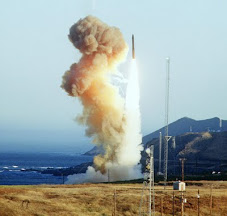
![[Global Network] against the first launch of Quasi-Zenith Satellite, Japan, on Sept. 11, 2010](https://blogger.googleusercontent.com/img/b/R29vZ2xl/AVvXsEj2sYpfodDDMIA7qXwuda0DmKapxXFB479fDnn8RKy7QNZqz0VEvWucNd-DleZ37hWNXC-Z8QtaqtM37VuPwac5SgclJ9_khBBSWOedvm19MRXIP1j1kcWrK6EW5IFjQdEEY2h7E6xuyNvC/s227/Qzss-45-0_09.jpg)

![[In update] Some collections on the Koreans’ protests against the sanction & war on Iran](http://4.bp.blogspot.com/_gnM5QlRx-4c/TJMvke6t8zI/AAAAAAAAFO4/tamQ8LUnOOA/S227/No+Sanction+on+Iran.jpg)
![[Three International Petitions] to End the Korean war and peace treaty(or peace resolution)](https://blogger.googleusercontent.com/img/b/R29vZ2xl/AVvXsEhlohLVYtpCg7iMsZhNYY4hBbhTi2dIheHMHWLDph9X2y78cjgZV1LeSfUJeu80elhJm70Q9E059q72lK-spSPvsRG4bPuCDIytltJB9IH3mWt9OG98HqhnTsPakwhvNeoCFUgF1xoxQ2EZ/s227/border.jpg)


![[Collection of Documents] No Base Learning and Solidarity Program_Korea(June 14 to 20, 2010)](https://blogger.googleusercontent.com/img/b/R29vZ2xl/AVvXsEix_HzjToh3nNGHBc-_5gasq-ykcaZ6GInLixILmZVyRJ5xoeHCxWOyYd9fSM7bmnuFsjSrYOGEPnQOwB1Dcyo-sN4Pw0cFPhUtKig_qlVnGL1Wi82ClvPqbEPWYhJiqdNF0DyzLIBETMB9/s227/No-Base-banner.jpg)
![Site Fwd:[John Hines] A U.S. Debate coach’s research trip on the Issues of Korea](https://blogger.googleusercontent.com/img/b/R29vZ2xl/AVvXsEg8yRra0zNhKHN74Auqhd3Nx9tZ7BWCGflRJHGH4CfzBT_yjhZ8Nl9b3OZuLpYWJ2exsjmR0oVl-Qq_cf832p2VdmOZhUi-lCFzCNeDSyVtweX1lWZPC-RlHmDMLtilHwHjNFTenBiM4Fk4/s227/Jeju-Peace-Tour.jpg)


![[News Update] Struggle Against the Jeju Naval Base since Jan. 18, 2010](https://blogger.googleusercontent.com/img/b/R29vZ2xl/AVvXsEhKfSTRC5QKBBSFIq_m7QIqXdlbL4-gF5GJYn9Q-pN__k7sV7uxGDcLY5L8xmU7QuWuUhBT_GhG-URBPO80RT3AfWfDrWJr06h1hFuZC6ZBVKe4U6PS1Cd7Kr6olO8TYQtk13Drox7IS6ea/s226/scrum1.jpg)


![[Urgent] Please spread the Letter!: There was no Explosion! There was no Torpedo! (May 26, 2010)](https://blogger.googleusercontent.com/img/b/R29vZ2xl/AVvXsEhSd2yWZ3xGwnJQXB73z5FgXCqSosAoB9_33-GLYprOmLqjmvgSAQp1BYI7e4slK1FDxHRi9KK4um-OpDaj8QOkXwAScVAgvvq6-ehbDA-hbkr96wT9oHNNmWnBPv8GU4hoZp9X8F9AZBX4/s227/grounded.jpg)
![Text Fwd: [Stephen Gowans]The sinking of the Cheonan: Another Gulf of Tonkin incident](https://blogger.googleusercontent.com/img/b/R29vZ2xl/AVvXsEi_L6hB3RZ1MovTXHe0A8yn_RfgMALGR0kM6poBuGp809xwvHtB_-PGWtS_WpyPWatyd9lB2pPqL2gOLc4dTCEdJ9sMvxJWEdapl-mMLm7WHAsV-jVpgqarVh8XBtdz_0c-Vohdh3HtJahD/s227/lee-myung-bak.jpg)
![[Japan Focus]Politics in Command: The "International" Investigation into the Sinking of the Cheonan](https://blogger.googleusercontent.com/img/b/R29vZ2xl/AVvXsEiHmTo8v-uCJnabRhMdnBAkC9J3s5bb2JsDKiT5leJHwbK8IDJHxfJmqQ_C0Is_bPC6UGMf05CA0exF2y4r2x9RhFUHT0kjsKviaME_MZXKnq775UyYAdb7w2SAzE75XvBfHp1al2q6i3cf/s227/wen_jiabao_and_lee_myungbak.png)
![[Japan Focus] Who Sank the SK Warship Cheonan? A New Stage in the US-Korean War and US-China](https://blogger.googleusercontent.com/img/b/R29vZ2xl/AVvXsEiKSS5ULT5QBaMGYpXXqBMX9jtwLwMLuK469b6Ku72GTJYKUObzTANaPjZqvvpPzYMJgPF53sjhvhK3DVa88ipYlggsJageykXlkxY6s8TW05xcU-_vfhf-pACUoaWuFbT-fsU1qEhm_yIi/s227/buoy_map.gif)
![[Updated on 12/13/10] [Translation Project] Overseas Proofs on the Damages by the Military Bases](https://blogger.googleusercontent.com/img/b/R29vZ2xl/AVvXsEikADE6JovUNspQyZUWVMTLAQg7yQNqXpVUbqZPk8f4uc_1723_xm1Cco6WAmstQXVPnaJAcb1mZA8Ny_3xONT_f5uh8MNLPnUhtqdGgy3HCtC1Vbbz4Q0ZY1Cssu-4cJEVNdrvznbS5UzO/s227/missile.jpg)
![[International Petition] Close the Bases in Okinawa](https://blogger.googleusercontent.com/img/b/R29vZ2xl/AVvXsEhNpQiHklwFbWVlFK7GDFXnBSOOSFEj3Il-We-N3uTDldKiidL2NGZs7X_LtTnatzTo_r8CexRkFe8NhfxYqmgp1knEEslROTfNjI5_mSb57cdbhPkftvanveYBaevAD9xuKDGoIxiTwoSb/s227/2.jpg)

![[In Update]Blog Collection: No Korean Troops in Afghanistan](https://blogger.googleusercontent.com/img/b/R29vZ2xl/AVvXsEjjEmCRXSNAG7_QBxKWbdksmxoWR4nyAovQTTdR1G2AuXh0jxtqNkI9OmYgYWRoLAJShvtBvE840QXuBWSVh3u3zMYqkNAFX6OWy3m5Nur4HM7uNK-pKT1ycyApJp-VLyhIFRRcoisYAh0E/s226/No-Troops-to--Afghanistan.jpg)


