* 아래의 국문 기사는 여기 프레시안에서 보실 수 있읍니다. (클릭)
* From the Just Foreign Policy News, November 24, 2010
Washington Post
North Korea's consistent message to the U.S.
By Jimmy Carter
Wednesday, November 24, 2010;
No one can completely understand the motivations of the North Koreans, but it is entirely possible that their recent revelation of their uranium enrichment centrifuges and Pyongyang's shelling of a South Korean island Tuesday are designed to remind the world that they deserve respect in negotiations that will shape their future. Ultimately, the choice for the United States may be between diplomatic niceties and avoiding a catastrophic confrontation.
Dealing effectively with North Korea has long challenged the United States. We know that the state religion of this secretive society is "juche," which means self-reliance and avoidance of domination by others. The North's technological capabilities under conditions of severe sanctions and national poverty are surprising. Efforts to display its military capability through the shelling of Yeongpyeong and weapons tests provoke anger and a desire for retaliation. Meanwhile, our close diplomatic and military ties with South Korea make us compliant with its leaders' policies.
The North has threatened armed conflict before. Nearly eight years ago, I wrote on this page about how in June 1994 President Kim Il Sung expelled International Atomic Energy Agency (IAEA) inspectors and proclaimed that spent fuel rods could be reprocessed into plutonium. Kim threatened to destroy Seoul if increasingly severe sanctions were imposed on his nation.
Desiring to resolve the crisis through direct talks with the United States, Kim invited me to Pyongyang to discuss the outstanding issues. With approval from President Bill Clinton, I went, and reported the positive results of these one-on-one discussions to the White House. Direct negotiations ensued in Geneva between a U.S. special envoy and a North Korean delegation, resulting in an "agreed framework" that stopped North Korea's fuel-cell reprocessing and restored IAEA inspection for eight years.
With evidence that Pyongyang was acquiring enriched uranium in violation of the agreed framework, President George W. Bush - who had already declared North Korea part of an "axis of evil" and a potential target - made discussions with North Korea contingent on its complete rejection of a nuclear explosives program and terminated monthly shipments of fuel oil. Subsequently, North Korea expelled nuclear inspectors and resumed reprocessing its fuel rods. It has acquired enough plutonium for perhaps seven nuclear weapons.
Sporadic negotiations over the next few years among North Korea, the United States, South Korea, Japan, China and Russia (the six parties) produced, in September 2005, an agreement that reaffirmed the basic premises of the 1994 accord. Its text included denuclearization of the Korean Peninsula, a pledge of non-aggression by the United States and steps to evolve a permanent peace agreement to replace the U.S.-North Korean-Chinese cease-fire that has been in effect since July 1953. Unfortunately, no substantive progress has been made since 2005, and the overall situation has been clouded by North Korea's development and testing of nuclear devices and medium- and long-range missiles, and military encounters with South Korea.
North Korea insists on direct talks with the United States. Leaders in Pyongyang consider South Korea's armed forces to be controlled from Washington and maintain that South Korea was not party to the 1953 cease-fire. Since the Clinton administration, our country has negotiated through the six-party approach, largely avoiding substantive bilateral discussions, which would have excluded South Korea.
This past July I was invited to return to Pyongyang to secure the release of an American, Aijalon Gomes, with the proviso that my visit would last long enough for substantive talks with top North Korean officials. They spelled out in detail their desire to develop a denuclearized Korean Peninsula and a permanent cease-fire, based on the 1994 agreements and the terms adopted by the six powers in September 2005. With no authority to mediate any disputes, I relayed this message to the State Department and White House. Chinese leaders indicated support of this bilateral discussion.
North Korean officials have given the same message to other recent American visitors and have permitted access by nuclear experts to an advanced facility for purifying uranium. The same officials had made it clear to me that this array of centrifuges would be "on the table" for discussions with the United States, although uranium purification - a very slow process - was not covered in the 1994 agreements.
Pyongyang has sent a consistent message that during direct talks with the United States, it is ready to conclude an agreement to end its nuclear programs, put them all under IAEA inspection and conclude a permanent peace treaty to replace the "temporary" cease-fire of 1953. We should consider responding to this offer. The unfortunate alternative is for North Koreans to take whatever actions they consider necessary to defend themselves from what they claim to fear most: a military attack supported by the United States, along with efforts to change the political regime.
The writer was the 39th president of the United States.
Showing posts with label 2005 Joint Statement. Show all posts
Showing posts with label 2005 Joint Statement. Show all posts
Thursday, November 25, 2010

Wednesday, November 24, 2010
Text Fwd: [Translation] [SPARK Statement] denunciation against Minister Kim's remark on his examination on the redeployment of tactical nuclear weapon
______________________________
* Image source: Solidarity for Peace And Reunification of Korea, Nov. 23, 2010.
 The banner reads:
Press interview to denounce the remarks by against Kim Tae-Young, Minister of National Defense
"Examination on the redeployment of tactical nuclear weapon"
Resign, Kim Tae-Young, Minister of National Defense,
who counters against non-nuclearization of Korean peninsula!

 Immediately start the six party talk for the non-nuclearization
of the Korean peninsula without condition!
* 아래는 평화와 통일을 여는 사람들의 11월 23일 성명서, "전술핵 재배치 검토" 망언 김태영 국방장관 규탄 기자회견: 한반도 비핵화 거스르는 김태영 국방장관은 사퇴하라! 입니다. 국문 원문을 보시려면 여기를 클릭.
* 해커 보고서 전문을 비롯, 관련 기사를 보시려면 여기 클릭
* The below text is an arbitrary translation from the press interview statement by the Solidarity for Peace And Reunification of Korea on Nov. 23, 2010. You can see its original Korean statement here.
______________________________________________________
We strongly denounce the absurd remarks by the Minister of Kim Tae-Young who tramples down the joint declaration on the non-nuclearization of the Korean Peninsula and Sept. 9 joint statement.
During the audit by the Committee on Budget and Accounts, National Assembly [on Nov. 22], Kim Tae-Young, Minister of National Defense said he “would examine on the deployment of the United States’ tactical nuclear weapons” in Extended Deterrence Committee [agreed on 42nd Security Consultative Meeting. For more on it, click HERE]
The North Korea’s uranium enrichment has already been predicted. It is because since 2009 when there was the announcement of the U.N. Presidential Statement (4/13) that blamed her launch of a satellite (4/5), she has openly declared on the technological development of the uranium enrichment the next day and since then she has made clear on her examination on light water reactor. Her opening to public of the uranium enrichment facility in North Korea this time showed that in actual objects.
There is no basis to judge that she has gone beyond the scope of her ‘right to peaceful use of nuclear’ mentioned in Sept. 19 joint statement in the legal and technological senses in the current stage. Like another countries, the North Korea has the international legal right to build light water reactor. There could have been no spare for North Korea to just wait for the provision of light water reactor from other countries of the six-party, when the expectation on it has been difficult even though it was clearly stated in the Sept. 9 joint statement.
From the political and strategic aspect, the intention of North Korea who has made public of her uranium enrichment facilities can be told to urge the Obama administration that has only prolonged time without any measure, alleging ‘strategic endurance.’ In other words. It is her warning that, if the Obama government would not enter for the settlement of issue through dialogue, she could step toward her nuclear arming by uranium enrichment. If not such intention, there could have been no reason for her to purposely invite a nuclear scientist of the United States and make public of her uranium enrichment facility. Therefore since her essential intention is not in her nuclear arming, the issue of nuclear in the Korean peninsula is the matter that could be solved without limit if [the North Korea and United States] accept the demands each other by resuming the NK-US talks and six party talks. The verbal remark by Siegfried Hecker, Director of the Center for International Security and Cooperation of Stanford University, who is told to have said that “there would be no non-nuclearization of Korean peninsula without basic change of the NK-US relationship," means [North Korea] can realize the non-nuclearization of Korean peninsula if the United States withdraws from her hostile North Korean policy, in other words.
Seeing in that context, the remark by Kim Tae-Young, Ministry of National Defense, on his ‘examination on the redeployment of tactical nuclear weapons’ is a reckless one confrontational against North Korea, more aggravating the nuclear issue in the Korean peninsula but not solving it. While the North Korea has only made public open her uranium enrichment facilities, having her right supported by international law, it is enormously excessive and irrational that he says such and such on the redeployment of tactical nuclear weapons. [His saying] not only deviates from the joint declaration on the non-nuclearization of the Korean peninsula and 9.19 joint statement, but pours over cold water onto the political situation that is demanded of the resumption of the six party talks for the non-nuclearization of Korean peninsula. If the remark by the Ministry Kim is realized, the security of the Korean peninsula and North East Asia would be more dangerous with the non-nuclearization of Korean peninsula becoming [impossible], the nuclear domino situation being staged in the North East Asia, and the danger of nuclear war being heightened.
We strongly denouncing Kim Tae-Young, Ministry of National Defense, who makes routine of absurd remarks confrontational against North Korea and countering against the non-nuclearization of the Korean Peninsula, demand the resignation of the Minister Kim who makes dangerous of security.
Otherwise, it seems that there is an expedient judgment working , that is intended to weaken the people’s voice of distrust and criticism being poured onto himself and the Ministry of National Defense, because of its concealment and manipulation on the Cheonan ship incident, successive incidents and irrationality within military, by drawing the support by the bellicose power who is against North Korea and wishes the redeployment of the nuclear weapon of the United States [in the Korean peninsula] or nuclear arming of South Korea.
Therefore, denouncing the absurd remark by Kim Tae-Young, Ministry of National Defense, who attempts to avoid rebukes being poured on him and Ministry of National Defense, we strongly demand his immediate resignation.
The authorities of the ROK and United States should promptly enter for the NK-US talks, four party peace forum and six party talks for the non-nuclearization of the Korean Peninsula and conclusion of peace agreement!
North Korean’s making public of her uranium enrichment facilities means the lines of ‘strategic endurance’ by the Obama administration and ‘non-nuclearization first’ and ‘apology first on the Cheonan ship incident’ by the Lee Myung Bak administration have become totally failed. A situation in which sanction is not effective and North Korean nuclear ability is being strengthened as time goes-not desired by the authorities of the United States. That is the situation that we have constantly claimed; sanction and oppression rather aggravates the states of things; and time is not in the side of the authorities of the ROK and United States.
The authorities of South Korea, United States and Japan are told to have decided the measure to demand the stop of the uranium enrichment to North Korea for the premise of the resumption of the six party talks, after their going through an emergency discussion related to the opening of uranium enrichment facility by North Korea. It means that while they self-acknowledge that the conditions that they have claimed in the past have failed while revealed their embarrassing situation and limit, by putting a new condition again on the other hand.
Director, Hecker has said, “It is clear that waiting patiently for Pyeongyang to return to the six party talks on terms acceptable to the United States and it allies will exacerbate the problem. A military attack is out of the question. Tightening sanctions further is likewise a dead end…The only hope appears to be engagement.”
We demand the ROK and US authorities to stop their unmeaning behaviors of continuing sanction and oppression with taking pre-condition for talks, following the advice by the director Hecker. We demand the authorities of the ROK and United States to promptly start various kinds of talks and negotiation on the NK-US talks, four party talks (South Korea, North Korea, United States and China), peace forum, six party talks and to contribute to the permanent peace in the Korean peninsula and North East Asia.
Nov. 23, 2010
Solidarity for Peace And Reunification of Korea
/ press interview participants
----------------------------------------------------------------------
To see Siegfried Hecker's Yongbyon report, download the below.
SH_Yongbyonreport.pdf
122K View Download
* Image source: Solidarity for Peace And Reunification of Korea, Nov. 23, 2010.
 The banner reads:
 Press interview to denounce the remarks by against Kim Tae-Young, Minister of National Defense
"Examination on the redeployment of tactical nuclear weapon"
Resign, Kim Tae-Young, Minister of National Defense,
who counters against non-nuclearization of Korean peninsula!

 Immediately start the six party talk for the non-nuclearization
of the Korean peninsula without condition!
* 아래는 평화와 통일을 여는 사람들의 11월 23일 성명서, "전술핵 재배치 검토" 망언 김태영 국방장관 규탄 기자회견: 한반도 비핵화 거스르는 김태영 국방장관은 사퇴하라! 입니다. 국문 원문을 보시려면 여기를 클릭.
* 해커 보고서 전문을 비롯, 관련 기사를 보시려면 여기 클릭
* The below text is an arbitrary translation from the press interview statement by the Solidarity for Peace And Reunification of Korea on Nov. 23, 2010. You can see its original Korean statement here.
______________________________________________________
Press Interview to denounce Kim Tae-Young,
Ministry of National Defense,
Ministry of National Defense,
who made an absurd remarks on the “examination
on the redeployment of tactical nuclear weapons”
and counters against non-nuclearization of the Korean peninsula!
on the redeployment of tactical nuclear weapons”
and counters against non-nuclearization of the Korean peninsula!
We strongly denounce the absurd remarks by the Minister of Kim Tae-Young who tramples down the joint declaration on the non-nuclearization of the Korean Peninsula and Sept. 9 joint statement.
During the audit by the Committee on Budget and Accounts, National Assembly [on Nov. 22], Kim Tae-Young, Minister of National Defense said he “would examine on the deployment of the United States’ tactical nuclear weapons” in Extended Deterrence Committee [agreed on 42nd Security Consultative Meeting. For more on it, click HERE]
The North Korea’s uranium enrichment has already been predicted. It is because since 2009 when there was the announcement of the U.N. Presidential Statement (4/13) that blamed her launch of a satellite (4/5), she has openly declared on the technological development of the uranium enrichment the next day and since then she has made clear on her examination on light water reactor. Her opening to public of the uranium enrichment facility in North Korea this time showed that in actual objects.
There is no basis to judge that she has gone beyond the scope of her ‘right to peaceful use of nuclear’ mentioned in Sept. 19 joint statement in the legal and technological senses in the current stage. Like another countries, the North Korea has the international legal right to build light water reactor. There could have been no spare for North Korea to just wait for the provision of light water reactor from other countries of the six-party, when the expectation on it has been difficult even though it was clearly stated in the Sept. 9 joint statement.
From the political and strategic aspect, the intention of North Korea who has made public of her uranium enrichment facilities can be told to urge the Obama administration that has only prolonged time without any measure, alleging ‘strategic endurance.’ In other words. It is her warning that, if the Obama government would not enter for the settlement of issue through dialogue, she could step toward her nuclear arming by uranium enrichment. If not such intention, there could have been no reason for her to purposely invite a nuclear scientist of the United States and make public of her uranium enrichment facility. Therefore since her essential intention is not in her nuclear arming, the issue of nuclear in the Korean peninsula is the matter that could be solved without limit if [the North Korea and United States] accept the demands each other by resuming the NK-US talks and six party talks. The verbal remark by Siegfried Hecker, Director of the Center for International Security and Cooperation of Stanford University, who is told to have said that “there would be no non-nuclearization of Korean peninsula without basic change of the NK-US relationship," means [North Korea] can realize the non-nuclearization of Korean peninsula if the United States withdraws from her hostile North Korean policy, in other words.
Seeing in that context, the remark by Kim Tae-Young, Ministry of National Defense, on his ‘examination on the redeployment of tactical nuclear weapons’ is a reckless one confrontational against North Korea, more aggravating the nuclear issue in the Korean peninsula but not solving it. While the North Korea has only made public open her uranium enrichment facilities, having her right supported by international law, it is enormously excessive and irrational that he says such and such on the redeployment of tactical nuclear weapons. [His saying] not only deviates from the joint declaration on the non-nuclearization of the Korean peninsula and 9.19 joint statement, but pours over cold water onto the political situation that is demanded of the resumption of the six party talks for the non-nuclearization of Korean peninsula. If the remark by the Ministry Kim is realized, the security of the Korean peninsula and North East Asia would be more dangerous with the non-nuclearization of Korean peninsula becoming [impossible], the nuclear domino situation being staged in the North East Asia, and the danger of nuclear war being heightened.
We strongly denouncing Kim Tae-Young, Ministry of National Defense, who makes routine of absurd remarks confrontational against North Korea and countering against the non-nuclearization of the Korean Peninsula, demand the resignation of the Minister Kim who makes dangerous of security.
Otherwise, it seems that there is an expedient judgment working , that is intended to weaken the people’s voice of distrust and criticism being poured onto himself and the Ministry of National Defense, because of its concealment and manipulation on the Cheonan ship incident, successive incidents and irrationality within military, by drawing the support by the bellicose power who is against North Korea and wishes the redeployment of the nuclear weapon of the United States [in the Korean peninsula] or nuclear arming of South Korea.
Therefore, denouncing the absurd remark by Kim Tae-Young, Ministry of National Defense, who attempts to avoid rebukes being poured on him and Ministry of National Defense, we strongly demand his immediate resignation.
The authorities of the ROK and United States should promptly enter for the NK-US talks, four party peace forum and six party talks for the non-nuclearization of the Korean Peninsula and conclusion of peace agreement!
North Korean’s making public of her uranium enrichment facilities means the lines of ‘strategic endurance’ by the Obama administration and ‘non-nuclearization first’ and ‘apology first on the Cheonan ship incident’ by the Lee Myung Bak administration have become totally failed. A situation in which sanction is not effective and North Korean nuclear ability is being strengthened as time goes-not desired by the authorities of the United States. That is the situation that we have constantly claimed; sanction and oppression rather aggravates the states of things; and time is not in the side of the authorities of the ROK and United States.
The authorities of South Korea, United States and Japan are told to have decided the measure to demand the stop of the uranium enrichment to North Korea for the premise of the resumption of the six party talks, after their going through an emergency discussion related to the opening of uranium enrichment facility by North Korea. It means that while they self-acknowledge that the conditions that they have claimed in the past have failed while revealed their embarrassing situation and limit, by putting a new condition again on the other hand.
Director, Hecker has said, “It is clear that waiting patiently for Pyeongyang to return to the six party talks on terms acceptable to the United States and it allies will exacerbate the problem. A military attack is out of the question. Tightening sanctions further is likewise a dead end…The only hope appears to be engagement.”
We demand the ROK and US authorities to stop their unmeaning behaviors of continuing sanction and oppression with taking pre-condition for talks, following the advice by the director Hecker. We demand the authorities of the ROK and United States to promptly start various kinds of talks and negotiation on the NK-US talks, four party talks (South Korea, North Korea, United States and China), peace forum, six party talks and to contribute to the permanent peace in the Korean peninsula and North East Asia.
Nov. 23, 2010
Solidarity for Peace And Reunification of Korea
/ press interview participants
----------------------------------------------------------------------
To see Siegfried Hecker's Yongbyon report, download the below.
SH_Yongbyonreport.pdf
122K View Download
Thursday, November 11, 2010
Text Fwd: [Translation] The problems of the ROK-US summit meeting [번역] 한미 정상 회담의 문제점들
 * Image source: ⓒ CBS 노컷뉴스(www.nocutnews.co.kr)
A Korean NoCutNews article on Aug. 24, 2010 (reporter Park Jong Ryul) has reported on the prospect of the FTA talks between the two ROK & US summits, citing a Washington post article on Aug. 23, 2010.
__________________________________________________
* Below is an arbitrary translation of a part from the Link. Nov. 11 would would be a hot day for Koreans as the G20 Summits gather. There is a big rally against G20 in the Seoul station. And there is also another small but important protest in the morning on the same day. I only roughly translated its purpose.
__________________________________________________
아래 평통사 글은 링크의 취지 부분 번역한 것. 국문 전문은 여기 클릭
Solidarity for Peace And Reunification of Korea
Nov. 10, 2010
The problems of the ROK-US summit meeting
1) The ROK-US summit meeting will be held in the Presidential House on Nov. 11 (Thurs.). In the meeting, issues on the ROK-US FTA, North Korea nuclear weapon, and ROK-US alliance will be discussed.
2) It is known that the Lee Myung-bak government was determined to almost accept the demands of the United States in the sphere of automobile issues. It is unpatriotic for the Lee government to mobilize the form of ‘additional agreement’ beside its content, in the sense that [the government] would endlessly allow the demands of the United States by doing that. There is no alternative beside abolishing of the ROK-US FTA that infringes [ROK’s] economic sovereignty and destroys common people’s livelihood through secret negotiation with rough and ready method.
3) It is told that the ROK and US authorities are coordinating their positions toward the direction of IAEA inspectorate’ returning back to North Korea; declaration on the freeze of the nuclear related activities; and re-confirmations on the fulfillment of 9.19 joint statement. Unilateral demand is deviating from the 9.19 joint statement that is agreed upon the “spirit of the mutual respect & equality” and “mutually coordinated measure.” We urge the ROK and US authorities to launch the talks on non-nuclearization of the Korean peninsula and peace agreement, by resuming the NK-US talks and six party talks by taking steps, based on the principals of ‘pledge vs. pledge,’ and ‘action vs. action.’
4) The ROK-US summits will reconfirm to develop the ROK-US alliance toward the strategic alliance as they have agreed with each other in the ‘ROK-US alliance joint vision.’ What the comprehensive strategic alliance means is that [the two authorities] would keep the United States’ dominant policy in the world by converting the ROK-US alliance into an invasive one, and that South Korea would be the filial sub-partner of it. We oppose the strengthening of invasive ROK-US alliance that is the violation of [the ROK] constitution and ROK-US mutual defense treaty; that threatens the peace in the Korean peninsula & World; and that strengthens the invasive ROK-US alliance, increasing people’s burden and sacrifice.
______________________________________________
* The timing of the below article is noticeable. You may refer to the below.
Washington Post
Security Council to release long-delayed North Korea nuclear report
By Colum Lynch
Washington Post Staff Writer
Tuesday, November 9, 2010; 10:52 PM
Sunday, September 19, 2010
Reminding 9. 19 Joint Statement in 2005; 2005년 9. 19 공동 성명 상기하기
 * Image source: Solidarity for Peace And Reunification of Korea, June 16, 2009
_________________________________________________________
* 국문으로 된 9. 19 공동 성명 전문은 여기를 클릭
_________________________________________________________
* 국문으로 된 9. 19 공동 성명 전문은 여기를 클릭
_________________________________________________________
9. 19 Joint Statement
9. 19, 2005
The Fourth Round of the Six-Party Talks was held in Beijing, China among the People's Republic of China, the Democratic People's Republic of Korea, Japan, the Republic of Korea, the Russian Federation, and the United States of America from July 26th to August 7th, and from September 13th to 19th, 2005.
Mr. Wu Dawei, Vice Minister of Foreign Affairs of the PRC, Mr. Kim Gye Gwan, Vice Minister of Foreign Affairs of the DPRK; Mr. Kenichiro Sasae, Director-General for Asian and Oceanian Affairs, Ministry of Foreign Affairs of Japan; Mr. Song Min-soon, Deputy Minister of Foreign Affairs and Trade of the ROK; Mr. Alekseyev, Deputy Minister of Foreign Affairs of the Russian Federation; and Mr. Christopher Hill, Assistant Secretary of State for East Asian and Pacific Affairs of the United States attended the talks as heads of their respective delegations.
Vice Foreign Minister Wu Dawei chaired the talks.
For the cause of peace and stability on the Korean Peninsula and in Northeast Asia at large, the Six Parties held, in the spirit of mutual respect and equality, serious and practical talks concerning the denuclearization of the Korean Peninsula on the basis of the common understanding of the previous three rounds of talks, and agreed, in this context, to the following:
1. The Six Parties unanimously reaffirmed that the goal of the Six-Party Talks is the verifiable denuclearization of the Korean Peninsula in a peaceful manner.
The DPRK committed to abandoning all nuclear weapons and existing nuclear programs and returning, at an early date, to the Treaty on the Non-Proliferation of Nuclear Weapons and to IAEA safeguards.
The United States affirmed that it has no nuclear weapons on the Korean Peninsula and has no intention to attack or invade the DPRK with nuclear or conventional weapons.
The ROK reaffirmed its commitment not to receive or deploy nuclear weapons in accordance with the 1992 Joint Declaration of the Denuclearization of the Korean Peninsula, while affirming that there exist no nuclear weapons within its territory.
The 1992 Joint Declaration of the Denuclearization of the Korean Peninsula should be observed and implemented.
The DPRK stated that it has the right to peaceful uses of nuclear energy. The other parties expressed their respect and agreed to discuss, at an appropriate time, the subject of the provision of light water reactor to the DPRK.
2. The Six Parties undertook, in their relations, to abide by the purposes and principles of the Charter of the United Nations and recognized norms of international relations.
The DPRK and the United States undertook to respect each other's sovereignty, exist peacefully together, and take steps to normalize their relations subject to their respective bilateral policies.
The DPRK and Japan undertook to take steps to normalize their relations in accordance with the Pyongyang Declaration, on the basis of the settlement of unfortunate past and the outstanding issues of concern.
3. The Six Parties undertook to promote economic cooperation in the fields of energy, trade and investment, bilaterally and/or multilaterally.
China, Japan, ROK, Russia and the US stated their willingness to provide energy assistance to the DPRK.
The ROK reaffirmed its proposal of July 12th 2005 concerning the provision of 2 million kilowatts of electric power to the DPRK.
4. The Six Parties committed to joint efforts for lasting peace and stability in Northeast Asia.
The directly related parties will negotiate a permanent peace regime on the Korean Peninsula at an appropriate separate forum.
The Six Parties agreed to explore ways and means for promoting security cooperation in Northeast Asia.
5. The Six Parties agreed to take coordinated steps to implement the afore-mentioned consensus in a phased manner in line with the principle of "commitment for commitment, action for action".
6. The Six Parties agreed to hold the Fifth Round of the Six-Party Talks in Beijing in early November 2005 at a date to be determined through consultations.
_______________________________________________________
• Related Korean articles 관련 국문 기사들
5주년 맞은 북핵 9.19 공동성명 (연합뉴스,2010.09.19) (평화와 통일을 여는 사람들 사이트 관련 기사난)
평화 넷트 워크: [토론회] 9.19 공동성명과 6자회담의 전망(9. 16, 2010)
_______________________________________________________
• Related English articles 관련 영문 기사들
People's Solidarity for Participatory Democracy(PSPD)
Initial Actions for the Implementation of the Joint Statement (in Korean & English)
13 February 2007
참여 연대 평화 군축 센터(click)
9.19 공동성명 이행을 위한 초기조치(국, 영문전문)
2007.2.13
* English follows after Korean.
Solidarity for Peace And Reunification of Korea:
Letter Sent to the Presidents of the Republic of Korea and the United States on the Occasion of the Korean-US Summit Conference (2009.6.16)
Excerpt 발제:
'The ROK and the US intend to convert the ROK-US alliance into a global and permanent alliance. Burwell Bell, while acting as the USFK commander, said that he hoped that the US troops would be stationed in Korea even after a Korean peninsula peace agreement is concluded, and last July, Timothy Keating, the US Pacific commander, explained that while the USFK are stationed here permanently, the US troops would participate in humanitarian aid or disaster relief operations and the like.
This shows clearly that the US intends to continue the stationing of the USFK and the ROK-US alliance permanently. The "joint vision for the future ROK-US alliance", which aims to perpetuate the aggressive ROK-US alliance, goes against the trend of our time, which is to establish a structure of peace and security for the Korean peninsula and Northeast Asia by means of the withdrawal of foreign military forces, the abolition of the military alliance, and achieving peace and disarmament. In particular, stipulating "extended deterrence" in the "joint vision for the future ROK-US alliance", runs counter to the 9.19 joint statement which declares the goal of denuclearization of the Korean peninsula.'
Pacific Freeze website
All the blogs on 9. 19, 2005 Joint Statement
Wednesday, May 12, 2010
Text Fwd: Obama’s inconsistency? There’s nothing but negotiation
Peace Network
Obama’s inconsistency? There’s nothing but negotiation
2010. 04. 23
Written by Wook-sik Cheong
Translated by intern En-hye Lee and volunteer Michael Glendinning
Obama administration is taking three contradictory approaches to relations with North Korea over the issue of nuclear weapons. First of all, Obama is not admitting nuclear weapons even though North Korea possesses them. Secondly, Obama administration’s determination to oversee the “complete implementation” of the 9.19 Joint Statement from the six-party talks changed direction during the 2010 Nuclear Posture Review (NPR). Thirdly, Obama administration is consistent with negative and indirect diplomacy despite it having declared undertaking ‘tough and direct dialogues’ with North Korea.
The Secretary of State, Hilary Clinton, stated that North Korea has somewhere between one and six nuclear weapons. This statement brought about a strong presumption that the US acknowledged North Korea as a state possessing nuclear weapons. Especially, there has been a huge doubt whether the US has come up with a new revised goal which attempts to block the transfer of the North Korea’s nuclear materials and technology to other nations or terrorist groups, concluding that North Korea’s denuclearization is impossible.
Gary Samore, White House Coordinator for Arms control and Weapons of Mass Destruction, played down the presumptions claiming that the US cannot acknowledge North Korea as a nuclear weapons state and that the US policy is absolute in its support of complete denuclearization in the Korean peninsula.
It is understandable that the US has inconsistent views about the issues. North Korea has a multitude of plutonium which can lead to the production of nuclear weapons. Moreover, the North has undertaken two nuclear tests. So North Korea, at least ‘technically’, can be classified as a nuclear state. However, the US is taking a clear stance that North Korea cannot be described as a nuclear state because ‘political and diplomatic’ acknowledgment directly violates the US’s nonproliferation policy.
The problem is that if the inconsistency between technological and political acknowledgement of North Korea’s possessing nuclear warheads cannot be resolved at once, the contradictory nature of Obama’s North Korean policy will only intensify the situation and the suspicions will expand whether the US, which thinks it is impossible to settle North Korea’s nuclear issue, is only focusing on the blocking of nuclear transfer.
Preemptive attacks on North Korea or Strategic Obscurity?
The Obama administration declared that the United States will not use or threaten to use nuclear weapons against non-nuclear weapons sates that are party to the Nuclear Nonproliferation Treaty (NPT) and which are in compliance with their nuclear nonproliferation obligations. According to this standard, North Korea which conducted two nuclear tests and Iran, which is well known as a state that violated NPT, remained as possible targets of the US nuclear preemptive attack. The US government has confirmed this declaration several times.
The problem is that this kind of US position could be seen as a violation of the 9.19 Joint Statement decided upon during six-party talks. This agreement states that “The United States affirmed that it has no nuclear weapons on the Korean Peninsula and has no intention to attack or invade the DPRK with nuclear or conventional weapons.” However, 9.19 Joint Statement was agreed during the period when North Korea withdrew from NPT and declared that they were in possession of nuclear weapons.
Regarding this, there could be a counterargument which supports the fact that North Korea has to be excluded from the provision of negative security assurance since the North has undertaken two nuclear tests. But if the US maintains the key option of nuclear preemptive attack, this does not accord with the current US policy towards the North as the US does not currently acknowledge North Korea as a nuclear state.
When it comes to North Korea’s previous nuclear tests, it is understandable that Obama administration’s position towards North Korea is trying to create an exception from negative security assurance. However, it would have been better to take strategic ambiguity instead of mentioning the possibility of a nuclear preemptive attack on the North. In other words, Obama should have stayed at the level of pushing North Korea towards discarding nuclear weapons at the earliest possible moment and return to NPT while simultaneously clarifying the basic position of negative security assurance.
Obama administration believes that making it clear about the possibility of a nuclear preemptive attack will be an incentive for North Korea to abandon the nuclear program. However, with North Korea’s denouncement of Nuclear Posture Review(NPR), this brings about an adverse effect for North Korea to come up with modernization of nuclear weapons and the declaration of nuclear state.
Retracing Bush’s failed diplomacy?
These two contradictions stem from the renouncement of Obama’s “tough and direct dialogue”. In regards to North Korea’s request to have bilateral talks with the US, Obama administration keeps repeating “it is possible only within the framework of six-party talks”. It is obvious that this is just the same as the Bush administration’s tiresome and repetitive statement used up until 2006.
Bush administration stoutly refused to participate in the bilateral talks with the North up until 2006. The two countries finally met for talks in 2007. The six-party talks made great progress towards the denuclearization of North Korea. This means that direct talks with the North are not the partial parts of the six-party talks but the crucial part that has to go together with the six-party talks. Obama administration once firmly criticized Bush administration’s foreign policy and pursued to have dialogues with hostile nations without any preconditions, however, it turned back to Bush administration’s ‘failed diplomacy’.
Moreover, the US has recently delayed the resumption of six-party talks because of the ongoing investigation which is still putting a lot of effort into finding out the truth. The US related this incident to the six-party talks even though it is uncertain whether the Korean attack was caused by North Korea. In light of this, it is somewhat disappointing that Obama administration’s foremost goal in foreign policy in the area which is to achieve denuclearization on the Korean peninsula through six-party talks turned out to be nothing.
Due largely to tragic incident, Obama believes that the two countries cannot participate in the bilateral talks and six-party talks right away. This issue should be discussed once this incident is resolved. So far in this situation, there is a lot of thought that this Cheonan ship sinking incident remains to be a permanent mystery. Relating this incident to six-party talks will debilitate the dialogue. The key lesson we can learn from the North Korean nuclear issue, which lasted for about 20 years, is that if we get far away from any dialogue, North Korea’s nuclear potential is more likely to become a reality. Furthermore, the US’s contradictory position will become even further entrenched.
The way to resolve the multiple contradictions is entirely up to Obama. He has to start over and go back to his original plans for US foreign policy. We need to keep in mind that bilateral talks and six-party talks have to get together and also work together instead of confining bilateral talks to six-party talks. This was also the Obama’s promise during his presidential campaign. Furthermore, we need to get rid of self-satisfactory and unilateral ways of thinking in order to demolish North Korea with sanctions and pressures and we should be open-minded to understand North Korea’s demands. It is my understanding that it is a must to prevent the ‘Korean Armageddon’ when we are faced with the North’s modernization of nuclear weapons and a possible US nuclear preemptive attack.
Obama’s inconsistency? There’s nothing but negotiation
2010. 04. 23
Written by Wook-sik Cheong
Translated by intern En-hye Lee and volunteer Michael Glendinning
Obama administration is taking three contradictory approaches to relations with North Korea over the issue of nuclear weapons. First of all, Obama is not admitting nuclear weapons even though North Korea possesses them. Secondly, Obama administration’s determination to oversee the “complete implementation” of the 9.19 Joint Statement from the six-party talks changed direction during the 2010 Nuclear Posture Review (NPR). Thirdly, Obama administration is consistent with negative and indirect diplomacy despite it having declared undertaking ‘tough and direct dialogues’ with North Korea.
The Secretary of State, Hilary Clinton, stated that North Korea has somewhere between one and six nuclear weapons. This statement brought about a strong presumption that the US acknowledged North Korea as a state possessing nuclear weapons. Especially, there has been a huge doubt whether the US has come up with a new revised goal which attempts to block the transfer of the North Korea’s nuclear materials and technology to other nations or terrorist groups, concluding that North Korea’s denuclearization is impossible.
Gary Samore, White House Coordinator for Arms control and Weapons of Mass Destruction, played down the presumptions claiming that the US cannot acknowledge North Korea as a nuclear weapons state and that the US policy is absolute in its support of complete denuclearization in the Korean peninsula.
It is understandable that the US has inconsistent views about the issues. North Korea has a multitude of plutonium which can lead to the production of nuclear weapons. Moreover, the North has undertaken two nuclear tests. So North Korea, at least ‘technically’, can be classified as a nuclear state. However, the US is taking a clear stance that North Korea cannot be described as a nuclear state because ‘political and diplomatic’ acknowledgment directly violates the US’s nonproliferation policy.
The problem is that if the inconsistency between technological and political acknowledgement of North Korea’s possessing nuclear warheads cannot be resolved at once, the contradictory nature of Obama’s North Korean policy will only intensify the situation and the suspicions will expand whether the US, which thinks it is impossible to settle North Korea’s nuclear issue, is only focusing on the blocking of nuclear transfer.
Preemptive attacks on North Korea or Strategic Obscurity?
The Obama administration declared that the United States will not use or threaten to use nuclear weapons against non-nuclear weapons sates that are party to the Nuclear Nonproliferation Treaty (NPT) and which are in compliance with their nuclear nonproliferation obligations. According to this standard, North Korea which conducted two nuclear tests and Iran, which is well known as a state that violated NPT, remained as possible targets of the US nuclear preemptive attack. The US government has confirmed this declaration several times.
The problem is that this kind of US position could be seen as a violation of the 9.19 Joint Statement decided upon during six-party talks. This agreement states that “The United States affirmed that it has no nuclear weapons on the Korean Peninsula and has no intention to attack or invade the DPRK with nuclear or conventional weapons.” However, 9.19 Joint Statement was agreed during the period when North Korea withdrew from NPT and declared that they were in possession of nuclear weapons.
Regarding this, there could be a counterargument which supports the fact that North Korea has to be excluded from the provision of negative security assurance since the North has undertaken two nuclear tests. But if the US maintains the key option of nuclear preemptive attack, this does not accord with the current US policy towards the North as the US does not currently acknowledge North Korea as a nuclear state.
When it comes to North Korea’s previous nuclear tests, it is understandable that Obama administration’s position towards North Korea is trying to create an exception from negative security assurance. However, it would have been better to take strategic ambiguity instead of mentioning the possibility of a nuclear preemptive attack on the North. In other words, Obama should have stayed at the level of pushing North Korea towards discarding nuclear weapons at the earliest possible moment and return to NPT while simultaneously clarifying the basic position of negative security assurance.
Obama administration believes that making it clear about the possibility of a nuclear preemptive attack will be an incentive for North Korea to abandon the nuclear program. However, with North Korea’s denouncement of Nuclear Posture Review(NPR), this brings about an adverse effect for North Korea to come up with modernization of nuclear weapons and the declaration of nuclear state.
Retracing Bush’s failed diplomacy?
These two contradictions stem from the renouncement of Obama’s “tough and direct dialogue”. In regards to North Korea’s request to have bilateral talks with the US, Obama administration keeps repeating “it is possible only within the framework of six-party talks”. It is obvious that this is just the same as the Bush administration’s tiresome and repetitive statement used up until 2006.
Bush administration stoutly refused to participate in the bilateral talks with the North up until 2006. The two countries finally met for talks in 2007. The six-party talks made great progress towards the denuclearization of North Korea. This means that direct talks with the North are not the partial parts of the six-party talks but the crucial part that has to go together with the six-party talks. Obama administration once firmly criticized Bush administration’s foreign policy and pursued to have dialogues with hostile nations without any preconditions, however, it turned back to Bush administration’s ‘failed diplomacy’.
Moreover, the US has recently delayed the resumption of six-party talks because of the ongoing investigation which is still putting a lot of effort into finding out the truth. The US related this incident to the six-party talks even though it is uncertain whether the Korean attack was caused by North Korea. In light of this, it is somewhat disappointing that Obama administration’s foremost goal in foreign policy in the area which is to achieve denuclearization on the Korean peninsula through six-party talks turned out to be nothing.
Due largely to tragic incident, Obama believes that the two countries cannot participate in the bilateral talks and six-party talks right away. This issue should be discussed once this incident is resolved. So far in this situation, there is a lot of thought that this Cheonan ship sinking incident remains to be a permanent mystery. Relating this incident to six-party talks will debilitate the dialogue. The key lesson we can learn from the North Korean nuclear issue, which lasted for about 20 years, is that if we get far away from any dialogue, North Korea’s nuclear potential is more likely to become a reality. Furthermore, the US’s contradictory position will become even further entrenched.
The way to resolve the multiple contradictions is entirely up to Obama. He has to start over and go back to his original plans for US foreign policy. We need to keep in mind that bilateral talks and six-party talks have to get together and also work together instead of confining bilateral talks to six-party talks. This was also the Obama’s promise during his presidential campaign. Furthermore, we need to get rid of self-satisfactory and unilateral ways of thinking in order to demolish North Korea with sanctions and pressures and we should be open-minded to understand North Korea’s demands. It is my understanding that it is a must to prevent the ‘Korean Armageddon’ when we are faced with the North’s modernization of nuclear weapons and a possible US nuclear preemptive attack.
Friday, April 9, 2010
[Photos Fw] Violation of 9.19, Abolish the Nuclear Preemptive Strike Policy against North Korea

* Image source: Cho Sung-Bong, Tongil News, April 8, 2010
The banner says:
' Press Interview upon the US Nuclear Posture Review Announcement
United States, Abolish the Nuclear Preemptive Strike against North Korea
Promptly Enter the Negotiation for the denuclearization of the Korean Peninsula
United States, Abolish the Nuclear Preemptive Strike against North Korea
Promptly Enter the Negotiation for the denuclearization of the Korean Peninsula
and Conclusion of the Peace Agreement!
12pm, April 8, 2010, in front of the United States Embassy
Organized by Family Association for the Practice of Democracy, Family Association for Supporting Conscientious Prisoners, Pan-Korean Alliance for Reunification (South Korea branch), April Revolution Council, and Solidarity for Peace And Reunification of Korea'
12pm, April 8, 2010, in front of the United States Embassy
Organized by Family Association for the Practice of Democracy, Family Association for Supporting Conscientious Prisoners, Pan-Korean Alliance for Reunification (South Korea branch), April Revolution Council, and Solidarity for Peace And Reunification of Korea'
Other Korean letter boards say:
'North Korea Nuclear Weapon is the product of the US nuclear preemptive strategy.'
'Remove the nuclear umbrella'
and 'The pledge of the nuclear-free world and nuclear preemptive strategy is contradictory each other!!'
 * Image source: Cho Sung-Bong, Tongil News, April 8, 2010
The Korean letter boards say:
'We denounce the US nuclear policy that goes against the peace in the Korean peninsula and denuclearization'
'First abolish the nuclear preemptive strike strategy then demand North Korea to give up the nuclear [weapon]!'
 * Image sourec: Solidarity for Peace And Reunification of Korea(SPARK), April 8, 2010
Another Korean board says: Obama's NPR is the Violation of 9.19 Joint Satement
* Below is arbitrary translation of part of the link.
"9.19 위반, 대북 핵 선제공격 정책 폐기하라"
: 美 2010 NPR 발표에, 시민사회단체 우려 나타내
2010년 04월 08일 (목) 14:54:30 고성진 기자 kolong81(at) tongilnews.com
Violation of 9.19, Abolish the Nuclear Preemptive Strike Policy against North Korea
: Upon the US Announcement of the 2010 NPR, Social Civil Organizations Express Concern
April 8, 2010(Thursday) Koh Sung-Jin kolong81(at) tongilnews.com
오바마 미국 행정부의 '2010핵태세검토보고서(NPR)' 발표에 대해 시민사회단체들이 대북 핵 선제공격 정책을 폐기할 것을 촉구했다.
Upon the Obama administration's announcement of the 2010 NPR review, thesocial civil organizations urged to abolish the nuclear pre-emptive attack against the North Korea.
평화와통일을여는사람들 등은 8일 낮, 서울 광화문 미 대사관 인근 KT빌딩 앞에서 기자회견을 열고 "미국의 NPR 내용은 '핵무기 또는 재래식 무기로 북한을 공격 또는 침공할 의사가 없다'고 공약한 9.19공동성명을 위반하고 '핵무기 없는 세계'를 지향한다고 하면서도 완전한 핵 군축에 나서지 않는다는 측면에서 위선적"이라고 우려했다.
The organizations such as the Solidarity for Peace And Reunification of Korea, holding the press interview in front of the KT building, near the United States embassy, Gwanghwamoon, Seoul, during the day of April 8, expressed concern that, " The contents of the US NPR is hypocritical in the sense that, it violates the 9.19 joint statement in which the United States said that 'it has no intention to attack or invade the DPRK with nuclear or conventional weapons.' ; and it, while saying it pursues the nuclear-free world, does not enter for the complete nuclear reduction.
Friday, December 18, 2009
Text Fwd: U.S. proposes “N. Korea-U.S. future vision” to Kim Jong-il through a letter from Barack Obama
 * Image source: same as the link below
'Steven Bosworth, U.S. special representative for North Korea policy.'
Hankyoreh
U.S. proposes “N. Korea-U.S. future vision” to Kim Jong-il through a letter from Barack Obama
: Stephen Bosworth says that the possibility of a peace treaty will be on the table during six-party talks in exchange for N. Korea’s abandonment of its nuclear program
Posted on : Dec.18, 2009 12:11 KST
The U.S. proposed a “North Korea-U.S. future vision” to North Korea through a personal letter from President Barack Obama, a U.S. official announced Wednesday.
In a State Department briefing Wednesday (local time), U.S. Special Representative for North Korea Policy Stephen Bosworth said that he “conveyed very directly to the North Korean leadership a vision for the future, which would be a lot different than the present or the past and ways in which we could improve both our bilateral relationship, provided that they are prepared to move toward the goal of denuclearization.” Analysts are interpreting this to mean that the gist of Obama’s letter is a promise of assistance for North Korea’s development in Northeast Asia and the international community through normalization of North Korea-U.S. relations and a guarantee of regime security, provided that North Korea returns to the six-party talks and pursues denuclearization through the implementation of the Sept. 19 Joint Statement.
Bosworth’s remarks at the press briefing were slightly different from his comments at a press conference in Seoul on Dec. 10, just after completing his North Korea visit from Dec. 8 through 10. The overall view among observers is that aside from the transmission of Obama’s letter, the U.S. government’s desire for a “denuclearized Korean Peninsula” was revealed in a slightly more forceful manner this time.
To begin, regarding the possibility of North Korea’s denuclearization, Bosworth said at the Wednesday briefing that “there is that prospect” and that “whether that actually happens or not depends upon the content and the results of the talks.” Analysts are interpreting this as an indication that North Korea did to some extent confirm its willingness to pursue denuclearization at the first North Korea-U.S. dialogue and that Bosworth was emphasizing the determination to pursue the denuclearization of the Korean Peninsula in the future through a policy of engagement.
Second, Bosworth stated that he communicated “a vision for the future, which would be a lot different than the present or the past” to the North Korean leadership as a way of eliciting North Korea’s denuclearization. While it is not yet known exactly what the content of the future vision was, observers are speculating that it may have been a “comprehensive package,” including elements such as the signing of a peace agreement, normalization of North Korea-U.S. diplomatic relations, normalization of relations with surrounding nations in Northeast Asia and economic aid as measures in response to denuclearization. Observers are also saying the content of Obama’s letter was likely along the same lines. U.S. Secretary of State Hillary Rodham Clinton’s comment on Dec. 12 that it “may be the time to exercise strategic patience” could also be interpreted to mean that a package was communicated to North Korea and that the U.S. is now awaiting North Korea’s strategic determination to abandon its nuclear program.
Third, Bosworth expressed his view on a peace agreement, which North Korea is raising as a core item on the agenda, in a slightly more specific and clear tone than during his Seoul press conference. Bosworth said Wednesday, “We talked about all of these issues.” Bosworth added, “We talked specifically about what kind of conditions would be necessary to move into a peace treaty negotiation, et cetera.” He also clearly indicated which parties would be involved in the discussions for a peace agreement, stating that “obviously” only North Korea and South Korea, the U.S. and China would be directly involved. This is an especially noteworthy statement, given that during his visits to South Korea, China, Japan and Russia immediately after his North Korea visit, Bosworth mentioned the issue of peace treaty above all else as the cost of getting North Korea to abandon its nuclear program.
Bosworth said that if the six-party talks resume, the biggest challenge is likely to be the issue of “sequencing.” He said this includes “the denuclearization, the move toward a new peace regime, a peace treaty, the provision of energy and economic assistance, normalization of relations and the establishment of some sort of a structure for Northeast Asian security.” Given the difficulty of adjusting and agreeing upon “sequencing,” analysts are saying the first set of talks between North Korea and the U.S. cleared only a small hill.
Please direct questions or comments to [englishhani@hani.co.kr]
* Related blos
http://nobasestorieskorea.blogspot.com/2009/12/four-party-talks-no-re-dispatch-to.html
Tuesday, December 15, 2009
Four Party Talks! No Re-Dispatch to Afghanistan! No Illegal Defense Sharing Cost! And Returning Back of the Dongducheon USFK Base, Soon!
http://nobasestorieskorea.blogspot.com/2009/12/f-north-korea-us-bilateral-talks.html
Friday, December 11, 2009
Text Fwd: North Korea-U.S. bilateral talks returns to September 19 joint statement as a framework for give and take
http://nobasestorieskorea.blogspot.com/2009/12/photos-fwd-spark-united-states-must.html
Monday, December 7, 2009
Activists Say, “United States Must Abolish the Hostile Policy against the North Korea, If She Wants the Denuclearization of North Korea”
Wednesday, December 16, 2009
Text Fwd: U.S. pleased to see N. Korean weapons seizure in Thailand: Clinton
Yonhap News
2009/12/15 05:46 KST
(LEAD) U.S. pleased to see N. Korean weapons seizure in Thailand: Clinton
By Hwang Doo-hyong
WASHINGTON, Dec. 14 (Yonhap) -- U.S. Secretary of State Hillary Clinton said Monday that the U.S. welcomes Thailand's seizure of North Korean weapons on their way to a third country in violation of a U.N. arms embargo.
"We were very pleased to see the strong action taken by the Thais," Clinton said in a joint press availability with Spanish Foreign Minister Miguel Moratinos. "I think the actions by the Thai government to detain the plane that is apparently carrying significant amounts of weapons demonstrates the importance of international solidarity behind the sanctions that were adopted at the United Nations earlier this year."
Thai authorities seized 35 tons of explosives, rocket-propelled grenades and missile parts on a Georgia-registered flight Saturday when the plane landed in Bangkok for refueling.
Thai authorities reportedly said that they were tipped off by the U.S.
They said they confiscated the North Korean arms under U.N. resolutions adopted after North Korea's nuclear and missile tests earlier this year.
The resolutions call for an overall arms embargo and financial sanctions and interdiction of cargo on the high seas to prevent the proliferation of nuclear weapons, missiles, other weapons of mass destruction and conventional arms.
Arms sales are one of the major sources of revenue for North Korea, which has long been under international financial sanctions led by the U.S.
"I don't think anyone should be surprised that North Korea is continuing to attempt to evade the sanctions and export around the world, because that is their principal source of foreign currency," Clinton said. "They have a need to continue to sell the one thing that they can export."
North Korea is suspected of being behind nuclear and missile proliferation in Syria, Iran, Pakistan and several other countries in the Middle East.
The United Arab Emirates in July seized a Bahamian-flagged ship carrying North Korean rocket-propelled grenades and other conventional weapons labeled as machine parts, the first seizure of its kind since the Security Council adopted Resolution 1874 in June after North Korea's nuclear test in May.
India seized a North Korean ship off its coast in early August only to find no weapons aboard.
In late June, a North Korean cargo ship, possibly on its way to Myanmar, returned home after being closely tracked by U.S. Navy vessels.
At a daily news briefing, State Department spokesman Ian Kelly said the U.S. does not know the intended destination of the most recent North Korean shipment.
"The investigation of the incident is ongoing," he said. "And part of that investigation is to determine where exactly the shipment was headed."
Another State Department official, asking anonymity, said, "It's not unreasonable to suspect it is going to a neighboring country," apparently referring to Myanmar, a suspected North Korean client and a short hop from Thailand.
Kelly commended the Thai officials "for their swift and efficient action" in implementing U.N. resolutions.
"The next step here will be to report this incident to the U.N.'s North Korea Sanctions Committee, the so-called 1718 committee, which has a mandate to investigate and take appropriate action in response to incidents like this," he said.
The seizure comes as the United States has broken diplomatic ice with North Korea.
Stephen Bosworth, special representative for North Korea policy, made his first visit to Pyongyang last week to persuade North Korea to come back to six-party talks on ending the North's denuclearization.
Bosworth said that he failed to obtain the North's commitment to return to the six-party talks, but added the sides have "identified some common understandings" on the need to restart the six-party talks. The talks involving the two Koreas, the United States, China, Russia and Japan have been deadlocked since the U.N. sanctions.
A 2005 six-party deal calls for the North's nuclear dismantlement in return for massive economic aid, the normalization of ties between the North and the U.S. and Japan, and the establishment of a peace regime to replace the armistice signed at the end of Korean War in 1953.
Clinton last week described Bosworth's meeting, the first since the inauguration of President Barack Obama in January, as "quite positive," stressing the need for "strategic patience" in dealing with the reclusive communist state.
Philip Crowley, assistant secretary of state for public affairs, said last week Washington is ready to have another high-level meeting with North Korea toward reopening the six-party talks.
Crowley also said that the U.S. will continue sanctions, and expressed confidence Pyongyang will eventually return to the six-party talks "because, otherwise, the alternative is we will continue to aggressively enforce sanctions through continued consultations with the other partners in the six-party process."
Asked on the possible impact on the North Korean weapons seizure on the international efforts to revive the six-party talks, a State Department official, asking anonymity, said, "We are going to robustly implement 1874. At the same time, we want North Korea to return to six-party talks to discuss this real priority of denuclearizing the Korean Peninsula."
On the reports that the U.S. has agreed to have four-party talks, which also includes South Korea and China, to forge a peace treaty to replace the armistice that ended the 1950-53 Korean War, the anonymous official said, "We can look at a number of different ways of engaging with them on non-nuclear issues within the context of the six-party talks."
"Once we get the six-party talks going again, there is a mechanism to have bilateral talks," he said. "However, we are not going to go to step two before we get to step one."
hdh@yna.co.kr
2009/12/15 05:46 KST
(LEAD) U.S. pleased to see N. Korean weapons seizure in Thailand: Clinton
By Hwang Doo-hyong
WASHINGTON, Dec. 14 (Yonhap) -- U.S. Secretary of State Hillary Clinton said Monday that the U.S. welcomes Thailand's seizure of North Korean weapons on their way to a third country in violation of a U.N. arms embargo.
"We were very pleased to see the strong action taken by the Thais," Clinton said in a joint press availability with Spanish Foreign Minister Miguel Moratinos. "I think the actions by the Thai government to detain the plane that is apparently carrying significant amounts of weapons demonstrates the importance of international solidarity behind the sanctions that were adopted at the United Nations earlier this year."
Thai authorities seized 35 tons of explosives, rocket-propelled grenades and missile parts on a Georgia-registered flight Saturday when the plane landed in Bangkok for refueling.
Thai authorities reportedly said that they were tipped off by the U.S.
They said they confiscated the North Korean arms under U.N. resolutions adopted after North Korea's nuclear and missile tests earlier this year.
The resolutions call for an overall arms embargo and financial sanctions and interdiction of cargo on the high seas to prevent the proliferation of nuclear weapons, missiles, other weapons of mass destruction and conventional arms.
Arms sales are one of the major sources of revenue for North Korea, which has long been under international financial sanctions led by the U.S.
"I don't think anyone should be surprised that North Korea is continuing to attempt to evade the sanctions and export around the world, because that is their principal source of foreign currency," Clinton said. "They have a need to continue to sell the one thing that they can export."
North Korea is suspected of being behind nuclear and missile proliferation in Syria, Iran, Pakistan and several other countries in the Middle East.
The United Arab Emirates in July seized a Bahamian-flagged ship carrying North Korean rocket-propelled grenades and other conventional weapons labeled as machine parts, the first seizure of its kind since the Security Council adopted Resolution 1874 in June after North Korea's nuclear test in May.
India seized a North Korean ship off its coast in early August only to find no weapons aboard.
In late June, a North Korean cargo ship, possibly on its way to Myanmar, returned home after being closely tracked by U.S. Navy vessels.
At a daily news briefing, State Department spokesman Ian Kelly said the U.S. does not know the intended destination of the most recent North Korean shipment.
"The investigation of the incident is ongoing," he said. "And part of that investigation is to determine where exactly the shipment was headed."
Another State Department official, asking anonymity, said, "It's not unreasonable to suspect it is going to a neighboring country," apparently referring to Myanmar, a suspected North Korean client and a short hop from Thailand.
Kelly commended the Thai officials "for their swift and efficient action" in implementing U.N. resolutions.
"The next step here will be to report this incident to the U.N.'s North Korea Sanctions Committee, the so-called 1718 committee, which has a mandate to investigate and take appropriate action in response to incidents like this," he said.
The seizure comes as the United States has broken diplomatic ice with North Korea.
Stephen Bosworth, special representative for North Korea policy, made his first visit to Pyongyang last week to persuade North Korea to come back to six-party talks on ending the North's denuclearization.
Bosworth said that he failed to obtain the North's commitment to return to the six-party talks, but added the sides have "identified some common understandings" on the need to restart the six-party talks. The talks involving the two Koreas, the United States, China, Russia and Japan have been deadlocked since the U.N. sanctions.
A 2005 six-party deal calls for the North's nuclear dismantlement in return for massive economic aid, the normalization of ties between the North and the U.S. and Japan, and the establishment of a peace regime to replace the armistice signed at the end of Korean War in 1953.
Clinton last week described Bosworth's meeting, the first since the inauguration of President Barack Obama in January, as "quite positive," stressing the need for "strategic patience" in dealing with the reclusive communist state.
Philip Crowley, assistant secretary of state for public affairs, said last week Washington is ready to have another high-level meeting with North Korea toward reopening the six-party talks.
Crowley also said that the U.S. will continue sanctions, and expressed confidence Pyongyang will eventually return to the six-party talks "because, otherwise, the alternative is we will continue to aggressively enforce sanctions through continued consultations with the other partners in the six-party process."
Asked on the possible impact on the North Korean weapons seizure on the international efforts to revive the six-party talks, a State Department official, asking anonymity, said, "We are going to robustly implement 1874. At the same time, we want North Korea to return to six-party talks to discuss this real priority of denuclearizing the Korean Peninsula."
On the reports that the U.S. has agreed to have four-party talks, which also includes South Korea and China, to forge a peace treaty to replace the armistice that ended the 1950-53 Korean War, the anonymous official said, "We can look at a number of different ways of engaging with them on non-nuclear issues within the context of the six-party talks."
"Once we get the six-party talks going again, there is a mechanism to have bilateral talks," he said. "However, we are not going to go to step two before we get to step one."
hdh@yna.co.kr
Friday, December 4, 2009
Text Fwd: US, NK Have Different Priorities
 * Image source/ caption" same as below
'Stephen Bosworth, Special Envoy for North Korea'
Korea Times
12-04-2009 18:37
US, NK Have Different Priorities
By Sunny Lee
Korea Times Correspondent
BEIJING — The rare bilateral talks between Washington and Pyongyang next week will see some tough bargaining as the two parties have different priorities, said a prominent U.S. expert on North Korea.
"I think there is good reason for both sides to have modest expectations," Scott Snyder, director of the Center for U.S.-Korea Policy at the Asia Foundation, a Washington-based policy think tank, told The Korea Times.
Snyder visited Pyongyang from Nov. 21 to 24 to discuss the current tensions surrounding the North's nuclear drive with some of the country's ranking officials, including Ri Gun, director general of the North American affairs bureau of the foreign ministry.
Snyder denied speculation that his visit was to pave the way for the expected visit by Stephen Bosworth, U.S. President Barack Obama's point man on North Korea.
"My feeling is that the U.S. focus and North Korea's focus are different," he said.
The U.S. is mainly interested in progress on the denuclearization front, while North Korea is focused on the armistice and the possibility of transforming it into a permanent peace treaty, he said.
"They are two different issues so both sides have to figure out if they can accommodate the other to move the negotiation process forward," Snyder said.
The U.S. is reportedly pushing for a meeting with Kang Suk-ju, a confidant of North Korea's paramount leader Kim Jong-il. Kang holds the post of first vice foreign minister. Pyongyang's chief nuclear negotiator Kim Gye-gwan reports to Kang.
Snyder said he was not certain whether Bosworth would be able to meet Kang.
To break the deadlock, Snyder said the two parties should go back to the spirit of the agreement they made in the Sept. 19 joint statement in 2005 during the six-nation talks and use it as the basis for the talks. "That was a very balanced approach because it talked comprehensively about denuclearization, normalization of diplomatic relations and a peace treaty."
The pact was followed by another more specific action plan they reached on Feb. 13, 2007, which called for an "action for action" implementation or the principle of simultaneous action from both sides. The two nations, often mistrustful, saw such parallel and concurrent moves to be fair.
The immediate short-term U.S. goal for the bilateral talks is to use them as a prelude to the six-party talks. But without changes from both sides in their approach to the nuclear chess game, Snyder is less than optimistic. "I don't know whether that will be easily achieved," he said.
sunny.lee@koreatimes.co.kr
Saturday, November 14, 2009
Text Fwd: Obama warns N. Korea of continued sanctions unless it denuclearizes

Yonhap News
Obama warns N. Korea of continued sanctions unless it denuclearizes
2009/11/13 12:00 KST
By Hwang Doo-hyong
WASHINGTON, Nov. 12 (Yonhap) -- U.S. President Barack Obama warned Thursday North Korea will face continued international sanctions unless it returns to the six-party talks and takes irreversible steps toward its denuclearization.
Obama made his remarks in an exclusive written interview with Yonhap News Agency just hours before he left Washington for an eight-day trip that brings him to South Korea, Japan, China and Singapore.
"This is the choice that North Korea faces," Obama said. "North Korea has the opportunity to move towards acceptance by the international community if it will comply with its international obligations and live up to its own commitments. By taking irreversible steps towards the complete elimination of its nuclear program, North Korea will be following the peaceful path towards security and respect."
Obama's remarks follow a rare inter-Korean skirmish Tuesday, which crippled a North Korean patrol ship that *intruded[* This word itself is in controversy because of the different dispute on the NLL] South Korean waters and ignored warning shots, prompting media speculation that North Korea is trying to attract U.S. attention ahead of Obama's visit to Seoul next week.
Secretary of State Hillary Clinton Wednesday said the naval clash will not affect U.S. plans to send Stephen Bosworth, special representative for North Korea policy, to Pyongyang "in the near future" as part of the six-party process.
The State Department said Tuesday the U.S. point man on North Korea will visit Pyongyang "sometime between now and the end of the year" to discuss resumption of the six-party talks, deadlocked over U.N. sanctions on North Korea for its nuclear and missile tests.
Obama said his administration is ready to have a bilateral dialogue with North Korea within the six-party framework.
"We believe the six-party talks are the best framework for reaching peaceful resolution and that the September 2005 Joint Statement clearly lays out the goals we must achieve," he said. "We are open to a bilateral meeting as part of the six-party process if that will lead to an expeditious resumption of the denuclearization negotiations."
The 2005 deal calls for the North's nuclear dismantlement in return for hefty economic aid, diplomatic recognition and establishment of a permanent peace regime on the Korean Peninsula to replace the fragile armistice that ended the 1950-53 Korean War.
The U.S. president, however, warned that the North will continue facing international sanctions unless it abandons its nuclear ambitions.
"North Korea's attempt to acquire weapons of mass destruction and the means to deliver them is destabilizing and represents a threat to peace and security," he said. "This is why the United Nations Security Council adopted strong measures under Resolution 1874 and why the U.N. members states are enforcing the provisions of those resolutions."
The U.S. sees the North's recent conciliatory overtures as the result of international financial sanctions and an overall arms embargo effectively cutting off revenues from arms sales, the only source of hard currency for the impoverished communist state.
Philip Crowley, State Department spokesman, said Monday, "We have to believe that North Korea has felt, you know, some of that pressure. So you've seen a shift in their strategy, the so-called charm offensive that they have engaged in for the past couple of months."
Jeffrey Bader, senior director for East Asian affairs at the National Security Council, last week dismissed the North's gestures as traditional brinkmanship, saying, "Once the cycle of provocations was completed, North Korea sat back to wait for a newer package of concessions from the U.S."
Bader called on the North to show "genuine signs" of its intent to denuclearize, saying, "If we see that, there is no problem with bilateral contacts either in Pyongyang or elsewhere. We are not interested in talks for talks' sake. We are not interested in endorsing North Korea's dream of validation of a self-claimed nuclear power."
Obama said the North's denuclearization will bring the impoverished communist state peace and prosperity.
"Pursuit of nuclear weapons and missile delivery systems makes North Korea and the region less secure, whereas negotiations in the six-party process to achieve the peaceful denuclearization of the Korean Peninsula can bring security and prosperity to North Korea and the region," he said.
Obama said that North Korea will be a top issue at the summit meeting with South Korean President Lee Myung-bak in Seoul next week.
"North Korea's nuclear and missile capabilities are a grave concern, not only to the Republic of Korea and the United States, but to the international community," he said. "This is an issue that President Lee and I have discussed in depth and we will hold consultations on this and other subjects in Seoul later this month."
Obama also said he will seek a comprehensive resolution of North Korea's nuclear and missile programs, putting an end to the controversy over the so-called grand bargain approach Lee recently proposed for the denuclearization of North Korea through a comprehensive deal rather than a piecemeal approach.
"President Lee and I are in full agreement on the need to achieve a comprehensive resolution of the nuclear, missile, and proliferation problems, and cooperation between our two governments is extremely close," he said.
The grand bargain envisions a package deal in which members of the six-nation talks provide Pyongyang with security guarantees, massive economic aid and other incentives in return for a complete deal that does not necessitate further negotiations.
A senior White House official last week said Lee and Obama do not differ on the grand bargain.
"The old approach of trying in small increments is to give a little bit to North Korea and hope that will lead to some kind of progress," he said. "That approach has had a serious flaw. Instead, what is necessary is for there to be a more comprehensive resolution of the North Korean nuclear problem.
"My understanding of the grand bargain concept is that there should be a definitive, comprehensive set of measures on economic assistance and other political areas that would move North Korea out of the darkness into the community of Northeast Asia, and that is an approach we completely agree with," he said.
The idea comes as a result of loopholes in the two six-party deals signed by the Koreas, the U.S., China, Japan and Russia in previous years that outlined phased denuclearization for the North.
"The [Feb. 13], 2007 agreement is nothing more than a declaration on North Korea's nuclear dismantlement that lacks a road map for its implementation," a senior South Korean official said recently. "The Sept. 19, 2005, agreement, which is about North Korea's nuclear reactor and reprocessing facilities at Yongbyon, does not address North Korea's existing nuclear arsenal."
hdh@yna.co.kr
*Related articles
Yonhap News
2009/11/13 12:00 KST
Obama hopes for S. Korea's leadership role in global efforts to combat recession
By Hwang Doo-hyong
Yonhap News
2009/11/13 03:00 KST
Obama is off to Asia to address N. Korea, economy
By Hwang Doo-hyong
Yonhap news
2009/11/13 12:00 KST
Full text of Obama's interview with Yonhap News Agency
By Hwang Doo-hyong
* Counter blogs
http://nobasestorieskorea.blogspot.com/2009/11/blog-post.html
Thursday, November 5, 2009
Text Fwd: USA to launch ICBM on Nov 18 from Vandenberg Air Force Base to the Marshall Islands
http://nobasestorieskorea.blogspot.com/2009/10/what-they-dont-tell-you.html
[국문 번역] WHAT THEY DON'T TELL YOU
Oct. 12, 2009
http://nobasestorieskorea.blogspot.com/2009/09/text-fwd-us-braces-for-possible-nuke.html
Wednesday, September 9, 2009
Text Fwd: 'US Braces for Possible Nuke War With NK'
Wednesday, September 30, 2009
Text Fwd: Seoul, Washington in sync on 'grand bargain' approach to NK nuke: Steinberg
 * Image Source: Same as below
Yonhap News
2009/09/30 11:58 KST
(LEAD) Seoul, Washington in sync on 'grand bargain' approach to NK nuke: Steinberg
By Lee Chi-dong and Tony Chang
SEOUL, Sept. 30 (Yonhap) -- U.S. Deputy Secretary of State James Steinberg said Wednesday that his country is in sync with South Korea on a "comprehensive approach" to North Korea's denuclearization and is willing to improve relations with Pyongyang if it takes irreversible steps to dismantle its nuclear program.
Steinberg, on a trip here as part of an Asia tour, stressed a need to break the vicious cycle of North Korea reaching a nuclear deal, reneging on it, and returning to provocative behavior.
"What we all agree is that we've lived through the history before of partial measures and reversible measures. What we need is a comprehensive and definitive resolution of the nuclear question," the U.S. diplomat said. "And in that context, as we've said in the 2005 joint statement, we are prepared to make significant improvements in our relationships with North Korea," he told reporters after a series of meetings with Prime Minister Chung Un-chan, Vice Foreign Minister Kwon Jong-rak, presidential security adviser Kim Sung-hwan, and chief nuclear negotiator Wi Sung-lac.
"But it requires a comprehensive and definitive approach. I think that is what President Lee Myung-bak is talking about, that's what we're talking about. I think we are absolutely in sync on this," he added.
Delivering a speech in New York earlier this month, Lee put forward a "grand bargain" proposal that the North be granted a comprehensive package of incentives including security guarantees if it dismantles the key parts of its nuclear program in an irreversible way.
The proposal targets getting to the North's nuclear weapons and materials, Lee's aides have said, even if it takes more time in producing a deal.
U.S. officials were initially lukewarm in their reaction, raising questions about whether the allies had held adequate consultations on the issue. Kurt Campbell, assistant secretary of state, has said small measures could be necessary at times in handling the nuclear problem.
Steinberg at the same time reaffirmed Washington's willingness for dialogue with Pyongyang.
"I think there is a tremendous opportunity now for them to take a constructive measure. They've certainly given some indication that they understand the value of re-engagement and we would like to see them take advantage of it," he said.
The U.S. earlier said it will hold a bilateral meeting with the North but would focus on coaxing the communist state back to the six-way nuclear talks where actual negotiations should take place.
Steinberg is scheduled to leave for Tokyo, the last leg of his five-nation tour, later Thursday. He also traveled to Malaysia, Vietnam, and China.
lcd@yna.co.kr
(END)
* Related blog
http://nobasestorieskorea.blogspot.com/2009/09/text-fwd-n-korea-urges-us-to-change.html
Tuesday, September 29, 2009
Text Fwd: N. Korea Urges US to Change Nuclear Policy
Korea Times
Tuesday, March 31, 2009
Text Fwd: Towards a New Korea Policy for the United States
Text Fwd from Solidarity for Peace And Reunification of Korea
Towards a New Korea Policy for the United States
Recommendations by the June 15th Korean American Committee
for Peace and Unification of Korea, March 6, 2009
I. Introduction
“And so to all other peoples and governments who are watching …….know that America is a friend of each nation and every man, woman, and child who seeks a future of peace and dignity.”
As concerned Americans of Korean descent working for greater friendship between the United States and Korea as well as for a peaceful unification of Korea, we are deeply moved by President Obama’s above message in his inaugural address.
We, Koreans came to the US, and became citizens of this newly adopted land, thereby becoming Korean Americans. We were educated and disciplined in Korea and have been tempered and nurtured in the US. We suffered from painful internecine war, have been living through agonies and sadness of ten million separated family members (many of us still are separated from family members in North Korea) and struggle for unification of the divided Korea. Therefore, Korean Americans have first-hand experience and sentiments of the motherland people, and have deeper understanding of its past and recent history and aspirations.
We would like to present our honest and sincere opinion, and recommendations for the US and peace in East Asia to the Obama Administration and the US Congress. As historical background, we are also attaching three essays of a Korean American’s observations and insights on the US-Korea relations and two ‘Korea Policy Recommendation’ submitted to the Clinton Administration in1999.
II. Three Essential Considerations
1) New Perspectives on North Korea
After over half a century, it is time to realize that disregard, malign neglect, belligerent isolation, ambivalent engagement and regime change policy of the US toward North Korea have all failed. What is needed at this time is a fundamental change in the US leaders’ perception on and approach to North Korea, and deal with it as is. A specialist on Korean peninsula wrote, “North Korea’s negative image as ‘uncooperative,’ ‘untrustworthy,’ or ‘deceitful’ is a devil of America’s own creation. The US became a victim to the devil of its own creation.”
From North Korea’s perspective, North Koreans have been living in their divided half of Korea with the South defining the North as the main enemy and under military and nuclear threat of the US for over half a century. Hundreds of thousands of North Koreans have died of famine; millions more suffer poverty and despair out of isolation. It can be said that US policy of animosity has in a way brought out a nuclear North Korea.
The US leaders may need to look back why the 1994 Framework Agreement with North Korea did not materialize. The Obama administration should be ready to reaffirm the spirit of the US-DPRK Joint Communiqué of October 12, 2000, in which both governments pledged “to make every effort in the future to build a new relationship free from past enmity.” The US is now at a crossroad of opportunity to reformulate a fundamental change in its policy and alter the underlying nature of US-North Korean relations: from confrontation to dialogue and engagement, from regime change to mutual respect and recognition.
2) Ending the Korean War
Since 1974 North Korea had proposed a peace treaty and normalize its relationship with the US. The US, however maintained policy of disregard and neglect to North Korea’s plea. It was only when North Korea was suspected of pursuing nuclear weapons programs that the US could no longer afford to ignore it. This situation led the US to sign the 1994 Agreed Framework.
As agreed, North Korea froze its nuclear reactors. However, construction of the LWR power plants that the US pledged had not progressed on schedule. The US did not move toward normalization of political and economic relations either. North Korea meanwhile did not collapse, as anticipated by US officials, and the Clinton administration changed its containment to an engagement policy belatedly in late1999.
The year 2000 saw significant progresses: the first ever North-South Korea Summit meeting on June 15 and the US-DPRK Communiqué of October 12. Secretary of State M. Albright made a historic visit to Pyongyang and paved the path for a summit meeting between Bill Clinton and Kim Jong Il. With George W. Bush as the next president however, fledgling engagement policy backpedaled to harsh containment policy thereafter.
The Agreed Framework was scrapped after James Kelly of the State Dept. visited Pyongyang in October 2002, a month after Japan’s Pyongyang Declaration envisioning normalization with North Korea. Pyongyang restarted its plutonium program in 2003 and test launched a long range missile and did nuclear test in 2006. This repercussions by North Korea has been partly the result of measly US implementation of the agreed items in the September 19, 2005 Joint Statement of the Six-Party Talks. Subsequently the Bush administration had changed its policy of regime change to bilateral dialogue in the last two years of his second term.
From the North Korean perspectives, in view of their past dealings with the US, it may be impossible for them to give up their weapons of deterrence, in the absence of a peace treaty ending the Korean War formally. It is about time the US plays a leadership role in negotiating a peace treaty so that a new era of peace, disarmament, reconciliation and cooperation can begin in earnest on the Korean peninsula. A peace treaty is one of the provisions in the Sept. 19, 2005 Joint Statement, not to mention the 1953 Korean War Armistice Agreement.
3) Source of Problems: Division of Korea
The source of all the problems arising form the Korean peninsula is the division of the country . Overcoming the division and achieving unification is a civic religion to Koreans of both sides and overseas. The South Korean public will support a bold effort of the US to engage the North. South Korean President Lee Myung-bak is likely to pursue close relations with the US over confrontation with the North. On the contrary, if the US coerces North Korea to the brink of military attack, the South Korean public sentiment will be against the US, as shown in the case of former South Korean President Kim Young-Sam during the Clinton era, when a war nearly broke out.
Amid the crisis in Iraq and Afghanistan, the US still has 28,000 troops stationed in South Korea. The American military presence - at an annual cost of billions of dollars for the US taxpayers -- is a drain in US defense spending. Phased withdrawal of US troops should be a part of the disarmament process in the Korean peninsula. The US may need to sidestep so that South and the North can revert to their own process of reconciliation and cooperation, without the direct involvement of the US confounding triangulation of problems.
III. Recommended Policy Measures
1. Diplomatic Relation with North Korea
President Obama should send an envoy of the highest level to Pyongyang soon to pursue direct negotiations with North Korea, in a step towards a comprehensive new deal covering the resolution of security, political, economic issues on the Korean peninsula that underlie nuclear issue. It should start with a simple step: an unconditional offer to exchange liaison offices and end the Korean War formally. The envoy should discuss earliest possible summit meeting with Kim Jong Il. It will install trust between the parties and insure the prospect for future roadmap of relations between the two countries.
In return for a new political, economic, and strategic relationship with Washington, Pyongyang needs to agree to satisfy international norms of behavior regarding proliferation matters along with nuclear and missile tests, and then move to eliminate such programs of international concern. Fostering sufficient mutual trust between the two will encourage North Korea to forgo its nuclear arsenal pursuant to the will of the late Kim Il Sung on the eventual denuclearization.
The North Korea nuclear issue already has agreed-on solution formula that it can attain a rather immediate achievement. The Obama administration has a chance to make history by ending the 60-year conflict that divides the Korean peninsula, and reversing an isolated nation from the global community thereby fostering peace in the US, East Asia and for the Korean people of the North-South and including over 2 million Korean Americans.
2. Signing of Peace Treaty
Both countries should initiate process of ending the Korean War. A declaration of ending Korean War should be signed by the US, North and South Korea, and China. An agreement should be worked out among North Korea, South Korea and the U.S. for mutual arms reductions in the Korean peninsula. The U.S. objective of dismantling North Korean nuclear and chemical weapons programs and missile system can also be attained within the scope of this measure.
To reduce tensions on the Korean peninsula and to improve the atmosphere for further diplomatic talks aimed for a negotiated settlement towards signing a peace treaty, it is suggested that all parties concerned – DPRK, ROK and the US -- suspend all military-related activities that are seen by the others as being provocative and threatening.
3. US-DPRK Summit Meeting
The earliest possible summit meeting with Kim Jong Il is highly desirable in view of the unique North Korean political system. At the summit, an agreement on the road map can be concluded, which would then be subject to Six-Party approval. There should be a commitment on the establishment of full diplomatic relations as Pyongyang dismantles its fuel-fabrication plant, reprocessing facility and reactor at Yongbyon. Korean peace treaty and abandonment of nuclear weapon program before the end of Obama's first term should also be committed.
Discussion on the United Nations human rights issue should also be addressed at the meeting.
President Obama can also encourage dialogue between the North and South in tandem with the inter-Korea 1992 Basic Agreement, June15, 2000 and October.4, 2007 Joint Declarations. The US should also encourage bilateral talks with Japan to implement the 2002 Pyongyang Declaration on normalization of relations between Japan and North Korea.
4. Strict Implementation by Action for Action
All the agreed items in the previous Joint Statements at the Six-Party Talks and any other future agreements should be carried out by “action for action” principle, such as the beginning of construction of conventional power plants as North Korea dismantles its nuclear programs and begins to turn over its nuclear material and weapons. North Korea should finalize the process of dismantling all nuclear facilities and materials and clear histories of produced plutonium, HEU and Syrian connection matters.
5. A Regional Security Organization
There should be a conference among the U.S., North Korea, South Korea, China, Russia, Japan for the purpose of establishing a North East Asia Security Organization as envisaged in the September 19, 2005 Joint Statement. The new organization can be assigned to facilitate international arrangements commensurate with the Korean unification and further to stipulate principles and procedures for the maintenance of peace in Northeast Asia.
IV. Conclusion
The 60-year-old division of Korea has been inflicting immeasurable inhumane tribulations to the Korean people. Yet it is the Koreans themselves who have to strive to achieve unification. In view of closely tangled tripartite relations, an earnest full engagement with North Korea by the US is the elixir of solution. From the start a comprehensive engagement, embracing the direct bilateral dialogue while coordinating the 6-Party Talks members, will lead to fruitful outcome. The Obama administration should invest serious resources for the goal, and not repeat the mistakes of the preceding administrations.
The US steps could be withheld or reversed if Pyongyang does not follow through on its commitments. Between the US and North Korea, which would be able to take risks without significantly jeopardizing their national security? The US would be with a much greater margin of safety. For the North, it is a matter of survival or extinction. Even in pursuing our own national interest, if it is not based on the international justice and moral value, it will quickly lose respect and support of other countries as it did in the immediate past administration.
We all saw our demise in Vietnam because we failed to understand Vietnamese history and nationalism. So are the Iraq of today and possibly Afghanistan. Deeper understanding of Korea's history and the nature of its national sentiment would lead the US to enjoy a genuinely beneficial relationship with the Korean people. President Obama and Vice President Biden have the opportunity to usher in a new chapter in the history of Northeast Asia. As president Obama said: “We are ready to lead once more,” and yes, we can!
* Related article*
http://www.spark946.org/bugsboard/index.php?BBS=eng_2&action=viewForm&uid=30&page=1
The Korean people's statement to the four nations of the Korean Peninsula Peace Forum relating to the peace agreement
2008/07/21
* Related blog*
http://nobasestorieskorea.blogspot.com/2009/03/text-fwd-korea-in-some-context.html
Saturday, March 28, 2009
Text Fwd: KOREA IN SOME CONTEXT
Towards a New Korea Policy for the United States
Recommendations by the June 15th Korean American Committee
for Peace and Unification of Korea, March 6, 2009
I. Introduction
“And so to all other peoples and governments who are watching …….know that America is a friend of each nation and every man, woman, and child who seeks a future of peace and dignity.”
As concerned Americans of Korean descent working for greater friendship between the United States and Korea as well as for a peaceful unification of Korea, we are deeply moved by President Obama’s above message in his inaugural address.
We, Koreans came to the US, and became citizens of this newly adopted land, thereby becoming Korean Americans. We were educated and disciplined in Korea and have been tempered and nurtured in the US. We suffered from painful internecine war, have been living through agonies and sadness of ten million separated family members (many of us still are separated from family members in North Korea) and struggle for unification of the divided Korea. Therefore, Korean Americans have first-hand experience and sentiments of the motherland people, and have deeper understanding of its past and recent history and aspirations.
We would like to present our honest and sincere opinion, and recommendations for the US and peace in East Asia to the Obama Administration and the US Congress. As historical background, we are also attaching three essays of a Korean American’s observations and insights on the US-Korea relations and two ‘Korea Policy Recommendation’ submitted to the Clinton Administration in1999.
II. Three Essential Considerations
1) New Perspectives on North Korea
After over half a century, it is time to realize that disregard, malign neglect, belligerent isolation, ambivalent engagement and regime change policy of the US toward North Korea have all failed. What is needed at this time is a fundamental change in the US leaders’ perception on and approach to North Korea, and deal with it as is. A specialist on Korean peninsula wrote, “North Korea’s negative image as ‘uncooperative,’ ‘untrustworthy,’ or ‘deceitful’ is a devil of America’s own creation. The US became a victim to the devil of its own creation.”
From North Korea’s perspective, North Koreans have been living in their divided half of Korea with the South defining the North as the main enemy and under military and nuclear threat of the US for over half a century. Hundreds of thousands of North Koreans have died of famine; millions more suffer poverty and despair out of isolation. It can be said that US policy of animosity has in a way brought out a nuclear North Korea.
The US leaders may need to look back why the 1994 Framework Agreement with North Korea did not materialize. The Obama administration should be ready to reaffirm the spirit of the US-DPRK Joint Communiqué of October 12, 2000, in which both governments pledged “to make every effort in the future to build a new relationship free from past enmity.” The US is now at a crossroad of opportunity to reformulate a fundamental change in its policy and alter the underlying nature of US-North Korean relations: from confrontation to dialogue and engagement, from regime change to mutual respect and recognition.
2) Ending the Korean War
Since 1974 North Korea had proposed a peace treaty and normalize its relationship with the US. The US, however maintained policy of disregard and neglect to North Korea’s plea. It was only when North Korea was suspected of pursuing nuclear weapons programs that the US could no longer afford to ignore it. This situation led the US to sign the 1994 Agreed Framework.
As agreed, North Korea froze its nuclear reactors. However, construction of the LWR power plants that the US pledged had not progressed on schedule. The US did not move toward normalization of political and economic relations either. North Korea meanwhile did not collapse, as anticipated by US officials, and the Clinton administration changed its containment to an engagement policy belatedly in late1999.
The year 2000 saw significant progresses: the first ever North-South Korea Summit meeting on June 15 and the US-DPRK Communiqué of October 12. Secretary of State M. Albright made a historic visit to Pyongyang and paved the path for a summit meeting between Bill Clinton and Kim Jong Il. With George W. Bush as the next president however, fledgling engagement policy backpedaled to harsh containment policy thereafter.
The Agreed Framework was scrapped after James Kelly of the State Dept. visited Pyongyang in October 2002, a month after Japan’s Pyongyang Declaration envisioning normalization with North Korea. Pyongyang restarted its plutonium program in 2003 and test launched a long range missile and did nuclear test in 2006. This repercussions by North Korea has been partly the result of measly US implementation of the agreed items in the September 19, 2005 Joint Statement of the Six-Party Talks. Subsequently the Bush administration had changed its policy of regime change to bilateral dialogue in the last two years of his second term.
From the North Korean perspectives, in view of their past dealings with the US, it may be impossible for them to give up their weapons of deterrence, in the absence of a peace treaty ending the Korean War formally. It is about time the US plays a leadership role in negotiating a peace treaty so that a new era of peace, disarmament, reconciliation and cooperation can begin in earnest on the Korean peninsula. A peace treaty is one of the provisions in the Sept. 19, 2005 Joint Statement, not to mention the 1953 Korean War Armistice Agreement.
3) Source of Problems: Division of Korea
The source of all the problems arising form the Korean peninsula is the division of the country . Overcoming the division and achieving unification is a civic religion to Koreans of both sides and overseas. The South Korean public will support a bold effort of the US to engage the North. South Korean President Lee Myung-bak is likely to pursue close relations with the US over confrontation with the North. On the contrary, if the US coerces North Korea to the brink of military attack, the South Korean public sentiment will be against the US, as shown in the case of former South Korean President Kim Young-Sam during the Clinton era, when a war nearly broke out.
Amid the crisis in Iraq and Afghanistan, the US still has 28,000 troops stationed in South Korea. The American military presence - at an annual cost of billions of dollars for the US taxpayers -- is a drain in US defense spending. Phased withdrawal of US troops should be a part of the disarmament process in the Korean peninsula. The US may need to sidestep so that South and the North can revert to their own process of reconciliation and cooperation, without the direct involvement of the US confounding triangulation of problems.
III. Recommended Policy Measures
1. Diplomatic Relation with North Korea
President Obama should send an envoy of the highest level to Pyongyang soon to pursue direct negotiations with North Korea, in a step towards a comprehensive new deal covering the resolution of security, political, economic issues on the Korean peninsula that underlie nuclear issue. It should start with a simple step: an unconditional offer to exchange liaison offices and end the Korean War formally. The envoy should discuss earliest possible summit meeting with Kim Jong Il. It will install trust between the parties and insure the prospect for future roadmap of relations between the two countries.
In return for a new political, economic, and strategic relationship with Washington, Pyongyang needs to agree to satisfy international norms of behavior regarding proliferation matters along with nuclear and missile tests, and then move to eliminate such programs of international concern. Fostering sufficient mutual trust between the two will encourage North Korea to forgo its nuclear arsenal pursuant to the will of the late Kim Il Sung on the eventual denuclearization.
The North Korea nuclear issue already has agreed-on solution formula that it can attain a rather immediate achievement. The Obama administration has a chance to make history by ending the 60-year conflict that divides the Korean peninsula, and reversing an isolated nation from the global community thereby fostering peace in the US, East Asia and for the Korean people of the North-South and including over 2 million Korean Americans.
2. Signing of Peace Treaty
Both countries should initiate process of ending the Korean War. A declaration of ending Korean War should be signed by the US, North and South Korea, and China. An agreement should be worked out among North Korea, South Korea and the U.S. for mutual arms reductions in the Korean peninsula. The U.S. objective of dismantling North Korean nuclear and chemical weapons programs and missile system can also be attained within the scope of this measure.
To reduce tensions on the Korean peninsula and to improve the atmosphere for further diplomatic talks aimed for a negotiated settlement towards signing a peace treaty, it is suggested that all parties concerned – DPRK, ROK and the US -- suspend all military-related activities that are seen by the others as being provocative and threatening.
3. US-DPRK Summit Meeting
The earliest possible summit meeting with Kim Jong Il is highly desirable in view of the unique North Korean political system. At the summit, an agreement on the road map can be concluded, which would then be subject to Six-Party approval. There should be a commitment on the establishment of full diplomatic relations as Pyongyang dismantles its fuel-fabrication plant, reprocessing facility and reactor at Yongbyon. Korean peace treaty and abandonment of nuclear weapon program before the end of Obama's first term should also be committed.
Discussion on the United Nations human rights issue should also be addressed at the meeting.
President Obama can also encourage dialogue between the North and South in tandem with the inter-Korea 1992 Basic Agreement, June15, 2000 and October.4, 2007 Joint Declarations. The US should also encourage bilateral talks with Japan to implement the 2002 Pyongyang Declaration on normalization of relations between Japan and North Korea.
4. Strict Implementation by Action for Action
All the agreed items in the previous Joint Statements at the Six-Party Talks and any other future agreements should be carried out by “action for action” principle, such as the beginning of construction of conventional power plants as North Korea dismantles its nuclear programs and begins to turn over its nuclear material and weapons. North Korea should finalize the process of dismantling all nuclear facilities and materials and clear histories of produced plutonium, HEU and Syrian connection matters.
5. A Regional Security Organization
There should be a conference among the U.S., North Korea, South Korea, China, Russia, Japan for the purpose of establishing a North East Asia Security Organization as envisaged in the September 19, 2005 Joint Statement. The new organization can be assigned to facilitate international arrangements commensurate with the Korean unification and further to stipulate principles and procedures for the maintenance of peace in Northeast Asia.
IV. Conclusion
The 60-year-old division of Korea has been inflicting immeasurable inhumane tribulations to the Korean people. Yet it is the Koreans themselves who have to strive to achieve unification. In view of closely tangled tripartite relations, an earnest full engagement with North Korea by the US is the elixir of solution. From the start a comprehensive engagement, embracing the direct bilateral dialogue while coordinating the 6-Party Talks members, will lead to fruitful outcome. The Obama administration should invest serious resources for the goal, and not repeat the mistakes of the preceding administrations.
The US steps could be withheld or reversed if Pyongyang does not follow through on its commitments. Between the US and North Korea, which would be able to take risks without significantly jeopardizing their national security? The US would be with a much greater margin of safety. For the North, it is a matter of survival or extinction. Even in pursuing our own national interest, if it is not based on the international justice and moral value, it will quickly lose respect and support of other countries as it did in the immediate past administration.
We all saw our demise in Vietnam because we failed to understand Vietnamese history and nationalism. So are the Iraq of today and possibly Afghanistan. Deeper understanding of Korea's history and the nature of its national sentiment would lead the US to enjoy a genuinely beneficial relationship with the Korean people. President Obama and Vice President Biden have the opportunity to usher in a new chapter in the history of Northeast Asia. As president Obama said: “We are ready to lead once more,” and yes, we can!
* Related article*
http://www.spark946.org/bugsboard/index.php?BBS=eng_2&action=viewForm&uid=30&page=1
The Korean people's statement to the four nations of the Korean Peninsula Peace Forum relating to the peace agreement
2008/07/21
* Related blog*
http://nobasestorieskorea.blogspot.com/2009/03/text-fwd-korea-in-some-context.html
Saturday, March 28, 2009
Text Fwd: KOREA IN SOME CONTEXT
Subscribe to:
Posts (Atom)
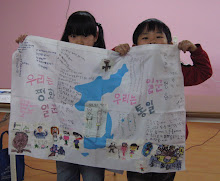
![[URGENT PLEA: In Update] EMERGENCY in GANGJEONG Since AUG. 24, 2011](https://blogger.googleusercontent.com/img/b/R29vZ2xl/AVvXsEiQvpaNf6EePZVucu97_JphYsFS5IgumnSiA4YAmen1PZcim6vMmW7XjZ7J6nLh-Cu36mwBN5n1evrA3ey0vYMpwlAGsgnSFggv6a1w4Qx9BvvqOB0hy0BIcBkL2Exfs3zIxBsBuDGa1kzg/s227/jejusit.jpg)


![[Solidarity from Japan for the Jeju] 253 individuals and 16 groups/organizations](https://blogger.googleusercontent.com/img/b/R29vZ2xl/AVvXsEivji7100kBkr0hzvqYfh4IBBilkZ6XgDIg89jOxS6kTssxsVKC6Wm-fZbKOEsiy3zcO-9gW6GHspD5R_2C9WsGx5S1Z5VPj_OVRF7H6dxdaT0S-2H1eqsDsYvIwOV26VscxTHnKmP5iZmh/s227/jeju_12_10j.jpg)

![[Translation] Korean organizations' statement: Immediately cancel the joint ROK-US drill Nov 26](https://blogger.googleusercontent.com/img/b/R29vZ2xl/AVvXsEgfKDMo-qyEjm5asUtHlREyJY_5Ou-2tyB8SH6aUxiViRbbKR-8W_rirFiGp5DYSoD_KaeNOPMWR0af0ZPUIbJKmR89ImDvADHsGAIqsJVBvJNBEIl5wLd3G_zhPDW3Z2SxsHXadOsXe8st/s227/1.jpg)
![HOT! [Hankyoreh Hani TV] Beneath the Surface: the investigation into the sinking of the Cheonan](https://blogger.googleusercontent.com/img/b/R29vZ2xl/AVvXsEh80rL3Qv9GnfHSqbYMfivdqX5gZN-1O_VQj3A_Gk3yjWdybHwJCsprA3l6cEQB0cYCP2oNeaLo2ohLGIy0Uqqkv_fRkBevGJ2f-qkKD5eP1ZGsKeQ-r-jHUUb79WvucIN7hpEtXza4xXCL/s227/HaniTV+Cheonan.gif)


![[Translation]Statement against illegal inspection and unjust lay-off by the Kunsan USAFK!(Nov_2010)](https://blogger.googleusercontent.com/img/b/R29vZ2xl/AVvXsEg3JlQ-lreusCIJo5Yv2e3ZrRwrSMUE7UQxlrDVjmBehl0Pa24QZIAbZ5vUpgnnExbkKL9PdCwxVYSHWJkr_XK0FM4EhU3CMFhqfborVNu_p4v3bEFpNm3ia-aEHnvMMuEBI27aB7_BETuJ/s227/gunsan+protest.gif)
![[Translation] Korean organizations' statement against dispatching special force to the UAE on Nov.](https://blogger.googleusercontent.com/img/b/R29vZ2xl/AVvXsEiU7TNhTDLLwZkKP0Z78JsCZKp6je-QSFll3_ThmLES_y_nPLXEzeakrsZXoNxhN5blopEhy6xGV2tneJrniPdTR-JvOQMmSLr_HhlucxFvbusxk4oKvvMO2laBOHSIkB9OOeOxrQlqCA0O/s227/antiwarpeace.jpg)
![[Translation] Stop, Joining MD!: South Korean activists' statement and writing on Oct. 25, 2010](https://blogger.googleusercontent.com/img/b/R29vZ2xl/AVvXsEggGIHVei8j7LCJPJB5HIrspd942q436daNTquP-pFd45Cl70Ml_1JFiFDHgKu6FcoqNgFVKIFqjeuSPau2k_BwGHhx0cqFFL2-4ybZSTlmua0_AsERBtKYQa7jZk7uNj41LX6rj2vksHbo/s227/StopMD.jpg)
![[In Update] People First, NO G-20 (Nov. 6 to 12, Korea)](https://blogger.googleusercontent.com/img/b/R29vZ2xl/AVvXsEhZl8VTqeL7o2ndliGIE-sZFCikbTgfB9KCc3AtZvDaYijBBEhdfultMEOpyrCaD5gzpH8mqfWjU20KXMbSUl-5KM7yQeHU6z3BWV8tiOy4UKaCudz9VKWoi5x58xdC_gQpJTjkR5u7O9xf/s227/left21_G20.jpg)
![[International Petition] Stop US helipad plan in Okinawa to save great nature](https://blogger.googleusercontent.com/img/b/R29vZ2xl/AVvXsEihgYmdb0N8ViPvTFC_5i-Psbt4eX_LnAUEOtZkUngv_pGvRyWag1r6W60NicLLyTgWq-sPT1hBxLY5SadEIVv5McfZQ5uIhe-W0VoflQNqojsYZjFW6AH-gB1jsmSDGnGuKIFk2UkvNbFG/s227/yanbaru_w.jpg)
![[Global Network] against the first launch of Quasi-Zenith Satellite, Japan, on Sept. 11, 2010](https://blogger.googleusercontent.com/img/b/R29vZ2xl/AVvXsEj2sYpfodDDMIA7qXwuda0DmKapxXFB479fDnn8RKy7QNZqz0VEvWucNd-DleZ37hWNXC-Z8QtaqtM37VuPwac5SgclJ9_khBBSWOedvm19MRXIP1j1kcWrK6EW5IFjQdEEY2h7E6xuyNvC/s227/Qzss-45-0_09.jpg)
![[In update] Some collections on the Koreans’ protests against the sanction & war on Iran](http://4.bp.blogspot.com/_gnM5QlRx-4c/TJMvke6t8zI/AAAAAAAAFO4/tamQ8LUnOOA/S227/No+Sanction+on+Iran.jpg)
![[Three International Petitions] to End the Korean war and peace treaty(or peace resolution)](https://blogger.googleusercontent.com/img/b/R29vZ2xl/AVvXsEhlohLVYtpCg7iMsZhNYY4hBbhTi2dIheHMHWLDph9X2y78cjgZV1LeSfUJeu80elhJm70Q9E059q72lK-spSPvsRG4bPuCDIytltJB9IH3mWt9OG98HqhnTsPakwhvNeoCFUgF1xoxQ2EZ/s227/border.jpg)


![[Collection of Documents] No Base Learning and Solidarity Program_Korea(June 14 to 20, 2010)](https://blogger.googleusercontent.com/img/b/R29vZ2xl/AVvXsEix_HzjToh3nNGHBc-_5gasq-ykcaZ6GInLixILmZVyRJ5xoeHCxWOyYd9fSM7bmnuFsjSrYOGEPnQOwB1Dcyo-sN4Pw0cFPhUtKig_qlVnGL1Wi82ClvPqbEPWYhJiqdNF0DyzLIBETMB9/s227/No-Base-banner.jpg)
![Site Fwd:[John Hines] A U.S. Debate coach’s research trip on the Issues of Korea](https://blogger.googleusercontent.com/img/b/R29vZ2xl/AVvXsEg8yRra0zNhKHN74Auqhd3Nx9tZ7BWCGflRJHGH4CfzBT_yjhZ8Nl9b3OZuLpYWJ2exsjmR0oVl-Qq_cf832p2VdmOZhUi-lCFzCNeDSyVtweX1lWZPC-RlHmDMLtilHwHjNFTenBiM4Fk4/s227/Jeju-Peace-Tour.jpg)


![[News Update] Struggle Against the Jeju Naval Base since Jan. 18, 2010](https://blogger.googleusercontent.com/img/b/R29vZ2xl/AVvXsEhKfSTRC5QKBBSFIq_m7QIqXdlbL4-gF5GJYn9Q-pN__k7sV7uxGDcLY5L8xmU7QuWuUhBT_GhG-URBPO80RT3AfWfDrWJr06h1hFuZC6ZBVKe4U6PS1Cd7Kr6olO8TYQtk13Drox7IS6ea/s226/scrum1.jpg)


![[Urgent] Please spread the Letter!: There was no Explosion! There was no Torpedo! (May 26, 2010)](https://blogger.googleusercontent.com/img/b/R29vZ2xl/AVvXsEhSd2yWZ3xGwnJQXB73z5FgXCqSosAoB9_33-GLYprOmLqjmvgSAQp1BYI7e4slK1FDxHRi9KK4um-OpDaj8QOkXwAScVAgvvq6-ehbDA-hbkr96wT9oHNNmWnBPv8GU4hoZp9X8F9AZBX4/s227/grounded.jpg)
![Text Fwd: [Stephen Gowans]The sinking of the Cheonan: Another Gulf of Tonkin incident](https://blogger.googleusercontent.com/img/b/R29vZ2xl/AVvXsEi_L6hB3RZ1MovTXHe0A8yn_RfgMALGR0kM6poBuGp809xwvHtB_-PGWtS_WpyPWatyd9lB2pPqL2gOLc4dTCEdJ9sMvxJWEdapl-mMLm7WHAsV-jVpgqarVh8XBtdz_0c-Vohdh3HtJahD/s227/lee-myung-bak.jpg)
![[Japan Focus]Politics in Command: The "International" Investigation into the Sinking of the Cheonan](https://blogger.googleusercontent.com/img/b/R29vZ2xl/AVvXsEiHmTo8v-uCJnabRhMdnBAkC9J3s5bb2JsDKiT5leJHwbK8IDJHxfJmqQ_C0Is_bPC6UGMf05CA0exF2y4r2x9RhFUHT0kjsKviaME_MZXKnq775UyYAdb7w2SAzE75XvBfHp1al2q6i3cf/s227/wen_jiabao_and_lee_myungbak.png)
![[Japan Focus] Who Sank the SK Warship Cheonan? A New Stage in the US-Korean War and US-China](https://blogger.googleusercontent.com/img/b/R29vZ2xl/AVvXsEiKSS5ULT5QBaMGYpXXqBMX9jtwLwMLuK469b6Ku72GTJYKUObzTANaPjZqvvpPzYMJgPF53sjhvhK3DVa88ipYlggsJageykXlkxY6s8TW05xcU-_vfhf-pACUoaWuFbT-fsU1qEhm_yIi/s227/buoy_map.gif)
![[Updated on 12/13/10] [Translation Project] Overseas Proofs on the Damages by the Military Bases](https://blogger.googleusercontent.com/img/b/R29vZ2xl/AVvXsEikADE6JovUNspQyZUWVMTLAQg7yQNqXpVUbqZPk8f4uc_1723_xm1Cco6WAmstQXVPnaJAcb1mZA8Ny_3xONT_f5uh8MNLPnUhtqdGgy3HCtC1Vbbz4Q0ZY1Cssu-4cJEVNdrvznbS5UzO/s227/missile.jpg)
![[International Petition] Close the Bases in Okinawa](https://blogger.googleusercontent.com/img/b/R29vZ2xl/AVvXsEhNpQiHklwFbWVlFK7GDFXnBSOOSFEj3Il-We-N3uTDldKiidL2NGZs7X_LtTnatzTo_r8CexRkFe8NhfxYqmgp1knEEslROTfNjI5_mSb57cdbhPkftvanveYBaevAD9xuKDGoIxiTwoSb/s227/2.jpg)
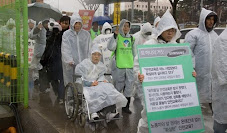
![[In Update]Blog Collection: No Korean Troops in Afghanistan](https://blogger.googleusercontent.com/img/b/R29vZ2xl/AVvXsEjjEmCRXSNAG7_QBxKWbdksmxoWR4nyAovQTTdR1G2AuXh0jxtqNkI9OmYgYWRoLAJShvtBvE840QXuBWSVh3u3zMYqkNAFX6OWy3m5Nur4HM7uNK-pKT1ycyApJp-VLyhIFRRcoisYAh0E/s226/No-Troops-to--Afghanistan.jpg)


