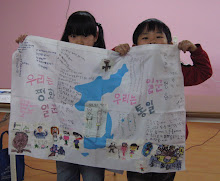
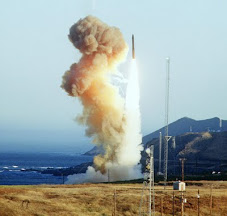
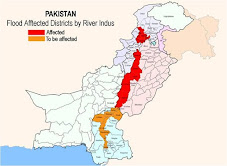
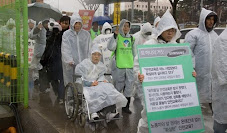
'저는 그들의 땅을 지키기 위하여 싸웠던 인디안들의 이야기를 기억합니다. 백인들이 그들의 신성한 숲에 도로를 만들기 위하여 나무들을 잘랐습니다. 매일밤 인디안들이 나가서 백인들이 만든 그 길을 해체하면 그 다음 날 백인들이 와서 도로를 다시 짓곤 했습니다. 한동안 그 것이 반복되었습니다. 그러던 어느날, 숲에서 가장 큰 나무가 백인들이 일할 동안 그들 머리 위로 떨어져 말과 마차들을 파괴하고 그들 중 몇몇을 죽였습니다. 그러자 백인들은 떠났고 결코 다시 오지 않았습니다….' (브루스 개그논)


For any updates on the struggle against the Jeju naval base, please go to savejejunow.org and facebook no naval base on Jeju. The facebook provides latest updates.

Tuesday, June 29, 2010

Text Fwd: Guam: Self-Determination, or More U.S. Troops?

* Text informed by Nicole Bullard on June 18, 2010

Guam: Self-Determination, or More U.S. Troops?

Robert Naiman, Just Foreign Policy, June 17, 2010

Usually, when someone refers to a place as a "U.S. colony," they are making an analogy, suggesting that U.S. influence somewhere is so strong, and the indigenous residents of the place have so little effective say over key decisions, that it's as if the place were a formal U.S. colony.

But, remarkably, and perhaps predictably, for a country whose leaders, editorialists and pundits constantly pontificate about how we are an indispensable force for freedom in the world, we rarely discuss the fact that there are places in the world that are actual U.S. colonies. Still less do we consider whether we are complying with our international obligations to respect the right of self-determination for colonized peoples, and if we are not, what we could do to change that.

A small corrective is being offered as part of Asian Pacific Heritage Month by PBS, which is webcasting Vanessa Warheit's documentary, The Insular Empire: America in the Mariana Islandsuntil next Sunday, June 20.

The Mariana Islands comprise two political entities, the territory of Guam and the Commonwealth of the Northern Mariana Islands. Guam was ceded to the U.S. by Spain in 1898 after Spain's defeat in the Spanish-American war, while the Northern Mariana Islands were conquered by the U.S. from Japan in World War II. As political entities, the two have several features in common: while they are ruled by Washington, and their residents are U.S. citizens, many of whom serve in the U.S. military, they have no vote in Presidential elections, nor do they have a representative in Congress who can vote on the passage of legislation.

In other words: they are U.S. colonies.

Guam, in particular, is facing a major decision about its destiny, a decision made in Washington about which its indigenous population has not yet had any effective say. The United States iscurrently planning to relocate 8,000 Marines and 9,000 dependents to Guam by 2014. With an expected influx of foreign workers recruited for military construction projects, Guam's population is expected to increase by some 80,000 people by 2014, a 45% increase from its current estimated population of 180,000.

More than a quarter of the island is already owned by the U.S. military, the Washington Post noted in March, while a quarter of the island's population lives below the U.S. poverty level.

As the Post noted, Guam was not consulted in the decision to move 8,000 Marines to the island and has no legal means to block it. Yet an Environmental Protection Agency analysis said the U.S. military buildup could trigger island-wide water shortages.

The possibility that Guam's indigenous residents may suffer irreparable harm from this planned military buildup without ever having had any effective say about it heightens the responsibility of Americans who do have voting representation in Washington to know something about the military buildup and its historical background. Thanks to PBS, until Sunday we have the opportunity to catch up a little on the history they didn't teach us in school.


__._,_.___

Text Fwd: Red Flag Alaska: Japan, S. Korea, Romania In U.S. Air War Games

* Rick Rozoff on June 28, 2010

Alaska's News Source

KTUU TV
June 24, 2010

Airmen, allies train for combat at Red Flag Alaska

by Christine Kim
Thursday, June 24, 2010

ANCHORAGE, Alaska -- More than 1,000 airmen are at Alaska's Elmendorf and Eielson Air Force Bases for this month's Red Flag Alaska, an international training exercise.

The training unites forces from all over the world. Airmen from Japan, South Korea, Belgium and Romania joined U.S. forces for the exercise.

"We have very little training opportunities in Belgium, so this is one of the chances we have to take to get this done," said Maj. Kurt Deprez, a member of Belgium's air force.

South Korea, a country already accustomed to working with U.S. troops, is also in Alaska to strengthen the two nations' ties after the sinking of a South Korean warship by a North Korean submarine.

"We have the American Air Force in Korea, and the coalition and the combined working environment is very important," said Lt. Hoon Min Kim, a member of South Korea's air force. "And being able to perform under a combined environment is therefore essential as well."

The Red Flag Alaska missions began nearly two weeks ago, with at least two flights a day.

"There's a lot of (ground-to-air) threats that we simulate out there, some surface-to-air missiles and stuff that's out there in the range," said the exercise's lead planner, U.S. Air Force Maj. William Friar. "We have some air-to-air threats that we have, that the guys up north at Eielson Air Force Base, that they fly as the enemy -- as the Red air."

One training mission is a simulated airdrop conducted by eight C-130 Hercules cargo planes from various nations, with two U.S. Air Force C-130s leading the way.

The aircraft fly over diverse terrain, as low as 300 feet above ground. In the back of the lead plane, two airmen prepare to make the drop. Officials say on a real airdrop a C-130 might deploy anywhere from 20 to 55 troops, in addition to supplies.

A second aircraft trails behind the first, dropping flares to simulate troops, but it's just one piece of the mission. What you can't see are the other players above and below making it safe to conduct the drop.

"Whether it be the fighters who are providing the top cover for us against enemy air threats, the (air-to-surface) attack aircraft that are taking out targets that are trying to hit us from the ground," said aircraft commander Maj. Mark Andrews.

The military says Alaska's large amounts of open airspace make a war scenario more realistic -- which means the C-130s' training flight is as real as it could get.

"Let them know that after coming out and executing this, that we're ready to handle anything that's thrown at us," Andrews said.

Red Flag Alaska is another effort to prepare the nation's troops and allies for battle, and to rise above today's military challenges.

There are a total of four Red Flag Alaska exercises each year. This month's exercise involves joint forces, but the other three involve only U.S. aircraft.

Contact Christine Kim at ckim@ktuu.com

_______________________________________________________

Stop NATO

Blog site:

Sunday, June 27, 2010

Text Fwd: Closed-door negotiations may push OPCON transfer to 2015


Hankyoreh
Closed-door negotiations may push OPCON transfer to 2015
: Diplomatic sources say S.Korea and the U.S. discussed an OPCON transfer delay, but will not go public with the plans until Saturday’s summit
Posted on : Jun.26, 2010 Modified on : Jun.26,2010

President Lee Myung-bak and U.S. President Barack Obama will discuss delaying the transfer of wartime operational control (OPCON) when the two meet in Toronto on Saturday (local time). Neither leader, however, has officially stated the way in which discussions over the issue have unfolded thus far. An examination of statements given by government officials and diplomatic sources indicates that a decision in principle has already seemingly been reached.


Multiple diplomatic sources involved with South Korea-U.S. relations said Friday that they understand that through closed-door contacts over time, the South Korean and U.S. governments have virtually reached an agreement to postpone the transfer of wartime operational control, which was initially scheduled for April 17, 2012, three years to 2015.

U.S. forces in Japan, which are linked to U.S. forces in South Korea, are scheduled to complete their redeployment by October 2015, and from a purely military technology perspective, even if the transfer of operational control is delayed to October 2015, the United States would not have to make any changes to its global military strategy,” said a government official. “It seems predictions that the move of U.S. bases to Pyeongtaek will be complete by around 2015 have been factored in as well.

There are many, however, who predict that during the Toronto summit, no concrete mention of the timing of the delay will be made; rather, after the two leaders have expressed a direction in principle, the details will be worked out through follow-up negotiations between South Korean and U.S. military officials.


The South Korean and U.S. governments have until recently repeatedly said that the transfer would proceed as scheduled, but in fact, there have reportedly been under-the-table negotiations on the issue of delaying the transfer since last year. Foreign Minister Yu Myung-hwan told local and foreign journalists Thursday that the government began to recognize changes in the situation when North Korea conducted its second nuclear test (on May 25, 2009). The under-the-table negotiations reportedly began in earnest last December, when a key figure in Cheong Wa Dae’s office of the senior secretary for foreign affairs secretly visited the United States, informing not even the South Korean ambassador in Washington, to meet with White House and State Department officials. The United States was reportedly negative at first regarding South Korea’s request to delay the transfer, but it began to adopt a more positive attitude towards the matter in March-April.


The problem is that the fine-tuning on a key point of contention of the alliance was conducted via high-level, secret negotiations focused on Cheong Wa Dae and the White House while virtually excluding the ministries and departments in charge of the issue in both countries. In response, Defense Ministry spokesman Won Tae-jae said during an open briefing Friday that the Defense Ministry has not conducted any negotiations with the Untied States over delaying the transfer. Foreign Ministry officials have responded by saying they know nothing, and official of the South Korean embassy in Washington say they have not been ordered by Seoul to do anything regarding the issue. The U.S. Pentagon is reportedly opposed to delaying the transfer as it stands. In fact, U.S. Defense Secretary Robert Gates said at a press conference after the 41st Security Consultative Meeting (SCM) in October that he was “absolutely certain” operational command would be transferred on April 17, 2012.

Please direct questions or comments to [englishhani@hani.co.kr]

______________________________________________________________

* Related article (* Informed by Rick Rozoff on June 28, 2010)

Obama: U.S. Extends South Korea Wartime Control To 2015
: Defense News
Agence France-Presse
U.S., S. Korea Defer Command Transfer To 2015
June 27, 2010


Text Fwd: U.S. receives criticism for contrasting Korea-Japan policies


Hankyoreh
U.S. receives criticism for contrasting Korea-Japan policies
: Critics say flexibility over S.Korea’s OPCON transfer while rejecting Japan’s request to move a Marine Corps Air Station tarnishes the U.S.’s policy credibility and consistency

Posted on : Jun.26,2010 18:37 KST

The Barack Obama administration’s contrasting attitudes regarding moving the Marine Corps Air Station Futenma in Japan and the transfer of wartime operational control (OPCON) in South Korea have become a source of controversy. This is because the United States has shaken off requests by Japan’s Democratic Party government to renegotiate the deal to move Futenma outside Okinawa prefecture, with Washington basing its rejection on a deal worked out with the previous Japanese government led by the Liberal Democratic Party. Meanwhile, the United States has reportedly agreed to discuss delaying the transfer of wartime operational control to South Korea when President Obama meets with President Lee Myung-bak in Toronto on Saturday, leaving behind an agreement made with the Roh Moo-hyun administration.


The United States ignored a request to renegotiate by the former Democratic Party government of Hatoyama Yukio, who pledged in last August’s general election that he would move Marine Corps Air Station Futenma to, at the very least, a location outside of Okinawa. The United States pressured Tokyo to carry out an agreement made in May 2006 to move Futenma to Camp Schwab in Henoko, a coastal location near the city of Naho in northeast Okinawa, and the Democratic Party government was forced to “surrender.” As a result, the Social Democratic Party left the coalition government and the Hatoyama cabinet collapsed.


In response to “double moves” regarding major pending security issues in South Korea and Japan, the Center for Peace and Disarmament of the People’s Solidarity for Participatory Democracy (PSPD) released a critical editorial Thursday saying it could not help but be suspicious of the policy consistency and credibility of the Obama administration. PSPD also sent an official letter to the U.S. embassy in South Korea asking that it reveal the U.S. government’s official direction on the issue.

A former high-ranking official said Friday that the United States absolutely needs the original plan for the Futenma move to be executed, but it is likely willing to delay the wartime operational command transfer in South Korea because Washington has made the determination that a short delay would not harm the overall transfer, and that it can receive a number of concessions from South Korea in return. The official also said that in either case, U.S. policy consistency and credibility would necessarily take a hit.


Please direct questions or comments to [englishhani@hani.co.kr]


Text Fwd: S. Korea's 1st geostationary ocean-weather satellite placed into orbit


Yonhap News
SEOUL, June 27 (Yonhap) -- South Korea's first geostationary ocean-weather satellite has successfully reached Earth's orbit after being launched from Guiana Space Center in Kourou, French Guiana, the government said Sunday.

The Ministry of Education, Science and Technology said the Chollian communication, ocean and meteorological satellite (COMS) blasted off from French Guiana on an Ariane 5-ECA rocket at 6:41 a.m. (Korea Time) after encountering minor technical problems on Thursday and Friday that delayed the launch.

The Chollian successfully reached "geostationary transfer orbit" and separated from the second stage rocket roughly 32 minutes after takeoff at an altitude of little over 2,000 kilometers, the ministry in charge of the country's space program said.


It said the Dongara ground station in Australia established initial contact with the Chollian at 7:19 a.m., indicating that the satellite has reached a correct orbital path and its electrical, on-board equipment and flight position were all normal. Additional contacts are to be made with ground stations in Hawaii, Italy and Chile for around-the-clock communications uplink with COMS.

First communication with the state-run Korea Aerospace Research Institute (KARI) -- in charge of the satellite -- is expected to take place 10 days after liftoff.

About 30 technicians from South Korea and France will be on hand to check the overall condition of the satellite and communications status at all times in the initial weeks of operations.

A series of tests will be conducted on its onboard equipment in the coming months with communications, maritime observation and weather services to be offered from late December.

The ministry said if there are no unforeseen problems, the satellite should start to deploy its solar panels and use its small booster rockets to reach stable orbital altitude of 36,000 kilometers in the next eight days.

It will be in a fixed orbit circling the equator at east longitude 128.2 degrees that can give 24-hour coverage over the Korean Peninsula.

Kim Young-shik, deputy minister of science and technology, said the successful launch of the Chollian marks a milestone in South Korea's space technology development and will positively affect everyday life.

The satellite was built in cooperation with France's EADS Astrium with South Korean engineers from the Electronics and Telecommunications Research Institute (ETRI) and the Korea Ocean Research and Development Institute playing a key role in its development, design and production. ETRI built the communications equipment for the satellite.

"The satellite is special because it can offer communication services as well as timely weather and oceanographic information that can benefit peoples' lives," the official said after the launch.

The 2,460-kilogram satellite is the world's first geostationary ocean monitoring satellite that is designed to give the country timely and accurate data in such areas as the movement of tide, ocean temperatures and environmental changes that can be used to better control maritime resources.

The Chollian also makes South Korea the seventh country after the United States, the European Union, Japan, China, India and Russia to operate an independent weather satellite and the 10th to build its own communications satellite.

The science ministry and KARI said the new satellite is designed to send weather and oceanographic data every 15 minutes and can reduce the interval to every 8 minutes in emergency situations such as when a typhoon is approaching the country. At present, Seoul gets its weather information from foreign satellites operated by Japan every 30 minutes, and less frequent data from a U.S. satellite.

Seoul spent more than 354.9 billion won (US$295.4 million) and took eight years to build the high-tech satellite that has a design life of roughly seven years.

The blastoff, meanwhile, was postponed several days because engineers from France's Arianespace SA, which built the rocket and is responsible for the launch, detected a "launch vehicle pressurization anomaly" prior to blastoff. The glitch was centered on the liquid fuel, cryogenic first stage booster that lifts the rocket and satellite payload into space.

Originally, the liftoff for the Ariane rocket was set for Thursday at 6:41 a.m., but was pushed back a full day, before being rescheduled for Sunday morning after Arianespace engineers fixed the problem.

yonngong@yna.co.kr

_____________________________________________________________

* Related articles

Yonhap News: Chronology of events leading to launch of S. Korea's ocean weather satellite
2010/06/27


Yonhap News: Chollian marks major leap in S. Korea's satellite program
2010/06/27

Text Fwd: Japan, South Korea Join U.S.-Led Pacific War Games

* Text sent from Rick Rozoff on June 26, 2010

Suite 101
June 24, 2010
RIMPAC 2010 War Games Launch in Hawaii
Jane Anderson


The Rim of the Pacific (RIMPAC) war games opened in Hawaii on June 23, 2010, with 32 ships, including the U.S.S. Freedom and the U.S.S. Ronald Reagan.

The Rim of the Pacific 2010 military exercise, or RIMPAC 2010, launched on June 23, 2010, as ships, aircraft and military personnel from 14 nations poured into Pearl Harbor, Hawaii to participate.

The U.S.S. Ronald Reagan, fresh from a six-month planned maintenance period, and the U.S.S. Freedom, the first of the U.S. Navy's planned Littoral Combat Ships designed to operate in shallow coastal waters, will participate, as will a variety of other U.S.-flagged vessels.

In total, RIMPAC 2010 was expected to involve 34 ships, five submarines, more than 100 aircraft and 20,000 personnel, the U.S. Navy said.

RIMPAC 2010 Includes Ships from Japan, Republic of Korea

By June 28, the U.S. Navy's Pacific Fleet will be hosting units and personnel from Australia, Canada, Chile, Columbia, France, Indonesia, Japan, Malaysia, the Netherlands, Peru, the Republic of Korea, Singapore, Thailand and the United States.

In addition to the Freedom and the Ronald Reagan, San Diego-based U.S. Navy ships participating in RIMPAC include the U.S.S. Benfold, U.S.S. Bonhomme Richard, U.S.S. Chancellorsville, U.S.S. Cleveland, U.S.S. Comstock, U.S.S. Devastator, U.S.S. Hopper, U.S.S. McCluscky, U.S.S. Pioneer and U.S.S. Sampson.
===========================
Stop NATO

Blog site

Saturday, June 26, 2010

[Jeju Update][국문 번역]Text Fwd: A Letter and A Poem: Stop to Build the Naval Base


* Artwork(Mixed Media Photo) by Rachael Berman, United States. www.wix.com/rsbmedi/art
* 미국 작가 레이첼 멜빌의 예술 작품 (혼합 재료 사진). www.wix.com/rsbmedi/art


* Below letter was written by and forwarded from Nicole Erwin on June 24, 2010. Nicole Erwin has written the Jeju Weekly article, 'Korean naval base to bring unwanted change:Gagnon encourages Jeju residents to fight for the preservation of the Island ' last year. Click HERE.

아래의 편지는 이 글을 쓴 니콜 어윈이 2010년 6월 24일 포워드 한 것입니다.니콜 어윈은 작년에 제주 위클리에 '원하지 않을 변화를 가져올 해군 기지:개그논, 제주 지역민들이 섬의 보존을 위해 싸우는 것을 격려'란 글을 쓴 바 있읍니다.
여기를 클릭하시길.


June 24, 2010
2010년 6월 24일

Prime Minister Chung Un-Chan
Republic of Korea
Central Government Complex
55 Sejong-no, Jongro-gu, Seoul, South Korea

정운찬 총리
중앙 정부 청사
대한민국 서울 종로구 세종로 55

Dear Chung Un-Chan,

정운찬 귀하

I am sending this letter to you with much concern. I ask that you read each line with great attention. I understand that there are plans to construct a naval base on Jeju Island by the year 2014, specifically in the Geongjeong village. For the past several months I have read online and in local newspapers of the struggle these people have gone through in order to get out their message. They have been arrested while demonstrating peacefully, they have gone on hunger strikes, they have begged with their hearts, their tears and time. A message that begs for you, the central government, to hear that Jeju, and Geongjeong is not the place for a naval base facility. As a citizen of this world, I beg that you hear that no place is in need of another military base facility. Jeju promotes itself as an island of peace and everything about a base yields opposing beliefs. We live in a world that has put military defense on the forefront in regards of protection. People side with the increase in militarization in defense of arguments that stress the importance of deterrence, when in reality each effort is a development towards our own destruction.

저는 많은 우려로 이 편지를 쓰고 있읍니다. 저는 당신이 한 줄 한 줄을 큰 주의로 읽기로 바랍니다. 저는 2014년까지 제주도, 특히 강정 마을에 해군 기지를 세우려는 계획들이 있음을 인지합니다. 지난 수개월 동안 저는 온라인 [뉴스들]을 읽어 왔으며 지방 신문들에서 그들이 메시지를 전달하기 위해 겪었던 투쟁들에 대해 읽었읍니다. 그들은 평화롭게 시위하는 동안 체포되기도 했으며 단식 투쟁을 했으며 그들의 마음과 눈물과 시간을 바쳐 탄원했읍니다. 세계의 시민으로서 저는 또다른 군사 기지 시설 이 필요한 곳이 아무데도 없다는 것을 당신이 듣기를 간청합니다. 당신, 중앙 정부에게 제주와 강정은 해군 기지 시설을 위한 장소가 아니라고 탄원하는 메시지. 제주는 스스로 평화의 섬으로 되길 원하며 기지에 관한 모든 것은 그 믿음에 반대됩니다. 우리는 보호에 관한 한 군대 방어를 선두에 놓는 세계에 삽니다. 사람들은 저지에 주안점을 두는 논쟁을 옹호하며 군사화의 증가에 편을 드나 실제로 그 개개 노력들은 우리 스스로의 파괴로 이어집니다.

The construction of a naval base on Jeju Island would be detrimental to the environment and community. People of Guam, the Philippines, and Okinawa recently visited Jeju to tell stories of the negative influence the military bases have brought to their communities. Pollution, greater divides socially and economically, taxation, rise in the cost of living but not in the wage, and greedy land consumption.

제주도의 해군 기지 건설은 환경과 공동체에 파괴적인 것입니다. 괌, 필리핀, 오키나와의 사람들이 최근 제주를 방문하여 군사 기지들이 그들의 공동체에 끼친 부정적 영향에 대한 이야기를 하였읍니다. 오염, 사회적, 경제적으로 더 큰 분할, 세금, 징수, 임금아닌 생계비의 증가, 탐욕스러운 땅 소비.

Aegis destroyer ships equipped with missile defense weaponry harbored on the shores of Jeju would inevitably mark the island as a target in case of war or conflict. The concrete poured to protect these ships of inevitable destruction will destroy the precious life of the environment it replaces.

제주 연안에 닿을 미사일 방어 무기로 장착된 이지스 구축함들은 필수불가결하게 전쟁이나 갈등이 일어날때 섬을 목표물로 만들 것입니다. 피할 수 없는 파괴들을 가져올 이 배들을 보호하기 위해 쏟아 넣어질 콘크리트들은 그것이 대치할 귀중한 생명들을 파괴할 것입니다.

Please here the plea of the villagers of Geongjeong and myself and say no to the construction of a naval base on Jeju or anywhere else in the world.

강정 주민들과 저의 말을 들으시고 제주와 세계 그 밖의 곳의 해군 기지 건설에 대해 아니오라고 말해주세요.

--
Nicole Erwin
Host "New Eyes Fresh Feet"
Arirang Radio, Travel Bug (Nicole Erwin)


니콜 어윈
“새로운 눈, 신선한 발” 사회
아리랑 라디오, 트래블 버그

_______________________________________________________________
* The below was written by Josh Fisher and forwarded by Nicole Erwin

Naval Base Poem
June 22, 2010

build your base

당신들의 기지를 세우시오.

by Josh Fisher 자쉬 피셔

construct a concrete hypocrisy
on honest sand now
squiggling carelessly between
children's toes to grin up
at jeju's extravagant sky

지금 정직한 모래위에
어린이들의 발가락 사이
부주의하게 흘려 갈기면서

콘크리트의 위선을 건설하시오.
제주의 창대한 하늘에서 씨익 웃으시오

block by seductive block a tetris
game of battleships stacked
tight against a peace until
complete and in a flash
a name sake vanish

유인하는 장애물들로
평화에 대항하여 촘촘히 쌓여진
전투 군함들의 테트리스 게임을 쌓으시오.
완성되어 한 섬광으로
딴 사람을 빌린 이름이 사라질 때까지


we can stuff the oreums
with missiles massive in
their sheath to accessorize
the waist of a virulent destroyer

우리는 오름들의 거죽에
거대하게 미사일들을 쌓아
그 것들의 허리를
유해한 파괴자들로 장식할 수 있소.


cause oooo aaaa

왜냐하면------------------

when sun reflects off that
metal skin to blind a magpie
or boils my kimchee in a
skillet on the dock where
bare arms and laughter stop

태양이 그 금속 표면을 반사하여
까치를 눈멀게 하거나

드러난 팔과 웃음이 멈춰진
선창의 내 냄비의김치를 끓일 때

I know I'm at peace

나는 내가 평화로울 것임을 알기에

when the lethal injection in
this tranquil island shreds
the chains of peace in blindness
freeing us to a new aggression

이 조용한 섬의
치명적인 침투가

평화의 고리들을 찢어 눈멀게 하여
우리를 새로룬 공격으로 풀어넣을 때

when sunsets are cut by
razor blade silhouettes of
warships bleeding the horizon
of the spiritual oranges warm
red and understanding purples

노을들이 면도날같은 군함들의 실루엣으로 찢겨져
따뜻한 붉은 색으로 영혼의 오렌지의
수평선을 피흘리게 하고

자주색깔들을 품을 때

I know we'll have gone to far
with the mercury of war and
question

나는 우리가 너무 멀리 갈 것을 안다오.
전쟁의 수은과
질문으로


what's the value of another thorn
on a pacific rose

태평양 장미위에
또다른 가시가 무슨 가치란 말인가?

Banner made by artists in the Gangjeong village, Jeju Island (For more banners and photos by the Gangjeong artists, see HERE)

In the Gangjeong village where a peaceful and quiet life has been enjoyed with the background of Halla Mt., if the naval base is constructed, the sea where our ancestors have lived and where we would inherit to our descendents would be displaced with the deep black naval vessels & aircraft carriers; the quiet Gangjeong port would be filled with military vessels; the Jeju Island, Island of Peace would be defined as the first bombing target from the hostile countries nearby; then not to mention the naval vessel, but all the things including the Gangjeong village and lives designated by UNESCO would disappear forever, by the pouring bombs. (arbitrary translation)

[Photo Fwd] Withdraw the Measure of Delay of Returning Back of the War Time Operational Control and Immediately Return It!

* Image source: Solidarity for Peace And Reunification of Korea, June 25, 2010

Joint press interview denouncing the ROK-US summit meeting on the
measure on the discussion of the delay of returning back of the war time operational control to ROK
June 25, 2010 (Fri.)

"Withdraw the Measure of Delay of Returning Back of the War Time Operational Control and Immediately Return It!"

Text Fwd: Experts address misconceptions about OPCON transfer

Hankyoreh
Experts address misconceptions about OPCON transfer
:The debate over OPCON transfer has been ongoing since the Park Chung-hee administration

June 25, 2010


» General Jung Seung-jo, deputy commander of the U.S. Forces Korea, center, participates in a ceremony and receives a flag from Combined Forces Commander General Walter L. Sharp, left, at Seoul’s Yongsan base, June 24...


The debate over transferring wartime operational control (OPCON) from the commander of the U.S. Forces Korea (USFK) to the South Korean Chairman of the Joint Chiefs of Staff has been long-standing. Proponents of delaying the transfer stress that the transfer of wartime operational control would result in an exit by USFK, and South Korea does not yet have the capacity to exercise command independently. They have also voiced criticism that the wartime operational control transfer was a rash decision by the Roh Moo-hyun administration that ignored grave security realities.

Was the Transfer of Command an Immature, Rash Decision by the Roh Administration?

Some conservatives consider the transfer of wartime operational control to have started with the warped “anti-American, self-reliant” ideology of the Roh administration and a populism reliant on nationalism. The first president to raise the issue of wartime operational control, however, was former President Park Chung-hee, who did so in the late 1960s. The South Korean and U.S. governments clashed over a response to North Korea’s commando assault on Cheong Wa Dae (the presidential office in South Korea or Blue House) on Jan. 21, 1968 and the North Korea’s capture of the U.S. intelligence gathering ship USS Pueblo two days later. This was because the United States issued no response to the attack on Cheong Wa Dae, but went to DEFCON 2 in response to the seizing of the Pueblo. Furious, Park asked the United States to transfer operational control to South Korea.

The transfer of wartime operational control was officially raised again as a campaign pledge by then-ruling party presidential candidate Roh Tae-woo. Discussions over the transfer issue were held between South Korean and U.S. military authorities, and on Dec. 1, 1994, during the Kim Young-sam administration, peacetime operational control was transferred back to South Korea. In 1995, the Defense Ministry crafted a plan to push for the transfer of wartime operational control around the year 2000.


Will the USFK Diminish or Withdraw if Wartime Operational Control is Transferred?

Conservatives claim that a wartime operational control transfer will result in a USFK reduction or withdraw, or that it will become difficult for the United States to send reinforcements in wartime. Stationing U.S. troops in South Korea, however, is based on a bilateral mutual defense pact, and is not directly related to the transfer of wartime operational control. Experts have stated that even if the transfer of wartime operational control is delayed, one cannot exclude the possibility of decreases in U.S. troop strength in South Korea in the medium to long term because of the U.S. “strategic flexibility” strategy. This is to say, although the Combined Forces Command’s OPLAN 5027 calls for 690,000 U.S. troops to be dispatched to South Korea within 90 days of the start of a war, the military believes it will be hard for the U.S. to send more than 200,000 to 300,000 troops in an emergency as the U.S. has been tied down in the War on Terror since the Sept. 11, 2001 terrorist attacks.

Does South Korea Lack the Capacity to Exercise Wartime Operational Control Independently?

Most security experts believe South Korea has sufficient military strength to deter North Korea. South Korea remains a military power in strong standing, as it ranks 10th in the world in overall military spending and maintains the world’s sixth largest military. In fact, the National Intelligence Service (NIS) reportedly told Cheong Wa Dae last August that its research into a comparison in both countries’ military strength showed that even without USFK or wartime U.S. reinforcements, the South Korean military was 10 percent stronger than the North Korean military. Internationally recognized U.S. military expert James Dunnigan also once evaluated North Korea’s fighting strength as about 40 percent of South Korea’s capacity based on a 1995 assessment.

One reserve general said Thursday that the fluster the command experienced during the sinking of the Cheonan was largely the fault of the absence of independently planned or managed operations for around 60 years. He said the transfer of command could be turned into an opportunity to boost South Korea’s operational planning and management capacity.

Please direct questions or comments to [englishhani@hani.co.kr]


Friday, June 25, 2010

[Jeju Update] [Translation] Decision on the Enforcement of Land Expropriation in the [Planned] Naval Base Area on June 11

서귀포 일간 신문 Seogwipo Daily Newspaper

강정 농민들 해군에 쫓겨나나 중토위, 11일 재결 결정…해군기지 토지 강제 수용
‘최우수 화훼단지’ 명성 잃을 위기…임차농도 ‘울상’

Will the Gangjeong Villagers be Expelled by the Navy? Central Committee for the Land Expropriation Decides for the Arbitration on June 11… Enforcement of Land Expropriation in the [Planned] Naval Base Area… ‘Best Floriculture Complex’ Is In Crisis of Losing Its Fame… Rent Farmers in ‘Tearful Face”

2010년 06월 17일 (목)
June 17, Thursday, 2010

김경덕 기자 (tree (at)seogwipo.co.kr)
Kim Kyung-Duk (tree(at)seogwipo.co.kr)

해군기지 건설로 토지 강제 수용에 들어갈 예정 부지 일대 모습.
▲ Appearance of the planned area for the enforcement of the land expropriation for the naval base construction .


서귀포시 강정마을 해안 일대가 해군기지 건설 사업에 따른 토지 강제 수용에 들어간다. 이 지역은 정부가 전국에서 ‘최우수’로 꼽은 강정화훼수출단지가 포함된 데다, 수 년간 밭을 일궈온 임차농들이 속수무책으로 쫓겨나게 돼, 적잖은 반발이 예상된다. 주민들은 행정소송 등 여러가지 방법을 동원, 끝까지 저항하겠다는 태도를 보이고 있다.

The coast area of the Gangjeong village, in the city of Seogwipo is to enter into the enforcement of land expropriation according to the naval base construction business. Since this area includes the best floricultural export complex that the government chose as ‘the very best’ nationwide and the rent farmers are to be expelled without any alternative measures, not a few repulses are expected. The villagers show the attitude that they will resist to the end, mobilizing the various ways such as administrative lawsuit.

국토해양부 중앙토지수용위원회는 11일 해군기지 예정부지 건설에 따른 재결을 결정했다. 앞서 해군은 해군기지 예정 부지에서 협의 되지 않은 토지를 대상으로 강제 수용을 위한 재결을 신청했다. 현재 협의가 되지 않은 토지는 전체 사유지 면적 27만7604㎡(187필지) 가운데 절반에 달하는 13만2460㎡다. 토지 소유주는 103명 중 64명이 거부한 상태다.

The Central Committee for the Land Expropriation, belonging to the Ministry of Land, Transport and Maritime Affairs made the decision for arbitration according to [the plan] for the naval base construction in the planned area on June 11. Before it, the navy applied for the arbitration for the enforcement expropriation of the lands that have not been negotiated in the naval base planned area. Currently, the lands that have not been negotiated are 132,460 that is about the half of the total private area, 277,604 (187 pieces of land). Currently among 103 landowners, 64 have denied it.

강정화훼단지 육성할 땐 언제고…
It was the government who fostered the Gangjeong Floriculture Complex...

문제는 강제 수용 지역이 제주도뿐만 아니라 전국에서 ‘최우수’로 인정받는 화훼단지가 상당부분 포함돼 있다는 점이다. 일관성 없는 정부의 태도에 눈살을 찌푸리게 한다.

The problem is that the area for the enforcement of the expropriation includes the considerable parts of the floricultural complex that is acknowledged as ‘the very best’ not only in the Jeju Island but also nationwide. The inconsistent government attitude makes one knit ones’ brows.

정부는 해군기지 예정부지에 편입된 강정화훼수출단지를 지난 2009년과 2010년, 전국 최우수 원예전문생산단지로 선정했다. 제주 지역에서는 유일하게 2년 연속 영예를 안은 셈이다. 강정화훼단지는 수출 신장 노력이나 규모화를 인정받으면서, 정부로부터 수출 물류비 혜택(307원/kg)과 선진물류조사 기회도 받아냈다.

The government chose the Gangjeong floriculture export complex that was incorporated into the planned area for the naval base as the very best nationwide horticulture -specialized production complex in last 2009 and 2010. It was the only area that has gotten such honor for the two successive years. As the Gangjeong floriculture complex was acknowledged with its export expansion effort and size, it has also received the benefit of the cost for the physical distribution of the export (307kg) and chance for the research of the advanced physical distribution.

이처럼 규모화와 수출 가능성을 인정받은 강정화훼단지(11만5500㎡)가 전체 42%가 넘는 땅(4만9500㎡)을 해군기지에 내주게 돼, 명성을 잃을 위기에 놓였다. 특히, 이곳은 다른 지역보다 화훼를 재배하기 적합해, 상실감이 더욱 크다.

As the Gangjeong floriculture complex(11만5500㎡) that was acknowledged with the size and export possibility, is to be given to the naval base with more than 42% land(4만9500㎡), it is in the crisis of losing its fame. Specially since it fits for the floriculture than any other areas, the feeling of loss is bigger.

윤용필 강정마을토지주대책위 위원장은 “해군기지 예정부지인 강정화훼단지가 명성을 얻게 된 것은 일조량이 좋고 토질이 좋아서, 마을 윗 동네에 재배하는 것보다 생산비(난방비) 절감은 물론, 수확량도 훨씬 뛰어나기 때문”이라며 “충분한 보상차원의 반대가 아니라 농민들의 생존권을 위한 차원”이라고 항의했다.

Yoon Yong-Phil, chairman of the Gangjeong Village Landowners’ Committee saying, “ The reason that the Gangjeong floriculture complex that is planned area for the naval base has gotten the fame was because of its good sun-shine amount and land quality therefore not only the production cost (heating cost) could be reduced but also the harvest amount could be much more excellent,” protested saying, “ It is not for the opposition for the enough compensation but for the survival rights of the farmers.”


▲ 지난 4월19일, 토지주대책위원회는 해군기지 강제수용 결정에 반발하는 기자회견을 열기도 했다.
Last April 19, the Landowners’ committee has held the press interview repelling against the decision of the enforcement of land expropriation for the naval base.

토지 강제 수용으로 잃게 될 노인 일자리도 아쉬운 대목이다. 농민들의 말을 종합하면, 잦은 손이 가는 화훼 경작은 3300㎡(1000평)에 한해 60명이 넘는 고용효과가 발생한다. 윤 위원장은 “해군기지가 들어서면 정작 이 분들의 일자리를 잃게 된다”면서 “주민들은 일하기 위해 애써 먼 거리를 이동해야 하는 불편을 감수해야 한다”고 말했다.

The thing that the elders’ jobs that would be lost for the enforcement of land expropriation is sorry part, too. Putting together the remarks of the farmers, the floriculture cultivation that needs lots of hands produces the employment effect of more than 60people against the 3300㎡ (1000 pyeong). Chairman Yoon saying that “If the naval base comes in, those would lose the jobs in fact,” told that “The villagers should bear the inconvenience to painfully move the far distance to work.”

소외된 임차농, 영농보상비도 ‘힘들어’
Alienated Rent farmers would be in 'Hard Situation’ Even to Get the Farming Compensation Cost

땅이라도 있는 주민들은 그나마 사정이 나은 편이다.

The villagers with lands, nevertheless are in better situation.

7년째 농사를 짓는 임차농 고모씨(49)는 빌려 지은 땅이 강제 수용 부지에 속하면서 깊은 시름에 잠겼다. 그는 “땅 있는 사람들이야 보상금 받아 어디 가서 뭔들 하겠지만, 나처럼 길거리에 내몰릴 사람들은 먹고 사는 게 막막하다”면서 “당장은 생계를 이어야 하는데 턱없이 적은 보상금으로 땅을 살 엄두도 못낸다”고 토로했다.

Mr. Koh (49), the rent farmer who has been farming for 7 years is in deep strain as the rent land gets to belong to the area for the enforcement of expropriation. Saying, “ While the landowners could get the compensation cost and would do anything with it in the other areas, people who would be expelled to the streets, like me have no breakthrough to make living ,” expressed that, “ Even though we should continue make living, we cannot even think of buying lands with such unreasonably small compensation cost.”

이런 처지는 고 씨만이 아니다. 애써 가꾼 땅이 강제 수용 부지에 속한 임차농들은 무려 15명이 넘는다. 대부분 몇 년간 비닐하우스를 지어 화훼 또는 원예 농사를 짓는 농사꾼이다. 이들은 대략 1㎡당 3000원 수준인 2년치 영농손실보상금을 받고 땅을 떠나야 한다.

That situation is not only for Mr. Koh. The numbers of the rent farmers whose painfully cultivated lands became to belong to the area for the enforcement of the land expropriation exceeds as many as 15. Most of them are the farmers who have built the vinyl houses and cultivated the floriculture or horticulture for years. They should leave the land after they receive the compensation cost for two years’ loss of farming that is about 3,000won for about 1㎡.

그러나 영농손실보상금을 받기도 쉽지 않다. 보상금을 받으려면, 임차농은 공영도매시장 증명서나 세금납부영수증 등을 통해 2년치 농산물 매출액을 입증해야 한다. 하지만, 대부분 위탁 상회에 출하하거나 중간 상인을 거치면서 소득을 증명할 길이 없어 제대로 된 보상을 받을 수 없다.

However it is not even easy to receive the compensation cost for the loss of farming. To get the compensation fee, the rent farmers should prove their two years’ sale prices through the certificates for the public wholesale market or receipts of the tax payment. However, there is no way for them to get the proper compensation because most of them make a shipment to the trust market or get through the intermediary merchant.

또한 임차농이 땅 주인의 인감을 받아야 2년치 보상금을 받을 수 있다는 점도 애를 태우고 있다. 인감을 받지 못하면 보상금을 땅 주인과 임차농이 나눠 갖는다.

Otherwise, it is another anxious point that they should get the landowners’ signet to receive the two year’s compensation cost. If they don’t get the signet, the landowner and the rent farmers should share the compensation cost.

때문에 주민들은 수용 재결서를 받더라도, 수용재결 불복에 따른 이의 신청과 함께 행정소송을 제기할 가능성이 크다. 토지주대책위는 가까운 시일 안에 긴급 회의를 열어 이같은 내용을 논의한다고 전했다. 토지주대책위 관계자는 “대부분 농사로 인해 해군기지 건설을 반대하기 때문에, 앞으로 보상 협의를 받아 들일 가능성은 적다”고 내비쳤다.

Because of it, it is highly possible even though the villagers get the document on the decision of the expropriation, they would raise the administrative lawsuit with the appeal for the different opinion, according to insubordination to the decision on the expropriation. The Landowners’ Committee said, having the emergency meeting in near-term, they would discuss such contents. The personnel in the Landowners’ committee hinted that, “ Because most people oppose the naval base construction for farming, there is little possibility that they would accept the compensation negotiation for the time to come."

해군기지 토지 보상업무를 대신 맡고 있는 한국농어촌공사 관계자는 “공탁에 들어갈 시점이 7월12일로, 6월말부터 7월초까지 협의를 이끌도록 최선의 노력을 다하겠다”면서도 “민감한 사안이라 제대로 성사될 지 전망하기 힘들다”고 말했다.

The personnel in the Korea Rural Community Center who is in charge of the compensation affairs for the land in the planned naval base area, while saying, “ As for the time to enter the deposition is July 12, we would do best to make our effort to lead the negotiation from the end of June to early July.” Told that “ Because it is the sensitive issue, it is hard to prospect whether it would be properly done.”